bytedance

Mid AI scandal, Hollywood studios threaten ByteDance with legal action

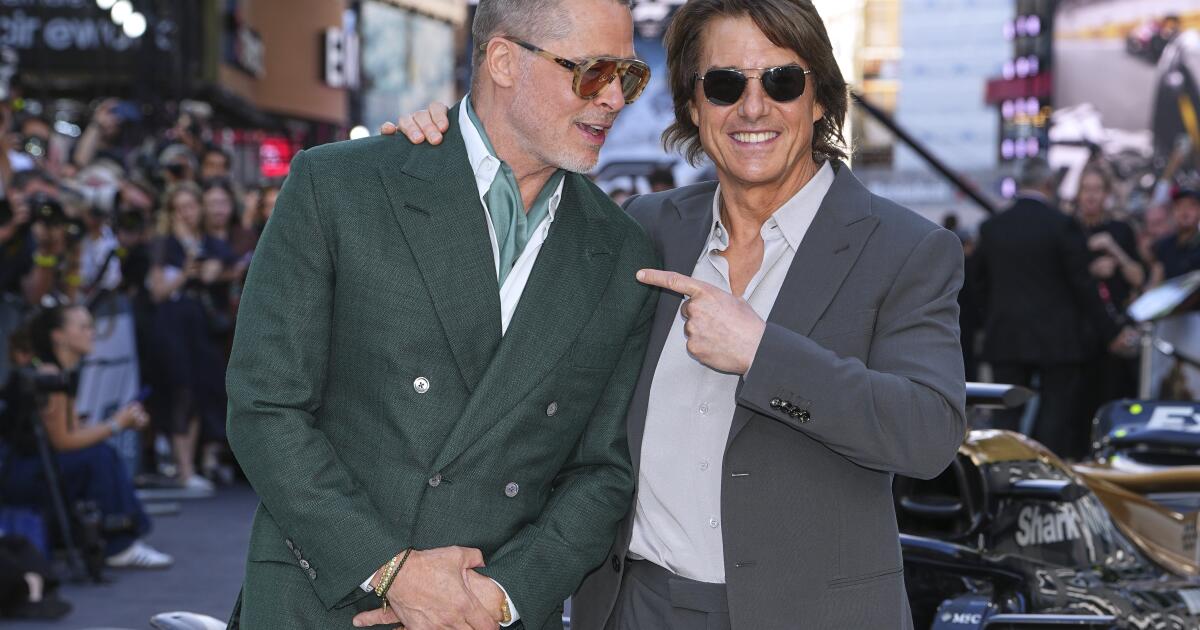
After the fake video of Tom Cruise and Brad Pitt fighting went viral, a surge of AI-generated content from Seedance 2.0 flooded the internet.

Some fans were using the new AI video generator, backed by ByteDance, to refashion the finales for shows like “Game of Thrones” and “Stranger Things.” Others created battle scenes between iconic superheroes like Wolverine and Superman or between a Transformer and Godzilla.

As these Seedance videos amassed millions of views on social media, industry guilds like SAG-AFTRA and the Motion Picture Assn. have criticized the AI platform that was launched last week. Now, many major Hollywood studios are threatening to take legal action against ByteDance, the same Chinese parent that oversees TikTok.

Netflix, Warner Bros. Discovery, Paramount and Disney have all sent individual cease and desist letters, detailing the unauthorized reproduction of each of the studios’ copyrighted intellectual property.

Netflix and Warner Bros. Discovery were the latest studios to send cease and desists letter to ByteDance on Tuesday.

Netflix calls Seedance “a high-speed privacy engine” and says that they “will not stand by and watch ByteDance treat our valued IP as free, public domain clip art,” as stated in the letter. The streamer also cites the illegal use of sets derived from “Squid Game,” costumes from “Bridgerton” and character design from “KPop Demon Hunters.”

Warner Bros. Discovery looks to repurposed content, including characters from the “Harry Potter” and “Lord of the Rings” franchises, as well as superheroes like Batman, as “ blatant infringement” by ByteDance. The studio argues that it’s clear that their AI technology was trained on Warner Bros. copyrighted material “without authorization.”

“But the users are not the ones at the root cause of the infringement; they are merely building on the foundation of infringement already laid by ByteDance as Seedance comes pre-loaded with Warner Bros. Discovery’s copyrighted characters,” wrote the studios’ legal executive vice president Wayne Smith. “That was a deliberate design choice by ByteDance.”

Disney and Paramount were the first of the studios to call out ByteDance, sending their letters last Friday and Saturday. Disney accuses ByteDance of loading its Seedance service “with a pirated library of Disney’s copyrighted characters from Star Wars, Marvel, and other Disney franchises.”

“Over Disney’s well-publicized objections, ByteDance is hijacking Disney’s characters by reproducing, distributing, and creating derivative works featuring those characters. ByteDance’s virtual smash-and-grab of Disney’s IP is willful, pervasive, and totally unacceptable,” Disney’s attorney David Singer wrote, per Axios.

Paramount’s cease and desist letter was reviewed by The Times and makes similar assertions about ByteDance’s unapproved use of copyrighted material.

ByteDance has since pledged to implement more safeguards to protect copyrighted material in response to these letters.

“ByteDance respects intellectual property rights and we have heard the concerns regarding Seedance 2.0,” a company spokesperson said in a statement shared with CNBC. “We are taking steps to strengthen current safeguards as we work to prevent the unauthorized use of intellectual property and likeness by users.”

But with or without the safeguards, Dan Purcell, chief executive of Midnight Labs, an AI-powered company that specializes in IP protection for high-value entertainment, said these letters might be a bit of a delayed reaction from the studios.

“Once synthetic content is generated, it spreads instantly and at a massive scale. By the time lawyers engage, the damage is done,” said Purcell in a statement. “The only path forward is strict licensing, real-time enforcement, and consequences that actually hurt. Reactive letters won’t fix this. The industry needs to move at the speed of AI — not the speed of litigation.”

Source link

Hollywood groups condemn ByteDance’s AI video generator

A new artificial intelligence video generator from Beijing-based ByteDance, the creator of TikTok, is drawing the ire of Hollywood organizations that say Seedance 2.0 “blatantly” violates copyright and uses the likeness of actors and others without permission.

Seedance 2.0, which is available only in China for now, lets users generate high-quality AI videos using simple text prompts. The tool quickly gained condemnation from the movie and TV industry.

The Motion Picture Assn. said Seedance 2.0 “has engaged in unauthorized use of U.S. copyrighted works on a massive scale.”

“By launching a service that operates without meaningful safeguards against infringement, ByteDance is disregarding well-established copyright law that protects the rights of creators and underpins millions of American jobs. ByteDance should immediately cease its infringing activity,” Charles Rivkin, chairman and chief executive of the MPA, said in a statement Tuesday.

Screenwriter Rhett Rheese, who wrote the “Deadpool” movies, said on social media last week that “I hate to say it. It’s likely over for us.” His post was in response to Irish director Ruairí Robinson’s post of a Seedance 2.0 video that shows AI versions of Tom Cruise and Brad Pitt fighting in a post-apocalyptic wasteland.

Actors union SAG-AFTRA said Friday it “stands with the studios in condemning the blatant infringement” enabled by Seedance 2.0.

“The infringement includes the unauthorized use of our members’ voices and likenesses. This is unacceptable and undercuts the ability of human talent to earn a livelihood,” SAG-AFTRA said in a statement. “Seedance 2.0 disregards law, ethics, industry standards and basic principles of consent. Responsible AI development demands responsibility, and that is nonexistent here.”

ByteDance said in a statement Sunday that it respects intellectual property rights.

“[We] have heard the concerns regarding Seedance 2.0. We are taking steps to strengthen current safeguards as we work to prevent the unauthorized use of intellectual property and likeness by users,” the company said.

The dispute comes a month after ByteDance finalized a deal to secure TikTok’s future in America. ByteDance agreed to divest majority ownership of U.S. operations to an American-led investor group, averting a shutdown of the hugely popular social media app.

President Trump during his first term sought to ban the platform, citing national security concerns, but he shifted his views after ByteDance agreed to the new joint venture.

The venture now has three managing investors: Silver Lake, Oracle and Emirati investment firm MGX, each holding 15%, with ByteDance retaining 19.9% of investments.

Ortutay writes for the Associated Press. Times Staff writer Cerys Davies contributed to this report.

Source link

ByteDance pledges fixes to Seedance 2.0 after Hollywood copyright claims | Science and Technology News

Hollywood groups say the AI video tool uses the likeness of actors and others without permission.

China’s ByteDance has pledged to address concerns over its new artificial intelligence video generator, after Hollywood groups claimed Seedance 2.0 “blatantly” violates copyright and uses the likenesses of actors and others without permission.

The company, which owns TikTok, told The Associated Press news agency on Sunday that it respects intellectual property rights and pledged action to strengthen safeguards.

Recommended Stories

list of 3 itemsend of list

The tool, called Seedance 2.0, is available only in China for now and lets users generate high-quality AI videos using simple text prompts.

The Motion Picture Association (MPA) said last week that Seedance 2.0 “has engaged in unauthorized use of US copyrighted works on a massive scale”.

“By launching a service that operates without meaningful safeguards against infringement, ByteDance is disregarding well-established copyright law that protects the rights of creators and underpins millions of American jobs. ByteDance should immediately cease its infringing activity,” Charles Rivkin, chairman and CEO of the MPA, said in a statement on February 10.

Screenwriter Rhett Reese, who wrote the Deadpool movies, said on X last week, “I hate to say it. It’s likely over for us.”

His post was in response to Irish director Ruairi Robinson’s post of a Seedance 2.0 video that went viral and shows AI versions of Tom Cruise and Brad Pitt fighting in a post-apocalyptic wasteland.

Actors union SAG-AFTRA said on Friday it “stands with the studios in condemning the blatant infringement” enabled by Seedance 2.0.

“The infringement includes the unauthorized use of our members’ voices and likenesses. This is unacceptable and undercuts the ability of human talent to earn a livelihood,” SAG-AFTRA said in a statement.

“Seedance 2.0 disregards law, ethics, industry standards and basic principles of consent. Responsible AI development demands responsibility, and that is nonexistent here.”

ByteDance said in response that it has heard the concerns regarding Seedance 2.0.

“We are taking steps to strengthen current safeguards as we work to prevent the unauthorised use of intellectual property and likeness by users,” it told the AP.

Jonathan Handel, an entertainment journalist and lawyer, told Al Jazeera the developments mark “the beginning of a difficult road” for the film industry.

Until courts make a significant ruling, AI-generated videos will have major implications on the film industry,” he said.

“Digital technology moves a lot quicker, and we are going to see in several years full-length movies that are AI-generated,” he said.

These tools are trained primarily on unlicensed data, Handel said, and the output could resemble faces and scenes from famous movies, “and so you’ve got copyrights, trademarks, all of those rights are implicated here”.

Source link

Viral AI video of Brad Pitt fighting Tom Cruise shakes Hollywood

A viral AI-generated video of actors Brad Pitt and Tom Cruise fighting atop a building is causing a stir online.

The 15-second video comes from the latest AI video-generation platform, Seedance 2.0. The platform was launched this week by its owner, ByteDance, the same Chinese parent that oversees TikTok. As the video circulates online, the Motion Picture Assn. and other industry stakeholders have called out the video for its unauthorized use of copyrighted works.

Charles Rivkin, chief executive of the Motion Picture Assn., wrote in a statement that the company “should immediately cease its infringing activity.”

“In a single day, the Chinese AI service Seedance 2.0 has engaged in unauthorized use of U.S. copyrighted works on a massive scale,” wrote Rivkin. “By launching a service that operates without meaningful safeguards against infringement, ByteDance is disregarding well-established copyright law that protects the rights of creators and underpins millions of American jobs.”

The video was posted on X by Irish filmmaker Ruairi Robinson. His post said the 15-second video came from a two-line prompt he put into Seedance 2.0.

Rhett Reese, writer-producer of movies such as the “Deadpool” trilogy and “Zombieland,” responded to Robinson’s post, writing, “I hate to say it. It’s likely over for us.”

He goes on to say that soon people will be able to sit at a computer and create a movie “indistinguishable from what Hollywood now releases.” Reese says he’s fearful of losing his job as increasingly powerful AI tools advance into creative fields.

“I was blown away by the Pitt v Cruise video because it is so professional. That’s exactly why I’m scared,” wrote Reese on X. “My glass half empty view is that Hollywood is about to be revolutionized/decimated.”

Reese isn’t alone in thinking AI could potentially “decimate” Hollywood and take away jobs. Creating protections against AI was one of the main reasons both SAG-AFTRA and the Writers Guild went on strike in 2023. But some members argue that those measures — now nearly three years old — did not go far enough.

As SAG-AFTRA reentered contract negotiations with the studios earlier this week, AI is still one of the union’s highest priorities. It’s expected that the actors union could propose what has been called the Tilly tax, a fee that studios would have to pay to the union in exchange for using an AI-generated actor — a response to the introduction of Hollywood’s first AI actor, Tilly Norwood.

In a statement to The Times, SAG-AFTRA confirmed that the union stands with the studios in “condemning the blatant infringement” from Seedance 2.0, as video includes “unauthorized use of our members’ voices and likenesses.”

“This is unacceptable and undercuts the ability of human talent to earn a livelihood. Seedance 2.0 disregards law, ethics, industry standards and basic principles of consent,” wrote a spokesperson from SAG-AFTRA. “Responsible A.I. development demands responsibility, and that is nonexistent here.”

Source link