Busan

Temples open stays for foreign fans attending BTS concert in Busan

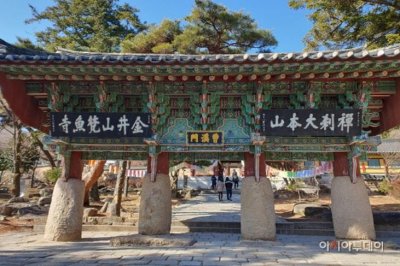
The Jogye Gate at Beomeosa Temple in Busan. The temple is known for its foreign visitor temple stay program and was previously visited by actor Chris Hemsworth during a documentary shoot. Photo by Asia Today

May 25 (Asia Today) — Buddhist temples in South Korea’s southeastern region are opening temple stay facilities to help accommodate foreign fans traveling to Busan for upcoming concerts by K-pop group BTS amid severe lodging shortages and complaints over soaring hotel prices.

The Korean Buddhism Culture Corps said Sunday that temple stay-operating temples in Busan and South Gyeongsang Province will provide lodging support for tourists visiting Busan for the “BTS World Tour Arirang in Busan” concerts scheduled for June 12-13.

Public concern has grown over accommodation costs ahead of the concerts as demand from domestic and overseas fans surged.

According to a February survey conducted by South Korea’s Fair Trade Commission and the Korea Consumer Agency covering 135 hotels and lodging facilities in Busan, average room rates during the concert weekend rose about 2.4 times compared with the weekends before and after the event.

The Busan city government has also been conducting inspections since May 13 targeting unfair business practices, including excessive room charges and possible violations of public sanitation and lodging regulations.

Alongside government measures, Buddhist groups said private-sector support was also urgently needed.

The Buddhist cultural organization and participating temples plan to use temple lodging rooms and available indoor spaces to provide safe and stable accommodations for visitors traveling to Busan.

Temples currently participating in the program include Beomeosa, Naewonjeongsa, Hongbeopsa and Seonamsa in Busan, along with Seongjusa and Daegwangsa in Changwon, Tongdosa in Yangsan and Pyochungsa in Miryang.

A representative from the Buddhist cultural organization said the effort was intended not only to provide lodging but also to allow foreign visitors to experience traditional Korean and Buddhist culture in a peaceful temple environment.

Temple stay programs have become increasingly popular among foreign tourists seeking cultural experiences in South Korea. Last year, temple stays attracted 349,236 visitors, including 55,515 foreign tourists.

Participants using temple stays during the BTS concerts will be offered accommodations, temple meals and simple cultural programs depending on conditions at each temple.

Organizers said visitors will also be required to follow temple rules, including check-in and check-out schedules and shared living guidelines, since temples remain active religious and monastic spaces.

The Buddhist organization and participating temples said they are also reviewing interpretation support and visitor guidance measures to help overseas guests stay comfortably.

“We hope to share the spirit of hospitality and generosity embodied by Buddhist temples with fans facing accommodation difficulties,” a representative said. “We want visitors to leave Busan with safe and warm memories.”

— Reported by Asia Today; translated by UPI

© Asia Today. Unauthorized reproduction or redistribution prohibited.

Original Korean report: https://www.asiatoday.co.kr/kn/view.php?key=20260525010007064

Source link

Global nuclear leaders gather in Busan for AI-era energy

Visitors look at a South Korea-developed innovative small modular reactor model during this year’s International Nuclear Energy Expo at the BEXCO exhibition center in Busan, South Korea, 22 April 2026. Photo by YONHAP / EPA

April 22 (Asia Today) — Global nuclear industry leaders gathered in Busan on Tuesday, highlighting the growing role of nuclear power in meeting surging electricity demand driven by artificial intelligence and data centers.

The Korea Atomic Industrial Forum opened its annual conference at BEXCO, bringing together policymakers, industry leaders and researchers under the theme “Nuclear energy for the AI era.”

This year’s event is being held alongside the Pacific Basin Nuclear Conference, which returned to South Korea for the first time in 14 years, and the Busan International Nuclear Industry Exhibition. Organizers expect around 19,000 participants.

The event features representatives from 19 countries and 156 companies, making it the largest exhibition of its kind to date.

Participants emphasized that rapid growth in AI technologies is fundamentally reshaping global energy demand. Electricity consumption by data centers is projected to reach 1,300 terawatt-hours by 2035, while AI-related power demand is expected to grow at an annual rate exceeding 120% through 2028.

To meet this demand, major technology companies have significantly increased investments in nuclear energy, with total spending surpassing $30 billion over the past 18 months.

Government policy is also shifting. The United States has set a target to expand nuclear capacity to 400 gigawatts by 2050 – roughly four times current levels – while about 15 new nuclear reactors are expected to come online globally in 2026.

Keynote speakers included Mesut Ozman of Fermi Nuclear, who is leading an 11-gigawatt nuclear project in Texas, and Tomas Ehler of the Czech Ministry of Industry and Trade, along with other senior officials and industry executives.

The conference also includes sessions focused on Southeast Asia, where countries such as Singapore, Malaysia and Vietnam are exploring nuclear energy adoption.

Discussions are covering a wide range of issues, including reactor lifetime extensions, carbon neutrality, artificial intelligence, energy security, small modular reactors and radioactive waste management.

South Korean companies are also expanding their global footprint. Hyundai Engineering & Construction is participating as an engineering, procurement and construction partner in negotiations for four AP1000 reactor projects, while Doosan Enerbility is supplying key components such as reactor vessels and steam generators.

The Czech Republic is also pursuing an expanded nuclear strategy, aiming to increase the share of nuclear power in its energy mix to as much as 50% to 60% through new projects at Dukovany and Temelin.

As energy demand accelerates in the AI era, industry leaders said nuclear power is increasingly being viewed as a reliable and scalable solution to ensure energy security and meet climate goals.

— Reported by Asia Today; translated by UPI

© Asia Today. Unauthorized reproduction or redistribution prohibited.

Original Korean report: https://www.asiatoday.co.kr/kn/view.php?key=20260422010007146

Source link