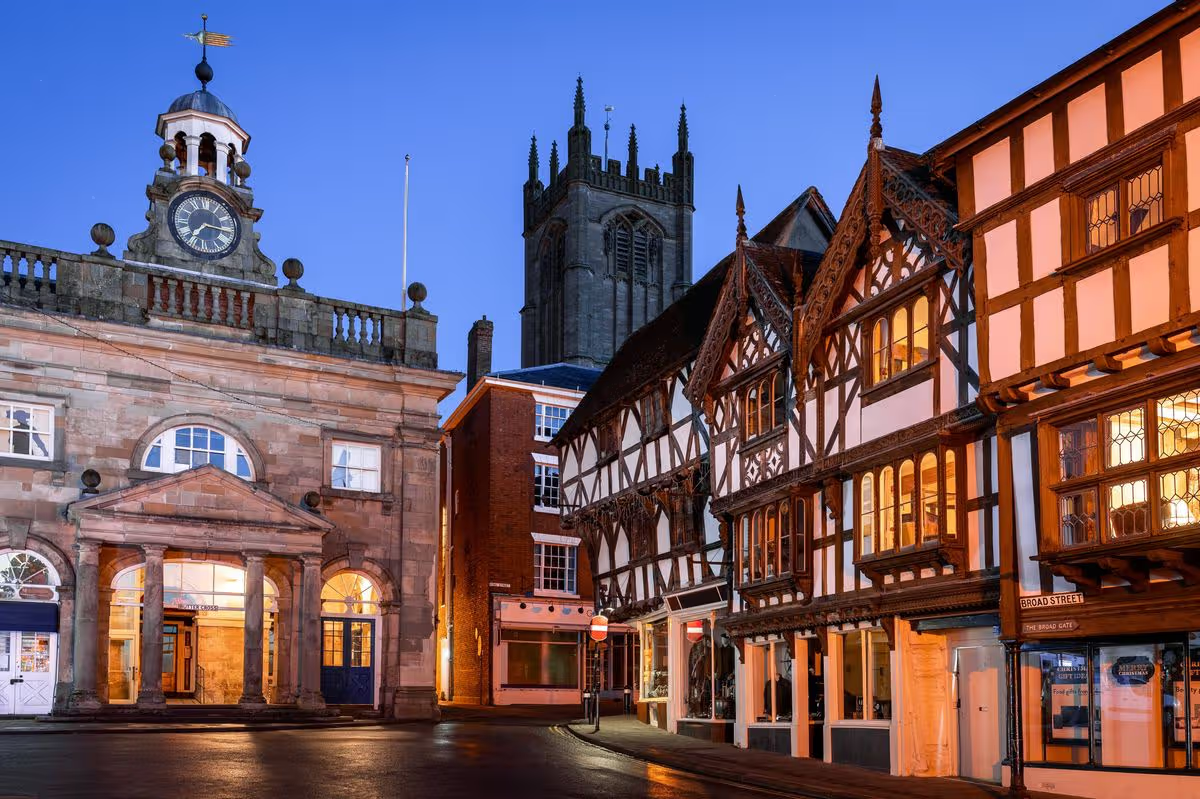
buildings

Beautiful town with medieval castle and listed buildings like steeping back in time

This historic Shropshire market town is bursting with history and has more than 500 listed buildings to explore, plus a vibrant food scene and festivals

Brimming with heritage, this charming market town makes for the perfect weekend escape, boasting over 500 listed buildings to discover and its renowned culinary scene.

Numerous visitors flock to Ludlow for its closeness to excellent hiking and cycling spots, while history enthusiasts adore it for its ancient churches, castles and mediaeval landmarks.

As the town has developed through the years, it now provides a lively atmosphere with its own market, independent retailers and regular festivals showcasing local talent.

Ludlow is situated along the River Teme, with its most ancient area being the mediaeval walled town, tracing as far back as the 11th century.

This section of the market town lies on the eastern bank of the river, whilst the castle perches on a hill and the remaining streets slope downwards towards the water.

Best holiday cottage deals in Wales

This article contains affiliate links, we will receive a commission on any sales we generate from it. Learn more
Sykes Cottages

From £35 per night

Sykes Cottages

See the deals

Wales is renowned for its stunning mountains, picturesque coastline and rich Celtic history. Sykes has a wide and varied collection of holiday cottages, houses and apartments across the country. Prices start from £35 per night with current deals.

Ludlow Castle

As one of the primary tourist draws in the region, Ludlow Castle stands as an uninhabited, partly ruined medieval fortification. Its origins are traced as far back as 1066 – subsequently, it became the residence of Prince Edward from 1473 to 1483, and for centuries it remained under the care of the crown.

By 1760, the government had contemplated demolishing the structure but, owing to substantial costs, opted instead to lease it, and thus the Earl of Powis started his residency in 1711.

From that point onwards, the magnificent castle started to draw tourists, with their appreciation for the picturesque style, and walking routes were established exploring the grounds and neighbouring areas.

Following the success of this venture, the Earl acquired the castle in 1811, and it has remained under the guardianship of the Trustees of the Powis Castle Estate ever since, who hold ownership on behalf of the family.

One visitor commented on TripAdvisor: “Lovely morning exploring the castle; so much to wander around even though it was very cold. The views were amazing from the top of the towers. You could feel the history come alive whilst walking around.”

Another said: “The main attraction in Ludlow – a site of enormous historical significance. The castle covers a very extensive area with amazing views from the top. In the castle shop do go upstairs to the gallery; it has some very interesting information.”

The fortress, perched proudly atop that very same hill, continues to welcome the public to discover and understand its significance to the town. Opening hours may fluctuate, though the castle can generally be expected to be accessible from 10am until 4pm daily.

Admission tickets can be purchased upon arrival – though advance booking online is usually recommended. Adult admission costs £10, whilst a child ticket is £5 and family tickets are £28.

Stokesay Castle

The remarkable buildings don’t end there, as Stokesay’s magnificent manor house continues to captivate passers-by with its timber-framed features.

Constructed like a fortress, though in reality it is a mansion, completed in 1291, and with minimal signs of alteration or modernisation ever since.

Owned by English Heritage, the protected structure has been meticulously maintained to reflect its original state and provides guided tours for those eager to discover more.

The property was originally established by Laurence of Ludlow, a celebrated wool merchant, actually one of the finest in the nation, and it stayed within his family until the 16th century.

The building’s architecture and design offer valuable insights into the period and continue to serve as a portal to the past. It welcomes visitors from Thursday to Sunday, 10am to 4pm, with adult admission priced at £9 and children’s tickets at £5.40.

One guest commented: “The castle that is not a castle! Thoroughly enjoyed our visit. The audio guide provided us with an amazing amount of useful information. A must-visit whilst in the area.”

Dining options

Ludlow boasts a strong reputation as a haven for food lovers, frequently dubbed the culinary capital of Shropshire. It’s earned this accolade through its excellent range of local produce, with countless independent suppliers and premium artisan food, all highlighted at the yearly food festival.

Taking place over one weekend in September, this year on 11-13, the festival features a vibrant programme of live events, including culinary demonstrations, workshops, talks and, naturally, showcases produce you can purchase to take away.

Naturally, the area also boasts numerous pubs and restaurants that garner considerable acclaim in their own right. Topping the rankings on TripAdvisor is The Blue Boar, a beautifully restored Grade II listed pub located on Mill Street.

A recent visitor commented: “Wonderful cosy, homely, friendly pub. Called twice on our little getaway, food was excellent, service was professional and friendly, and we would definitely recommend it to all our friends and family. Can’t wait for our next trip to Ludlow just to visit here again.”

Additional dining establishments include The French Pantry, Old Downton Lodge, The Queens, and the Michelin restaurant, known as The Charlton Arms Restaurant.
Source link

Tudor town’s famous cobbled street with historic buildings and ‘haunted’ hotel

The medieval town boasts cobbled streets, Tudor architecture and rich history – including the reportedly ‘haunted’ Inn that dates all the way back to 1420

Preserved precisely as it was during mediaeval times, this picture-perfect town boasts a rich history, which is vividly displayed through its stunning architecture.

Nestled in East Sussex, Rye is a hilltop town featuring cobbled streets, charming buildings and a deeply-rooted history. Many buildings remain untouched to preserve their original character, serving as key attractions for the town’s tourism and heritage.

Just two hours from London, this scenic destination isn’t quite a seaside location, but it’s near enough to provide the perfect stopping point between your journeys to the coast.

Indeed, over the years the town has shifted further inland, due to changing coastlines, and whilst no longer on the waterfront, it was once home to a bustling port, now reclaimed by nature.

During mediaeval times, when the town was firmly established with its layout and architecture, it served as a major seaport and ‘cinque port’, which helped to protect against French invasions.

Today it provides the ideal day trip with independent shops, boutique hotels, delicious food spots, and historical landmarks.

Mermaid Street

This charming high street in Rye is frequently described as one of the most attractive in the entire country, with beautifully constructed buildings positioned along a delightful cobbled lane.

One visitor said on TripAdvisor: “A very quaint cobblestone street from the early mediaeval times; some of the buildings were outstanding and well worth a visit and walk up the hill.”

Another visitor commented: “Mermaid Street was definitely one of the highlights of our trip to Rye, and I recommend you set aside at least half an hour to explore this stunning street and take some great photos.”

This charming lane features timber-framed houses from centuries past, many of which enjoy protected status to preserve their historical significance.

Several of the properties, for instance, display plaques bearing distinctive names, including The House with Two Front Doors and The House Opposite, and tourists frequently stop to take photographs outside them.

Whilst it remains a picturesque, Instagram-worthy spot today, it was previously quite the opposite, regarded as one of the town’s most deprived areas. An 1891 census showed it had a notorious reputation as a rat-infested street where more than 70 children crammed into cramped homes, generating a chaotic environment in the locale.

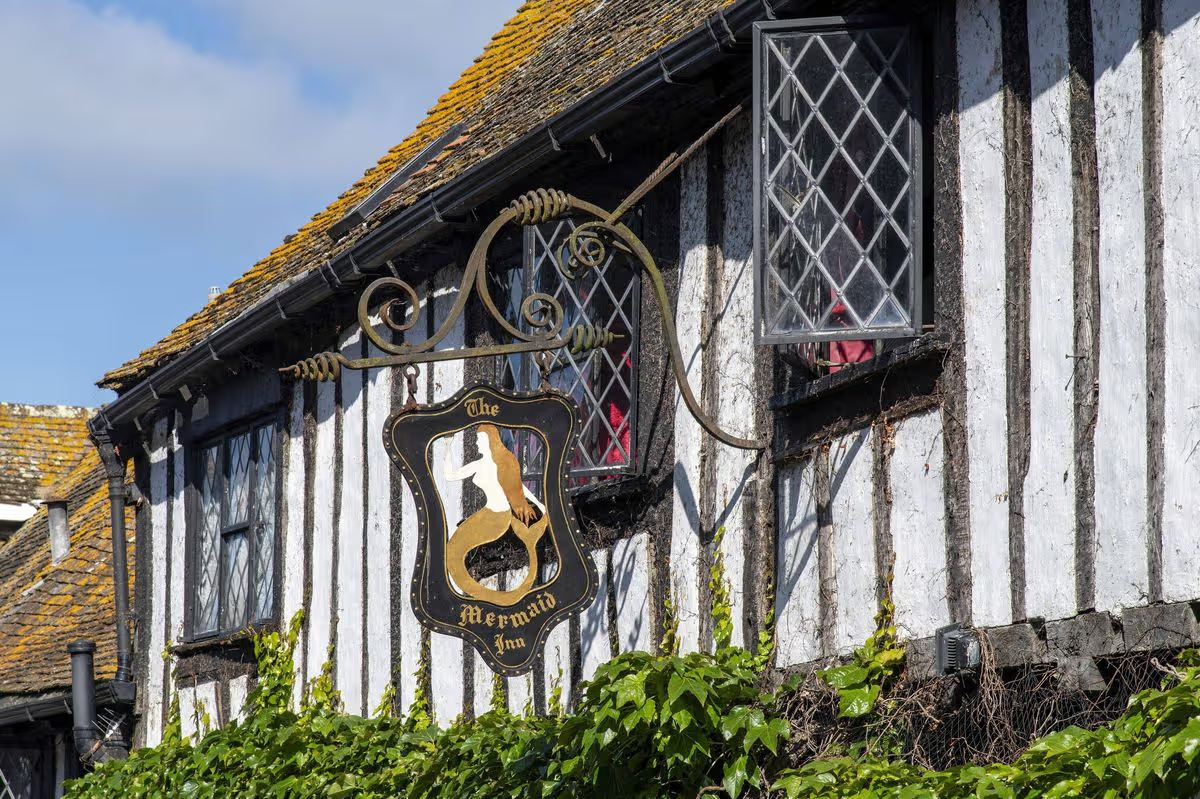
Situated at the very centre of the road, and believed to have given the street its name, is the Mermaid Inn, a hotel that’s been described as one of Britain’s most haunted.

Haunted Hotel

Spanning more than 600 years, this establishment, which offers bed and breakfast accommodation, is a genuine historical treasure, complete with spine-chilling tales to match.

The Mermaid Inn boasts cellars originating from 1156, whilst the structure itself dates to 1420, providing an authentic step back in time for guests and day-trippers alike.

With its sloping ceilings, creaking floorboards and labyrinth of staircases, the building is brimming with character and has been modernised to accommodate an excellent restaurant and two bars, alongside a spacious patio.

For visitors not planning an overnight stay, exploring indoors remains an option. Fortunately, on the final Sunday of each month the proprietor provides a guided tour through the historic rooms as you journey back through the centuries.

After visiting the hotel, one guest said: “We have stayed at the Mermaid Inn a few times before and have never been disappointed. If you go to Rye, you really have to stay at The Mermaid.

“As soon as you walk into this place, you feel the atmosphere of its history, a real step back in time, a time to leave the fast pace of life behind as you enjoy this wonderful place, a feeling of privilege of actually staying there.”

Yet it has a reputation of another kind entirely, thanks to its considerable age, having witnessed countless visitors pass through its doors, while others seemingly refuse to depart, as their spirits linger on.

Multiple rooms are believed to harbour various ghosts, each with their own unique tales, and some guests actively request these particular rooms for precisely that reason.

Take Room 19, the Hawkhurst room, where a guest once reported encountering a gentleman perched on her bed, dressed in period attire. Meanwhile, Room 1 is haunted by a lady in white, or grey, who prefers to sit in a chair beside the fireplace – her favoured haunting location.

In fact, their website catalogues every spectre said to inhabit its premises and the tales that have evolved over time as guests continue to report eerie encounters during their stay. One such instance is tied to room 10, with Fleur De Lys.

The website reveals: “Several years ago, a bank manager and his wife were awakened to find a man walking through their bathroom wall and across the centre of the room. They were so frightened that they spent the rest of the night downstairs in one of the lounges and made the porter bring all their luggage downstairs, plus their clothes.”

Source link

Engineer sues L.A. County over Pride flag at government buildings

A Christian engineer with L.A. County claims his bosses discriminated against him by forcing him to pass by a Pride flag on the way to his office, the latest legal challenge to the government’s policy of requiring many government buildings display the flag throughout June.

Eric Batman, a 24-year veteran of the Department of Public Works, sued the county March 10 for refusing to let him work remotely in June, when the rainbow-striped flag hangs in front of his department’s Alhambra headquarters.

It’s the second lawsuit to target the county’s 2023 policy ordering the raising of the “Progress Pride Flag,” a modified version of the traditional rainbow flag with additional stripes representing people of color and transgender and nonbinary people.

In May 2024, Jeffrey Little, an evangelical Christian county lifeguard, sued the county for requiring he work feet away from the flag. That case, filed by conservative Catholic legal group Thomas More Society, is ongoing.

Batman said he first asked to work remotely for the month of June in 2024 to avoid the flag, which he found “highly offensive,” according to the suit.

A supervisor rejected his request, according to the filing, noting the county was “committed to fostering an inclusive workplace, including for our LGBTQ+ employees.” The supervisor suggested he use another entrance, Batman’s suit claimed.

“They wouldn’t give it to him because the county said ‘Our interest is in inclusivity — regardless of whether or not that includes you,”’ said Daniel Schmid, an attorney with Liberty Counsel, a Christian legal group representing Batman.

Liberty Counsel frequently takes on high-profile plaintiffs who oppose same-sex marriage, including the case of Kim Davis, the Kentucky county clerk who refused to provide marriage licenses to same-sex couples.

A spokesperson for the county’s public works department said she could not comment on the suit as it had not yet been served.

Source link