Brazils

The US is now using the ‘terrorist’ label to interfere in Brazil’s election | The Far Right

In designating Brazil’s two largest criminal organisations, Primeiro Comando da Capital (PCC) and Comando Vermelho (CV), as “terrorist” groups, the United States has asserted its own definition of Brazil’s security threats, with consequences that reach far beyond law enforcement. The move is being presented by both the US and the Brazilian far right as a “necessary response” to the “growing transnational reach of organised crime”, but, in reality, it says far more about politics than security.

The designation reflects a dangerous convergence between Washington’s longstanding interventionist instincts in Latin America, echoing memories from the US-sponsored dictatorship that lasted from 1964 until 1985, and the interests of Brazil’s far right.

PCC and CV are indeed responsible for violence on a massive scale. They are among the most powerful criminal networks in Latin America and pose a genuine threat to public security in Brazil and beyond. But violence, however extreme, does not in itself make an organisation “terrorist”. Although the term is contested, terrorism is generally understood to involve violence pursued for political or ideological ends.

PCC and CV may corrupt institutions, influence politicians, control territory or confront the state when it serves their interests, but their primary purpose is criminal power and profit, not political transformation. Politics is a means of protecting and expanding their operations, not the reason those organisations exist.

The more broadly governments apply the terrorism label, the more it risks obscuring the nature of the security threat itself, while giving states greater scope to use such designations for political ends. That makes the question of why Washington chose to act now particularly important.

Neither PCC nor CV is a newly discovered threat. The PCC has existed since the early 1990s; the CV is even older, and both organisations and the harm they cause have been known to Brasilia and Washington alike for decades.

So why did the US decide in 2026 that these long-established organised crime networks should now be designated “terrorist” groups?

The answer appears to lie less in any new assessment of the threat than in Brazil’s domestic politics.

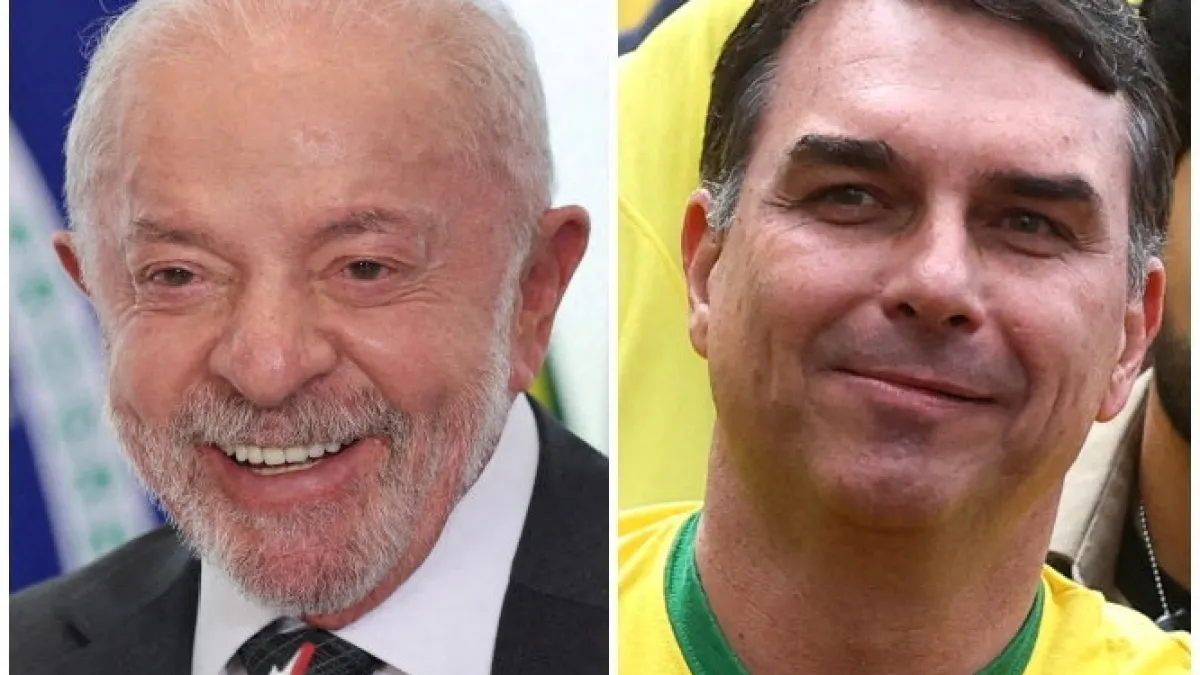
The timing of the designation is difficult to separate from the Bolsonaro family’s efforts to enlist Washington in its political fight with President Luiz Inacio Lula da Silva’s government. Former President Jair Bolsonaro is serving a 27-year-and-three-month sentence for his role in an attempted coup following his 2022 election defeat, while his sons have increasingly taken that fight to the US.

Flavio Bolsonaro, one of the former president’s sons, has spent months portraying Lula as soft on organised crime and pressing US officials to take a harder line against his government, including by directly pushing the Trump administration to designate PCC and CV as “terrorist” organisations. His brother Eduardo Bolsonaro, who now lives in the US, went further during the proceedings against their father, lobbying for sanctions against Brazilian Supreme Court justices and tariffs on Brazil. On June 16, Brazil’s Supreme Court sentenced Eduardo to four years and two months in prison for coercion over that campaign.

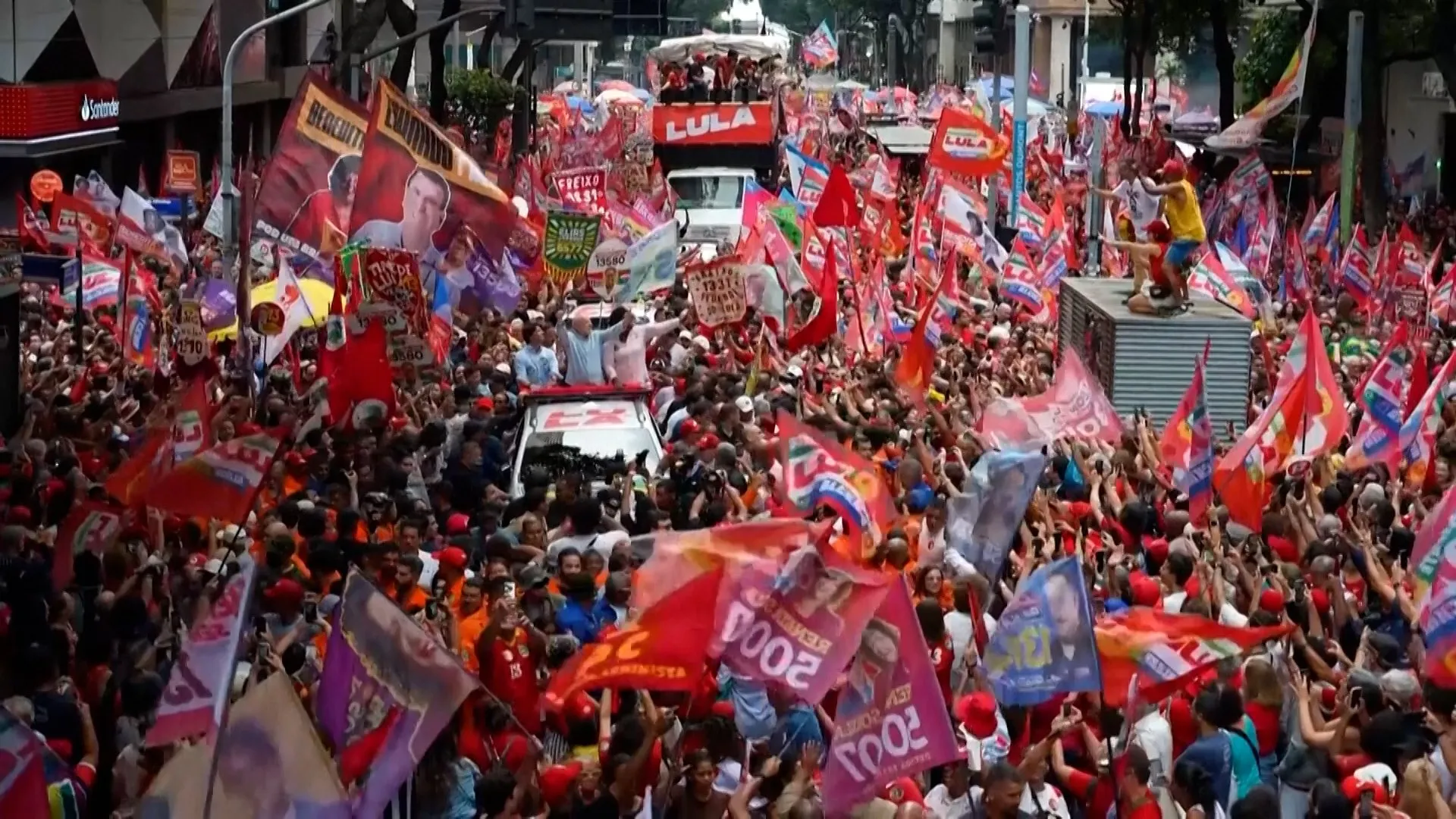
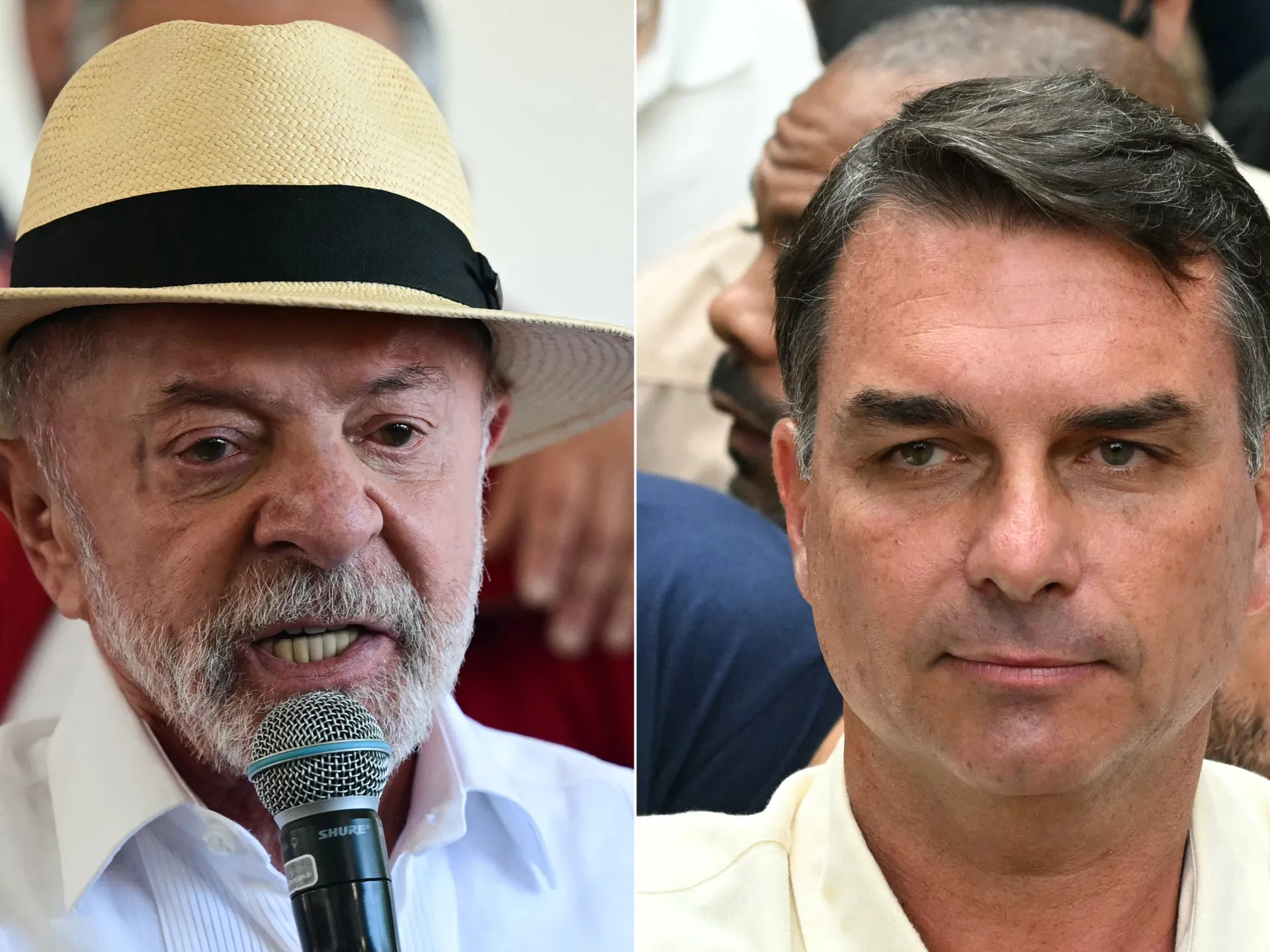
Flavio’s lobbying also has an immediate electoral significance. He has emerged as Lula’s main challenger in October’s election. An August 11 CNT/MDA poll put Lula on 42.4 percent in the first round and Flavio on 28.7 percent.

In that electoral context, the terrorism designation serves an important political function, reinforcing a narrative promoted by the Brazilian far right that Lula is aligned with criminal organisations or unwilling to confront them. The objective is not necessarily to prove such claims, but to create a climate of suspicion that can be weaponised domestically and used to justify greater US involvement in Brazil.

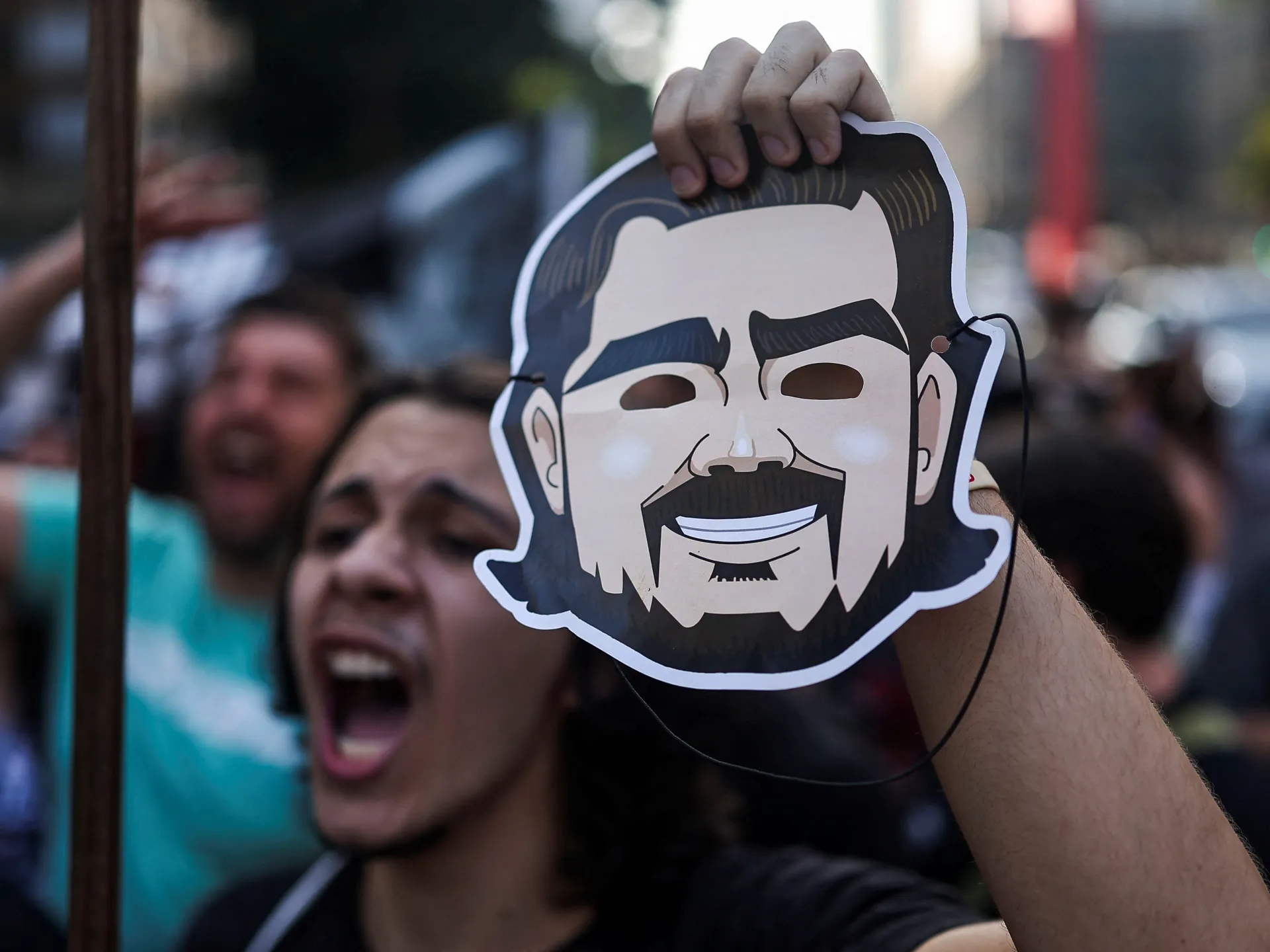
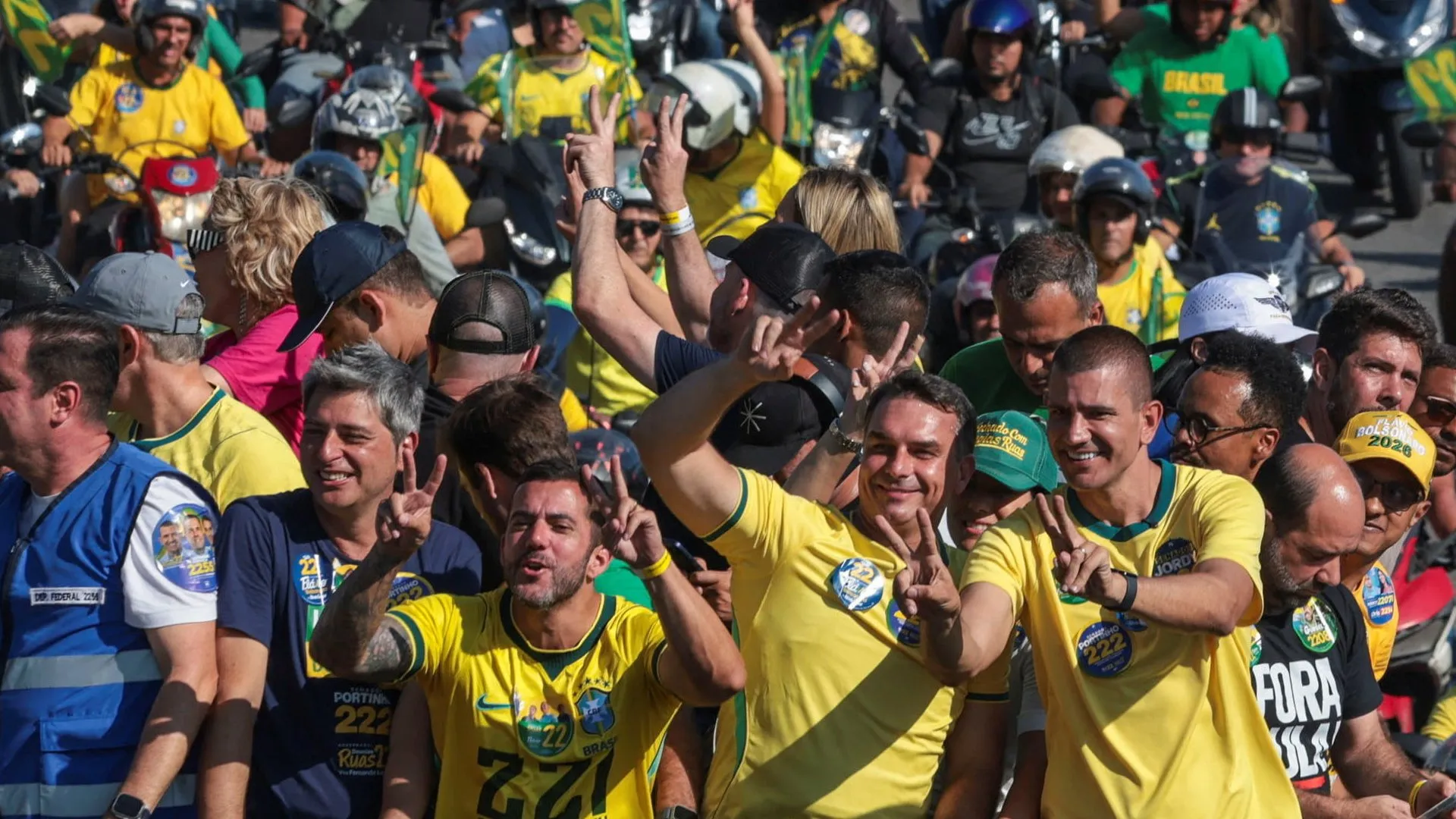
During far-right demonstrations, it is common to see supporters of the Bolsonaro family displaying US flags and openly asking for military and foreign intervention to “save” Brazil from the left. The US flags and calls for intervention are therefore not merely theatrical; they reflect a political movement that increasingly looks to Washington as an ally in its domestic struggle.

The strategy is familiar. Across the world, right-wing movements have increasingly blurred distinctions between crime, migration, political opposition and terrorism. Security rhetoric has become a tool for delegitimising opponents and justifying extraordinary measures.

Mexico offers a notable example. Calls from US politicians to classify Mexican cartels as terrorist organisations have often been accompanied by proposals for unilateral military action inside Mexican territory. And after Nicolas Maduro was kidnapped by US forces from his secure residence in Caracas, any Latin American leader has reason to take Trump’s threats of unilateral action seriously.

The issue, then, is not simply how Washington defines a security threat, but what powers and forms of intervention that definition can be used to justify. That question now extends directly to Brazil. Washington insists that the designation of groups such as the PCC and CV as terrorist organisations merely provides additional legal tools, but those tools carry consequences well beyond criminal prosecution. They give US authorities greater powers to freeze assets, impose sanctions and prosecute individuals accused of supporting these groups.

They also create new compliance obligations for companies operating in Brazil and expose financial networks to increased scrutiny. Banks may have no knowing connection with PCC or CV and still face pressure to show that their systems have not been used, directly or indirectly, to move funds linked to them. Tracing such links through clients, third parties, front companies and complex payment chains can be extraordinarily difficult.

The financial implications also intersect with a separate US dispute over PIX, Brazil’s central bank-run instant payment system, which has become a major alternative to card networks such as Visa and Mastercard. Washington has scrutinised PIX as part of a broader trade dispute, while Flavio Bolsonaro has proposed limiting its future links with non-Western payment systems.

The PCC and CV designation could add another layer of scrutiny if funds linked to either group are found to have moved through PIX.

Brazilian security officials have also warned that the designation could complicate long-established channels of police cooperation with the US. Joint investigations into PCC and CV rely heavily on routine intelligence-sharing and coordination between law enforcement agencies, but treating the groups as “terrorist” organisations could shift some investigations into more restricted intelligence and national-security channels, making that cooperation harder rather than strengthening it.

Beyond these immediate consequences, the designation creates a precedent for deeper US involvement in Brazilian security policy, and the whole of Latin America has seen this movie before.

Throughout the Cold War, Washington routinely justified interventions by framing domestic political conflicts as components of a larger ideological struggle against communism. Governments, social movements and political actors were classified according to their usefulness within broader US strategic objectives.

Today, anticommunism has largely been replaced by counterterrorism as a justification for intervention, even though Trump and the far right have also revived the fear of communism, applying it to almost anything to their left. The vocabulary has changed, but the logic remains strikingly similar.

By defining threats unilaterally and exporting those definitions abroad, Washington creates new avenues for political influence within sovereign countries that have experienced US intervention before.

Brazil has a serious organised crime problem that requires robust law enforcement, international cooperation and institutional reform. But combating criminal organisations effectively requires understanding what they are, not what political actors would like them to be.

PCC and CV are dangerous precisely because they are sophisticated criminal enterprises. Recasting them as “terrorist” organisations may generate political advantages, but it risks obscuring the nature of the threat itself.

Washington is turning a complex domestic security problem into a geopolitical and ideological battleground.

And in Latin America, history suggests that when Washington starts redefining domestic problems through the lens of its own political interests, sovereignty is often the first casualty.

The views expressed in this article are the author’s own and do not necessarily reflect Al Jazeera’s editorial stance.

Source link

Brazil’s Supreme Court to weigh cases that could weaken Amazon protections | Climate News

Brazil’s Supreme Court is set to hear several cases that could reshape protections for the Amazon rainforest, after a mostly conservative Congress overrode several of leftist Brazilian President Luiz Inacio Lula da Silva’s environmental vetoes.

The court will take up the cases on Wednesday, as lawmakers and environmental groups remain divided over how Brazil should balance economic development with environmental protections.

Recommended Stories

list of 3 itemsend of list

Deforestation in the Amazon has fallen to its lowest level in a decade during the first half of 2026. The cases put some of Brazil’s most consequential environmental fights before the country’s top court.

Indigenous land rights

On Friday, Brazil’s Supreme Court began reviewing final motions seeking clarification of a 2025 ruling that rejected the “time limit” thesis. The legal theory, backed by Brazil’s agribusiness lobby, restricts Indigenous land claims to territories occupied or under legal dispute when Brazil’s 1988 Constitution took effect.

The agribusiness caucus argues that a cutoff date would provide legal certainty for landowners. Indigenous groups say it ignores decades of forced displacement and violence that pushed communities from their ancestral lands. Indigenous communities across the Amazon, including the isolated and uncontacted Kawahiva people, could be affected by the ruling.

The justices are considering motions that seek clarification of the court’s ruling, addressing questions about compensation and possible deadlines for completing Indigenous land demarcations.

The soya farming moratorium

On Wednesday, the court will consider a legal fight over the future of Brazil’s soya moratorium, an agreement that barred major traders from buying soya grown on land deforested in the Amazon after 2008.

The agreement has been credited with helping curb deforestation, even as Brazil became an agricultural powerhouse. But states that are major soya producers passed laws in January revoking tax incentives for participating companies, prompting the Brazilian Association of Vegetable Oil Industries (ABIOVE) to withdraw from the moratorium.

Brazil is the world’s largest producer and leading exporter of soya beans. The Ministry of Environment and Climate Change has defended the soya moratorium, saying it helped reduce Amazon deforestation even as Brazil expanded production.

Environmental licensing

The court will also consider on Wednesday a challenge to a new environmental licensing law that took effect in February.

The law fast-tracks approval for projects including mines, highways and industrial plants, prompting environmental groups to warn that it could weaken safeguards in one of the world’s most important ecosystems.

Suely Araujo of the Climate Observatory said the law is already having tangible consequences in the Amazon, citing the paving of a controversial highway and plans to dredge the Tapajos River without adequate prior environmental review.

Source link

Four killed in helicopter crash in Brazil’s Rio de Janeiro | Aviation News

Three Colombian tourists from same family are among the victims of Saturday’s crash on mountainside forest of Tijuca National Park.

At least four people have been killed in a helicopter crash in the Brazilian city of Rio de Janeiro, according to a statement from the Colombian consul in the country.

Saturday’s crash involved a pilot and three Colombian women who were members of the same family.

Recommended Stories

list of 3 itemsend of list

They were reportedly on a sightseeing flight over Tijuca National Park, a densely forested, mountainous area on the edge of the city.

In the aftermath of the crash, Rio de Janeiro Mayor Eduardo Cavaliere called for more oversight of helicopter flights, a popular tourist activity. He even suggested such flights could be suspended “for a week or two”, as new safety measures are implemented.

“My solidarity to the families of the victims of the helicopter accident that happened today near Vista Chinesa within the Tijuca National Park,” Cavaliere said in a social media post.

He added that he had been in contact with Brazil’s National Civil Aviation Agency, ANAC.

“City Hall has requested that ANAC take immediate action to intensify oversight and ensure safety in helicopter flights that are circulating with increasing frequency in our city,” Cavaliere explained.

“We place the entire apparatus of City Hall at the disposal of ANAC to support the measures and actions that may be necessary.”

The crash took place near Vista Chinesa, a lookout point crowned by a small bamboo pagoda. Tijuca National Park is a top destination in Rio de Janeiro, famous for its Christ the Redeemer statue and sweeping vistas of the coastal city.

Diana Paez, the Colombian consul general in Rio de Janeiro, told the news agency AFP that the three women on Saturday’s flight were part of a family that had travelled to the city to celebrate a girl’s 15th birthday.

The group of six had split up since the helicopter could only fit three people. The girl’s grandmother, aunt and cousin died in the crash.

Helicopter rides have become a popular way for tourists to see the city and its various monuments from above, a practice that has attracted growing concern over safety.

Six people were recently killed when two helicopters collided in midair over the city. That incident took place over the western suburb of Recreio dos Bandeirantes on June 14.

Source link

Brazil’s top court blocks Bolsonaro from seeing sons on Father’s Day

Aug. 8 (UPI) — Former President Jair Bolsonaro will not be allowed to see his sons on Brazilian Father’s Day this Sunday, the country’s top court ruled.

Due to his health, Bolsonaro has been under house arrest in Brasilia since March while serving a 27-year sentence for a coup attempt.

Last month he was placed under a stricter regimen after he breached conditions of his house arrest.

The former president is not allowed to receive visits for 30 days, except by his medical and legal teams.

Bolsonaro’s defense attorneys on Wednesday asked the Supreme Court for special permission, calling it a “strictly humanitarian and family-related” visit for Father’s Day, which Brazil celebrates on the second Sunday in August.

“This is a unique date on the Brazilian calendar, and its observance, even for a brief period and under whatever conditions Your Honor may deem appropriate, would preserve family ties and an important aspect of the relationship between father and children,” the former president’s defense attorneys wrote to the Supreme Court, Gazeta do Povo reported.

But Brazil’s top court on Saturday denied Bolsonaro’s request to host sons Jair Renan, Carlos and Flavio, G1 reported. His fourth son, former Rep. Eduardo Bolsonaro, is living in the United States and was not included in the request.

Last month, Supreme Court Justice Alexandre de Moraes barred Bolsonaro from receiving any visits of a “political-electoral” nature until after Brazil’s general elections in October.

The restrictions came after Bolsonaro wrote a political letter in support of his son, Sen. Flavio Bolsonaro, despite his sentence barring him from participating in national politics.

The younger Bolsonaro, who disseminated the letter on social media, is running against President Luis Inacio Lula da Silva.

“They took away his freedom,” Flavio Bolsonaro wrote on X. “Now they want to take away even a father’s right to hug his children.”

Bolsonaro’s defense lawyers argued in court he was unaware that his son would divulge his writing on social media.

But the court disagreed.

“The letter — written and personally signed by Jair Messias Bolsonaro — was addressed ‘to the Brazilian people,’ demonstrating that it was not of a private nature but rather intended for political and electoral purposes, with dissemination to the general public, using Flavio Nantes Bolsonaro as an intermediary, or in his own words, as his ‘spokesperson,'” Moraes wrote in his decision, G1 reported.

“The text of the ‘Letter to the Brazilian People,’ therefore, clearly shows that Jair Messias Bolsonaro intended to communicate with his political supporters through his son’s social media accounts,” the justice added.

As a result of the restriction, he was also denied a visit by Argentinian President Javier Milei, who in July visited the country in support of Flavio Bolsonaro’s candidature.

Source link

Brazil’s Flavio Bolsonaro names Alfredo Gaspar as running mate | Elections News

The announcement comes as Lula warns of foreign interference and polls show a tightening presidential race.

Brazilian Senator Flavio Bolsonaro has named conservative Congressman Alfredo Gaspar as his running mate, ending weeks of speculation over who would join his presidential ticket in October’s election against incumbent President Luiz Inacio Lula da Silva.

The announcement on Wednesday also highlighted the challenges facing Bolsonaro’s campaign, which has struggled to build alliances beyond his own Liberal Party and failed in an effort to recruit a woman to the ticket in hopes of broadening its appeal.

Recommended Stories

list of 4 itemsend of list

Gaspar, 55, has represented the northeastern state of Alagoas in Brazil’s Chamber of Deputies since 2023 and served as its public security secretary.

Accepting the nomination, he described himself as “a simple person from the northeast” whose life had been defined by “hard work and honour”, saying he would work alongside Bolsonaro “to transform Brazil into a fair and decent place”.

Gaspar led a congressional investigation into Brazil’s National Social Security Institute (INSS), the agency that oversees the country’s public pension and social security system. Fabio Luis Lula da Silva, the president’s son, is under investigation over allegations that he received improper payments linked to an alleged pension fraud scheme involving that agency.

Political analyst Lucas de Aragao, a partner at consultancy Arko Advice, said the choice was surprising but gave Bolsonaro someone well-placed to attack Lula on an issue that has become politically sensitive.

“He has the authority to deal with an issue that is uncomfortable for Lula. He also speaks extensively about public security,” Aragao said.

Gaspar emerged as the Liberal Party’s preferred choice after several higher-profile figures courted by Bolsonaro, including Senator Tereza Cristina of the Progressive Party and former Caixa Economica Federal chief Daniella Marques of the Republicanos, failed to get their own parties to support them in joining the ticket.

Bolsonaro, the son of former far-right Brazilian President Jair Bolsonaro, has struggled to expand his coalition, with several centre-right parties choosing to either back Lula’s broader coalition or remain neutral in the election in hopes of maximising their representation in Congress and appealing to anti-Bolsonaro voters in the country’s northeast.

A Quaest survey published on Wednesday found Lula leading Bolsonaro 44 percent to 39 percent in a simulated run-off, down from an eight-point lead in mid-July. In a first-round scenario, Lula was on 39 percent support to Bolsonaro’s 30 percent. If no candidate wins more than half the valid votes in the first round, the top two candidates advance to a run-off.

Launching his re-election campaign on Sunday, Lula cast the October vote as a battle to defend Brazil’s sovereignty amid growing concerns over foreign influence.

“Too many people are poking their fingers into our business. Too many people are interfering in our land. And that is going to stop,” he told supporters.

In July, Brazil denied visas to two US State Department officials who Lula said were being sent to “meddle” in the elections.

The diplomatic rift deepened on Tuesday, when the Trump administration said it was temporarily revoking the visa of Brazil’s ambassador to Washington in response to Brasilia withholding approval for Trump’s ambassadorial nominee.

Lula has pointed to those tensions, along with Trump’s public support for Flavio Bolsonaro and US tariffs imposed on Brazilian goods, as evidence that Brazil’s sovereignty is under pressure.

“As long as I’m president, no one from outside will interfere in Brazilian elections,” Lula said on Wednesday.

Source link

Brazil’s top court denies Bolsonaro home visit by Argentina’s Milei

Former Brazilian President Jair Bolsonaro, who is serving a 27-year sentence for a coup attempt, was placed under further restrictions on Friday for breaching conditions of his house arrest. File Photo by Andre Borger/EPA-EFE

July 18 (UPI) — Brazil’s top court on Saturday denied a request from former President Jair Bolsonaro to be visited by Argentinian President Javier Milei while under house arrest.

The attempted visit by Milei, a political ally of the far-right Bolsonaro, was part of a campaign to drum up political support for the son of the former president, who is running against leftist President Luiz Inacio Lula da Silva.

Bolsonaro is serving a 27-year sentence for a coup attempt but has been in his home in Brasilia since March due to his health condition.

He was already barred from participating in national politics as part of his sentence.

But Bolsonaro was placed under further restrictions on Friday for breaching conditions of his house arrest, after he wrote a political letter supporting his son’s candidature for president.

The son, right-wing state Sen. Flavio Bolsonaro, then showed the endorsement letter during a live stream on social media.

Supreme Court Justice Alexandre de Moraes barred Bolsonaro from receiving any visits of a “political-electoral” nature until after Brazil’s general elections in October.

Bolsonaro’s defense lawyers argued in court he was unaware that his son would divulge his writing on social media, though the former president titled the text “letter to the Brazilian people.”

“The letter — written and personally signed by Jair Messias Bolsonaro — was addressed ‘to the Brazilian people,’ demonstrating that it was not of a private nature but rather intended for political and electoral purposes, with dissemination to the general public, using Flavio Nantes Bolsonaro as an intermediary, or in his own words, as his ‘spokesperson,'” Moraes wrote in his decision, G1 reported.

“The text of the ‘Letter to the Brazilian People,’ therefore, clearly shows that Jair Messias Bolsonaro intended to communicate with his political supporters through his son’s social media accounts,” the justice added.

Bolsonaro is now barred from receiving visits for 30 days, except by his medical and legal teams.

He is also not allowed to be visited by his son for 90 days.

Source link

Brazil’s president criticises proposed US “Hormuz Tariff,” calls it “piracy” – Middle East Monitor

Brazilian President Luiz Inácio Lula da Silva criticised a proposal by US President Donald Trump to impose charges on goods passing through the Strait of Hormuz, saying such a measure would amount to “piracy.”

Speaking at a public event in São Paulo state on Monday, Lula said “In the past, that would have been considered piracy.”

“The United States is an important country, and I believe it fought piracy for a long time. It cannot act like a pirate today” he added.

Lula’s comments followed Trump’s announcement that the United States would seek to impose a 20 percent tariff on goods transported through the Strait of Hormuz while reimposing a naval blockade on Iran.

According to Trump’s statement, the measure was presented as a response to Iran’s announcement that it intended to close the strategic waterway. He argued that the United States would ensure freedom of navigation through the strait and that commercial shipping benefiting from that protection should contribute to its cost.

In a post on Truth Social, Trump wrote: “The Strait of Hormuz is open, and will remain open, with or without Iran. We will reimpose the blockade on Iran.”

The proposed tariff has drawn international attention because the Strait of Hormuz is one of the world’s most important maritime trade routes, carrying a significant share of global oil and liquefied natural gas exports. Any changes to shipping arrangements or transit costs could have broad implications for international trade and energy markets.

Source link

‘Don’t meddle’: Lula calls on Trump to stay out of Brazil’s elections | Elections News

Brazilian President Luiz Inacio Lula da Silva has warned that the United States should not interfere in his country’s upcoming presidential race, which is being held in October.

Wednesday’s remarks came after both Lula and his US counterpart, Donald Trump, attended the Group of 7 (G7) conference in Evian-les-Bains, France.

Recommended Stories

list of 3 itemsend of list

During a news conference, Lula said Trump was entitled to continue his relationship with the Bolsonaro family, whose patriarch, Jair Bolsonaro, led Brazil as president from 2019 to 2023.

“As far as I’m concerned, he can continue liking Bolsonaro, the father, the son, the grandson,” Lula said. “There is no problem with that. It’s his problem. There’s no accounting for taste.”

But Lula then proceeded to establish a firm red line: no interference in Brazil’s elections.

“Now, don’t meddle in the Brazilian elections, because the Brazilian elections are a Brazilian problem, just as American elections are their business, not mine,” Lula continued.

“All I want is the same respect for Brazil that I have for the United States. That’s it.”

US President Donald Trump arrives as India's Prime Minister Narendra Modi (L) and Brazil's President Luiz Inacio Lula da Silva (R) attend a morning work meeting to “revive balanced, inclusive, and sustainable economic growth for the benefit of all” in the presence of the G7 countries, partner countries, the International Monetary Fund, and the OECD, as part of the G7 summit, in Evian, eastern France, on June 17, 2026.
US President Donald Trump arrives on June 17 to a G7 meeting where India’s Prime Minister Narendra Modi, left, and Brazil’s President Luiz Inacio Lula da Silva, right, are already seated [AFP]

A race between Lula and Bolsonaro

Lula is currently a leading contender ahead of October’s race. If the left-wing incumbent wins, it will be his fourth term as president of Brazil. He previously served from 2003 to 2011, before being re-elected to a non-consecutive third term in 2022.

But Lula’s top election rival is a member of the Bolsonaro family: Senator Flavio Bolsonaro, Jair’s eldest son. Flavio is running as the candidate for Brazil’s far-right Liberal Party.

Since returning to office for a second term, Trump has been accused of seeking to sway Latin American elections in favour of right-wing candidates.

In Argentina, he threatened to withhold economic support ahead of a key legislative election last October, and in November, he warned he might also suspend aid to Honduras if his preferred candidate did not win.

But in Brazil, questions have swirled as to whether Trump’s actions have already amounted to illegal intervention in the country’s judicial system.

Trump has made little secret of his support for the Bolsonaro family. Last year, after Jair Bolsonaro was charged with seeking to overturn his electoral defeat in 2022, Trump issued a public letter calling the trial a “witch hunt”.

“The way that Brazil has treated former President Bolsonaro, a Highly Respected Leader throughout the World during his Term, including by the United States, is an international disgrace,” Trump wrote. “This Trial should not be taking place.”

He proceeded to impose tariffs on certain Brazilian goods and sanctions on members of Brazil’s justice system, including Supreme Court Justice Alexandre de Moraes.

In September, Jair Bolsonaro was nevertheless sentenced to 27 years in prison for plotting an alleged coup and seeking to subvert Brazil’s democracy.

Italy's Prime Minister Giorgia Meloni, European Council President Antonio Costa, Ukraine's President Volodymyr Zelenskyy, Japan's Prime minister Sanae Takaichi, Switzerland's President Guy Parmelin, Switzerland's first lady Caroline Merotto, Brazil's President Luiz Inacio Lula da Silva, South Korea's President Lee Jae-myung, France's President Emmanuel Macron, South Korea's first lady Kim Hea Kyung, France's first lady Brigitte Macron, Britain's first lady Victoria Starmer, President Donald Trump, Britain's Prime Minister Keir Starmer, India's Prime Minister Narendra Modi and others pose for a group photo at the G7 Summit, Tuesday, June 16, 2026, in Evian-les-Bains, France. (AP Photo/Julia Demaree Nikhinson)
World leaders, including Lula (third from left) and Trump (second from right), pose for a group photo at the G7 summit, on June 16 [Julia Demaree Nikhinson/AP Photo]

Trump calls Brazil ‘rough’

But the legal fallout has continued for the Bolsonaro family. After Jair’s third son, Eduardo Bolsonaro, lobbied the Trump administration on his father’s behalf, he was accused of orchestrating US interference in Brazil’s justice system.

Just this week, he was sentenced to four years in prison, after Brazil’s Supreme Court ruled his actions amounted to coercion. Eduardo has denied the charges and called the case a conflict of interest for Brazil’s courts.

Speaking at the G7 summit, Trump tried to address Eduardo’s sentence, though he appeared to mix the younger brother up with his older sibling, Flavio, the presidential candidate.

“ I hear they arrested somebody that’s running for office today,” Trump said. “ I heard that they arrested the Bolsonaro junior, who was doing well in the polls.”

Trump also suggested that Brazil had become “dangerous” for right-wing political views, an idea he has expressed before.

“It’s become a little rough country, right? Politically. A little dangerous, politically,” Trump said at one point.

At another, he appeared to compare the US election system to Brazil’s. “ They play pretty tough, but nobody plays tougher than the United States. Look, our elections are totally rigged. We have rigged elections,” he said.

But at Lula’s news conference, which was held separately, the Brazilian president dismissed concerns about the country’s electronic voting machines.

He called paper ballots a technology “of the last century” and offered to show Trump — a critic of electronic vote tabulation — how the machines work.

Reflecting on Trump’s assessment of Brazil, Lula also questioned the US president’s familiarity with the South American nation.

“I think he doesn’t know Brazil very well,” Lula said. “If he knows Brazil only through his relationship with the Bolsonaro family, then he doesn’t really know Brazil.”

Source link