England might not play again until the summer but Thursday night would have brought a smile to Thomas Tuchel’s face.
The England manager watched his side labour for goals without captain and record goalscorer Harry Kane during last month’s friendlies against Uruguay and Japan.
It once again underlined Tuchel’s limited options when it comes to an alternative for 32-year-old Kane, with the World Cup in the United States, Canada and Mexico a little more than two months away.
So he would have been very happy to find out Ollie Watkins had come up with two more goals for Aston Villa in their 3-1 win against Bologna in the Europa League quarter-final first leg in Italy.
The Villa forward was left out of the expanded 35-man England squad by Tuchel in March, having scored just one goal in his previous nine Premier League matches.
“Watkins is not with us but this is more down to the fact that I know what he can bring to the group – I know him very well,” Tuchel said during the squad announcement.
Despite the comments, the striker’s hopes of making it to the World Cup were left in doubt.
Watkins’ response to the setback has been nothing short of emphatic, with the 30-year-old adding to the goal he scored against West Ham in the Premier League just before the international break.
“It’s the back end of the season and I’m raring to go,” Watkins told TNT Sports after Villa moved one step closer to a place in a European semi-final.
“I could play another 90 minutes. I’m excited for the next few games. I’m hungry.”
After Ezri Konsa’s opener against the run of play in Bologna, Watkins eased Villa’s nerves with a second early in the second half as he pounced on a mistake from Torbjorn Heggem and finished through the legs of goalkeeper Federico Ravaglia.
After the Serie A side then scored a late goal through Jonathan Rowe in the 90th minute, Watkins restored Villa’s two-goal advantage in the 94th minute from a corner, before the return leg at Villa Park next Thursday (20:00 BST).
Wrexham came agonisingly close to earning a shock win over the Saints on the opening day of the campaign.
Josh Windass opened the scoring from the penalty spot for the visitors at St Mary’s Stadium but last-gasp goals from Ryan Manning and Jack Stephens earned the hosts victory.
Despite that triumph, the Saints struggled under Will Still and parted company with the head coach in early November.
They have drastically improved under German boss Eckert, winning nine of their past 12 league fixtures.
But Lewis O’Brien, who netted his side’s second goal at West Brom last time out, feels Wrexham’s improvement since the first fixture between the sides is evident.
“We were a pretty new team. There were a lot of signings and we were trying to understand how everyone played,” the midfielder said of the August contest.
“We’ve now got three games at home and three away and hopefully we can pick up as many points as we can.”
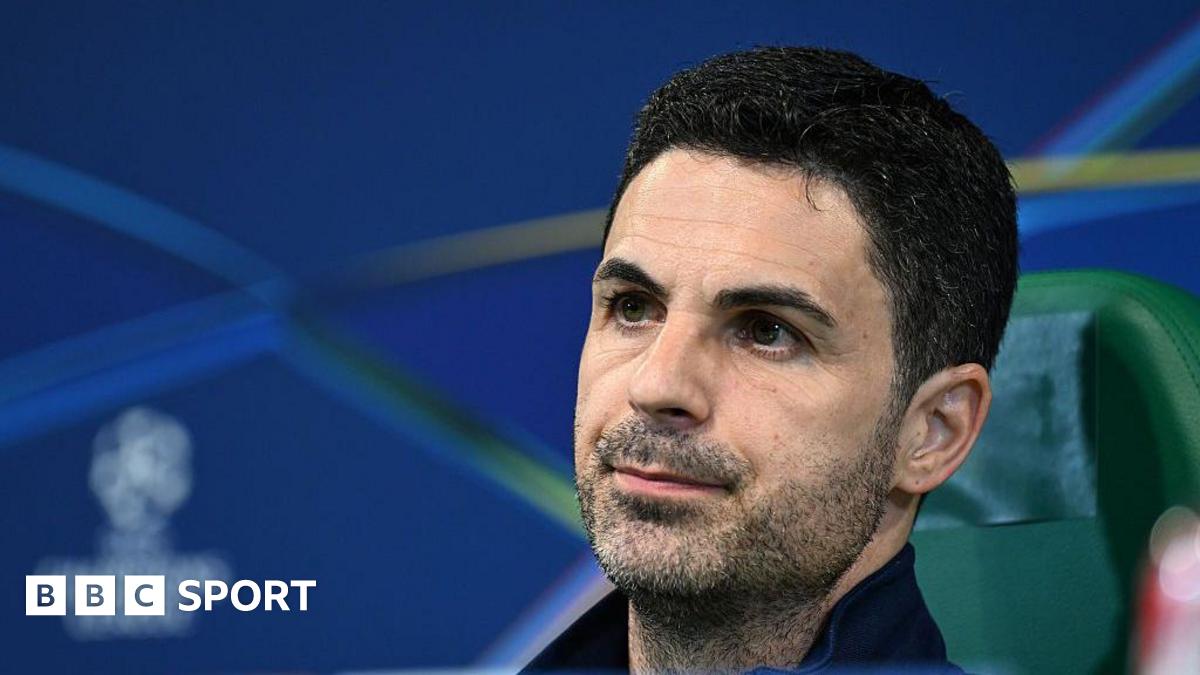
When Arsenal face Sporting in their Champions League quarter-final first leg on Wednesday, there will be much more riding on the game than just a knockout match in Lisbon.
For many, this is where the Gunners need to show back-to-back defeats, against Manchester City in the Carabao Cup final and the damaging loss to Southampton in the FA Cup quarter-final, will not leak into their European and Premier League campaigns.
Arsenal have been tagged as the ‘nearly men’ under Mikel Arteta with three successive second-placed finishes in the Premier League in the last three seasons.
But the Gunners have played a ruthless style of football this season, which has seen them establish a nine-point lead in the Premier League, reach the final of one cup competition and, depending what happens in two legs against Sporting, at least the quarter-final stage of the two other cup campaigns they began.
Their style of play has been questioned at times but now it is the team’s mentality that is coming under the spotlight.
The Gunners have been so impressive this season that their defeats by City and Saints are the first time they have lost successive matches this campaign, while the loss on the south coast was just the fifth of the season.
But, with the Champions League and Premier League the top prizes for the Gunners, this is where Arteta needs to show the pain of coming so close in precious campaigns is not going to overwhelm his side as they look to win their first major trophy since 2020.
“Have some perspective about how difficult it is what we have done until now,” said Arteta, when asked how he and the team prevent a longer run of defeats.
“Feel the pain, feel the emotion and use it to be better and improve.”
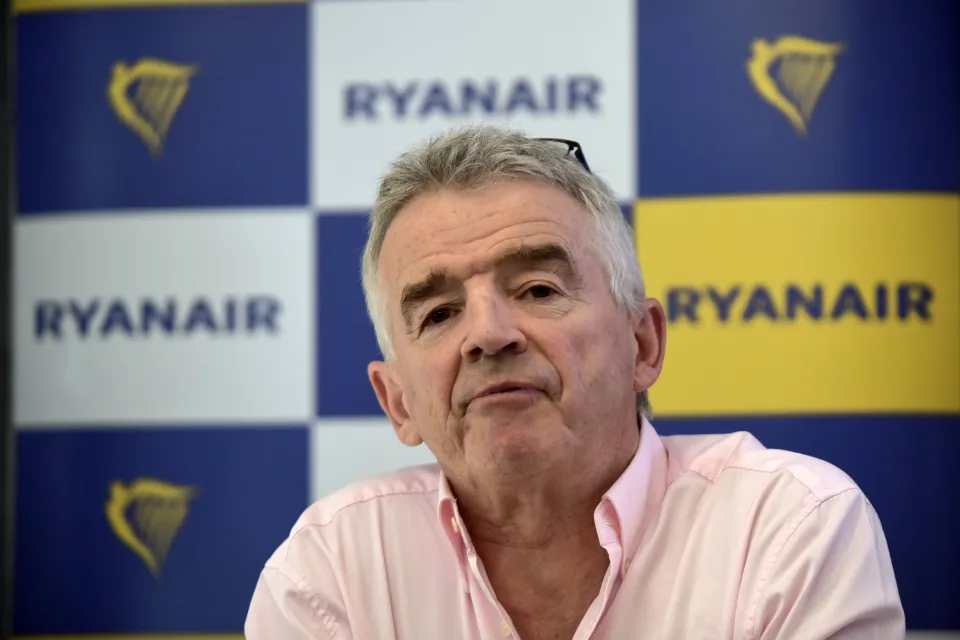
HOLIDAYMAKERS could get stuck abroad this summer as up to 10 per cent of flights face cancellation if the Strait of Hormuz remains closed, Ryanair boss Michael O’Leary warned.
And the budget airline kingpin said that holidaymakers should book as soon as possible to avoid paying far higher prices.
Sign up for the Travel newsletter
Thank you!
The fresh warning comes as family’s look ahead to the summer holsCredit: GettyIf the new war in the Middle East continues, holidaymakers could face serious disruptionCredit: Getty
The price of jet fuel has skyrocketed since the outbreak of the US-Israeli war with Iran, which has left the vital shipping route of the Strait of Hormuz blocked.
Speaking to ITV News, the airline chief revealed that between five and 10 per cent of flights in May, June and July could be cancelled if the Strait remains closed.
The Ryanair chief explained: “We have aircraft that are based at 95 airports across Europe.
“And we’ll have to cancel routes at whichever airport where the fuel company advises us they’re short of jet fuel at, say, Malaga Airport or Athens Airport.
“It’ll be those kind of decisions. And we’ll get very little notice – we’ll be told, I think, within five or seven days.
“So we will then be looking around and we will be trying to ground one or two aircraft and minimise inconvenience for customers. But it’s going to be difficult, it’s going to be challenging.”
O’Leary admitted that some holidaymakers may get stuck abroad due to flight cancellations, but noted that airlines have a responsibility to get you home.
He said: “Now, you won’t get compensation because it’s clearly beyond the airline’s control, but we will – and in Ryanair’s case we have lots of flights on a daily basis – we will re-accommodate you and get you back.
“You might be stuck for a day or two, but if you’re staying within Europe, you should be reasonably confident.”
Asked if it would be a “gamble” to book a summer holiday, O’Leary admitted “life is a gamble”.
He continued: “I think we’re looking at the risk of five or 10 per cent of cancellations in June or July, but 90 to 95 percent of flights will still operate.
“So, I think you’re really not taking much of a gamble. I would be much more concerned if you delay your booking, that actually you and your family will be paying much higher prices if you get to May, June, or July.”
The blame for any cancellations should be laid at the feet of the US President, not the airlines, the Irish airline boss added.
He added: “There doesn’t seem to be any exit plan at all. But we are where we are, blaming Trump is not going to get us anywhere.”
O’Leary said that this would be an “unknown scenario” for the airline industry and that “the sooner this war is over, the better”.
The new comments from the airline boss come after he said yesterday that jet fuel supplies could be disrupted as soon as May due to the new crisis in the Middle East.
Speaking toSky News, the airline chief revealed that whileRyanairis “reasonably well hedged” on 80 per cent of its fuel, the company is being forced to shell out nearly double for the remaining 20 per cent.
O’Leary confirmed the airline is paying around $150 (€130) a barrel for the unhedged portion of its supplies.
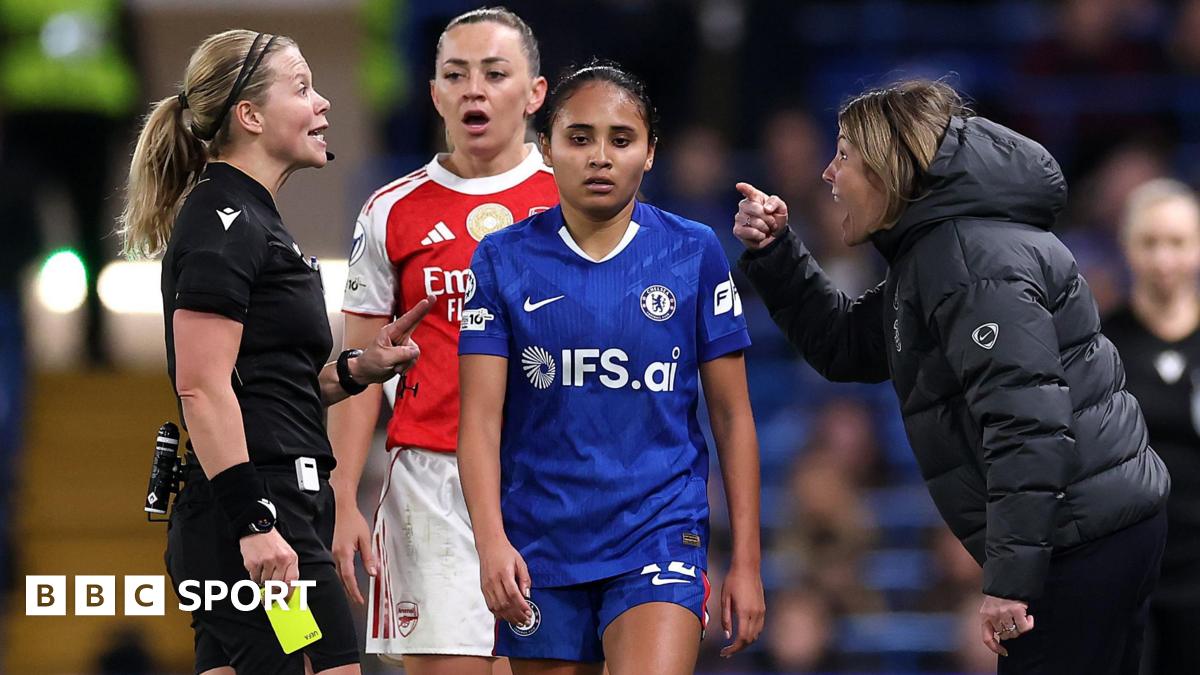
Chelsea boss Sonia Bompastor said her players “do not deserve that level of refereeing” after Arsenal’s Katie McCabe avoided a red card for pulling Alyssa Thompson’s hair during their Champions League quarter-final exit.
The Blues were chasing a late leveller after scoring a stoppage-time goal to make it 3-2 on aggregate when McCabe reached out and tugged Thompson’s hair.
The American winger was breaking forward, but McCabe escaped a yellow card and the video assistant referee (VAR) did not advise referee Frida Mia Klarlundto review the incident.
Bompastor was shown a yellow card for angrily protesting against the decision and then sent off for her continued outburst – although she refused to leave the touchline as Arsenal held on to reach the semi-finals.
The Frenchwoman arrived prepared with her mobile phone so she could show a replay of the incident as she gave a furious interview to BBC Two.
“For me, it is clearly a red card for the Arsenal player. She’s pulling Alyssa Thompson’s hair,” Bompastor said.
“If the VAR is not able to check that situation, I don’t know why we have the VAR.
“I’m the one getting a red card when I think the Arsenal player should be the one getting a red card.”
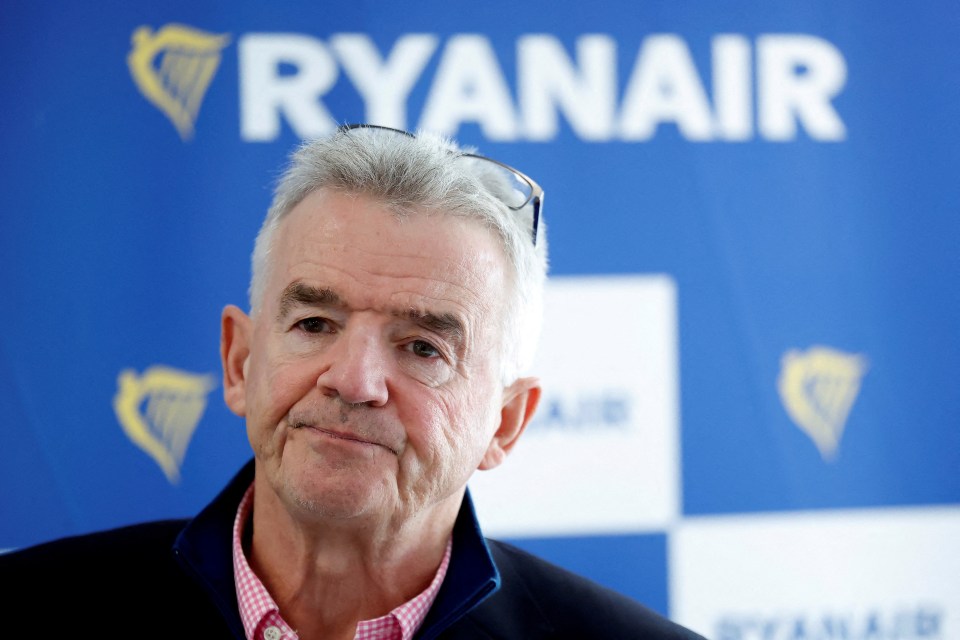
RYANAIR boss Michael O’Leary has warned jet fuel supplies could be disrupted in May as the war in Iran chokes off global oil routes.
The budget airline kingpin warned that holidaymakers could face a summer of uncertainty if the Middle East war continues to throttle global oil routes.
Sign up for the Travel newsletter
Thank you!
Michael O’Leary revealed that while Ryanair is “reasonably well hedged” on 80% of its fuel, the company is being forced to shell out nearly double for the remaining 20%.Credit: ReutersO’Leary confirmed the airline is paying around $150 a barrel for the unhedged portion of its suppliesCredit: Splash
Prices have spiralled since the outbreak of fighting at the end of February, with Iran blocking vital tankers from passing through the Strait of Hormuz.
Speaking to Sky News, the airline chief revealed that while Ryanair is “reasonably well hedged” on 80% of its fuel, the company is being forced to shell out nearly double for the remaining 20%.
O’Leary confirmed the airline is paying around $150 a barrel for the unhedged portion of its supplies.
The outspoken boss warned that while rising costs are a major headache, the more “immediate concern” is whether there will be enough fuel to keep planes in the sky.
He admitted that the industry is at the mercy of the conflict and the ongoing blockade of the world’s most important shipping passage.
“Fuel suppliers are constantly looking at the market. We don’t expect any disruption until early May, but if the war continues, we do run the risk of supply disruptions in Europe in May and June, and we hope the war will finish sooner than that and the risk to supply will be eliminated,” he said.
O’Leary calculated that the threat to the airline’s operations is now a very real possibility for millions of passengers planning their early summer getaways.
He warned that there is a “reasonable risk” that between 10% and 25% of supplies could be at risk through May and June, adding that like everyone else in the industry, he hopes the war ends sooner rather than later.
The Ryanair chief made it clear that the fate of the summer season rests on the reopening of the Strait of Hormuz.
He stated that if the war finishes by April and the shipping lane reopens, then there is “almost no risk to supply.”
Despite the looming threat of shortages, O’Leary struck a defiant tone regarding his own flight schedule.
He told Sky News that he does not expect to cancel any flights, even as some of Ryanair’s rivals struggle to cope with the volatile market.
However, the pressure on the industry is mounting across the board.
EasyJet boss Kenton Jarvis has already sounded the alarm for passengers’ wallets, warning that European consumers should expect higher ticket prices towards the end of summer when existing fuel hedges come to an end.
So far, a number of airlines have already said they will be raising the cost of flights due to the fuel crisis.
Cathay Pacific, AirAsia and Thai Airways are just some that are increasing fares, along with Air New Zealand.
United Airlines said it could eventually see fares increase as much as 20 per cent.
Other airlines have said they are cancelling flights altogether.
United Airlines confirmed that it would be cutting five per cent of flights for the next few months, which works out to around 250 a month.
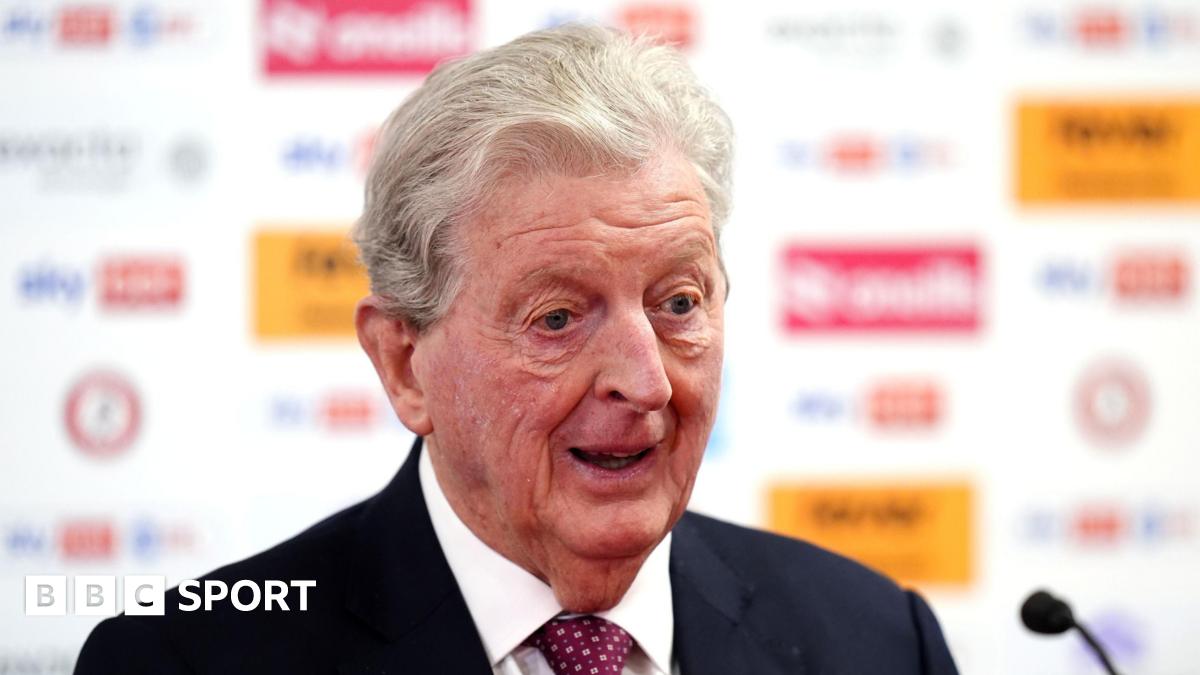
Roy Hodgson said there was much he missed about football after coming out of retirement to return to the dugout as caretaker manager of Bristol City.
The 78-year-old accepted the role at the Championship club until the end of the season following the sacking of Gerhard Struber on Friday.
The former England manager has not worked since leaving Crystal Palace in 2024 and confirmed he will only be in the position for City’s seven remaining games, insisting he was “too old” for a long-term position.
“You don’t work at top-level football at my age really very often,” Hodgson said.
“I’d come to terms with that quite well then something like this happens and you realise that there’s a lot I do miss.
“Having this opportunity to get a feel for that again, and have a chance to work with a good group of players – it seems from what I saw this morning – and to relive being on the grass and doing the coaching, which I’ve always been really keen to do, and with a group of players without necessarily having all the drawbacks.”
Hodgson returns to the club where he began his career in 1982, spending four months as Bristol City manager during a turbulent financial time when the club nearly went out of business.
“I’ve been perfectly happy in my retirement period – a little bit bored from time to time – but a challenge like this was hard to turn down,” Hodgson said.
“Plus the fact it is Bristol which is a lovely city and I do have fond memories of my time here, despite the fact I shouldn’t have fond memories – I should be having nightmares.”
Nine years on, Flynn is anxiously watching on as a fan, having left the world of football for a new job in media and marketing in the Newport office of CDM Media, his city centre base just across the River Usk within spying distance of his old club.
Christian Fuchs’ team are two points above the relegation zone after Saturday’s crucial 1-0 win over Shrewsbury Town and, with six games to go, Flynn hopes there will be no need for a repeat of his final-day rescue act.
“I hope Christian can keep them up because there will be a big after-effect if things go wrong,” said the 45-year-old, who was born in the city and played for County before managing them from 2017 to 2021.
“My son is in the academy at Newport and if we go down… that could go. That would be catastrophic in terms of how we’re going to bring young players through.
“I think football in the city will drop. It would hit hospitality around match days. It’s going to leave a bad aftertaste.
“If they go down, I think it could be a long, long road back.If they get back.”
Flynn, though, is optimistic about their survival hopes. After all, they’re not 11 points adrift of safety as his 2017 side were after he accepted what looked an impossible survival mission by replacing the sacked Graham Westley as boss.
GERI Halliwell has jumped the final hurdle in a neighbour row – as her plans to build a £30k horse walker are finally approved.
The Spice Girls singer and her husband, ex-F1 boss Christian Horner, want to install the 77ft structure to train horses near their Oxfordshire home.
Sign up for the Showbiz newsletter
Thank you!
The singer and her husband want to install the 77ft structure to train horses near their homeCredit: gerihalliwellhorner/InstagramGeri, 53, and Christian, 52, own a horse racing company called OMBICredit: GettyPlans for the walker were met with fury – with a number of objections registered with the local councilCredit: Not known, clear with picture desk
Geri, 53, and Christian, 52, own a horse racing company called OMBI, featuring stables for 14 horses and a full-time trainer.
But plans for the walker, essentially a circular cage that moves horses to improve their fitness, were met with fury by locals, with several objections registered with West Northamptonshire District Council.
Concerns over the height of the building, its visual impact, inadequate screening, and lighting have been raised by neighbours.
However, the council has now approved the application, provided the celebrity pair follow strict conditions.
It said: “The building shall be used for private equestrian and land management uses only and no commercial use, including riding lessons, tuition, livery or competitions shall take place at any time.”
The authority added: “Whilst it is acknowledged that the walker incorporates a steep pitched roof for its size, the general design is functional in form.
“Giving regard to its siting, scale and rural-equestrian character, the design is considered appropriate for the open countryside location and would not harm the character of the area.”
Full details of lighting still need to be approved before it is built, but it is far enough away from neighbours not to cause issues, the council added.
And the couple have proposed to hide the training device with 12 newly-planted trees, which was deemed appropriate by planners.
But one neighbour, who objected to the horse walker plans, fumed the structure would be “extremely prominent” on the skyline.
He said: “Whilst we do not object to the principle of a horse walker… we object to the plans as currently presented.
“The proposed structure would be extremely visible from our property, other village properties, and from a public highway.
“In a rural conservation area this would be unacceptable as it would completely change the character of the area.”
The local also objected to the main property being “away from the main buildings when other infill sites are available”.
It is the latest in a number of planning rows between the couple and their neighboursCredit: AFPThe pair currently own stables for 14 horses and a full-time trainerCredit: Getty
Another slammed the proposed lighting set-up and described the suggested screening as “totally inadequate.”
They said: “There is already significant lighting at the property. We would not want to see this area illuminated outside of normal working hours.
“Further lighting would be encroaching into an area which is currently unlit behind the existing barn.”
Writing on behalf of Geri and Christian, a planning agent pointed to the Department for Environment Food and Rural Affairs (DEFRA) codes.
He wrote: “It states that animals must be given freedom to exercise off the tether for a reasonable period at least once a day.
“The installation of the horse walker will ensure that this is possible and that they are exercised properly, regardless of weather conditions and other limiting factors.
“The proposed horse walker will provide the horses with a space to be suitably exercised off the tether.
“Once the new hedgerow matures it will be largely screened from all public and private views onto the farm.”
The scheme is the latest in a number of planning rows between the couple and their neighbours.
Geri and Christian were recently given approval to keep a pergola that had been built without planning permission.
Just last year, they were allowed to build a second pool on the grounds despite fears it would be a “blot on the landscape”.
And three years ago, they were also granted permission for a first floor extension, a replacement barn and a new greenhouse.
Geri’s representatives have been approached for comment.
The couple have proposed to hide the training device with 12 newly-planted trees
There’s a lot of chatter around reality TV right now and the hazards of leaning into mess for the sake of potential viewership. Before Utah-based reality star and social media influencer Taylor Frankie Paul was making national headlines over domestic violence allegations brought against her by former boyfriend Dakota Mortensen — putting “The Bachelorette” and “The Secret Lives of Mormon Wives” series under interrogation — The Times was working on a group of stories that captured the longevity and cultural impact of the unscripted format.
Sign up to get recommendations for the TV shows and streaming movies you can’t miss, plus exclusive interviews with the talent behind your favorite titles, in your inbox every Friday
By continuing, you agree to our Terms of Service, which include arbitration and a class action waiver. You agree that we and our third-party vendors may collect and use your information, including through cookies, pixels and similar technologies, for the purposes set forth in our Privacy Policy such as personalizing your experience and ads.
Speaking of reality TV — Valerie Cherish and “The Comeback” have returned for another round of the showbiz satire. The HBO comedy, which blends scripted comedy with a mockumentary format, originally premiered a year before the “Real Housewives of Orange County” and lampooned the effects of the early-2000s reality TV boom. It followed Valerie (Lisa Kudrow), a former sitcom star from the ’90s, as she attempts to revive her career by starring in a new sitcom while allowing a reality TV crew to document her journey. When the short-lived series was revived in 2014, it poked fun at the rise of prestige TV and the evolution of celebrity culture in the social media era. Now, its third and final season finds our favorite leading lady navigating Hollywood’s AI revolution. Michael Patrick King, who developed the series with Kudrow, stopped by Guest Spot to discuss the show’s latest timely exploration.
Also in this week’s Screen Gab, we take a breather from current programming and dust off two bygone titles. One is an animated sitcom that revolves around a mild-mannered therapist and his sessions with a notable clientele of real-life comedians playing exaggerated versions of themselves; the other is a mid-aughts thriller (of the Lifetime TV variety) that follows a heroic doctor who moonlights as a dangerous predator — its Letterboxd rating spread is something to behold. And it’ll make you wonder what Valerie Cherish might have brought to camp like that.
Let it all be incentive to spend some extra time on the couch this weekend — it’ll cut down on trips to the gas pump! Until next week.
— Yvonne Villarreal
Turn on
Recommendations from the film and TV experts at The Times
Dr. Katz, played by creator Jonathan Katz, invites his ex-wife, Roz, played by actor/author Carrie Fisher, to indulge in a dysfunctional family Thanksgiving on “Dr. Katz, Professional Therapist.”
(Comedy Central)
“Dr. Katz, Professional Therapist” (YouTube)
Once in a while the algorithms that rule our lives do us an actual favor, and so it was that YouTube alerted me that the entirety of this great turn-of-the-century cartoon lives there, hosted unofficially on a variety of channels. (Just type in the title.) Created by star Jonathan Katz with Tom Snyder, the inventor of an animation workaround called Squigglevision — in which vibrating outlines give a crude effect of action — and co-produced by Loren Bouchard, who would go on to co-create “Bob’s Burgers,” this six-season, semi-improvised, Peabody Award-winning Comedy Central series is founded on the notion that a comedian’s patter can resemble the neurotic unloading one might encounter in a psychotherapist’s office. And so onto Katz’s couch comes a parade of future comedy elder statespersons, naively but recognizably rendered, including Ray Romano, Lisa Kudrow, Dave Chappelle, Garry Shandling, Marc Maron, Catherine O’Hara, Margaret Cho, Wanda Sykes, Patton Oswalt, Sandra Bernhard, Paul F. Tompkins, David Cross, Jim Gaffigan, Steven Wright and Conan O’Brien. Rodney Dangerfield, already an elder comedy statesperson, has some things to say about his wife. Framing the therapy sessions are the domestic misadventures of Katz and his adult child son, Ben (H. Jon Benjamin, the Mel Blanc of adult animation, if Mel Blanc only used his own voice). Can’t-be-bothered secretary Laura (Laura Silverman, recently seen as Jane the documentarian on the new season of “The Comeback”), fills out the regular cast. — Robert Lloyd
“Stalked by My Doctor” (Tubi)
Last weekend, the Museum of Home Video hosted an interactive game at Vidiots where the sold-out crowd watched the first five minutes of 10 films and then voted on which flick to finish. “Stalked by My Doctor” won in a landslide. This 2015 Lifetime TV movie is one of the most bizarrely watchable trash films of the 21st century. Eric Roberts stars as Dr. Beck, a lovelorn, egotistical California cardiologist who is convinced he’s a catch. This graying bachelor falls for his patient, a high schooler named Sophie (Brianna Joy Chomer) and, when rejected, threatens to clobber her disabled boyfriend (Carson Boatman) with the guy’s own crutch. Filmmaker Doug Campbell makes B-pictures like a plastic surgeon does liposuction: He hacks off all the fat. Subtle? Absolutely not. Yet, there’s not a single dull scene and the characters make smarter moves than you’d expect. By the end, I was hooting and clapping, and giddy to hear that this top-notch schlock launched a five-film franchise. Some night soon, you can bet I’ll put on “Stalked by My Doctor: Patient’s Revenge.” — Amy Nicholson
Guest spot
A weekly chat with actors, writers, directors and more about what they’re working on — and what they’re watching
Lisa Kudrow as Valerie Cherish in “The Comeback.”
(Erin Simkin / HBO)
Could ChatGPT deliver a script worthy of Valerie Cherish’s talents? More than 11 years after it was last revived, “The Comeback” returned this month with a third season that explores the fear of technology replacing artists, and the ethical compromises that arise, through its sharp and uncomfortable comedic touch. Valerie is offered the lead in a new sitcom, “How’s That?,” on a faltering streaming service called the New Net. But there’s a catch. It’s the first-ever TV series to be written by AI — a fact that network brass wants to keep secret to avoid industry backlash. Valerie is initially resistant to the idea, but a humiliating experience on an indie shoot has her reconsidering. Is she about to be part of the new future of TV? A new episode of “The Comeback” drops Sunday on HBO and HBO Max. Over email, King shared his worries over how AI may transform the entertainment business and the series he’d pick to join the comeback circuit. — Y.V.
This season has Valerie Cherish starring in the first sitcom written by artificial intelligence. The series has always hilariously explored industry shifts. What concerns or curiosities do you have regarding AI, and did those evolve as you worked on the season?
Concerns — yes, many. They range from young writers with nowhere to learn their craft to no writers, young or seasoned, anywhere but the Coffee Bean & Tea Leaf. And yes I’m curious — white-knuckle curious — to see how the threat of AI (Season 3) will change how we make TV compared to how way the threat of reality TV (Season 1) and the threat of prestige cable and streaming (Season 2) did. Spoiler alert …television and TV writers are still here. When is this being published?
Without spoiling anything, there’s a scene in this week’s second episode where Valerie takes a meeting with some Hollywood folks — and it’s an odd experience. Do those meetings feel any more confusing or bizarre to you, in terms of how network brass thinks about the landscape, than they did a decade or two ago?
That billion-participant Zoom scene in the episode is very reflective of the “pitch process” today — in fact more than reflective — it’s a documentary … minus the occasional “pop-up pet.” What’s missing from this current Zoom pitch process is the in-person connection, which also accounts, I think, for why you no longer hear the phrase: “I sold it in the room.” No room, more people — less sales?
What does your writing process with Lisa Kudrow look like? Place me in those weeks of writing the first episode of this season.
The first and every episode has the same process. We talk, we laugh, we eat, we improv, we take turns writing it down — you know, things human writers do.
In addition to this third go with “The Comeback,” you worked on multiple seasons of “… And Just Like That.” What have you found interesting about the process of revisiting characters at a different stage in your life? Has one felt easier to navigate than the other in the current entertainment landscape?
I’m fascinated by a character’s personal evolution — how they can grow over the years. Who they were, who they might be now, what they’ve let go of — how they’ve changed. I’m also fascinated by how some fans of these characters don’t want them to change. In the current TV landscape — the fans are very vocal.
What have you watched recently that you are recommending to everyone you know?
“The Pitt” [HBO Max]. In addition to the good characters, it’s the thrill of being introduced to new actors.
As a viewer, which show — excluding those in your catalog — do you think would be worthwhile to revisit in 2026?
“Freaks and Geeks” [Prime Video, Paramount+]. One season only. Sometimes … a special show that was canceled — deserves a comeback.
Peaky Blinders: The Immortal Man is Netflix’s number one film and writer Steven Knight has revealed a fan-favourite character nearly made a surprise comeback
Peaky Blinders film almost brought back Tom Hardy for massive twist(Image: BBC)
Peaky Blinders creator Steven Knight has revealed he scrapped a massive twist that would have brought back Tom Hardy’s iconic character Alfie Solomons.
The Venom star portrayed the Jewish cockney crime lord of Camden from the hit drama’s second season on and had a complex relationship with the Birmingham gangsters.
After being shot in the head by Tommy Shelby (played by Cillian Murphy) on Margate beach, Alfie makes brief appearances in the fifth and sixth seasons of the hit BBC series.
Some fans may have been disappointed that Hardy didn’t make an appearance in Netflix’s new film The Immortal Man, which sees Tommy returning to Small Heath to take on his estranged son, Erasmus ‘Duke’ Shelby (Barry Keoghan), who has taken over the gang.
However, Knight has since revealed he originally considered the possibility of Alfie making an appearance – and it would have been a massive twist on the fate of the character.
“I had an idea, which I haven’t really spoken about,” he shared with the Hollywood Reporter.
“Ever since he was shot on the beach at Margate [in season four], you’ve only ever seen Tommy and Alfie together alone.”
The fifth season reveals that Alfie had actually survived the gunshot wound to the face after Hardy lobbied Knight to bring him back.
But, as Tommy regularly glimpses the ghosts of his past, including the lingering image of his first wife Grace (Annabelle Wallis), Knight briefly considered revealing that Solomons was simply another apparition Tommy had been communing with.
“I thought, maybe [Alfie] appears, and we realise he’s been dead all that time,” Knight went on.
“Now, I nearly did that, and I didn’t do it, but that was a thought.”
Hardy’s demanding schedule may have also contributed to Knight’s decision not to bring him back, as the star has recently been filming the Paramount+ crime drama MobLand since the end of Peaky Blinders.
Get Netflix free with Sky for Bridgerton Season 4
This article contains affiliate links, we will receive a commission on any sales we generate from it. Learn more
‘Dearest gentle reader’, as the fourth season of Bridgerton follows second son Benedict love story, there’s a way to watch this fairytale-like season for less.
Sky is giving away a free Netflix subscription with its new Sky Stream TV bundles, including the £15 Essential TV plan. This lets customers watch live and on-demand TV content without a satellite dish or aerial and includes the new season of Bridgerton.
Thankfully, there is still a chance, albeit a slim one, that fans could see Alfie return alongside some other Peaky favourites as the series will be returning for at least two more series on Netflix and the BBC.
Knight confirmed that Duke will be appearing in the upcoming follow-up, which is set in post-WWII Birmingham, though it’s currently unknown if Keoghan will be reprising the role.
He also teased: “Some of the characters that are in [The Immortal Man] will appear in that. But I’m under strict instructions not to talk about it except to say that it’s happening.”
Peaky Blinders: The Immortal Man is available to stream on Netflix.
Jet2 boss Steve Heapy has issued an update to industry experts
Maria Ortega and Robert Rowlands Deputy editor, money and lifestyle, content hub
04:31, 22 Mar 2026
A Jet2 Boeing 737 lands at Newcastle Airport(Image: Getty)
Jet2’s boss has warned of a sharp drop in bookings to Cyprus and Turkey but said tourists could get special offers. CEO Steve Heapy said flights on these routes are becoming “empty” due to the uncertainty caused by the Middle East conflict.
The boss said demand is instead moving to destinations such as Spain and Italy. TTG reported that he spoke about the issue via video link at the airline’s annual conference in Cádiz in Spain.
He also warned hotel partners to not ‘get greedy’ in Spain and Italy and keep prices competitive. And he vowed to protect customers where that happened.
He said he expects holidays to Cyprus and Turkey to recover quickly once the war in Iran ends. “I think we should all be prepared for a fairly rapid end to the conflict and a fairly sharp recovery when that happens,” he said.
Heapy said: “Bookings to Cyprus and Turkey are drying up, cancellations are up and our aircraft are emptying.” He said Jet2 was working to cross-sell customers to western Mediterranean destinations where demand “seems to be OK”.
Heapy added that Cyprus remained a safe destination despite a drop in demand to the island, which has been targeted by Iran since America and Israel launched airstrikes on the Middle Eastern nation.
He said: “Cyprus is still far enough away that you can still travel. We’re doing what we can to understand what’s going on and how we can work our way through it.”
‘Special offers’ to lure more travellers to Cyprus and Turkey
He expects hotels in Cyprus and Turkey to introduce special offers in the weeks ahead to lure more tourists in. Speaking to travel agents at the conference, he said: “We’ll do what we can to work with you and fight to get through this the best we can,” he said. “Our job is to put our customers’ fears to one side and reassure them that these destinations are safe.
“We’re a very resilient industry. These events happen every couple of years, and I’ll do whatever I can to help all our of businesses navigate through this.”
TTG also reported that Phil Nuttall, CEO of Travel Village Group, said it is too early to offer a full assessment of the crisis’s impact. Yet he said possible price rises could create problems for many families.
Jet2’s head of overseas operations, Lee Davies, also said the operator was putting more resource into challenges arising from the conflict, TTG said. “We’ve had to adapt our service, especially across Turkey and Cyprus at the moment. We have our red team, we’ve increased our presence, we’re visiting hotels, reassuring customers.
“We’ve expanded our visiting times and ring-fenced our 24/7 team in the UK. We’re contingency planning in terms of disruption management, you always have to have a very solid plan behind the scenes ready to activate.”
He reportedly added: “You’ve got to understand why in their minds, wherever that destination is, that they possibly don’t want to travel.” He added that by helping customers now, even if they do not then travel, “they will come back”.
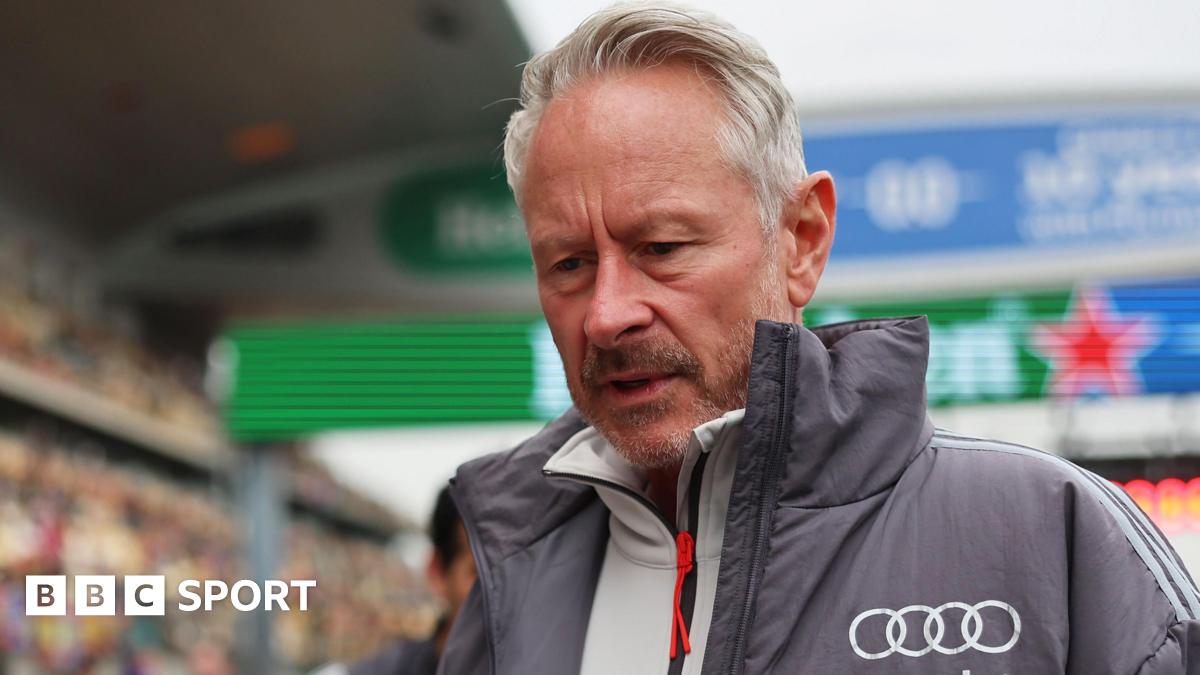
A statement from Audi said Wheatley was leaving for “personal reasons”.
Mattia Binotto will take over the responsibilities of team principal in addition to his role as head of the Audi F1 project while the company takes its time to consider its next steps.
The move comes after an Audi board meeting on Friday with Wheatley and Binotto in attendance.
He will have to serve a period of ‘gardening leave’ before joining another team, the length of which will have to be negotiated between himself, Audi and potentially a future employer.
Key among Wheatley’s reasons for leaving were a desire to return to the UK by the end of this year.
Audi are not expected to look for a direct replacement for Wheatley, and are more likely to appoint someone to a role that is in charge of running the race team while Binotto retains overall control.
Aston Martin have not confirmed their interest in Wheatley but owner Lawrence Stroll has made him an offer to run the team under managing technical partner Adrian Newey.
Newey, who joined Aston Martin in March last year, has been acting as team principal since the position’s former occupant Andy Cowell was moved into a different position.
Cowell is now focusing on helping engine partner Honda resolve its problems with its new engine, which has started the 2026 season lacking performance and reliability.
In a statement on Friday, Stroll re-emphasised his commitment to and relationship with Newey, who is regarded as the greatest F1 designer in history.
Stroll said: “I would like to reaffirm that Adrian Newey is my partner and an important shareholder. He is AMR’s managing technical partner, and he and I have a true partnership built on a shared vision of success for the company.
“We do things differently here, and while we don’t currently adopt the traditional team principal role that you see elsewhere – it is by design.
“As the most successful engineer in the history of the sport, Adrian’s primary focus is on the strategic and technical leadership where he excels. He is supported by a highly skilled senior leadership team to deliver on all aspects of the business, both at the campus and trackside.”
Stroll met with former Red Bull team principal Christian Horner again this week, but Newey is said by sources to be opposed his former colleague joining Aston Martin.
Newey left Red Bull in April 2024 because his relationship with Horner had soured after nearly 20 years together.
If Stroll and Wheatley finalise their agreement, the new arrangement would free up Newey to focus on the key areas where he can make a difference without the distractions of other responsibilities.
Aston Martin are last in the championship after two races this season, with a car that is behind on development compared to its rivals and an engine that is beset by major vibration problems and is short on internal combustion power and energy recovery and deployment.
The crime drama from Death in Paradise’s creator has returned to screens with its third season and viewers were delighted
The Marlow Murder Club returns for a third season this week(Image: UKTV)
The beloved mystery drama, The Marlow Murder Club, made its comeback to our TV screens with the eagerly awaited third series and viewers have declared the opening instalment “brilliant”.
Adapted from the novels by Death in Paradise creator Robert Thorogood, the programme unfolds in the charming Buckinghamshire town of Marlow.
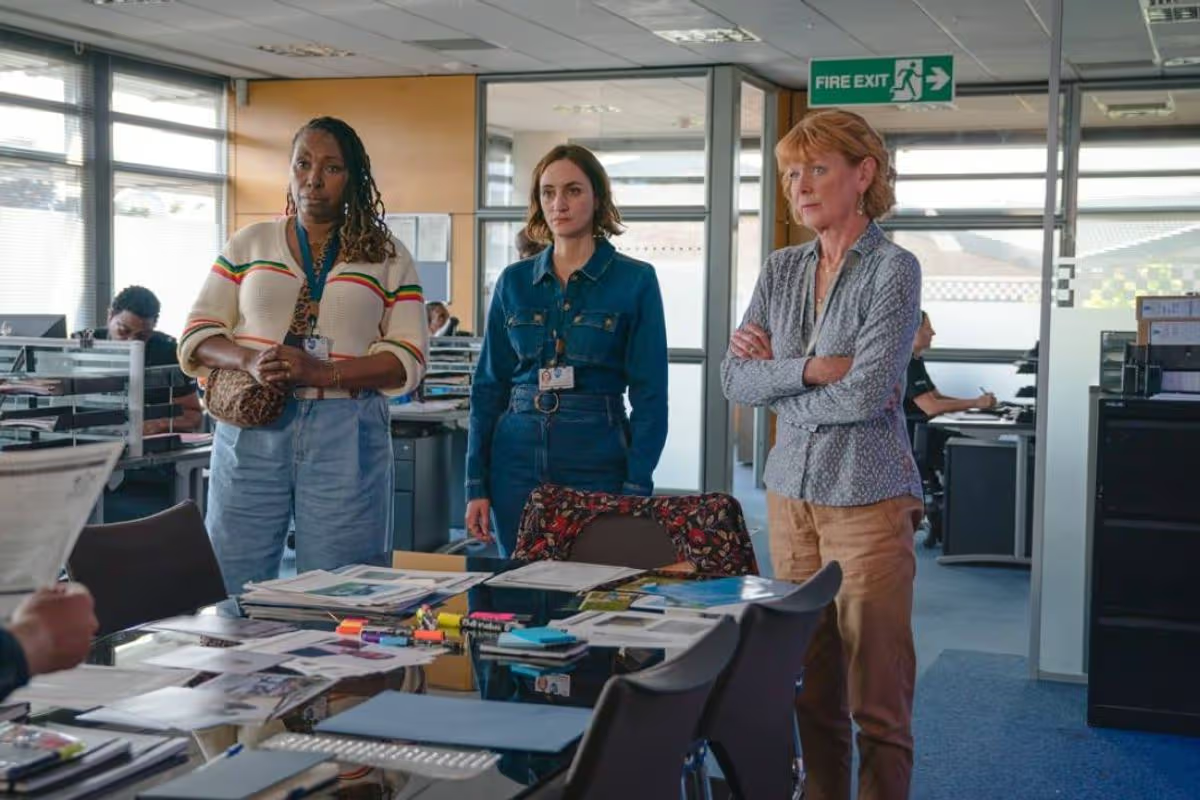
Where retired archaeologist and amateur detective Judith Potts (Samantha Bond) joins forces with dog walker Suzie Harris (Jo Martin) and vicar’s wife Becks Starling (Cara Horgan) to crack a series of captivating crimes.
Every series has featured an array of famous faces, with the likes of Peter Davison (The Gold, Gentleman Jack), Tony Gardner (The Larkins, Last Tango in Halifax) as well as the comedy icon Harry Enfield making a guest appearance in the newest series, reports Hello.
In season three, Judith, Suzie and Becks confront a new batch of baffling mysteries, assisted by Marlow Police’s senior detective, Tanika Malik (Natalie Dew).
The synopsis reads: “From the sudden death of the town’s beloved mayor – the nicest man in Marlow – to a celebrity chef found dead at the launch of his cookbook with half the town in attendance.
“The team will be working under the watchful eye of the Marlow community.
“They’ll also be called to action at a university reunion in an eerie manor house where, in a surprising twist, Becks finds herself amongst the suspects. Could this case threaten our amateur sleuths’ roles as civilian advisors?”
This gripping drama represents cosy crime at its finest. With absorbing mysteries, ingenious plot twists and abundant charm, it’s hardly surprising that The Marlow Murder Club has become such a firm favourite with audiences.
Sharing their reaction on social media, fans have praised the programme’s much-anticipated third run as “brilliant”.
One viewer posted on X: “Last night’s #MarlowMurderClub series 3 premiere was off to a great start, brilliant stuff from Samantha bond, Cara Horgan, Jo Martin, Natalie Dew.”
Whilst another commented: “So pleased this is back on. I love it.” A third audience member commended the show as a “brilliant crime drama,” whilst another applauded the “beautiful scenery and laugh out loud moments”.
Meanwhile, the programme has garnered favourable reviews from television critics, with The Times likening the drama to “the TV equivalent of a garden wallow listening to birdsong whilst enjoying a nice cup of tea,” in its three-star assessment.
Awarding four stars, the Daily Mail praised the show as “cosy crime at its snuggest and most comforting”.
All six episodes of The Marlow Murder Club Season 3 are now available to stream on U and Channel 4.
WITH the Iran crisis continuing, it’s no surprise that Brits are changing their holiday plans.
Destinations like Dubai and Doha remain off the travel list, and Brits are avoiding certain long-haul destinations that involve stopovers in the Middle East – but TUI says that other holiday spots are on the rise instead.
Sign up for the Travel newsletter
Thank you!
TUI has revealed the holiday destinations on the rise this yearCredit: AlamyThe islands avoid the Middle East crisis as flights will cross the North Atlantic OceanCredit: Alamy
TUI has revealed that there’s been a change in demand when it comes to Brits booking holidays.
Instead, certain locations are being favoured as a result – in particular, two Caribbean islands.
TUI’s UK&I Managing Director Neil Swanson said: “We’re seeing particularly strong demand for our direct long-haul flights to the Caribbean – especially the Dominican Republic and Jamaica – where point‑to‑point routes give customers added confidence and help them keep their holiday plans on track.”
The islands are popular year-round with Brits thanks to their sunshine, high temperatures and beautiful coastlines.
Flights to the islands are direct and take between eight and ten hours.
They also don’t pass through the Middle East as they head over the North Atlantic Ocean instead.
TUI offers holidays to Jamaica from £899 per person.
In Jamaica, a popular spot is Negril, which is the capital of the island that sits along the western tip.
Over the years it has been visited by famous faces likes Bob Marley and even The Rolling Stones.
It has the Seven Mile Beach, which offers visitors to ride across the sand on horses, and go snorkelling.
TUI offers holidays to Montego Bay too, a destination which is known for being popular with tourists with all-inclusive resorts, white-sand beaches, and nightlife.
It also has breaks to Ocho Rios which has lots of green spaces like the Dunn’s River Falls, the Blue Hole – a natural limestone sinkhole that’s considered a hidden gem.
The Dominican Republic is one of the cheapest islands in the Caribbean to visit tooCredit: Alamy
When it comes to Jamaica, the best months to visit are December through to April when it is at its warmest and most dry.
The best time to visit the Dominican Republic is the same, and TUI offers breaks from from £899 per person.
Laura Evans Fisk, Head of Digital & Engagement at eurochange said: “As we’ve seen transactions for the Dominican peso surge this year ahead of any other currency, we can definitely expect to see the Dominican Republic at the top of travel bucket lists for UK tourists in 2026.
Beaches are beautiful all around the island, but the Dominican Republic also has two of the best in the world – Canto de la Playa and Bahia de las Aguilas.
Canto de la Playa in the Dominican Republic is one of the world’s best beachesCredit: Alamy
Santo Domingo is the island’s capital, where there are find plenty of bars – and average price of a local beer is 150DOP (£1.86).
Other destinations that are on the rise for travellers include Thailand’s Phuket and Goa in India.
He said the reason is that the long-haul flights from TUI “offer customers reassuring alternatives that avoid transiting through the region.”
Neil Swanson added: “Closer to home, destinations across Europe and the Mediterranean continue to perform well, with Spain, Portugal, Greece and Cape Verde seeing increased demand in recent days.”
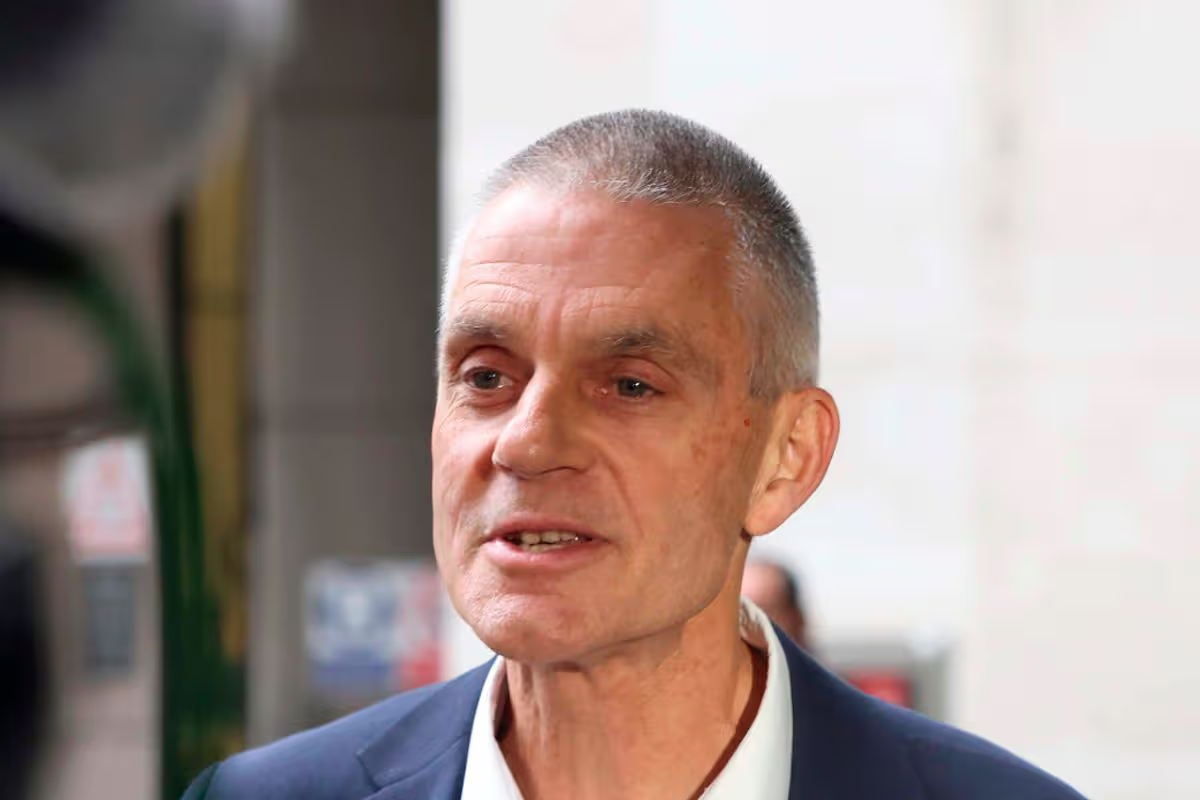
The outgoing Director General for the BBC, Tim Davie, has spoken out in the defence of the licence fee, which has risen to a huge £15 a month, making it more expensive than multiple streaming services
06:00, 12 Mar 2026Updated 06:30, 12 Mar 2026
Davie agreed that the BBC and other institutions were in ‘crisis’(Image: Ian Vogler / Daily Mirror)
The BBC is in “crisis,” departing Director General Tim Davie has said. The broadcaster has been criticised for its planned increase to the licence fee, which will rise to £180, from April 1.The increase, required by the 2022 Licence Fee Settlement, will rise by £5.50 for the year. This means a standard colour TV licence will now cost each home £15 a month, more than a subscription to various streaming platforms.
Speaking on The Rest Is Entertainment podcast, Davie insisted that the BBC – and other institutions – are certainly in “crisis”. He says: “Trust is built and I’m semi-obsessed by this – trust is built by people absolutely believing that someone is acting in their interest and that they listen to them. And if you think about an old-school broadcaster, it broadcasts….
“I think there have been too many instances where institutions and the BBC is definitely not exempt from this – where, call it what you will, metropolitan, a certain lens on life.”
According to Davie, as long as the BBC is providing value, then there should be no problems about an increase in the licence fee.
“We’re at a consultation phase, but we have set out a very clear preference which is and I would do this to the point about restarting where we’re at – I think there is a model which says: look, if we can deliver value for every household and really work at that, then everyone contributes fairly, and I think that is a model that’s worth fighting for,” he says.
“I don’t see it as something potentially trapped in the past. I actually think it could be something exciting for the future – quite enlightened. You don’t have to go exactly where the market is going currently. You have to make markets, and I think we can do that.”
The BBC have been hit by serious allegations that one of their Panorama documentaries misled viewers by editing a speech by Donald Trump. The BBC’s director general Tim Davie and head of news Deborah Turness both resigned in November.
It had been alleged in a leaked internal BBC memo that those working on the Panorama programme edited two parts of the speech together so that Trump appeared to explicitly encourage the Capitol Hill riot back in 2021. Trump has since launched a multi-billion dollar lawsuit against the BBC, which is scheduled to go to trial in February 2027.
He did not explicitly reference any specific errors the BBC had made under his tenure but he said the world was in an age of “weaponisation”, where the broadcaster was under strict scrutiny over one thing – but not referencing all the good work they’ve done.
“We’ve made mistakes, sometimes serious mistakes, which we regret. But weaponisation is selectively taking one fact – it may be a fact, so you’re standing on a fact – but what you’re not standing on is any effort to be proportionate,” he says.
“You’re not saying, look, a thousand stories run, we’re running, and one didn’t get it right, or overall this is where there’s no balance of data. It’s literally just selecting a fact to make a case.”
Barrow head coach Dino Maamria has left the League Two strugglers after only 28 days in charge.
The 54-year-old took over on 11 February but managed only one win from his six games, leaving the Bluebirds outside the relegation zone on goal difference with 11 matches remaining.
“We recognise that this has been a very disappointing season with far too much managerial change,” Barrow said in a statement., external
“As the board of directors, we understand that the buck stops with us. We believe this change gives us the best chance of remaining in the football league.”
Experienced midfielder Sam Foley, 39, has been handed the interim head coach role until the end of the season with coaches Simon Ireland and David Worrall remaining in their roles.
Former Burton, Oldham and Stevenage boss Maamria replaced Paul Gallagher at Barrow, who himself lost all five of his games during a 40-day spell at the helm, having replaced Andy Whing in January.
Tunisian Maamria’s only victory came in a late 1-0 win over Colchester United last month which was followed by four defeats from five games, culminating in a 2-0 home loss to fellow strugglers Bristol Rovers on Tuesday.
“Sometimes I want to boo the players, I understand the frustration (of the fans) I think we all know the problems and my job is to fix the problems,” he said in his final post-match interview on BBC Radio Cumbria.
Barrow are at home to Accrington Stanley on Saturday (15:00 GMT).