Trump’s tariff pause angers some US ranchers, boosts Brazilian beef imports | US Midterm Elections 2026 News
In late August, United States President Donald Trump announced a 90-day pause on certain beef tariffs, making beef cheaper to import, particularly from Brazil.
That decision was framed as a way to bring down prices for consumers, but it landed as a betrayal for many US ranchers, who were getting ready to take their cattle to market.
Recommended Stories
list of 4 itemsend of list
It is too soon to tell how the decision will ultimately affect grocery prices, but the impact on ranchers was immediate: prices at cattle auctions plummeted, temporarily lowering ranchers’ profits. The United States Cattlemen’s Association, the National Cattlemen’s Beef Association and the Farm Bureau, all member organisations that represent ranchers, opposed the decision.
Rural Republican members of Congress also distanced themselves, but it is not yet clear how ranchers will vote in the midterms — or whether those votes will decide races.
Chad Basinger, a rancher in Pretty Prairie, Kansas, is sceptical that the imports will have a significant impact.
“I know there’s people that have said, ‘Well I’m just gonna vote for the other party’ or ‘I’m not gonna vote’ or ‘This administration’s really let me down’. So yes, there will be people that swing the other way in the midterms. But overall I don’t think it’ll be that much,” Basinger said.
Ranchers will also be weighing the administration’s other actions, Basinger said, such as the $8bn in farm relief announced in Kansas on October 19.
Basinger’s House of Representatives district in Kansas is expected to remain safely Republican in the midterms. But Kansas faces an unexpectedly tight Senate race and ranchers in House districts elsewhere may find themselves closer to the political fray: potential swing districts in Montana, Iowa, Texas and Colorado are all in cattle country.
Still, it is unlikely that ranchers alone will decide elections: ranchers — along with farmers more broadly — represent a shrinking percentage of rural voters and a smaller voting bloc in practice than in the public imagination.
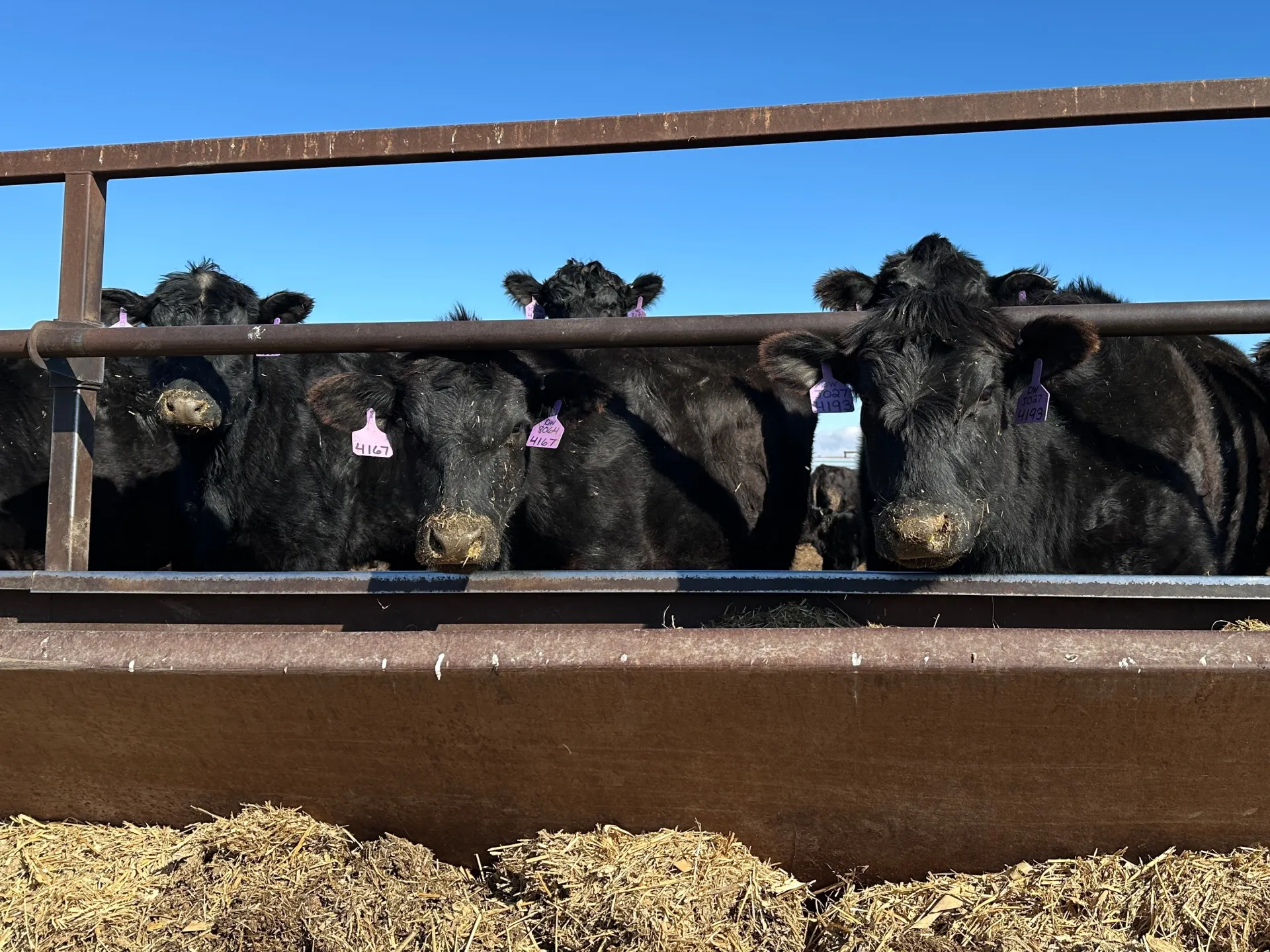
America’s cattle herd is near its smallest size since 1951 and the number of ranchers has declined alongside the number of livestock. Observers worry that ongoing uncertainty fuelled by tariffs, fuel prices and drought may cause the ranching population to shrink further.
David Anderson, an agricultural economist at Texas A&M University who advises ranchers, said that high prices this year should have given ranchers the confidence to invest in the future and expand their herds. Making imports cheaper, however, may have helped nudge ranchers in the opposite direction.
“It really works against the market signal to expand and produce more domestically,” Anderson said. “That got a lot of people pretty angry.”
Tariff changes add volatility
This is not the first time that Trump’s tariffs have impacted cattle supplies. Last year, the president added a 50 percent tariff on Brazil, a key trade partner for beef, raising the cost of importing Brazilian lean beef, which is often mixed with fatty US beef to make hamburger patties, a staple in most homes.
In February, Trump allowed more tariff-free beef imports from Argentina. In August, he did the same for Brazil and Paraguay.
Both tariff changes led to swift price swings in cattle futures markets, which are often volatile in response to the news cycle.
Cattle prices also moved this year in response to more fundamental drivers of supply and demand: plant closures by meatpackers, labour shortages late last month related to ICE actions at Kansas packing plants, the second-largest in the country, and the reopening of the southern border after a closure due to New World screwworm disease.
Big picture, the shrinking US cattle herd has less to do with short-term price changes and more to do with drought cycles, which are growing more intense as warming temperatures increase evaporation.
Still, tariff changes add uncertainty. “This has been a hot topic for the last six weeks,” said Anderson. “It just adds a little more uncertainty or volatility — or worries or stress.”
This year, extra price volatility as many ranchers prepared to sell meant ranchers faced lower profits and more risk.
Basinger says that for many established ranchers, the tariff announcement was frustrating, but not existential.
“People are upset. They have a right to be upset. But they’re not going to change their strategy,” he said. For most ranchers, Basinger said, the imports would not be the biggest factor shaping decisions about their herds this year.
Where price volatility may matter more, Basinger said, is for the next generation. Most of today’s ranchers are eyeing retirement. Their heirs must decide whether to make a go of ranching or sell their family’s land. Other aspiring ranchers are also watching the industry.
“If you’re seeing your dad not make money, or somebody else not make money…it’s not easy work!” Basinger said. “It has to be very enticing for somebody to want to jump in and be like, ‘I’m gonna be a rancher and go break ice in the middle of winter when it’s cold and I could be inside’.”
Record revenue and record costs
This year, low US cattle supplies meant that ranchers commanded record-high cattle prices, despite added imports and other market shifts.
But high revenue doesn’t always mean huge profits: Many ranchers operate at a loss for years in a row. Then, they rely on a few good years to pay down debts or expand their herds.
This year, profits were lower than hoped, because ranchers also faced high costs.
Interest rates on loans are high and the war with Iran meant ranchers paid extra for fuel and fertiliser. A drought across much of America’s ranchland meant they paid more for feed.
In states such as Kansas and Nebraska, ranchers also faced destructive wildfires and aid groups like Farm Rescue coordinated hay donations.
Still, Basinger said, ranchers who raise cows and calves generally did well this year. In Kansas, he is seeing ranchers use profits to make repairs and upgrades. He said this year’s high cattle prices have been helping. “But it needs to help for a little longer to give them more of an edge,” he said.
More of an edge might mean, for example, enough money for bigger purchases, like buying land from a neighbouring ranch to make room for a growing herd.
Rangeland, however, is increasingly expensive. When it is up for sale, outside investors can often pay more than ranchers, which can mean less land for cattle. That’s just one more pressure shrinking the US herd decade after decade.
Ranchers had hoped that 2026 would be a turnaround year. So far, however, “we really don’t have much evidence of herd expansion,” Anderson said.