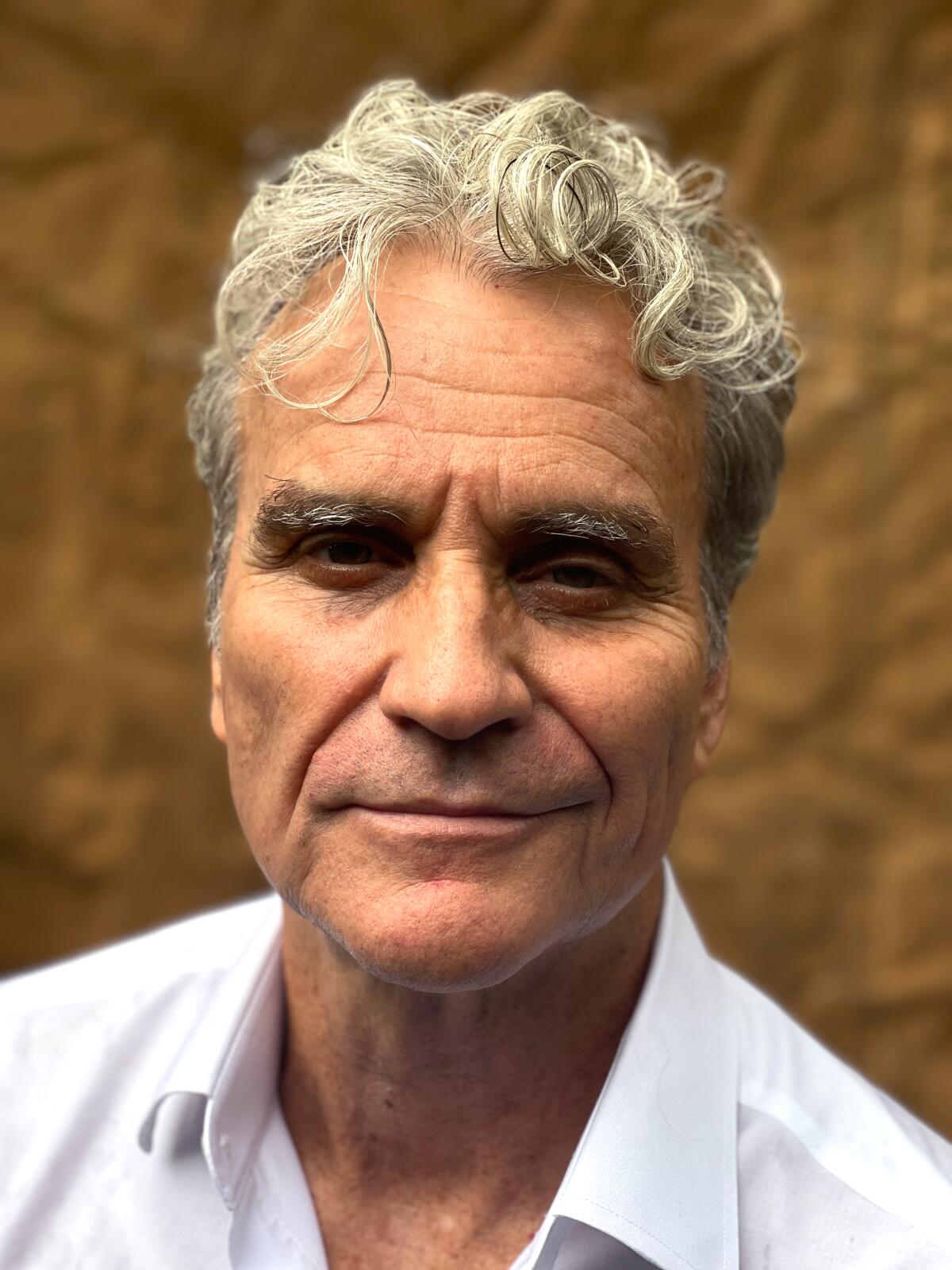
Inside Daniela Gerson’s ‘The Wanderers’
Sixteen years ago, writer and academic Daniela Gerson met her future wife Talia Inlender at a mutual friend’s birthday party in Los Angeles. Although Gerson came with a date, she felt a strong pull toward Inlender, an immigration lawyer who shared Gerson’s passion for narratives of exile both past and present. As it turned out, Inlender’s grandparents hailed from Zamosch, the same town in Poland where Gerson’s grandparents lived. As Jews, both families were caught in the double bind of Hitler’s genocidal reign of terror and Stalin’s scorched earth campaign through Eastern Europe and Central Asia. Countless thousands were displaced, tortured and killed, but what became of Gerson and Inlender’s ancestors?
This is what Gerson set out to discover in a five-year journey that took her to Poland, Austria, Uzbekistan and Ukraine, sifting for clues that would culminate in the writing of her new book “The Wanderers.” I chatted with Gerson about her families’ extraordinary tale of resilience and survival.
✍️ Author Chat
Your grandparents were in perpetual exile for almost a decade. They have to leave Poland to escape Hitler’s purges, only to wind up in Ukraine, which results in them being sent to a gulag in Siberia. They had slipped Hitler’s noose but wound up in Stalin’s crosshairs.
I hesitate whenever I’m speaking about it, but it’s one of those things where I’m like, was it the worst thing that ever happened to them? Because their firstborn son had just died, and so that was horrific. They’re mourning their firstborn son, who died immediately of disease upon arriving in Ukraine, [then] almost immediately they’re packed into these cattle cars, with lice crawling all over them. People are sleeping on top of each other, throwing dead bodies out of the train. … The journey takes weeks and they find themselves in this desolate forest hell.
But what’s interesting is this was somehow the better alternative to Poland. As you point out in the book, those who endured the gulag wound up with a higher survival rate than those that remained in Poland.
The deportation saved their lives, and it saved probably about a hundred thousand Jewish lives. It wasn’t just Jews, though. Stalin was also targeting Polish Catholics, and thousands of these prisoners also survived the gulag.
You went to Lviv with your wife to research your family’s exile there, at a time when Ukraine was already at war with Russia. What was the country like when you were there?
It was an odd dissonance. Lviv is just an incredible city. Everywhere were signs of war, but also of people enjoying life. You felt the pain. When I was there, a friend of one of my colleagues was killed. And there was an attack the day after I left. But at the same time, music was everywhere in the streets. Couples were out. The city was beautiful — you could feel both the joy of life and the intensity of war all at once.
Jumping forward in your grandparents’ story: After the war ends in 1946, they go back to Poland, only to be faced with pogroms. After all the forced repatriation and deprivation, they can’t even go home. Why did they not try to go to America?
Not everyone wanted to move to America; some people wanted to move back to Poland. Then Stalin moved the borders of Poland and all of these people are being relocated, the returned people from the Soviet Union, Jews and Polish Catholics, are getting moved to western Poland, what they called Reclaimed Territory. And they face another pogrom there.
Your book is being published at a time when antisemitism is on the rise around the world.
I think it’s become a real issue. It’s an incredibly challenging time to talk about both being Jewish and what it means, and why antisemitism has been so persistent throughout Jewish history, but then to also look separately at the Israeli government’s actions and be able to talk about both separately. To perhaps be in opposition to the Israeli government actions, but also to say the Jews should have rights like any other people. It’s not a binary issue.
“The Wanderers” has a remarkable coda, when your father, who was born when your grandparents were in exile, winds up becoming a lawyer investigating Nazi war crimes.
My father had worked at the U.S. Department of Justice when he was invited to be the first trial attorney for the newly formed Office of Special Investigations. It prosecuted Nazi collaborators who had lied about their participation on immigration forms. He valued the experience deeply but only lasted a year there, ready to move on for a new experience as he often did in his far-reaching and peripatetic career. Toward the end of his life he would reflect upon how the immigration trespasses of the Nazi collaborators he prosecuted were not very different from his own parents’, even if their World War II pasts were very different.
(This Q&A was edited for length and clarity.)
📰 The Week(s) in Books

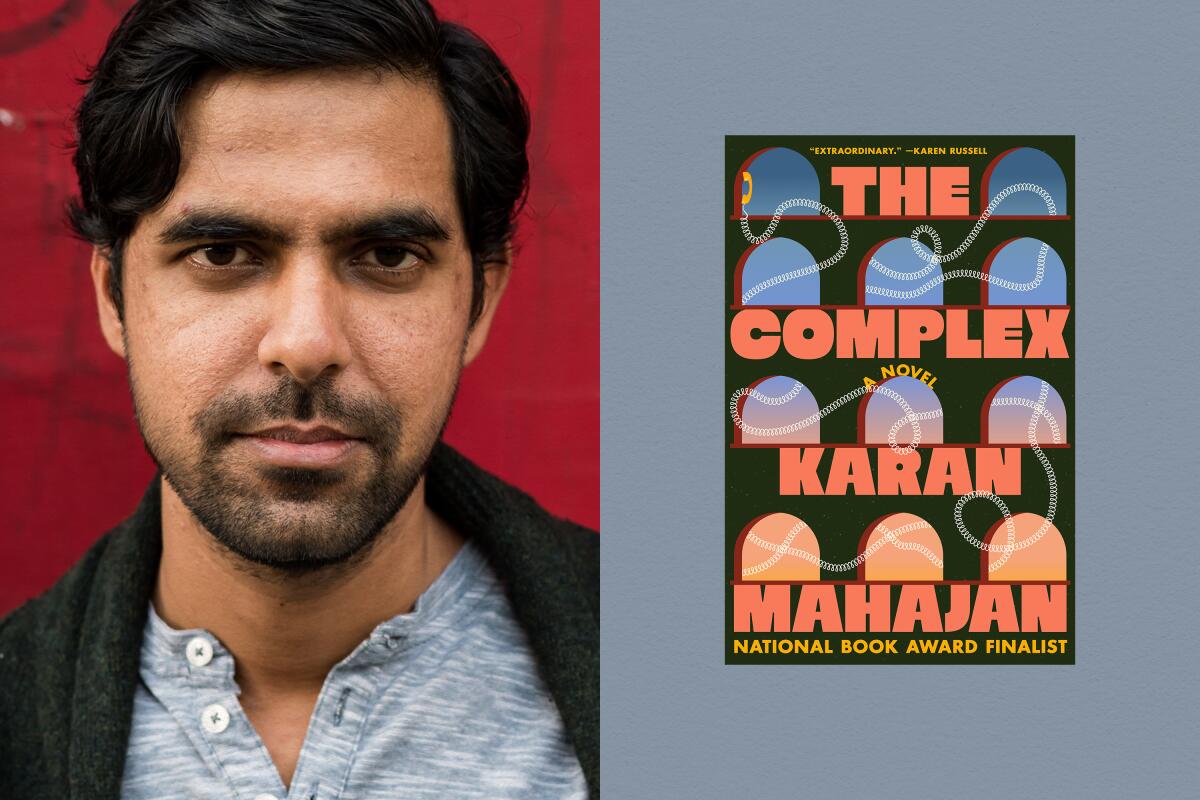
Author Karan Mahajan’s long-awaited novel “The Complex” confronts India’s hidden histories.
(Los Angeles Times illustration; images from Briscoe Savoy and Viking)
Actor-turned-memoirist Andrew McCarthy has published “Who Needs Friends,” a book about male friendship in a time of social isolation. “Men have no monopoly on loneliness, but it is a massive issue,” McCarthy tells Malina Saval.
“The Complex” revisits the roiling cultural wars of ’80s and ’90s India, when reformists clashed with the repressive policies of the country’s ruling regime. “The book itself was written in solitude and edited in silence because I was trying to mentally travel back in time to 1980s and 1990s India,” author Karan Mahajan tells Sibani Ram.
Thirty-one years after publishing “Bird by Bird,” her beloved guide to writing well, Anne Lamott has now dropped “Good Writing” with her husband, Neal Allen. In a joint interview with Meredith Maran, Lamott and Allen discuss the book’s origins: “I carried around these rules for improving sentences for years,” says Allen. “I think a lot of writers do a book because they notice it’s not out there, and why isn’t it? And then they shrug, ‘Well, I guess it’s up to me.’”
Finally, Paula L. Woods interviews four mystery novelists about their buzzy new books.
📖 Bookstore Faves

The Ripped Bodice is an independent bricks-and-mortar bookstore in Culver City specializing in romance novels.
(Joel Barhamand/For the Times)
Established by sisters Leah Koch and Bea Hodges-Koch in 2016, the Ripped Bodice in Culver City has become a go-to bookstore for romance fiction, which is one of the few literary genres that has been exploding thanks to the romantasy genre and its standard-bearer, author Sarah J. Maas. I talked to general manager Taylor Capizola about the books that customers are excited about right now.
Who are your customers?
We cater to romance lovers and skeptics alike, priding ourselves on finding the perfect romance book for anyone. While most of our customers are romance enthusiasts, we often get visitors who heard about our store through word-of-mouth or social media, so it’s become a bit of a destination location for residents of Los Angeles and tourists as well.
Sarah J. Maas, the queen of romantasy, has two new novels being published later this year. Is excitement already building for that?
Romantasy is currently one of the biggest and most popular genres in all of literature. Excitement is already building around independent bookstore exclusive editions of Maas’ books, potentially signed copies and special events to launch both books. This includes midnight release parties, which we have done for other book releases, including Maas’ third book in the “Crescent City” series. While we haven’t officially announced a midnight release party, it is in the works so we can ensure these books get into readers’ hands as quickly as possible, all while having fun doing it!
Why are romance fiction fans still shopping at your store, as opposed to downloading digital books?
Brick-and-mortar bookstores endure in the digital age for several reasons, but we pride ourselves on being not only a place to buy books, but also a community space. Third spaces are disappearing quickly, and we take that responsibility incredibly seriously, offering multiple author signing events every single week as well as book clubs, craft nights, comedy nights and more. It’s important to have a space where people with like-minded interests can meet, hang out and collectively indulge in their beloved hobbies.
The Ripped Bodice in Culver City is located at 3806 Main St.
(Please note: The Times may earn a commission through links to Bookshop.org, whose fees support independent bookstores.)