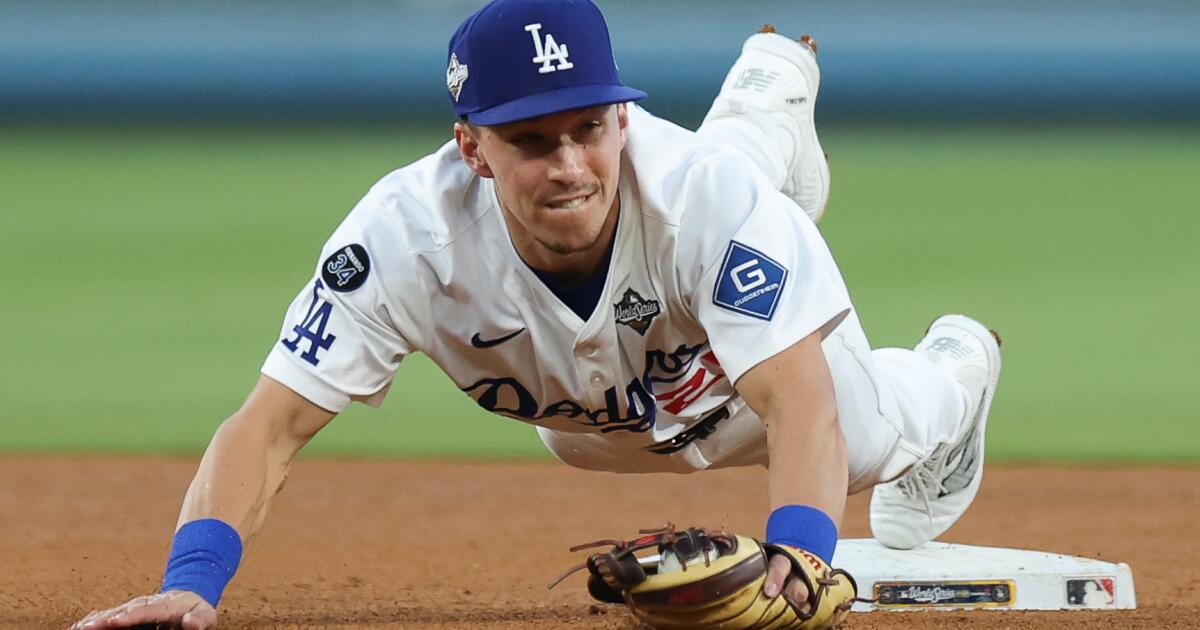
PHOENIX — Position players reported to spring training at Camelback Ranch for the Dodgers on Monday, but manager Dave Roberts revealed that it will be without its versatile second baseman and utilityman Tommy Edman when the team opens the season against the Arizona Diamondbacks at home on March 26.
The 30-year-old Edman underwent ankle surgery during the offseason after being limited to 97 games in 2025 in his first full season with the Dodgers.
“I think just looking at where his ankle is at, trying to play the long view that you don’t want to have any regression or setbacks,” Roberts said. “So, how can we methodical with it? Just for me, knowing that he’s just taking swings is enough. We’re not going to rush it. We want to put him in the best position, so I think it just kind of became [clearer] very recently.”
Edman will open the season on the injured list, something he is at peace with. He felt that a return before Opening Day was a bit ambitious, and that it would be better to err on the side of caution.
“That was always kind of a stretch, just due to the nature of the injury and the timing of the surgery and everything,” Edman said. “I think, having been out of the boot for a little over a month now, I was just kind of waiting to see how it progressed, and everything has gone exactly on-schedule. We were kind of leaving Opening Day open, just in case it happened to feel way better than expected. Everything’s on the expected schedule so far. As I get into more baseball stuff, I still have to work into the adaptation of volume. As the volume goes up, the swelling kind of increases a little bit, so I’ve got to take it slow and let the progress play out the way it was planned all along, instead of trying to speed it up.”
For now, Edman is slow-playing it.
“He took some swings a couple days ago, [from] both sides,” Roberts said. “He did some skipping, some light jogging, I think it was. He’s getting his body into baseball shape, so obviously he’s not going to be ready for the start of camp. He’s in that same bucket of, ‘When he’s ready, he’s ready.’ But each day, there’s been progress.”
Evan Phillips excited to be back
Days after signing a one-year contract to return to the Dodgers — despite being non-tendered earlier in the offseason — Evan Phillips expressed relief at being back.
“[The offseason] was quiet for a little bit,” Phillips said. “I leaned on my agent to be patient and trust that things were going to work out and we’re certainly glad that we’re back. It was definitely a very, very wild ride this offseason. It feels like I never left, so it’s kind of weird to get all the handshakes and hugs, but it’s just another spring training to me. I’m certainly glad to be back in Dodger blue.”
Dodgers GM Brandon Gomes told reporters Sunday that Phillips should return to the Dodgers sometime in the middle of the season. He underwent Tommy John surgery last June.
“[I’ve been] doing long toss a few times a week, hoping to get on the bullpen or on the mound for a bullpen next month,” Phillips said. “I’ll start that mound progression here in the next couple of weeks. I think, actually, Tuesday I’ll throw off of the mound for the first time, but it won’t be to a catcher or anything. It’ll just be a catcher standing up and there’s a slow progression, week by week. So [there will be] plenty of steps ahead that’s going to keep me busy here in Arizona, but I’m definitely looking forward to that progression.”
Ryan Sickler is used to asking the question that people are afraid to ask: “Is there anyone here who has ever actually died and come back and would be comfortable talking about it in front of all of us?”
It’s not your typical comedy show crowd work but it has profound results. During his special “Ryan Sickler: Live & Alive” released on YouTube in October, a woman in the audience talked about a near-death experience as a child where she rode her bicycle in front of a neighbor’s station wagon. But Sickler pointed out that this remarkable level of candor in the audience is something he continues to marvel about. In fact, he said they did two shows the night they taped his special and during the second show two people in the crowd said they had near-death experiences.
“When I ask the question, I know there’s someone in the crowd that’s like, ‘There’s nobody in here that’s died and come back,’” Sickler said. “So now they’re all very excited to listen too. Like, what happened to this lady, or what happened to this guy? You know, there’s been some wild ones, some real funny ones out there too.”
Given how many comedy specials are being released on various streaming platforms, he says that “we have lost the specialness of the special.” But Sickler said since coming so close to death and being able to talk about it with candor and relatability, he is still calling his latest self-produced YouTube special, special. It now has more than 1 million views on YouTube. Sickler has been on the comedy scene for more than 30 years and released his comedy special “Lefty’s Son” in 2023. He also hosts the “HoneyDew Podcast.” His comedy career has often incorporated his lived experience with a rare blood-clotting disease called Factor V Leiden that almost killed him.
But these days, he’s grateful to be alive, to have been able to wake up when it looked like he might not, to watch his daughter continue to grow up and the laughs along the way. Sickler has long been candid about his chronic health issues with his comedy but he has found particular meaning in doing crowd work when he performs, that talks about death and what it means to live.
The Times recently spoke with Sickler about his special and how he thinks about his sense of health, humor and mortality.
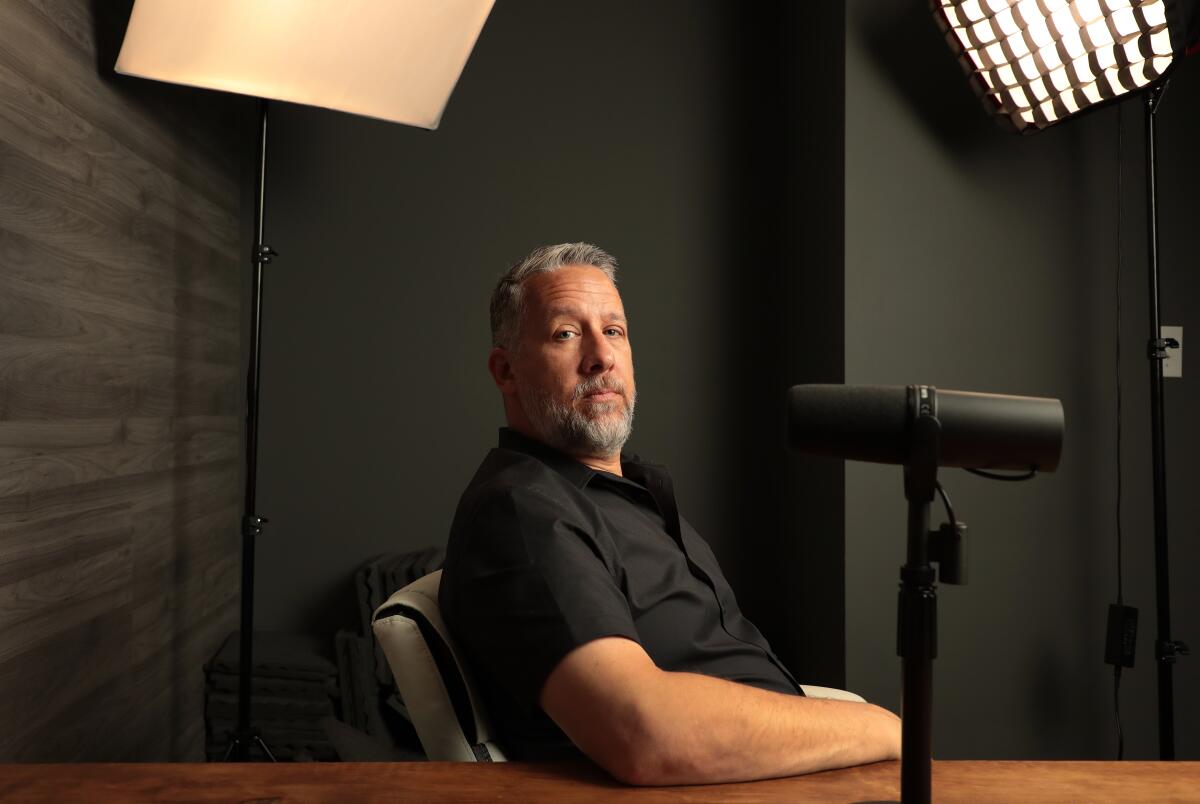
Ryan Sickler in the studio where he films the “HoneyDew Podcast.”
(Al Seib / For The Times)
What did you want to say this time around in your new special?
My first special was something that was a bit of a hybrid of stuff that had been out there and around, but I didn’t own it. It was out there on people’s platforms. They’re making the money off of it. And so I did a bit of, “Let me get this stuff on my channel where I can control it.” And then the other part of that special was becoming a new single dad, all those things this time, specifically, I really just wanted to talk about what had happened and the results after that. I follow these comedy accounts and in October, there were 31 stand-up specials that hit between Netflix, Hulu, YouTube. November was 30. This month was a little slow because the holidays, but it was still at 18 the last time I checked. So I don’t think there’s anything special about stand-up specials anymore. You’re in an environment now where there’s a stand-up special a day, people are doing that with podcasts. There’s so much content going on out there, and I feel like a lot of it is the same. So I this time wanted to just take something that happened very personal to me, this incident, and then tell the story, not only behind it, but what happened after and I was really proud of being able to just focus on that and make that into this special instead of just my observations on this or my thoughts on that. I’m a storyteller and I really think that’s what art is.
When did you realize you had the courage to write about this near–death experience?
I know I had the courage to write about it a long time ago. When I’m making people laugh at my father’s funeral and things like that, I knew I was comfortable being able to take on the material. But what I didn’t know was, could I make it funny? Could I make it relatable? Could I make this one thing that happened to this one person on this rock in outer space matter to anybody and make them care? Because it’s not like we all had this happen to us. This is just one thing that happened to this one dude. So that was really what I was more worried about, is like, can I get this message across and make it relatable, funny and entertaining at the same time? Which is why I threw in those really expensive light cues.
It can be very challenging to hear about these traumatic [near–death] experiences that people have had. How do you absorb that and not absorb it too much?
I’ve been doing this show for so long that it does start to wear on you a little bit hearing a lot of the trauma. So I created a new podcast a couple years ago called the Wayback, which is just fun, funny, nostalgia. So that also for me, was like, let’s not dig into the tears and let’s just laugh about growing up. So that was one way where I could still keep it in my lane and do my job, where I alleviate that a little bit. But the other thing, and I make fun of myself a little, is I’m like the paramedic at the party now. I’m the guy that’s like “You think that’s bad, wait until you hear this.” “This one guy …” “This one lady …” You know what I mean? So I’ve almost become sort of their voice, and I have absorbed it in a way that isn’t so negative, where I carry it home with me. I always forget the quote how it’s worded, but it’s something to the tune of, if we all stood in a circle and threw our problems in the middle, we’d all take our shit right back. It’s like you know what, that’s what you’re dealing with? I’m gonna go ahead and take mine.
How is hearing all these stories and connecting with the crowd and fans in this way [about near–death experiences] changed how you think about your own sense of mortality?
Even with my close call, like, that one angered me, because you start to think about things. You never know how you’re really going to go. You might have an idea if you’re getting older and cancer runs in your family, whatever, but the fact that you could go to a hospital for a simple surgery, they don’t listen to you, everything’s there in your paperwork. You’re your own advocate. You’re doing all the right stuff by yourself, and you’re among professionals, medical professionals, not Yahoos, and you can still have someone else make a mistake and your life is gone. That started me thinking a lot like, “Oh man, for no fault of my own, I could also be gone.” So I go day by day, and I try to be happy day by day. And I’m not going to lie, I also like to know I got a little something tomorrow too.
Do you think that incorporating death and near–death in your comedy helps people work through their own feelings about death and grief?
I only say yes to that because the amount of emails I get, the amount of feedback we get, the amount of guests that still continue to show up [to support] the Patreon. I’ve definitely found, I would say, a purpose in my people. If you’re someone saying you’re a jerk for laughing at this lady talking about cancer, we’re not laughing at her cancer. We’re laughing at something, some light that she found in the darkness of this and trying to have a moment here together, all about, “Hey, there’s some positive ways to look at things at your lowest.” So I know it’s helped people. I mean, we have, over the years, probably thousands of emails now. We have people telling us how much it’s helped. And I mean just through podcasting, I found out I have this blood disease. I was 42 at the time, and already been podcasting. There’s a lady I went to high school with. She’s like “Ryan, my son is 17. He started clotting.” I said, “Go ahead and check for this.” He listens to the podcast. This kid has it. I said, “Well, bad news. It’s genetic.” Now the whole family’s got to get tested. And if you have it from one parent, it’s not great, but having it from two is bad. The whole family gets tested. The parents have it. She’s got it from both her parents. So I can’t get over the fact that a woman I knew when we were children, 35 years later is like, “Hey, that thing you’re talking about on your podcast, my kids, my family, we all have it.” And then I’ve talked about another disease I also have, called Charcot-Marie-Tooth disease, which is CMT. And from bringing that up, people hit me up on that like “I have it, no one ever talks about that.”
What have you found to be one of the positives — besides surviving — of your near–death experience?
Gosh, so many. I have a child, so getting to see her grow and really taking care of my health and things. Not that I wasn’t before, but just I dove in even deeper. I went and got what’s called a gallery test for prescreening for cancer. I started doing all these blood works and like, “Let’s go find out everything you know, because I didn’t find out that I had this blood disease until I was 42 when I clotted.” I’m living my whole life, not even knowing I have this thing and and if I don’t clot, there are plenty of people out there that live to 100 years old and have it. It’s really made me appreciate life and trying to take things day by day. I also was living in a little single-dad pad at the time. We had no central air. We had tandem parking. We were above dumpsters. Our laundry was outside in a room with quarters. And when I got home — I’m still on a walker — and I was like, “What are we doing? We’re going to die without central air? Are we going to die with a bucket of quarters on the fridge? No more.” And so I moved my home, I moved my studio, I did all these things that are, like, the biggest thing you can do in life. We’re going to roll the dice, scared money don’t win, and we’re just going to go for it. Also, as a comedian and anybody in entertainment will tell you, a lot of times you work scared, you hold that money and you wait until the next thing comes. And also, as a single parent, you know we got to budget. And I was like, no more. We’re not going to go out and buy 10 Porsches. We’re going to be responsible. But I was on point with let’s go get a living will and trust. Let’s make sure we have that life insurance policy. Let’s make sure we have all the proper paperwork and stuff done before we do anything like go on a vacation, you know, let’s get this done now and get it done proper.
What do those conversations look like, if you have them at all, about encouraging your male friends to go to the doctor or encouraging them to take care of themselves, physically and emotionally?
I would say the conversations go something like this. My younger brother is like, “Hey, man, I just went in for a test, and they’re telling me I got to have an old school triple bypass,” and then that’s what we all get tested. “Hey guys, I found I got a blood disease.” “Oh man, we all better look into it now.” That’s usually how it goes. I don’t know many men who are proactive. There are a few of us these days. But it’s usually something horrible happens and then we’ll be proactive about everything else.
Do you have male fans who also say “I [saw] your special … I went to your show, and it made me go [to the doctor]”?
Yeah, but I’m saying, though, it still took them to come see a professional clown to get them to go to the damn doctor. I actually have been very good about going, because everyone in my family died. So I’ve been proactive in the sense that I go get two physicals a year. I’ve been doing that since my 20s. I always tell my doctor, if I can go buy expensive sushi, if I go buy weed, if I go buy all these things, I can put money into myself here and come see you a second time and pay for all that. So I do two physicals a year, and I’ve been doing that forever. But I’ve never done any sort of like gallery test. And now we’re in our 50s, so we got to go get the prostate and all that. That’s when you start hearing about that stuff. There’s a lot of ignorance that goes into it as well. I just had a guest here on the “HoneyDew” and said he didn’t go to a doctor or anything for over 20 years because he was just scared of what they were going to tell him. He was scared to get the bad news. You can kind of get the bad news and you could turn that into good news. It doesn’t need to be deadly news.
How do you know when you’ve been too open?
It usually tends to be a personal thing where someone’s like, “I don’t really appreciate you bringing that up.” So I don’t anymore. I’m always cognizant of [saying] like, “Hey, would it be cool if I talked about this or whatever?” I feel like the question you’re asking me would have been great for me just before I started, like, the “HoneyDew” and stuff because this is what I really want to talk about. Everyone wants to talk about the best and bring their best and I just really do want to hear about, you know, the trauma bond. I want to hear about the worst times in your life. I want to know because, honestly, that tells me so much more about you than you verbally talking about you. You know who you were in those moments, how you reacted, how you behaved, how you’ve adjusted. Those things really end up defining who you are, and that’s more what I want to know about. I don’t want to know your best polished version of yourself.