Benjamin

Syrians protest Israel’s incursions near occupied Golan Heights | Benjamin Netanyahu

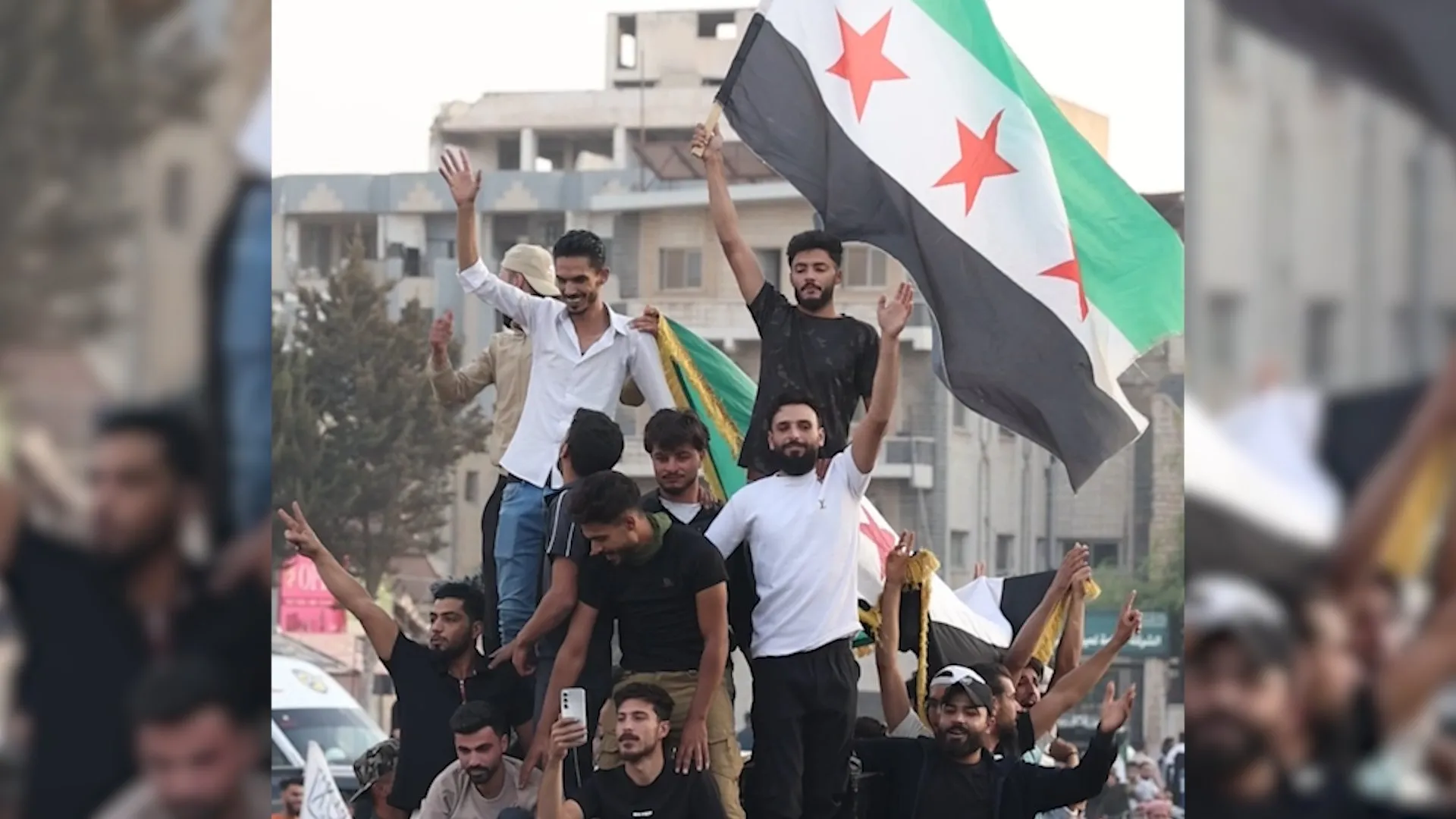
Syrians are protesting Israel’s occupation of parts of the country’s south, near the occupied Golan Heights. Israeli troops have bulldozed olive groves, set up checkpoints and detained residents. Al Jazeera’s Heidi Pett reports from the protests.

Source link

Hegseth meets Netanyahu in unannounced Israel visit | Benjamin Netanyahu News

Hegseth has travelled to Israel to meet Netanyahu ahead of a closely contested election, Axios reported, citing sources.

US Defense Secretary Pete Hegseth has met with Israeli Prime Minister Benjamin Netanyahu during an undisclosed visit to Israel, according to Axios.

The meeting between the hawkish ally of US President Donald Trump and the veteran Israeli premier facing a knife-edge election occurred on Monday, Axios reported, citing two sources with knowledge of the matter.

Recommended Stories

list of 3 itemsend of list

The Reuters news agency could not immediately confirm the visit. The Pentagon and Israel’s embassy in Washington did not immediately respond to requests for comment, and there was no immediate indication of what they discussed.

Trump endorsement

President Trump took to his social media platform Truth Social on Sunday to endorse Netanyahu in next week’s parliamentary election, the first vote since the Hamas-led October 7 attacks in 2023 and Israel’s genocidal campaign in Gaza began.

(FILES) US President Donald Trump (R) and Israeli Prime Minister Benjamin Netanyahu shake hands as they arrive to speak to journalists during a joint press conference at Trump’s Mar-a-Lago residence in Palm Beach, Florida, on December 29, 2025.
US President Donald Trump (R) and Israeli Prime Minister Benjamin Netanyahu shake hands [File: AFP]

Trump praised the prime minister for being an ally of the US in its war on Iran. He added that Netanyahu had his “Complete and Total Endorsement”.

“BIBI NETANYAHU WILL NEVER LET YOU DOWN!” Trump wrote.

Netanyahu’s religious-nationalist coalition is projected to lose its governing majority, although the opposition may also struggle to form a government, opinion polls suggest.

US Vice President JD Vance, however, declined to endorse Netanyahu in an interview earlier on Monday, saying he was not getting involved in Israeli elections.

“I endorse American candidates, and that’s where I’m focused on is the midterms,” Vance, who travelled to Budapest and endorsed Viktor Orban in Hungarian elections earlier this year, said in an interview with digital media outlet 2WAY.

“I’m not anti-endorsing him, but I’m not pro-endorsing him; I’m not getting involved in Israeli elections,” Vance said.

Source link

Netanyahu’s new security doctrine: Regional strategy or election ploy? | Benjamin Netanyahu News

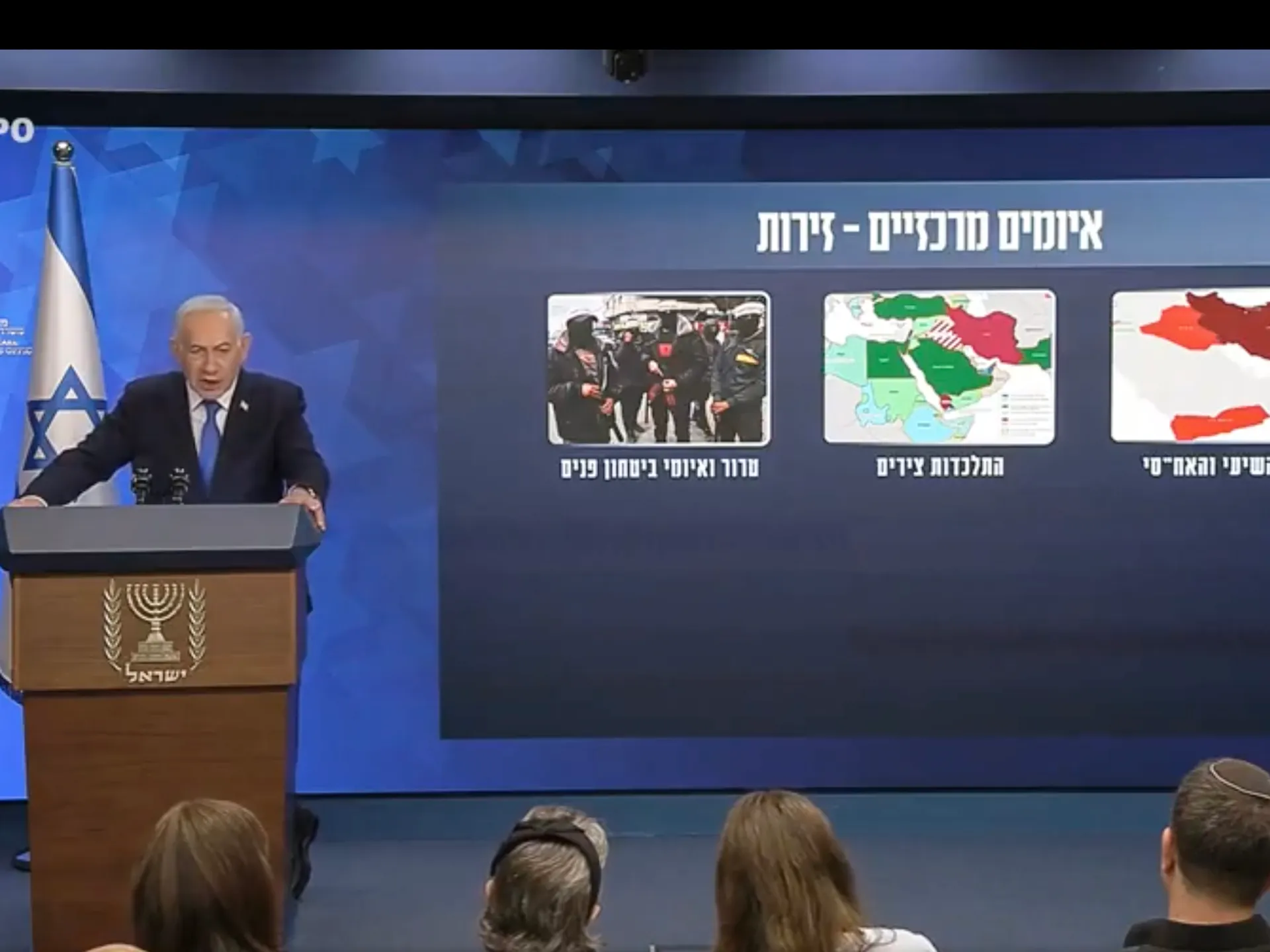
Israeli Prime Minister Benjamin Netanyahu has unveiled an updated national security doctrine and displayed a map of rival regional alignments, signalling a security approach that prioritises preemptive military action, the expansion of buffer zones, and the pursuit of new regional partnerships.

The document was developed with the assistance of Israel’s National Security Council and published by the Prime Minister’s Office on Sunday, just nine days before Israel’s parliamentary elections that could spell the end of Netanyahu’s time in office. It outlines a formal policy of preventing perceived threats through military action rather than containment – a policy that has already been seen in action over the past few years, as Israel pursues multiple wars and attacks on its neighbours.

Electoral survival strategy

The timing of the map’s release carries particular political significance, with Netanyahu fighting to retain power amid criticism of his conduct in power, the ongoing corruption trial he faces and his handling of the October 7, 2023, attacks, as well as the wars that followed.

Recommended Stories

list of 3 itemsend of list

As the October 27 election day draws closer, Netanyahu is attempting to bolster his credentials as Israel’s ‘Mr Security’, hoping to get the votes of Israelis who may not like some of his other policies or behaviour, but still view him as the most likely leader to defend the country.

Netanyahu, who did get the endorsement of US President Donald Trump on Sunday, said during the briefing that Israel could face the possibility of a far less supportive administration in Washington in two years, after the end of the Trump presidency.

“In two years, a president… who is extremely hostile to Israel could come to power [in the United States],” Netanyahu warned.

He therefore argued that Israel must “expand our network of alliances and develop capabilities that make us a valuable asset” to other countries as a way of protecting itself if US policy towards it changed.

The comments, according to analysts, suggest that Netanyahu is seeking to portray his leadership as essential to navigating both Israel’s regional military challenges and its diplomatic isolation, all while keeping a fearful electorate reassured.

Mohanad Hage Ali, deputy director for research at the Malcolm H Kerr Carnegie Middle East Center, explained that the strategic presentation centred on competing regional blocs and buffer zones.

That framework “incubates and nurtures existential fears, which would lead Israeli voters to feel the need for a decisive leader”, Hage Ali noted.

In his assessment, Netanyahu stands to benefit from the Israeli public’s fear of regional threats by presenting himself as a familiar leader capable of managing them, making him “the devil you know”, as the analyst put it, to voters reluctant to embrace political change at a sensitive time.

Netanyahu’s political opponents have been quick to push back against that narrative.

Gadi Eisenkot, one of the prime minister’s main challengers in the upcoming election, said that the published doctrine was “two hollow pages, full of slogans that have nothing to do with a security concept”.

Another, former Prime Minister Yair Lapid, described the document as “superficial”.

Expanding security zones

The map displayed during Netanyahu’s briefing was originally published in May by Friedrich-Ebert-Stiftung, a German political foundation. It divides the Middle East and parts of Africa into competing blocs, highlighting the region’s complex network of alliances and rivalries.

Those networks include states, unrecognised entities and non-state actors.

The map identifies an Israel-United Arab Emirates alignment, described as the “Hexagon Alliance”, alongside a separate grouping of Egypt, Turkiye, Pakistan and Saudi Arabia – the latter three of which signed the Mecca mutual defence pact in August – labelled the “Sunni Diamond Alliance”. It also depicts Iran and its regional allies as a separate axis.

The map serves to illustrate the issues outlined in the published security doctrine, presenting a region where Israel faces multiple threats, the alliance that Israel is seeking to cultivate across the wider region, and the perceived need for “buffer zones” – the occupation of territory in other countries.

Israel’s existing illegal occupation of territory in Gaza and southern Lebanon illustrates the potential consequences of expanding the buffer zone approach.

Hage Ali warned that continuing to pursue an approach built around expanding military control could lead to “more conflict and more ethnic cleansing” under the guise of security buffers.

Embracing regional factions

A striking element of the map displayed by Netanyahu is its explicit designation of non-state actors as friendly entities.

The map highlights territories controlled by the paramilitary Rapid Support Forces in Sudan and Khalifa Haftar’s self-styled Libyan National Army within an alignment deemed cooperative to Israel and the United Arab Emirates.

Israel views these actors as pragmatic partners or at least cooperative entities in a broader strategic grid, Hage Ali explained. However, the public association of these groups with Israel threatens to damage their domestic standing across the Arab world.

That reflects Netanyahu’s immediate priorities, where “what Israelis think matters more than the reputation of your allies and the viability of these alliances”, Hage Ali added.

The portrayal of the Middle East as a region divided into competing alliances also carries risks for Netanyahu’s broader diplomatic ambitions.

Earlier this year, Netanyahu proposed a “hexagon of alliances”, envisaging cooperation between Israel, India, Greece, Cyprus and unnamed Arab, African and Asian partners, against what he described as “radical” regional alliances.

The proposed grouping has not been established as a formal alliance, and commentators in Israel and the international press have described the project as a branding exercise rather than a binding military pact, noting that countries like India prioritise non-alignment and pragmatic trade over ideologically rigid blocs.

For Tehran and its regional partners, the map also offers potent political leverage.

Hage Ali emphasised that the visual layout “will certainly help their propaganda machine”, providing Hezbollah and other Iranian allies with evidence to reinforce the narrative that Israel seeks to expand and dominate the region.
Source link

Israel opens first-ever pavilion at Morocco defence show | Benjamin Netanyahu News

Israel opened its first national pavilion at Morocco’s Marrakech Air Show, joined by Israel’s top military contractors.

Israel’s Ministry of Defence says it is participating for the first time in a defence exhibition in Morocco, as it announced its first-ever national pavilion at the Marrakesh Air Show 2026.

“This marks Israel’s first official participation in the defence exhibition held in Morocco since the signing of the Abraham Accords”, Israel’s Defence Ministry said in a statement on Thursday.

The ministry said eight Israeli defence companies exhibited “advanced, combat-proven technologies at the show” in Marrakesh, which runs until Saturday.

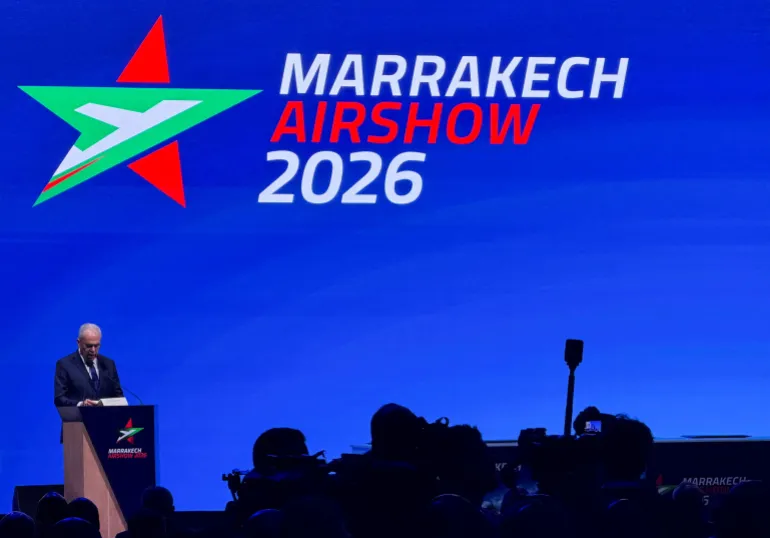
Abdellatif Loudiyi, Morocco's defence administration minister, speaks at the Marrakech Airshow in Marrakesh, Morocco, October 7, 2026. REUTERS/Ahmed El Jechtimi
Abdellatif Loudiyi, Morocco’s defence administration minister, speaks at the Marrakech Airshow in Marrakesh, Morocco, October 7, 2026 [Ahmed El Jechtimi/Reuters]


The Marrakech Air Show, taking place from October 7 to October 10 this year at the Marrakech Royal Moroccan Air Force Base, is organised every two years and is meant for civil and military aeronautics and space industries to highlight their latest offerings.

“Israel’s three major defence industries, Elbit Systems, IAI, and Rafael, also exhibited, presenting solutions across the air, land, sea, space, intelligence, cyber, and digital domains,” it said.

Munition exhibited by Israel's Elbit Systems at the Marrakech Airshow in Marrakesh, Morocco, October 7, 2026. Picture taken with a mobile phone. REUTERS/Ahmed El Jechtimi
Munition exhibited by Israel’s Elbit Systems at the Marrakech Air Show in Marrakesh, Morocco, October 7, 2026 [Ahmed El Jechtimi/Reuters]

The announcement is the latest sign of increasing ties between the Arabic-speaking North African country and Israel, since the two established ties in 2020 as part of the US-backed Abraham Accords.

Last month, Israel and Morocco agreed to upgrade their diplomatic ties, including elevating their respective missions to embassies and appointing ambassadors to both countries.

The move followed a meeting between the two countries’ foreign ministers, hosted by the US ambassador to the United Nations, Mike Waltz, on the sidelines of the United Nations General Assembly in New York.

They also agreed to expand air travel, including by reinstating direct flights operated by carriers from both nations, and confirmed plans for high-level bilateral visits in the coming months.

Morocco is also one of the five countries that have pledged to send troops to Gaza, under the US-backed International Stabilization Force (ISF) as part of US President Donald Trump’s so-called Board of Peace.

Source link

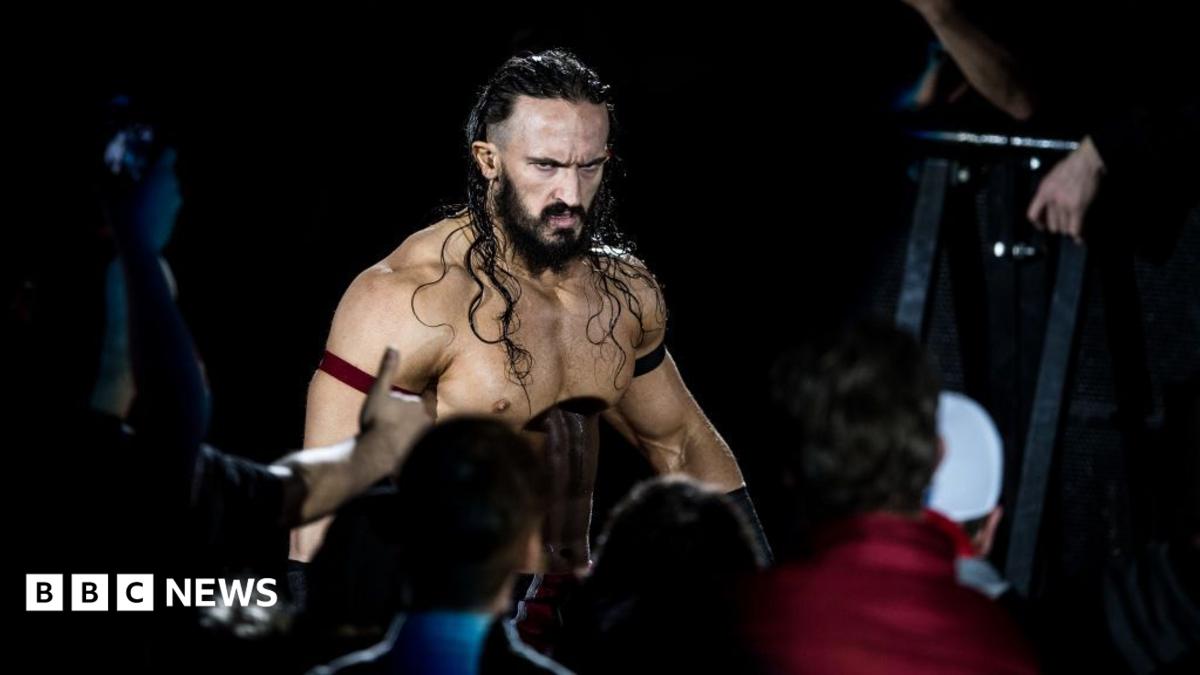
Wrestler Benjamin Satterley, known as ‘Pac’, dies aged 40

British wrestler Benjamin Satterley, known as Pac, has died, his representatives have confirmed.

All Elite Wrestling (AEW) said it was “saddened to announce the passing” of Satterley, 40, who they said had signed with them in 2019.

The wrestler’s death was confirmed just a day after he participated in AEW’s “All Out” event at an arena in Chicago on Saturday evening.

“A native of Newcastle upon Tyne, England, Satterley began his wrestling career in 2004 and went on to perform for wrestling organizations all over the world, captivating fans with innovative high-flying moves and incredible in-ring ability,” AEW said in a statement.

No cause of death has been provided.

Satterley held multiple AEW Championships, and the organisation said he had competed in “some of the most memorable matches in AEW history”.

Prior to his partnership with AEW, he also performed in World Wrestling Entertainment (WWE), New Japan Pro-Wrestling and Consejo Mundial de Lucha Libre in Mexico.

He had a number of different personas during his career including Pac, Adrian Neville and “The Man that Gravity Forgot”. The latter was in reference to a signature finishing move which saw him spin 360 degrees from the top rope of the wrestling ring and land on his opponent.

Source link

Huckabee blames ‘biblical illiteracy’ for waning support for Israel in US | Benjamin Netanyahu News

A Pew Research poll in April indicated 60 percent of the US adult population held an unfavourable view of Israel.

US ambassador to Israel Mike Huckabee says that the recent souring of public opinion in the United States towards Israel is the result of a lack of “biblical literacy”.

In an interview with NewsNation on Thursday, the ambassador suggested there were three sources of declining support for Israel.

Recommended Stories

list of 3 itemsend of list

He cited disinformation and foreign propaganda, a hatred of those who believe “there is a God and that he’s made up the rules for life”, and not knowing the Bible.

“You add all that together, I guess you just want to be mad at Israel and blame them for everything,” he said.

Huckabee claimed that accusations of genocide in Gaza and that Israel is an apartheid state are false, and Americans would have a more favourable view of Israel if they would “look at the truth”.

A Pew Research poll in April indicated that, although favourable opinion of Israel remained relatively strong at 65 percent among white evangelicals, such as Huckabee, 60 percent of the US adult population held an unfavourable view of Israel.

An AP-NORC poll from July suggested that Americans who believed Israel committed genocide in Gaza outnumbered those who did not, although roughly half said they did not know enough to answer.

For Israel, the decline in support has become alarming as prominent critics of Israel won several elections, including Zohran Mamdani, who became New York City mayor.

Israeli Prime Minister Benjamin Netanyahu used part of his speech at the United Nations General Assembly to lambast Mamdani, claiming that Jews in New York told him that they no longer feel safe in the city.

Netanyahu, too, has seen declining popularity in the US, with the same Pew survey indicating more than half of Americans did not trust him to do the right thing regarding world affairs.

Mamdani has previously said that he opposes hatred and bigotry, including anti-Semitism, but promised to execute an International Criminal Court warrant for Netanyahu for war crimes when the Israeli leader next visited New York City – before eventually concluding that the city did not have the legal authority to do so.

Source link

Netanyahu calls Al Jazeera a ‘toxic media outlet’ | Benjamin Netanyahu

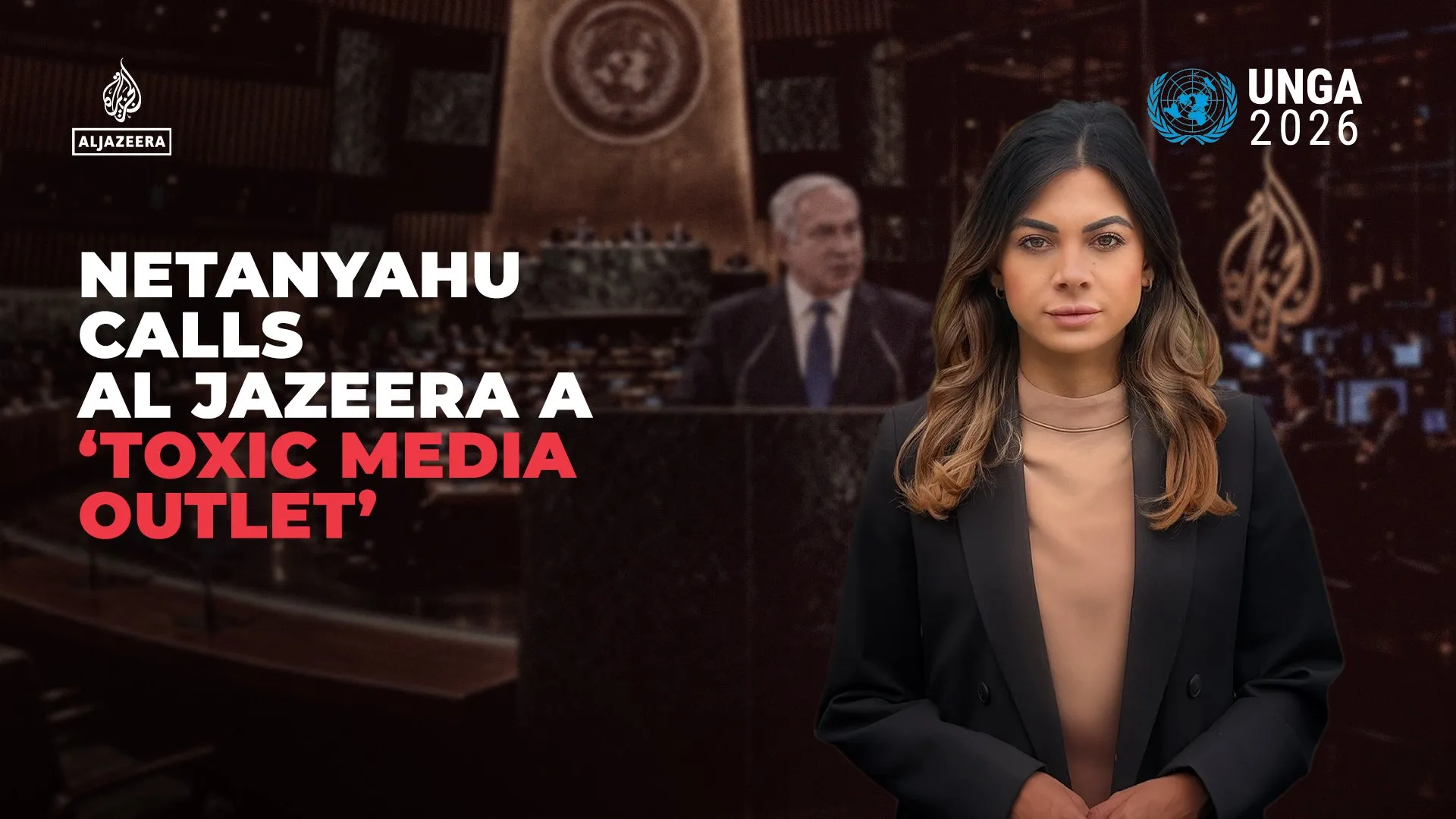
Israeli Prime Minister Benjamin Netanyahu called Al Jazeera a “toxic media outlet” and described the media as an “eighth front” in Israel’s war. But Israel has killed Palestinian journalists, shut down Al Jazeera’s operations and restricted media access to Gaza. Al Jazeera’s Noor Wazwaz explains.

Source link

Mamdani plants olive tree with Gaza families | Benjamin Netanyahu

New York Mayor Zohran Mamdani posted a video of himself planting an olive tree alongside Palestinian families from Gaza, hours after Israeli Prime Minister Benjamin Netanyahu accused him of anti-Semitism in his speech at the UN General Assembly.

Source link