Benjamin Netanyahu

Somalia demands Israel withdraw Somaliland recognition | Benjamin Netanyahu News

Somalia has demanded Israel reverse its recognition of the breakaway region of Somaliland, condemning the move as an act of “aggression that will never be tolerated”.

Ali Omar, Somalia’s state minister for foreign affairs, told Al Jazeera in an interview on Saturday that the government would pursue all available diplomatic means to challenge what it described as an act of “state aggression” and Israeli interference in the country’s internal affairs.

Recommended Stories

list of 4 itemsend of list

The sharp rebuke came a day after Israel became the first nation in the world to formally recognise Somaliland, triggering swift condemnation across African and Arab nations, and raising concerns about whether the move was part of an alleged Israeli plan to forcibly displace Palestinians.

Somaliland broke away from Somalia in 1991 following a brutal civil war but has never secured recognition from any United Nations member state. The self-declared republic has established its own currency, flag and parliament, though its eastern territories remain disputed.

“This will never be acceptable or tolerable to our government and people who are united in defending our territorial integrity,” Omar said. “Our government strongly advises the State of Israel to rescind its divisive actions and abide by international law.”

Somaliland President Abdirahman Mohamed Abdullahi, known locally as Cirro, had been signalling for weeks that recognition by an unnamed state was imminent, though he didn’t clarify which country. Somaliland’s capital Hargeisa had been dotted with billboards in recent weeks, telling residents that recognition was coming.

Omar said the strategic importance of the Horn of Africa was driving foreign interference and interest. “The importance of this region isn’t new. It is still important for international trade today,” he said.

‘Displacement of Palestinians’

Omar accused Israel of pursuing Somaliland’s recognition in order to further displace Palestinians from Gaza. “One of the motivating factors is the displacement of Palestinians from Gaza,” he told Al Jazeera. “It has been widely known – Israel’s goal on that issue.”

Palestine’s foreign ministry backed Somalia, recalling that Israel had previously identified Somaliland as a potential destination for forcibly displacing Palestinians from Gaza, which it described as a “red line”.

On Saturday, Somaliland’s Cirro defended the Israeli move, insisting it was “not directed against any state, nor does it pose a threat to regional peace”.

Hours after Israeli Prime Minister Benjamin Netanyahu announced the recognition on Friday, Somalia’s prime minister’s office issued a statement describing Israel’s action as a deliberate attack on Somalia’s sovereignty and an unlawful step, and emphasising that Somaliland remains an integral and “inseparable” part of the Somali territory.

Netanyahu framed the diplomatic breakthrough with Somaliland as being in the spirit of the Abraham Accords and said he would champion Somaliland’s cause during his meeting with United States President Donald Trump on Monday. Netanyahu also invited Cirro to Israel, which the latter has accepted.

But Trump has distanced himself from close ally Netanyahu on the issue, telling The New York Post newspaper he would not follow Israel’s lead.

Somalia’s Public Works Minister Ayub Ismail Yusuf welcomed Trump’s stance, writing on social media: “Thank you for your support, Mr. President.”

Trump’s comments marked a shift from August, when he told a news conference his administration was working on the Somaliland issue. In recent weeks, the US president has frequently attacked the Somali community in the US and Somalia.

The US has also expressed frustration with Somalia, saying at a recent UN Security Council meeting that Somali authorities had failed in improving security in the country despite billions in aid, and signalling it will not continue to fund a costly peacekeeping mission.

Meanwhile, the African Union’s chairperson, Mahamoud Ali Youssouf, rejected any initiative aimed at recognising Somaliland as an independent nation, warning it would set a dangerous precedent with far-reaching implications. The continental bloc cited a 1964 decision on the intangibility of borders inherited at a country’s independence as a fundamental principle.

Arab League Secretary-General Ahmed Aboul Gheit also condemned what he described as a provocative Israeli assault on the sovereignty of an Arab and African state. He said the Israeli recognition was a clear violation of international law and a flagrant infringement of the principle of state sovereignty.

Despite the international reactions, thousands poured onto the streets of Hargeisa on Friday to celebrate what many saw as the end of 30 years of diplomatic isolation. The Israeli flag was emblazoned on the national museum as residents welcomed the breakthrough.

Somalia has historically had contentious relations with Israel, stemming from Israel’s historic ties with Somalia’s regional rival, Ethiopia.

During the Cold War, Israel provided Ethiopia with military training, intelligence and weapons, while Somalia, aligned with Arab states hostile to Israel, was defeated in the 1977 Ogaden War, a setback that helped fuel decades of civil unrest.

Somaliland declared independence from Somalia in 1991 following persecution under former leader Mohammed Siad Barre, but Somalia has never recognised the breakaway region.

Earlier this month, Israeli Deputy Foreign Minister Sharren Haskel revealed there had been communication with Somalia’s government about shared concerns over Houthi influence in the region.

But Omar, the Somali state minister for foreign affairs, strongly denied any ties with Israel, stating that the country’s position on Israeli policies remained unchanged.

Source link

Is Israel’s government waging war on Al Jazeera and the media? | Israel-Palestine conflict News

The Israeli government is cracking down on critical media outlets, giving it unprecedented control over how its actions are presented to its citizens.

Among the moves is the so-called Al Jazeera Law, which allows the government to shut down foreign media outlets on national security grounds. On Tuesday, the Israeli parliament approved the extension of the law for two years after it was introduced during Israel’s genocidal war on Gaza to essentially stop Al Jazeera’s operations in Israel.

Recommended Stories

list of 4 itemsend of list

Separately, the government is also moving to shut down the popular Army Radio network, one of two publicly funded Israeli news outlets. The radio station is often criticised by the Israeli right wing, which views Army Radio as being biased against it.

Israelis are still reliant on receiving their news from traditional outlets with about half relying on broadcast news for information on current affairs and about a third similarly relying upon radio stations.

The tone of the media that is allowed to publish and broadcast is important. According to analysts inside Israel, the selective broadcasting of Palestinian suffering during Israel’s war on Gaza has helped sustain the carnage and reinforced a sense of grievance that allows for Israel’s continued assaults on Gaza as well as regional countries, such as Syria, Yemen and Lebanon.

Despite what observers characterise as a media environment firmly rigged in its favour, the far-right government of Prime Minister Benjamin Netanyahu, which contains ministers convicted of “terrorism” offences and others who have repeatedly called for the illegal annexation of the occupied West Bank, is looking nevertheless to bypass legal checks on its control of the media and bring more of Israel’s information feed under its control.

Let’s take a closer look.

Because the government believes it is too critical.

Israeli politicians have long complained about how the war in Gaza has been covered in both the international and domestic media.

But the government added a new accusation in November, partly blaming the media for the Hamas-led attacks on southern Israel on October 7, 2023.

“If there hadn’t been a media entirely mobilised to encourage refusal [to volunteer to reserve duty] and reckless opposition to the judicial reform, there wouldn’t have been such a rift in the nation that led the enemy to seize the opportunity,” Communications Minister Shlomo Karhi said as he introduced a bill to increase government control of the news environment, referring to attempts by the Israeli government to reduce the independence of the judiciary.

Israel's Prime Minister Benjamin Netanyahu, right, speaks to Minister of Communications Shlomo Karhi at the Knesset, Israel's parliament
Israeli Prime Minister Benjamin Netanyahu, right, speaks to Minister of Communications Shlomo Karhi in the Knesset in West Jerusalem [File: Maya Alleruzzo/AP Photo]

In addition to the ‘Al Jazeera Law’, there are three items of legislation under way: a plan to privatise Israel’s public broadcaster, Kan, the move to abolish Army Radio, and an initiative to bring the media regulator under government control.

Both Army Radio and Kan, the other state-funded outlet with editorial independence, have carried numerous reports critical of the government.

This week, Kan aired an interview with Netanyahu’s former spokesperson Eli Feldstein, who told the broadcaster that the prime minister had instructed him to develop a strategy to help evade responsibility for the October 7 attacks.

Meanwhile, Israeli Defence Minister Israel Katz, justifying the move to shut down Army Radio, said on Monday that the outlet had become a platform to attack the Israeli military and its soldiers.

Israel is also potentially changing the way it regulates its media. In November, the Israeli parliament pressed ahead with a bill that would abolish existing media regulators and replace them with a new authority appointed by the government, potentially allowing for even greater state interference.

Israel's Attorney General Gali Baharav-Miara listens on as she attends a cabinet meeting at the Bible Lands Museum in Jerusalem on June 5, 2024. GIL COHEN-MAGEN/Pool via REUTERS
Israeli Attorney General Gali Baharav-Miara attends a cabinet meeting at the Bible Lands Museum in Jerusalem [Gil Cohen-Magen/Pool via Reuters]

Lastly, Israel has also codified into law the emergency legislation banning foreign media outlets whose output it disagrees with. It was first enacted as emergency legislation in May 2024 when Israel used it to ban Al Jazeera from its territory, and it was then used in the same month to halt the activity of The Associated Press after the government accused the United States-based news agency of sharing footage with Al Jazeera.

Under the new law, the communications minister – with the prime minister’s sign-off and the backing of a ministerial committee – may halt a foreign broadcaster’s transmissions if the prime minister accepts a professional assessment that the outlet poses a security threat. The minister can also shut the broadcaster’s offices, confiscate equipment used to produce its content and block access to its website.

Have the moves been criticised?

The International Federation of Journalists (IFJ) and the United Kingdom’s National Union of Journalists have criticised Israel’s decision to legislate against foreign media platforms it deems a security threat.

In a statement, IFJ General Secretary Anthony Bellanger said: “Israel is openly waging a battle against media outlets, both local and foreign, that criticise the government’s narrative: that is typical behavior of authoritarian regimes. We are deeply concerned about the Israeli parliament passing this controversial bill, as it would be a serious blow to free speech and media freedom, and a direct attack on the public’s right to know.”

The attempt to shutter Army Radio has also been heavily criticised with Israeli Attorney General Gali Baharav-Miara declaring the move unlawful and accusing Netanyahu’s coalition of making public broadcasting “weakened, threatened and institutionally silenced and its future shrouded in mist”.

Baharav-Miara has also criticised the move to place media regulation under government control, saying the bill “endangers the very principle of press freedom”.

Not very.

The Israeli media have overwhelmingly been a consistent cheerleader of the Israeli government’s actions in Gaza, where more than 70,000 Palestinians have been killed by Israel, and in the occupied West Bank.

The suffering of Palestinians is rarely shown, and when it is, it is often justified.

Even as Israel has killed more than 270 journalists and media workers in Gaza, the Israeli media have provided cover for the actions of its government and military.

That means Israelis often don’t recogise the hypocrisy of their government’s statements.

An example came in June after Iran struck an evacuated hospital during the 12-day war between Israel and Iran. The Israeli government called the incident a war crime, and the Israeli media reflected that outrage.

But the attack came after Israel had been accused by a variety of organisations, including the United Nations, of systematically destroying Gaza’s healthcare system with medical workers targeted for arrest and frequently tortured despite their protection under international law.

“The Israeli media … sees its job as not to educate – it’s to shape and mould a public that is ready to support war and aggression,” journalist Orly Noy told Al Jazeera from West Jerusalem in the wake of the strike on the Israeli medical centre. “It genuinely sees itself as having a special role in this.”

Source link

US to host Qatari, Turkish and Egyptian officials for Gaza ceasefire talks | Israel-Palestine conflict News

The United States Middle East envoy, Steve Witkoff, will hold talks in Miami, Florida, with senior officials from Qatar, Egypt and Turkiye as efforts continue to advance the next phase of the Gaza ceasefire, even as Israel repeatedly violates the truce on the ground.

A White House official told Al Jazeera Arabic on Friday that Witkoff is set to meet representatives from the three countries to discuss the future of the agreement aimed at halting Israel’s genocidal war on Gaza.

Recommended Stories

list of 3 itemsend of list

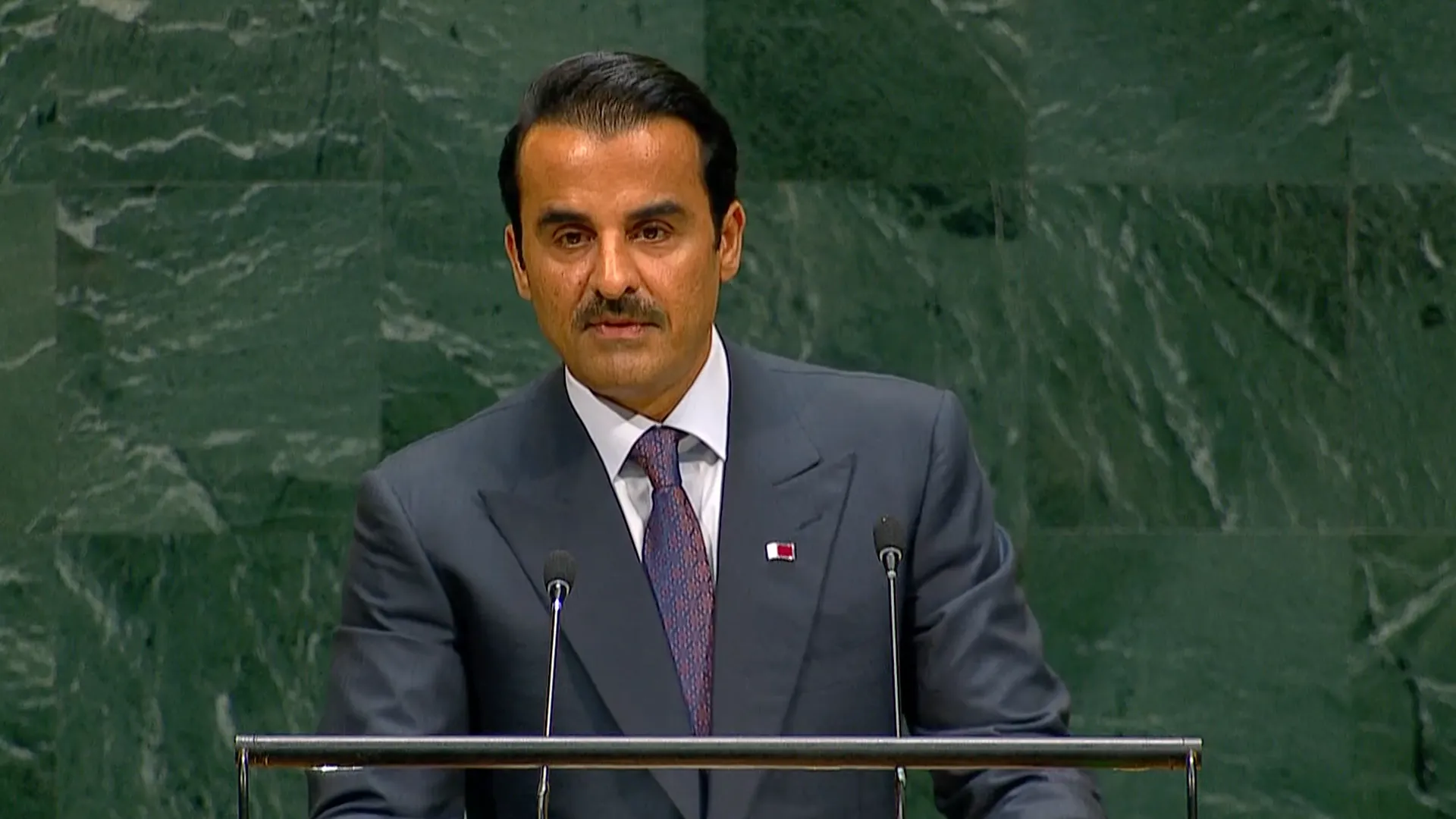
Axios separately reported that the meeting, scheduled for later on Friday, will include Qatari Prime Minister and Foreign Minister Sheikh Mohammed bin Abdulrahman bin Jassim Al Thani, Turkish Foreign Minister Hakan Fidan and Egyptian Foreign Minister Badr Abdelatty.

At the same time, Israel’s public broadcaster, quoting an Israeli official, said Prime Minister Benjamin Netanyahu is holding a restricted security consultation to examine the second phase of the ceasefire and potential scenarios.

That official warned that Israel could launch a new military campaign to disarm Hamas if US President Donald Trump were to disengage from the Gaza process, while acknowledging that such a move was unlikely because Trump wants to preserve calm in the enclave.

Despite Washington’s insistence that the ceasefire remains intact, Israeli attacks have continued almost uninterrupted, as it continues to renege on the terms of the first phase, as it blocks the free flow of desperately needed humanitarian aid into the besieged Palestinian territory.

According to an Al Jazeera analysis, Israeli forces carried out attacks on Gaza on 58 of the past 69 days of the truce, leaving only 11 days without reported deaths, injuries or violence.

In Washington, Trump said on Thursday that Netanyahu is likely to visit him in Florida during the Christmas holidays, as the US president presses for the launch of the agreement’s second phase.

“Yes, he will probably visit me in Florida. He wants to meet me. We haven’t formally arranged it yet, but he wants to meet me,” Trump told reporters.

Qatar and Egypt, who are mediating and guaranteeing the truce after a devastating two-year genocide in Gaza, have urged a transition to the second phase of the agreement. The plan includes a full Israeli military withdrawal and the deployment of an international stabilisation force (ISF).

Fragile truce, entrenched occupation

Qatar’s prime minister warned on Wednesday that daily Israeli breaches of the Gaza ceasefire are threatening the entire agreement, as he called for urgent progress towards the next phase of the deal to end Israel’s genocidal war on the besieged Palestinian enclave.

Sheikh Mohammed made the appeal following talks with United States Secretary of State Marco Rubio in Washington, where he stressed that “delays and ceasefire violations endanger the entire process and place mediators in a difficult position”.

The ceasefire remains deeply unstable, and Palestinians and rights groups say it is a ceasefire only in name, amid Israeli violations and a rapidly deteriorating humanitarian situation in Gaza.

Since the truce took effect on October 10, 2025, Israel has repeatedly breached the agreement, killing hundreds of Palestinians.

Gaza’s Government Media Office says Israel committed at least 738 violations between October 10 and December 12, including air strikes, artillery fire and direct shootings.

Israeli forces shot at civilians 205 times, carried out 37 incursions beyond the so-called “yellow line”, bombed or shelled Gaza 358 times, demolished property on 138 occasions and detained 43 Palestinians, the office said.

Israel has also continued to block critical humanitarian aid while systematically destroying homes and infrastructure.

Against this backdrop, Israel Hayom quoted an Israeli security official as saying the so-called “yellow line” now marks Israel’s new border inside Gaza, adding that Israeli forces will not withdraw unless Hamas is disarmed. The official said the army is preparing to remain there indefinitely.

The newspaper also reported that Israeli military leaders are proposing continued control over half of Gaza, underscoring Israel’s apparent intent to entrench its occupation rather than implement a genuine ceasefire.

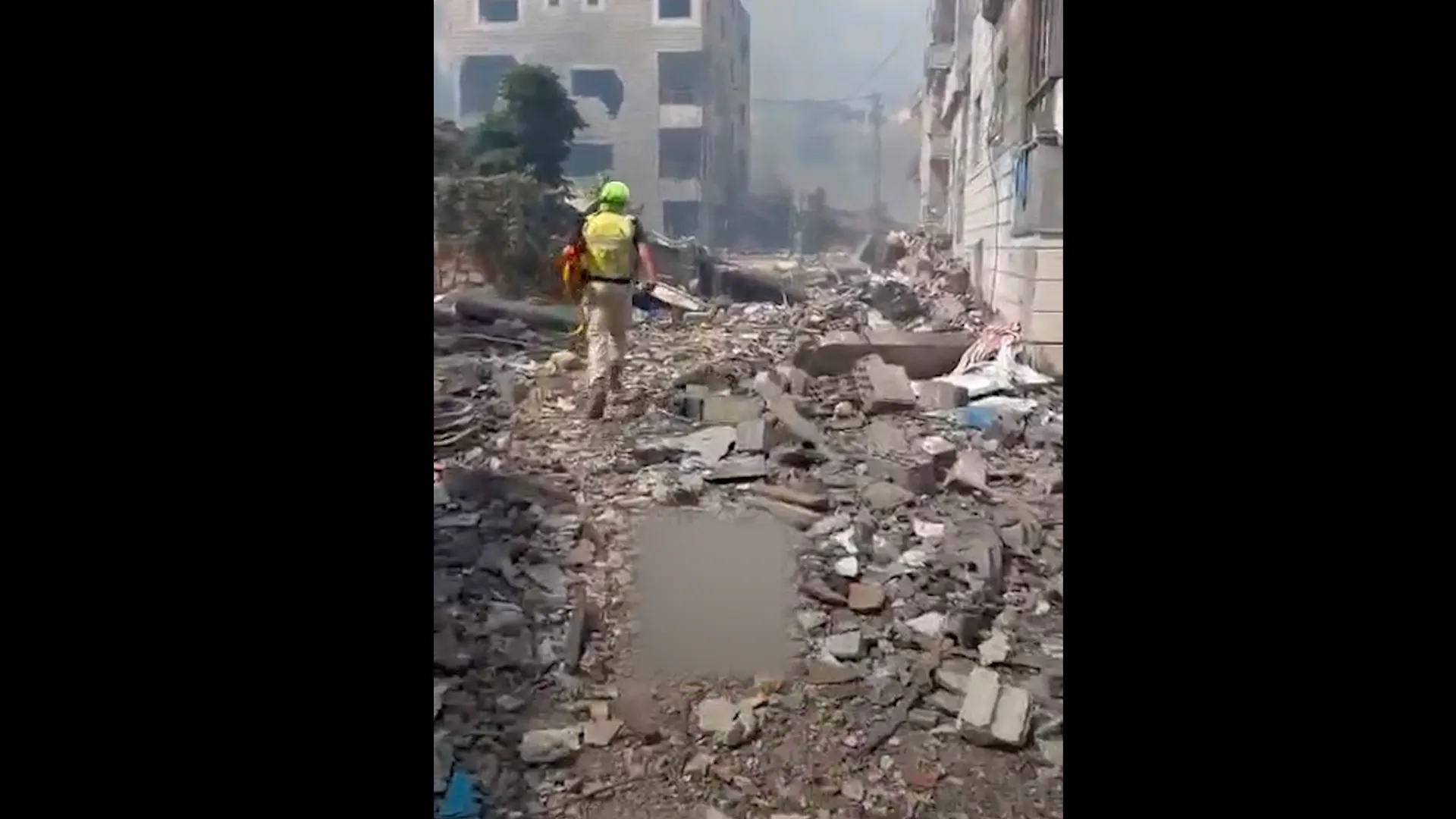
Compounding the misery in Gaza, a huge storm that recently hit the Strip has killed at least 13 people as torrential rains and fierce winds flooded tents and caused damaged buildings to collapse.

Israel’s two-year war has decimated more than 80 percent of the structures across Gaza, forcing hundreds of thousands of families to take refuge in flimsy tents or overcrowded makeshift shelters.

Source link