Belgium

China bets on province the size of Belgium to reshape global trade

As of December 2025, new laws came into effect making Hainan a separate customs zone and consolidating a favorable regulatory environment in the southernmost province of China.

The move contrasts with the current global trend of protectionism, as many countries move to tighten trade rules and investment controls.

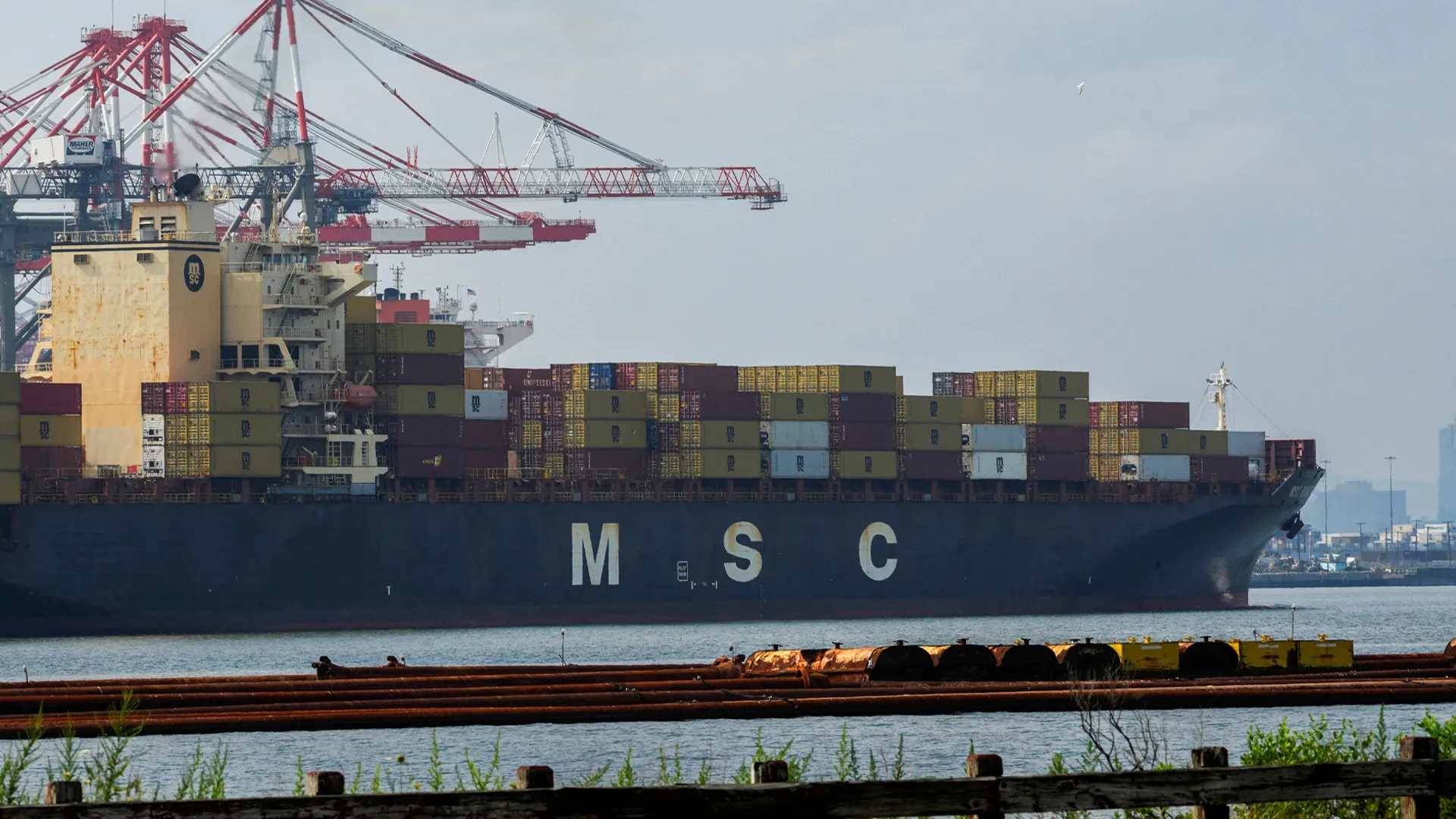
Hainan is now effectively the world’s largest free trade port by area. Encompassing over 35,000 square kilometers, it is roughly fifty times bigger than Singapore and even slightly bigger than Belgium.

China is attempting to offer a solution for the “growing uncertainties in the global economy” and trying to replicate the success of Singapore, with a free trade port the size of a European nation.

According to the state-run Xinhua news agency, the launch of “special customs operations” is not merely a policy tweak but a fundamental restructuring of how the island province interacts with international markets.

The unique framework, instituted by the Chinese Communist Party, could make Hainan the most business-friendly jurisdiction in the world.

This is not the first time the state-led economy, described as a socialist market economy, takes a page from the capitalist playbook to boost its global dominance.

Special economic zones (SEZs) have been successfully implemented in China since the late 1970s, as part of the country’s economic open-door policy. These SEZs allow Beijing to experiment with capitalist mechanisms, in limited areas, while maintaining broader state control over the economy.

In 2020, the CCP unveiled a comprehensive plan to shift Hainan from a mere special economic zone to a strategic hub designed to rival Hong Kong, Singapore and Dubai.

Creating a completely separate trade and investment system for the province was the objective until the end of 2025. Going forward, the party projects that Hainan will reach “institutional maturity” by 2035 and achieve a “strong global influence” by the middle of the century.

First line open, second line controlled

The province comprises Hainan Island and various smaller islands in the South China Sea, and now operates under a “two-line” customs system designed for greater openness while maintaining domestic security.

The first line marks the boundary between Hainan and the global economy, where most trade barriers have been removed. Under the new legislation, the majority of goods can enter the province freely, with a significantly expanded list of zero-tariff imports covering raw materials, equipment and consumer products.

The second line functions as a filter between Hainan and mainland China. There, standard customs rules apply, with goods subject to tariffs and controls intended to protect domestic markets.

However, the system creates a powerful incentive for manufacturers. Goods entering Hainan that achieve at least 30% added value within the province can enter mainland China duty-free, a policy designed to encourage additional production on the islands rather than using it solely as a transit hub.

For example, Australian beef can be imported into Hainan duty-free. Then, if the beef is sliced and packaged for China-destined hotpot products on the island province itself, it can enter mainland Chinese supermarkets with the same exemptions.

China’s strategic gateway

The scope of the CCP’s plans for Hainan extends well beyond customs arrangements.

The province applies a flat corporate tax rate of 15%, lower than those in Hong Kong (16.5%), Singapore (17%) and mainland China (25%).

Hainan is now also operating under a distinct regulatory framework in several other areas, which differs significantly from regulation on the mainland.

For instance, if a pharmaceutical product or medical device is approved by one of many regulatory agencies anywhere in the world, it can be used on the island province despite being banned on the mainland.

Similarly, companies registered in Hainan can apply for broader internet access, allowing them to bypass the so-called “Great Firewall of China”, a system of laws and technologies enforced by the CCP to control online activity nationwide.

Foreign companies can also open special bank accounts in Hainan, with capital flows exempt from mainland foreign-exchange controls, while foreign universities are permitted to establish campuses without a Chinese partner.

Visa-free entry to the province has also been expanded from 59 to 86 countries, now including the United States, Germany and Australia, as well as several countries in the Middle East and South America.

Visitors can stay for up to 30 days without a visa for business, medical treatment or tourism, as the authorities also promote the island province as a major travel destination.

Amid rising tensions in the global economy, Hainan serves as China’s “pressure valve” offering a low-tax, zero-tariff, high-access gateway to Asia-Pacific markets.

Source link

UK youth to be offered military ‘gap year’ in bid to boost defence: Report | Military News

UK plans to boost ranks of armed forces by offering young people paid military experience amid growing Russian threats.

Teenagers in the United Kingdom will be offered paid “gap years” with the armed forces under a new “whole of society” approach to national defence that aims to increase recruitment among young people, according to reports.

The London-based i Paper reported on Friday that the UK’s Ministry of Defence hopes the scheme will broaden the appeal of military careers for British youth as tensions with Russia rise across Europe.

Recommended Stories

list of 4 itemsend of list

The scheme will initially be open to about 150 applicants aged 18 to 25 in early 2026, with ministers aiming to eventually expand the programme to more than 1,000 young people annually, depending on demand, according to British radio LBC.

With fears of threats from Russia growing amid Moscow’s war on Ukraine, European countries have looked to national service for young people as a means to boost their ranks, with France, Germany and Belgium announcing schemes this year.

Recruits to the UK scheme will not be deployed on active military operations and while pay has not been confirmed, the UK’s LBC news organisation reported that it is expected to match basic recruit salaries, typically about 26,000 pounds, or $35,000.

Under the programme, army recruits would complete 13 weeks of basic training as part of a two-year placement. The navy scheme would last one year while the Royal Air Force (RAF) is still considering options, according to reports.

UK Defence Secretary John Healey told the i Paper: “This is a new era for Defence, and that means opening up new opportunities for young people.”

News of the programme follows remarks earlier this month from the UK’s Chief of the Defence Staff, Air Chief Marshal Richard Knighton, who said Britain’s “sons and daughters” should be “ready to fight” and defend the country amid Russian aggression, the Press Association reports.

Knighton said that while a direct Russian attack on the UK is unlikely, hybrid threats are intensifying.

He referenced a recent incident involving a Russian spy ship suspected of mapping undersea cables near UK waters.

“Every day the UK is subject to an onslaught of cyber-attacks from Russia and we know that Russian agents are seeking to conduct sabotage and have killed on our shores”, Knighton said, warning that Russia’s military had become a “hard power [which] is growing quickly”.

The UK government announced earlier this year that defence and security spending will rise to 5 percent of gross domestic product (GDP) by 2035.

Source link

Belgium joins South Africa’s genocide case against Israel at ICJ | Israel-Palestine conflict News

Other countries, including Brazil, Colombia, Ireland, Mexico, Spain and Turkiye, have already joined the case in The Hague.

Belgium has formally joined the case launched by South Africa at the International Court of Justice (ICJ) alleging Israel is committing genocide in the Gaza Strip.

In a statement on Tuesday, the ICJ – The Hague-based highest court of the United Nations – said Belgium had filed a declaration of intervention in the case.

Recommended Stories

list of 4 itemsend of list

Other countries, including Brazil, Colombia, Ireland, Mexico, Spain and Turkiye, have already joined the proceedings.

South Africa brought the case in December 2023, arguing that Israel’s war in Gaza violates the 1948 UN Convention on the Prevention and Punishment of the Crime of Genocide.

Israel has rejected the allegations and criticised the case.

While a final ruling could take years, the ICJ issued provisional measures in January 2024 ordering Israel to take steps to prevent acts of genocide in Gaza and to allow unimpeded access for humanitarian aid.

The court’s orders are legally binding although it has no direct mechanism to enforce them.

The ICJ also said Israel’s presence in occupied Palestinian territory is unlawful and its policies amount to annexation.

Israel has continued its assaults in Gaza and the occupied West Bank despite the rulings and growing international criticism while advancing plans to seize large parts of Palestinian territory.

Meanwhile, the United States and several of its European allies continue to provide military and financial support to Israel.

Washington has rejected the merits of South Africa’s case, and US lawmakers have criticised the country and issued threats against it.

The US has also imposed sanctions on members of the International Criminal Court (ICC), which has issued arrest warrants against Israeli Prime Minister Benjamin Netanyahu and former Defence Minister Yoav Gallant.

Belgium was also among a group of countries that recognised the State of Palestine in September. Nearly 80 percent of UN member states now recognise Palestine.

Since a ceasefire began on October 10, the Palestinian Ministry of Health in Gaza said, Israel has killed at least 406 Palestinians and injured 1,118 in the enclave. Since the start of the war on October 7, 2023, the ministry said, at least 70,942 Palestinians have been killed and 171,195 wounded.

Source link

First look at the new Virgin Trains that will take Brits from UK to France, Belgium and Netherlands 

BRITS could soon be heading to Paris, Brussels and Amsterdam with Virgin Trains – and now, there is a first glimpse at the trains that will be used.

Virgin Trains has revealed more details about services it hopes to run to Europe from 2030, with cheaper tickets and potential Manchester and Birmingham routes.

Virgin Trains is set to rival Eurostar with services through the Channel Tunnel by 2030Credit: Alamy

Back in October, Virgin Trains revealed that it had been granted permission by the Office of Rail and Road to access Temple Mills depot in East London.

The approval essentially means that the operator is a step closer to launching cross-channel services that will eventually rival Eurostar.

Though precise details of schedules and ticket prices have yet to be revealed, Virgin Trains has said it plans to initially use 12 trains for the European service, each of which will have seven carriages.

The operator has made an agreement with Alstom for these trains, which will be Avelia Stream trains – energy-efficient and modern, according to Virgin.

Read more on travel inspo

LUCKY DIP

I tried Wowcher’s £99 Mystery Christmas Market – everything you need to know


HAPPY DEAL

Disney free food deal that ‘saves THOUSANDS’ – our experts see if it’s worth it

And they will feature Virgin’s famous red and white colours.

Current planned routes include London St Pancras to Paris Gare du Nord, Brussels Midi and Amsterdam Centraal.

And Virgin is planning for 20 services a day, with 13 to Paris, four to Brussels and three to Amsterdam.

Unlike Eurostar, Virgin is also looking at stopping at Ebbsfleet or Ashford in Kent, which are currently not used for international services.

And in the future, there could be services from Manchester or Birmingham and services to Switzerland and/or Germany.

What exactly Virgin Trains will look like at London St Pancras is yet to be revealed, but Virgin has said that it will “improve the experience” for passengers.

Richard Branson has previously said he wants a direct service from London to Charles de Gaulle Airport.

He also mentioned hopes to launch a route to Disneyland Paris, which Eurostar used to have a route to but axed it in 2023.

The main benefit for passengers, though, could be the potentially cheaper tickets as Virgin has expressed on a number of occasions how fares are likely to be competitive, or even cheaper, than current Eurostar tickets.

According to Eurostar, its lowest fare between London and Paris is £39.

However, looking at current prices, the cheapest fare in the next six weeks is £51.

Whilst the prices for Virgin Trains tickets are not clear yet, Branson said last month: “If you have competition, then fares will inevitably come down.

Routes would include destinations in Paris, Brussels and AmsterdamCredit: Getty

“If we’ve got seats that need selling, we will reduce the cost of them.”

Passengers on Virgin Trains may also be able to collect Virgin Red loyalty points when they book through Virgin, as they do with Virgin Atlantic flights.

Before services are able to launch, Virgin Trains needs to form a commercial agreement with Eurostar (the current operator of Temple Mills), secure finance, access to tracks and stations and gain safety approvals from the ORR and authorities in the EU.

The Channel Tunnel is currently only used by Eurostar and LeShuttle.

However, a report over the summer revealed there is capacity for more trains to access the Temple Mills depot, which is essential for cross-channel services.

At the time of the announcement in October, Martin Jones, deputy director, access and international at the Office of Rail and Road said: “With this decision we are backing customer choice and competition in international rail, unlocking up to £700million in private sector investment and stimulating growth.

“While there is still some way to go before the first new services can run, we stand ready to work with Virgin Trains as their plans develop.”

In other rail news, a traditional English seaside town named one of the best in the UK is getting new direct London trains.

Plus, the low-cost train launching more routes between two popular UK cities – and tickets are £33.

Fares could also be cheaper than current Eurostar ticketsCredit: Virgin

Source link

EU delays trade deal with South America’s Mercosur bloc as farmers protest | International Trade News

EU delays Mercosur trade deal until January amid farmer protests and opposition from France and Italy.

The European Union has delayed a massive free-trade deal with South American countries amid protests by EU farmers and as last-minute opposition by France and Italy threatened to derail the agreement.

European Commission chief spokesperson Paula Pinho confirmed on Thursday that the signing of the trade pact between the EU and South American bloc Mercosur will be postponed until January, further delaying a deal that had taken some 25 years to negotiate.

Recommended Stories

list of 4 itemsend of list

Commission President Ursula von der Leyen was expected to travel to Brazil on Saturday to sign the deal, but needed the backing of a broad majority of EU members to do so.

The Associated Press news agency reported that an agreement to delay was reached between von der Leyen, European Council President Antonio Costa and Italian Prime Minister Giorgia Meloni – who spoke at an EU summit on Thursday – on the condition that Italy would vote in favour of the agreement in January.

French President Emmanuel Macron had also pushed back against the deal as he arrived for Thursday’s summit in Brussels, calling for further concessions and more discussions in January.

Macron said he has been in discussions with Italian, Polish, Belgian, Austrian and Irish colleagues, among others, about delaying the signing.

“Farmers already face an enormous amount of challenges,″ the French leader said.

The trade pact with Argentina, Brazil, Bolivia, Paraguay and Uruguay would be the EU’s largest in terms of tariff cuts.

But critics of the deal, notably France and Italy, fear an influx of cheap commodities that could hurt European farmers, while Germany, Spain and Nordic countries say it will boost exports hit by United States tariffs and reduce reliance on China by securing access to key minerals.

Brazil’s President Lula says Italy’s PM Meloni asked for ‘patience’

The EU-Mercosur agreement would create the world’s biggest free-trade area and help the 27-nation European bloc to export more vehicles, machinery, wines and spirits to Latin America at a time of global trade tensions.

Al Jazeera’s Dominic Kane, reporting from Berlin, said Germany, Spain and the Nordic countries were “all lobbying hard in favour of this deal”. But ranged against them were the French and Italian governments because of concerns in their powerful farming sectors.

“Their worry being that their products, such as poultry and beef, could be undercut by far cheaper imports from the Mercosur countries,” Kane said.

“So no signing in December. The suggestion being maybe there will be a signing in mid-January,” he added.

“But there must now be a question about what might happen between now and mid-January, given the powerful forces ranged against each other in this debate,” he added.

Farmers wear gas masks at the Place du Luxembourg near the European Parliament, during a farmers' protest to denounce the reforms of the Common Agricultural Policy (CAP) and trade agreements such as the Mercosur, in Brussels, on December 18, 2025, organised by Copa-Cogeca, the main association representing farmers and agricultural cooperatives in the EU. EU Farmers, particularly in France, worry the Mercosur deal -- which will be discussed at the EU leaders meeting -- will see them undercut by a flow of cheaper goods from agricultural giant Brazil and its neighbours. They also oppose plans put forward by the European Commission to overhaul the 27-nation bloc's huge farming subsidies, fearing less money will flow their way. (Photo by NICOLAS TUCAT / AFP)
Farmers wear gas masks at the Place du Luxembourg near the European Parliament, during a farmers’ protest on December 18, 2025 [Nicolas Tucat/AFP]

Mercosur nations were notified of the move, a European Commission spokeswoman said, and while initially reacting with a now-or-never ultimatum to its EU partners, Brazil opened the door on Thursday to delaying the deal’s signature to allow time to win over the holdouts.

Brazil’s President Luiz Inacio Lula da Silva said Italy’s Meloni had asked him for “patience” and had indicated that Italy would eventually be ready for the agreement.

The decision to delay also came hours after farmers in tractors blocked roads and set off fireworks in Brussels to protest the deal, prompting police to respond with tear gas and water cannon.

Protesting farmers – some travelling to the Belgian capital from as far away as Spain and Poland – brought potatoes and eggs to throw and waged a furious back-and-forth with police while demonstrators burned tyres and a faux wooden coffin bearing the word “agriculture”.

The European Parliament evacuated some staff due to damage caused by protesters.

Source link

Trump says deal to end Ukraine war ‘closer than ever’ after Berlin talks | Russia-Ukraine war News

US President Donald Trump has said that an agreement to end Russia’s war on Ukraine is “closer than ever” after key leaders held talks in Berlin, but several officials said that significant differences remain over territorial issues.

Trump told reporters in the Oval Office on Monday that he had “very long and very good talks” with Ukrainian President Volodymyr Zelenskyy and the leaders of France, Germany, the United Kingdom and NATO.

Recommended Stories

list of 4 itemsend of list

“We’re having tremendous support from European leaders. They want to get it [the war] ended also,” he said.

“We had numerous conversations with President [Vladimir] Putin of Russia, and I think we’re closer now than we have been, ever, and we’ll see what we can do.”

Zelenskyy had earlier said that negotiations with US and European leaders were difficult but productive.

The high-level discussions, involving Zelenskyy, a US delegation led by envoy Steve Witkoff, Trump’s son-in-law, Jared Kushner, and European leaders, took place in Berlin over two days amid mounting pressure from Washington for Kyiv to make concessions to Moscow to end one of Europe’s deadliest conflicts since World War II.

In a statement following the talks, European leaders said they and the US were committed to working together to provide “robust security guarantees” to Ukraine, including a European-led “multinational force Ukraine” supported by the US.

They said the force’s work would include “operating inside Ukraine” as well as assisting in rebuilding Ukraine’s forces, securing its skies and supporting safer seas. They said that Ukrainian forces should remain at a peacetime level of 800,000.

Two US officials, speaking to the Reuters news agency, described the proposed protections as “Article 5-like”, a reference to NATO’s Article 5 mutual defence pledge.

Ukraine had earlier signalled it may be willing to abandon its ambition to join the NATO military alliance in exchange for firm Western security guarantees.

Speaking to reporters in Berlin, Zelenskyy said that Kyiv needed a clear understanding of the security guarantees on offer before making any decisions on territorial control under a potential peace settlement. He added that any guarantees must include effective ceasefire monitoring.

Ukrainian officials have been cautious about what form such guarantees could take. Ukraine received security assurances backed by the US and Europe after gaining independence in 1991, but those did not prevent Russia’s invasions in 2014 and 2022.

German Chancellor Friedrich Merz said Washington had offered “considerable” security guarantees during the Berlin talks.

“What the US has placed on the table here in Berlin, in terms of legal and material guarantees, is really considerable,” Merz said at a joint news conference with Zelenskyy.

“We now have the chance for a real peace process,” he said, adding that territorial arrangements remain a central issue. “Only Ukraine can decide about territorial concessions. No ifs or buts.”

Merz also said it was essential for the European Union to reach an agreement on using frozen Russian assets to support Ukraine to demonstrate to Moscow that continuing the war is futile. He warned that EU members must share the risks involved in appropriating those assets, or risk damaging the bloc’s reputation.

Meanwhile, the EU has adopted new sanctions targeting companies and individuals accused of helping Russia circumvent Western restrictions on oil exports that help finance the war.

In Moscow, Kremlin spokesperson Dmitry Peskov said that Putin was “open to peace and serious decisions” but opposed to what he described as “temporary respites and subterfuges”.

Reporting from Berlin, Al Jazeera’s Dominic Kane said the outcome of the talks remains unclear.

“We know American emissaries were speaking to Ukrainians here in Berlin yesterday and today. Talks between those two groups have finished, according to a statement by Zelenskyy’s office,” Kane said.

“What we don’t yet know is how much of the US-led 28-point plan – parts of which were acceptable to Moscow but strongly opposed by Kyiv and EU officials – remains intact.”

Kane added that the German government has presented a separate 10-point proposal focused on military and intelligence cooperation rather than a peace settlement. European leaders are expected to continue discussions on the remaining areas of disagreement.

Fighting continues

Meanwhile, Ukraine said on Monday that Russia launched 153 drones overnight, with 17 striking their targets.

Russia’s Ministry of Defence said its forces destroyed 130 Ukrainian drones over Russian territory.

Kyiv said its underwater drones struck a Russian submarine docked at the Black Sea port of Novorossiysk. Ukraine has stepped up naval attacks in recent weeks on what it has described as Russia-linked vessels in the Black Sea.

Russian forces have continued to target the Ukrainian port city of Odesa, with two Turkish cargo ships hit in recent days. Kyiv said the strikes were aimed at Russian targets.

Zelenskyy also accused Moscow of using its attacks as leverage in peace negotiations.

He said Russia has struck every power station in Ukraine as part of its campaign against the country’s energy infrastructure.

Source link