There’s no shortage of twisty, intriguing Netflix miniseries to tune into for your next binge session but one show – and its “bonkers” ending – will stay with fans long after they’ve finished watching
A “mind-bending”, “unpredictable” and “memorable” television miniseries has been lauded by fans – and it’s perfect for those who loved the psychological tension of Netflix’s hit show The Beast In Me, which was fronted by Claire Danes and Matthew Rhys.
Those craving intriguing television shows for their next binge-watching session have no shortage of options on Netflix, with The Stranger, His & Hers, Bodies and more all resonating with audiences and keeping people guessing until the final episode – but it’s a 2021 miniseries that still has telly fans talking. Many people turn to social media on the quest for recommendations, with some content creators amassing devoted followings thanks to their passion and insight into a vast array of shows.
This is the case with Luke Ecclestone, who posts content online as Eccy Reviews. He’s become a go-to source for many people looking for their next binge-watch.
The TV and film lover has amassed hundreds of thousands of followers on social media where he shares his opinions and insights on a range of films and television programmes.
In a recent video posted to TikTok, he discussed three miniseries with a supernatural element and plenty of mystery – as the main discussion was all about Behind Her Eyes.
He began: “Here are three Netflix series that will leave you completely hooked and questioning everything.
Content cannot be displayed without consent
“All of these shows are unsettling, unpredictable, and full of moments you will never see coming – and the last one on this list is on a whole another level.”
The first show he recommended was the 2022 supernatural thriller The 7 Lives Of Lea and the second was the 2021 gothic, supernatural horror miniseries Midnight Mass.
But it was the third entry on his list that Luke branded one of “the most memorable” shows of all time.
So, what’s the show in question? Luke said: “The last one on this list is absolutely mind bending – everyone I know who’s seen it absolutely loves it – and the show I’m talking about is called Behind Her Eyes.”
What is Netflix’s ’mind-bending’ 2021 miniseries about?
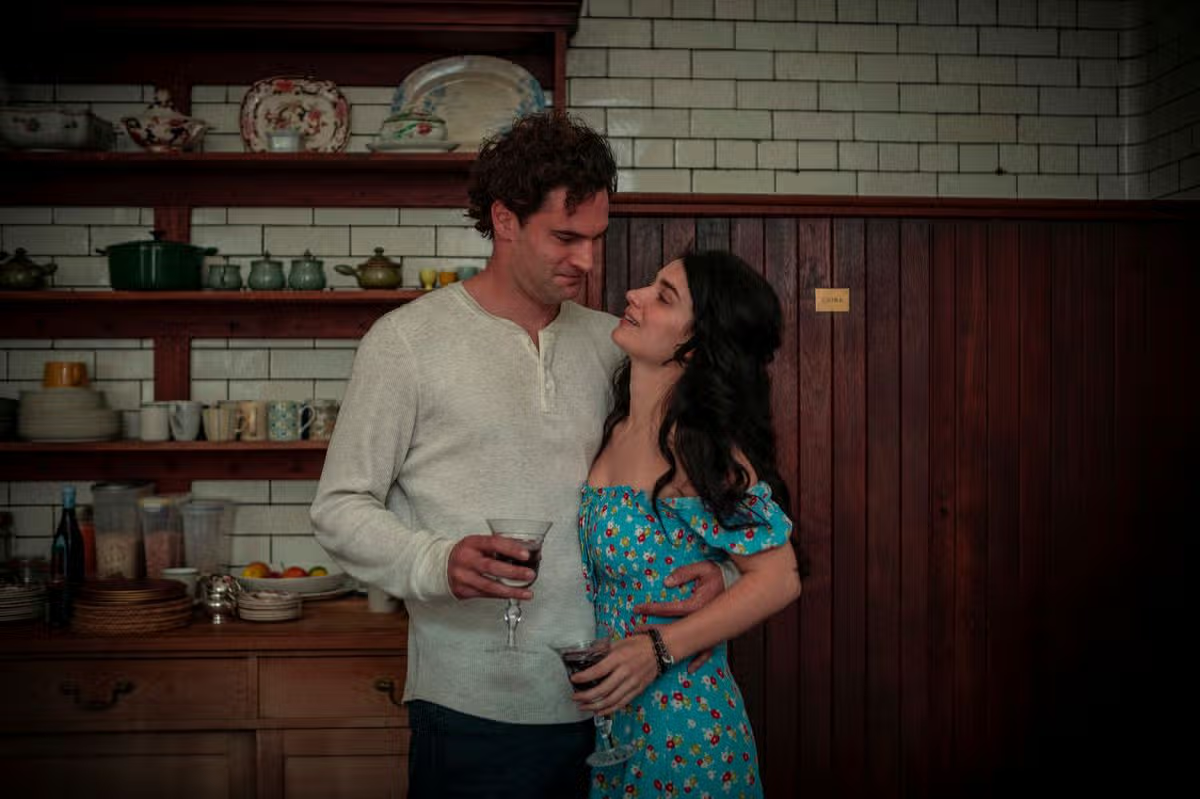
Behind Her Eyes first premiered on Netflix in early 2021. Based on Sarah Pinborough’s 2017 novel of the same name, it follows single mother Louise as she begins an affair with her new boss, David.
When she strikes up an unlikely friendship with David’s wife Adele, things become more and more bizarre, leaving Louise entirely unsure of who she can trust.
David and Adele’s marriage is complicated, yet Louise finds herself drawn to both of them. When Adele starts helping Louise control her night terrors, a supernatural element is involved that leads to devastating consequences for all.
Luke said: “Where this show went I never predicted in a million years.
“And it is one of the most memorable shows I have ever watched and if you haven’t seen it, you are massively missing out.”
How did viewers and critics respond to Behind Her Eyes?
In the comments section, fellow TikTok users were keen to share their thoughts. One person said: “Looking for something you watch tonight… Behind Her Eyes it is!”
Another said: “Behind Her Eyes was absolutely amazing, did not expect the ending. Amazing – [you] defo need to watch. 10/10.”
A third agreed: “Behind Her Eyes is fantastic it blew my head off.”
While someone else was intrigued by all three shows and added: “Mate these sound well good.”
On popular review aggregation website Rotten Tomatoes, critics had strong reactions to the show – though its “bonkers” twist ending didn’t land with some.
Anne Brodie commented: “Whiplash twists and turns make this a worthy watch as this uncomfortable trio enters new territory.”
But Gayle Sequeira added: “The show’s insistence on progressing towards that bonkers twist, however, results in it sacrificing storytelling in favour of shock.”
Maybe there is something in the fog. Matthew Rhys landed two Emmy nominations in different categories for darkly comedic and darkly chilling turns this TV season.
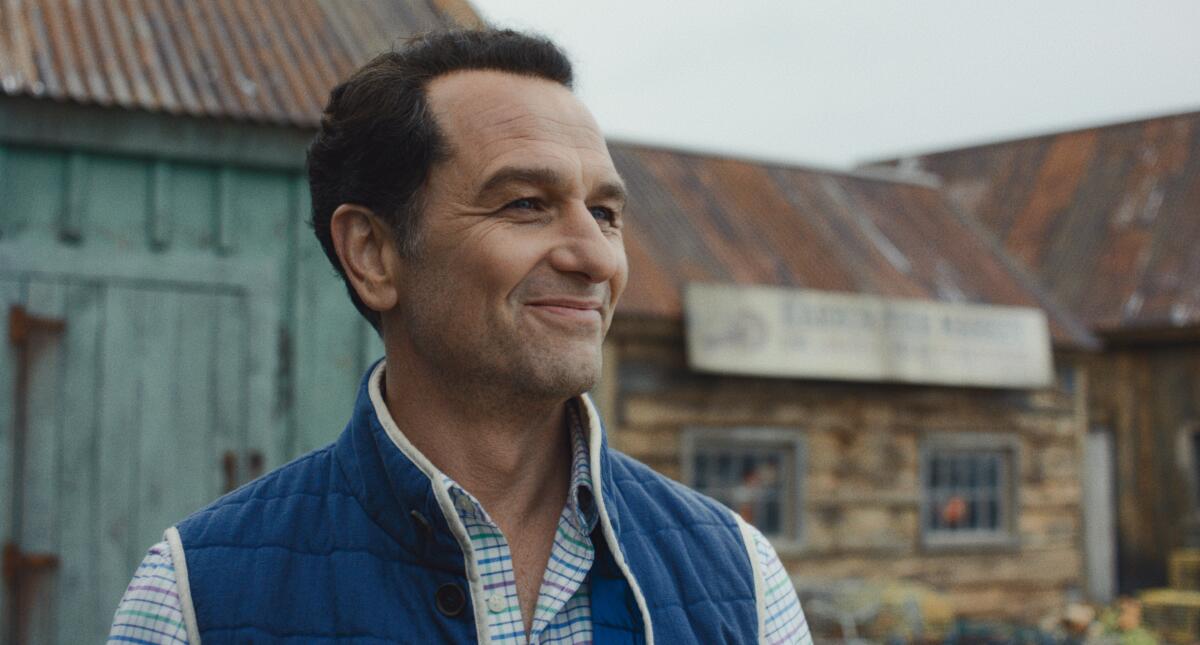
Rhys is nominated for lead actor in a comedy series for his deft performance as Tom Loftis, a single dad and the mayor of a cursed New England island who is trying to balance the town’s supernatural threats with his efforts to boost tourism, in Apple’s TV’s breakout horror-comedy series “Widow’s Bay.” The word-of-mouth buzz around the series, which premiered in April, intensified each week leading up to its finale last month and prompted chatter around its prospects as a major Emmys contender. The series arrived late in the season, so only its first seven episodes qualify for the 2026 awards cycle, but that was enough for Rhys to nab a nod.
It wasn’t the only performance from Rhys that voters boosted. He is also nominated for lead actor in a limited or anthology series for his role as the sociopath Nile Jarvis, a famed and formidable real estate developer who once was the prime suspect in the killing of his wife, in Netflix’s “The Beast in Me.” Nile finds himself in a cat-and-mouse dynamic with his new neighbor (Claire Danes), an author in search of her next book subject who is suspicious of his innocence.
Prior to this year’s nominations, Rhys received five Emmy nominations over his career, including for his lead roles in “The Americans” and “Perry Mason,” as well as a guest actor nod in “Girls.” He won in 2018 for his role as KGB spy Philip Jennings in “The Americans.”
The Times spoke with Rhys about his nomination; these are edited excerpts.
Matthew Rhys as Mayor Tom Loftis in Apple TV’s “Widow’s Bay.”
(Apple)
Congratulations on your exciting morning — it’s a big day in the Rhys-Russell household [Keri Russell, Rhys’ partner, is nominated for lead actress in a drama for her role in “The Diplomat”]. Let’s start with the most important question: What’s in the fog, Matthew?
[laughs] I love how it took me a moment. I was like, “Wait, what?” Oh, yes, the fog! What’s in the fog is an incredible Season 2.
Place me in the moment when you got the news.
I was in Brooklyn Bridge Marina at the time. I just got off a boat, and I thought, “Oh, God, it’s 11:40.” So I thought quite possibly [they] got to our categories. I checked my phone and there were the many texts. That was the exciting moment because if you haven’t been nominated, there’s no text.
Did one text stand out from the others?
The real pinch-me moment — this is going to sound like a real name drop — but it really got me emotional because I thought, if I’d have told my 18-year-old self that Gary Oldman would text me to congratulate me, I wouldn’t have believed it. That’s when it got me in an emotional way because he’s such a true hero.
Let’s start with “Widow’s Bay,” which recently wrapped its first season. There’s something so thrilling about how it broke through the way that it did. What has struck you about how viewers responded to this horror comedy?
There was a great degree of nervousness about how this would land, whether indeed it would land at all, and the fact that it has, and kind of the depth and the complex nature that’s landed or resonated with people in different ways, is what I’ve loved. Some people go, “Oh my God, it’s so funny”; some people say, “Oh my God, it’s terrifying” — some people say both. And some people pick up on the weirdest things, and then some people pick up on the most obvious, great things. But it’s the length and breadth and the variety of its resonances that has really made me very happy, and really made me doff my cap to [creator] Katie Dippold, for what she did.
What should networks and studios take away from the success of “Widow’s Bay” if they are really paying attention?
Take the risk. And challenge audiences. Everyone’s more than ready for it and thirsty for it in a real way. I really hope this does something in the Hollywood psyche, where they go, “Let’s put away the remakes and let’s just get after new challenging, original material.”
What guidance did you get from Katie about who Tom was and how to play him?
She’s dizzyingly collaborative, so she said, “Tom is yours.” It was more me going, “But what about this for Tom?” She would help, but she really said, “Tom is yours to create now. Everything I’ve done is on the page.” And it was. That’s the beauty of her writing. If you’re true to it, and you don’t get in the way of it, it sings.
The way Tom reacts to situations and people is such a master class in facial expressions. Did you recognize that would be your tool for your performance early on?
We had a kind of sliding scale — Hiro [Murai, executive producer and director], myself and Katie — because it was a departure for me. I’d go, “I don’t know where this lives or where reality lives.” And as much as anyone can say, “Play for real” — playing it for real can mean many things. It can mean a very minimal reaction, and it can mean a great reaction, and so there were times when I was like, “I’m gonna hit the sliding scale, and you let me know where it should be landing, or where, in your opinion, it’s landing in a real way.” Sometimes they were like, “Maybe a little less,” and then they were like “Maybe a little more.” That element of collaboration was wonderful too.
The moment on the boat is a GIF I send often. The jolt.
It’s funny, we have a great and incredible stunt coordinator Paul [Marini]. He said, “You have to lead where the momentum of the energy would be; it’d be your hips. So let your hips lead, and then let your body follow.” And I was like, “Oh, that’s smart.” Then if you do that, then it has a degree of comic effect to it. But my pelvis hasn’t quite recovered.
Matthew Rhys as Nile Jarvis opposite Claire Danes as Aggie Wiggs in Netflix’s “The Beast in Me.”
(Netflix)
Sort of like your dance moment in “The Beast in Me” — lead with the hips. This is your thing, Matthew.
Anytime, in the stage direction, it says “dances,” I’m like [mimics vomit sound]. That strikes ice in my veins because I’m always like, “Oh my God.”
That’s your horror comedy.
That is my true horror comedy because my dancing can be horrific and comical when it is to be neither.
Let’s talk about “The Beast in Me.” Nile Jarvis was also quite the departure from you. What was your entry point to understanding him and figuring out how chilling to make him?
It was a lot of YouTube watching, where you just type in “psychopaths” and stuff comes up. I read Jon Ronson’s “The Psychopath Test” and “The Journalist and the Murderer” [by Janet Malcolm]. The writing was so strong in “The Beast in Me,” so much of Nile was preemptively done for me. As [director] Antonio Campos said, “The trick might be not to do too much because enough has been said.” Everyone has this predisposed idea of who he is and, therefore, the idea we came up with was to do not as little as possible, but to be minimal with it because he’s aware of what everyone thinks of him and there’s a degree of enjoyment and relishing in that.
Have you been able to sensibly eat a roast chicken since?
No, not sensibly. It’s become Pavlovian for me now. When I eat roast chicken, I devour it in a slightly psychotic way. I love that scene. It’s an astute piece of writing to say so much about someone without words.
What would you be best suited to achieve: rebranding the town of Widow’s Bay as a tourist destination or charming your neighbors into signing paperwork for the construction of a running path through the backwoods of their properties?
I’m not saying I could charm the neighbors, but I would attempt to charm the neighbors. Playing Tom was exhausting in a way that playing Nile wasn’t. I always spent the end of the day on “Widow’s Bay” going, “My God, I’m exhausted” — because you’re just vibrating on a higher level with Tom. It’s always like, “Listen, please!” The pitch is always higher; you’re always like, “You’ve got to listen to me!” Or if you’re terrified, you’re just hyperventilating.
I know the news of these nominations is still fresh and I don’t want to tell you how to approach the big night, but I just have to say, this could be the moment you take a page from Philip Jennings of “The Americans” and come with a wig and getup so when they pan to you during both categories, you can make them feel distinct.
That’s exactly what I’m going to do. I’m going to Jennings it. I’m going to PJ it. When it pans to me in the second category, I’m gonna look completely different. I’m going to be dressed as Elizabeth [Jennings].
Well, congratulations. How do you think you and Keri are going to celebrate?
Keri, in true “Americans” style, is having me meet her in a clandestine spot that I don’t know anything about, so who knows what. I don’t know what the afternoon is going to unfold, but it’s a big surprise. She might end up killing me, who knows.
Claire Danes’ performance in Netflix’s “The Beast in Me” appears like a lock for an Emmy nomination for lead actress in a limited series or TV movie. In typical fashion, Danes left it on all the floor in portraying a reclusive author who suspects her developer neighbor (Matthew Rhys) of misdeeds.
1995
The Golden Globes rarely get it as right as they did in awarding Danes the drama series best actress award, at 15, for ABC’s “My So-Called Life.”
19
The lifespan of the authentic teen drama that introduced viewers to Danes’ unique emotional translucence, counted in episodes.
1st
Danes also received an Emmy nomination for the series — the first of eight for acting so far.
16
She is the second-youngest Emmy nominee ever for lead actress in a drama series, between Melissa Sue Anderson (15, for “Little House on the Prairie”) and Kristy McNichol (17, for “Family”).
3
Danes won an Emmy for playing the real-life animal science professor in the HBO movie “Temple Grandin,” and two for playing complex CIA officer Carrie Mathison on Showtime’s “Homeland.”
31
Span of years between Danes’ first and 2026 nominations, if she receives one.
47
Danes’ Emmy longevity may not equal the likes of Carol Burnett, nominated in 2024 for “Palm Royale” 62 years after her first, but it’s mighty impressive for someone Danes’ age.
49
There’s even a contender in her category this year whose span between nominations would be longer than Danes’ lifetime: Sally Field, who appears in Netflix’s TV movie “Remarkably Bright Creatures.”