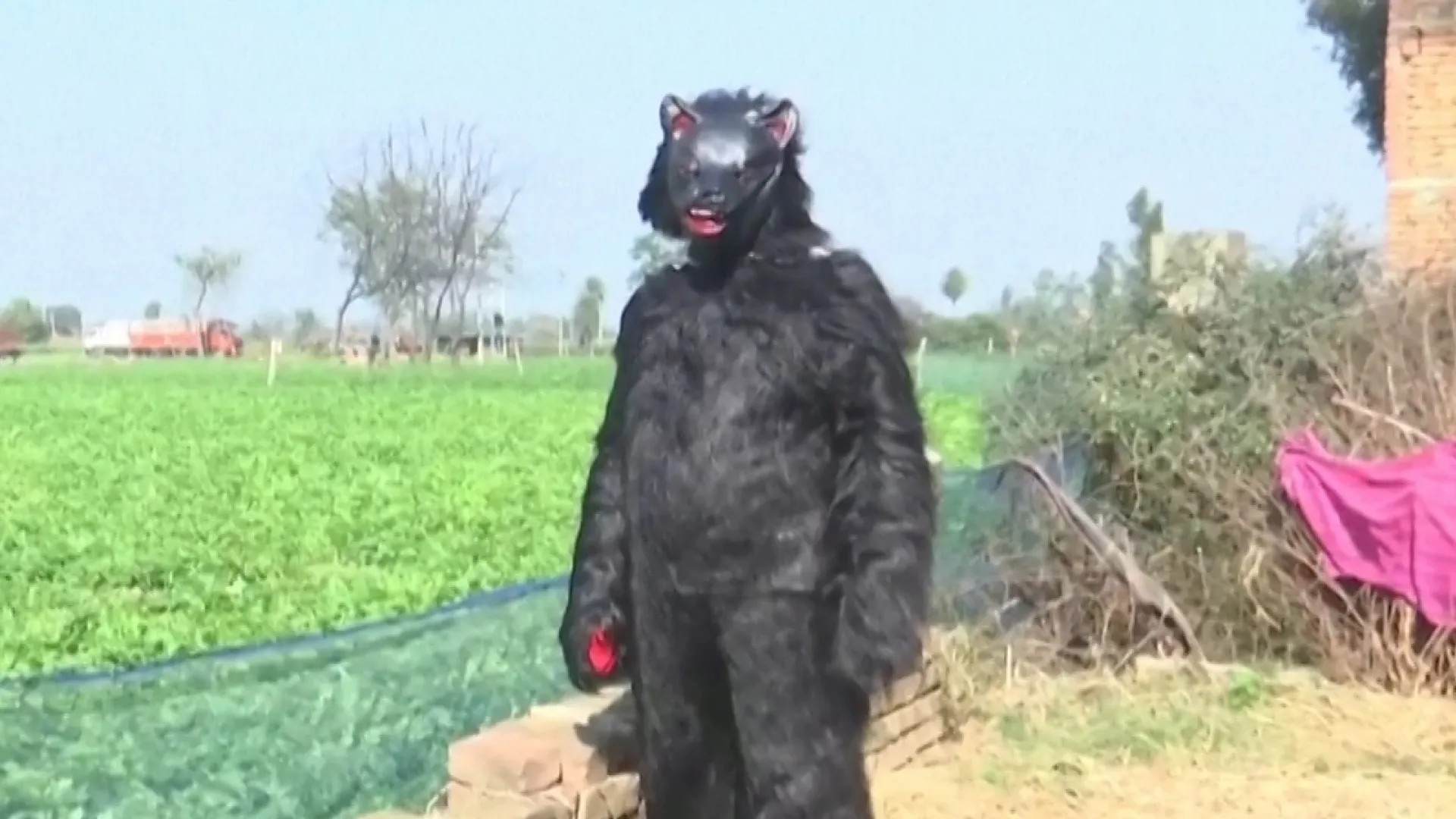
bears

New 1,000-acre British safari with bears, lynx and wolves is revealed in plans for top tourist spot

A MAJOR new safari park could be coming to the East Midlands.

The “ambitious” planning proposal would see bears, wolves, and even lynxes arriving to a 1,000-acre woodland.

Illustration of the proposed Wild Rutland attraction site showing farmland, parkland, and woods between Oakham bypass, Rutland Water, and Burley Wood.
The site would hold bears, wolves, and reptilesCredit: Gillespies

Wild Rutland Partnership hopes to open a new nature conservation and wildlife park in Rutland, near Leicester.

If given the green light, Wild Rutland would house Eurasian brown bears, lynxes and wolves inside holding pens, with animal lovers able to see the mammals from various different viewing platforms.

The proposed safari park would be built on a huge site stretching from Burley Wood to Oakham bypass.

A barn already on the land is expected to be refurbished to house small reptiles and insects.

PLENTY OF EGRETS

I went on Britain’s most unusual safari with whales, porpoises and swifts


ROAR & SNORE

English safari lodges where you can sleep with LIONS gets green light

Plus, Wild Rutland is also seeking approval of its Visitor Village.

This would consist of a main reception area with a shop, a café, a restaurant, an indoor play area, as well as an education and exhibition building.

There will also be 22 self-catering guest lodges and a communal dining area for visitors who wish to stay the night.

A decision by the council is expected to be made in May.

CEO of Wild Rutland, Hugh Vere Nicoll, said: “Wild Rutland aspires to be an exemplar model of conservation-led ecological-tourism – one that restores heritage landscapes, reconnects people with nature and sets a benchmark for sustainable land management in the UK.

“Wild Rutland is driven by a team with a deep knowledge and respect for the site and the local area, working with experts in the fields of restoration, conservation, education, tourism, attraction development and management.”

Illustration of the proposed Wild Rutland attraction with buildings, boardwalks, and people in a natural landscape.
Planning permission has been requested to build a 1,000 acre safari parkCredit: Gillespies

Source link

Emmerdale characters to uncover Bear’s killer secret as prison exit ‘sealed’

Emmerdale actor Dominic Brunt has addressed his character Paddy Dingle’s turmoil, as he covers up his father Bear Wolf’s killer crime after he murdered Ray Walters

Emmerdale fans are used to seeing Paddy Dingle at the centre of comedic mishaps and the more heartfelt moments, but his latest plot sees him covering up a brutal murder.

For the first time in his 29 years on the soap, Paddy, played by actor Dominic Brunt, could face prison as the truth unravels. A recent flashback episode saw Paddy’s father Bear Wolf [Joshua Richards] confirmed as villain Ray Walters’ killer, with Paddy now determined to stop anyone from finding out.

Next week, Paddy realises his dad needs professional help as Bear continues to spiral. With teenager Dylan Penders, also covering up the crime, feeling the strain and ready to crack, Paddy’s left picking up the pieces to prevent the police from learning what really happened to Ray. Dominic, 55, is delighted about the killer twist though, as he teases his future in the village.

He says: “It’s such a good story. Paddy’s juggling everything at the moment, trying to keep everybody out of being done for murder and keeping the story straight. But it keeps unravelling and he keeps pulling all the strings back in, going: ‘Oh my God, we’ve got to stick to the story’.”

READ MORE: Soaps preview: Emmerdale Robert and Tracy’s big plan and Corrie Jodie under suspicionREAD MORE: Emmerdale and Coronation Street fans left furious as soaps pulled off air next week

While it could lead to an exit for Bear if his crime is discovered, Dominic says Paddy isn’t worried about his own fate. He explains: “He fears that his dad will go away again. He thought he was dead and he’s back. And now Bear might go down for murder. Paddy is trying to save his dad, and save the fact that Dylan would be implicated in it as well, because we all hid the body.”

Bear vanished from the village in July last year, claiming he was visiting a friend in Ireland as he secretly battled depression. By the time Paddy realised his father was missing, Bear had already been manipulated by villain Ray and his evil mum Celia Daniels, in the soap’s heartbreaking modern slavery storyline.

Bear was kept at their farm for months until he fled at the end of December, while viewers, and village residents, were led to believe Celia had killed him. His sudden return earlier this month saw him accidentally killing Ray to save his son, and Dominic says Paddy will go to any lengths necessary to protect him in return.

He tells us: “Bear’s not ready to go to the police. He keeps going: ‘Should I go to the police? Should I just come clean? Should I tell them the truth?’ His dad is all over the place, he’s very sick, withdrawing from whatever drugs he was given and he’s completely unstable.

“So Paddy is trying to hide him away for now and then maybe in the near future they’ll just say to the police: ‘Alright, there he is, come and get him, we did it’. But at the moment he’s just trying to save his dad from more psychological pain after what he’s just been through with Ray and Celia.”

Dominic did reveal that other characters will soon uncover the truth, including his best friend Marlon Dingle, played by Mark Charnock. Marlon has also been caught up in Ray and Celia’s dark world after they exploited his teenage daughter April Windsor [Amelia Flanagan] into selling drugs, alongside her boyfriend Dylan.

When Marlon vowed to go to the police he was ignored, leading to sinister threats and payment demands by Ray. Dominic says the close friends will open up to each other about what they’ve been hiding, while Paddy is also set to confide in his wife Mandy Dingle [Lisa Riley].

Dominic says: “He definitely confides in Mandy. I think there’s an episode coming up with me and Mark, just a two-hander, where we spill the beans to each other and we become bonded again, which is lovely because they’ve got a three-decade-long friendship.”

Paddy has been at the heart of some huge storylines since his debut in 1997, including his five weddings, and the devastating loss of his baby daughter Grace after she was diagnosed with Bilateral Renal Agenesis, a rare life-limiting congenital condition.

Paddy also suffered depression and suicidal thoughts in a wideley-praised storyline in 2023, with Dominic keen to revisit Paddy’s mental health as he struggles through his latest turmoil. While the future looks bleak for Bear, Dominic says Paddy is confident that the father and son, and Dylan, will find a way to make it through their traumatic start to the new year.

He shares: “I think he truly believes that they’ll get through this, it’ll go away and nobody will be blamed and it’ll just become a village secret. But soaps being soaps, there’s got to be a moral outcome. His worst fear is that it all unravels and of course I think it does.”

Emmerdale airs weeknights at 8pm on ITV1 and ITVX. * Follow Mirror Celebs and TV on TikTok , Snapchat , Instagram , Twitter , Facebook , YouTube and Threads .


Source link

Advocates want $15M to help us coexist with wolves, bears and mountain lions

California once had specialists dedicated to resolving conflict between people and wolves, mountains lions and coyotes. But after funding ran dry in 2024, the state let all but one of them go.

The move came as clashes between us and our wild neighbors are increasing, as climate change and sprawl drive us closer together.

Now, a coalition of wildlife advocates is calling for the state to bring back, expand and fund the coexistence program, at roughly $15 million annually.

Sen. Catherine Blakespear (D-Encinitas) will soon introduce legislation that would create the program, her office confirmed. Nonprofits Defenders of Wildlife and the National Wildlife Federation are co-sponsors.

You’re reading Boiling Point

The L.A. Times climate team gets you up to speed on climate change, energy and the environment. Sign up to get it in your inbox every week.

By continuing, you agree to our Terms of Service and our Privacy Policy.

The money supporters want would be used to pay 50 to 60 staffers to focus on the Herculean task of balancing the needs of people and wildlife, as well as buy equipment like “unwelcome mats” to shock bears or fencing to protect alpacas from hungry lions.

Wildlife agencies acknowledge that education is key for coexistence, said Pamela Flick, California program director for Defenders of Wildlife, at a hearing Tuesday at the state Capitol dedicated to human-wildlife conflict. “But then staff time and resources don’t get allocated by agencies that are already chronically understaffed and underfunded.”

The hearing gave floor time to local law enforcement, representatives of affected regions and academics.

Since the funding expired, “I want to make it clear, the Department [of Fish and Wildlife] recognizes that we have potentially seen a gap in service, and folks have felt that,” Chad Dibble, deputy director of the department’s wildlife and fisheries division, said at the hearing.

Some aspects of the program live on — notably, a system that allows people to report run-ins with wildlife that may prompt the state to take action.

The same year the program fizzled, a mountain lion killed a young man and the state confirmed its first fatal black bear attack on an older woman. (Such attacks are very rare.)

Both tragedies unfolded in rural Northern California, with the fatal lion mauling occurring in El Dorado County.

Assemblymember Heather Hadwick — a Republican who represents El Dorado, as well as Lake Tahoe, which is ground zero for bear problems — called conflicts with predators her district’s biggest issue. “We’re at a tipping point,” she said.

Along with El Dorado, Los Angeles County, at the opposite end of the rural-urban continuum, leads the state for the highest number of reported wildlife “incidents.” These range from just spotting an animal to witnessing property damage.

Debates over how to manage predators can be fierce, but beefing up the state’s ability to respond is uniting groups that are often at odds.

A coalition that includes ranchers, farmers and rural representatives supports bringing back the conflict program, and also wants $31 million to address the state’s expanding population of gray wolves.

Most of that money would go to compensate ranchers for cattle eaten by wolves and for guard dogs, scaring devices or other means to keep them away from livestock.

The wildlife advocates support funding wolf efforts, but believe ranchers should be compensated only if they’ve taken steps to ward off the predators.

Asked his thoughts on it at the hearing, Kirk Wilbur, vice president of government affairs for the California Cattlemen’s Assn., a trade group, called it “a complicated question.”

“Ranchers should be doing something in the realm of nonlethal deterrence, and they are, but we have to be careful to make sure that our nonlethal solutions are not overly prescriptive,” he said.

The elephant in the room: The state’s budget is strained, and many are clamoring for a piece of the pie.

More recent wildlife news

Twenty starving wild horses stranded in deep snow near Mammoth Lakes recently survived an emergency rescue by the Forest Service, I wrote last week. Several died, including one after the rescue, from starvation and exposure. Some, beyond saving, were euthanized.

For some, the Forest Service acted exceptionally, but others questioned the handling of the situation. It’s the latest controversy for these horses. Wildlife advocates have long opposed relocating a large portion of the herd, which the feds say is necessary to protect the landscape.

Beloved bald eagle couple Jackie and Shadow welcomed not one but two eggs in their Big Bear nest in recent days. One arrived on Jan. 23, The Times reported, and, according to the Desert Sun, the second followed three days later.

If you need a pick-me-up, take a gander at a video of an Austrian cow using a long brush to scratch herself. It’s not just adorable; as noted by the Washington Post’s Dino Grandoni, it’s the first documented case of a cow using a tool.

Need even more awww? Read about sea turtle Porkchop’s recovery journey at Long Beach’s aquarium. She had a flipper amputated and a fishing hook removed from her throat, and could return to the wild in a matter of weeks.

Coyote mating season is here and that means you are likely to see more of the animals in your neighborhood, per my colleague Karen Garcia.

A few last things in climate news

More than a year after the Palisades and Eaton wildfires, contamination remains a top concern. A state bill introduced this week aims to enforce science-based guidelines for testing and removing contamination in still-standing homes, schools and nearby soil, my colleagues Noah Haggerty and Tony Briscoe report.

Highway 1 through Big Sur (finally) fully reopened after a three-year closure from landslides. As fellow Times staffer Grace Toohey writes, the iconic route is expected to face more challenges from the effects of climate change: stronger storms, higher seas and more intense wildfires.

Per Inside Climate News’ Blanca Begert, the Bureau of Land Management has revived an effort to open more of California’s public lands to oil extraction. Will it be successful this time?

This is the latest edition of Boiling Point, a newsletter about climate change and the environment in the American West. Sign up here to get it in your inbox. And listen to our Boiling Point podcast here.

For more wildlife and outdoors news, follow Lila Seidman at @lilaseidman.bsky.social on Bluesky and @lila_seidman on X.

Source link

Sledges, bears and a hotel with Wes Anderson vibes: Switzerland’s quirkiest family ski resort | Switzerland holidays

On the approach to Arosa in the Graubünden Alps, the road is lined with mountain chapels, their stark spires soaring heavenwards; a portent, perhaps, of the ominous route ahead. The sheer-sided valley is skirted with rugged farmhouses and the road twists, over ravines and round hairpin curves, to a holiday destination that feels like a well-kept secret.

On the village’s frozen lake, young families ice skate, hand in hand. A little farther along, on the snow-covered main street, children sled rapidly downhill, overtaking cars. The resort’s mascots are a happy gang of brown bears. And there are Narnia lamp-posts, which turn the falling snow almost gold every evening. Switzerland is replete with ski towns but none feel quite this innocent and childlike, like stepping into a fairytale.

South-east Switzerland map

I am here for a week in an apartment with my wife and two kids, as it’s a place my Swiss partner’s parents and grandparents have been returning to for more than a century. What first drew them here? All say the same thing: Arosa is the Swiss mountain village most Swiss don’t even think to visit; a low-key alternative to the box office of St Moritz, Verbier and Zermatt.

The village sits on a high, terraced plateau one hour south of Chur, Switzerland’s oldest city, and is surrounded by dense fir forests, above which rises an amphitheatre of saw-cut summits. The sense is that the out-of-sight village has been secretly occupied – the pretty-as-pie peaks standing sentry – as if the first farmers here back in the 14th century feared the Habsburgs might return at any moment to take back their territories.

This is also storybook Switzerland to a T. To the north is Heidiland, the farm holiday region where Johanna Spyri set her children’s novels. Also one hour away is Liechtenstein, the pipsqueak principality, which brings to my mind the land of Vulgaria in Chitty Chitty Bang Bang. Two hours to the north is Zurich where we arrived, before borrowing my in-laws’ car. If you fancy taking the train, there are options to do the trip from the UK to Zurich in as little as seven hours, with a change in Paris. Arosa can then be reached on the memorably scenic Rhaetian Railway, a journey with some of the Alps’ most glorious in-seat entertainment. Outside, all the drama is provided by a script of high-definition gorges and glaciers.

The Arosa Bear Sanctuary, at the middle station of the Weisshorn cable car, is a good place to start exploring. Even during the residents’ winter deep sleep, the 2.8 hectare den offers a walk-through education in animal welfare in an unlikely setting, and its wooden platforms offer memorable views of the snow-fuzzed summits and pistes that lead off in every direction like a spreadeagled skier.

The refuge is run in cooperation with global animal charity Four Paws and it provides four rescued European brown bears a species-appropriate home. Once held in appalling conditions, including a private mini zoo in Albania, the bears’ compound is now a place to readjust, to feel safe again. For the full Yogi and Boo-Boo experience, I’d suggest visiting in summer.

Rhaetian railway passing through snow in Arosa.
Photograph: Alamy

It’s fair to say my six-year-old daughter fizzes with enthusiasm when the bears are mentioned, but also when we snowshoe later that week into pine forest along the resort’s themed Squirrel Trail. The trail is printed with fresh squirrel tracks and we add our own, feather-pressing our boots into the crisp snow. The flakes fall heavily, as if we’re inside an ornamental snow globe. Then, two red squirrels scurry past with dark-furred yet sparkling tails.

Most days we ski until lunch. All children enjoy one free half-day group lesson for each night’s stay in Arosa with ABC Snowsports School or the Swiss Ski and Snowboard School, but we prefer to explore the mountains as a family. Since 2014, the resort has been connected across the gaping Urden valley with the larger town of Lenzerheide, and like other popular Alpine ski areas, the combined piste map is now a profusion of primary colour squiggles.

But there the similarity ends. British accents are absent. The pistes are largely empty. Strict building regulations, upholding traditional timber aesthetics, mean the village is largely the same now as it was when my relatives first visited. It is Switzerland, but from a half-century ago. At the barn-like Tschuggenstübli, once a cheese dairy on the slopes, everyone crams on to tables to order bündnerfleisch (air-dried beef) and käseschnitte, an upgraded welsh rarebit with melted raclette cheese, pickles and onions.

Afterwards, it’s toboggan time. It strikes me there are almost as many traditional wooden sledges for hire in Arosa as there are pairs of skis, and, from the top of the Kulm Gondola, the only way is down. And at speed. My kids are barely ruffled by the tight, bobsleigh chicanes and, one afternoon, we all howl with laughter as my eight-year-old son hurtles off the track into a marshmallowy drift. He pops back up, grinning, but polar bear white. We repeat the sledge run another half-dozen times.

The Grand Arosa Pop-up Hotel uses a vacant resort hotel. Photograph: Studio Filipa Peixeiro/Le Terrier Studio

Another reason for visiting this winter is to stay at the Grand Arosa Pop-Up Hotel, a one-year experiment inside a vacant resort hotel which is open to the end of this season – the concept will continue next year, though details are yet to be confirmed (they also operate another pop-up hotel in Fribourg and a pop-up hostel in Zurich). Clues as to its aesthetic are in the name – this is not a ski hotel in the traditional sense, and certainly not a vintage chalet brimming with geranium window boxes and mounted antlers. More than that, it is probably the Alps’ largest ever pop-up hotel and its interiors are bathed in pastel pink. If you can find me cooler ski accommodation this year, I’m happy to wait.

With a tech-first approach, there is no reception, but self-check in instructions imposed on a poster of a purple bellboy. What might have once been a telephone operator’s room is reimagined as a walk-in guest book, its fan-print wallpaper covered with whimsical, hand-written comments. Velvet curtains drape two symmetrical elevators, then a cloaked red corridor suggests you are somehow walking backstage at a theatre, before revealing a piano observatory and a vintage design cinema. A Wes Anderson film set has been conjured before you. We only drop in for coffee, but I wish we’d stayed.

At the end of our week, my wife mentions to me how sad she is to be leaving. The kids aren’t too happy about it either. Neither am I. It crosses my mind that Arosa, with its sleepy bears, squirrels and surreal pop-up hotel, isn’t what most people come to Switzerland for. Rather, it’s what we’ve been looking for all along.

The trip was supported by Arosa-Lenzerheide. Singles/doubles at the Grand Arosa Pop-Up Hotel, from €117 room-only. For more information, visit myswitzerland.com

Source link