LONDON — Booker Prize winners Marlon James and Douglas Stuart are in the running again for the prestigious fiction award, alongside Dublin gangs, dystopian science fiction and the New England characters of Pulitzer Prize laureate Elizabeth Strout.
Judges read 163 novels to come up with the 13 semifinalists announced Tuesday for the $66,000 Booker Prize, a list described by historian Mary Beard, head of the judging panel, as literary “dynamite.”
The list includes James’ “The Disappearers,” about a group of gay men in a hostile 1980s Jamaica; Stuart’s “ John of John,” a story of father-son secrets on a remote Scottish island; and Strout’s heartfelt small-town tale “The Things We Never Say.”
Marlon James is semifinalist for the 2026 Booker Prize for fiction. In 2015, he became the first Jamaican writer to win the prestigious literary award.
(Neil Hall / Associated Press)
James won the Booker in 2015 for “A Brief History of Seven Killings,” and Stuart won in 2020 for “Shuggie Bain.” Strout’s “Oh William!” was a finalist in 2022. She won the Pulitzer Prize for fiction in 2009 for “Olive Kitteridge.”
They sit alongside lesser-known names on a Booker longlist that includes authors with roots in Britain, Ireland, Jamaica, Mexico, Turkey and the United States.
Three of those on the list are debut authors: Turkish American writer Kenan Orhan for the family history saga “The Renovation,” British author Rebecca Perry for the Medieval-to-modern tale “May We Feed the King” and Ireland’s Djamel White for “All Them Dogs,” a thriller set in the Dublin underworld.
White, at 28, is the youngest author in the running. The oldest is 81-year-old M. John Harrison, whose postapocalyptic tale “The End of Everything” is a rare science fiction novel to make the Booker list.
The other contenders are “The Shadow of the Object” by Chloe Aridjis, “Black Bag” by Luke Kennard, “The Vivisectors” by Missouri Williams, “Switzy” by Emma Cline, “Helen of Nowhere” by Makenna Goodman and Gwendoline Riley’s “The Palm House.”
Beard said the five jurors, who include Pulp frontman Jarvis Cocker and American novelist Patricia Lockwood, tried to look beyond the idea of a typical Booker winner — “slightly serious, about to be classic.” Instead, they chose novels that are “trying to expand the boundaries of how we can think about ourselves in completely different ways,”
“Sometimes they’re using humor, sometimes it’s pathos, sometimes there’s shock value,” Beard said. “They’re risk-takers. They are dynamite. They say, ‘Come on, try seeing it a different way.’ ”
Pulitzer Prize winner Elizabeth Strout is a semifinalist for the Booker Prize for fiction for her novel, “The Things We Never Say.”
(Leonardo Cendamo)
Founded in 1969, the Booker Prize has a reputation for transforming writers’ careers and is open to novels from any country published in the U.K. and Ireland. Last year’s winner was “Flesh” by Hungarian-British writer David Szalay.
The judges will announce six finalists on Sept. 22, and the winner will be revealed Nov. 9 at a ceremony in London.
In the Mid-City neighborhood where Syd grew up, lots of people now refer to this 34-year-old musician as the mayor.
“During COVID, I’d spend all day on the grass waving at everybody,” she says with a laugh. More recently, a bunch of “unruly teenagers,” as Syd describes them, have been doing doughnuts in the street near her parents’ house.
“I’m out there talking about, ‘Hey! Stop!’ I had one of my trucks parked in front, so I was like, ‘Y’all ain’t finna mess my s— up.’ But also they were hanging out the window — it was really dangerous.” She laughs again.
“I’m an old head when it comes to safety.”
Syd’s new album happily embraces a sense of maturity — of “feeling more sure of myself than I ever have,” she says. Released last week, “Beard” — the title was inspired by Syd’s wife’s request that she maintain the peach fuzz on her upper lip — sets thoughts of romantic commitment and professional achievement against gleaming R&B grooves that occasionally nod toward Afrobeats or bossa nova. It’s Syd’s third solo LP since she emerged nearly two decades ago as a member of the Los Angeles hip-hop collective Odd Future; it also comes eight years after her most recent album with the Internet, the Grammy-nominated soul-music combo she shares with Matt Martians and Steve Lacy (the latter of whom dropped his new “Oh Yeah?” on the same day Syd dropped “Beard”).
Yet for all the growing up she’s done, “ironically, I feel younger than I’ve ever felt,” Syd says. “Beard’s” blurry cover photo, which shows her shaved head and slightly doleful eyes, “captures exactly what I was trying to portray with the music,” she adds. “It’s kind of this nonbinary image, where if you’re looking at it and you don’t know who I am, you might wonder: Is that a 12-year-old boy?”
Syd and I are talking over coffee at a crowded spot on Jefferson Boulevard that she says she visits every day. (So many people say hi to her that I’m inclined to believe it.) The restaurant isn’t far from her house, which itself is just an eight-minute drive from her folks’ place; eventually, she says, her parents plan to swap homes with Syd and her wife, the model Simone Clay, so that the couple can fulfill their dream of becoming foster moms in the larger house.
“With all my privilege and with all the peace I’ve been able to create for myself, I would love to spread that,” says Syd, whose full name is Sydney Bennett and whose younger brother Travis (known as Taco) also came up through Odd Future before finding success as an actor.
Syd recorded “Beard” between a studio she built at her parents’ place and a studio in North Hollywood owned by Raphael Saadiq, the veteran R&B star whom Syd counts as something of a mentor. The singer says she can relate to the way Saadiq moves between making solo records, working in a band (in his case Tony! Toni! Toné!) and writing and producing for other artists, as Syd did on Beyoncé’s 2022 “Renaissance” album.
“Syd is just looking for things in music that are breathing,” says Saadiq, who plays bass and co-produced several cuts on “Beard.” “She keeps developing, and she’s not developing to be relevant — she’s developed because she loves doing it. People like Syd and myself, we’ve been at this since we were kids. We were the ones in the neighborhood who’d walk outside and say, ‘Anybody want to get on this track? Anybody want to play?’”
Songs on “Beard” like “Closet” and “My Love” reflect recent changes in Syd’s life, not least her decision to get hitched last year, which she attributes in part to an uncertainty about how long same-sex marriage will remain legal in the United States.
“You know the Supreme Court,” she says with a shrug.
She also quit drinking after realizing that she was waking up more often than not with a hangover. “People around me weren’t like, ‘She be drinking,’” Syd says. “But it was every day, and it was just at the crib. Everybody has a different relationship to it, and I found that mine was tied to boredom, which I think is probably better than it being tied to sadness. But that’s also what made it a little bit harder to call it a problem, you know what I mean? I had to realize: OK, this might not be a problem for someone else, but it’s not serving me.”
So two and a half years ago, she stopped — and on a holiday some can’t imagine without booze.
Says Syd: “I raw-dogged New Year’s Eve, bro.”
“Ironically, I feel younger than I’ve ever felt,” Syd says.
(Nabil)
“Beard” encompasses shifts in Syd’s business too. After fulfilling her contract with the Columbia label, the singer signed last year to Warner Records, where an old high school pal, Tim Hinshaw, oversees a boutique label called Free Lunch. The new deal inspired her to mix up her creative process and hold a songwriting camp with an assortment of writers and producers, among them the duo Nova Wav, who’ve also worked with Beyoncé; on “Beard,” the duo co-wrote and co-produced the hooky “Callin” and “Jasmin 17,” a lusty boudoir jam titled after the unisex fragrance. (Additional collaborators on the album include James Fauntleroy, Van Hunt, Rodney Jerkins, Big Sean and Jordan Ward.)
Given her high-profile gig writing and producing Beyoncé’s “Plastic Off the Sofa” — a sensual retro-soul number that went on to win a Grammy — I tell Syd that I assume the offers came rolling in immediately afterward to join other A-list acts in the studio.
“To be honest, that opportunity didn’t give me any more producing opportunities,” she answers, to my surprise. “Nobody was reaching out — like, ‘Hey, can I get beats?’” She’s not bothered, though, since what the experience did do was “give me the confidence to produce this album for myself.”
And anyway, she’s got a solo tour coming up, not to mention a long-awaited Internet LP to finish. The band has been recording intermittently at her place, and last month she spent a week working at Martians’ studio in rural Georgia.
“We’re closer than we’ve probably ever been,” Syd says of the band, whose drummer, Christoper Smith, put out yet another solo record on the same day as “Beard” and Lacy. Syd doesn’t want to reveal too much about the Internet’s new music. But she will say that so far the group has avoided using Auto-Tune, the vocal-processing software that she feels has become sadly ubiquitous.
“I want nuance, I want texture, I want the lack of perfection,” she says. “I’d rather mess up naturally than not mess up unnaturally.”
Beard will complete a long season after the final two Wales matches against Argentina and South Africa in Durban next weekend.
The former Ospreys lock had only just linked up with the Wales squad a couple of days before the Fiji game, following a mammoth first season with French club Montpellier, which included a Challenge Cup success and losing the Top 14 final to Toulouse.
“I have personally loved it and it was probably the best decision I’ve made rugby wise so far for myself and my family,” said Beard.
“It was a tough decision at first, leaving the Ospreys after being there since I was 14.
“But it was probably something, if I didn’t join Montpellier, I might have regretted at the end of my career.”
While playing in France is a tough challenge, it is also a rewarding one said Beard.
“It’s a physical league and you’ve got to play 30 games a season,” he added.
“But just the support and passion, everything they do out in the Top 14 is a different level to what I’ve experienced before.
“So it’s been an amazing move for myself and my family.”
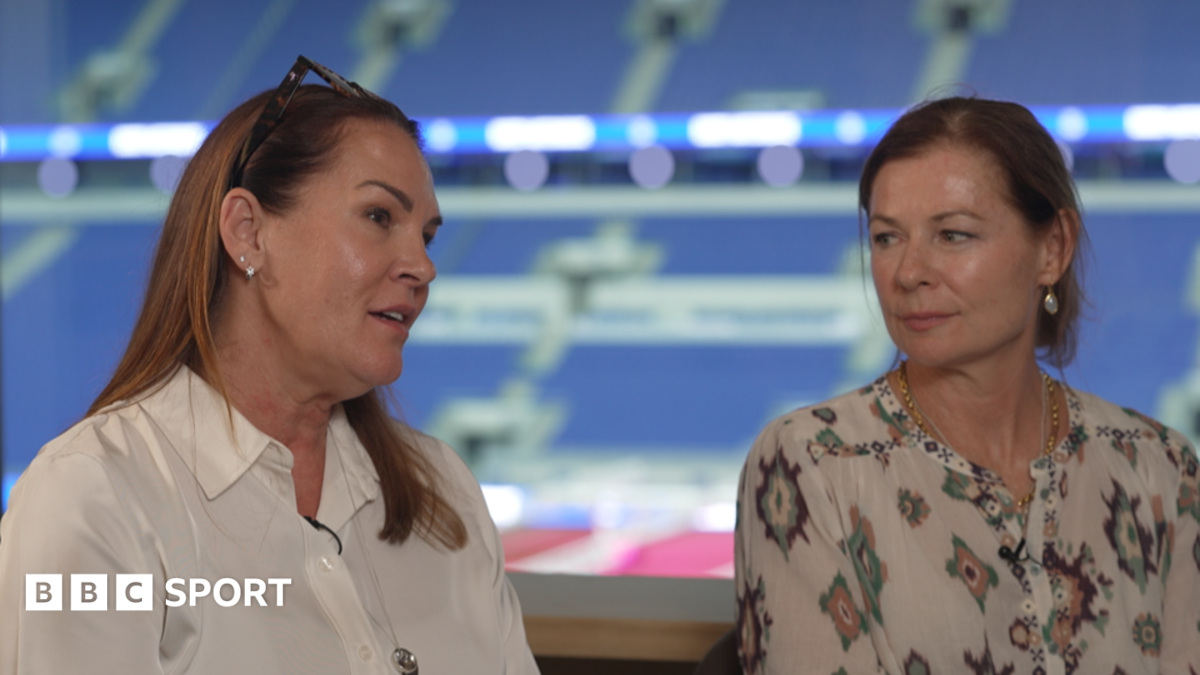
Matt’s family say he often struggled to emotionally switch off from football, and that negative comments on social media had begun to have an impact on his mental health.
He found breaking bad news to players about their place in the squad or future plans particularly difficult emotionally, according to Debbie.
“Matt always felt so bad having to let someone down,” she explains. “There would be tears, they might have shouted at him, and the player’s family and the fans could sometimes be negative towards him too.
“He and other staff members would make the decisions but, because he had to deliver the news, the emotional burden all came down on to him.
“Matt was there for everybody and he hated letting people down. He looked out for everyone else, but sadly not himself.”
In the summer leading up to his death, Matt had been appointed manager of Burnley in the third tier.
But Matt’s family say he wasn’t happy with the way the club was being run. WSL side Leicester City made it known they were interested in hiring Matt.
BBC Sport understands Burnley turned down an offer from Leicester to buy out the rest of Matt’s contract. Matt then resigned, but the move to Leicester never came to pass.
Burnley placed Matt on gardening leave, meaning he was unable to work or talk to other clubs for a period of three months.
Burnley declined a request to comment from BBC Sport on the nature of Matt’s departure from the club.