Nicaragua approves reform barring opposition from elections

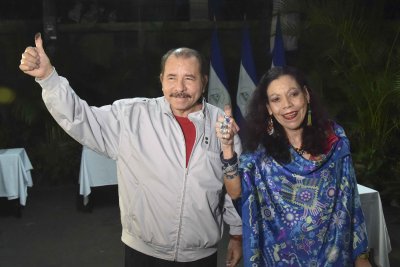
Nicaragua’s National Assembly gave initial approval to a constitutional reform that would bar opposition parties from participating in elections and extend presidential terms from six to seven years. File Photo by Rodrigo Arangua/EPA
Sept. 2 (UPI) — Nicaragua’s National Assembly gave initial approval to a constitutional reform that would bar opposition parties from participating in elections and extend presidential terms from six to seven years.
The measure formally suspends elections scheduled for November, extending the terms of co-Presidents Daniel Ortega and Rosario Murillo and pushing the country’s next elections to 2028.
Nicaraguan law requires constitutional amendments to be approved by two separate legislative sessions before taking effect.
The reform cleared its first vote in the National Assembly but faces a second round of approval in January, according to Murillo, local news outlet Divergentes reported.
If approved, the reform would consolidate a political system without electoral competition by giving the state the authority to exclude opposition groups under broad and discretionary criteria related to the defense of sovereignty and national security.
The reform also extends the terms of the co-presidents and other elected officials, as well as the heads of the military and police, from six to seven years, HCH reported.
Following the reform’s approval, Secretary of State Marco Rubio on Wednesday called on international partners to immediately end business as usual with Nicaragua’s government, warning that repressive regimes should not enjoy the commercial and political benefits afforded to democracies in the region.
In a statement, the State Department condemned the constitutional reform, accusing the Ortega-Murillo-controlled National Assembly of “gutting what was left of Nicaragua’s democracy.”
Washington said it would pursue multilateral action at the next foreign ministers’ meeting of the Organization of American States, or OAS, and reaffirmed its commitment to coordinating and implementing a new round of economic and financial sanctions aimed at curbing abuses by the Sandinista government.
The approved reform builds on constitutional changes enacted in February 2025, when Nicaragua’s National Assembly extended the presidential term from five to six years, created the position of co-president for Murillo, who had previously served as vice president, and reorganized the structure of the state, Infobae reported.
Ortega, 80, has governed Nicaragua since 2006 and publicly declared in July that the country would no longer hold elections in order to prevent the opposition from returning to power.