Barack Obama

U.S. sanctions Iran’s new Hormuz authority amid strait talks

May 28 (UPI) — The U.S. Treasury announced late Wednesday that it has sanctioned an Iranian entity, newly created to oversee and manage the Strait of Hormuz, as the Trump administration seeks to force Tehran to relinquish control over the vital energy trade route.

The strait has been an issue of contention between the United States and Iran, which are locked in negotiations to end the war.

Iran restricted navigation of the strait after the United States and Israel attacked the country in late February, igniting the war. Washington responded by imposing a military blockade of Iran’s ports, cutting it off from maritime trade.

Since imposing the restrictions, Iran has been adamant about maintaining control of the route, through which about one-fifth of the world’s energy trade flows. The Trump administration has repeatedly threatened that there will be free navigation of the strait again, one way or another.

Earlier this month, Iran launched the Persian Gulf Strait Authority to manage the strait.

The Treasury sanctioned the PGSA on Wednesday, accusing it of being an attempt by Iran’s Islamic Revolutionary Guard Corps to monetize the international waterway.

Treasury Secretary Scott Bessent described the mechanism in a statement as the Iranian military’s “latest attempt to extort global maritime trade.”

Bessent said the Wednesday blacklisting was part of Economic Fury, the Treasury’s rebranding of President Donald Trump‘s maximum pressure campaign of sanctions and other trade measures from his first administration seeking to coerce a new nuclear weapons deal from Iran.

The United States has been tightening its financial vise on Iran since 2018 when Trump first imposed sanctions on Tehran after unilaterally withdrawing the United States from a multinational Obama-era nuclear accord aimed at preventing Iran from securing a nuclear weapon.

Trump reimposed the campaign following his return to the White House in early 2025. It was renamed following the start of the military operation Epic Fury that began Feb. 28.

Treasury officials said Wednesday that through the maximum pressure campaign, the Trump administration has denied Iran access to tens of billions of dollars’ worth of revenue.

The sanctions generally prohibit those named from accessing the U.S. financial system and bar U.S. persons and companies from doing business with them. They also expose foreign financial institutions that knowingly facilitate significant transactions for those sanctioned to potential secondary sanctions.

Sen. Tom Cotton, a Republican from Arkansas, had over the weekend called on Bessent to sanction the PGSA, stating the United States “must ensure every actor enabling the terrorist Iranian regime is held accountable.”

“I support the use of existing authorities to impose sanctions on the PGSA, its officers and any foreign entity that pays, processes or facilitates tolls to Iran for passage through the Strait of Hormuz,” he said in a statement.

Iran has rejected the notion that it is running a toll. Iranian Foreign Ministry Spokesperson Esmaeil Baqaei has said that Iran charges fees to cover costs associated with navigational services and environmental protection measures.

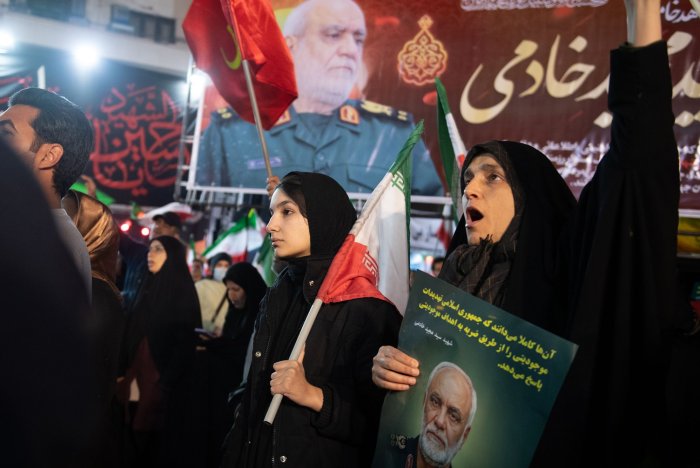
Iranians rally after a ceasefire announcement at Enqhelab Square, in Tehran on April 8, 2026. Photo by Behnam Tofighi/UPI | License Photo

Source link

Rubio tamps down expectations on Strait of Hormuz agreement

May 25 (UPI) — Secretary of State Marco Rubio tamped down expectations Monday for progress toward reopening the Strait of Hormuz after signaling a day earlier that he might have “good news” within hours.

Speaking to reporters at India’s Palam Air Base in New Delhi on Monday, the United States’ top diplomat said an agreement was “still a work in progress.”

“We thought we might have some news last night, maybe today,” he said, adding the holdup is that it takes time to hear back from the Iranians.

“I’m very confident — we should all be very confident — that we’re either going to have a good agreement or we’re going to have to deal with it another way. We’d prefer to have a good agreement.”

The United States is seeking to have Iran restore shipping traffic through the Strait of Hormuz before negotiations enter a subsequent phase focused on Iran’s nuclear program.

Rubio said what is on the table for opening the strait is “pretty solid,” but there is “a very real, significant time limit” to negotiations on the nuclear issue.

“Hopefully, we can pull it off,” he said.

Rubio is in India until Tuesday to discuss energy security, trade and defense cooperation with senior Indian officials. Meanwhile, U.S.-Iran negotiations have been ongoing through Pakistani and Qatari mediators.

After reporters that negotiations were edging toward completion, an Iranian Foreign Ministry spokesperson later Monday said that talks were focused on ending the war, with no discussions yet on its nuclear enrichment program, the semi-official Tasnim news agency reported.

The spokesperson also voiced skepticism over U.S. reliability, stating there is no guarantee Washington will hold up its end of the agreement once one is reached.

Speaking alongside Indian External Affairs Minister Subrahmanyam Jaishankar at a joint press conference on Sunday, Rubio said that he believed more news about the agreement would come from President Donald Trump.

“But I do think perhaps there is the possibility that over the next few hours the world will get some good news, at least with regards to the straits,” he said.

The on-again, off-again negotiations have been conducted amid a fragile cease-fire called in April in the war that began in late February.

Trump has sought a new agreement to prevent Iran from securing a nuclear weapon since 2018, when during his first administration he unilaterally withdrew the United States from a landmark Obama-era multinational nuclear accord called the Joint Comprehensive Plan of Action.

Calling it “defective at its core,” Trump has criticized several aspects of the JCPOA, including its sunset provisions easing restrictions on Iran’s nuclear program.

Critics have rebutted his accusations, saying that not all aspects of the JCPOA were to expire and that the expiring provisions afforded time were intended to afford time for further diplomacy.

Source link

Trump warns negotiators ‘not to rush’ on Iran deal

President Donald Trump speaks in the Oval Office at the White House in Washington, D.C., on Thursday. On Sunday, he urged negotiators on the deal with Iran to take their time and get it right. Photo by Al Drago/UPI | License Photo

May 24 (UPI) — President Donald Trump on Sunday urged his negotiators “not to rush into a deal” with Iran because “time is on our side.”

He made the comments in a post on Truth Social that also took aim at the Joint Comprehensive Plan of Action, the so-called Iran nuclear deal created in 2015 and which Trump withdrew from in 2018. In his post, Trump called it “one of the worst deals ever made by our country” and blamed former President Barack Obama and his administration.

“It was a direct path to Iran developing a Nuclear Weapon,” Trump wrote. “Not so with the transaction currently being negotiated with Iran by the Trump Administration – THE EXACT OPPOSITE, in fact!”

Trump said Saturday the deal with Iran had been “largely negotiated” and that final aspects were being worked out. On Sunday, he added that talks were “proceeding in an orderly and constructive manner.

“I have informed by representatives not to rush into a deal in that time is on our side,” he wrote.

“Both sides must take their time and get it right. There can be no mistakes!”

Secretary of State Marco Rubio also said Sunday that “significant progress” had been made and hinted that Trump may make an announcement on the issue “a little bit later today,” The New York Times reported.

“Suffice it to say some progress has been made, significant progress, although not final progress,” he said during a news conference in New Delhi.

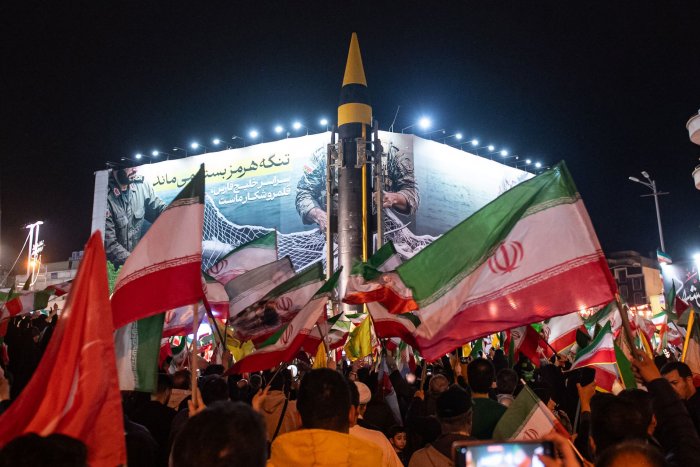
A missile identified as “Khorramshahr-4” was on display during a public rally in Tehran’s Enghelab Square on April 21, 2026. Photo by Behnam Tofighi/UPI | License Photo

Source link

Trump administration considers $1.7B fund to compensate allies

May 16 (UPI) — The Trump administration is considering the creation of a $1.776 billion fund to compensate people allied with President Donald Trump who were investigated during the Biden administration.

The fund would be part of a settlement with Trump that would result in him dropping his lawsuit with the Internal Revenue Service over the leaking of his tax returns six years ago, ABC News and The New York Times reported.

The deal emerged after months of negotiations between the White House and Department of Justice, which had originally been aiming to directly pay Trump, but conflict of interest concerns steered toward the compensation fund.

Although Trump has the right to sue as a private citizen, his position as president means that he also can instruct agencies within the executive branch, which would make him both the plaintiff and defendant in a trial.

The concept is partially modeled on an Obama administration compensation fund for Native American farmers and ranchers that distributed $760 million from the Treasury Department’s Judgment Fund.

In addition to Trump allies’ legal fees linked to investigations during his first term, the fund also likely would be open to people charged in the Jan. 6, 2021, riot at the Capitol building that saw the building get ransacked by Trump supporters.

Critics of the plan have called it a “slush fund” for Trump and his allies.

“An insane level of corruption — even for Trump,” U.S. Elizabeth Warren, D-Mass., said of the plan earlier this week.

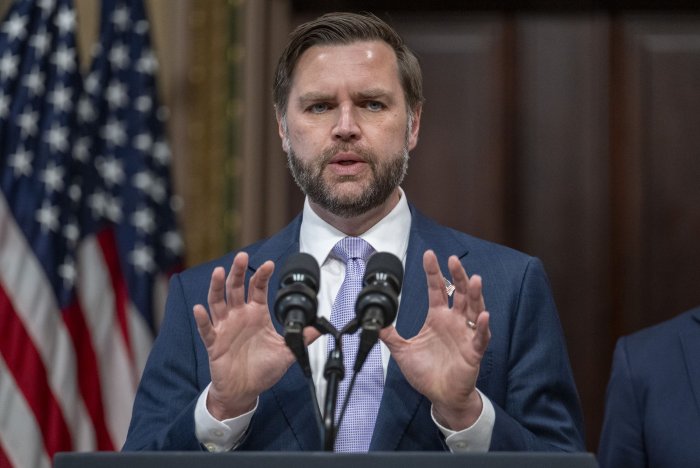
Vice President JD Vance speaks during a news conference on anti-fraud initiatives in the Indian Treaty Room of the Eisenhower Executive Office Building at the White House on Wednesday. Photo by Daniel Heuer/UPI | License Photo

Source link

DACA recipients face job losses, deportation amid renewal delays

WASHINGTON, May 14 (UPI) — Every day at 4 a.m., Cesar wakes up to sell burritos on the streets of Los Angeles. He spends a few hours preparing food in his apartment kitchen and later sets up a small canopy tent with a grill, several coolers and a large sign, made by his sister, advertising “burritos for sale.”

He has done this for the last three weeks, after finding out just over a month ago that he was terminated from his human relations job. He lost the job because of renewal delays to his status under the Deferred Action for Childhood Arrivals, or DACA, program.

Sen. Dick Durbin, D-Ill, said Tuesday that 32,000 people have lost their DACA status largely as a result of delays. The Department of Homeland Security has not released data on the number of people waiting for renewals.

More than 500,000 people rely on DACA, according to the United States Citizenship and Immigration Services. The program requires recipients to renew their status every two years.

“At first, when I was let go, I was feeling devastated, defeated,” said Cesar, who came to the United States when he was 4 and who did not want his last name used for fear of government retribution. “But, after going through those feelings, I knew I couldn’t just sit there.”

Cesar is one of many DACA recipients who have lost their jobs in recent months due to renewal delays, largely caused by increased vetting procedures. The program requires recipients to renew their status every two years.

The Obama-era immigration program provides work authorization to those who qualify, as well as protection from deportation. When their status expires, DACA recipients lose both protections. Many, like Cesar, now have been terminated from their jobs as a result and fear deportation.

Cesar applied for his renewal in early December, nearly six months ago. Like many others, he has received no communication since from USCIS. Previously, renewal applications took one to two months on average, according to the Department of Homeland Security. Last year, the median processing time was 15 days, according to DHS data.

“In its 14 years, we have certainly seen the DACA program face a whole host of attacks,” said Anabel Mendoza, a spokesperson from United We Dream, a youth-led immigrant network. “But what we’re seeing now is truly the most dangerous moment in DACA’s history.

More than 700 people attended a Zoom event hosted by United We Dream last week to help DACA recipients navigate the instability created by these delays. There was a distinct sense of anxiety among the attendees.

Participants flooded the chat feature of the call with anecdotes of losing solid jobs and questions on whether DACA recipients qualified for paid leave or unemployment.

One attendee wrote that, although he would prefer not to use unemployment, he had been waiting five months to receive his renewal. Like many others, he was worried about his ability to pay off significant bills and loans after losing his job.

One person even questioned whether they could sue the current administration.

Another asked whether they could now be deported, with many worrying whether they may even be detained at their immigration appointments.

The two central benefits of DACA, historically, have been legal protection from deportation and work authorization. However, a recent ruling by the Board of Immigration Appeals, an arm of the Department of Justice, said that judges can no longer stop deportation proceedings simply based on the plaintiff having DACA status. This marked a significant shift in immigration policy.

Organizers at the event stressed that DACA still protects recipients from deportation, but judges now have to consider DACA cases more closely. They later acknowledged that many DACA recipients were detained and deported by ICE last year, even before the ruling.

Acting ICE Director Todd Lyons confirmed in April that 343 people with DACA status were detained between January and November 2025, while 176 were deported.

Former DHS Secretary Kristi Noem said in a statement in February that most of these people had “criminal histories.” However she did not specify their crimes or whether they had been arrested, charged or convicted.

“It is part of a broader pattern of really trying to undermine DACA and erode the very protections that the program was meant to uphold,” Mendoza said.

This was a sentiment echoed by Maria Fernanda Madrigal, a mother of three who recently lost her job as an immigration attorney after losing her work permit because of the delays.

In an interview, she questioned whether the delays were an intentional strategy by the Trump administration. She explained that the renewal process had previously been very straightforward for many of her clients — sometimes taking just a week.

“I’m still trying to figure out what the goal is,” Madrigal said. “Because it’s hard, do they want us to leave?”

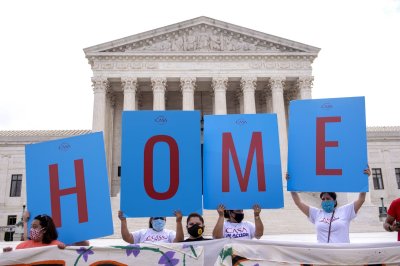
She highlighted Trump’s attempted termination of the DACA program in 2017 during his first term. The Supreme Court blocked him and preserved the program in 2020.

Now, she wonders whether it may be easier for her and her family to leave the United States. She explained that, unlike their parents, “a lot of us [DACA recipients] have degrees and careers, so we know that we’ll be able to build lives somewhere else.”

Madrigal now keeps the doors of her house locked at all times out of fear of being detained while she awaits her renewal. She said she and her husband have had discussions about whether their small children should share a bed with them.

“If I’m ever detained, these are the moments that I’m going to want, right? I’m going to look back and say I wish I would have cuddled with them a little longer,” Madrigal said.

As Cesar’s new business continues to grow, he faces similar fears, worrying whether he might be “taken away at any moment.”

“I know a lot of people say we’re resilient and we’ll figure it out. And that’s very true,” Madrigal said. “But, I think the main thing that our people understand is, even though we might be able to stick together and get over this, we shouldn’t have to.”

Source link

Trump unveils plans to cut U.S. forces in Germany amid spat over Iran

An U.S. Army helicopter is unloaded from an C-5M Galaxy at Ramstein Air Base, southwest of Frankfurt, amid NATO’s Operation Atlantic Resolve in 2017. Home to around 27,000 troops and their families, “Little America” has been the headquarters for U.S. Air Forces in Europe and a critical NATO facility since 1952. File Photo courtesy U.S. Air Force/Staff Sgt. Timothy Moore

April 30 (UPI) — U.S. President Donald Trump announced plans that could see cuts to the tens of thousands of U.S. forces stationed across 20 bases in Germany.

Writing on his Truth Social platform Wednesday night, Trump said the process of scaling back the United States’ eight-decade-long military presence was already underway.

“The United States is studying and reviewing the possible reduction of troops in Germany, with a determination to be made over the next short period of time,” Trump wrote.

The announcement came two days after German Chancellor Friedrich Merz said Iran was running circles around the United States in ongoing peace negotiations to end the military conflict, saying “the Americans clearly have no strategy.”

Lack of support for the war from European NATO allies has seen Trump and other senior U.S. officials repeatedly threaten to pull out of the 32-country defensive alliance, complaining that Europe was “freeriding” and never there for the United States when it needed it.

On Friday, a Pentagon leak suggested that Spain could face being suspended from NATO in retaliation for not supporting the United States in its war with Iran.

U.S. troop strength in Germany stood at 36,436, mainly army and air force personnel, stationed at 20 bases across the country in December, the latest month for which U.S. Department of Defense data is available.

That compares with around 28,000 across the rest of Europe, with the bulk of those deployed in Italy, Britain and Spain.

Active-duty personnel numbers in Germany were cut from more than 50,000 from 2013 to 2017 during President Barack Obama‘s second term, in line with a strategic shift in the United States’ defense priorities involving pivoting to the Asia-Pacific and reducing the focus on Europe.

Before that, numbers had fallen to 94,000 in the first half of the 1990s following the collapse of the Soviet Union in 1991, and then down to 71,000.

The United States currently has more than 54,000 troops in Japan, another 23,500 in South Korea and 7,000 in Guam.

There has been a continuous significant U.S. military presence in Germany since the end of World War II, initially as an army of occupation and then as the front-line of NATO deterrence during the Cold War and more recently as a bulwark against a resurgent threat to Europe from Russia.

Artemis II pilot Victor Glover (L) and mission specialist Christina Koch meet with President Trump in the Oval Office of the White House on Wednesday. Photo by Graeme Sloan/UPI | License Photo

Source link

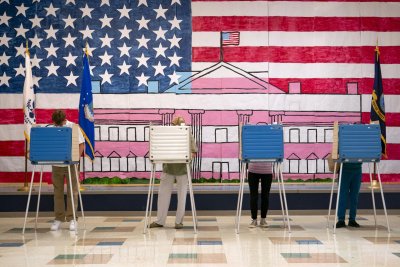
Virginia voting on new congressional map drawn by Democrats

April 21 (UPI) — Voters are heading to the polls in Virginia on Tuesday to vote on a new congressional map drawn by state lawmakers.

Polls are open until 7 p.m. EST., with nearly 1.4 million early ballots already cast on a constitutional amendment to change the congressional map. The result of Tuesday’s vote could have significant implications for the midterm elections in November.

If the map, drawn by Democratic lawmakers, is approved by voters, Democrats would be favored to win 10 of the state’s 11 congressional districts. Democrats currently hold six of the state’s 11 congressional seats and Republicans hold five.

Virginia is just the latest state to weigh redrawing its congressional map mid-decade after Texas approved a map that will favor Republicans last year. Four Republican-led states have approved new congressional maps.

Democrats and Republicans outside of the state have lent their voices to campaigns for and against Virginia’s redistricting plan. President Donald Trump and House Speaker Mike Johnson, R-La., voiced their opposition to the plan, with Trump calling it “unfair.”

House Minority Leader Hakeem Jeffries, D-N.Y., has joined Virginia lawmakers Sen. Mark Warner and Sen. Tim Kaine at rallies to support redistricting. Former President Barack Obama has also been involved, appearing in ad campaigns calling on voters to vote “yes.”

“We’re giving Virginians a chance to vote — which Republican states have not done — about whether they want to have a congressional delegation that will stand up against Donald Trump’s tyranny if he tries to interfere with our elections,” Kaine said in an appearance on Fox News on Sunday.

The Virginia Supreme Court allowed Tuesday’s election to move forward but may still weigh in on whether the new congressional map is legal or not.

Secretary of Health and Human Services Robert F. Kennedy, Jr. speaks during a House Appropriations Subcommittee on Labor, Health and Human Services, Education, and Related Agencies hearing on the budget for the Department of Health and Human Services in the Rayburn House Office Building near the U.S. Capitol on Thursday. Photo by Bonnie Cash/UPI | License Photo

Source link

Iran demands U.S. release seized ship, threatening to defend itself

The container vessel Touska, seen here off Hong Kong’s Ap Lei Chau islet in November 2017, was seized by the U.S. military on Sunday. Iran’s Foreign Ministry demanded Tuesday that the United States release the vessel. Photo by Jerome Favre/EPA

April 21 (UPI) — Iran on Tuesday demanded the United States release the Iranian-flagged container ship the U.S. military seized over the weekend, threatening to use “all its capacities” to defend itself as the cease-fire neared its end.

The U.S. military seized Touska on Sunday as it enforced a military blockade of Iranian ports and ships, raising already high tensions during a two-week cease-fire rapidly nearing its end that negotiators from both countries are to use to secure an end to the war.

U.S. warships intercepted Touska transiting the north Arabian Sea en route to Iran’s Bandar Abbas port city for allegedly violating the blockade.

Iran responded with accusations of violating the cease-fire and drone strikes targeting U.S. military vessels, according to state-run media, though U.S. Central Command has yet to comment.

Iran’s Foreign Ministry on Tuesday condemned the seizure of Touska as an “unlawful and savage act of the terrorist U.S. army,” saying the “act of maritime banditry and terrorism” terrified the ship’s passengers and crew, some of whose family members were onboard.

“The Islamic Republic of Iran, while warning of the very dangerous consequences of this unlawful and criminal act by the United States, emphasizes the immediate release of the Iranian vessel, its passengers, its crew and its families,” the ministry said in a statement.

The ministry said the seizure is a violation of international and the fundamental principles and rules of the U.N. Charter, and that it had informed the U.N. secretary general, the Security Council and maritime organizations.

“There is no doubt that the Islamic Republic of Iran will use all its capacities to defend Iran’s national interests and security and to safeguard the rights and dignity of its citizens,” the ministry statement said.

“It is obvious that full responsibility for the further complication of the situation in the region lies with the United States.”

The cease-fire is to end at midnight Tuesday.

Iran has accused Trump of ducking real negotiations on ending the war in favor of trying to exert the United States’ economic and military might to force it to capitulate.

“Trump, by imposing a blockade and violating the cease-fire, wants — in his view — to turn the negotiating table into a table of surrender, or else justify starting the war again,” Iranian Parliament Speaker Mohammad Bagher Ghalibaf said late Monday in a statement.

“We do not accept negotiations under the shadow of threats, and over thee past two weeks we have prepared to reveal new cards on the battlefield.”

Trump has continued to boast online that he was “winning” the war while defending himself from criticism and vowing the deal his administration is working on with Iran will be “FAR BETTER” than the landmark multinational Joint Comprehensive Plan of Action the United States, Iran and several other countries signed during the Obama administration.

“If a deal happens under ‘TRUMP,’ it will guarantee Peace, Security and Safety, not only for Israel and the Middle East, but for Europe, America and Everywhere else,” he said on his Truth Social media platform.

“It will be something that the entire World will be proud of, instead of the years of Embarrassment and Humiliation that we have been forced to suffer due to incompetent and cowardly leadership!”

Turkey, Iran’s neighbor and U.S. ally, has been among nations working to de-escalate tensions in the Gulf and seek an extension to the cease-fire as negotiations appear to be at a stalemate over Iran’s nuclear program.

Though public rhetoric is fiery, negotiations behind closed doors are progressing, Ankara’s foreign affairs minister, Hakan Fidan, said Sunday during a forum in southeastern Turkey’s Antalya.

“The good thing is this: both sides continue to negotiate with a very serious intention, sincerely, they have the will to continue,” Fidan said.

“Now, no one wants a new war to start again with the end of the cease-fire next week.”

Turkey hopes that under international pressure, the United States, Israel and Iran will extend the cease-fire to solve outstanding issues, he said.

“A two-week period is good for a cease-fire, but the file in front of them is so comprehensive that it will not be possible to solve all these issues in two weeks,” he said.

“Therefore, a new extension will be needed. I hope this extension will come. I am optimistic about that.”

Source link

Late Queen’s grandson tells of ‘amazement’ at royal secret ‘literally nobody knew’

As BBC marks what would have been Queen Elizabeth II’s 100th birthday, Peter Phillips says that his grandmother stunned them all in 2012

As the nation remembers Queen Elizabeth II on what would have been her 100th birthday next week, one grandson has given fresh insight into the subterfuge that went into her astonishing James Bond moment from the 2012 Olympics.

Peter Phillips was gripped by the scenes, along with the rest of the nation, in which the monarch comes face to face with Daniel Craig’s 007, before they seemingly parachute into the stadium from a helicopter.

But speaking in a new BBC documentary, Peter says even the family were kept totally in the dark about the extraordinary stunt. “When the clip first started we were like, ‘I wonder who they’ve got playing the Queen?’ And then she turned around. And we were like ‘wow’. It was sheer amazement. That was one of the best-kept secrets, because literally nobody knew.”

READ MORE: ITV reveals last ever outing for cast of 7 Up this year – but some faces will be missingREAD MORE: Iconic 90s TV show returning to Channel 4 for first time since 2015

The tribute film, which airs tomorrow, takes viewers through all the key moments of her reign, with insights provided by leaders, celebrities, experts and loved ones.

Queen Camilla speaks of her deep admiration for her late mother-in-law. Looking back at how she came the first female member of the royal family to join the army full time, when she joined the Auxiliary Territorial Service during the war, Camilla says: “I think duty has over-ridden everything. I don’t think I’ve ever seen anybody have a sense of duty like she had.”

Ex-US president Barack Obama agreed, commending the late Queen’s “combination of a sense of duty, with a very human quality of kindness and consideration and a sense of humour”. He adds: “I think that’s what made her so beloved, not just in Great Britain but around the world.”

Former Labour Prime Minister Tony Blair also had deep respect for Elizabeth II. “She was not a queen, but the queen,” he says. “I don’t think we’ll see her like again.”

Camilla recalls that celebrating the Queen’s platinum jubilee in February 2022, just as the Covid pandemic finally came to a close, was particularly joyous coming, as it would turn out, just a few months before the Queen’s death.

“I remember there were thousands and thousands of people lining the streets and lining The Mall – we were all looking for something to cheer us all up,” she says. “People hadn’t been out, they’d been stuck in their houses so it was an incredible jubilee. She was very much centre stage, I’ve never seen anything like it. Everybody was in a good mood.”

Helen Mirren, who put in as Oscar-winning performance as Elizabeth II in The Queen, agrees that the monarch’s profound sense of duty came naturally to her and says her death in 2022 left many feeling bereft. “She’d become such an intrinsic part of the tapestry of our life, it was as if you were going to pull a thread and the whole thing was going to fall apart.”

To research the role for the 2006 movie, Helen studied hours of footage, including plenty of when the monarch was a child. She laughs when shown an archive reel of a three-year-old Elizabeth. “I’ve never seen this before, so young! And her hair is almost the same as when she died. That’s incredible.”

Another clip shows Elizabeth aged around 10. “When I played the Queen I watched a particular piece of film over and over again of her getting out of a big black car,” the actress explains. “You see how she steps forwards and does what she knows she’s supposed to do, which is shake hands. She naturally had a sense of self control and duty.”

That innate sense of how to behave was again in evidence when Elizabeth’s father, George VI, died suddenly while she and her new husband Prince Philip were just six days in to a tour of the Commonwealth in 1951. Returning swiftly to Britain, she was filmed smiling and shaking hands with the many top-hatted, male politicians who were on the tarmac to greet her.

“She’s only just been told that her beloved, beloved father has died without her being there,” Helen 80, says. “I think that would have been so devastating to her, that she never had the chance to say goodbye.What you see happening is the duty stepping in, she does exactly what she’s supposed to do.”

Camilla is also astonished to see how calm and composed the young queen looks in this challenging moment, when she is dealing with her own grief. “It must have been so difficult being surrounded by much older men. There weren’t women prime ministers or women presidents, she was the only one. So I think she carved her own role.”

Over the course of her life Elizabeth faced plenty of difficult times, including the marriages of three of her children ending in the same year and the loss of many loved ones.

When her husband of 73 years, the Duke of Edinburgh, died during the pandemic, the Queen refused to break the rules governing the nation and instead broke hearts as she sat at his funeral all alone. Watching the sad clip of his isolated grandmother, Peter Phillips says all he wanted to do at the time was “give her a hug”.

But there were also times when the Queen came in for criticism rather than sympathy, never moreso than after the death of Princess Diana in 1997, when she opted to remain at Balmoral for more than a week rather than return to London.

BBC royal presenter Kirsty Young remembers: “There was tangible anger. Whether it was the flag being brought down to half mast or the Queen making a statement, these things were not happening. There was radio silence. There was a sense in which people might almost storm the gates of the palace.”

But the Queen then turned public opinion around with her heartfelt TV broadcast to the nation. Describing the former monarch as “quietly radical”, Kirsty adds: “I think the address by the Queen after the death of Diana illustrated beautifully that she had an ear to the public and that she was willing to do things that had never been done before.”

Blair agrees it was one of the Queen’s most challenging moments. “We had a series of really intense conversations where the Queen was having to balance the impact on her family, on her grandchildren, with the need to respond to what was a national mood at the time. Her genius was, in a way, to steer the monarchy through all of that whilst not really changing much herself.”

For her part, actress Helen believes the Queen was absolutely right to stay with her grandsons after the devastating loss of their mother. “I think she was right to stay in Balmoral with the children and then when she came out and did the very difficult walk with the flowers and everything, that was the right thing to do.”

Born just a couple of weeks after the Queen, Sir David Attenborough was running the BBC at one point in the late 1960s when it was decided the royals needed to become more relatable. This led to the BBC documentary Royal Family, an early example of reality TV, where they let the cameras in. “There was a feeling that the royal family was getting a bit remote and I remember the discussions we had in the BBC, that the image of the family should be softened in some way,” Sir David explains. It was huge hit with more than 30million UK viewers tuning in – but afterwards the Queen regretted her decision to display their private lives. The series has not been shown since the 1970s, with Elizabeth ordering it was locked away in the royal archives.

But tonight viewers can see rare clips from the series, showing a relaxed Philip cooking sausages and the queen laughing and joking with her children.

– Queen Elizabeth II: Her Story, Our Century, BBC1, 9pm, Sunday

Source link