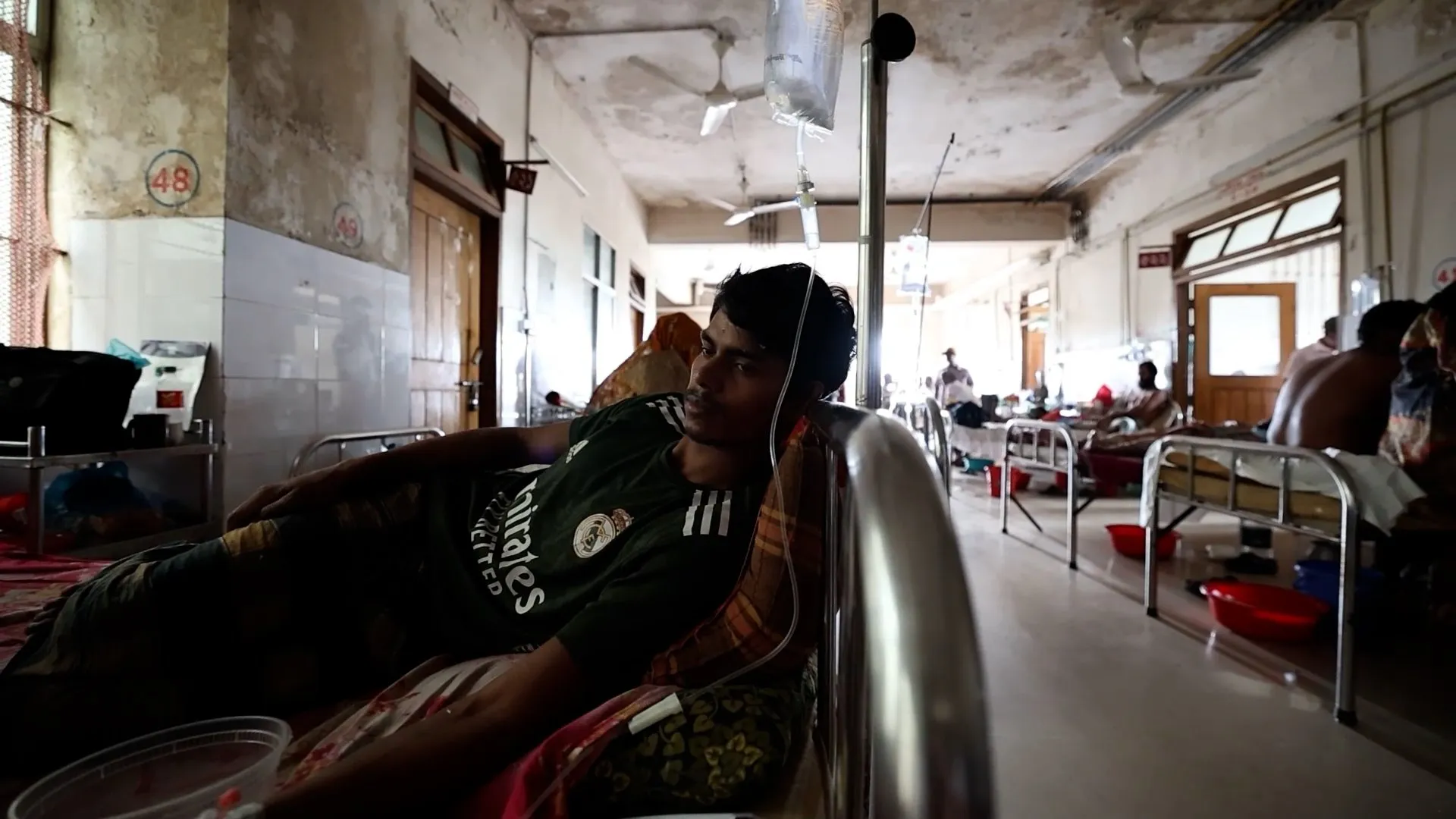
Bangladesh

‘It all depends on the crop’: Gulf crisis hits South Asia farmers | Agriculture News

Gurdaspur, Punjab, India – Ramesh Kumar, 42, is anxiously doing the calculations for his crops this year.

Standing at the edge of his wheat field in northwest Punjab’s Gurdaspur, he runs through the numbers in his head, totting up fertiliser costs, expected yield, and market prices.

Then he shifts to more personal concerns: School fees, household expenses, loan repayments and the money he has been saving for his daughter Varsha’s wedding.

“I don’t know if we can afford it this year,” he says. “Everything depends on the crop.”

The uncertainty has crept in quietly.

Fertiliser, once a fairly predictable staple in farming, has become more expensive and harder to secure in time. For Kumar, it is not so much a question of cost as it is the difference between stability and strain.

“If prices go up more, we will have to cut somewhere,” he says. “Maybe delay the wedding. If things get worse … even children’s education becomes difficult.”

School fees for his eldest son, Amit, 12, are due in the coming weeks, and Kumar has been setting aside money for his younger daughter Varsha’s future wedding.

It’s never easily affordable, even in good times. “We somehow manage,” Kumar says. “But if the harvest is weak, then we have to think about what to prioritise, what to delay.”

For farmers like him across South Asia, the United States-Israel war on Iran – unfolding thousands of kilometres away – is not just a matter of distant geopolitics.

It is shaping decisions inside their homes.

SA farmers
A worker pours fertiliser into a sack at a storage facility in Srinagar, Indian-administered Kashmir [Sajad Hameed/Al Jazeera]

A distant crisis with local consequences

At the centre of the unfolding crisis is the Strait of Hormuz, a narrow shipping lane more than 2,000km (1,240 miles) from India’s northern plains. It lies between Iran and Oman, linking the Gulf and its oil producers to the open ocean and, from there, to global markets.

About one-fifth of the world’s oil and liquefied natural gas (LNG) supplies pass through this body of water, which Iran closed down shortly after the first US-Israeli strikes on Tehran on February 28.

Vast volumes of LNG, essential for manufacturing nitrogen-based fertilisers, are transported from Gulf producers to Asia via this route. Any disruption can delay shipments, push up freight and insurance costs and place a stranglehold on supply.

Interruptions to the supply of fertiliser can ripple quickly, reducing crop yields, increasing costs and raising food prices.

The risks are already being felt thousands of kilometres away.

South Asia, home to nearly two billion people, relies heavily on fertiliser-intensive farming to produce staple crops such as wheat and rice. Over the past few decades, the increasing use of fertilisers – which can hugely boost crop yields – has played a key role in agricultural productivity across the region.

The agriculture sector now employs about 46 percent of the workforce in India, about 38 percent in Pakistan, nearly 40 percent in Bangladesh, and more than 60 percent in Nepal.

SA farmers
A farmer spreads fertiliser around apple trees in an orchard in Baramulla, Indian-administered Kashmir, March 2026 [Sajad Hameed/Al Jazeera]

The degree to which countries in the region depend on the Strait of Hormuz varies, but all rely heavily on the trade in fertilisers that this shipping route facilitates.

In India, the agriculture sector is worth $400bn, according to Indian government and World Bank data, and supports the livelihoods of more than half the population, either directly or indirectly. More than 100 million farming families are directly dependent on the sector.

The country imports a substantial share of its fertiliser requirements and other key raw materials, particularly phosphates and potash, as well as natural gas used to manufacture fertiliser, with about 30–35 percent of these supplies moving through or originating from routes that pass via the Strait of Hormuz.

In Pakistan, the agriculture sector contributes close to 20 percent of gross domestic product (GDP), according to Pakistan government estimates, and employs millions. About 20-25 percent of Pakistan’s fertiliser imports, particularly DAP (diammonium phosphate), pass through the Strait of Hormuz at some point in transit. Additionally, the sector relies on domestic natural gas for the production of urea, a key nitrogen-based fertiliser and, with Gulf natural gas supplies held up in the Strait of Hormuz, the price of natural gas everywhere – even at home – is on the rise.

In Bangladesh, where millions of smallholder farmers rely heavily on imported fertilisers, the agricultural sector accounts for about 12-13 percent of GDP, according to government data. The country’s farming industry relies heavily on imported fertilisers to sustain crops, meaning farmers are highly exposed to international supply shocks and price swings.

Furthermore, roughly 25-30 percent of Bangladesh’s imported fertiliser is shipped via routes passing through the Strait of Hormuz.

Nepal, where agriculture contributes about 24 percent of GDP, imports nearly all of its fertiliser needs, with about 25-30 percent of arriving via India, via the Gulf and the Strait of Hormuz.

SA farmers
A worker handles granular fertiliser at a storage facility in Punjab, northern India, March 2026 [Sajad Hameed/Al Jazeera]

Livelihoods at stake

Overall, even minor disruption in the Gulf – let alone the complete closure of the critical Strait of Hormuz – can have dire consequences for hundreds of millions of people.

The Indian government has sought to reassure farmers that supplies remain secure – for now.

Prime Minister Narendra Modi told Parliament on March 23: “Adequate arrangements have been made for fertiliser supply for the summer sowing season…The government has diversified options for oil, gas and fertiliser imports… Domestic production of urea, DAP and NPK [nitrogen, phosphorus and potassium fertilisers] has been expanded… Farmers now have access to Made in India Nano Urea and are encouraged to adopt natural farming…”

He added: “Under the PM Kusum scheme, more than 22 lakh (2.2 million) solar pumps have been provided, reducing dependence on diesel… I am confident that through joint efforts, India will manage these challenges effectively and continue to support our farmers.”

On the ground, however, confidence is low. Farmers say uncertainty is already influencing decisions.

In Pampore, in the south of Indian-administered Kashmir, 53-year-old mustard farmer Ghulam Rasool says price signals travel faster than supply disruptions.

“We hear about war, about shipping problems,” he tells Al Jazeera. “Even before shortages happen, fertiliser becomes expensive.”

Rasool says farmers often respond early by cutting down on the amount of fertiliser they are using, even before actual shortages emerge.

“If we use less, production will fall,” he says. “But sometimes we have no choice.”

In Pakistan’s South Punjab, wheat farmer Muneer Ahmad, 45, is preparing for the next sowing cycle.

“If fertiliser becomes expensive, it will affect everyone here,” he says.

Government officials have expressed confidence in Pakistan’s fertiliser supply amid the Middle East conflict, and claim the government is fully prepared to ensure adequate supplies during the region’s peak sowing period, which typically begins between April and June, depending on the crop.

According to a statement by Pakistan’s federal secretary for agriculture to Al Jazeera, Federal Minister Rana Tanveer Hussain told a meeting on March 25 that the government has started proactive monitoring, is expanding domestic urea and DAP production and taking steps to ensure fertilisers reach farmers at affordable prices.

However, urea production requires supplies of natural gas, meaning global energy price shocks can still translate into rising production costs.

SA farmers
A farm worker spreads fertiliser across a field as part of routine crop management during the growing season in north India [Sajad Hameed/Al Jazeera]

For farmers, even small increases matter

“We already have loans and expenses,” Ahmad says. “If costs go up, we feel it immediately.”

In Rangpur, northwestern Bangladesh, farmer Mohammad Ibrahim, 41, says fertiliser supplies are already becoming unpredictable.

“Sometimes it is available, sometimes not,” he says. “And when it comes, the price is higher.”

Meanwhile, in Nepal’s Gulmi district, farmer Meghnath Aryal, 38, worries that crops will be reduced if a major supply problem does appear.

“If fertiliser does not arrive on time, the crop suffers,” he says. “If it becomes expensive, we reduce use.”

Bangladesh’s Agriculture Secretary Rafiqul Mohammad told Al Jazeera the government is “closely monitoring the situation” and officials have tried to reassure farmers that fertiliser supplies are sufficient for the coming months.

The government has finalised plans to import about 500,000 tonnes of urea in the near term, while also exploring alternative suppliers such as China and Morocco to secure additional supplies in the longer term.

There is no immediate shortage at present, the Agriculture Ministry says.

Ram Krishna Shrestha, joint secretary at Nepal’s Ministry of Agriculture and Livestock Development, told Al Jazeera that fertiliser distribution within the country remains largely stable for now, with supplies already secured for the upcoming rainy season, particularly for paddy crops such as rice.

However, he warned that there may be delays to contracted shipments as a result of the Middle East crisis.

“We have managed fertilisers for the upcoming season, but there could be challenges in timely supply because of the current situation,” he said, pointing to global price increases and logistical disruptions, including those caused by the closure of the Strait of Hormuz.

Shrestha added that as companies report shortages and rising prices in international markets, the government has asked suppliers to expedite deliveries.

“Authorities are also advising farmers to increase the use of traditional nutrient sources such as farmyard manure, compost, green manuring and azolla [a natural fertiliser] to offset any potential shortfall in chemical fertilisers,” he said.

No immediate new fertiliser subsidies have been announced, he said, though adjustments remain under discussion as the situation evolves.

SA farmers
Mustard farmer Ghulam Rasool scatters fertiliser by hand in a field in Pampore, Kashmir, India [Sajad Hameed/Al Jazeera]

Rising food prices on the horizon

The implications extend beyond individual farmers.

Across South Asia, fertiliser use has been central to maintaining crop yields – and keeping large populations fed. Any reduction in availability or increase in costs can quickly lower production. That, in turn, pushes up food prices, a sensitive issue in a region where households spend a large proportion of their income on food.

For governments, the challenge is complex.

In the past, subsidies have kept fertilisers affordable for farmers, but this becomes a fragile balancing act if global prices rise, placing additional pressure on public finances.

In India, Ramesh Kumar is already making adjustments – but he is walking a tightrope.

He has decided to use less fertiliser this season, even though he knows it could reduce yields.

“It is a risk,” he says. “But what choice do we have?”

Lower production will mean less income and harder decisions at home.

“School fees have to be paid,” he says. “Household expenses cannot stop.” He looks across his field.

“And the wedding… we will see.”

Ultimately, sacrifices will have to be made in his household.

Across borders, the same uncertainty is unfolding.

In Pakistan, Ahmad is worried about rising costs. In Bangladesh, Ibrahim is mostly concerned about the availability of fertiliser and, in Nepal, Aryal fears delays in supply.

For Ramesh Kumar, the stakes are clear.

“For others, this is about war,” he says. “For us, it is about whether we can take care of our family.”

Source link

Deaths and debts: Missiles in Gulf shake millions of South Asian families | US-Israel war on Iran

A week into the United States-Israeli war on Iran, and Iran’s attacks on its Gulf neighbours, Jaya Khuntia spoke – as he often did – to his Doha-based son Kuna on the phone.

It was March 6, about 10pm, and Khuntia and the family were worried. “He told me, ‘I am safe here, don’t worry,’” the father recalled from the conversation with Kuna.

It was the last time they spoke.

The next day, the family in Naikanipalli village of India’s eastern Odisha state received a phone call from Kuna’s roommate telling them that the son had suffered a heart attack after hearing the sound of missiles and debris from interceptions falling near their residence. He collapsed and was later declared dead. Kuna’s body reached home days later.

Al Jazeera cannot independently confirm the cause of Kuna’s death, but the family of the 25-year-old, who worked as a pipe fitter in Qatar’s capital, is among millions across South Asia directly affected by the war in the Middle East.

Of the eight people killed in the United Arab Emirates in Iranian attacks, two were Emirati military personnel, a third a Palestinian civilian, and the remaining five were from South Asia: Three from Pakistan, and one each from Bangladesh and Nepal. All three people killed in Oman were from India. An Indian national and a Bangladeshi national are the only deaths in Saudi Arabia.

Migrant workers from South Asia total nearly 21 million people in the Gulf nations, a third of the total population of the region. At stake, for their families back home, is the safety of their loved ones and the future of their dreams.

The Khuntia family had taken on a 300,000-rupee ($3200) debt in 2025 for the marriages of their two daughters. Kuna’s income in Doha – where he had moved only in late 2025 – of 35,000 rupees ($372) was helping them collect what they needed to pay back the loan. Kuna had been sending back about 15,000 rupees ($164) every month.

“We thought our suffering was finally ending,” Jaya said, his voice trembling. “My only son would say, ‘Baba, don’t worry, I am here.’ He was our only hope… our everything.”

That hope is now extinguished. “That one call finished us,” Jaya cried. “He promised to return after clearing our debts … but he came back in a coffin. We have nothing left now. Losing our only son is the biggest debt we have to live with.”

Kuna Khuntia, a 25-year-old pipe fitter from India's Odisha, who died of a heart attack in Doha Qatar [Photo courtesy the Khuntia family]
Kuna Khuntia, a 25-year-old pipe fitter from India’s Odisha, who died of a heart attack in Doha, Qatar [Photo courtesy the Khuntia family]

‘I thought we would be next’

In all, Bahrain, Kuwait, Oman, Qatar, Saudi Arabia and the UAE – the six Arab countries in the Gulf – host 35 million foreign nationals, who form a majority of their total population, 62 million.

They include 9 million people from India, 5 million each from Pakistan and Bangladesh, 1.2 million from Nepal, and 650,000 from Sri Lanka. Most of them are engaged in blue-collar work, building or supporting the industries and services that are at the heart of the Gulf’s success and prosperity.

But since the US and Israel launched their war on Iran, these migrant workers have often been among the most vulnerable. That vulnerability extends beyond deaths and injuries to the very nature of their work: Oil refineries, construction areas, airports and docks, where many work, have been targeted in Iranian attacks.

The suspension of work at many of these facilities, coupled with fears of a major economic downturn in the region, has also left many workers and their families worried about the future of their jobs.

Hamza*, a Pakistani migrant labourer working at an oil storage facility in the UAE, recalled a recent attack that he witnessed. “A drone struck a storage unit right in front of us. We were completely shaken. Most of us there are from India, Pakistan and Bangladesh.

“We couldn’t sleep for nights after that. The drone was so close that it could have killed us, too,” Hamza added. “For a moment, I thought we would be next.”

Despite these dangers, he said, leaving is not an option.

“We want to go back, but we can’t,” Hamza said. “Our families depend on us. It’s dangerous here, but if we stop working, they will have nothing to eat. We have no choice.”

Experts say Hamza’s sentiment is common across South Asian blue-collar workers in the Gulf, because of poverty and limited employment opportunities back home.

Imran Khan, a faculty member at the New Delhi Institute of Management working on migration economics, said migrant labourers from South Asia are often driven by desperation to take up jobs in the Middle East. He said Western countries have, in recent years, dramatically raised entry barriers for less-educated blue-collar foreign workers.

“These workers are the worst affected during crises – whether war or natural disasters,” he says. “I have been speaking to several migrant labourers, particularly Indians in the Middle East, and many are living in distress since the conflict began.”

But, like Hamza, most cannot afford to leave, Khan said.

“They cannot simply quit. Their income would stop immediately, and there are very limited opportunities back home,” he explained. “They have families to support, and without these jobs, survival becomes difficult.”

Indian labourers work at the construction site of a building in Riyadh November 16, 2014. India is pressing rich countries in the Gulf to raise the wages of millions of Indians working there, in a drive that could secure it billions of dollars in fresh income but risks pricing some of its citizens out of the market. Picture taken November 16. To match story INDIA-MIDEAST/WORKERS REUTERS/Faisal Al Nasser (SAUDI ARABIA - Tags: BUSINESS CONSTRUCTION EMPLOYMENT)
Indian labourers work at the construction site of a building in Riyadh, November 16, 2014 [Faisal Al Nasser/Reuters]

Families – and societies – that depend on remittances

Middle Eastern countries remain a key source of remittances for South Asian nations such as India, Pakistan, Bangladesh, Sri Lanka and Nepal. The remittances these five countries receive from the region, $103bn, are comparable to Oman’s total gross domestic product (GDP).

Just the remittances that India receives from the Gulf, $50bn, are more than Bahrain’s entire GDP. Pakistan receives $38.3bn in remittances, Bangladesh $13.5bn, Sri Lanka $8bn, and Nepal $5bn.

With the recent escalation of conflict in the Middle East, experts warn these flows could be significantly affected, especially if Gulf economies contract and layoffs follow.

Faisal Abbas, an expert in international economics and director at the Centre of Excellence on Population and Wellbeing Studies, a Pakistan-based research institute, said remittances from the Middle East form a crucial economic backbone for South Asian nations, not just families.

“Remittances are a critical pillar for Pakistan and other South Asian economies, and a large share comes from Middle Eastern countries,” he explained. “If the situation worsens, it will not be a positive development for the region.”

Pakistan’s remittances from the Gulf constitute nearly 10 percent of its GDP, about $400bn.

Abbas added that the effect may extend beyond remittance flows. “Migration patterns could also be disrupted. Many workers may return home, while those planning to migrate might reconsider,” he said. “This could further increase unemployment in a region already facing job shortages.”

Unlike Hamza, a number of South Asian workers are planning to return home.

Noor*, a migrant worker from Bangladesh employed at an oil facility in Saudi Arabia, said he no longer feels safe and plans to return home once his contract ends.

“I will never come back here again,” he said. “It’s too dangerous. We can’t even sleep at night. The fear never leaves us.”

Noor said drone attacks had occurred close to his workplace. “We saw it happen in front of us,” he said. “That fear stays with you… It doesn’t go away.”

His family, too, is deeply affected. “My children cry every time they call me. They are scared for my life,” he added.

He said he knows that returning to Bangladesh would mean more economic hardship for his family. But Noor said he had made up his mind.

“I would rather go back and struggle to survive with my family than live here in constant fear,” he said. “At least there, I will be with them.”

*Some names have been changed at the request of workers who fear retribution from contractors for speaking to the media.

Source link

Thursday 26 March Independence Day in Bangladesh

In 1947, India was partitioned by the British, creating the ‘Dominion of Pakistan’, which was two separate regions to the northwest and northeast of India. The new dominion was governed by West Pakistan, which led to friction between the two regions, with the first signs of a movement for autonomy for East Pakistan appearing in 1949.

In the 1970 general elections, the Bangla-based Awami League, led by Sheikh Mujibur Rahman won an overall majority, but the West Pakistani regime was reluctant to hand over power. On March 25th 1970, Pakistani troops were used to quell the growing unrest.

This led to the Independence of Bangladesh being declared by Sheikh Mujibur Rahman on March 26th 1971 and marked the start of the war of Independence. In November 1970, India entered the war, supporting East Pakistan. This led to victory for East Pakistan on 16 December 1970 (marked by the Victory Day holiday).

On gaining its independence, East Pakistan was renamed Bangladesh.

Bangladesh Secures Diesel After Iran War Disrupts Fuel Shipments

The war involving Iran, United States and Israel is increasingly affecting energy supplies far beyond the Middle East, with Bangladesh now scrambling to secure fuel imports after disruptions to regional shipping routes.

Bangladeshi officials say the country has begun receiving diesel shipments from suppliers including China and India, allowing authorities to secure enough fuel to meet roughly one month of national demand. Arrangements are also being made to secure supplies for an additional month.

The South Asian nation of about 175 million people depends heavily on imported energy, with roughly 95% of its fuel requirements sourced from abroad. The disruption of Middle Eastern oil flows following the war has therefore exposed Bangladesh to severe supply risks.

Fuel Rationing and Economic Disruptions

To manage the supply shortage, authorities have introduced emergency measures including fuel rationing for vehicles, restrictions on diesel sales and the temporary closure of universities.

Energy shortages are also affecting Bangladesh’s critical export industries. The country is the world’s second-largest clothing exporter after China, and many garment factories rely on diesel-powered generators during power outages.

Industry leaders say the situation has worsened since the conflict began in late February. Power cuts have doubled to as much as five hours per day, forcing factories to rely more heavily on backup generators.

Mahmud Hasan Khan, president of the Bangladesh Garment Manufacturers and Exporters Association, said many companies are struggling to obtain sufficient diesel to keep their operations running during electricity outages.

The shortages threaten to disrupt production in one of Bangladesh’s most important economic sectors, which accounts for the majority of the country’s export earnings.

Emergency Diesel Shipments Arrive

To stabilise supplies, the state-run Bangladesh Petroleum Corporation (BPC) has arranged diesel shipments from international traders.

Energy officials say around 60,000 metric tons of diesel are currently being delivered by three trading companies, with another 90,000 metric tons expected to arrive later this month.

A cargo of approximately 27,000 metric tons from PetroChina has already arrived at Chittagong Port, while another shipment of roughly 28,000 metric tons from Vitol is waiting at the port’s outer anchorage.

Additional supplies are also arriving through a cross-border pipeline from India’s Numaligarh Refinery, which is currently providing about 5,000 metric tons of diesel. Officials said negotiations are underway to secure a further 30,000 metric tons from Indian Oil Corporation.

Bangladesh typically consumes about 380,000 metric tons of diesel each month. However, officials estimate that rationing measures have reduced current demand to around 270,000 metric tons per month.

Oil Imports Threatened by Hormuz Disruptions

While refined diesel cargoes have continued to arrive, Bangladesh faces greater risks in securing crude oil shipments for its domestic refineries.

The country imports about 1.4 million metric tons of crude oil annually under long-term supply agreements with Saudi Aramco and Abu Dhabi National Oil Company.

However, shipments from these suppliers must travel through the strategically vital Strait of Hormuz, which has been heavily disrupted by the war. Officials say at least one cargo of around 100,000 tons from Saudi Aramco has already been delayed in the Gulf due to the ongoing crisis.

The Strait of Hormuz is one of the world’s most important energy transit routes, and any prolonged disruption could have far-reaching consequences for countries heavily dependent on imported fuel.

Gas Shortages Add to Energy Crisis

Bangladesh’s energy difficulties extend beyond diesel shortages. Severe natural gas shortages have already forced the closure of four of the country’s five state-run fertiliser factories.

Authorities have redirected the available gas supply toward electricity generation in an effort to stabilise power production during the crisis.

The combination of diesel shortages, disrupted oil imports and limited gas supplies is placing growing pressure on Bangladesh’s energy system at a time when global fuel markets are already experiencing heightened volatility.

Analysis: Energy Dependence Exposes Economic Vulnerability

Bangladesh’s struggle to secure diesel supplies illustrates how the war involving Iran is affecting energy-importing economies far beyond the immediate conflict zone.

Countries that rely heavily on imported fuel are particularly vulnerable to disruptions in global energy shipping routes, especially those linked to the Strait of Hormuz. Even temporary interruptions can lead to fuel shortages, higher prices and broader economic disruption.

For Bangladesh, the situation highlights the structural risks created by its dependence on imported energy. Industries such as garments, which rely on stable electricity supplies and backup diesel generators, are especially exposed to supply shocks.

Although emergency shipments from China and India have temporarily stabilised supplies, the situation remains fragile. If the conflict in the Middle East continues to disrupt oil shipments or drive up prices, Bangladesh could face prolonged energy shortages with significant implications for its economy and export industries.

With information from Reuters.

Source link