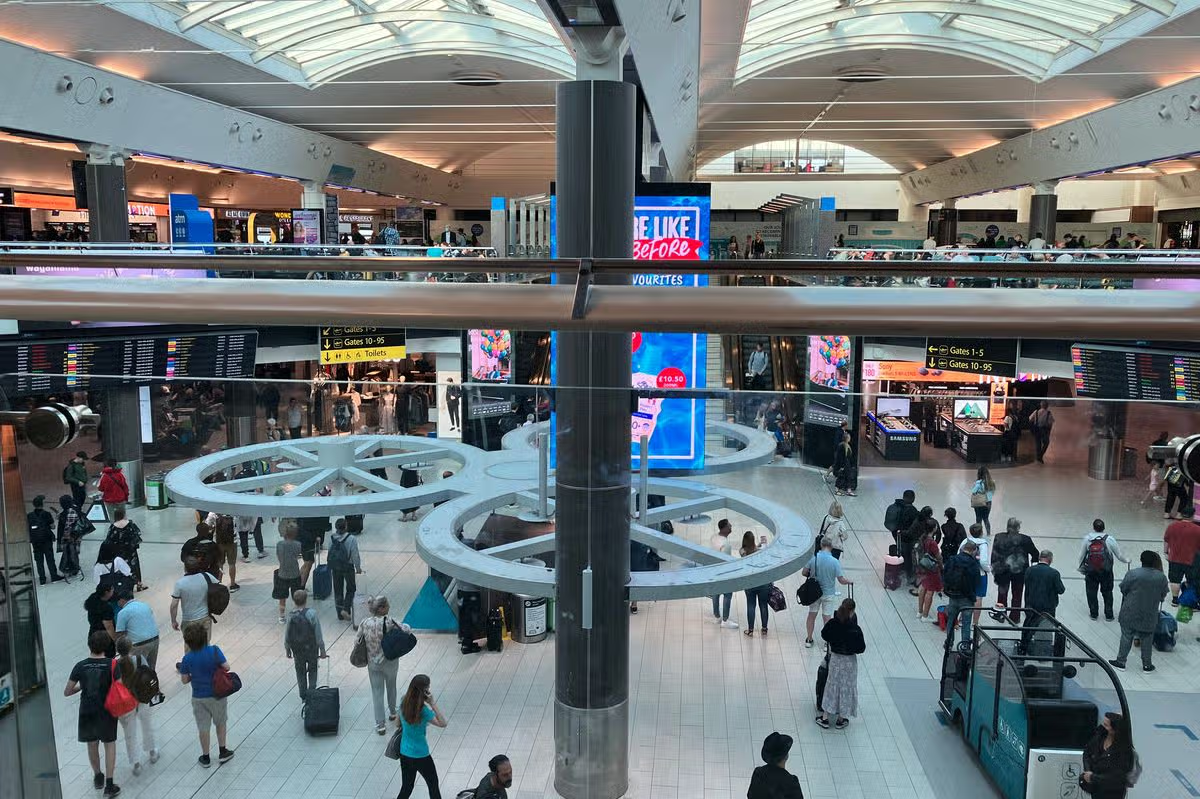
Airport bosses issued an alert on Friday(Image: Getty)
Airport bosses at London Gatwick have issued an alert to those taking checked baggage with them while travelling. The UK’s second busiest airport, which handles around 43 million passengers each year, is urging holidaymakers and other travellers to “pack right [for a] safe flight”.
In a new post on X, formerly Twitter, on Friday airport chiefs said: “Power banks, spare batteries and vapes should always travel in your hand luggage, not in checked baggage. If damaged or overheated in the hold, they can pose a fire risk.”
Before flying travellers should: “Carry power banks and vapes in your hand luggage, keep spare batteries protected from short circuits, and check your airline’s rules before travelling”. The alert added: “A safer journey starts with careful packing.”
Further information found on the Civil Aviation Authority (CAA) website explains that vapes and power banks can overheat and cause a fire. It adds that you can only take two power banks per person, and that these should never be re-charged onboard the aircraft.
Content cannot be displayed without consent
“You may be asked to put power banks in your seat back pocket rather than in an overhead locker. Phones, tablets and laptops should normally be taken with you in the cabin unless they are completely turned off and protected from damage.”
Travellers should also pack their own bags, avoiding any restricted or banned items, and keep essentials such as medicine in hand luggage.
Lots of people travel with easyJet, but there’s a certain rule passengers need to follow. If they don’t stick to it, they could end up having to pay more money
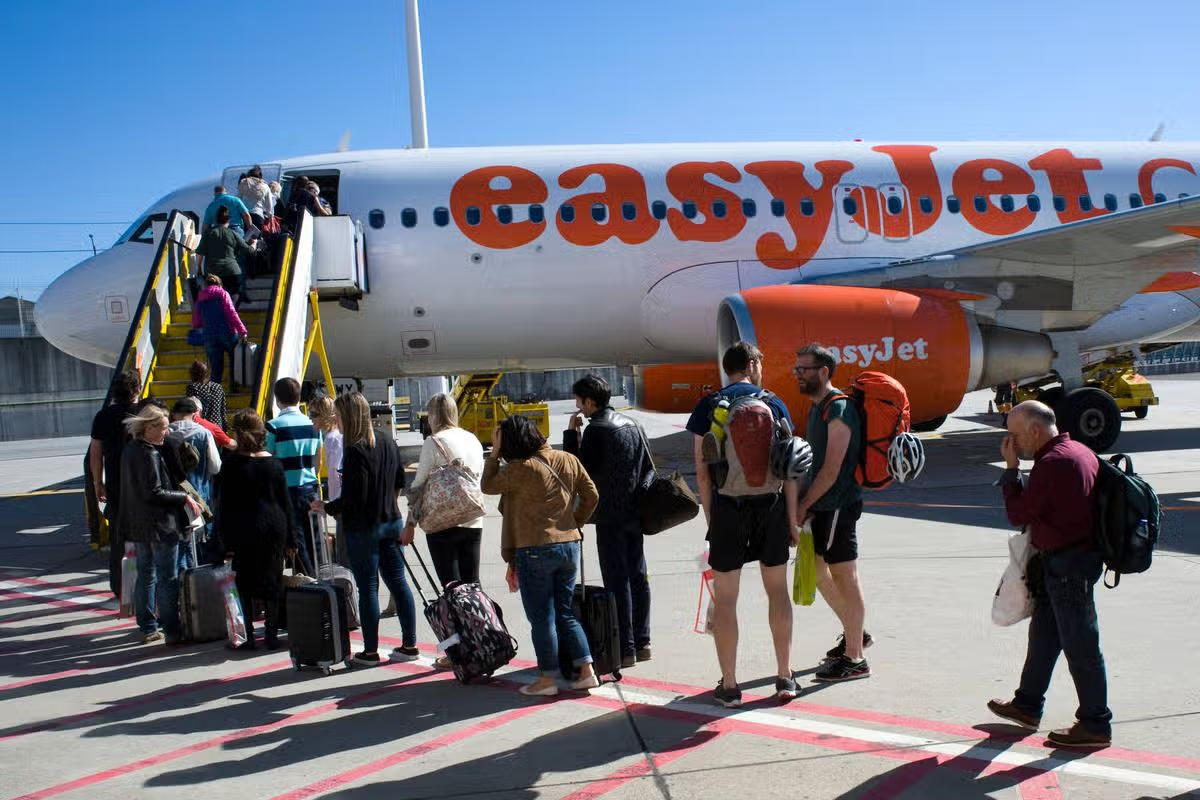
easyJet passengers should follow the rule (stock image)(Image: Peter Charlesworth, LightRocket via Getty Images)
If you’re set to travel soon, and you’re flying with easyJet, there are some crucial travel tips you need to come to terms with before you depart. This is information you don’t want to ignore, as failing to follow the guidelines could see you having to cough up extra cash during your journey.
Everyone wants to squeeze as much value as possible out of their holiday budget, so it pays to know exactly what baggage is included before you book. Many travellers tend to focus on the headline ticket price, but baggage fees can swiftly add a considerable sum to the total cost of a trip.
According to Ricky Durrance, travel expert at package holiday specialists Teletext Holidays, getting to grips with easyJet’s baggage rules can save you a tidy sum and help you make the most of your baggage allowance. The good news is that every easyJet passenger is allowed to bring one small bag on board without any extra charge.
However, that’s where things get complicated as, if your bag won’t fit beneath the seat in front of you, you’ll probably need to pay an additional fee.
Overhead locker space is restricted and frequently comes at a price, so it’s worth weighing up whether a checked bag represents better value. The easyJet website states: “Our low fares include one small cabin bag free of charge.
“Your bag can weigh up to 15kg, but we do ask that you’re able to lift and carry it yourself. You can purchase additional bags online when you make your booking or any time before you travel, via Manage bookings on our website or mobile app.
“Buying online is always cheaper than at the airport. Fees vary depending on the route selected, flight and time of booking.”
However, it’s crucial to remember that, if you wish to pay for a large cabin bag, charges can be steeper during busy travel periods. For couples and mates travelling together, it’s worth crunching the numbers to determine whether sharing a checked suitcase makes more financial sense before you book.
Things you may be overlooking
Managing your baggage allowance can be a right faff, and it becomes even trickier when your suitcase eats up a substantial chunk of the weight limit. easyJet’s large cabin bag allowance permits up to 15kg.
However, many hard-shell cabin cases tip the scales at between 3.5kg and 4.5kg when empty, meaning the usable space for clothes and other belongings can end up being considerably less than anticipated.
You may find yourself with as little as 10.5kg available for packing, which can disappear remarkably quickly. In contrast, a shared 23kg checked bag using a similarly weighted case still leaves upwards of 18.5kg free for packing, which can make a world of difference.
Ricky added: “It’s also worth knowing that booking your baggage allowance sooner rather than later can help save you money.”
easyJet’s baggage fees tend to be cheaper when added at the point of booking rather than closer to the departure date. For those booking a package holiday rather than directly through the airline, it’s worth checking this as early as possible, ideally at the time of booking.
When airlines levy extra charges for every kilogram and each bag, careful planning of your luggage before you travel is absolutely crucial, according to Ricky.
A customer claimed they had been told different things by Jet2 staff
Jet2 has clarified its baggage rules(Image: Getty)
Jet2 has stepped in to clear up confusion over its baggage policy. The update came after a query from a passenger with a group booking.
The traveller sought clarification as their reservation included two adults and a six-month-old infant. They explained: “Told we get two extra carry ons such as a buggy and travel cot that will be checked into the hold at the gate.” They mentioned they had two 22kg suitcases and recalled being informed on a previous Jet2 holiday that they were entitled to “an extra 10kg for the baby”.
According to guidance on the Jet2 website for bookings with children, passengers receive “an extra 10kg allowance for infants” and can also take “up to two items per child or infant free of charge”.
State Pensioners to face major tax change
Differing messages
The customer’s query was whether the additional 10kg could be combined with one of the 22kg cases, creating a 32kg allowance. They said they had received contradictory information on this issue on their last trip with Jet2.
The passenger said: “On the way out with you we were told it’s fine to have a 32kg case (22kg + the 10kg). On the way back we were told the 10kg should be a separate small checked case.
“Please can you clarify which it is and what the rules are because on our last holiday with you we were told different things.” Jet2 responded to settle the matter: “The additional 10kg is applied to one adult’s baggage, allowing for a total of one bag at 32kg and one bag at 22kg.”
Extra items free of charge
When it comes to the two additional items you’re permitted to bring without charge, these may include:
A collapsible pushchair, pram or buggy
A car seat or booster seat
A baby carrier
A travel cot.
Each item must not exceed 32kg in weight. Should you bring any further items or anything beyond this weight limit, the standard excess baggage charges will apply.
The Autorità Garante della Concorrenza e del Mercato (AGCM), Italy’s antitrust authority, announced on Tuesday that it opened a formal probe into easyJet Airline Company Limited over alleged unfair commercial practices.
ADVERTISEMENT
ADVERTISEMENT
The case centres on how the carrier structures and presents baggage fees on its website and mobile app, with the regulator alleging that passengers were routinely given a distorted picture of what they were actually paying.
According to the AGCM, easyJet’s platform set bundled checked baggage and sports equipment for round trips as the automatic default, presenting only an overall average price for the service, even when customers had no intention of purchasing it for both legs of their journey.
The regulator contends that anyone wishing to add luggage for one leg only was forced to interrupt the booking process to override this setting, a step most consumers would be unlikely to notice or navigate.
The investigation will assess whether easyJet’s booking system created unclear pricing conditions and limited consumers’ ability to make fully informed choices.
At the time of writing, easyJet has not publicly commented on the case.
Italy’s AGCM previous actions
This is not the first time easyJet has appeared before Italian authorities.
In May 2021, the AGCM imposed a €2.8 million fine on the airline alongside Ryanair and Volotea, after all three failed to offer cash reimbursements for flights cancelled when Italy lifted its COVID-19 travel restrictions, issuing vouchers instead.
EasyJet appealed, but the Lazio Regional Administrative Court in Rome rejected the challenge in February 2025.
The AGCM has shown no hesitation in pursuing the sector more broadly.
In December 2025, it fined Ryanair €255 million for abusing its dominant position in air travel to and from Italy.
The Italian authority concluded the carrier had deployed an “elaborate strategy” to obstruct travel agencies from purchasing its flights, including through facial-recognition checks, payment blocks and mass account deletions, a ruling Ryanair immediately vowed to appeal.