The Democratic Republic of Congo is expecting to receive ‘third-country’ deportees after a deal with the US. Some people are unhappy with the deal, arguing that conflict and insecurity make life difficult enough without the added consequences of more arrivals.
The “Harry Potter” team did not need a divination expert to know its cast would encounter some “unpleasant and aggressive behavior.”
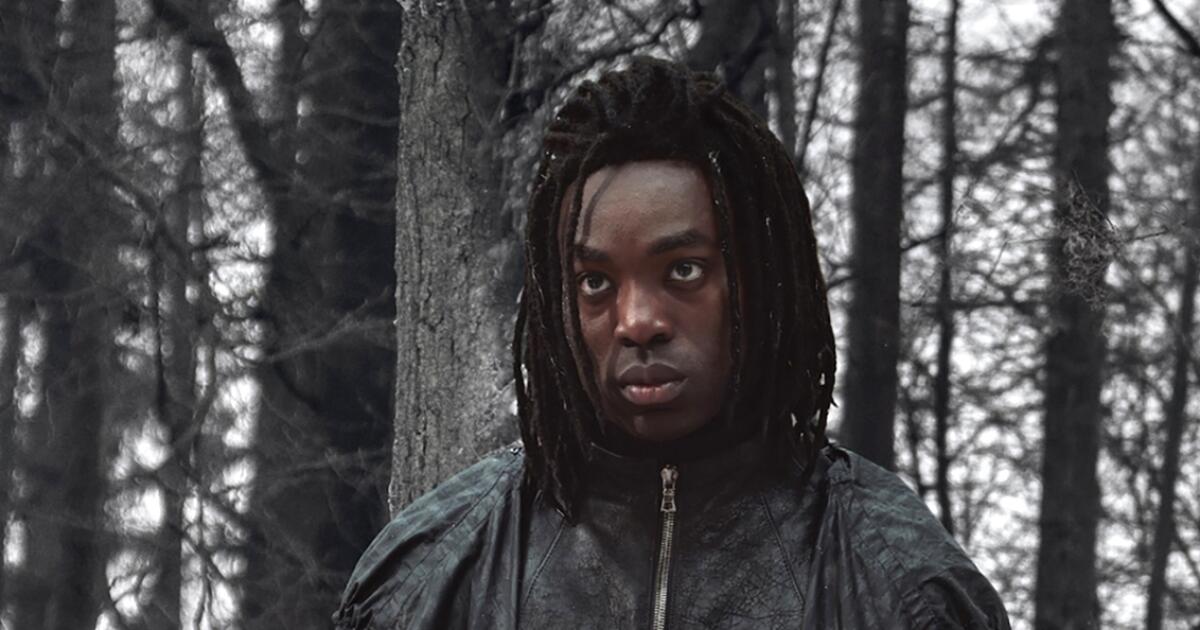
HBO boss Casey Bloys told multiple outlets this week that the network had taken precautions anticipating the vitriol the “Harry Potter and the Philosopher’s Stone” actors would face. Ghanian-English actor Paapa Essiedu recently spoke out about the racist abuse and death threats he has received since the announcement that he had been cast as potions professor Severus Snape.
“With all actors on any kind of big IP shows — and this is obviously one of those where you’ve got, you know, passionate fans, people with a lot of opinions — it can get scary in places,” Bloys told Variety in an interview published Tuesday. “So for any show like that, we anticipated it and tried to have training, you know, best practices in terms of social media and how to handle it. And obviously we’ve got a serious security team.”
Essiedu, who is portraying the enigmatic but ultimately heroic Hogwarts professor first brought to life by Alan Rickman in the original “Harry Potter” films, has opened up about the racist abuse he has received from those who believe a Black man should not be playing the fictional wizard.
“I’ve been told, ‘Quit or I’ll murder you,’” he said in an interview with the Times of London. “The reality is that if I look at Instagram, I will see somebody saying, ‘I’m going to come to your house and kill you.’”
“[N]obody should have to encounter this for doing their job … And I’d be lying if I said it doesn’t affect me emotionally,” Essiedu added.
This is not the first time that fans of J.K. Rowling’s Wizarding World novels expressed outrage over the casting of a Black actor in an adaptation. There was a similar outcry in 2016 when Noma Dumezweni was cast to play Hermione Granger in the original London production of “Harry Potter and the Cursed Child.”
Bloys also told Deadline in an interview published Wednesday that they had “anticipated there would be a lot of interest in all of [the actors], and interest can tip over into more unpleasant and aggressive behavior.”
“We talked to them about what to expect, what to expect on social media and how we handle it, but any kind of security that’s needed is an unfortunate aspect of doing IP shows,” he said. “We just try to be mindful and monitor it.”
Essiedu also told the Times of London that “the [racist] abuse fuels” him.
“[It] makes me more passionate about making this character my own, because I think of how I felt as a kid,” he said. “I would imagine myself at Hogwarts on broomsticks, and the idea that a kid like me can see themselves represented in that world? That’s motivation to not be intimidated by someone saying they’d rather I died instead of doing work I’m going to be really proud of.”
Four weeks into the war on Iran, the White House continues to confuse the public and the press with constant pivots and contradictions.
Now the administration faces even more pressure as many of its own supporters have started to turn against it. This war has split up the MAGA movement, with an intriguing debate currently happening outside the mainstream and in the midst of their own media sphere.
Contributors: Jamal Abdi – President, National Iranian American Council Jude Russo – Managing editor, The American Conservative Ben Lorber – Senior research analyst, Political Research Associates
On our radar
This week, the Israeli parliament approved the first vote on a bill that introduces a mandatory death penalty by hanging. This applies to any Palestinian convicted of killing Israelis in attacks defined as “terrorism” or motivated by “hatred”. Ryan Kohls reports on how this bill has been promoted in the media.
Memes, trash talk and AI – the online war between Washington and Tehran
The propaganda war in the ongoing war on Iran has taken a new form.
Beyond the traditional tactics, both the US and Iran are increasingly using memes and trash-talk mockery of the adversary through AI-driven animations, designed with virality in mind. We look at the strategies behind the different messaging coming out of Washington, Tel Aviv and Tehran.
Featuring: Meredith Clark – Professor, University Of North Carolina Roger Stahl – Documentarian and author, Militainment, Inc. Marc Owen Jones – Associate professor, Northwestern University In Qatar
FORMER glamour model Katie Price has sparked mystery as her new travel business venture has been shut down just two weeks after its launch amid backlash.
The 47-year-old had created a “Katie Price Travels” Instagram page, trying to recruit agents for InteleTravel under the brand Travel Smarter Group.
Sign up for the Showbiz newsletter
Thank you!
Katie Price appears to have shut down her new travel venture just two weeks after it was launchedCredit: GettyKatie was spotted advertising for new travel agents as she appeared to set up her business venture alongside Danielle LloydCredit: The Travel Smarter Group
Travel Smarter Group “co-founded” by Danielle, promises travel perks, training and financial protection but does not include clear details of its host agency.
The podcast host received a slew of backlash from the travel industry, who branded the venture a “gimmick” and a “slap in the face.”
Katie was most notably called out by Inspire Europe chief executive Lisa Henning.
She criticised the star’s move and accused her of bringing down the industry name amid the ongoing war in the Middle East.
Lisa wrote, as reported by Travel Weekly: “I very rarely comment publicly on things like this. But seeing this today is a step too far.
“For the past 12 days I have worked non-stop, 24/7, supporting our clients and our agents through the disruption affecting Dubai and other destinations.
“I’ve seen agents in tears because they care so much about their clients and are genuinely worried about what’s happening.
Katie was slammed by Inspire Europe chief executive Lisa who dubbed her business a ‘gimmick’ and ‘slap in the face’ amid the ongoing war in the Middle EastCredit: Splash
“To see promotions suggesting that you can simply ‘earn money from travel’ with a glossy campaign featuring Katie Price and Danielle Lloyd — positioning the role of a travel agent as something you do casually around other commitments — honestly feels like a huge mockery of our industry.
“This isn’t a side hustle. This isn’t a gimmick. And it certainly isn’t ‘easy money while you travel’.”
Lisa continued: ” Seeing this kind of messaging feels like a real slap in the face to the thousands of dedicated agents who work tirelessly behind the scenes every single day.
“Well done and thank you to all of those who continue to give our industry a good name by doing this job ‘properly’. Always book with a ‘real travel agent’.”
Following the negative response, the model appears to have now deleted her travel page on Instagram.
Katie’s PA has responded to the remarks, according to Travel Gossip.
“Katie has never stated that she personally books travel. She is simply sharing this platform with others to help people become independent travel agents and create an additional income – whether that be part-time or full-time.
“All agents within the community receive full training and are committed to supporting their clients.”
She added: “Katie was simply advertising an opportunity call.”
Katie’s PA responded to the comments claiming the star was simply advertising an ‘opportunity call,’ according to Travel GossipCredit: Getty
ANASTACIA Kingsnorth has been a queen of social media since starting her YouTube Channel aged 11 – but now a fierce backlash is threatening her empire.
The Brit content creator, 25, has ventured into podcast hosting, has written her own book and been the face of many ad campaigns.
Sign up for the Showbiz newsletter
Thank you!
Anastacia Kingsnorth has faced huge backlash following her latest ad collaborationCredit: tiktok/@anastasiakingsnorthShe used AI to create a short clip promoting German brand Air UpCredit: tiktok/@anastasiakingsnorthFans have called out the fact she seemingly used AI – which is not environmentally friendlyCredit: tiktok/@anastasiakingsnorthThe 25-year-old rocketed to fame on YouTube aged 11Credit: Getty
Her height meant she could scoop up a pink water bottle branded with the Air Up logo before she took a sip.
The slurp appeared to transport her into both a new location – the roof of Buckingham Palace – and a new denim pinstripe outfit.
She wrapped the clip by visiting locations including St Paul’s Cathedral and Big Ben.
Yet on TikTok, her followers have alleged she has used AI to create the scenes – and claimed the technology goes against Air Up’s environmentally friendly credentials.
Criticisms came from two angles – the nature of content creation as a creative process, and also for AI using huge volumes of water, seemingly going against green principles.
The Sun has gone to Anastacia’s rep for comment.
Fans have claimed Anastacia, whose content focusses on lifestyle, leisure and beauty, has abandoned the “creative process” with her latest venture.
One TikTok user, who works in marketing, ranted: “Honestly, I am not happy about it.
“And I don’t think a lot of people are, judging by the comments on the video”.
The Influencer Insider – Get all the gossip on all your favourite online stars
Want to know more about the influencer who faked cancer? Read all about Brittany Miller and her sham career here.
We have all the inside gossip about Ladbaby mum’s incredible weight loss here.
And talking of weight loss, we know all about what is going on with B&M queen Becki Jones, which you can read up on here.
If health influencers are your thing, then read this on the man behind Tonic Health and his dubious claims here.
She added: “It really cuts down on what content creation really is.
“If you work in marketing like myself you will know that this is totally wrong.
“The whole point of content creation is creative process”.
Fans of Anastacia, who has previously collaborated with ITV bosses for a Love Island promotion, continued to take to the comments in fury.
One simply posted: “Who’s idea was this?? Omg”.
A second mused: “I do like some of their content, but Ana and her family don’t seem hugely aware or maybe even that bothered by environmental issues unfortunately. (a LOT of consumption etc!)”.
A third added: “The funny part about it is , the ad is for a refillable water bottle (to try and tackle plastic waste etc) but then it the ad is literally AI!! you couldn’t write it honestly”.
A fourth mused: “The hypocrisy of these ‘influencers’ is gross tbh”.
“I’m surprised the brand approved it to be honest…says a lot about them too! I think being aware of the environmental impact AI has is important too”.
And another user surmised: “For me its the context of the ad being for a refillable water bottle while using AI which uses tons of water. It is a little ironic”.
Campaigners have previously flagged the significant carbon, energy and water use that AI requires.
Previously, Sasha Luccioni, climate lead at AI company Hugging Face told The Guardian: “What I’m worried about is that we’re deploying AI in such a way that we don’t have a good idea of the energy use.
“We’re essentially operating on the hypothesis that it’s not a problem – or that if it is a problem it will somehow be solved – instead of getting ahead of it.”
While Anastacia has posted the video to her Instagram grid, the brand is yet to feature it on their page.
Others have called out the fact AI could take away from her ‘creative’ process as a content creatorCredit: tiktok/@anastasiakingsnorthShe is rumoured to have a net worth of more than £1millionCredit: Getty