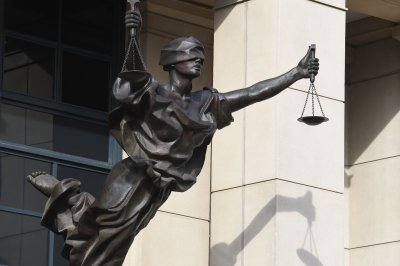
March 13 (UPI) — An Australian businessman was found guilty Friday of selling information to two people believed to be Chinese spies.
Alexander Csergo, 59, was convicted of reckless foreign interference in a Sydney court after compiling reports for two people he knew as Ken and Evelyn in Shanghai between 2021 and 2023. He faces up to 15 years in prison.
The prosecution alleged that Csergo believed they worked for Chinese intelligence agency the Ministry of State Security and acted recklessly about knowing if it would support Chinese intelligence.
His defense team argued he had only given them information that was publicly available and he included made-up quotes from people he pretended to have interviewed, including former Australian Prime Minister Kevin Rudd.
Csergo ran a business in Shanghai and was first approached by a woman on LinkedIn who said she was working for a think tank. She introduced him to Ken and Evelyn and said they had businesses in Australia, New Zealand and Canada.
Their meetings, in which he exchanged reports for cash, happened in empty cafes and restaurants, prosecutors said.
Ken and Evelyn gave Csergo a “shopping list” of subjects they wanted reports on. After he returned to Australia in 2023, officials searched his Bondi home and found the list, but Csergo said he never used that list.
Ken and Evelyn asked for reports about lithium mining, the German government, the Quadrilateral Security Dialogue and AUKUS, a trilateral security partnership between Australia, Britain and the United States. The Quad alliance is a non-military partnership between the United States, India, Japan and Australia.
Csergo’s defense attorney, Iain Todd, argued that there is no evidence he provided anyone with any national secrets.
The prosecution said the biggest value to Ken and Evelyn were Csergo’s contacts, but Todd said Csergo had no real contacts.
“He never spoke to interviewees. He lied about that,” Todd said. “He never gave access to anyone because there was no one to give access to.”
Some of the information in the report on lithium mining was labeled “gibberish” by experts.
Prosecutors said he exchanged about 2,800 WeChat messages with Ken and developed a collegial relationship with him.
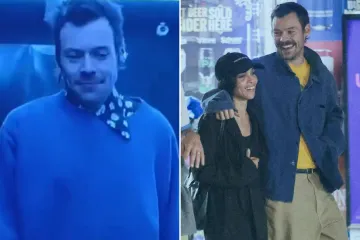
Harry Styles fans have noticed the pop star has taken on an Australian accentCredit: Apple MusicDuring a new interview with Zane Lowe, who is from New Zealand, Harry’s accent switches between his native English twang to slight American and Aussie tones
Looking back on the win, Harry said: “I think, you’re in this bubble of Grammys and stuff. So, you’re like rehearsing and stuff and everything is leading up to that moment.
“I remember writing myself a letter the night before that I said I would open the day afterwards.
“I wanted to, like, I don’t know, catch myself. With whatever happened, If I was disappointed or if I was feeling myself too much.”
Fans were quick to notice the Australian twang in Harry’s accent, as one wrote on X: “One of my colleagues said Harry Styles sounds like he’s got an Australian accent on the Zane Lowe interview and now I’m watching it I can’t unhear it”.
“why does harry styles sound so Australian atm?” asked another.
The noticeable change in accent comes four years after Harry admitted his accent was “all over the place”.
“I think it’s a little bit all over the place because I’m from up north and then I’ve lived in London for 10 years and I’ve spent a lot of time in America and stuff.
“So, I think when I’m with Americans, they don’t think I sound American at all. And then sometimes I think when I’m with English people they expect me to sound American – I don’t think I do, but maybe I pick up a couple bits along the way.”
He added: “But I try and translate for whoever I’m with.”
With his tour kicking off in May, Harry will be doing much more globe-trotting with performances in the US, Australia, the UK, the Netherlands Brazil and Mexico.
Born and raised in Worcestershire, Harry has previously admitted that his accent is now ‘all over the place’Credit: GettySome fans say they even noticed the accent switch during Harry’s recent performances in ManchesterCredit: Getty
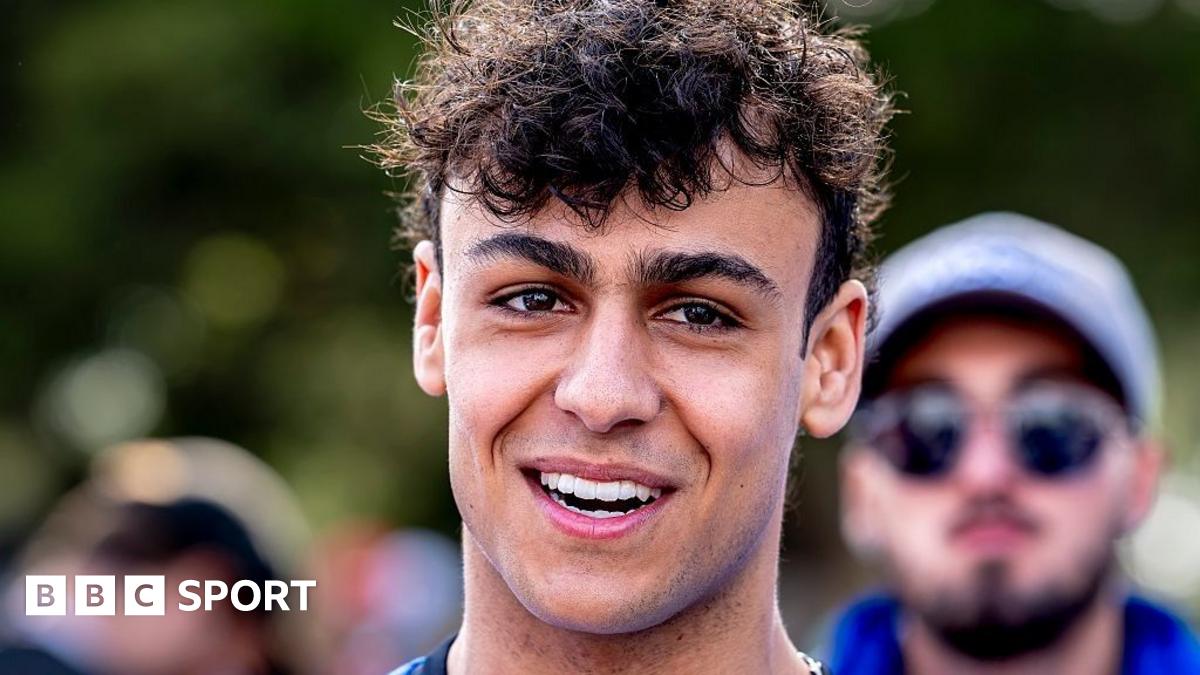
Arvid Lindblad said he “showed people a bit of what I am here to do” after finishing eighth on his Formula 1 debut at the Australian Grand Prix.
The 18-year-old Racing Bulls driver, who become the youngest Briton to race in F1 on Sunday, qualified in ninth and briefly rose to third place on the first lap after a dramatic start to the season opener in Melbourne.
Lindblad’s top-10 finish means he enters the record books as the third youngest F1 points scorer at 18 years and seven months – behind Mercedes’ Kimi Antonelli and Red Bull’s four-time world champion Max Verstappen.
“When I was five years old, I had a dream and my dream was to be in Formula 1 and I am living my dream today,” he told Sky Sports.
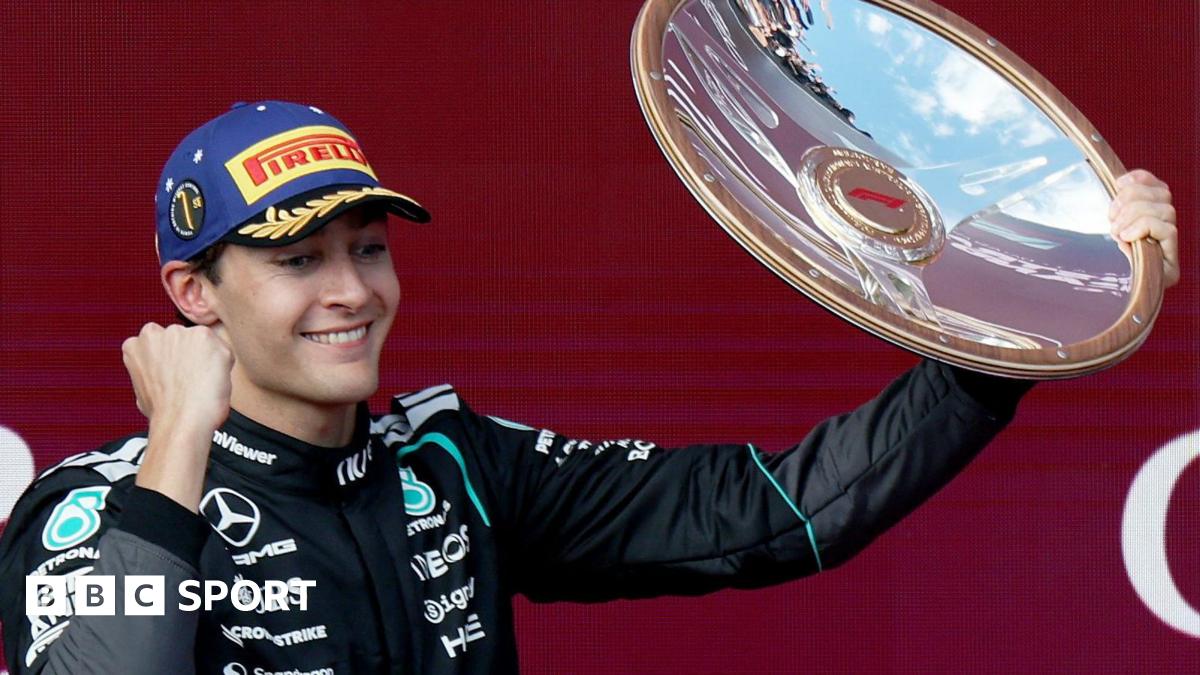
Russell’s pole position – 0.8 seconds clear of the fastest non-Mercedes car – had sent shockwaves through the paddock on Saturday but the race was initially much closer than qualifying.
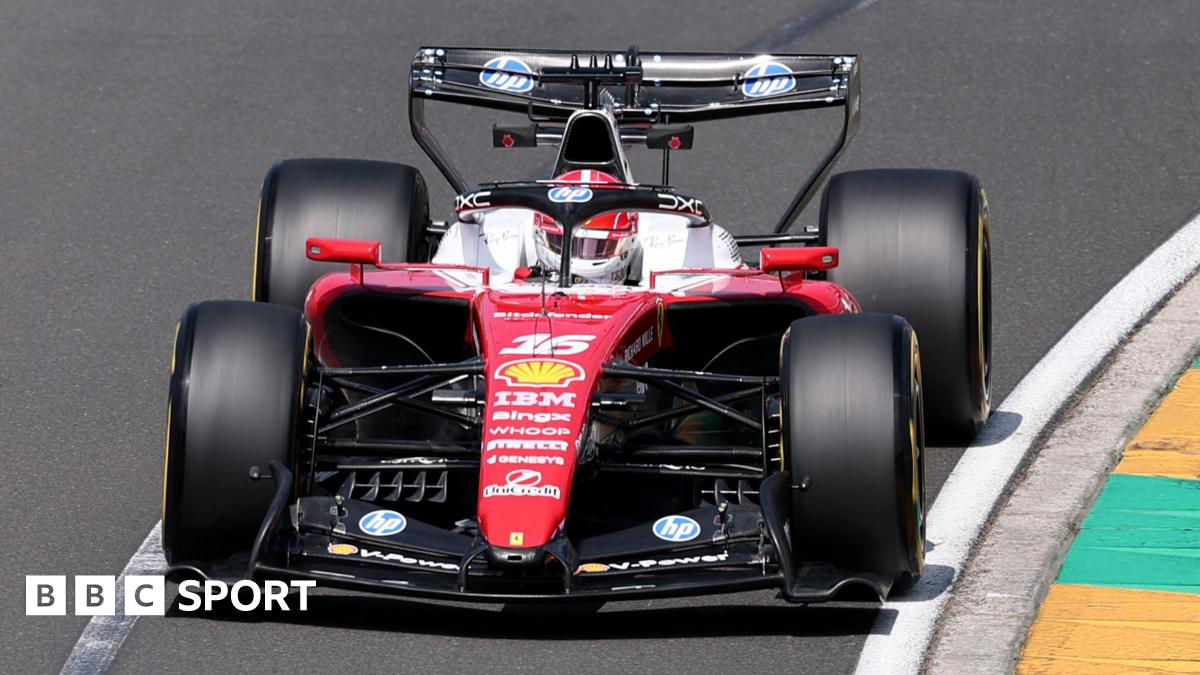
Both Ferrari drivers made their expected electric starts, and Leclerc vaulted from fourth on the grid to take the lead at the first corner.
Russell powered past the Ferrari on lap two between Turns 10 and 11 by using extra electrical energy.
But Leclerc was not to go down without a fight and drove past the Mercedes in a similar fashion on the run to Turn Nine on lap three.
Russell tracked Leclerc closely. He challenged for the lead into Turn One on lap nine only for the Ferrari driver to fend him off and leave Russell to fight to retain his position from Hamilton, who by now had joined the leading train of cars.
Antonelli, who had dropped to seventh at the start before fighting back past Norris, Lindblad and Isack Hadjar’s Red Bull, then joined them to make it four cars in the leading group after 10 laps, and they circulated together until Hadjar retired on lap 12.
The Frenchman, who had been running fifth, pulled off on the back straight, bringing out the virtual safety car, usually the trigger for teams to pit and benefit from the reduced time loss compared with pitting under racing conditions.
But while Russell and Antonelli pitted, Leclerc and Hamilton did not. Hamilton immediately questioned the call, saying over the radio: “At least one of us should have pitted.”
Instead, they ran long, sticking to their pre-race plan of a one-stop strategy.
By the time Leclerc pitted on lap 25, Russell was only five seconds behind him, and the Ferrari emerged 14 seconds adrift of the lead.
On fresher tyres, Leclerc might have been expected to narrow the gap to Russell, but he did not, and the fight at the front was over.
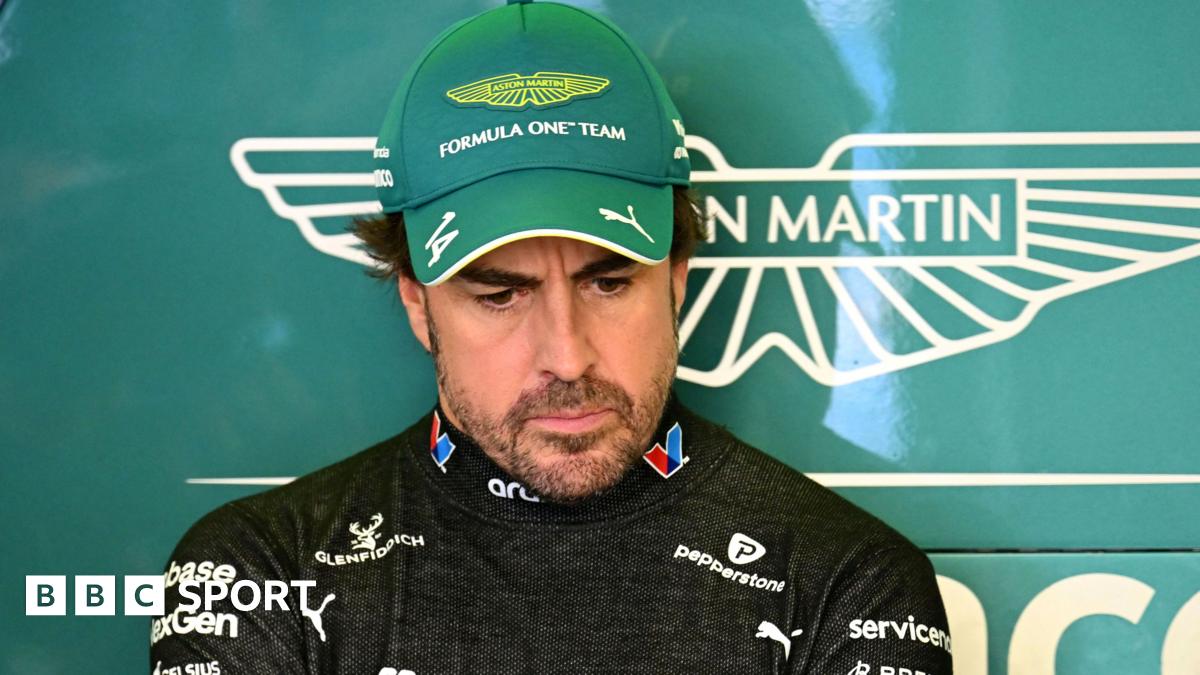
Team-mate Lance Stroll could not run at all on Saturday at Albert Park because of engine problems and will start last.
Alonso said: “The mechanics, they’ve been working flat out and changing power-units day and night, you know, the last six weeks. So, even on the other side of the garage, with Lance being so unlucky in FP3 and ‘quali’ with zero laps, when you go on track and you are in the mix with a few cars, it’s a little bit better than being dead last, as we were yesterday.
“Maybe that’s enough to ignite a little bit of motivation in everyone in the garage. That’s probably part of our job now as drivers, you know, to keep the morale of the team high in difficult moments.”
The team are still facing a difficult situation and may not finish Sunday’s race.
They have only two batteries left for their hybrid system, and none available at the Honda factory, so will have to run a cautious race to ensure they are even able to take part in the second grand prix of the season, in China next weekend.
“We are short on parts, there is no secrets on that,” Alonso said.
“China is next week, so hopefully we can do as many laps as possible, hopefully we can do nearly the whole race.
“But the first sign that there is something potentially wrong, we cannot risk running, running, running until we make some big damage and then we compromise next week, so we will have to be very flexible.
“We are one team, we cannot separate the two things. There is no secret that the main problem is the PU. We are down power and reliability. We didn’t manage many laps in the winter and now we are short on stock for the batteries, we cannot do many laps or we are short on parts. We need to fix the power-units and Aston Martin is trying to help as much as possible with Honda.”
Ferrari’s Charles Leclerc and Lewis Hamilton struck the first blow of the new Formula 1 era with first and second fastest times in opening practice at the Australian Grand Prix.
Leclerc replaced Hamilton in top spot with a late lap that moved him 0.469 seconds clear of the seven-time champion.
Until then, less than 0.1secs had separated Hamilton, Leclerc and Red Bull’s Max Verstappen.
Verstappen’s new team-mate Isack Hadjar was fourth fastest, 0.820secs off the pace, ahead of 18-year-old Briton Arvid Lindblad, making his debut for the Racing Bulls team.
Aston Martin, whose dire form has been in many ways the story of the new season so far, had a predictably difficult session.
Fernando Alonso was not able to run at all because of a problem with his Honda power-unit. Team-mate Lance Stroll managed just three laps before an engine problem was also discovered on his car.
Team principal Adrian Newey had stunned F1 on Thursday when he said that the vibrations from the Honda engine were so bad that Alonso felt unable to do more than 25 laps without risking permanent nerve damage in his hands.
But this appears to have been a different reliability issue for an engine that is well below the required standard in F1 following the introduction of new rules this season.
IT was in this very column that Delta Goodrem first revealed it was her dream to represent Australia at Eurovision.
Now, nine months later, she has been officially unveiled as the contest’s Aussie entry, with the Lost Without You singer firmly crediting Bizarre with making it happen.
Sign up for the Showbiz newsletter
Thank you!
It was in this very column that Delta Goodrem first revealed it was her dream to represent Australia at EurovisionDelta has been officially unveiled as the contest’s Aussie entry, with the Lost Without You singer firmly crediting Bizarre with making it happenCredit: Supplied
Speaking to our Jack, Delta said: “This is, literally verbatim, all your fault. It is all on you — you and Bizarre started this.
“Your article went back to the Aussies who were like, ‘Do you want to do this?’ So thank you. I have a big job to do.”
Delta will head to Vienna this May to compete with her song Eclipse and it ticks every box, with an infectiously camp chorus and a complex piano bridge.
A beaming Delta explained: “From your article, people started reaching out.
“Then one of the songwriters, Jonas Myrin, who I wrote the song with, took a screengrab of the article and sent it to me saying, ‘Delta, if you ever go to Eurovision, I want to write the song with you’.
“He’s in Sweden. Sure enough he flew to Australia when I said I was doing it. Even the first question I got asked when doing my first Australian interview was, ‘We heard it all started from an article from the UK,’ and yes, it did.”
It’s been three years since Australia last qualified for the live final, which adds to the pressure on Delta, who has sold eight million records worldwide.
“Of course I am nervous, but it’s so joyous and I am so excited to be a part of it,” she said.
“I can’t control what will happen. All I know is that I am honoured to represent Aus.
“I will fly the flag and give my heart and soul.
“Two of my greatest idols, who are part of the reason I am in music, Olivia Newton-John and Celine Dion, did Eurovision.
“I am grateful to be able to step into that.
“What an honour it is to be able to perform anywhere, let alone on the biggest stage in the world. I am excited.”
We Brits can’t vote for our own act, Look Mum No Computer (aka Sam Battle), whose entry Eins Zwei Drei is out on Friday, so Delta is hoping the British jury will give her our 12 points.
Explaining how it all fell into place, she said: “I had always said, ‘Oh, you know, when the time is right’. I always have an open heart to new things and being a coach on The Voice I celebrate all types of music. Then it all came into focus.”
Sam Battle, whose entry Eins Zwei Drei is out on FridayCredit: BBC/PADelta said: ‘Two of my greatest idols, who are part of the reason I am in music, Olivia Newton-John and Celine Dion, did Eurovision’Credit: Getty
Speaking about what people should expect when she competes at the second semi-final on May 14, Delta explained: “The staging is important, but you will have to wait and see.
“There is a high bar out there but I am enjoying the creativity of it. I love the out-of-the-box moments, but I also love past winners Loreen, Alexander Rybak and Mans Zelmerlow.”
This year’s competition has already been rocked by controversy with Iceland, Ireland, the Netherlands, Slovenia and Spain all pulling out due to Israel being allowed to take part in the contest, amid ongoing conflict in the Middle East.
But Delta is keen to use the platform to help bring people together and celebrate our common ground.
She said: “I am in music for unity and the healing spirit,” adding that she loves the sense of “togetherness” generated by music and song.
Delta added: “Eurovision has been going for 70 years and there is a reason everyone comes back, united in song.
“I am really looking forward to being united together. At my shows, that is what you want, too.
“My song is about one love and connection.”
You’ve got our votes, Delta.
DECEMBER 10 are playing a free O2 Presents . . . gig at the O2 Shepherd’s Bush Empire on April 8.
There will be 767 pairs of tickets available to O2 and Virgin Media broadband customers via a ballot, which will be open from March 9- 23 on the Priority app.
COMPASS TO GO THE COLE MILE
I TIPPED big things for Belfast pair Broken Compass after they released their debut single Storm in October.
Now the duo, Ben Dadidson and Allen Gordon have landed roles in Anything Goes at Belfast’s Grand Opera House.
Belfast pair Broken Compass Ben Dadidson and Allen GordonCredit: Supplied
Running from April 14-18, the show features songs from Cole Porter including I Get A Kick Out Of You.
While Allen has graced the stage at the venue before, it will be the first time for Ben, who previously toured with Westlife in boyband Most Wanted.
Ben told Bizarre: “This has been such a whirlwind, moving to Belfast and joining St Agnes Choral Society.
“Opening myself up to theatre as well as pop has been a dream come true.”
OASIS will feature on the new Help(2) War Child album with a standalone 7in single of Acquiesce, recorded live at Wembley last September, being included in the vinyl edition.
It will be a hidden track on the double CD version, and on streaming, when the charity record is out on Friday.
Arctic Monkeys, Olivia Rodrigo, Damon Albarn and Pulp will also feature.
RAYE SETS LIFE BOAT AFLOAT
RAYE will return to dance music on her upcoming album with a belting electro track called Life Boat.
The singer debuted the song at London’s O2 Arena on Sunday night and it features emotional lyrics against a euphoric chorus.
Raye will return to dance music on her upcoming album with a belting electro track called Life BoatCredit: Getty
In the verse, she sang: “Cry yourself an ocean, trying not to drown in it. Lord send me a lifeboat, something I can cling to.”
Then in the chorus she repeated: “I’m not giving up yet.”
Earlier in her career Raye had a string of dance hits including Bed, Prada, You Don’t Know Me and Secrets, so she knows a thing or two about releasing a banger.
And with her album, This Music May Contain Hope, out on March 27, there isn’t long to wait.
OH BUCKET! AL’S FOR HIGH JUMP
IF you thought it was funny watching Alan Carr take part in the challenges on Celebrity Traitors, his next show will see him jumping out of a plane.
He is shooting a travelogue called The F**k It List for Prime Video, which will see him and other comics taking on bucket list experiences, but it sounds like he’s drawn the short straw.
Alan Carr is shooting a travelogue called The F**k It List for Prime VideoCredit: Getty
Alan said: “I was sold this show about a bucket list. I thought I would be on the Orient Express and swimming with dolphins.”
Instead, he admitted on his Bottoms Up podcast: “I’m skydiving, bungee jumping and stroking a tarantula. I hate spiders.”
Thera’s so much promise
SHE’S the vocal powerhouse from Prague who, aged just 18, is already turning heads across Europe.
And as rising star Thera wraps up supporting Jason Derulo on his The Last Dance world tour, she opened up backstage about juggling school with breaking into the industry.
Thera opened up backstage about juggling school with breaking into the industry
The Czech singer, who first toured with Loreen, said: “I’ve gone through a lot that made me mature faster, which is why people are shocked I’m 18. “It doesn’t feel strange to me. Those experiences shaped who I am today and how I handle things and what I do.
“School has really helped me, even though it’s very stressful and chaotic at times.
“It’s almost forced me to be organised and have a system, which I feel has helped me in the music world.”
On tour it was the Les Twins, who also went on the road with Jason, who acted as her “big brothers”.
She added: “They’re role models, but also feel like family.”
Her biggest night yet was Prague’s O2 Arena on Sunday, where her whole family watched alongside 20,000 fans.
Australian Prime Minister Anthony Albanese was evacuated from his residence in Canberra for several hours Tuesday after a bomb threat was received by a U.S.-based performing arts group linked to China’s Falun Gong movement. File photo by Lukas Coch/EPA
Feb. 25 (UPI) — Australian police evacuated Prime Minister Anthony Albanese from his official residence in Canberra for several hours after a bomb hoax related to a classical Chinese dance and music troupe touring the country that is banned by Beijing.
The New York-based Shen Yun group was sent an email threat on Tuesday saying that explosives had been planted at The Lodge in the Australian capital and would be detonated unless the troupe pulled out of the tour, the BBC and Australia’s ABC News reported.
“Large quantities of nitroglycerine explosives have been placed around the Australian Prime Minister’s Lodge, located on Adelaide Avenue in the Deakin area of Canberra, Australia. If you insist on proceeding with the performance, then the Prime Minister’s Lodge will be blown into ruins and blood will flow like a river,” read the email.
The group is part of the Falun Gong spiritual movement, which is proscribed in China due to its opposition to the Chinese Communist Party, with the United States and other countries accusing Beijing of a brutal campaign of suppression to deprive its estimated 20 million adherents of their rights to freedom of religion and belief.
The government says the group is a dangerous cult.
Australian authorities confirmed only that they had dealt with an “alleged security incident” at Albanese’s home but that “nothing suspicious was located.”
Police said they evacuated Albanese to a safe location for several hours on Tuesday evening local time.
ABC News said there was no evidence the incident was in any way connected to the Chinese government, citing an anonymous Australian government source as saying a member of the local Chinese community opposed to Falun Gong could have been behind the incident.
The Queensland venue where Shen Yun’s tour was due to kick off on Wednesday evening was evacuated by police on Monday after an “unverified threat” linked to the group was made against the iconic Home of the Arts complex in Surfers Paradise, 45 miles southeast of Brisbane.
A search of the site by officers found no suspicious items, police said, but Experience Gold Coast said it had tightened security for the Shen Yun performances being staged at the venue through Sunday.
“We will continue to monitor the situation closely and adjust arrangements if required as the safety of our team and patrons is always our first priority,” a spokesperson said in a statement.
A similar bomb-hoax incident in February 2025 forced the evacuation of the John F. Kennedy Center for the Performing Arts in Washington, D.C., on the day Shen Yun was due to open a 12-date tour, starting at the Kennedy Center.
A spokesperson for the Kennedy Center told The Washington Post that the threat was targeted at Shen Yun performances.
In 2024, Chinese residents of Los Angeles John Chen and Lin Feng were sentenced to 20 months and 16 months in prison for working for the Chinese government to get Shen Yun’s tax exempt status in the United States revoked by paying bribes to an undercover agent posing as an IRS staffer.
In a wiretap transcript submitted by the Justice Department, Chen is quoted as stating the bribes were to facilitate China’s aim of “toppl[ing]” Falun Gong, while in another Chen and Feng discuss orders from a Chinese government official, including deleting the instructions to avoid detection as well as procedures to notify the official if their bribery scheme failed.
A DOJ news release at the time said the Chinese Communist Party designates Falun Gong as one of the “Five Poisons,” or one of the top five threats to its rule, with Falun Gong adherents routinely subjected to “repressive and punitive measures”, including imprisonment.
However, Shen Yun has reputational issues around alleged abusive practices and behavior by the group.
In November 2024, a lawsuit was launched alleging forced labor and trafficking, while dozens of performers described being badly treated by the group in interviews given to the New York Times.
Shun Yen denies any wrongdoing, alleging the lawsuit and complaints were part of an ongoing, politically driven smear campaign by the Chinese government.
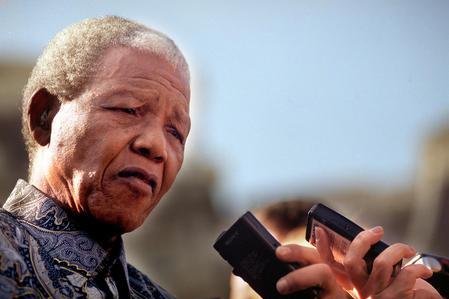
Former South African president Nelson Mandela speaks to reporters outside of the White House in Washington on October 21, 1999. Mandela was famously released from prison in South Africa on February 11, 1990. Photo by Joel Rennich/UPI | License Photo