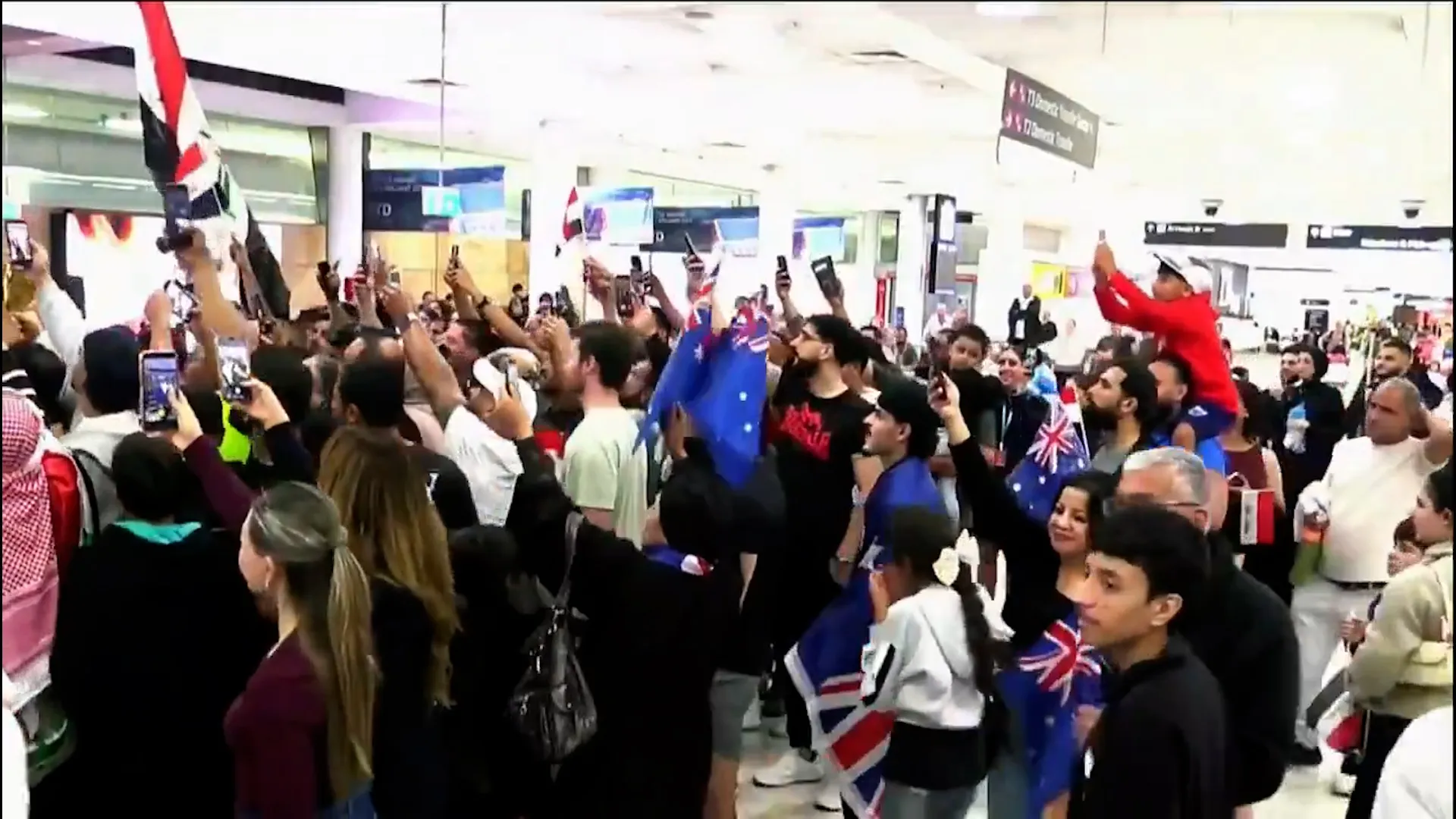
Iraq’s head coach Graham Arnold couldn’t help but pause, smile and wave to the hundreds of Iraqi football fans gathered at Sydney airport to welcome back the Australian after he guided the Arab team to their first FIFA World Cup in 40 years.
Arnold was given a rapturous welcome as the jubilant Iraqis sang, danced to the beat of drums and tambourines, held aloft placards proclaiming their love for the coach and chanted his name as the 62-year-old walked out of the airport on Sunday night.
Recommended Stories
list of 4 itemsend of list
Fans waved Iraqi and Australian flags as they chanted “Arnie, Arnie, Arnie, oi, oi, oi” while Arnold spoke to local media following his return from Mexico, where his team won the intercontinental playoff final against Bolivia on Tuesday.
The 2-1 victory came during a tumultuous time in Iraq, engulfed in the Middle East conflict that left several players stranded in various parts of the region and threatened to sabotage their campaign for the playoff tournament.
However, Iraq overcame a logistical nightmare and strong South American opposition to mark their return to the global showpiece event for the first time since 1986.
The Lions of Mesopotamia also returned home to a hero’s welcome. Thousands of fans lined the streets in central Baghdad as the players, sitting atop a double-decker bus, celebrated with their compatriots on Saturday.
Arnold was not part of those celebrations but the Iraqi community in Australia ensured the coach didn’t feel left out.
“Crazy, crazy. I didn’t expect this here in Australia. Obviously in Iraq. But it’s incredible,” Arnold told Australian broadcaster SBS as he stood in front of the fans in the terminal.
“First, I want to apologise to everyone in Iraq that I couldn’t go back there to celebrate due to the airspace shutdown.
“Seeing this here is amazing. Thank you very much.
“I’m just very, very proud of the players and what they did, making many Iraqis happy is very important and that was the main thing.”
Reports in Australian media said local Iraqi football fans found out about Arnold’s return flight from Iraq’s Football Association (IFA) and decided to greet him at the airport.
Fans could be seen chanting “One, one, one, Arnold number one” as the coach took in the scenes around him.
Arnold, who formerly coached Australia, took charge of the Iraqi team in May and led them to three wins, three draws and two losses in their World Cup qualification campaign.
The results took Iraq to the fifth and final round of the Asian Football Confederation’s (AFC) qualification competition, where they beat the United Arab Emirates 3-2 on aggregate in November and secured a place in the FIFA playoff tournament.
Earlier in March, the former Australian international player urged FIFA to postpone Iraq’s playoff final fixture or find a way to ensure the players reached Mexico well ahead of the match as they grappled with the consequences of the US-Israeli war on Iran.
His plea was heard as FIFA arranged a charter flight for the Iraqi squad and support staff, who reached Mexico just over a week ahead of the March 31 final.
Following their win, Arnold was effusive in his praise of the Iraqi players who participated in the match while the war raged on.
“Everything that is going on in the Middle East made it a little bit harder,” Arnold said after the play-off final.
“I banned social media since the day we got here,” he added. “I did not want them to think of what is going on in the Middle East because they had to focus on the job we had here.”
Arnold said qualifying for the World Cup was a major privilege for the players. “Iraq has nothing to lose.”
Iraq will be placed in one of the toughest groups at the World Cup. Their opponents in Group I will be France, Norway and Senegal.
The Middle East team will face Norway in their opening game on June 16 in Boston. Their second fixture will be against 2018 champions France on June 22 in Philadelphia and their final group game against Senegal is four days later in Toronto, Canada.
British content creator Luke Tweddle has discussed whether life is better in Australia than in the UK after moving there three years ago and he said the answer wasn’t ‘simple’
“The rugby community in Canberra is deeply passionate and holds a great appreciation for international touring teams, as we witnessed last year when the biggest GIO Stadium Canberra rugby crowd in 20 years packed the venue for the Brumbies’ thrilling match against the British & Irish Lions,” said Rugby Australia CEO Phil Waugh.
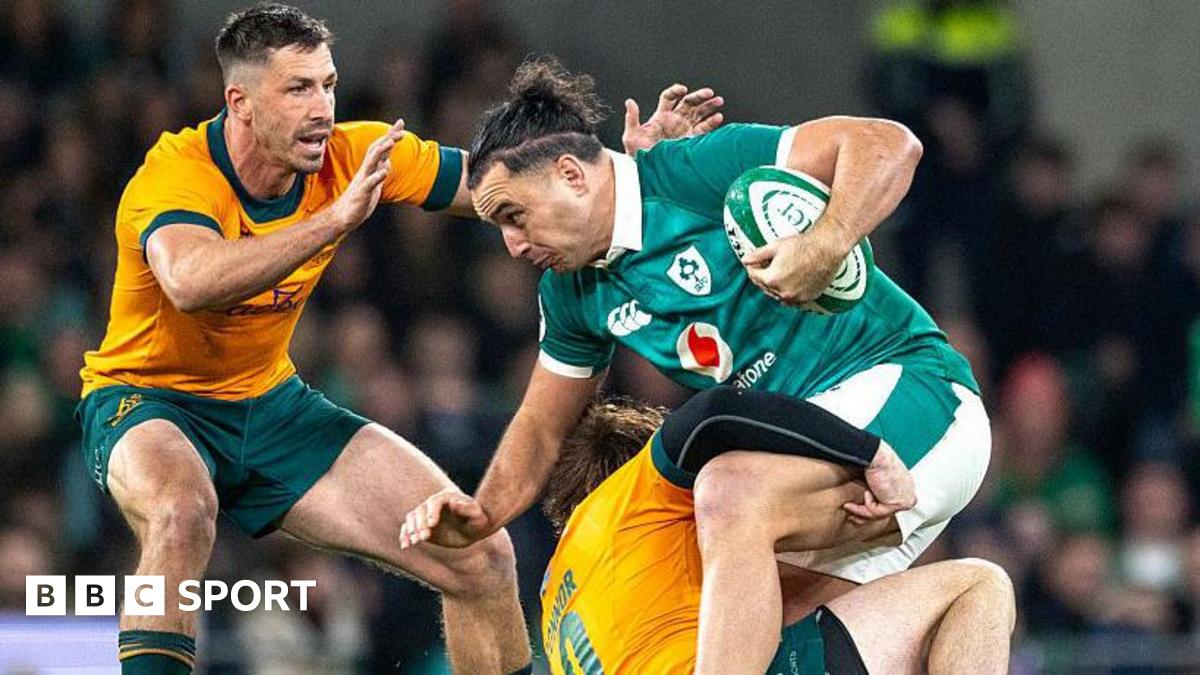
“The Wallabies are looking forward to playing their first Test match at GIO Stadium Canberra in 10 years – and their first ever against Ireland in Canberra – as both teams finalise their preparations for the eagerly-anticipated home Rugby World Cup.
“On behalf of Rugby Australia, I would like to extend my sincere thanks to ACT [Australian Capital Territory] Chief Minister Andrew Barr and Deputy Chief Minister Yvette Berry for their support of Test rugby during an incredibly exciting period for the game in our country.”
The sides will meet beforehand as Ireland make the trip to Sydney to begin their Nations Championship summer tour on Saturday, 4 July, before facing Japan one week later and rounding off in Auckland against New Zealand on 18 July.
Numerous viewers expressed their disapproval on social media about how the disputes shouldn’t have been permitted to occur and both Gia and Brook have since spoken out and publicly apologised.
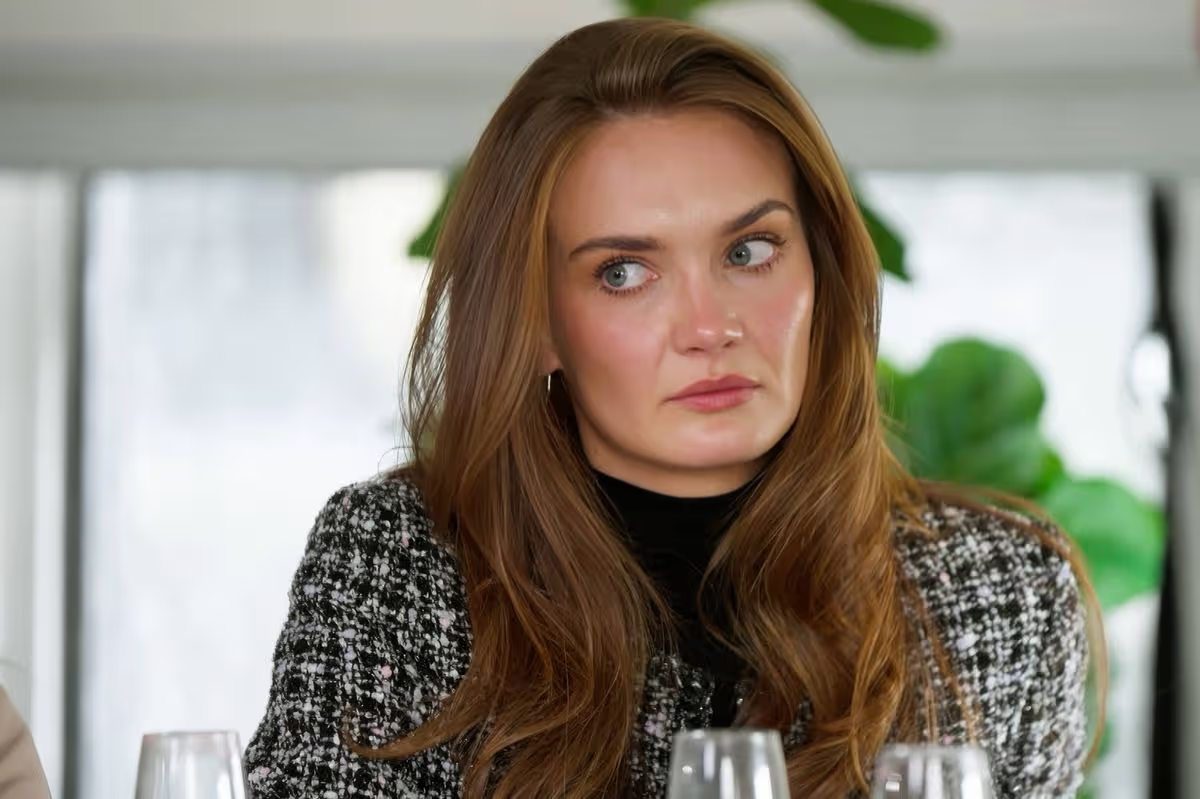
In response to the backlash, Brook accessed her Instagram page to release a statement, writing: “Last night and the past few episodes of Married at First Sight was an extremely difficult watch.
“What you saw last night was the worst version of myself and unfortunately Alissa and Stella were on the receiving end of that.”, reports OK!.
“I want to firstly sincerely apologise to Alissa and Stella for my words and the hurt that I have caused.
“My actions were appalling and not at all a reflection of the kindness and respect that you both deserve and I hope in time you can forgive me. I am truly sorry.
“To other couples in the experiment and audience who had to witness my behaviour, I am deeply sorry. Bullying should never be condoned and I am extremely embarrassed by the way that I acted.”
Brook continued to say that the dinner party was filmed in August last year and she’s since had time to reflect and learn from her actions.
She concluded: “This behaviour is not a reflection of who I am at my core and I hope that Australia will one day see this. I know trust is rebuilt through actions, not just words and I will continue doing the work to be better.
“I’m looking forward to moving on with my life with more kindness and hope that those watching will choose to do the same.”
Gia took to her Instagram Stories to express regret, penning: “I could speak on why I didn’t connect with Alissa, or things that were said and done to me, but two wrongs don’t make a right.
” Engaging in a cycle of dragging one another to deflect from our own behaviour is not something I want to participate in.
“I’m choosing to focus on growth. On being a better person. On working on my privately and being a present, loving mum. And a supportive partner. That is where my energy is going.
“To Alissa and Stella, I am genuinely sorry for the way I handled myself that night, and throughout the experiment. Regardless of what was said or heard, my delivery and my behaviour was appalling.
“I apologise for the disgusting language and the way I made you both feel. I am deeply sorry for the hurt I have caused you both, and I wish you nothing but peace moving forward.”
Married at First Sight Australia airs Monday to Thursday on E4 at 7.30pm
While the Commission hailed the Australia agreement as a new geostrategic win, EU farmers continue to express deep discontent stemming from the Mercosur deal.
In practice, the backlash around the agreement with Argentina, Brazil, Paraguay and Uruguay has done little to shift the Commission’s dual approach in its negotiating line. On the one hand, the commission kept making concessions on entry-level or mid-range farm goods such as beef, while on the other hand, it pushed for market access for high value-added exports —like wine, Geographical Indications (GI) and cars— with mixed results.
“The EU has all the assets to be an agri-food power,” Luc Vernet, from the export-focused brussels think tank Farm Europe, told Euronews, adding: “We should develop a broader strategy beyond high value-added products, covering all sectors and all levels of quality, because the European model delivers exceptional quality not just in luxury products.”
Yet the opposition to the Latin America deal — which triggered a legal challenge suspending its ratification — crystallised among EU farmers over fears of unfair competition from meat imports.
The Mercosur agreement granted quotas of 99,000 tonnes of beef per year, 25,000 tonnes of pork and 188,000 tonnes of poultry. Despite conditions added to new quotas in the Australia deal, EU farmers complain of imports piling up across successive agreements.
Concessions made on beef
Over eight years of talks with Canberra—the world’s second-largest beef exporter—Australia pushed hard for greater access for beef and sheep meat. Tensions intensified in 2023, when negotiations broke down after the EU rejected Australia’s demand for 40,000 tonnes of beef per year, offering no more than 30,000 tonnes instead.
The final deal agreed Tuesday allows 30,600 tonnes of beef annually into the EU. For sheep and goat meat, Brussels accepted a 25,000-tonne duty-free quota, while sugar was limited to 35,000 tonnes of raw cane for refining and rice to 8,500 tonnes a year.
However, perhaps drawing lessons from Mercosur, Brussels imposed multiple conditions on the quotas. Beef imports, which will have to be from grass-fed cattle, will be phased in over 10 years, sheep meat over 7 years, and rice over 5 years. Sugar will also be subject to certification under a private sustainability scheme.
Safeguard clauses, allowing both sides to react to market disruption, will apply for seven years – but are extended for sensitive farm goods : 15 years for beef, 12 for sheep and 10 for rice.
But a farmers’ representative told Euronews there were serious doubts about the effectiveness of the safeguard mechanisms: “Our experience in general with safeguards is that they are extremely difficult to activate because the burden of the proof is on us, farmers.”
The offensive agenda of the Commission
By contrast, agriculture was far less contentious in the India negotiations, where New Delhi itself resisted opening its market due to domestic farm sensitivities, particularly in dairy. EU sensitive products were largely excluded.
But wine featured prominently on Brussels’ offensive agenda, with Indian tariffs cut from 150% to 20% for premium wines and 30% for mid-range products over seven years. Tariffs for cars will also fall from 110% to 10% but under a quota of 250,000 vehicles a year after a decade – by which point Chinese manufacturers have great chances to have strengthened their position.
In negotiations with Australia, the EU again sought greater access for its wine but encountered strong opposition from domestic producers. In the end, the deal protects more than 1,600 EU wine GIs, plus over 50 new ones from 12 member states.
On Prosecco, Australian producers will still be allowed to use the term domestically to designate a grey grape variety, provided it is linked to Australian GI, with Canberra agreeing to stop exporting such wines after 10 years.
The EU also secured protection for 165 agri-food GIs and 231 spirit drink GIs. But it failed to remove Australia’s luxury car tax, securing instead preferential treatment for EU electric vehicles. But Brussels won improved access to critical raw materials – a key EU demand, that may have lead to more concessions on meat.
France’s sports minister has called the International Olympic Committee’s decision to introduce genetic testing for women’s events a “step backwards”, warning it raises major ethical, legal and scientific concerns, while US President Donald Trump praised the IOC’s new policy.
France “takes note” of the decision to require athletes to undergo testing based on the SRY gene, but opposes any broad use of genetic screening, Marina Ferrari said in a statement on Friday.
Recommended Stories
list of 4 itemsend of list
“On behalf of the French government, I wish to express our deep concern regarding this decision,” she said. “We oppose a generalisation of genetic testing that raises numerous ethical, legal and medical questions, particularly in light of French bioethics legislation.”
The IOC said on Thursday that only biological female athletes would be eligible for women’s events from the Los Angeles 2028 Olympics onwards, following a one-time gene test designed to identify male sex development. The move essentially bars transgender athletes from competing in the female category.
The rule is in line with an executive order by Trump from February 2025 that banned transgender athletes from competing in girls’ and women’s sports.
“Congratulations to the International Olympic Committee on their decision to ban Men from Women’s Sports,” Trump said late on Thursday on the Truth Social platform.
“This is only happening because of my powerful Executive Order, standing up for Women and Girls!”
However, Ferrari said that: “These tests, introduced in 1967, were discontinued in 1999 due to strong reservations within the scientific community regarding their relevance. France regrets this step backwards.”
She added that the policy risked undermining equality by specifically targeting women.
“This decision raises major concerns, as it specifically targets women by introducing a distinction that undermines the principle of equality,” she said.
Ferrari also warned that the approach failed to reflect biological diversity, particularly among intersex individuals.
“It defines the female sex without taking into account the biological specificities of intersex individuals, whose sexual characteristics present natural variations, leading to a reductive and potentially stigmatising approach,” she said.
New Zealand’s Olympic Committee said on Friday that the IOC policy would bring greater “clarity” and “fairness” to future Games.
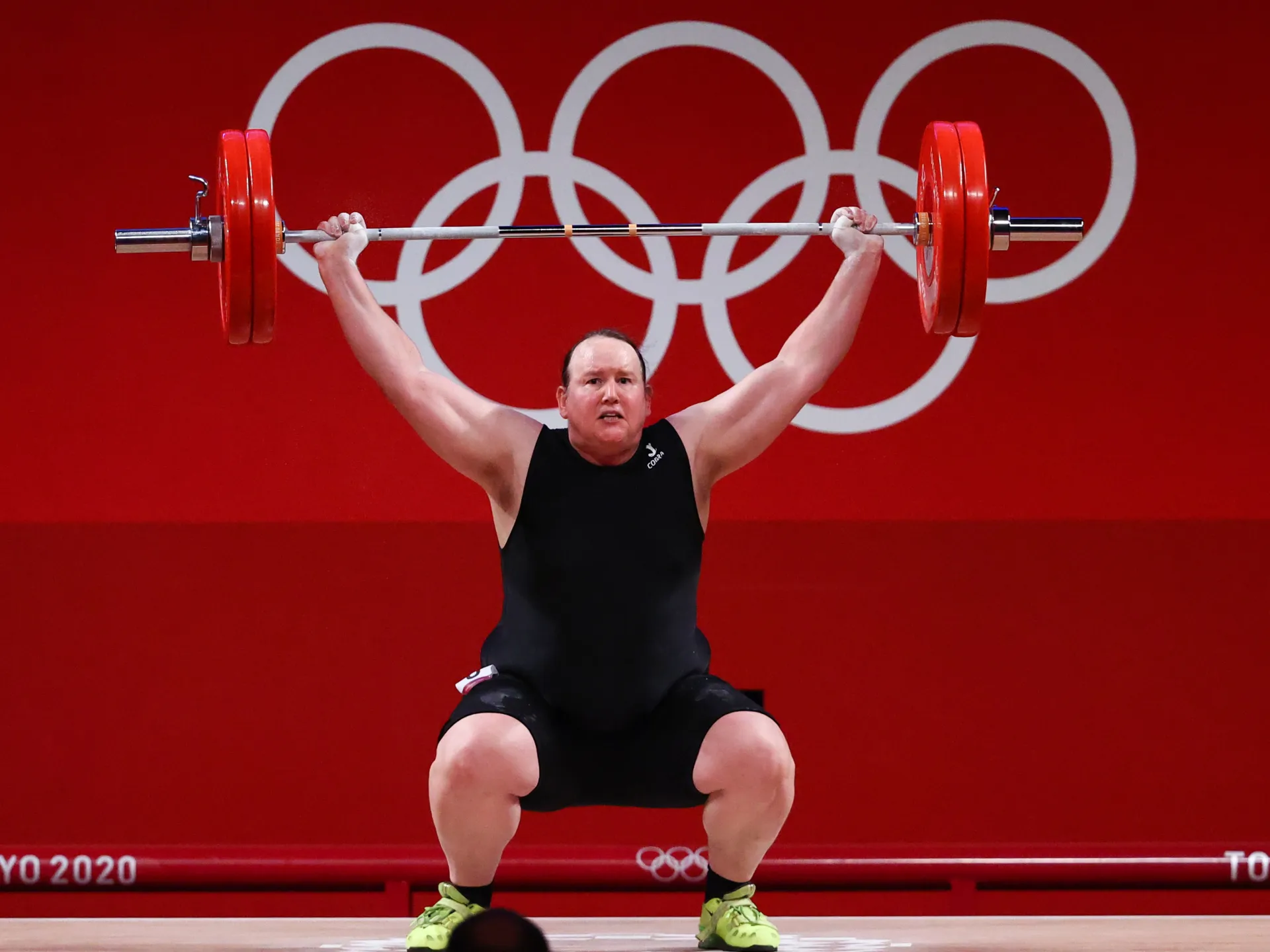
New Zealand weightlifter Laurel Hubbard became the first openly transgender woman to compete in the Olympics at Tokyo in 2021.
NZOC chief executive Nicki Nicol said the organisation recognised the “extensive consultation and expert input that has informed this policy”, particularly from athletes.
She said it would bring “greater clarity, consistency and fairness to eligibility for the female category at the Olympic level”.
“This is a complex and sensitive area that directly affects people, not just policy,” she added.
After competing in 2021, Hubbard, who failed in all of her lifting attempts in Tokyo, said she was aware of the controversy surrounding her participation.
Friday’s NZOC comments did not refer to Hubbard, who has kept a very low profile since her games appearance.
Also reacting to Thursday’s IOC announcement, Australian Olympic Committee president Ian Chesterman said the IOC had comprehensively investigated what he called a “complex issue”.
“Without doubt, this is a challenging and complex subject, and at the AOC we approach it with empathy and understanding.”
He added: “This decision provides clarity for elite female athletes who compete at the highest level and demonstrates a commitment to fairness, safety and integrity in Olympic competition, all of which are fundamental principles of the Olympic Movement.
“As the IOC has stated, at the highest level of sport, the smallest margins can determine outcomes, and clarity around eligibility is critical for female athletes to continue to compete on a level playing field.”
Married At First Sight Australia groom Steve sparked controversy during Intimacy Week
Rebecca was in tears minutes into the latest episode(Image: Channel 4)
Fans tuning into the latest episode of Married At First Sight Australia branded one groom a ‘complete clown’ after his wife departed the programme mere minutes into the instalment.
Audiences in the UK are presently enjoying the newest series of the reality dating programme from Australia, where couples encounter each other for the very first time at the altar and develop their relationship from that point onwards. The outcomes thus far are predominantly mixed to say the least.
This week has witnessed the couples participating in intimacy week. As part of this, expert Alessandra Rampolla recently encouraged all the brides to embrace their ultimate fantasy with their partner.
However, not every evening proceeded according to plan. This was particularly true for Rebecca and Steve. Rebecca was shown browsing at an adult shop and purchased some outfits she believed her husband might appreciate seeing her model, reports OK!.
Regrettably for her, he displayed considerable apathy towards the prospect of her dressing up for him. In his own words, he stated: “I didn’t say don’t do it. I just said it would make me very uncomfortable if it happens.”
He subsequently dismissed the notion that Rebecca’s sole motivation for participating in the programme was to find love. He asserted that he ‘was sure’ there must be alternative reasons and suggested people don’t disclose everything in their audition tapes.
The situation only deteriorated for him as he joked to expert Alessandra that he didn’t have an earpiece in his ear to provide him with the correct responses. Misinterpreting his comment as a jab at her, she retorted sharply: “Honestly the lack of respect you are showing me here to someone who is trying to help you is appalling. Tread lightly. I don’t take to this well.”
Other grooms even confessed to the camera that they believed he was acting selfishly, with one suggesting that a 50 year old man should know how to address a woman. Steve insisted he wasn’t referring directly to Alessandra, but she questioned who else his remark could be aimed at.
Later, during his on-camera interview with producers, he admitted that he hadn’t absorbed much from his conversation with Alessandra, largely dismissing everything that transpired. He also mentioned that he chose to withdraw and felt there was a lot of contradiction in the room.
Viewers at home were quick to react to the latest developments. One person commenting on the MAFS subreddit said: “So what are Steve’s ulterior motives for being here? if he’s so sure there has to be some.” Another viewer remarked: “Ugh.. Steve is becoming more and more awful…”
While Rebecca initially left the flat, she returned after spending a night apart, but then it was soon Steve’s turn to depart. After making no headway following his session with Rebecca, he packed up and left.
Viewers were left astonished by his decision, with one commenting: “Rebecca deserves a lot better. Cos what is this “so much for me” business. What exactly is she doing?? I’m so confused.”
Another responded: “Goodness Steve is diabolical and such a liar, he hasn’t tried.” While someone else pleaded: “Steve should just leave, he clearly doesn’t fancy or want Rebecca. Stop wasting everyone’s time.”
Meanwhile, one fan questioned on X: “Did Steve realise he was on a tv programme?! #mafsau”, another posted: “If Steve is SO conservative, why even apply for this show, knowing what it’s all about #mafsau” while a different audience member added: “Did Steve not watch #MAFSAU before he applied?”
Married at First Sight Australia continues tomorrow at 7.30pm on E4 and streaming on Channel 4.
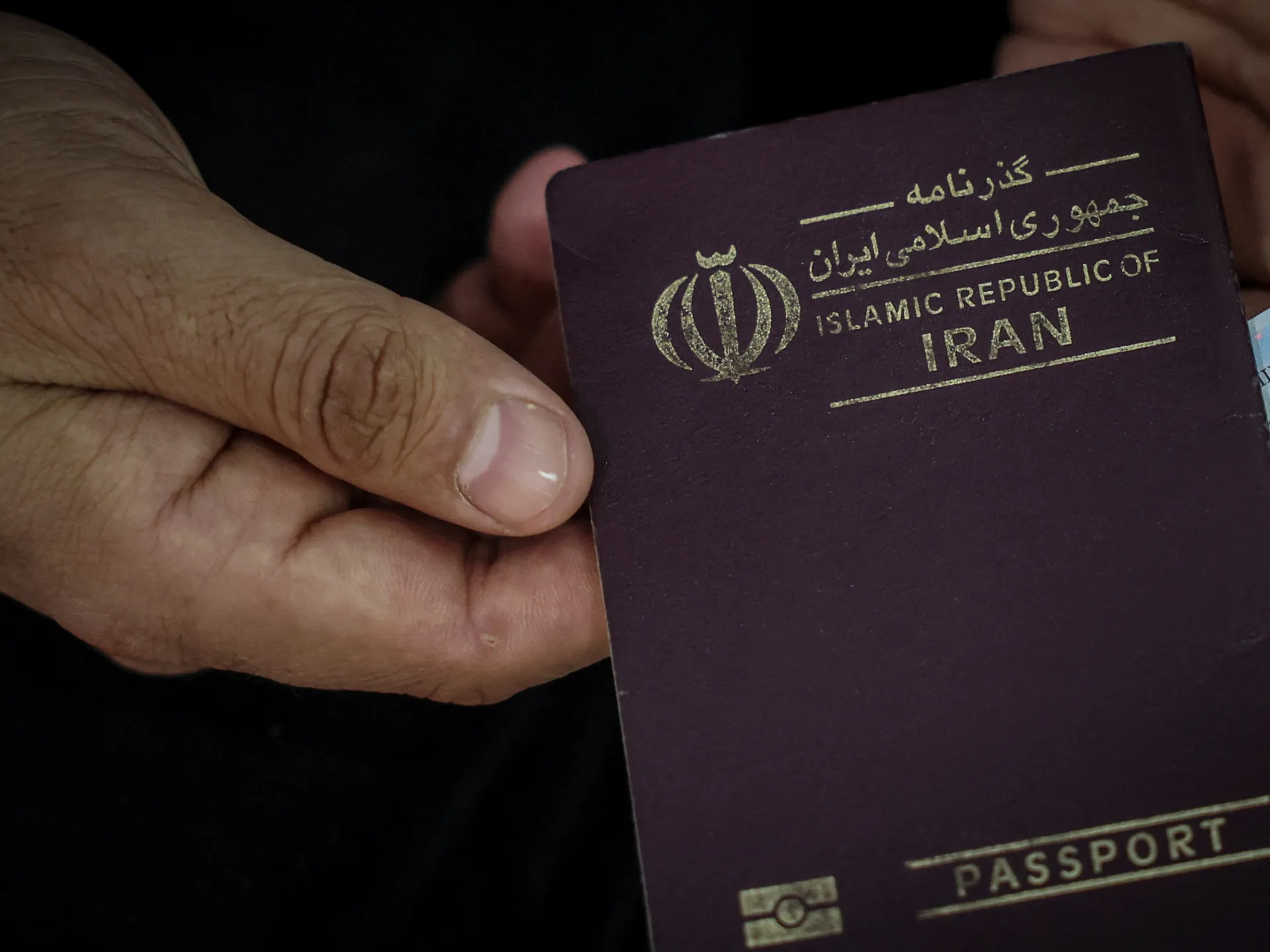
Home Affairs Department said decision to ban Iranian visitors amid the war on Iran was in Australia’s ‘national interest’.
Australia has temporarily banned visitors from Iran, claiming that the United States-Israeli war on the country has increased the risk that Iranian passport holders could refuse or be unable to fly home once their short-term visitor visas expire.
Australia’s Department of Home Affairs said on Wednesday that the restrictions on Iranian visitors would be for a period of six months, describing the move as in the “national interest amid rapidly changing global conditions”.
Recommended Stories
list of 4 itemsend of list
“The conflict in Iran has increased the risk that some temporary visa holders may be unable or unlikely to depart Australia when their visas expire,” the Home Affairs Department said in a statement.
“This measure gives the Government time to assess the situation properly, while still allowing flexibility in limited cases,” it said.
The ban applies to Iranian citizens who are currently outside Australia – even if they have an Australian visitor visa for tourism or work.
Exceptions to the ban include Iranian citizens already in Australia, those currently in transit to Australia, spouses, de facto partners, or dependent children of Australian citizens, and those with permanent visas.
Exemptions will also be considered on a case-by-case basis, such as for the parents of Australian citizens, the department said.
Home Affairs Minister Tony Burke said decisions on who can remain permanently in Australia should be made by the government and should not be the “random consequence of who booked a holiday”.
“There are many visitor visas which were issued before the conflict in Iran that may not have been issued if they were applied for now,” he said.
Burke added that the government is monitoring developments and “will adjust settings as required to ensure Australia’s migration system remains orderly, fair and sustainable”.
The Sydney-based Asylum Seekers Centre said in a post on social media that the ban on Iranian visitors was the result of a “shameful new law” rushed through Australia’s parliament that “threatens the very foundations of Australia’s onshore protection programme” for those seeking safety.
“For years, politicians have been stressing the importance of seeking safety through so-called legal routes,” the group said.
“Now, in the face of an international humanitarian crisis, the government is slamming the door shut and blocking a key pathway for people seeking safety today and in the future,” it said.
Earlier this month, US President Donald Trump called on Australian Prime Minister Anthony Albanese to give the Iranian women’s football team asylum in Australia amid fears that players may face repercussions at home for failing to sing their national anthem before a Women’s Asian Cup 2026 match in Queensland.
Albanese later told reporters that five team members had sought assistance and “were safely located” by Australian authorities.
In total, seven players and officials were granted asylum in Australia, though five team members later reversed their decision to stay in Australia and chose to return home.
The Iranian team had arrived in Australia to participate in the football tournament before the US and Israel launched their attack on Iran on February 28.
According to Australian government figures up to 2024, more than 90,000 Australian residents were born in Iran, and large diaspora communities are present in major cities such as Sydney and Melbourne.
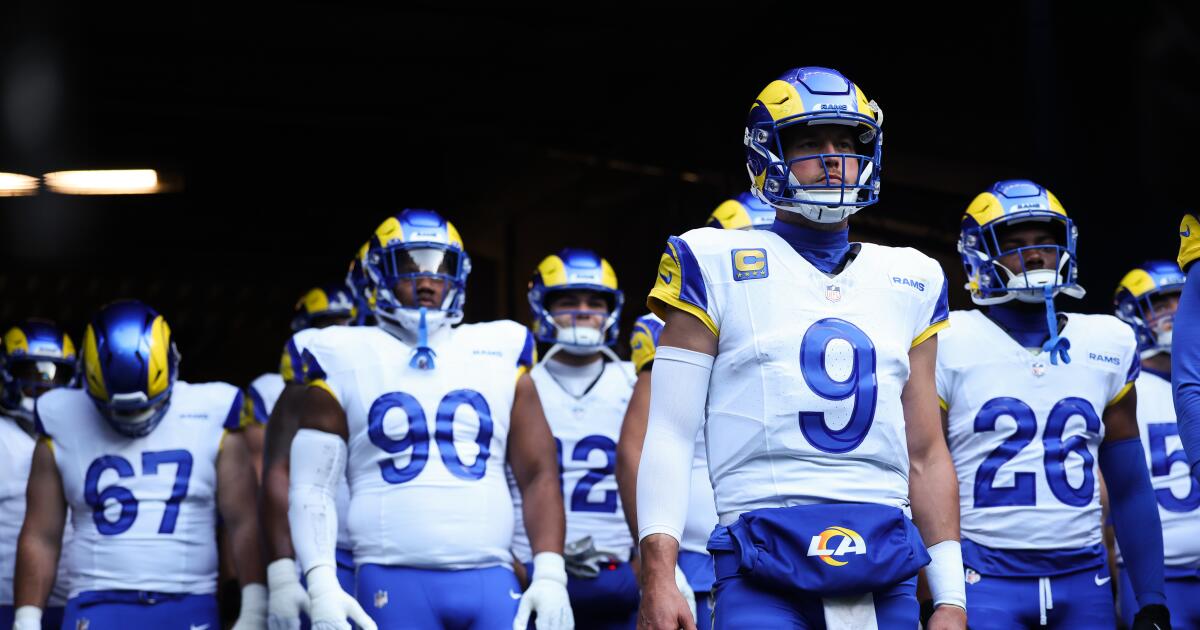
The NFL announced on Wednesday that the Rams will play the San Francisco 49ers on Friday, Sept. 11, at the Melbourne Cricket Ground at 10:35 a.m. Australian Eastern Time. Because of the time difference, fans in the United States will see the game on Thursday, Sept. 10 at 5:35 p.m. PDT.
The league did not announce a broadcast or streaming partner.
It will be the first regular-season NFL game to be played in Australia, where the Rams, Seattle Seahawks, Las Vegas Raiders and Philadelphia Eagles hold global marketing rights.
According to the NFL, “hospitality packages” will be available for purchase through Ticketmaster on April 6, tickets on April 7.
Also on Wednesday, the Rams announced that they re-signed running back Ronnie Rivers to a one-year contract.
Rivers, 27, has been a dependable backup and special teams contributor during his four seasons with the Rams. Last season, he played in 11 games and rushed for 46 yards in nine carries.
European Commission President Ursula von der Leyen on Tuesday sealed a free-trade agreement with Australian Prime Minister Anthony Albanese, slashing tariffs on most EU goods and farm exports.
ADVERTISEMENT
ADVERTISEMENT
The deal marks another win for Brussels as it races to diversify trade ties and lock in strategic partners amid rising global tensions.
The pact will save the EU €1 billion a year in duties, the Commission said, with exports projected to climb as much as 33% over the next decade.
Agriculture proved a flashpoint, with EU farmers already pushing back against the Mercosur trade agreement and a legal challenge from MEPs threatening ratification.
Tariffs will eventually fall to zero on products including cheese (over three years), wine, some fruit and vegetables, chocolate and processed foods.
On the toughest issues — beef and sheep, which sank talks in 2023 — Australia agreed to quotas of 30,600 and 25,000 tonnes a year, respectively.
A safeguard mechanism will allow the EU to shield sensitive sectors if a surge in Australian imports harms the bloc’s market.
Beyond agriculture, the agreement opens access to Australia’s critical raw materials, including aluminium, lithium and manganese.
Brussels also failed to scrap Australia’s luxury car tax. Instead, 75% of EU electric vehicles will be exempt.
The deal is a geostrategic push
The Commission expects strong export gains in key sectors, including dairy (up to 48%), motor vehicles (52%) and chemicals (20%).
Brussels has prioritized the deal as it builds partnerships in the Indo-Pacific, where China’s influence has become central. A security and defence partnership with Canberra was also announced Tuesday.
“The EU and Australia may be geographically far apart but we couldn’t be closer in terms of how we see the world,” von der Leyen said, adding: “With these dynamic new partnerships on security and defence, as well as trade, we are moving even closer together.”
Since Donald Trump returned to power in 2025, trade agreements have taken on sharper geostrategic weight for the EU as it seeks new markets.
In 2025, Brussels struck deals with Mexico, Switzerland and Indonesia. The Mercosur pact was also signed earlier this year and will be provisionally applied from 1 May despite a European Parliament legal challenge.
More could follow. Talks are ongoing with the Philippines, Thailand, Malaysia, the United Arab Emirates, and countries in Eastern and Southern Africa, von der Leyen told EU ambassadors on 9 March.
Meta, YouTube and Snapchat are already under scrutiny for risks they pose for young people. Now they are facing another hurdle in their home state.
California lawmakers are considering legislation to restrict social media use for teens and children under 16 years old. Assemblymember Josh Lowenthal (D-Long Beach) and others introduced a bipartisan bill that would bar social media platforms from allowing users under 16 years old from creating or maintaining accounts.
The legislation comes amid mounting concerns about how social networks impact the mental health of young people. Anxiety among parents and lawmakers has heightened as platforms and AI chatbots become more intertwined with people’s daily life.
Last month, tech executives, including Meta’s chief executive and co-founder Mark Zuckerberg, testified in a landmark trial in Los Angeles over a lawsuit that alleges social media is addictive and harms children.
The trial centers on whether tech companies such as Instagram, which is owned by Meta, and YouTube can be held liable for allegedly promoting a harmful product and addicting users to their platforms.
California has passed legislation before aimed at making social media platforms and chatbots safer but faced pushback from tech industry groups that have sued to stop new laws from taking effect. Tech companies are have responded by releasing more parental controls and restrictions for young users.
Other countries have been moving forward with restrictions on social media. Last year, Australia barred children under 16 years old from having social media accounts.
TechNet, whose members include Meta and Google, said in a statement that it hasn’t taken a position on the California bill but doesn’t believe a ban will effectively achieve the Legislature’s goal’s.
“We support balanced, evidence-based solutions that strengthen protections for young people, equip parents with meaningful tools, and ensure accountability across platforms. Our companies have made significant investments in teen safety and parental controls, and we remain committed to building on that progress,” said Robert Boykin, TechNet Executive Director for California and the Southwest in a statement.
The use of social media by young people has divided tech executives.
Pinterest Chief Executive Bill Ready wrote in an op-ed in TIME published on Friday that governments should follow Australia’s lead and ban social media for kids under 16 years old if tech companies don’t prioritize safety.
“Social media, as it’s configured today, is not safe for young people under 16,” he said.”Instead, it’s been designed to maximize view time, keeping kids glued to a screen with little regard for their well-being.”
Lowenthal’s bill cited social media’s dangers such as “exposure to harmful content, compulsive use patterns, exploitation, and adverse impacts on mental health and well-being.”
“Existing age-based restrictions that rely primarily on user self-attestation have proven ineffective and place an unreasonable burden on children and families rather than on the entities that design, operate, and profit from social media platforms,” the bill states.
A spokesman for Lowenthal didn’t immediately respond to a request for comment.
The Foreign Office has updated travel guidance warning Brits heading to popular destinations to expect potential flight disruptions
Nicola Roy Multimedia content creator
13:02, 21 Mar 2026
Australia is a hugely popular destination for Brits(Image: Kieran Stone via Getty Images)
This week, British travellers heading overseas have been warned that their holiday plans could face disruption.
The UK Foreign, Commonwealth and Development Office (FCDO), the government department responsible for issuing travel guidance to ensure public safety, has updated its advice for several popular tourist destinations.
The continuing tensions in the Middle East mean delays and other forms of disruption are likely, even for those not travelling to the region itself. The FCDO sometimes advises against all travel to particular countries.
While these destinations don’t fall into that bracket, it remains crucial to follow the guidance.
The update states: “Escalation in the Middle East has caused widespread travel disruption, including airspace closures, delayed and cancelled flights.
“Your travel plans may be affected, even if your destination is not in the Middle East.”
The FCDO has issued this update for countries including Australia, New Zealand and Thailand this week. Before departing, travellers are advised to review the guidance for any countries or territories they’ll be passing through, reports the Express.
It’s also recommended that you check the latest information from your airline or tour operator before setting off.
Additionally, reviewing your travel insurance policy beforehand can be beneficial, just to confirm what’s covered if your arrangements are disrupted.
The FCDO added: “Monitor local and international media for the latest information and sign up for travel advice email alerts.”
Ignoring advice from the FDCO could potentially render your travel insurance null and void, so it’s crucial to check over the details before you take off.
Your insurance should cover your planned itinerary, activities and any emergency expenses.
Japan edges tournament hosts Australia 1-0 in the Women’s Asian Cup final to claim third title in four editions.
Published On 21 Mar 202621 Mar 2026
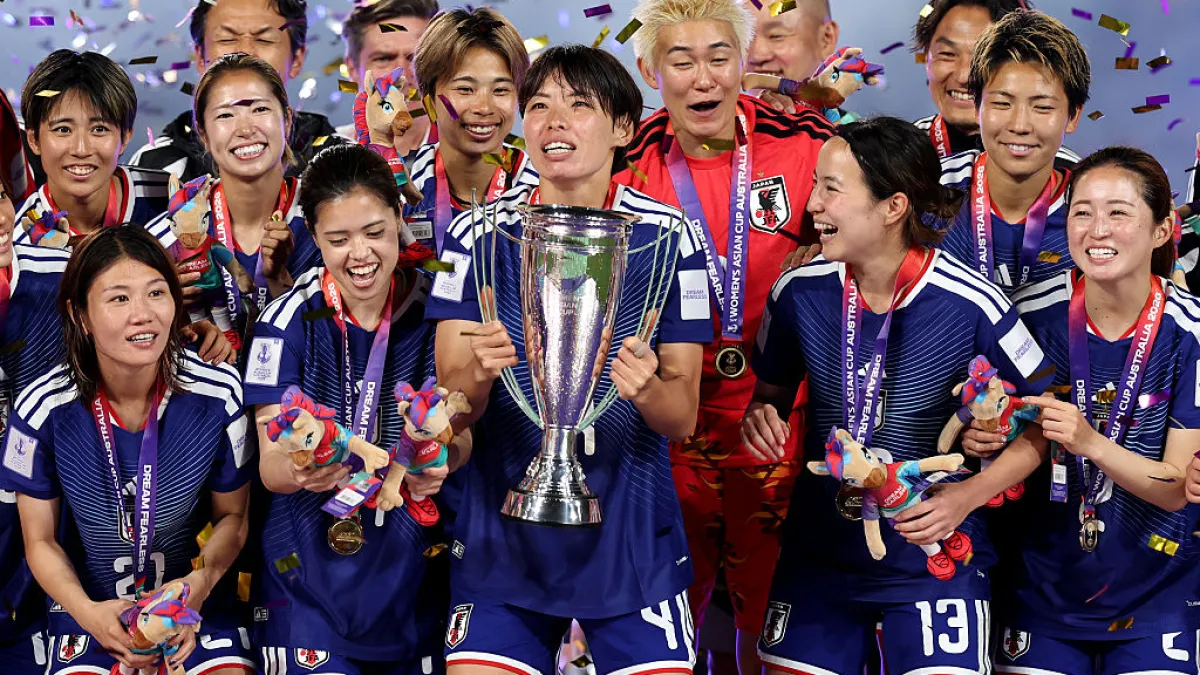
Maika Hamano scored the only goal as a formidable Japan battled past Australia to clinch a third Women’s Asian Cup title in front of a record-breaking 74,357 fans in Sydney.
The Tottenham star hit a stunning long-range strike in the 17th minute at Stadium Australia to break Australian hearts and add to their continental crowns from 2014 and 2018.
Recommended Stories
list of 4 itemsend of list
Those finals were also against Australia and ended 1-0.
The edge-of-the-seat decider culminated a landmark tournament with more than 350,000 fans through the turnstiles, reinforcing the growth in popularity of the women’s game.
This was about six times as many as the previous tournament record set in 2010 in China, with the final setting a new attendance record for a single game in tournament history.
The Asian Cup doubled as qualifying for the World Cup in Brazil next year, with Australia, Japan, South Korea, China, North Korea and the Philippines all punching their tickets.
The Japanese team, stacked with English-based players, was invincible in their run to the final, fluid across the park, and defending well, steamrolling everyone in front of them.
While Australia proved a much tougher test, nothing could stop them as they accumulated 29 goals and conceded just one through their six tournament games to reinforce their status as Asia’s number one team.
Japan named an unchanged lineup from their 4-1 semifinal thumping of South Korea.
Australia made one change to the team that beat defending champions China 2-1 in the last four with Wini Heatley preferred in central defence to Clare Hunt.
The hosts were composed at the start, looking to dictate the game, and Caitlin Foord should have scored on 11 minutes when Mary Fowler threaded a pass through inside the box.
But the unmarked Arsenal striker sent her shot straight into the arms of Japan keeper Ayaka Yamashita to miss a golden opportunity.
It proved costly with Japan breaking the deadlock six minutes later when Tottenham midfielder Hamano collected the ball outside the penalty area and unleashed a 25-yard rocket that found the top corner.
Foord had another chance when she pounced on a sloppy clearance from Yamashita, but failed to find the target from a tight angle, then scuffed another wide just before the break.
Japan were always a threat, and West Ham’s Riko Ueki went close twice in as many minutes soon after the restart.
With the game on a knife-edge, Australia threw everything they had at Japan in a desperate attempt to find an equaliser as the crowd noise reached fever pitch.
Alanna Kennedy almost pulled off a late equaliser in the 88th minute, but despite intense pressure, Japan were rock solid and absorbed the threat to cling on for the win.
Who: Japan vs Australia What: AFC Women’s Asian Cup final Where: Stadium Australia, Sydney When: Saturday at 8pm (09:00 GMT) How to follow: We’ll have all the build-up on Al Jazeera Sport from 06:30 GMT in advance of our live text commentary stream.
Two and a half years after their Women’s World Cup dream on home soil ended in heartbreak, Australia return to the same piece of turf in search of redemption.
Recommended Stories
list of 4 itemsend of list
The ghosts of the past may still linger, but Saturday’s final offers the Matildas’ golden generation something more: the chance to rewrite their story and lift a first major trophy in front of their own fans.
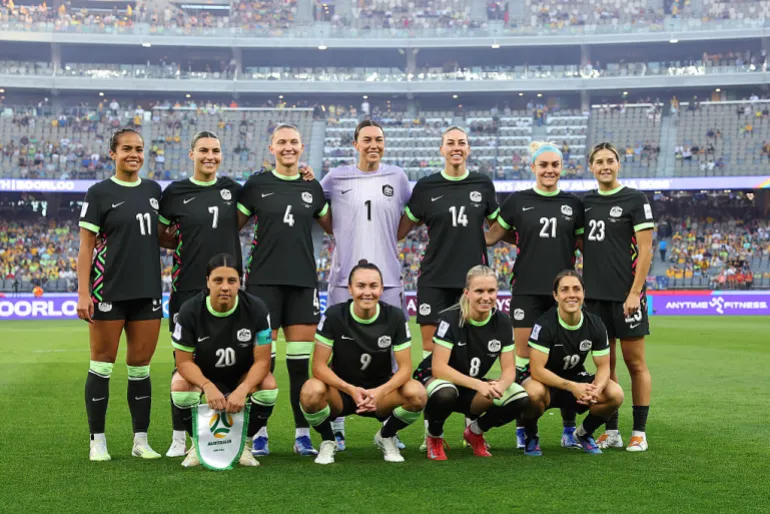
With eyes on a second continental title, Australia will face heavyweights and two-time champions Japan in a blockbuster Women’s Asian Cup final at Sydney’s Stadium Australia, the same venue on which the Matildas were stunned 3-1 by eventual runners-up England in the 2023 World Cup semifinals.
While many consider Australia favourites to lift the trophy this weekend, history tells a different story. The Matildas have lost both previous continental finals against Japan, leaving the hosts hoping the third time will be the charm.
Al Jazeera Sport takes a closer look at the final and what to expect from both teams:
How did Australia and Japan reach the final?
Both Australia and Japan have enjoyed an unbeaten route to the final, with the Aussies finishing second in Group A and Japan topping Group C.
Australia, 15th in the FIFA world rankings, opened their campaign with a 1-0 win over the Philippines before thrashing Iran 4-0, but had to fight for a 3-3 draw with South Korea in the final group game.
The knockouts saw Australia overcome North Korea 2-1 in the quarterfinals before they were tested brutally by record nine-time champions China in the semifinals, which they won 2-1.
The Matildas are aiming for their second Asian Cup triumph, but first since 2010 [Paul Kane/Getty Images]
In contrast, World No 6 Japan, the highest-ranked team in the tournament, were dominant from the get-go, beating Taiwan 2-0 to start their campaign. That was followed by an 11-0 rout of India and a 4-0 mauling of Vietnam, as the Nadeshiko sailed into the knockouts with a perfect record and a clean sheet.
In the quarterfinals, they swept past the Philippines 7-0 before downing South Korea 4-1 in the semifinals, reminding fans of why they are the most dangerous side in this tournament.
How many times have Australia and Japan faced each other?
Australia and Japan are familiar foes, having faced off 30 times. The defining clashes came in the 2014 and 2018 editions of the Women’s Asian Cup, when Japan beat Australia 1-0 both times in the final of those tournaments.
Saturday’s match is also the first time Australia have been in the final since losing the 2018 edition.
Australia and Japan last met a little over a year ago at the SheBelieves Cup in the United States. Japan beat the Aussies 4-0 en route to winning the title.
Japan defender Moeka Minami, wearing the #3 jersey, was among the scorers when Japan beat Australia 4-0 in a SheBelieves Cup clash in February 2025 [Michael Wyke/AP Photo]
How many Asian Cups have Australia and Japan won?
Australia have won the Women’s Asian Cup once – their only major title – at the 2010 edition in China, where the Matildas defeated North Korea 5-4 on penalties. Current captain Sam Kerr, then 16 years old, scored the opening goal in that final.
Japan have won the Asian Cup twice, in 2014 and 2018, while they ended runners-up four times (1986, 1991, 1995, 2001).
Japan are also the only Asian team to have won the Women’s World Cup, beating the United States on penalties in the 2011 edition in Germany.
Japan players lift the 2018 Asian Cup after beating Australia in the final in Jordan [File: Raad Adayleh/AP Photo]
What’s the prize money for the winner?
Along with continental bragging rights, the champions will receive a cheque for $1.8m – the same prize money from 2022, which is lower than any other confederation’s equivalent tournament besides Oceania.
In comparison, the winner at the 2023 men’s Asian Cup took home a prize purse of $14.8 million.
Kerr shines for Australia, Ueki leads the way for Japan
Sidelined for two years by an ACL injury, Australia captain Kerr arrived at the 2026 tournament with questions surrounding her fitness and saddled with a heavy burden to restore pride in the Matildas.
Now with four goals in five matches, including a sublime winner in Tuesday’s semifinal, the 32-year-old striker has silenced all doubts and carried her team back into the national spotlight.
“I know I can be one of the best players in the world, and I am showing that at this tournament,” the Chelsea striker said of her recent form.
Sam Kerr’s sublime second-half strike guided Australia to the final [File: Paul Kane/Getty Images]
Along with Kerr, central midfielder Alanna Kennedy has been a goal-scoring machine for the ‘Tillies’, netting five goals in as many matches to sit second on the top-scorers list, while Caitlin Foord has been a key playmaker with three assists.
But the tournament’s spotlight has been captured by Japan’s Riko Ueki, whose six goals in four matches – including a stunning hat-trick off the bench against India – lead the charts.
The striker, often a vital presence in Japan’s front three, poses a headache to the opposition, alongside winger Kiko Seike, who has four goals in four games.
Japan coach says Matildas are ‘massive favourites’
Japan coach Nils Nielsen insists Australia will be “massive favourites” in the final, but his team’s near-flawless progress to the title match suggests otherwise.
Japan’s attacking force has scored a whopping 28 goals in five games, while their solid backline has conceded just one, against South Korea in the semifinals.
The Nadeshiko will have a partisan crowd at the 83,500-capacity Stadium Australia to deal with, and Greenlander Nielsen put the pressure on the Kerr-led Australia by calling the frontrunners.
Japan’s Riko Ueki, right, is the tournament’s top scorer [File: Rick Rycroft/AP Photo]
“The Matildas really have an amazing team; they have adapted to whatever is coming their way,” Nielsen said. “They have a great coach … He hasn’t been here long, and he’s already made so many nice transforms.
“When they play in front of a crowd like this, Australia are big favourites, massive favourites for the final.”
Meanwhile, Australia’s head coach Joe Montemurro believes his side can do better than what they showcased against China in the gruelling semifinal.
“We’re going to have to be better,” he told Australia’s Network 10. “There’s a resilience that we have in our psyche. We need to be better with the ball; we need to be smarter and control tempo.”
Kerr dreams of second Asian Cup triumph
Considered one of Australia’s greatest athletes, Kerr is the only player from the current squad who was also part of the 2010 Asian Cup-winning squad.
But she has never lifted any silverware with the current crop of players, many of whom have been alongside her in the team for more than a decade.
“It would honestly mean everything,” Kerr said of winning the title with them. “We’ve talked about it for ages. This is a dream of ours, and these girls are like family to me.”
Predicted Australia starting lineup
Matildas head coach Montemurro could pick defender Winonah Heatley ahead of Clare Hunt.
Mackenzie Arnold (goalkeeper); Ellie Carpenter, Winonah Heatley, Steph Catley, Kaitlyn Torpey; Kyra Cooney-Cross, Alanna Kennedy, Katrina Gorry; Mary Fowler, Sam Kerr, Caitlin Foord
Predicted Japan starting lineup
Japan head coach Nielsen could stick to the same lineup from the last game.
Community tensions – and reports of both antisemitism and Islamophobia – have been rising in Australia since Hamas attacked Israel on 7 October 2023, killing more than 1,200 people and taking 251 others hostage. Israel’s offensive in Gaza has led to more than 72,000 Palestinian deaths, according to the Hamas-run health ministry.
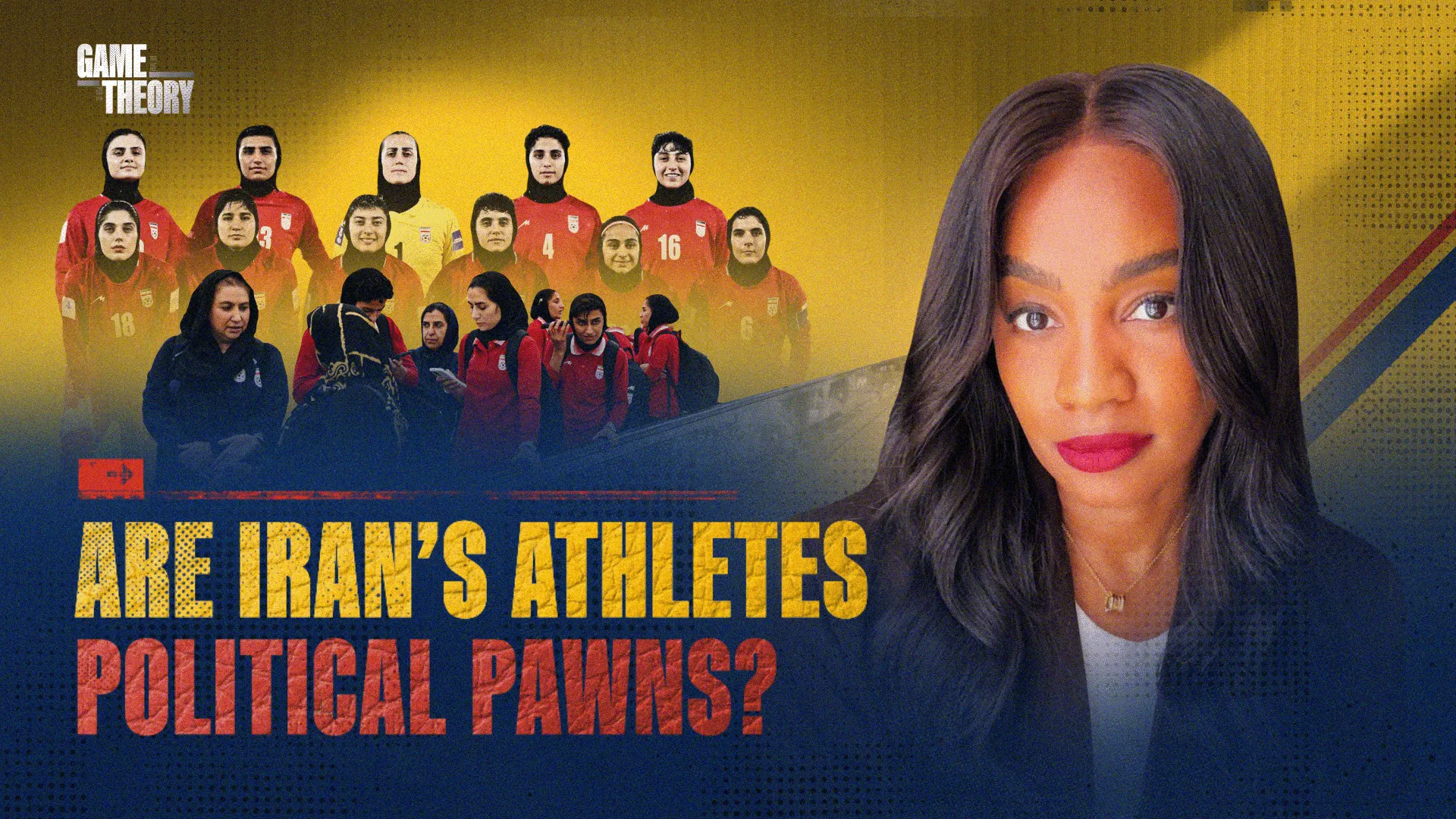
While in Australia, members of Iran’s women’s football team found themselves at the centre of an international political storm. As several players choose to return home, difficult questions are being raised about athlete safety, agency and Western intervention. Samantha Johnson looks at how Iran’s women footballers became caught in the middle of something they had nothing to do with, and asks whether they were being used as political pawns.
The captain of the Iranian women’s football team has withdrawn her bid for asylum in Australia, Iran’s state media says, making her the fifth member of the delegation to change her mind after her team’s participation in the Asian Cup.
Zahra Ghanbari will fly from Malaysia and travel to Iran within the next few hours, the IRNA news agency said on Sunday.
Three players and one backroom staff member had already withdrawn their bids for asylum and travelled to Malaysia from Australia, where the team participated in the AFC Women’s Asian Cup.
Australia’s Home Affairs Minister Tony Burke said his country had offered asylum to all players and support staff members prior to their departure over fears they might be punished upon their return home after the team refused to sing Iran’s national anthem at the tournament.
Iranian state broadcaster IRIB reported on Saturday that the three had “given up on their asylum application in Australia and are currently heading to Malaysia”, posting a picture of the women allegedly boarding a plane.
The news was confirmed by Burke a few hours later.
“Overnight, three members of the Iranian women’s football team made the decision to join the rest of the team on their journey back to Iran,” Burke said.
“After telling Australian officials they had made this decision, the players were given repeated chances to talk about their options.”
Five players took up the offer and signed immigration papers last week, with one more player and a member of staff joining them a day later. It leaves two Iranian players in Australia, where they have been promised asylum and an opportunity to settle.
Iran played their three group games of the Asian Cup at the Gold Coast Stadium in Queensland on March 2, 5 and 8, after the United States and Israel launched their war on Iran on February 28.
The initial attacks killed Iran’s Supreme Leader Ayatollah Ali Khamenei and other leaders.
Overall, an estimated 1,444 Iranians have been killed since the war began, including more than 170 people, mostly schoolgirls, who were inside a primary school in the city of Minab.
After refusing to sing the Iranian national anthem at their first match, players on the Iranian women’s football team were branded “traitors” by an IRIB presenter.
When Iran played their second game of the tournament against Australia three days later, not only did the players sing the national anthem, but they also saluted it, prompting fears that they may have been forced to change their stance after receiving backlash in Iranian media.
While neither the players nor the team management explained why they refrained from singing before the first match, fans and rights activists speculated that it may have been an act of defiance against the Iranian government.
On the day of the team’s departure from Australia, Burke announced his government had offered all players and staff members the chance to stay back in the country.
On Tuesday, Burke told reporters that five Iranian players had decided to seek asylum in Australia and would be assisted by the government.
“They are welcome to stay in Australia, they are safe here, and they should feel at home here,” he said.
A day later, Burke confirmed that an additional player and a member of the team’s support staff had received humanitarian visas in the hours before their departure.
However, one player, who previously chose to stay behind, changed her mind and decided to return to Iran.
The player, who was later identified as Mohadese Zolfigol, changed her decision on the advice of her teammates, Burke told the Parliament of Australia.
“She had been advised by her teammates and encouraged to contact the Iranian embassy,” he said.
The players who managed to escape with the help of Iranian rights activists were taken away by Australian police officials to a safe house, where they met immigration officials and signed the paperwork.
“Our understanding is that every single member of the squad was interviewed independently by the Australian Federal Police,” Beau Busch, the Asia/Oceania president of players’ welfare body FIFPRO told Al Jazeera last week.
“[The players] were made aware of their rights and the support available to them. They certainly weren’t rushed through that process.”
March 12 (UPI) — Police divers in Australia’s Greater Sunshine Coast region on Thursday recovered the bodies of two missing Chinese backpackers after they were found dead inside their SUV vehicle beneath floodwaters.
The 26-year-old man and 23-year-old woman were found near Kilkivan, 100 miles northwest of Brisbane, after a major search operation by police and the State Emergency Service using helicopters and drones when the pair failed to arrive at their destination.
“Dive squad officers from the state dive unit arrived and retrieved two deceased persons from a car that had been washed off the road at Kilkivan. The formal identification process is still underway but it is believed that the two, as reported, are a 26-year-old male and a 23-year-old female who are international tourists,” said Queensland Police Minister Dan Purdie.
Purdie said their families had been notified and authorities were working with the Chinese Consulate in Brisbane.
Bundaberg Police Chief Inspector Grantley Marcus said the pair were driving from Brisbane to Mundubbera, where they were due to begin jobs picking fruit.
“They didn’t arrive and a friend of theirs from Australia contacted police on Tuesday and reported them as missing.”
Marcus said the families of the deceased were en route to Australia and pledged police would do everything they could to assist them when they arrived.
The couple was named by 7News as Yuchen Guo, 23, from Shandong Province in eastern China, and Qingwei Qiu, 26, from Fujian Province in the southeast of the country.
Extreme rainfall has seen large areas of Queensland hit with severe flooding in recent days, with some river levels still rising. Parts of the state recorded their highest three-day rainfall totals Sunday through Tuesday.
Glen Hartwig, mayor of nearby Gympie, said the deaths of the pair were “an absolute tragedy” and called for more to be done to make tourists aware of the danger from flooding.
“These people have come to Australia to see our beautiful country and tragically they’ve ended up losing their lives. We warn people about biosecurity when they come into the country, but I also think we need to warn them about the dangers of floodwaters,” he said.
“We’re very grateful that they chose to come and see our country and we’re so sorry for their loss and the pain that [family members] are now feeling,” added Hartwig.
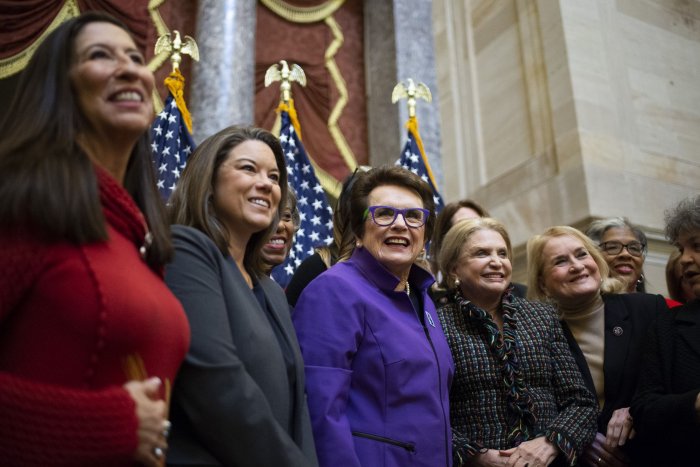
Founder of the Women’s Tennis Association and tennis great Billie Jean King (C) smiles with representatives after speaking during an annual Women’s History Month event in celebration of the 50th anniversary of Title IX in Statuary Hall at the U.S .Capitol in Washington on March 9, 2022. Women’s History Month is celebrated every March. Photo by Bonnie Cash/UPI | License Photo
The show tracks singletons from around Australia as they entrust their romantic futures to experts Mel Schilling, John Aiken, and Alessandra Rampolla. Each couple meets for the very first time at the altar, and following their “I do” moment, they’ll find out whether they’re genuinely compatible as they navigate their new relationship.
Over multiple weeks, the newly married couples will go on their honeymoon, before setting up home together and participating in numerous challenges.
Four ceremonies have taken place already, with lots of explosive moments unfolding in the opening two episodes. The most recent episode aired on Wednesday (March 11), with two more couples getting matched by the experts, reports OK!.
The first pair consisted of 35-year-old account manager Bec, who characterised herself as a social butterfly who’s never afraid of commanding attention.
She had previously been engaged, but called it off four months ahead of the ceremony, describing it as the most difficult decision she’d ever made, though she felt proud for leaving a situation that wasn’t suitable.
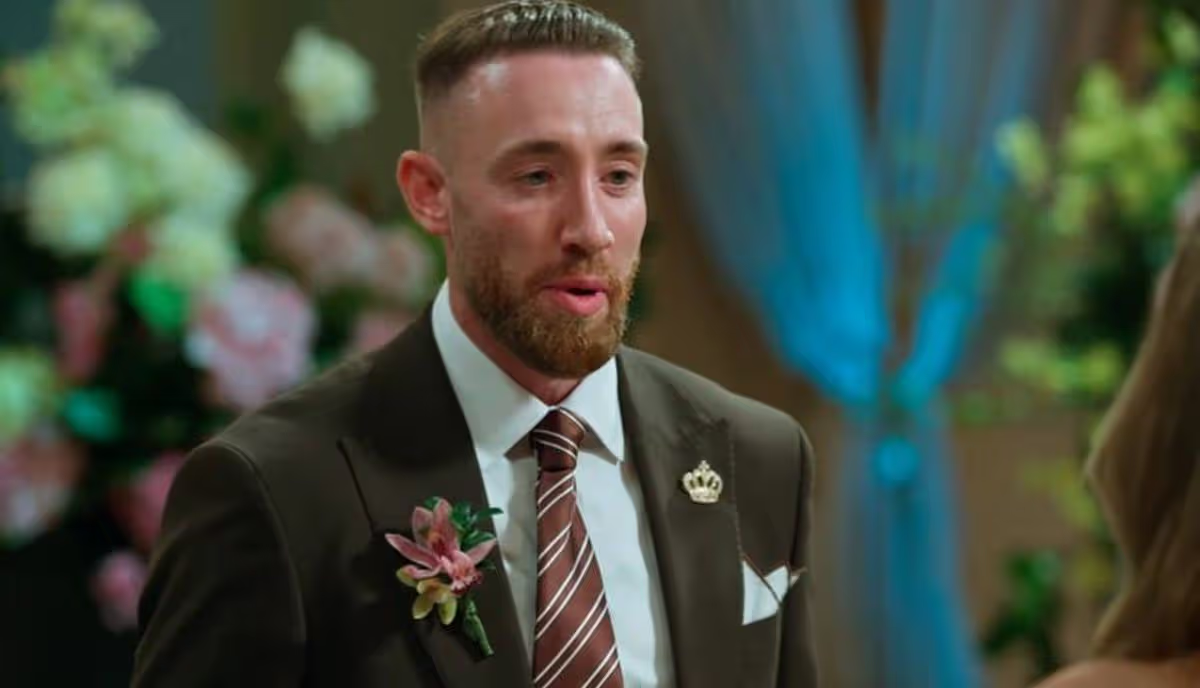
Bec was paired with 34-year-old businessman Danny, who has called Australia home for 12 years since relocating from the UK. Danny was searching for his “ride or die” partner, a strong woman who ignites passion within him and never fails to make him laugh.
Upon meeting at the altar, Bec and Danny appeared pleased with their pairing, with Bec even sharing a joke with Danny’s stripper best man, Will. However, the atmosphere quickly shifted as Danny began his vows.
Danny started by expressing his devotion to his family and promised Bec he would care for her. He then quipped: “I’m looking for a Bonnie and Clyde type of love. With that being said, if I ever get locked up in prison, I’d like you to bail me out.”
Bec immediately pulled back after hearing Danny’s remark, telling cameras: “He seems like a really lovely guy, but I’m a just bit nervous to be honest with you. I think he may have mentioned in his vows if he gets arrested and what not. I know I can be quite wild and fun, but I really want to settle down and it makes me worried.
“I want to be matched with someone that’s serious about being with their forever person, not someone that’s out getting hammered, acting a fool to the point of getting arrested. I’ve given up everything and you’re mentioning getting arrested in your vows. I wanted to come on here to find love and I don’t know whether or not he wants that.”
Bec then broke down in tears, adding: “I just want something serious. I don’t want to be with anyone that gets arrested.”
She later confided in a producer: “I can just feel it, it’s not going to work. He’s not my husband, no way.” After seeing a different side to Danny during the reception, Bec later apologised to her new husband, with the couple sharing a passionate kiss.
Married at First Sight Australia airs Monday to Thursday on E4 at 7.30pm
For the latest showbiz, TV, movie and streaming news, go to the new Everything Gossip website