But Ferrari’s shares dropped the day after the Luce’s launch, following backlash over the car.
Amongst those criticising the car were Italy’s deputy prime minister Matteo Salvini and former Ferrari chairman Luca Cordero di Montezemolo, who said the car was “risking the destruction of a legend”.
Ferrari’s chief design officer Flavio Manzoni said in an interview in May that critics are part of the innovation process and that he believed people would come to appreciate the Luce.
The company has not disclosed its target for Luce sales but, according to a Financial Times report, it has hit this year’s goal thanks to strong demand from China.
Ferrari did not respond to a BBC request for comment on the FT’s report,
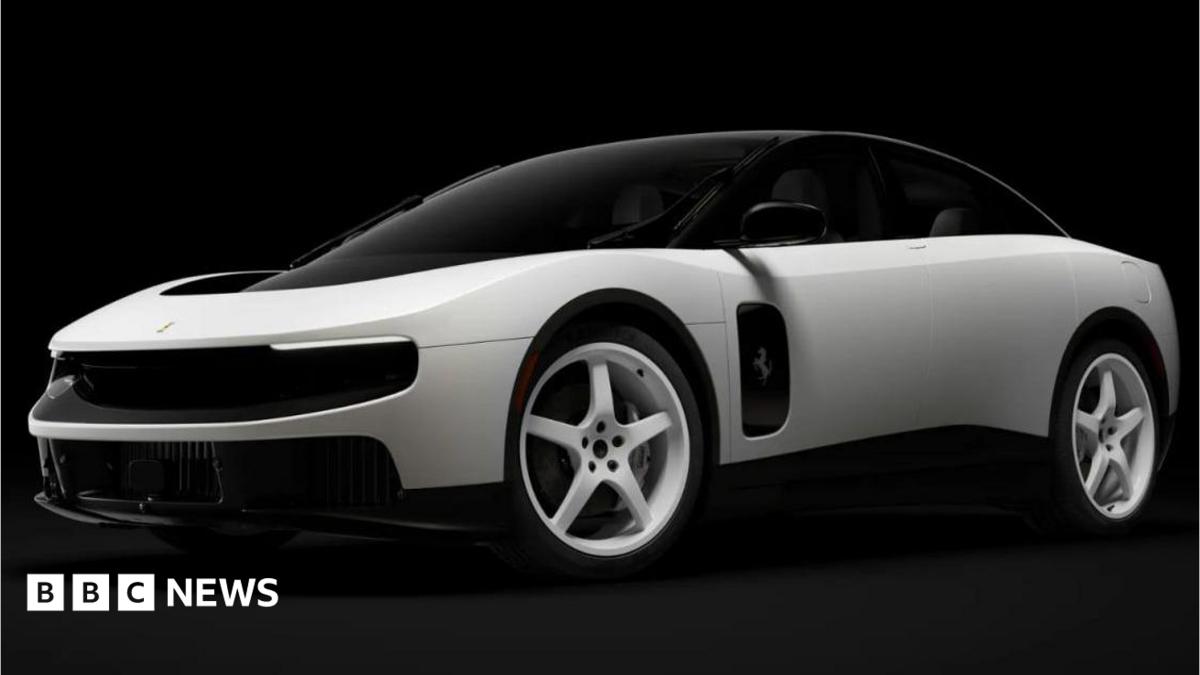
Sotheby’s said in a statement, external that the auctioned vehicle marked an “unbeatable opportunity” to own the first production car of the Luce.
The car has special wheels, customised brakes and a white finish.
The charity sale marks a “tangible expression of innovation, responsibility, and long-term vision for future generations,” Sotheby’s said.
Ferraris often attract some of the highest prices at car auctions.
A bespoke Ferrari Daytona SP3 supercar raised $26m for the carmaker’s education initiatives at an auction in 2025. At the time it set an auction record for the highest-price paid for a new car.
The current record for the highest price paid at auction was an ultra-rare 1955 Mercedes-Benz 300 SLR Uhlenhaut Coupé, which was sold for $142m in 2022.
Amy Winehouse’s dad Mitch was left devastated last month after unsuccessfully suing two of her pals for selling some of the star’s belongings.
But now Amy’s closest friend, fellow singer Tyler James, has revealed he plans to auction off more items which were once owned by the late superstar.
Amy Winehouse and best pal Tyler James in 2008Credit: AlamyHandwritten song lyrics and Amy’s red bowling shirt, above, were among the lots Tyler had planned to sell at auction before legal action stopped the saleCredit: Getty
Tyler told me: “I’ve been through hell. I just couldn’t deal with it.
“Sotheby’s explained to me that due to Mitch’s lawyers contesting ownership, they couldn’t go ahead with the sale and that I needed a lawyer. I felt as if I had done something wrong.”
Tyler — who appeared on The Voice UK in 2012 — now hopes to restart plans for his own auction, saying that last month’s High Court ruling “changes everything”.
He said: “I loved Amy more than anyone else in the world.
“I supported her through all the years of drug addiction, self-harm . . . you name it. I wanted to protect her.
“We had been through so much together, and nothing can take away what we shared — not possessions.”
Of the previously cancelled auction, he said: “I don’t know why he [Mitch] stopped it. He knew how much Amy meant to me.
“Shortly after she passed away, we went to Amy’s place and there were two pillows on her bed. He gave me one of them.”
Of Naomi and Catriona’s recent court victory, Tyler added: “I don’t speak to the girls much any more, but I’m really pleased for them.
“But maybe — and this sounds selfish — I’m much more pleased for myself. I haven’t decided what to do yet, but I will be ringing Sotheby’s.”
October marks two decades since the release of Amy’s second — and most successful — album, Back To Black.
Something tells me fans will be lining up to bid on whatever treasures Tyler has.
It’s Paris fashion chic . . .
Paris Hilton has teamed up with Betsey Johnson for a new range, which is launching this week to celebrate the US designer’s 84th birthdayCredit: Betsy Johnson/Zoey Grossman
No fashion is tutu much for Paris Hilton as she poses in this striking mini-dress from a new collection she has helped design.
The socialite has teamed up with Betsey Johnson for a new range, which is launching this week to celebrate the US designer’s 84th birthday.
This white bow dress costs $119 – around £88 – and it sounds like they had a hoot designing it.
Paris told People mag: “We had the best time brainstorming together, playing with looks at fittings, and making TikToks on set.
“She has this magnetic energy that lights up the room, and getting to create something with her has been such a dream.
“She is just as fun, original and full of personality as her clothes, and she brings so much creativity into everything she does.”
Rihanna doesn’t lack drive
Rihanna takes her kids to see the home she grew up inCredit: X
Rihanna had a full-circle moment as she took her kids to the home she grew up in – but they didn’t look too impressed.
She shared photos on Instagram of herself with sons RZA and Riot, as well as daughter Rocki, outside the modest property in Barbados.
The street was originally named Westbury New Road but was renamed Rihanna Drive in 2017 – and her childhood crib is now a tourist attraction.
The Umbrella singer wrote: “One minute I feel like that kid from Westbury. The next minute I’m bringing my own kids back to ‘Rihanna Drive’. Trippy how life works!”
Julie hangs up her ‘Princess’ crown
Julie Andrews has retired from acting aged 90 after starring in movie classics Mary Poppins, above, and The Sound Of MusicCredit: AlamyJulie in Princess DiariesCredit: Alamy
She made two of the most famous movie musicals in Mary Poppins and The Sound Of Music, but Julie Andrews’ days on screen are definitely over.
The Surrey-born star, now aged 90, announced she has retired from her acting career, but will still pursue other creative paths.
It means she will not star in Princess Diaries 3 – currently in development – after playing Queen Clarisse Renaldi in the 2001 original and 2004 sequel opposite Anne Hathaway as Princess Mia.
Explaining how she passed up the chance, she said: “I think I’m retired, really, would be about the best description for that. The film’s team asked me all last year if I would be keen to do it.
“It was very, very hard to say no, but I did because I felt I had a wonderful ride, and this one would flourish very well and wouldn’t need Granny going in there at my age.”
Julie’s last on- screen role was in the children’s Netflix series Julie’s Greenroom.
In a separate interview, she added of Princess Diaries 3: “I’m not going to be in it. I think the story is slightly different, and I’m not quite sure how they’re dealing with that.
“But it’s too late for me to do it.”
Be a prop star at sale
a 1997 Spice World T-shirt signed by the Spice Girls is up for grABSCredit: Propstore AuctionOther notable lots include a vinyl LP from the cult movie Labyrinth, signed by one of its stars, David BowieCredit: Propstore Auction
Pop culture fans can bag themselves something special as Propstore is putting on one of the biggest-ever auctions of signed memorabilia.
More than 1,700 film, TV and music props will be up for grabs, including a 1997 Spice World T-shirt signed by the Spice Girls, and a Back To The Future poster signed by Michael J. Fox, Christopher Lloyd and other cast members.
Other notable lots include a replica sword from The Bodyguard autographed by Whitney Houston and Kevin Costner, and a vinyl LP from the cult movie Labyrinth, signed by one of its stars, David Bowie.
Before the live auction, which will run from August 26 to 29, you can see the full list of lots for yourself at propstoreauction.com.
Frankie’s binge too far
S Club Juniors and The Saturdays star Frankie Bridge has revealed she’s just had her first hangover – years after her music career endedCredit: Getty
Who said the world of pop music was full of boozy antics?
S Club Juniors and The Saturdays star Frankie Bridge has revealed she’s just had her first hangover – years after her music career ended.
Speaking on the Bottoms Up podcast, she admitted: “I’m not a massive drinker. I’m a massive lightweight. I actually just had my first proper hangover last week – at the age of 37.
“It was honestly the worst day of my life and I was so pathetic, I cried. I washed my hair and then I couldn’t brush it so my friend Leah had to brush my hair for me and I was like, ‘This is a new low’.”
It came on the last day of her holiday after a night drinking mojitos, but she added: “I was fine by the time I got home and went in the gym.”
Trust me Frankie, if you were still able to go to the gym, you would never want to experience my hangovers.
Blur drummer Dave Rowntree says another reunion is a “question of when rather than if”. The band last played a gig two years ago, and he said: “I seem to remember us at Heathrow, saying, ‘We’ll do that again’. That’s my take.”
Spotify fake alert
Spotify is going to start flagging AI artists so that listeners know if they are getting computer-generated rubbish.
The streaming platform said fake acts’ profiles will be labelled “AI personas” and their music will be excluded from recommendations via its algorithm.
It’s hoped the crackdown will deliver a boost to real musicians and prevent artificial acts from taking over.
Spotify said: “True artist-fan connection can only be built on a foundation of trust and authenticity.
“In music, that means listeners need to be able to trust that the artist behind the music is who they say they are.
“That’s more essential than ever in the age of generative AI.” Good for them.
Country twist for ‘rock’ star
Dwayne ‘The Rock’ Johnson is eyeing a country music career after showing off his vocals in Moana and its sequel.Credit: Getty
Now the hardman actor is eyeing a career as a singer – by getting into country music.
The former wrestler said: “Music has always been such an anchor for me, and very specifically in genres that I love, like traditional country music.
“We’re exploring that now. I’ve reached this point in my life and career where, honestly, when I wake up in the morning I swing my legs out of bed, and whatever the thing is that I’m doing, I wanna feel like I’m just running towards it.
“And the most gratifying things we do are when it’s for us, because we have enough pressure to deliver for so many other entities.”
Country music is on the rise, with US singer Luke Combs playing three sold-out shows at Wembley Stadium last month, while Taylor Swift went back to her country roots for her Toy Story 5 soundtrack single I Knew It, I Knew You, which topped the charts.
But Dwayne will be keen not to follow in Hollywood star Will Smith’s footsteps. Last year, he released his comeback album, Based On A True Story – but it sold just 268 physical copies in the UK in its first week.
I have faith The Rock won’t settle for that type of knockout.
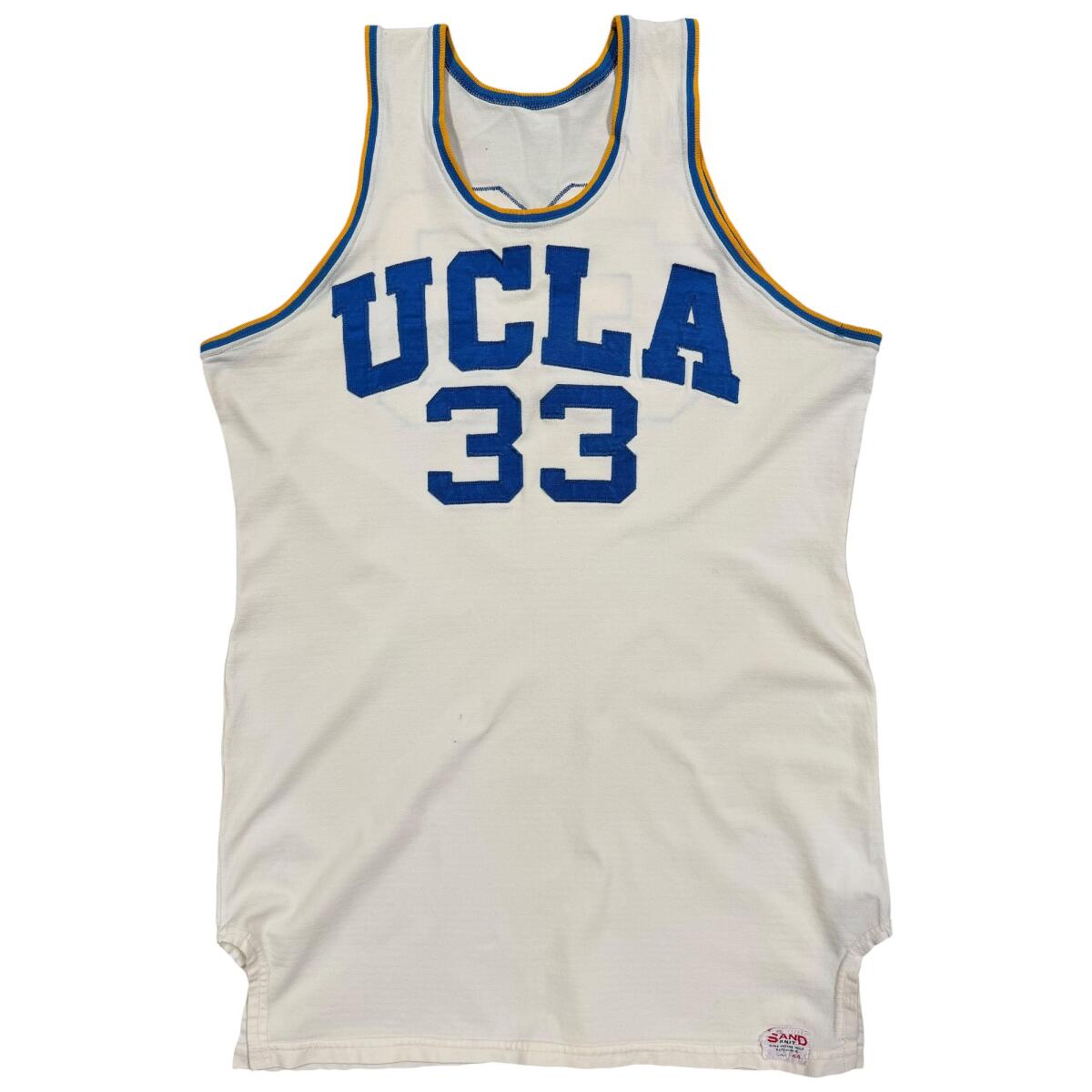
A UCLA jersey worn by Lew Alcindor in the 1968 NCAA national championship game and the 1969 Final Four is set to garner more than $1 million at auction.
The man who has owned it for the past half century — a former Los Angeles resident who was a huge fan of the player now known as Kareem Abdul-Jabbar — didn’t have to pay nearly as much for the historic piece.
In fact, he paid no money at all. Instead, he traded for it after a Lakers game in the Forum parking lot back sometime in the mid- to late-1970s, giving up one of his prized possessions as a teenager living in South Gate:
His transistor radio.
“I used to listen to Dodger games on it under my pillow,” said the auction’s consignor, a man named David who asked to have his last name withheld because of privacy concerns.
Back then, David and some friends would often take the bus to the Forum, where they would try to convince fans to give them their extra tickets to attend the Lakers game that night. Afterward, they would wait in the parking lot for players to leave the building.
A UCLA jersey, worn by Lew Alcindor during the 1968 national championship game and a 1969 national semifinal, is up for bid at Grey Flannel Auctions.
(Grey Flannel Auctions)
“We were young and crazy. We waited till the players came out and kind of talked to them,” said David, who says he once walked with Wilt Chamberlain to his car. “And there were other kids there. We would trade stuff, and that is basically how I got the jersey.”
By then, Abdul-Jabbar was a star with the Lakers, after winning three NCAA titles under legendary UCLA coach John Wooden and leading the Milwaukee Bucks to an NBA championship in 1971.
The young man who was originally wearing the No. 33 Bruins jersey that night was actually a USC fan, David said, so the trade was fairly easy to pull off.
“Back then transistor radios were real popular,” David said.
Over the decades, he mostly kept the jersey stored away neatly, occasionally pulling it out for a look or to show others. Recently, David said, he was “just cleaning things out” and decided it was time to part ways with the cherished item.
“I said, you know, someone else will really enjoy this,” David said. “And they’ll display it, and people can enjoy it more than I will stuck in some kind of storage thing.”
According to Michael Russek, director of operations for Grey Flannel Auctions, David didn’t know a lot about the jersey’s history when he first brought it in, only that it was issued by UCLA and had likely been worn by Alcindor in some game at some point.
Photo-matching revealed that he had worn it in several games, including some very significant ones. He wore it while scoring 34 points with 16 rebounds in UCLA’s 78-55 victory over North Carolina in the 1968 national championship game and also during multiple games the following season, including the Bruins’ 85-82 victory over Drake in a national semifinal game (Alcindor had 25 points and 21 rebounds).
UCLA’s Lew Alcindor steals the ball and dribbles away from a group of North Carolina players
(Harold Filan / Associated Press)
“That’s when it really started to come together that we have something that’s truly special,” Russek said.
As of Friday morning, bidding had reached $850,101, with a 22% buyer’s premium bringing the price to nearly $1.04 million. The auction ends Aug. 16.
David said he was “very surprised at how it took off so quick. I’m not familiar with these kind of auctions or jerseys, really. But there’s a lot of alumni from UCLA down there, and a lot of people would like something like that.”
The current Oregon resident added that he hasn’t thought about what he’s going to do with all that cash.
“I’m not the kind of person who does plans for money until I have it,” he said.
THE price tag for John Travolta’s Saturday Night Fever suit is every bit as eye-watering as his dance moves.
The flared white three-piece outfit from the 1977 hit movie is expected to sell for as much as £300,000 at auction next month.
John Travolta’s Saturday Night Fever suit is going up for auctionCredit: AlamyIt is expected to sell for as much as £300,000Credit: PA
It is one of more than 1,400 items from film and TV that Propstore will be putting under the hammer in its four-day Summer Entertainment Memorabilia Auction.
The sale includes the fake axe wielded by Jack Nicholson in The Shining, a Harry Potter golden snitch and a hoverboard ridden by Michael J Fox in Back To The Future II.
Sign up for the Showbiz newsletter
Thank you!
A 15-inch stop-motion animation puppet from the 1949 film Mighty Joe Young is estimated to be worth up to £1.5million.
Here, we look at the most memorable mementoes up for grabs.
Jack Nicholson’s stunt axe in The Shining is being soldCredit: Warner BrosThe axe is estimated to fetch anything from £40k to £75kCredit: Propstore / SWNSMichael J Fox’s hoverboard from Back To The Future II could fetch over £100kCredit: Universal StudiosFrank the Rabbit’s suit in Donnie Darko is going under the hammerCredit: HandoutThe suit could fetch as much as £150kCredit: SWNSMichael Jackson in his Werecat Teeth from his Thriller videoCredit: UnknownThe teeth could go for between £15k and £30kCredit: SWNSJosh Brolin’s firearm from Men In Black 3 is featuring in the movie mega auctionCredit: AlamyIt is estimated to fetch £10k-£20kCredit: AFPLeonard Nimoy’s Mr Spock uniform is up for grabsCredit: BBCThe estimate for this item is as high as £100kCredit: AFPRobert Downey Jr’s Iron Man armour in Captain America: Civil War will go to the highest bidderCredit: AlamyIt is expected to fetch between £30k and £60kCredit: SWNSMichael Keaton’s suit in Batman Returns is being auctioned tooCredit: Warner BrosIt could go for anything between £40k and £90kCredit: SWNSAnother Batsuit, this one worn by Val Kilmer in Batman Forever, is going under the hammerCredit: GettyIt is thought to be worth up to £75kCredit: AFPHugh Jackman’s Wolverine suit from X-Men is among the 1,400 items being soldCredit: AlamyThe suit could go for £40k-75kCredit: AFPThe Golden Snitch from the first Harry Potter film is estimated to be sold for £20k-£40kCredit: AFP
A Portland teenager found a random old Lakers jacket in a Goodwill bin in January.
He paid $3.07 for it.
Seven months later, the item sold at auction for $89,600.
Turns out the old jacket wasn’t so random after all.
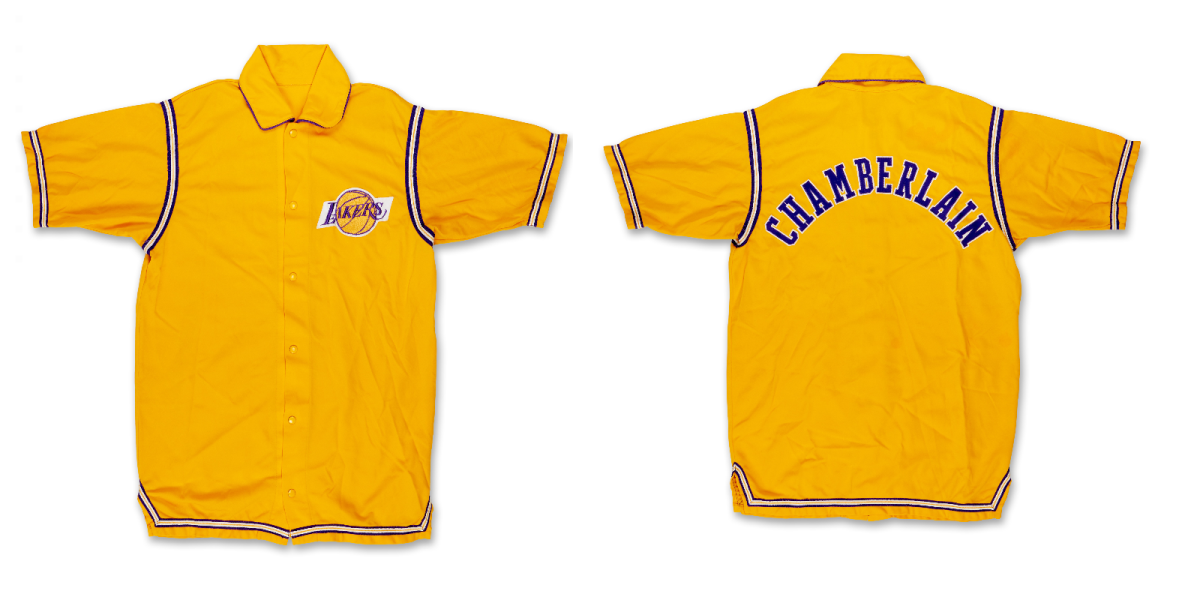
Verified by Sotheby’s auction house, it was a warmup jacket worn by NBA legend Wilt Chamberlain at least three times. That includes during the 1972 NBA Finals in which the Lakers defeated the New York Knicks in five games and Chamberlain was named the series MVP.
“This is Truly a once in a lifetime find,” Quinn Brown wrote on Instagram in January. “I am so grateful this jacket has landed in my hands.”
Brown, 19, has been reselling his thrift-store clothing finds online for the past three years. When he saw someone toss the short-sleeved Lakers jacket with “Chamberlain” on the back into a bin of clothes outside Goodwill, Brown grabbed it for his online shop.
Then he did some research. Brown found an online photo of Chamberlain wearing a jacket that looked very similar. He also discovered that the four-time league MVP’s jersey measurements closely matched those of the jacket.
This undated photo provided by Sotheby’s shows a warmup jacket worn by Wilt Chamberlain during the 1972 NBA Finals that was found in an Oregon thrift store.
(Sotheby’s via Associated Press)
After he posted a photo of the jacket online, Brown was contacted by Sotheby’s about consigning it for auction. He took the auction house up on the offer, and the jacket was whisked away in an armored vehicle.
Sotheby’s photomatched the jacket to three images: an undated photo from the 1972-73 season, a photo from a January 1973 game and a photo from a 1972 home game against the Knicks that was determined to be from either Game 1 or Game 2 of the NBA Finals.
Chamberlain had 12 points and 19 rebounds in Game 1, a 114-92 Lakers loss, and 23 points and 24 rebounds in Game 2, a 106-92 Lakers victory.
“I didn’t even think that finding something like this was possible,” Brown told the Associated Press. “I got very, very lucky.”
Sotheby’s estimated that the jacket could go for $150,000 to $250,000. While the final amount wasn’t quite that high, Brown told KIRO-FM (97.3) in Tacoma, Wash., that he’s “obviously happy” after making back 29,000-times his initial investment.
“$90,000 is pretty good,” he said. “I was hoping it would go higher. A little surprised, sitting there the last five minutes it didn’t really get any bids. So that was a little disappointing. But, still, a lot of money — especially since I only spent $3.”
How much would you pay for a pair of shoes? Someone else’s shoes, I mean.
Would you pay $7,000 for a chair on which Taylor Swift sat in a basketball arena — for an NBA playoff game, not for her wedding? Someone did.
There was one Swift chair up for bid. The Dodgers gave away 52,000 trading cards as part of a promotion for the Japanese animated series “One Piece” this month, and the current asking prices for one of those cards on eBay range from $784 to $15,656. Even at the low end … strike that, there is no apparent low end to the collectibles market these days.
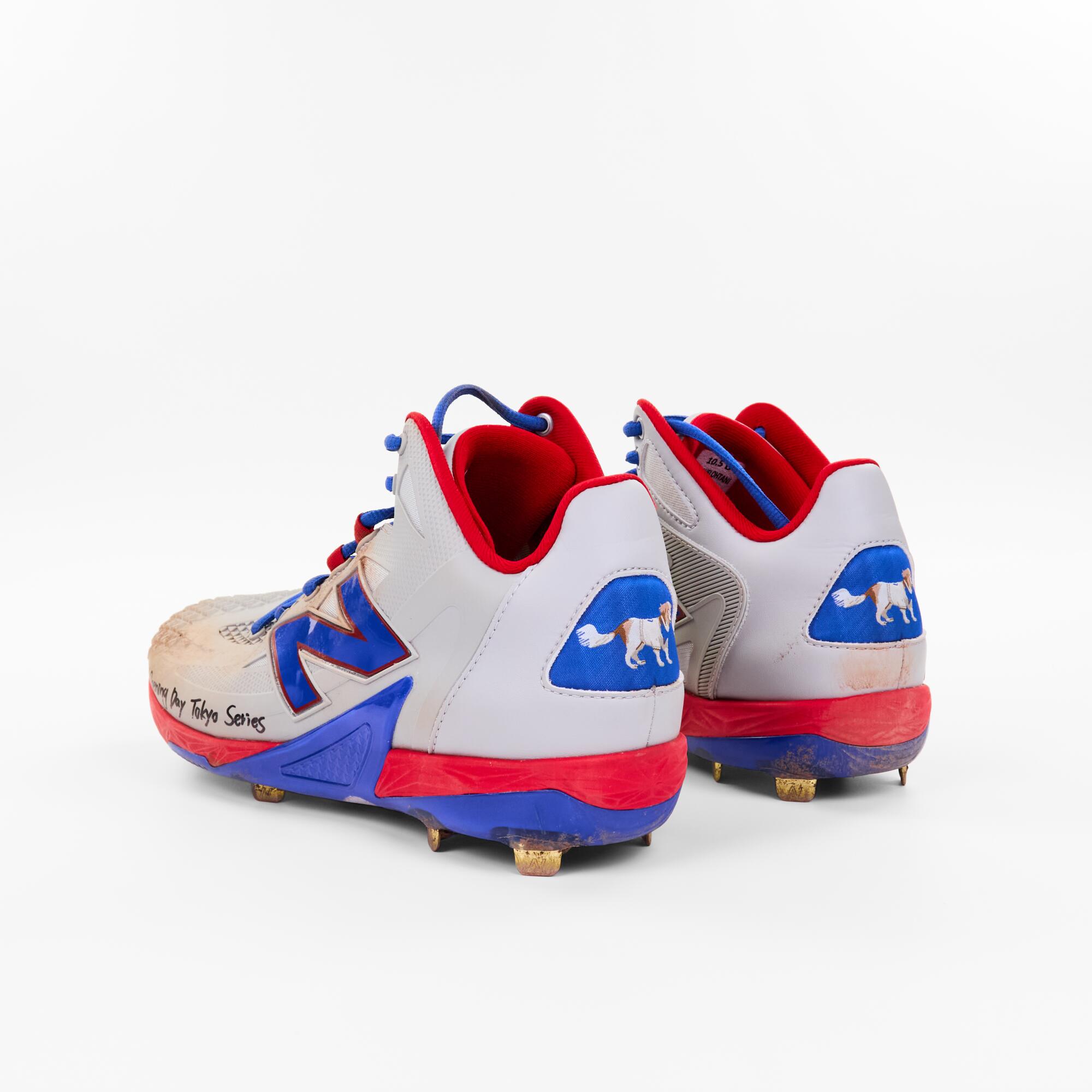
Now add Shohei Ohtani to the mix. A pair of his cleats hit the auction block Monday, hyped by the promoter as “one of the most significant baseball artifacts ever” and “the greatest baseball footwear ever made available” and “the most culturally significant footwear ever worn on Japanese soil.”
In this case, the adjectives are more than breathless. Ohtani is the best player in baseball, the favorite to win his fifth most valuable player award in six years, an international tourist attraction, and a global pitchman making an estimated $125 million in sponsorships and endorsements this year.
So, the footwear: These are the cleats Ohtani wore when the Dodgers opened the 2025 season in Japan, decorated with art of his world-famous dog Decoy and signed by Ohtani with Asian kanji characters rather than English letters.
The cleats were purchased last year by Take to the Universe (TTU), a Japanese company that distributes beauty and wellness products in Japan and throughout Asia. State records show the company registered a subsidiary in Los Angeles two months ago.
The cleats Shohei Ohtani wore during the Dodgers’ 2025 season opener in Japan are on the auction block.
(The Realist)
“We thought, hey, we could actually use this to market our company and enter into the U.S. market,” said Ryoji Iguchi, chief executive of the subsidiary. Iguchi declined to say how much TTU paid for the cleats.
For a Japanese company to leverage Ohtani and the Dodgers to introduce itself to an American audience is nothing new — not just for tangible consumer goods, but also for animated characters.
You wouldn’t actually go into a store and ask for a TTU product, though. You eventually might go into a store and ask for a beauty product made by another company. TTU would just get it there.
So how does selling a pair of cleats create brand awareness for a brand consumers would not even know?
“This interview,” Iguchi said.
The Ohtani Economy strikes again: You don’t know us, but we’re coming to America, we want to help you sell your wares — and we’re selling Ohtani’s cleats!
The sale was arranged by Scott Keeney, founder of the Realest, a Los Angeles-based enterprise specializing in sports and entertainment memorabilia.
The cleats Shohei Ohtani wore during the Dodgers’ season opener in Japan in 2025 are on the auction block.
(The Realist)
Keeney talks about the “museum-grade” and “investment-grade” quality of the cleats. You might find a trading card marketed as one of one, but someone could make another. In this case, no one can make another pair of cleats worn by Ohtani on that particular day.
“It’s no different than art, where you’re seeing paintings selling for tens, hundreds of millions of dollars,” Keeney said. “The top grails are in a category of their own.
“It’s what the ultra, the top 0.0001% want, and they appreciate faster than anything else in the category.”
So how much might the Ohtani cleats command, given the combination of sport and celebrity?
Kobe Bryant’s sneakers from the game in which he tore his Achilles tendon — and hit two free throws before he left the court — fetched $660,000. Michael Jordan’s “Flu Game” shoes sold for $1.4 million. Kanye West wore “Air Yeezys” to the Grammys, and the pair sold for $1.8 million.
The ball Ohtani hit for his 50th home run in his 50-50 season: $4.4 million. And, speaking of holy grails: Judy Garland’s ruby slippers from “The Wizard of Oz” fetched $32.5 million.
I cannot afford that, in this lifetime or any other. Perhaps you can. If you cannot, the Realest is offering this free-to-enter contest: Guess the sale price of the Ohtani cleats and, if you come closest to the actual sale price, you win 1% of the price. In the event of a tie, the first submission wins.
The cash would be nice, because this is just a pair of someone else’s worn shoes. But, since everything else Ohtani does seems to be unprecedented, this auction just might be too.
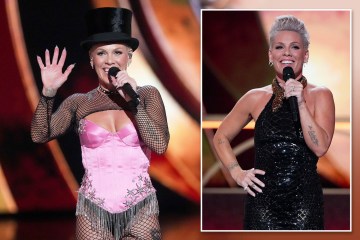
PINK was feeling in a very generous mood at the O2 Silver Clef Awards in London.
The American superstar forked out £16,000 on Harry Styles tickets during the auction on Thursday, only to hand them back to the charity — so they could have someone bid on them again.
Pink poses with her Silver Clef Award after making a generous donationCredit: GettyIcon Award winner Lily Allen donated £1,600Credit: Getty
An onlooker said: “Pink paid £16,000 to win the lot. She then donated it back. It was an incredibly generous gesture.”
Pink wasn’t the only one to dig deep at the bash — which raises money for music therapy charity Nordoff and Robbins — with Jessie J pledging £500 while Icon Award winner Lily Allen handed over £1,600.
Sign up for the Showbiz newsletter
Thank you!
Price Tag singer Jessie was handed the Outstanding Achievement award and opened up about her breast cancer diagnosis in her acceptance speech.
She said: “The last 18 months has been the most incredible, the most magical of my life. Also the hardest. But I believe we find the truest parts of ourselves in hard times.
“So when you are faced with them, it’s life trying to teach you something.
“To become a mum after not thinking I would, having one tt just get chopped off out of nowhere. “You never know when a tt is going to be taken from you, so enjoy your t*ts while you’ve got them.”
Encouraging other celebs to get their cash out and raise some money, Jessie added: “You’ve obviously been invited because some of you are rich as f***, don’t be a vibe killer.
“I know I wrote Price Tag, but if you’ve got money now is the time to get it out.” It was an evening of revelations too, with John Bishop telling the crowd he had renewed his vows with wife Melanie.
The pair split for 18 months in 2000, but rekindled their romance after she went to watch one of his stand-up shows.
As he handed David Gray his Silver Clef gong, John said: “I could never have imagined that I’d get the opportunity to say thank you to this artist. “My marriage had failed, everything had gone s***.
“When I was at my lowest I was introduced to David Gray and he’s been a constant part of my life ever since.
“He was there at the lowest point of my life but then when me and my wife reconciled and went on to renew our wedding vows we played Sail Away as we walked down the aisle.”
Melanie C was handed the Global Impact Award and paid tribute to her Spice Girls bandmates, after a feud put paid to a proper celebration of their 30th anniversary of Wannabe earlier this week.
She said: “We’re all in touch obviously, all of the girls, we’re so grateful and respectful of each other.
“We came together, and we achieved our wildest dreams, and we changed our lives forever, and the world forever, some would say.”
ELLIE OF A GAME FOR OUR BOYS
Ellie Goulding has been booked to perform during England’s clash with NorwayCredit: Getty
ELLIE GOULDING has thrown her support behind the Three Lions as we take on Norway in the World Cup quarter-finals.
The Burn pop star announced she had been booked to perform during the clash.
Ellie shared the news on Instagram last night and added: “Performing at half time for England vs Norway has me feeling like truly anything could happen.
“I already know the boys will make England proud. It’s coming home.”
Insiders confirmed that Ellie would play a medley of songs inside the Hard Rock Stadium in Miami.
KASABIAN are giving fans an early Christmas present – with five huge shows later this year.
The band, fronted by Serge Pizzorno, will kick off their run at Birmingham’s Utilita Arena on December 11, followed by gigs in Glasgow, Cardiff, London and Manchester.
The announcement comes after their sold-out headline date in front of 45,000 fans at London’s Finsbury Park last weekend.
SCHULTZ: TRACK IS PERSONAL
Matt Shultz of Cage The Elephant, who have just released a new singleCredit: Getty
CAGE THE ELEPHANT’s new single has special meaning for frontman Matt Schultz.
The US rockers, who supported Oasis on tour in America last year, released Beaches In Tennessee yesterday – their first new music for two years.
Matt, said: “It’s no secret I went through a mental health crisis a few years back. This song symbolises me finally being able to move past it.
“I was hospitalised for nearly three months, and the song addresses it by creating a fictionalised account of it.
“It was my attempt at reclaiming the ability to write about something serious that happened in my life, from a place of genuine experience.
“As a band, we were able to reclaim the ability to write a song rooted in a difficult and turbulent real-life event, but do it in a lighthearted way.”
TEN FANS ON SIDE
December 10 playing an intimate gig at Circuit in KingstonCredit: Click News and Media
DECEMBER 10 celebrated the launch of their debut EP, On Your Side, by playing two intimate gigs at Circuit in Kingston upon Thames.
The fast-rising group – Nicolas, John, Josh, Sean, Cruz and Hendrik – celebrated the release as more than 1,000 fans packed the south-west London venue across the sold-out shows.
The six performing members, with Danny currently taking some time out, treated the crowd to stripped-back versions of tracks from the EP including Angel and Run My Way.
AHEAD of Iron Maiden’s historic show at Knebworth tonight, support act The Hu went on a sightseeing trip.
The Mongolian metal band, whose third studio album, Hun, drops on July 24, visited Buckingham Palace and Big Ben in London before heading to the venue.
Mongolia’s biggest metal band, The Hu, are set to support Iron MaidenCredit: ImAPhotographer.com
Temka, who plays a traditional Mongolian guitar called a tovshuur, is a huge Chelsea fan and is thrilled to be performing here while the World Cup is on.
Zara Larsson oozes charisma in this strappy gold top and denim shorts in MadridCredit: Javier Bragado
IT’S taken Zara Larsson over ten years since her debut hit, but she is a now a true pop superstar after this sizzling show.
She oozed charisma in this strappy gold top and denim shorts at Madrid’s Mad Cool Festival on Thursday night.
Zara was lifted into the air by her dancers to sing Midnight Sun.
She then did the splits during Ain’t My Fault, drove a car on stage for Hot & Sexy and also got a fan up to do her viral Lush Life dance with her.
With amazing vocals and dance moves, Zara deserves to be the biggest pop star in the world.
Mad Cool also hosted Lorde, Jennie, Cmat and Florence + The Machine, proving female pop music is thriving.
MATTY TO KICK OFF STAG DO
The 1975 rocker Matty Healy is about to embark on a huge stag doCredit: Getty
IT is turning into the summer of celebrity weddings – and I’m told Matty Healy will tie the knot with American model Gabbriette a week today.
The 1975 rocker will kick off the festivities in LA with a huge stag do tonight.
Matty and his pals will watch England play Norway in the World Cup quarter-final – and hopefully they will still be celebrating by the time the final whistle blows.
On Instagram last week, Gabbriette shared a video of the couple watching England take on Mexico, where her mum is from.
Thankfully, they were still on good terms afterwards.
The pair started dating in 2023 after Matty’s split from Taylor Swift – but their nuptials will be a lot more low-key than Taylor’s which took place earlier this month.
A source said: “They are flying out their nearest and dearest but it’s an intimate ceremony.
“The spectacle of Taylor’s wedding isn’t their thing.”
His bandmate George Daniel with his wife Charli XCX will be there, along with Matty’s mum Denise Welch – so I’m sure there will be plenty of tales to tell.
TAYLOR TOY OSCAR BID
FRESH from her five Emmy nominations, Taylor Swift is now being backed for Oscars glory, with her Toy Story 5 song, I Knew It, I Knew You.
Insiders said Pixar are pushing for the track to land a nomination for Best Music (Original Song) at the ceremony in Los Angeles next March.
A source said: “There is a full-on drive to get Taylor to the Oscars and win the golden prize.
“There is such excitement at how well the film has been received and how beloved the song has become in a very short space of time.
“One beautiful factor in this is that Taylor has such a deep connection to these movies.”
If she lands a nod, it will be the first time newlywed Taylor has received an Oscars nomination.
CAUGHT LIVE
Johnny Marr @ Castlefield Bowl, Manchester
★★★★☆
Johnny Marr performs at Castlefield Bowl in his hometown ManchesterCredit: Getty
JOHNNY MARR was at his mercurial best for his sellout homecoming gig in Manchester.
There were plenty of Smiths classics, a couple of seriously decent new singles and a stunning disco-ball moment that turned the baked concrete of Castlefield Bowl into a club dancefloor.
It was the indie icon’s biggest solo show to date, ahead of the release of his fifth album The Age Of Everything in October.
Marr kicked off with Generate! Generate!.
It was a rousing opener, but it was the second track, The Smiths’ Stop Me If You Think You’ve Heard This One Before, that got the crowd going.
New Town Velocity, from his 2013 album The Messenger, was a welcome moment of reflection while new track Spin went down a storm.
The finale was epic. The juddering riff of How Soon Is Now brought the curtain down on the main set, before a trio of classics – Panic, Iggy Pop’s Passenger, and There Is A Light That Never Goes Out – culminated in arms wrapped around shoulders.