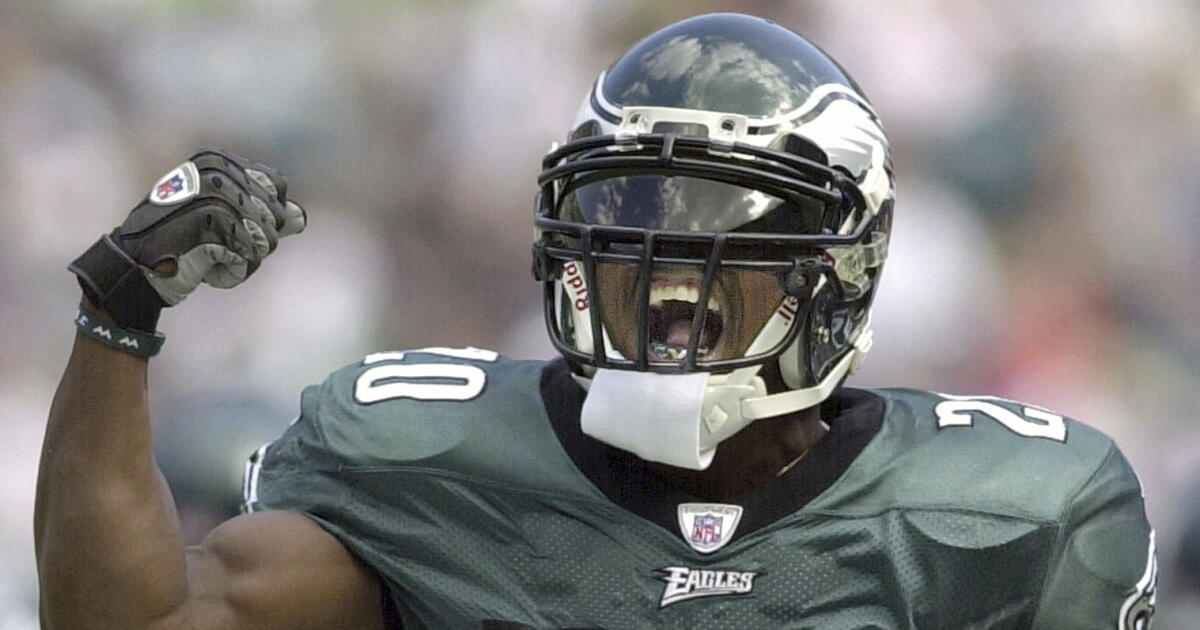
The NFL confirmed Monday that it has asked the Department of Homeland Security to remove a video featuring hard-hitting highlights of Hall of Fame safety Brian Dawkins from a social media post in reference to a report about a caravan of immigrants approaching the U.S. border.
On Sunday afternoon, the verified X account of the DHS reposted another account’s report of the purported caravan, along with the comment, “Our time has come,” and a 39-second clip of the former Philadelphia Eagles and Denver Broncos star delivering one bruising hit after another.
“The league requested DHS take down the video,” NFL spokesperson Brian McCarthy told The Times in an email.
Dawkins told ESPN in a text that he had “very respectfully not given permission” for the DHS to use his video.
About two hours after the initial post went up, the DHS responded in the comment section with a still photo of Dawkins and the caption, “The Border Is Closed.” As of early Monday afternoon, both posts remained intact.
The Times reached out to the DHS by email and asked if it had initially sought the NFL’s permission to use the content, if it planned on taking down the content as the league requested and why it chose to use Dawkins’ imagery with the posts.
The department sent a statement in response that appears to refer to the nine-time Pro Bowl selection’s nickname “Weapon X.”
“DHS is playing lockdown defense at the border. We will use every Weapon at our disposal, from A to X, to keep Americans safe,” the department wrote.
“The United States Border Patrol is actively tracking a migrant caravan which departed San Pedro Sula, Honduras on September 20, 2026. USBP is closely engaged with its international partners to monitor their movement and any additional developments. USBP reminds migrants that under the leadership of President Trump and Homeland Secretary [Markwayne] Mullin, the border has remained closed and secured for the last 16 months.
“Migrants considering making the dangerous journey to our country should also be aware that the days of ‘catch and release’ are over, and [former President] Biden’s disastrous open border policy has been SEALED SHUT. Anyone attempting to illegally enter the United States will be apprehended, prosecuted, and removed from the country.”
SHARON Osbourne has launched a High Court bid to remove her late hubby Ozzy’s long-term accountant as an executor of his will.
Papers lodged yesterday show the rocker’s widow, 73, issued a claim against Colin Newman under a law used to remove or replace estate representatives.
Sharon Osbourne has launched a High Court bid to remove her late hubby Ozzy’s long-term accountant as an executor of his willCredit: GettyColin Newman faces being removed as an executor of Ozzy’s willCredit: Discogs
His wife and two other executors, her niece Georgina Maszlin and assistant Melinda Varga, now want Mr Newman removed from administering his ex-client’s estimated £100million fortune.
Sign up for the Showbiz newsletter
Thank you!
He had looked after the couple’s finances since before they married in 1982 and is one of the most senior money men in the UK music industry.
Companies House records show he was a director of Ozzy’s main UK firm, Monowise Ltd, for years before quitting in April.
Mr Newman had looked after the couple’s finances since before they married in 1982Credit: Getty – ContributorSharon with kids Jack and Kelly at the rocker’s funeralCredit: Getty
Sharon was appointed director last December, five months after Ozzy’s death, with the firm officially controlled by the “estate of John Michael Osbourne” — Ozzy’s real name.
Judges can remove an executor for a variety of reasons, including if they have already been involved in the will but then later decide to step away.
It is not clear if Mr Newman is contesting the application or if he has agreed to stand aside.
He first met Sharon while working as a junior accountant for her father, notorious rock manager Don Arden.
He is credited on several of Ozzy’s albums and they were long-term pals.
The rocker is once said to have burst into his accountant’s Soho office swinging a dead rabbit and spraying blood on the walls.
Ozzy also slept on a park bench opposite Mr Newman’s house in 1984 instead of going to the hospital where Sharon was about to give birth to their daughter Kelly.
Mr Newman, 79, also acted as former X Factor judge Sharon’s literary agent.
He and Sharon’s legal representatives were invited to comment.
The Federal Communications Commission has asked a judge to toss out ABC’s 1st Amendment lawsuit, arguing that parent company Walt Disney Co. is wrongly attempting to short-circuit the agency’s review into whether the broadcaster has violated the law.
The commission, in court documents, maintains ABC’s lawsuit was premature because regulators simply were in the process of reviewing whether ABC has served the public interest in operating its eight television stations. No final determination has been reached, the FCC argued.
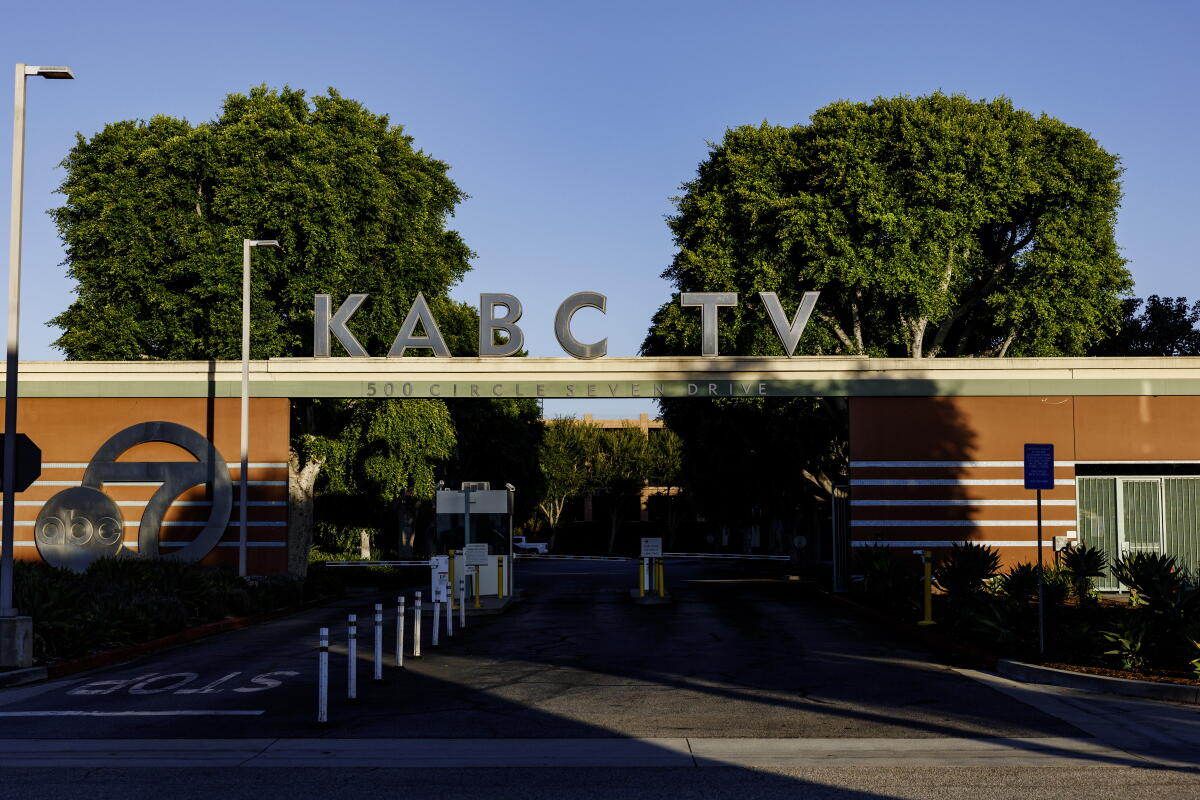
The Disney-owned station licenses were not set to expire for several years. For example, the license for KABC-TV Channel 7 in Los Angeles extends to 2030.
But the FCC launched the probe a day after President Trump complained about ABC late night comedian Jimmy Kimmel over a joke that upset First Lady Melania Trump.
ABC has taken an aggressive stance, arguing the FCC is wielding its enforcement powers to punish the network after Trump repeatedly agitated to have ABC’s licenses revoked. ABC maintains the FCC’s enforcement action is an attempt to quell the network’s free speech, in violation of the 1st Amendment. It asked a federal judge to issue a temporary restraining order and injunction to halt the FCC’s early station review.
ABC also is fighting an FCC review into whether its daytime talk show, “The View,” should be entitled to an exemption from the so-called equal-time rule for political candidates who appear as guests.
Disney’s lawsuit has enormous 1st Amendment implications.
ABC is the first major broadcaster to challenge the FCC’s enforcement actions since Trump returned to power, joining a small handful of news organizations, including the Associated Press and the Wall Street Journal, that have pushed back against the president’s efforts to bully outlets he dislikes.
In late December, Trump wrote on social media: “If Network NEWSCASTS, and their Late Night Shows are almost 100% negative to President Donald J. Trump, MAGA, and the Republican Party, shouldn’t their very valuable Broadcast Licenses be terminated? I say YES!”
ABC, which did not comment Friday, argued the FCC’s review is “extraordinarily early” and “that timing underscores the Commission’s true purpose: coercing and retaliating against a network that refuses to bow to the Administration’s demands.”
The FCC has scoffed at the broadcaster’s arguments.
“Disney filed a meritless lawsuit in an effort to stop the FCC’s ongoing investigation into allegations that Disney violated the law,” an FCC spokesperson said in a statement. “The FCC has developed a voluminous record, and it will continue to follow the facts and the law wherever they lead.”
The government filed its motion Thursday in Washington. The 46-page document was filed by U.S. Atty. Jeanine Pirro and signed by Assistant U.S. Atty. Dimitar P. Georgiev on behalf of the FCC.
Disney was “not content to let the Commission’s ordinary investigative processes (and, if needed, ordinary processes of judicial review) run their course. They instead ask this Court to halt the license renewal proceeding in its tracks by issuing a preliminary injunction,” the FCC said.
U.S. District Judge Loren L. AliKhan has scheduled an Oct. 6 hearing.
Disney has argued the FCC has gone well beyond an examination of its internal hiring practices — the original purpose of the agency’s review.
But, in its motion, the FCC faulted Disney’s handling of the matter, saying “Disney’s responses to Commission information requests were deficient and nonresponsive,” prompting the agency to escalate the dispute.
In late April, Carr directed the FCC Media Bureau to force ABC to apply for renewal of their licenses early.
“The Commission’s Chairman has repeatedly emphasized that, although the allegations against Disney are serious, he and the agency remain ‘open-minded,’ have ‘not made a decision,’ and are ‘going to follow the facts and the law wherever they [lead],’ ” according to the motion.
The FCC also argued Disney picked the wrong court because Congress stipulated that any review of commission orders should be heard by an appeals court.
If ABC lost its licenses, it would hobble the network by forcing its largest stations off the air. Other ABC stations at risk include those in San Francisco, Fresno, Houston, Philadelphia and New York.
KABC-TV Channel 7 is owned by Disney in Glendale.
(Gina Ferazzi/Los Angeles Times)
Trump on Sunday called for the FCC to “rebuke or punish” NBC’s “Meet the Press” anchor Kristen Welker after she pointed out that the president has had mixed success in endorsing political candidates in this election season.
The FCC also has an open investigation against NBC owner Comcast, also looking at the Philadelphia company’s diversity and hiring practices. The FCC has not ruled out calling NBC-owned station licenses in for an early review as well.
Sept. 3 (UPI) — The Trump administration is asking the Supreme Court to permit enforcement of its mail-in voting restrictions, arguing it will suffer irreparable harm because two states will begin sending ballots to voters before the block is to expire next week.
Filed Thursday by Solicitor General D. John Sauer, the request for an immediate administrative stay of the district court’s temporary restraining order comes in protracted litigation over a Trump administration rule giving the U.S. Postal Service authority to screen outbound mail-in ballots for compliance with envelope standards and verify recipients have been entered on their state’s USPS Mail-In and Absentee Participation list.
Last week, U.S. District Judge Indira Talwani in Massachusetts sided with the League of Women Voters in Massachusetts, which has been fighting the rule it says is unlawful and violates federalism principles of the Constitution, issuing a 14-day block against enforcing its key provisions while she considers the request to impose a longer, more restrictive preliminary injunction.
In his filing Thursday, Sauer argued that the federal government will be irreparably harmed if the restraining order is not lifted before North Carolina and Alabama send out their mail-in ballots next week, saying a court decision would come too late for those ballots.
“With respect to the November 2026 election, the order thus partially nullifies the Postal Service’s efforts to address the risk that the federal mails will be used to perpetrate voter fraud,” he said.
Sauer continued that despite Talwani’s order allowing the Postal Service and states to take steps to ensure their envelopes meet the rule’s requirements, her block “risks sowing confusion and chaos because it makes those preparatory steps voluntary, rather than mandatory.
“Thus, if the order is eventually stayed and the rule takes effect for this year’s elections — as should occur — there is a grave risk that states may not have taken the necessary steps to comply due to the false sense of latitude created by the court’s improper order, potentially depriving those states’ citizens of the ability to vote by mail,” he said.
Despite using the mail to vote himself, Trump has long been a critic of mail-in ballots, claiming them to be a source of voting fraud, though studies have found no evidence that mail voting produces higher overall rates of voter fraud.
The USPS rule is one of several actions Trump and his administration have taken ahead of November’s midterm elections, which the president has become increasingly focused on as he has warned Republicans that losing the House to Democrats could lead to his impeachment as well as investigations. While the moves generally have widespread Republican support, Democrats and critics say they are efforts to rig the midterms.
The new USPS rule being litigated comes in response to an executive order Trump signed in March to expand federal control over mail-in ballots, including authorizing the USPS not to send them to voters unless certain conditions are met.
Two weeks ago, the high court lifted an injunction blocking Trump’s mail-voting executive order, stating the challenge to the USPS provisions was premature as the agency had yet to issue a final rule. After the final rule was published Aug. 26, two dozen Democratic-led states and the District of Columbia sued, resulting in the two-week block the Trump administration is now contesting.