Mammoth deal has raised questions about corporate consolidation and editorial independence in media.
Published On 30 Sep 202630 Sep 2026
A United States judge has entered an order giving the green light for the media giant Paramount to complete its $110bn acquisition of entertainment company Warner Bros., despite fears about the long-term impacts of media consolidation.
On Wednesday, US District Court Judge Araceli Martinez-Olguin approved a settlement between Paramount, Warner Bros, and a group of 12 states that had sued to block the merger.
Recommended Stories
list of 3 itemsend of list
In her ruling, Martinez-Olguin described the proposed deal as a “fair, reasonable, and good faith approach to address the competitive harms”.
Analysts have long raised concerns about the acquisition, one of the largest media mergers in history.
The coalition of states that sued to block the deal, led by California, had argued that combining Paramount with Warner Bros would effectively stifle media competition. They estimated that nearly one-third of all theatrical releases and basic cable programming would be consolidated under the merger.
But the states abandoned their lawsuit in favour of a settlement on September 21.
The five-year agreement requires Paramount to abide by theatrical film release quotas, committing to 30 releases per year in the US.
It also mandates that the combined company must keep negotiations with cable providers for Warner-owned channels separate from its deals for Paramount-owned channels.
The settlement approved on Wednesday also includes the creation of a five-member panel meant to safeguard the editorial independence of CNN and CBS, two major news networks.
But sceptics have pointed out that the merger puts a large swath of US media under the control of David Ellison, who leads Paramount.
Under Wednesday’s agreement, Ellison is in charge of appointments to the board that would oversee news independence.
The Paramount CEO is the son of billionaire Oracle founder Larry Ellison, a strong backer of pro-Israel causes who has close ties to the administration of President Donald Trump.
The founder of the film production company Skydance, David Ellison acquired Paramount last year as part of another controversial merger.
The 2025 Paramount-Skydance deal brought CBS under Ellison’s control. Ahead of the merger, sceptics questioned the abrupt cancellation of the CBS comedy show The Late Show with Stephen Colbert, which had been critical of Trump.
Ellison later installed Bari Weiss, a pro-Israel media figure, as the head of CBS News in a move that also raised questions about diminished independence within major journalism outlets.
Some critics depicted Wednesday’s settlement as a further capitulation to powerful corporate interests.
“Allowing one Trump-aligned, foreign-owned conglomerate to dominate American news and entertainment is a disastrous outcome,” Senator Elizabeth Warren of Massachusetts said in the wake of the settlement’s announcement.
But public officials like California Governor Gavin Newsom had called on his state’s Attorney General Rob Bonta to scrap the 12-state effort to block the deal and to pursue a settlement instead.
Paramount emerged victorious from a bidding war with the streaming giant Netflix in February to win control of Warner Bros’s holdings.
That includes a series of media and entertainment services, including the film studio Warner Bros Pictures, CNN and HBO Max. The Trump administration approved the deal without alterations in June.
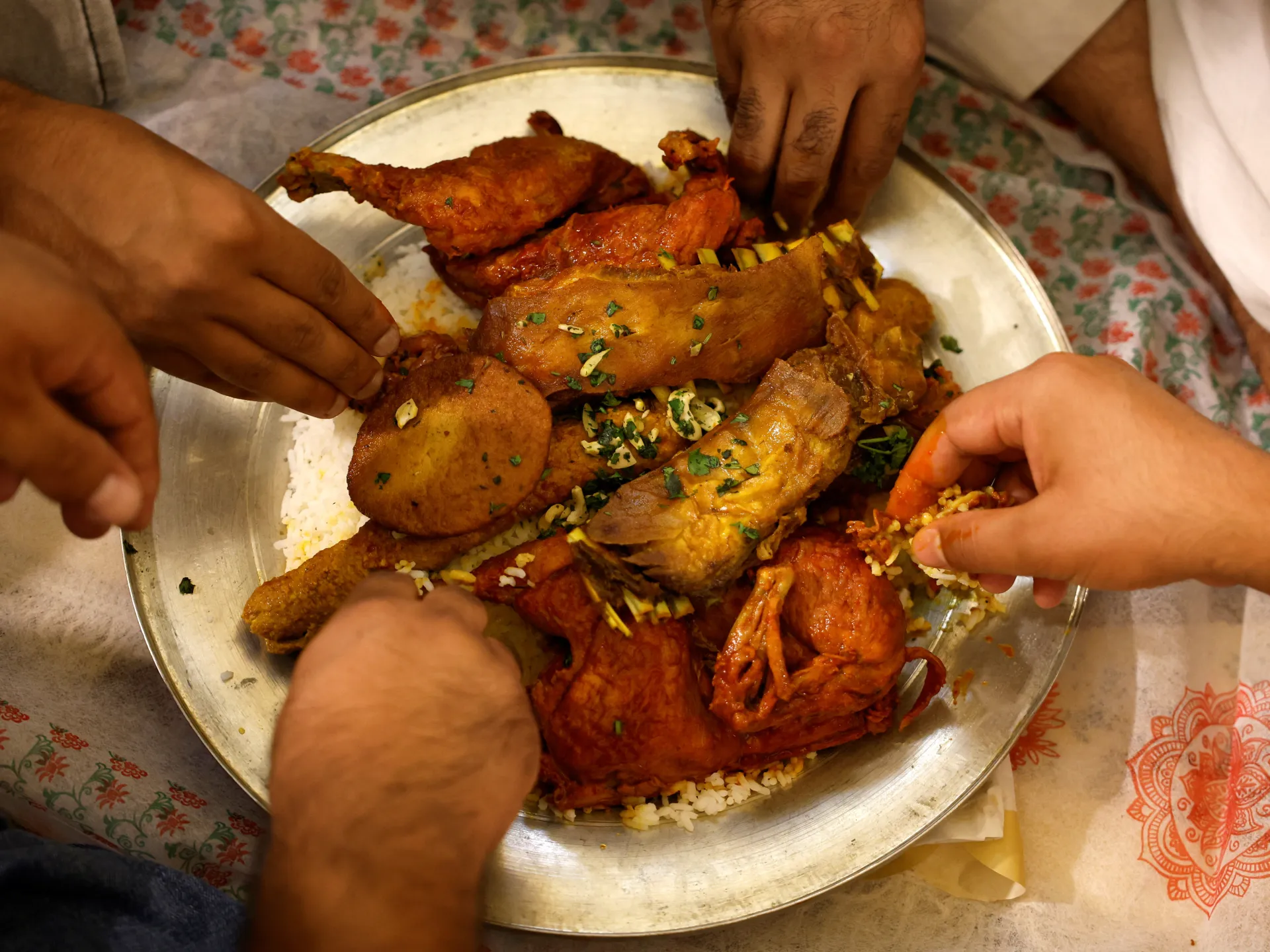
As autumn approaches, the rhythmic thud of wooden mallets pounding lamb echoes across courtyards and back lanes in Kashmir, where cooks prepare Wazwan – a lavish, multi-course mutton feast that remains central to traditional wedding celebrations.
Wazwan arrived in the valley from Central Asia in the 14th century, when rulers brought skilled chefs along with the carpet and shawl weavers that later defined the region’s craft heritage.
Today, the feast is both a marker of social status and a powerful symbol of Kashmiri identity.
Among its guardians is 74-year-old Ghulam Nabi Baba, a veteran Wazwan chef who traces his lineage to those early migrants. His forefathers settled in Srinagar’s old city as part of a community of cooks known as Wazpora.
“There were only seven mutton dishes at that time. Over the centuries we added more, and now there are around 20,” Baba said.
He explained how the number of dishes and the amount of meat often reflect a family’s wealth.
“Forty years ago in Delina [a village in north Kashmir] I cooked 4,500kg (9,920 pounds) of meat. That was a very big wedding. Normally, at an average marriage we cook 200kg (440 pounds),” he added.
Despite the expanding menu, the core techniques have changed little. Lightly spiced meat is still pounded by hand before being simmered slowly over wood fires – a labour-intensive process Baba has followed since joining his father as a cook at 15.
But the pressures of modern life are reshaping the tradition. Baba’s son has chosen to open a restaurant rather than work weddings, saying the round-the-clock demands are too exhausting.
He believes he is still carrying forward the family’s centuries-old culinary legacy – just in a different setting, as Wazwan adapts to contemporary tastes and lifestyles.
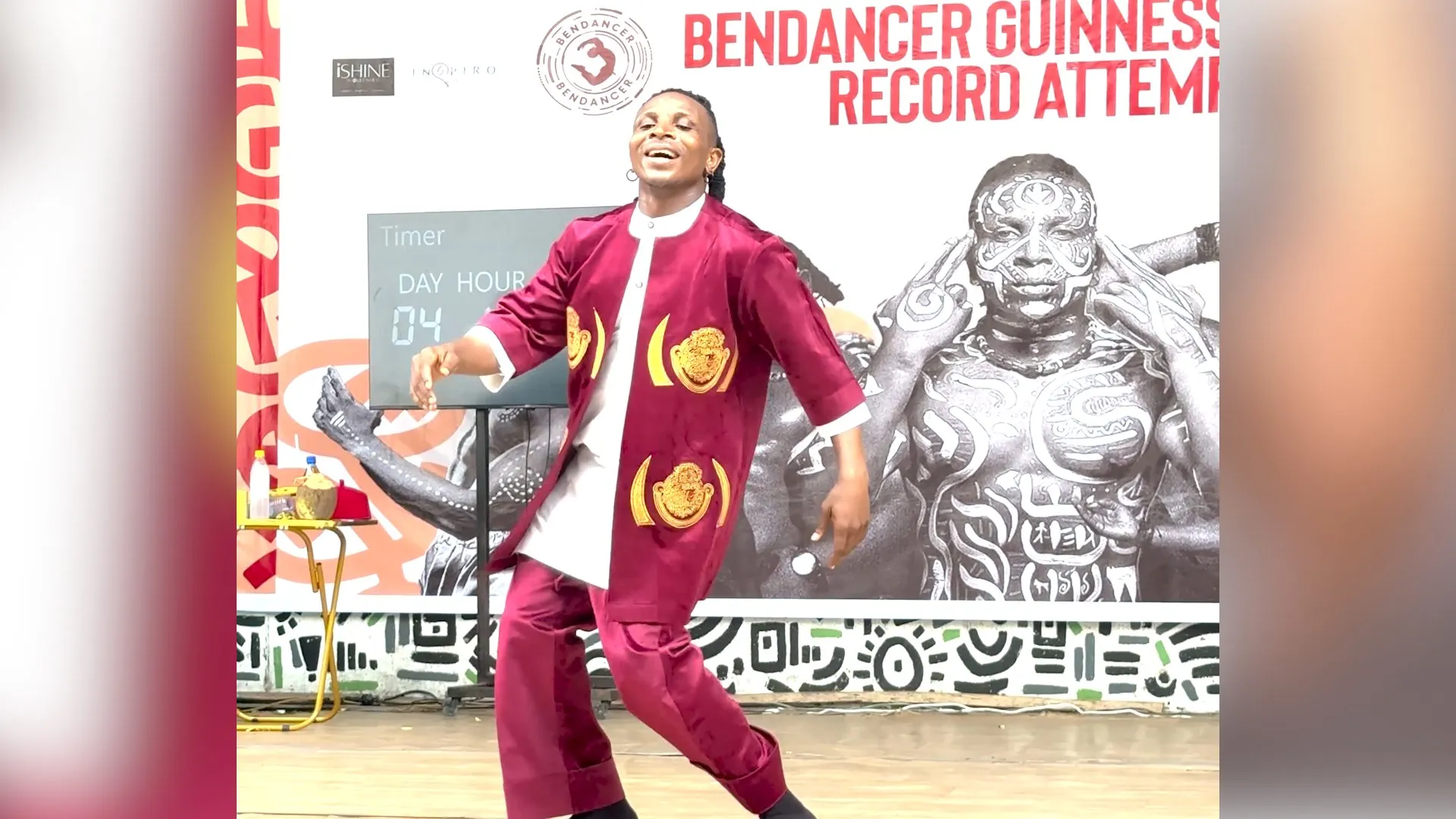
Nigerian dancer Benjamin Daniel Gabriel is trying to dance for 168 hours straight. He’s taking on the seven-day challenge in Lagos in a bid to set a Guinness World Record and put African dance on the global stage.
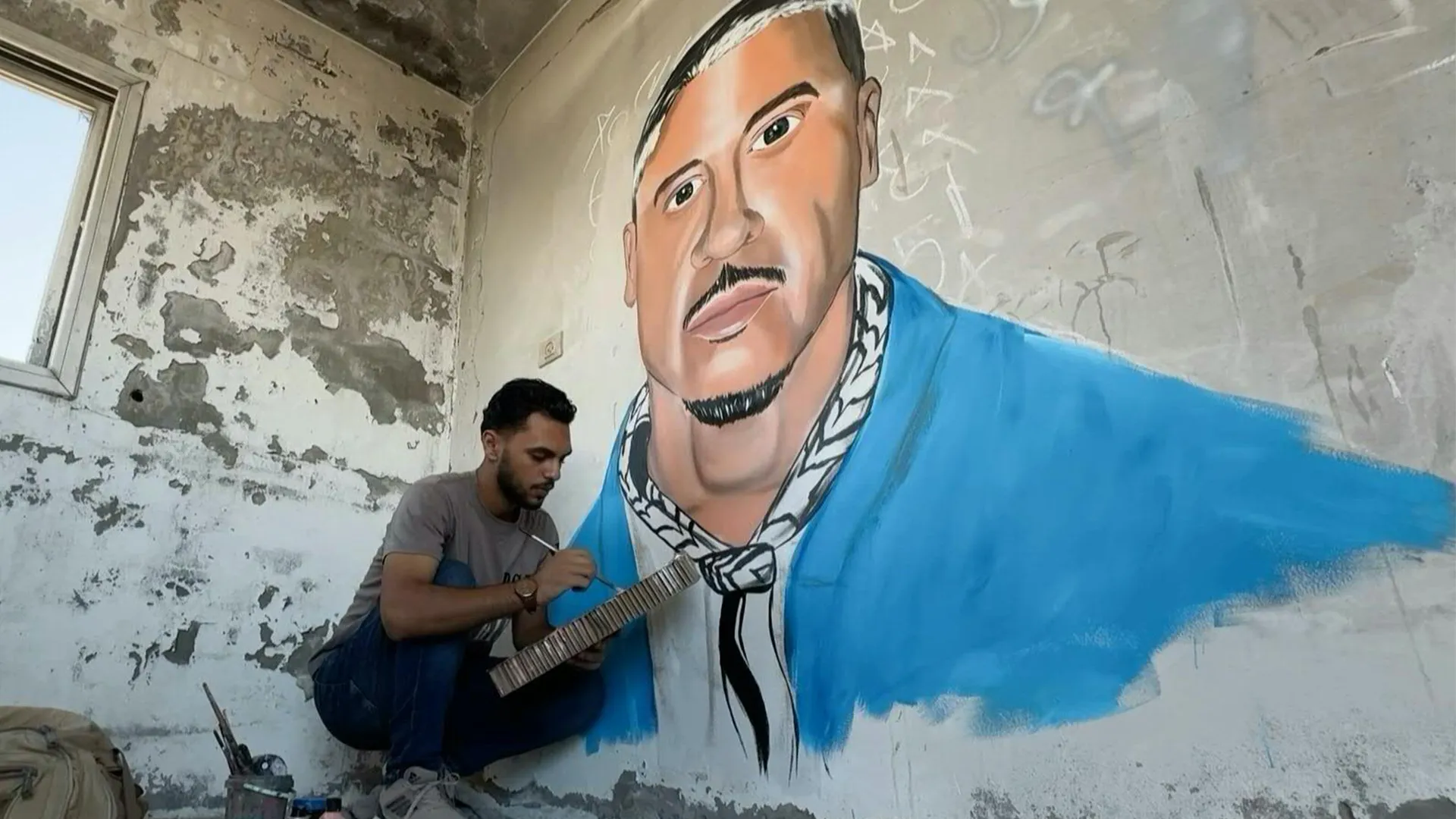
Artists in Gaza are painting murals on destroyed walls, honouring US rapper Macklemore for his support for Palestine. Despite a ceasefire agreement, Israel continues to kill Palestinians in frequent strikes across Gaza.
In Super Macklemore 64, players are chased by a giant Ed Sheeran, dodge tiny billionaire Robert Krafts and summon musicians to chant “Free Palestine”. Creator Jonathan Mann says it highlights the “absurdity” of Macklemore being dropped from Sheeran’s concerts and Israel’s genocide in Gaza.
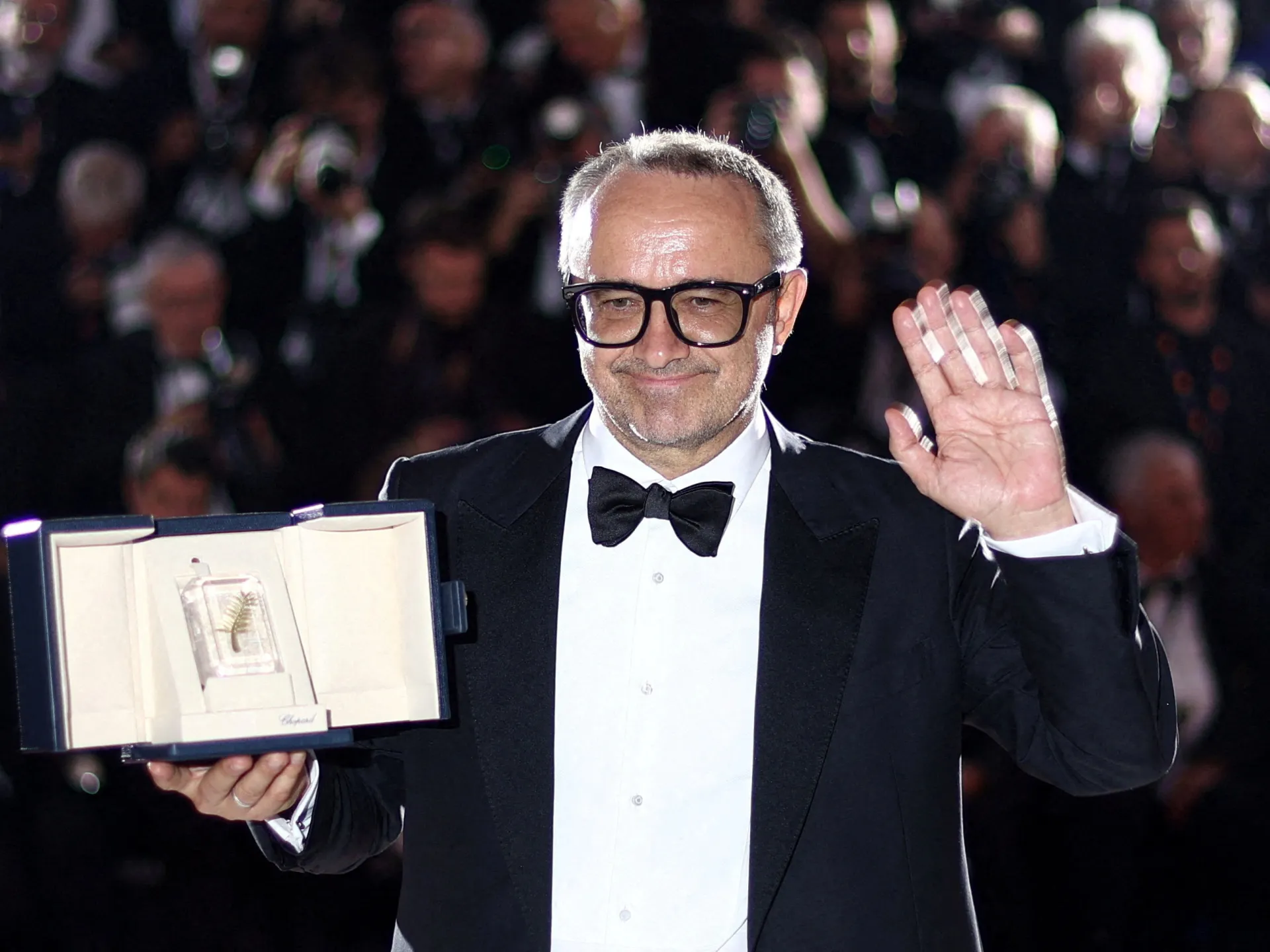
Acclaimed Russian film director who won 2026 Grand Prix award at Cannes, has been critical of the war in Ukraine.
Published On 18 Sep 202618 Sep 2026
The winner of a prestigious Cannes Film Festival award has been declared a foreign agent by Russian authorities for his criticism of Moscow’s war in Ukraine.
Acclaimed Russian film director Andrey Zvyagintsev was designated a “foreign agent” by the Kremlin on Friday, according to state news agency TASS.
Recommended Stories
list of 3 itemsend of list
Zvyagintsev won the 2026 Grand Prix at the Cannes Film Festival for, Minotaur, a film depicting a Russian businessman who is forced to decide which of his employees should be mobilised to go and fight in Ukraine.
“Millions of people on both sides of the front line dream of only one thing: for the massacres to stop,” Zvyagintsev said in his acceptance speech, adding that Russian President Vladimir Putin was the only person capable of ending the war.
Moscow has kept casualty numbers from the fighting in Ukraine heavily restricted and has not provided timely or complete public updates, but estimates of Russian soldiers killed in the four-year war range from anywhere from 200,000 to half a million.
Russia’s Ministry of Justice on Friday accused Zvyagintsev of disseminating “false information about decisions taken by the public authorities of the Russian Federation and the policies they pursue”.
“He interacted with foreign agents and resides outside the Russian Federation,” it said.
The 62-year-old director, who has lived outside Russia since the COVID pandemic, is known for a series of other films including, The Return, The Banishment, and, Leviathan, a bleak portrayal of life in rural Russia.
People listed as foreign agents are subjected to onerous bureaucratic requirements and restrictions on their income in Russia.
They are barred from holding public office and forced to register their activities with the authorities.
They also have to add warnings on everything they publish, including on social media, that the content was produced by a foreign agent.
The label adds connotations of espionage to numerous people, including public figures, whom it deems to be engaging in anti-Russian activity with support from abroad.
Previously, writer Boris Akunin and rock musician Boris Grebenshchikov have been labelled as foreign agents by Moscow.
Public broadcaster RTE says the country’s participation cannot be justified amid ‘appalling and ongoing loss of lives in Gaza’.
Published On 17 Sep 202617 Sep 2026
Ireland has become the second country, after the Netherlands, to announce a boycott of next year’s Eurovision Song Contest over Israel’s participation.
Irish public broadcaster RTE said in a statement on Thursday that the country’s participation could not be justified “given the appalling and ongoing loss of lives in Gaza” and that the humanitarian crisis in the enclave “continues to put the lives of so many civilians at risk”.
Recommended Stories
list of 3 itemsend of list
RTE, which manages Ireland’s selection and participation in Eurovision, added that it remained “deeply concerned by the continued denial of independent access [for] international journalists to the territory”.
The decision marks the second consecutive year that Ireland will neither participate in nor broadcast the competition, which is the world’s most popular television music show.
Earlier this month, Eurovision organisers said they were excluding any country involved in an armed conflict from hosting the competition.
However, the Dutch public broadcaster Avrotros said the exclusion of countries in conflict was not “sufficient”.
Avrotros announced last month that it was withdrawing from the 2027 competition.
It said Eurovision could “no longer be considered neutral” given Israel’s participation in “a large-scale military conflict” in Gaza.
Both Ireland and the Netherlands were among five countries that withdrew from Eurovision 2026 in Vienna earlier this year. Spain, Slovenia and Iceland also decided not to participate.
Eurovision Director Martin Green said on Thurday that organisers “fully respect” Ireland’s decision and that they “will be missed”.
“The Eurovision Song Contest is at its best when broadcasters and their artists from different countries come together to share music, celebrate creativity and create connections between audiences,” Green said.
“That power to bring people together is at the heart of what makes the Contest so special, and is even more important now in an increasingly difficult and divided world.”
The 2026 show, which Bulgaria won, attracted 132 million viewers, 34 million fewer than its 2025 edition.
Thousands of protesters gathered outside the venue in the Austrian capital during the final in mid-May to oppose Israel’s participation.
The European Broadcasting Union organises the annual music competition. It has faced accusations of applying a double standard for refusing to exclude Israel, despite banning Russia following its invasion of Ukraine in 2022.
Chavez’s eyes still gaze from walls across Caracas. So too do the eyes of other figures, like Maduro and independence leader Simon Bolivar. Some images are faded. Others are accompanied by slogans like “To doubt is treason”.
Forastero has worked on government projects, including under Rodriguez. But he is critical of some of the newer images. He remembers a time when he painted murals of Chavez playing with children or riding a bicycle, not slogans.
“When Chavez was alive, people painted Chavez because we loved him very much. It’s as simple as that,” he said.
In recent decades, he argues that Venezuela’s public art has fallen increasingly under government control, with murals commissioned to carry explicitly political messages.
“Muralism is a story told on a wall,” Forastero said. “What we really see on the walls now are propaganda posters. I’m a chavista, and I’m disgusted by it.”
Still, the removal of the artwork is another form of propaganda, in Forastero’s eyes. He believes the Rodriguez government is seeking to project a more “neutral” appearance to better appeal to the US.
He also accuses Rodriguez of abandoning ideals key to the chavismo movement: namely, anti-imperialism and revolution. He pointed to the US’s role in shaping Venezuelan policy.
“The United States is forcing our government to behave this way,” Forastero said.
Forastero believes the removal of Hugo Chavez murals is part of an effort by Venezuela’s government to appeal to the US [Catherine Ellis/Al Jazeera]
Rafael Araujo, a Venezuelan activist, has a different view of the changing landscape.
To him, there was something “jarring” about seeing chavista figures plastered across city walls, especially the leaders who have caused the country so much pain.
During their time in power, Chavez and Maduro both faced allegations of overseeing human rights abuses, including through the violent suppression of dissent. Venezuela’s last two presidential elections have been widely denounced as illegitimate.
Known in Caracas as Senor Papagayo, Araujo has used colourful, handmade kites to protest against government violence and economic policy.
He sees the Chavez murals as a form of oppression, an ever-visible reminder of a repressive government apparatus.
His kites are a way of sending a different message. His favourite carries aloft a single word: “Freedom”.
“Freedom is what all countries need. Democracy is the most balanced system a citizen can live under,” Araujo said.
Fort Portal, Uganda – When King Oyo Nyimba Kabamba Iguru Rukidi IV of Tooro was buried on September 12, the ceremony unfolded under the shadow of a bitter dispute over who should succeed him.
Prince Edward Rukidi Kijanangoma, a 56-year-old news anchor and editor at Uganda Broadcasting Corporation, had been selected by the royal clan to succeed Oyo. During the burial at the Karambi Royal Tombs in Fort Portal, he formally assumed power by casting nine coffee berries into the king’s grave, part of the traditional handover ritual.
But the succession remains contested.
Oyo’s mother, Queen Mother Best Kemigisa, and his sister, Princess Ruth Komuntale, have opposed Kijanangoma’s selection, saying the late king’s will named a son as his heir.
Oyo never married and was not publicly known to have children. After his death, Tooro’s Prime Minister Calvin Armstrong Rwomiire Akiiki announced that the king had left a son whose identity would be revealed at an appropriate time. The child has not been publicly identified.
Oyo’s family says a 2022 will named a son whom he described as his lawfully recognised biological son as heir to the throne. But Babiito clan elders, who are responsible for guarding the Tooro royal lineage, determining succession and safeguarding the kingdom’s traditions, say Oyo had not introduced the child through the customary process and instead backed Kijanangoma as his successor.
“The will is not a determinant of who is supposed to be a king; it is a document that expresses one’s wish,” said Reverend Father Charles Oyo, a Babiito clan elder. “The Musuuga [Babiito clan leader] is above the will.”
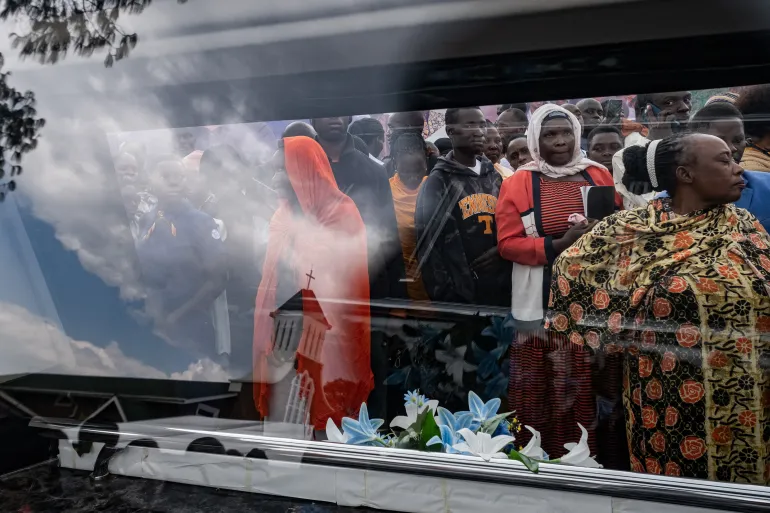
Members of the public react as the body of the late King Oyo Nyimba Kabamba Iguru Rukidi IV makes its way to Karambi Royal Tombs for burial in Fort Portal, Uganda, on September 12, 2026 [AFP]
Princess Komuntale has accused the elders of trying to take over the throne.
“King Oyo was a very peaceful man, a very humble man,” she said. “I just don’t want these evil vultures to come and steal what he worked so hard for. I continue to stand with my brother.”
The dispute has divided opinion over who should be regarded as Oyo’s legitimate successor. The Ugandan government also became involved in talks aimed at resolving the dispute before the burial.
The child king
Oyo’s own path to the throne began when he was just three years old.
He became king in 1995 after the death of his father, Patrick David Matthew Kaboyo Olimi III, and was recognised as the world’s youngest reigning monarch.
A coffin containing the body of the Late Oyo Nyimba Kabamba Iguru Rukidi IV is loaded onto a cortege after leaving the Karuziika Royal Palace before the burial at the Karambi Royal Tombs on September 12, 2026, in Fort Portal, Uganda [Hajarah Nalwadda/Getty Images]
As a child, Oyo was homeschooled, with the palace serving as his classroom. When he later joined primary school, childhood friends remember him as a kind and warm person.
During school holidays, he sometimes sneaked out of the family’s private residence in Buziga, Kampala, to play football in the neighbourhood.
Martin Odong, a radio journalist and childhood friend, remembers him as “friendly, social and compassionate”.
Oyo would stop football games to check on an injured player, regardless of which side they were playing for, Odong said.
His love of football continued into adulthood. He promoted local tournaments, including the Tooro Kingdom MTN Masaza Cup, which was suspended as his health deteriorated.
Oyo died on August 27, aged 34, in the United States while receiving cancer treatment. His body was returned to Uganda for nine days of mourning before his burial at the Karambi Royal Tombs, which coincided with Empango, the anniversary of his coronation.
At St John’s Cathedral, Queen Mother Best Kemigisa remembered her son as someone who had always protected her.
“He was my shield who always stood for me,” she said.
Mourners escort the cortege with the body of the late Omukama of Tooro, King Oyo Nyimba Kabamba Iguru Rukidi IV, for his burial at the Karambi Royal Tombs, in Fort Portal, Kabarole district, Uganda, September 12, 2026 [Abubaker Lubowa/Reuters]
She recalled praying for his life when she was in hospital.
“When I was in the hospital, I said, ‘God, please leave my son alone; take me first,’” she said. “He [God] decided to take him [King Oyo] first. I said, ‘Why? Because he was closer to You than me.’”
Princess Komuntale described her brother as a “funny person” who “always brightened my day”.
Although he was younger than her, she said, he often behaved like the older sibling and protected her and their mother after their father “left to be with the Lord”.
Father Charles Oyo remembered him as a “handsome king who loved his kingdom so much”.
He said Oyo died just as he was “beginning to demonstrate his abilities and capacity as a king”.
A king without political power
Uganda is a constitutional republic, and its traditional kings have no formal political authority. But the kingdoms retain cultural influence and command loyalty among many of their communities.
Queen Mother, Best Kemigisa (R), and her daughter (L), Princess Ruth Komuntale, attend a requiem mass for the late King Oyo Nyimba Kabamba Iguru Rukidi IV of Tooro, at the St John’s Cathedral before the king’s burial at the Karambi Royal Tombs, on September 12, 2026, in Fort Portal, Uganda [Hajarah Nalwadda/Getty Images]
Uganda abolished its traditional kingdoms in 1967. They were restored in 1993 under President Yoweri Museveni.
Oyo was guided by regents while he was a child and took on the full responsibilities of the monarchy as an adult.
His unusual position meant he met presidents, royalty and other world leaders from a young age. Among them was former South African President Nelson Mandela, who reportedly wanted to meet the young king during a visit to Uganda. Oyo, however, was more interested in playing with his toys behind the VIP tent.
As an adult, he used the platform of the throne to promote issues beyond the kingdom.
In 2020, he climbed the Rwenzori Mountains to draw attention to climate change and the retreat of the glaciers there.
He also supported a campaign to plant 10 million trees across Tooro over five years.
He promoted healthy living and took part in cancer awareness runs. Komuntale called him her “best workout partner”.
Before his death, Oyo had allocated land and begun fundraising for a paediatric hospital in Kyenjojo district. Clan elders have since appealed to the government to complete the project and establish a specialised cancer facility and an international stadium in his memory.
His final months
Oyo’s illness was kept largely private.
According to his sister, he began experiencing pain in his back and rib cage last year. The family initially thought it might be linked to strenuous exercise or ulcers.
He later travelled to Kenya, where he was diagnosed with angiosarcoma, an aggressive form of cancer, before travelling to Germany for treatment and eventually to the US.
Members of the public react as the body of the late King Oyo Nyimba Kabamba Iguru Rukidi IV makes its way to Karambi Royal Tombs for burial in Fort Portal, Uganda, on September 12, 2026 [AFP]
“He told us to keep it private, and we respected that,” Komuntale said.
She said that shortly before his death, Oyo spoke to key workers in Uganda about returning home. He wanted to celebrate Empango, the anniversary of his coronation, with his people.
He never made it home.
For Komuntale, the king remained her younger brother even after he became one of Africa’s most recognisable traditional rulers.
She remembered playing dodgeball with him and his love for his three dogs.
“Even though you were crowned a king, you were still a kid who loved to play,” she said.
“I will keep your legacy, what you loved, and we will talk about you every day.”
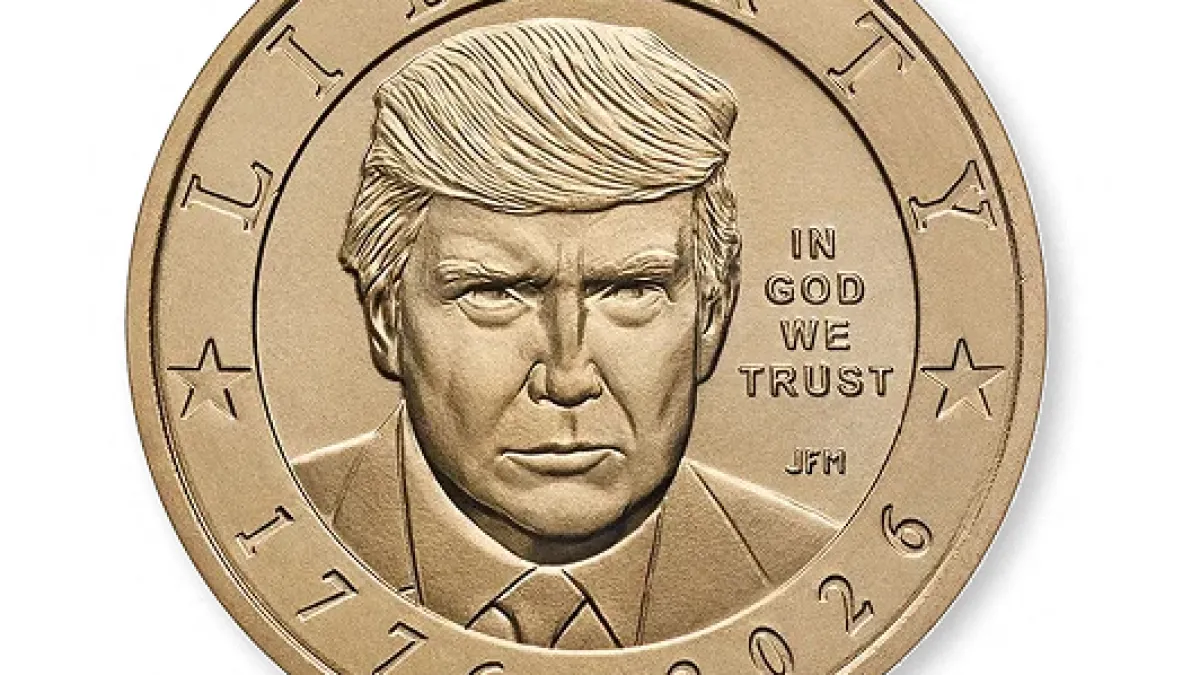
United States President Donald Trump’s face has officially found its way onto the country’s currency.
On Tuesday at 12pm Eastern Time (16:00 GMT), the US Mint began circulating – and selling – a “once-in-a-generation” $1 coin bearing Trump’s likeness to commemorate the nation’s 250th anniversary.
Recommended Stories
list of 3 itemsend of list
The gold-coloured coins feature Trump’s portrait on one side, alongside inscriptions of “LIBERTY” and “IN GOD WE TRUST”. On the reverse is an illustration of the US presidential seal with “250” inscribed on its shield.
The US Mint says the coins “capture the spirit, pride, and legacy of a nation approaching its landmark anniversary”.
It’s the first time in nearly 100 years that a living person has been featured on US currency, drawing a heavy dose of criticism, since such honours are largely reserved for long-dead dignitaries.
How did this $1 coin come to be? Here’s what you need to know:
Why is this being done?
Since Trump returned to the White House last year, the administration has taken steps to put his name or image on an array of buildings and items, including the Kennedy Center, the US Institute of Peace, National Parks passes, a limited-edition passport and a $1m “gold card” visa that was announced last year.
The Trump administration has tied some of those efforts to celebrations of the country’s semiquincentennial, the 250th anniversary of the signing of the Declaration of Independence.
On July 15, US Treasury Secretary Scott Bessent first announced the coin in a post on social media. Bessent said the coin “celebrates the strength of American values, and the promise of a nation dedicated to preserving freedom for all”.
The Trump administration has also pointed to another anniversary coin as a precedent for the Trump-branded $1 piece.
In 1926, for the 150th anniversary of the country, the US Mint struck a coin featuring side-by-side portraits of George Washington and Calvin Coolidge, a president who was in office at the time.
But critics have pointed out that the 1926 coin was commemorative and not intended for circulation as currency.
Are there other proposals for Trump-themed currency?
In May, Bessent also said preparations were under way to print a new $250 banknote featuring Trump’s face.
Bessent added that the Trump administration was seeking congressional approval for the new bill.
How much are the new coins?
Despite the coin being valued at $1, consumers can purchase a 25-coin roll for $61 or a 100-coin bag for $154.50 — a significant mark-up.
While the coins are being sold at a premium, the US Mint emphasises they are not solely decorative.
They are valid currency and can be used to make everyday purchases, just like a $1 bill.
Is it legal?
US federal law states: “Only the portrait of a deceased individual may appear on United States currency and securities.”
Congress passed that law in 1866 after a Department of the Treasury official, Spencer M Clark, put his own face on a note valued at five cents, angering lawmakers.
However, during his first term, Trump signed legislation known as the Circulating Collection Coin Redesign Act of 2020 (CCRA), which gave the Treasury the authority to mint $1 coins “with designs emblematic of the United States semiquincentennial”.
That law prohibits the portrait of “any person, living or dead” on the reverse side of those coins. However, Trump’s image on the new $1 coin appears on the obverse — the front of the coin — meaning it likely complies with the law.
What opposition does this face?
Late last year, Democratic Senators Catherine Cortez Masto of Nevada and Jeff Merkley of Oregon introduced legislation that would block Trump from placing his face on the coin.
“While monarchs put their faces on coins, America has never had and never will have a king,” Cortez Masto said. “Our legislation would codify this country’s long-standing tradition of not putting living Presidents on American coins. Congress must pass it without delay.” Their bill did not become law.
The Treasury Department and US Mint did not immediately respond to Al Jazeera’s request for comment.




![TOPSHOT - Members of the public react as the body of the late King Oyo Nyimba Kabamba Iguru Rukidi IV makes its way to Karambi Royal Tombs for burial in Fort Portal, Uganda, on September 12, 2026 [AFP]](https://i0.wp.com/www.aljazeera.com/wp-content/uploads/2026/09/afp_6aa5b63bb446-1789244987.jpg?w=640&ssl=1)