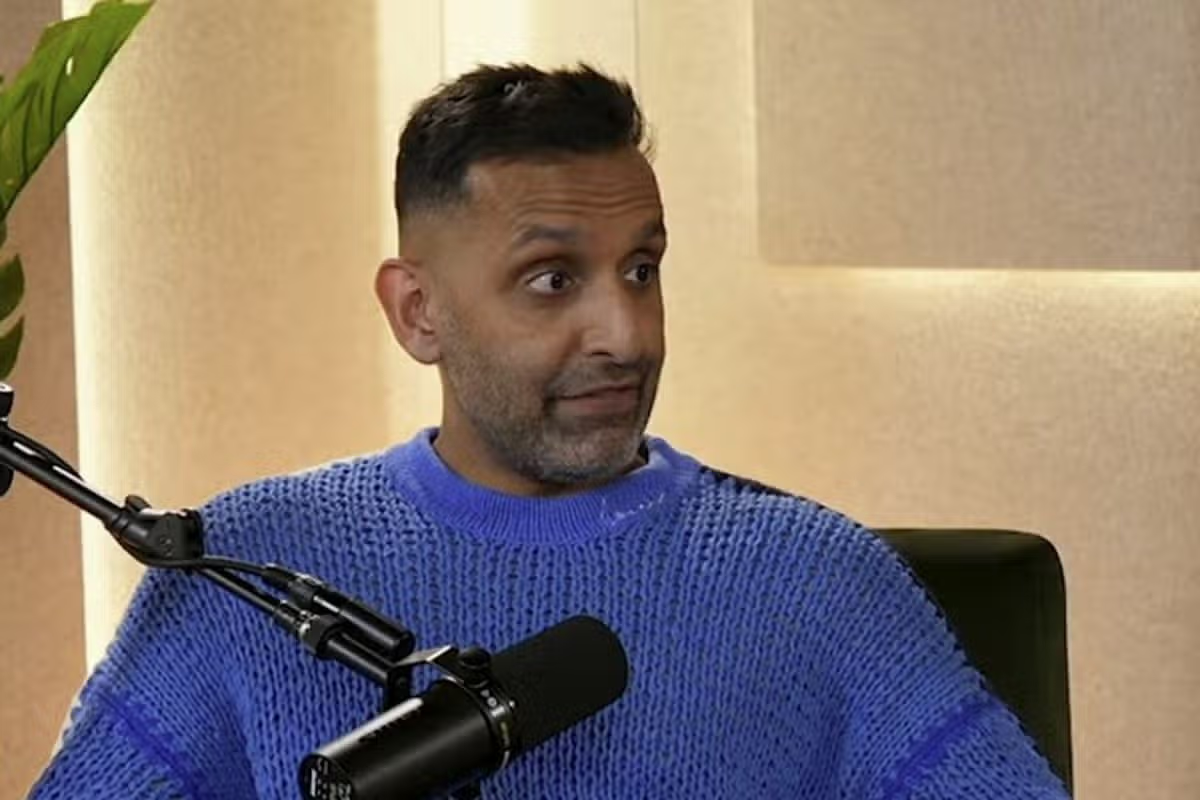
NHS GP Dr Amir Khan says a common method for dealing with nosebleeds is not correct

Dr Amir Khan has explained how a common method for treating nosebleeds is not right(Image: No Appointment Necessary)
Dr Amir Khan has offered guidance on how to properly treat a nosebleed, revealing that many people have been receiving incorrect advice. The well-known TV doctor and NHS GP, recognised for his regular slots on ITV’s This Morning and Lorraine, discussed the matter with his followers on the latest instalment of his podcast, No Appointment Necessary.
His explanation may come as a surprise to some who have been instructed to do something entirely different when dealing with a nosebleed. Co-host Cherry Healey appeared to be among them, as she questioned him about the advice people have given her for managing a nosebleed.
She said: “You know when someone gets a nosebleed, they always get told to put their head back. It’s so awful when you get a nosebleed and someone tells you that because it’s what you don’t want to do. Is that true?”
The doctor responded: “No. It used to be that, but it’s not head back. It’s head forward. Yeah, because if you go back, you could swallow the blood and then cause all sorts of issues.”
He then outlined what you should do instead, saying: “First of all, you want to pinch the soft bit of your nose just underneath the bone. I’m talking like this now because I’m doing it. So pinch that bit as tight, as tight as you can and then lean forward.
“So head between your knees or lean as far forward as you can for, you’ve guessed it, 15 minutes. 15 to 20 minutes is when anything is bleeding.
“That’s how long you need to put pressure on it.” Cherry then replied: “Because that’s how long it takes to clot.”
His advice is important because many people have been given incorrect advice. McGill University in Canada says the tilt-the-head-back method is a ‘common misconception’.
Its website states: “First aid standards have changed throughout the years, making it difficult to keep up with the right practice. Tilting your head backwards is common misconception. Currently, Red Cross standards and most clinicians inform us to sit neutral, tilt head slightly forward, pinch the bridge of the nose, and wait for 10-15 minutes.”
NHS advice on what to do if you have a nosebleed
The NHS website advises that if you experience a nosebleed, you should sit down and lean forward, with your head tilted forward and your mouth open; pinch your nose just above your nostrils for 10 to 15 minutes; and breathe through your mouth. It adds: “Holding an icepack (or a bag of frozen peas wrapped in a tea towel) on the top of the nose may help reduce the blood flow. But the evidence to show it works is not very strong.”
It also provides guidance on what to do for the 24 hours following a nosebleed. To reduce the likelihood of another nosebleed, for 24 hours afterwards, it recommends you should try not to pick your nose, blow it, or pick any scabs.
It also suggests avoiding lying down flat, doing any heavy lifting or strenuous exercise, or consuming hot drinks or alcohol.
Dr Amir Khan tells patients what not to say in his practice
The doctor’s guidance comes a day after he shared with Instagram followers a list of things he does not want to hear from his patients. The reassuring post, which we reported about on Friday, stated people should not apologise for their weight, their toenails, or their hairy legs.
He said: “Please, you’re having a medical examination, I am not bothered about anything else. “He also said people should not apologise if they feel the need to cry, or if they cannot remember the name of their tablets. And he said: “Please don’t say things like I’m sorry to waste your time.
“If something is worrying you enough that you’ve come to make an appointment to come and see me, that’s what I’m here for.” He concluded by noting: “The only thing that I care about is that you feel able to tell me what’s really going on.
“Because the thing you might be embarrassed about might actually be really important, and I can’t help something you feel ashamed to tell me. So, come as you are, cry if you need to, don’t shave anything on my account, and please stop apologising for just being a patient. You’re not an inconvenience, you’re literally the reason why I’m here.”
Find episodes of the podcast on YouTube, Apple or other platforms.