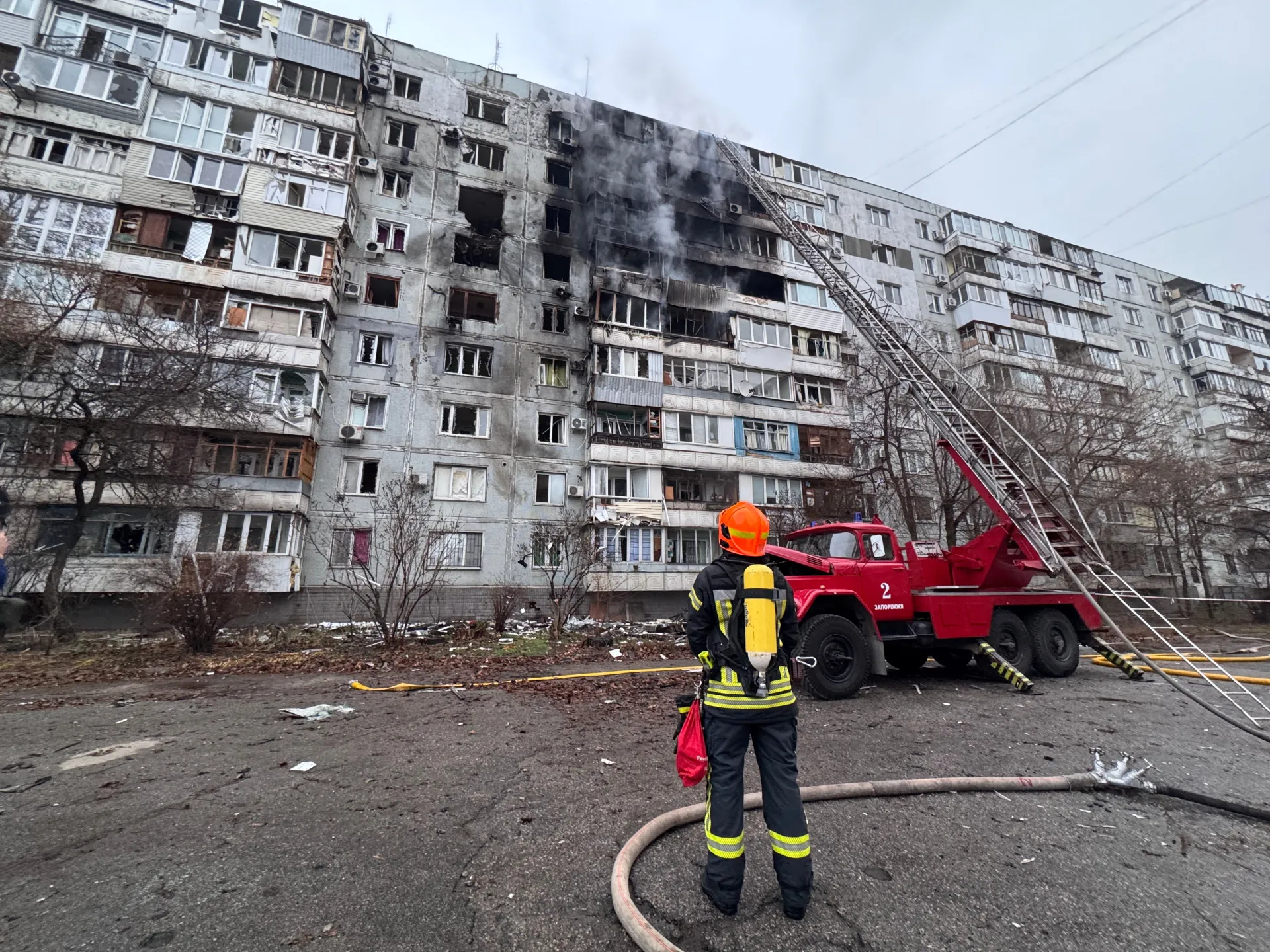
Russia criticises European moves to amend US plan to end Ukraine war | Russia-Ukraine war News
Yury Ushakov’s remarks come a day after US and Russian officials held talks on the US proposal in Florida.
Published On 21 Dec 2025
Russian President Vladimir Putin’s top foreign policy aide says that changes made by European countries and Ukraine to the United States’ proposals for an end to Russia’s war on Ukraine did not improve prospects for peace.
“I am sure that the proposals that the Europeans and Ukrainians have made or are trying to make definitely do not improve the document and do not improve the possibility of achieving long-term peace,” Yury Ushakov was quoted as saying by Russian news agencies on Sunday.
Recommended Stories
list of 4 itemsend of list
The US-drafted proposals for an end to the nearly four-year war, leaked to the media last month, raised European and Ukrainian concerns that they favour more of Russia’s wartime demands and that US President Donald Trump’s administration could push Kyiv into conceding too much.
Since then, European and Ukrainian negotiators have met with Trump envoys in an attempt to add their own proposals to the US drafts, though the exact contents of the current proposal have not been disclosed.
The remarks from Ushakov came after Putin’s special envoy, Kirill Dmitriev, met in Florida on Saturday with US special envoy Steve Witkoff and Trump’s son-in-law Jared Kushner. Dmitriev said the talks would continue on Sunday.
The Miami meeting followed US talks on Friday with European and Ukrainian officials.
In the wake of those talks, Ukrainian President Volodymyr Zelenskyy said his team should hold more talks with European allies.
“There is a shared sense that after the work by our diplomatic team in the United States, we should now hold consultations with European partners in a broader circle,” Zelenskyy said in a post on X on Sunday.
Three-way talks?
Zelenskyy had said on Saturday that Ukraine would back a US proposal for three-way talks with the US and Russia if it facilitated more exchanges of prisoners and paved the way for meetings of national leaders.
Ushakov said that a proposal for three-way talks had not been seriously discussed by anyone and that it was not being worked on.
Russia says that European leaders are intent on scuttling the talks by introducing conditions that they know will be unacceptable to Russia, which took 12-17 square kilometres (4.6 to 6.6 square miles) of Ukrainian territory per day in 2025.
Ukraine and European leaders say that Russia cannot be allowed to achieve its aims in what they call its imperial-style land grab.
Ukraine battles attempted Russian breakthrough
In Ukraine, fighting continues with the Ukrainian army battling an attempted Russian breakthrough in the Sumy region, it said on Sunday, following reports that Moscow forcibly moved 50 people from a border village there.
This marks a renewed Russian advance in the part of the region previously largely spared from intense ground fighting since Ukraine regained land there in a swift 2022 counter-offensive.
“Fighting is currently ongoing in the village of Grabovske,” Ukraine’s joint task force said, adding the troops were “making efforts to drive the occupiers back into Russian territory”.
Zelenskyy said that over the week, “Russia has launched approximately 1,300 attack drones, nearly 1,200 guided aerial bombs, and nine missiles of various types” against Ukraine.
Russia launched its full-scale invasion of Ukraine in February 2022 after eight years of fighting in the country’s east.