Brad Arnold, the 47-year-old cofounder and lead singer of the Mississippi rock band 3 Doors Down, died Saturday, nine months after revealing a diagnosis of kidney cancer.
The band announced Arnold’s death in a social media post, which said he had “helped redefine mainstream rock music, blending post-grunge accessibility with emotionally direct songwriting.”
In May 2025, Arnold announced that the band would be canceling its summer tour because he had advanced-stage kidney cancer that has spread to his lungs.
“That’s not real good,” he said of his diagnosis. “But you know what? We serve a mighty God, and He can overcome anything. So I have no fear. I really sincerely am not scared of it at all.” He added, “I’d love for you to lift me up in prayer every chance you get.”
He was public about his battle with alcoholism. He said he started drinking in his teens, an addiction fueled by the pressure of stepping on a tour bus at 20 years old.
“It’s just a lot to hand a 20 year old,” he told a Christian podcaster. He thanked religion for his sobriety and took to proclaiming his faith on stage.
Born in Escatawpa, Mississippi in Sept. 1978, Arnold formed the band with friends Todd Harrell and Matt Roberts in the mid-1990s.
As a 15-year-old in algebra class, he wrote the song “Kryptonite,” drumming out the beat on his desk.
“I used to be our drummer,” he told the lead vocalist of the band Candlebox in an interview. “I only became the singer because we didn’t have a singer. That beat just came from just sitting on a desk. I probably wrote that song in the length of time that it took to me to just to write it down. It really was just one of those that kind of fell out of the sky.”
It became the band’s breakout hit in 2000 and earned a Grammy nomination.
“The Better Life,” the first of the band’s six albums, sold more than 6 million copies, and the 2005 album “Seventeen Days” entered the national charts at No. 1. That year, reviewing a Los Angeles performance, a critic noted Arnold’s “heartland drawl” and sleeveless denim shirt, calling him “less punk than Springsteen.”
The band released its final album, “Us And The Night,” in 2016. The following year, the band played at the inauguration of President Donald Trump. Arnold is survived by his wife, Jennifer.
A few months back, a discussion broke out in the De Los chat about whether or not Bad Bunny would win album of the year at the 68th Grammy Awards for his LP “Debí Tirar Más Fotos.”
I was firmly in the “yes” camp from the day the nominations were announced and I was right!
But if I’m being honest, I had my doubts that it would happen until the second that presenter Harry Styles called out the Puerto Rican singer’s name Sunday night.
Those in the “no” camp — who were still rooting for him to win — had history in their favor. It’s so rare for any major awards show, but especially the Grammys, to recognize artists at the peak of their powers. It’s almost as if these voting bodies feel that some (usually Black) artists must go through a weird humiliation ritual before being deemed worthy.
You’re reading Latinx Files
Fidel Martinez delves into the latest stories that capture the multitudes within the American Latinx community.
Really it was less so that I believed Bad Bunny would win as much as I felt that he needed to win.
The past year has been exceedingly trying for the Latinx community as Immigration and Customs Enforcement raids have been conducted throughout the country. It has oftentimes felt as though being Latinx — looking a certain way, speaking Spanish, having certain names — is a crime. I don’t know how many times I’ve seen videos of or heard heartbreaking stories of Latinx people being separated from their families, harassed or even killed due to activities of federal agents.
So even if it was just a moment of recognition for Bad Bunny, I had a lot riding on one win for Latinx people. A win for an album that is unapologetically in Spanish, explored ideas of resistance toward colonization and dared to be joyful, would mean something to me.
When he won, I had the same reaction as him. I couldn’t believe it and I cried — genuine tears in my Latina eyes.
It felt like an acknowledgment that Latinx people exist and matter. I was also moved when he explicitly shouted out immigrant and Latinx communities. There was just something that felt radical, too, in him giving the majority of his acceptance speech in Spanish.
De Los writer Andrea Flores also had faith in Bad Bunny’s Grammys viability from the very beginning.
“I knew Bad Bunny was going to win big at the Grammy Awards the moment he released this album,” she told me. “Bad Bunny made music for Puerto Rico, and the world listened.”
“I cried when I saw that Bad Bunny won album of the year. For me, it felt like sweet vindication for Latinx artists — reggaetoneros, more specifically — who have long been ignored, and at times vilified, by mainstream media for so many years. But what made me even more emotional was seeing posts on X showing Bad Bunny in 2016 as a bag boy at a local Puerto Rican supermarket. He looks familiar in that picture, like a cousin, brother or childhood friend. That was only 10 years ago. It’s proof to me that so much can change if you believe in your art and in yourself.”
It’s weird that a Latinx artist from an American colony is the most powerful cultural figure in the country at the same time that Latinx people face the most tenuous situation in the U.S. that I’ve seen in my life.
When Bad Bunny takes the stage for the Super Bowl halftime show on Sunday, I wish he’d get up there and call out ICE again on an even-bigger stage or do some kind of spectacular act of protest against the vile political class that has always and continues to push through discriminatory policies against non-white communities.
It’d be awesome if that happens, but even if it doesn’t, there will still be something profoundly radical about him simply being there and performing exclusively in Spanish.
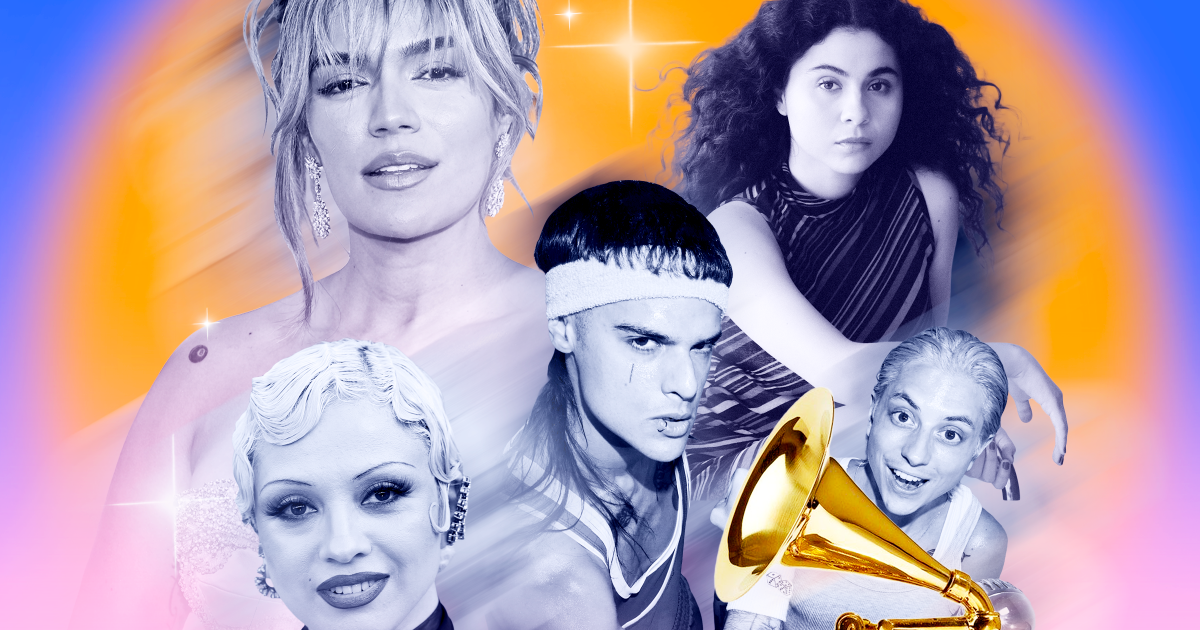
(Jackie Rivera / For The Times; Martina Ibáñez-Baldor / Los Angeles Times)
The latest on Trump’s immigration enforcement
(Joel Angel Juarez / Getty Images)
After killing two U.S. citizens, forcibly extracting immigrants and using force against protestors, some 700 federal agents are being pulled out of Minnesota. About 2,000 officers will remain in the state, White House border czar Tom Homan said early this week.
On Tuesday, immigration officers in Minneapolis pulled their guns on and arrested protestors who were trailing their vehicles, the AP reported.
The duo was released thanks to a ruling from the U.S. District Judge Fred Biery.
“[T]he case has its genesis in the ill-conceived and incompetently-implemented government pursuit of daily deportation quotas, apparently even if it requires traumatizing children,” the judge wrote in his ruling.
Stories we read this week that we think you should read
Unless otherwise noted, stories below were published by the Los Angeles Times.
Bad Bunny is constantly making history. Last Sunday he broke a new record by winning album of the year at the Grammys for his 2025 album, “Debí Tirar Más Fotos,” which was the first fully Spanish-language album to claim the title; and come Feb. 8, a.k.a. Super Bowl Sunday, he’ll be the headlining act at the Super Bowl halftime show.
Yet he is also teaching history. Bad Bunny’s latest record is not only a celebration of Puerto Rico and its people, but it offers a window into some of the challenges the embattled territory is currently facing — including massive migration, displacement and an infrastructure on the brink of collapse. In a moment when education is under attack, both in the United States and Puerto Rico, Bad Bunny is using pop culture’s biggest stage to offer the world a history lesson. And in this political context, that matters greatly.
In December 2024, I was contacted by Bad Bunny’s team to produce 17 pages outlining Puerto Rican history, to pair with each song’s YouTube visualizer for “DTMF.” Altogether, they have been viewed more than 775 million times.
I later produced 40 slides jam-packed with historical and cultural facts about Puerto Rico, which were screened at Bad Bunny’s 31-show residency in San Juan. These ranged from facts about the history of women’s suffrage to the founding of Puerto Rico’s oldest punk band, La Experiencia de Toñito Cabanillas.
When Bad Bunny was announced as the NFL’s choice to headline the halftime show, I was hardly surprised by the backlash from conservatives — including multiple Fox News hosts, podcasters and even President Trump, who said, “I don’t know who he is. I don’t know why they’re doing it … [It’s] crazy.”
As communities of color celebrated on social media, critics raised two questions: Why would a Spanish-speaking artist — even if he is the most-streamed artist on Earth — be chosen for that stage? And why wouldn’t they choose a more patriotic, Anglo-American artist?
While undoubtedly xenophobic in nature, these questions highlight their acute ignorance about the place that birthed Bad Bunny, and its ongoing entanglement with the United States.
Puerto Rico was first colonized by the Spanish from 1493 until 1898, the year that the United States occupied the country as part of the Spanish-American War. Later, in 1917, Puerto Ricans became U.S. citizens through the Jones Law. Eventually, we drafted a constitution and became a Commonwealth of the United States in 1952. But there is never one single historical narrative.
What these facts occlude, however, is that Puerto Ricans are second-class citizens who cannot vote for the president — and those in the archipelago are not fully protected by the U.S. Bill of Rights. According to the U.S. Supreme Court’s early-20th century Insular Cases, we belong to the United States, but we are not part of it.
Put simply: We are a colony of the United States in the 21st century.
When drafting the historical narratives for “DTMF,” Bad Bunny understood that Puerto Rican history is often unknown, even to our own people. He was interested in making history available for those who don’t have access to higher education. He wanted me to write these narratives in a candid manner to be read by people in the barriadas y caserios (working-class neighborhoods and the projects). These were the places where I came of age in Puerto Rico.
With the success of “DTMF,” Puerto Rican history was amplified to the world. I’ve had countless conversations with journalists from around the globe, who marveled at how little they knew about Puerto Rico’s history or its relationship to the United States. This is precisely what I think drives those debates about language and who gets the right to claim Americanness — a lack of information.
And even though Bad Bunny is a U.S. citizen, conservatives have organized an alternative “All-American Halftime Show,” which reveals how “Americanness” is policed through language and race. This is the product of willful ignorance.
Puerto Rico’s history is also that of Latin American, Caribbean, United States and Latinx communities. I believe Bad Bunny’s performance will invite people to understand the beauty and complexity of our people’s history, even if it makes outsiders uncomfortable. That he will also be doing so entirely in Spanish in a moment when Latinx people in the United States are being arrested or interrogated by federal agents for speaking in Spanish — or simply for having an accent? That matters.
Of course, artists alone will not save us from the perils of racism and xenophobia — I learned that from my time in the punk community. We cannot just wait on anyone, especially not celebrities, to change institutions without some people power to back them up.
Yet given his enormous reach — just this week his latest album hit No. 1 on Apple Music in China — Bad Bunny has the power to move the cultural needle. And if there’s one thing to take from the Grammys ceremony last Sunday, it’s that he’s not alone — other artists have taken a stand on anti-immigrant violence. They are living up to the moment. That matters too.
So while conservatives organize their bland counter to the Super Bowl halftime show — with none other than Kid Rock as headliner — Bad Bunny will be offering the world a much more valuable history lesson, full of sazón, batería y reggaetón.
Jorell Meléndez-Badillo is the author of “Puerto Rico: A National History”and associate professor of Latin American and Caribbean History at the University of Wisconsin-Madison.
JILL SCOTT does not rush records. She only goes into the studio when she feels she has got something she needs to say.
The American singer’s sixth album, To Whom This May Concern, arrives a decade after her last effort for exactly that reason.
Sign up for the Showbiz newsletter
Thank you!
Jill Scott only goes into the studio when she feels she has got something she needs to sayCredit: SuppliedThe American singer’s sixth album arrives a decade after her last effortCredit: Supplied
“It took me 27 years to make Who Is Jill Scott?,” she says of her landmark debut. “And all the experiences in those years I put into that album.
“These projects don’t just happen overnight, it doesn’t work that way. So, it took me ten years to make this album.
“Why did it take so damn long? Because it takes time to make a great meal. It takes time to decorate your home. You don’t rush it. I took my time because I care.”
Writing only when there is something urgent to say, and letting the music lead the message, is the way the Grammy-winning artist and actor creates.
She says: “I wait for it to come and the things that came out of me for this album shocked the hell out of me, too.
“On some songs, I’m an anthropologist, studying people. I’m on social media and hearing how a lot of people are not satisfied and that’s a damn shame.
“It’s a little harder for me to just sit on a park bench and watch people.”
I meet Scott at her publicist’s office in central London.
I am very excited about the musicianship on this album. The horn players and the bass, which is all over this album, is amazing.
Jill Scott
Dressed in orange, she is bright, friendly and effortlessly glamorous, although she says the jet lag has been hard to deal with.
She’s been over here for a week of promotion, including an album launch where she introduced tracks from To Whom This May Concern and took questions from fans.
“That was a pretty exciting night,” she says. “And the response was great, which was good as I was scared because it’s the first time playing this new music for a bunch of people in a room.
“I am very excited about the musicianship on this album. The horn players and the bass, which is all over this album, is amazing. It’s not a plug-in, it’s a player.”
At 19 tracks long, this is an impressive album. Collaborators include Trombone Shorty, Maha Adachi Earth, DJ Premier and rappers Tierra Whack, JID and Ab-Soul.
Recent single Pressha and Don’t Play touch on relationships.
Jill says: “Pressha is about a toxic past relationship while Don’t Play is a template for how to have a date where you actually want to get to know someone.
“It’s not just about what box they tick or what salary they earn. Then BPOTY — Biggest Pimp Of The Year — I wrote after looking at society and thinking, ‘My God, these folks are pimping us’.
“Like the pharmaceutical companies. I had been taking some medication and I didn’t really need it, I was being pimped and so it began with that story.”
‘Music is medicinal’
A diverse record blending soul, rap and jazz, it features beautiful ballads such as Me 4 and Àse, showcasing the poetic storytelling Scott has long been celebrated for.
“When I heard how diverse the music was, it made sense as an album,” she explains.
“People are going to get what they’re going to get what they need from it at different times. I believe music is medicinal. Like when I first heard of Billie Holiday, I didn’t really hear her until I got my feelings hurt.
“Then I listened again and everything clicked and made sense — how poignant her words were — and that’s why this album is called To Whom This May Concern.”
Be Great is a superb track as both a declaration and mantra, designed for everyday moments of courage.
“I want people to play it before their auditions, job interviews or anything that matters to you,” says Scott. “Go ahead and be fantastic at it, whatever it is.
“I just got the music and the lyrics popped out. I see it as Golden’s cousin [her 2004 anthem]. Yeah, they’re definitely related.”
Offdaback, which Scott says is her favourite track on her new album, pays homage to her heroes who came before her, artists and pioneers who stood up for freedom and music.
“The ancestors have to be honoured,” she explains.
Scott pays homage to her heroes who came before in her latest recordCredit: SuppliedHer sixth album celebrates the poetic storytelling Scott has long been celebrated forCredit: Supplied
“Whether it was your grandmother who worked in somebody’s house in order to make sure your mother had food, or it was your dad who worked three jobs so you could go to college or so you could live your dream.
“As an artist every day I’m reminded of how many people have made a way for me to be here.
“My office wall has photos of all the people who have inspired me. Diana Ross, Missy Elliott, Led Zeppelin and Queen Latifah are on there.
“I admire so many. Nina Simone for being so frank and fearless; Tina Turner for being so brave and using her voice.
“The list goes on. Frankie Beverly was beloved to me and Prince was my number one, and Bette Midler showed me that you don’t have to be around, knocking on doors all the time. You can disappear for a while, too.
“I went to see Frankie Beverly and Maze and they’d not had a record out for 25 years but everyone at the show is up and singing at the top of their voices.
“Music is about that feeling, about camaraderie and unity. I feel really honoured that anyone would feel that about my music.
“However, I’m still working on the other stuff that comes with that.”
There was a recent social media post of Scott being stopped by a fan who recognised her on the street — and she tells me she still finds that side of fame difficult.
Staying human
She says: “I value my time in just taking a walk, I really do. It’s important to me and it helps me balance everything else. The guy was sweet and I loved his freckles but being stopped in the street is not easy for me.
“Yes, 26 years later, I’m still working on it. I get good advice about it. My mentors tell me the value of maintaining the private self and staying human.
“When people put you on a pedestal it’s a very dangerous game and it’s not the game I play.”
When Scott emerged in 2000 as the voice in neo-soul, blending R&B, jazz, soul and spoken word, she found the spotlight overwhelming.
“It was terrifying and exciting,” she says with a smile. “I had a good two or three weeks where I was like, ‘This is so fun’. And then it didn’t stop.
“People were driving by my house playing the album at full capacity at three o’clock in the morning.
“I don’t want to sound ungrateful, because that’s not where I live — I live in grace and gratefulness all the time.
“It just was never my priority. I see people who are far more famous than me, and God bless them, but balance really matters to me. I’m a writer first, I just happen to sing.
“I have to be human and recognise how flawed I am and how much I’m working through things and honouring myself in all the things.
`’So, my goal is to be grand and gracious and have patience with other people. And when I can’t, I go into the house. That’s how I live.”
I think as a society, we’re holding on to a lot of people that don’t benefit our lives.
Jill Scott
Pay U On Tuesday is a fun song which Scott says: “Comes from being exhausted of family members who I used to be friends with that just don’t value the same things.”
It’s a direct song which even comes with a disclaimer (in the form of a track called Disclaimer) before it.
She laughs and says: “Oh yes there’s a disclaimer. But cutting ties is sometimes needed.
“Maybe they’re not ready to be respectful now, but I think as a society, we’re holding on to a lot of people that don’t benefit our lives.
“What I’ve learned in these 53 years is that I love when the people around me bloom and I want to continue to bloom.
“This album has been brought to you by education for your home. For your family.
“I definitely don’t like being perimenopausal. That’s not fun. It’s made certain things a lot more challenging, like staying fit, and sometimes you don’t sleep and a dress doesn’t fit but I count on the joys.
“I’m a big advocate for a book called The Celestine Prophecy, which reminds me to constantly look for beauty.”
Growing up in North Philadelphia, “Jilly from Philly” says she owes her positivity and happy childhood to her mother and grandmother. “My mother showed me art and creativity and I’m grateful,” she tells me.
Although there was a lot of drugs and violence around her, she also saw “kind and beautiful-spirited people” — and that spirit is at the heart of the track Norf Side.
“It’s a celebration of the place,” she says.
For that song, she wanted another voice from North Philly and her son Jett suggested Tierra Whack, a brilliant MC and remarkable poetess. “We are both a reflection of that place,” she says.
Scott, who has a charitable foundation in North Philadelphia which has been sending kids to camp and to college for more than 20 years, says she could have made an album about what’s going on in the US politically but chose a theme of personal revolution over performative outrage and political frustration.
‘Joy, passion, rage’
“I think that’s another album,” she says. “Right now, I’m really focused on growth and healing — the human stuff.
“Then maybe there will be the kind of revolution that this kind of turmoil deserves.”
On the death of mum-of-three Renee Good, who was shot by an Immigration and Customs Enforcement (ICE) agent in Minneapolis last month, she says: “This has been going on in the United States for longer than my whole life — it’s not new.
“It just happened to happen to a Caucasian woman so the world is shaken and they’re seeing it.”
Making a name for herself in acting as well as music and poetry, she has starred in 2007 comedy Why Did I Get Married? and TV series The No1 Ladies’ Detective Agency.
Scott says she is taking her time when it comes to choosing her next role, paying close attention to both the director and the writing.
Live performance, however, is non-negotiable. “I will be touring. That is a fact.”
For now, the focus is firmly on this record. “I just want people to come back and listen to it again and again,” she says.
“I’ve sprinkled levels of joy, frustration, passion and even rage. When that last chord plays, I want people to sit with it — and then start all over again. Each time, there’s something new.”
To Whom This May Concern is out on February 13.
JILL SCOTT
To Whom This May Concern
★★★★★
Jill Scott’s sixth album, To Whom This May ConcernCredit: Amazon
History was made in more than one way at Sunday night’s 68th Grammy Awards.
Bad Bunny’s “Debí Tirar Más Fotos” won album of the year — the first Spanish-language LP to take the Recording Academy’s highest honor. Kendrick Lamar and SZA’s “Luther” was named record of the year, making Lamar the winningest rapper in Grammy history (and just the fourth artist to go back-to-back for the record prize). Then there were Billie Eilish and her brother, Finneas O’Connell, who took song of the year with “Wildflower”; they’re now the only songwriters with three wins in that prestigious category.
To go by demographics, the ceremony clearly embodied the diversity gains the academy has been saying proudly are happening among its 15,000 voting members. But if new kinds of faces are becoming Grammy darlings, the music they’re being recognized for still upholds many of the academy’s old values. A night for making history was also a night for reveling in it.
Take “Luther,” a soulful hip-hop slow jam built on a prominent sample of Luther Vandross and Cheryl Lynn’s 1982 rendition of a love song Marvin Gaye and Tammi Terrell recorded in the late 1960s — an intricate piece of lineage-making meant to bridge multiple generations.
Olivia Dean performs.
(Myung J. Chun / Los Angeles Times)
“First and foremost, let’s give a shout-out to the late, great Luther Vandross,” the producer Sounwave said as he, Lamar, SZA and the song’s other creators accepted their award at Crypto.com Arena. (Before they made it onstage, Cher misread the card identifying “Luther” as record of the year and said that Vandross himself had won.) Lamar added, “This is what music is about,” and expressed his gratitude for being allowed “the privilege” to use Vandross’ music as long as he and SZA promised the singer’s estate not to curse on their record.
You can hear a similar reverence for those who came before in Olivia Dean, the 26-year-old British singer named best new artist on the strength of her hit “The Art of Loving” LP, which looks back to the gleaming pop-soul of Diana Ross and Whitney Houston.
Even Bad Bunny, the Puerto Rican rapper and singer who became a superstar at the bleeding edge of reggaeton and Latin trap, achieved his Grammy breakthrough with something of a throwback move: “Debí Tirar Más Fotos” is an exactingly arranged tribute to his native island, with elements of Puerto Rican folk styles such as bomba and plena and more hand-played instrumentation than he utilized for 2022’s sleek “Un Verano Sin Ti,” which scored a Grammy nomination for album of the year but lost to “Harry’s House” by Harry Styles (who, as it happens, presented the album prize Sunday).
Part of Bad Bunny’s success this year can be attributed to the fact that he’s a far bigger celebrity than he was three years ago; indeed, his Grammy triumph impressively sets up the halftime performance he’ll give this coming weekend at Super Bowl LX. But not unlike Beyoncé’s rootsy “Cowboy Carter,” which finally brought her a win for album of the year in 2025 after a number of outrage-inducing defeats, “Debí Tirar Más Fotos” is also primo Grammy bait: a work steeped in tradition from a natural innovator.
SZA backstage.
(Allen J. Schaben / Los Angeles Times)
For years, the Grammys’ rearview gaze used to bum me out — and, to be honest, as lovely as Eilish’s “Wildflower” is, her song of the year win with the tender acoustic ballad felt like a failure of imagination among voters I wish had recognized the hurtling exuberance of “Golden,” from Netflix’s “KPop Demon Hunters.” (“Golden” did take the prize for song written for visual media, which made it the first K-pop tune to win a Grammy.)
Yet something about Sunday’s ceremony made it hard to get too worked up about all the historicizing. Perhaps it was how plainly yet passionately many artists used their time onstage to speak about the issues pressing on us right now. “Before I say thanks to God, I’m gonna say: ICE out,” Bad Bunny told the crowd as he accepted an award for música urbana album. “We’re not savage, we’re not animals, we’re not aliens. We are humans, and we are Americans.”
Lady Gaga on the red carpet.
(Christina House/Los Angeles Times)
Eilish said, “No one is illegal on stolen land.” Dean pointed out that she’s the granddaughter of an immigrant and that “those people deserve to be celebrated.”
I was also moved by how personal so much of the music felt — a cry of imperfection like Lola Young’s “Messy,” for instance, which she performed by herself on piano and which won pop solo performance in an upset over the likes of Lady Gaga and Sabrina Carpenter. “I don’t know what I’m gonna say because I don’t have any speech prepared,” she yelled into the microphone as she received her trophy. “Obviously, I don’t — it’s messy, do you know what I mean?”
Weirdly for a show with yesterday so heavily on its mind, a tribute to the late R&B trailblazers Roberta Flack and D’Angelo was a disappointment, with Lauryn Hill as bandleader moving way too quickly (in way too short an allotted time) through songs that require real space to unfurl.
That’s what Justin Bieber had for the evening’s most striking performance: a slow and radically stripped-down rendition of his song “Yukon” that he sang wearing only boxer shorts and socks, accompanying himself with a scratchy electric guitar riff he fed through a looping station.
“Yukon” is from Bieber’s impressive “Swag” album, which he released last year after a lengthy stretch in the pop-star wilderness; it’s an LP, kind of like “Messy,” about learning to forgive yourself for your flaws, and here he sang “Yukon” like a guy who’d figured out — maybe a guy figuring out — how to build a life outside the punishing expectations of celebrity. The music had the past in it, of course, but didn’t feel constrained by it.
Bad Bunny’s “Débi Tirar Más Fotos” was named album of the year at Sunday night’s 68th Grammy Awards — the first time a Spanish-language LP has won the Recording Academy’s most prestigious prize.
Bunny delivered the speech primarily in Spanish.
“I want to dedicate this award to all the people who had to leave their homeland, their country, to follow their dreams,” he said as the audience rose to its feet.
“Puerto Rico, believe me when I say that we are so much bigger than 100 by 35 and there is nothing that exists that we can’t accomplish,” he said in Spanish. “Thank God, thank you to the academy, thank you to all the people who have believed in me throughout my whole career. To all the people who worked on this album. Thank you, mami, for giving birth to me in Puerto Rico. I love you.”
“For all the people who have lost a loved one and even then have had to continue moving forward and continue with so much strength, this award is for you all.”
Intricately arranged with the sounds of the singer and rapper’s native Puerto Rico, “Débi Tirar Más Fotos” was released to rave reviews in January 2025 and quickly reached No. 1 on the Billboard 200 album chart. Last summer, Bad Bunny supported the project with a 30-date concert residency at San Juan’s José Miguel Agrelot Coliseum; he followed that with the announcement of a world tour that avoided the United States, in part, he told I-D magazine, because of his concern that immigration agents might turn up at shows.
Prior to Sunday’s win, “Débi Tirar Más Fotos” — the title translates in English to “I Should Have Taken More Photos” — was named album of the year at November’s Latin Grammy Awards. Next weekend, Bad Bunny (whose real name is Benito Antonio Martínez Ocasio) will headline the halftime show at Super Bowl LX in Santa Clara.
He won earlier in the night for música urbana album and global music performance.
The other LPs nominated for album of the year were Justin Bieber’s “Swag,” Sabrina Carpenter’s “Man’s Best Friend,” Clipse’s “Let God Sort Em Out,” Lady Gaga’s “Mayhem,” Kendrick Lamar’s “GNX,” Leon Thomas’ “Mutt” and Tyler, the Creator’s “Chromakopia.”
In 2025, Beyoncé took the prize with “Cowboy Carter.”
VICTORIA Beckham was in the biggest girl group of all time but her son Cruz is taking inspiration from another brilliant British band for his debut album — The Beatles.
The budding musician’s close friend Luke Pritchard has unofficially helped guide the project thanks to years of experience in the industry, along with his ten UK Top Ten singles with his band The Kooks.
Sign up for the Showbiz newsletter
Thank you!
Cruz Beckham is taking inspiration from The Beatles for his debut albumCredit: ErotemeLuke Pritchard has unofficially helped guide Cruz’s project thanks to years of experience in the industryCredit: Getty
In an exclusive chat, Luke revealed Cruz was heavily influenced by the Fab Four’s ninth record, The White Album, which gave us iconic songs including Ob-La-Di, Ob-La-Da and Blackbird.
“He’s brilliant. He’s got all the right things,” Luke told me at the Iconic Images Gallery in London, where we were invited to celebrate a new exhibition of The Cure ahead of their headline slot at Isle of Wight Festival.
“I think he’s a rockstar, I really do.
“It’s got a kind of White Album psychedelia sound, with warm tones.
“I think he’s a great guitar player – it’s kind of what I want to hear in my head.”
In March, Cruz took to social media to tease a self-penned track inspired by his love for The Beatles.
In the short clip, he sang: “I wanna be John Lennon.”
Last week, as the showbiz world imploded thanks to his brother Brooklyn’s bombshell statement hammering his family, Cruz was locked away in a north London studio putting the finishing touches to the record.
As speculation about the family rift circulated the globe, Cruz took to Instagram to reshare a shot from the studio with the words “Loneliest Boy” along the top of a song sheet, leading some fans to wonder if it will be about his estranged brother.
Luke, who has released a new live version of The Kooks’s 2014 song See Me Now today, explained: “We were actually in the studio with him.
“His album sounds so good, so authentic. It’s really refreshing.
“You know, he’s recording everything completely authentically and trying to pick up that magic to some parts. I think that’s amazing.”
And he is determined to prove himself as an artist in his own right, breaking free from the nepo baby label.
Luke continued: “He’s the real deal. He wants to do things properly and he wants to gather his fan base the right way and he wants to go out and just play. It’s been a mad few days for him.”
Cruz has sold out his first headline show in London in March and has announced a UK tour with his band The Breakers which went on sale on Friday.
As well as their own tour this year, The Kooks are performing at Isle of Wight Festival alongside The Cure, Calvin Harris and Lewis Capaldi.