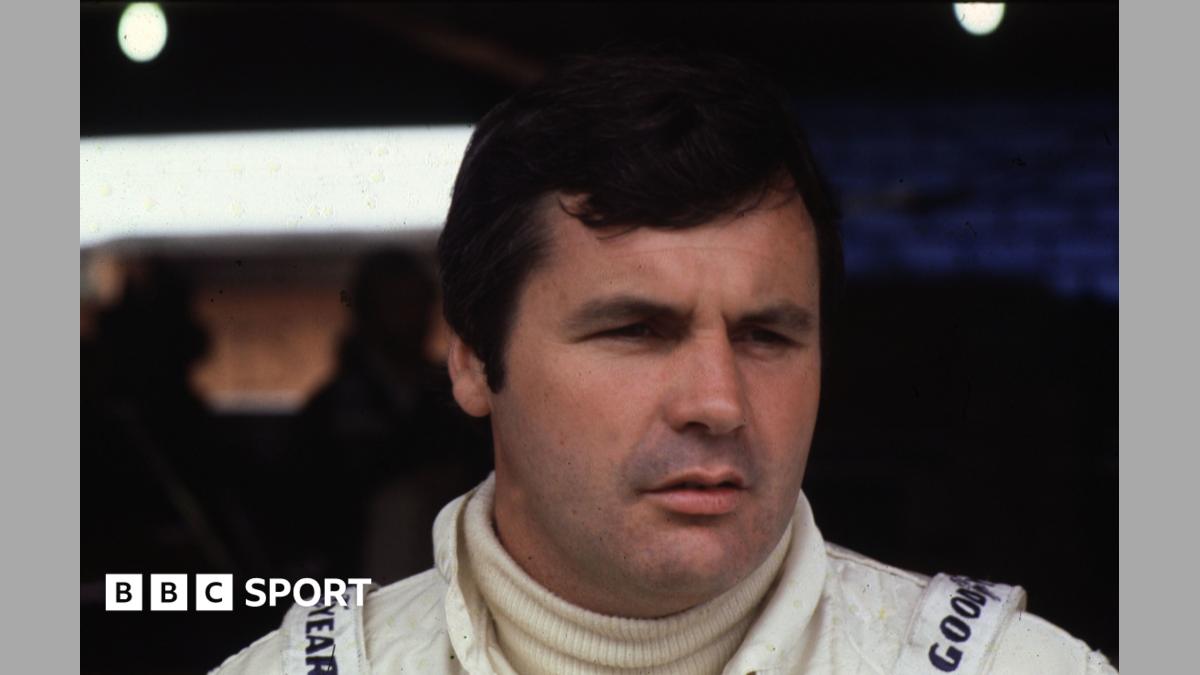
Alan Jones dies aged 80: Ex-F1 champion ‘dedicated his life to motorsport’
Alan Jones’ time at the very peak of F1 was short – essentially just under three years from mid-1979 to the end of 1981 – but he left a lasting impression.
Jones is synonymous with the Williams team, having become their first world champion in 1980, and he formed a close, almost brotherly bond with co-founders Frank Williams and Patrick Head.
Williams and Head loved Jones’ pugnacious, no-nonsense approach, and between them they were the leading force in F1 for a short time, as the team first emerged at the forefront of the sport.
Future Williams drivers, whoever they were, were almost always measured against Jones, and usually came up wanting in Williams’ and Head’s eyes.
After making his debut, it took a little while for Jones’ abilities to be appreciated. But victory for the unfancied Shadow team in the 1977 Austrian Grand Prix, beating Niki Lauda’s Ferrari fair and square, was an indicator of his potential.
Moving to Williams in 1978, the team showed well with their neat FW06 design, the first led by Head at the start of his iconic career.
But it was 1979 when Jones and Williams really turned it on. When the new FW07 car debuted mid-season, it and Jones soon became the standard setters.
Early reliability problems meant he was unable to challenge Ferrari drivers Jody Scheckter and Gilles Villeneuve for the title under the season’s bizarre split scoring system, but he won four of the final six races to set the tone for the following year.
In 1980, with the upgraded FW07B, Jones and Williams were the team to beat. Pushed hard to the title by Brabham’s Nelson Piquet, for whom Jones had little time, he won five of the 14 races and clinched the title with a race to spare.
He could and arguably should have won again in 1981, but a couple of retirements and some errors restricted his victory tally to the first and last grands prix.
A dominant victory on the unloved new circuit in the Caesars Palace car park in Las Vegas was overshadowed by team-mate Carlos Reutemann’s bizarre capitulation in the championship fight with Piquet.
After it, although at the height of his powers, Jones retired at the age of 34, to return to his beloved Australia.
He thought it was the right move, but he soon got the itch to return. A one-off outing for Arrows in 1983 was followed by a full-time comeback for the new US-based Haas team – no relation to the current one of the same name.
But the project was not a success. The car did not debut until the 12th race of 1985, and in 1986 was unreliable and slow, despite help from a then unknown Adrian Newey.
It collapsed at the end of the season, and Jones left F1 for good. He continued to race intermittently into his 50s, and also spent time as an F1 driver steward.