AirToAir

Israeli Air Force First To Claim F-35 Air-To-Air Kill Of A Crewed Aircraft

For the first time, an F-35 has shot down a crewed aircraft in combat. According to the Israeli military, an Israeli Air Force (IAF) F-35I Adir brought down an Iranian Yak-130 Mitten combat trainer over Tehran. This would also be the first IAF air-to-air kill against a crewed combat aircraft since November 1985, when an F-15 claimed a pair of Syrian MiG-23 Floggers over Lebanon.

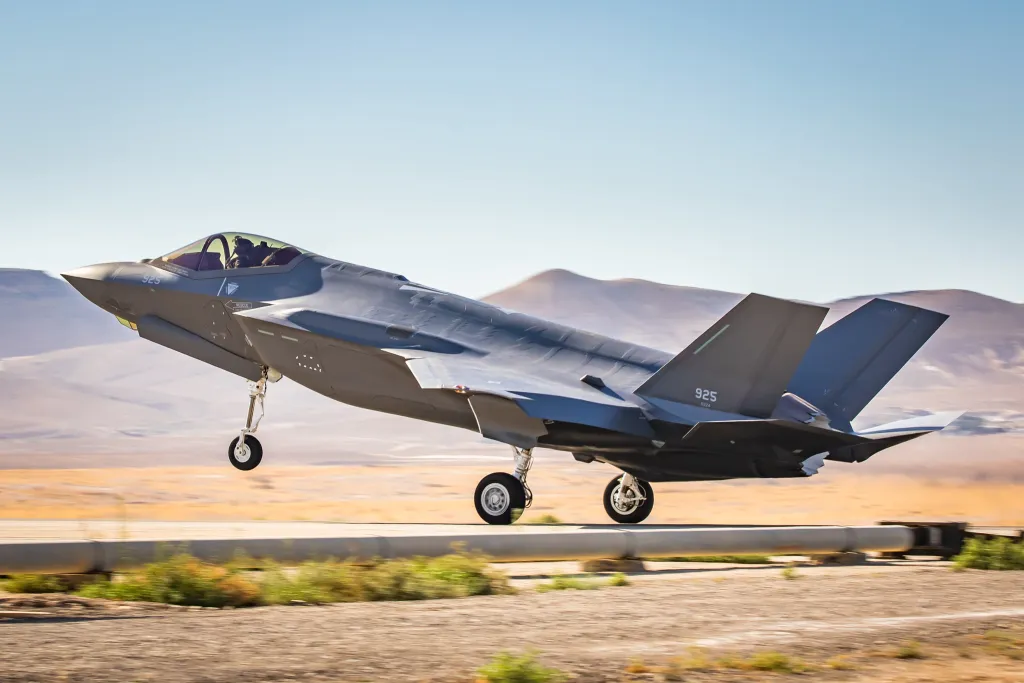
An Israeli Air Force F-35I. Amit Agronov/IAF

The announcement was made earlier today by the Israel Defense Forces (IDF) via their social media channels. There are no further details at this point, but the IDF says the engagement occurred “a short time ago.”

מטוס אדיר (F35I) של חיל האוויר הישראלי הפיל לפני זמן קצר מטוס קרב איראני (YAK-130) מעל שמי טהרן.

זו הפלה הראשונה בעולם של מטוס קרב מאויש על ידי F-35

— צבא ההגנה לישראל (@idfonline) March 4, 2026

IRANIAN JET SHOT DOWN: An IAF F-35I “Adir” fighter jet shot down an Iranian Air Force YAK-130 fighter jet.

This is the first shootdown in history of a manned fighter aircraft by an F-35 “Adir” fighter jet. pic.twitter.com/q6lJb38gRJ

— Israeli Air Force (@IAFsite) March 4, 2026

Air Force Commander Tomer Bar congratulates F-35I “Adir” pilot who carried out the first-ever shoot-down of an Iranian fighter jet over Tehran pic.twitter.com/hBTisPSo0s

— i24NEWS English (@i24NEWS_EN) March 4, 2026

There is at least one unverified video that purports to show the stricken Yak-130 coming down, accompanied by two possible ejections, in a mountainous area north of Tehran.

Footage shows the moment two pilots ejected from a fighter jet, shot down north of Tehran.

The warplane went down today in mountains north of the Iranian capital. pic.twitter.com/hdg4O8uy0u

— Iran Screenshot (@iranscreenshot) March 4, 2026

Previously, unverified videos had been posted to social media purporting to show at least one Yak-130 operated by the Islamic Republic of Iran Air Force (IRIAF) flying over Tehran, while armed with air-to-air missiles.

The shoot-down of Iranian manned tactical jets follows two others that occurred at the hands of the Qatari Air Force, which swatted a pair of Su-24 Fencers out of the sky.

🇶🇦🇮🇷 Qatar claims its forces shot down two Sukhoi Su-24 tactical bombers operated by the Islamic Republic of Iran Air Force. pic.twitter.com/vfqmWPZlB1

— Status-6 (War & Military News) (@Archer83Able) March 2, 2026

While the Russian-made Yak-130 was developed primarily as an advanced trainer, the jet has a significant combat capability, with the option to carry gun pods, bombs, and rockets as well as R-73 series (AA-11 Archer) infrared-guided air-to-air missiles.

An Islamic Republic of Iran Air Force Yak-130 armed with an R-73 air-to-air missile. via X

The Yak-130 is among the newest combat aircraft in the Iranian inventory.

As you can read about here, evidence of Yak-130 deliveries to Iran emerged in late 2023, when imagery published by the Tasnim News Agency showed one of the jets in a hangar displaying a high-visibility IRIAF paint scheme. Another video showed a Yak-130 with the same paint job reportedly taxiing at Iran’s Isfahan Air Base.

Undated image and video leak of Yak-130 in Isfahan, Iran. Yesterday there were rumours that 2 Yak-130s had been transferred to Iran, and today these images have been shared through unofficial sources.

These trainers are Iran’s first observed practical step to adopting Su-35s. pic.twitter.com/osIgwwCNOr

— Aᴍɪʀ (@AmirIGM) September 2, 2023

The delivery of Yak-130s to Iran was one of the signs of Tehran securing new Russian equipment in exchange for supplying Moscow’s war effort in Ukraine. This burgeoning military relationship has also seen Russia acquire Iranian drones starting in 2022, after which Iranian-made Shahed-136 kamikaze drones (and their Russian-made derivatives) have been a staple of Russia’s raids against Ukraine.

In exchange for drones and other supplies, it was expected that Russia would provide more advanced weapons systems to Iran, among them a batch of Su-35 Flanker multirole fighters. The claimed Su-35 deal has yet to materialize.

House National Security Council spokesman John Kirby told reporters in February 2023 that Russia would provide Iran Yak-130s, attack helicopters, and radars. The attack helicopters, in the form of Mi-28NE Havoc rotorcraft, began to appear in Iran last month.

Although not in any way comparable to the Su-35, the Yak-130 is arguably the most advanced fast jet in service with Iran overall. However, its combat capabilities are mainly limited to the light attack role, or drone-hunting. According to unconfirmed reports, the Yak-130 that fell victim to an F-35 today was flying a counter-drone mission over the Iranian capital at the time.

At the very least, the fact that one or more Yak-130s have been operating over Tehran in any capacity indicates the IRIAF’s continued ability to put some aircraft in the sky despite the significant blows delivered on the ground by U.S. and Israeli strikes, which have also targeted Iranian airbases. The video below shows Iranian Su-22 Fitter swing-wing attack jets being destroyed on the tarmac by U.S. strikes.

However, the Yak-130 is clearly no match for the F-35.

The IAF has been at the forefront of introducing the Joint Strike Fighter to combat.

In May 2018, Israel announced that it had become the first operator to use the F-35 on offensive operations, and, since then, it has also recorded success in aerial combat against Iranian drones.

Making History:

Last year, Israeli “Adir” (F-35I) fighter jets successfully intercepted two Iranian UAVs launched towards Israeli territory. pic.twitter.com/FQsEjKzxct

— Israeli Air Force (@IAFsite) March 7, 2022

This time last year, Israel confirmed that its F-35s had flown airstrikes using external ordnance. The F-35’s so-called ‘beast mode,’ featuring heavier loads on underwing pylons, is familiar, but as far as is known, it had not previously been called upon operationally by any other countries.

An Israeli F-35 in so-called ‘beast mode.’ IAF

It’s also worth noting that Israel’s unique F-35I fleet — locally known as the Adir (Hebrew for mighty) — features various local modifications and has frequently been at the forefront of demonstrating new capabilities.

The IAF F-35 fleet has seen extensive combat action since October 2023. It has been involved in raids on targets in Gaza and Lebanon and has also taken part in long-range strikes against Iranian-backed Houthi militants in Yemen and against Iran.

These long-endurance missions have been aided by Israel’s reported development of a means of extending the range of its F-35s, allegedly providing them with enough reach to hit targets in Iran without needing aerial refueling.

The Adir has also been used in an air defense capacity against other uncrewed targets, including against Houthi cruise missiles, as you can read about here.

As it stands, the latest milestone in the Israel Air Force’s Adir story is the first instance of an air-to-air kill of a crewed aircraft — as far as we know — by any F-35 operator.

Update, 11:10 a.m. EST

On its website, the IAF has provided more details of the engagement. These suggest that the kill may have been achieved at beyond visual range.

From the article: “Various types of Israeli aircraft were deployed against the hostile aircraft, and the one chosen to deal with the threat was the F-35I, which was endowed with several features that gave it an advantage in the scenario.”

The article quotes Brigadier General D., commander of Nevatim Base, from where the F-35 was launched:

“It has particularly advanced sensors, which were able to lock onto the target quickly and accurately, and is armed with long-range missiles, which the pilots are particularly trained in, and are suitable for this type of mission.”

Brigadier General D. continues:

“We detected it, got on it — and launched at it. There was no overly complicated air battle here, no dogfight or aerial scuffle. There was a rapid response here — which ended in making history in the skies of Iran.”

Update, March 5:

The IAF has now released footage showing the engagement of the Yak-130 shootdown:

Contact the author: thomas@thewarzone.com
Thomas is a defense writer and editor with over 20 years of experience covering military aerospace topics and conflicts. He’s written a number of books, edited many more, and has contributed to many of the world’s leading aviation publications. Before joining The War Zone in 2020, he was the editor of AirForces Monthly.


Source link

X-68A LongShot Air-To-Air Missile-Carrying Drone Moves Closer To F-15 Launch

General Atomics’ air-launched LongShort drone has made new progress toward its first flight with the completion of various tests on the ground, including a demonstration of its weapons release capabilities. LongShot, now also designated the X-68A, is set to be carried aloft first by an F-15 fighter. The goal of the program has been to explore how an uncrewed aircraft capable of firing air-to-air missiles could extend the reach and reduce the vulnerability of the launch platform, among other benefits.

The U.S. military’s Defense Advanced Research Projects Agency (DARPA) released new details about the LongShot program, which it is leading, today. A “multitude of U.S. government stakeholders” have also been involved, including elements of the U.S. Air Force, U.S. Navy, U.S. Army, and NASA, according to DARPA.

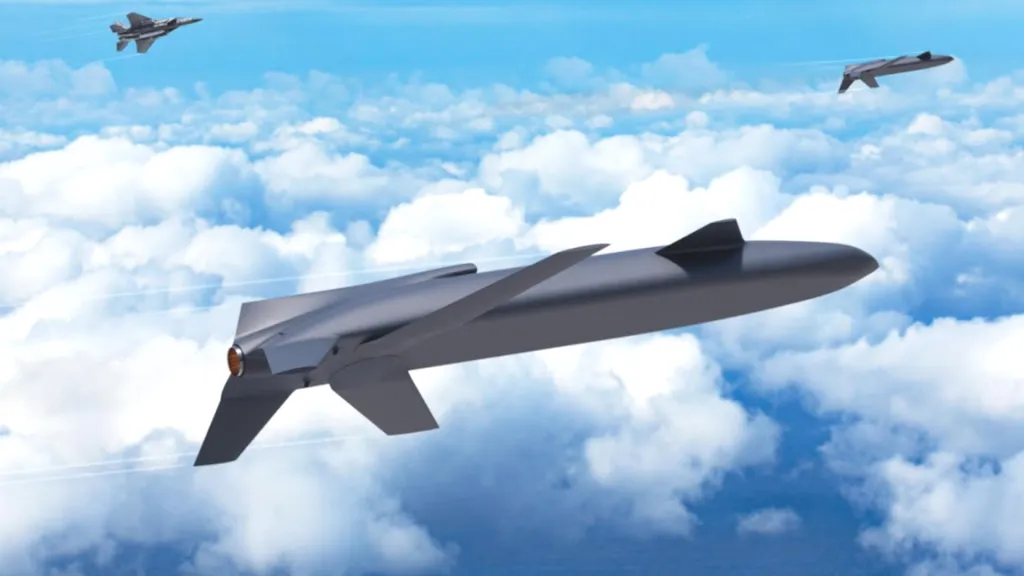
A rendering of a pair of LongShot drones with an F-15 in the background. General Atomics

General Atomics, as well as Lockheed Martin and Northrop Grumman, received initial contracts to work on competing concepts for the drone in 2020. DARPA chose General Atomics’ design for continued development in 2023. The original hope had been that the uncewed aircraft would make its maiden flight before the end of that year. The current goal is to begin flight testing before the end of the year.

“DARPA’s LongShot with General Atomics Aeronautical Systems has successfully completed a series of technical milestones, moving its air-launched uninhabited vehicle – recently designated the X-68A – closer to flight testing,” according to DARPA’s release. “Recent achievements, including full-scale wind tunnel tests and successful trials of the vehicle’s parachute recovery and weapons-release systems, demonstrate significant progress in developing this next-generation capability.”

Previously released renderings of LongShot have depicted it as capable of releasing at least one AIM-120 Advanced Medium Range Air-to-Air Missile (AMRAAM) from an internal bay running along the bottom of the fuselage.

Another rendering of LongShot drones, depicted here launching AIM-120 missiles from internal bays. General Atomics

The overall LongShot design that has been shown to date is akin to that of a cruise missile, with an elongated fuselage and a chined nose. It has reverse-swept main wings toward the rear of the fuselage and small canards at the front, both of which pop out into their deployed positions after launch. It also has an inverted V-shaped twin-tail configuration and a vertical strake that sticks up just slightly from behind the top-mounted dorsal engine air intake.

A rendering of an F-15 carrying LongShot drones, as well as other stores. Note the main wings and canards in their stowed positions. General Atomics
Another rendering of the LongShot design offering a closer, top-down look at the intake and other aspects of the rear end of the drone. DARPA/Colie Wertiz

The official entry for the X-68A in the U.S. Mission-Design-Series (MDS) designation system says that the drone is powered by a single Williams WJ38-15 turbojet, according to the Designation-Systems.net website. The use of the WJ38-15 may point to a high subsonic top speed for LongShot. This engine is also used on the German-Swedish Taurus KEPD 350 air-launched cruise missile, a 3,000-pound-class design with a stated maximum speed of Mach 0.95.

It is also worth noting that LongShot’s parachute recovery is intended, at least at present, for use in testing and training, rather than any actual combat employment of the drone.

“LongShot is intended for conflict. In combat scenarios, recovery isn’t really practical, and the price point doesn’t make it necessary,” C. Mark Brinkley, a General Atomics spokesperson, told TWZ last year. “However, for test and training, it is recoverable, and we have options for that.”

General Atomics

As mentioned, the first live test launch of a LongShot drone is set to be from an F-15 fighter, an aircraft type particularly well known for its ability to carry outsized payloads. F-15 variants have already been used in the United States, as well as in Japan, as aerial launch platforms for jet-powered drones. For years now, TWZ has been highlighting the particular potential of the Air Force’s new F-15EX Eagle II to carry oversized payloads and act as airborne drone controllers.

DARPA and General Atomics have also talked about the potential to launch X-68As from bombers’ internal bays, as well as from cargo aircraft using the Rapid Dragon palletized munitions system.

A rendering showing a B-52, as well as F-15s, employing LongShot drones. General Atomics
A rendering depicting Rapid Dragon systems loaded with LongShots being released from C-17A Globemaster III cargo planes. General Atomics

As TWZ has previously written:

“LongShot is intended to extend the range at which a launch platform can fire on targets, which, in turn, helps keep them further away from threats. The drones can fly forward into higher-risk areas before launching their own missiles. As designed, LongShots also simply expand the total area in which a launch platform, especially a tactical jet like an F-15, can engage threats.”

“LongShot drones could also leverage targeting data from sources other than their launch platforms. This would rely on, but also take immense advantage of long-range ‘kill web’ architectures in development now. As those kill webs expand in scale and scope, the likelihood of munitions engaging targets outside the range of a launch platform’s organic sensors will only grow. You can read more about these developments here.”

These capabilities could be further magnified by bomber or cargo aircraft carrying larger numbers of LongShot drones. Larger launch platforms could saturate a particular section of the battlespace with air-to-air assets quickly, enabling the rapid deployment of a temporary counter-air screen. The uncrewed aircraft could also provide more localized defense for larger and more vulnerable aircraft, and they would only have to be deployed as necessary in that role. That, in turn, would help reduce strain on escorting assets.

Another rendering showing a large group of LongShots being released from the Rapid Dragon systems. General Atomics

The LongShot program has so far been described in terms of scenarios that center more on direct control for the launch platform. However, control of the drones after launch could similarly be localized or executed across longer distances via beyond-line-of-sight datalink capability and/or signal relays. This could also allow for control to be handed off from one node to another. Higher degrees of autonomy would allow for the performance of tasks after launch with fewer direct human inputs, as well.

“We’ve got a program right now with DARPA that we’re working on. It’s called LongShot. And that effort is really, if you think about, it’s about an air-launched fighter,” Patrick “Mike” Shortsleeve, Vice President of DoD Strategic Development for General Atomics Aeronautical Systems, Inc (GA-ASI), told TWZ‘s Jamie Hunter in an interview at the Air & Space Forces Association’s 2025 Air, Space, and Cyber Conference last September. “So, we’re talking about a smaller UAS [uncrewed aerial system], … but it also will be able to carry air-to-air missiles and be brought into the fight in mass when needed. So LongShot represents sort of another iteration of what we’re doing for disruption, to help the Air Force change or revolutionize the way air dominance is being done.”

General Atomics Update From Air, Space & Cyber 2025: CCA, LongShot, 9M Flight Hours


There are still questions about how efficient it would be in real combat to use an expendable drone like LongShot to get missiles closer to potential engagement areas, as well as offer some loitering capability. What the cost equation might be, in particular, compared to using more advanced, reusable drones and/or longer-ranged missiles, is unclear. Still, the Air Force and/or other services could see LongShot as a necessity for meeting certain operational needs that cannot be addressed by any other solution.

As we have highlighted in the past, LongShot could feed into other uncrewed aircraft efforts, especially separate, but intertwined Collaborative Combat Aircraft (CCA) programs now being run by the U.S. Air Force, U.S. Marine Corps, and U.S. Navy. In an interview with Breaking Defense last year, David Alexander, President of General Atomics’ Aeronautical Systems, Inc., division (GA-ASI), said that LongShot could be a “great fit” for Increment 2 of the Air Force’s CCA program. General Atomics and Anduril are already developing separate drone designs, designated the YFQ-42A and YFQ-44A, respectively, under Increment 1 of that program. The Marines are also now set to utilize the YFQ-42A design at least as a surrogate for a future CCA capability.

When it comes to LongShot, DARPA says that “ground and integration testing currently underway” is now steadily building up to “the safe and effective employment of the X-68A from an F-15, confirm the flight worthiness of the LongShot vehicle, and demonstrate its ability to safely eject a captive sub-munition” after years of schedule slips.

Contact the author: joe@twz.com

Joseph has been a member of The War Zone team since early 2017. Prior to that, he was an Associate Editor at War Is Boring, and his byline has appeared in other publications, including Small Arms Review, Small Arms Defense Journal, Reuters, We Are the Mighty, and Task & Purpose.


Source link