Airbus travel chaos: 13 things you need to know after major flight disruption – The Mirror
Thousands of Airbus planes have been forced to update their software following an incident that left 15 passengers injured – several UK airlines have shared whether their flights have been impacted
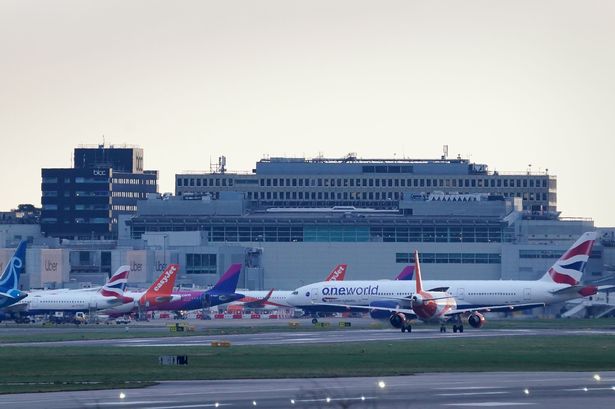
Thousands of Airbus A320 planes will be forced to undergo an update (pictured: Gatwick Airport)(Image: PA)
What you need to know about the Airbus A320 travel disruption:
A software issue on the A320 family of Airbus aircrafts has led to the aviation giant enforcing a system update before some their planes can fly again.
More than 6,500 Airbus A320 family aircrafts worldwide require a software update.
This update came after the aerospace company found that intense radiation from the sun could corrupt data on these planes that were crucial to flight controls.
Airbus said the fix would involve reverting the A320 software to an earlier version while stressing this process would only take two to three hours for most planes.
It comes after at least 15 JetBlue passengers were injured last month after an A320 aircraft suddenly dropped in altitude, forcing an emergency landing in Florida.
That plane had experienced a “flight control issue” which could have been linked to its software system.
Not all A320 planes will require a software update but several UK airlines have said these aircraft in their fleet and could be impacted, the European Union Aviation Safety Agency said.
The EASA warned travellers: “The requirement will mean the airlines flying these aircraft will in some cases have to change software over the days ahead or remain on the ground from Sunday onwards until the software has been changed. This action is likely to mean that unfortunately there may be some disruption and cancellations to flights.”
Wizz Air has warned passengers that they could face disruption over the weekend due to the update, saying: “Wizz Air has already immediately scheduled the necessary maintenance to ensure full compliance with the identified mitigation.”
EasyJet indicated in a statement there may be changes to their flying schedule as a result of the update, in which case passengers will be informed.
Passengers flying with British Airways should not face any significant disruption as only three of their aircraft require the update, a spokesperson for the airline confirmed.
Jet2.com said it was “installing software updates on a very small number of aircraft” in its fleet, adding: “We can confirm there will be no impact to our flying programme as a result.”
Gatwick Airport also warned passengers may face some disruption over the coming days but a spokesperson for Heathrow Airport said it is not expecting any disruption to its flight schedule at this stage.
Follow Daily Mirror:
At Reach and across our entities we and our partners use information collected through cookies and other identifiers from your device to improve experience on our site, analyse how it is used and to show personalised advertising. You can opt out of the sale or sharing of your data, at any time clicking the “Do Not Sell or Share my Data” button at the bottom of the webpage. Please note that your preferences are browser specific. Use of our website and any of our services represents your acceptance of the use of cookies and consent to the practices described in our Privacy Notice and Terms and Conditions.
By 2027 passengers will be able to fly non-stop to Australia from the UK
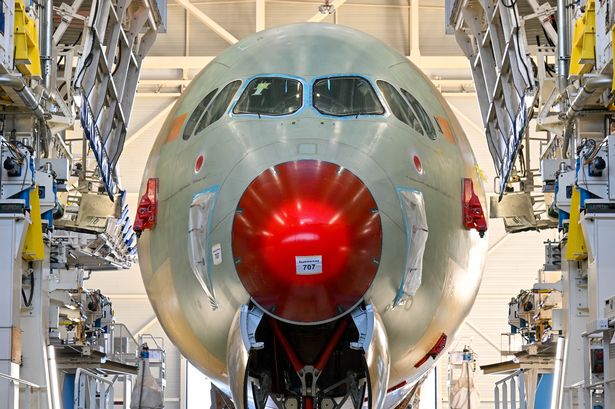
Currently being assembled in Toulouse, France, the aircraft’s major components — including the fuselage, wings and landing gear — have already been joined(Image: Qantas/Cover Images)
Australia’s national carrier Qantas has revealed the first images of its ultra-long-range Airbus — the aircraft that will make aviation history by flying non-stop for 22 hours. The groundbreaking jet will connect Sydney directly to London and New York by 2027, setting a new global record for the longest commercial flight ever operated.
Currently being assembled in Toulouse, France, the aircraft’s major components — including the fuselage, wings and landing gear — have already been joined. Qantas showcased the milestone at its annual general meeting in Brisbane, describing the next-generation aircraft as a “game-changer” for international travel.
The A350-1000ULR will serve as the backbone of Qantas’s ambitious Project Sunrise initiative, designed to link Australia’s east coast with the world’s major cities without stopovers. Each flight will last up to 22 hours — saving travellers as much as four hours compared to current one-stop journeys.
The jet will soon move into a dedicated hangar for the installation of its engines and flight instruments, before beginning a rigorous testing programme in 2026. Qantas CEO Vanessa Hudson hailed the milestone as a defining moment for the airline’s global ambitions.
“Given Australia’s position in the world, Qantas has a long history of breaking aviation barriers. Project Sunrise will not only overcome the tyranny of distance, it will fundamentally change the way our customers travel the world,” she said.
“These flights will cut up to four hours off the journey and transform how people experience ultra long-haul travel, through science-backed design to minimise jetlag and maximise wellbeing.”
The aircraft’s record-breaking range is made possible by an extra 20,000-litre rear fuel tank and state-of-the-art onboard systems, ensuring maximum endurance, comfort and safety. When Project Sunrise launches in 2027, it will make possible what once seemed unthinkable — non-stop flights halfway around the world.
To address the physical challenges of such long-haul travel, Qantas has partnered with Australian designer David Caon and researchers from the University of Sydney’s Charles Perkins Centre. Their team, which includes sleep scientists, developed tailored lighting patterns and meal timing strategies to help reduce jet lag.
Unlike the standard A350-1000 aircraft, which seat more than 300 passengers, Qantas’s version will carry just 238, providing travellers with more personal space and introducing a new “Wellbeing Zone” between Premium Economy and Economy. The area will feature stretch handles, guided exercise screens, a hydration station and light refreshments to keep passengers feeling fresh throughout the flight.
Project Sunrise takes its name from Qantas’s legendary “Double Sunrise” flights during World War II, which stayed airborne long enough to witness two sunrises in a single journey. With the new generation of aircraft, Qantas is rekindling that pioneering spirit — once again pushing the limits of air travel.
The airline also announced the launch of a new domestic travel class, Economy Plus, which will include extra legroom, priority boarding and dedicated overhead locker space. The upgrade will be available for purchase from February, with complimentary access for top-tier frequent flyers.
The first of 12 A350-1000ULR aircraft is expected to be delivered in late 2026, paving the way for commercial operations in early 2027. Qantas said its teams are “incredibly excited” about the project, calling it a “landmark moment for international aviation.”