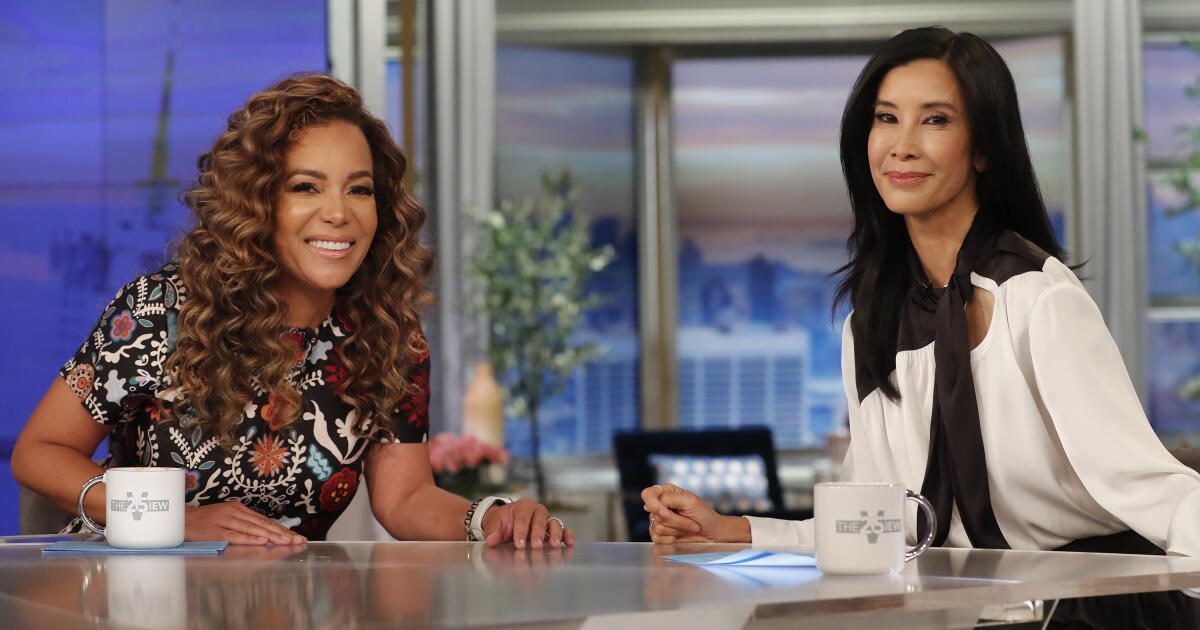
Sunny Hostin of “the View” clones her voice and likeness
Hollywood A-listers are more comfortable than ever with cloning their voice and likeness to create a new stream of income, despite the threat of viewer backlash to artificial intelligence.
Sunny Hostin of the popular daily talk show “The View” has licensed her image and likeness to AI production studio Fountain 0, which will make film adaptations of her novels.
“To be able to bring my novels to life in movie and TV form, and actually have my image inserted in the productions, so that audiences can relate to me through my stories beyond my role as an author, is incredibly exciting to me,” Hostin said in a statement.
“AI can give me a way to both more fully develop, and more fully immerse myself in, IP I have developed,” she said.
The Overton window for acceptable AI use in Hollywood continues to widen as Hollywood actors, television hosts, and influencers embrace cloning with protections and compensation. As high-quality synthetic re-creations become cheap and accessible, cloning has become a more desirable option for studios struggling with runaway production costs.
Audiences will be subject to more AI content on the big screen that’s indistinguishable from real human performances.
Fountain 0 is the producer behind “Dreams of Violets,” a fully AI-generated film inspired by anti-government protests in Tehran. The 75-minute drama was made with a budget of $2,000 without a cast or a crew, and was the first fully AI-generated film accepted at the Tribeca Film Festival.
“We are incredibly gratified that Sunny is willing to be the talent pioneer willing to step out and take advantage of this new form of creative expression,” said Ash Koosha, co-founder and CEO of Fountain 0, in a release.
The production company will be releasing its second fully AI-generated film, “Odysseus: The Fall,” later this year. The film uses the likeness of many people, including the film’s creator Koosha, who stars as Odysseus.
Fountain 0’s executive chariman told CNBC that the film is designed to ride the buzz around Christopher Nolan’s ‘’The Odyssey” and give people the opportunity to compare the height of human filmmaking with AI filmmaking.
Proponents of AI argue that it allows writers and creators to take on blockbuster-scale films without financial constraints. Many creators oppose AI because it could replace humans and was built using the unauthorized scraping of creative works used to train generative AI video and image models.
Online reactions to news of Hostin’s cloning were fierce.
“Basically, no film studio wants to give her the budget to turn her books into a movie with real actors, so she’s resorting to AI studios,” wrote one person on Reddit.
Hollywood has fought hard for protections from AI in the prolonged writers’ and actors’ strikes of 2023. SAG-AFTRA, the union representing about 160,000 actors and other performers, has been demanding informed consent, fair compensation, more control and transparency over the use of digital replicas.
The latest agreement, signed in June, introduced limits on studios’ use of digital replicas. The contract requires studios to notify actors before using their voices to create a replica. After a project is complete, actors must sign off and be paid the equivalent of an in-person performance if their replica is used.
Additionally, studios need to pay residuals to digital replicas used in reruns, and replicas cannot be used during a strike.
Hiring fully AI-generated characters such as Tilly Norwood, created without hiring a human performer, is not impossible but comes with a very high threshold for use under the 2026 union contract. Producers must notify the union in advance and prove the AI character brings “significant additional value” to the role.
Still, a fissure remains between those actors who stay morally opposed to cloning, and those who embrace this new reality.
ElevenLabs’ voice marketplace features clones of dozens of personalities — including actress Judy Garland, physicist Richard Feynman and popular characters such as Mr. Potato Head for creators to legally license and get compensated for their use.
This has created a contentious ecosystem in which A-listers are gaining millions from cloning with safeguards and building a new stream of passive income from their intellectual property, while early-career actors complain that their likenesses are being misappropriated and opportunities are being driven away. A massive lobbying effort is underway to institute a uniform standard for protecting an individual’s voice and likeness as property rights.