AFCON

Afcon 2027 qualifying: Ghana register first win against Somalia

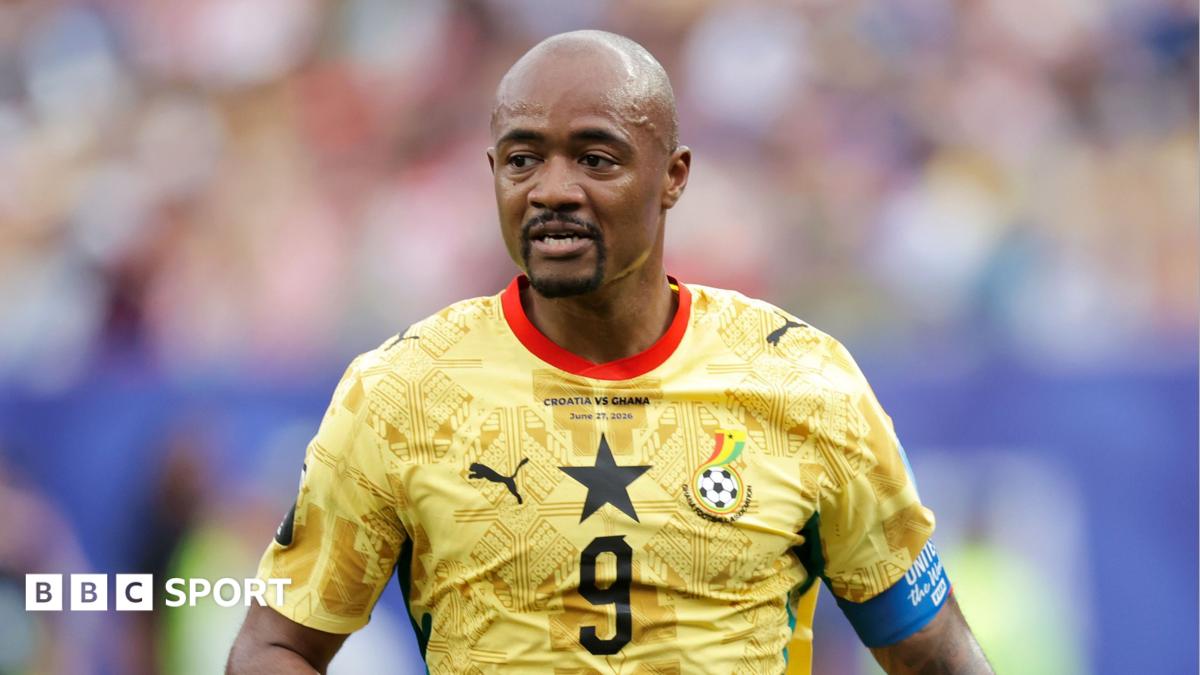
Ghana belatedly kick-started their 2027 Africa Cup of Nations (Afcon) qualifying campaign with a 2-0 home win over Somalia.

The Black Stars had lost their opening two Group C matches against Ivory Coast and The Gambia, leading to the departure of coach Carlos Queiroz by mutual consent.

Ghana women’s coach Kim Bjorkegren was placed in interim charge for this month’s double-header against the Ocean Stars, with the West Africans in danger of missing a second successive edition of the Afcon finals.

The hosts were given a chance to take an early lead in Sekondi-Takoradi after Alidu Seidu was pulled down in the box, but Jordan Ayew’s 14th-minute penalty was saved by Somalia goalkeeper Ibrahim Hussein.

Ghana did go ahead in first-half stoppage time when Mohammed Salisu headed Mohammed Kudus’s deep corner back across goal and Jonas Adjetey nodded in from six yards out.

Felix Afena-Gyan doubled the Black Stars’ advantage just after the hour mark when his shot from inside the box squirmed under Hussein and over the line.

The result puts the four-time continental champions three points behind Ivory Coast and The Gambia, who meet in Bouake at 19:00 GMT.

Cameroon and Senegal are also in action later on Thursday.

Elsewhere, Newcastle United striker Yoane Wissa opened the scoring as DR Congo continued their perfect start with a 3-1 win over Sierra Leone in Kinshasa.

The Leopards are on nine points at the top of Group E, five points ahead of Zimbabwe and Equatorial Guinea after those two sides drew 0-0.

Nigeria were handed a boost after Group L leaders Guinea-Bissau could only manage a 1-1 draw in their away tie against Madagascar in neutral Morocco.

The Super Eagles trail Guinea-Bissau by four points ahead of their home game against Tanzania on Friday (16:00 GMT).

Tanzania are assured of a place at Afcon 2027 as tournament co-hosts, with the other three sides battling for one qualification spot.
Source link

AFCON returns to 2-year cycle after CAF reverses quadrennial decision | Football

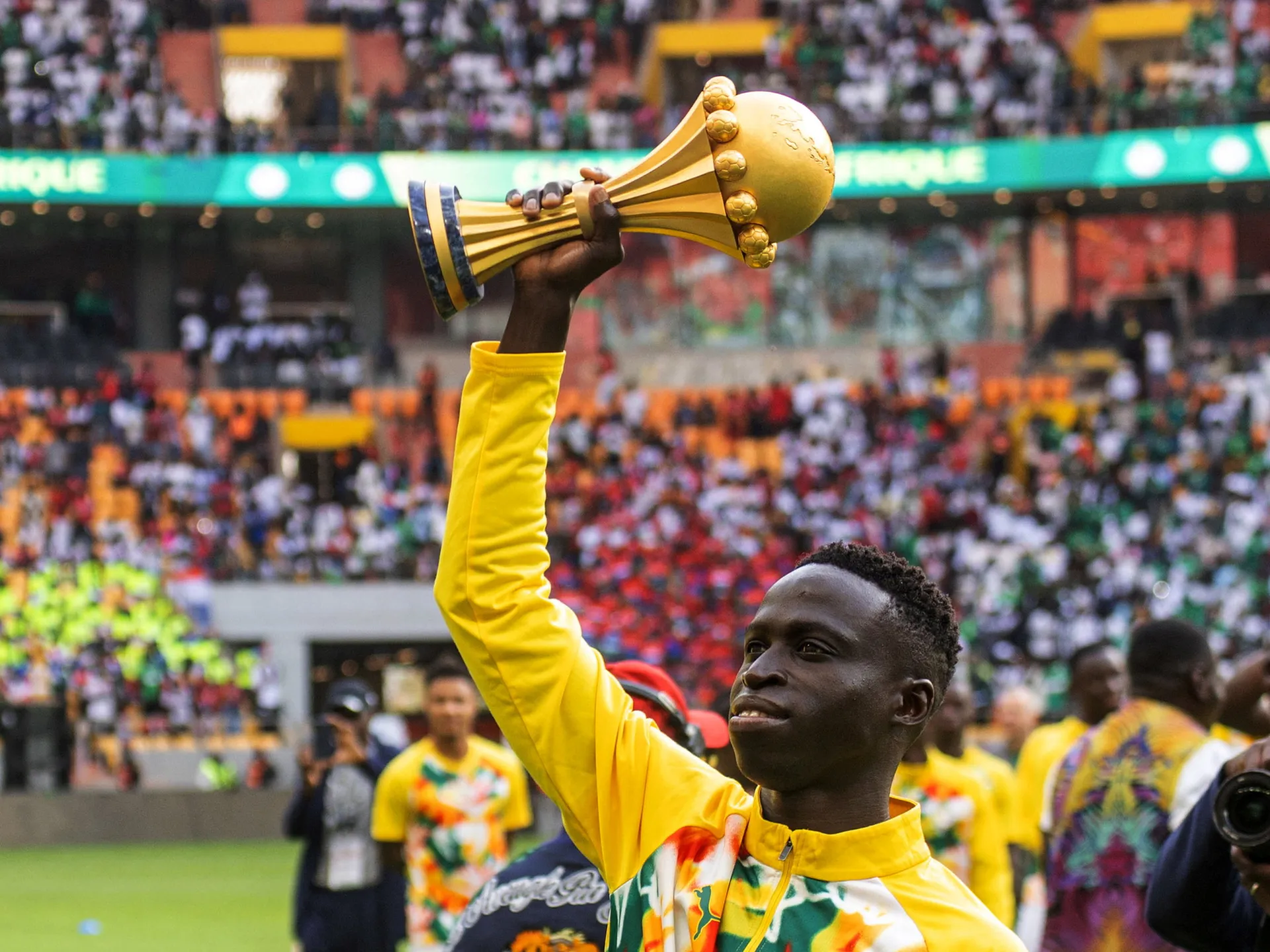
Kenya, Tanzania and Uganda will cohost the next AFCON in 2027, with subsequent tournaments in 2028, 2031 and 2033.

The Africa Cup of Nations (AFCON) will be held every two years, not four as was planned, governing body the Confederation of African Football (CAF) announced after reversing an earlier decision.

AFCON has traditionally been staged every two years, but CAF’s surprise decision last December to move to a four-year cycle was not widely welcomed.

Recommended Stories

list of 4 itemsend of list

“The Confederation of African Football (CAF) Executive Committee today unanimously decided that the CAF Africa Cup of Nations will return to taking place every Two Years,” CAF said in a statement.

Under the previous plan, AFCON would have moved to a four-year cycle, with the proposed CAF Nations League becoming the continent’s biennial competition.

CAF President Patrice Motsepe said at a strategy conference in Cape Verde earlier this month that the organisation was considering returning AFCON to a two-year cycle.

CAF said the Nations League would take years to generate enough revenue to sustain African football.

“The decision by the CAF Executive Committee to reinstate the organization of the AFCON every two years aims to advance, protect and promote the interests of African football and the 54 CAF Member Associations, as well as those of African players playing for clubs outside the continent,” Motsepe said in a statement.

Kenya, Tanzania and Uganda will cohost the next edition in 2027, with subsequent tournaments to be held in 2028, 2031 and 2033.

There will be no AFCON in 2030, with CAF maintaining its tradition of not staging the tournament in a World Cup year.

Source link

Decision on Senegal’s AFCON final appeal to be made by end of November | Africa Cup of Nations

The Court of Arbitration for Sport will announce its verdict on the title after it was awarded to Morocco by CAF.

A decision on Senegal’s appeal ‌‌after being stripped of this year’s Africa Cup of Nations title will be made ⁠⁠at the end of ⁠⁠November, the Court of Arbitration for Sport (CAS) has confirmed.

“This process will require several weeks, with the CAS Award expected at the end of November 2026,” the court said in a statement on Monday.

Senegal are contesting the decision by the Confederation of African Football (CAF) to declare Morocco champions, despite Senegal beating the hosts ⁠⁠1-0 after extra time in January’s final in Rabat. Their arguments, plus those of Morocco and CAF, were heard by CAS in Lausanne on October 8.

At the time, CAS said ⁠⁠it expected a decision within days but has now decided to issue a complete ruling, including legal grounds, known as a CAS Award.

Senegal walked off the pitch for 14 minutes ‌‌after a penalty was awarded against them late in regulation time, with several players returning to the dressing room in protest before they resumed play.

Morocco missed the spot kick, sending the match into extra time, where Senegal scored the winner to secure victory.

However, they were stripped of the title two months later after CAF’s Appeal Board ruled that Senegal had forfeited the match by walking off the pitch, overturning the result and awarding a 3-0 victory to ⁠⁠Morocco.

Senegal quickly followed with an appeal to CAS, ⁠⁠which was lodged on March 25 but heard some six months later. The basis of their arguments is that the referee’s decision is final and he allowed the match to be completed.

“I know it’s a long wait for the fans, ⁠ ⁠a few months after the final between Senegal and Morocco,” CAS Director General Matthieu Reeb said outside the hearing earlier this month.

“The facts are set, are clear and the discussions will be on some procedural issues and legal aspects,” he added.

The CAS panel is presided over by French sports law expert Gerald Simon, with the assistance of Italian international law ‌‌professor Luigi Fumagalli and Hamburg-based lawyer and professor of law at the University of Zurich, Ulrich Haas.

CAS decisions are called awards and hold the same value as a national court judgement. CAS awards may be enforced by sports federations or state courts, depending on the circumstances.

Source link