AFA Warfare Symposium 2026

This Is What The EA-37B Compass Call Electronic Attack Jet Can Actually Do

With the U.S. Air Force now in the process of transitioning from the aging EC-130H Compass Call to the brand-new, bizjet-based EA-37B Compass Call, TWZ caught up with top executives from the two co-primes on the electronic attack aircraft program. In the process, we learnt more about its capabilities, related platforms, and other prospects for the future. We spoke with Jason Lambert, president of the intelligence, surveillance, and reconnaissance sector (ISR) at L3Harris Technologies, and Dave Harrold, who leads the Countermeasure & Electromagnetic Attack (CEMA) Solutions business area at BAE Systems.

he U.S. Air Force has quietly changed the designation of its new electronic warfare jet from EC-37B to EA-37B. The service says this new moniker better reflects the aircraft’s roles and missions, which it says includes attacking and destroying certain targets.
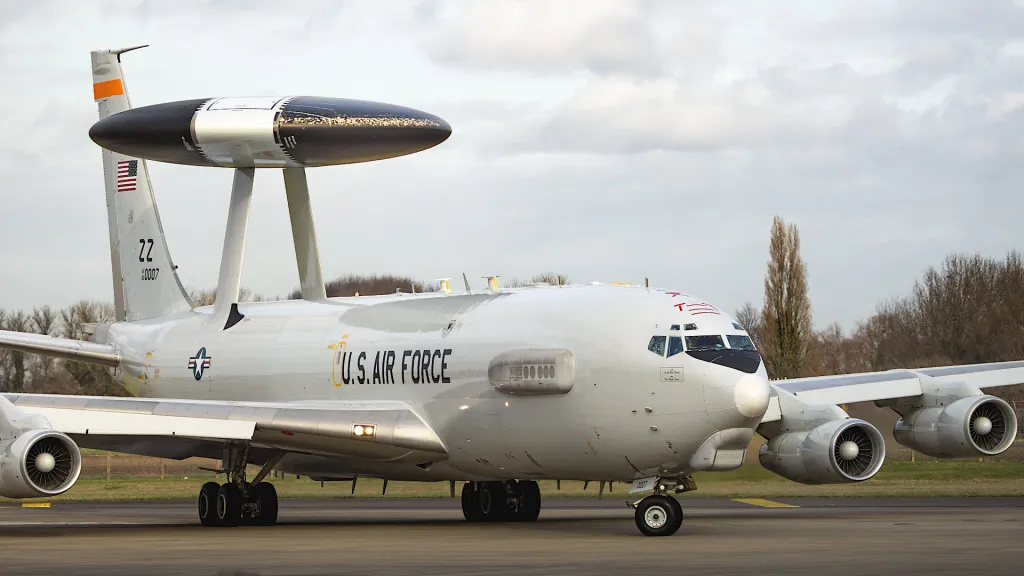
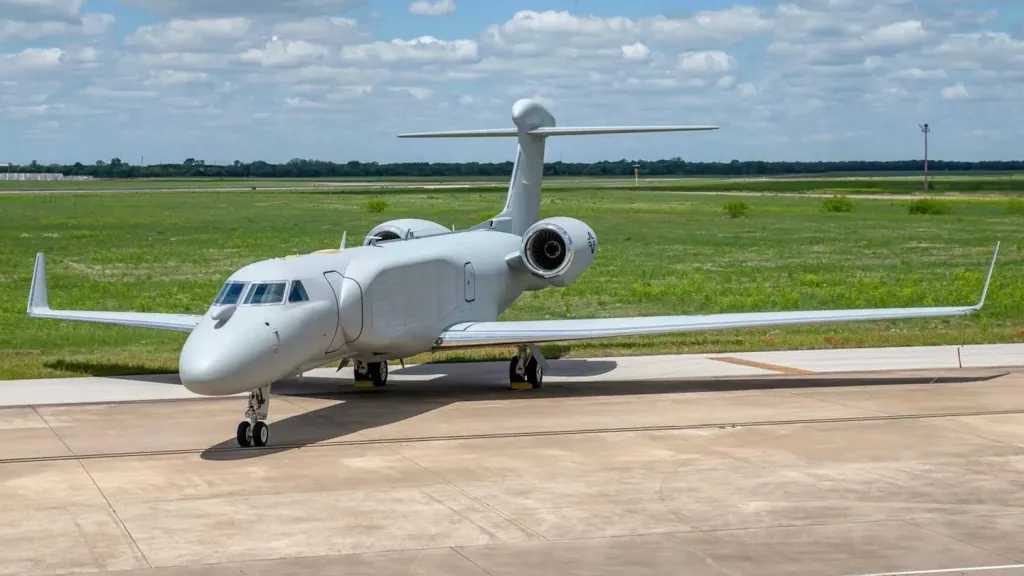
EA-37B Compass Call (USAF) U.S. Air Force

TWZ: Can you give us a better understanding of what the EA-37B Compass Call does conceptually? There are clearly a lot of different parts to its mission, so I am just interested to hear that in your words.

Dave Harrold: This aircraft is the Department of War’s only long-range, electromagnetic spectrum aircraft. Interestingly enough, it used to be called the EC-37B until it was formally changed to the EA-37B, signifying that it is a dedicated electronic attack platform.

When I say electronic attack, what we’re talking about is really degrading, denying, and disrupting adversary communications. It’s about causing havoc in their command-and-control system, so that adversary leaders are unable to make clear decisions. So that’s about integrated air defense systems [IADS] and disruptions there. It’s about [disrupting] different communication nodes. This really is a dedicated counter-C5ISRT [command, control, communications, computers, cyber, intelligence, surveillance, reconnaissance, and targeting] platform. We’ve been doing this mission set for over 40 years with the EC-130H workhorse starring in every conflict since it was put in the inventory, particularly in the Global War on Terror.

We saw the need to be able to do that at a higher altitude, longer range, higher speed, if we were going to turn this capability toward other regions. And so the challenge was really around: how do you take all of that stuff on an EC-130H and package it down to an EA-37B? That has been a challenge of innovation and technology, for us to reimagine: how do you take that size and weight and reduce it, but not reduce the power? Because we need that power to be able to execute the kinds of techniques that we’re doing on the system. So really, it’s about controlling the electromagnetic spectrum, making sure we can enable our side and disable the other side.

Electromagnetic warfare, evolved


Jason Lambert: The EA-37B does that really on a theater level. There are other capability sets that the Department of War has in their inventory that are more of a point solution, whereas this is really a theater-level, strategic solution, dominating the electromagnetic spectrum and being able to defeat what’s happening on our adversary’s side, while our forces continue to operate in full, with what they need to do for their communications, with what they need to do with their command and control systems. Other systems out in the world are broad jammers. This is not that; this enables our assets to be able to continue to do their job in a non-degraded manner.

Dave Harrold: Yeah, this is really important. One of the strengths of the EA-37B is the simultaneity. What that means is we’ve got the power and the capability. We’re not in a one-versus-world anymore, or using a point solution: here’s a threat, here’s a technique. The threat environment is getting more and more sophisticated and challenging, and so it’s really about how many different techniques can you run at one time to neutralize or disrupt or deny how many different threats that are out there? That’s what’s important about the power and what distinguishes this platform from point solutions.

The 43rd Electronic Combat Squadron (ECS) took its final flight in the EC-130H Compass Call aircraft on Feb. 15, 2024, at Davis-Monthan Air Force Base, Arizona. The 43rd ECS is the first squadron under the 55th Electronic Combat Group to move itself away from the EC-130H Compass Call aircraft to the new EA-37B Compass Call. (U.S. Air Force photo by Airman 1st Class William Finn).
The 43rd Electronic Combat Squadron (ECS) took its final flight in the EC-130H Compass Call aircraft on February 15, 2024, at Davis-Monthan Air Force Base, Arizona. The 43rd ECS is the first squadron under the 55th Electronic Combat Group to move itself away from the EC-130H Compass Call aircraft to the new EA-37B Compass Call. U.S. Air Force photo by Airman 1st Class William Finn Charles Haymond

Jason Lambert: And it is all software-defined, which is a very important thing. The threats are evolving, and we’ve got the capability, and our Department of War has the capability, for some of our other platforms, our ISR platforms, specifically, to go out and collect on what those potential threats might look like and how those threats evolve over time. That information is able to be configured within the mission system that BAE Systems produces to be able to go and defeat those threats. It’s not like a one-off solution that’s going to be made obsolete. It’s a solution today that’s built for tomorrow and beyond, because it can continue to evolve based on the threats.

TWZ: Can you kind of indulge us in terms of what could it do? What’s a tangible thing this could actually go and do? Could it go and shut down a big part of an integrated air defense system [IADS] for example?

Jason Lambert: I’m gonna go back to one of the things I’ve already said: sophisticated comms networks. Our enemy adversaries have more and more sophisticated comms networks. We have to affect those comms networks in order to affect their overall capability. And, you know, you mentioned IADS, that is an original mission of the Compass Call platform, to disrupt the IADS.

Dave Harrold: Exactly, this is designed to break the kill chain. If there’s no command and control system to process the information for the kill chain, it won’t work. And you can do that significant range. That’s what it does.

U.S. Airmen assigned to the 43rd Electronic Combat Squadron pose for a group photo before boarding the EA-37B Compass Call aircraft for its first official mission training sortie flight at Davis-Monthan Air Force Base, Arizona, May 2, 2025. The EA-37B sustains Joint Force military advantage in the electromagnetic battlespace and builds a more lethal force by modernizing electromagnetic attack capabilities to deny peer competitors' tactical networks and information ecosystems. (U.S. Air Force photo by Airman Samantha Melecio)
U.S. airmen assigned to the 43rd Electronic Combat Squadron pose for a group photo before boarding the EA-37B Compass Call aircraft for its first official mission training sortie flight at Davis-Monthan Air Force Base, Arizona, May 2, 2025. U.S. Air Force photo by Airman Samantha Melecio Airman Samantha Melecio

TWZ: Can you explain a bit more about what you have to do to port these systems and capabilities from the EC-130H into the EA-37B?

Jason Lambert: L3Harris is the integrator. We purchase the aircraft either directly from Gulfstream or from the VIP market. Then we work with Gulfstream to do the conversion of the aircraft. We essentially time it back to what the plane was when it initially left the production line. Then we go and do the outer mold line shape; Gulfstream provides that to us at our facility in Waco, Texas. Then we do the integration of the BAE Systems mission system that Dave and his team provide.

Dave Harrold: We’re the prime mission equipment provider, so that’s our co-prime split, and we build all of that up in Nashua, New Hampshire. We build that equipment, we test it, we lay it out. We have an integration lab up there, where we actually lay it out as if it were in the aircraft, and then we ship that off to Jason’s team, who then lay it out to make sure it all fits again before they put it on the actual aircraft. It’s a very choreographed way to make sure that we’re hand in hand about building the equipment, that the cabling is all appropriate, and all that kind of stuff, so that Jason’s team can integrate it on the aircraft.

An EC-37B Compass Call arrives at Davis-Monthan Air Force Base, Arizona, Aug. 17, 2022. Compass Call suppresses air defenses by preventing the transmission of essential information between adversaries, their weapon systems, and control networks. (U.S. Air Force photo by Airman 1st Class Vaughn Weber)
An unpainted EC-37B Compass Call arrives at Davis-Monthan Air Force Base, Arizona, August 17, 2022. U.S. Air Force photo by Airman 1st Class Vaughn Weber Senior Airman Vaughn Weber

Jason Lambert: The EC-130H is still in service today, but it is obviously a very different airplane in terms of the capability set. We think about it, we think about the SWAP — size, weight, and power are three constraints or criteria that we look at. Obviously, they are very different on a business jet platform, but we’ve successfully done that integration on the new system. Now we can, of course, put that all on an aircraft that’s got a much larger range, time on station, and altitude to be able to perform this mission.

The EC-130 Crew


TWZ: Returning to the EC-130H comparison. Can you compare the performance of the two platforms? How does that affect survivability?

Jason Lambert: From a speed perspective, the EA-37B flies at Mach 0.82… versus 300 miles an hour for the EC-130H. For altitude, the EC-130H flies at 20,000 feet. The EA-37B is going to be north of 40,000 feet. So we have double the altitude. And when we think about time on station, it’s not comparable. I mean, from a range perspective, we have more than double. We have around 2,300 nautical miles on the EC-130H and 4,400 nautical miles on the EA-37B. Couple that with additional content that can be put on from defensive perspective, and it’s far more survivable, no question about it. In terms of how it operates, the altitude it operates, the standoff range it can operate at, it’s a different plane

 TWZ: Does greater altitude improve your ability to do this missions with greater standoff?

Dave Harrold: It actually does. Just the geometry of being at that higher altitude, you can get a far greater view to the horizon, and and not just on the ground, but communication at large. So think what might be above you as well as below you.

Returning to survivability, I think the other thing to remember is that the mission here is to degrade, disrupt, and deny the adversary’s ability to communicate. And so by doing that, we’re contributing to the survivability of the whole campaign, and by itself, also the platform itself, right? If I’m out there disabling different comms networks that are integral to threats actually being successful, the platform is making itself much more survivable through its actual core mission.

Turkish Air Force Airmen receive a tour of a U.S. Air Force EA-37B Compass Call aircraft, assigned to the 55th Electronic Combat Group, Davis-Monthan Air Force Base, Arizona, at Ramstein Air Base, Germany, Jan. 26, 2026. The aircraft is also slated to visit Spangdahlem AB, Germany, and RAF Mildenhall, England, marking the platform’s introduction to Airmen, units and NATO Allies in the U.S. Air Forces in Europe area of responsibility. (U.S. Air Force photo by Senior Airman Edgar Grimaldo)
Turkish Air Force airmen receive a tour of a U.S. Air Force EA-37B Compass Call aircraft, assigned to the 55th Electronic Combat Group, Davis-Monthan Air Force Base, Arizona, at Ramstein Air Base, Germany, January 26, 2026. U.S. Air Force photo by Senior Airman Edgar Grimaldo Senior Airman Edgar Grimaldo

TWZ: Could it go and operate as an escort jammer? I mean, could it go and follow a package to a certain point to protect it?

Jason Lambert: I mean, I guess. I guess we use the word jammer. But it’s not just a simple jammer. It’s a very different mission set, a very discrete set of techniques. But it is absolutely essential to the overall strike package to make sure that that the goals of that package are achieved.

TWZ: Can we just talk a little more about some of the improvements in the EA-37B version of Compass Call? I guess one of the big improvements is the ability to rapidly insert new capabilities in the form of upgrades. Is there anything you can say about that?

Dave Harrold: I think as we move forward, the original baseline was really about just cross-decking the capability from the EC-130H. Now we’re moving into a much more software-defined radio architecture, an open systems architecture. The whole point there is that we go from SABER [BAE Systems’ Small Adaptive Bank of Electronic Resources], which is sort of what I would call Baseline 3.5, interim, the bridge, to get to Baseline 4, which is the fully open software-defined radio architecture. The whole point there is that it used to take months or longer to find a threat, get a new technique, and figure out how to put it on the hardware. Hardware now is all about adaptability and speed, and, more importantly, it’s not just about BAE Systems’ techniques that this open architecture allows for. Anybody who has the right technique can come and plug into our system. We’ve got a development kit that people can get access to, and they can write new skills that we can rapidly insert into the open architecture. As the threat environment gets more sophisticated, we have to get more sophisticated with how rapidly we can come forward with something to counter those threats.

A U.S. Air Force EA-37B Compass Call assigned to the 55th Electronic Combat Group lands at Kadena Air Base, Japan, Sept. 27, 2025. The aircraft integrated with Navy EA-18 Growlers from Electronic Attack Squadron 131, demonstrating U.S. commitment to a free and open Indo-Pacific while strengthening joint capabilities, maintaining dominance across the electromagnetic spectrum, and deterring potential threats in the region. (U.S. Air Force photo by Senior Airman Melany Bermudez)
A U.S. Air Force EA-37B Compass Call assigned to the 55th Electronic Combat Group lands at Kadena Air Base, Japan, September 27, 2025. U.S. Air Force photo by Senior Airman Melany Bermudez Senior Airman Melany Bermudez

TWZ: Just in terms of the CONOPS, does this airplane follow a scripted battle plan? Or can it do real-time adjustments, performing more dynamically?

Dave Harrold: It’s a sophisticated system that is adaptable and flexible to the combatant commanders’ needs, so it can be tasked in that way, to be used optimally, for whatever the commander needs. I also think the exploitation that the system needs to do is flexible enough to be able to change depending on if we are pre-war or at war.

TWZ: How do the mission players actually see the data? Is it processed on board, or can it be worked offboard as well?

Jason Lambert: We’ve got a crew of up to nine people on the aircraft. Of course, the pilot and co-pilot are responsible for the flying, but there are an additional seven members in the back that operate and employ the electronic attack mission system and equipment that’s permanently integrated into the mission and cargo compartment. That crew can include a mission crew commander, which would be an electronic warfare officer, and a weapon system officer. There are experienced cryptologists, linguists, analyst operators, and airborne maintenance technicians. So it’s an entire team that’s up there. The aircraft can process that work onboard, or it can send signals and content to other aircraft in the network.

BAE Systems Compass Call Jammer


TWZ: Can a ground operating team manipulate the Compass Call system? Or does it have to be done airborne?

Jason Lambert: I’m a little cautious on how to answer that question, just in terms of the nature of the classification. I’ll just say it is set up to operate in theater and on a network and so also autonomously. As we continue to evolve our solution set, not just for Compass Call, but what we’re doing on our other ISR platforms, AI is becoming a big part of that in terms of operator workload and being able to do more of the mission set with fewer individuals on the plane. That is evolving as the threat goes up.

TWZ: I think that’s an obvious thing, isn’t it, to want to have fewer operators on board?

Jason Lambert: It helps with weight. If you take out a member of the personnel and a mission crew station, now you can do the same on either a smaller platform, or you can bring more gear onto the same aircraft. There’s always that tradeoff.

An EC-130H Compass call aircraft, at left, alongside the initial EA-37B/EC-37B. L3Harris

TWZ: Can we go back very briefly to the point about reducing the personnel on board. How will you harness AI to do that?

Jason Lambert: It’s really through AI decision content provided to the operator. So think about it in terms of an AEW&C [airborne early waring and control] equation, and a little bit different in terms of what would happen in Compass Call. But in the AEW&C equation, your operators are looking at the number of assets to track. Think of aircraft, airborne assets. They could be ballistic threats, anything that’s been launched and in the sky. There’s a certain number per operator and that number is typically classified. But if you think about it in terms of the things that the human in the system can actually manage at any one point in time, the AI will help that human be able to do a lot more of that by giving the information, compacting the information, and the decision tools to enable them to do more. That’s really what AI does. It’s not a supplement. It’ss an enhancement for the operators.

TWZ: In terms of expandability, the nose and the tail are currently empty. Are you looking at putting anything in there? Is there a need for that? Could you add additional cooling, for example, in the future?

Jason Lambert: We have expansion options for additional content. So we’re continuing to look at that in terms of what you mentioned on the nose. In terms of cooling, there’s both air cooling and liquid cooling on the platform, and so we typically operate in both environments. More broadly, though, about expandability, we talk a lot with our customer about what a roadmap to additional capabilities might look like. Whether that’s new techniques because of emerging threats, prime mission equipment itself, or other capabilities that might take advantage of real estate on the platform. So we’re executing an existing program and at the same time talking about what incremental upgrades might look like in the future.

A U.S. Air Force EA-37B Compass Call aircraft sits on the flightline at Davis-Monthan Air Force Base, Arizona, May 2, 2025. The EA-37B Compass Call is a next-gen electronic attack aircraft that disrupts enemy networks and systems to ensure Joint Force dominance in the electromagnetic spectrum. (U.S. Air Force photo by Airman Samantha Melecio)
A U.S. Air Force EA-37B Compass Call aircraft sits on the flightline at Davis-Monthan Air Force Base, Arizona, May 2, 2025. U.S. Air Force photo by Airman Samantha Melecio Airman Samantha Melecio

TWZ: Could you expand the mission set by adding new sensors?

Jason Lambert: It’s actually not so much the hardware, it’s the software, right? And it’s all software defined. The expandability in the mission packages is really designed to evolve based on what the threat package looks like. And so the threat identification is more and more about the adversary, then we can involve the system through the software integration on the platform. It’s already like it’s designed to be self-expanded. Again, that’s why this simultaneity thing is really important, it’s because as new mission sets come on board, I don’t have to sacrifice one mission for another mission and I can simultaneously execute.

TWZ: The first export customer for the EA-37B is Italy, with two jets on order. Can you talk about those aircraft?

Jason Lambert: They will be the same. Italy may use a different nomenclature when the aircraft are delivered, but they will be EA-37B aircraft. We both co-prime this program for the U.S. Air Force. We also do that for Foreign Military Sales [FMS]. Italy is our first international customer, and there is some additional interest beyond that.

A rendering of an EA-37B Compass Call in Italian Air Force markings. L3Harris

TWZ: So you are going to build additional sets of the Compass Call kit to go in that?

Jason Lambert: We are. That particular contract, and the way we execute these programs on an international basis, is we do a hybrid contract. We do a direct commercial sale, typically on the airplanes, and then the mission system and integration are done on an FMS case through the U.S. Air Force. Of course, this has to go through U.S. government approvals with the State Department in terms of policy release and whatnot, for the technology, which has been approved for Italy. There are additional customers that are also interested on the international front.

TWZ: Presumably the benefit there is that the Italians already have G550s and the associated infrastructure?

Jason Lambert: We have an ISR program known as JAMMS [Joint Airborne Multi-Mission Multi-Sensor System]. When you think about a country that wants to go take on an electronic attack capability, the precursor to that is, typically, an ISR capability. They’ve got an aircraft known as JAMMS. We have a legacy program called SPYDR that we’ve done with the Italians. Understanding the signals that you want to go and eventually exploit and get dominance over in terms of the electromagnetic spectrum, having that understanding of them first through the ISR path is typically the starting point. In recent news you might have seen we have also successfully delivered MC-55A Peregrine to the Australians. That’s their foray into this space as well. And they’ve got interest in potentially looking at the EA-37B Compass Call downrange. But to start right now, it’s the ISR capability that’s been delivered.

The first MC-55A arrived at RAAF Base Edinburgh, South Australia, earlier this year. @airman941

TWZ: And so do other export customers for the EA-37B get a U.S.-standard Compass Call, or is it going to be a slightly different standard? How will they work alongside the U.S. Air Force jets?

Jason Lambert: It’s all subject to releaseability in the U.S. Air Force. But they will be getting the same capability. It’s helpful for the United States, because you want to have your partners involved in this. In an unclassified realm, right now, the need from the U.S. Air Force is over 20 planes. We’re currently under contract, in terms of the mission system, for 10. There are congressional plus-ups that have been looked at for FY 26. The budget’s been increased, and it looks like there’s going to be another two aircraft placed on order for this fiscal year. We’re excited about that. As industry, we’re always looking at how we can expand capacity to go address that need. But you think about a need of 20-plus aircraft in an unclassified space with 10 under contract, soon to be 12. Partners are a big part of how we can go address that global challenge, for the global threat. Italy is the foray into doing that in the EUCOM theater, and what could be done in the eastern realm of NATO. Now, potentially, we’re working with partners from PACOM.

Dave Harrold: The RC-135 Rivet Joint is another aircraft in the U.S. Air Force asset base. That is our intelligence, surveillance, and reconnaissance asset employed by the United States and United Kingdom. Again, that works hand in hand and collaboratively with the EA-37B feet. They will combine, and they can also provide information to each other.

U.S. tactical aircraft flying near Venezuela is part of a pressure campaign aimed at that nation's embattled leader, Nicolas Maduro
A U.S. Air Force RC-135 Rivet Joint. U.S. Air Force photo by Staff Sgt. William Rio Rosado (U.S. Air Force photo by Staff Sgt. William Rio Rosado)

TWZ: In terms of the airframes, the G550 program has come to an end. Where will you source new aircraft from?

Jason Lambert: The G550 is currently out of production. Right now, on any given day, there are roughly a dozen aircraft that are available for sale. Think of it as high-net-worth individuals or corporations that want to trade up or trade in their business jet fleet. So we would go procure those aircraft as they were looking to go buy another asset from Gulfstream or another partner, and we would take those aircraft and work with Gulfstream to do that modification work and get ready to go host the BAE Systems mission kit. That’s how we grow the current G550 base with the used assets on the market.

Additionally, the U.S. Air Force has got 16 C-37 or G550 aircraft that they operate. There are discussions right now on a recap program. Not all those aircraft are a perfect fit for the mission system. They have to be above a certain serial number in terms of how they were produced. Five of the 16 are potential candidates that could be converted to Compass Call. That’s incremental, of course, on top of dozen or so the VIP market. But there are planes available for us to do the expansion. When Dave and I look out and we get the question from Air Force about how do we grow and expand, industry is ready to go do that. We know the need is for greater numbers and we have plans to be able to go execute that.

The C-37 variant of the Gulfstream 5 series in U.S. Air Force colors. U.S. Air Force

TWZ: So the extra two EA-37Bs for the Air Force will be existing airframes that you will harvest from somewhere else?

Jason Lambert: We will purchase those from the market. We’ve already identified owners and tail numbers. We’re ready to go.

We want to thank Jason Lambert and Dave Harrold for taking the time to answer our questions about the EA-37B and share their passion for the aircraft with our readers.

Contact the editor: thomas@thewarzone.com
Thomas is a defense writer and editor with over 20 years of experience covering military aerospace topics and conflicts. He’s written a number of books, edited many more, and has contributed to many of the world’s leading aviation publications. Before joining The War Zone in 2020, he was the editor of AirForces Monthly.


Source link

KC-390 With A Refueling Boom Seems Like A Perfect Fit For The USAF’s Agile Tanker Needs, But Will It Bite?

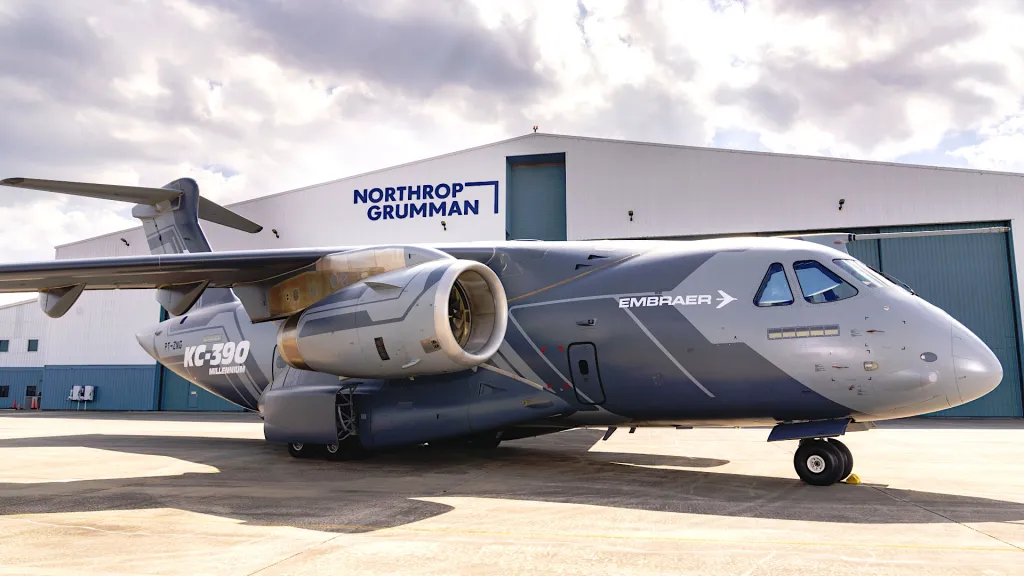
Newly teamed-up Northrop Grumman and Embraer are hoping that a boom refueling system-equipped version of the latter’s KC-390 Millennium twin jet engine tanker-transport will catch the eye of the U.S. Air Force. The two companies say the KC-390’s size and other attributes make it ideally suited to kinds of ‘agile’ distributed operations the Air Force sees as essential for success in future conflict, especially one in the Pacific against China. This is exactly the case TWZ laid out in detail when the concept for a version of this aircraft fitted with a boom first emerged four years ago.

TWZ‘s Jamie Hunter spoke with representatives from Northrop Grumman and Embraer about current plans for the boom-equipped KC-390 on the show floor at the Air & Space Forces Association’s (AFA) annual Warfare Symposium. The two firms first announced their new partnership on this aircraft last week. Embraer had originally unveiled this version of the KC-390 together with L3Harris, but the latter was no longer involved in the project, at least at a high level, by October 2024.

A KC-390 seen at Northrop Grumman’s facility in Melbourne, Florida, last week for an event. Northrop Grumman

“We are excited to announce the partnership to get started on the development of this capability, because we believe it’s a significant advantage to our U.S. Air Force, as well as our international allies,” Craig Woolston, Vice President and General Manager of Research and Advanced Design within Northrop Grumman’s Aeronautics Systems sector, said at the Warfare Symposium. “Partnering our advanced manufacturing and experience in the past in this domain with a proven design, modern capability, we think is a differentiator in this mobility space.”

“With the KC-390, the boom is adding a capability to the refueling capability that is already there with the probe-and-drogue system,” Frederico Lemos, Chief Commercial Officer for Defense and Security International Business at Embraer, also said. “So, adding that capability, and the target is to maintain the multi-mission capability, to bring the KC-390 even more … Agile Combat Employment type of capability, [and be] able to perform all of these missions in a distributed, dispersed operation type of employment.”

Lemos also said his company is committed to investing in a U.S. production facility for the KC-390, but said those plans, including the choice of location, are still to be finalized. Melbourne, Florida, has been raised as one possibility. Embraer and Northrop Grumman both have facilities already, and they held an event there last week to unveil their partnership.

Agile Combat Employment (ACE) is the term the U.S. Air Force currently uses to describe a set of concepts for distributed and disaggregated operations. ACE is focused heavily on short notice and otherwise irregular deployments, often to remote, austere, or otherwise non-traditional locales. We will come back to this later on.

Visualizing ACE


Development of the Millennium dates back to the early 2000s, originally just as a medium-sized jet-powered transport aircraft called the C-390 capable of operating from short and improvised runways. The ability to refuel receivers via the probe-and-drogue method was subsequently added to the design, resulting in its current “KC” designation. The aircraft can itself be refueled using this method via a probe that extends out from the front end of the fuselage above the cockpit. The KC-390 is loosely comparable in size and other respects to the turboprop-powered C-130 Hercules.

Further KC-390 versions configured for maritime patrol, electronic warfare, and intelligence, surveillance, and reconnaissance (ISR) missions are also now in development. Millennium variants are in service today in Brazil, Portugal, and Hungary, with a number of other countries set to begin operating the aircraft in the coming years.

Embraer | C-390 Millennium: Innovation, Performance and Reliability


The U.S. Air Force’s preferred aerial refueling method is the boom, and it is used by the vast majority of its aircraft. L3Harris had previously talked about several options for integrating a boom onto the KC-390, including ones involving remote operation, broadly akin to what is found on the KC-46, or more direct operator control, as is the case on the KC-135. On KC-390s currently configured for probe-and-drogue refueling, an operator manages those systems from a station in the cockpit.

“We’re starting that development. We’re exploring the trade space of what is the best solution,” Northrop Grumman’s Woolston said when asked for more details about the boom integration plan. “I’ll say those decisions haven’t been made. Like I said, it’s a trade space to explore.”

Woolston did highlight a particular focus on “autonomous boom” capabilities to help “rapidly integrate with whatever aircraft or system we’re refueling,” but didn’t elaborate further. This may refer to more automated boom capabilities, which Boeing and Airbus have also developed, which can help speed up the refueling process, increase safety margins, and reduce operator strain. The future development and fielding of new aerial refueling-capable air combat drones will also benefit from, if not require, these kinds of capabilities.

Boeing KC-46A Tanker Refuels Military Aircraft Using 3D


Airbus achieves world’s first fully automatic refuelling contacts


“You know the [KC-]390 is a full fly-by-wire airplane, low-workload for the crew,” Embraer’s Lemos noted. “We already have a third position in the cockpit that is there, has access to all the information that comes in and out of the airplane. Helps today with their refueling missions, monitoring the cameras … , good situational awareness of what’s happening.”

Overall, the boom integration depends “on what multi-mission capabilities we want to retain on the KC-390,” according to Woolston.

“We already have additional tanks on the [KC-]390. They are roll-on, roll-out. They are the same size as a pallet, standard 463 pallet,” Lemos added. “So you can combine additional tanks with cargo and with passengers. That’s a big advantage in terms of flexibility, in terms of employment. And you can use the fuel of [sic] those tanks to fly further or to offload the fuel for a receiver. So the moment you connect those tanks to the airplane, it’s an integral fuel system, you can use that fuel the best way you see fit.”

Lemos also stressed that retaining the KC-390’s existing capabilities in the boom-equipped version means the aircraft will still be able to operate from short and/or unimproved runways.

Embraer C-390 Millennium’s Unpaved Runway Tests Continues


All of this underscores how a version of the KC-390 with a boom could fit into an ACE scenario just like TWZ previously explored in-depth. As we wrote back in 2022:

“Overall, a KC-390 would provide a significantly smaller footprint than that of a traditional boom-equipped tanker, allowing it to work out of tighter airfields. L3Harris says that the boom-equipped KC-390 itself will still be capable of receiving fuel in flight. However, the model at the Air & Space Force Association Conference shows that it will have a boom receptacle above the cockpit instead the standard type’s refueling probe. Paired with its own refueling boom and the ability to carry out ground refueling operations for other aircraft, the KC-390 will be able to provide ACE deployments with a critical fuel lifeline, not just in the air, but also on the ground, and do so at significantly extended ranges.”

“With its own aerial refueling capability, an Air Force KC-390 could fly out to refuel from a larger tanker, such as a KC-46, and then return that fuel to austere airfields to be used by combat aircraft. Currently, only the service’s special operations-configured M/HC-130s can do that and they do not have a boom of their own so they cannot also provide fuel to Air Force receptacle-equipped aircraft, which accounts for nearly all of the force’s fleet. Basically, the KC-390 could allow for true ‘hub and spoke’ tanker operations, including from austere areas, during a major conflict. This could be especially attractive for refueling tactical aircraft, like fighters and eventually drones, from forward locales. Once again, currently, the Air Force doesn’t have a solution for this problem, which could make the KC-390 very attractive.”

“There are also the multi-role capabilities this aircraft provides, being able to move cargo and personnel to far-flung locations at jet speeds. Once again, this would support a hub-and-spoke concept of operations across a vast theater like the Pacific.”

“As noted earlier, the ACE concept will become especially prevalent as the United States continues to keep a pulse on China and any corresponding developments in the Pacific. Considering the sheer size of the region, maintaining the flexibility to disperse aircraft and other assets in less condensed groups will not only ensure widespread U.S. presence, but also prevent adversaries like China from targeting and taking out large amounts of aircraft and other capabilities by attacking just a handful of installations. It also greatly complicates the enemy’s own defensive strategy.”

Another rendering of a boom-equipped KC-390. Embraer

As an additional point, in the scenarios described above, KC-390s could refuel fighters right after takeoff from austere airstrips. Those tactical jets could, in turn, launch with lower gross weights to help get safely airborne from shorter runways. Part of the initial fuel load could also be traded for more munitions while retaining sufficiently low weight. Topping off after takeoff, as well as being able to refuel closer to a forward operating location on the way back from a mission, would give those fighters greater overall operational reach.

The KC-390’s capabilities could be further expanded by the use of podded and/or roll-on/roll-off communications, electronic warfare, and other capabilities. The U.S. Air Force’s Air Mobility Command (AMC) is already heavily investing in new networking and self-protection systems that can be added to tankers and airlifters, as necessary.

Beyond supporting the ACE construct, KC-390s could just help provide the Air Force with valuable added tanker capacity in general, including to help meet day-to-day training and other non-combat requirements. AMC has previously raised the possibility of acquiring a business jet-based tanker, which could also act as a similar gap-filler. U.S. military officials have been sounding the alarm for years now about the strain on existing tanker fleets and raising concerns about their capacity to meet even existing demands, let alone what would be required for a major sustained conflict.

This has been compounded by the growing age of the service’s Cold War-era KC-135 tanker fleet (and previously by that of the now-retired KC-10s), as well as persistent and often serious issues with newer KC-46s. The increasing vulnerability of traditional tankers based on airliner-type designs has also been a cause for concern.

A KC-135, at right, prepares to link up with a KC-46, at left, during a test. USAF

For some time now, the Air Force has been working to refine requirements for what it is currently calling the Next-Generation Air Refueling System (NGAS). The NGAS plan could include new stealth tankers, as well as other types of aircraft and new capabilities for existing types. The service has said in the past that it hopes to see elements of NGAS begin to enter operational service by 2040, if not much sooner.

One concept for a stealth tanker that Lockheed Martin’s famed Skunk Works advanced projects division has presented in recent years. Lockheed Martin Skunk Works

“I cannot have a 90-year-old tanker refueling a B-21 [Raider stealth bomber],” Lt. Gen. Rebecca Sonkiss, head of AMC, separately told TWZ and other outlets at a roundtable yesterday on the sidelines of the AFA Warfare Symposium. “If you do math, as we reach end of programs for things, that’s reality, right? I cannot have that. I must recap[italize] the tanker force.”

“There is also an element of that, that is the NGAS portion of it, which is a more specific problem set within the theater to be able to ensure that we deliver lethality, effectively and survivably,” she continued, noting that the Air Force is also looking to acquire additional KC-46s.

“They’ve put some money in to maintain that NGAS AOA [analysis of alternatives], and they’re working through [it] right now,” Sonkiss added. “I don’t think they’ve solidified the final pathway to NGAS, and I really don’t want to comment on the half work on that space.”

An analysis of alternatives is a process that the U.S. military uses to assess available options and further refine requirements for further weapon systems and other capabilities.

Another Skunk Works stealth tanker concept. Lockheed Martin Skunk Works

“Of course, we’re open to a family [of] systems,” Lt. Gen. Sonkiss also said. “It has to fit in with the greater Air Force scheme maneuver of what do those platforms need? And then we make the NGAS platform get after that portion.”

“How far do they need to get into the threat ring?” she added, noting that there could be various avenues to providing more protection for aircraft operating in more contested environments. “And that’s what that NGAS piece is going to work through.”

It should be made clear here that there is no expectation that a boom-equipped KC-390 would be a single ‘silver bullet’ solution to the NGAS question. Aviation Week reported last week that Northrop Grumman is presenting it as just one part of a three-tiered proposal for NGAS that also includes a larger blended wing body design and a smaller tanker drone. Northrop Grumman has so far declined to confirm or deny that it is making this multi-part pitch. The company is already partnered with JetZero on a project to build a blended wing body demonstrator for the Air Force that could be configured as a tanker and/or a cargo aircraft, which you can read more about here.

A rendering of JetZero’s blended wing body design configured as an aerial refueling tanker. JetZero

“The reaction we’ve gotten here at AFA has been very positive,” Northrop Grumman’s Woolston told us when asked about current Air Force interest in the boom-equipped KC-390, specifically.

“We are now starting to have that dialog,” he also said when asked about whether there had been any formal meetings with representatives from AMC or other Air Force officials.

“I haven’t really looked at that,” Secretary of the Air Force Troy Meink had told TWZ and other outlets in response to a direct question about whether the KC-390 might have a future in his service’s tanker plans at another roundtable yesterday at the AFA Warfare Symposium.

A boom-equipped KC-390 could also be of interest to non-U.S. air arms that operate aircraft with the ability to refuel via this method. Aircraft built, at least in part, in the United States by an American firm could also open doors to acquiring them through a U.S. government foreign assistance mechanism.

Overall, it remains to be seen how the new partnership between Northrop Grumman and Embraer proceeds now, as well as how the Air Force’s vision for NGAS evolves. Still, as TWZ explored in detail four years ago, a new ‘agile tanker’ like boom-equipped KC-390 would seem to slot right into the operational scenarios the Air Force is now planning around, especially when it comes to a future conflict in the Pacific.

Jamie Hunter contributed to this story.

Contact the author: joe@twz.com

Joseph has been a member of The War Zone team since early 2017. Prior to that, he was an Associate Editor at War Is Boring, and his byline has appeared in other publications, including Small Arms Review, Small Arms Defense Journal, Reuters, We Are the Mighty, and Task & Purpose.


Source link

General Running Air Force Reserve Wants Surplus F-15E Strike Eagles, New F-15EX Eagle IIs

The commander of Air Force Reserve Command (AFRC) has said that he would like to field F-15E Strike Eagle and F-15EX Eagle II combat aircraft to help the command meet its commitment to supporting the overall Air Force mission. AFRC commander Lt. Gen. John P. Healy was speaking at the Air & Space Forces Association’s annual Warfare Symposium, where TWZ is in attendance.

Headquartered at Robins Air Force Base, Georgia, the AFRC is responsible for three numbered air forces, 34 flying wings, 10 flying groups, a space wing, a cyber wing, and an intelligence, surveillance, and reconnaissance wing. It also has other subordinate units that help to accomplish its total-force missions.

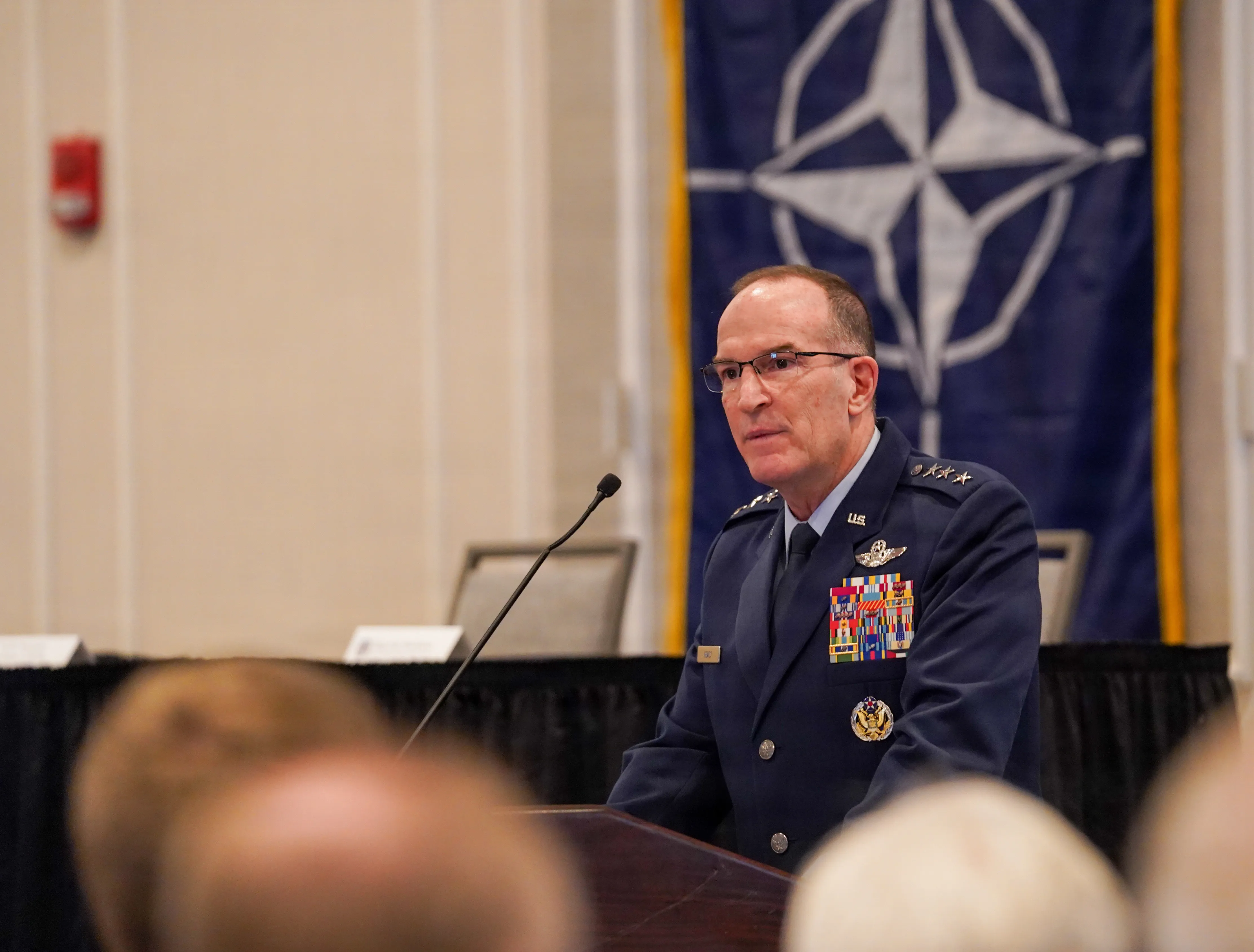
Lt. Gen. John P. Healy, Chief of Air Force Reserve, spoke at the NATO Interallied Confederation of Reserve Officers (CIOR) Winter Meeting in Norfolk, VA on January 28, 2026.
Lt. Gen. John P. Healy, Chief of Air Force Reserve, speaking at the NATO Interallied Confederation of Reserve Officers (CIOR) Winter Meeting in Norfolk, Virginia, on January 28, 2026. U.S. Army Maj. Tara-Lee Gardner

Healy was addressing how AFRC is grappling with how best to contribute to the Air Force’s 10-year fighter jet plan, which calls for purchasing more F-15EXs, F-35s, and F-47s, as it aims to have nearly 1,400 combat-coded tactical aircraft in service by 2030. The commander noted that the plan is not only “pretty ambitious” but also that, while it has been submitted to Congress, it is still very much a work in progress.

Nevertheless, Healy said that, whatever happens, the Air Force’s future fighter plans will rely heavily on the AFRC. At the same time, this organization is facing upcoming combat aircraft retirements, including the A-10 attack jet, which the Air Force wants to withdraw entirely.

U.S. Air Force Capts. Andrew Glowa, lead, and William Piepenbring, both with the 74th Fighter Squadron out of Moody Air Force Base, Ga., fly two A-10C Thunderbolt II over the skies of southern Georgia, Aug. 18, 2014. The 74th FS is one of two active-duty, combat-ready squadrons at Moody that performs close air support missions with the A-10. (U.S. Air Force photo by Staff Sgt. Jamal D. Sutter/Released)
U.S. Air Force Capts. Andrew Glowa, lead, and William Piepenbring, both with the 74th Fighter Squadron out of Moody Air Force Base, Georgia, fly two A-10Cs over the skies of southern Georgia, August 18, 2014. U.S. Air Force photo by Staff Sgt. Jamal D. Sutter/Released Tech. Sgt. Jamal Sutter

“As the commander of Air Force Reserve Command, I am keenly aware that some of my units are scheduled to divest without any plan of recapitalization,” Healy said. “Some could say I am loud and annoying when it comes to how we can ensure that we can maintain this fighting force,” he added, noting that in certain AFRC units, 100 percent of the airmen are combat veterans, and that he wants to ensure “that talent, that experience, doesn’t walk out the door during a normal, planned divestment.”

Healy is hopeful that the historic practice of aircraft divestment without recapitalization, something he said has existed over the last 14 years, is now on the way out.

“I think we’re finally at a point where we’re putting a stop to that,” Healy said. “We’re looking at maintaining our classic associations where we have them and recapping as the active duty can. For the remaining fighter units that we have that are divesting or scheduled for divestment, our full expectation is that we’re going to recap those with new weapons systems.”

There’s no doubt that many of the AFRC’s planned divestments are badly needed, with upward of 80 percent of the command’s fleet now being considered “legacy.” Healy continued: “You know, it’s code for old. Some of these airplanes need to be divested, but we also need to ensure that we are proportionately, concurrently fielded with new equipment.”

That’s where the F-15E and F-15EX could come into play.

“For every one of these A-10 units that are going away, I’m looking at if there’s a means by which we can get an F-15 unit behind it, whether it’s a Strike Eagle or an EX.”

A U.S. Air Force F-15E Strike Eagle assigned to the 336th Expeditionary Fighter Squadron parks on the runway before a flight at Kadena Air Base, Japan, May 13, 2025. The aircraft launched for a three-month deployment to the U.S. Navy Support Facility Diego Garcia, British Indian Ocean Territory, marking the first sustained U.S. fighter presence on the island and a major step forward in advancing Agile Combat Employment throughout the Indo-Pacific. (U.S. Air Force photo by Senior Airman Luis E. Rios Calderon)
A U.S. Air Force F-15E Strike Eagle assigned to the 336th Expeditionary Fighter Squadron parks on the runway before a flight at Kadena Air Base, Japan, May 13, 2025. U.S. Air Force photo by Senior Airman Luis E. Rios Calderon Senior Airman Luis E. Rios Calderon

Meanwhile, Healy said he’s also “pressing hard” to ensure that ARFC units divesting from the F-16 will be backfilled with F-35 stealth jets.

“We’ve got that combat capability,” Healy added. “We’ve got that combat experience. We need to leverage that.”

The AFRC boss also made the financial case for continuing to re-equip his command’s squadrons with new (or, failing that, newer) equipment.

According to the Air Force’s own factsheet, the AFRC provides around 14 percent of the total force within the service, while consuming only around four percent of the total manpower budget.

“My job is to constantly remind the programmers and remind the chief and the secretary of the value proposition, the advantage of the Reserve, because at the end of the day, we’re providing a little bit more money that we can reinvest into other things as well.”

Healy said that, when it comes to operating the F-16, an AFRC squadron does that “$12 million cheaper than the active duty can.”

Senior Airman Brandon Azocar, a crew chief assigned to the 482d Maintenance Squadron, marshals out an F-16 Fighting Falcon before its inaugural flight with the “367FS” tail flash at Homestead Air Reserve Base, Fla., April 4, 2025. Azocar launched the aircraft, piloted by Lt. Col. Dysart Cleeton, 367th Fighter Squadron commander. (U.S. Air Force photo by Master Sgt. Lionel Castellano)
A crew chief assigned to the 482d Maintenance Squadron marshals out a 67th Fighter Squadron F-16 at Homestead Air Reserve Base, Florida, April 4, 2025. U.S. Air Force photo by Master Sgt. Lionel Castellano Master Sgt. Lionel Castellano

The savings on F-15 units would be even more compelling, Healy argued, with an AFRC Strike Eagle squadron working out as $28 million cheaper than the active-duty equivalent, or $24 million in the case of the F-15EX.

There remains a question, however, around just how feasible it might be for the ARFC to get the F-15E or F-15EX. For all their undoubted capabilities, these types are both in short supply and high demand.

The Air Force’s planned F-15EX numbers have fluctuated repeatedly over the last few years. Under the Fiscal Year 2026 budget proposal, the Air Force’s program of record is now set to grow from 98 to 129 aircraft, with the addition of at least one more squadron, which will be converting from the A-10.

Originally, the Air Force had a minimum number of 144 F-15EX aircraft to replace the F-15C/D force. Some of the Eagle units have switched to other platforms since then, but units that fly A-10s, F-16s, and even F-15Es could end up getting F-15EX if the service chooses to go such a route. It seems quite possible that further growth of the program could occur, and that would seem to be a prerequisite if the ARFC is to get the Eagle II as well.

A formation of four U.S. Air Force F-15EX Eagle II fighter jets, assigned to Eglin Air Force Base, Florida, fly over the Gulf of America, Nov. 21, 2025. Secretary of the Air Force Troy Meink flew in the backseat of the lead jet as part of his visit to Eglin AFB. The flight oriented Meink to F-15EX tactics, techniques and procedures being developed and advanced by the 53d Wing to include weapons capacity, next-gen survivability, and next-generation radars, sensors and networking capabilities. (U.S. Air Force photo by Staff Sgt. Blake Wiles)
A formation of four U.S. Air Force F-15EX jets, assigned to Eglin Air Force Base, Florida, fly over the Gulf of America, November 21, 2025. U.S. Air Force photo by Staff Sgt. Blake Wiles Staff Sgt. Blake Wiles

When it comes to the F-15E, the Air Force inventory numbers 218 aircraft, of which 119 are powered by the older F100-PW-220 turbofan engines that produce some 23,500 pounds of thrust each. The other 99 have the F100-PW-229s, each of which is rated at 29,000 pounds of thrust.

The Air Force previously aspired to retire the Dash-220-powered jets by the end of Fiscal Year 2028.

The Air Force has argued that it needs to retire its older F-15Es to help free up resources for its future modernization plans, but lawmakers have been concerned about dwindling numbers of available tactical aircraft if this were to happen.

The possibility of transferring F-15Es from active-duty units to Air National Guard (or AFRC) units is something that TWZ has discussed in depth in this previous feature.

As far as the AFRC is concerned, the best chance of getting its hands on F-15Es will almost certainly be provided by the return stateside of the two squadrons of Dash-229-powered Strike Eagles currently at RAF Lakenheath in England. These are due to be replaced by F-35s in the future. For the time being, they are the only permanently forward-deployed F-15Es, which remain the service’s first choice for a wide variety of critical missions around the globe.

A U.S. Air Force F-15E Strike Eagle from the 48th Fighter Wing, RAF Lakenheath, approaches a KC-135 Stratotanker from the 100th Air Refueling Wing during exercise Ocean Sky, over the Atlantic Ocean, Oct. 15, 2025. The F-15E provides the joint warfighter unprecedented global precision attack capability against current and emerging threats, while complementing the Air Force’s air superiority fleet. (U.S. Air Force photo by Airman 1st Class Chloe Masey)
A U.S. Air Force F-15E from the 48th Fighter Wing, RAF Lakenheath, approaches a KC-135 Stratotanker from the 100th Air Refueling Wing during exercise Ocean Sky, over the Atlantic Ocean, October 15, 2025. U.S. Air Force photo by Airman 1st Class Chloe Masey Airman 1st Class Chloe Masey

Another option, and one we have explored in the past, would be to pass on the Dash-220-powered jets to the AFRC, and it is somewhat surprising the Air Force hasn’t floated this idea before when it has sought to offload the older, less-powerful Strike Eagles.

Asked by TWZ about the likelihood of F-15Es making their way to his command, the AFRC commander responded: “I am optimistic that we’ve at least got people listening to the value that we provide, the combat capability we provide, the experience that we provide. We’ve proven it over and over again. We’re efficient, we’re experienced, we’re 100 percent accessible as a reserve force, and we’re lethal in all these mission sets. I think our message is sounding in a positive way with senior leadership within the Air Force. I’m not going to cash the check yet, but I’m optimistic about our future in terms of recapitalizing some of our units.”

Many of the savings that the AFRC makes are a result of the efficiencies that are baked into its ‘business’ practices. Of the 67,000 airmen that make up the command, 14,000 are full-timers.

“Those full-timers are the ones that keep the lights on day-to-day,” Healy continued. Our business model is such that a typical unit will have 25 percent full-timers, and they run that unit for 28 days of the month. It’s only that one weekend a month that we’re at 100 percent — full strength. So those cost savings, right there, are what allow us to realize benefits. It adds up when we start putting it into big numbers like that.”

Whether examples of the F-15E Strike Eagle or F-15EX Eagle II end up on Air Force Reserve Command ramps remains to be seen, but in Lt. Gen. John P. Healy, that component has a strong advocate for making that happen.

Contact the author: thomas@thewarzone.com

Thomas is a defense writer and editor with over 20 years of experience covering military aerospace topics and conflicts. He’s written a number of books, edited many more, and has contributed to many of the world’s leading aviation publications. Before joining The War Zone in 2020, he was the editor of AirForces Monthly.


Source link

General Atomics Is Turning The MQ-9 Reaper Family Of Drones Into “Cruise Missile Trucks”

The MQ-9 family of medium altitude, long endurance uncrewed air vehicles, which includes the new SkyGuradian and SeaGuardian variants, are getting the ability to reach out and hit targets at extreme ranges. In essence, the addition of long-range cruise missiles to their quivers — basically turning the drones into standoff “missile trucks” — will give these aircraft another new mission that is also relevant in high-end conflicts.

MQ-9’s long-range and extreme loitering time would offer a level of flexibility not really available in a tactical aircraft-sized package. As it sits now, Lockheed Martin’s stealthy AGM-158 JASSM and its anti-ship variant, LRASM, as well as Kongsberg-Raytheon’s Joint Strike Missile are being looked at as weapons options.

General Atomics writes in a release: “Hypothetically, a mission profile might look like this: MQ-9Bs could launch from a number of friendly bases in the Western or Southern Pacific, fly to a hold point and loiter there outside a hostile power’s weapons engagement zone. If the order came to release the weapons, the aircraft could launch them in coordination with other U.S. or allied operations.”

The goal is to start flying with at least one of the missiles this year.

Our Jamie hunter was on the show floor in Denver Colorado at the Air Force Association’s Warfare Symposium to discuss this new addition to the MQ-9’s repertoire directly with with Scott Gilloon, Sector Vice President for Strategic Programs at GA-ASI. Check out the video at the top of this story to hear what he had to say about the new standoff weapons offering for the MQ-9.

Source link

Straight Talk On State Of U.S. Airlift Capabilities From General Who Ran Air Mobility Command

The U.S. buildup of forces in the Middle East ahead of a possible attack on Iran relies very heavily on the performance of the U.S. Air Force Air Mobility Command (AMC). Hundreds of its cargo jets and aerial refueling tankers have moved materiel into theater and helped tactical jets, radar planes and other aircraft deploy across oceans to places like Muwaffaq Salti Air Base in Jordan, among many other locations. At the same time, the current crisis in the Middle East pales in comparison to the massive spike in demand for airborne logistics that would occur during a Pacific fight against China. Regardless, ever greater demand is being placed on an increasingly aging AMC fleet.

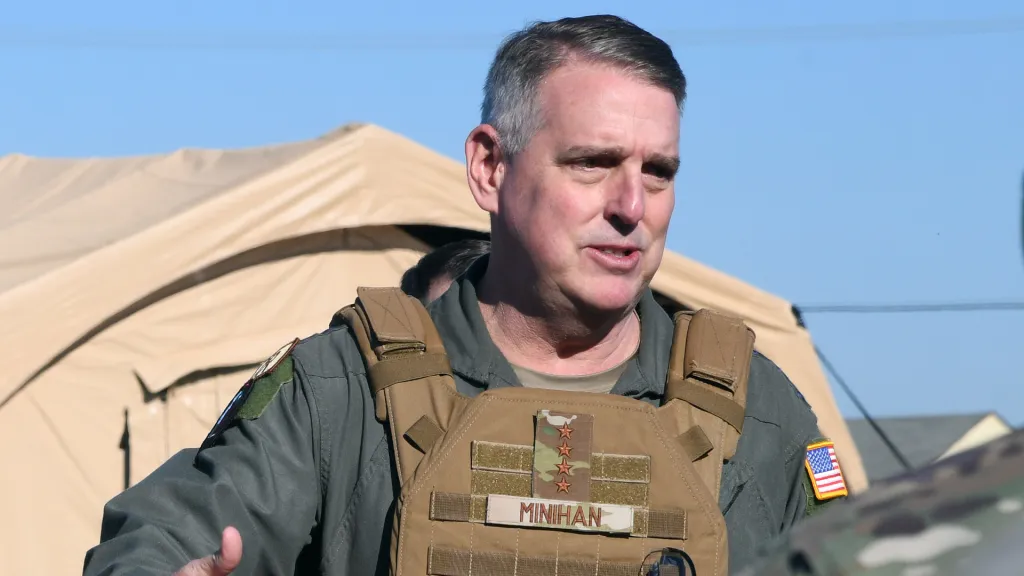
Few people know the nuts and bolts of AMC and its mission better than Michael “Mini” Minihan, a retired Air Force general who led the command from October 2021 to November 2024. In a 45-minute interview, Minihan offered his insights on that and a whole host of other topics. They include the current crisis and its airlift demands, challenges from China, future airframes, arming airlifters and refuelers, the connectivity issues he championed, AI and the leaked memo that put a cap on his career.

Michael Minihan led U.S. Air Force Air Mobility Command (AMC) from October 2021 until his retirement in November 2024. (USAF) AMC commander Gen. Mike Minihan. USAF

Since retiring, Minihan serves as a strategic advisor and board member to defense and technology companies, non-profits, and think tanks while continuing to write and speak on leadership, national security, and the future of air mobility and global power projection.

Some of the questions and answers have been edited for clarity.

Q: The C-17 Globemaster III heavy lifters have been supporting one crisis after another it seems. Have the hours accumulated faster on those airframes? What do you think should replace them and when? 

A: All the things I was concerned about while I was in uniform, I remain concerned about right now. The options on the table are service life extension programs [SLEP] that the C-17 is already a candidate for. There was talk late last year about the KC-135 Stratotanker receiving another [SLEP]. You know, those types of things are concerning to me. At the end of the day, I think this nation needs to pay for the Air Force it needs, and the Air Force that it needs has a modern, capable mobility fleet. It’s not just old stuff that keeps getting patched up to get older. That’s the reality. So I’m concerned.

C-17 Globemaster. (USAF)

Q: Right now, a massive buildup is underway in the Middle East. AMC is doing the heavy lifting there as always. But in a crisis in the Pacific, would we have enough airlift aircraft to support moving quick enough across that vast theater, especially to respond to an invasion of Taiwan? 

A: What you’re talking about is always a concern, regardless of the scenario. The reality is that America relies on the mobility fleet to project its power… So there’s not any scenario, even in the day-to-day competition, where you’re happy with the supply-demand intersection. So I think that we’ve got to work on capacity, certainly out of the entire mobility fleet, when it comes to the airlift and the air refueling. And then if you overlay that in contested environments, the concern gets bigger.

This KC-46 Pegasus aerial refueling tanker remains at Moron Air Base in Spain after suffering a mishap earlier this momth. (Pepe Jimenez)

Q: Considering how long it has taken to build up forces in the Middle East, where tankers and cargo jets are flying over uncontested airspace, how concerned are you about being able to project enough power over long distances to protect Taiwan from an attack by China?

A: The alarm that I had when I was active duty exists today… So the reason I’m a civilian right now is because I was ringing the bell on the exact questions that you’re asking right now and that concern still remains. The reality is against a China or against a Russia, they’re going to challenge you in all domains, from great distances. They absolutely understand that the mobility fleet is America’s capability to project power quickly. So there’s going to be a focus on it. But once again, you’re describing concerns that I had and expressed when I was active duty, and I still have those same concerns.

Inside Taiwan’s Strategy to Counter a Chinese Invasion | WSJ


Q: What response did you receive when you expressed those concerns in a memo that was leaked to the public in 2023?

A: Well, I’m a civilian right now.

Q: Is that the reason why?

A: The leak created antibodies that would want me in another job. That memo was getting after all the things that you’re asking about right now. It was getting after capability and capacity. It was getting after readiness. It was getting after explode into theater. It was getting after the mobility fleet being able to do what it’s asked to do, despite being extremely vulnerable, despite it being extremely antiquated – all those things. 

A portion of the memo AMC Commander Gen. Michael Minihan wrote that was leaked to the public. (USAF via X) USAF via Twitter

I believe that the Chief of Staff of the Air Force [Gen. Kenneth S. Wilsbach] now is focused on modernization and readiness. Those were 100% things that I was championing very early. And I think those things exist now, and I think we need to continue to put pressure on [those things] to get the resourcing, to get not just the Air Force, but America’s mobility fleet, to the capability and capacity that it needs to be at, so that we can not have concerns about China and not have concern about [deploying] to Europe when needed.

Q: Were you fired over the memo?

A: I was not fired. I thought for two weeks that I was going to be fired, but I was thankfully allowed to serve out the rest of my command tour. But I was asked to retire.

Gen. Mike Minihan, U.S. Air Force retired, delivers a speech at the Herk Nation Legacy Monument Award at Little Rock Air Force Base, Arkansas, May 5, 2025. The event honored Minihan as the second recipient of the Herk Nation Legacy Award, recognizing his outstanding contributions to Herk Nation and the Air Force. (U.S. Air Force photo by Airman Rachel Bates-Jones)

Q: What were the biggest lessons learned by Mobility Guardian and our readiness to meet the challenge China poses in the Pacific? 

A: We’ve got to explode into theater very quickly. We’ve got to be able to explode into theater in numbers and volumes and challenges that we’ve not experienced in any of the modern…operations. We’ve got to put the entire joint force in place. We’ve got to do it quick enough that it gives an enormous deterrent value and also be able to provide that decisive victory, should it get to that.

We’ve got to transition from a deploy to an employ phase very quickly. So that’s establishing hubs and spokes. And then the last thing I’ll say – this is about maneuver. We have got to maneuver at a tempo required to win. So we got to put America’s unique and amazing capabilities in a position of advantage, and then once they’re in that position of advantage, we’ve got to be lethal, and that requires logistics, sustainment, supply maneuver, all the things that have to come together in the joint force to be lethal have to be there, and we need to work extremely hard to do that. 

So Mobility Guardian was really a rehearsal, and we demonstrated that we couldn’t explode into theater. We demonstrated that we could go from deploy to employ. But we also learned some hard lessons, and to get it to the scale and the volume of the tempo that we needed to be, we’ve got work to do.

Mobility Guardian 2023


Q: What were some of these lessons?

A: The lessons are connectivity. You probably heard me say that a bunch both in uniform and out of uniform, but connectivity became my number one thing. I testified before the House Readiness Committee on that. I came up with a concept called 25% of the fleet by 2025, but the reality is that the car I rented right now driving from the airport to my hotel room has more connectivity in it than the overwhelming majority of the mobility fleet. So connectivity matters. 

We’ve got to operate at a tempo required to win, which means we need to do extremely long missions. We need to have exquisite situational awareness. We need to understand the changing dynamic of the operational environment. When it comes to red forces, blue forces, threats, priority receivers, priority users. We’ve got diffuse information and logistic priorities across services, so there’s almost an unlimited amount of lessons learned. And then command relationships matter as well as command and control. All those things matter too. So plenty of lessons learned. I don’t think any of those are surprising. I think they’re accounted for in the Air Force’s readiness and modernization. But we also need to get resources so that we can be the Air Force this country needs.

An F-15 Eagle from the 159th Fighter Wing receives mid-flight refueling from a KC-135 Stratotanker assigned to the 128th Air Refueling Wing of Milwaukee during Sentry Aloha off the coast of Honolulu, Hawaii on January 15, 2026. Sentry Aloha provides cost-effective and realistic, large-scale training scenarios to prepare warfighters and support the Air National Guard’s position as a crucial component of the nation’s operational force.
An F-15 Eagle from the 159th Fighter Wing receives mid-flight refueling from a KC-135 Stratotanker assigned to the 128th Air Refueling Wing of Milwaukee during Sentry Aloha off the coast of Honolulu, Hawaii on January 15, 2026.
(Master Sgt. Lauren Kmiec photo) Master Sgt. Lauren Kmiec

Q: How would you peg our overall readiness, realistically, to confront China in the Pacific militarily? 

A: We’re ready. I like the way that [IndoPacific Command leader] Adm. [Sam] Paparo uses it. He says we’re ready, but he’ll never admit to being ready enough. This is kind of like the coaches that you love to play for – they are never satisfied. I would broaden it beyond readiness. I would say readiness, integration and agility of the joint force is what matters. And as ready, integrated and agile as we are, we need to be more. And those things have a deterrent value in themselves, and they’re also the essentials to decisive victory. So China enjoys positional advantage, but America enjoys extreme warfighting capabilities that can always get better, and it starts with readiness, integration and agility. We want to get to the point where we’re so ready that they don’t want to take us on.

Q; What were the three biggest problems you faced in your job and how did you go about solving them? Were you successful?

A: The three biggest problems I faced during my command tour at Air Mobility Command was resourcing, resourcing and resourcing – articulating the state of the mobility platforms and securing the resources necessary to get them on step to where they need to be. And so I said resourcing three times, and I mean it.

Pentagon
The Pentagon. (Department of War) (Photo By Bill Clark/CQ-Roll Call, Inc via Getty Images)

This is all about money. You can say everything you want. You can say all the things are important. You can say ‘you’re right, General Minihan, we agree with you,’ but if it’s not followed up with resourcing, then it’s meaningless, you know? So at the end of the day, this is all about resourcing. Can we decide to be the Air Force, the joint military that puts the resourcing behind what it means to decisively defeat a near peer adversary? Or do we wait until another December 7, or another September 11 event to finally get all the things pulled together that we need to pull together. So I get it. This is expensive. 

We’ve got a chance of a century right now, I believe, with this administration. When you line up the executive orders, when you line up the acquisition reform, when you look up the possibility of a $1.5 trillion defense budget, you know those things come together means that we can move faster and move differently than we’ve ever done but we’ve got to be ready to do it.

We can’t apply all the opportunities over the same template of how we acquire, how we take risk, how we get our warfighters the things that they need and expect a different outcome at the end of the day. The overall statement for this, and this is big into problem statements. If I were to describe the problem statement we’re trying to solve is, can we get critical war-winning capabilities to our warfighters faster than China? At the end of the day, if we can answer yes to that question, then we’re going to be okay. If it’s a maybe or a no, then we’re going to have some significant concerns moving forward.

Trump Calls For Massive Increase To Defense Spending: $1.5 Trillion For 2027


Q: Were you successful in your efforts to solve those problems?

A: Was I successful? I would say I was successful at ringing the bell. I needed three more years to get it across the line. And I’m not comparing myself to a Gen. [Curtis E.] LeMay or a Gen. [Wilbur L.] Creech, but those two [Major Command] MAJCOM commanders – who are the fathers of the modern strategic bomber force and the father of the modern fighter force –  were both MAJCOM commanders for over six years. So if I had to give myself a grade, I would say me and my teams were A-plus for effort and articulation and at the end of the day, getting the system to react quickly within three years proved extremely challenging.

Q: What was your grade for that?

A: It’s to be determined. You know, the money process takes a little time. I think there’s money for connectivity coming up in the current and the next few years, which is a great sign and a big change. If I were to grade it for what I wanted, I would have given myself a C, but I think it’s a higher grade than that, due to the circumstances, due to the realities of the budgeting and the resourcing process.

Q: What are the three biggest problems facing current interim AMC Commander Lt. Gen. Rebecca Sonkiss (formerly deputy AMC commander until Gen. John D. Lamontagne was named Air Force Vice Chief of Staff earlier this month). 

A: The problems are getting resourcing across the line. Can you deliver them? Money. You know, at the end of the day, MAJCOMs don’t have the money to get the things that they need and under the current process. So how do you affect the organizations and entities above you, so that you can align the resourcing to do the things that it needs to do, and the timelines that you need to do it when that’s always a challenge for everybody. 

Air Mobility Command (AMC) Change of Command Ceremony – Scott AFB


But if you’re asking what [Lamontagne] needs to worry about…if you look at the first Iran operation, if you look at the Venezuela operation, whatever is going to happen over the next short-term future for the Middle East, you can walk away saying, ‘we’re just fine.’ You can walk away saying, ‘Hey, we can project power over long distances. We can impose America’s will. We can do the things that our president and our nation asked us to do.’ And that’s right, you can do it under those circumstances. 

The courage of the joint team is phenomenal. The capability of the joint team is phenomenal, but it does not compare to what will happen in a near-peer fight in the Pacific or in Europe. We are going to be contested from long distances in all domains, and the fleet that we have now is not going to be successful in that environment unless we take quick action and fix things.

The U.S. Air Force has awarded a contract for the development and production of a new Next Generation Penetrator (NGP) bunker buster bomb.
A B-2 bomber drops a GBU-57/B Massive Ordnance Penetrator (MOP) bunker buster bomb during a test. (USAF) USAF

Q: There is a lot of hype around Rapid Dragon and giving the airlift community a ‘shooter’ role. But in a major conflict, won’t the fleet be tasked to the max just with its core logistics mission? Do we need more airframes to really do the Rapid Dragon concept justice?

A: I hear this one a lot. So here’s the reality. I’ve got to carry the missile, the bomb anyway. Okay, I’m not trying to be Global Strike. I’m not trying to be a fighter. I’m not trying to compete with capabilities that are legit and high-end when it comes to delivering kinetic effects. But if I have to carry it anyway, and there’s an ability for C-130s, C-17s  and other airlift platforms, why would you not want that capability? 

So I’m not saying it can go into the high-threat areas or the medium-threat areas. I’m not saying that it needs to be a primary mission. But let’s really look at the thing – at the entire process here. I’ve got to carry that stuff anyways, so I am either gonna stop and drop it off for someone else to shoot, or I could have the ability to do it. If a combatant commander needs a demand signal, there’s a ton of C-130s. Our foreign partners and allies operate them. These aren’t complex systems. The munitions already exist. It’s essentially air-dropping it out of the airplane. And I think it has enormous viability in the Pacific. It can service medium- to low-[threat] targets all day long that need servicing and free up the other sets to get after the high-end threat environments where they need to be focused. So I think it’s something we need to consider.

Rapid Dragon


Q: That segues nicely to my next question. What are the biggest threats China poses to our tankers and airlifters during a time of war?

A: The ability to get out of town by dropping electrical grids and navigation signals. This is true for all the platforms. This is why I say we’ll be contested at great distances in all domains. Critical infrastructure matters and getting out of town – we already talked about what it means to explode into theater. So it’d be silly to think that they’re going to not take a very inexpensive way to disrupt our ability to do that. And then, the farther you get to the threat, regardless of which way you’re heading around the ocean, you know is going to increase their ability to reach out with long-range effects and stop mobility. 

If you stop one tanker, you stop six fighters. That sounds like a good return on investment if you’re an adversary trying to prevent us from projecting power. I don’t think I’m saying anything I haven’t said before, and I don’t think I’m saying anything that’s inconsistent with others [are saying] about what the real environment is going to look like. 

They’re students of us. They have unimpeded access to our critical infrastructure for a decade or more, and we’re going to expect them to call in on their investment and impose a cost on us a great distance.

Q: Is there any particular Chinese system or munition that worries you the most?

A: What worries me the most? I’m worried, just like I was in uniform, about the multi-domain aspect for which they’re going to go after us. I’m worrying about how those all come together. Certainly, without connectivity in the mobility fleet, it’s hard for mobility aircraft to understand where the threats are, especially the kinetic threats. So our ability to understand if you’re in a threat ring or a dynamic threat environment is extremely handicapped. And certainly the kinetic ones are of the biggest concern. Like they are in any war. 

1/2 During the 3rd Sept 🇨🇳CCP Military parade in Beijing, some Air Defense Missile systems were shown in CCTV 4K: HQ-9C, HQ-11, HQ-19, HQ-22A & HQ-29… pic.twitter.com/cIxoX5Tc7Z

— Jesus Roman (@jesusfroman) September 3, 2025

Q: We have seen interest from the DoW in multiple fronts on how to give our existing tankers better defenses, from better situational awareness to giving them mini interceptors to pairing them with [collaborative combat aircraft] CCA-like companions. What do you think the best cocktail of solutions is here?

A: The single biggest contributor to survivability in a big airplane is connectivity. The biggest contributor is not having a 12-hour-old Intel brief that you’re relying on to get you through the mission. So real-world updates, real-time updates, just like our fighters and our bombers enjoy. Battle management that gets after maneuver and not just kill chain. Those things matter. 

If you were to ask me what I would want most when it comes to survivability, it would be connectivity that gives me the situational awareness to let our young crews – our captains, our lieutenants, our NCO – go out there and make great decisions as they’re operating under delegated authorities. Connectivity matters most. No doubt. Connectivity is why I put the priority on it when I was in uniform, because it’s the single biggest contributor to survivability. I just don’t think because of the size of these airplanes, in the maturity of the threat, that we’re going to be able to rely on traditional means of survivability.

U.S. Air Force Capt. Jarod Suhr, left, 100th Operations Support Squadron pilot and wing tactics officer, clarifies points of the Real-time Information in the Cockpit system to Capt. Anthony Vecchio, 100th OSS pilot and wing tactics officer, on a KC-135 Stratotanker at Royal Air Force Mildenhall, England, Oct. 18, 2023. The newly installed communications system gives aircrew the ability to access vital information including threats, target data and locations of friendly forces, providing much more accurate and instant information. (U.S. Air Force photo by Karen Abeyasekere)
U.S. Air Force Capt. Jarod Suhr, left, 100th Operations Support Squadron pilot and wing tactics officer, clarifies points of the Real-time Information in the Cockpit system to Capt. Anthony Vecchio, 100th OSS pilot and wing tactics officer, on a KC-135 Stratotanker at Royal Air Force Mildenhall, England, Oct. 18, 2023. The newly installed communications system gives aircrew the ability to access vital information including threats, target data and locations of friendly forces, providing much more accurate and instant information. (U.S. Air Force photo by Karen Abeyasekere) Karen Abeyasekere

Q: What about mini interceptors, or pairing these aircraft with CCA-like companions? Would that work?

A: I mean, I love it. The whole concept we came up with, the next-generation air lift [NGAL] and next-generation air refueling systems [NGAS]. I definitely see a role for CCA beyond just loyal wingman to fighter. So we can do this with everything from a CCA version of a tanker. We can do it with a stealth version of a tanker. I don’t think we need huge numbers of those. We can do stealth-like characteristics, like blended wing

We can certainly have aircraft that are multirole, both cargo and air refueling. And so then you can have a lot of tankers that look like the tankers that we have now, the ability for small CCA and drones and other things to do electronic warfare and spoof and jam and other things like that are all on the table in my book and things that we should be exploring.

A rendering of the blended wing body demonstrator aircraft now in development for the Air Force. (USAF) A rendering of the blended wing body demonstrator aircraft now in development for the Air Force. USAF

Q: What about a stealth tanker? Would we be able to afford it? Has adapting the B-21 Raider stealth bomber been looked at? What are your thoughts on that?

A:  I think that we’ve got to have a family approach to air refueling, and that’s where the NGAS concept came up. It’s hard for me to believe, to think that you’re going to be able, in a highly contested environment, to get our highest capabilities into the high-threat environments without having some sort of stealth-like CCA air refueling capability. I don’t think we need big numbers of them. I understand completely that they’re expensive, but we’ve got to work through that process, and we’re doing it with NGAS. So everything I’m telling you, I’ve said for years, and I’ve got a lot on the record out there that’s getting after the questions you’re asking, and I’ve not changed since I got out of uniform. 

The U.S. Air Force's selection of Boeing's F-47 as the winner of its Next Generation Air Dominance (NGAD) combat jet competition raises new questions about plans for new stealthy aerial refueling tankers.
A rendering of a notional stealth tanker refueling an F-35 Joint Strike Fighter. (Lockheed Martin Skunk Works) Lockheed Martin Skunk Works

The announcement by Northrop Grumman, the partnership with Embraer gets after this. If you go tackle that announcement, it gets after creating a family-of-systems approach to the problem, as opposed to we’re just going to field one piece of the problem at a time. We’re not going to work the integration in advance. We’re not going to work the readiness in advance. We’re not going to work the agility in advance, and I was happy to see in that announcement that they’re approaching the problem differently, because that’s the kind of approach I think we need to be successful.

Q: Have you looked at adapting the B-21 for this kind of stealth tanker role?

A: I don’t know what they’re looking at adapting, but I think there’s eloquence in the solutions that exist and that they’re working on, and then broadening their missions to beyond just the original intent for which they were designed. So I think that there’s great value in looking at those opportunities.

A B-21 Raider conducts flight testing, which includes ground testing, taxiing, and flying operations, at Edwards Air Force Base, California. The B-21 will interoperate with our allies and partners to deliver on our enduring commitment to provide flexible strike options for coalition operations that defend us against common threats. (Courtesy photo)
A B-21 Raider conducts flight testing, which includes ground testing, taxiing, and flying operations, at Edwards Air Force Base, California. (Courtesy photo) 412th Test Wing

Q: What about an Agile Combat Employment (ACE) tanker capable of supporting small numbers of fighters from forward airfields? The KC-390 is being pitched for such a role. Do we need smaller tankers capable of operating from shorter fields?

A: We need a family of tankers that can address all the warfighter needs in all the warfighter environments. So we need tankers that look a lot like the ones we have now, that can handle the low-threat environments. We need tankers that can push into the medium-threat environments and service the big volume offloads in the abundant amount of receivers that will be out there. We need tankers that can operate in a medium- to high-threat with blended wing and stealth characteristics. And then we need stealth like tankers that can go into a higher-threat environment, as well as unmanned and CCA. 

Northrop Grumman and Embraer are working together to evolve the multi-mission KC-390 Millennium aircraft, to provide advanced tanking capabilities for the United States Air Force and allied nations. (Photo Credit: Northrop Grumman)

I believe there’s room in the Air Force for all in that capability. Let’s be clear, it’s what the kinetic force needs, you know. So the strike force and the bomber force are [fifth-generation] fifth-gen and [sixth-generation] sixth-gen, and yet we still operate a mobility force that’s on its best day, 2.5 Gen and in some cases, second generation. So we’ve got to catch up, not because of ego, but because of capability. At the end of the day, this is about equilibrium of the enabling force to actually do what it needs to do, so that the strike force can carry out its missions in all environments. That’s what needs to happen.

Q: Is there money to do that? Is there a will from higher headquarters and then the administration to make that happen?

A: Well, there needs to be. Like I said, I think the opportunity is here with this administration. Its executive orders, its acquisition reform, and the possibility of a significant increase in the budget. But this gets back to, are we going to pay for the Air Force that this country needs? It’s been under-invested in, especially in mobility, and we need to ensure that this president and every future president, when they call on the Air Force to support the joint force, to project America’s power to serve the national interests and impose our will when needed, that we need to develop these kind of things. We have to do this if we want to be the Air Force that this country needs.

The last KC-135 Stratotanker aerial refueling jet was delivered to the Air Force in 1965. (USAF)

Q: Have you talked to anybody in the current administration or the current Department of War about this, and what’s your sense of the interest there?

A: I think the conversation is turning where it needs to go. I have not talked to the current administration about this specifically, but I think there’s an appreciation, when you line up the talking points that align the priorities of where the department is going, I think that there is 100% alignment with what my priorities were when I was in uniform, what my priorities are now that I’m out of uniform, with the priorities of where this administration is going.

I realize it’s still hard. I realize there are still challenges. I realize there are no easy answers to any of this, and I realize that there’s more to modernization and readiness than just the mobility fleet. And I also realize that these are the things that we need to do.

Q: Low-end drones are a big problem, especially for big airplanes sitting idle on the ground. What do you think should be done to defend our airlift assets against lower-end drones?

A: Just like everyone else, I watched the [Operation Spider Web] attack that Ukraine carried out on Russia’s strategic forces. And the only thing that surprised me about that is that people were surprised and that it took so long for them to do it. This is a real threat. It gets down to air base defense. It’s something that we championed in Air Mobility Command during my time there, because of the drone incursions that were happening over multiple Air Mobility Command bases and multiple Air Mobility Command missions. So this isn’t a surprise to me. 

Over 4-minutes of drone footage from Operation Spiderweb has just been released by the Security Service of Ukraine (SBU), showing the targeting of roughly two dozen Tu-95MS and Tu-22M3 Long-Range Strategic Bombers as well as two of the Russian Air Force’s extremely limited A-50… pic.twitter.com/ZpW85oPb7M

— OSINTdefender (@sentdefender) June 4, 2025

This is going to have to be a joint solution, and I know the Army is working very hard on this, but there’s also going to have to be a capability of the Air Force and wings that are deploying to be able to do this on their own as well. So no easy answers here. 

I feel like we’re behind, but catching up. I think it nests nicely into the Golden Dome opportunity as well. But you know, you gotta be able to handle everything from the low-cost drones all the way up to the highest capability missiles that could attack the homeland. This all fits in a spectrum of threats that we need to be concerned about. 

A graphic of how the Golden Dome missile defense system will be designed to work. (DIA)

Q: You brought up drone incursions. When and where did they happen and was the source ever found?

A: The incursions took place in late 2021 and early 2022 for Joint Base Andrews in Maryland and constantly at Joint Base McGuire-Dix-Lakehurst in New Jersey throughout my command. I’m not tracking that the source of those incursions was identified. It doesn’t mean that they weren’t. To my knowledge they weren’t. But, you know, at the end of the day, if you can’t control the airspace, including the airspace that drones are using, that’s a problem. It doesn’t matter if you’re in garrison or deployed. We’ve got to have the ability to defend at a greater capability than we have. 

Q: How are the C-5M Galaxy cargo jets doing? Are readiness rates improving? Will we need a direct replacement of something its size when their time finally comes to head to the boneyard? Was the M upgrade program successful?

A: I’m a year and a half out of the conversation. The last data point I got was from U.S. Transportation Command (TRANSCOM) commander Gen. [Randall] Reed‘s congressional testimony, where he said that the mission reliability rate, I believe, had fallen to 46%. So, if that’s true, then it’s still an enormous concern. I don’t know any part of your life where you tolerate a critical capability operating less than half the time when you need it. So C-5s are an enormous concern for me. 

I think there are options out there when it comes to large-volume aircraft that exist, that are being worked now, that can help us get capability quickly. And then I think there are concepts out there, like the commercialization of the C-5 fleet, that need to be taken seriously as well and apply commercial standards, commercial supply chain to increase the readiness of it. And between a combination of those two, I think that you can sustain what America needs to project large volume lift, but also get much higher than a 46% mission reliability rate.

A C-5 Galaxy transport jet. (USAF)

Q: Do you see the need for a similar sized cargo aircraft to replace the C-5 when it’s finally time for them to retire?

A: I do. I think building large, colossal aircraft is one of the hardest things to do on the planet, when you think about it. I need someone to help fact check me on this, but I don’t think more than 250 large aircraft have ever been built. You know, when you include the Hughes aircraft, include the C-5, include the Russian Antonovs, the fleet has been small because it’s hard. At the same time, it does things that nothing else can do. You don’t have to condemn your cargo to sea lift only. You can move things very quickly – large volume things, critical capabilities. And so we need to have this capability. 

But I don’t see the Air Force buying C-5 replacements. I see them transitioning C-5s to a different model, like commercialization. And I see the manufacturer of a large aircraft that can handle the volume being in the CRAF [Civil Reserve Air Fleet], and being a service concept that can get America the stuff we need when we need it. As opposed to developing another C-5 replacement, in addition to what’s going to have to eventually replace the C-5…

Q: Was the M upgrade on the C-5 successful?

A: I wasn’t there for when it was done, but … I would love to see what the original predictions were. When you spend all that money on that airplane and then still have a 46% mission reliability rate, it sounds like it is still challenged, like it used to be.

NAVAL STATION ROTA, Spain (Feb. 22, 2023) Seabees assigned to Naval Mobile Construction Battalion (NMCB) 1, NMCB 11, and Air Force Personnel from the 436th Maintenance Squadron (MXS), install a new tail rudder on a C5 Super Galaxy. This maintenance evolution is the first time it had been completed outside of Dover Air Force Base. NMCB 1 operates as a part of Navy Expeditionary Combat Command and is assigned to Commander, Task Force 68 for deployment across the U.S. Naval Forces Europe-Africa area of operations to defend U.S., allied, and partner interests. (U.S. Navy photo by Mass Communication Specialist 1st Class Sean P. Rinner)
Seabees assigned to Naval Mobile Construction Battalion (NMCB) 1, NMCB 11, and Air Force Personnel from the 436th Maintenance Squadron (MXS), install a new tail rudder on a C5 Super Galaxy. (U.S. Navy photo by Mass Communication Specialist 1st Class Sean P. Rinner) Petty Officer 1st Class Sean P Rinner

Q: Why hasn’t the Air Force gone big into uncrewed smaller logistics aircraft like China has? Especially considering dispersed ops in the Pacific?

A: Aviation right now is at a point of affordability and simplicity that we have got to distribute capability down to more tactical levels and have less centralization. Drones, automated aircraft 3,000 pounds or less, need to be a part of that equation. They need to be a part of the equation. 

I am a big fan of drones…The problem we’re trying to solve is getting winning capabilities to our warfighters faster than China. That’s what we need to be focused on. We have got to be infatuated with automation and connectivity. We have to be infatuated with drones and automated aircraft from small to medium to large capabilities. 

China’s unmanned transport aircraft completes maiden test flight


The biggest question I hear about why people don’t want small- and medium-capability is because they’re concerned about who commands and controls it and in my mind, that’s the point. You don’t have to command and control it. This is like a distributed maneuver pool, like a Jeep used to be in the Army. It’s inexpensive, it’s easy to operate, and we give it to maneuvering commanders in the field. We get TRANSCOM and Air Mobility Command out of the command and control of it. We let commanders determine their own priorities and service them, and then all we have to do is integrate them into the critical capabilities that Air Mobility, Command and TRANSCOM provide. You know those and we actually free up more of their assets to do that strategic and operational lift, as opposed to always having to get down into the capabilities that can be served by something much smaller. Does that make sense?

Q: Yes. Single pilot tanker operations, what’s your final thought on that?

A: Final thought on that is, we need to do more of it. I’m not saying we need to do more testing, but when it comes to automation, when it comes to concepts, when it comes to the tempo, the things we’re going to be required to do, we have to set ourselves up to be successful in an extremely deadly and demanding operational environment. 

And to think that we’re going to apply the old dogma over this new operational environment, it’s just going to put us in a really challenging place to be successful in. So single tanker pilot ops made a comment on autonomy. It made a comment on what we need to do to win in the Pacific. It made a comment on risk taking, and it made a comment on, I think, a command team that understood how to apply real concepts over real problems and come out with an informed way forward. So there was a larger message than just single pilots in tankers.

A picture the Air Force released of the KC-46A that was used for the single-pilot sorties on October 25, 2022. (USAF) A picture the Air Force released of the KC-46A that was used for the single-pilot sorties on October 25, 2022. USAF

Q: Finally, how did you see the rise of AI influencing AMC and how do you see it being used by the command in the future?

A: I’m a big fan of AI as long as commanders maintain the risk and the priority settings. You know I tried hard to get AI incorporated in Air Mobility Command, but the entire ecosystem wasn’t ready to have that conversation yet. I think AI and data are its own domain. 

Like other domains we’re going to need supremacy and superiority in it. We’re going to need to fight for it and fight from it. It’s going to benefit from the other domains, but I think disproportionately it’s going to benefit the other domains. More so our ability to sense and seize opportunity, our ability to simplify, our ability to reduce variables, our ability to gain decision advantage, our ability to make better decisions, quicker, at a higher tempo than the adversary. I think all those things are AI- and data-oriented, and I’m still not certain that we see it that way. We have got to get first mover advantage in the AI domain, and that’s going to take some work. I think that we’re starting to get there, but I think we have a long way to go on it.

Boeing KC-46A Tanker Refuels Military Aircraft Using 3D


Q: Why do you think that there’s been such resistance to AI?

A: I’m not certain most people actually use it. It’s new. Certainly there’s a newness to it. But at the end of the day, this is about data. Can you trust the data? It really flips the script, if you think about it as its own domain, because then you understand the magnitude of its importance, and you understand that this is about decision making and trust, and that you’re actually not off-shooting that to the machine to do. That you’re asking the machine and the AI to reduce variables and increase simplicity.

Then you really think about, how does a commander be able to set priorities, set risk tolerances, adjust those as required, and then, at the end of the day, this is about better decision making. I think that there’s a complexity to this that just needs to play out a bit, but I know one thing, I don’t think our adversaries are downplaying AI and data as a domain. I think that they’re 100% embracing it, and I think we need to do the same. And of course, it’s American ingenuity. We’ll get better at it and dominate.

Q: Any final thoughts you want to share? Any questions I didn’t ask?

A: No, I appreciate the opportunity here. I think that the Air Force has it right when it comes to modernization and readiness. I think that the Air Force has it right, and we need to have the resourcing to be their Air Force that this country needs. I think mobility has a longer way to go than most within the Air Force. So I continue to champion that. Those things I cared about in uniform, I care about out of uniform, and I didn’t wait to retire to have an opinion on these things. So I want to be the generation of Americans that gets this straight before we get slapped like we did on December 7th and September 11th. Let’s not wait till we get slapped to get the act together. Let’s go now hard, because our sons and daughters deserve it.

Contact the author: howard@thewarzone.com

Howard is a Senior Staff Writer for The War Zone, and a former Senior Managing Editor for Military Times. Prior to this, he covered military affairs for the Tampa Bay Times as a Senior Writer. Howard’s work has appeared in various publications including Yahoo News, RealClearDefense, and Air Force Times.


Tyler’s passion is the study of military technology, strategy, and foreign policy and he has fostered a dominant voice on those topics in the defense media space. He was the creator of the hugely popular defense site Foxtrot Alpha before developing The War Zone.


Source link

Talon Blue Is The New Name For Northrop Grumman’s YFQ-48A ‘Fighter Drone’

It’s apparently naming season for autonomous air combat drones. Earlier today, we reported that General Atomics had given the name Dark Merlin to its YFQ-42A Collaborative Combat Aircraft (CCA) design. Now Northrop Grumman has stamped a new name on its YFQ-48A: Talon Blue.

Northrop Grumman first unveiled the drone this past December, at which time it was referred to simply as Project Talon, as you can read more about in our initial report here. Later that month, the U.S. Air Force gave it the formal designation YFQ-48A, and described it as “strong contender” to be part of its future CCA fleets. Currently, General Atomics’ YFQ-42A and Anduril’s YFQ-44A are the designs formally in development as part of the first phase, or Increment 1, of the Air Force’s CCA program. Northrop Grumman may now be under contract for the program’s Increment 2, but this remains unconfirmed.

Northrop Grumman’s Talon Blue. (Northrop Grumman)

The “YFQ-48A Talon Blue’s designation within the Air Force’s Collaborative Combat Aircraft program underscores the strategic alignment between Northrop Grumman’s manufacturing agility and the Air Force’s acquisition goals for low-cost, cutting-edge technology,” according to a press release the company put out today. “The aircraft’s design provides mission versatility through advanced modular manufacturing techniques that reduce part count and overall weight – shortening production timelines without sacrificing capability.”

The release does not offer a clear explanation of the significance of the new Talon Blue name. Northrop Grumman previously told TWZ and other outlets that the Project Talon moniker was a callback to the T-38 Talon jet trainer, as both had been designed with high performance, high maneuverability, and affordability in mind.

“And it’s got a cool sound to it, too,” Tom Jones, President of Northrop Grumman’s Aeronautics Systems sector, at the time of the drone’s official unveiling.

As for the new Blue addition to its name, this could be another callback, this time to Northrop’s hugely successful Tacit Blue demonstrator, aka the ‘Whale,’ which revolutionized America’s understanding of stealth technology at the dawn of the stealth age. Lockheed’s stealth demonstrator that led to the F-117 Nighthawk stealth combat jet was also called Have Blue. As TWZ has noted previously, the YFQ-48A is clearly optimized with low-observable (stealthy) characteristics. It also shares many similar features and a general layout with Tacit Blue. You can read more about what else is known about the Talon Blue design so far here.

The Tacit Blue stealth demonstrator. Northrop Grumman
Talon Blue has a similar layout to Tacit Blue, including the shovel-like nose, chine-line, splayed v-tail exhaust, and dorsal inlet. (Northrop Grumman)

Regardless, the Talon Blue name is welcome. As we noted with the announcement of the Dark Merlin name for General Atomics’ YFQ-42A, the nomenclatures and terms associated with the U.S. Air Force’s CCA program can often be obtuse to the general public. Being able to use specific names for the different drones helps. Anduril’s YFQ-44A has carried the nickname Fury from the very start, which traces back to its origins as a ‘red air’ training drone.

Beyond the YFQ-48A, Northrop Grumman is now also describing Project Talon as an entire “portfolio of modular, cost-effective and rapidly deployable aircraft that meet the customers’ autonomy needs.” That portfolio includes Talon IQ, formerly called Beacon, a “next-generation autonomous testbed ecosystem” that has been leveraging the Prism autonomy suite and Scaled Composite’s Model 437 Vanguard jet. Scaled Composites is a wholly-owned subsidiary of Northrop Grumman that was also involved in the development of Talon Blue.

Digital Ecosystem Takes Flight


Northrop Grumman has also now released a picture of the YFQ-48A flanked by the Model 437 and one of Scaled Composites’ earlier Model 401 jets, also known as the ‘Son of Ares,’ but it is not immediately clear if the latter is also part of the Project Talon portfolio. The Model 437 evolved from the Model 401. Concepts for uncrewed versions of the Model 401 and Model 437 have been shown in the past.

From left to right, Scaled Composites’ Model 437, the YFQ-48A, and a Scaled Composites Model 401. Northrop Grumman

In December, Northrop Grumman said it was targeting a first flight for YFQ-48A about nine months down the road, or sometime in August of this year.

In terms of the Air Force’s CCA program, the service still has yet to make a decision about which Increment 1 CCA design, or both, it wants to buy in larger numbers. Nine companies are also now under contract to refine concepts under Increment 2. To date, the Air Force has not disclosed the names of any of the Increment 2 awardees, which, as noted, could include Northrop Grumman.

When it comes to the YFQ-48A, the company could also pitch it to prospective foreign customers. The marketspace for CCA-type drones, like what is now dubbed the Talon Blue, is steadily growing globally.

Contact the author: howard@thewarzone.com

Tyler’s passion is the study of military technology, strategy, and foreign policy and he has fostered a dominant voice on those topics in the defense media space. He was the creator of the hugely popular defense site Foxtrot Alpha before developing The War Zone.


Source link

Anduril’s Fury Collaborative Combat Aircraft Is Now Flying With AIM-120 AMRAAAM

The U.S. Air Force has given us our first look at one of Anduril’s YFQ-44 Fury ‘fighter drone’ prototypes carrying an inert AIM-120 Advanced Medium Range Air-to-Air Missile (AMRAAM).

“The Air Force has entered the next phase of developmental testing for its Collaborative Combat Aircraft (CCA) program, initiating disciplined weapons integration and captive carry evaluations using inert test munitions to validate airworthiness, safety, and systems performance,” according to an Air Force press release put out this evening. “This milestone represents a deliberate step forward in integrating CCA into the Air Force’s future force design.”

A picture showing a YFQ-44A with no missile during its first flight. Anduril Courtesy Photo via USAF

“CCA program officials emphasized that this phase remains developmental and focused on safe systems integration — not operational employment,” the release also noted. “The use of inert test weapons allows engineers and test pilots to evaluate performance characteristics and separation safety in a controlled environment without live ordnance.”

“Throughout development and testing, a human retains authority over weapons release decisions,” the Air Force has also stressed. “CCA is designed to operate within established command structures and legal frameworks that govern all Air Force weapons systems.”

Air Force Chief of Staff Gen. Kenneth Wilsbach first announced this new development at the Air & Space Forces Association’s annual Warfare Symposium, at which TWZ is attendence. The YFQ-44 is one of two designs now under development as part of the first phase, or Increment 1, of the service’s CCA program. The other is General Atomics’ YFQ-42A Dark Merlin. No images have yet been released of the YFQ-42A carrying inert munitions.

A YFQ-42A seen during a test flight. General Atomics

Renderings have previously been shown of Fury carrying AIM-120s under its wings. The design, at least as it exists now, does not have an internal munitions bay. Anduril has also talked about weapons testing as part of its larger plans for the ongoing development of the YQ-44A in the past.

 Concept art showing an AIM-120 missile-armed Fury and a nose section with the notional YFQ-XX nomenclature written on the side on display at a past conference. When this picture was taken, a company called Blue Force Technologies was still leading Fury’s development. Anduril subsequently acquired Blue Force Technologies and Fury. Andrew Van Timmeren/LinkedIn A view of Blue Force Technologies’ booth at a past iteration of the Air & Space Forces Association’s main annual conference in Washington, D.C., with concept art showing an AIM-120 missile-armed Fury and a nose section with the notional YFQ-XX nomenclature written on the side. Andrew Van Timmeren/LinkedIn

“We are following the same detailed approach used in every other aircraft developmental test program to validate structural performance, flight characteristics and safe separation,” Wilsbach said in a statement accompanying the release. “This ensures the CCA can safely integrate inert weapons before future employment.”

“CCA is a critical part of a larger, integrated system-of-systems that will give our warfighters the overwhelming advantage,” Wilsbach added. “This program is about delivering a network of effects that will sense, strike, and shield our forces in contested environments. We are empowering our teams to take smart risks and deliver this capability faster, ensuring we can deter, and if necessary, defeat any adversary.”

What other munitions beyond the AIM-120 may be included in the weapons integration and captive carry test plan remains to be seen. The Air Force has said in the past that future operational CCA drones are expected to be armed with AIM-260 Joint Advanced Tactical Missiles (JATM). JATM, which is still in development, is the planned successor to the AMRAAM.

The Air Force is not the first to fly a CCA-type drone with an AIM-120. Australian authorities, together with Boeing, announced the first live test shot of an AMRAAM from an MQ-28 Ghost Bat drone in December. You can read more about that milestone here.

Uncrewed MQ-28 Ghost Bat showcases its combat capability


In November, Turkish drone-maker Baykar had also announced a similar test involving its fighter-like Kizilelma. The drone fired a Turkish-made radar-guided Gökdoğan air-to-air missile in that instance.

Bayraktar #KIZILELMA | GÖKDOĞAN Füzesi Atış Testi


The beginning of weapons integration and captive carry testing is still an important development for the U.S. Air Force CCA program, and Increment 1 more specifically. Both the YFQ-42A and YFQ-44A only made their first flights in the second half of last year.

Carrying air-to-air missiles is exactly what these drones were intended to do, at least to start. CCAs will also help increase the sensor reach of crewed fighters they’re teamed with. Overall, the Air Force sees CCAs as providing critical combat mass while helping to reduce risk and providing new tactical possibilities, especially potential high-end fights against opponents such as China.

The Air Force has yet to decide which Increment 1 CCA, or both, it wants to buy in larger numbers. Whatever the Air Force chooses will be set to become its first operational ‘fighter drones’ intended to carry live munitions into real combat alongside crewed companions.

Contact the author: joe@twz.com

Joseph has been a member of The War Zone team since early 2017. Prior to that, he was an Associate Editor at War Is Boring, and his byline has appeared in other publications, including Small Arms Review, Small Arms Defense Journal, Reuters, We Are the Mighty, and Task & Purpose.


Source link

Dark Merlin Is The Name Of General Atomics’ YFQ-42A Fighter Drone

We finally have something else to call General Atomics’ Collaborative Combat Aircraft (CCA) by other than its formal YFQ-42A designation: Dark Merlin

Dark Merlin is one of two designs that the USAF has officially chosen for development and flight testing under the first increment of its CCA program, which intends to give fighter aircraft a ‘loyal wingman’ uncrewed companion.

(General Atomics)

General Atomics gives its reasoning for the naming as such:

“Dark merlins, deadly falcons known for their black feathers and devouring of other falcons as prey, often collaborate in groups for maximum effect against their targets. The Cornell Lab of Ornithology describes the merlin as a “small, fierce falcon that uses surprise attacks” to bring down its prey in flight. The dark merlin is native to the Pacific Northwest of the United States, often migrating into southern California, where bird spotters routinely report seeing them near the YFQ-42A’s manufacturing home in San Diego.”

The 1962 book “Profiles of the Future” imagined global technological marvels yet to change the world, offering that “any sufficiently advanced technology is indistinguishable from magic.” It’s no coincidence that the Dark Merlin name also reflects the wizardry of Merlin from
Arthurian legend, paying homage to the somewhat supernatural new era of semi-autonomous
air combat.

“Dark merlins are hunting machines, built for speed and aerodynamics,” said GA-ASI President David R. Alexander. “They harass other falcons for fun, and they eat what they kill. The name sums up our new uncrewed fighter perfectly.”

The name is a very welcome development. We have discussed internally in our newsroom on multiple occasions that the designations for the CCAs, the other being Anduril’s YFQ-44A, which goes by the nickname Fury, carried over from its roots as a ‘red air’ training drone, are a bit hard for the public to follow. Now, with General Atomics giving their ‘fighter drone’ a unique nickname, referring to them as Dark Merlin and Fury will be a bit easier.

YFQ-42A, now known as the Dark Merlin, taking to the skies. (General Atomics)

Both aircraft are currently in flight testing, and General Atomics has already put Dark Merlin, which is based on the firm’s Gambit chassis-centric family of combat drones concept, into production. This is ahead of the USAF making a decision on which Increment 1 CCA, or both, it wants to buy in larger numbers.

The naming also comes after it was announced that the Marines will use Dark Merlin as a testing surrogate for its own CCA program, which could possibly open the door to the Corps purchasing the ‘drone fighters’ for operational use.

Contact the author: Tyler@twz.com

Tyler’s passion is the study of military technology, strategy, and foreign policy and he has fostered a dominant voice on those topics in the defense media space. He was the creator of the hugely popular defense site Foxtrot Alpha before developing The War Zone.


Source link

Major Deployment Of Rickety E-3 Sentry Fleet For Iran Crisis Highlights Worrisome Gaps

In the past two days, the U.S. Air Force has sent six of its 16 E-3 Sentry Airborne Warning and Control System (AWACS) radar planes to bases in Europe. Two of those jets are now headed to the Middle East, and the others will likely follow, as a massive buildup of U.S. airpower continues ahead of potential strikes on Iran. The deployment of nearly 40 percent of all Air Force E-3s underscores how critical the aircraft remain, but also the challenges of meeting intense operational demands with a rapidly aging and shrunken-down fleet. It also further calls into question a puzzling Pentagon move to axe the purchase of replacement E-7 Wedgetail jets, which Congress has now reversed.

Readers can first get caught up on the full scope of the U.S. buildup around the Middle East in our recent reporting here.

As of yesterday, a pair of E-3s had arrived at RAF Mildenhall in the United Kingdom after traveling from their home station at Elmendorf Air Force Base in Alaska. Four more AWACS jets from Tinker Air Force Base in Oklahoma had also touched down at Ramstein Air Base in Germany. Online flight tracking data shows that the E-3s at Mildenhall have now departed and are headed toward the Middle East. There is widespread expectation that those aircraft, as well as the ones at Ramstein, will eventually make their way to Prince Sultan Air Base in Saudi Arabia.

Update:
At least 4 #USAF E-3G Sentry AWACS at Ramstein AB 🇩🇪 are currently relocating to Prince Sultan AB 🇸🇦 before the strikes on Iran 🇮🇷. I’m unclear if the 2 @ RAF Mildenhall 🇬🇧 are also in transit to 🇸🇦.

🇩🇪
76-1605 #AE11DC
79-0001 #AE11E7
81-0005 #AE11EE
76-1604 #AE11DB

🇬🇧… https://t.co/bH1SVsU4D0

— Steffan Watkins  (@steffanwatkins) February 18, 2026

As noted, the U.S. Air Force currently has just 16 E-3s remaining in its inventory, roughly half the size of what it was just a few years ago. Six aircraft represent 37.5 percent of the total fleet. However, not all Sentry radar planes are available for operational tasking at any one time. For example, the average mission-capable rate for the E-3 fleet during the 2024 Fiscal Year was 55.68 percent, according to a story last year from Air & Space Forces Magazine. At the time of writing, this appears to be the most recent readiness data the Air Force has released for the E-3s. As such, the six forward-deployed AWACS jets represent an even larger percentage of the aircraft that can actually be sent out on real-world missions. This includes providing radar coverage for alert scrambles of fighter jets defending the homeland. This happens in some circumstances in the lower 48 states, but it is standard practice in Alaska, where there are usually a couple of E-3s typically stationed, with one on alert to launch in support of the fighters, which happens regularly. This is something we will come back to later on.

As TWZ has already noted, the deployment of E-3s to the Middle East is one of the clearest indicators that the final pieces for a major air campaign against Iran are falling into place. We made a similar observation about the appearance of AWACS aircraft flying close to the Venezuelan coast last December in the lead-up to the operation to capture that country’s dictatorial leader, Nicolas Maduro.

One of the E-3 AWACS aircraft that recently passed through RAF Mildenhall in the United Kingdom. Harry Moulton / @havoc_aviation on X

The E-3 is best known as a flying radar station, with its array contained inside a spinning dome mounted on top of the rear of the fuselage. From its perch, the Sentry can track hostile and friendly air and naval movements across a broad area of the battlespace. Its look-down radar capability offers particular advantages for spotting and tracking lower flying threats, including drones and cruise missiles. Kamikaze drones, as well as cruise and ballistic missiles, would be a central feature in any Iranian retaliatory attacks on American assets on land and at sea in the Middle East.

However, each Sentry, which typically flies with 13 to 19 mission specialists onboard in addition to a four-person flight crew, is much more than just its radar. It has other passive sensors and an advanced communications suite. Its combined capabilities make it a key battle management node during operations, and not just in the aerial domain.

E-3 Sentry Airborne Warning & Control System. Take-Off, Landing, Interior Shots


“The radar and computer subsystems on the E-3 Sentry can gather and present broad and detailed battlefield information. This includes position and tracking information on enemy aircraft and ships, and location and status of friendly aircraft and naval vessels. The information can be sent to major command and control centers in rear areas or aboard ships,” according to the Air Force. “In support of air-to-ground operations, the Sentry can provide direct information needed for interdiction, reconnaissance, airlift and close-air support for friendly ground forces. It can also provide information for commanders of air operations to gain and maintain control of the air battle.”

Altgoether, E-3 crews run the air battle, and also serve as a key battle management node during operations outside of the aerial domain. These command and control functions would be key in any future offensive operations against Iran, as well as for defending against any retaliation.

At the same time, the Air Force has been open for years now about the increasing challenges involved in operating and sustaining the E-3 fleet. The last new production Sentry aircraft were delivered in 1992, and were also some of the last derivatives of the Boeing 707 airliner to ever be produced. Air Force E-3s have received substantial upgrades since then, but the underlying aircraft are still aging and are increasingly difficult to support. Between 2023 and 2024, the Sentry fleet notably shrank from 31 aircraft down to its present size, in part to try to help improve overall readiness. The fact that U.S. E-3s are powered by long-out-of-production low-bypass Pratt & Whitney TF33 turbofans has been cited as a particular issue.

US Air Force E-3 Sentry aircraft undergoing maintenance. USAF

“The first thing I would offer is there’s already – whether there’s 31 airplanes or 16 airplanes – there’s a gap today,” now-retired Gen. Mark Kelly, then head of Air Combat Command, told TWZ and other outlets at the Air & Space Forces Association’s main annual conference in 2022. “There’s a reason why there’s exactly zero airlines on planet earth that fly the 707 with TF-33 engines.”

“The last airline was Saha Airlines in Iran,” Kelly added at that time. “We basically have 31 airplanes in hospice care, the most expensive care there is. And we need to get into the maternity business and out of hospices.”

As already noted, the remaining E-3 fleet has continued to struggle with readiness issues amid consistently high demand. These issues have been compounded by resistance over the years to acquiring a direct replacement. When the Air Force finally did decide to supplant at least a portion of the Sentry fleet with newer and more capable E-7 Wedgetail airborne early warning and control aircraft, that effort turned into a protracted saga.

The Air Force officially started down the road of acquiring E-7s in 2022, but the program became mired in delays and cost overruns. Last year, the Pentagon revealed its intention to axe the Wedgetail purchases in favor of an interim solution involving buying more of the U.S. Navy’s E-2 Hawkeye airborne early warning and control planes. That, in turn, would serve as a bridge to a longer-term Air Force goal of pushing most, if not all, airborne target tracking sensor layer tasks into space. Questions about the survivability of the E-7 were also cited as having contributed to the decision.

A rendering of an E-7 Wedgetail in US Air Force service. Boeing

Questions were immediately raised about the new plan, especially about the viability of the E-2, a lower and slower flying aircraft designed around carrier-based operations, to meet Air Force needs, as TWZ has explored in the past. The service has also said that it does not expect new space-based capabilities to be operational before, at best, the early 2030s. Traditional airborne early warning and control aircraft are expected to continue playing important roles even after that milestone is reached.

“I have been concerned. We have E-3 capability up north, of course, but we were all counting on the E-7 Wedgetail coming our way. We’re kind of limping along up north right now, which is unfortunate. And the budget proposes terminating the program,” Sen. Lisa Murkowski, a Republican from Alaska, had said during a June 2025 Senate Appropriations Committee hearing, where the E-7 cancellation plans first emerged publicly. “Again, the E-3 fleet [is] barely operational now, and I understand the intent to shift towards the space-based – you call it the ‘air moving target indicators’ – but my concern is that you’ve got a situation where you’re not going to be able to use more duct tape to hold things together until you put this system in place. And, so, how we maintain that level of operational readiness and coverage, I’m not sure how you make it.”

Congress has since taken action to save the E-7, but the program may now be even more delayed as a result of the impasse over the past year. Legislators have also taken steps to block any further E-3 retirements, at least through the end of Fiscal Year 2026.

Still, the truncated E-3 fleet clearly remains under immense strain. Sen. Murkowski’s comments last Summer also remain particularly relevant in light of the fact that two of the six E-3s recently sent across the Atlantic came from Elmendorf in Alaska. Recent tracking data suggests that there may only be one Sentry at Elmendorf now to meet operational needs in and around the High North, a part of the world that has only grown in strategic significance in recent years.

There is also a question now about the availability of E-3 coverage should a crisis break out somewhere in the Indo-Pacific. If a major contingency were to emerge in the region tomorrow, the Air Force would be faced with a situation compounded not just by low availability rates and high demand elsewhere globally, but also the so-called ‘tyranny of distance.’ The sheer expanse of the Pacific, much of which is water, presents additional requirements when it comes to total coverage area and sortie generation rates to maintain a steady flow of aircraft on station around designated operating areas. Just getting to those areas and back could take many hours. Any future conflict in the region could occur over a massive total area, as well, which would be problematic for such a tiny fleet. All this is exacerbated by the age of the airframes and copious amount of maintenance to keep them flying in the best of conditions, let alone when deployed to the Pacific.

As a point of comparison, China’s People’s Liberation Army (PLA), which would be fighting from its home turf during a major conflict in the Pacific, has made significant investments in a diverse and still growing array of airborne early warning and control aircraft. The Chinese see a force-multiplying need for these aircraft, and for large numbers of them to be able to cover a lot of territory at once, as you can read more about in this past TWZ feature.

Moving capabilities into space is an admirable goal, and has many advantages in theory, but the capabilities are not available now. Further, while some of the sensing can be distributed to other platforms and leveraged via advanced networking, there still is a place for an integrated and powerful airborne early warning and control solution, at least till the ‘all-seeing’ space layer is actually in place. Saving money now by leaving such a glaring gap, especially in the current security environment globally, appears bizarrely short-sighted.

A US Air Force E-3 Sentry seen departing Al Dhafra Air Base in the United Arab Emirates in 2022. USAF

It does remain to be seen whether or not the United States ultimately launches a new major air campaign against Iran. U.S. and Iranian officials have now met twice to try to reach some type of diplomatic agreement, with the focus largely on the latter country’s nuclear ambitions. At the same time, the ongoing build-up in U.S. airpower around the Middle East, and not just limited to the E-3s, aligns with recent reports that assets are being positioned at least for possiblity of a sustained, weeks-long operation.

“The boss [President Trump] is getting fed up,” an unnamed Trump adviser said, according to a report today from Axios. “Some people around him warn him against going to war with Iran, but I think there is 90% chance we see kinetic action in the next few weeks.”

“One thing about the negotiation I will say this morning is, in some ways it went well. They agreed to meet afterwards,” Vice President J.D. Vance said during an interview on Fox News yesterday following the second round of negotiations. “But in other ways it was very clear that the President has set some red lines that the Iranians are not yet willing to actually acknowledge and work through.”

VP VANCE on negotiations with Iran: “One thing about the negotiation I will say this morning is, in some ways it went well. They agreed to meet afterwards, but in other ways it was very clear that the president has set some red lines that the Iranians are not yet willing to… pic.twitter.com/AbgH9t3lY0

— Fox News (@FoxNews) February 17, 2026

For its part, Iran has continued to threaten major retaliation in response to any new U.S. strikes.

Regardless, as mentioned, the deployment of the six E-3s is one of the strongest signs that the last pieces needed for a new major operation against Iran are increasingly in position. All of this puts a particular spotlight on the critical capabilities that the AWACS aircraft provide, but also the new strain that has been put on such a highly in-demand, but shrinking fleet, as well as the puzzling decision to slow-roll or entirely eliminate their replacement.

Contact the author: joe@twz.com

Joseph has been a member of The War Zone team since early 2017. Prior to that, he was an Associate Editor at War Is Boring, and his byline has appeared in other publications, including Small Arms Review, Small Arms Defense Journal, Reuters, We Are the Mighty, and Task & Purpose.


Tyler’s passion is the study of military technology, strategy, and foreign policy and he has fostered a dominant voice on those topics in the defense media space. He was the creator of the hugely popular defense site Foxtrot Alpha before developing The War Zone.


Source link