A POPULAR attraction found across America is finally making its way to the UK.
Slick City Nottingham will have the world’s first UV AirGlider – a gravity-powered aerial coaster that makes you feel like you are flying.
Sign up for the Travel newsletter
Thank you!
Slick City in Nottingham will open on March 12Credit: Google maps
Slick City already has 95 sites across America and the Nottingham site will mark the company’s first amusement park in Europe when it comes next month.
Inside the new attraction, there will be a mix of dry slides with different drops and twists.
For example, you could head on Fast Lane – a four-lane slide that has been built for friendly competitions with high-speed sliding.
Then there’s Royal Flush – a slide that features a sheer drop and then you spin around in a massive bowl, that will feel like you’re in a flushing toilet.
There’s even one slide – Avalanche – that is meant to make you feel as if you are skiing downhill, just without the snow.
Alternatively, you could head on Big Wave, which first has a steep drop and then builds speed as you slide back and forth along a blue half-pipe.
Then on the UV AirGlider, visitors will be strapped in and gravity will propel them along a track – with a ultra-violet theme – hanging in the air to make them feel as if they are soaring through the sky.
There’s a freestyle air court and sport air court as well, which are specifically designed with a cushioned and bouncy base making them the ideal spots for parkour tricks.
The attraction – which will span over 4,600sqm – will be designed for children aged four-years-old or over, with children under 12 needing an adult with them.
But there will be a soft play area for little ones aged three-years-old or younger.
And parents can sit back in the onsite cafe with a coffee as well.
The Nottingham site will be the company’s first standalone indoor slide park in Europe.
Slick City launched back in 2021 and has grown rapidly, with Keely Buchanan, park manager at Slick City Nottingham saying “it’s pure adrenaline for every age”.
Many people have taken to social media to express their excitement for the opening, with one person even asking whether there will be adult-only sessions, which is something the company does at its American sites.
It will feature 16 slides and a glider coasterCredit: Google maps
There are a number of different ticket types available including 90 minute and 120 minute sessions.
For a 90 minute session, admission costs £19.95 per person.
If you want 120 minutes of fun, then it will set you back £24.95 per person.
You can also add on the AirGlider, which costs £4 for one ride or £10 for three rides – though the three rides must be used by the same person.
It is worth noting you will also need to grab a pair of CitySocks, which cost £3 a pair – but you can keep and re-use them.
Disney California Adventure this month turns 25. Though Disneyland Park’s littler and much younger sibling, the park has grown into a respectable offering, one that ranks among my favorite Disney parks in North America. No small feat, considering its checkered, less-than-ambitious launch.
California Adventure is today emblematic of some of the best that Disney has to offer. And yet it remains a work in progress. The subject of constant tinkering, another reimagining is on the horizon.
With more Marvel, more “Avatar” and more Pixar due to be injected into the park, California Adventure stands at a crossroads. But also one with risks: Will it soon feel like a collection of brand deposits? This, of course, has appeared to be the vision of the company’s theme parks in the recent past. This doesn’t always have to be a negative. Consider it more a word of caution.
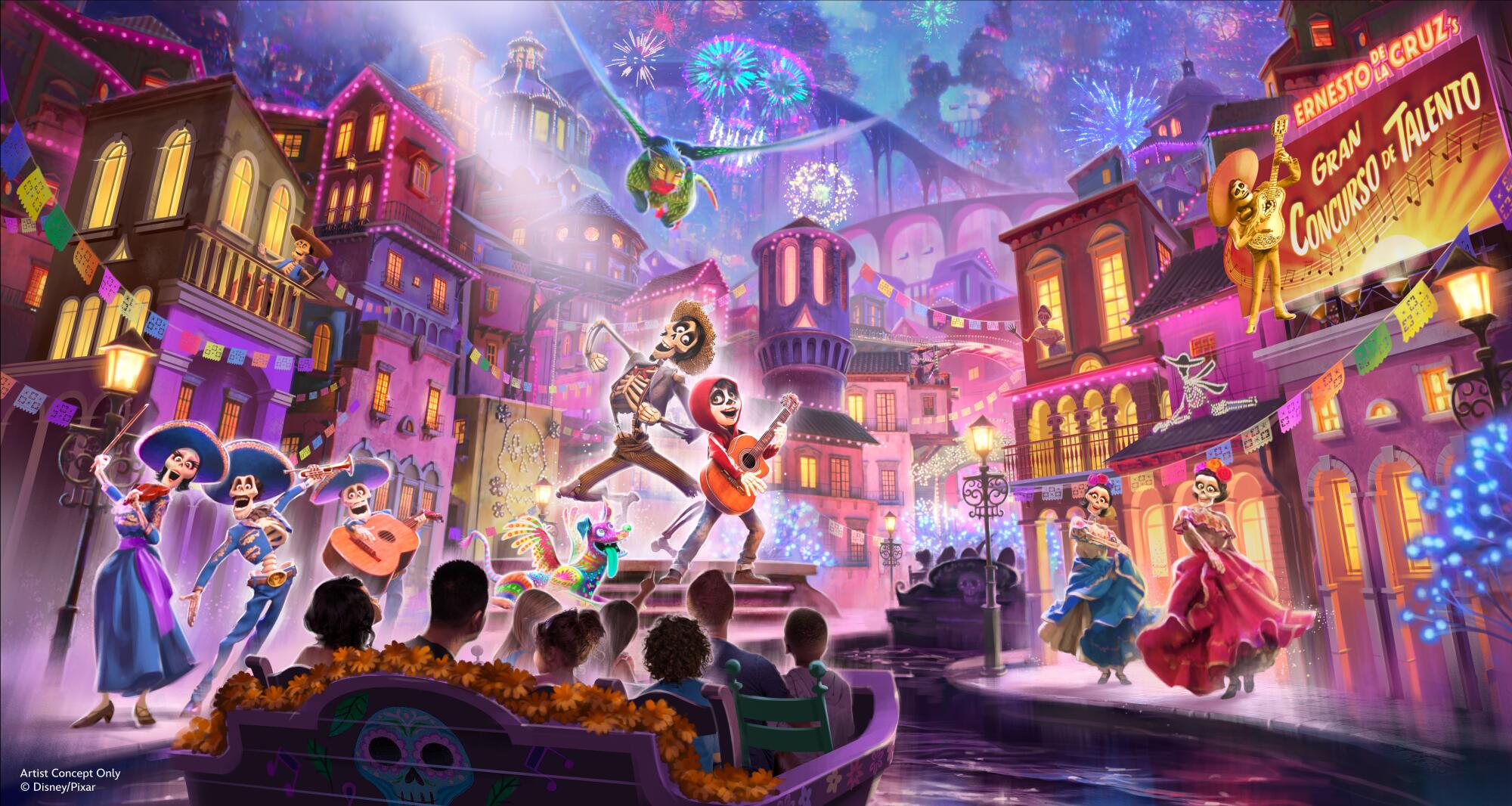
A “Coco” boat ride is destined for Disney California Adventure. The ride is under construction.
(Pixar / Disneyland Resort)
Few Disney properties, for instance, seem more ripe for exploration in a California-focused theme park than “Coco.” Under construction where Paradise Gardens and Pixar Pier meet, a “Coco”-inspired boat ride will give the park at long last a permanent home to recognize our state’s Latin culture and heritage. While fans may long for the days of original attractions such as Pirates of the Caribbean and the Haunted Mansion, those based on intellectual property — IP in industry speak — aren’t evil, especially when used to heighten the overall themes of the park. California Adventure’s own Cars Land is a key example.
When it starts to feel like retail, however, parks can become exhausting. Looking at you, Avengers Campus, a half-finished land with a bombastic orchestral score and familiar, urban design that wouldn’t be out of place in downtown L.A. In its current state, the land works best as a backdrop for live entertainment as it lacks the welcoming feel of Disney’s top creations.
California Adventure, at its most idealized, stood for more than an assortment of film properties. Its pitch was to show the Golden State as a romanticized destination, one that in the post-Gold Rush era has often given America permission to dream. It would capture our people, our nature, our food and our glamour through a lighthearted, optimistic lens. When completed, the park had a mini Golden Gate Bridge and giant letters that spelled out the name of our state (which were removed about a decade later).
By the time California Adventure opened in February 2001, it had already been the subject of much revision. The Walt Disney Co. wanted it to be a West Coast answer to Walt Disney World’s Epcot. Its plans at the time were well-documented, with the Walt Disney Co. initially giving Westcot, as it was to be called, a spherical answer to the Florida park’s Spaceship Earth. In time, and in attempts to quell neighborhood concerns, the globe’s design would shift to become a large, futuristic needle.
California Adventure in 2001 was meant to depict a romanticized vision of California.
(Mark Boster / Los Angeles Times)
None of it was to be. Financial headaches, caused in part by the early-year struggles of Disneyland Paris, inspired Disney to change course. Disney California Adventure would open with few attractions that rose to the Disneyland level, and yet The Times was kind in its opening coverage, praising the park’s change of pace from its neighbor and admiring how its architecture blurred fiction and reality.
The hang-gliding simulation Soarin’ Over California was an instant hit, and Eureka! A California Parade was Disney theatricality at its weirdest, with floats that depicted Old Town San Diego, Watts and more. But California Adventure’s prevalence of dressed-up county fair-like rides failed to command crowds. Disney’s own documentary “The Imagineering Story” took a tough-love approach, comparing some of its initial designs to those of a local mall.
The grand opening of California Adventure in February 2001.
(Mark Boster / Los Angeles Times)
And yet today it’s home to one of the Walt Disney Co.’s most fully-realized areas in Cars Land, which opened in 2012. Flanked by sun-scarred, reddish rocks that look lifted from Arizona, Cars Land is a marvel, and on par with the best of Walt Disney Imagineering’s designs (see New Orleans Square, Star Wars: Galaxy’s Edge and Pandora — the World of Avatar). Nodding to our Route 66 history, the land is a neon-lit, ‘50s rock leaning hub of activity, complete with the showstopping Radiator Springs Racers.
Cars Land led a major makeover of the park that also included the nostalgic Buena Vista Street, a nod to the Los Feliz era of the 1920s. And by the mid-2010s, many of California Adventure’s most insufferable traits, such as its ghastly puns (San Andreas Shakes was bad, but the Philip A. Couch Casting Agency was cringe-inducing) as well as the short-lived disaster of a ride that was Superstar Limo, had begun to disappear.
Cars Land, added to California Adventure in 2012, is one of Walt Disney Imagineering’s grandest achievements.
(Mark Boster / Los Angeles Times)
With the nighttime show World of Color, and a bevy of in-park entertainment, California Adventure pre-pandemic began to feel like something akin to a full-day park. It wasn’t perfect, of course — no park is.
The Little Mermaid — Ariel’s Undersea Adventure, though lightly charming, suffers from being a hodgepodge of familiar scenes from the film rather than a narrative tableau that can stand on its own. Too many empty buildings clutter its Hollywood Land area, the makeover of Paradise Pier into Pixar Pier did little but add garish film-referencing art to the land and the crowd-pleasing transformation of the Twilight Zone Tower of Terror into Guardians of the Galaxy — Mission: Breakout! was completed at the expense of the park’s prime Southern California theming.
Paradise Pier at California Adventure in 2002. The land has since been remade into Pixar Pier.
(Don Kelsen / Los Angeles Times)
But there is much about California Adventure to adore. It shines during holidays, whether that’s Lunar New Year at the top of the year or the back-to-back combo of Halloween and Christmas seasons near its end. Here is when California Adventure’s entertainment comes to the fore, bringing the park alive with cultural tales that at last reflect the diversity of the modern theme park audience.
How grand it would be, however, if California Adventure were blessed with this level of entertainment year-round. The Hyperion Theater, a 2,000-seat venue at the end of Hollywood Land, and once home to shows inspired by “Frozen,” “Aladdin” and “Captain America,” today sits empty. If the Walt Disney Co. can’t justify funding the theater, jettison it with the park’s upcoming makeover, as it stands as a reminder of how fickle the corporation can be when it comes to live performance (also gone, the great newsboy-inspired street show).
Staff at California Adventure put the final bit of polish on the letters that spell out “California” ahead of the park’s 2001 opening. The letters once stood at the entrance of the park.
(Mark Boster / Los Angeles Times)
Looking ahead, I expect Disney to deliver a powerful “Avatar” ride, and early concept art has shown a thrilling boat attraction that appears to use a similar ride system to Shanghai’s Pirates of the Caribbean: Battle for the Sunken Treasure, which is hailed by many as one of the company’s strongest modern additions. Worthy of debate, however, is how the pure fantasy landscape of “Avatar” fits in a park that still nominally tries to reflect California and our diversity.
And does it matter?
The company would likely argue that if the ride wows guests and extends the “Avatar” brand into another generation, that it does not. But Disneyland next door isn’t timeless because it has “Peter Pan” and “Star Wars.” It has endured for 70 years because its attractions, by and large, reflect cultural myths. And it’s a park we want to spend days in, thanks to its gorgeous landscaping, calming Rivers of America, and human tales of avarice, unity and romance spread throughout its attractions.
For theme parks, after all, can jump the shark, so to speak. Spend some time, for instance, sitting in California Adventure’s San Fransokyo Square. It’s a needless, post-pandemic makeover. What was once a simple food court has been transformed into a loud nook stuffed with a “Big Hero 6” meet-and-greet and gift shop. You’ll be transported, but to a place more akin to a marketing event.
So happy 25, California Adventure. We love you, and you’re a park worth celebrating, but like most post-collegiate kids, there’s still some room to learn.
JUST one hour into our safari, we’ve hit the jackpot!
“Look, you can just make out its outline,” our guide Dinuka shouts, as he passes his binoculars to me and my boyfriend Andy.
Sign up for the Travel newsletter
Thank you!
Winging it at the Gal Oya Valley National ParkCredit: Getty Images/Collection Mix: SubSpill the tea at the Tea & Experience FactoryCredit: Supplied by hotel
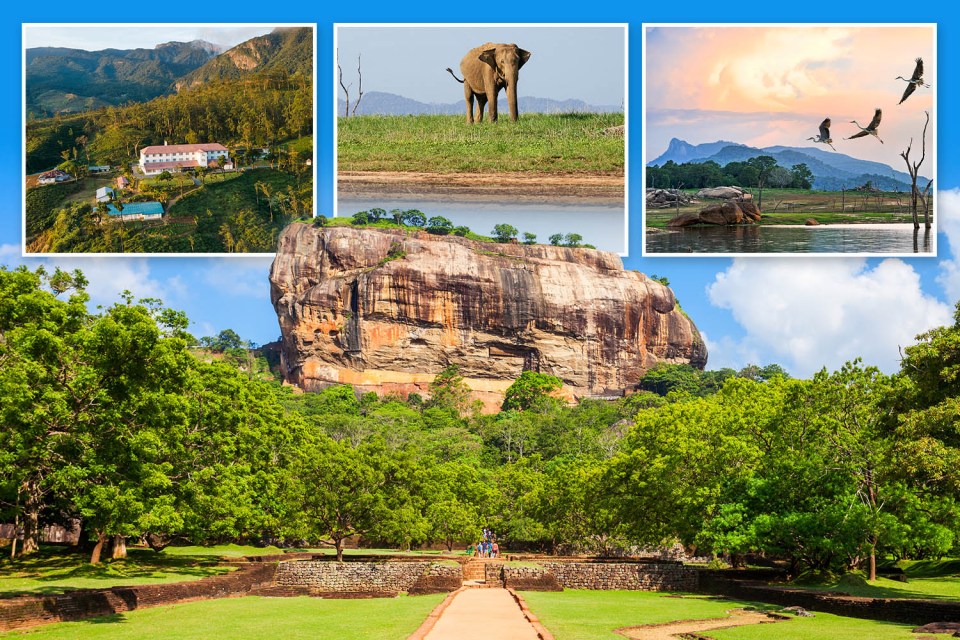
Standing on a grass bank surrounded by water, a majestic elephant comes into focus.
As we approach to get a better look, I feel like I’ve just stepped into a David Attenborough documentary.
This reservoir in Sri Lanka’s Gal Oya Valley National Park is home to an abundance of wildlife – we also spot crocodiles basking in the water, a herd of buffalo, eagles and a host of other birds.
With only four tourist boats allowed out on the water at a time, it feels very much like the nature in this national park is being protected.
And from colonial cities to mountainous tea plantations, vast jungles and sandy beaches, everywhere we turn on this stunning island, there’s wonder to behold.
Valley High
We begin our trip in Kandy, Sri Lanka’s second-largest city and home to nearly 1.5 million people, plus a riot of cars, buses, tuk-tuks and scooters.
Mountbatten Bungalow, a 15-minute drive away from the bustle, was the hillside hideaway of Lord Louis Mountbatten during WW2 and is steeped in history.
Explore Kandy’s Temple Of The Sacred ToothCredit: G&M Therin-Weise/roberthardingSri Lanka’s wildlife is elephant-astic!Credit: Alamy Stock Photo
It’s also an oasis of calm, with vistas of rolling hills, space for just 26 guests, Victorian trinkets and a swanky infinity pool overlooking the valley.
High tea, £12, is served on the deck and it’s the most beautiful place I’ve ever eaten a cucumber sandwich.
Double rooms here cost from £143 B&B.
Our driver, Nuwan, recommends the nearby Temple Of The Sacred Tooth Relic, as a must-see, and we’re so glad we take his advice.
A UNESCO World Heritage Site, it’s well worth the £5 entry fee as we look on in awe at the intricate Kandyan architecture and one of the holiest shrines in Buddhism, which houses the canine tooth of Gautama Buddha (Sridaladamaligawa.lk).
Tranquili-tea
Meanwhile, sitting amid marvellous mountains a two-hour drive away, the Tea & Experience Factory is a hotel unlike any I’ve stayed in before.
With the clouds rolling in, the surroundings are hauntingly atmospheric and, as the name suggests, this is a former tea factory built in the 1800s.
Mountbatten Bungalow is a haven of calmCredit: Pradeep GamageGo off-grid in a luxe glamping tentCredit: Pradeep Gamage
This stylish sleepover still has a small working factory showing how tea is produced, and from picking the leaves to seeing them being ground down in the various machines still in operation, it’s fascinating to find out how our daily cuppa is created.
The hotel also offers free guided waterfall treks with plenty of gorgeous photo stops in the lush landscape.
Double rooms cost from £114 B&B.
Jungle is Massive
Our favourite stop is still to come.
Three days spent at Wild Glamping Gal Oya is nothing short of a dream, and is where we spot the Sri Lankan elephant on our boat safari, which costs £85 per person.
It may not roar, but Lion Rock is majesticCredit: Getty Images/iStockphoto
Tents here have air-con, electrical sockets, huge comfy beds and alfresco bathrooms with waterfall showers.
A swimming pool sits in the middle of the camp with a breathtaking mountain backdrop – and with no phone reception, we fully embrace off-grid living.
The Veddas, one of Sri Lanka’s last remaining indigenous groups, work closely with the camp.
The first-known aboriginal people of the country, they were once forest dwellers, foraging, hunting and living in the jungle and caves.
These days, they make up less than 1% of Sri Lanka’s population and are a dying community who wish to teach others about how they live.
Gunabandilaaththo has a very simple life and shows us the ways in which his ancestors used to live, from mud huts to rustling up a traditional meal.
It’s an eye-opening two hours, £30 per couple, and a real honour to learn about his culture.
That night, we indulge in a Sri Lankan lamb curry and rice, £8, with creamy green beans, dal and coconut sambal, and chat about all we’ve learned.
Our last stop takes us to Amba Yaalu, set on the tranquil banks of the Kandalama Lake and the country’s first hotel fully managed and staffed by women.
Sitting next to a mango farm, rooms here look out over a glorious reservoir and the ancient Pidurangala Rock, which from some angles, resembles a person lying down.
Fashion Editor Abby McHale in Sri LankaCredit: Supplied by Abby McHale
Each room comes with an outdoor Jacuzzi bath to take in the views while soaking in bubbles.
Stays here cost from £121 B&B.
Sigiriya (also known as Lion Rock), is half an hour’s drive away and famous for its 200m-high granite column topped with the ruins of a 5th-century royal palace.
It’s a two-hour steep climb, but the views at the top are worth it.
Once back down on more solid ground, it’s the perfect time to reward ourselves with a Lion Beer, £2.50, from a street vendor and watch as the sun sets on an adventure just as golden.
AS an ignorant southerner, I barely believed the idyllic world I had seen on TV of Cumbria’s lakes, valleys and mountains could truly exist here in Britain.
And even as I gazed across the shimmering Ullswater lake, with the sun setting over the trees, I had to pinch myself.
Sign up for the Travel newsletter
Thank you!
I barely believed the idyllic world I had seen on TV of Cumbria’s lakes, valleys and mountains could truly exist here in BritainCredit: GettyDave took his family to the Lake DistrictCredit: Supplied
I was so mesmerised I even tried to get the kids (aged five and seven) to stop fighting with sticks to take in the view with me. It didn’t work.
Even if it was a slightly different holiday to the one we’d taken in 2017BK (Before Kids), the 328-mile journey from East Sussex to the Lake District sure was worth it.
The drive even felt like part of the adventure, travelling in Skoda’s fully electric 2025 Elroq SportLine 85, complete with heated seats.
We only needed to stop to charge once, which gave us a welcome coffee and toilet break.
Known as England’s official “Book Town”, thanks to the high number of book shops here, its Emmerdale-esque scenery inspired my first attempt to get my children to “just look at the views”.
But like all later efforts to get them to marvel at, arguably, Britain’s greatest natural landscapes, it failed miserably.
I was told by my son that “I don’t really do views, I prefer doing things, like knee slides”.
The drive even felt like part of the adventure, travelling in Skoda’s fully electric 2025 Elroq SportLine 85, complete with heated seatsCredit: Skoda
Fair enough, and luckily for him there was plenty to keep him and his sister happy other than the scenery.
There’s lots for adults too, not least the food.
Cumbria claims to have the most Michelin stars outside of London, but my partner and I left the fine dining for a trip without youngsters.
Cumbria claims to have the most Michelin stars outside of London, but my partner and I left the fine dining for a trip without youngsters.
Instead, we spoiled ourselves in top-notch pubs, enjoying delicious, hearty grub.
Our local, The Dalesman, dished up beautiful pies by a roaring fire.
A delicious pie at the Punch Bowl InnCredit: suppliedWe enjoyed fireside meals at the The DalesmanCredit: supplied
And the nearby Black Bull cooked up a stupendous full English and the biggest bacon sandwich I’ve ever seen, setting us up nicely for a day exploring.
Choosing where to eat is almost as important as picking which lake or waterfall to visit.
But while the Elroq features a smart windscreen display and huge navigation screen, I didn’t find cruising around narrow country lanes on a dark night that much fun.
They didn’t waste a penny on tarmac when they built the roads.
So we were lucky the 17th century Punch Bowl Inn in Crosthwaite was nearby and that its renowned cheese souffle lived up to the billing.
We also made use of the brilliant local produce by raiding the nearby Meat Hook butchers for fire-side steak and sausages at home.
While our electric Skoda may be the future of travel, we still enjoyed heading back in time with an unmissable trip on the steam train from Haverthwaite to Lakeside.
It is a great way to see some of the area and we combined it with a boat ride up the mighty Lake Windermere to Bowness where, once again, the views are jaw-dropping.
Bustling Bowness boasts a huge choice of pubs and shops, but we spent the afternoon in the magical, and reasonably priced, World Of Beatrix Potter Attraction.
As well as a Peter Rabbit cafe selling home-made cakes and afternoon tea, there is a free activity trail and interactive videos showing yet more cracking Lake District views, except on a screen.
The kids loved completing the puzzles about Peter Rabbit, Jemima Puddle-Duck and Co.
And while that kept their little minds entertained, the best way to burn off energy was climbing through the trees and adventure playgrounds of Brookhole on Windermere.
There, you can brave tree-top adventures in Zip World, try axe-throwing or take a boat out on the lake, among other activities.
We left there with the kids suitably exhausted and ready for an eight-hour drive home.
Luckily, they slept the entire way, tucked up in the back of the car, while I soaked up the last of those views.
GO: Lake District
GETTING THERE: The all-electric Skoda Elroq SportLine 85 starts from £41,610 or £412.67 per month.
Epic train journey starts in London then passes through Paris, leading travellers to a beach in Spain with golden sand and a lively atmosphere
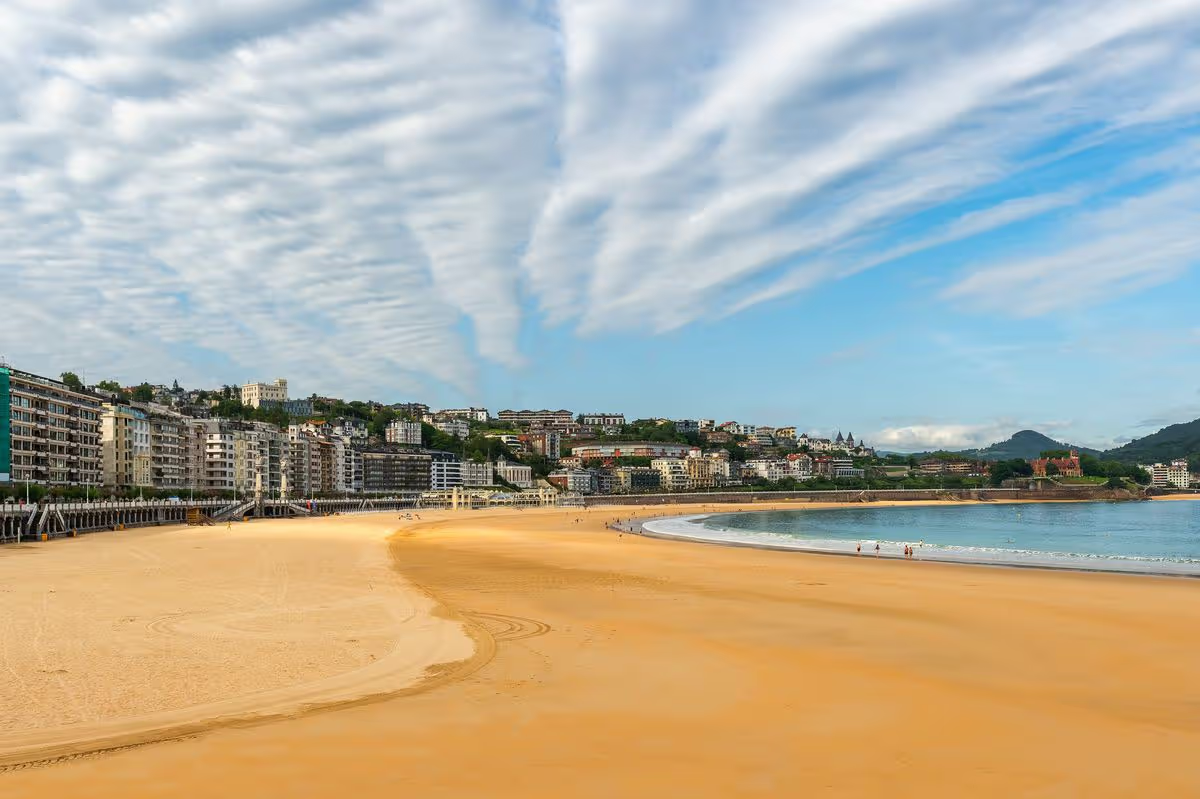
San Sebastian in Spain boasts golden beaches reachable by train from the UK(Image: Jose Miguel Sanchez via Getty Images)
A stunning nine-hour rail journey that begins with the Eurostar in London and concludes on a breathtaking beach in Spain is sure to leave you mesmerised. The thrilling train adventure sets off from St Pancras station in London, whisking you away to the picturesque La Zurriola beach, nestled in the city of San Sebastián (Donostia) in Spain.
This charming beach is famed for its idyllic surroundings, golden shores, and superb surfing conditions, making it a favourite spot for both locals and holidaymakers. To reach this scenic beach in San Sebastián from London by rail, you’ll need to first board the Eurostar train from London St Pancras International to Paris Gare du Nord.
This leg of the journey takes roughly two hours and 15 minutes. From Paris, passengers can then jump onto a TGV train bound for Hendaye, which will take around five to six hours, reports the Express.
Upon reaching San Sebastián’s train station, you can opt for a bus or taxi ride to La Zurriola beach.
The beach is situated in the Gros district, which is within strolling distance from the train station, but it might be more practical to take a brief bus or taxi trip, particularly if you’re laden with luggage.
One visitor reviewed the seaside location on TripAdvisor, writing: “Visiting San Sebastián was truly unforgettable, especially with the breath-taking view of the Atlantic Ocean.
“The coastline is stunning, just a short walk from downtown, where you can surf, swim, or simply relax and soak in the soothing sounds of waves crashing on the shore.”
The beach boasts a vibrant ambience with a bustling promenade peppered with bars, eateries, and shops, creating a lively hub of activity.
The official tourism website for the region, San Sebastián Turismoa, described the area on their website: “The promenade running round the beach from Sagüés to the Kursaal ‘cubes’ continues on its way round Monte Urgull and along the Paseo Nuevo to end at the Peine del Viento sculpture on the Concha Bay.
“This spectacular city walk covers around six kilometres and offers spectacular sea views and delightful resting spots along the way.
“From the Zurriola, you can also make your way up to Monte Ulía, a green area only a moment’s walk from the city centre. A former look-out point for whales, Monte Ulía is the city’s best hillwalking option and follows part of the coastal route on the Way of Saint James.”
La Zurriola is renowned for being a top-notch surfing location in Europe. The beach regularly experiences powerful swells from the Bay of Biscay, drawing in surfers ranging from novices to seasoned pros.
Surf schools and hire shops are on hand to accommodate visitors keen to ride the waves or pick up the sport.
Beyond surfing, La Zurriola offers the chance to partake in other water sports such as bodyboarding and paddleboarding. The beach also occasionally plays host to beach volleyball tournaments and other leisure activities.
The most affordable ticket from St Pancras for 29 April currently stands at roughly £67 on Trainline.
Ensure our latest headlines always appear at the top of your Google Search by making us a Preferred Source. Click here to activate or add us as your Preferred Source in your Google search settings.
DID you know that the UK is home to Europe’s largest wave pool?
The resort that’s a haven for surfers has just been named as the best of its kind in the world – it also has on-site restaurants and luxury lodges.
Sign up for the Travel newsletter
Thank you!
Lost Shore Resort is home to Europe’s largest wave poolCredit: instagram/@lostshoreIt has beautiful hilltop lodges as well as waterfront podsCredit: instagram/@lostshore
The publication assessed the likes of on-site food and drink, overnight accommodation, hot tubs and recovery pools, viewing areas.
The resort was a £60million project and is found on a Craigpark Quarry just outside of Edinburgh.
It opened in 2024 and last year welcomed 200,000 visitors – of course most were enticed by the fact that it’s home to Europe’s largest wave pool which provides top tiers water conditions for keen surfers.
Surf lesson start from £65 (£55 for children) and is coached in groups of eight with qualified instructors.
For those who are more experienced, a ‘surf session’ starts from £60 (£50 for children) – you can choose the wave setting and get started.
There are also surfskate lessons on offer which is a form of skateboarding that feels like surfing on dry land – and is recommended for beginners before heading into the water.
These start from £22.50 (£17 for children).
While Lost Shore Resort is obviously a haven for surfers, but there’s so much more to do on-site too from checking out its food options, to checking into its beautiful pods and lodges.
The high-end luxury Hilltop Lodges at the resort have sweeping views across the cove.
Inside are open plan living areas with up to four bedrooms and are ideal for families or large groups.
A stay in a Hilltop Lodge which sleeps up to eight people starts from £200 (with a minimum two night stay).
The cheapest stay is in the waterfront pods which are right next to the wave pool and each comes with a floating super king bed.
It’s high-tech so guests get touchscreen and app control over the pod -it has mood lighting and the en-suite bathroom has underfloor heating.
A one-night stay in the pod which sleeps up to two people starts from £100 per night.
There are plenty of offers for those who want to ‘surf and stay’ with one night in a Waterfront Pod along with four surfs starting from £300.
The resort offers lessons for beginners and sessions for experienced surfersCredit: instagram/@lostshoreYou can stay inside one of the pretty waterfront lodgesCredit: Lost Shore resort
Blooloop added: “The venue goes above and beyond the core surf park offerings through its Surf Therapy collaborations with The Wave Project and Inclusive Surfing Scotland.
“Weekly events fill the calendar like Quiz Night, dance events, movie premieres, kids surf camps and specialty surf competitions.”
The resort focuses on wellness too, so the resort also has a spa with a wood-fired sauna – a 30-minute session is just £10.
Visitors and members can also book massages and other treatments.
There are even surf-inspired treatments like ‘soulful surfer’ which is an aromatherapy and rebalance ritual.
It’s loved by visitors too, one wrote on Tripadvisor: “Lost Shore is a Phenomenal place. The food was amazing, surf was awesome and the accommodation was stunning. I would highly recommend a visit.”
Another guest added: “The facility is incredible, looks beautiful and the attention to detail of every aspect is clear to see. We stayed in a large pod and it was amazing, right beside the pool, big rooms, kitchen, all the amenities you could want.”
Over the Easter holidays, Lost Shore Resort is offering family stays in the Hilltop Lodges from £150 per night.
The high-tech pods with mood lighting even have app controlCredit: instagram/@lostshore
And for anyone staying in the months of February and March, guests can enjoy a free brunch, from pastries to granola, toasted croissants and breakfast baps.
There are three different restaurants at the canteen on the resort – lost Kitchen which serves up the likes of chunky fish fingers and fried chicken with chips.
At Lost Taco, dig into Mexican favourites of tacos, burritos and nachos, or opt for Civerinos or pizzas and crispy gnocchi.
As for where to find it, Lost Shore Resort is 25 minutes from Edinburgh‘s city centre.
Artist Ako Castuera is best known for her work on the award-winning animated series “Adventure Time.” As a writer and storyboard artist, she helped intrepid heroes Jake the Dog and Finn the Human become iconic toon characters.
Though she brought flying rainbow unicorns and a platoon of plotting penguins to life on screen, there’s more to Castuera’s resume than hyper-imaginative animation.
Ceramist, writer and storyboard artist Ako Castuera in her studio.
(Kayla Bartkowski / Los Angeles Times)
The Echo Park-based creative is also a professional ceramicist whose hand-built vessels and sculptures have been on display at the Japanese American National Museum of Art, Oxy Arts and the Oakland Museum of Art.
In this series, we highlight independent makers and artists, from glassblowers to fiber artists, who are creating original products in and around Los Angeles.
While Castuera’s studio is filled with its fair share of playful “Pee-wee’s Playhouse”-themed ceramic charms and anthropomorphic banana figurines, her craft is just as much devoted to highlighting Southern California’s natural resources and Indigenous people, as well as her own Mexican-Japanese heritage.
“‘Whimsy’ is a word that’s been applied to my work a lot. This is not my word,” she said during a recent tour of the Monrovia workspace she shares with her husband, artist Rob Sato, and fellow ceramicist Rosie Brand.
Ako Castuera’s work is anthropological and at times unusual, like her foot box sculptures. She also feels a special connection to her tools.(Kayla Bartkowski / Los Angeles Times)
“Not that whimsy is negative, but I do feel like it doesn’t really get a handle on the substance of what I feel I’m working with, as far as the depth of the clay, the depth of the experience, of the land.”
She sat perched on a stool at her workbench, using a smooth stone to grind soil clumps into fine dust as she talked. She collects the red earth during nature walks around the San Gabriel Mountains area — whether the riverbed of the Arroyo Seco, or the foothills of Claremont, her hometown.
“This is special dirt,” she explained.
To her, it has a presence, a life of its own and a cherished history. She uses it to make anything from trinket boxes to ornate geometric vases to statuettes of quizzical creatures.
Some of her most recent creations stand on a nearby wooden shelf. They’re ceramic depictions of Pacific tree frogs and great herons, both denizens of the L.A. River. The waterway has long been a source of inspiration for Castuera.
Ako Castuera’s work ranges from massive pieces to the miniature, like these figurines.
(Kayla Bartkowski / Los Angeles Times)
“I love the L.A. River,” she said. “It’s my neighbor. It’s my teacher. It’s a place where I walk and bike.”
She regards the river as a muse and wants to inspire Angelenos of all ages to appreciate it. To that end, she teaches youth workshops at the riverside arts hubs Clockshop and Sooki Studio. What’s more, the river was a “main character” on “City of Ghosts,” the L.A.-celebrating, Emmy-winning Netflix animated series she directed. She’s even been known to use some of its water to transform soil into moldable clay.
“The more people who are brought into a sense of kinship with the river, the better,” she said. “Because then, they really feel like ‘The river takes care of me; I want to take care of the river.’”
Castuera’s work has an anthropological bent, as well as an ecological one. For example, her research into Southern California’s Kumeyaay and Cahuilla Indigenous tribes inspired a series of large jars patterned after ollas, traditional pots used for water and seed storage. She plans to incorporate these jars into an immersive installation that will be on view at the Candlewood Arts Festival in Borrego Springs in March and April. And last fall, she hosted a community event with Los Angeles Nomadic Division in which she discussed how soil played a vital role in the societies of both the Gabrielino-Tongva tribes of L.A. and the Ryukyuan people of her mother’s native Okinawa.
Finding the sweet spot where cultures combine is a constant source of motivation for Castuera. She’s created her own twist on shisa, lion-dog statues that are common sights all around Okinawa. And she’s currently working on a collection of small sculptures honoring her patrilineal ties to Puebla, Mexico. Her “taco babies” were inspired by one of the region’s best-known dishes, tacos árabes, which combine flavors from Mexico and the Middle East.
“I was thinking about the beauty of being in a living mix and what that would look like personified,” she said of the wee figures wrapped in colorful tortilla-like blankets.
Ako Castuera makes ceramics for the love of the process, not the final product.
(Kayla Bartkowski / Los Angeles Times)
Some of Castuera’s work makes it into gallery shows and some she sells. But just as often, she smashes it and takes the soil back to where she originally found it. It’s a habit of creating and destroying that she formed as a student at Claremont High School, where she studied the craft for two semesters, yet fired zero pieces.
“I don’t think I could’ve articulated this at 15, but it’s about the process of building, not the process of creating a product. It’s about working with the material — just making the space and the time for that practice,” she said.
“The excitement and the magic is really about the discovery of the unexpected. It’s so engrossing and it really just gets me engaged with life.”
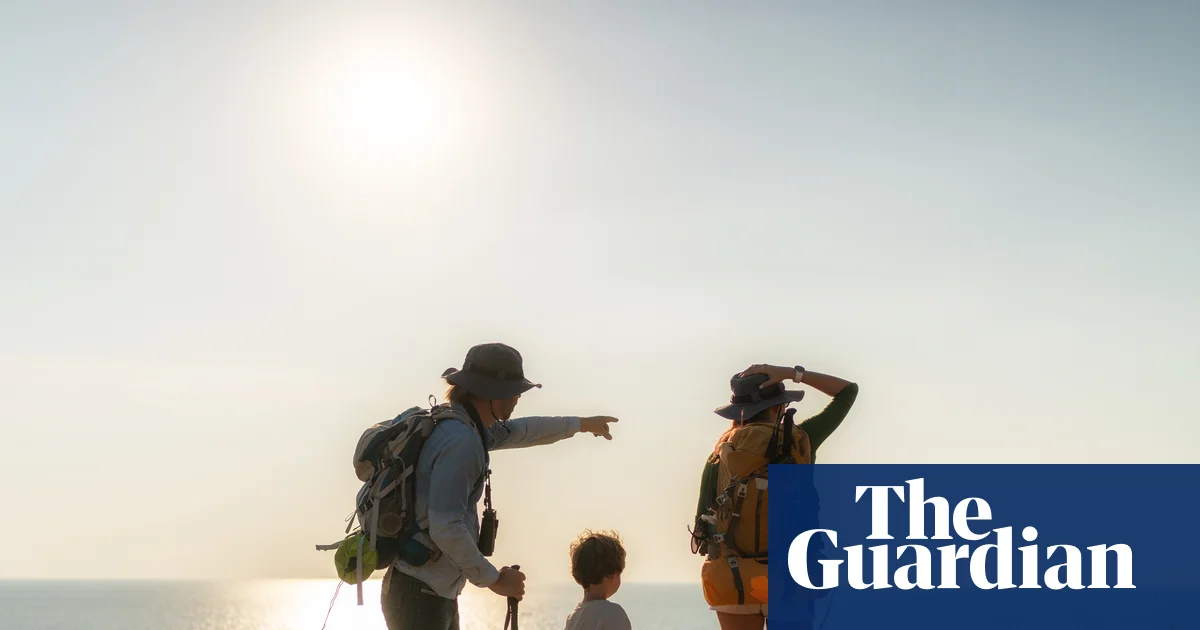
Have you had a memorable family adventure? A trip where you stepped outside your comfort zone and tried something new together? Whether it’s a family backpacking trip, completing a long-distance hike, bike or canoe trail, wild camping, youth hostelling or trying out a new activity, we’d love to hear from you.
The best tip of the week, chosen by Tom Hall of Lonely Planetwins a £200 voucher to stay at a Coolstays property – the company has more than 3,000 worldwide. The best tips will appear in the Guardian Travel section and website.
Keep your tip to about 100 words
If you have a relevant photo, do send it in – but it’s your words we will be judgingfor the competition.
We’re sorry, but for legal reasons you must be a UK resident to enter this competition.
The competition closes on Monday 23 February at 10am GMT
Your responses, which can be anonymous, are secure as the form is encrypted and only the Guardian has access to your contributions. We will only use the data you provide us for the purpose of the feature and we will delete any personal data when we no longer require it for this purpose. For alternative ways to get in touch securely please see our tips guide.
If you’re having trouble using the form click here. Read terms of service here and privacy policy here.