adam schiff

Trump: Pulte won’t be ‘permanent’ director of national intelligence

June 4 (UPI) — Acting Director of National Intelligence Bill Pulte, whose new assignment has drawn bipartisan criticism, won’t be the “permanent” choice for the job, President Donald Trump said Thursday.

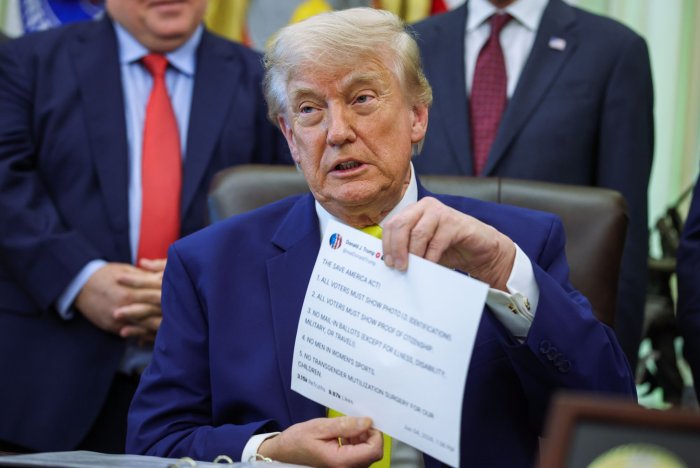
Trump, speaking to reporters Thursday the White House, said Pulte’s role as acting director of DNI to replace Tulsi Gabbard, which began Tuesday, would not be “permanent.”

Rather, the president said Pulte will be “very good” as he takes the job on for a “little while,” while also asserting he will be able to “figure it out quickly.”

Gabbard announced her resignation in May, saying she will step down June 30, and Trump’s pick of Pulte to replace her two days ago ignited a backlash among lawmakers of both parties.

A former housing developer and currently director of the Federal Housing Finance Agency, Pulte — a staunch Trump loyalist — has no experience in foreign intelligence work, a fact that has sparked criticism from both sides of the political aisle.

Sen. Thom Tillis., R-N.C., on Wednesday blasted Pulte as an “incendiary attack dog” for Trump who likely wouldn’t pass Senate muster for confirmation.

“I don’t think he has a prayer” of becoming the permanent DNI, Tillis told CNBC, adding that Pulte’s presence could hurt the GOP congressional majority’s efforts to reauthorize the part of the Foreign Intelligence Surveillance Act governing warrantless surveillance.

Similarly, Sen. Ron Wyden, D-Ore., a long-serving member of the Senate Intelligence Committee, decried the choice of Pulte for DNI director, saying Trump is “appointing his top political henchman to one of the most important positions for protecting the safety of Americans and preventing terrorist attacks like September 11th.”

Pulte, he said, “appears to be unscathed by intelligence or any semblance of ethics,” noting he has already used his post at a housing agency “to persecute Trump’s political opponents, including Senator Adam Schiff, New York Attorney General Leticia James and Federal Reserve Board member Lisa Cook.”

Pulte has alleged fraud against several of Trump’s foes in their mortgage applications, including Cook for claiming two different homes as her primary residence. She has appealed her firing by Trump to the U.S. Supreme Court.

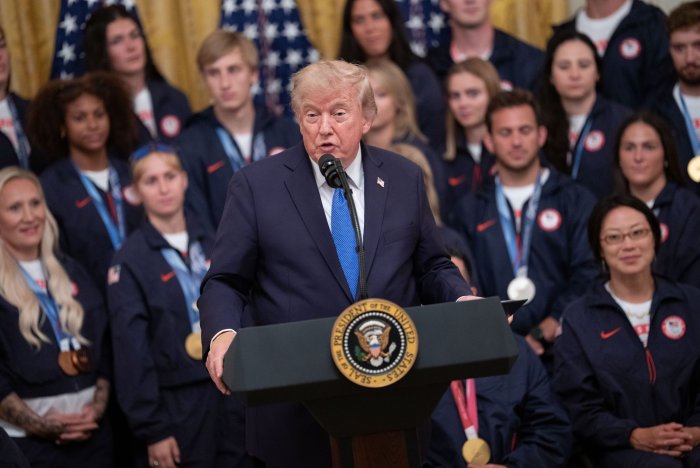
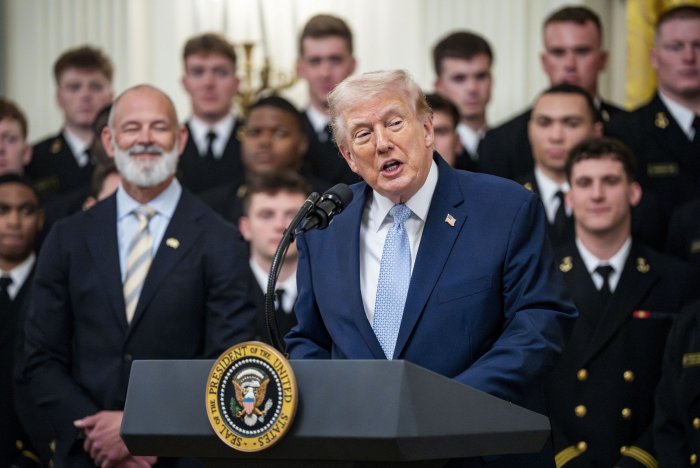
President Donald Trump presents the Commander in Chief’s Trophy to the Navy Midshipmen football team during a ceremony in the East Room of the White House on Friday. The award is presented annually to the winner of the football competition between the Navy, Air Force and Army. Navy has won the trophy back to back years and 13 times over the last 23 years. Photo by Bonnie Cash/UPI | License Photo

Source link

Senators eye crackdown on prediction markets advertising to minors

Sen. Ted Cruz, R-Texas, speaks Wednesday at a Senate subcommittee hearing focused on the recent surge in popularity of sports betting and betting by minor. Photo by Erika Tulfo/Medill News Service

WASHINGTON, May 20 (UPI) — As sports betting and prediction market platforms like Kalshi and Polymarket grow in popularity, U.S. senators on Wednesday weighed the need to regulate use of the platforms by minors.

One main issue senators raised during a hearing by the Senate Commerce Subcommittee on Consumer Protection, Technology and Data Privacy was how prediction markets use social media to advertise their platforms to underage users, putting them at risk of a gambling addiction.

“Young people are being inundated with advertisements on social media. Their favorite influencers and sports figures are introducing minors to betting,” said Sen. Marsha Blackburn, R-Tenn., who chaired the hearing.

“This is not safe. It needs to stop, and advertising to minors is disgusting,” Blackburn said.

The “No Sure Bets: Protecting Sports Integrity in America” hearing was intended to discuss the prevalence of sports betting and its impact on the integrity of matches.

It followed a unanimous Senate vote last month to ban its members and their staffs from trading on prediction market platforms, and the senators seemed determined to do more. Issues surrounding gaming continue to be a hot topic in Congress, where more than 10 active bills are related to prediction markets.

Some recent high-profile scandals surrounding prediction market platforms have also drawn attention to the industry, including the arrest of U.S. Army soldier Gannon Van Dyke last month. He was charged with using classified information to profit from a Polymarket wager related to the capture of Venezuelan president Nicolás Maduro in January.

In the same month, Kalshi fined and suspended from its platform three congressional candidates for betting on the outcomes of their own elections.

In the hearing, Sen. John Hickenlooper, D-Colo., criticized prediction markets like Kalshi for hiring social media influencers to promote their platforms to adolescent users.

“I think it’s specifically dangerous for minors to get into sports betting, and especially on prediction markets. That’s why almost all the states say [the legal betting age] is 21, not 18,” Hickenlooper said.

“Prediction markets let users as young as 18 bet on sports, but they also market their products to younger, more vulnerable audiences who are in many cases adept at getting around the platform precautions.”

A study released in January by Common Sense Media found that more than one-third of adolescent boys aged 11 to 17 admitted to engaging in gambling over the past year. Almost 60% of those who have been gambling said that they were exposed to gambling content through social media.

Kalshi, in an email, denied advertising to minors and pointed to recently implemented consumer protection measures, including requesting a selfie from the user to supplement documents verifying their age.

Hickenlooper grilled Patrick McHenry, a former U.S. representative now acting as senior adviser to the Coalition for Prediction Markets, on the guardrails to ensure underage users could not access their platforms.

McHenry pointed to the Commodity Futures Trading Commission, which oversees prediction markets and regulates them as a form of financial derivative rather than an avenue for gambling.

“The CFTC is a cop on the beat. It has the capacity to oversee this market, just as they’ve done with a broader commodities marketplace that has been around and well-versed for decades,” he said.

The Commodity Futures Trading Commission’s jurisdiction over prediction markets has been a contentious topic, since users can trade event contracts related to sports, weather, politics and more.

The Prediction Markets Are Gambling Act, which Sen. Adam Schiff, D-Calif., introduced in March, seeks to ban prediction markets from listing contracts that resemble sports bets, arguing that such contracts are considered gambling and should be subject to state regulation.

The agency argues that sports event contracts were treated as “swaps,” a term used to describe events that have potential economic consequences.

But Sen. Ted Cruz, R-Texas, pushed back against the classification of sports contracts on prediction markets as financial derivatives.

“What is the economic consequence of whether a pitcher throws a ball or strike?” he asked.

Another bill specifically targeting digital gambling advertisements to minors was introduced Monday. Sens. Richard Blumenthal D‑Conn., and Katie Britt, R‑Ala., are advocating the Gaming Advertisement to Minors Enforcement Act, which would implement a federal ban on sports betting ads on social media platforms for minors.

Source link