An Israeli settler was filmed abusing and reportedly poisoning livestock in the village of Al-Mughayyir, northeast of Ramallah in the occupied West Bank. The animals reportedly belonged to Israelis and were poisoned in an attempt to frame Palestinians for killing them.
KATIE Price told her ex-husband Kieran Hayler’s alleged child rape victim she would “make her a little star”, a court heard today.
The former glamour model, 48, made the comment in a message while quizzing the girl about whether she had kissed Hayler, jurors were told.
Katie Price said she would make Kieran Hayler’s alleged child rape victim a ‘little star’Credit: GettyHayler has denied the allegationsCredit: Gary Stone
The message exchange happened in May 2017 – eight months after the last alleged attack by Hayler, it was said.
The former stripper is accused of three counts of rape and one count of sexual assault against the girl between June and October 2016 – when she was 13 and Hayler and Katie were married.
Sign up for the Showbiz newsletter
Thank you!
In the May 2017 exchange, mother-of-five Katie asked the girl if she and Hayler, 39, had kissed.
Katie wrote: “I WON’T say anything and I PROMISE I’ll protect you!
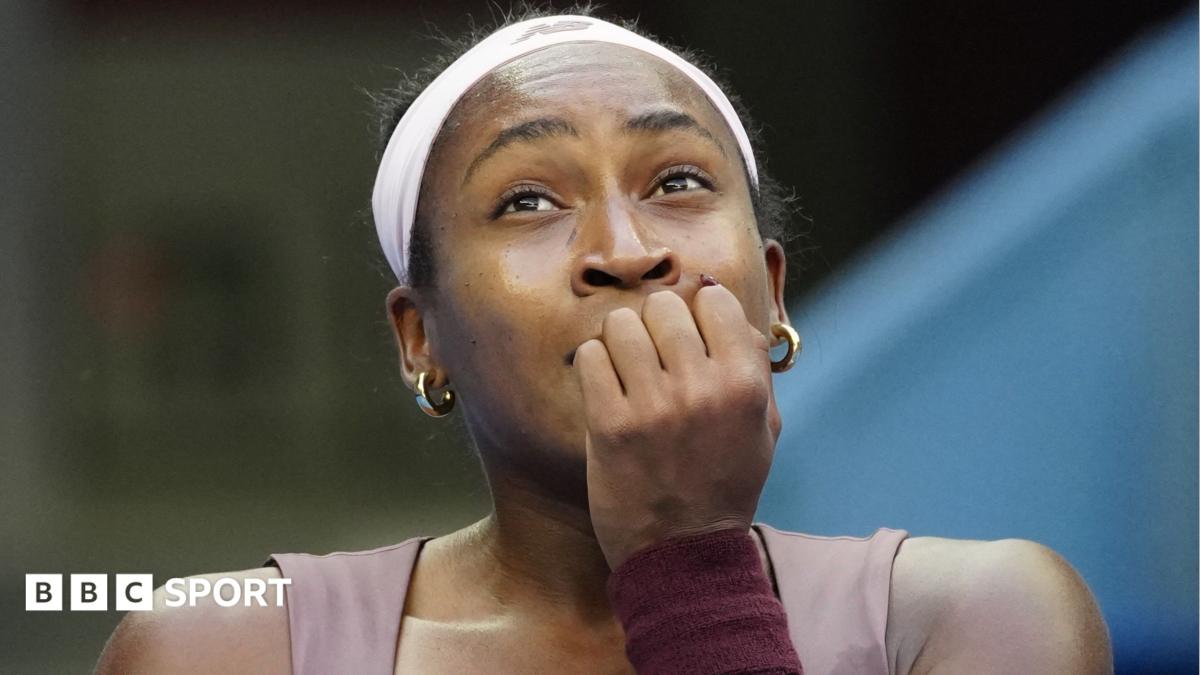
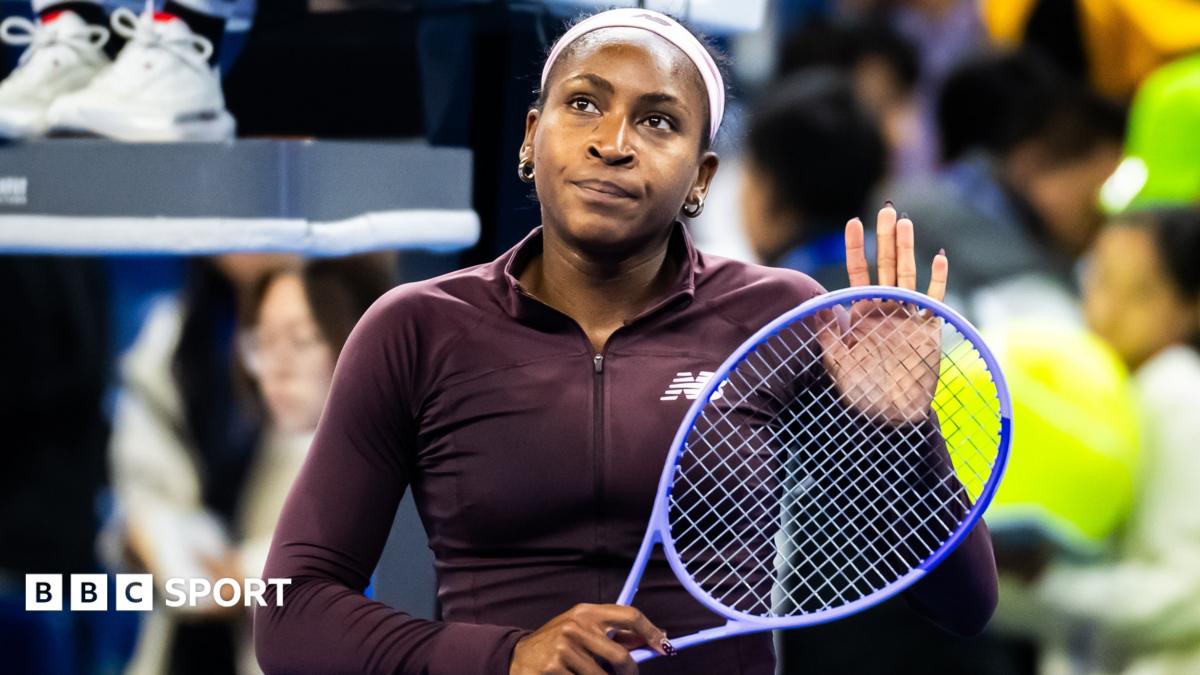
Coco Gauff said she had a “draining” few days after receiving racist abuse online before her fourth-round China Open exit.
The American received an “insane” amount of racist comments and direct messages following an incident in her third-round win over 16-year-old Sun Xinran on Monday.
China’s Sun thought she had hit a winner late in the first set, but Gauff raised her hand to halt play because of a flickering light in the side panels surrounding the court.
After a video review – which players are allowed to request – the point was replayed, with Gauff winning it and subsequently going on to clinch the match.
The 22-year-old posted a lengthy statement explaining what had happened and later condemned the racist abuse she received in response.
Gauff was beaten 6-3 6-3 in her next match against Elise Mertens on Wednesday.
Asked how she had felt over the past 36 hours, Gauff said: “It has been kind of draining, I’m not going to lie.
“I just turn off my phone and move on. I mean, there’s nothing you can do.”
A spokesperson for the Women’s Tennis Association said it was appalled by the abuse. It said it was in contact with Gauff “to offer our full support”.
A statement given to the news agency AFP said the governing body was “seeking action” against the abusive content.
Gauff, who won the title in Beijing in 2024, committed 34 unforced errors and eight double faults against Mertens.
“I was just a bit flat. That’s the main thing,” Gauff said.
“The level was there at some points, I just didn’t sustain it the whole match.”
Belgium’s Mertens will play former world number one Iga Swiatek in the quarter-finals after the six-time major champion beat American teenager Iva Jovic 6-1 6-3.
Elsewhere, Britain’s Arthur Fery beat Marin Cilic 7-6 (7-2) 6-1 in the Shanghai Masters first round.
Fery came back from a break down in the first set before dominating the former US Open champion in the second to claim his first ATP Tour win since August.
The 24-year-old will face Russia’s 26th seed Karen Khachanov next.
Embattled FIFA President Gianni Infantino has been accused of a potential abuse of power and conflict of interest after the Norwegian Football Federation (NFF) filed formal complaints to two FIFA committees.
Infantino’s aborted plan to open up the World Cup to private investors, the lifting of US forward Folarin Balogun’s suspension at the 2026 World Cup following an intervention by United States President Donald Trump, and FIFA’s awarding of a so-called Peace Prize to Trump form the basis of the filings.
Recommended Stories
list of 4 itemsend of list
The first filing made on Tuesday “asks the Ethics Committee to examine the conduct of FIFA President Gianni Infantino and any other individuals identified through the investigation for potential breaches of FIFA’s Code of Ethics”.
The second filing is aimed at FIFA’s Governance, Audit and Compliance Committee (GACC) and “asks whether FIFA’s governance, financial oversight, internal controls and decision-making processes [have] worked as intended”.
Lise Klaveness, the NFF’s straight-talking president and longtime critic of Infantino, told British media that Trump was the common thread in all three issues.
The venture capital firm of Josh Kushner, the brother of Trump’s son-in-law Jared, was to be the chief investor in the ill-fated FIFA Forward Enterprise (FFE) plan.
Infantino’s plan, launched just after this year’s hugely successful World Cup cohosted by Canada, Mexico and the US in July, would have allowed private investors to acquire stakes in a company created under the FFE initiative.
“FIFA Forward Enterprise is a governance issue, but it’s connected to the two other cases because [of] conflict of interest and abuse of position, potentially,” Klaveness said in her interview with a British newspaper.
“There is a line between all these three cases, and it’s the same political regime.”
Klaveness, a former international footballer, said Infantino had some serious questions to answer over a lack of transparency.
Balogun’s red card in the last-32 win over Bosnia and Herzegovina during the World Cup resulted in an automatic suspension for the match with Belgium.
But FIFA stepped in and suspended his ban, leading to widespread condemnation, especially when it emerged that Trump had intervened by phoning Infantino.
The FIFA Peace Prize award that Infantino presented to Trump in December has also been widely criticised.
“These are three very different factual cases, but they all have something in common that we want examined,” said Klaveness.
“Is it an abuse of power, an abuse of position? Is it a breach of political neutrality?
“Is it in accordance with the rules of governance, as the FIFA Council should be the strategic body, and the president shouldn’t really have any unilateral power?”
‘Misinformation campaign’
Klaveness, 45, had, in August, called upon Infantino to resign and forgo his bid to be elected to a fourth and final term as president.
The 56-year-old Swiss has insisted he will seek re-election in Rabat next March, and as yet no other candidate has declared themself.
Infantino, who was first elected in 2016, must secure a majority of the 211 votes from the organisation’s members in order to be re-elected.
The deadline to declare a candidacy is November 18.
Klaveness has said she will not be a candidate — despite some observers, including Infantino’s predecessor Sepp Blatter, believing she would be a good fit as FIFA chief.
Aleksander Ceferin, president of European football’s governing body UEFA, has said he is not interested.
UEFA have been unsparing in their verbal assaults on Infantino and FIFA, dismissing the FFE plan as “a shady and opaque backroom deal”.
The likeliest rival is thought to be Canadian Victor Montagliani, president of CONCACAF, whose body, along with UEFA and the Asian Football Confederation (AFC), has formed an anti-Infantino alliance.
However, while a swath of UEFA’s members have publicly withdrawn their support for the 56-year-old Swiss, some of the AFC’s associations, such as 2034 World Cup hosts Saudi Arabia and 2022 hosts Qatar, have pledged their loyalty to him.
African football’s governing body CAF and South America’s CONMEBOL are also supportive.
UEFA has also gone to a court in Florida in an attempt to access documents related to Infantino’s failed plan, hoping to gather evidence for a potential criminal complaint in Switzerland, where UEFA and FIFA are based.
The latter responded by accusing UEFA of a “misinformation campaign” and saying it was attempting to “influence” the election.
For My Sister Nicole: Love Shouldn’t Hurt — What to Know About Domestic Violence
By Denise Brown Blackstone Publishing: 240 pages, $30
If you buy books linked on our site, The Times may earn a commission from Bookshop.org, whose fees support independent bookstores.
Nicole Brown Simpson wore a long-sleeved cover-up by the beach, despite the warm weather. “We kept telling her, ‘C’mon, get in the water.’ She wouldn’t,” Denise Brown recalls of a Hawaiian vacation with her sister, Nicole, and the rest of her family, including her brother-in-law, O.J. Simpson. “We didn’t know it then, but he’d beaten the [hell] out of her the night before in the hotel room. We found out later, after she was killed, when we were reading her diaries.”
The incident is one of many chronicled in Brown’s new memoir, “For My Sister Nicole: Love Shouldn’t Hurt.” The book chronicles who Nicole was — from her happy SoCal childhood to meeting beloved celebrity and football star Simpson at the age of 18 (he was 30) to the physical and mental abuse she suffered over seven years of marriage. Brown also reveals the troubling incidents she witnessed behind the scenes, and pairs them with the knowledge she has now of what could have been done to help her sister.
(Blackstone Publishing, Inc.)
Nicole and her friend Ronald L. Goldman were murdered outside her Los Angeles home in Brentwood in June 1994. The brutal homicides set off a media frenzy, and overnight, Brown became the voice for her slain sister.
Images of an angry and sobbing Brown became the media’s hallmark of grief during the criminal trial, particularly when Simpson was acquitted in 1995. He was found guilty in a subsequent civil trial, yet still awarded custody of the divorced couple’s two children.
Now, 69, with sleek silver hair and a voice raspy from the many speaking engagements tied to her advocacy work, Brown has devoted her life to raising awareness about domestic violence. “It’s too late for Nicole,” says the former model who moved from her native Southern California to Florida decades ago. “I want this book to help others avoid what happened to her.”
This interview has been edited for length and clarity.
We’re meeting today in downtown L.A., very close to the courtroom where the trial happened, and to the former LAPD headquarters Parker Center where Simpson was booked after Nicole’s death. Is it difficult being here? Should we have done this somewhere else?
No. This is where it all happened, so it’s OK for me to be here to talk about [the book]. It should start here. And I’m glad it’s with the L.A. Times because Nicole was here in Los Angeles, as was all the chaos. Everything started here.
Denise Brown.
(Ronaldo Bolaños / Los Angeles Times)
It’s been 32 years since your sister’s murder, yet this is the first book you’ve written about what happened.
I had a [previous] book deal, but I wasn’t ready.
It was really hard going back because you think about all the things that should have been, that could have been, that she missed out on, especially with her kids. And everything was so public. It was so out in the open, with everybody looking at you. If you were too happy and laughing, it was, “Oh God, she doesn’t even know how to grieve.” If you’re crying, it’s, “My God, can’t she just get over it?”
I understand why people make these kinds of comments now, because if you’ve never been through something so horrific, you don’t know how to act. You don’t know how you’d respond.
Aside from raising awareness about domestic abuse issues, you haven’t spoken much about your sister’s life or murder until the 2024 Lifetime docuseries, “The Life & Murder of Nicole Brown Simpson.” It was the first production that included interviews and involvement from you and your sisters, which is stunning because there have been so many docs and dramas about the case.
I know. And without asking Nicole’s family, can you really make a good documentary?
A girlfriend of mine who is a producer wanted to [make a documentary] at the 10-year mark, and I just wasn’t ready. Then she asked me at the 20-year mark. I said, “No, this doesn’t feel right yet.” Then on the 30th, I asked my sisters [Tanya, Dominique and Wendy], “Do you guys want to do this?” And it was “Yes, let’s humanize Nicole. Let’s bring her back because she was lost in all of this.” Ron and Nicole were both lost. The trial has been done and saturated. Let’s humanize her, get videos of when we were kids. Stuff like that. So that’s what we did.
In the book you write that the docuseries provided new revelations about Simpson.
What I found out all these decades later shocked me. I learned after Simpson moved down to Florida with the kids, there were 17 calls to 911. There was an FBI raid. I don’t know what it was for, but the police came to the house 17 times?! I was friggin’ livid when I heard that. Where were the advocates? Where were the people protecting those children out there? They would have been protected by my mother and father, by all of us. Coming off that, I thought that it’s time to write a book.
We know so much more about recognizing the signs of domestic violence now than we did in the 1990s. The progress is of course welcome, but it also has to be hard applying that knowledge in hindsight to your sister’s case.
Back then I saw. I was privy to. I was there. I was involved. But I didn’t know it was domestic violence, and that’s what I want people to understand. Don’t read this book like it’s something that I knew about all along because I didn’t. I thought [the fights] were isolated incidents because they didn’t happen every single time I saw Nicole. They were years apart. I learned about domestic violence patterns after the murder.
Can you talk about what was in the diary you found in her home after she was gone?
A couple of months after her murder, my dad was reading her diaries, and I saw him lying on the bed, just broken. He said take a look at these, and it was Nicole’s writing and about the things that were happening. And I sat there like, “Oh my God. We were there.” We were there when this happened, like on a vacation in Hawaii. But we were not in the room with them.
Nicole wrote in her journal of that trip that once they were in their hotel room alone, he beat her and threatened to hang her off the balcony. But the diarywasn’t admissible in court. And maybe it wouldn’t have even made a difference given the lack of awareness about domestic abuse patterns.
Domestic violence, the jurors didn’t really understand it. They thought if you’re not dead after he’s finished strangling you, it’s not domestic violence. Jurors even said, “This is not a domestic violence trial. This is a murder trial.” Well, lo and behold, the ultimate form of domestic violence is murder.
Your passionate statement to a reporter during pretrial hearings marked the first time a member of your family publicly expressed doubt regarding Simpson’s innocence. From then on the press made a point of painting you as the furious, avenging sister.
Why wouldn’t I be angry? My sister was slaughtered, for God’s sake. I became the spokesperson for our family after I went upstairs to the press room [during the hearing] and said to a reporter: “If O.J. so innocent, why is he trying to suppress all the evidence?!” I couldn’t sit there and watch the so-called Dream Team [Simpson’s defense] constantly berating Nicole and belittling her and turning her into something that she wasn’t.
Before testifying in criminal court, you testified before Congress in 1994, urging lawmakers to fully fund programs and shelters supported by the Violence Against Women Act.
It was a bipartisan act from Orrin Hatch and Joe Biden, who were both senators at the time. Bill Clinton signed it into law after Nicole’s murder. I went to Washington and spoke before Congress because the funding was all [tied up ] in state appropriations. I was the first one to speak. I thought I was going to die. But it all worked out [laughs].
How did you deal with such an immense loss in private?
I ran every day for like an hour and a half until I collapsed because there was so much anger in me. My mom said, “Denise, I’m really worried about you because you’re just so angry,” and I said, “Why wouldn’t I be?!” She said, “I know, but you need to be able to deal with it.” So she invited our pastor over to the house who was a friend of the family. He said to me, “Denise, this is not God’s doing. This is the evil of man.” And as soon as he said that, there was something that just came off my shoulders. I could breathe again. You’re right. This is the evil of man. So I was the one who kept saying from the very beginning that I knew who did it: Simpson.
Nicole emerges as a whole person in this book, which after all these years feels long overdue.
Nicole was a wonderful person. Even when he gave her a Ferrari for her birthday, she didn’t give a s— if there was French fries in the gear shelf. Her kids, her friends, her people meant everything to her, and that was taken away from her by a f—ing monster. She was the best wife. All she wanted was her two kids, a white picket fence. The American family. So for her to put up with everything that she went through, it just breaks my heart because she was such a good person. Stubborn as all hell, but that’s OK. You don’t get murdered because you’re stubborn.
And people ask, “Why didn’t you just grab her by the hair and take her out [of that marriage]?” Well, because she was an 18-year-old girl who knew what she wanted, and she wanted him. She was totally in love with him, and she was not going to listen to her sister.
Your sister did eventually leave. She had been divorced for two years before she was killed. During that time, she wrote in her diaries that Simpson stalked her at the gas station, the supermarket, when she ate out, and your family witnessed it.
She did get away — for two years, and he couldn’t handle it. His ego could not handle it. His narcissistic behavior couldn’t handle it.
He was there for every move she made. She’s with a boyfriend having dinner, and he’s there, plopping his ass down at the table and having dinner with them. And at the supermarket?! C’mon, he doesn’t shop.
People [like him], they’re just so obsessed with control. And they’re narcissists. I don’t believe she could have ever gotten out of her situation because [of all the support he had]. He was so loved.
Why do you think she kept the abuse from you?
I asked [a family friend] why they think she hid the abuse. They said she was trying to protect her family and her friends, and to me that made all the sense in the world because that’s exactly what a victim does. The abuser will threaten the family. That’s their MO. I’m going to kill you. Your family. The dog. Our kids. Something you love will get hurt, and you’re the only one that knows about it. You’re the only one who knows how bad and how mean he can actually be.
I don’t have to look over my shoulder. Actually, the funny thing is, I was never afraid. There was never a fear of running into him. But is there a relief that he’s gone? I didn’t even know he was sick, and I hope he suffered the way Nicole did. I wish it would have been longer. You can quote me on that.
Is there ever any closure for you?
You try to move on. You never forget. It’s always there. So to go back, it just ripped my heart out. In 32 years I’ve not told my sister I love her, like we did every single phone call, every single time we left each other. It was always, “I love you. I’ll see you later.” But it was never goodbye. We never said goodbye to each other because that’s so final. It was always, “I’ll see you later.”
What impact do you hope this book has on readers?
I just really want your readers to know, if it can happen to Nicole, it can happen to you. It can happen to anybody: rich, poor, Black, white, gay, Democrat or Republican.
At the end of the book, I say that I think Nicole was put on this earth to be the person that shines the light on domestic violence. The 24-hour national domestic violence hotline didn’t exist before Nicole. The Violence Against Women Act didn’t exist before Nicole. There weren’t a lot of shelters. There wasn’t a lot of education. There weren’t PSAs. She changed that.
Coco Gauff says she suffered racial abuse on social media following an incident in her win over 16-year-old Sun Xinran at the China Open.
The American had been serving at 4-5 in the first set her Chinese opponent thought she had hit a winner.
However, Gauff raised her hand to halt play because of a flickering light in the side panels surrounding the court.
Gauff won the next three points to hold for 5-5 before she closed out the set, and then dropped just one game in the remainder of the contest as she claimed a 7-5 6-1 victory to reach the last 16 in Beijing.
The world number four gave a lengthy explanation of why she stopped the point in a post on X and said it was “an unfortunate situation” but “out of my control”, adding that Sun had understood and accepted her apology.
Gauff then responded to a reply to her original post which included racist language.
“You can dislike me or disagree about what happened without being racist,” Gauff wrote.
“The amount of racist comments/direct messages I’ve received in the last few hours is insane. Lastly, I’m not a cheater or a thief.”
Gauff is far from the first player in the women’s game to suffer social media abuse.
A report in July said female players were subjected to more than 12,000 abusive posts and messages on social media in 2025.
The WTA and World Tennis said “collective action” was required to make “significant progress” in tackling abuse.
Coco Gauff is calling out the racist abuse she’s received online after following the rules during her latest match at the China Open.
The two-time Grand Slam champion defeated 16-year-old Sun Xinran 7-5, 6-1 on Monday to move on to the round of 16 at the Beijing event. After the match, Gauff took to social media to address the racist comments and messages she’d received for halting a point mid-rally and explained the point in question.
“[H]ey everyone, you can dislike me or disagree about what happened without being racist,” Gauff wrote in a post on X, replying to a user who directed profanity and a racist slur toward her. “[T]he amount of racist comments/dms I’ve received in the last few hours is insane. Lastly, I’m not a cheater or a thief.”
The tennis star then shared a screenshot of the lengthy explanation she posted to Instagram explaining the rules and why she stopped play when she did.
The point in question occurred during the first set, when Gauff was serving and down 4-5. She raised her hands to halt the point toward the end of a lengthy rally, just before Sun returned a volley that could have put her just two points shy of winning the first set.
But just as Sun closed into position to take her shot, the electronic advertising boards around the court flickered as it changed what was displayed.
“I saw it flicker in the beginning of the point but was not sure if that is what I actually saw,” Gauff wrote in her explanation. “[W]hen it flickered again I raised my hands before she hit her shot because this is when I was sure I saw the light flicker and it wasn’t my mind doing tricks.”
The chair umpire then conducted a video review of what happened, and ruled that the flickering ad constituted a “hindrance” outside of the control of the players, like some paper getting blown onto the court. According to the WTA rules, a point should be replayed from the beginning in such instances.
In her Instagram post, Gauff also explained that players are told that they can keep playing a point and challenge once it is over. Both Sun and Gauff would have been permitted to challenge the point regardless of who won it.
She called it an “unfortunate situation” and added that “it’s weird” that she’s “getting hate for following the rules.” Gauff also praised Sun and her talents, saying “it was an honor to share the court in front of her home crowd.”
Halle Berry is speaking out against her ex-husband Olivier Martinez, after he accused the actor of physically abusing their 12-year-old son and was granted a restraining order against the Oscar winner.
Marina Beck, an attorney for the 60-year-old “Catwoman” and “John Wick: Chapter 3” star, in a statement downplayed Martinez’s protective order, granted Thursday by a Los Angeles Superior Court judge.
“To say this filing is entirely meritless and deliberately misleading would be an understatement,” Beck said, later accusing Martinez of repeatedly violating court orders and interfering with “necessary therapeutic and educational interventions to the detriment” of his son with Berry.
The attorney added: “In a way, today’s filing is not entirely unexpected from an individual with a well-documented history of erratic, possessive and violent behavior. Fortunately, Halle is used to this kind of outrageous conduct from Mr. Martinez and, while she is deeply saddened, she will not allow it to deter her from fighting for Maceo’s best interests and providing him with the love and support he needs.”
Patrick Baghdaserians, an attorney for Martinez, did not comment on the statement from Berry’s legal team, but said the welfare and safety of Berry and Martinez’s child remains paramount.
According to the order reviewed by The Times, Berry is prohibited from contacting Martinez, 60, and their son Maceo beyond the terms of her August 2023 split-custody agreement. The judge also modified the actor’s visitation time, limiting her hours with her son to Mondays, Tuesdays and weekends between 10 a.m. and 8 p.m.
Berry and Martinez wed in France in July 2013, shortly after confirming they were expecting a baby together. They welcomed their son in October. Berry shares a daughter with ex-boyfriend Gabriel Aubry. The actor was also previously married to ex-MLB pro David Justice and singer-actor Eric Benét and is currently engaged to musician Van Hunt.
Berry filed to divorce Martinez in October 2015. Their divorce finally came to an end after eight years in August 2023, when they agreed to joint custody of their son and Berry agreed to pay Martinez $8,000 a month in child support. The “Monster’s Ball” actor was also ordered at the time to also pay Martinez 4.3% of any income she receives above $2 million.
Martinez’s request for a domestic violence restraining order centered on an alleged Sept. 26 incident involving Berry and their son. Martinez alleged the actor “physically abused our son, Maceo, by jumping on him, putting her hands around his neck, and choking him.”
The financial terms of their divorce also appeared to be central to another alleged incident in 2023, when Berry allegedly told Maceo, then 9, that his father is “ ‘a white b— trying to rob a Black woman’ due to child support issues,” the request said. Martinez’s filing included a declaration of Berry’s alleged history of abuse, screenshots of his text conversation with Berry following the alleged September incident in which she appears to have written, “I feel terrible about what happened last night.”
Martinez requested sole legal and physical custody of Maceo. He also asked that Berry refrain from drinking or partaking in other substances during her visitation time and asked that she complete sobriety testing “before, during and after” her visitation, according to court documents. The judge denied those sobriety testing requests until a further hearing for the order on Oct. 16.
Berry has been a vocal supporter for victims of domestic violence and a volunteer at the Jenesse Center, a nonprofit organization dedicated to domestic violence intervention and prevention. The actor has also spoken about her own experience with domestic violence growing up. She recalled her father’s abusive treatment of her mother during a gala in 2015.
“She stayed for too long and her children, my sister and I, saw far too much and I’ve suffered the damage of being a child of domestic violence,” Berry said at the time.
Former Times staff writer Jonah Valdez contributed to this report.
Former Wales striker Bellamy, who was appointed national boss in July 2024, faced criticism from some fans after holding talks over a potential move to Burnley in June.
In a lengthy news conference after the Norway triumph, he said he feels people “could be kinder to each other” after revealing the negativity aimed at him had also affected his family.
“It’s not me but I have kids and a wife; it’s for them – they see it,” he said.
“I’ve lived in this environment and I had it as a player, but I think there’s ways we can speak to people, and just because it’s the game we love, it doesn’t give us the right to think we can say whatever we want to.
“We’re such a small country, I’m like… why can’t we have each other’s backs? Why don’t we look after each other more? Maybe that’s me.
“I’m not saying everyone’s above criticism, far from it. But I think it’s too easy, and we’re too quick.”
It’s never been a more terrifying time to be an undocumented immigrant in America. Despite countless protests and pushback, ICE agents continue to patrol the streets. In July, Colombian immigrant Johan Sebastián Durán Guerrero was shot and killed by an ICE officer in Biddeford, Maine, during a routine traffic stop.
But what about the white-passing undocumented immigrants that seem to slip through the system? The ones who blend in so seamlessly (despite the thick accents of some)? We forget they are also legally not supposed to be here. Specifically, those from Eastern Europe, Russia and the former Soviet Union. And what about those young, desperate women who suggestively posed for the camera as the Soviet Union collapsed all around them, hoping to be chosen by an American man?
Book Review
Ungrateful Immigrant Daughter: A Memoir From the Child of a Mail-Order Bride
By Katya Suvorova Alcove Press: 352 pages, $30
If you buy books linked on our site, The Times may earn a commission from Bookshop.org, whose fees support independent bookstores.
Katya Suvorova’s searing debut memoir, “Ungrateful Immigrant Daughter: A Memoir from the Child of a Mail-Order Bride,” out Sept. 29, is a heart-wrenching tale of immigration that pulls back the velvety red curtain to reveal one story behind the over-sexualized stereotypical post-Soviet mail-order bride narrative so ingrained in post-Cold War U.S. culture.
My own family legally immigrated to the U.S. from Soviet Belarus in the early 1990s. I grew up with the Western media narrative that Eastern European women were submissive sex symbols, desperate for financial security. Some boys in school even assumed I was “easy” because I was Eastern European.
Mostly told from a child’s point-of-view, Suvorova’s “Ungrateful” traces their journey in the ’90s from Russia to the U.S. and life thereafter, as white-passing undocumented immigrants who illegally crossed the border from Mexico — with the help of a man who replied to her mother’s mail-order-bride ad in a catalog. A catalog Suvorova would find years (and many rich American stepfathers) later while cleaning out the garage, and realize her mother had lied to her. She was not, in fact, a model, posing for a Coca-Cola ad, but a young woman with a small child desperate to leave Russia behind for the West. When Suvorova confronts her mother after finding the catalog, her mother replies: “Everyone was doing it.”
Mail-order brides shaped early colonial America. Men were often the first to settle small Western frontier towns and would in turn grow lonely for companionship. Newspaper ads for brides were normalized and proliferated in 19th century America. According to historian Elliott West, “Some mining camps in Idaho in 1870 had nine men for every woman.” The truth is that love didn’t enter the picture when it came to marriage until about the 19th century with the Victorians; before then, marriage was more like a business contract, with dowries and cows alike.
Letter brides remained ubiquitous in 20th century America and were not stigmatized until the 1970s and 1980s when it became more apparent that mail-order immigrant brides from developing Southeast Asian and Eastern European countries were being abused and exploited. It wasn’t until 2005 that the U.S. passed the International Marriage Broker Regulation Act (IMBRA), which requires background checks and other precautions meant to protect foreign brides from domestic abuse, violence and exploitation. You don’t have to dig deep to see this narrative proliferated in our culture. Jeffrey Epstein mostly recruited Eastern European women into his international sex-trafficking ring.
Author Katya Suvorova
(Alcove Press)
Suvorova and her mother were not spared such indignities. Abuse, both psychological and physical, permeates the pages of “Ungrateful.” From one of her earliest childhood memories of watching her mother being abused while stuck in a closet to later tales of her mother’s forced alcohol abuse and estrangement from her own mother (Suvorova’s beloved Babushka), expertly executed by her stepfather Adam — the abuse ran rampant. Suvorova herself is a victim, neglected by her mother and forced to act as a child bride to please one of the husbands. Eventually, Suvorova realizes that it wasn’t just her mother that was sold in a catalog to an American suitor, but her young daughter (Suvorova) as well. It’s no surprise that Suvorova is estranged from her mother, a topic she covers often on her social media.
Of course, there is also the “gold digger” stigma. Suvorova writes about girls in school accusing her mother of being a gold digger, intentionally choosing rich boyfriends that would eventually become rich husbands while they lived in poverty and couch surfed. Suvorova’s mother would use creative tactics to find these men: hang out in five-star hotels or fancy athletic clubs. She would have them buy her computers, clothes and expensive jewelry she could sell later. She always ordered the priciest thing on the menu and bought gift cards when the men gave her money for groceries in case the relationship did not work out. She passed down these survival tactics to Suvorova like gospel. But, ultimately, it wasn’t money that her mother was after, it was green cards for them both, the permanence and safety of American citizenship: the American Dream.
In 2012, I dressed up as a mail-order bride for Halloween. I was 22, about the age Suvorova’s mother was when they immigrated to the U.S. I wore a tight sleeveless red American Apparel dress. Shiny fake patent leather pumps. A white veil from Claire’s at the mall. I covered myself in bits of cardboard, packing tape and foam peanuts and overdid my makeup with several coats of mascara and thick black eyeliner. I thought this costume was funny, clever, appropriating and reclaiming the narrative that haunted me all my life. I thought because of where I was born, I was allowed to do this. A notoriously blunt girl who I sensed didn’t like me approached while I was waiting for the bathroom. “What are you, a slut?” she said, scanning me like a barcode.
Suvorova’s memoir effectively shows the risks immigrants were willing to take to escape the collapse of the Soviet Union and the corruption (ruled by the KGB) that followed. Without explicitly diving in, her writing sheds light on today’s Russian corruption and Putin’s endless war with Ukraine, which is ultimately a war against the West. In fact, Suvorova and many antiwar Russian immigrants today are terrified to return to their motherland due to fear of imprisonment and retaliation, as one Los Angeles woman in 2024 learned the hard way upon landing in Russia, receiving a 12-year prison sentence for donating $51 to a Ukrainian charity.
In the building I grew up in and my parents managed, a young Russian “model” and her mother lived with a much older Persian man. Without much inquiry, I simply assumed she was a mail-order bride running from a traumatic past in the motherland, ordered from a catalog to make him dinner and vacuum his carpet. Closer to my age than not, she became my friend. Gifted me jewelry. Babysat me while my parents drank tea with her mother. I later found out she cheated on the Persian man, laid out her wedding dress on the soiled carpet while he was at work, and moved herself and her mother to Las Vegas, where she started a successful business and bought a house.
Suvorova’s story is not just about the childhood trauma inflicted by her mail-order-bride mother, but it’s a redemption story about reuniting with her beloved maternal Babushka and biological father. It’s a story of self-discovery. Not unlike the bestselling memoir “Educated” by Tara Westover, who overcomes an abusive childhood in a rural survivalist Mormon family. Like Westover, Suvorova finds shelter in books, school and an education.
Like all contemporary creative nonfiction writers and memoirists who are not celebrities, Suvorova must have been told somewhere down the line that in order to sell her memoir she must gain a following on social media, and she’s done just that. With about 95,000 followers on Instagram, Suvorova uses the platform to reveal earnest roundups, tips, tragic tales of estrangement and survival, and summaries of deleted chapters of “Ungrateful” as blocks of text over grainy film photos of her as a child. Suvorova’s very active social media presence sheds light on the current state of memoir and nonfiction publishing: You must have a platform to be read.
In a bizarre meta twist of events, Suvorova must sell herself and her story on social media, like her mother sold herself (and in turn her daughter) to those American husbands. In a stroke of marketing genius, some early copies of “Ungrateful” come with book-branded condoms.
And despite revealing in the memoir that she eventually did become an American citizen, Suvorova has since moved to Europe. When I asked Suvorova over Instagram direct message why she and her husband left the U.S. for Europe, she replied: “We left because I didn’t feel safe publishing my book about growing up as an undocumented kid under the current Trump administration. I have to take medicine that, if I were detained and could not take it, would lead to organ failure. We knew ICE was detaining U.S. citizens as well and decided not to risk it. In order to still publish the book and not be detained, we left the U.S.”
How many of us have been cruel immigrant daughters (or sons)? Ungrateful. Spoiled. Unaware or unwilling to acknowledge how much our parents have sacrificed to get us here. In the case of Suvorova’s memoir — although, she does acknowledge her white privilege — she certainly has a lot to be ungrateful for.
Ruzova is a Soviet-born writer based in Los Angeles. Her essay “The Sauna” was a notable in Best American Essays 2025.
Head of the Roman Catholic Church holds ’emotional’ two-hour meeting with seven abuse victims in French town of Lourdes.
Published On 27 Sep 202627 Sep 2026
Pope Leo XIV has thanked a group of survivors of clerical abuse “for their painful testimony” and “reaffirmed his commitment” to end harm by Catholic priests at a meeting in southwestern France, the Vatican said.
On Sunday, the pontiff visited the pilgrimage town of Lourdes, where he privately met seven survivors of child abuse, now adults, and promised to further efforts to reform the Church in the wake of the global sexual abuse scandal.
The group said in a later news conference that the meeting was emotional and touching.
“When he saw the state I was in, he took me into his arms,” survivor Jean-Marie Delbos said, adding, “It was an extraordinary moment.”
The 80-year-old was abused as a pupil at the nearby boarding school of Notre-Dame de Betharram, where staff have been accused of physical and sexual abuse over several decades.
The survivors said they felt heard and that they were impressed by Leo’s compassion and knowledge of their individual cases.
But they hoped the words would be accompanied by action.
Jerome Guillement, who has written about a priest abusing him as a teenager, said at the news conference that the pope understood the “systemic” nature of sexual abuse in the Church.
“From his point of view, the perpetrators are individuals, but what allows it to continue is the systemic dimension within the institution,” he said.
“He certainly believes that the Church has done a great deal in France, but he also believes that the Church in France still has a tremendous amount left to do.”
Pope Leo participates in a candlelight procession at the Sanctuary of Our Lady of Lourdes in Lourdes, France, September 27, 2026, as part of his four-day apostolic journey to France [Stephane Mahe/Reuters]
Local leaders hoped Leo’s visit would help repair the Church’s standing after a 2021 independent inquiry found that some 330,000 French children had been abused by Catholic clergy and lay leaders over seven decades.
The pope told an estimated 150,000 people gathered for a Mass in a field near the famed Catholic shrine in Lourdes earlier on Sunday that the Church must have the courage to face its past.
Veronique Garnier, another survivor who met with the pontiff, said she had found the Mass, in which Leo referred to abuse without directly apologising for it, troubling and wondered why she had attended.
But she said she was encouraged by her meeting with Leo.
“I do indeed believe there is hope – hope that there can be change and truly listening to us at a deep level, rather than just superficially with beautiful words that are never followed by any real action,” she said.
Leo also spoke about the abuse scandals in a closed-door meeting with French bishops on Sunday, according to a Vatican-provided text.
He was expected to visit the northeastern city of Metz on Monday before returning to Rome the same day.
WASHINGTON — The House approved a resolution Wednesday holding billionaire Leon Black in contempt of Congress, referring the matter to the Department of Justice after he defied the Oversight Committee’s subpoenas in its investigation into disgraced financier Jeffrey Epstein.
The action was swift and without a formal vote, and now leaves it to the Justice Department to decide whether to seek criminal prosecution. Black has refused to respond to the subpoenas’ requests to appear and to turn over any potential nondisclosure agreements involving the investigation into Epstein.
Republicans and Democrats from the Oversight Committee joined in a bipartisan effort to advance the resolution forward.
“No one is above the law,” Rep. James Comer (R-Ky.), the Oversight Committee chairman, said in a statement. “We will continue to seek transparency for the American people and justice for survivors in our investigation of the federal government’s handling of the Jeffrey Epstein and Ghislaine Maxwell criminal cases.”
California Rep. Robert Garcia, the panel’s top Democrat, called the vote “an important step toward justice and accountability.”
Black’s lawyers have denounced the Oversight Committee’s pursuit of the former head of a private equity firm as an abuse of congressional power. They said he “had no knowledge of any of Epstein’s heinous conduct.”
“The Committee has continued to insist on looking for information that does not exist,” attorneys Susan Estrich and Aaron Cutler said in a statement. They called the action “politically motivated” and have sued the committee and asked the Office of Congressional Conduct to open a probe into Comer’s tactics.
“This an outrageous action that ignores the facts and the truth about Mr. Black,” they said.
Epstein investigation churns in Congress
Black is the latest among several prominent figures, including former President Clinton and Bill Gates, who have been asked to appear as part of the Oversight Committee’s long-running probe of Epstein. Survivors of Epstein’s alleged sexual abuse have told personal stories of being young women in a trafficking enterprise organized by Epstein and his colleague Maxwell.
In June, Black did appear for a voluntary interview at the committee. Lawmakers said later that he refused to answer their questions about the nondisclosure agreements.
The committee issued two subpoenas seeking to compel Black to produce the NDAs and to appear for a deposition July 16. The committee said it had accommodated Black’s request to delay the deposition to Sept. 3, but he refused to appear.
On Tuesday the Oversight Committee voted unanimously to approve the contempt recommendation, sending it to the full House.
Black co-founded the private equity firm Apollo Global Management and stepped down in 2021 during the fallout over his ties to Epstein. Lawmakers have alleged that Black paid Epstein $180 million during their years-long relationship.
A 2021 review commissioned by Apollo found that Black paid Epstein $158 million from 2012 to 2017, after Epstein pleaded guilty in 2008 to soliciting prostitution from a minor. The review said the payments were for “bona fide tax, estate planning and other related services.”
Experienced host Emma Willis knows what to expect in some ways and just wants to bring ‘joy’ to Strictly viewers in the same way Tess and Claudia did
Strictly has a new trio hosting the show this year with Emma joined by professional dancer Johannes Radebe and comedian Josh Widdicombe.(Image: CREDIT LINE:BBC/Ray Burmiston)
Defiant Emma Willis says she knows the new Strictly Come Dancing series will bring her and the other new hosts lots of abuse and criticism – but she won’t engage with it. Emma, former Strictly professional dancer Johannes Radebe, 39, and comedian Josh Widdicombe, 43, will take over later this month from long-time hosts Tess Daly and Claudia Winkleman, who stepped down last year.
Emma is used to comparisons with other hosts having fronted Big Brother after Davina McCall and Brian Dowling. But she vowed to ignore the haters and just wants to try to enjoy the experience. She said: “I’m ready for the comparisons. I am ready for the negative opinions that can come with these things. Those things I don’t engage with or read, and there are always positives as well.
“At the end of the day, I feel like it’s really simple, right? We we work in this industry, and we’ve been given the opportunity to work on a phenomenal show that is really well loved by the public and also by ourselves. We we aren’t reinventing the wheel, and we’re not rocket scientists.
“We’re working on an entertainment show about dancing that is meant to hopefully bring joy to everybody watching it. So hopefully we can be a small part of that joy and have a really lovely time doing it.”
She added: “There’s obviously a kind of fear that comes with it because of the enormity of it, and you have nerves about being good enough to kind of do the job and step into the role.”
The trio were a surprise choice to make up the presenting team and they admitted they were also a bit shocked to be picked. They gave the impression they were unsure if they were in pole position to get the jobs, saying their final audition was the “very last of the callbacks on a Friday afternoon”. They had also been told it would be a pair presenting and so Josh presumed it was “two weirdos against each other” and he was being pitched head-to-head with Johannes, only to end up working with him and more established host Emma.
Comedian Josh also said that while they would not “reinvent the show”, they would “be ourselves and our personalities will be there”. He added on taking the job: “It’s like you only get one opportunity at this career. We’re incredibly blessed that we’ve got where we are in our careers, and just why not?”
Johannes was initially nervous but after speaking with his agent was more confident. “If anybody was afforded this opportunity amongst my peers[dancers], any one of them would jump at it.”
Emma turned 50 in March, but rather than seeing that milestone as a time to reflect or slow down, is arguably enjoying her most successful stage of her career. She said: “I think maybe there’s more of a reframe needs to be had around 50 and as you’re getting older, you should slow down or change or maybe not do as much. I feel more invigorated at 50, I’m more like I’m more sure of myself. I know what I want to do. I’m not going to apologise for myself and my successes like I’ve done for the last 25 years.
“I’m not about to step down and slow down for anything. So I say, bring it on. You know, life is short. So take these opportunities when they they come your way, because at some point they’ll stop.”
* Strictly Come Dancing will return on Sunday September 19 to BBC One and iPlayer.














![Pope Leo participates in a candlelight procession at the Sanctuary of Our Lady of Lourdes as part of his four-day apostolic journey to France, in Lourdes, France, September 27, 2026 [Stephane Mahe/Reuters]](https://i0.wp.com/occasionaldigest.com/wp-content/uploads/2026/09/2026-09-27T202553Z_140704132_RC2VRNAYDPZJ_RTRMADP_3_POPE-FRANCE-1790546103.jpg?w=640&ssl=1)