The Decapitation That Failed: Venezuela After the Abduction of President Maduro
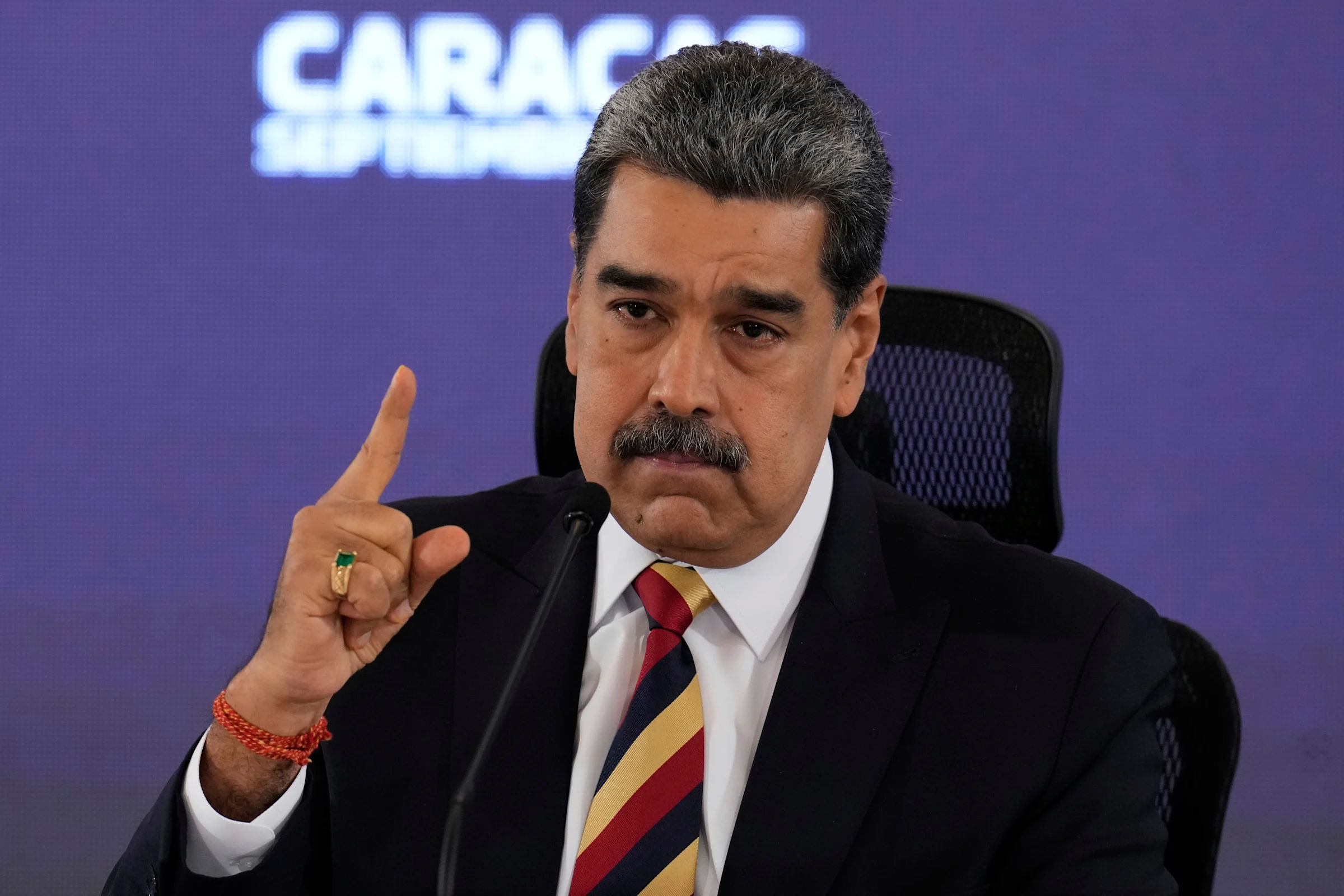
US forces kidnapped Venezuelan President Nicolás Maduro on January 3. (AP)
The kidnapping of a sitting head of state marks a grave escalation in US-Venezuela relations. By seizing Venezuela’s constitutional president, Washington signaled both its disregard for international law and its confidence that it would face little immediate consequence.
The response within the US political establishment to the attack on Venezuela has been striking. Without the slightest cognitive dissonance over President Maduro’s violent abduction, Democrats call for “restoring democracy” – but not for returning Venezuela’s lawful president.
So why didn’t the imperialists simply assassinate him? From their perspective, it would have been cleaner and more cost-efficient. It would have been the DOGE thing to do: launch a drone in one of those celebrated “surgical” strikes.
Targeted killings are as much a part of US policy now as there were in the past. From Obama’s drone strikes on US citizens in 2011 to Trump’s killing of Iranian General Qasem Soleimani, lethal force has been used when deemed expedient. And only last June, the second Trump administration and its Zionist partner in crime droned eleven Iranian nuclear scientists.
The US posted a $50-million bounty on Maduro, yet they took him very much alive along with his wife, First Combatant (the Venezuelan equivalent of the First Lady) Cilia Flores.
The reason Maduro’s life was spared tells us volumes about the resilience of the Bolivarian Revolution, the strength of Maduro even in captivity, and the inability of the empire to subjugate Venezuela.
Killing Nicolás Maduro Moros appears to have been a step too far, even for Washington’s hawks. Perhaps he was also seen as more valuable to the empire as a hostage than as a martyr.
But the images of a handcuffed Maduro flashing a victory sign – and declaring in a New York courtroom, “I was captured… I am the president of my country” – were not those of a defeated leader.
Rather than collapsing, the Bolivarian Revolution survived the decapitation. With a seamless continuation of leadership under acting President Delcy Rodríguez, even some figures in the opposition have rallied around the national leadership, heeding the nationalist call of a populace mobilized in the streets in support of their president.
This has pushed the US to negotiate rather than outright conquer, notwithstanding that the playing field remains decisively tilted in Washington’s favor. Regardless, Venezuelan authorities have demanded and received the US’s respect. Indeed, after declaring Venezuela an illegitimate narco-state, Trump has flipped, recognized the Chavista government, and invited its acting executive to Washington.
NBC News gave Delcy Rodríguez a respectful interview. After affirming state ownership of Venezuela’s mineral resources and Maduro as the lawful president, she pointed out that the so-called political prisoners in Venezuelan prisons were there because they had committed acts of criminal violence.
Before a national US television audience she explained that free and fair elections require being “free of sanctions and…not undermined by international bullying and harassment by the international press” (emphasis added).
Notably, the interviewer cited US Energy Secretary Chris Wright’s admission made during his high-level visit to Venezuela. The US official brushed aside demands for short-term elections, instead arguing that they could be held by the end of 2027. In contrast, Rodríguez stressed that Venezuela’s electoral calendar is set by the country’s Constitution.
As for opposition politician María Corina Machado, the darling of the US press corps, Rodríguez told the interviewer that Machado would have to answer for her various treasonous activities if she came back to Venezuela.
Contrary to the corporate press’s media myth, fostered at a reception in Manhattan, that Machado is insanely popular and poised to lead “A Trillion-Dollar Opportunity: The Global Upside of a Democratic Venezuela,” the US government apparently understood the reality on the ground. “She doesn’t have the support within, or the respect within, the country,” was the honest evaluation, not of some Chavista partisan, but of President Trump himself.
Yader Lanuza documents how the US provided millions to manufacture an effective astroturf opposition to the Chavistas. It is far from the first time that Washington has squandered money in this way – we only have to look back at its failed efforts to promote the “presidency” of Juan Guaidó. Its latest efforts have again had no decisive result, leaving Machado in limbo and pragmatic engagement with the Chavista leadership as the only practical option.
Any doubts that there is daylight between captured President Maduro and acting President Rodríguez can be dispelled by listening to the now incarcerated Maduro’s New Year’s Day interview with international leftist intellectual Ignacio Ramonet.
Maduro said it was time to “start talking seriously” with the US – especially regarding oil investment – marking a continuation of his prior conditional openness to diplomatic engagement. He reiterated that Venezuela was ready to discuss agreements on combating drug trafficking and to consider US oil investment, allowing companies like Chevron to operate.
That was just two days before the abduction. Subsequently, Delcy Rodríguez met with the US energy secretary and the head of the Southern Command to discuss oil investments and combating drug trafficking, respectively.
Venezuelan analysts have framed the current moment as one of constrained choice. “What is at stake is the survival of the state and the republic, which if lost, would render the discussion of any other topic banal,” according to Sergio Rodríguez Gelfenstein. The former government official, who was close to Hugo Chávez, supports Delcy Rodríguez’s discussions with Washington – acknowledging that she has “a missile to her head.”
“The search for a negotiation in the case of the January 3 kidnapping is not understood, therefore, as a surrender, but as an act of political maturity in a context of unprecedented blackmail,” according to Italian journalist and former Red Brigades militant Geraldina Colotti.
The Amnesty Law, a longstanding Chavista initiative, is being debated in the National Assembly to maintain social peace, according to the president of the assembly and brother of the acting president, Jorge Rodríguez, in an interview with the US-based NewsMax outlet.
As Jorge Rodríguez commented, foregoing oil revenues by keeping oil in the ground does not benefit the people’s well-being and development. In that context, the Hydrocarbon Law has been reformed to attract vital foreign investment.
The Venezuelan outlet Mision Verdad elaborates: “The 2026 reform ratifies and, in some aspects, deepens essential elements of the previous legislation…[I]t creates the legal basis for a complete strategic adaptation of the Venezuelan hydrocarbon industry, considering elements of the present context.”
As Karl Marx presciently observed about the present context, people “make their own history, but they do not make it as they please; they do not make it under self-selected circumstances.” The present US-Venezuelan détente is making history. So far – in Hugo Chávez’s words, por ahora – it does not resemble the humanitarian catastrophes imposed by the empire on Haiti, Libya, Iraq, Syria, or Afghanistan.
But make no mistake: the ultimate goal of the empire remains regime change. And there is no clearer insight into the empire’s core barbarity than Secretary of State Marco Rubio’s speech at the Munich conference with his praising of the capture of a “narcoterrorist dictator” and his invocation of Columbus as the inspiration “to build a new Western century.”
Washington’s kidnapping of Maduro was intended to demonstrate the empire’s dominance. But it also exposed its limits: the durability of the Bolivarian Revolution and the reality that even great powers must sometimes negotiate with governments they detest. The outcome remains uncertain.
With minor edits by Venezuelanalysis.
The views expressed in this article are the author’s own and do not necessarily reflect those of the Venezuelanalysis editorial staff.