South Korea plans $13.6B strategic investment fund

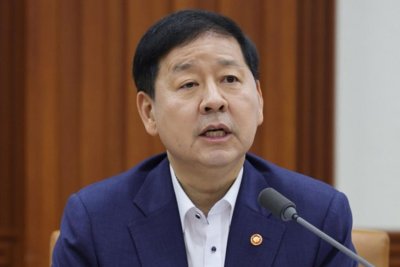
South Korean Finance Minister Koo Yun-cheol, who serves concurrently as the deputy prime minister for economic affairs, attends a task force meeting of economy-related ministers over price controls related to people’s livelihoods at the government complex in Seoul, South Korea, 31 July 2026. Photo by YONHAP / EPA
July 31 (Asia Today) — South Korea will launch a strategic investment fund worth more than 20 trillion won, or about $13.6 billion, next year to provide long-term capital to artificial intelligence, semiconductor and other industries considered vital to national security and economic growth.
The government said Friday that it would establish a separate strategic investment account within the Korea Investment Corporation rather than create an independent sovereign wealth fund.
Deputy Prime Minister and Finance and Economy Minister Koo Yun-cheol announced the plan during an emergency economic meeting and a meeting of economic ministers at the Government Complex Seoul.
The new account will use KIC’s international investment network and asset-management expertise while expanding the corporation’s mandate beyond its traditional role of investing public foreign-exchange assets overseas.
The government plans to submit a revision to the Korea Investment Corporation Act to the National Assembly in August and complete the legislation before the end of the year.
The fund is expected to begin operating in 2027.
Government shares to provide initial capital
The fund will begin with more than 20 trillion won in assets.
The government plans to contribute more than 16 trillion won, or about $10.9 billion, in shares it holds in public financial institutions, including the Korea Development Bank and the Export-Import Bank of Korea.
It will also contribute about 4 trillion won, or $2.7 billion, in private-company shares received as payment for inheritance and gift taxes.
The government is considering accepting private donations intended to increase national wealth as another source of capital.
The fund will target artificial intelligence, semiconductors and other advanced strategic industries as well as data centers, critical infrastructure and overseas companies important to South Korea’s supply chains.
Unlike conventional policy financing, which often relies on loans, guarantees or subsidized credit, the fund will primarily make direct equity investments.
The government said the approach would allow it to remain invested in promising companies for longer periods and share in their growth.
The fund will also be able to exercise shareholder voting rights to promote corporate value, protect critical technologies and help companies defend themselves against hostile takeovers.
Fund to serve as an anchor investor
The government wants the strategic account to serve as an anchor investor capable of attracting global institutional investors to South Korean projects.
By committing public capital first, the fund could reduce perceived risk and encourage foreign sovereign funds, pension funds and private investors to participate.
The government also plans to connect the new account with existing policy funds.
Venture and growth funds usually must sell their holdings and return capital to investors within four to eight years.
Under a proposed relay-investment system, the strategic fund could purchase stakes in promising companies when those shorter-term policy funds reach maturity or begin liquidation.
The arrangement is intended to prevent companies with long development cycles from losing financial support before they become commercially established.
The model could be particularly important for semiconductor fabrication, artificial intelligence infrastructure, biotechnology and other sectors requiring large investments over many years.
Separate governance structure planned
The government said it would create governance safeguards intended to protect the fund’s investment independence.
KIC’s board structure would be divided between its existing foreign-reserve investment account and the new strategic account.
A dedicated investment committee and advisory committee would be established for strategic investments.
An operating committee would set broad policy and investment priorities but would not intervene in individual investment decisions, the government said.
The separation is intended to prevent short-term political considerations from determining which companies receive investments.
The plan also represents a change from an earlier proposal to establish a completely separate sovereign wealth fund.
The government instead decided to expand KIC’s mandate and use its existing personnel, investment systems and global relationships.
Long-term capital for industrial strategy
South Korea has introduced several public financing programs to support advanced industries, including funds targeting chips, artificial intelligence, batteries and biotechnology.
The new strategic account differs because it is designed to hold equity investments for extended periods rather than provide loans or exit investments according to fixed fund schedules.
The government expects the fund to support major national projects involving semiconductors, physical artificial intelligence and data centers while helping South Korean companies secure critical overseas supply chains.
It also hopes investment returns will gradually expand the fund’s assets and reduce its dependence on additional government contributions.
The success of the plan will depend on whether the government can maintain commercial investment discipline while pursuing broader industrial and national-security objectives.
It will also require clear rules governing voting rights, corporate intervention, investment losses and potential conflicts between financial returns and government policy.
— Reported by Asia Today; translated by UPI
© Asia Today. Unauthorized reproduction or redistribution prohibited.
Original Korean report: https://www.asiatoday.co.kr/kn/view.php?key=20260731010011712