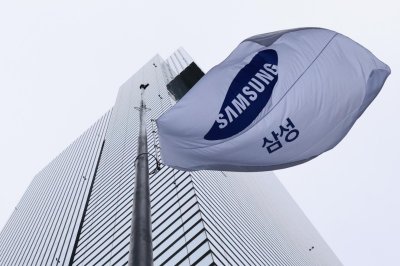

A flag of Samsung Electronics Co. flies outside its headquarters in Seoul, South Korea, 14 October 2025. Samsung announced a consolidated operating profit of approximately 12.1 trillion Korean Won (8.5 billion US Dollars) for the quarter ending in September 2025. File. Photo by YONHAP / EPA
Jan. 9 (Asia Today) — South Korea’s stock market rally is drawing a surge of debt-fueled trading into heavyweight shares such as Samsung Electronics and SK Hynix, both of which have set record highs, as regulators and brokerages warn about overheating risk tied to rising margin balances.
The Korea Financial Investment Association said the nation’s total margin loan balance stood at 28.1903 trillion won (about $19.4 billion) on Thursday, a level the industry often associates with late-stage bull market behavior as leverage expands alongside index gains.
Borrowed funds have been concentrating in top market-cap stocks. Samsung Electronics’ margin loan balance stood at 1.8013 trillion won (about $1.24 billion) on Wednesday, the highest since the data series began, according to the report. During a sharp rally in June 2021, the company’s margin balance was around 700 billion won (about $483 million), it said.
SK Hynix has also seen a steady rise in margin borrowing. Its margin loan balance was 1.1504 trillion won (about $793 million), up from 884.1 billion won (about $610 million) at the end of last year, the report said, adding that the balance has increased for four straight sessions amid the record-high move.
Market watchers said a faster pace of gains can raise the chances of market alert actions. Under Korea Exchange monitoring rules, a stock can be designated an investment warning issue when sharp price rises and unusual trading patterns occur over a defined period, the report said.
The report cited SK Hynix’s experience on Dec. 11 last year, when its shares saw volatility after being designated an investment warning issue. The stock closed at 565,000 won (about $390), down about 3.7% from the prior close of 586,000 won (about $404), it said.
Once a stock is designated an investment warning issue, new margin buying is restricted, the report said, adding that authorities can escalate measures if rapid gains persist, including a trading halt in more severe cases.
The Korea Exchange recently revised its rules to limit the impact of “extremely long-term upward trends” in large-cap stocks, but the report said big semiconductor shares can still face market alert measures if short-term surges or abnormal trading emerge.
Margin trading is drawing attention because it can amplify selling pressure during corrections as forced liquidation accelerates when prices fall, the report said, adding that elevated margin balances in large-cap stocks could heighten future volatility.
A market official cited in the report said improved semiconductor conditions and earnings expectations may support share prices for now, but the pace of leveraged inflows and any regulatory signals will be key variables going forward.
— Reported by Asia Today; translated by UPI
© Asia Today. Unauthorized reproduction or redistribution prohibited.