TOP NEWS

From breaking news to significant developments in politics, business, technology, entertainment, and more, we deliver the stories that shape our global landscape.

Bangladesh beat Pakistan by 78 runs to clinch historic Test series win | Cricket News

Taijul Islam’s six-for helps Bangladesh bowl out the visitors for 328 in their first home series win over Pakistan.

Bangladesh have sealed a historic home Test series win over Pakistan after handing the visitors a 78-run defeat in their second Test in Sylhet.

Spinner Taijul Islam took six wickets to lead the spirited home side’s series win on the fifth day of the match on Wednesday.

Pakistan, who started the day on 316-7 while chasing a record 437, were bowled out for 328 in the first session after Mohammad Rizwan hit a valiant 94.

It was Bangladesh’s first Test series win at home against Pakistan and their second successive sweep after their 2-0 triumph on Pakistani soil in 2024.

Wicketkeeper Rizwan kept Pakistan in the hunt for an unlikely win with a 166-ball stay after the visitors had slumped to 162-5 on day four.

Rizwan put on an eighth-wicket partnership of 54 with overnight partner Sajid Khan, who made 28.

Taijul broke through to dismiss Sajid for his 18th Test five-wicket haul, and Shoriful Islam had Rizwan caught in the next over to end Pakistan’s resistance.

Taijul took the final wicket of Khurram Shahzad to return figures of 6-120 and trigger Bangladesh celebrations.

The left-arm spinner also took 3-67 during Pakistan’s 232 in the first innings.

Bangladesh wicketkeeper Litton Das scored 126 in their 278 in the first innings.

Veteran batsman Mushfiqur Rahim scored 137 in the second to guide Bangladesh to 390, with contributions from Mahmudul Hasan Joy (52) and Litton (69).

Bangladesh, led by Najmul Hossain Shanto, won the opening Test by 104 runs.

Source link

Fear grips eastern DR Congo amid deadly Ebola outbreak | Ebola

NewsFeed

“I am afraid of dying.” From Bukavu to Kinshasa, concern is spreading among residents and street vendors as Ebola cases rise. In cities hundreds of miles apart, people are wearing face masks and calling for stronger protections from the latest outbreak in DR Congo.

Source link

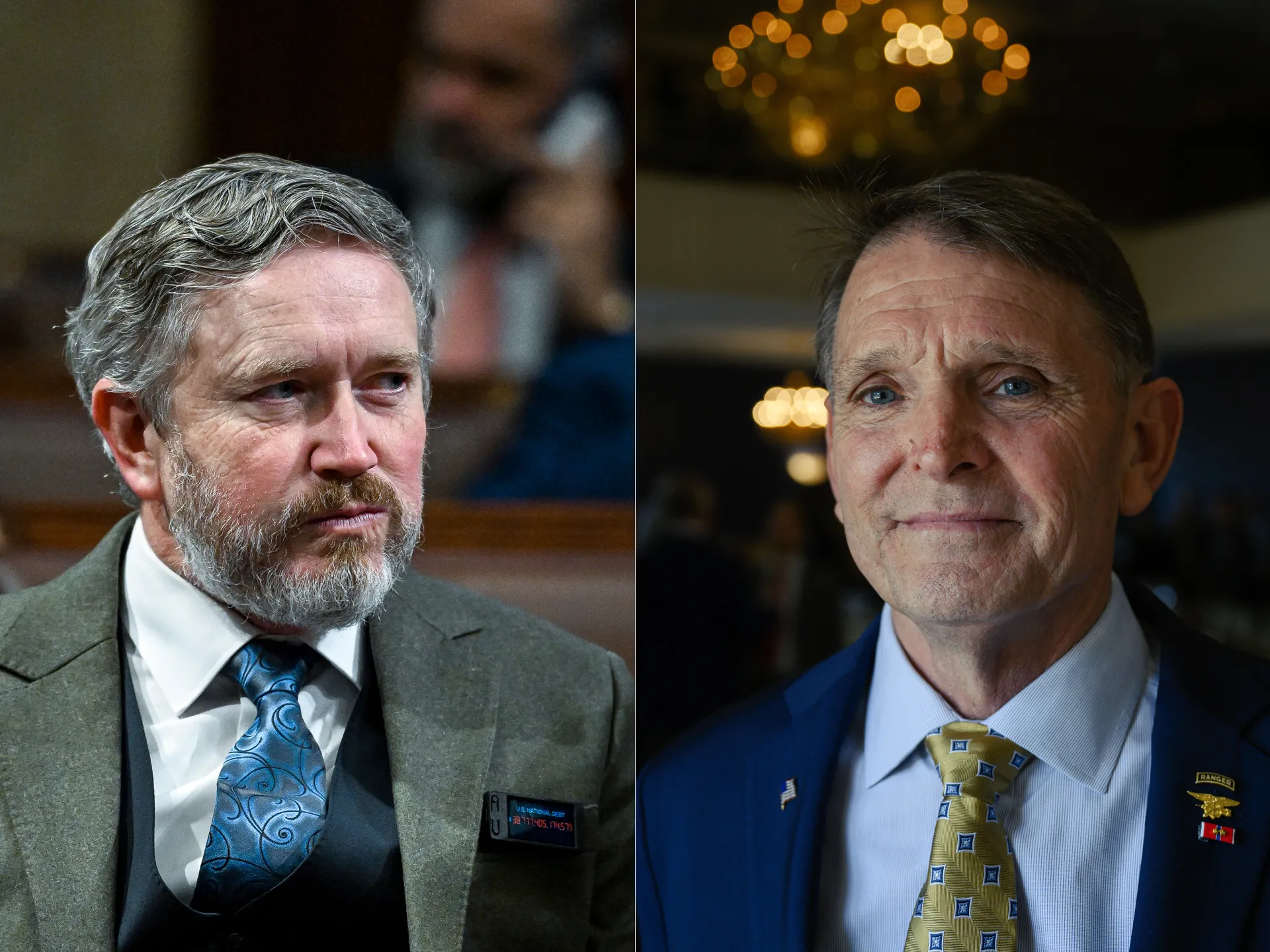
Republican Thomas Massie who stood up to Trump defeated in Kentucky primary | US Midterm Elections 2026 News

With an estimated 72 percent of the vote counted, Ed Gallrein led with 54.4 percent to Massie’s 45.6 percent.

US President Donald Trump has tightened his grip on the Republican Party as Kentucky voters ousted one of the few conservative lawmakers willing to openly challenge his authority.

Congressman Thomas Massie‘s defeat, which was predicted by US news networks, including NBC and CNN, about two hours after polls closed on Tuesday, marks another victory in Trump’s campaign to punish dissent within Republican ranks.

Recommended Stories

list of 4 itemsend of list

With an estimated 72 percent of the vote counted, former Navy SEAL Ed Gallrein led with 54.4 percent of the vote to Massie’s 45.6 percent.

The Associated Press news agency called the race for Gallrein, whose campaign was backed by Trump’s endorsement as well as millions of dollars from pro-Trump and pro-Israel political lobby groups.

The contest, widely described as the most expensive House of Representatives primary in US history, saw more than $32m spent on advertising and offered the latest evidence of Trump’s hold over Republicans. It followed the primary defeat on Saturday of another Trump critic, Senator Bill Cassidy of Louisiana, as well as losses for dissenting Republican state lawmakers in Indiana earlier this month.

“Massie got Trumped. Donald Trump is the sun and the moon and the stars in the Republican Party in Kentucky,” Kentucky-based Republican strategist TJ Litafik said.

A test of Trump’s influence

The Kentucky vote was closely watched as a test of whether Trump’s hold on Republican voters remained firm despite concerns over his war on Iran, growing inflation and declining personal approval ratings, and whether there was still space in the party for lawmakers willing to break with him.

Massie had angered Trump by opposing US military action in Iran and Venezuela, criticising aid to Israel, resisting parts of the president’s agenda, and backing efforts to release files related to the late sex offender Jeffrey Epstein.

The president spent months attacking Massie, a libertarian-leaning seven-term congressman, calling him a “moron”, a “nut job” and a “major sleazebag”.

“Dealing with him is just horrible. I don’t think he’s a Republican… He’s not a libertarian,” Trump told reporters after polls opened on Tuesday.

“Sometimes they say he’s really a Dumb-ocrat. He votes against us all the time,” Trump said, using a nickname he frequently deploys against Democrats.

‘I’m not running against President Trump’

In the northern Kentucky city of Covington, Rob Barkley, a former Trump supporter who backed Massie, said the president’s attacks had pushed him further towards the congressman.

“He’s on the Republican side, so he has a conservative mindset,” Barkley told US media after casting his ballot.

“But he’s not as far-right leaning as Trump’s politics,” he said.

Massie, who voted with Trump roughly 90 percent of the time during the president’s second term, framed the contest as a broader test of independence within the Republican Party.

“I’m not running against President Trump. Most of the people voting for me support President Trump like I do,” Massie said.

Secretary of Defense Pete Hegseth also made a rare appearance in Massie’s district on Monday to campaign for Gallrein.

Federal law restricts government employees from engaging in partisan political activity while on duty, but Hegseth’s office said he attended in a personal capacity and that no taxpayer money was used.

Trump later revealed that Hegseth’s campaign appearance came just hours before the US had expected to launch a new military assault on Iran, although the operation was later postponed.

Several US states, including Georgia and Pennsylvania, held primaries on Tuesday in advance of November’s midterm elections, but the Kentucky race emerged as one of the night’s most closely-watched contests.

Massie, first elected in 2012, had long been one of Trump’s most persistent Republican critics.

Source link

South Korean defense firms face growing pressure from U.S. cyber rules

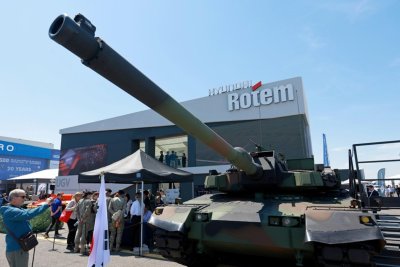
A visitor inspects a K2 Black Panther, a South Korean fourth-generation main battle tank, during the final day of the Black Sea Defense and Aerospace Exhibition 2026 in Bucharest, Romania, 15 May 2026. Photo by ROBERT GHEMENT / EPA

May 19 (Asia Today) — South Korea’s fast-growing defense industry is confronting a major new obstacle in the U.S. market as the Pentagon fully implements strict cybersecurity certification requirements across its global supply chain.

The U.S. Department of Defense has begun enforcing the final version of the Cybersecurity Maturity Model Certification, or CMMC, program, requiring all companies participating in U.S. defense contracts to meet specific cybersecurity standards.

Industry officials warn that Korean defense firms unable to obtain certification could be excluded not only from exports to the United States but also from ship maintenance, repair and overhaul projects and future joint weapons development programs.

The certification system applies not only to primary contractors but also to subcontractors supplying parts and components.

Even companies with advanced technology and competitive pricing can be blocked from bidding if they fail to meet required cybersecurity levels.

For many South Korean defense firms, the most critical threshold is CMMC Level 2, which is required for handling Controlled Unclassified Information, or CUI, tied to U.S. military programs.

The requirement is considered especially important for South Korea’s ambitions to participate in U.S. Navy ship maintenance and repair projects, as well as broader bilateral defense cooperation initiatives.

Defense analysts say the new rules are becoming a de facto trade barrier across Western defense markets.

“Losing access to the U.S. market effectively means being pushed out of the global defense supply chain,” one industry expert said.

Defense Acquisition Program Administration has launched information sessions and consulting support programs in response to growing industry concerns.

The agency is working with regional defense innovation clusters, the Korea Defense Industry Association and the Defense Agency for Technology and Quality to help companies prepare for certification.

But smaller suppliers say the burden remains overwhelming.

Industry estimates suggest that achieving Level 2 certification can cost companies from hundreds of thousands to several million dollars due to infrastructure upgrades, consulting fees and final audits. Preparation alone can take more than a year.

Large defense contractors have already formed dedicated task forces, but many second- and third-tier suppliers lack both funding and cybersecurity specialists.

Because the CMMC system requires certification across the entire supply chain, failure by even a single subcontractor could jeopardize broader export opportunities involving larger Korean defense firms.

Additional complications stem from differences between U.S. and South Korean encryption standards.

One key CMMC requirement involves use of cryptographic modules certified under U.S. National Institute of Standards and Technology guidelines known as FIPS standards.

Many South Korean defense companies, however, rely on domestic encryption systems validated under the country’s K-CMVP framework overseen by intelligence and defense authorities.

Industry experts are calling for government-level negotiations between Seoul and Washington to seek mutual recognition or equivalency between Korean and U.S. encryption standards.

Some officials argue such talks could be linked to ongoing negotiations over a Reciprocal Defense Procurement Agreement between the two allies.

Concerns are also growing over South Korea’s lack of domestically accredited third-party CMMC assessment organizations, forcing companies to rely on U.S.-based auditors and raising concerns about defense technology exposure.

Analysts say South Korea’s defense industry must now treat cybersecurity as strategically important as weapons performance itself if it hopes to become a top-tier global arms exporter.

— Reported by Asia Today; translated by UPI

© Asia Today. Unauthorized reproduction or redistribution prohibited.

Original Korean report: https://www.asiatoday.co.kr/kn/view.php?key=20260519010005245

Source link

US President Trump, family granted immunity from pending tax audits | Donald Trump News

Democratic lawmakers blast move, which follows the establishment of a controversial ‘Anti-Weaponization Fund’.

United States President Donald Trump, his family, and his businesses have been granted immunity from any ongoing audits into their tax affairs, according to a directive by the Department of Justice.

The move on Tuesday came as an addendum to Trump’s agreement a day earlier to settle a $10bn lawsuit against the Internal Revenue Service (IRS) over the leak of his tax information to media outlets between 2018 and 2020.

Recommended Stories

list of 4 itemsend of list

In a one-page document, signed by acting Attorney General Todd Blanche, the Justice Department said authorities would be “FOREVER BARRED and PRECLUDED” from “prosecuting or pursuing” tax claims against Trump, members of his family, and his businesses.

The document, which was posted on the Justice Department’s website without any official announcement or press release, stipulates that the waiver applies to inquiries that are “currently pending or that could be pending,” including any related to tax returns filed by Trump before Monday’s settlement.

Democratic lawmakers immediately blasted the move.

Senator Adam Schiff of California accused the Trump administration of engaging in corruption and “self-dealing”.

“The tax-dodging President gets himself and his whole family a tax break, thanks to Todd Blanche,” Schiff said in a statement on social media.

Richard Painter, the chief White House ethics lawyer under former President George W Bush, said that exempting Trump from any tax obligations would be unconstitutional.

“If the president or his family owe the IRS money, this is a violation of the domestic emoluments clause of the US Constitution, which specifically says that the president cannot receive any profits or advantages from the US government other than his salary appropriated by Congress,” Painter told Al Jazeera.

The Justice Department and the Trump Organisation did not immediately respond to requests for comment.

The Justice Department’s directive marks a dramatic expansion in Trump’s settlement, which established a so-called “Anti-Weaponization Fund” to compensate people who claim to have been victims of politically-motivated “lawfare”.

Critics have likened the initiative to a “slush fund”, warning that it is likely to be used to reward Trump’s allies.

Decisions on distributing money from the $1.776bn fund will be made by a five-member commission, four of whom will be directly appointed by Blanche, a Trump appointee who formerly acted as his personal lawyer.

In heated exchanges with Democratic senators on Tuesday, Blanche denied that Trump had directed him to establish the fund or that it would be used in a partisan manner.

“Anybody in this country is eligible to apply if they believe they were a victim of weaponisation,” Blanche said.

Source link

Most young South Koreans distrust election polls, survey finds

1 of 2 | Employees of the National Election Commission take part in a campaign in Ilsan, just outside of Seoul, South Korea, 26 April 2026, to encourage voter participation in the June 3 general election. Photo by YONHAP / EPA

May 19 (Asia Today) — More than 60% of young South Koreans and college students do not trust elections or political opinion polls, according to a survey released ahead of the June 3 local elections.

The Korean Law Consumers Federation, a legal advocacy group, released the results Monday after surveying 1,201 young people and college students from 119 universities nationwide. The respondents had an average age of 23.4.

The survey found that 60.37% of respondents said they do not trust elections or political opinion polls, while 38.80% said they do.

Despite the distrust, 59.95% said they would definitely vote in the local elections, and 35.89% said they would try to vote.

Asked whether one vote can have an important effect on election results, 75.27% agreed, while 24.56% disagreed.

On early voting, 53.54% said there is a possibility of election fraud, while 40.30% said such claims are completely false.

The survey also asked about possible constitutional revisions. A total of 62.28% supported including language related to the May 18 Gwangju Democratization Movement in the Constitution, while 35.97% opposed the idea.

However, 91.01% opposed removing the word “freedom” from the Constitution.

The survey included 53 questions and was conducted with the help of student volunteers. It had a margin of error of plus or minus 2.83 percentage points at a 95% confidence level.

— Reported by Asia Today; translated by UPI

© Asia Today. Unauthorized reproduction or redistribution prohibited.

Original Korean report: https://www.asiatoday.co.kr/kn/view.php?key=20260519010005434

Source link

Vance speaks about Iran conflict, ‘anti-weaponization’ fund in press briefing

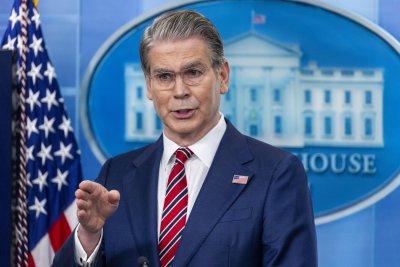
May 19 (UPI) — Vice President JD Vance took questions from reporters Tuesday at a White House press briefing

, reiterating President Donald Trump‘s repeated assertion that the conflict in Iran is meant to keep the country from developing a nuclear weapon but that it is “not a forever war.”

“We want to keep the number of countries that have nuclear weapons small, and that’s why Iran cannot have a nuclear weapon,” he said during the briefing, “on top of all the other things that we might be worried about, that they themselves could use it, that they could use it in leverage and economic control or economic negotiations.”

Vance was the second person, following U.S. Secretary of State Marco Rubio, to stand in for White House press secretary Karoline Leavitt, who is on maternity leave.

Iran was a dominant topic of the briefing. Vance said the United States has made progress in negotiations despite Iran’s position being “fractured,” but that U.S. forces are ready to attack again if necessary.

“We’re going to take care of business and come home,” he said.

Rubio and Vance are both considered presidential candidate contenders for Republicans in 2028, but the vice president demurred at a question

suggesting the press briefing role could be a sort of audition for candidacy.

“I’m a vice president,” he said. “I really like my job, and I’m going to try to do as good a job as I can.”

Vance also dealt with questions about the Justice Department’s new $1.776 billion “anti-weaponization fund,” which was created to compensate those who say they were unfairly targeted by former presidential administrations.

Some officials have criticized the fund as a way for the government to pay Trump allies who say they were targeted during the Biden administration. Earlier Tuesday, acting Attorney General Todd Blanche said he could not rule out payments to convicted Jan. 6 rioters.

“We’re not trying to give money to anybody who attacked apolice officer,” Vance said at the briefing. “We’re trying to compensate people where the book was thrown at them, they were mistreated by the legal system.”

Source link

Putin meets Xi: Why Russia and China need each other | International Trade News

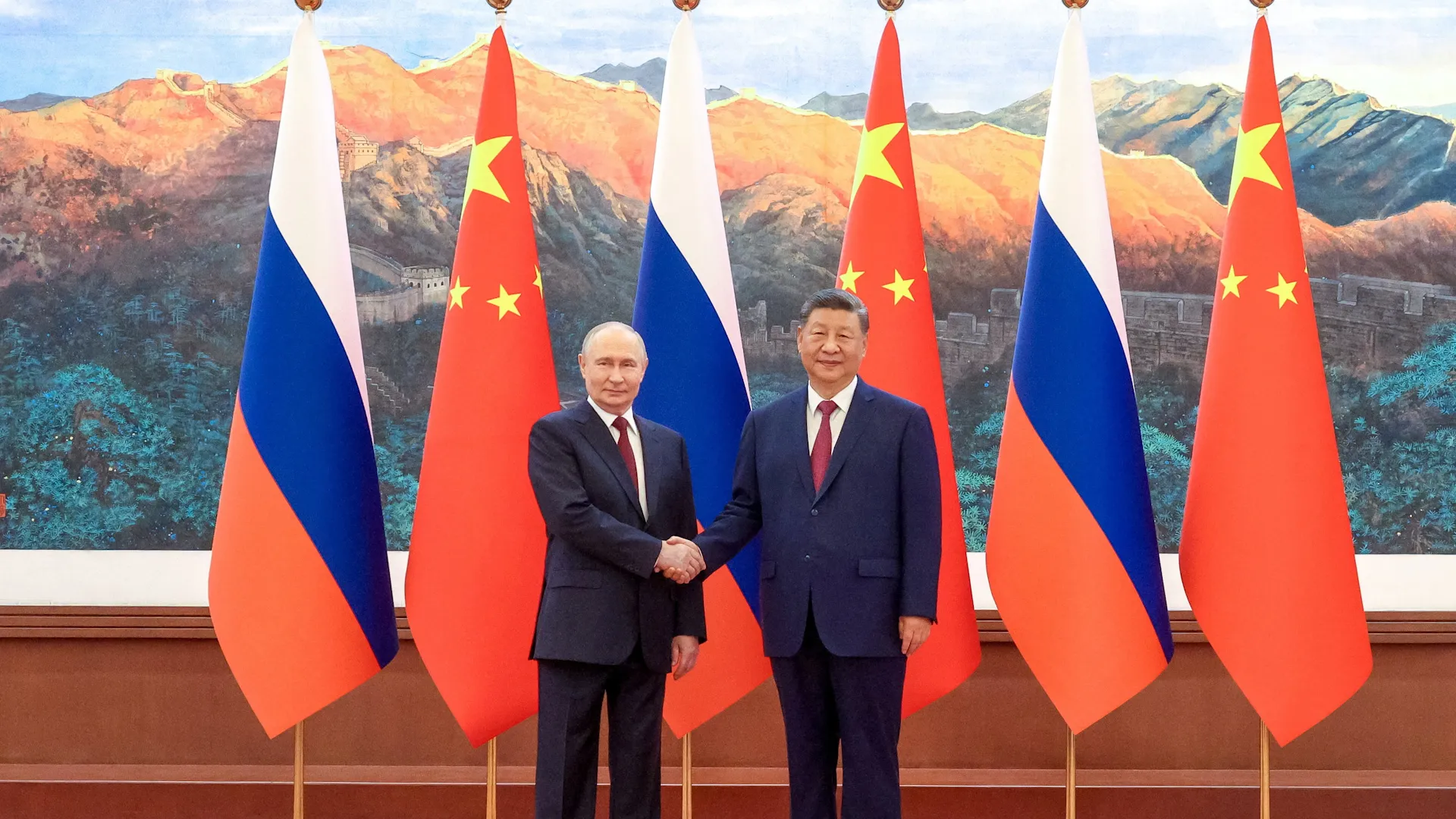
Russian President Vladimir Putin arrived in China on Tuesday evening for a two-day visit centred on talks with Chinese President Xi Jinping, as Moscow and Beijing draw closer amid war, sanctions and an increasingly fractured global order.

Putin’s visit is the second face-to-face meeting he has held with Xi in less than a year and coincides with the 25th anniversary of the 2001 Treaty of Good-Neighborliness and Friendly Cooperation, the agreement that formalised ties between Russia and China following decades of ideological rivalry and mutual suspicion.

Recommended Stories

list of 4 itemsend of list

The visit comes just days after United States President Donald Trump left Beijing following his own two-day visit to the Chinese capital for meetings with Xi.

Both Moscow and Beijing are navigating tricky relations with Washington, with analysts saying the unpredictability of Trump’s foreign policy has had the effect of pushing Russia and China even closer together.

Their deepening partnership also comes against the backdrop of the war in Ukraine, mounting tensions around Iran, and disruption to shipping through the Strait of Hormuz – a crisis that has rattled global energy markets and renewed Beijing’s concerns over the security of its oil and gas supplies.

With one of the world’s most strategically vital waterways under threat, China has increasingly turned towards Russia as a reliable overland energy supplier.

Analysts say Xi’s decision to host Trump and Putin within the space of a week is no coincidence, reflecting Beijing’s attempt to cast itself as a trusted actor in an increasingly fragmented and volatile world order.

How have China-Russia relations changed over the decades?

China and Russia have long occupied a complicated place in each other’s histories. Once bound together through communist ideology and shared opposition to Western capitalism, the Soviet Union and Maoist China later became bitter rivals, with tensions along their 4,300km (2,670-mile) border bringing the two countries close to conflict during the Cold War.

However, that border has since transformed from a frontier of insecurity into one of strategic cooperation and trade.

Neither Xi nor Putin is a frequent international traveller. Putin is the subject of an International Criminal Court (ICC) arrest warrant over the war in Ukraine, while Xi rarely leaves China other than for carefully choreographed state visits. But both leaders have invested heavily in maintaining personal ties with each other.

The two have repeatedly called each other “friends”, and their relationship has deepened, particularly since Russia’s invasion of Ukraine in 2022, which pushed Moscow further into international isolation and forced the Kremlin to look southeastwards for trade amid Western sanctions.

“Russia and China look confidently towards the future,” Putin said in remarks carried by Russian state media ahead of the visit.

He said the two countries were “actively developing cooperation in politics, economics, defence, expanding cultural exchanges, and fostering interpersonal interaction”.

“In essence, jointly doing everything to deepen bilateral cooperation and advance global development for the wellbeing of both nations,” Putin added.

Why Russia needs China

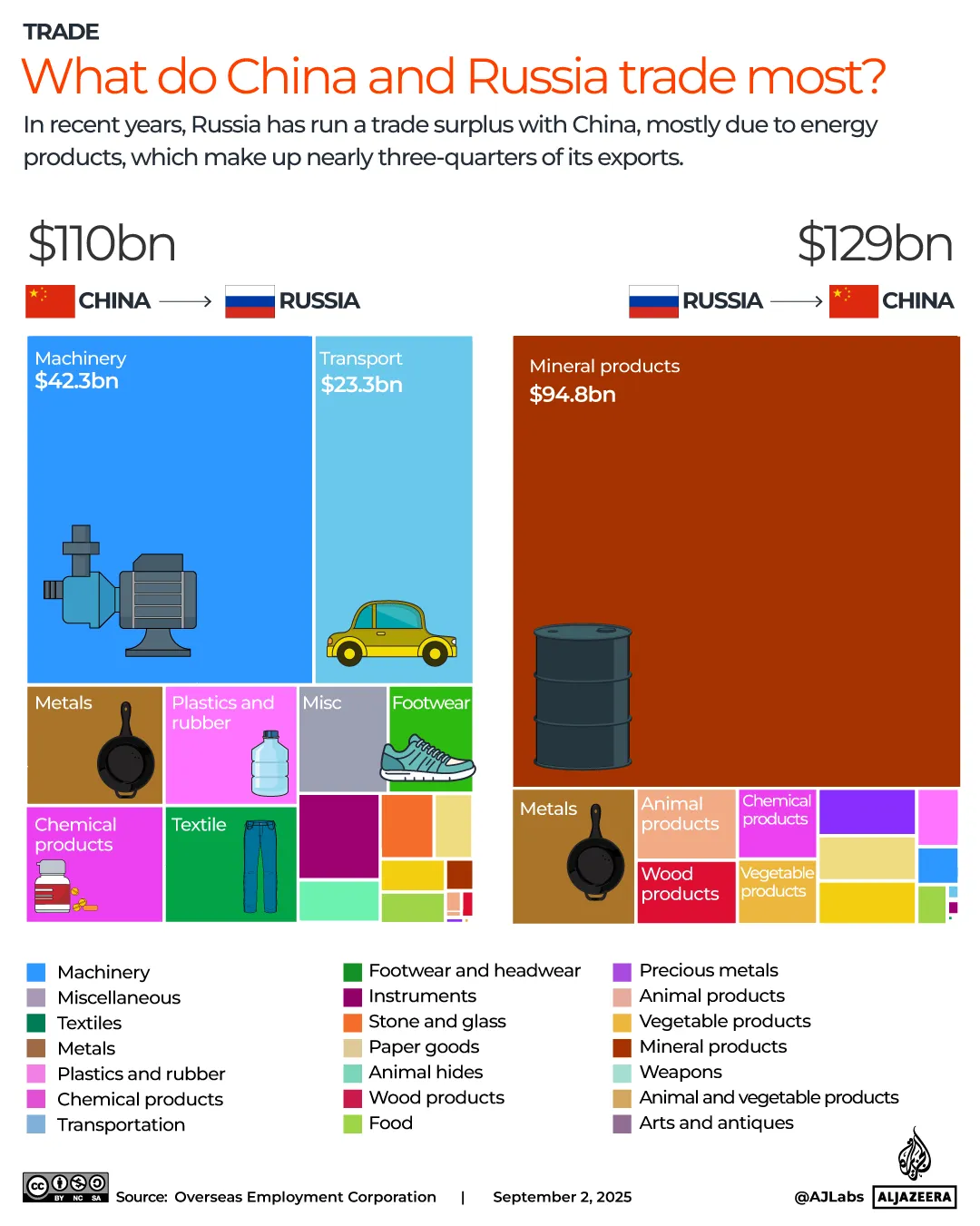
China has become an economic lifeline for Russia as the country’s economy has shifted to a wartime footing, with two-way trade between the countries more than doubling between 2020 and 2024, when it reached $237bn for the year.

But the relationship is also uneven. While China is Russia’s largest trading partner, Russia accounts for only about four percent of China’s total international trade. China’s economy is also vastly larger, and Beijing holds considerably more leverage in negotiations between the two sides.

Since the invasion of Ukraine, Moscow has become increasingly reliant on Chinese technology and manufacturing. A recent Bloomberg report found Russia was sourcing more than 90 percent of its sanctioned technology imports from China, including components with military and dual-use applications vital to drone production and other defence industries.

China has also emerged as a crucial buyer of Russian oil and other energy products at a time when European markets have largely closed to Moscow in response to the Russia-Ukraine war. With Western sanctions restricting Russia’s options, the Kremlin has few viable alternatives to China’s scale of demand.

Analysts say the imbalance means Beijing is often able to negotiate from a position of strength, securing access to Russian oil and gas at discounted prices while expanding its influence over Moscow’s economic future.

INTERACTIVE-What do China and Russia trade most?-sep3-2025 copy 4-1756879426
(Al Jazeera)

Why China still needs Russia

While the relationship is uneven, it is not one-sided. Russia provides something increasingly valuable in a turbulent world: secure access to vast energy resources beyond vulnerable maritime trade routes.

The war surrounding Iran and disruptions in the Strait of Hormuz have heightened Beijing’s concerns over energy security, given China’s heavy dependence on imported oil and gas passing through contested shipping lanes.

That has renewed attention on the proposed Power of Siberia 2 pipeline, a long-delayed project expected to feature prominently in this week’s discussions.

If completed, the pipeline would transport 50 billion cubic metres of Russian gas annually to China via Mongolia, significantly expanding energy flows between the two countries.

But it is more than just an economic relationship. China also values Russia as a geopolitical partner. Both countries are permanent members of the United Nations Security Council and frequently align diplomatically in opposition to US-led policies.

While analysts say China has been careful not to become formally tied to Moscow through a rigid military alliance, the two countries have still gradually reinforced their partnership through increasingly regular joint military exercises, including the “Joint Sea” naval drills that began in 2012.

Last year, China and Russia launched fresh naval drills in the Sea of Japan near the Russian port of Vladivostok, with exercises focused on submarine rescue, anti-submarine warfare, air defence, missile defence and maritime combat operations. Analysts say the drills help signal strategic alignment between Beijing and Moscow without the mutual defence commitments of a formal alliance.

Experts say the strength of the partnership lies in its flexibility. While Western governments have often portrayed the relationship as fragile and driven largely by a shared opposition to the West, analysts say, it may prove more durable because it is rooted in shared economic and strategic interests rather than ideology alone.

Source link

United States imposes sanctions on Gaza flotilla activists

Some of the 20 ships taking part in an earlier Global Sumud Flotilla dock in September in the port in Barcelona. The U.S. Treasury on Tuesday imposed sanctions on four activists linked to the flotilla, which has been attempting to carry humanitarian aid to Gaza. File Photo by Quique Garcia/FlEPA

May 19 (UPI) — The U.S. Department of the Treasury on Tuesday announced that it is imposing sanctions on four activists for their alleged involvement in a flotilla seeking to carry humanitarian aid to Gaza during the Israeli blockade.

In a press release, the department said the flotilla was “pro-terror” and “operating in support of Hamas.” Those organizing the Global Sumud Flotilla say that it is a “legal, non-violent humanitarian mission.”

The Israeli military began to intercept the boats of the flotilla and detain the people aboard Monday as they were off the coast of Cyprus. More than 50 vessels are involved in the group.

Its organizers said that they were trying to deliver humanitarian aid while showing solidarity with the Palestinian population. Israel has continued bombing Gaza despite a cease-fire brokered by U.S. President Donald Trump late last year, Al Jazeera reported, and Palestinians are facing shortages in food and medical supplies.

The Treasury’s Office of Foreign Assets Control, however, said the flotilla was organized by Hamas-linked organizations.

“The pro-terror flotilla attempting to reach Gaza is a ludicrous attempt to undermine President Trump’s successful progress toward lasting peace in the area,” said Scott Bessent, secretary of the treasury. “Treasury will continue to sever Hamas’ global financial support networks, no matter where in the world they are.”

The sanctions targeted two people from the advocacy group Popular Conference for Palestinians Abroad and two from Samidoun, a Palestinian prisoners solidarity network. The Treasury said both groups are fronts for Palestinian terror organizations.

Those sanctioned are Saif Hashim Kamel Abukishek, a member of PCPA; Hisham Abdallah Sulayman Abu Mahfuz, president of the PCPA; Mohammed Khatib, European coordinator for Samidoun; and Jaldia Abubakra Aueda, a Samidoun coordinator in Spain.

The sanctions freeze the U.S. assets of those targeted and generally prohibit working with them.

Source link

Scientific report on ‘Golden Dome’ program counters Trump’s claims

WASHINGTON, May 19 (UPI) — President Donald Trump‘s move to build a national missile defense system would leave millions of Americans vulnerable to nuclear attack despite the program’s exorbitant cost, the author of a new scientific report said at a press conference Tuesday outside the U.S. Capitol.

The report simulated a “best case scenario” in which the Golden Dome system shot down 80% of incoming missiles, said Ira Helfand, the report’s main author and a co-founder of Physicians for Social Responsibility, an anti-nuclear weapons organization.

Under those circumstances, more than 300 warheads still would reach the United States, the report found, and that Russia would have a 95% chance of being able to destroy any one of 132 major population centers in which a combined 75 million Americans live.

“Let’s be clear what Golden Dome is: a vanity project of one person, Donald Trump,” said Rep. Jim McGovern, D-Mass., using Trump’s chosen moniker for the missile defense system. McGovern was one of two Massachusetts lawmakers who led the press event.

“We must suffer the Trump arch, the Trump ballroom, the Trump battleship and now Trump’s Golden Dome. Each are the egotistical fantasies of an aging man who needs psychiatric care,” McGovern said.

Soon after taking office in 2025, Trump directed the Defense Department to develop a homeland air and missile defense system. The order called for protecting the U.S. “against ballistic, hypersonic, advanced cruise missiles and other next-generation aerial attacks from peer, near-peer and rogue adversaries.”

This initiative, later named Golden Dome for America, echoes earlier missile defense efforts, such as President Ronald Reagan‘s Strategic Defense Initiative, commonly known as Star Wars. It was never fully build or deployed.

“Building an effective and reliable shield against any realistic attack by nuclear-armed ICBMs is technologically infeasible for the foreseeable future,” said Laura Grego, a physicist who specializes in nuclear security at the Union of Concerned Scientists.

“But also attempting to build one would be hugely expensive — wasting time and resources — and accelerate the nuclear arms race.”

The report was released by the Nobel Peace Prize-winning International Physicians for the Prevention of Nuclear War, Physicians for Social Responsibility and Back from the Brink, all advocates for abolishing nuclear weapons.

The press conference came after a Congressional Budget Office report released last week found that a missile defense system designed to counter a small-scale nuclear attack would cost $1.2 trillion.

A more robust system in line with Trump’s aspirations of “ending the missile threat to the American homeland,” would come with a $3.6 trillion price tag, according to a 2025 estimate by the American Enterprise Institute, a right-of-center think tank. Trump initially offered a price tag of $175 billion for the project.

“The Golden Dome is fool’s gold,” said Sen. Ed Markey, D-Mass. “It’s a gold-plated boondoggle that will enrich defense contractors and ignite a new nuclear arms race.”

Rep. Austin Scott, R-Ga., who sits on the House Armed Services Committee, told Medill News Service that he did not agree with the report’s conclusion that the Golden Dome would be too ineffective and costly to justify. On the contrary, Scott said, nuclear modernization efforts underway by U.S. rivals required a response.

“The weapons coming from China and Russia are faster and stronger,” Scott said. “And we have to be able to pick them up faster.”

Between 2014 and 2024, the estimated number of Chinese nuclear warheads doubled, from 250 to roughly 500, according to the China Power Project at the Center for Strategic and International Studies.

China, however, has maintained a no-first-use policy since it first detonated a nuclear weapon in 1964, which commits Beijing to only employ its nuclear weapons in response to a nuclear attack by another country.

When asked about claims made by Helfand and others at the press conference that the Golden Dome would spur a new global nuclear arms race, Scott disagreed again.

“It’s a defensive system,” he said, “not an offensive system.”

The planned outlays for the Golden Dome come in tandem with other Trump administration priorities that have raised eyebrows on Capitol Hill, including a $1.5 trillion defense spending package for 2027, $400 million for a new White House ballroom that will sit atop a bunker and $29 billion so far for the war in Iran.

At the same time, in its proposed budget, the White House moved to cut non-defense discretionary spending by 10%. The spending category comprises public health, scientific research and scores of other domestic programs.

At Tuesday’s press conference, Markey said the United States doesn’t have trillions of dollars to waste on a system that “is not going to protect the American people,” and he decried funding cuts to social programs that “actually do provide security for families in their own homes.”

Source link

Does Ukraine have the advantage at the moment? | Russia-Ukraine war News

Kyiv takes the war deeper into Russia with a huge attack on the Moscow region.

There appears to be a shift in the years-long conflict in Ukraine.

Last weekend, Ukrainian forces struck deeper into Russian territory, piercing its air defences in a large strike on the Moscow region.

Recommended Stories

list of 4 itemsend of list

This came a week after fears of a Ukrainian attack forced Russia to scale down its annual Victory Day parade.

Kyiv’s also been relentlessly striking Russia’s oil facilities and military logistics, as it tries to disrupt supplies to the front lines.

All this as Russian missiles and drones continue to target sites across Ukraine.

So, where does the war stand in its fifth year? Does any one side have the upper hand?

Presenter: James Bays

Guests:

Peter Zalmayev – Director of the Eurasia Democracy Initiative

Pavel Felgenhauer – Russian foreign policy analyst

Mark Episkopos – Research fellow at the Quincy Institute’s Eurasia Program

Source link

Russian President Vladimir Putin arrives for state visit to China

May 19 (UPI) — Russian President Vladimir Putin arrived Tuesday in Beijing for a state visit after U.S. President Donald Trump made a similar visit last week.

It’s Putin’s 25th trip to the country and marks his most recent meeting with Chinese leader Xi Jinping with a “quite packed” schedule, Russian news agency TASS reported. The two leaders have met more than 40 times over their respective tenures.

“Hosting two of the most powerful leaders in the world in a matter of days shows China’s growing confidence in its place and standing in the world,” said William Yang, a senior analyst at the International Crisis Group, The Guardian reported. He said the Chinese leader “likely wants to remind Trump that Beijing has other solid and robust relationships that it can count on, so Washington can’t easily isolate or harm Beijing if it tries to.”

TASS said that Xi will host Putin for tea and the two leaders will discuss “pressing international issues.” The visit will also include talks involving delegations, a meeting with Chinese Premier Li Qiang, a tour of an exhibit on the relationship between the two countries and other events, the news agency said.

In a video address to China on Monday, Putin said the relationship between the two countries had reached an “unprecedented level,” The Guardian reported. Meanwhile, Guo Jiakun, China’s foreign ministry spokesperson, said, “The friendship between China and Russia will be further deepened and will be more deeply rooted in people’s hearts.”

In Putin’s video address, the Russian leader mentioned that transactions and financial considerations between the countries have taken place mainly in Russian and Chinese currencies rather than the U.S. dollar.

In this way, the countries have been building resistance against sanctions from Western nations; China does not acknowledge sanctions against Russia and has purchased billions in Russian fossil fuels since Russia’s invasion of Ukraine. There have also been sanctions against China since that war began.

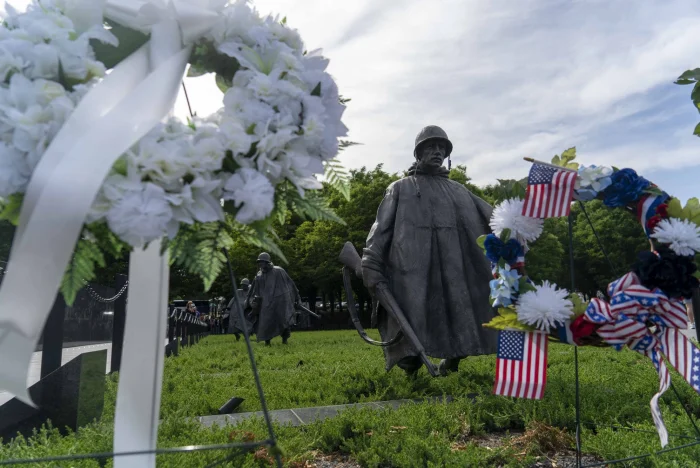
Wreathes are seen amongst the statues at the Korean War Veterans Memorial during Memorial Day weekend in Washington on May 27, 2023. Memorial Day, which honors U.S. military personnel who died while in service, is held on the last Monday of May. Photo by Bonnie Cash/UPI | License Photo

Source link

DOJ wants to drop fraud charges against billionaire Gautam Adani

The U.S. Department of Justice filed a motion to drop fraud charges against Gautam Adani, chair and founder of Adani Group. File Photo by Divyakant Solanki/EPA

May 19 (UPI) — The U.S. Department of Justice announced it will drop criminal fraud charges against billionaire Indian businessman Gautam Adani.

The Justice Department submitted a motion Monday asking a federal judge to drop the indictment from 2024 brought by the U.S. Attorney’s Office in Brooklyn, N.Y. The request said the department “reviewed this case and has decided, in its prosecutorial discretion, not to devote further resources to these criminal charges against individual defendants,” NBC News reported the court filing said.

Principal Associate Deputy Attorney General Trent McCotter and Brooklyn U.S. Attorney Joseph Nocella signed the filing. Prosecutors assigned to the case were not included.

Separately, the President Donald Trump administration announced it had reached a $275 million settlement with a company founded by Adani over “egregious” apparent violations of U.S. sanctions against Iran, Politico reported.

According to the U.S. Office of Foreign Assets Control, Adani Enterprises Limited bought $191 million worth of shipments of liquefied petroleum gas from a Dubai-based trader. OFAC alleged the company overlooked indications that the gas originated from Iran, Politico said.

Adani is the founder and chair of the Adani Group, a conglomerate based in Ahmedabad, India. Brooklyn prosecutors charged him and others in a fraud and bribery scheme in November 2024, while President Joe Biden was in office.

Adani’s lawyers from Sullivan & Cromwell included two of Trump’s personal attorneys: Robert Giuffra Jr. and James McDonald, Politico reported.

Adani’s worth is estimated at more than $100 billion. He is one of the richest people in Asia, and is an ally of Indian Prime Minister Narendra Modi.

Prosecutors alleged that Adani and his co-defendants paid $250 million in bribes to Indian government officials. The bribes were to help Adani Green Energy, a subsidiary, win approval to create India’s largest solar power plant. It was projected to bring $2 billion in profits over 20 years.

They also alleged the defendants defrauded American and international investors by gaining funds “on the basis of false and misleading statements.”

Adani Group denied the allegations and called them “baseless.”

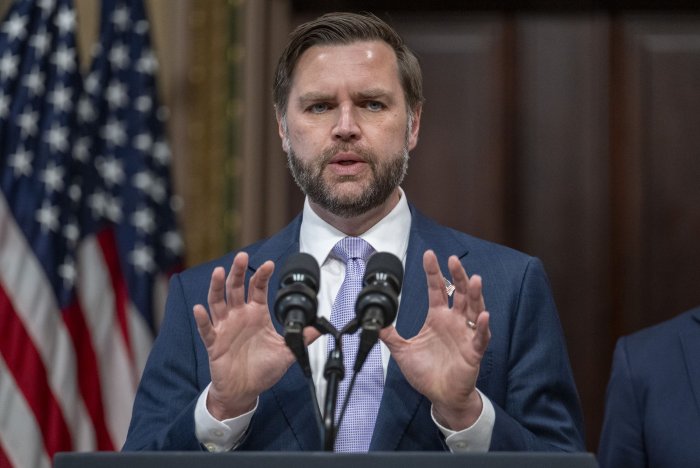
Vice President JD Vance speaks during a news conference on anti-fraud initiatives in the Indian Treaty Room of the Eisenhower Executive Office Building at the White House on Wednesday. Photo by Daniel Heuer/UPI | License Photo

Source link

Bipartisan bill proposes $130 fee for electric vehicles

May 19 (UPI) — A bipartisan bill in the U.S. House is proposing a new $130 fee for registering an electric vehicle to help pay for transportation infrastructure.

The Five-Year Surface Transportation Reauthorization bill was introduced on Sunday by Reps. Sam Graves, R-Mo., and Rick Larsen, D-Wash. As proposed, it would require an annual $130 registration fee for electric vehicles and $35 for plug-in hybrids.

Graves said in a statement that the bill “ensures that electric vehicle owners begin paying their fair share for the use of our roads.”

Currently, the Highway Trust Fund is used to pay for county roads, bridges, railways and other infrastructure projects. The fund is filled by taxes on gasoline.

“The ‘user pays’ principle has been fundamental to how we fund our nation’s surface transportation system for as long as I’ve been in Congress,” Larsen said in a statement. “I support that principle and worked to make sure that this new fee on EVs is fair and not punitive.”

Albert Gore III, executive director of the Zero Emission Transportation Association, said the fees would penalize electric vehicle owners. The organization estimates that the fee is higher than what is collected on the gas tax on a per-consumer basis.

The federal gasoline tax is about $0.18 per gallon. It has not changed since 1993.

“I don’t argue that the number should be zero, but the number should be fair,” Gore said.

Congress eliminated electric vehicle subsidies last year, totaling about $7,500 per vehicle, as part of an effort to peel back sustainability and environmental efforts enacted under the Biden administration.

Fees on electric vehicle owners are in place in at least 41 states,

Vice President JD Vance speaks during a news conference on anti-fraud initiatives in the Indian Treaty Room of the Eisenhower Executive Office Building at the White House on Wednesday. Photo by Daniel Heuer/UPI | License Photo

including Colorado and New Jersey, ranging from $50 to $260.

Source link

2-day NTSB hearing on UPS plane crash in Louisville begins

Members of the National Transportation Safety Board and FBI agents walk the runway looking for evidence from the UPS Flight 2976 MD-11 that crashed in November at the Louisville Muhammad Ali International Airport in Louisville, Ky. The NTSB hearing began Tuesday morning in Washington, D.C. File Photo by John Sommers II/UPI | License Photo

May 19 (UPI) — The National Transportation Safety Board began its two-day hearing on Tuesday on the deadly UPS cargo plane crash in Louisville, Ky., that killed 15 people on Nov. 4.

The NTSB released the agenda of the hearing as soon as it began at 8 a.m. EDT in Washington, D.C. The hearing will continue to 6 p.m. Tuesday, and 8 a.m. to 1 p.m. Wednesday at the NTSB Boardroom and Conference Center in Washington.

The NTSB has investigative hearings to find the facts and circumstances of transportation accidents or incidents under investigation, a press release said. The hearing is open to the public, but only NTSB board members, investigators, witnesses and parties to the hearing are allowed to participate.

The crash is the deadliest in the history of UPS. All three crew members on UPS Flight 2976 died, as well as 12 others on the ground, several of whom were working or shopping at nearby businesses. The crash also injured about 23 others.

The NTSB’s preliminary report showed that fatigued and overly stressed connecting pylons likely caused the left engine to detach from the McDonnell Douglas MD-11. The engine fell from the aircraft as it was taking off from the Louisville Muhammad Ali International Airport. The aircraft crashed into the ground and burst into flames. The fully fueled flight was intended for Honolulu.

The preliminary report said cracks caused by fatigue and signs of excessive mechanical stress were found in the pylon that connected the left engine to the wing. The plane was 34 years old and had recently undergone maintenance in San Antonio.

The engine-mounting hardware was last inspected in October 2021. It wasn’t due for another inspection until the aircraft completed 7,000 more flights, the NTSB said. The preliminary report showed no apparent pilot errors.

The NTSB invited several groups to participate in the hearing: the Federal Aviation Administration, UPS, The Boeing Company, GE Aerospace, Teamsters Airline Division, Independent Pilots Association and Collins Aerospace.

The hearing panel includes accident investigators and engineers. They will hear from nine witnesses on Tuesday. A new panel will hear from four witnesses from the FAA and Boeing on Wednesday.

In January, UPS announced it was retiring all MD-11 planes and was reducing its workforce by 30,000.

Vice President JD Vance speaks during a news conference on anti-fraud initiatives in the Indian Treaty Room of the Eisenhower Executive Office Building at the White House on Wednesday. Photo by Daniel Heuer/UPI | License Photo

Source link

Sandy Fire forces thousands of evacuations in California’s Simi Valley

May 19 (UPI) — The Sandy Fire in Simi Valley, Calif., has spread across more than 1,300 acres Tuesday, putting thousands of people under evacuation orders.

The fire started as a brush fire on Monday morning but spread quickly due to heavy wind gusts. At least one home has been burned.

The California Department of Forest and Fire Protection said Monday night that “fire activity has decreased significantly” due to calmer winds and higher humidity.

“California is mobilizing resources to support Ventura County communities threatened by the Sandy Fire,” California Gov. Gavin Newsom said in a statement. “This activation will ensure responders have the support needed to continue protecting lives and homes as dangerous fire conditions persist. We are deeply grateful to the crews on the front lines and urge Californians in impacted areas to follow guidance from local officials.”

The cause of the fire is under investigation.

Fire crews continue to battle the blaze with 750 firefighters working overnight attempting to contain it.

As of 6:11 a.m. PDT on Tuesday the fire had torn through 1,386 acres with zero containment.

No casualties or civilian injuries have been reported.

“We have made tremendous progress on this fire,” said Andrew Dowd, Ventura County Fire Department spokesperson. “Zero percent containment, don’t let that number fool you. A lot of great work has been done.”

An emergency shelter is open at Rancho Santa Susana Community Park in Simi Valley for people needing somewhere to stay overnight.

The Simi Valley Unified School District has closed all schools on Tuesday due to the fire. On Tuesday afternoon, it will determine if schools will reopen on Wednesday.

Vice President JD Vance speaks during a news conference on anti-fraud initiatives in the Indian Treaty Room of the Eisenhower Executive Office Building at the White House on Wednesday. Photo by Daniel Heuer/UPI | License Photo

Source link

Ronaldo to lead Portugal at sixth World Cup as Martinez names squad | World Cup 2026 News

Cristiano Ronaldo will embark on a sixth World Cup at the age of 41 after Portugal coach Roberto Martinez named him in a 27-man squad for the tournament, with a symbolic “plus one” in memory of the late Diogo Jota.

Speaking at Cidade do Futebol before a packed auditorium on Tuesday, Martinez confirmed that fourth-choice goalkeeper Ricardo Velho, of Genclerbirligi Ankara, will travel with the squad, but can only be added to the official 26-man list in the event of an injury to one of the three registered keepers.

Portugal, the reigning Nations League champions, open their Group K campaign at the tournament in the United States, Mexico and Canada against the Democratic Republic of the Congo on 17 in Houston.

They then face Uzbekistan at the same venue on June 23 and conclude the group stage against Colombia in Miami on June 27. The tournament runs from June 11 to July 19.

Martinez said his selection comprised “27 players plus one”, a reference to Liverpool forward Jota, who died in a car accident in July last year, aged 28.

“He is our strength, our joy,” Martinez said. “Losing Diogo was an unforgettable and very difficult moment, but the very next day, it was up to all of us to fight for Diogo’s dream and for the example he always set in our national team. Diogo Jota’s spirit, strength and example are the +1 and will always be the +1.”

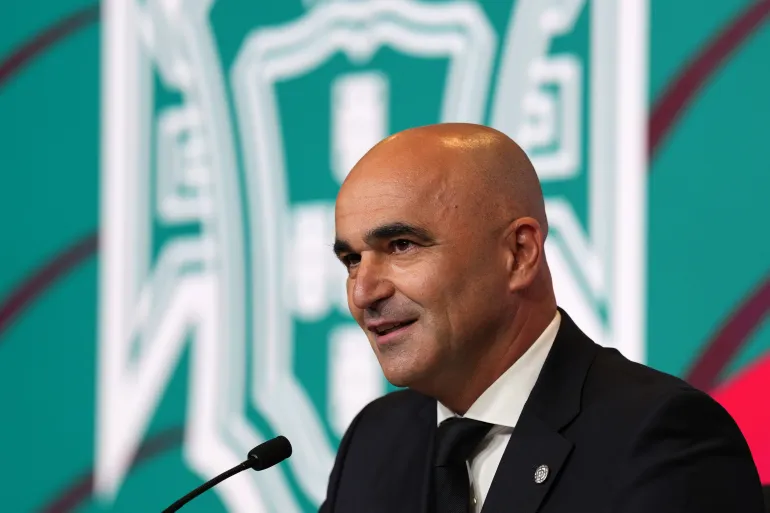
Portugal's head coach Roberto Martinez announces the squad for the 2026 World Cup, in Oeiras, outside Lisbon, Tuesday, May 19, 2026. (AP Photo/Armando Franca)
Portugal’s head coach Roberto Martinez announces the squad [Armando Franca/AP]

The coach defended his decision to name four goalkeepers and five fullbacks, while leaving out players including Mateus Fernandes, Ricardo Horta and Pedro Goncalves.

“The complexity of the tournament is very important – the demands of the weather, the time zone, everything we already experienced in March,” Martinez said. “There are positions where we need to have more than two players per position. And we need five fullbacks.”

He highlighted the versatility of Diogo Dalot, Joao Cancelo and Matheus Nunes, and pointed to attacking options such as Joao Felix, Bruno Fernandes, Bernardo Silva and Francisco Trincao operating between the lines, with Rafael Leao, Pedro Neto and Francisco Conceicao providing width.

Martinez added that Velho understood his role as a training goalkeeper, noting that FIFA rules only permit replacement in the event of injury during the tournament.

Portugal warm up against Chile in Oeiras on June 6 and Nigeria in Leiria on June 10. FIFA has stipulated that the squad must be in their Palm Beach, Florida training camp at least five days before their opening match.

Portugal World Cup squad

Goalkeepers: Diogo Costa (FC Porto), Jose Sa (Wolverhampton Wanderers), Rui Silva (Sporting CP); Ricardo Velho (Genclerbirligi Ankara);

Defenders: Diogo Dalot (Manchester United); Matheus Nunes (Manchester City), Nelson Semedo (Fenerbahce SK), Joao Cancelo (FC Barcelona), Nuno Mendes (PSG), Goncalo Inacio (Sporting CP), Renato Veiga (Villarreal); Ruben Dias (Manchester City); Tomas Araujo (SL Benfica)

Midfielders: Ruben Neves (Al Hilal), Samuel Costa (Mallorca), Joao Neves (PSG), Vitinha (PSG), Bruno Fernandes (Manchester United), Bernardo Silva (Manchester City)

Forwards: Joao Felix (Al Nassr), Francisco Trincao (Sporting CP), Francisco Conceicao (Juventus), Pedro Neto (Chelsea), Rafael Leao (AC Milan), Goncalo Guedes (Real Sociedad), Goncalo Ramos (PSG); Cristiano Ronaldo (Al Nassr)

Source link

Trump says Iran attack on ‘hold’: What we know about latest negotiations | Conflict News

United States President Donald Trump says he has decided to pause an attack on Iran at the behest of Gulf leaders after Tehran sent a new peace proposal to Washington through Pakistan.

On Monday, Trump said there is now a “very good chance” the US could reach an agreement with Iran to prevent Tehran from obtaining a nuclear weapon.

An initial, temporary ceasefire commenced on April 8, six weeks into the war. Since then, armed hostilities have largely subsided, but a durable peace agreement remains elusive, with both the US and Iran dissatisfied with each other’s proposed terms.

Also on Monday, Saudi Arabia said it had intercepted three drones, one day after a drone attack hit the Barakah Nuclear Energy Plant in the United Arab Emirates. This has raised more concerns about the potential for renewed military escalation in the Gulf as peace negotiations drag on.

What has Trump said about a new attack on Iran?

Following the reported drone attacks on the UAE and Saudi Arabia on Sunday and Monday, Trump wrote in a Truth Social post: “For Iran, the Clock is Ticking, and they better get moving, FAST, or there won’t be anything left of them. TIME IS OF THE ESSENCE!”

Then, later on Monday, Trump wrote another post, saying he had been asked by the leaders of Qatar, Saudi Arabia and the UAE to hold off on a planned attack on Iran scheduled for Tuesday since “serious negotiations are now taking place.”

He added that he had instructed Secretary of Defense Pete Hegseth, Chairman of The Joint Chiefs of Staff General Dan Caine and the US military not to carry out the scheduled attack. However, he said, he “further instructed them to be prepared to go forward with a full, large scale assault of Iran, on a moment’s notice, in the event that an acceptable Deal is not reached”.

What do we know about the latest peace plan Iran has submitted?

Iran has submitted a revised 14-point peace plan to end the war, the semi-official Tasnim news agency reported on Monday.

Iranian Ministry of Foreign Affairs spokesman Esmaeil Baghaei told a news briefing on Monday that Tehran’s response to the previous US proposal had been “conveyed to the American side through mediator Pakistan”, according to Tasnim.

Washington and Tehran have exchanged multiple proposals in recent weeks amid a ceasefire that has mostly halted six weeks of fighting. However, the initial direct talks mediated by Pakistan in Islamabad in April stalled, and Trump said last week the ceasefire is “on life support”.

While the specific proposals in the latest plan from Iran have not been made public, Baghaei said demands include the release of its assets frozen abroad and the lifting of sanctions.

“The points raised are Iranian demands that have been firmly defended by the Iranian negotiating team in every round of negotiations,” he said.

Iran has also previously demanded compensation for damage inflicted by US-Israeli attacks, an end to the ongoing US naval blockade of Iranian ports and a halt to fighting on all fronts, including in Lebanon, where Israeli forces continue daily attacks and have mounted a ground invasion in the south of the country.

Washington has urged Tehran to dismantle its nuclear programme and lift a blockade on the Strait of Hormuz, which, before the war, carried one-fifth of the world’s crude oil and liquefied natural gas ‌(LNG) supply.

What are the main sticking points between Iran and the US?

A major point of contention is Iran’s stockpile of enriched uranium. During negotiations, Washington has urged Tehran to give away its enriched uranium, a demand Tehran has resisted.

Iran is believed to have about 440kg (970lb) of uranium enriched to 60 percent. A 90 percent threshold of enriched uranium is needed to produce a nuclear weapon. Iran has never officially declared an intention to build nuclear weapons. The US wants this stock to be handed over to it, but Iran is reportedly only willing to consider handing it to a third party – if at all.

Iran’s Foreign Minister Abbas Araghchi told reporters on the sidelines of a meeting of foreign ministers from BRICS nations in New Delhi last week that Iran and the US have reached a “deadlock” on the question of Iran’s “enriched material”.

As a result, he said, the topic is being “postponed” until later stages in the talks. “For the time being, it is not under discussion, it’s not under negotiation, but we will come to that subject in later stages.”

Araghchi confirmed he had spoken to Russian officials about an offer from Moscow to store Iran’s enriched uranium. He said Iran may consider Russia’s proposal at an “appropriate time” and that he appreciates Moscow’s efforts.

“When we come to that stage, obviously we will have more consultations with Russia and see if the Russian offer can help or not,” he said.

The US and Iran are also arguing about whether Iran should be allowed to enrich uranium at all. Under the Obama-era Joint Comprehensive Plan of Action, signed with several countries in 2015, Iran was able to continue enriching to 3.87 percent – enough for the development of a nuclear power programme. Trump withdrew the US from that agreement in 2018, despite consistent reports from the International Atomic Energy Agency (IAEA) that Iran had stuck to its terms. Now, the US wants a moratorium on all uranium enrichment for a period of up to 20 years, it says.

Another sticking point between the two countries is the Strait of Hormuz in the Gulf.

Since early March, Iran has restricted shipping through the strait, a narrow waterway linking Gulf oil producers to the open ocean and through which 20 percent of the world’s oil and liquefied natural gas (LNG) supplies are shipped during peacetime. Iran has allowed passage by vessels from select countries, but they are required to negotiate transit with the Islamic Revolutionary Guard Corps (IRGC).

In its previous proposals to end the war, Iran has mentioned charging fees or tolls for vessels seeking to pass through the state. Washington has repeatedly rejected the prospect. In April, the US announced a naval blockade on ships entering or leaving Iranian ports, further adding to the disruption of global oil and gas supplies.

Iran’s state media reported, citing the Iranian Ministry of Foreign Affairs, that technical teams from Iran and Oman met in Oman to negotiate a mechanism for safe transit in the Strait of Hormuz.

A third likely major point of friction – although one which may also be kicked into later discussions – is Iran’s support for a network of “proxy” armed groups around the Middle East which it calls its “axis of resistance”. These include the Houthis in Yemen, who have also caused disruption by launching attacks on Israel-linked ships in the Red Sea in the past, Hezbollah in Lebanon and multiple groups based in Iraq and Syria.

INTERACTIVE - IRGC releases map of control over Strait of Hormuz - May 5, 2026-1777975253

Source link

Musk vs Altman: What to know about the OpenAI verdict | Technology News

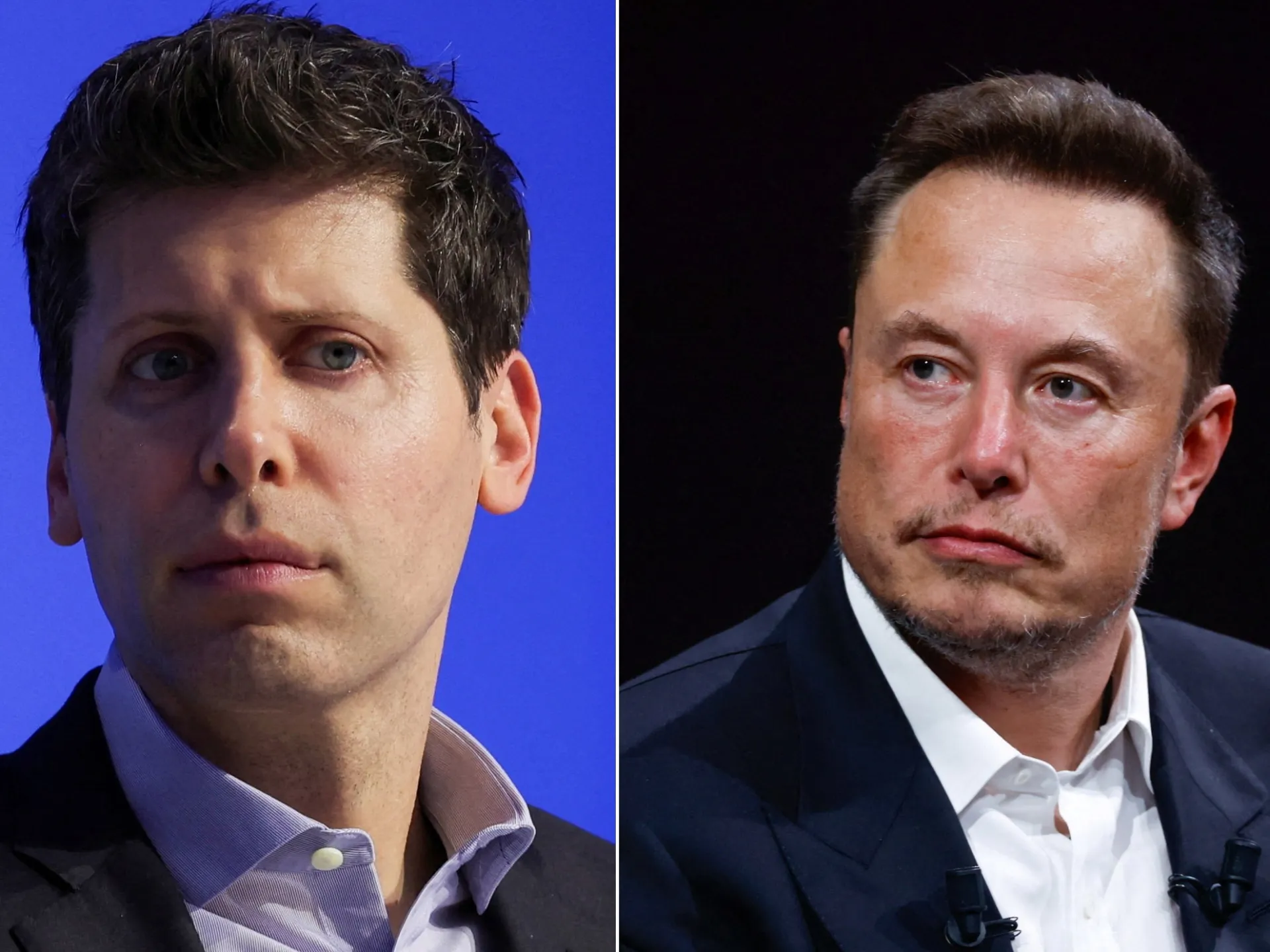
On Monday morning, a jury in Oakland, California, announced its verdict in one of the most-watched tech feuds between billionaire Elon Musk and OpenAI CEO Sam Altman. The nine-member jury handed a decisive victory to Altman, saying Musk had waited too long to bring his claims against the artificial intelligence company and its top executives.

Musk, who cofounded OpenAI as a nonprofit, had filed a $150bn lawsuit against the organisation, Altman and its president, Greg Brockman, accusing them of turning it into a for-profit entity for personal enrichment.

Recommended Stories

list of 4 itemsend of list

The verdict, however, stopped short of resolving the central question at the heart of the case, whether OpenAI betrayed the nonprofit mission on which it was founded in 2015 as it transformed from a research lab focused on benefitting humanity into one of the world’s most powerful AI companies.

Instead, the case became focused on a procedural issue. After deliberating for less than two hours, the jury unanimously found that the statute of limitations had expired before Musk filed the lawsuit in 2024, meaning jurors concluded he had waited too long to bring his claims under the applicable legal deadline. US District Judge Yvonne Gonzalez Rogers accepted the finding and dismissed the case.

The ruling removes a major legal threat for OpenAI at a pivotal moment for the company, which is deepening its commercial partnerships, expanding its relationship with Microsoft and moving towards what could become one of the largest public offerings in Silicon Valley history; while for Musk, the ruling leaves room to argue that the case was lost on timing rather than substance.

Shortly after the verdict, Musk repeated his accusations on X. “Altman & Brockman did in fact enrich themselves by stealing a charity. The only question is WHEN they did it!” Musk wrote on X. “Creating a precedent to loot charities is incredibly destructive to charitable giving in America.”

Musk has decided to appeal, ensuring that the increasingly bitter feud between two of Silicon Valley’s most powerful figures is unlikely to end any time soon.

How did Musk and Altman fall out?

Musk and Altman cofounded OpenAI in 2015 alongside Brockman and other researchers at a time when concerns were growing over how AI could reshape society.

The idea, according to testimony and internal discussions presented during the trial, was that the company could focus on building safe AI systems that benefitted humanity rather than prioritising shareholder returns.

Musk and Altman also believed the nonprofit structure would help OpenAI compete with technology giants such as Google by attracting top researchers and positioning the organisation as a mission-driven alternative.

Musk claims he contributed roughly $38m to OpenAI during its early years, but relations between the founders later deteriorated sharply. He resigned from OpenAI’s board in February 2018, officially citing potential conflicts of interest as Tesla became more focused on AI.

But the split deepened after OpenAI created a for-profit subsidiary and Microsoft invested heavily in the company. Microsoft has since committed tens of billions of dollars to its partnership with OpenAI, helping transform ChatGPT into one of the defining products of the global AI boom.

Musk became increasingly critical of the company, arguing that OpenAI had moved far beyond the nonprofit vision on which it was founded. In 2023, he launched a rival AI company, xAI, the maker of the Grok chatbot, before filing his lawsuit against OpenAI the following year.

Why did the case collapse?

At the centre of the trial was a relatively technical legal question about when Musk became aware that OpenAI was moving towards a profit-driven structure.

Because the lawsuit was filed in 2024, Musk needed to convince jurors that the alleged wrongdoing occurred within the legal time limit for bringing his claims.

Musk argued that his concerns fully crystallised only in 2023, particularly after Microsoft’s big investments into OpenAI’s for-profit arm.

But OpenAI’s lawyers argued that Musk had known for years that the company planned to pursue a commercial structure and raise huge amounts of outside funding.

Evidence presented during the trial showed that discussions about creating a for-profit arm dated back to at least 2017. Jurors also heard testimony that Altman had sent Musk documents in 2018 outlining plans for OpenAI to raise billions of dollars through a for-profit structure.

Ultimately, the jury sided with OpenAI’s argument that Musk could have filed his lawsuit much earlier – and therefore waited too long.

That meant jurors never had to answer the more explosive question at the centre of the case about whether OpenAI had actually betrayed its founding mission.

What did OpenAI argue?

OpenAI maintained throughout the trial that there was never an agreement to remain a nonprofit indefinitely. Its lawyers argued that Musk understood from the beginning that developing cutting-edge artificial intelligence would require extraordinary levels of funding and computing power.

OpenAI also portrayed Musk’s lawsuit as partly motivated by rivalry. By the time the case reached court, Musk’s xAI had emerged as a direct competitor to OpenAI in the race to develop advanced AI systems.

Meanwhile, OpenAI had become one of the most powerful companies in the technology industry, reportedly valued at more than $800bn and moving towards what could eventually become one of the largest public offerings in history.

Lawyers for OpenAI argued that Musk became hostile only after losing influence within the company and watching Altman turn OpenAI into the dominant force in generative AI.

What questions did the trial leave unanswered?

Although the verdict was a clear legal victory for OpenAI, the trial never became the sweeping test case about the future of artificial intelligence that many had expected.

Because the case was resolved on procedural grounds, the court did not answer some of the biggest questions raised by the AI boom: how these systems should be governed, who should benefit economically from them, and whether companies developing increasingly powerful AI tools can still claim to act in the public interest while pursuing enormous commercial growth.

The trial also touched only briefly on broader concerns surrounding AI development, including transparency, labour and the extraction of data used to train AI systems.

Nicole Turner Lee, director of the Centre for Technology Innovation, told Al Jazeera that one of the central problems surrounding AI is that the technology is deeply “extractive”.

“It does undergo theft where people do not consent as to whether or not their information, their image, their voice, their text are actually being extracted,” she said, raising concerns about compensation and consent in AI training systems.

Those issues remained largely outside the scope of the trial due to it ultimately centring on procedural issues.

The ruling, therefore, also removed the possibility of a far more disruptive outcome that could have threatened OpenAI’s corporate structure, its partnership with Microsoft and the wider wave of investment pouring into the AI industry.

But the broader debate over AI’s future is far from settled. With Musk preparing an appeal, the courtroom battle between the two former allies looks set to continue alongside wider questions about how AI should be governed.

Source link

Spain’s former PM Zapatero faces corruption probe | News

Former Spanish Prime Minister Jose Luis Rodriguez Zapatero is under investigation in Spain over alleged influence peddling and related crimes in the long-running Plus Ultra airline case.

The High Court said on Tuesday that Zapatero’s office in Madrid was searched along with three other premises, adding that the former premier had been summoned to testify on June 2.

Recommended Stories

list of 3 itemsend of list

The investigation is tied to the 2021 state rescue of Plus Ultra, which received 53 million euros ($62m) through the state holding company SEPI during the COVID-19 pandemic.

The case escalated in late December after several arrests, including businessman Julio Martinez Martinez, known as Julito, who is considered key to understanding the links between Plus Ultra and Zapatero.

Zapatero is alleged to have been the driving force behind the airline’s bailout and is accused of having pressed the Ministry of Transport, then led by Jose Luis Abalos, to approve the rescue.

Suspicion also centres on Analisis Relevante, Julito’s company, which allegedly received the same amount Plus Ultra later paid to Zapatero. Víctor de Aldama, a Spanish businessman involved in other corruption probes, has alleged Zapatero received 10 million euros ($12m) in commissions.

The bailout remained politically controversial because critics questioned both Plus Ultra’s financial viability and the company’s ownership links to Venezuelan businessmen seen as close to the government of then-President Nicolas Maduro, raising concerns about transparency and possible political influence.

The court is examining whether the aid was properly approved and whether any improper lobbying or influence was involved.

Speaking to the newspaper El Pais, the president of the Andalusian regional government, Juanma Moreno, said: “There has never been a serious investigation process, much less an indictment of a former president. This is something unprecedented and will shake up the government.”

The conservative opposition People’s Party has used the case to sharpen its attacks on Prime Minister Pedro Sanchez of the Socialist Workers’ Party, to which Zapatero also belongs. Sanchez’s administration is already facing separate corruption probes involving figures close to the prime minister as well as investigations touching his wife and brother.

Zapatero, who governed Spain from 2004 to 2011, has long been a key ally of Sanchez and has also drawn criticism from the opposition over business and political ties with Venezuela after leaving office. He has denied wrongdoing before a parliamentary committee.

Source link

U.S. extends temporary Russia sanctions relief for 3rd straight month

May 19 (UPI) — The Trump administration has issued temporary Russia sanctions relief for a third straight month, extending a waiver allowing the delivery and sale of Russian oil already loaded onto tankers at sea amid the ongoing energy crisis cause by the U.S. war with Iran.

Treasury Secretary Scott Bessent announced the 30-day reprieve on social media, saying it will “provide the most vulnerable nations with the ability to temporarily access Russian oil currently stranded at sea.”

“This extension will provide additional flexibility, and we will work with these nations to provide specific licenses as needed. This general license will help stabilize the physical crude market and ensure oil reaches the most energy-vulnerable countries,” he said in a statement.

The United States has imposed thousands of sanctions on Russia since it invaded Ukraine in February 2022, in an effort to cut it off from a lucrative revenue source to fund its war.

The sanctions relief — first issued on March 5 to permit the sale of Russian crude to India before being broadened March 12 — may have helped Russia generate ab additional $150 million per day in oil revenue, or $3.3 billion to $5 billion in the month of March alone, according to the Council on Foreign Relations.

Ukrainian President Volodymyr Zelensky said in mid-April that about $10 billion worth of Russian oil was at sea, condemning the sanctions relief by stating “every dollar paid for Russian oil is money for the war.”

Democrats and Ukrainians have been sharply critical about the sanctions relief, describing it as undercutting their years of work to try to hobble Russian President Vladimir Putin’s ability to make war.

Following the announcement of the extension on Monday, Democratic Sens. Jeanne Shaheen of New Hampshire and Elizabeth Warren of Massachusetts described the waiver as “delivering another dangerous and indefensible gift” to Putin.

“Every additional dollar the Kremlin earns from this license helps Putin finance his illegal war against Ukraine and kill innocent Ukrainians,” the Democratic pair said in a joint statement.

The Trump administration initially issued the waiver as oil prices surged in response to the war in the Middle East, which began Feb. 28 when the United States and Israel launched joint attacks on Iran.

Shaheen, ranking member of the Senate Foreign Relations Committee, and Warren, ranking member of the Senate Banking, Housing and Urban Affairs Committee, criticized the Trump administration over its reasoning that the waiver is to support vulnerable countries, stating that justification “would be more credible had it not launched this war, or if it had used policy tools to limit the prices Russia could push on those countries.”

“Instead, the Trump administration has helped Russia charge more for its oil cargoes by removing the risk of sanctions,” they said.

“Continuing to show weakness like this will only invite more aggression and put a just end to the war in Ukraine further away.”

Source link