TOP NEWS

From breaking news to significant developments in politics, business, technology, entertainment, and more, we deliver the stories that shape our global landscape.

South Korea names top 100 R&D achievements, highlights K9 engine

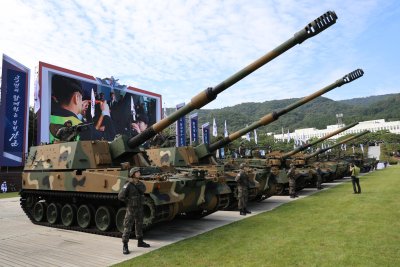
A K9 self-propelled howitzer is displayed during an Armed Forces Day media event in Gyeryong, South Korea, Sept. 29. File Photo by Yonhap News Agency

Dec. 22 (Asia Today) — South Korea’s science ministry said Monday it has selected its 2025 “Top 100 National R&D Achievements,” highlighting projects including a domestically produced 1,000-horsepower engine for the K9 self-propelled howitzer and a high-performance vanadium flow battery stack.

The Ministry of Science and ICT said the program marks its 20th year. Launched in 2006, the cross-government selection aims to raise public awareness of national research and development and recognize scientists and engineers.

The ministry said 970 candidate projects recommended by government bodies were reviewed by a selection committee of 105 experts from industry, academia and research institutes, followed by public verification. The final 100 were chosen across six categories: machinery and materials, life and marine, energy and environment, information and electronics, basic science and infrastructure and convergence.

Among the selections, STX Engine was cited for developing and commercializing a 1,000-horsepower engine for the K9, localizing a system and core components previously dependent on overseas imports. The ministry said the achievement helped address export approval hurdles and supported market expansion, including K9 exports to Egypt equipped with domestically produced engines.

In life sciences, IM Biologics was selected for work on treatments for autoimmune diseases including rheumatoid arthritis. The ministry said the company transferred related technology to U.S.-based Navigator Medicine and China’s Huadong Pharmaceutical in deals totaling 1.7 trillion won ($1.3 billion).

In energy and environment, H2 was cited for developing low-cost, high-power-density stack technology for vanadium flow batteries, a key component used in energy storage tied to solar and wind generation. The ministry said the technology contributed to South Korea’s first export of the stack technology to Germany.

Other selections included the Electronics and Telecommunications Research Institute’s demonstration of 6G wireless transmission technology and the Institute for Basic Science research group’s real-time observation of molecular ion formation and structural transitions, the ministry said.

The ministry said selected projects will receive certificates and plaques in the name of Deputy Prime Minister and Science and ICT Minister Bae Kyung-hoon. The ministry said projects and institutions may receive evaluation advantages under relevant rules and researchers may be recommended for national R&D awards.

Starting next year, the ministry said it will launch follow-up support aimed at boosting technology maturity and commercialization. Each selected project will be eligible for about 1.3 billion won (about $1.0 million) in support over three years, the ministry said.

Park In-gyu, head of the Science and Technology Innovation Headquarters, said the projects reflect sustained challenges and innovation by universities, research institutes and companies and pledged expanded support in coordination with other ministries.

– Reported by Asia Today; translated by UPI

© Asia Today. Unauthorized reproduction or redistribution prohibited.
Source link

Unification Ministry denies reviewing territorial clause change

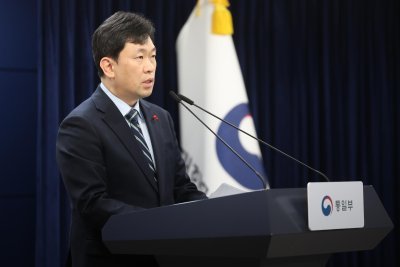
Unification Ministry spokesperson Yoon Min-ho briefs reporters at the Government Complex Seoul on Dec 22 Photo by Yonhap News Agency

Dec. 22 (Asia Today) — South Korea’s Ministry of Unification said Monday it has never reported to President Lee Jae-myung on reviewing constitutional amendments tied to a “peaceful two-state” approach as a way to bring North Korea to negotiations.

Unification Ministry spokesperson Yoon Min-ho said at a regular briefing that claims the ministry suggested reviewing constitutional changes during a closed-door work report on Friday were “completely false.”

“Reports saying that the ministry proposed reviewing constitutional amendments to draw North Korea into dialogue are untrue,” Yoon said. He added that the ministry neither raised nor examined such an issue during the briefing.

Earlier Monday, a media report said President Lee took a negative view of a purported ministry suggestion to review changes to Article 3 of the Constitution, which defines the territory of the Republic of Korea as the entire Korean Peninsula, in order to engage Pyongyang.

Yoon reiterated that no such proposal was made and said the ministry has not reviewed the matter.

He also said discussions with the U.S. Embassy on North Korea policy are expected to begin early next year. Preparations are also underway to set a schedule for regular vice-ministerial-level communication with the Foreign Ministry, he said.

On the issue of public access to North Korean media, Yoon said the ministry’s interpretation is that simply viewing North Korean outlets such as Rodong Sinmun does not violate the National Security Act.

– Reported by Asia Today; translated by UPI

© Asia Today. Unauthorized reproduction or redistribution prohibited.

Source link

China warns South Korea-U.S. nuclear sub talks risk nonproliferation

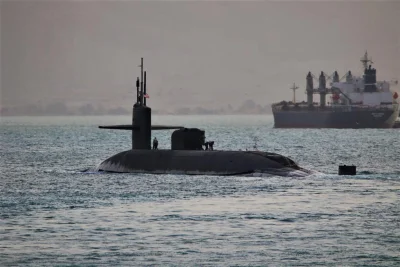
The guided-missile submarine USS Florida transits the Suez Canal en route to the Red Sea on Friday amid heightened tensions between the United States and Iran. File U.S. Navy photo by Mass Communication Specialist 2nd Class Elliot Schaudt

Dec. 22 (Asia Today) — China has voiced strong opposition to potential cooperation between South Korea and the United States on nuclear-powered submarines, warning it could undermine the global nuclear nonproliferation regime, Chinese state media reported.

Song Zhongping, a Chinese military analyst, said in an interview published Monday by the Global Times that consultations between Seoul and Washington on nuclear submarine-related cooperation could pose a “serious threat” to nuclear nonproliferation.

The Global Times cited South Korean media reports saying the two countries plan to begin sector-by-sector consultations next year related to leader-level understandings that include nuclear submarine construction, uranium enrichment and spent nuclear fuel reprocessing.

Song said the AUKUS nuclear submarine effort with Australia set a negative precedent and suggested a similar case could emerge with South Korea. He argued that U.S. support for allies’ access to nuclear technology and nuclear fuel would weaken the Nuclear Non-Proliferation Treaty.

Song also said Japan has raised the idea of acquiring nuclear-powered submarines and warned the trend could fuel an arms race. He said more countries operating nuclear-powered submarines would increase the risk of technology leakage and accidents.

He further argued South Korea has limited practical need for nuclear-powered submarines because of its restricted coastline, the report said.

In October, Chinese Foreign Ministry spokesperson Guo Jiakun said at a regular briefing that Beijing hopes South Korea and the United States will fulfill nonproliferation obligations and avoid actions that run counter to regional peace and stability, according to the report.

– Reported by Asia Today; translated by UPI

© Asia Today. Unauthorized reproduction or redistribution prohibited.
Source link

Trump denies disaster aid requests for Colorado flooding, wildfires

Colorado Gov. Jared Polis (R) talks with President Donald Trump in the Cabinet Room of the White House in Washington, D.C., on May 13, 2020. On Monday, Polis called on Trump to reverse his recent decision to deny the state disaster relief for recent flooding and fire damage. File Pool Photo by Doug Mills/UPI | License Photo

Dec. 22 (UPI) — Colorado lawmakers have called on President Donald Trump to reverse a recent decision denying state disaster aid requests in the wake of “life-threatening flooding and historic wildfires.”

In a statement Sunday, Colorado Gov. Jared Polis announced Trump had rejected the state’s requests for help and accused the president of playing “political games.” He said the state would be appealing the decision.

“Coloradans impacted by the Elk and Lee fires and the flooding in Southwestern Colorado deserve better than the political games President Trump is playing,” Polis said.

“I call on the president’s better angels, and urge him to reconsider these requests. This is about the Coloradans who need this support, and we won’t stop fighting for them to get what they deserve,” the Democratic governor added.

Polis declared a disaster emergency on Aug. 3, for the Elk Fire and added the Lee Fire three days later. He filed an executive order by the end of August as the state revealed initial damage estimates from the fires and mudslides totaled more than $27 million.

In October, Polis declared a disaster emergency to unlock $6 million in state funding for flood response and recovery in Western Colorado.

Democratic Sen. Michael Bennet said, “Trump’s decision to deny Colorado’s request for critical federal assistance is unacceptable.”

“Communities in Western Colorado are in serious need of help after the life-threatening flooding and historic wildfires earlier this year,” Bennet added. “Trump continues to use Coloradans for political games; it is malicious and obscene.”

While a president can tap additional federal assistance with a major disaster under the Stafford Act, the Trump administration has recently denied some states’ requests for aid as it works to downsize the Federal Emergency Management Agency.

The White House said Monday, “there is no politicization to the president’s decisions on disaster relief.” White House spokeswoman Abigail Jackson explained Trump’s decision, adding that the administration sent two firefighting planes to Colorado to help fight the fires.

“The president responds to each request for federal assistance under the Stafford Act with great care and consideration,” Jackson said, “ensuring American tax dollars are used appropriately and efficiently by the states to supplement — not substitute, their obligation to respond to and recover from disasters.”

Source link

Judge allows Kilmar Abrego Garcia to remain free through Christmas

Kilmar Abrego Garcia delivers remarks during a rally before his check in at the ICE Baltimore Field Office in Baltimore Maryland, on August 25. On Monday, a federal judge allowed the Salvadoran native to remain free through Christmas, after he was released earlier this month, as he awaits trial on human smuggling charges in Tennessee. File Photo by Shawn Thew/EPA

Dec. 22 (UPI) — A federal judge on Monday allowed Kilmar Abrego Garcia to remain free through Christmas as she barred Immigration and Customs Enforcement from re-detaining the Salvadoran native.

U.S. District Judge Paula Xinis in Maryland extended a temporary restraining order to keep federal officials from deporting Abrego Garcia, after the U.S. Supreme Court ruled he was deported and imprisoned in March without legal authority to El Salvador.

“This is an extremely irregular and extraordinary situation,” Xinnis told attorneys Monday, as she pressed the government on whether it would detain Abrego Garcia if there were no restraining order.

“Show your work, that’s all,” Xinis said. “Give it to me and we don’t have to speculate.”

Abrego Garcia was released from ICE detention on Dec. 11, following efforts to deport him to an African nation where he has no connection.

“Because Abrego Garcia has been held in ICE detention to effectuate third-country removal absent a lawful removal order, his requested relief is proper,” according to Xinis.

The U.S. Department of Homeland Security called Xinis’ rulings “naked judicial activism by an Obama-appointed judge.”

Abrego Garcia, who illegally entered the United States nearly 15 years ago, has accused the White House of vindictive prosecution. The administration has called him an MS-13 gang member, which he denies.

Abrego Garcia had been living in Maryland with his wife and children before being deported to El Salvador’s CECOT mega-prison in March. He was returned to the United States in June and is awaiting trial on human smuggling charges in Tennessee. He has pleaded not guilty.

On Monday, Abrego Garcia’s attorneys said he is prepared to go to Costa Rica, which the judge said the government refuses to consider.

The “persistent refusal to acknowledge Costa Rica as a viable removal option, their threats to send Abrego to African countries that never agreed to take him and their misrepresentation to the court that Liberia is now the only country available to Abrego, all reflect that whatever purpose was behind his detention, it was not for the ‘basic purpose’ of timely third-country removal,” Xinis wrote.

Source link

Thailand and Cambodia agree to meet amid renewed cross-border fighting | Border Disputes News

Planned talks come as Southeast Asian leaders urge both countries to show ‘maximum restraint’ and return to dialogue.

Thailand and Cambodia have agreed to hold a meeting of defence officials later this week as regional leaders push for an end to deadly violence along the two countries’ shared border.

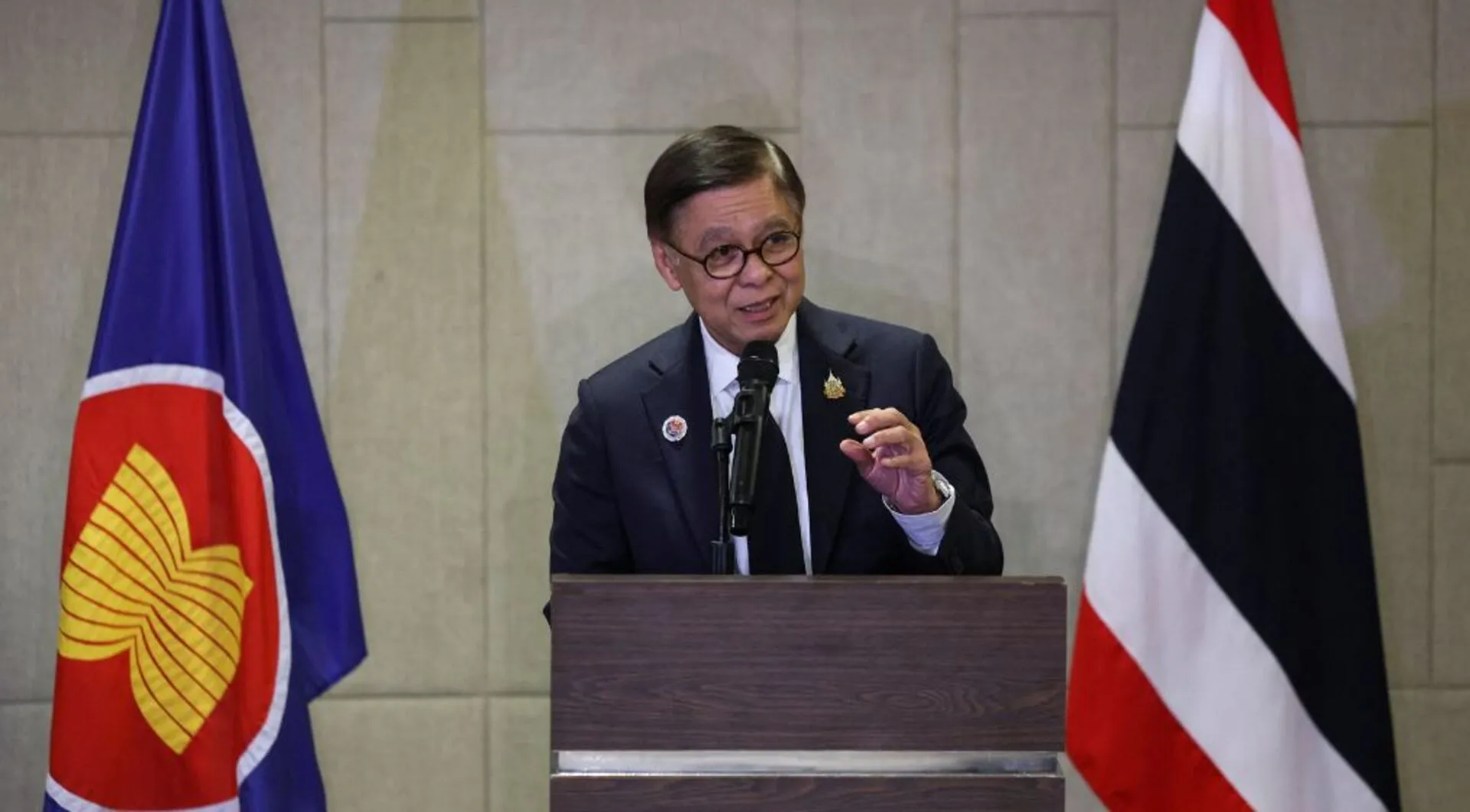
Thailand’s Foreign Minister Sihasak Phuangketkeow announced the planned talks on Monday after a special meeting in Kuala Lumpur of Southeast Asian foreign ministers, who were trying to salvage a ceasefire.

Recommended Stories

list of 3 itemsend of list

That truce was first brokered by Association of Southeast Asian Nations (ASEAN) chair Malaysia and United States President Donald Trump after cross-border fighting broke out in July.

Sihasak told reporters that this week’s discussions would be held on Wednesday in Thailand’s Chanthaburi, within the framework of an existing bilateral border committee.

But just hours after the regional crisis talks were held in Malaysia, Cambodia’s Ministry of Defence said the Thai military deployed fighter jets to bomb areas of Siem Reap and Preah Vihear provinces.

The Thai army said Cambodia had fired dozens of rockets into Thailand, with Bangkok’s air force responding with air strikes on two Cambodian military targets.

Thailand and Cambodia have engaged in daily exchanges of rocket and artillery fire along their 817km (508-mile) land border following the collapse of the truce, with fighting at multiple points stretching from forested regions near Laos to the coastal provinces of the Gulf of Thailand.

Despite the cross-border fire, Cambodia’s Ministry of Interior said it remains “optimistic that the Thai side will demonstrate sincerity” in implementing a ceasefire.

Thailand’s Sihasak, however, cautioned that the upcoming meeting may not immediately produce a truce. “Our position is a ceasefire does not come with an announcement, but must come from actions,” he said.

His ministry said the two nations’ militaries would “discuss implementation, related steps and verification of the ceasefire in detail”.

The planned meeting comes as ASEAN on Monday urged both countries to show “maximum restraint and take immediate steps towards the cessation of all forms of hostilities”.

In a statement after the talks in Kuala Lumpur, ASEAN also called on both Thailand and Cambodia to “restore mutual trust and confidence, and to return to dialogue”.

ASEAN members also reiterated their concerns over the ongoing conflict and “called upon both parties to ensure that civilians residing in the affected border areas are able to return, without obstruction and in safety and dignity, to their homes”.

Source link

Christmas poll: Fewer in U.S. observe religiously; secular events steady

People light candles in the Church of Nativity, believed to be built on the site where Jesus was born, in Bethlehem, West Bank, on Friday. A poll of Americans found that while the percent of people who observe the religious aspects of Christmas has declined over the past several years, the secular traditions have largely stayed steady. Photo by Debbie Hill/ UPI | License Photo

Dec. 22 (UPI) — While the number of Americans who enjoy the secular traditions of Christmas has remained largely unchanged over recent years, a Gallup analysis released Monday showed that fewer people are observing the religious aspects of the holiday.

The poll found that 88% of Americans say they celebrate Christmas, down from 90% in 2024 and 96% in 2005. Of the more secular aspects of Christmas, 96% of people exchange gifts (down from 97% in 2010); 95% get together with friends or family (97% in 2010); 90% put up a Christmas tree (92% in 2010); 89% put up other decorations (91% in 2010); and 43% attend a holiday concert or play (58% in 2010).

The more religious aspects of Christmas saw a greater decline over the same period of time, with 54% of people using religious decorations such as nativities (down from 68% in 2010) and 47% attending a religious service (64% in 2010).

All religious activities saw a notable drop in participation, while one secular event — attending a holiday concert or play — did as well.

“Although fewer people, including fewer Christians, appear to be incorporating religious aspects, Christmas is thriving as a social occasion focused on gatherings, festivities and gifts,” Gallup said in an analysis of the data.

“Its popularity among young adults and non-Christians in general suggests that even as the U.S. continues to change demographically, a less religiously focused Christmas will endure.”

Gallup asked a few new questions about people’s traditions this year, finding that 86% of people watch holiday-themed movies, 81% make holiday desserts and 52% send holiday cards.

Gallup said that of the adults who celebrated Christmas, 69% identified as a Christian denomination, down from 83%, mirroring the overall drop in American adults who identify with a particular religion.

The poll found that there’s little difference in the percentage of Christians and non-Christians who celebrate secular Christmas traditions, and, in fact, a marginally higher percentage of non-Christians participate in some activities, including gathering together with friends and family and exchanging gifts. In each category, 97% of non-Christians participate while 95% of Christians gather with friends and family and 96% exchange gifts.

Meanwhile, Christians are far more likely to observe religious traditions such as using religious decorates (69% compared to 22%) and attending a Christmas service (61% to 11%).

New Yorkers gather for near Times Square at SantaCon NYC on Saturday as part of the annual worldwide event where thousands dress as Santa or other festive characters for a day of drinking, parading through city streets and celebrating the holidays. Photo by John Angelillo/UPI | License Photo

Source link

Healthcare software CEO sentenced to 15 years, ordered to pay $452M

Dec. 22 (UPI) — The former CEO of a healthcare software company in Arizona was sentenced to 15 years in prison and ordered to pay more than $452 million in restitution for conspiring to defraud Medicare for $1 billion, the U.S. Department of Justice said Monday.

Gary Cox, 79, of Maricopa County, was found guilty in June of healthcare fraud in which he generated false doctors’ orders to support fraudulent claims for various medical items.

He was sentenced Friday in the Southern District of Florida.

“This just sentence is the result of one of the largest telemarketing Medicare fraud cases ever tried to verdict,” Acting Assistant Attorney General Matthew R. Galeotti of the Justice Department’s Criminal Division said in a statement. “Telemedicine scammers who use junk mailers, spam calls and the internet to target senior citizens steal taxpayer money and harm vulnerable populations. The Criminal Division will continue dedicating substantial resources to the fight against telemedicine and medical equipment frauds that drain our health care benefit programs.”

Cox was convicted of conspiracy to commit healthcare fraud and wire fraud, three counts of healthcare fraud, conspiracy to pay and receive healthcare kickbacks, and conspiracy to defraud the United States and make false statements in connection with healthcare matters.

Cox was the CEO of Power Mobility Doctor Rx, LLC.

Prosecutors say Cox and his co-conspirators targeted several hundred thousand Medicare beneficiaries who provided personally identifiable information and agreed to accept medically unnecessary orthotic braces, pain creams and other items through misleading mailers, television advertisements and calls from offshore call centers, the Justice Department said.

Cox connected pharmacies, durable medical equipment suppliers and marketers with telemedicine companies to accept illegal kickbacks and bribes in exchange for signed doctors’ orders transmitted using the DMERx platform.

Prosecutors said DMERx falsely said that a doctor had examined and treated the Medicare beneficiaries when, in fact, purported telemedicine companies paid doctors to sign the orders without regard to medical necessity. It was based on a brief telephone call with the beneficiary or no interaction with the beneficiary, the Justice Department said.

These doctors’ orders billed Medicare and other insurers more than $1 billion with Medicare and the insurers paying more than $360 million based on these claims.

The scheme was concealed through sham contracts and elimination from doctors’ orders in which one co-conspirator described as “dangerous words” that might cause Medicare to audit the scheme’s DME suppliers.

“This sentence sends a clear message: Those who exploit telemedicine to prey on seniors and steal from taxpayer-funded health care programs will be held accountable,” said Christian J. Schrank, deputy inspector general for investigations of the U.S. Department of Health and Human Services.

“This scheme was a massive betrayal of trust, built on deception and greed. Our investigators, working with law enforcement partners, dismantled this billion-dollar fraud operation that targeted vulnerable patients and undermined the integrity of Medicare. We will not relent in our mission to protect the public and safeguard Medicare and other federal health care programs from fraud, waste, and abuse.”

Before his sentencing, friends of the defendant submitted letters to the judge vouching for Cox’s good character.

“It is my belief, based on all my life experiences both good and bad that Gary is not a person that would take advantage of or cheat another,” one letter said.

Since March 2007, the Justice Department’s Fraud Section, operating nine strike forces in 27 federal districts, has charged more than 5,800 defendants, who collectively have billed federal healthcare programs and private insurers more than $30 billion.

“Together with our partners, the FBI will aggressively pursue those who defraud taxpayer-funded health care programs,” Rebecca Day, acting assistant director of the FBI’s Criminal Investigative Division, said. “Programs like Medicare are intended to help the most vulnerable among us, and fraud schemes like the one orchestrated by the defendant can jeopardize the delivery of critical care to those who need it the most.”

Approximately 69.4 million Americans are enrolled in the federal health insurance, which is primarily for people aged 65 and older. It also covers younger people with long-term disability, end-stage renal disease or ALS.

Medicare fraud, mistakes and abuse cost the program an estimated $60 billion annually.

“Medicare numbers are more valuable than Social Security numbers because if they have all the right documentation, the Medicare claim has to go through, there are rules and regulations around that,” Nancy Moore, director of Indiana Senior Medicare Patrol, told WRTV-TV in June.

“One of the best ways to look out for fraud is to read your summary notices, your EOB if you’re on Medicare Advantage, or your Medicare summary notice. If you notice a charge for something you never received or didn’t need. That’s when you should call us to report it.”

Consumers can also report suspected medical identity theft to the Health & Human Services fraud hotline at 800-447-8477 (800-HHS-TIPS) or the National Insurance Crime Bureau at 800-835-6422.

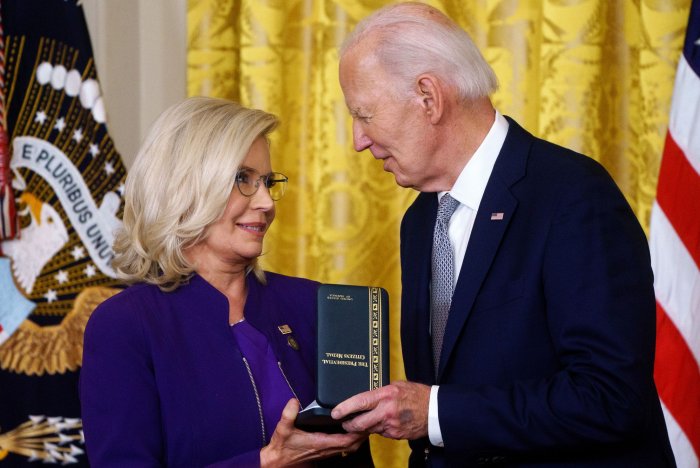
Former President Joe Biden presents the Presidential Citizens Medal to Liz Cheney during a ceremony in the East Room of the White House in Washington, on January 2, 2025. The Presidential Citizens Medal is bestowed to individuals who have performed exemplary deeds or services. Photo by Will Oliver/UPI | License Photo

Source link

Foster scores late goal as South Africa defeat Angola in their AFCON opener | Africa Cup of Nations News

Lyle Foster’s match-winning 79th-minute strike allowed South Africa to win first opening match at AFCON since 2004.

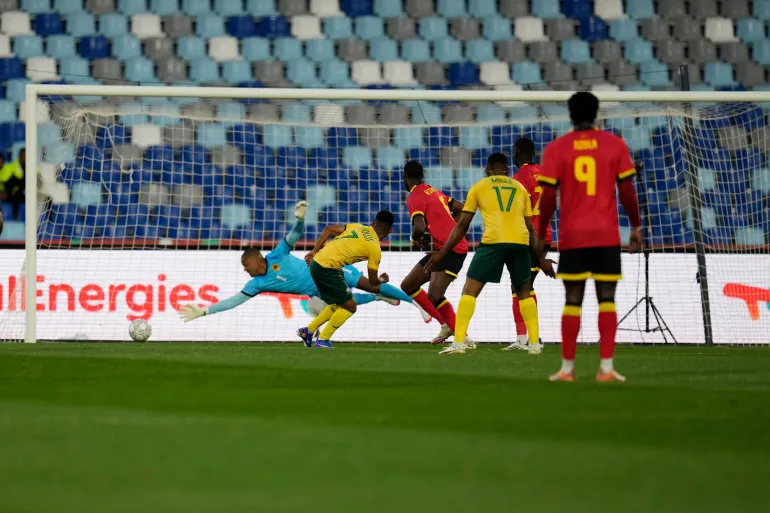
Lyle Foster scored a superb winner from outside the box as South Africa defeated Angola 2-1 in Africa Cup of Nations Group B in Marrakesh on Monday, the first time they have won their opening match ⁠at the continental finals in 21 years.

South Africa also had a goal disallowed and struck the crossbar, ​just about deserving the nervy victory. Angola also had chances and will ‍be disappointed not to have gotten something from the game.

Recommended Stories

list of 2 itemsend of list

South Africa took the lead on 21 minutes when Oswin Appollis showed neat footwork in the box to work a shooting chance and put the ball in the bottom ‍corner. But Angola ⁠equalised before the break as Show got a touch to Fredy’s free kick to steer the ball into the net.

The winning moment came after 79 minutes, when Foster was teed up 20 yards out and curled his shot into the top corner to give the bronze medallists from two years ago a positive start to their campaign.

It was a workmanlike performance from South Africa, who do not have the plethora of players in top ​European leagues that their tournament rivals enjoy, with Foster their only one ‌at Premier League Burnley.

But they are a well-oiled machine under Belgian coach Hugo Broos and did enough for a victory that set them well on course for the knockout rounds. Egypt and Zimbabwe will meet later on Monday in ‌the same pool.

Oswin Appollis in action.
South Africa’s Oswin Appollis, centre, scores the opening goal of the match in the 21st minute [Themba Hadebe/AP]

Even first half

South Africa took the lead after a period of sustained possession that led to Khuliso Mudau’s cross, which was ‌touched by both Sipho Mbule and Foster before Appollis beat two ⁠defenders and side-footed into the bottom corner of the net.

Angola equalised on 35 minutes when Fredy’s low free kick was touched into the bottom corner by Show, his second goal in his 50th cap for his country, to make it ‌1-1 at the break.

South Africa thought they had retaken the lead when halftime substitute Tshepang Moremi turned his defender and fired low into the bottom corner of the net, but a VAR review showed ‍that Foster was offside in the buildup.

South Africa’s Mbekezeli Mbokazi crashed the ball against the crossbar with a rasping shot from 35 yards, before Foster’s clinical strike secured all three points.

Zambia rally to draw with Mali

In an earlier Group A match on Monday, Zambia’s Patson Daka scored with a spectacular diving header in stoppage time to see his ‍side come from behind ‍and force a 1-1 draw with Mali in Casablanca.

Mali looked in control for most of the encounter, but paid the price for sitting back in the closing stages as Zambia staged a ⁠late recovery, with Daka leaping through the air to force home Mathews Banda’s curling cross two minutes into ​stoppage time at the end of the game.

Lassine Sinayoko had ‌taken advantage of sloppy defending to give ‌Mali a 62nd-minute lead ⁠after his strike partner, El Bilal Toure, had a first-half penalty saved.

Patson Daka reacts.
Zambia’s forward Patson Daka celebrates scoring his team’s equalising goal in the 90th minute against Mali at Mohammed V Stadium in Casablanca, Morocco on December 22, 2025 [Abdel Majid Bziouat/AFP]

Source link

Ugandan police tear gas crowd at Bobi Wine campaign event | Government

NewsFeed

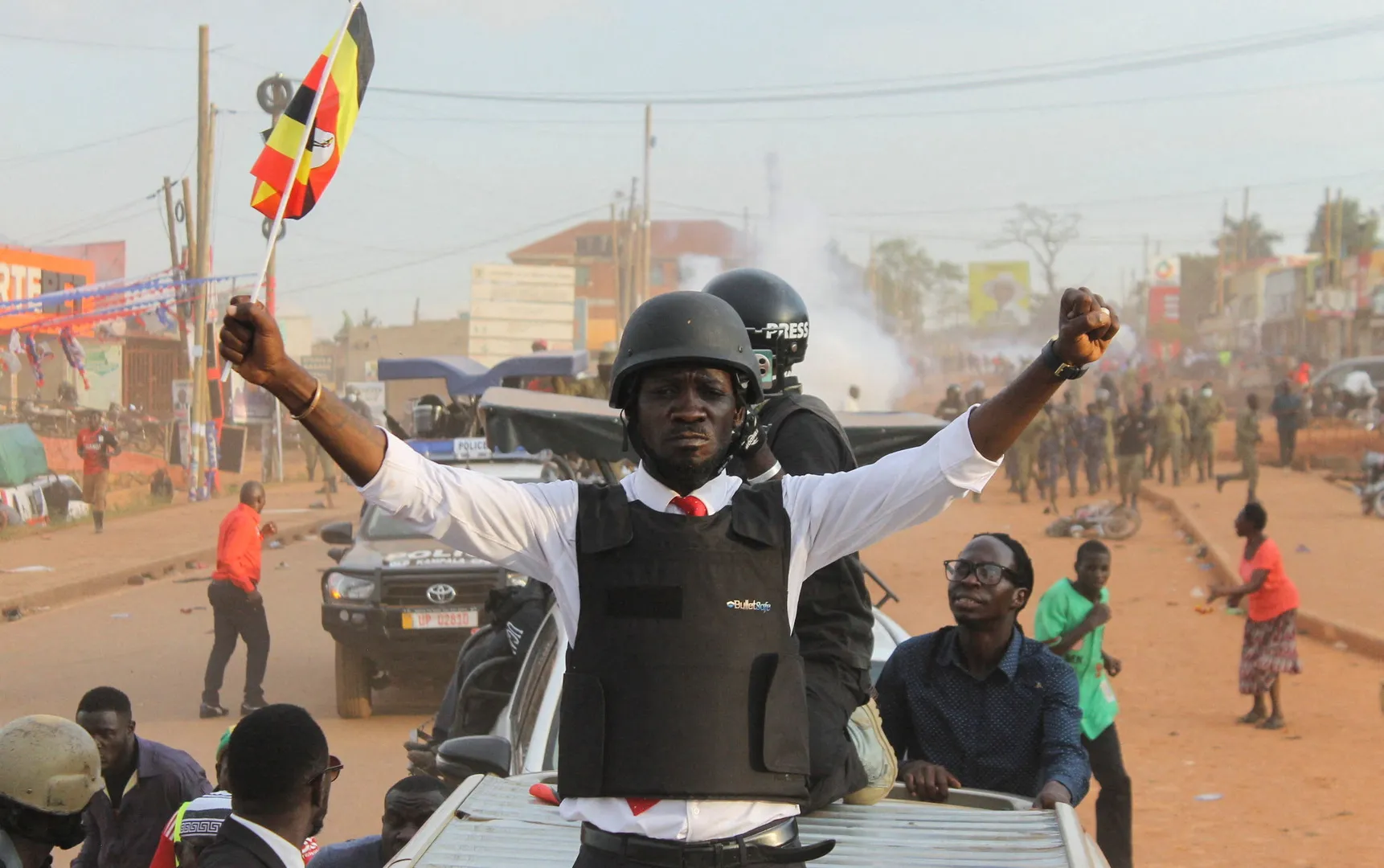
Footage shows security forces dispersing crowds with tear gas at rallies for Ugandan presidential candidate Robert Kyagulanyi, also known as Bobi Wine, in Kampala. The pop star-turned-politician is campaigning ahead of Uganda’s January 2026 elections, as officials warn against interference.

Source link

Can diplomacy end the conflict between Thailand and Cambodia? | Conflict News

The neighbouring countries hold their first direct meeting in regional push for peace.

Fighting has escalated between Cambodia and Thailand, forcing hundreds of thousands of civilians to flee their homes on both sides of the neighbouring countries’ border.

Now, the Association of Southeast Asian Nations (ASEAN) is taking the lead in attempts to end the violence and reach a peace deal.

Recommended Stories

list of 4 itemsend of list

All this comes after an attempt by United States President Donald Trump to end the war failed.

The Thai and Cambodian foreign ministers are set to meet in the coming days in hopes of reaching what Thailand has called a “true ceasefire”.

But without any letup in the long-running conflict, what will it take to bring it to an end?

Presenter: Dareen Abughaida

Guests:

Chheang Vannarith – Chairman of Angkor Social Innovation Park and a former assistant to Cambodia’s defence minister in 2011 and 2012

Ilango Karuppannan – Adjunct senior fellow at the Nanyang Technological University and former Malaysian High Commissioner to Singapore

Phil Robertson – Director of Asia Human Rights Labour Advocates and former deputy director of Human Rights Watch’s Asia Division

Source link

Japan’s TEPCO to restart world’s largest nuclear plant in Niigata

Reactor buildings unit one (L, rear) through unit four (R) pictured Feb. 2015 at Tokyo Electric Power Co.’s Kashiwazaki Kariwa Nuclear Power Plant — the world’s largest nuclear power plant — in Kariwa, Niigata Prefecture, in northern Japan. Photo Provided by Kimimasa Mayama/EPA

Dec. 22 (UPI) — Japan has approved Tokyo Electric Power Co. to restart the Kashiwazaki-Kariwa nuclear site as the world’s largest nuclear power plant.

On Monday, the Niigata assembly backed Governor Hideyo Hanazumi’s decision to stay in office after approving the restart of the Kashiwazaki-Kariwa nuclear plant in its first reactor restart since the Fukushima disaster more than a decade ago.

“We remain firmly committed to never repeating such an accident and ensuring Niigata residents never experience anything similar,” ‌a Tepco spokesperson told The Japan Times.

The decision finalizes local approval to restart the plant.

Hanazumi will meet Economy Minister Ryosei Akazawa on Tuesday to confirm the prefecture’s consent.

TEPCO intends to apply to the Japanese Nuclear Regulation Authority by Wednesday to restart its No. 6 reactor at the Kashiwazaki-Kariwa plant.

The utility aims to resume operations around Jan. 20 marking the facility’s first activity since shut down March 2012 a year after the Fukushima disaster.

On Nov. 21, Hanazumi approved restarting operations but said final approval depended on a vote by the prefectural assembly.

The assembly passed the measure with backing from the Liberal Democratic Party while opposition parties objected and called for a gubernatorial election or public referendum instead.

The Niigata provincial assembly in northern Japan approved a supplementary budget that included public relations funds for Kashiwazaki-Kariwa.

With consent already granted by the Kashiwazaki and Kariwa municipal governments, the vote cleared TEPCO’s final hurdle to resume operations.

Most of the plant’s power supplies the Tokyo area, but electric bills are expected to remain unchanged as TEPCO planned.

Meanwhile, Japan has restarted 14 of its 33 active nuclear plants to reduce reliance on imported fossil fuels.

Clouds turn shades of red and orange when the sun sets behind One World Trade Center and the Manhattan skyline in New York City on November 5, 2025. Photo by John Angelillo/UPI | License Photo

Source link

Texas town battles nonstop noise from bitcoin mine | Energy

NewsFeed

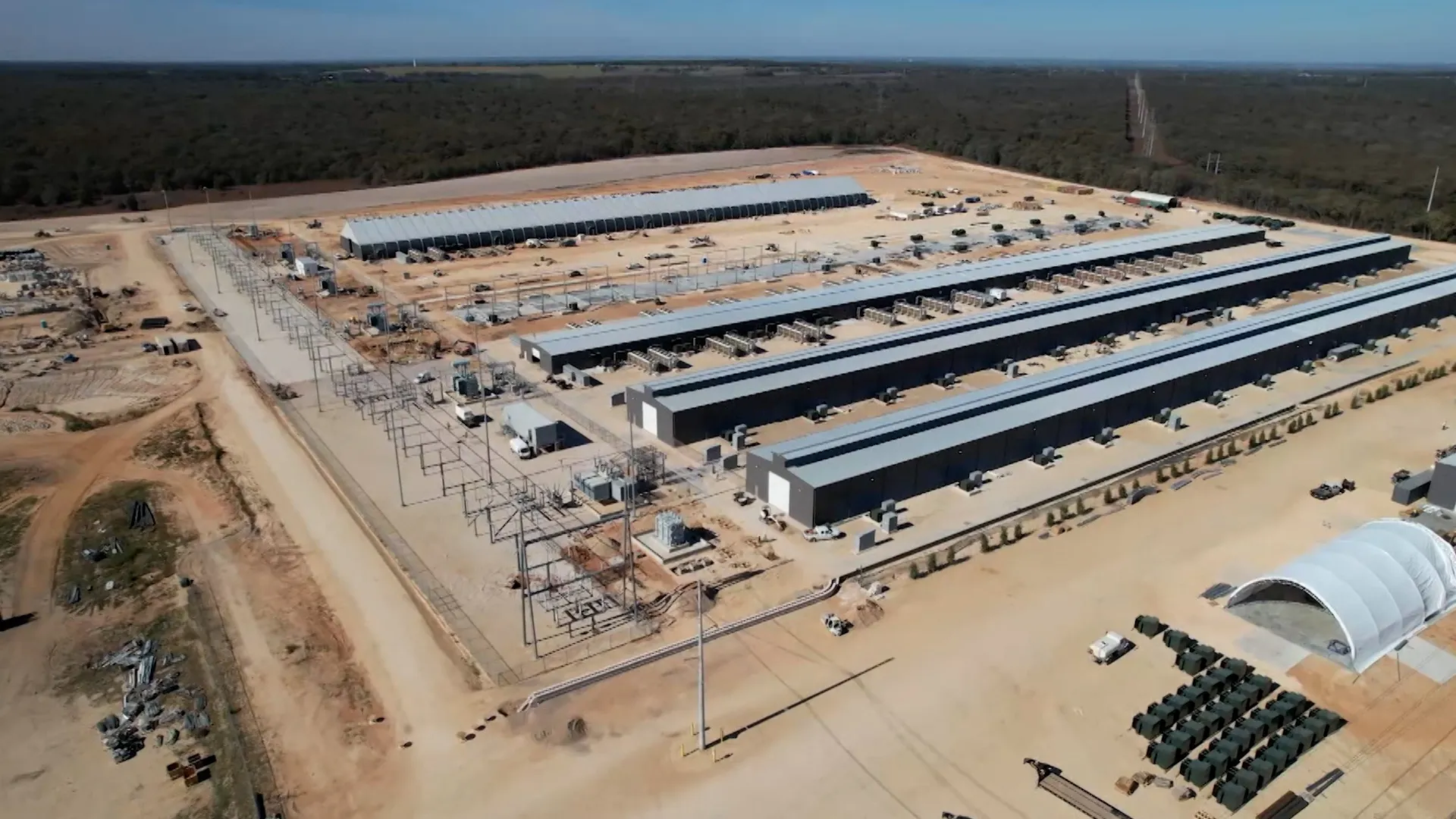
A rural Texas community says nonstop noise from a bitcoin mine is destroying their lives. Residents in Hood County describe the 24/7 hum of cooling fans as “torture,” while operators defend the project as a major jobs and tax boost. Al Jazeera’s Phil Lavelle says AI data centres may bring even bigger battles ahead.

Source link

Paramount assures Larry Ellison backing to Warber Bros. Discovery hostile bid

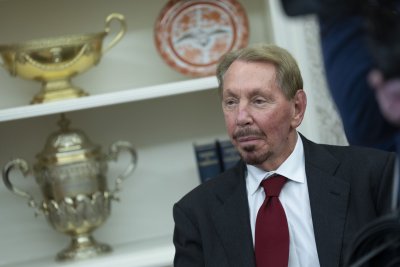
Dec. 22 (UPI) — Paramount Skydance amended its hostile bid to take over Warner Bros. Discovery, guaranteeing the backing of Larry Ellison.

“Larry Ellison has agreed to provide an irrevocable personal guarantee of $40.4 billion of the equity financing for the offer and any damages claims against Paramount,” the company said in a press release. Ellison also agreed not to revoke the Ellison family trust or adversely transfer its assets during the pendency of the transaction.

Last week, WBD urged its shareholders not to accept Paramount’s bid, saying it wasn’t backed by billionaire Larry Ellison, father of Paramount’s CEO.

WBD agreed to sell to Netflix but Paramount, which had been in a bidding war with Netflix, mounted a hostile bid.

Paramount didn’t raise its bid of $30 a share, saying it believes the bid is superior. But it did raise its proposed reverse breakup fee to match Netflix’s offer.

“What we’ve done in this amended filing is we’ve cleared the brush of obfuscation around the offer,” said Gerry Cardinale, founder and managing partner of RedBird Capital Partners, on CNBC’s Squawk Box on Monday.

RedBird is an investor in Paramount Skydance and has committed to financing the proposed purchase.

Cardinale said the bid is backed by 1.2 billion Oracle shares in an irrevocable trust.

“Like we’ve done through the six bids that we’ve made, we are being responsive to what their concerns are,” Cardinale said.

Warner Bros. Discovery shares jumped 4% in early trading Monday, while Paramount shares rose almost 6%, CNBC reported. Netflix shares dipped slightly.

“Paramount has repeatedly demonstrated its commitment to acquiring WBD. Our $30 per share, fully financed all-cash offer was on Dec. 4, and continues to be, the superior option to maximize value for WBD shareholders,” David Ellison said in a statement. “Because of our commitment to investment and growth, our acquisition will be superior for all WBD stakeholders, as a catalyst for greater content production, greater theatrical output, and more consumer choice. We expect the board of directors of WBD to take the necessary steps to secure this value-enhancing transaction and preserve and strengthen an iconic Hollywood treasure for the future.”

Source link

AFCON 2025: Nigeria vs Tanzania – team news, start time and lineups | Africa Cup of Nations News

Who: Nigeria vs Tanzania
What: CAF Africa Cup of Nations
Where: Fez Stadium in Fez, Morocco
When: Tuesday, December 23, at 6:30pm (17:30 GMT)
How to follow: We’ll have all the build-up on Al Jazeera Sport from 14:30 GMT in advance of our text commentary stream.

Nigeria’s much-celebrated golden generation was expected to propel the nation to new heights, but another World Cup qualification disappointment has left the Super Eagles searching for answers.

Recommended Stories

list of 4 itemsend of list

After the heartbreak of missing out on a trip to North America in 2026, Nigeria arrive in Morocco in search of redemption and continental glory. The three-time champions open their AFCON 2025 campaign against Group C opponents Tanzania, who have appeared at the tournament just three times.

Boasting world-class talent in Victor Osimhen and Ademola Lookman, Nigeria are among the favourites to top the group that also features Tunisia and Uganda.

Tuesday’s face-off in Fez pits together Nigeria and Tanzania for only the second time at the continental championships, 45 years after their first meeting at the competition.

Here’s all you need to know about the match:

Why did Nigeria fail to qualify for the 2026 World Cup?

Nigeria were among the best runners-up across the nine African qualifying groups who advanced to the playoffs, but lost 4-3 on penalties to the Democratic Republic of the Congo (DRC), failing to reach the inter-confederation playoffs.

The Super Eagles, who have made six World Cup appearances, have now failed to qualify for the global showpiece event for the second time in a row.

A poor start to their qualifying campaign, managerial changes and a pay dispute were among the factors that led to their World Cup disappointment.

What happened after the loss to DCR?

Last week, Nigeria submitted a petition to FIFA alleging DRC fielded ineligible players in that decisive playoff match.

The Nigerian football federation said several dual-nationality players had been cleared to play for DRC without meeting the required criteria, but DRC’s federation rejected the allegations.

Coaching turnover for Tanzania

There is no dearth of controversy in Tanzania, too.

Tanzania’s football federation fired its coach, Hemed Suleiman, just a month before AFCON 2025, replacing him with Miguel Gamondi, who will take interim charge of the Taifa Stars for the competition.

Former coach Suleiman led Tanzania to their fourth Cup of Nations appearance and reached the quarterfinals of the African Nations Championships this year. But they failed to secure a spot in the 2026 FIFA World Cup.

Miguel Gamondi reacts.
Former Young Africans coach Miguel Gamondi is now in charge of Tanzania’s AFCON 2025 campaign [File: Siphiwe Sibeko/Reuters]

Who are Nigeria’s key players to watch?

Nigeria’s squad is packed with talent in all departments, with forwards and former CAF Player of the Year award winners Osimhen and Lookman headlining the group.

Defender Calvin Bassey, midfielders Alex Iwobi and Wilfred Ndidi, along with striker Samuel Chukwueze, are the other high-profile players.

Who are Tanzania’s key players?

Mbwana Samatta, who plays for Ligue 1 club Le Havre, and fellow experienced forward Simon Msuva headline Tanzania’s squad.

Msuva returns after missing the October and November windows and remains the most capped member of the squad. An appearance on Tuesday will mark his 100th international cap.

Defender Mohamed Hussein is a formidable presence in Tanzania’s backline, while youngster Haji Mnoga, who plays for Salford City in the English fourth tier, is also part of the squad.

Form guide

All matches, most recent result last:

Nigeria: L-L-W-W-W

Tanzania: L-L-L-L-D

Head-to-head

Nigeria and Tanzania have met seven times across all competitions, including at the FIFA World Cup.

Nigeria have won four of those matches, while three ended in a draw.

Their last meeting was in 2016 at AFCON, where Nigeria won 1-0.

AFCON records

Nigeria have played at AFCON 20 times, finishing winners on three occasions – most recently lifting the trophy in 2013 – and runners-up five times. Remarkably, they have finished in the top three in 13 of their last 15 AFCON appearances.

Tanzania have never made it past the group stage in their three AFCON appearances. They are also one of only four teams at this year’s edition that have never won an AFCON match, with six defeats and three draws in their nine AFCON matches overall.

The AFCON 2025 is a landmark tournament for Tanzania, as they have qualified for successive finals for the first time.

Nigeria team news

Nigeria will be without centre-back Benjamin Fredrick and full-back Ola Aina, who are both injured.

William Troost-Ekong, the regular captain, is unavailable after recently announcing his retirement from international football, with Ndidi now taking over the captaincy.

Strikers Victor Boniface and Tolu Arokodare were the surprise omissions from the squad.

Soccer Football - Africa Cup of Nations - Round of 16 - Nigeria v Cameroon - Felix Houphouet-Boigny Stadium, Abidjan, Ivory Coast - January 27, 2024 Nigeria's Ademola Lookman celebrates after the match REUTERS/Luc Gnago
Dynamic goal-scoring forward Ademola Lookman, left, will be a key player to watch for Nigeria during AFCON 2025 [File: Luc Gnago/Reuters]

Nigeria’s predicted lineup

Nwabili (Goalkeeper); Osayi-Samuel, Ajayi, Bassey, Sanusi; Chukwueze, Ndidi, Iwobi, Lookman; Osimhen, Adams

Tanzania team news

New coach Gamondi dropped experienced midfielder Mudathir Yahya from the squad, but apart from that, there are no absentees.

Tanzania’s predicted lineup

Suleiman (Goalkeeper); Kapombe, Hamad, Husseini, Msindo; Miroshi, Salum, Job; Msuva, Mzize, Samatta

Source link

EU dairy sector hit with retaliatory Chinese tariffs of up 42.7%

Dec. 22 (UPI) — Beijing unveiled tariffs as high as 42.7% on imports of European Union dairy products on Monday, saying the subsidies Brussels provided to producers in the 27-country bloc were the cause of “substantial damage” to China’s dairy industry.

The import taxes of between 21.9% and 42.7%, which come into force Tuesday following a 16-month-long anti-subsidy probe by China’s Ministry of Commerce, will affect France’s famous Roquefort, other blue, fresh and processsed cheeses as well as whole and unsweetened milk and cream.

“The investigating authority has preliminarily determined that imported dairy products originating from the European Union were subsidized, causing substantial damage to the relevant dairy product industry in China, and that there is a causal relationship between the subsidies and the substantial damage,” the ministry said in a statement.

It said that the highest levy would be applied to the products of firms that had failed to cooperate with the investigation with firms that had been cooperative only subject to a rate of 28.6%.

Firms named in the ministry list hailed from across the bloc with France, the Netherlands and Belgium heavily represented. Italian and Spanish producers also feature. Most companies were hit with a rate of 28.6% or 29.7%.

The Netherlands’ Friesland Campina and its subsidiary in neighboring Belgium were both hit with the top 42.7% rate along with an “Other EU Companies” grouping, which is not specified. It is unclear if this group is all EU companies not named in the document that export to China.

The EU criticized the action, saying it was neither justified nor warranted.

The move came just over a year after the EU hit China’s massive EV sector with import tariffs of as high as 36.3%, alleging unfair competition due to subsidies provided to the industry by the Chinese government.

Among the big three EV makers — BYD, Geely and SAIC — BYD and Geely were slapped with duties of 17% and 19.3% respectively, along with a 21.3% tariff on other “cooperating companies.”

The top rate was applied to SAIC together with other EV makers deemed not to have cooperated with the EU’s investigation.

The EV tariffs also saw Beijing launch anti-competition probes into Europe’s brandy and pork products industries, leading to accusations the EU was dumping surplus pork production in the Chinese market.

In September, Beijing imposed short-lived tariffs of between 15.6% and 62.4% on EU pork and pig by-product imports, but revised them down to between 4.9% and 19.8% on Tuesday.

Source link

Voices of Gaza: The Great Omari Mosque’s 2,000‑year history lies in ruins | Gaza

NewsFeed

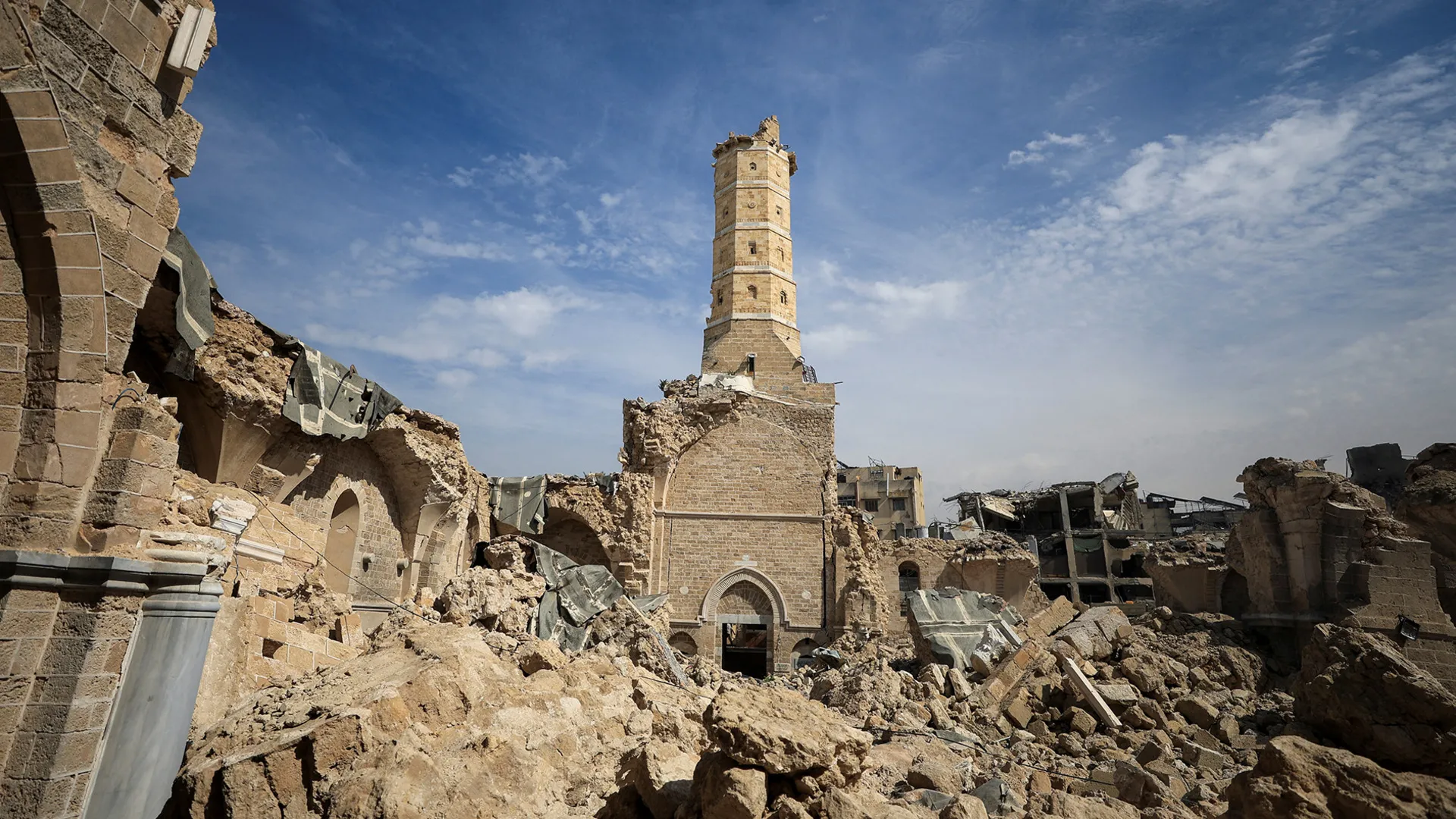
The Great Omari Mosque is one of Gaza City’s most significant landmarks, with origins dating back more than 2,000 years. It was destroyed in an Israeli strike in December 2023. Hatem Haniya, the mosque’s administrator, reflects on its history and its deep significance to the people of Gaza.

Source link

Israel demolishes residential building in occupied East Jerusalem | Newsfeed

NewsFeed

Israeli settlers attacked Palestinians who were forced out of their homes in occupied East Jerusalem, as Israeli forces demolished a four-storey residential building displacing around 100 people on Monday. It was the latest in a series of demolitions targeting Palestinian homes in the area.

Source link

Organized crime drove political shift in Latin America in 2025

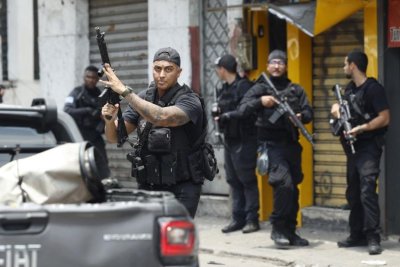
Members of the Rio de Janeiro Police carry out an operation in Rio de Janeiro in October. The police launched a major operation in two favelas aimed at arresting the leaders of the Red Command, the largest criminal gang in the city, and to halt its territorial expansion. File Photo by Antonio Lacerda/EPA

SANTIAGO, Chile, Dec. 19 (UPI) — After nearly two decades of relative stability, the advance of organized crime has reshaped security across Latin America.

The expansion of illicit economies, armed disputes over territorial control and rising violence triggered new migration flows and partly explain the region’s political shift toward right-wing governments in 2025.

According to a report by the Global Initiative Against Transnational Organized Crime, 39 organized crime groups are operating across Latin America.

The report said these groups have become more interconnected and sophisticated, “coordinating operations not only at the local level but also across borders and even continents.”

One of the main factors behind the expansion of criminal structures is business diversification, said organized crime specialist Hugo Contreras, who holds a doctorate in social complexity sciences and is a researcher at the School of Government at Universidad del Desarrollo.

“Organized groups stopped being just traffickers and adopted a portfolio of activities such as extortion, contract killings, smuggling, arms trafficking and human trafficking,” Contreras told UPI. “That has multiplied and diversified their sources of illicit income, as well as their territorial control and disputes.”

He said the trend has been compounded by institutional weakness, including collapsed prison systems that have turned into logistical hubs for criminal groups and judicial systems ill-prepared to confront the phenomenon.

“There has been an emergence of more aggressive and sophisticated transnational criminal gangs, with international networks, greater financial capacity and increased firepower,” Contreras said.

He added that the situation has been reinforced by “massive migration flows from different conflict regions, which these groups have exploited to conceal their members, recruit new people and expand their criminal activities into other countries.”

Pablo Carvacho, director of research and development at the Center for Justice and Society at the Pontifical Catholic University of Chile, shared that assessment, noting that organized crime is especially dynamic and adaptable.

“Migratory processes created space for the development of transnational illicit activities such as human trafficking and sexual or labor exploitation, particularly affecting a highly vulnerable group like migrants,” Carvacho told UPI.

“These flows served as an entry point for countries such as Chile, where criminal activity was not as developed as what we are seeing today,” he said.

The new scenario has deeply transformed internal security dynamics across the region, turning local problems into international threats that are more violent and more damaging to social and political stability, Contreras said.

Criminal organizations manage and contest territory, impose their own rules, control prisons and challenge state authority.

“This forces governments to move beyond traditional crime-control strategies and adopt comprehensive responses that combine financial intelligence, border security, international cooperation and prison reform,” he said.

Contreras said the impact varies widely across the region depending on how deeply organized crime has taken root in each country.

In 2025, Mexico, Ecuador, Brazil and Haiti ranked among the world’s 10 most dangerous countries based on indicators such as mortality, risk to civilians, geographic spread of conflict and the number of armed groups, according to a conflict index published by the Armed Conflict Location and Event Data Project, a nongovernmental organization known as ACLED.

The report said rising violence has been a common trend across Latin America this year. However, the sharpest deterioration was recorded in those four countries.

In Mexico, the organization linked the surge in violence to factors including an internal war within the Sinaloa cartel following the July 2024 arrest in the United States of Ismael “El Mayo” Zambada, one of the group’s historic leaders.

In Ecuador, ACLED warned that violence levels are on track to reach record highs in 2025. It said the homicide rate could be the highest in Latin America for a third consecutive year and that gang-related violence has caused more than 3,600 deaths.

In Haiti, gangs have taken advantage of the political instability the country has faced since 2021, expanding their operations from the capital, Port-au-Prince, to other areas.

In a different political context, criminal gangs in Brazil have also fueled major clashes as they fought for territorial control in cities such as Rio de Janeiro. A large-scale police operation in that city targeting the Comando Vermelho, one of the country’s main criminal groups, left 121 people dead.

The rise in violence and organized crime has contributed to at least 10 countries in the region electing right-wing governments in the 2024-2025 period.

Carvacho said more conservative platforms “place greater emphasis on public order and the intensive use of coercive tools, with strategies based on police force, military deployment, harsher criminal penalties and territorial control.”

He said these approaches often rely on emergency measures under states of exception, with rapid executive decisions and reforms, as well as a greater willingness to strengthen ties with foreign intelligence agencies, including those of the United States.

In Carvacho’s view, containing transnational organized crime requires coordination among countries because “emergency policies alone will not stop its advance.”

He said what can truly weaken these organizations is targeting their financial assets and reducing the pool of people, including children and adolescents, vulnerable to recruitment.

“Everything else is treating the symptoms of a disease,” Carvacho said. “It is arriving late to a problem that is not about criminal law but about vulnerability and the lack of opportunities in communities excluded from society. That is where the state must act.”

Source link

Nearly half of Korean exporters cite China’s low-price competition as top challenge

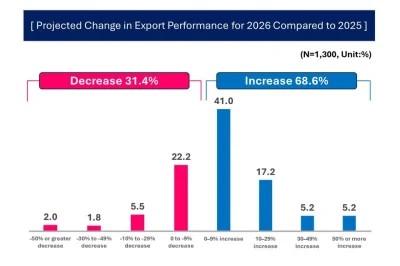
Results of the Korea Federation of SMEs’ “2026 SME Export Outlook Survey.” Graphic by Asia Today and translated by UPI

Dec. 21 (Asia Today) — Nearly half of South Korea’s small and medium-sized exporters expect their overseas shipments to decline next year, with many citing intensifying low-price competition from China as their biggest challenge, a survey released Sunday found.

The Korea Federation of SMEs said its “2026 SME Export Outlook Survey” polled 1,300 exporting SMEs from Dec. 1-12.

In the survey, 68.6% of respondents said they expect exports to increase in 2026 compared with this year, while 31.4% forecast a decrease, the federation said.

Among firms expecting export growth, cosmetics exporters (86.4%) and medical and biotech exporters (86.1%) were the most optimistic, the federation said. The most common reason for expecting export growth, in multiple responses, was improved product competitiveness through new product launches and quality improvements (47.1%), followed by diversification of export markets (29.8%) and improved price competitiveness due to exchange rate appreciation (21.6%).

Among SMEs forecasting weaker exports, 49.3% cited intensifying low-price competition from China as their main export challenge, followed by greater exchange rate volatility (44.6%), sharp increases in raw material prices (37.0%) and uncertainty over U.S. and European Union tariff policies (35.0%), the federation said.

Planned responses to weaker export performance included diversifying export markets (28.2%), improving quality or launching new products (23.0%) and reducing production costs such as labor and raw materials (21.8%), according to the survey.

Despite tariff concerns, the United States ranked first among markets SMEs most want to enter or expand into, at 21.0% when combining first-, second- and third-priority choices, the federation said. Europe followed at 15.2%, with Japan and China tied at 10.6%.

For government priorities to strengthen export competitiveness, respondents most frequently called for expanding support for an export voucher program (53.5%), followed by building a system to counter China’s low-cost offensive (35.8%) and strengthening diplomacy to respond to U.S. and EU tariffs (35.1%), the federation said. Other priorities included expanding support for participation in overseas exhibitions, including in emerging markets (31.5%) and supporting overseas certification and regulatory compliance (27.2%).

Chu Moon-gap, head of the federation’s economic policy division, said it was significant that SMEs are projecting export growth by improving competitiveness despite external headwinds such as tighter export regulations by various countries. He added that companies’ ability to reduce total costs, including production and logistics costs, tariffs and lead times, will be key to export competitiveness and said the government should prepare cost-reduction support measures to help SMEs respond to China’s low-cost competition.

– Reported by Asia Today; translated by UPI

© Asia Today. Unauthorized reproduction or redistribution prohibited.

Source link

Is the US making a great gamble to reshape Iraq? | Donald Trump

United States President Donald Trump’s second administration has introduced a bold and unconventional strategy for the Middle East. The administration intends to recalibrate US influence in a region historically scarred by conflict, prioritising regional stability through economic strength and military consolidation by asserting a stronger, business-minded US presence.

At the centre of Trump’s ambitious goal is what the new US envoy to Iraq, Mark Savaya, described as his goal to “make Iraq great again”. This approach moves away from traditional endless war tactics towards a transactional, results-oriented diplomacy that aims to restore Iraqi sovereignty and economic vitality. It could be the “great gamble” for Trump, who seeks an Iraq that serves as a stable, sovereign regional hub rather than a battleground for foreign interests.

Trump’s primary plans and wishes for Iraq involve a twofold mission: consolidating all armed forces under the command of the legitimate state and drastically reducing the influence of malign foreign players, most notably Iran. The administration seeks to open Iraqi markets to international investment, upgrade the country’s infrastructure, and secure the independence of its energy sector. Hence, the plan is to ground a genuine partnership that respects Iraq’s unity while ensuring that it is no longer a central node for militia activity or external interference.

Militias and political gridlock

This assertive US strategy lands directly in a highly contested and fractured political environment in Iraq, which is less a single state than a patchwork of competing powers. The heart of the problem lies not just in parliament, but also in the persistent shadow influence of armed factions and militias that often operate outside the formal chain of state command. Those groups were among the biggest winners in the November 2025 elections.

Now the ongoing government negotiations have thrown a stark light on these non-state actors.

Their power raises crucial concerns for the future: How can Iraq enforce the law and, crucially, attract the foreign investment needed for revival if armed groups challenge state authority? The consolidation of the country’s armed forces under complete state control is an urgent necessity, underscored by rising regional tensions and security threats.

Moreover, the path to achieving genuine stability is severely obstructed by entrenched political interests.

For Iraq to achieve stability, it must urgently strengthen its institutional frameworks and clearly establish a separation of powers. Yet, many political parties seem more focused on maintaining control over lucrative state resources than on implementing the meaningful reforms the country desperately needs. The result is a governance model struggling to stand firm amid the crosscurrents of competing loyalties and power grabs.

Washington’s play

To achieve these high-stakes goals, Trump has bypassed traditional diplomatic channels by appointing Mark Savaya as the US special envoy to Iraq on October 19. Such an appointment signals a shift towards “deal-making” diplomacy. Savaya’s mission is to navigate the complex political turmoil following Iraq’s parliamentary elections to steer the country towards a stable transition. His job is to bridge the gap between institutional support and massive financial investment, acting as a direct representative of Trump’s business-centric foreign policy.

Savaya is an Iraqi-born, Detroit-based businessman lacking the traditional diplomatic background; his experience is rooted in the private sector in the cannabis industry, but he gained political prominence as an active supporter of Trump’s campaign in Michigan.

He played a key role in the delicate negotiations that secured the release of Elizabeth Tsurkov, the Israeli-Russian academic and Princeton University student who had been kidnapped by an Iraqi militia for more than two years.

Savaya’s communal and ethnic ties have given him significant access to Iraqi power centres that traditional diplomats often lack.

The Iran factor

Iraq’s position in a geopolitical tug-of-war is compounding the internal struggles, forced to balance its critical relationships with two giants: the US and Iran. On the one hand, Washington’s objective is clear: it wants to bolster Iraq’s sovereignty while simultaneously pushing back against the dominance of powerful, often Iran-backed, militias. The US believes that allowing these armed groups too much sway could leave the nation isolated and wreck its fragile economic stability.

But Iranian influence remains a formidable and enduring force. Tehran views Iraq not just as a neighbour but also as a crucial strategic ally for projecting its power across the entire region. The Islamic Revolutionary Guard Corps (IRGC) has been actively working to maintain unity among key Shia factions in Baghdad. This move clearly signals Iran’s deep and enduring interest in shaping Iraq’s political alignment and its future path. Iraq must therefore navigate this high-stakes balancing act to survive.

Savaya’s mission unfolds at a time when Iran’s regional “axis of resistance” is under unprecedented pressure. Having already lost their primary foothold in Syria after the fall of the Assad regime in late 2024, and seeing Hezbollah’s political and military standing in Lebanon severely decimated by the 2025 conflict with Israel, Iranian proxies now face the very real prospect of losing their grip on Iraq too.

In Lebanon, a new government is committed to regaining the state’s monopoly on the use of force, leaving Hezbollah increasingly isolated. This regional retreat means that for Tehran, maintaining influence in Baghdad is a final, desperate stand to remain a relevant regional power.

Other regional actors

The success of Trump’s gamble also depends on the roles of other regional players. Turkiye has recently recalibrated its strategy to integrate Iraq into ad hoc regional trade and security frameworks, effectively diluting Iran’s centrality. Simultaneously, Gulf monarchies such as Saudi Arabia and the United Arab Emirates are emerging as key economic and security partners for Baghdad, offering an alternative to reliance on Iran.

However, these regional actors also bring their own agendas — such as Turkiye’s focus on containing Kurdish movements — which may conflict with US objectives. If Savaya can successfully align these diverse regional interests with Trump’s plan, he may fundamentally rewrite Iraq’s turbulent future.

A realist pragmatism

The “Make Iraq Great Again” strategy reflects a pragmatic reassertion of US interests within the anarchic international system, prioritising Washington’s security and economic power over idealistic goals.

By appointing Savaya — an unconventional, business-oriented envoy — the Trump administration is employing “transactional realism”, utilising economic diplomacy and personal ties as strategic tools to pull Iraq away from Iran’s orbit. This approach views the US-Iran rivalry as a zero-sum game of power politics, where integrating Iraq’s armed forces under centralised state control is fundamental to restoring a state-centric order and sidelining non-state militias that currently feed Tehran’s regional influence.

The new US envoy to Iraq has made clear that “there is no place for armed groups in a fully sovereign Iraq”. His calls resonated with Iraqi officials and militia leaders alike – now at least three militias close to Iran have publicly agreed to disarm. However, other groups have yet to do the same, while rejecting the call from the outset.

However, this high-stakes attempt to shift the regional balance of power faces a significant “security dilemma”, as aggressive moves to diminish Iranian influence may trigger a violent defensive response from Tehran to protect its remaining strategic assets. While the strategy seeks to exploit a regional shift – leveraging the weakened state of Iranian proxies in Syria and Lebanon – it must contend with the “hybrid” power of Iraqi militias and the narrow self-interests of neighbouring players like Turkiye and the Gulf states.

The success of this gamble depends on whether the US can dismantle the shadow economies that facilitate foreign interference and establish a stable, autonomous Iraqi state capable of navigating the intense geopolitical tug-of-war between Washington and Tehran.

The stakes for Iraq’s future

Ultimately, the appointment of Savaya serves as the definitive stress test for Iraqi sovereignty, marking a high-stakes transition towards a transactional “America First” strategy aimed at “Making Iraq Great Again”. By attempting to consolidate military command under the state and dismantle the shadow economies fuelling Iranian influence, Savaya’s mission seeks to exploit the current regional weakening of Tehran’s proxies to transform Iraq into a stable, autonomous hub.

However, the success of this “Great Gamble” hinges on Savaya’s ability to overcome entrenched political opposition and reconcile the presence of US forces with the demand for national unity. If this unconventional diplomatic push can bridge internal divides — particularly between Baghdad and the semi-autonomous Kurdish region in the north — Iraq may finally secure a path towards economic independence; otherwise, the nation risks remaining a perpetual battleground caught in the geopolitical crossfire between Washington and Tehran.

The views expressed in this article are the author’s own and do not necessarily reflect Al Jazeera’s editorial stance.

Source link