TOP NEWS

From breaking news to significant developments in politics, business, technology, entertainment, and more, we deliver the stories that shape our global landscape.

Patel planning permanent closure of FBI’s Hoover headquarters building

Dec. 27 (UPI) — The FBI Hoover headquarters in Washington soon will be vacant as the federal law enforcement agency prepares to make a permanent exit in favor of a more modern structure.

FBI Director Kash Patel plans to make a permanent move into the former headquarters of the recently closed U.S. Agency for International Development sometime soon, according to Bloomberg.

“After more than 20 years of failed attempts, we finalized a plan to permanently close the FBI’s Hoover headquarters and move the workforce into a safe, modern facility,” Patel said in a social media post on Friday.

Moving into the former USAID headquarters will save taxpayers almost $5 billion, which was allocated to build a new FBI headquarters that would not have opened until 2035, Patel said.

“We scrapped that plan,” he explained. “Instead, we selected the already-existing Reagan Building, saving billions and allowing the transition to begin immediately with required safety and infrastructure upgrades underway.”

When the improvements are done, Patel said the FBI staff will move into the Reagan Building, which is located at 1300 Pennsylvania Ave. N.W., between the White House and the Capitol. He did not say when the move might occur.

The Hoover Building will be shut down after the FBI vacates it, the FBI director added.

While Patel said the move will save taxpayers billions of dollars, Maryland lawmakers are not happy about the change in plans.

Congress had approved the allocation to build a new FBI headquarters in Maryland during the Biden administration, but the change in plans has canceled that.

“Not only was this decision final, [but] the Congress appropriated funds specifically for the purpose of the new, consolidated campus to be built in Maryland,” the state’s Democratic Party Congressional delegation said in a joint statement in July.

“Now the Administration is attempting to redirect those funds — both undermining Congressional intent and dealing a blow to the men and women of the FBI — since we know that a headquarters located within the District [of Columbia] would not satisfy their security needs,” the delegation said.

Maryland officials in November filed a federal lawsuit accusing the Trump administration of improperly diverting $555 million when it announced the change of plans for the FBI headquarters.

“These actions flouted Congress’s explicit direction to choose a site from the three specified sites, as well as other specific statutory directives concerning the selection of the site and the use of the funds,” state attorneys say in the federal lawsuit.

The J. Edgar Hoover Building opened in 1974 and has been the FBI’s headquarters for the past 50 years.

Prior to that, the FBI was headquartered in the Justice Department building.

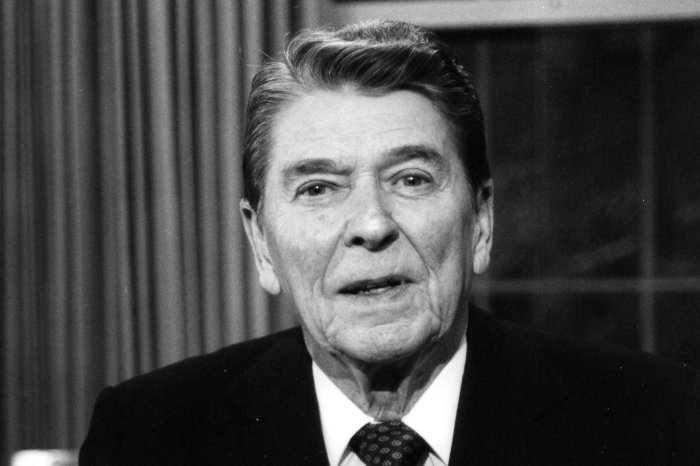
Former actor and sports broadcaster Ronald Reagan, known for films such as “Knute Rockne, All American” and “Kings Row,” is pictured in the Oval Office after delivering his farewell address to the nation on January 11, 1989. Reagan later served as the 40th president of the United States. Photo by Joe Marquette/UPI | License Photo

Source link

Analysis: ISIL attacks could undermine US-Syria security collaboration | Syria’s War News

On December 13, a joint US-Syrian patrol was ambushed by a member of Syria’s own security forces near Palmyra, a city in central Syria once controlled by the ISIL (ISIS) group.

Two US soldiers and an interpreter were shot dead, and four people were wounded, before Syrian forces killed the gunman.

Recommended Stories

list of 3 itemsend of list

In the aftermath of the attack, US and Syrian officials linked the attacker to ISIL, which once controlled vast swaths of Syria and Iraq, and promised to retaliate.

The incident highlights the growing cooperation between the United States and Syria against ISIL, particularly after Damascus joined the US-backed coalition against the group in November.

While it is still unclear if the attacker was a member of ISIL or another group opposed to US-Syrian relations, analysts say that cooperation between the two countries is strong and growing stronger.

“The Syrian government is responding very robustly to fighting ISIL following US requests to do so, and it is worth noting that HTS [Hayat Tahrir al-Sham], before it was in government, had a long-term policy of fighting ISIL,” Rob Geist Pinfold, a scholar of international security at King’s College London, told Al Jazeera, referring to Syrian President Ahmed al-Sharaa’s former group.

“It [HTS] did it in Idlib, and cracked down on insurgents and cells, and this is more a continuation of that policy.”

Syria’s Minister of Interior spokesman, Noureddine al-Baba, told Syria’s Al-Ikhbariah TV that there was no direct chain of command to the gunman within Syria’s internal security forces, and that he was not part of the force tasked with escorting the US forces. Investigations are under way, he added, to determine whether he had direct ties to ISIL or adopted violent ideology.

ISIL attacks down

In May 2015, ISIL took over the city of Palmyra from the former Syrian government.

Famous for its Greco-Roman ruins, the city bounced back and forth between regime forces and ISIL until the group was expelled in 2017.

In May 2017, the US-led coalition also forced the group out of Raqqa, which ISIL had declared the capital of its so-called caliphate three years earlier.

Many surviving ISIL fighters were imprisoned in the al-Hol and Roj camps in northeast Syria, controlled by the US-backed Syrian Democratic Forces (SDF). Others escaped into the Syrian desert around Palmyra, from where they have occasionally launched attacks.

When the regime of former Syrian President Bashar al-Assad fell on December 8, 2024, analysts said ISIL fighters used the ensuing chaos to go into various cities across the country. In June, the group launched an attack on a church in Damascus that killed at least 25 people.

Samy Akil, a fellow at the Tahrir Institute, said recent estimates put ISIL’s manpower in Iraq and Syria at between 3,000 and 5,000 fighters.

But experts told Al Jazeera that the coordination between Damascus and Washington has improved over the last year, and pointed to the fact that Syria’s security forces have thwarted several ISIL attacks due to US-provided intelligence.

“Ahmed al-Sharaa’s new government is committed to fighting the group and, in contrast to the Assad era, al-Sharaa’s government gets regular tip-offs from US intelligence, and probably other forms of US support as well. That’s a pretty powerful combination,” Aron Lund, a research fellow at Century International, focusing on Syria, told Al Jazeera.

This collaboration has seen a decrease in ISIL attacks in Syria, according to a report by consulting firm Karam Shaar Advisory. ISIL launched an average of 63 attacks a month in 2024, while in 2025, that number dropped to 10, according to the report.

“Since HTS arrived in Damascus, collaboration [with the US] has become much easier,” Jerome Drevon, a senior analyst with the International Crisis Group, told Al Jazeera.

Structural flaws

After the fall of the Assad regime, there were questions over how security would be enforced. The few thousand HTS members who had previously only controlled Idlib in northwest Syria would not be enough to enforce security across the country.

Syria’s security forces undertook a serious recruitment drive, bringing in tens of thousands of new recruits to add to many of the existing former opposition battalions that were incorporated under the state’s new security apparatus.

With such a huge recruitment campaign, analysts said, vetting was a difficult task.

“The Palmyra attack points to structural flaws rather than a mere one-off event. Integration of former faction fighters and rapid new recruitment have produced uneven vetting and oversight, compounded by a permissive environment for radical views, allowing infiltration to persist,” Nanar Hawash, International Crisis Group’s senior Syria analyst, told Al Jazeera.

“Together, these factors blur early warning signs and create space for hidden threats, raising the risk of repeat attacks.”

Analysts said they expect Syrian security forces to improve the vetting process with time. Meanwhile, another attack like December 13’s was possible and could dent the US’s faith that al-Sharaa’s government can provide security in Syria.

“It could happen again due to the sheer numbers [of new recruits], but over time, the government will improve its game and be more thorough to prevent that from happening again, because it will have consequences,” Drevon said.

“We should be careful over generalising based on one attack, which can be a one-off. But if it happens again, it might change the perception of the Syrian government.”

What does ISIL want?

As for ISIL, analysts said the group’s priorities have changed since the fall of al-Assad.

“What we’re seeing now is ISIL is trying to test boundaries and conduct attacks knowing it cannot gain territorial control,” Akil said.

“It aims at destabilising and staying relevant.”

“ISIS cannot hold cities or topple governments. But it doesn’t need to. Its strength lies in destabilisation,” Hawach said. “The Palmyra attack showed that one operative with the right access can kill three US personnel and shake a bilateral relationship.”

Analysts said ISIL could destabilise Syria by targeting state security forces, religious minorities – like it did in the Damascus church attack in June – or any foreigner on Syrian soil, from US soldiers to humanitarian or United Nations workers. The group could also look to capitalise on tensions between the SDF and Damascus over disagreements on how to integrate the former into the state’s security apparatus.

The SDF also manages the al-Hol and Roj prison camps in northeast Syria, where many of ISIL’s most battle-hardened fighters and commanders are held. This could prove to be a key target for ISIL in Syria.

“ISIL thrives in those vacuums,” Hawach said.

“It’s a guerrilla insurgency, not a caliphate, but in a fragile state, that’s enough to cause serious damage.”
Source link

Kentucky police seize 55 pounds of gift-wrapped meth

A man carrying 55 pounds of suspected methamphetamine in gift-wrapped boxes was arrested for drug trafficking near Louisville, Ky., on Monday. File Photo by Justin Lane/EPA-EFE

Dec. 27 (UPI) — A Nebraska man was arrested near Louisville, Ky., when police found 55 pounds of suspected methamphetamine in Christmas wrapping inside his vehicle’s trunk on Monday.

Jeffersontown Police Department officers arrested Jacob Talamantes, 23, while he was at a shopping center near the Bluegrass Parkway after a police dog detected drugs in his 2013 Chevrolet Malibu.

Police officers searched his vehicle and found the meth in gift-wrapped boxes inside the trunk and arrested him.

“No amount of festive wrapping can disguise the harm these drugs inflict on families and communities,” JPD Chief Richard Sanders said in a news release.

“The coordinated efforts of partner agencies ensured these holiday-wrapped packages never reached the streets,” Sanders said.

The police were conducting a drug investigation at the shopping center when the dog alerted them to the drugs when Talamantes arrived in the vehicle, WLWT reported.

He tried to walk away from the police, but they detained him.

Talamantes told officers he was driving from Iowa and intended to traffic the drugs, and he was arrested and charged with first-degree trafficking in a controlled substance.

The Drug Enforcement Agency and Kentucky State Police assisted with the arrest and are helping with the investigation into the matter.

Jeffersontown is located about 15 miles southeast of Louisville.

Source link

Magnitude 6.6 earthquake near Taiwan disrupts rail services

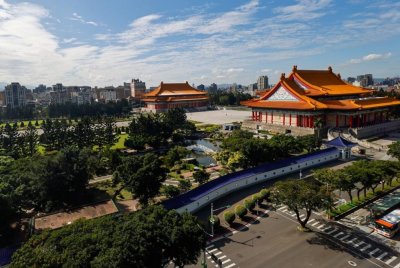
A 6.6-magnitude earthquake about 20 miles off Taiwan’s east coast briefly disrupted rail services and power to 3,000 homes late Saturday night. Photo by Ritchies B. Tongo/EPA

Dec. 27 (UPI) — A 6.6-magnitude earthquake was recorded off Taiwan’s northeastern coast on Saturday night, but no injuries or significant damage were reported.

The earthquake struck offshore at 11:05 p.m. local time and was located 20 miles east of Yilan County Hall.

The epicenter was 45 miles beneath the Earth’s surface, which largely protected Taiwan against harm and helped to prevent a tsunami warning.

The earthquake was felt in 17 of Taiwan’s 22 counties, which created a seismic intensity of 4 on the island’s 7-point scale.

Six of Taiwan High Speed Rail’s trains temporarily stopped upon detecting seismic alerts near Nangang and Yunlin.

Metro rail services in Taipei and Taichung reduced their respective speeds for a short time before resuming normal speeds late Saturday night.

More than 3,000 homes in Yilan lost power for a short period, but it was restored.

The U.S. Geological Survey recorded the earthquake as magnitude 6.6, but Taiwan’s Central Weather Administration reported it as magnitude 7.0.

Taiwan is located in an active seismic zone and on Wednesday recorded a 6.1-magnitude earthquake that impacted the coastal county of Taitung in the southeastern part of the island.

That earthquake also shook buildings in the capital city of Taipei.

Source link

Russia-Ukraine war: List of key events, day 1,403 | Russia-Ukraine war News

These are the key developments from day 1,403 of Russia’s war on Ukraine.

Here is where things stand on Sunday, December 28:

Fighting

  • At least two people were killed in Ukraine’s capital, Kyiv, and the surrounding region, after Russian forces launched a massive attack with hundreds of missiles and drones, ahead of Ukrainian President Volodymyr Zelenskyy’s meeting with United States President Donald Trump to work out a plan to end nearly four years of war.
  • The attack also wounded at least 46 people, including two children, according to Ukrainian officials.
  • Zelenskyy, who was on his way to meet Trump in Florida, said that Russia had launched nearly 500 drones and 40 missiles, targeting energy and civilian infrastructure.
  • Ukraine’s state grid operator, Ukrenergo, said that energy facilities across Ukraine were struck, and emergency power cuts had been implemented across the capital. DTEK, Ukraine’s largest private energy company, said the attack had left more than a million households in and around Kyiv without power.
  • Ukrainian Deputy Prime Minister Oleksii Kuleba said that more than 40 percent of residential buildings in Kyiv were left without heat, as temperatures hovered around 0 degrees Celsius (32 degrees Fahrenheit) following the attack.
  • Poland’s Air Navigation Services Agency said in a statement on X that the Rzeszow and Lublin airports in the country’s southeastern region were temporarily shut following Russia’s strikes on Ukraine. The Operational Command of the Polish Armed Forces said that Polish and allied jets were deployed during the attack, but no violations of Polish airspace were reported.
  • In Russia, air defence forces shot down 11 drones headed for the capital, Moscow, according to the city’s mayor, Sergei Sobyanin.
  • Russia’s aviation watchdog, Rosaviatsia, said that Moscow’s Vnukovo and Sheremetyevo airports imposed temporary restrictions on airspace due to security reasons.
  • Russia’s Ministry of Defence also said that its air defence systems had intercepted and destroyed more than 100 Ukrainian drones in three hours over six other Russian regions.
  • Russian commanders told President Vladimir Putin that Moscow’s forces had captured the Ukrainian towns of Myrnohrad, Rodynske and Artemivka in Ukraine’s Donetsk region, as well as Huliaipole and Stepnohirsk in the Zaporizhia region, the Kremlin and Russian news agencies said on Telegram.
  • But Ukraine’s military said in its daily battlefield update that its forces had beaten back Russian attempts to advance in the vicinity of Myrnohrad and Huliaipole.

Politics and diplomacy

  • Zelenskyy announced in a Telegram message that he would hold talks with European leaders after his meeting with Trump on Sunday, as Kyiv pushes for a stronger position in the ongoing ceasefire negotiations to prevent Russia from prolonging the war in Ukraine.
  • Zelenskyy said he wants to discuss with Trump territorial issues, the main stumbling block in talks to end the war, as a 20-point peace framework and a security guarantee deal near completion.
  • On the way to the meeting in Florida, Zelenskyy stopped in Canada’s Halifax to meet Mark Carney, the Canadian prime minister said in a statement after the meeting.
  • Carney denounced the latest Russian attack as “barbarism”, stressing that it is important for allies to “stand with Ukraine in this difficult time”. He also announced $1.83bn in additional economic aid to Ukraine.
  • Zelenskyy spoke to European leaders following the meeting with Carney. In a statement posted on X, European Commission President Ursula von der Leyen said: “We welcome all efforts leading to our shared objective – a just and lasting peace that preserves Ukraine’s sovereignty and territorial integrity. And that strengthens the country’s security and defence capabilities.”
  • Antonio Costa, the president of the European Council, which represents the bloc’s 27 member states, echoed von der Leyen’s promise to continue backing Ukraine, saying on X: “The EU’s support for Ukraine will not falter. In war, in peace, in reconstruction.”
  • German Chancellor Friedrich Merz said that Zelenskyy had “the full support” of European leaders ahead of his talks with Trump. The leaders of NATO and the European Union said they would work “in close coordination” with the US “for a just and lasting peace in Ukraine”, Merz added in a statement.
  • French President Emmanuel Macron said in a call with Zelenskyy that the latest Russian strikes on Kyiv showed that Moscow was not interested in ending the war, the AFP news agency reported, citing officials from Macron’s office. During the call, Macron highlighted what he called the “contrast” between “the willingness of Ukraine to build a lasting peace and Russia’s determination to prolong the war that it started”, the report said.
  • Russian President Vladimir Putin said that Russia could see Kyiv was in no hurry to end the war by peaceful means, according to the Interfax news agency. Putin said that if Ukraine did not want to resolve the conflict peacefully, then Russia would accomplish all goals of its “special military operation” by force, Russian state news agency TASS reported.
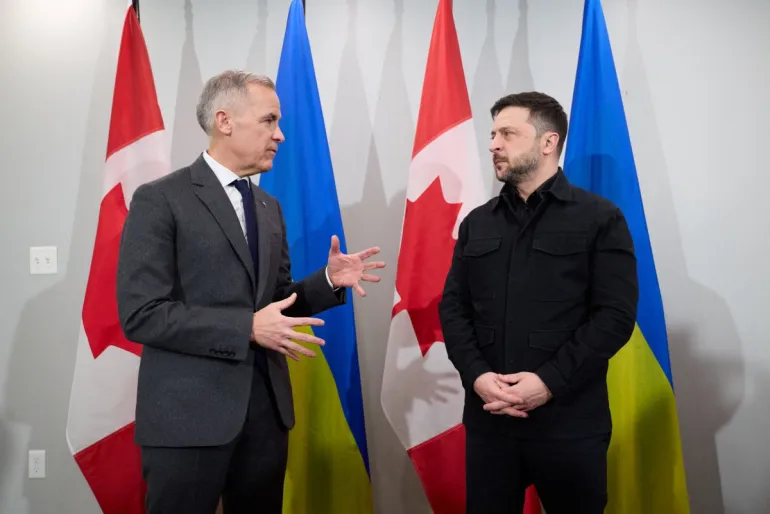
HANDOUT / UKRAINIAN PRESIDENTIAL OFFICE / AFPCopy Photo by HANDOUT / UKRAINIAN PRESIDENTIAL OFFICE / AFP This handout photograph taken on December 27, 2025 and released by the Ukrainian Presidential Office shows Ukraine's President Volodymyr Zelensky (R) and Canadian Prime Minister Mark Carney speaking to the press as they meet in Halifax, Nova Scotia, Canada. Establishing a lasting peace in Ukraine requires "a willing Russia," Carney said Saturday, denouncing the "barbarism" of Moscow's latest bombardment of Kyiv as he met with Zelensky.
Ukrainian President Volodymyr Zelenskyy (right) and Canadian Prime Minister Mark Carney (left) speak to the media as they meet in Halifax, Nova Scotia, Canada, ahead of the former’s meeting with US President Donald Trump on Sunday [Ukrainian Presidential Office/Handout Photo via AFP]

Source link

Nigeria reach AFCON knockouts despite late Tunisia scare | Africa Cup of Nations News

Victor Osimhen starred as Nigeria became the second qualifiers for the Africa Cup of Nations knockout stage after Egypt by surviving a late Tunisia onslaught to win 3-2 in Fes.

The Super Eagles were cruising to victory on Saturday, leading 3-0 through goals from Osimhen, captain Wilfred Ndidi and Ademola Lookman.

Recommended Stories

list of 4 itemsend of list

But Tunisia refused to surrender in the top-of-the-table Group C clash, and Montassar Talbi and Ali Abdi scored to set up a tense finish.

Tunisia had two chances to level during seven minutes of added time, but a header from captain Ferjani Sassi and a shot by substitute Ismael Gharbi were just off target.

Nigeria have six points, Tunisia three, and Tanzania and Uganda one each, with the final round of group matches set for Tuesday.

The showdown was the seventh time the Super Eagles and the Carthage Eagles had faced each other at an AFCON.

Nigeria won three times, and Tunisia once. Another two meetings went to penalty shootouts, with each nation winning one.

After performing well below par when edging Tanzania in the opening round, Nigeria were a transformed team against Tunisia, dominating the first 30 minutes in the northern city.

Osimhen was outstanding, particularly in aerial duels, while Tunisia were forced to constantly defend against the three-time champions.

The Galatasaray striker, wearing his trademark mask, headed just over after nine minutes, and came close again soon after as he rose to meet a corner kick.

Osimhen had the ball in the net after 17 minutes, but was rightly ruled offside. Big-screen replays showed the 2023 African player of the year timing his run too early.

Tunisia midfielder Hannibal Mejbri was lucky to escape a yellow card for dissent after reacting angrily when a Nigerian took a foul throw, flinging the ball into the ground.

Osimhen was wide with another headed goal attempt, then left the pitch temporarily so that the medical staff could apply a spray to his leg.

Tunisia finally broke out of a defensive shell on 32 minutes and forced a corner. The set-piece ended with the ball coming back to Abdi, whose shot flew well over.

Several Tunisian raids reaped no reward, and on 44 minutes, the goalless deadlock was broken, with Osimhen, predictably, the scorer.

The goal involved two former African players of the year, with 2024 winner Lookman crossing the ball and Osimhen rising between Abdi and Talbi to head powerfully into the net.

Just five minutes into the second half, Nigeria stretched their lead to two goals, as they once again exposed the aerial weaknesses of the Tunisian defence.

Atalanta striker Lookman was the architect again, floating a corner into the heart of the goalmouth, where Ndidi soared to beat goalkeeper Aymen Dahmen and score his first international goal.

After creating the first two goals, Lookman scored the third on 67 minutes, after being set up by Osimhen. He had time to control the ball in the box before slamming it into the net off the post.

Tunisia pulled one goal back with 16 minutes remaining. The North Africans finally got the better of an aerial duel, and Talbi nodded a Mejbri free-kick into the net.

The goal had a dramatic effect as Tunisia took control and scored again with three minutes left, when Abdi converted a penalty awarded after a VAR review showed Bright Samuel handled.

Uganda spurn penalty chance to beat Tanzania

Uganda’s Allan Okello missed a late penalty as his side had to settle for a 1-1 draw against East African neighbours Tanzania at the Africa Cup of Nations earlier on Saturday.

Okello’s failure to convert from the spot denied Uganda a precious victory in the Group C clash after Uche Ikpeazu had scored a late equaliser for the Cranes in front of 10,540 fans at Al Medina Stadium in Rabat.

Before that, it looked like Tanzania, winless in 10 previous matches across four AFCON tournaments, might finally break their duck when Simon Msuva put them in front from the penalty spot.

But Ikpeazu, who plays in the Scottish second tier for St Johnstone, headed in a cross by fellow substitute Denis Omedi to level the scores with 10 minutes remaining.

“I have a very bad feeling, because I think we didn’t deserve this draw. I think we had more opportunities,” said Uganda coach Paul Put.

Of the missed penalty, he said, “That is very, very painful, but that is also football.”

The deadlock between the regional rivals, who will co-host the 2027 Cup of Nations with Kenya, does little to help their chances of progressing to the last 16 from Group C.

Both have one point from two matches and trail Nigeria and Tunisia, with the two former champions facing off later on Saturday in Fes.

“It is not in our hands, but we have to believe,” said Put, whose team play Nigeria next.

Uganda, who have just one AFCON win of their own across three tournament appearances since losing the 1978 final, came closest to scoring in the first half.

An Aziz Kayondo cross from the left was met by the head of Rogers Mato, whose effort came back off the underside of the crossbar.

Tanzania were awarded a spot-kick just before the hour mark, when a shot by Alphonce Msanga struck the arm of Uganda’s Baba Alhassan.

The experienced Msuva, who plays club football in Iraq, made no mistake from the spot and has now scored goals at three different AFCON tournaments.

However, a dramatic finish to the game amid a torrential downpour saw Tanzania squander the lead and then breathe a big sigh of relief as Uganda missed the opportunity to claim victory.

Ikpeazu made it 1-1, and Uganda won a penalty when James Bogere went down as his shirt was pulled by Tanzania defender Haji Mnoga of Salford City.

With the game in the 90th minute, Okello stepped up and was perhaps put off by a huge clap of thunder just before he took his kick, which went over the bar.

“I am a little bit disappointed with the result, because we tried to win the game, but we also could have lost it in the last five minutes,” said Tanzania coach Miguel Angel Gamondi.

“We wanted our first win at the Africa Cup of Nations, and I am very sorry for all the Tanzanian people.”

Source link

Bessent, Trump urge ending the Senate filibuster; as 2026 budget looms

Dec. 27 (UPI) — President Donald Trump and Treasury Sec. Scott Bessent urged an end to the Senate filibuster rule ahead of an anticipated budget battle in January.

Bessent submitted an op-ed that The Washington Post published on Saturday and blames Senate Democrats and the filibuster for blocking passage of a resolution to keep the federal government open while negotiating the 2026 fiscal year budget and causing a record 43-day shutdown of the federal government.

“The American people are just now emerging from the longest and most devastating government shutdown in U.S. history,” Bessent said.

“While the blame lies squarely with Senate Democrats, we cannot ignore the weapon they used to hold the country hostage: the legislative filibuster,” Bessent wrote.

With the continuing resolution expiring on Jan. 30, Bessent said there is a strong likelihood that Senate Democrats again will use the filibuster to block passage of a budget and force the government to close again.

“Democrats inflicted tremendous harm on the nation, including $11 billion in permanent economic damage” as the federal government was “held for ransom by the left’s demands,” Bessent said.

He said the shutdown caused the nation to lose 1.5 percentage points in gross domestic product growth during the fourth quarter, triggered 9,500 canceled flights and caused 1.4 million federal workers to miss their paychecks.

He called the filibuster a “historical accident that has evolved into a standing veto for the [Senate] minority and a license for paralysis.”

The Constitution does not mention a filibuster, and its “framers envisioned debate, but they expect majority rule,” Bessent said.

He said the filibuster has its roots in an 1806 Senate rules decision that deleted a “previous question” motion, which unintentionally removed the Senate’s mechanism for ending debate with a majority vote.

Senators later realized they could “delay or block” legislative action with unending debate, and just the threat of a filibuster is enough to trigger the filibuster rule requiring a supermajority of 60 votes to end it, Bessent explained.

He said it is likely that Senate Democrats again will force the federal government to shut down at the end of January by blocking the 2026 fiscal year budget vote.

President Barack Obama called the filibuster a “‘Jim Crow relic,'” but Bessent said Senate Democrats always use it to their advantage whenever possible, and the president agrees.

“It’s time to end the filibuster,” Trump said while agreeing with Bessent in a social media post that includes Bessent’s op-ed.

He also told Politico that the GOP must end the filibuster when interviewed on Friday night.

Doing so will help his administration to undo damage that he said was caused by the Biden administration and led to very high inflation that he is trying to fix to make life more affordable in the United States, Trump said.

The president has urged Senate Republicans to end the filibuster as soon as possible and said Senate Democrats will do it the first chance that they get when they eventually win a majority in the Senate.

Senate Democrats in September and afterward overwhelmingly opposed a clean continuing resolution to keep the federal government open and instead submitted a resolution that would add $1.5 trillion in spending over the next 10 years to extend Affordable Care Act subsidies that expire at the end of December.

Senate Democrats control 47 seats, including two occupied by independents who caucus with Senate Democrats, while the GOP controls 53 seats, so neither party can overcome the filibuster rule without help from the other.

The Senate GOP could not muster the 60 votes needed to overcome the filibuster rule until eight Senate Democrats joined with most Senate Republicans to support the continuing resolution to end the 43-day government shutdown that began when the 2026 fiscal year started on Oct. 1.

Senate Democrats in 2022 tried to end the filibuster rule but could not obtain a simple majority due to opposition from Sens. Kyrsten Sinema of Arizona and Joe Manchin of West Virginia, both of whom were Democrats but have retired from politics.

Source link

Italian authorities arrest 9 alleged Hamas fundraisers

Italian officials on Saturday announced the arrests of nine people who are accused of using charities to raise $8.2 million, most of which funded Hamas. File Photo by Mohammed Saber/EPA

Dec. 27 (UPI) — Nine people who are accused of raising more than $8 million in Italy to help fund Hamas have been arrested by Italian authorities.

The nine are accused of raising $8.2 million over the past two years to help fund Hamas after it carried out the Oct. 7, 2023, attack on Israeli civilians and started the war in Gaza.

“The operation completed this morning by the State Police and the Guardia di Finanza (Financial Police) is a very important and significant one, with the arrest of nine people, including the most well-known Mohammad Hannoun,” Italian Interior Minister Matteo Piantedosi said in a post on X on Saturday.

“Despite the necessary presumption of innocence that must always be recognized at this stage, the veil has been torn away on behaviors and activities that, behind the facade of initiatives to benefit the Palestinian population, concealed support for and participation in organizations with actual terrorist aims of an Islamist nature,” Piantedosi said.

“This is a danger to which our government is paying the utmost attention,” he added.

A joint investigation by Italy’s counter-terrorism and financial police forces started after the 2023 attack on Israel by Hamas and Islamic Jihad.

Investigators uncovered a fundraising system with headquarters in Genoa and associates in Milan that raised the funds under the pretext of supporting Gazans.

“The suspects collected donations intended for the civilian population of Gaza,” a police statement said.

“However, it emerged that 71% of these funds were diverted to Hamas’ coffers to finance its military wing and support the families of suicide bombers or those detained for terrorism,” the police officials said.

Central to the investigation is Hannoun, who is the president of the Palestinian Association that is based in Italy and has denied being a financier for Hamas.

The funds allegedly were raised by Hannoun and eight other defendants through three charities and laundered to hide their true destination.

Hamas is a designated foreign terrorist organization by the United States and many other nations.

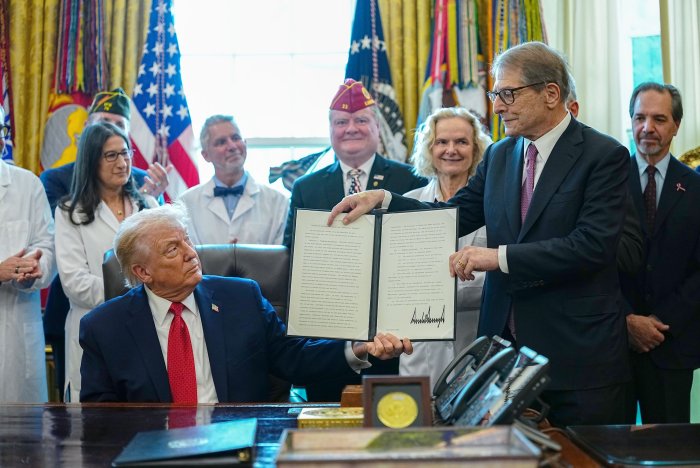
President Donald Trump holds a signed executive order reclassifying marijuana from a schedule I to a schedule III controlled substance in the Oval Office of the White House on Thursday. Photo by Aaron Schwartz/UPI | License Photo

Source link

Mane rescues Senegal in draw with DR Congo, as Benin find first AFCON win | Africa Cup of Nations News

Sadio Mane’s equaliser earned 2022 champions Senegal a 1-1 draw with the Democratic Republic of the Congo (DRC) in their heavyweight Africa Cup of Nations clash on Saturday.

Cedric Bakambu had given the Leopards the lead just after the hour mark in Tangier, but Al-Nassr forward Mane replied soon after, and the result ensures Senegal stay on top of Group D with one round of matches still to play.

Recommended Stories

list of 4 itemsend of list

Both teams have four points, but Senegal have a superior goal difference before their final group match against Benin on Tuesday.

Benin have three points after a 1-0 victory earlier Saturday in Rabat against Botswana, who are bottom without a point or goal scored.

Sebastien Desabre’s Congolese side were seeking revenge after a dramatic defeat in the last meeting of the nations, in World Cup qualifying in September.

Senegal came from 2-0 down to win that encounter 3-2 in Kinshasa, a result which allowed them to go on and top their group to secure a place at next year’s finals in North America.

DRC were therefore forced to settle for second place, but can still make the World Cup if they win a one-off playoff against either New Caledonia or Jamaica in Mexico in March.

Senegal, fresh from beating Botswana 3-0 and seen as perhaps the biggest threat to Morocco’s chances of winning the title on home soil, had more of the possession and more chances on the day.

However, the Leopards took the lead in the 61st minute when Theo Bongonda – scorer of the only goal in their opening win against Benin – had a shot at the end of a fine move parried by goalkeeper Edouard Mendy, and Real Betis striker Bakambu pounced to convert the loose ball.

But Senegal were only behind for eight minutes, their equaliser coming after a superb run by teenage substitute Ibrahim Mbaye.

The 17-year-old Paris Saint-Germain winger Mbaye, who was born in France and represented them up to Under-20 level, recently committed his international future to Senegal, for whom he qualifies through one of his parents.

He replaced Ismaila Sarr just after Bakambu’s opener, and made the leveller from a penetrating run down the right.

Mbaye burst away from Arthur Masuaku, who appeared to injure himself going to tackle, and then saw his shot blocked by Lionel Mpasi, but Mane was on hand to score.

It was a 10th AFCON goal for former Liverpool superstar Mane, who is appearing at his sixth tournament.

Benin record first AFCON win in their history

Yohan Roche ‌scored a deflected winner as Benin claimed a first-ever victory ‍at the Africa ‍Cup of Nations finals, with a 1-0 Group D success against Botswana in Rabat on Saturday.

Benin move to three points from their opening two games, level with Senegal and the DRC in the table, who meet in their second pool fixture ​in Tangier later on Saturday.

Benin took the lead in ‍the 28th minute when Roche played a one-two in the box with captain Steve Mounie, and his shot from 9 metres (10 yards) took a wicked deflection off a defender ‍and into ⁠the net.

Benin finally celebrated a victory at the continental finals on the 16th attempt, following their debut in 2004, and despite the fact that they were quarterfinalists in 2019. They also have five draws to go with 10 defeats.

Botswana offered little going forward, though Mothusi Johnson struck the crossbar with a curling free-kick that ​beat the goalkeeper but not the frame of the ‌goal.

Benin had several chances to add to their score, though Botswana goalkeeper Goitseone Phoko made an excellent low stop to deny Tamimou Ouorou.

Dodo Dokou then worked an excellent shooting ‌chance 11 metres (12 yards) from goal in added time at the end of the game, but fired over ‌the bar with the goal gaping.

Botswana become ⁠the second team, after Benin, to lose their first five Cup of Nations matches after three defeats on debut in 2012 and an opening 3-0 loss to Senegal this year.

They ‌meet DRC in their final pool game on Tuesday, while Benin face Senegal at the same time.

The top two teams in each pool, ‍as well as the four best third-placed sides across the six groups, qualify for the Round of 16.

Source link

Deadly Russian attacks continue ahead of Trump-Zelensky meeting

1 of 4 | Russia targeted Kyiv with 40 missiles and nearly 500 drones that killed one and injured 27 during an early morning aerial assault on the Ukrainian capital on Saturday. Photo by Sergey Dolzhenko/EPA

Dec. 27 (UPI) — Russian attacks on Kyiv killed at least one and injured 27 early Saturday morning as Ukrainian President Volodymyr Zelensky prepares to meet with President Donald Trump on Sunday.

The Russian aerial assault started at 1:30 a.m. local time in Kyiv with missiles and attack drones dispatched in waves, causing Kyiv Mayor Vitali Klitschko to warn residents to stay in air raid shelters, The New York Times reported.

An estimated 40 missiles and 500 drones knocked out power in much of the city during the aerial assault.

Zelensky said the attack is the latest example of why Ukraine needs its international partners to help guarantee the nation’s security before agreeing to end the war that started when Russia invaded on Feb. 24, 2022.

Zelensky and Trump are scheduled to meet in Florida on Sunday, and the Ukrainian president is hopeful of securing a legally binding security guarantee.

“This depends primarily on President Trump,” Zelensky told media. “The question is what security guarantees President Trump is ready to give Ukraine.”

The Ukrainian president has drafted a 20-point peace plan that includes the creation of a demilitarized zone between Russia and Ukraine.

He told Axios that he hopes it will lead to a framework for a cease-fire and a lasting peace that the Ukrainian people would support.

That framework might include a 60-day cease-fire to give Ukraine time to schedule and hold a national referendum, which may include territorial concessions to end the war.

Russian officials have said they understand the need for a referendum, but they want a shorter timeframe to get it done.

Before Sunday’s meeting, Zelensky is stopping in Canada on Saturday to meet with Canadian Prime Minister Mark Carney and hold virtual discussions with European leaders.

Carney and Zelensky will meet in Halifax, Nova Scotia, and have scheduled joint calls with leaders from the United Kingdom, France, Italy and Germany, according to Sky News.

President Donald Trump holds a signed executive order reclassifying marijuana from a schedule I to a schedule III controlled substance in the Oval Office of the White House on Thursday. Photo by Aaron Schwartz/UPI | License Photo

Source link

Israel’s recognition of Somaliland slammed across world capitals | Politics News

Regional blocs join nations in condemning Israel’s move to formally recognise breakaway Somali region as independent.

The Arab League, the Gulf Cooperation Council (GCC) and the African Union (AU) have joined numerous countries decrying Israel’s formal recognition of the northern Somali breakaway region of Somaliland as an independent state.

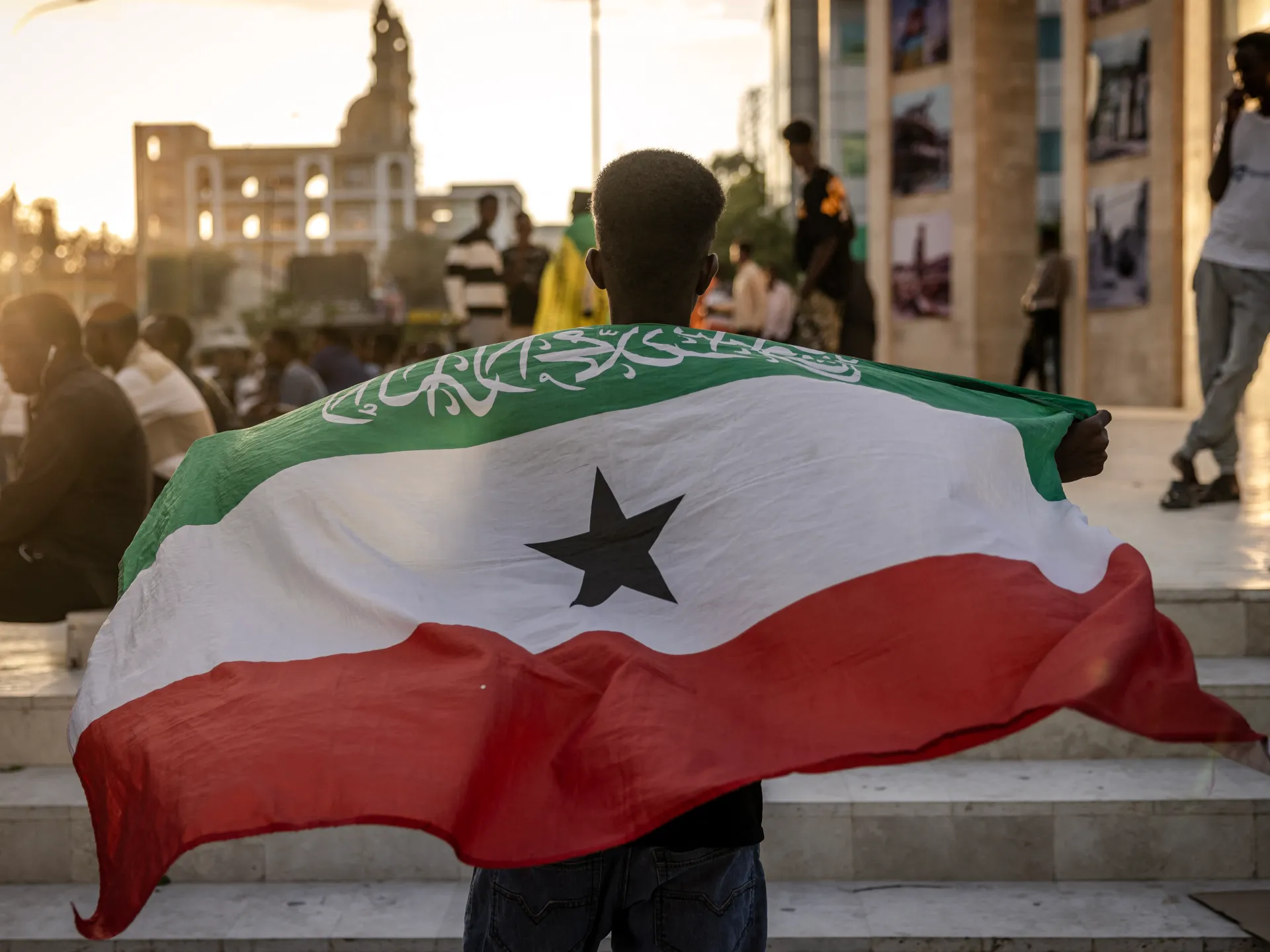
Somaliland, a region in the Horn of Africa, declared independence from Somalia in 1991 and has pushed for international recognition for decades, with President Abdirahman Mohamed Abdullahi making it a top priority since taking office last year.

Recommended Stories

list of 4 itemsend of list

Israel announced on Friday that it viewed Somaliland as an “independent and sovereign state”, becoming the first country to make such a declaration.

The announcement prompted Somalia to call the decision a “deliberate attack” on its sovereignty that would undermine regional peace.

In a statement on Friday, the AU continental bloc rejected Israel’s move and warned that it risked “setting a dangerous precedent with far-reaching implications for peace and stability across the continent”.

The AU Commission chair, Mahmoud Ali Youssouf, said the institution “firmly rejects any initiative or action aimed at recognising Somaliland as an independent entity, recalling that Somaliland remains an integral part of the Federal Republic of Somalia”.

‘Dangerous precedent’

Arab League Secretary-General Ahmed Aboul Gheit called Israel’s action “a clear violation of international law and a flagrant infringement of the principle of the unity and sovereignty of states”.

“Any attempt to impose unilateral recognitions constitutes an unacceptable interference in Somalia’s internal affairs and sets a dangerous precedent that threatens regional and international security and stability,” he warned.

The GCC called the development “a grave violation of the principles of international law and a blatant infringement” of Somalia’s sovereignty.

“This recognition represents a dangerous precedent that will undermine the foundations of stability in the Horn of Africa region and open the door to further tensions and conflicts, contradicting regional and international efforts aimed at strengthening international peace and security in the region,” GCC Secretary-General Jasem Albudaiwi said in a statement.

The European Union said it respected Somalia’s territorial integrity and sovereignty, calling for dialogue between the Somali national government and Somaliland.

The foreign ministers of Somalia, Egypt, Turkiye and Djibouti also condemned Israel’s recognition of Somaliland, saying: “The ministers affirmed their total rejection and condemnation of Israel’s recognition of the Somaliland region, stressing their full support for the unity, sovereignty and territorial integrity of Somalia.”

Egypt’s Ministry of Foreign Affairs made the statement following a phone call between the countries’ top diplomats on Friday.

Somalia demands reversal of recognition

Qatar, Iran, Saudi Arabia, Pakistan and China were among the other countries that condemned Israel’s move.

The Palestinian Authority and Hamas also rejected Israel’s recognition of Somaliland.

On Friday, Somalia demanded Israel reverse its recognition of Somaliland as independent, condemning the move as an act of “aggression that will never be tolerated”.

However, Somaliland leader Abdullahi hailed Israel’s decision as a “historic moment” and said in a post on X that it marked the beginning of a “strategic partnership”.

As world leaders weighed in, Somalia’s al-Qaeda-linked armed group al-Shabab pledged on Saturday to fight any attempt by Israel “to claim or use parts of Somaliland”.

“We will not accept it, and we will fight against it,” the group that has waged a decades-long armed rebellion in the region said in a statement.

United States President Donald Trump also commented on the issue.

Asked by the New York Post newspaper whether Washington planned to also recognise Somaliland, Trump said “no”.

“Does anyone know what Somaliland is, really?” he added on Friday.

Source link

Ministry rebukes Coupang over data probe claim

South Korean Minister of Science and ICT Bae Kyung-hoon (2R on right row), speaks during an inter-agency government meeting on Coupang’s personal data leak at the government complex in Seoul, South Korea, 30 November 2025. Photo by YONHAP/EPA

Dec. 26 (Asia Today) — South Korea’s Ministry of Science and ICT (MSIT) said Thursday it had lodged a strong protest after Coupang unilaterally disclosed what it called investigation results into a customer data breach, stressing that the claims have not been verified by the ongoing joint probe.

In a press release, the ministry said a public-private joint investigation team is still closely examining the type, scale and cause of the data leak. “The assertions made by Coupang have not been confirmed by the joint investigation team,” MSIT said.

Earlier in the day, Coupang posted a notice on its website stating that it had identified the leaker and secured all devices and hard disk drives used in the breach. The company claimed that, based on its investigation to date, the leaker stored customer information limited to about 3,000 accounts and subsequently deleted all of it.

Coupang also said it used forensic evidence, including “digital fingerprints,” to identify a former employee responsible for the leak, adding that the individual confessed to all actions and provided a detailed account of how customer information was accessed.

MSIT reiterated that any conclusions regarding the incident must come from the joint public-private investigation, cautioning against premature disclosures that could mislead the public while the probe remains underway.

–Copyright by Asiatoday

Source link

Saudi coalition will counter Yemen separatists undermining de-escalation | Conflict News

Saudi defence minister urges Yemen’s STC to withdraw “peacefully” from seized provinces, Hadramout and al-Mahra.

The Saudi-led coalition in Yemen says it will respond to any separatist military movements that undermine de-escalation efforts in the southern region, as Riyadh doubles down on calls for the group to “peacefully” withdraw from recently seized eastern provinces.

Saudi Arabia’s Defence Minister Khalid bin Salman said on X on Saturday that “it’s time” for troops from the separatist Southern Transitional Council (STC) to “let reason prevail by withdrawing from the two provinces and doing so peacefully”.

Recommended Stories

list of 4 itemsend of list

Brigadier General Turki al-Maliki, the spokesman for the Saudi-led coalition, said “any military movements that violate these [de-escalation] efforts will be dealt with directly and immediately in order to protect civilian lives and ensure the success of restoring calm,” according to the Saudi Press Agency.

Al-Maliki also accused the STC separatists of “serious and horrific human rights violations against civilians”, without providing evidence.

The statements came a day after the STC accused Saudi Arabia of launching air strikes on separatist positions in Yemen’s Hadramout province, and after Washington called for restraint in the rapidly escalating conflict.

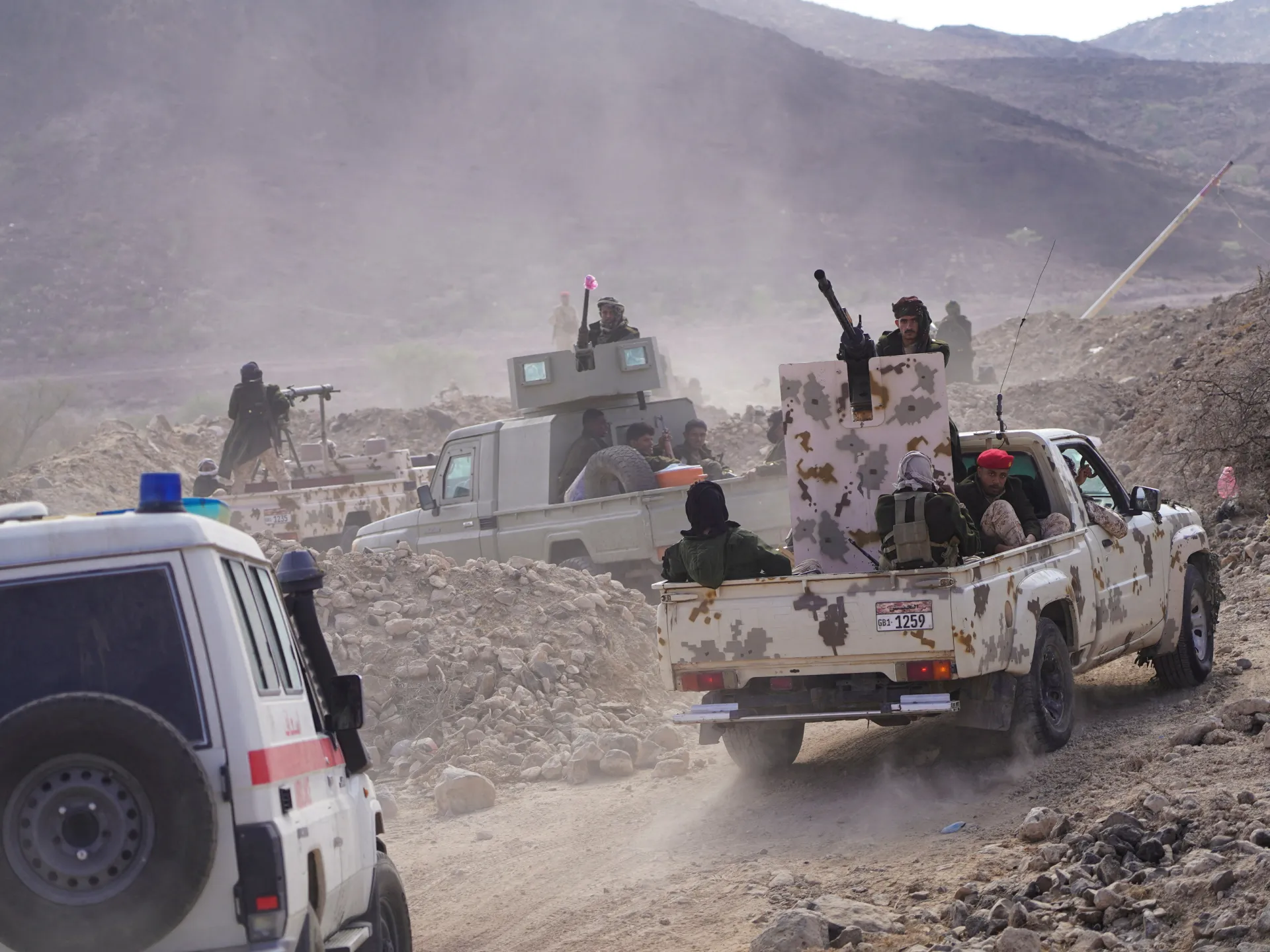
Earlier this month, forces aligned to the STC took over large chunks from the Saudi-backed government in the provinces of Hadramout and al-Mahra. The STC and the government have been allies for years in the fight against the Iran-allied Houthi rebels.

Abdullah al-Alimi, a member of the Yemeni Presidential Leadership Council, the governing body of the internationally recognised government, welcomed the Saudi defence minister’s remarks, considering them to “clearly reflect the kingdom’s steadfast stance and sincere concern for Yemen’s security and stability”, he said on X.

Rashad al-Alimi, the head of the Presidential Leadership Council, said after an emergency meeting late on Friday that STC movements posed “serious violations against civilians”.

The STC, which has previously received military and financial backing from the United Arab Emirates (UAE), is seeking to revive the formerly independent state of South Yemen. The group warned on Friday that they were undeterred after strikes it blamed on Saudi Arabia hit their positions.

Diplomacy, de-escalation?

In Washington, US Secretary of State Marco Rubio said: “We urge restraint and continued diplomacy, with a view to reaching a lasting solution.”

Azerbaijan, meanwhile, said it welcomed efforts led by both Saudi Arabia and the UAE to de-escalate ongoing tensions in Yemen.

Following Friday’s raids, Yemen’s government urged the Saudi-led coalition to support its forces in Hadramout, after separatists seized most of the country’s largest province.

The government asked the coalition to “take all necessary military measures to protect innocent Yemeni civilians in Hadramout province and support the armed forces”, the official Yemeni news agency said.

A Yemeni military official said on Friday that about 15,000 Saudi-backed fighters were amassed near the Saudi border but had not been given orders to advance on separatist-held territory. The areas where they were deployed are at the edges of territory seized in recent weeks by the STC.

Separatist advances have added pressure on ties between Saudi Arabia and the UAE, close allies who support rival groups within Yemen’s government.

On Friday, the UAE welcomed Saudi efforts to support security in Yemen, as the two Gulf allies sought to present a united front.

Yemen’s government is a patchwork of groups that includes the separatists, and is held together by shared opposition to the Houthis.

The Houthis pushed the government out of Yemen’s capital, Sanaa, in 2014, and secured control over most of the north.

Source link

At least 15 dead, 19 injured in Guatemala as bus plunges into ravine | Transport News

The bus, which was travelling between Guatemala City and San Marcos, crashed for unknown reasons, authorities say.

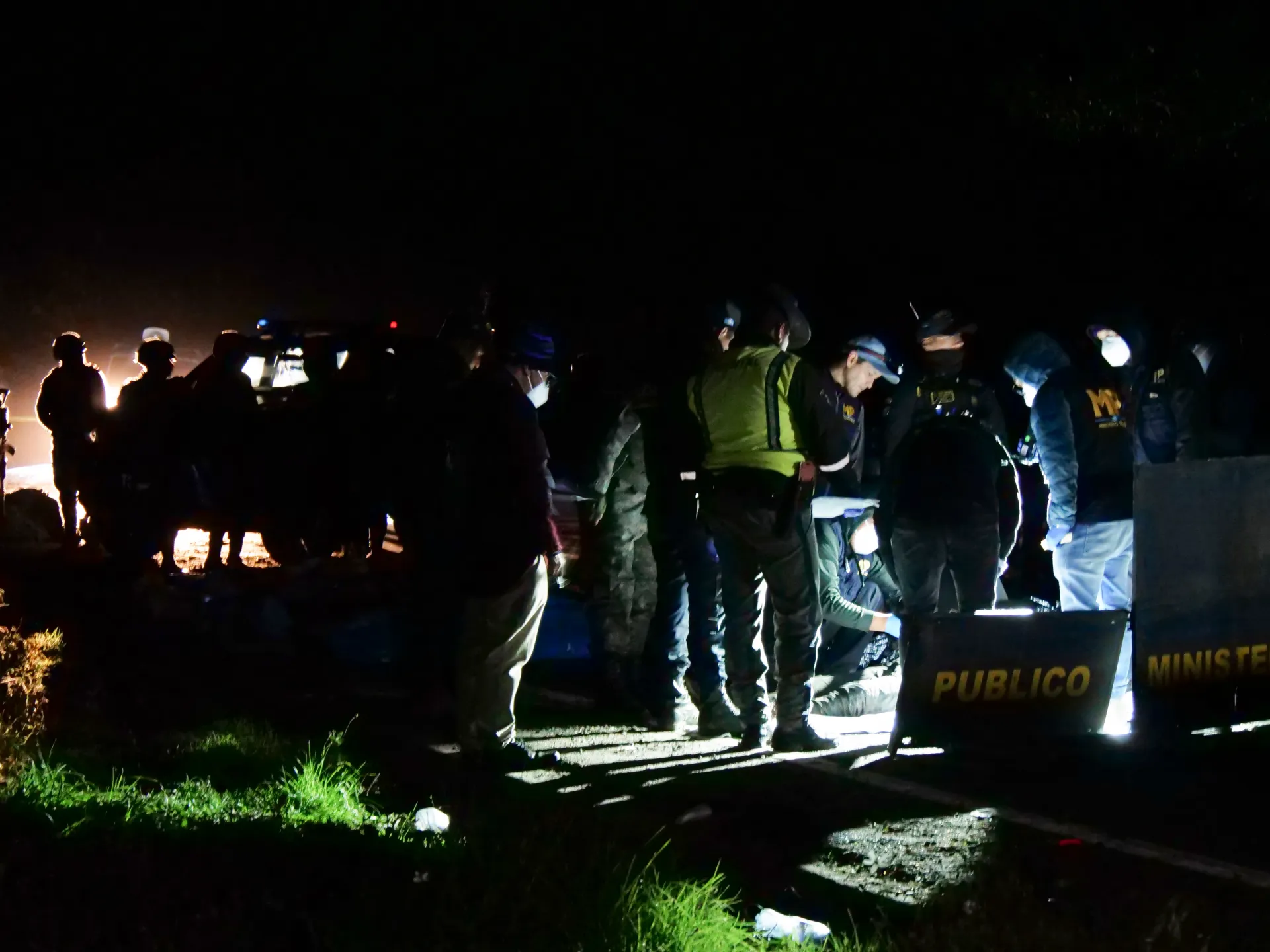
At least 15 people have been killed and 19 injured after a passenger bus plunged into a ravine on the Inter-American Highway in western Guatemala, local authorities say.

The deaths included 11 men, three women and a minor, according to Leandro Amado, a spokesperson for local firefighters.

Recommended Stories

list of 4 itemsend of list

Amado told reporters on Saturday that some 19 injured people were taken to hospitals near the scene of the accident.

The crash occurred in the Solola Department between kilometres 172 and 174, in an area nicknamed “Alaska Peak” because of its rugged terrain, in the department of Totonicapan (western Guatemala).

The dense fog in that area also often reduces visibility for drivers taking the route in question.

‘Reason unknown’

The bus, which was travelling between Guatemala City and the department of San Marcos, on the border with Mexico, fell into a ravine almost 75 metres (250ft) deep for unknown reasons, Amado added.

Images shared by the fire department on social media early on Saturday showed the wrecked bus in the ravine as firefighters worked at the scene of the incident to rescue the wounded and recover the bodies of the victims.

Relatives of the passengers have arrived at the scene of the accident as well as the hospitals around the area searching for their loved ones, local media reports said.

Early in 2025, more than 50 people died and many others were injured in another major bus crash in the country, when the vehicle plunged into a polluted ravine outside Guatemala City.

Source link

Investigation after jet carrying Libyan officers crashes in Turkiye | Transport News

Istanbul, Turkiye – Turkish authorities and Libyan officials are conducting an investigation into the crash of a private jet that killed Libya’s army chief, Mohammed Ali Ahmed al-Haddad, and seven other people near Ankara.

The probe, coordinated by the Ankara Chief Public Prosecutor’s Office, is focusing on technical evidence, flight recordings, crew activity and aircraft maintenance, officials said. The French civil aviation investigations agency, BEA, has announced that it will participate in the probe.

Recommended Stories

list of 3 itemsend of list

General al-Haddad had been received in Ankara on Tuesday for talks with his Turkish counterpart, Selcuk Bayraktaroglu, and Defence Minister Yasar Guler.

According to officials, the French-made Dassault Falcon 50 took off from Ankara Esenboga Airport at 2:17pm on Tuesday, heading back to Libya, reported an electrical malfunction 16 minutes later and requested an emergency return.

Radar contact was lost shortly after at 2:41 pm (17:41 GMT) while the aircraft was descending towards the runway.

Officials said there was only a two-minute window between the emergency alarm and the crash.

The probe’s many factors

The forensic examination of the bodies of General al-Haddad and his military companions was completed early on Saturday and they have been repatriated to Libya after a ceremony in their honour at an airbase outside Ankara.

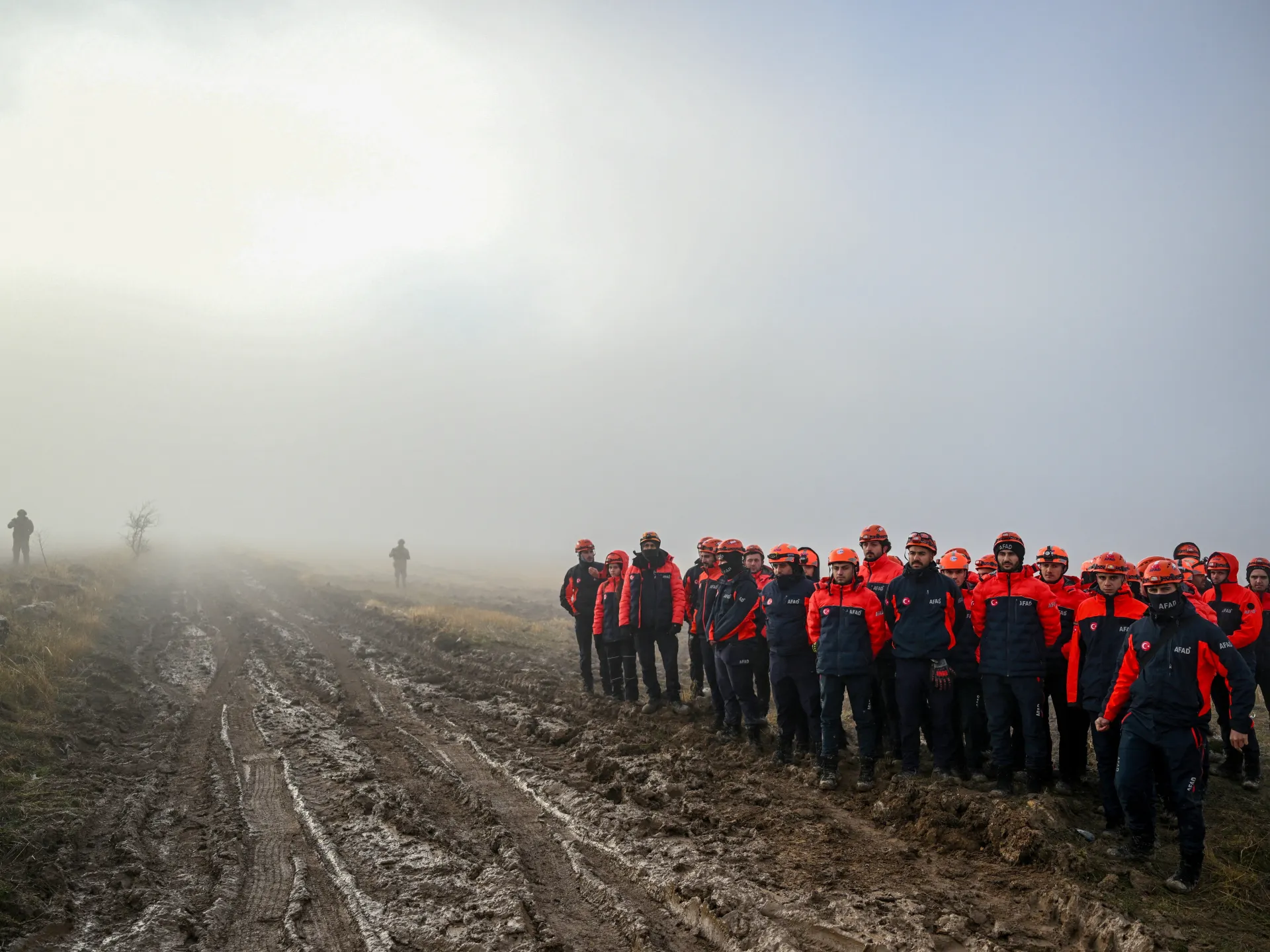
The site of Tuesday’s crash – near Kesikkavak village in Haymana district, roughly 70km (43 miles) south of Ankara – has been sealed off by Turkish security forces. All wreckage, including the cockpit voice recorder and flight data recorder, or “black boxes”, has been secured and transported for analysis, according to authorities.

As part of the prosecutor-led investigation, specialists are examining air traffic control recordings, radar data and airport security camera footage.

Authorities have also requested communication logs between the pilots and the control tower and are reviewing the crew’s rest periods, medical history and records of meals or medication taken before the flight.

Maintenance logs and documentation related to the aircraft’s most recent checks are also under scrutiny to identify any possible technical lapses.

Fuel samples have been taken from both the wreckage and airport tanks to rule out contamination or incorrect fuel use, while local weather data from the time of the crash has been requested.

If evidence points to a structural failure or design flaw, investigators said, the inquiry could be expanded to include manufacturers and maintenance contractors.

International rules and reporting timeline

Gursel Tokmakoglu, former head of the Turkish air force’s intelligence agency, said the crash should be viewed as an international case, given the number of actors involved.

“The Libyan government chartered an aircraft from a foreign country. The aircraft was manufactured in another country. The pilots were from elsewhere. The passengers were Libyan, and the crash happened in Turkiye,” he said.

“If you also consider insurance companies and international aviation bodies, this is clearly a multinational incident.”

Earlier, Turkish Transport Minister Abdulkadir Uraloglu had announced that the black boxes may be sent to another country for further analysis, raising some questions about why analysis could not be done in either Turkiye or Libya.

Tokmakoglu said Turkiye could either examine the black boxes domestically or send them abroad for further analysis.

“Transferring the recorders can help ensure greater transparency and a clearer understanding of what happened, especially in a case involving so many international stakeholders,” he said.

Tokmakoglu noted that according to preliminary findings, the aircraft transmitted the 7700 emergency “squawk” code, which indicates an emergency that requires immediate attention, and the crew reported an electrical malfunction.

However, he added, it would be premature to assume that the electrical malfunction was the cause of the aircraft’s crash.

“In aviation, an electrical failure can trigger other problems,” he said, likening such a situation to “being admitted to intensive care for heart failure but dying later from a lung infection”.

Aviation industry analyst Guntay Simsek told Al Jazeera, citing his own sources, that there are no indications so far that the crash was caused by an external factor such as an explosion, adding that the technical investigation remains ongoing.

The probe starting immediately is within general best practices after a crash, aviation industry analyst Guntay Simsek said, pointing to ICAO regulations that govern aircraft accident investigations, which require a preliminary report within 30 days and a final report within 12 months.

Source link

Trump gifts White House golden key to Lee

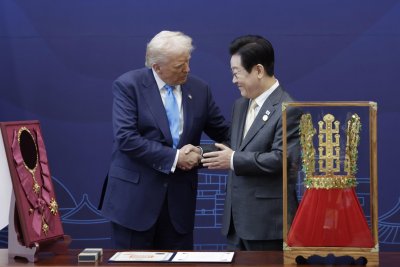
South Korean President Lee Jae Myung (R) shakes hands with US President Donald Trump (L) after conferring the state-awarded Grand Mugunghwa Medal, South Korea’s highest order of civil merit, on Trump ahead of their talks at the National Museum in Gyeongju, North Gyeongsang Province, southeastern South Korea, 29 October 2025. In front of Lee is a replica of a Korean gold crown from a royal tomb of the Silla Kingdom (57 B.C.–A.D. 935) that was gifted to the US leader. Photo by YONHAP/EPA

Dec. 26 (Asia Today) — US President Donald Trump has presented South Korean President Lee Jae-myung with a symbolic “Key to the White House,” returning a diplomatic gesture after receiving a replica of a Silla-era gold crown earlier this year.

Kang Hoon-sik, chief of staff at the presidential office, said on Facebook on Tuesday that Trump sent Lee one of only five specially made golden keys associated with the White House, noting it was the final remaining piece. Trump reportedly decided to send the gift after receiving a particularly meaningful present during his visit to South Korea in October.

During the October APEC summit in Gyeongju, Lee presented Trump with a model of the gold crown excavated from Cheonmachong, a royal tomb from the ancient Silla Kingdom, as part of a bilateral summit between the two leaders.

According to Kang, the golden key was delivered on Dec. 16 when South Korea’s ambassador to the United States, Kang Kyung-wha, met Trump for talks. During the meeting, Trump was quoted as saying, “I really like him,” referring to Lee, and highlighting what he described as a strong cooperative relationship between the two presidents.

The White House golden key is said to have been personally designed by Trump to be given only to select guests of special significance. The key presented to Lee is engraved with the U.S. presidential seal and the words “Key to the White House.”

The honor places Lee among a small group of recipients that includes Israeli Prime Minister Benjamin Netanyahu, former Japanese Prime Minister Taro Aso, Tesla CEO Elon Musk, and football star Cristiano Ronaldo.

Kang also recalled an anecdote from a memoir by Trump’s son-in-law, Jared Kushner, which described Trump jokingly telling Netanyahu that even after leaving office, showing the key at the White House gate would grant him entry.

“This golden key, carrying special meaning, is hoped to become a symbol of the strong South Korea-U.S. relationship,” Kang said, adding that the administration would continue working toward a solid future for the bilateral alliance.

–Copyright by Asiatoday

Source link

Hanwha rises as hub of US shipbuilding revival

Hanwha Group Vice
Chairman Kim Dong-kwan, second from right, explains the conglomerate’s
shipbuilding facilities to US Navy Secretary John Phelan, far right, at Hanwha’s
Geoje shipyard in South Korea, Wednesday. Photo courtesy of Hanwha Ocean

Dec. 26 (Asia Today) — Hanwha Group is positioning itself as a central player in the United States’ drive to revive its shipbuilding industry, with its Philadelphia shipyard emerging as a key operational base for Washington’s plan to restore naval power under President Donald Trump’s so-called “Golden Fleet” initiative.

Hanwha hosted a media day on Dec. 22 at its Hanwha Philly Shipyard in Pennsylvania, showcasing not just facilities but what executives described as a ready-to-execute platform aligned with U.S. national strategy to rebuild shipbuilding capacity and strengthen naval forces.

The significance of the site was underscored the same day when Trump publicly announced his Golden Fleet vision – aimed at countering China’s expanding naval power – and explicitly cited cooperation with South Korean conglomerate Hanwha. Trump recalled that during World War II, the United States built more than four ships a day on average, vowing to restore that capability.

Industry officials say the Philadelphia shipyard represents the point where political ambition meets practical execution.

Tom Anderson, head of shipbuilding at Hanwha Defense USA, said the shipyard should be seen not as a future possibility but as a fully prepared asset. The Golden Fleet concept centers on large, potentially nuclear-capable platforms and advanced surface vessels, while also elevating domestic production capacity as a political priority.

Rather than limiting cooperation to a single frigate program, Anderson said Hanwha is targeting the U.S. Navy’s core platform – the Virginia-class nuclear-powered submarine. “Hanwha Philly Shipyard has the capability to build nuclear-powered submarines,” he said, stressing that readiness extends beyond any single model to the entire class of nuclear-propulsion platforms.

The U.S. Navy currently requires two submarines per year but produces only about 1.2 due to capacity bottlenecks. To address this gap, Anderson proposed leveraging proven designs instead of starting from scratch, applying South Korea’s shipbuilding expertise in shortening construction timelines to the Virginia-class framework.

Acknowledging the complexity of nuclear submarine construction, Anderson outlined key prerequisites: workforce expansion, deployment of skilled Korean technicians, recruitment of personnel with Virginia-class experience, and close coordination with the U.S. Navy’s Naval Reactors program.

On the sensitive issue of nuclear material control, Anderson drew clear boundaries. “The reactor compartment is provided by the U.S. government,” he said, adding that strict safeguards and procedures for nuclear material management are already in place. Hanwha, he said, would comply with the same standards applied to all U.S. nuclear-submarine shipyards.

Questions at the briefing focused on timing. While declining to commit to a specific schedule, Anderson emphasized Hanwha’s readiness to move quickly once government decisions are made. “We fully recognize the urgency of submarine production,” he said.

Supply-chain resilience also emerged as a key theme. Anderson said Hanwha plans to integrate South Korea’s robust shipbuilding supply network to stabilize schedules and accelerate delivery, while maintaining the principle of “Made in the USA” production. In effect, Korean suppliers would serve as the arteries supporting U.S.-built vessels.

Cho Jong-woo, head of Hanwha Philly Shipyard, said expanded shipbuilding in the United States would allow Korean component makers and partner firms to enter global supply chains and grow alongside the U.S. naval buildup.

As Washington seeks to turn shipbuilding revival from slogan into strategy, Hanwha’s U.S. foothold is increasingly viewed as a critical pillar in rebuilding America’s maritime power.

–Copyright by Asiatoday

Source link

Lee orders review of juvenile age threshold

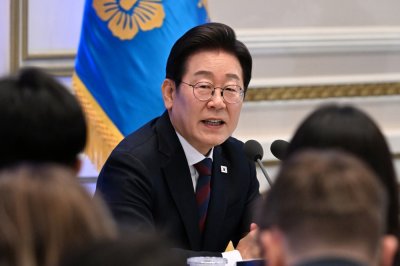
South Korean President Lee Jae Myung delivers a speech during a press conference to mark his first 30 days in office at the Yeongbingwan (state guest house) of the Blue House, in Seoul, South Korea, 03 July 2025. Photo by Kim Min-Hee /EPA

Dec. 26 (Asia Today) — President Lee Jae-myung has ordered a formal review of lowering the age threshold for juvenile offenders exempt from criminal punishment, reviving a long-running debate amid growing public concern over youth crime. Legal experts broadly support the intent but caution that the move may have only limited deterrent effects.

During a policy briefing with the Ministry of Justice on Dec. 19, Lee instructed officials to place the issue of lowering the minimum age for criminal responsibility on the Cabinet agenda, according to officials.

Under South Korea’s Criminal Act, established in 1953, children aged 10 to under 14 are classified as juvenile offenders and are exempt from criminal punishment, instead receiving protective measures focused on education and rehabilitation. The system was designed to prioritize the reformability of minors over punitive sanctions.

Critics argue, however, that crimes committed by juvenile offenders have risen sharply in both number and severity. According to the Supreme Court’s Judicial Yearbook 2025, 7,294 juvenile offenders received protective dispositions in 2024, more than double the 3,465 recorded in 2020.

Serious offenses, including sexual crimes and acts of extreme violence, have also increased. Police data show that between Jan. 1 and Sept. 10, 2024, juveniles under 14 accounted for about 20 percent – 63 out of 318 suspects – arrested in deepfake-related sexual crimes, highlighting concerns over new forms of digital abuse.

Many in the legal community agree that the age standard should reflect changes in adolescents’ physical and mental maturity as well as the social environment. Kim Ji-yeon, an attorney with Lawyers for a New Future for Youth, said the widespread perception that offenders under 14 cannot be criminally punished has been exploited. “Some youths commit serious crimes like deepfake offenses believing authorities cannot punish them,” she said, noting that the non-disclosure of juvenile criminal records has also been abused.

Kim added that lowering the age by about one year could help address these problems, even if it partially conflicts with the system’s rehabilitative purpose. “In reality, victims are often even younger, and protecting minor victims must be a priority,” she said.

Shin Hye-sung, a lawyer at Yulwoo Law Firm and a former juvenile court judge, also voiced support for lowering the age in cases involving sexual crimes. “Many 13-year-olds today are far more mature than in the past and capable of committing serious offenses,” he said. “Allowing the possibility of criminal trials could have a necessary deterrent effect.”

Still, Shin stressed the limits of such a reform. “Lowering the age will not bring dramatic change,” he said, noting that the rise in juvenile cases is largely driven by school violence. “Contrary to public perception, it is extremely rare for children under 14 to commit crimes serious enough to warrant criminal trials. Since such cases are uncommon, the overall impact of an age cut would likely be modest.”

As the issue returns to the National Assembly agenda, attention is focused on whether the proposal – which has repeatedly stalled in the past – can gain enough consensus to move forward this time.

–Copyright by Asiatoday

Source link

Thailand-Cambodia ceasefire starts, first 72 hours seen as critical test | Border Disputes

NewsFeed

A ceasefire between Thailand and Cambodia has come into effect after weeks of deadly fighting across the border. Al Jazeera’s Assed Baig says artillery fire has stopped but the next 72 hours will be a critical test of whether the truce holds. Hundreds of thousands of displaced civilians are hoping it lasts.

Source link

Progressives also call disinformation law unconstitutional

1 of 4 |
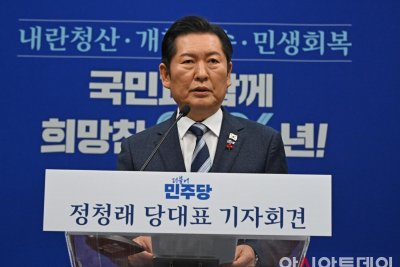
Jung Cheong-rae, leader of South Korea’s Democratic Party, speaks during his first news conference after taking office at the National Assembly in Seoul on Dec. 26. Photo by Asia Today

Dec. 26 (Asia Today) — A controversial revision to South Korea’s Information and Communications Network Act, driven through the National Assembly by the ruling Democratic Party, is facing a growing backlash not only from conservatives but also from within the broader progressive camp, with critics urging President Lee Jae-myung to exercise his veto.

The amendment, often dubbed the “anti-disinformation law,” passed the Assembly on Dec. 24 as the Democratic Party leveraged its 170-seat majority. However, smaller progressive allies – including the Progressive Party, the Basic Income Party and the Social Democratic Party – either opposed the bill or abstained, warning that it could violate constitutional protections on freedom of expression.

“The criteria for judging what constitutes harm to the public interest are unclear,” Sohn Sol, senior spokesperson for the Progressive Party, said in a statement on Wednesday. “There is a serious risk the law could be abused as a tool to arbitrarily suppress speech critical of those in power,” she said, calling on the president to return the bill to the Assembly.

During the plenary vote, Progressive Party lawmaker Jung Hye-kyung voted against the bill, while Sohn abstained. Lawmakers Yong Hye-in of the Basic Income Party and Han Chang-min of the Social Democratic Party also cast abstentions. Even Park Joo-min, a Democratic Party lawmaker, abstained, later saying that key provisions he had championed – including the complete repeal of criminal defamation for statements of fact and changes to complaint-based prosecution – were not included in the final version.

The revised law allows courts to award punitive damages of up to five times the assessed harm against media outlets or YouTubers found to have intentionally disseminated fabricated or manipulated information. It also empowers the Korea Communications Commission to impose fines of up to 10 billion won ($7.7 million) on those who repeatedly distribute content ruled to be false by the courts. Supporters argue the measures are necessary to dismantle profit-driven fake news operations.

Despite criticism from both opposition parties and parts of the progressive bloc, the Democratic Party has held firm. Party leader Jung Cheong-rae said “irresponsible freedoms that fuel chaos and profit from malicious agitation cannot be left unchecked,” while Supreme Council member Han Jun-ho dismissed warnings about chilled speech as “overblown.”

The main opposition People Power Party said it would seek legal remedies, including filing a jurisdictional dispute with the Constitutional Court, calling the law “an unconstitutional gag order that suffocates liberal democracy.” Floor leader Song Eon-seok urged President Lee to “immediately exercise his veto.”

Attention has also turned to the Justice Innovation Party, which played a swing role in the legislative process. While the party initially pushed alternative proposals – including limits on punitive damages claims by public officials and repeal of criminal defamation for factual statements – those demands were not fully reflected. The party ultimately backed the Democratic Party’s bill, citing future discussions on criminal law revisions, while securing amendments to strengthen defendants’ rights for journalists and other targets of lawsuits.

–Copyright by Asiatoday

Source link

UN renews Sudan ceasefire appeal over ‘unimaginable suffering’ of civilians | Sudan war News

UN Secretary-General Antonio Guterres appeals for immediate truce as fighting intensifies in Darfur and Kordofan regions.

United Nations Secretary-General Antonio Guterres has called for an immediate ceasefire in Sudan’s brutal civil war, which the UN says has created the world’s worst humanitarian crisis.

Guterres’s appeal, made late on Friday, follows a peace initiative presented by Sudan’s Prime Minister Kamil Idris to the UN Security Council on Monday, which called for the paramilitary Rapid Support Forces (RSF) to disarm.

Recommended Stories

list of 4 itemsend of list

The plan was rejected by the RSF as “wishful thinking”.

The war erupted in April 2023 when a power struggle broke out between the Sudanese army and the RSF paramilitary group. Since then, the conflict has displaced 9.6 million people internally and forced 4.3 million to flee to neighbouring countries, while 30.4 million Sudanese now need humanitarian assistance, according to UN figures.

UN Assistant Secretary-General Mohamed Khaled Khiari told the UNSC this week that fears of intensified fighting during the dry season had been confirmed.

“Each passing day brings staggering levels of violence and destruction,” he said. “Civilians are enduring immense, unimaginable suffering, with no end in sight.”

The conflict has shifted in recent weeks to Sudan’s central Kordofan region, where the RSF captured the strategic Heglig oilfield on December 8. The seizure prompted South Sudanese forces to cross into Sudan to protect the infrastructure, which Khiari warned reflects “the increasingly complex nature of the conflict and its expanding regional dimensions”.

The RSF has also launched a final push to consolidate full control over North Darfur state, attacking towns in the Dar Zaghawa region near the Chad border since December 24. The offensive threatens to close the last escape corridor for civilians fleeing the country to Chad.

The violence spilled across Sudan’s borders on Friday when a drone attack killed two Chadian soldiers at a military camp in the border town of Tine.

A Chadian military intelligence officer told Reuters news agency the drone came from Sudan, though it remained unclear whether it was launched by the army or the RSF. Chad has placed its air force on high alert and warned it would “exercise our right to retaliate” if the strike is confirmed as deliberate.

Despite the intensifying conflict, the UN achieved a rare breakthrough, saying on Friday that it conducted its first assessment mission to el-Fasher since the city fell to the RSF.

UN Humanitarian Coordinator Denise Brown said the mission followed “months of intense fighting, siege, and widespread violations against civilians and humanitarian workers,” adding that “hundreds of thousands of civilians have had to flee el-Fasher and surrounding areas”.

Earlier this month, Yale University released a report documenting systematic mass killings by the RSF in el-Fasher, with satellite imagery showing evidence of burning and the burial of human remains on a mass scale.

US Secretary of State Marco Rubio warned last week that the fighting was “horrifying” and “atrocious”, telling a news conference that “one day the story of what’s actually happened there is going to be known, and everyone involved is going to look bad”.

Rubio said he wanted the war to end before the New Year, but there is no strong indication that progress has been made.

Prime Minister Idris’s peace plan proposed an immediate UN-monitored ceasefire and complete RSF withdrawal from the roughly 40 percent of Sudan it controls. But an adviser to RSF leader Mohamed Hamdan “Hemedti” Dagalo dismissed the proposal as “closer to fantasy than to politics”.

Upon returning to Port Sudan on Friday, Idris laid down a red line, saying the government would reject international peacekeeping forces because Sudan had been “burned” by them in the past.

Source link

Key Bolsonaro ally arrested in Paraguay while trying to flee to El Salvador | Jair Bolsonaro News

Ex-Brazilian police chief caught using fake Paraguay passport in attempt to board flight to Panama, sent back to Brazil.

A Brazilian former police chief, who fled the country after he was convicted as an accomplice in the attempted coup by Brazil’s far-right ex-President Jair Bolsonaro, has been arrested in Paraguay, according to the country’s immigration agency.

Silvinei Vasques was arrested on Friday at the Silvio Pettirossi International Airport in Paraguay’s capital Asuncion, the Paraguayan National Migration Directorate (DNM) said in a statement posted on its website.

Recommended Stories

list of 3 itemsend of list

The agency said Vasques was arrested for “identity theft” after “attempting to evade immigration controls by impersonating a Paraguayan citizen”.

Vasques was arrested while attempting to board a flight to Panama, declaring El Salvador as his final destination, the DNM statement said.

The wanted police chief had “clandestinely” entered Paraguay while “evading justice in his home country”, DNM added.

An image published on X by Paraguayan immigration authorities showed Vasques’s arrest and identification.

A separate video clip posted on the same account showed Vasques being turned over to Brazilian federal police at the Friendship Bridge border crossing that connects Paraguay’s Ciudad del Este and Brazil’s Foz do Iguacu.

Translation: The National Directorate of Migration (DNM) expelled Silvinei Vasques from the country. Moments ago, the DNM expelled Silvinei Vasques (50) from the country, subsequently handing him over to Brazilian Federal Police authorities at the Friendship Bridge border crossing.

Vasques, the former chief of Brazil’s highway police, was accused of deploying officers to prevent voters in left-leaning areas from casting their ballots in 2022 elections that Bolsonaro lost to left-wing candidate and current President Luiz Inacio Lula da Silva.

He was arrested in 2023 and placed under supervision with an electronic ankle monitor pending trial. Earlier this month, he was sentenced to more than 24 years in prison to be served under house arrest. He fled Brazil shortly after.

Brazilian media reported that Vasques broke his ankle monitor and drove across the border to Paraguay.

Brazil Supreme Court Justice Alexandre de Moraes ordered the fugitive’s preventive detention as a precautionary measure on  Friday, Reuters news agency reported, citing a court document and information from two people familiar with the matter.

Reached by Reuters, Vasques’s lawyer did not comment on his client’s attempt to flee.

Vasques is not the first official convicted over the 2023 coup attempt who has tried to escape from Brazil. In November, the Supreme Court ordered the arrest of the former intelligence agency director Alexandre Ramagem, who left the country in September and has since been living in the United States.

That same month, Justice Moraes also ordered Bolsonaro be detained after the former president tried to remove his court-ordered ankle monitor using a soldering iron, in what the court saw as an attempt to escape justice.

Bolsonaro, 70, is now serving a 27-year sentence in jail after being found guilty in September of having led the plot to prevent Lula from taking office.

On Thursday, the former president underwent surgery in hospital for a hernia.


Source link