From breaking news to significant developments in politics, business, technology, entertainment, and more, we deliver the stories that shape our global landscape.
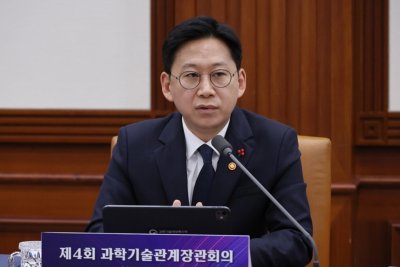
Science and ICT Minister Bae Kyung-hoon, who doubles as deputy prime minister for science affairs, speaks during a meeting of science and technology-related ministers at the government complex in Seoul, South Korea, 28 January 2026. File. Photo by YONHAP / EPA
March 3 (Asia Today) — South Korea’s Ministry of Science and ICT said Tuesday it has begun distributing graphics processing units to industry, academia and research institutions as part of a government push to expand domestic artificial intelligence capacity.
The ministry said it will supply about 4,000 GPUs starting this month from a pool of 10,000 units secured through last year’s supplementary budget. It selected recipients for the first batch and said the GPUs will be used to support 159 projects.
Under the initial allocation, 2,624 GPUs will go to universities and other academic institutions, 1,288 to industry and 312 to research institutes, the ministry said.
A previous call for proposals drew 514 applications. The ministry said the selected projects will be deployed immediately for AI research and development, including services and model development, based on expert evaluations of factors such as expected technological impact, societal impact and contribution to the domestic AI ecosystem.
The ministry said it will conduct periodic monitoring after allocation. If improper use is found, it said the GPUs could be reclaimed and reassigned to other users.
The ministry also said it plans an additional call for proposals later this month, including 4,000 GPUs for industry users such as small and midsize companies and startups and about 1,000 more for academia and research institutions.
In future rounds, the ministry said it will give greater consideration to applicants based outside the capital area and seek to prevent allocations from concentrating on specific companies or institutions.
Choi Dong-won, the ministry’s director general for AI infrastructure policy, said the GPU program is intended to serve as a catalyst for strengthening AI capabilities and expanding AI services, creating additional demand for infrastructure in a self-reinforcing cycle.
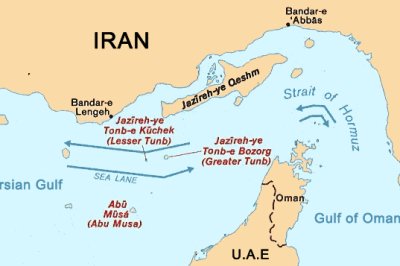
Map of the Strait of Hormuz. Photo courtesy of Wikimedia Commons
March 3 (Asia Today) — Concerns about a potential “second oil shock” are spreading as tensions rise around the Strait of Hormuz, but Japanese analysts say a prolonged blockade is structurally unlikely because China and Iran would suffer the greatest damage.
The Strait of Hormuz, a strategic chokepoint through which roughly 20% of global seaborne crude oil passes, has effectively entered a state of disruption, rattling energy markets and financial investors.
However, Japan’s Sankei Shimbun reported Tuesday that a sustained closure would impose excessive costs on all parties involved.
The first factor is China. According to data from the U.S. Energy Information Administration, China accounts for the largest share of crude oil imports transiting the strait, about 30%. An estimated 40% to 50% of China’s total crude oil imports pass through Hormuz.
China’s strategic petroleum reserves are estimated to cover about 110 days of demand. With its economy already strained by a property downturn and youth unemployment, a prolonged surge in oil prices and supply disruptions could intensify pressure on manufacturing, inflation and exchange rates.
The second factor is Iran. While Tehran appears to hold leverage by controlling the strait, its economy depends heavily on oil exports. China has remained Iran’s primary buyer even under sanctions, accounting for roughly 90% of Iranian crude exports.
A long-term blockade would likely reduce export volumes and slash foreign currency earnings for Iran itself. Japanese financial officials were quoted as saying that maintaining a full blockade over an extended period would not be a rational choice. While it may serve as a short-term bargaining tool, a prolonged standoff could inflict serious damage on Iran’s economy.
The third variable is the United States. Since the shale boom, the United States has become the world’s largest crude oil producer. Only about 3% of U.S. crude imports pass through the Strait of Hormuz, meaning a blockade would not directly paralyze the U.S. economy. Although higher global oil prices could weigh on American consumers, analysts say it is unlikely to serve as a decisive strategic weapon against Washington.
Taken together, a prolonged blockade would amount to what analysts describe as an “asymmetric self-harm” strategy, imposing heavy political and economic costs on all sides. Short-term price spikes and volatility are possible, but sustaining such measures over time would be difficult.
Japan holds strategic petroleum reserves equivalent to more than 250 days of supply and says it has sufficient capacity to absorb short-term shocks. South Korea also maintains government and private stockpiles capable of covering several months of demand.
While rising oil prices would burden South Korea’s trade-dependent economy, energy experts say fears of an immediate physical supply cutoff may be overstated. They stress the need to distinguish between short-term price volatility and actual disruptions to physical supply.
Chief Executive Officer of LG Uplus, Bumshik Hong, delivers a speech during the opening ceremony of the 20th edition of the Mobile World Congress (MWC) in Barcelona, Spain, 02 March 2026. Mobile World Congress 2026 runs from 02 to 05 March. Photo by Alberto Estevez / EPA
March 3 (Asia Today) — South Korea’s three major telecom operators laid out competing but converging visions for the artificial intelligence era at the Mobile World Congress in Spain, redefining themselves not as simple network providers but as designers of AI infrastructure.
At MWC 2026, themed “IQ Era,” executives from SK Telecom, KT and LG Uplus emphasized that telecommunications networks will serve as the core platform enabling AI ecosystems.
LG Uplus: Human-centered AI
Hong Beom-sik, chief executive of LG Uplus, took the stage as the only Korean telecom CEO to deliver an opening keynote at MWC 2026. He introduced a voice-based AI call agent, “ixi-O,” positioning it as a human-centered interface in an age crowded with AI devices and services.
Hong said voice will remain the most intuitive and human interface. The company combines on-device AI with large language model technology to balance privacy protection and personalized user experiences. He called for global cooperation to establish common standards for voice-based AI services.
SK Telecom: Sovereign AI package
SK Telecom framed telecom operators as “designers and drivers” of AI infrastructure. CEO Jung Jae-heon unveiled a “Sovereign AI Package” strategy integrating AI data centers, a proprietary AI model known as A.X K1 and industry-focused AI services.
The approach aims to build domestically controlled infrastructure that integrates foundation models and industrial services, strengthening data sovereignty while supporting industrial innovation. During MWC, SK Telecom met with telecom operators from Europe, the Middle East and Asia to expand what it described as an AI cooperation belt across regions.
KT: 6G as integrated AI infrastructure
KT presented its vision for 6G as an integrated infrastructure capable of ensuring stable AI operations. The company described 6G competition not as a race over individual technologies but as a contest in integrated architecture combining AI, satellite, optical networks, security and operations.
KT said it plans to apply AI to network management while guaranteeing the ultra-low latency and high reliability required by AI services. It outlined concepts including three-dimensional coverage across land, sea and air, network slicing, photonic-based end-to-end ultra-low latency structures, quantum-safe security and autonomous networks.
From carrier to orchestrator
Across their presentations, the three telecom leaders delivered a shared message: in the AI era, telecom companies must evolve from data carriers into infrastructure orchestrators that design and operate the entire ecosystem.
Their blueprints also reflect a broader industry shift. Amid recent security and network stability concerns, executives suggested that the next phase of AI competition will hinge less on speed alone and more on reliability, control and integrated system design.
China’s foreign minister tells Israel to end attacks; Russian FM Lavrov says no sign Tehran seeking nuclear bomb.
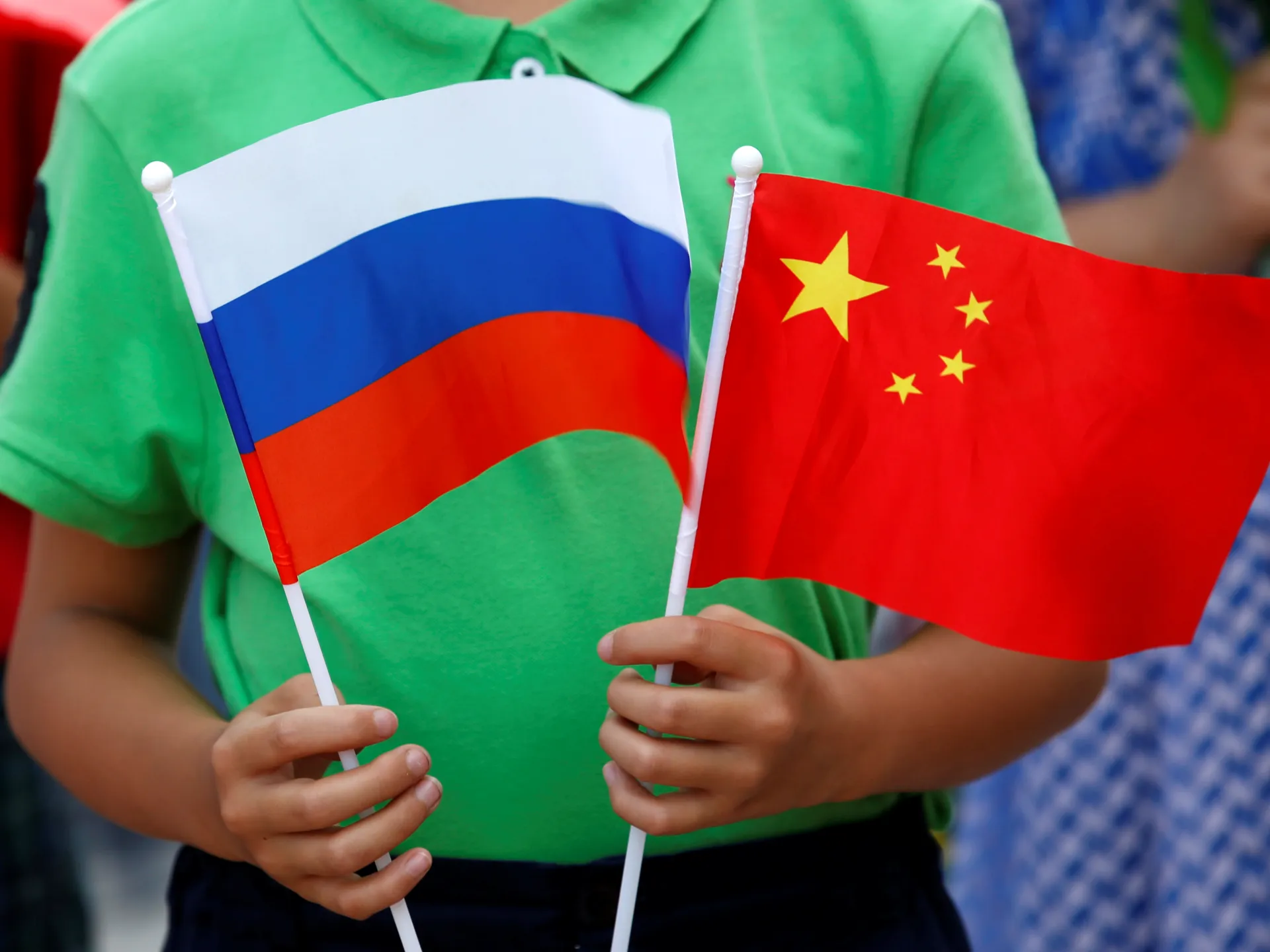
Russia and China have criticised the US and Israeli attacks on Iran, with Moscow saying it had seen no evidence that Tehran was developing nuclear weapons, and Beijing demanding an immediate halt to the joint attacks.
Chinese Minister of Foreign Affairs Wang Yi told his Israeli counterpart, Gideon Saar, on Tuesday that the attack on Iran came as negotiations between Washington and Tehran had “made significant progress, including addressing Israel’s security concerns”, China’s Foreign Ministry said in a statement.
Recommended Stories
list of 4 itemsend of list
“Regrettably, this process has been interrupted by military action. China opposes any military strikes launched by Israel and the US against Iran,” Wang told the Israeli foreign minister during a phone call, according to the ministry.
“China calls for an immediate cessation of military operations to prevent the further escalation and loss of control of the conflict,” Wang said.
“Force cannot truly solve problems; instead, it will bring new problems and serious long-term consequences,” he added.
According to the Chinese Foreign Ministry, Saar agreed to a request from Wang to take “concrete measures to ensure the safety of Chinese personnel and institutions” in Iran.
The call on Tuesday with Israel and Beijing’s apparent efforts to stabilise the spiralling regional situation followed calls Wang made on Monday to discuss the conflict with the foreign ministers of Iran, Oman and France.
‘US doesn’t attack those who have nuclear bombs’
Russian Foreign Minister Sergey Lavrov also criticised the US and Israel on Tuesday, saying their war on Iran could lead to the very outcome they claimed they wanted to prevent: nuclear proliferation.
Lavrov told a news conference that the logical consequence of the US and Israel’s actions could be that “forces will emerge in Iran… in favour of doing exactly what the Americans want to avoid – acquiring a nuclear bomb”.
“Because the US doesn’t attack those who have nuclear bombs,” Lavrov said.
Lavrov also said that Arab countries could now join the race to acquire nuclear weapons, given the experience of recent days and “the nuclear proliferation problem will begin to spiral out of control”.
Israel is widely seen as the Middle East region’s only nuclear-armed state, which it neither confirms nor denies.
“The seemingly paradoxical declared noble goal of starting a war to prevent the proliferation of nuclear weapons could stimulate completely opposite trends,” he said.
Lavrov, who said that Moscow had still seen no evidence that Iran was developing nuclear weapons, spoke with his Iranian counterpart, Abbas Araghchi, on Tuesday, and said that Russia stood ready to help find a diplomatic solution to the conflict, while rejecting the US and Israel’s use of “unprovoked military aggression” in the region.
As the US and Israel launched their first strikes on Iran on Saturday, Russia’s Foreign Ministry accused the close allies of carrying out a “premeditated and unprovoked act of armed aggression against a sovereign and independent UN member state”.
The two countries had hidden their true intention of regime change in Tehran “under the cover” of negotiations to normalise relations with Iran, the ministry said.
The US and Israel were “swiftly pushing the region toward a humanitarian, economic, and potentially even radiological disaster”, the ministry warned.
“Responsibility for the negative consequences of this manmade crisis, including an unpredictable chain reaction and spiralling violence, lies entirely with them,” the statement added.
Russia has faced its own accusations of aggression against a sovereign state after it launched a full-scale invasion of Ukraine, a war now in its fifth year.
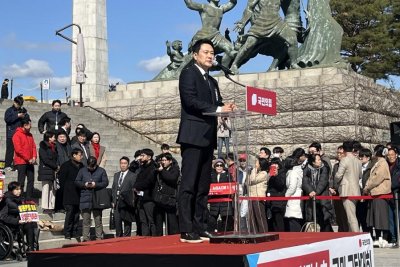
Jang Dong-hyuk, leader of the People Power Party, speaks at a rally on the steps of the National Assembly in Seoul on March 3 opposing three judicial reform bills. Photo by Asia Today
March 3 (Asia Today) — The conservative People Power Party held a rally at the National Assembly on Monday opposing three judicial reform laws passed by the Democratic Party majority, then took its protest to the streets of Yeouido.
Lawmakers, party members and supporters gathered on the steps of the National Assembly, holding red placards reading “Stop destroying the separation of powers” and “President, veto the three judicial destruction bills.” Protesters chanted slogans calling for the defense of judicial independence and the constitutional order.
The rally targeted what the party calls the “three judicial bills” led by the Democratic Party, including measures creating a crime of judicial distortion, allowing constitutional complaints against court rulings and expanding the number of Supreme Court justices.
Floor leader Song Eon-seok said the legislation undermines the separation of powers, accusing the ruling party of using its majority to weaken the judiciary.
“We tried to block this in the National Assembly, but our strength was insufficient,” Song said. “The only power that can stop this is the power of the people.”
Party leader Jang Dong-hyuk urged supporters to unite ahead of upcoming local elections, saying victory is necessary to protect what he described as liberal democratic values. He called on participants to march in an orderly manner so that citizens could understand the urgency of the party’s position.
Following the rally, party lawmakers began a walking protest in Yeouido, demanding that the president exercise his authority to request reconsideration of the bills.
The governing Democratic Party criticized the move. Spokesperson Kim Hyun-jung questioned whether the march was a genuine public appeal or a protest staged for far-right online broadcasters, saying lawmakers should focus on legislative work instead of taking to the streets.
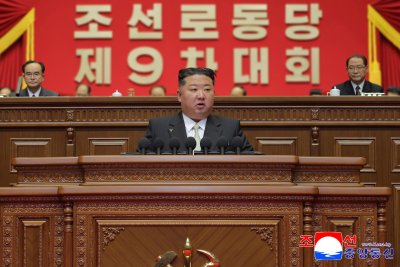
North Korean leader Kim Jong Un (C) speaking during the opening of the Ninth Congress of the Workers’ Party of Korea (WPK) in Pyongyang, North Korea, 19 February 2026 (issued 20 February 2026). File. KCNA / EPA
March 3 (Asia Today) — North Korea’s ninth congress of the Workers’ Party, held in Pyongyang from Feb. 19 to 25, reinforced leader Kim Jong Un’s centralized rule and reaffirmed the country’s nuclear posture, according to Cho Young-ki, secretary general of the Korea Foundation for the Advancement of the Korean Peninsula.
The party congress, convened every five years as the party’s highest decision-making body, drew about 5,000 delegates. It reviewed the Central Committee’s work, revised party rules and elected key leadership posts. Cho wrote that while the congress is formally tasked with deliberation, it primarily ratifies decisions already made by Kim and the leadership.
Kim declared that the past five years produced economic achievements “worthy of pride” despite internal and external challenges and said the country had permanently secured its status as a nuclear power. He pledged to pursue qualitative economic development under a “people-first” principle in the next five-year period.
Kim also defined inter-Korean relations as those between hostile states, dismissed Seoul’s reconciliation policies and reiterated North Korea’s nuclear deterrence. At the same time, he left open the possibility of negotiations with the United States if Washington withdraws what Pyongyang calls a hostile policy.
A key feature of the congress was renewed emphasis on what the regime calls a “Five-Point Party Building Line,” first proposed in 2022 and formalized in 2023. The line centers on strengthening political, organizational, ideological, disciplinary and work-style controls within the party.
Cho argued that reaffirming the five-point line formalizes Kim’s governing ideology and tightens centralized discipline under a party-centered system. The congress re-elected Kim as general secretary, revised party rules and reshuffled leadership posts.
Notably, the Political Bureau Standing Committee expanded from four to five members, and Kim’s sister, Kim Yo Jong, was reinstated and promoted, reinforcing what Cho described as a patronage structure around the leader. Twenty-three of 39 executive members were replaced in a generational reshuffle. Senior official Choe Ryong Hae was reported to have stepped back from his previous role near the top of the hierarchy.
Cho wrote that the five-point line ultimately serves to justify and entrench Kim’s centralized authority. He argued that the congress underscores North Korea’s lack of intention to abandon its nuclear weapons and signals a hardening of its stance toward South Korea.
Since the mid-1990s, Cho wrote, South Korea has operated under what he described as illusions that goodwill or dialogue alone could persuade Pyongyang to denuclearize. He said the latest congress challenges those assumptions.
Cho concluded that outside information remains one of the few factors that authoritarian systems fear. He pointed to North Korean laws enacted in recent years aimed at blocking foreign cultural and ideological influence, arguing they reflect the regime’s sensitivity to external information flows.
He said South Korea has a responsibility to expand technological and institutional means for North Koreans to access outside information, enabling independent thought and action.
Cho Young-ki, secretary general of the Korea Foundation for the Advancement of the Korean Peninsula and former professor at Korea University
※ The views expressed in this column are those of the author and may not reflect the position of this publication.
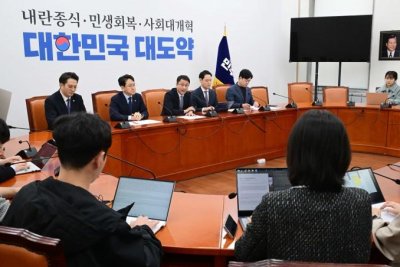
Han Byung-do, floor leader of the Democratic Party of Korea, answers reporters’ questions during a press briefing at the National Assembly in Seoul on March 2. Photo by Asia Today
March 3 (Asia Today) — South Korea’s exports are riding a semiconductor boom, but lawmakers risk undermining that momentum by delaying legislation tied to a major U.S. investment plan.
According to the Ministry of Trade, Industry and Energy, exports in February reached $67.4 billion, the highest ever for the month, despite fewer working days due to the Lunar New Year holiday. Exports have set new monthly records for nine straight months since June.
Still, vulnerabilities are emerging. Automobile exports fell 20.8% from a year earlier in February, reflecting the impact of U.S. tariffs on specific items. Even after the U.S. Supreme Court struck down reciprocal tariffs, the administration of President Donald Trump has continued to pursue tariff measures. Lawmakers should move swiftly to pass the Special Act on Investment in the United States to remove potential grounds for further trade friction.
Semiconductors once again drove export growth. Chip exports surged 160% from a year earlier to $25.1 billion, marking the third consecutive month above the $20 billion mark. The gains reflect increased artificial intelligence investment by global technology firms and a sharp rise in memory chip prices. The price of DDR4 8Gb DRAM has climbed 863% over the past year, while 128Gb NAND prices have risen 452%.
But heavy reliance on semiconductors has deepened disparities across industries. Of the country’s 15 key export categories, only five posted gains last month, including computers, wireless communication devices, ships and biohealth products. Exports of auto parts, petrochemicals and steel declined amid global oversupply and tariff pressures.
Geopolitical risks add further uncertainty. The recent U.S. airstrikes on Iran have heightened concerns about instability in the Middle East. According to the Korea International Trade Association, every 10% increase in global oil prices reduces South Korea’s export volume by 0.39%. A prolonged conflict could jeopardize the government’s goal of achieving $800 billion in annual exports this year.
Against this backdrop, the ruling Democratic Party and the opposition People Power Party remain locked in a dispute over passage of the Special Act on Investment in the United States, which would support a planned $350 billion investment in America.
On Sunday, Han Byung-do, floor leader of the Democratic Party, warned that his party would take “a major decision” if the opposition continued to block proceedings. The People Power Party has boycotted related committee activities in protest of separate judicial reform bills passed by the majority party.
While the ruling party bears responsibility for pushing through controversial judicial legislation, it is also unwise to hold a bill tied to national economic interests hostage to partisan conflict. The government has already conditionally approved Google’s request to export high-precision map data in an effort to avoid giving Washington grounds for additional tariffs.
Failure to pass the investment bill in the coming days could carry further costs. Both sides should exercise strategic flexibility to safeguard national interests amid mounting external risks.
US officials confirmed the US didn’t attack Iran because of an ‘imminent threat’ but because Israel was planning to strike anyway. Al Jazeera’s Nada Qaddourah breaks down the Trump administration’s justifications for starting the war and examines whether they hold up.
Diego Simeone’s side reach Copa del Rey final for the first time since 2013 with 4-3 aggregate semifinal victory.
Published On 3 Mar 20263 Mar 2026
Share
Atletico Madrid struggled through a 3-0 Copa del Rey semifinal second leg defeat at Barcelona, but scraped into the final 4-3 on aggregate.
The Spanish champions almost produced a comeback for the ages on Tuesday after their 4-0 first-leg defeat in early February, but fell just short at Camp Nou.
Recommended Stories
list of 4 itemsend of list
Eighteen-year-old Marc Bernal netted twice for the record 32-time winners, and Raphinha scored a penalty, as Barcelona tried in vain to claw back the lead for Diego Simeone’s side.
Atletico, who clung on desperately in the final stages, returned to the final for the first time since 2013.
They will face Real Sociedad or Athletic Bilbao, who meet on Wednesday in the second semifinal leg.
Barcelona came out flying, and Fermin Lopez’s long-range effort just over the bar set the tone, as Hansi Flick’s side threw everything they had at a potential comeback.
They were dealt an early setback when Jules Kounde went off injured in the opening stages. Antoine Griezmann came close against his former side, as Atletico threatened on the counterattack.
Ferran Torres fired wide and had a shot saved low at the near post by Atletico goalkeeper Juan Musso before Barcelona took the lead.
Teenage player Lamine Yamal drilled across the face of the goal for Bernal to finish from close range, with one 18-year-old setting up another.
Ademola Lookman headed narrowly off-target for Atletico and came to rue the miss as Barca doubled their advantage before the interval.
Spain midfielder Pedri was tripped in the box by Marc Pubill, and Raphinha sent Musso the wrong way from the spot.
Joao Cancelo almost grabbed the third, but his shot was beaten away by Musso at full stretch, with Diego Simeone’s team on the ropes.
Bernal set up a frantic finale when he volleyed home Cancelo’s swirling cross to take Barca within one goal of the crumbling Rojiblancos.
Flick put centre-back Ronald Araujo up front for the final stages, in search of a fourth goal to “make the impossible possible”, as he called on his team to do before the game.
Gerard Martin hammered narrowly over the bar as Barca turned the screw, with fans roaring the team on through six minutes of stoppage time.
The Rojiblancos fended off Barca and booked their place in the Seville final on April 18.
Musso said getting through to the final was the most important thing.
“Barcelona are one of the best teams in the world, but we got through,” he said after the game.
“We are going to the final; we will give our everything, and get the Copa del Rey.”
Meanwhile, Raphinha said he was proud of his teammates, even if they just fell short.
“The fans could see we gave everything we had. You have to understand, we were up against a side who were defending [well] and doing what they needed to do… We did everything possible, but lacked a little bit,” he said.
“What happened today is in the past. We wanted to get in the final, but it happens … For now, we will go for the La Liga and Champions League [titles].”
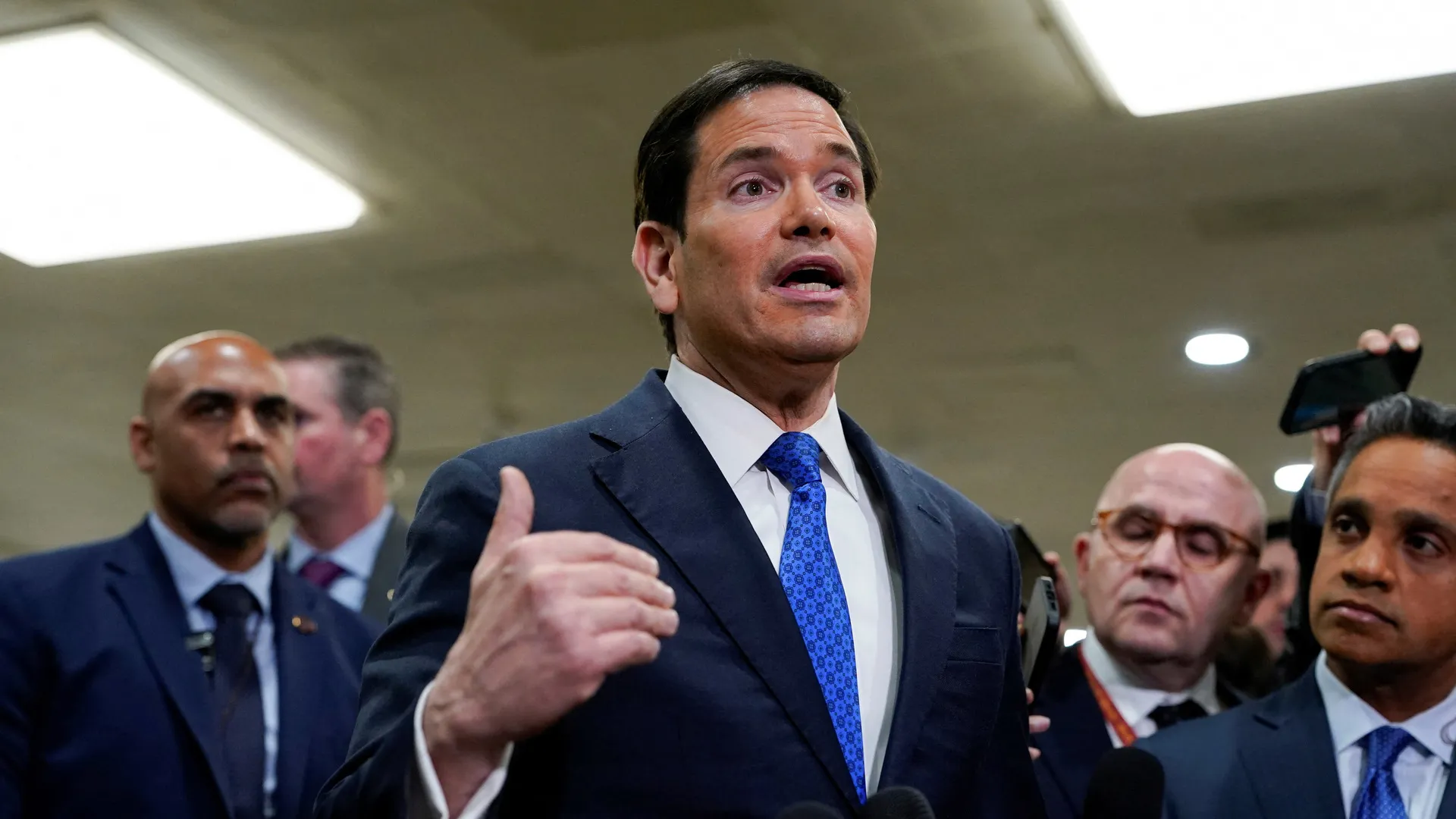
US Secretary of State Marco Rubio defended joint US-Israeli strikes on Iran, saying “the world will be safer” if Tehran doesn’t have access to nuclear weapons. He says President Trump made the decision to strike because Iran was ‘playing’ the US in negotiations.
US Navy ‘will begin escorting’ oil tankers through the Strait of Hormuz, a strategic waterway, if necessary, US President Trump says.
Published On 3 Mar 20263 Mar 2026
Share
President Donald Trump has announced that the United States government will offer insurance to ships in the Gulf after Iran largely succeeded in shutting down the Strait of Hormuz, sending oil prices soaring.
The US president added that the US military will accompany ships through Hormuz if necessary.
Recommended Stories
list of 3 itemsend of list
“Effective IMMEDIATELY, I have ordered the United States Development Finance Corporation (DFC) to provide, at a very reasonable price, political risk insurance and guarantees for the Financial Security of ALL Maritime Trade, especially Energy, traveling through the Gulf,” Trump wrote in a social media post on Tuesday.
DFC is the US government’s development finance agency. Its mission is to “advance US foreign policy and strengthen national security by mobilising private capital” across the world.
Trump added that the discounted risk insurance will be available for all shipping lanes.
“If necessary, the United States Navy will begin escorting tankers through the Strait of Hormuz, as soon as possible,” he wrote.
“No matter what, the United States will ensure the FREE FLOW of ENERGY to the WORLD.”
The Strait of Hormuz is a vital trade artery that connects the Gulf to the Indian Ocean. Around 20 percent of the world’s oil flows through it.
The price of oil has shot up by more than 15 percent since the US and Israel launched strikes on Tehran that started a war with Iran three days ago.
Costs are expected to rise even higher as oil supplies decrease as a result of Iran’s closure of the strait, as well as attacks on energy instalments in the Gulf.
Some insurance companies were reported to have cut back coverage amid the Iranian attacks.
Although the US is largely self-sufficient with its oil production, an uptick in prices globally could hike the cost for Americans at the gas or petrol pump, and could boost inflation.
The average price of one gallon of gas (3.8 liter) in the US jumped more than 11 cents overnight to $3.11 on Tuesday, according to the AAA Gas Prices website.
Earlier on Tuesday, Trump stressed that the attack on Iran “had to happen” despite its human cost and the strain it is putting on the energy market.
“We have a little high oil prices for a little while, but as soon as this ends, those prices are going to drop – I believe – lower than even before,” he told reporters.
Opinion polls show that the attack on Iran is unpopular among the US public. Increasing economic costs from the war could further diminish support for the war, months ahead of the US midterm elecitons.
UK Prime Minister Keir Starmer has allowed the US to use British bases for so-called “defensive strikes” targeting Iran, after Tehran started hitting civilian targets. Still, Al Jazeera’s Milena Veselinovic explains why US President Trump says the US-UK relationship isn’t what it used to be.
“We’re going to cut off all trade with Spain.” Donald Trump targeted Spain in an Oval Office tirade, complaining about Madrid’s refusal to let its bases be used for attacks on Iran. He also joined the German chancellor in saying Spain doesn’t spend enough on its military.
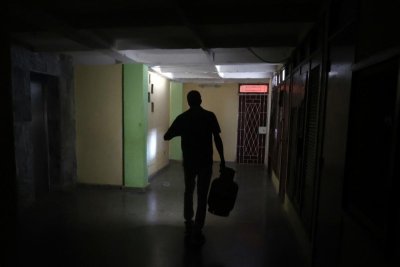
A man walks inside a building during a power outage in Havana in February. Photo by Ernesto Mastrascusa/EPA
March 3 (UPI) — Cuba began March facing a historic energy crisis, with an electricity deficit left 64% of the island in the dark due to fuel shortages and technical failures at its thermoelectric plants.
An electricity deficit is the condition in which demand exceeds the amount of electricity available to supply it. The grid simply doesn’t have enough generation at that moment to meet what homes, businesses and infrastructure are trying to draw.
Cuba’s National Electric System reported a deficit exceeding 2,000 megawatts, resulting in rolling outages lasting up to 20 hours a day, according to figures published on X by the state-run Electric Union, known by its Spanish acronym UNE.
For Tuesday’s peak demand period, UNE forecast maximum consumption of 3,150 megawatts, while available generation capacity was expected to reach only about 1,890 megawatts. The resulting shortfall has forced authorities to disconnect circuits across the country to prevent a total and uncontrolled collapse of the grid.
Eight of Cuba’s 16 thermoelectric plants are offline due to breakdowns and fuel shortages, according to reports. The plants, which process domestically produced and imported crude oil, operate within a system widely considered obsolete and underfunded.
Cuban authorities have blamed U.S. sanctions for worsening the crisis. Government officials have denounced what they call an “energy asphyxiation” by Washington, accusing the United States of restricting oil shipments and limiting access to fuel supplies from abroad.
“The electrical system begins 2026 in worse conditions than it had at the same date in 2025. Thermal plants enter and leave service, oil is scarce and going forward there will barely be diesel and fuel oil for distributed generation,” José Luis Reyes, an analyst specializing in Cuba’s power system, told Diario de Cuba.
“The fragile web of energy production and distribution depends on all kinds of unpredictable factors. Blackouts are guaranteed,” he said.
Independent experts estimate that restoring and modernizing Cuba’s electrical grid would require between $8 billion and $10 billion — a figure seen as out of reach for an economy that has contracted by more than 15% since 2020.
Amid the worsening shortages, Cuban President Miguel Díaz-Canel on Tuesday called for “urgent transformations” to the island’s economic and social model.
During a meeting of the Council of Ministers, Díaz-Canel said the proposed changes include expanding autonomy for state enterprises and municipalities, resizing the state apparatus and boosting domestic food production.
He also urged progress in shifting the country’s energy matrix, promoting exports, easing rules for foreign direct investment and encouraging partnerships between the state and private sectors, including ventures with Cubans living abroad, according to state media outlet Tribuna de La Habana.
The president said the measures must contribute to “macroeconomic stabilization,” increase hard currency revenues and strengthen domestic production, particularly food.
The call for reforms comes amid prolonged economic contraction, high inflation and deteriorating public services, as well as continued political pressure from President Donald Trump, who has advocated for political change on the island.
Trump on Friday raised the possibility of a “friendly takeover” of Cuba, saying the island’s government has been in talks with his administration about the country’s future.
“They are going through major problems and we could very well do something good, I think, something very positive for the people who were forced out, or worse, from Cuba and who live here,” he told reporters at the White House, though he did not specify any potential action against the country.
South Africa captain Aiden Markram says his team’s win over New Zealand in the group phase will count for nothing in the T20 World Cup semifinal, which will be a “completely fresh start”.
The two teams clash at Kolkata’s Eden Gardens in the first semifinal on Wednesday, with both having never lifted a cricket World Cup in either the 20-over or 50-over formats.
Recommended Stories
list of 4 itemsend of list
South Africa are the only unbeaten side in the last four, and are trying to rid themselves of a reputation for choking in the final stages at World Cups.
They have been the team to beat in this edition and got the better of New Zealand by seven wickets in a group game in Ahmedabad on February 15.
“We had a good run against them in the group stages, but both teams have played a lot of cricket since then,” Markram told reporters on Tuesday.
“It’s a completely fresh start [on Wednesday] and it being a semifinal, which is exciting as well.
“I don’t think it’s as straightforward as just being able to repeat that. We’ll try to bring our best game to the front again.”
South Africa suffered a heartbreaking defeat in the 2024 T20 World Cup final against India in Barbados, when they needed 30 off 30 balls with six wickets and lost by seven runs after a clatter of wickets.
The Proteas beat India and the West Indies in the Super Eight to have many marking them down as the favourites to lift the trophy.
“With regards to being favourites or not, that’s all different people’s opinions,” said Markram.
“Us as a team really just try to focus on putting good games of cricket together and playing that exciting brand that we’ve been trying to play for the last 18 months or so.”
Markram has led South Africa from the front with 268 runs, including three half-centuries and a top score of 86 not out in seven matches.
He holds an impressive captaincy record of 15 wins in 16 T20 World Cup matches, with the only defeat in the 2024 final.
“The senior guys in the team, we lean on them a lot. They help guide you and lead you when you have a few doubts,” said Markram.
“I think because of that and a really strong group of players over the years, we’ve developed that. Fortunately, it reflects well, but it’s definitely a reflection on the group as a whole.”
New Zealand ‘back themselves’ as outsiders for T20 World Cup
Underdogs New Zealand, meanwhile, back themselves against anyone in “one-off games”, according to captain Mitchell Santner.
Santner admitted that Markram’s unbeaten South Africa were “very good”.
New Zealand have lost twice at this edition, also falling to England in the Super Eight, and squeaked into the semifinals on net run-rate ahead of Pakistan.
“Whether you want to call us the underdogs or not, I think for us it is everyone’s goal throughout the tournament to get to this stage,” Santner told reporters at Eden Gardens.
“We are here now, and we back ourselves on one-off games against most teams, being able to adapt as quick as we can to what’s in front of us.
“South Africa look like a very good outfit as they have shown.
“I guess they are in the same boat as us now, it is one game, and you are into the final,” said the left-arm spinner.
New Zealand will be playing their fourth semi-final in the last five T20 World Cups. They reached the final in 2021 but lost to Australia.
“It is probably two teams that have been in and around it for a long time. We know the heartbreak of South Africa two years ago,” Santner added.
“It is whoever turns up on the day, whoever sees the conditions the best.”
New Zealand are the only semifinalist to lose more than once in the tournament and defeated only two Test-playing nations on the way to the last four – Afghanistan and cohosts Sri Lanka.
“We haven’t played the perfect game throughout this tournament,” said Santner.
“That’s a good thing for us. If we can put it all together, it can put us in a pretty good position.
“There is no real hiding or secrets about what South Africa are going to bring.
“We know they are probably going to roll out the same team and a very good team.”
New Zealand fast bowler Matt Henry returned home for the birth of his second child after the defeat to England in Colombo on Friday.
Santner said the bowler would arrive back later Tuesday night.
“He’ll obviously have a little run around in the morning to see if he’s ready to go.”
Despite promising to end United States involvement in costly and destructive foreign wars, President Donald Trump, together with Israel, has launched a massive military assault on Iran, targeting its leadership and nuclear and missile infrastructure.
Much like his predecessors, Trump has relied on military force to pursue US strategic interests, continuing a pattern that has defined US foreign policy for more than two decades.
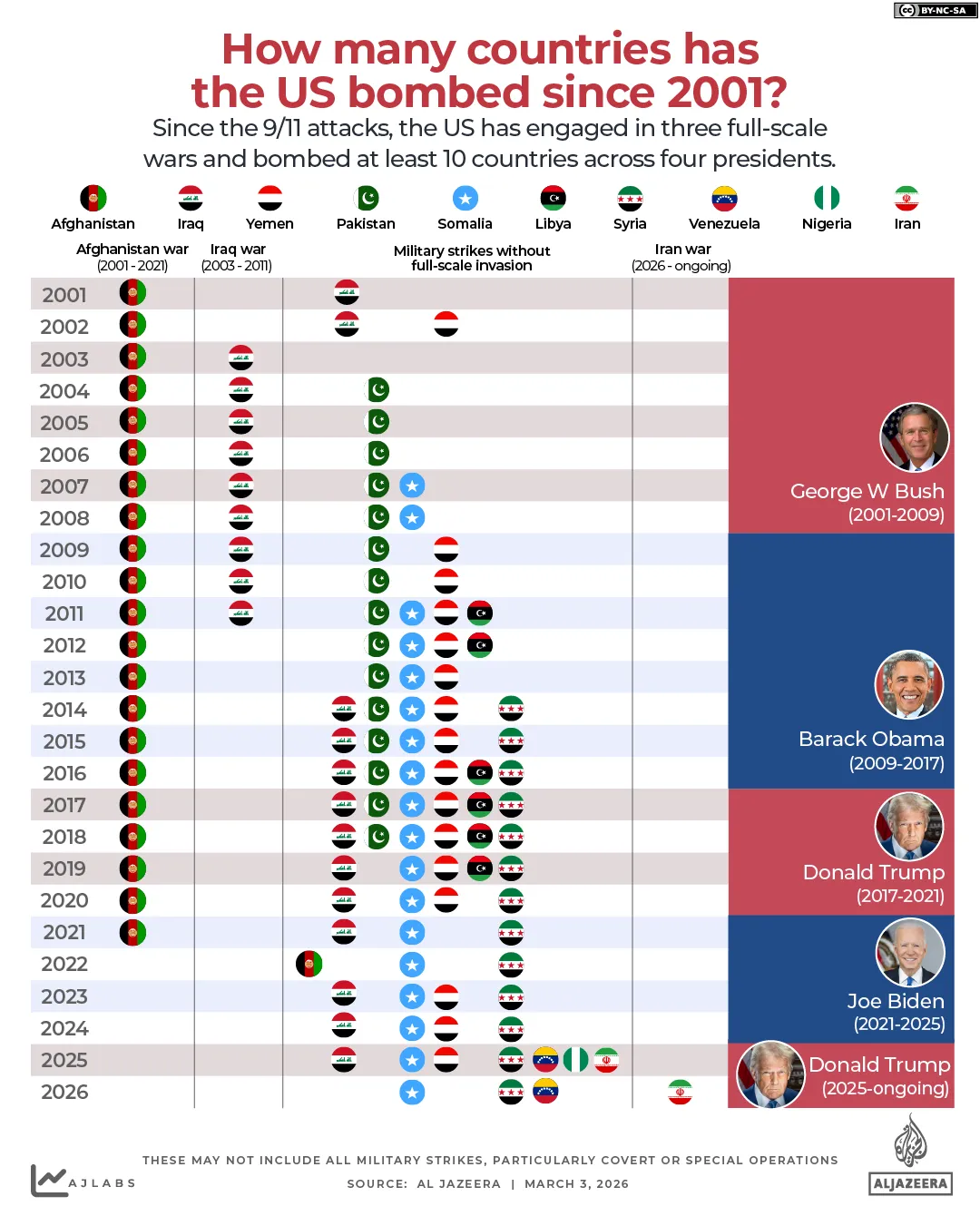
Since the September 11, 2001, attacks on New York and the US capital, the US has engaged in three full-scale wars and bombed at least 10 countries in operations ranging from drone strikes to invasions, often multiple times within a single year.
The graphic below shows all the countries the US has bombed since 2001.
These may not include all military strikes, particularly covert or special operations.
The US has bombed at least 10 countries: Afghanistan, Iraq, Yemen, Pakistan, Somalia, Libya, Syria, Venezuela, Nigeria and Iran since 2001. [Al Jazeera]
The cost of decades of war
In the aftermath of the September 11, 2001, attacks, President George W Bush launched what he called a “war on terror”, a global military campaign that reshaped US foreign policy and triggered wars, invasions and air strikes across numerous countries.
According to an analysis by Brown University’s Watson Institute of International & Public Affairs, US-led wars since 2001 have directly caused the deaths of about 940,000 people across Afghanistan, Pakistan, Iraq, Syria, Yemen and other conflict zones.
This does not include indirect deaths, namely those caused by loss of access to food, healthcare or war-related diseases.
(Al Jazeera)
The US has spent an estimated $5.8 trillion funding its more than two decades of conflict.
This includes $2.1 trillion spent by the Department of Defense (DOD), $1.1 trillion by Homeland Security, $884bn to increase the DOD base budget, $465bn on veterans’ medical care and an additional $1 trillion in interest payments on loans taken out to fund the wars.
In addition to the $5.8 trillion already spent, the US is expected to have to lay out at least another $2.2 trillion for veterans’ care over the next 30 years.
This would bring the total estimated cost of US wars since 2001 to $8 trillion.
Afghanistan war (2001-2021)
The first and most direct response to 9/11 was the invasion of Afghanistan to dismantle al-Qaeda and remove the Taliban from power.
On October 7, 2001, the US launched Operation Enduring Freedom.
The initial invasion succeeded in toppling the Taliban regime within just a few weeks. However, armed resistance groups mounted a prolonged resistance against US and coalition forces.
The war went on to become the longest conflict in US history, spanning four presidencies and lasting 20 years until the final withdrawal in 2021, after which the Taliban regained control of Afghanistan.
An estimated 241,000 people died as a direct result of the war, according to an analysis from Brown University’s Costs of War project. Hundreds of thousands more people, mostly civilians, died due to hunger, disease and injuries caused by the war.
At least 3,586 soldiers from the US and its NATO allies were killed in the war, which is estimated to have cost $2.26 trillion for the US, according to the Cost of War project.
Iraq war (2003-2011)
On March 20, 2003, Bush launched a second war, this time in Iraq, claiming that President Saddam Hussein possessed weapons of mass destruction – a claim that proved to be false.
On May 1, 2003, Bush declared “mission accomplished” and the end of major combat operations in Iraq.
Bush on board the USS Abraham Lincoln aircraft carrier, where he declared combat operations in Iraq over on May 1, 2003 [Larry Downing/Reuters]
However, the subsequent years were defined by violence from armed groups and a power vacuum that fuelled the rise of ISIL (ISIS).
In 2008, Bush agreed to withdraw US combat troops, a process completed in 2011 under President Barack Obama.
The drone wars: Pakistan, Somalia and Yemen
Although not declared wars, the US has also expanded its air and drone campaigns.
Beginning in the mid-2000s, the CIA launched drone strikes inside Pakistan’s tribal areas along the Afghan border, targeting al-Qaeda and Taliban figures believed to be operating there. These strikes marked the early expansion of remote warfare.
Obama dramatically expanded the drone strikes in Pakistan, particularly in the early years of his presidency.
At the same time, the US conducted air strikes in Somalia against suspected al-Qaeda affiliates, later targeting fighters linked to al-Shabab as that armed group grew in strength.
In Yemen, US forces carried out missile and drone strikes against al-Qaeda leaders.
Libya intervention
In 2011 during an uprising against Libyan leader Muammar Gaddafi, the US joined a NATO-led intervention in Libya. American forces launched air and missile strikes to enforce a no-fly zone.
Gaddafi was overthrown and killed, and Libya descended into prolonged instability and factional fighting.
Iraq and Syria
From 2014 onwards, the US intervened in the Syrian war with the stated goal of defeating ISIL. Building on its campaign in Iraq, the US conducted sustained air strikes in Syria while supporting local partner forces on the ground.
In Iraq, US forces advised Iraqi troops, fought ISIL remnants and tried to counter Iranian influence, highlighted by a Trump-ordered 2020 strike that killed Iranian General Qassem Soleimani.
A tanker anchored in the Persian Gulf off coast of Dubai, one of scores halted on either side of Strait of Hormuz after it was effectively closed due to threats against shipping made by the regime in Tehran that have sent global energy prices soaring. Photo by Stringer/EPA
March 3 (UPI) — The price of Brent crude oil rose to $80 a barrel and the price of natural gas jumped 30% to $1.97 per therm on Tuesday after Iran effectively shut the key Strait of Hormuz shipping lane, with an official threatening its forces would “set fire to anyone who tries to pass.”
Prices continued their upward trajectory from Monday when markets reopened following the military strikes over the weekend on Iran by the United States and Israel and Tehran’s strikes on its oil and gas producing neighbors across the Gulf.
Concerns over supply disruptions are growing as the conflict widens across the region with Iranian strikes going beyond military bases used to launch attacks on Iran to target oil and gas production facilities, as well as Amazon data centers in the United Arab Emirates and Bahrain.
On Monday, Qatar Energy, one of the world’s largest exporters of liquefied natural gas, shut down production following “military attacks” on its Ras Laffan plant and Saudi Arabia’s state-run Aramco shuttered its giant Ras Tanura refinery near the port city of Dammam after it was set ablaze in a drone strike.
Analysts warned the oil price could surpass $100 a barrel if the disruption continued for very long — translating to a 25-cent-a-gallon rise in U.S. petrol prices.
The risk to maritime traffic was also pushing up the cost of moving oil from the Gulf to Europe and Asia and around the world with the leasing cost of a tanker to ship Middle East to China doubling to $400,000 a day on Monday.
The president of logistics technology platform Flexport, Sanne Manders, told the BBC that while Iran had not physically blockaded the strait, through which 20% of the world’s oil and gas transits, it was closed as far as global shipping was concerned.
Manders said it was partly that shipping lines were simply unwilling to expose their vessels, cargo and crews to potential jeopardy and partly insurance companies “not being willing to insure this risk anymore.”
He warned that expectation of higher fuel costs would feed through to movement of all goods by sea with carriers hiking rates “for any shipping in the world.”
That all fed into investor fears over the consequences for inflation and interest rates, sending global stock markets tumbling overnight, led by Japan’s Nikkei 225 Index, which ended Tuesday down more than 3%.
In mid-morning trade London’s FTSE 100 was down 2.8 %, Germany’s blue-chip DAX was trading 4% lower, down more than a thousand points, and the CAC 40 in Paris was off by 3.2%.
The pan-European Stoxx 600 Index continued its retreat, with across-the-board falls in all sectors pulling it 2.9% lower, while the blue-chip Euro Stoxx 50 was even lower, down 3.1%.
However, hotels, airlines and utilities took the biggest hits while energy firms and defense contractors performed better.
Ahead of the opening of U.S. markets, S&P 500 futures fell by 1.8%, Nasdaq 100 futures were down 2.3% and Dow Jones Industrial Average-linked futures moved lower by around 1.7%, or 821 points.
Defense and energy stocks rose on Monday led by Northrop Grumman, up 6%, and Palantir, up 5.8%, which together with a surge in NVIDIA’s share price, helped the overall market erase big losses early on to end the day in the black.
U.S. President Donald Trump was due to discuss the economic and cost-of-living impacts with Treasury Secretary Scott Bessent and Energy Secretary Chris Wright on Tuesday while Secretary of State Marco Rubio trailed administration plans to cope with energy price spikes.
“We knew that going in would be a factor. Starting tomorrow you will see us rolling out those phases to try to mitigate against that,” said Rubio.
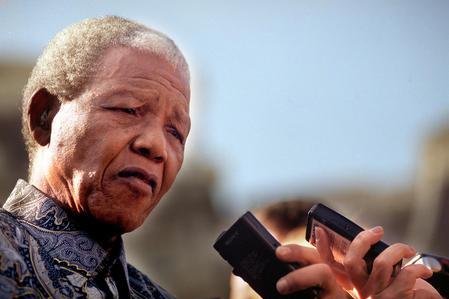
Former South African president Nelson Mandela speaks to reporters outside of the White House in Washington on October 21, 1999. Mandela was famously released from prison in South Africa on February 11, 1990. Photo by Joel Rennich/UPI | License Photo
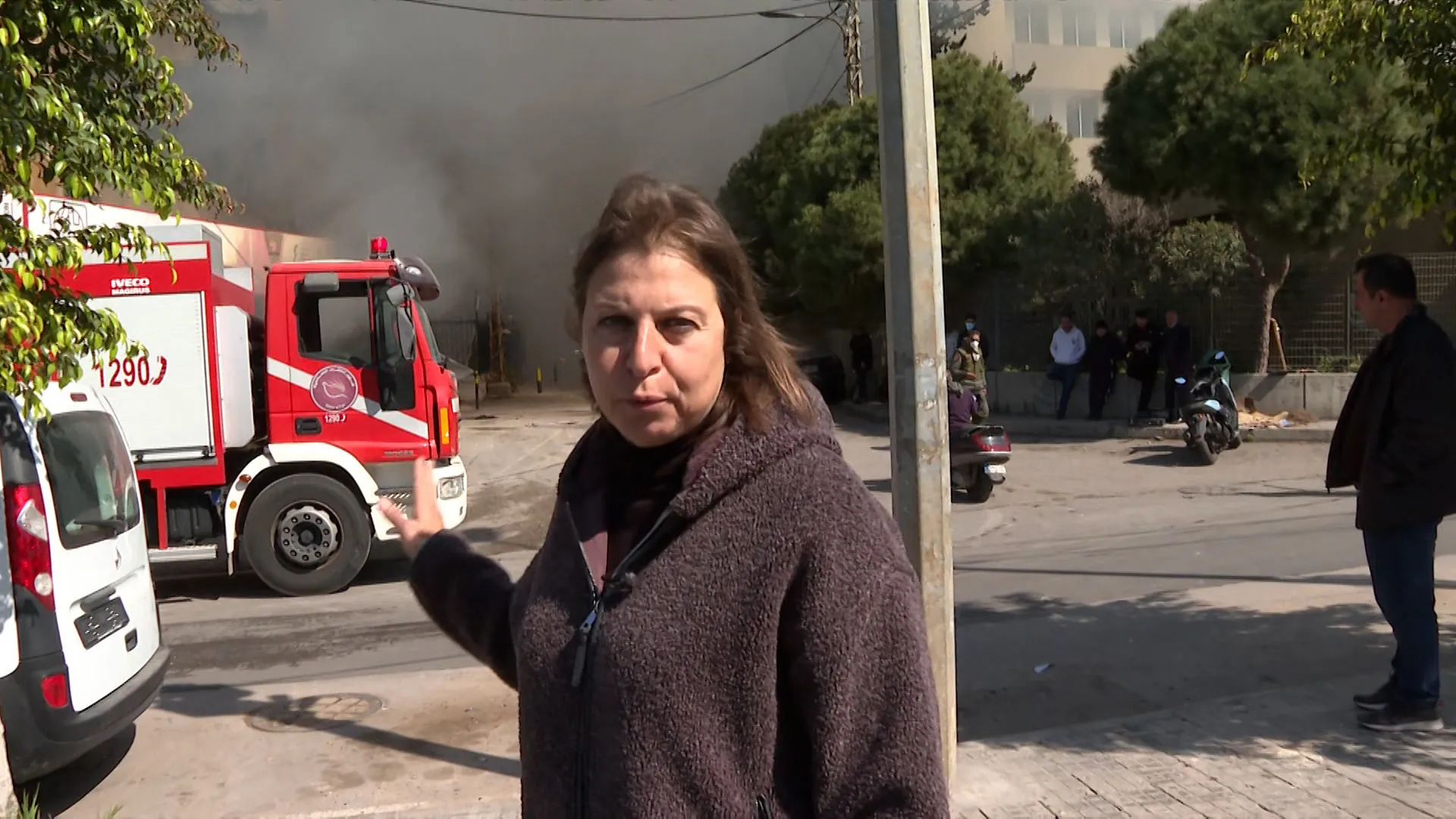
Al Jazeera’s Zeina Khodr reports from the site of an Israeli attack in Beirut’s southern suburbs, which Israel says targeted a ‘Hezbollah area’. Israeli forces have taken more land inside Lebanon, expanding a de facto buffer zone that has already displaced tens of thousands of people.
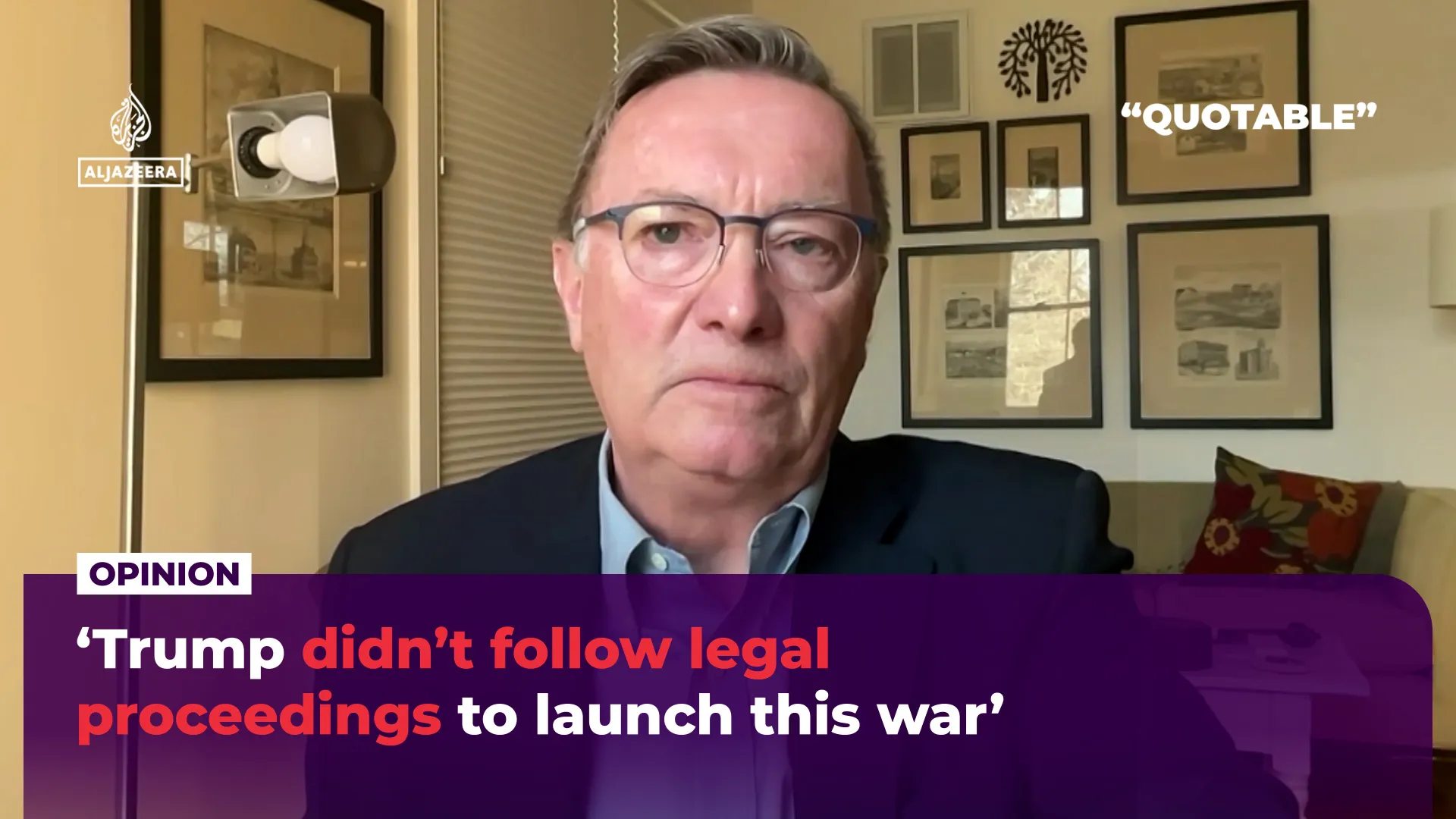
Jeffrey Feltman, former US Assistant Secretary of State for Near Eastern Affairs, questions the legal basis and endgame of the US-Israel war on Iran, saying he does not believe Iran posed an imminent threat to the United States that would justify war.
This photo taken on Tuesday shows the trading room of Hana Bank in central Seoul, with the benchmark Korea Composite Stock Price Index down 7 percent to close below the 5,800-point mark. Photo by Yonhap
South Korean stocks plunged more than 7 percent Tuesday to close below the 5,800-point mark as investor sentiment was dampened by escalating geopolitical concerns triggered by the ongoing Middle East conflict. The Korean won lost sharply against the U.S. dollar.
The benchmark Korea Composite Stock Price Index (KOSPI) tumbled 452.22 points, or 7.24 percent, to close at 5,791.91, marking the lowest closing price since Feb. 20, when the index finished at 5,808.53.
It marked the largest-ever daily drop.
The country’s main bourse operator, the Korea Exchange (KRX), issued a sell-side sidecar for 5 minutes around noon, suspending the selling of KOSPI futures.
Trade volume was heavy at 1.2 billion shares worth 52.5 trillion won (US$35.8 billion). Losers sharply outnumbered winners 840 to 73.
Foreign and institutional investors led the daily sell-off, dumping a net 5.1 trillion won and 891.1 billion won, respectively. Retail investors, on the other hand, went bargain hunting and snapped up a net 5.8 trillion won.
Coordinated U.S. and Israeli air strikes on Iran over the weekend roiled global markets from the start of this week, but the Korean market closed on Monday in observation of the March 1 Independence Movement Day holiday.
“The main index experienced expanded volatility as the Middle East risk was realized after a long weekend,” Roh Dong-gil, an analyst at Shinhan Securities, said. “The stock market is expected to be affected by oil prices and interest rates as the situation develops.”
Most shares closed bearish.
Market bellwether Samsung Electronics tumbled 9.88 percent to 195,100 won, and its chipmaking rival SK hynix plummeted 11.5 percent to 939,000 won.
Top automaker Hyundai Motor dived 11.72 percent to 595,000 won, and leading battery maker LG Energy Solution sank 7.96 percent to 393,000 won.
Travel shares were among the biggest losers as flag air carrier Korean Air nosedived 10.32 percent to 25,200 won and major travel agency Hana Tour Service lost 6.65 percent to 44,900 won.
KB Financial Group, a leading banking group, fell 3.46 percent to 153,500 won, and Celltrion, a major pharmaceutical firm, dropped 5.66 percent to 225,000 won.
However, oil refinery and defense shares were bullish.
Leading refinery firm SK Innovation rose 2.51 percent to 130,900 won, and S-Oil, whose largest shareholder is Saudi Aramco, shot up 28.45 percent to 141,300 won.
Defense giant Hanwha Aerospace soared 19.83 percent to 1.43 million won, and LIG Nex1 surged 29.86 percent to 661,000 won.
The Korean won was quoted at 1,466.1 won against the U.S. dollar at 3:30 p.m., down 26.4 won from the previous session’s close. It marked the lowest since Feb. 6, when the won-dollar rate was 1,469.5 won.
Bond prices, which move inversely to yields, closed sharply lower. The yield on three-year Treasurys increased 13.9 basis points to 3.180 percent, and the return on the benchmark five-year government bonds declined 14.6 basis points to 3.424 percent.
Copyright (c) Yonhap News Agency prohibits its content from being redistributed or reprinted without consent, and forbids the content from being learned and used by artificial intelligence systems.
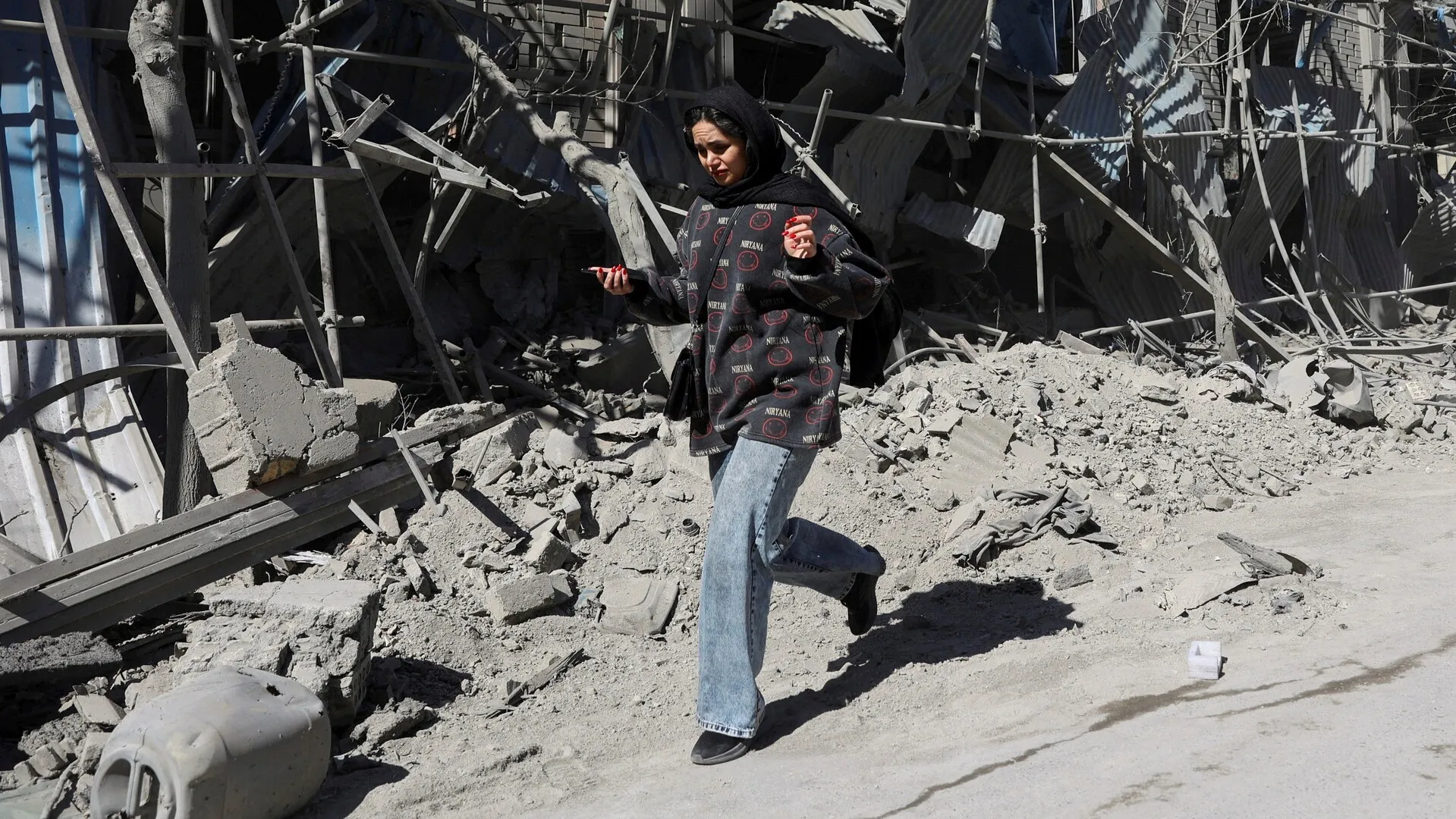
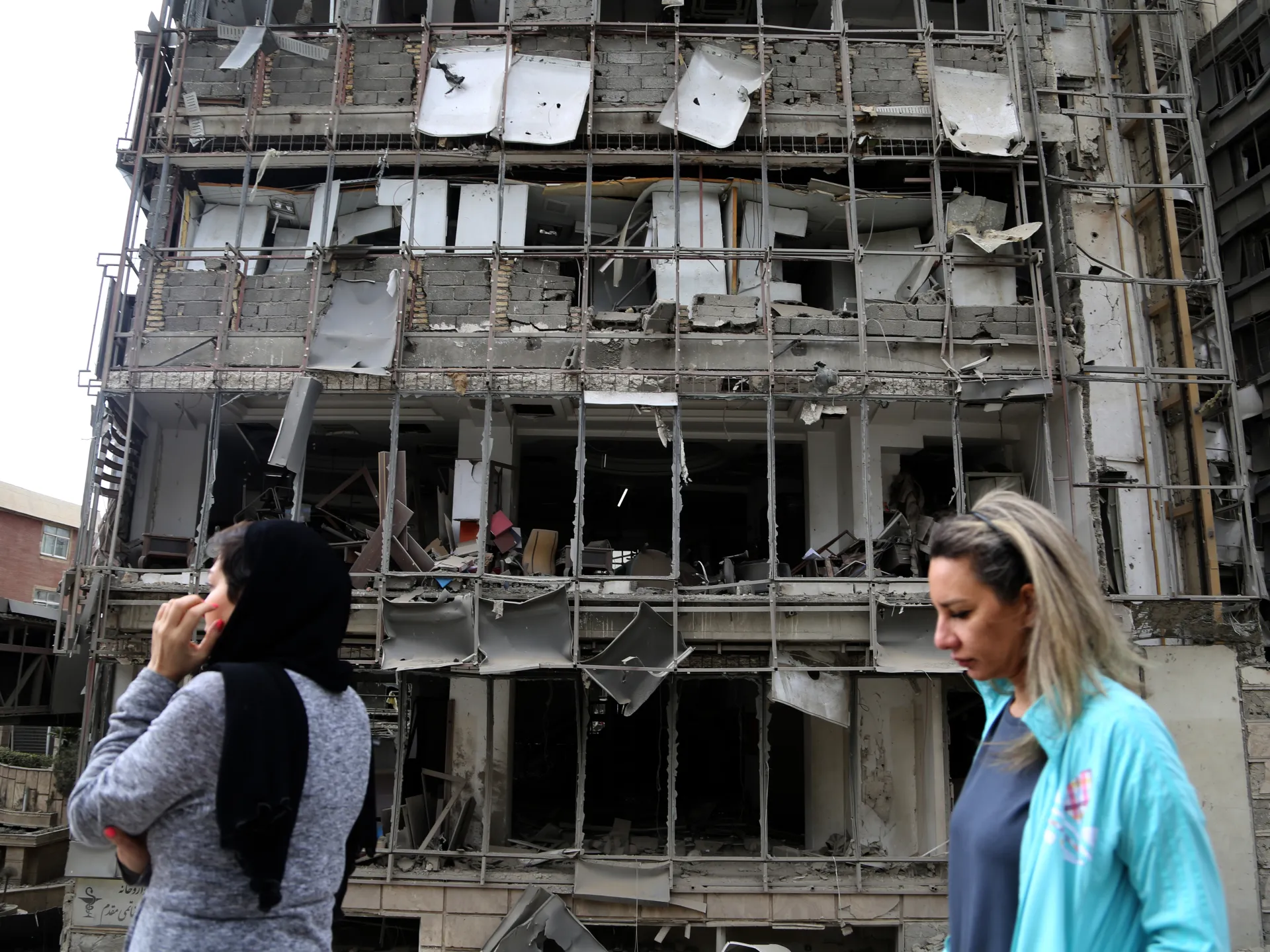
Explosions have rung out across Tehran as the war entered its fourth day with the United States and Israel continuing to pound Iran’s capital and numerous other cities and locations after the assassination of Supreme Leader Ali Khamenei.
Iran continued on Tuesday to retaliate against Israel and throughout the Gulf where nations host US assets.
At least 787 people have been killed in US-Israeli strikes on a minimum of 131 cities across Iran, the Iranian Red Crescent Society said on Tuesday.
Israel’s military said it had “struck and dismantled” the headquarters of Iran’s state radio and television broadcaster, the Islamic Republic of Iran Broadcasting (IRIB), accusing it of “calling for the destruction of the State of Israel and for the use of nuclear weapons”.
In a post on Telegram, IRIB reported explosions near its headquarters in Tehran but said there had been no disruption to its operations.
Tehran’s streets have been largely deserted as people take shelter during the air strikes.
Iranian media also reported explosions in the city of Karaj, just outside Tehran, as well as in the central city of Isfahan.
Iran held a mass funeral on Tuesday for 165 schoolgirls and staff killed on Saturday in what Iran said was a US-Israeli attack on a school in the southern city of Minab.
March 3 (UPI) — Suspected Iranian drones have struck the U.S. Embassy in Riyadh, Saudi Arabia’s Ministry of Defense said early Tuesday, as the United States orders all non-emergency personnel to evacuate Bahrain and Kuwait amid Tehran’s continued retaliation strikes targeting U.S. assets and Israel.
Two drones struck the embassy, igniting “a limited fire” and causing “minor material damage” to the building, the ministry said in a statement.
The embassy confirmed in a statement that it had been attacked, urging people to avoid the facility. It said the mission was closed on Tuesday, and urged U.S. citizens throughout Saudi Arabia, but especially in the cities of Jeddah, Riyadh and Dhahran, to shelter in place.
The Saudi Defense Ministry later said it had intercepted and destroyed eight drones near Riyadh and Al-Kharj.
Asked what the U.S. response to the attack would be, President Donald Trump told NewsNation, “You’ll find out soon.”
Saudi Arabia is a U.S. ally and home to several American assets, including the U.S. Embassy and Prince Sultan Air Base, as well as other U.S. military facilities.
Since the United States and Israel began attacking Iran early Saturday, the Islamic regime has launched a barrage of missiles and drones targeting Israel as well as U.S. assets throughout the region.
Along with Saudi Arabia, Iran has attacked Kuwait, Jordan, Bahrain, Oman and the United Arab Emirates. At least six U.S. service members have been killed so far, all in Kuwait, where three U.S. fighter planes were also downed by Kuwait’s aerial defense weapons system in what is being called friendly fire.
The State Department on Tuesday ordered non-emergency U.S. government personnel and their families to leave Bahrain and Kuwait, according to statements published by their respective embassies.
On Tuesday, the State Department urged Americans throughout the Middle East to leave.
In a 4 p.m. EST statement from Assistant Secretary Mora Namdar, Americans in 14 Middle Eastern countries were told to “DEPART NOW.”