TOP NEWS

From breaking news to significant developments in politics, business, technology, entertainment, and more, we deliver the stories that shape our global landscape.

India beat West Indies by five wickets to enter T20 World Cup semifinals | ICC Men’s T20 World Cup News

Samson hits 97 not out, West Indian bowling flounders in Kolkata as India set up World Cup semifinal against England.

Sanju Samson produced one of the calmest innings under the pressure of a run chase to send India into the semifinals of the T20 World Cup with a five-wicket win over the West Indies in Kolkata.

Samson, who returned to the Indian playing XI in the previous match after being overlooked for the three games prior to it, remained not out on 97 as India pulled off an impressive win in front of a packed Eden Gardens crowd on Sunday.

Recommended Stories

list of 3 itemsend of list

The wicketkeeper-batter was the only Indian player to score more than 30 runs as the defending champions faced the Maroons in a winner-takes-all Super Eight game.

In the process, Samson recorded the highest score by an Indian in a T20 World Cup run chase, going past Virat Kohli’s 82 against Australia in 2016 and Pakistan in 2022.

The cohosts will now face England in the second semifinal in Mumbai on Thursday, while New Zealand and South Africa will meet in the first last-four match on Wednesday in Kolkata.

Samson’s cool demeanour in the face of a high target and an expectant home crowd laid the foundation of India’s chase after they lost star batter Abhishek Sharma in the third over.

The 31-year-old from southern India then took control of the innings, hitting regular boundaries in his 50-ball knock. Samson’s 97 not out came off 12 fours and four sixes.

While he enjoyed brief support from India’s top and middle order batters, none crossed the 20-run mark until Tilak Varma scored 27 off 15 balls in a 42-run partnership with Samson.

India’s captain Suryakumar Yadav (18) and Hardik Pandya (17) were the other contributors to the total, which was sealed with two boundaries off Samson’s bat in the last over.

West Indian pacers Shamar Joseph and Jason Holder picked up two wickets apiece as their teammates struggled to control the flow of runs off Samson’s bat.

India's Sanju Samson plays a shot during the T20 World Cup cricket match between India and West Indies in Kolkata, India, Sunday, March 1, 2026. (AP Photo/Bikas Das)
Samson remained unbeaten in India’s run chase [Bikas Das/AP]

Earlier, a 68-run opening partnership between captain Shai Hope and Roston Chase gave the West Indies a swift start to their innings.

Chase, who scored 40 off 25 balls, was the more aggressive of the two openers as he made the most of his dropped catch by Abhishek Sharma to take on Axar Patel and Jasprit Bumrah in the first six overs.

Hope was dismissed for 32 after a sluggish innings and replaced by in-form batter Shimron Hetmyer.

The cricket tournament’s fifth-ranked leading run-scorer sped his way to 27 off 12 balls before falling caught behind to Bumrah.

India looked to be in control soon after as the West Indies were reduced to 119-4 in the 15th over. But a strong finish from Rovman Powell and Jason Holder took the 2012 and 2016 champions to 195.

Powell was unbeaten on 34 and Holder on 37 off 22 balls as they looked to put the pre-tournament favourites under pressure in front of a packed Eden Gardens.

Bumrah was the pick of the Indian bowlers with two crucial wickets off his four overs.

Pandya and Varun Chakravarthy picked up the other two West Indian wickets.

West Indies' Shimron Hetmyer, center, chats with India's Sanju Samson after India won the T20 World Cup cricket match against West Indies in Kolkata, India, Sunday, March 1, 2026. (AP Photo/Bikas Das)
West Indies’ players chat with Sanju Samson after the match [Bikas Das/AP]

Source link

Hegseth cuts military ties with Ivy League schools, multiple think tanks

Secretary of Defense Pete Hegseth, pictured in February at the White House, announced in a memo that the Defense Department is ending its senior officer fellowship programs with 22 institutions — including Ivy League schools — after alleging that they do not measure up the armed forces’ requirements. File Photo by Samuel Corum/UPI | License Photo

March 1 (UPI) — The Defense Department is ending its relationships with several Ivy League universities and think tanks that service members are permitted to attend.

Secretary of Defense Pete Hegseth has ended graduate school fellowships at 22 institutions starting with the 2026-2027 academic years, including the Massachusetts Institute of Technology, Yale, Princeton, the Center for Strategic and International Studies and The Brookings Institution, according to a memo released by the DOD.

The memo follows a Feb. 7 announcement that the DOD would end stop sending officers to Harvard as part of its Senior Service College Fellowship programs, which Hegseth said in the memo is being retooled and offered list of institutions that offer equivalent programs.

Like Harvard, the expanded list of institutions the department is removing from its SSC programs are alleged to be “woke” and no longer meet requirements for officers in the armed forces.

“Our Professional Military Education institutions are among our most sacred and essential means to restore and maintain the warrior ethos within the [DOD],” Hegseth said. “It is imperative that our war fighter education system forges strategic senior leaders who are trained to think critically, free of bias and influence.”

In a press release, Pentagon spokesman Sean Parnell said the “Aligning Senior Service College Opportunities with American Values” memo directs the DOD to focus SSC fellowships away from institutions that “diminish critical thinking, have significant adversary involvement or fail to deliver rigorous education grounded in realism.”

Universities that are replacing the Ivy League schools include three senior military colleges and three DOD or U.S. government programs, as well as 15 other universities, including Liberty, George Mason, Tennessee, Michigan, Iowa State and Hillsdale College.

Currently enrolled DOD personnel will be permitted to finish their courses of study, but the new policy and list of acceptable institutions applies to all personnel starting this fall, Hegseth said.

Senate Majority Leader John Thune, R-S.D., speaks during a press conference after the weekly Republican Senate caucus luncheon at the U.S. Capitol on Wednesday. Photo by Bonnie Cash/UPI | License Photo

Source link

Smoke rises above Qatar capital Doha after Iranian missiles shot down | Infrastructure

NewsFeed

Loud explosions have been heard in Doha, the capital of Qatar, as defence systems shot down incoming Iranian missiles. Falling debris ignited large fire that sent plumes of black smoke rising above the city. Iran has hit multiple Gulf states as it responds to US-Israeli attacks.

Source link

Under the shadow of the Iran war, Israel finds another way to punish Gaza | Israel-Palestine conflict

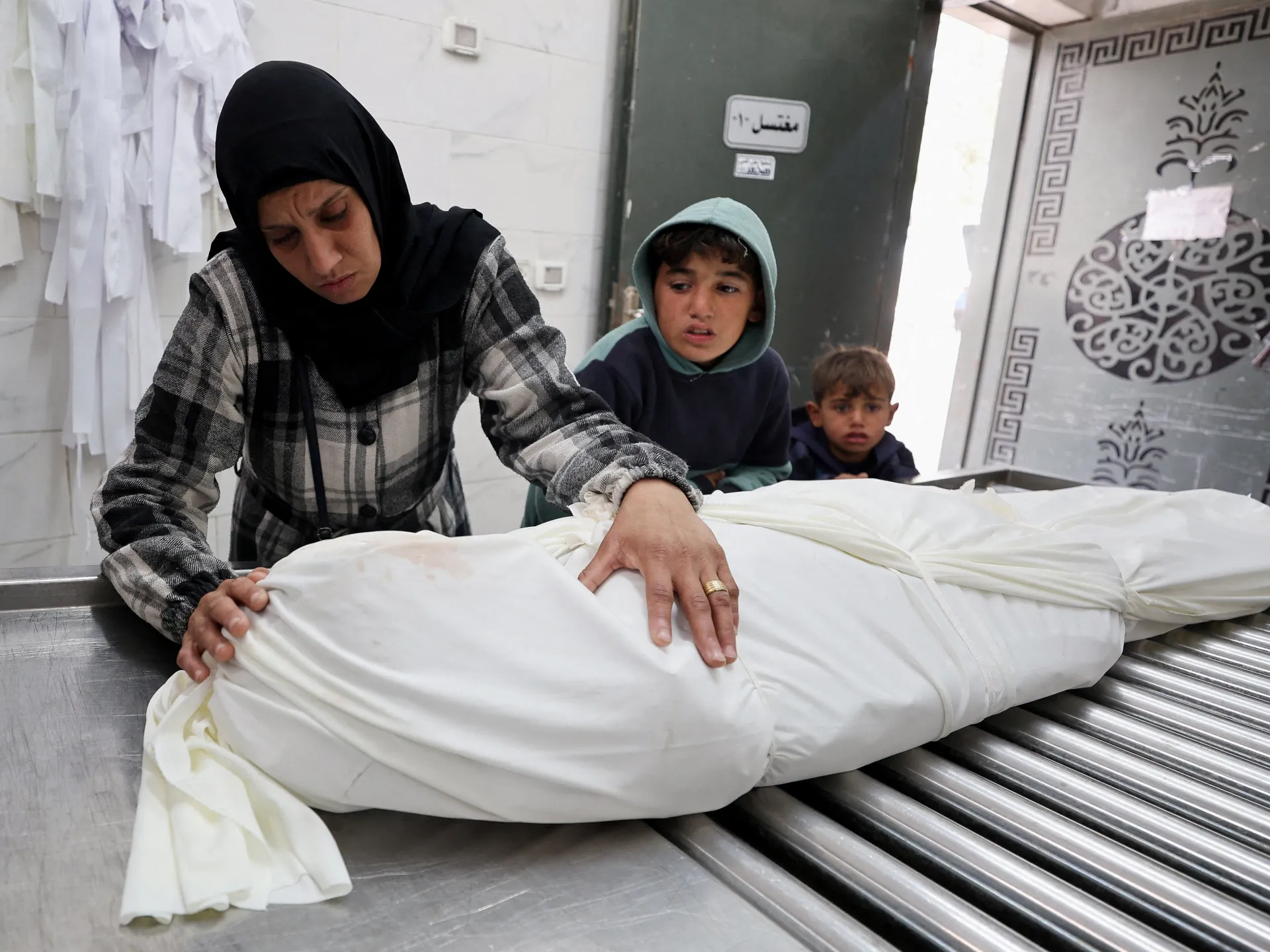
As Israel and the United States attacked Iran, Palestinians in the Gaza Strip began to panic. They remembered how crossings were closed in the past, causing famine, and rushed to markets to buy whatever they could. As a result, prices of food and basic necessities skyrocketed. Soon enough, the news came that the border crossings had been closed.

All of this happened just as the grace period set by Israel for 37 NGOs to withdraw from Gaza for not fulfilling registration requirements expired. Organisations like Doctors Without Borders (also known by its French acronym MSF), Medical Aid for Palestinians UK, Handicap International: Humanity & Inclusion, ActionAid, CARE, etc were supposed to stop operating in Gaza.

At the last moment, a ruling by the Israeli Supreme Court allowed them to continue working while it considers their appeal against the ban. But even with this court decision, these organisations cannot continue to function fully. That is because the Israeli occupation continues to prevent their supplies and foreign staff from entering Gaza.

According to these NGOs, together they are responsible for half of the food handouts in the Strip and 60 percent of services provided in field hospitals.

For many families in Gaza, this means hunger – because food parcels will not be distributed and livelihoods will be lost.

We know this is not about NGOs failing to meet new registration rules, just like the closure of the border crossings is not a matter of security. They are about exacting yet another form of collective punishment on the Palestinians.

Even if the Supreme Court miraculously rules against the NGO ban, the Israeli occupation would still find another way to push these foreign organisations out of Gaza. This was made clear this month when it was revealed that World Central Kitchen, which has been running dozens of soup kitchens across the Strip and which is not on the ban list, may be suspending its activities.

According to Gaza’s Government Media Office, this was because Israel blocked most of the organisation’s supply trucks from coming in. As a result, there are not enough supplies to continue cooking. World Central Kitchen previously said it serves 1 million meals daily.

So now, amid the war with Iran, which may last weeks or months, hundreds of thousands of families will not have adequate food once again.

All of this comes on top of Israel’s continuing war on UNRWA. Since its creation in late 1949, the United Nations agency has been the backbone of international support for Palestinian refugees. It has the largest capacity for emergency response and the widest spectrum of services on offer. And yet, Israel has banned its operations and has blocked its supplies from entering the Strip.

Through relentless lobbying, Israel has managed to achieve substantial cuts to UNRWA’s budget. As a result, last month 600 employees were fired. The salaries of the rest were reduced by 20 percent.

The NGO ban will likely result in thousands of people losing their jobs as well. And this is at a time when unemployment in Gaza has gone beyond 80 percent.

My family will also suffer. In the past, we have benefitted from food and basic supplies handouts from NGOs, and my brother has been able to find temporary work as a driver for one of them.

The possible closure of international organisations is a direct threat to the lives of hundreds of thousands of civilians who depend on their services and employment. The closure of the border crossings could mean another hunger crisis.

These are a form of collective punishment that yet again will not make the news. Israel is constantly thinking of new ways to make our lives that much more unbearable, that much more impossible in our devastated homeland.

Two and half years of the Israeli genocide has destroyed hospitals, schools, universities, roads, sewage and potable water systems, water treatment plants, the electricity grid, and countless generators and solar panels.

The vast majority of the population lives primitive lives in tents or makeshift shelters that cannot protect people from extreme heat or cold.

Water is contaminated, food is insufficient, land has been destroyed and poisoned.

Now we will be deprived of the little international support we have been receiving.

And what is the goal of all this? To push us ever closer to despair and the ultimate surrender, to make us desire to leave our homeland on our own. Ethnic cleansing by mutual agreement.

All of the organisations that Israel is seeking to ban are foreign. Most of them are based in Western countries. Yet there has been little to no condemnation from Western governments of Israel’s actions against their own organisations. There has been no outrage that the occupation is trying to destroy international humanitarian provision so it can fully control aid distribution.

Collective punishment is a violation of international law. States are obliged to go beyond verbal condemnations and take action by imposing sanctions. Until that happens, we in Gaza will continue to be subjected to ever more brutal acts of collective punishment by our occupiers.

The views expressed in this article are the author’s own and do not necessarily reflect Al Jazeera’s editorial stance.

Source link

Israel closes Gaza’s Rafah crossing amid attacks on Iran | Israel-Palestine conflict News

The crossing with Egypt is considered vital for the delivery of humanitarian aid and the evacuation of critically ill patients.

Israel has closed Gaza’s Rafah border crossing with Egypt amid the joint Israeli-United States attacks on Iran.

“Several necessary security adjustments have been implemented, including the closure of the crossings into the Gaza Strip, among them the Rafah Crossing, until further notice,” Israel’s Coordinator of Government Activities in the Territories (COGAT) said in a statement.

Recommended Stories

list of 4 itemsend of list

The Rafah crossing, located on Gaza’s southern border, had reopened only last month, allowing a limited number of Palestinians to leave for the first time in months, including patients in urgent need of medical care.

The crossing is considered vital for the delivery of humanitarian aid and the evacuation of critically ill patients.

Virtually all of Gaza’s population of more than two million people was displaced during Israel’s genocidal war on the territory, and the enclave remains heavily dependent on humanitarian assistance.

In mid-February, the United Nations said it continued to face impediments in delivering lifesaving aid to Gaza.

In a February report, Human Rights Watch said Israeli restrictions had contributed to shortages of medicines, reconstruction materials, food and water inside the Strip.

COGAT claimed that sufficient food had entered Gaza since the start of the ceasefire to meet four times the nutritional needs of the population. However, it did not provide any evidence to back its claim.

“The substantial quantities of food that have entered since the beginning of the ceasefire amount to four times the nutritional needs of the population,” the Israeli defence body said. “Therefore, the existing stock is expected to suffice for an extended period.”

It added that “the closure of the crossings will have no impact on the humanitarian situation in the Gaza Strip”, saying it would remain in contact with the international community and provide updates on any developments.

COGAT is the Israeli military body responsible for overseeing civil affairs in the occupied Palestinian territory. Critics say it functions as an instrument of surveillance and control, particularly in enforcing movement restrictions and closures.

Source link

Iran’s Foreign Ministry defends retaliatory strikes, slams US betrayal | News

Spokesman Esmaeil Baghaei says Iran’s attacks on US targets across the region are legitimate defensive actions.

Iran is entitled to defend itself from Israeli and US attacks, the spokesman for Iran’s Ministry of Foreign Affairs has stressed.

“We have every right in accordance with international law, with the UN Charter, to defend ourselves with all might”, Esmaeil Baghaei said in an interview with Al Jazeera on Saturday.

Recommended Stories

list of 3 itemsend of list

The US and Israel launched a wave of attacks across multiple Iranian cities, including Tehran, on Saturday, in what US President Donald Trump described as “major combat operations”.

At least 201 people have been killed, according to Iranian media, citing the Red Crescent.

Iran
A plume of smoke rises following a reported explosion in Tehran on February 28, 2026 [AFP]

Iran responded by firing missiles towards Israel and US military targets in multiple countries, including Bahrain, Iraq, Jordan, Kuwait, Saudi Arabia, Qatar and the United Arab Emirates.

Baghaei said the country’s armed forces “are defending national sovereignty and the territorial integrity of Iran against these barbaric acts of aggression”.

The US-Israeli attacks came after a third round of indirect negotiations on Iran’s nuclear programme between the US and Iran ended on Friday.

“We were supposed to meet on Monday to talk about technical aspects of any possible deal on [the] nuclear issue,” Baghaei said. “And the Americans themselves acknowledged that these negotiations went quite well. The mediator, [the] foreign minister of Oman, qualified this round of negotiations as being of significant progress.”

It was the second time in less than a year that diplomacy had been scuttled by an attack on Iran, Baghaei noted. Iran and the US had engaged in several rounds of negotiations last year, when Israel launched a 12-day war on Iran in June, which the US briefly joined, despite Trump saying he was committed to a diplomatic resolution.

Baghaei said the US “launching an act of aggression against another member of the United Nations” also threatened the international body, as its main pillar, “the UN Charter, is the provision of the use of force.”

“So, I think what is at stake is not only the security and peace of the region and that of Iran, but also the whole fabric of international law. And the normative system that has been created by the United Nations Charter,” he added.

Friends in the region

Baghaei defended Iran’s retaliatory attacks in several countries across the region.

“Under international law, any place, any location, any logistical support that are given to the aggressor [is a] legitimate target for the victim state,” he said. “So, we are not attacking any country in the region. We are friendly with all countries of the region. What we are doing is just taking defensive actions.”

“We have proven that we trust our friends in the region,” Baghaei said. “That’s why we try to get together with the countries of the region in furtherance of this diplomatic process. The problem is that the United States is conducting this war of aggression at the cost of everyone, including the countries of the region.”

Source link

What dangers do the US and Israeli attacks on Iran pose? | Israel-Iran conflict

Iran has retaliated, firing at Israel, as well as US military assets, in the Middle East.

The United States and Israel have attacked Iran, and Tehran has retaliated, firing missiles at Israeli targets and US assets in the region.

The attacks come after weeks of Washington’s massive build-up of military assets in the Middle East, as well as indirect talks between the US and Iran over its nuclear programme.

So, how dangerous is the situation?

Presenter: James Bays

Guests:

Daniel Levy – president of the US/Middle East Project and a former Israeli negotiator

Mehran Kamrava – professor of government at Georgetown University in Qatar

Richard Weitz – senior fellow at the NATO Defense College in Washington, DC

Source link

Trump: Khamenei dead after US strikes Iran | Conflict

NewsFeed

US President Donald Trump says Iran’s Supreme Leader Ayatollah Ali Khamenei was killed in joint US-Israeli strikes. Israeli officials cite “growing signs” he’s dead. Iranian state media deny the claim, saying Khamenei remains in command. At least 201 reported killed as Iran retaliates.

Source link

Who is Ali Shamkhani, Iran official reportedly killed in US-Israel attacks? | Explainer News

The former defence minister and secretary of Iran’s Defence Council was involved in US-Iran nuclear negotiations.

Ali Shamkhani, the secretary of Iran’s Defence Council and close adviser to Supreme Leader Ayatollah Ali Khamenei, has reportedly been killed in Israeli and US strikes on Iran.

An Israeli military spokesperson said he was among several top Iranian officials killed on Saturday.

Recommended Stories

list of 3 itemsend of list

There was no immediate comment from Tehran on his fate.

The 70-year-old was overseeing the negotiations between the US and Iran over the Iranian nuclear programme, the latest round of which concluded on Friday.

“If the main issue of the negotiations is not making nuclear weapons by Iran, this is in compliance with a religious decree issued by Iran’s leader and the country’s defence doctrine, and an immediate agreement is within reach,” Shamkhani said on Thursday.

Shamkhani had also been targeted in an Israeli strike in June 2025, during the 12-day war between Iran and Israel. There were reports that he had been killed in the attack, but he was later confirmed to have survived. He was pulled from the rubble of his home, and had sustained severe injuries.

He was recently appointed the secretary of Iran’s Defence Council, which was created after the war and coordinates Iran’s defence and national security policies, while mobilising resources to address threats.

In January, he warned that Iran’s response to any US military action would be “immediate, all out, and unprecedented, targeting the heart of Tel Aviv and all those supporting the aggressor”.

He led the Supreme National Security Council (SNSC) for a decade until 2023, making him the second-longest-serving security chief since 1979 after former President Hassan Rouhani, who was SNSC secretary for nearly 16 years.

Born in Ahvaz in Iran’s Khuzestan, Shamkhani and his family moved to Los Angeles in the United States when he finished school. He later returned to Iran, where he studied engineering.

During the Iran-Iraq war in the 1980s, Shamkhani was a commander in Iran’s Revolutionary Guard Corps (IRGC), and went on to be a commander of both of Iran’s navies, the IRGC Navy and the Iranian Navy.

He was the minister of defence between 1997 and 2005, and was the first Iranian defence official to visit Saudi Arabia since the revolution. He also came third in the 2001 presidential elections before returning to his role as defence minister.

Source link

Trump bans U.S. government use of Anthropic AI products

Feb. 27 (UPI) — President Donald Trump announced he was directing all federal agencies to stop using Anthropic’s artificial intelligence solutions even as it’s the only one being used in the military’s classified systems.

Trump lashed out on his social media network Truth Social Friday.

“THE UNITED STATES OF AMERICA WILL NEVER ALLOW A RADICAL LEFT, WOKE COMPANY TO DICTATE HOW OUR GREAT MILITARY FIGHTS AND WINS WARS! That decision belongs to YOUR COMMANDER-IN-CHIEF, and the tremendous leaders I appoint to run our Military,” he posted.

“The Leftwing nut jobs at Anthropic have made a DISASTROUS MISTAKE trying to STRONG-ARM the Department of War, and force them to obey their Terms of Service instead of our Constitution. Their selfishness is putting AMERICAN LIVES at risk, our Troops in danger, and our National Security in JEOPARDY,” he wrote.

But an unnamed source told Axios that despite the president’s post, Anthropic and the Pentagon were still negotiating ahead of the 5:01 p.m. deadline that Defense Secretary Pete Hegseth set.

Undersecretary of Defense for Research and Engineering Emil Michael called Anthropic CEO Dario Amodei a liar on X. “It’s a shame that @DarioAmodei is a liar and has a God-complex. He wants nothing more than to try to personally control the U.S. Military and is OK putting our nation’s safety at risk,” he posted on X. “The @DeptofWar will ALWAYS adhere to the law but not bend to whims of any one for-profit tech company.”

Trump’s post continued: “Therefore, I am directing EVERY Federal Agency in the United States Government to IMMEDIATELY CEASE all use of Anthropic’s technology. We don’t need it, we don’t want it, and will not do business with them again! There will be a Six Month phase out period for Agencies like the Department of War who are using Anthropic’s products, at various levels. Anthropic better get their act together, and be helpful during this phase out period, or I will use the Full Power of the Presidency to make them comply, with major civil and criminal consequences to follow,” the president said.

“WE will decide the fate of our Country – NOT some out-of-control, Radical Left AI company run by people who have no idea what the real World is all about.”

Anthropic’s AI model Claude was used to capture Venezuelan president Nicolas Maduro and could be used in Iran, if needed. Axios reported that defense officials praised Claude’s abilities and one admitted that it would be a “huge pain in the ass” to stop using it.

Anthropic faced a 5 p.m. EST deadline to comply with the Pentagon and allow it to use the company’s artificial intelligence system without restraint.

If Anthropic declines, Hegseth has said he will have the company labeled a “supply chain risk” or invoke the Defense Production Act to force it to agree.

In July, Anthropic signed a $200 million contract with the Pentagon, but Amodei insists that its AI model Claude not be used for mass surveillance in the United States or for autonomous weapons without human approval.

The Defense Department has said it doesn’t plan to use the tools in that manner, but that Anthropic doesn’t get to make those decisions. It says the U.S. government can use tools “for all lawful purposes.”

“Legality is the Pentagon’s responsibility as the end user,” a senior Pentagon official told NPR.

On Thursday, Amodei said the company wouldn’t agree to the Pentagon’s terms.

“I believe deeply in the existential importance of using AI to defend the United States and other democracies and to defeat our autocratic adversaries,” he wrote in a statement. “Anthropic understands that the Department of War, not private companies, makes military decisions. We have never raised objections to particular military operations nor attempted to limit use of our technology in an ad hoc manner.

“However, in a narrow set of cases, we believe AI can undermine, rather than defend, democratic values. Some uses are also simply outside the bounds of what today’s technology can safely and reliably do. Two such use cases [domestic surveillance and autonomous weapons] have never been included in our contracts with the Department of War, and we believe they should not be included now.”

Amodei acknowledged Hegseth’s threats to blacklist the company or force it to comply.

“These threats do not change our position: we cannot in good conscience accede to their request,” Amodei wrote. “But given the substantial value that Anthropic’s technology provides to our armed forces, we hope they reconsider.”

Pentagon spokesperson Sean Parnell said on X Thursday: “Here’s what we’re asking: Allow the Pentagon to use Anthropic’s model for all lawful purposes. This is a simple, common-sense request that will prevent Anthropic from jeopardizing critical military operations and potentially putting our warfighters at risk. We will not let ANY company dictate the terms regarding how we make operational decisions. They have until 5:01 p.m. ET on Friday to decide. Otherwise, we will terminate our partnership with Anthropic and deem them a supply chain risk for DOW [Department of Defense].”

Geoffrey Gertz, a senior fellow at the Center for a New American Security, told NPR that both measures the Pentagon threatened are unusual and contradictory.

“It’s this funny mix where they both are such a risk that they need to be kicked out of all systems, and so essential that they need to be compelled to be part of the system no matter what,” he said.

Lauren Kahn, a senior research analyst at Georgetown’s Center for Security and Emerging Technology, told CNBC: “There are no winners in this. It leaves a sour taste in everyone’s mouth.”

Senate Majority Leader John Thune, R-S.D., speaks during a press conference after the weekly Republican Senate caucus luncheon at the U.S. Capitol on Wednesday. Photo by Bonnie Cash/UPI | License Photo

Source link

Watch: 2 rescued after hot air balloon crashes, dangles from Texas cell tower

A hot air balloon crashed and became snagged on a cell phone tower Saturday morning in Longview, Texas. Photo courtesy the Longview Fire Department

Feb. 28 (UPI) — Firefighters in East Texas rescued two people after the hot air balloon they were traveling in struck a cell phone tower and left them stranded, local officials said.

In a Facebook post, the Longview Fire Department said the incident happened around 8:15 a.m. in north Gregg County. Neither of the occupants were injured.

After the balloon hit the cell tower, it became stuck about 920 feet in the air.

“Climbing operations began around 8:50 a.m. using multiple rope systems due to the extreme height and complexity of the incident,” the post said.

The rescuers reached the balloon occupants around 10 a.m. and both were brought to the ground.

Longview is about 130 miles east of Dallas and 65 mile west of Shreveport, La.

Source link

Lebanon warns of ‘adventures’ dragging it into U.S.-led war on Iran

Lebanese Prime Minister Nawaf Salam, pictured at Lebanon’s presidential palace in Baabda in 2025, said that his country will not be dragged into “adventures” that threaten it’s security and unity. File Photo by Wael Hamzeh/EPA-EFE

Feb. 28 (UPI) — BERUIT — Lebanese Prime Minister Nawaf Salam said on Saturday that he rejects any attempt to drag his country into “adventures” that threaten its security and unity, indirectly calling on Iran-backed Hezbollah to refrain from involving Lebanon in the ongoing U.S.-led war on Iran.

Salam’s warning coincided with a statement from the U.S. Embassy in Lebanon urging U.S. citizens still in the country to leave “now, while commercial options remain available.”

In a post on X, the prime minister appealed to all Lebanese “to act with wisdom and patriotism” in light of the “dangerous developments in the region,” urging them to place Lebanon’s interests “above any other consideration.”

“I reiterate that we will not accept anyone dragging the country into adventures that threaten its security and unity,” he said, referring to Hezbollah, which previously announced that it would not remain neutral if Iran were attacked and its leader, Ayatollah Ali Khamenei, were targeted.

Salam, who also held a meeting with several ministers and relief officials, urged sparing the country the “repercussions” of the war on Iran, which broke out Saturday morning with joint U.S.-Israel attacks and prompted Iranian retaliatory strikes on Israel and U.S. targets across the Gulf Arab states.

When asked whether Hezbollah had reassured the Lebanese state that it would not participate in the war, he reiterated his call to spare Lebanon another war that “would bring even more suffering upon the Lebanese people.”

He was referring to the war with Israel that broke out on October 8, 2023, when Hezbollah opened a front in support of Gaza, during which top Hezbollah leaders, military commanders, and Lebanese civilians were killed, and substantial damage was inflicted, with border villages in southern Lebanon completely destroyed.

Despite a cease-fire agreement reached on Nov. 27, 2024, Israel continued to operate with near-total freedom, striking suspected Hezbollah operatives and positions almost daily, causing further destruction and casualties, including among civilians.

Salam and President Joseph Aoun also conducted diplomatic contacts in an effort to keep Lebanon “neutral and spare it from the repercussions” of the ongoing war in the region.

Aoun, for his part, affirmed that sparing Lebanon from “the disasters and horrors of external conflicts” and preserving its sovereignty, security, and stability are “absolute priorities.” Later, he was informed by U.S. Ambassador to Lebanon Michel Issa that Israel has “no intention of escalating” against Lebanon, as long as there are no hostile actions from the Lebanese side, according to a presidential statement.

Hezbollah, for its part, announced the postponement of a Saturday event during which its Secretary-General, Sheikh Naim Qassem, was scheduled to speak. Instead, it released a statement condemning “the treacherous U.S.-Israeli aggression” that targeted Iran after months of threats aimed at forcing it to “surrender.”

Hezbollah also expressed “full solidarity” with Tehran and urged the countries of the region to “stand against this aggressive scheme and recognize its dangers,” warning that “its dire consequences will affect everyone without exception if left unchallenged.”

It refrained from hinting to the possibility of supporting Iran militarily.

The Prime Minister condemned Iran’s strikes targeting Qatar, Bahrain, Jordan, the United Arab Emirates, Kuwait, and Saudi Arabia, during calls with their top officials to reaffirm Lebanon’s solidarity against such “aggressions.”

Asked whether the U.S. Embassy in Lebanon and the Hamat military base, which hosts U.S. training teams, might be targeted by Iran, Salam said he could not rule it out but noted that all necessary security measures had been taken to prevent such attacks.

He also confirmed that his government was prepared for “any emergency,” having adopted “proactive measures” in anticipation of war, and assured that food, medicine, and fuel were available in quantities sufficient to meet citizens’ needs for at least two months.

He noted that Beirut’s Rafik Hariri International Airport remains open, with the country’s national carrier, Middle East Airlines, operating as usual — except for countries in the region that have closed their airspace. He added that some airlines have canceled their flights to Lebanon.

His comments came at a time U.S. citizens were urged by the U.S. State department not to travel to Lebanon and those who are already in the country to leave “now while commercial options remain available.”

Senate Majority Leader John Thune, R-S.D., speaks during a press conference after the weekly Republican Senate caucus luncheon at the U.S. Capitol on Wednesday. Photo by Bonnie Cash/UPI | License Photo

Source link

Elijah Allman, Cher’s son, arrested for trespass, assault at private N.H. school

Feb. 28 (UPI) — Authorities arrested singer Cher’s son, Elijah Allman, for allegedly trespassing and causing a disturbance at a New Hampshire private school, Concord police said.

Known professionally as P. Exeter Blue I, the lead singer of the group Deadsy, he was arrested around 6 p.m. Friday at St. Paul’s School. WMUR-TV in Concord reported that police received information that he was causing a disturbance in the elite prep school’s dining hall.

The Concord Police Department confirmed the arrest to People magazine.

Elijah Allman, 49, has no known connection to the school.

He faces multiple charges, including two counts of simple assault, criminal trespass, criminal threatening and disorderly conduct.

Elijah Allman was detained at Merrimack County Jail and released on personal recognizance, which means no bail was required.

Elijah Allman is the son of Cher and the late Gregg Allman of the Allman Brothers Band. Cher did not immediately respond to a request for comment by People.

Cher (R) caresses her former husband and singing partner, Sonny Bonno in this undated photo. UPI File Photo | License Photo

Source link

UN’s Guterres condemns US-Israeli strikes, retaliatory attacks by Iran | United Nations

NewsFeed

United Nations Secretary-General Antonio Guterres is calling for “genuine dialogue and negotiations” after the US and Israel launched massive military strikes across Iran, calling the attacks a grave threat to “international peace and security.”

Source link

OpenAI reaches deal with Pentagon after Trump drops Anthropic

OpenAI creator Sam Altman testifies before the Senate Commerce, Science, and Transportation Committee on Capitol Hill on May 8 in Washington, D.C. He announced Friday that his company would provide artificial intelligence models to the Pentagon. File Photo by Anna Rose Layden/UPI | License Photo

Feb. 28 (UPI) — OpenAI announced it secured a deal to provide artificial intelligence services to the Defense Department hours after the Trump administration directed all federal agencies to stop using those provided by Anthropic.

OpenAI is the San Francisco-based tech research company founded by Sam Altman, Elon Musk and others behind applications including ChatGPT and DALL-E.

“Tonight, we reached an agreement with the Department of War to deploy our models in their classified work,” OpenAI CEO Altman said late Friday in a post on X.

The Pentagon had previously used Anthropic’s AI model Claude in much of its classified work, including its operation to capture Venezuelan President Nicolas Maduro.

Contract negotiations between the tech company and the Defense Department soured after the Trump administration demanded it be allowed to use the AI system for “all lawful purposes.” Anthropic, though, wanted certain guardrails in place to prevent the government from using its AI system for surveilling Americans or to create autonomous weapons.

Friday evening, President Donald Trump directed all federal agencies to stop using Anthropic, accusing it of being a “radical left, woke company” attempting “to dictate how our great military fights and wins wars!”

“The Leftwing nut jobs at Anthropic have made a DISASTROUS MISTAKE trying to STRONG-ARM the Department of War, and force them to obey their Terms of Service instead of our Constitution. Their selfishness is putting AMERICAN LIVES at risk, our Troops in danger, and our National Security in JEOPARDY,” Trump wrote in a post on Truth Social.

In his post on X, Altman said OpenAI’s agreement with the Defense Department includes similar protections against domestic surveillance and weapons sought by Anthropic.

“Two of our most important safety principles are prohibitions on domestic mass surveillance and human responsibility for the use of force, including for autonomous weapon systems,” he said. “The DoW agrees with these principles, reflects them in law and policy, and we put them into our agreement.”

The New York Times reported that unlike Anthropic, OpenAI included in its contract with the Pentagon phrasing that allows the government to use its AI product for all lawful purposes.

Fortune reported that Altman told OpenAI employees that the government is allowing the company to build its own “safety stack” and that if the AI model refuses to allow the government to do a certain task, the government won’t force it to.

Source link