Get the latest updates on your favorite sports, from thrilling matches and championship events to player transfers and team rivalries. Dive into insightful analysis, expert opinions, and behind-the-scenes stories that bring you closer to the world of sports.
It’s never good when NFL coaches on struggling teams have to publicly reaffirm their faith in members of their staff before the calendar turns to October — and that’s what Chargers coach Jim Harbaugh did on Monday.
Speaking to reporters in the wake of a 24-16 loss to the Buffalo Bills, Harbaugh was asked if he would consider taking some control away from offensive coordinator Mike McDaniel if the offense doesn’t improve.
“No, we trust Mike. We believe in Mike,” Harbaugh said.
It would be odd for Harbaugh to publicly admit to anything else at this point, especially because he’s not in a good position to do much else to salvage the season. Harbaugh has never called plays at the NFL level and must hope McDaniel and Justin Herbert can fix the NFL’s No. 21-ranked offense (309 yards per game) if the Chargers have any chance of becoming the eighth team in NFL history to reach the postseason after an 0-3 start.
“We’re searching for every possible way to give ourselves an advantage,” Harbaugh said. “Every possible way to not beat ourselves.”
Although Harbaugh doesn’t see himself intervening on McDaniel’s turf, he does want to see improvement from Herbert. The quarterback struggled against the Bills, failing to capitalize on five takeaways from the Chargers’ defense. He passed for 226 yards with a touchdown and an interception, but four trips to the red zone — two of which were assisted by favorable field position off takeaways — resulted in only three field goals and a touchdown.
“To be better,” said Harbaugh, regarding Herbert’s decision-making. “That drives Justin, that drives me, that drives his position coach, that drives Mike [McDaniel]. … I mean, drives us all.”
Herbert isn’t the only underperformer. Dropped passes from wide receiver Quentin Johnston and tight end Oronde Gadsden II were factors in the Bills becoming the first team since the Jacksonville Jaguars in the 2022 season wild-card playoffs to win despite five turnovers and a minus-four turnover differential.
The team the Jaguars beat that January? The Chargers.
Porto defender Alberto Costa is on the radar of Arsenal and Manchester United, Manchester City will not let Erling Haaland leave on the cheap if they are relegated, Liverpool retain an interest in Real Madrid midfielder Aurelien Tchouameni.
Manchester City will put a hefty price tag on Norway striker Erling Haaland, 26, if they end up being relegated from the Premier League over financial rule breaches. (Football Insider), external
Former Chelsea and Manchester City winger Raheem Sterling has been offered to two clubs in France’s Ligue 1, but neither were interested in the 31-year-old Englishman, who is currently a free agent. (Foot Mercato – in French), external
Besiktas president Serdal Adali has vowed to sign Joe Willock, 27, from Newcastle, in January, claiming the English midfielder has already chosen a new home in Turkey. (Talksport), external
Liverpool remain interested in Real Madrid’s France midfielder Aurelien Tchouameni – even though the 26-year-old signed a new long-term contract with the La Liga club in the summer. (Teamtalk), external
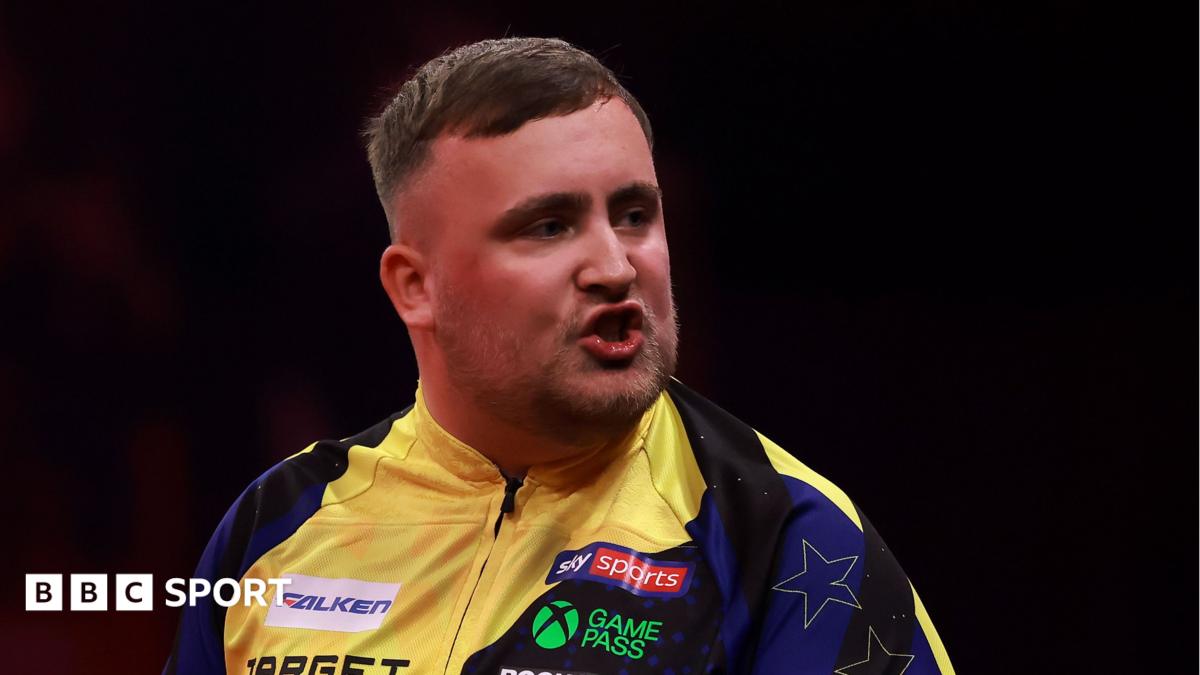
World champion Luke Littler’s hopes of defending his World Grand Prix title were dashed as he fell to a shock first-round defeat by Luke Woodhouse in Leicester.
Littler, 19, had been looking to bounce back from his quarter-final exit to Jonny Clayton at the World Series of Darts Finals just over a week ago.
But despite taking the first set, he was distinctly below par throughout the best-of-three encounter, averaging just 82.41.
That allowed Woodhouse to level the match and deliver a checkout of 75 to win the deciding set 3-1 in legs.
Woodhouse will face 2022 runner-up Nathan Aspinall in the last 16, who edged past Dutch debutant Kevin Doets 2-1.
Earlier on Monday, six-time winner Michael van Gerwen lost five legs out of the last six as 2024 semi-finalist Ryan Joyce fought back to win 2-1.
England’s Joyce will play Dutchman Danny Noppert, who advanced past Germany’s Niko Springer by the same scoreline.
Elsewhere, Wales’ Gerwyn Price only lost a single leg as he comfortably beat Poland’s Sebastian Bialecki 2-0 to set up a meeting with England’s Ross Smith, who came from behind to triumph 2-1 against Scotland’s Cameron Menzies.
Welshman Clayton edged past Krzysztof Ratajski 2-1, and he will take on the Netherlands’ Wessel Nijman, who overcame 2018 world champion Rob Cross in straight sets.
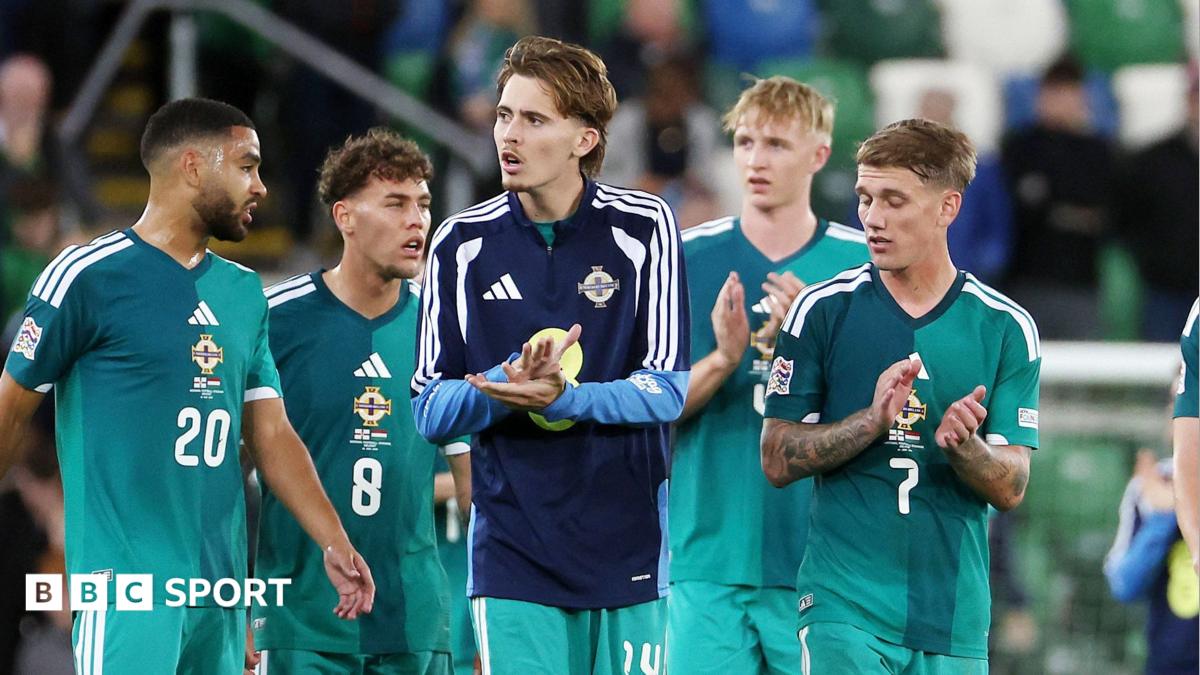
Chances were at a premium at Windsor Park as both defences came out on top.
Patrick Kelly hit the crossbar in the first half for Northern Ireland, and Isaac Price had an effort beaten away by Balazs Toth.
After Dan Ballard controversially conceded a penalty in Georgia, Shea Charles also had a penalty appeal waved away in the lead-up to the Kelly chance for a similar incident.
While O’Neill said he had yet to see it back, he did quip that “the referee never seems to make the walk for us to the side of the pitch. It never seems to happen for us.”
The threat of Liverpool midfielder Dominik Szoboszlai was largely nullified throughout the game as Hungary, like Northern Ireland, struggled to create any clear-cut chances.
The only save that Pierce Charles had to make in goal was when a lethargic clearance led to Alex Toth shooting towards goal in the closing stages, but the QPR stopper was otherwise untroubled.
After a 5,000-mile trip from Georgia in their opening game, Northern Ireland had to quickly reset and O’Neill admitted he saw “two tired teams” at the end of the game.
“I think our preparation, our first game in terms of being away from home and everything, was more difficult.
“I felt like Hungary got a little bit stronger towards the end.”
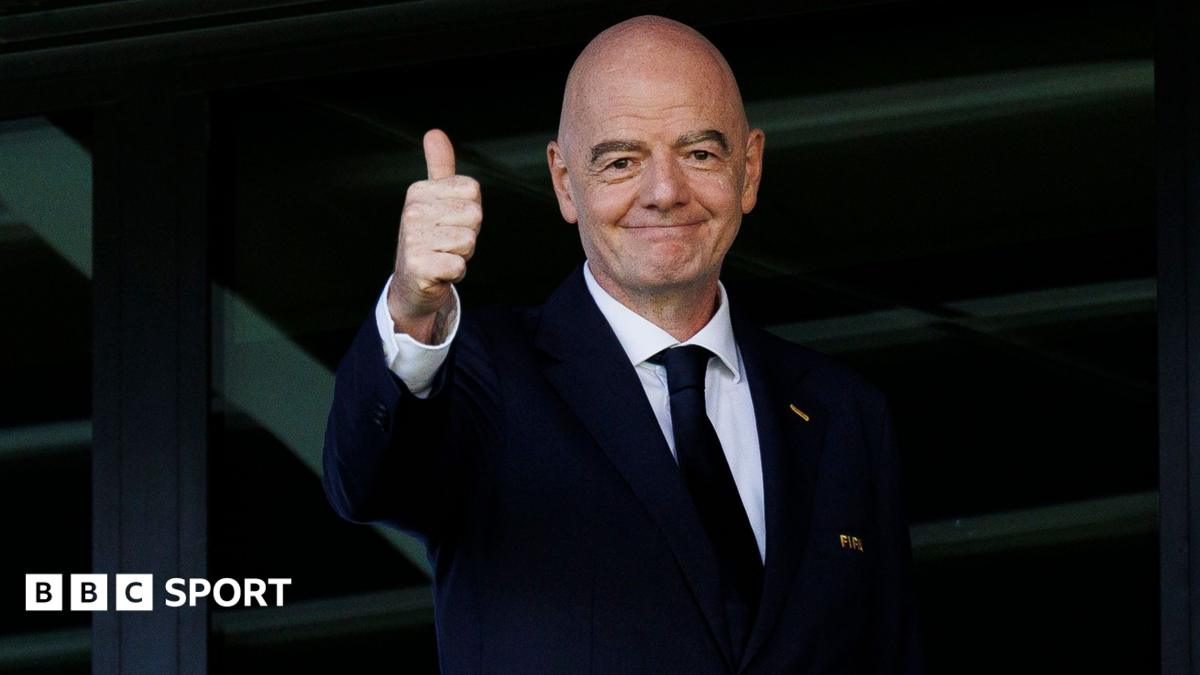
Gianni Infantino has indicated a greater amount of money could be distributed to Fifa members from its estimated £4.4bn cash reserves.
In a letter seen by BBC Sport, and sent to the governing body’s six continental confederations on Monday, Fifa president Infantino said he would support “the greatest level of additional funding that can responsibly be delivered”.
Infantino has come under increasing pressure over his aborted Fifa Forward Enterprise (FFE) plan, which proposed selling stakes in the World Cup and other competitions to private investors, sparking a major backlash.
The proposal will be considered by the Fifa Council when they meet on 15 October.
“I will not prejudge the amount,” Infantino said in the letter.
“A single figure can begin the discussion, but it cannot complete a global policy.”
Infantino issued his latest defence of the failed proposal to sell a slice of the World Cup commercial rights that brought calls for his resignation, again claiming it had been intended to generate additional money for the game.
“The recent commercial proposal, now withdrawn, was intended to enable Fifa to invest more in football,” wrote the Swiss-Italian.
Earlier this month, Football Association chair Debbie Hewitt, a Fifa vice-president, told Infantino to release all documents relating to his controversial plan, and called for an independent review of FFE.
Infantino will stand for election for a fourth time in March 2027, with his opponents having until 18 November to find an alternative candidate.
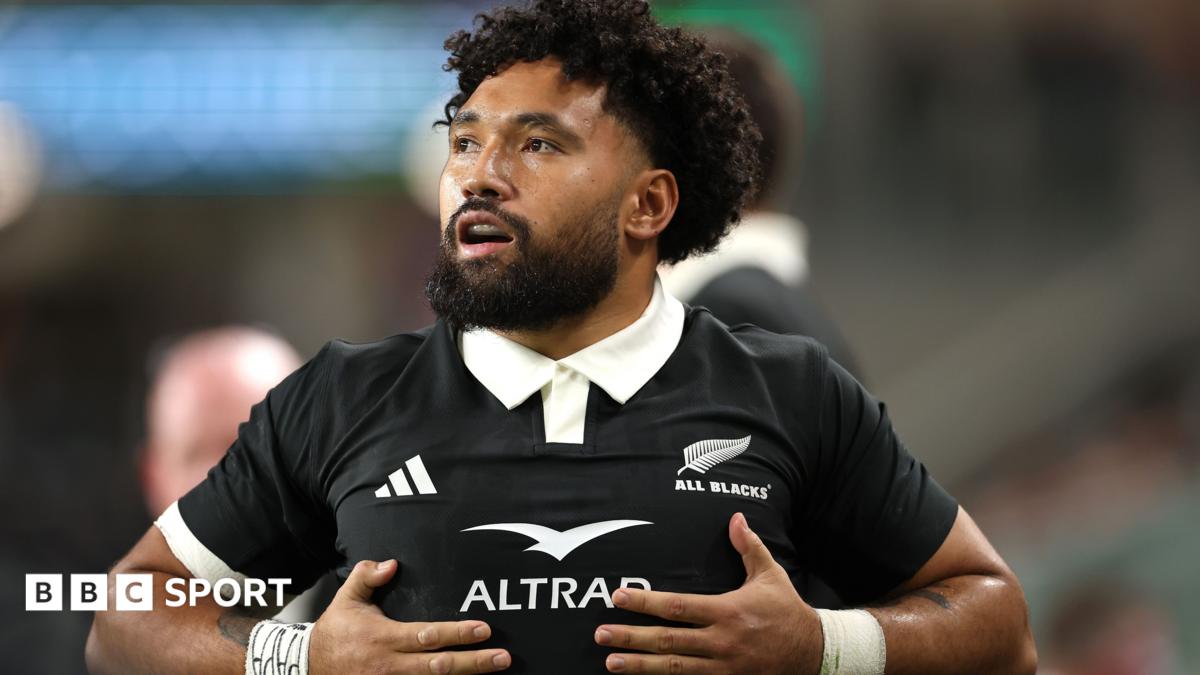
Free-scoring All Blacks wing Fehi Fineanganofo has convinced Newcastle Red Bulls to delay his arrival on Tyneside so he can chase his dream of playing at the Rugby World Cup.
It was originally announced back in January that the 24-year-old had agreed a two-year deal with Newcastle, beginning at the start of the current campaign.
However, Fineanganofo’s exceptional form with the Wellington-based Hurricanes in Super Rugby then propelled him into Test reckoning.
He made his New Zealand debut against France in July.
Under All Blacks selection rules, a move overseas this year would have put Fineanganofo’s emerging international career on ice and ruled him out of contention for the Rugby World Cup, which begins in October 2027.
Newcastle have therefore allowed Fineanganofo to stay with the Hurricanes, for whom he broke the record for the most tries in a single Super Rugby campaign this year, for an extra season.
His Newcastle deal is still for two campaigns, but now covers the 2027-28 and 2028-29 seasons instead.
“I’m really grateful to Newcastle Red Bulls for the support and understanding they’ve shown me,” said Fineanganofo.
“The opportunity to stay in New Zealand and push for selection for the Rugby World Cup means a huge amount, and I’m fully committed to joining the club after the tournament and giving everything I can to the team.”
Newcastle’s sporting general manager Neil McIlroy said: “We are fully supportive of Fehi’s desire to represent his country at Rugby World Cup 2027, which marries with our own philosophy of aiming high and enabling our athletes to achieve their ambitions.
“Fehi’s arrival in 2027, with additional international experience that will only add to his already devastating qualities as a top-class winger, is another statement of intent around where this club is going.”
The compromise ends long-running uncertainty about Fineanganofo’s future.
McIlroy kept open the possibility of adding to the club’s options in that position.
“We are more than happy with the quality and depth that our existing squad possesses, but may yet choose to add to the outside back position if a player of the required standard becomes available,” he said.
Newcastle lost 59-26 away to defending champions Northampton on Friday in their league opener, and will take on Leicester at home on Saturday.
The NFL confirmed Monday that it has asked the Department of Homeland Security to remove a video featuring hard-hitting highlights of Hall of Fame safety Brian Dawkins from a social media post in reference to a report about a caravan of immigrants approaching the U.S. border.
On Sunday afternoon, the verified X account of the DHS reposted another account’s report of the purported caravan, along with the comment, “Our time has come,” and a 39-second clip of the former Philadelphia Eagles and Denver Broncos star delivering one bruising hit after another.
“The league requested DHS take down the video,” NFL spokesperson Brian McCarthy told The Times in an email.
Dawkins told ESPN in a text that he had “very respectfully not given permission” for the DHS to use his video.
About two hours after the initial post went up, the DHS responded in the comment section with a still photo of Dawkins and the caption, “The Border Is Closed.” As of early Monday afternoon, both posts remained intact.
The Times reached out to the DHS by email and asked if it had initially sought the NFL’s permission to use the content, if it planned on taking down the content as the league requested and why it chose to use Dawkins’ imagery with the posts.
The department sent a statement in response that appears to refer to the nine-time Pro Bowl selection’s nickname “Weapon X.”
“DHS is playing lockdown defense at the border. We will use every Weapon at our disposal, from A to X, to keep Americans safe,” the department wrote.
“The United States Border Patrol is actively tracking a migrant caravan which departed San Pedro Sula, Honduras on September 20, 2026. USBP is closely engaged with its international partners to monitor their movement and any additional developments. USBP reminds migrants that under the leadership of President Trump and Homeland Secretary [Markwayne] Mullin, the border has remained closed and secured for the last 16 months.
“Migrants considering making the dangerous journey to our country should also be aware that the days of ‘catch and release’ are over, and [former President] Biden’s disastrous open border policy has been SEALED SHUT. Anyone attempting to illegally enter the United States will be apprehended, prosecuted, and removed from the country.”
The New England Patriots quarterback finished second in the Associated Press poll of national media members, with 23 first-place votes and 361 total points. Rams quarterback Matthew Stafford edged him out with 24 first-place votes and 366 overall points.
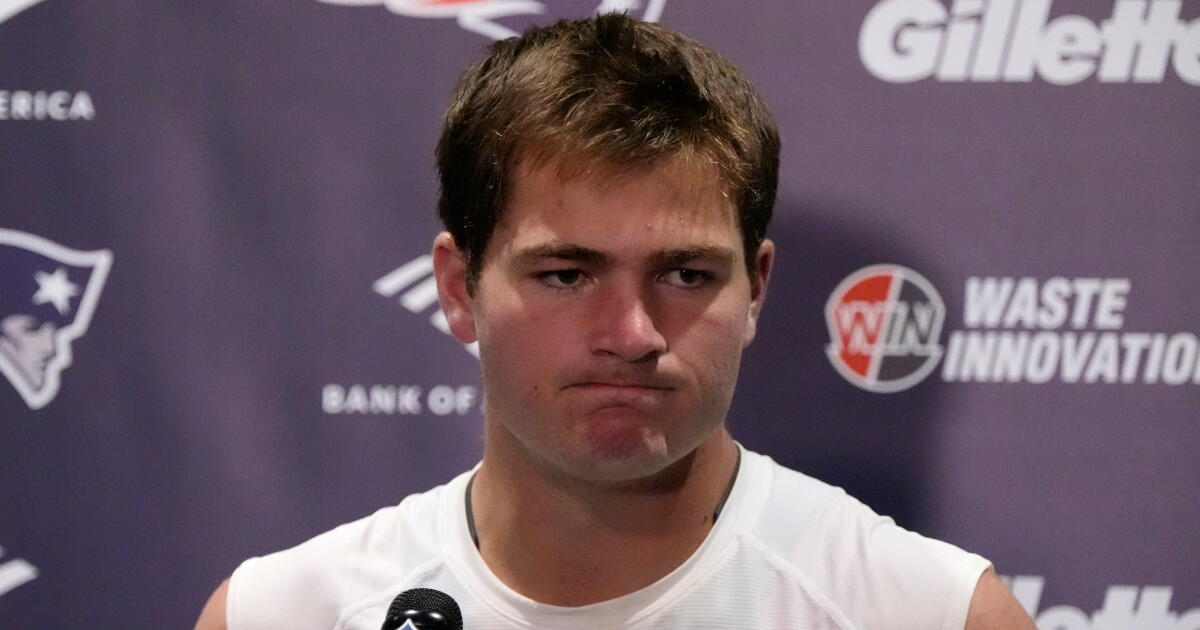
Chances are, Maye won’t be receiving any votes this year — at least not if the first three games are any indication of how the rest of the season will go. Months after helping the Patriots to a surprise Super Bowl appearance, the third-year player and two-time Pro Bowl selection is not playing close to the standard he established last year.
Maye has thrown only one touchdown pass so far this season after tossing 31 a year ago. And he has been intercepted six times already in 2026 after getting picked off only eight times total last season.
The Patriots are 1-2 at the moment, the same record they had after the first three games last season. But Maye showed promise in those games a year ago, throwing for five touchdowns and two interceptions.
During a 35-6 loss to the Jacksonville Jaguars on Sunday, Maye was picked off twice and also fumbled two times, losing one. The lost fumble came first, when an untouched Maye lost grip of the ball while reaching back to pass late in the first quarter.
After the game, Maye told reporters that blood from center Jared Wilson’s hand had gotten on the ball and made it slippery. But, he added, “at the same time, I’ve got to hold onto the football.”
Jaguars two-way player Travis Hunter, the 2024 Heisman Trophy winner and second overall draft pick in 2025, got his first NFL interception when he picked off Maye in the end zone late in the second quarter.
Then in the third quarter, on the Patriots’ first play from scrimmage after falling behind 21-3, Maye had a pass intercepted by Jacksonville’s Jarrian Jones. Jones stepped in front of a pass intended for Kyle Williams and returned it to the New England 5-yard line.
The Jaguars scored on the next play to take a 28-3 lead, after which Patriots coach Mike Vrabel could be seen on the sideline with both hands on Maye’s shoulders in an apparent attempt to comfort his quarterback.
“My conversations with each person on that sideline, I have to do my best each and every play, whoever I’m communicating with, to try to get the best out of them,” Vrabel told reporters Monday. “So I’ll have conversations with a lot of people. I’ve got a lot of faith and confidence in everybody that’s here. That’s why they’re here.”
Maye, who completed 14 of 25 passes for 199 yards and was sacked three times, finished with a passer rating of 48.6, the second-lowest of his career.
“It’s disappointing,” Maye told reporters after the game. “I think the ball starts rolling like that, we can’t get out of our own way — can’t get out of my own way, personally. So I gotta look myself in the mirror and take it to the turning point. … I’ve got to start with myself and lead these guys and we’ve got to get back after it.”
After the 2025 season, Maye revealed that he had injured his throwing shoulder during the AFC championship game against the Denver Broncos and received an injection to help with the pain before the Patriots’ 29-13 loss to the Seattle Seahawks in Super Bowl LX. Both he and Vrabel have said they don’t feel there have been any lingering effects from that injury.
On Sunday, Maye told reporters that his confidence hasn’t wavered despite the rough start to the season.
“This is an opportunity to band together and realize that the best football that we play is together,” he said, “and realize that’s going to start with me, protecting the football and protecting this team. Because that’s my job and I’ve been failing to do that.”
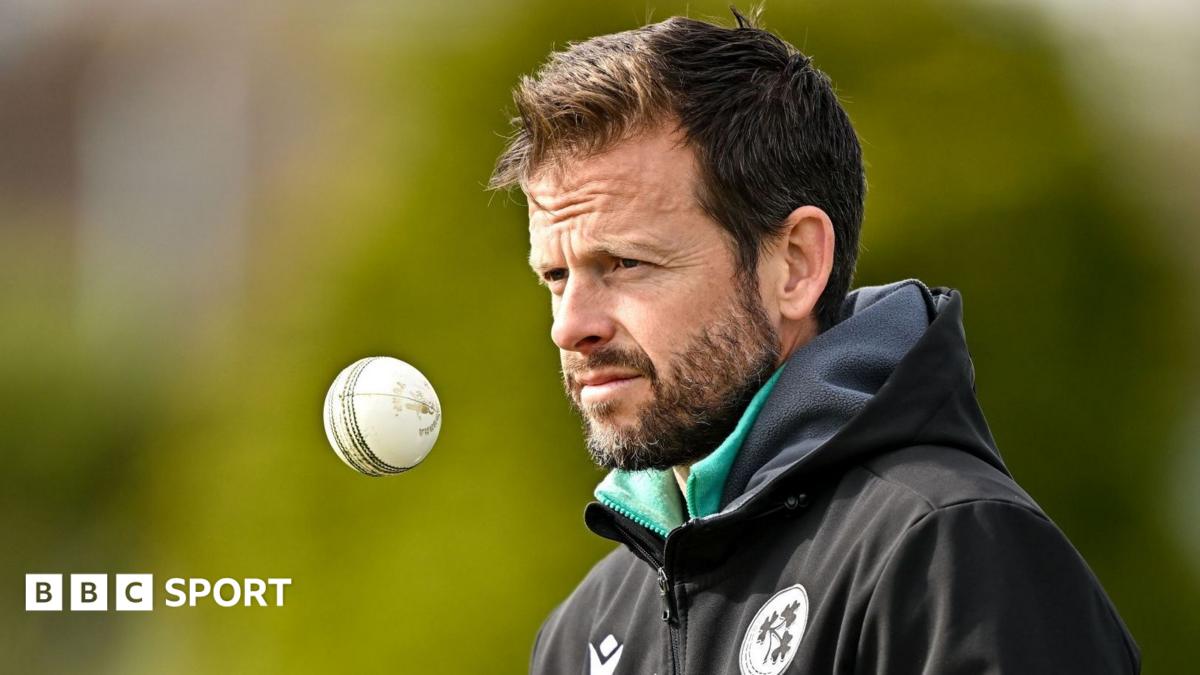
Cricket Ireland has named former international Ed Joyce as its new high performance batting coach, with a focus on the the men’s senior squad and male talent pathway.
Joyce played 151 times for Ireland, scoring 5,552 runs at an average of 40.82 with 10 centuries and 29 half-centuries.
In 2019, one year after his playing retirement, Joyce became head coach of Ireland women and stayed in the role until stepping down last year.
“The head coach role with Ireland women was a great experience and I enjoyed the day-to-day aspect of working with players on developing and improving their techniques and mindset,” he said.
“Despite the power game coming to the fore, having a sound technique and a positive mindset are still crucial aspects for any batter at this level.
“When I look at the Ireland men’s side over recent years, it’s obvious to see the amount of hard work that has gone on behind the scenes in preparing our players to be competitive on the international stage.
“I look forward to getting involved in this work and perhaps adding some insights and knowledge to push the batting group forward. The talent is there, the goal is now consistency.”
Leicestershire have had eight points of their 27-point County Championship deduction reinstated but their Division One status remains in limbo.
The original penalty for breaching pitch regulations, relating to their win against Glamorgan in August, was announced on 16 September.
Leicestershire took 19 points from the match against Glamorgan – 16 for winning and three bonus points – which were removed but remain the subject of appeal.
The Cricket Discipline Panel (CDP) had applied an additional eight-point deduction, a further eight-point penalty suspended for a year, plus a £5,000 fine.
The latter two sanctions remain part of the amended decision but the eight-point deduction for this season has been waived because the docking of the 19 points for winning the game in question is considered punishment enough.
Without the 27 points being docked, Leicestershire would have finished two points above the relegation zone.
With the 19-point penalty currently in place, the Foxes are 17 points behind Essex and will be relegated if their appeal is unsuccessful.
The amended punishment comes after the Cricket Regulator raised with the CDP whether the 19-point penalty imposed, after its initial hearing, under the County Championship’s playing conditions had been taken into account when making its original decision.
A section of the County Championship’s playing conditions state that teams charged with producing a pitch rated as poor or below average, and the Cricket Discipline Panel (CDP) upholding the charge, would receive zero points from the fixture in question.
Leicestershire had already stated their intention to appeal against the panel’s decision and a statement by chief executive Emma White said the club’s position is “unchanged” by the amended decision.
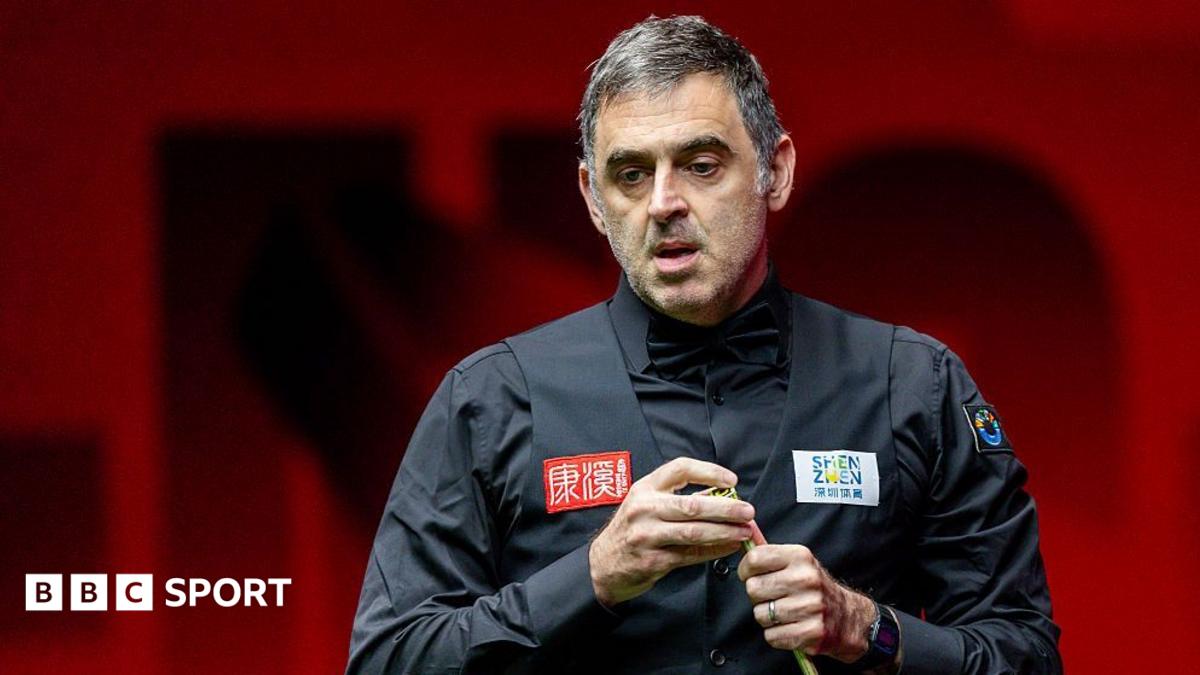
Seven-time world champion Ronnie O’Sullivan, world number one Zhao Xintong and defending champion Mark Williams were knocked out on the opening day of the Shenzhen Open.
China’s Jiang Jun, who is 64th in the world rankings, took the opening two frames before England’s O’Sullivan levelled with breaks of 92 and 52.
Jiang reeled off the next three frames, sealing a famous 5-2 second-round win with a superb break of 108 to set up a meeting with Englishman Zak Surety.
Scott Donaldson stunned 2025 world champion Zhao by winning a final-frame decider.
Scotland’s Donaldson, who is 65 places below Zhao in the rankings, compiled breaks of 77, 105, 50 and 62 as he came from 3-2 down.
Donaldson will take on China’s Pang Junxu in round three.
Welshman Williams lost 5-4 to China’s Fan Zhengyi after fouling on the final pink.
England’s Judd Trump cruised to a 5-0 win over China’s Huang Jiahao and goes into the last 16 after Anthony McGill, his scheduled third-round opponent, withdrew on medical grounds.
In Monday’s other second-round encounters, Australia’s Neil Robertson beat China’s Liu Hongyu 5-2, England’s Chris Wakelin claimed a 5-3 win over Welshman Liam Davies and China’s Si Jiahui swept to a 5-1 success against England’s Oliver Lines.
Belgium’s Ben Mertens also progressed as Northern Ireland’s Mark Allen withdrew for personal reasons.
Wales’ Jamie Clarke, England’s Andrew Higginson, Hong Kong’s Marco Fu and England’s Sam Craigie progressed in the first-round matches that took place on Monday.
Let’s get the rose-colored story line out of the way, right away.
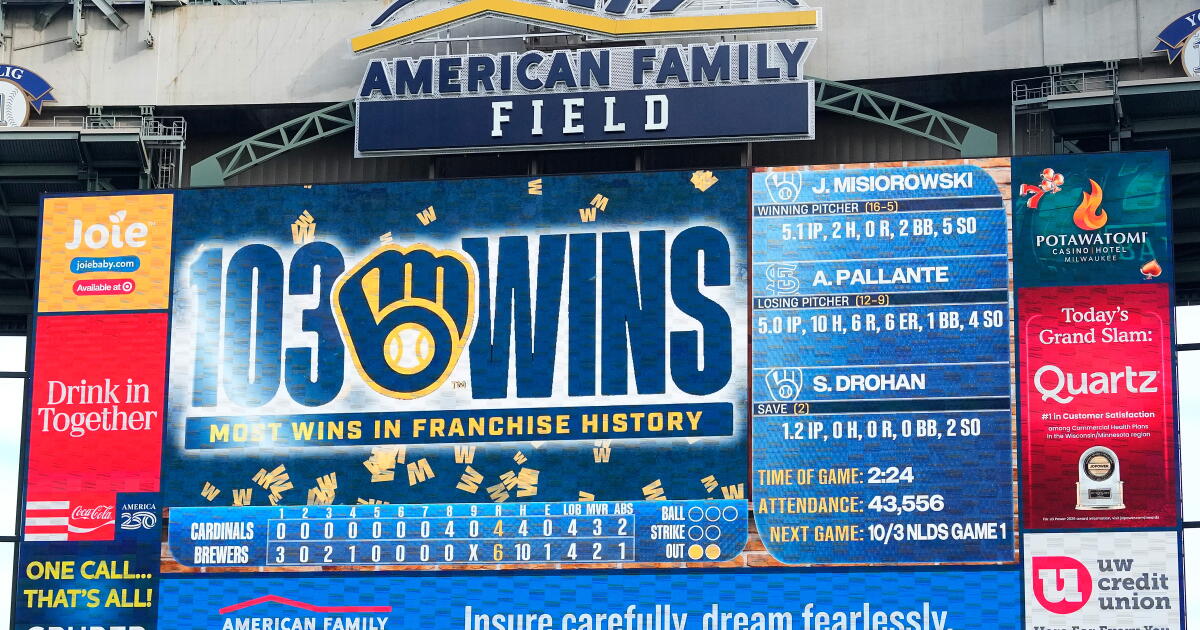
The postseason starts Tuesday, and it could be the last we see of Major League Baseball for a long, long time. The owners expect to lock out the players when the collective bargaining agreement expires Dec. 1, and the owners have made their pitch loud and clear: No new agreement without a salary cap, for they believe there can be no true competitive balance without one.
You’ll hear a lot about how the way this postseason sets up, or how it plays out, could impact the bargaining.
Don’t believe a word of it. Nothing that happens this October will be relevant to the new labor agreement.
Come on. The team with the lowest payroll — the Cleveland Guardians — won their division. So competitive balance can’t be completely out of whack, can it?
Cleveland hasn’t won the World Series since 1948. The opponent was the Boston Braves, who subsequently moved to Milwaukee and then Atlanta.
What about the team with the best record in the American League: the Tampa Bay Rays, who beat up on big-market bullies in the New York Yankees and Boston Red Sox?
The Rays never have won the World Series.
Well, what about the Milwaukee Brewers? For the second consecutive season, the team in baseball’s smallest market posted baseball’s best record.
The Brewers got swept in last year’s National League Championship Series. They never have won the World Series.
But aren’t the Brewers the best example of a team playing beyond its payroll instead of using it as an excuse?
Isn’t that what got everyone agitated? Doesn’t everyone outside L.A. know the Dodgers have destroyed competitive balance, and the owners are trying to fix it?
The owners were ready to fight for more than a year before the Dodgers helped themselves to Díaz, Tucker and Skubal. For years, the commissioner’s office touted baseball’s competitive balance, citing in part how the league championship series and World Series matchups changed almost every year.
After the Dodgers won in 2024, the commissioner’s office redefined competitive balance as how often a small-market team won the World Series, last accomplished by the 2015 Kansas City Royals. The seeds for this winter’s labor war had been planted.
If the Dodgers flop this October, the owners are not going to suddenly back off a salary cap. If, say, the Brewers or Rays win, the owners will say that’s the exception that proves the rule.
There are ways for owners to direct more revenue to small-market teams without the salary cap the players insist they will not accept, and without limiting the definition of success to winning the World Series, which risks devaluing the product among 29 fan bases every year. Whether the owners wish to consider them without the cost certainty that comes with a salary cap will be the story line of the cold winter ahead.
The Dodgers are scheduled to open next season on March 25. Neither owners nor players would have lost any significant revenue by then — ticket sales and broadcasting rights for owners, salaries for players — so a new agreement by then is uncertain at best.
So enjoy the postseason.
So, at least for now, isn’t the postseason tilted toward the Dodgers and Yankees?
Those screams you hear are coming from New York, where Yankees fans are annoyed that their team finished with the second-best record in the AL and still could be eliminated in two or three days. The Yankees finished behind the Rays and received a wild card.
The Yankees lost 13 fewer games than the AL West champion Houston Astros and 10 fewer games than the AL Central champion Guardians, both seeded ahead of them. The Astros are a .500 team, the worst record a division champion has taken into the postseason. The Guardians get a bye, just like the Dodgers.
The Yankees drew the Red Sox, which means painful amounts of national commentary will focus on (1) how the system victimized the Yankees and the Red Sox; and (2) baseball’s most hyped rivalry.
Until baseball realigns its divisions or seeds its playoffs by wins, regardless of division, the Yankees should simply do what Aaron Judge said about how they should respond to criticism of their fundamentally frightening 2024 World Series: “Play better.” And baseball’s best rivalry will be on October display only if the Dodgers and San Diego Padres meet in the NL Championship Series.
Still laughing, though, at sanctimonious Yankees fans believing baseball is somehow unfair to the poor, gutty Yankees.
Can anyone save baseball in 2027?
We should try Pope Leo. He’s a long-suffering Chicago White Sox fan. In his first full year as pope — and after three consecutive 100-loss seasons — the White Sox made the playoffs.
Some fans call it a miracle, a reporter told the pope. Did the pope have anything to do with the turnaround?
He smiled.
“No comment,” he said, then paused.
“Great things happen in Chicago,” he said.
The Cubs made the postseason too. The Cubs and White Sox have shared Chicago since 1901. This is the fourth time both have qualified for postseason play. Deep dish pizza for all, but a World Series in Chicago this fall might truly require divine intervention.
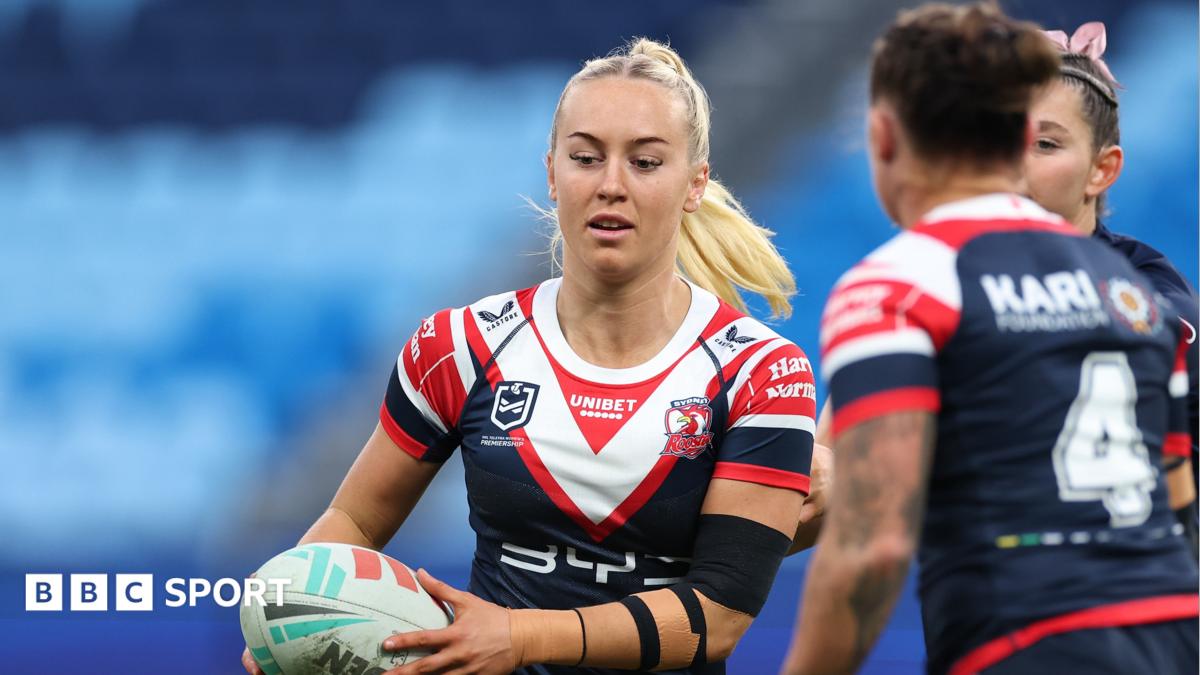
Australia-born Jasmin Strange is one of four potential debutants in England’s 23-strong squad for the World Cup.
Sydney Roosters second-row forward Strange, who is set to play in Sunday’s NRLW Grand Final against Brisbane Broncos, has committed herself to England, for whom she qualifies through her mother Adele.
The 23-year-old is the daughter of Roosters women’s head coach John Strange, who played for Featherstone in the 1990s.
Strange is joined by three uncapped players – Leeds Rhinos’ Connie Boyd, Hope Millard of Canterbury Bulldogs, and Wigan Warriors’ Lucie Sams.
In addition to Strange and Millard, whose father Shane was a forward for Widnes, Leeds and Wigan, three other NRLW players have made the squad – including dual code international Fran Goldthorp, who last played rugby league for her country at the most recent World Cup in 2022.
Newcastle Knights’ Georgia Roche and Hollie-Mae Dodd of Canberra Raiders have also been included.
Strange’s inclusion as a heritage player – one who qualifies through parentage – comes after eligibility rules were relaxed this year.
An International Rugby League ruling means that players can now represent more than one of the three tier one nations – Australia, New Zealand and England.
That led to speculation that head coach Stu Barrow might call on more heritage players with NRLW experience – such as Roosters playmaker Jocelyn Kelleher, Bulldogs half-back Tayla Preston and Wests Tigers full-back Caitlin Turnbull.
But Barrow has said he wants to give homegrown players an opportunity to develop.
All three Woman of Steel nominees – Jenna Foubister, Eva Hunter and Megan Williams – have been selected, along with six of their Wigan team-mates. Grand Final winners York Valkyrie have one player in the squad in forward Liv Wood.
Loose forward Jodie Cunningham, who will retire after the World Cup, is selected along with St Helens team-mate Vicky Whitfield, who will be competing at her fourth World Cup.
Barrow said: “Narrowing our squad from 40 players to a final 23 has involved some difficult decisions, but we believe we have the right balance of experience and youth to compete on the world stage.
“It’s also an exciting moment for the programme with the inclusion of Australian-based heritage players for the first time.”
This year’s men’s, women’s and wheelchair World Cups will run concurrently, with England competing in all three. The wheelchair squad was announced last week, while the men’s squad will be confirmed on 5 October.
The tournaments are being staged largely in Australia, with Papua New Guinea’s men and women each playing two pool matches in their own country, and their New Zealand counterparts playing one.
England face three group matches – beginning in Perth against Wales on 17 October and Australia on 24 October, before facing Samoa in Wollongong on 30 October.
The top two sides in England’s four-team group will go through to the semi-finals on 7 and 8 November, with the final on 15 November.
Hi, and welcome to another edition of Prep Rally. I’m Eric Sondheimer. League play begins this week in high school football for the best of the best. That means get ready for some great matchups in the Trinity League, the Mission League, the Alpha League, the Marine League and many others.
Get our high school sports newsletter
Prep Rally is devoted to the SoCal high school sports experience, bringing you scores, stories and a behind-the-scenes look at what makes prep sports so popular.
By continuing, you agree to our Terms of Service, which include arbitration and a class action waiver. You agree that we and our third-party vendors may collect and use your information, including through cookies, pixels and similar technologies, for the purposes set forth in our Privacy Policy such as personalizing your experience and ads.
League play begins
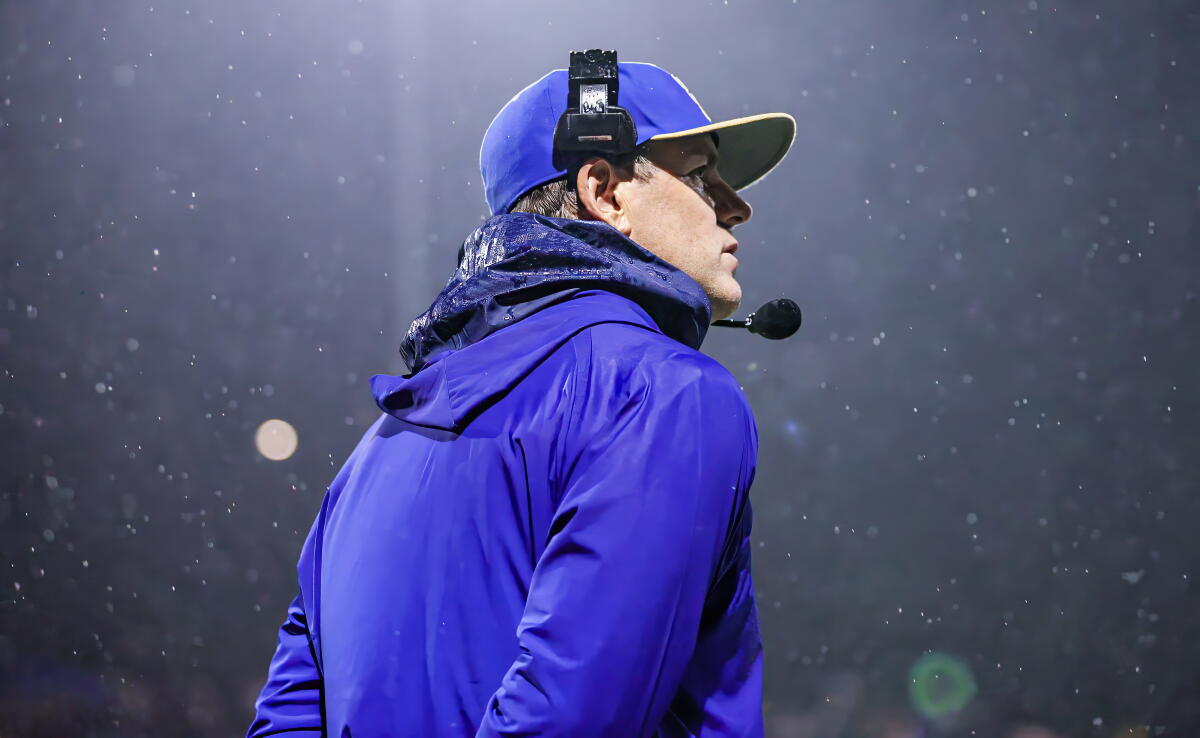
Coach Carson Palmer of Santa Margarita will try to help his team win a Trinity League title.
(Craig Weston)
St. John Bosco’s Koa Malau’ulu looks to pass while pressured against Bishop Gorman.
(Ian Maule/ LA Times)
It’s time for a dose of reality. Lots of teams are off to great starts with nonleague schedules designed to get them enough early wins to be able to get an at-large playoff berth in case they stumble in league play.
League play begins, so some of the unbeaten teams are about to be no longer unbeaten.
Santa Margarita was the best team in the state in 2025, but the Eagles didn’t win the Trinity League. St. John Bosco was the champion, and with league play beginning Friday, both schools have ambitions to finish on top.
Santa Margarita (5-0) plays Mater De (3-2) in its opener at Saddleback College and St. John Bosco (4-1) hosts JSerra (4-1). The other league game is Servite (3-2) facing Orange Lutheran (3-2) at Orange Coast College.
What’s different this season is that any of the six Trinity teams look capable of winning on a given night. But some of the teams are about to be strengthened by the addition of sit-out period transfer students that become eligible effective Monday.
The Mission League is all about which team will finish second to unbeaten Sierra Canyon (5-0). A good Friday opener has Chaminade (5-0) hosting Sherman Oaks Notre Dame (5-0).
The new Alpha League will feature weekly battles with Mission Viejo, San Clemente, Edison, Yorba Linda, Los Alamitos and San Juan Hills. The likely title decider on Oct. 16 has Mission Viejo at San Clemente.
Harvard-Westlake has started 5-0, but the Wolverines receive their first major test with a Del Rey League opener against Salesian on Friday.
In the City Section, Birmingham, which has won every West Valley League title since 2018, faces unbeaten Cleveland on Friday at home in a West Valley League opener. San Pedro and Banning have their annual Marine League rivalry game Friday at Banning.
Marshall takes a 5-0 record into the start of Northern League play at Franklin.
Freedom day arrives
It’s freedom day on Monday for Southern Section football players who have been sitting out the first half of the season after transferring without moving.
St. John Bosco can’t wait to insert offensive tackle Elisha Mueller, a transfer from Servite and one of the top prospects from the Class of 2028. Also becoming available is sophomore defensive back Kingston Fatu, a transfer from Tustin who will help a secondary that has been struggling in trying to deny big plays.
Santa Margarita adds 6-foot-3, 285-pound sophomore transfer Karras Vandermade, a defensive lineman. Servite has six players who could compete for major roles, with four on defense that will add much needed depth. Orange Lutheran gains 6-5 tight end Hudson Ploog and linebacker Jamaal Fay, who started for two years at Leuzinger. JSerra adds 6-7, 315-pound offensive lineman Wyatt Martin.
Other schools are also about to be strengthened. Unbeaten Sierra Canyon adds physical wingback/linebacker Fletcher Thomas. Unbeaten Chaminade, hoping to challenge the Trailblazers in the Mission League, picks up sophomore receiver Champ Ross and junior cornerback Jayden Woods.
Long Beach Poly fans will get their first look at Mater Dei transfer Trevor Scott, a sophomore quarterback. Quarterback Daniel Mielke becomes eligible at Chino Hills. Corona Centennial gains Brody Black, an offensive lineman from Servite. San Clemente picks up receiver Titus King, a speedster from Santa Margarita. Amir Morton, a junior running back who transferred from Sierra Canyon, is expected to provide immediate help for Crespi.
Cornerback Tadd Mitchell, a Montana commit, joins Oxnard Pacifica along with lineman Miguel Macias Santiago.
Matix Frithsmith demonstrated his versatility in Hart’s 34-17 Foothill League win over Saugus. He rushed for 218 yards and four touchdowns, including a 91-yard run. Here’s the report.
Corona Centennial traveled to Northern California to take on De La Salle and what a game it was. De La Salle won 35-32 behind Duece Jones-Drew, who rushed for 211 yards. Here’s the report.
Centennial has lost three close games to Santa Margarita, Mater Dei and De La Salle. As soon the Huskies get back to full strength with the return of standout safety/kicker Jaden Walk-Green and others, beware.
Cleveland High running back Moyosoreoluwa Odebunmi gives the thumbs-up after the Cavaliers defeated Crenshaw on the road.
(Joel Beers / For The Times)
Cleveland pulled off the upset of the week in going on the road to improve to 5-0 and beat Crenshaw. Here’s the report.
Receiver Andrew Cordero (left) and quarterback Jeremy Mellalieu have led Chaminade to a 5-0 start.
(Eric Sondheimer / Los Angeles Times)
It’s midseason in high school football, so it’s a good time to check who has lived up to expectations or come out of nowhere to be a major contributor.
When a coach takes his team out of state and plays two players who are listed on the Southern Section transfer portal as not being cleared to play and are also missing from the team’s MaxPreps roster to possibly prevent others from knowing who’s playing, is a two-game coach suspension adequate punishment?
That’s the scenario involving Inglewood football coach Mil’von James, who missed two games after the Southern Section alerted the school that James played two ineligible players during a game in Texas last month. Since Inglewood lost, forcing the school to forfeit was moot. James returned to coaching the team on Friday and told the Daily Breeze that it was an “administrative decision” for him to sit out two games.
The Southern Section has no power to discipline James, but schools and districts are expected to impose appropriate punishment for violating CIF rules.
Huntington Beach won its own tournament championship.
Los Angeles Wilson is off to a 9-1 start and could be the favorite in the City Section. Wilson at defending City Section Open Division champion Marshall on Monday is a big Northern League opener.
Carson is 8-3 and has handed the only loss to Wilson.
Girls golf
Santa Margarita keeps producing low scores in girls golf.
Santa Margarita girls golf are champions of the prestigious Lady Tritons Invitational (6th time in a row) at San Clemente Municipal GC (Par 73), hosted by San Clemente High School. 1st: Santa Margarita / 357 2nd: Peninsula HS / 380 3rd: Huntington Beach HS / 390 SMCHS Junior,… pic.twitter.com/pY4S7QRraA
— SANTA MARGARITA Catholic High School (@SMCHSEagles) September 15, 2026
The defending Southern Section Division 1 champions are stronger than ever. The team is 6-0 and 3-0 in the Trinity League.
Girls varsity golf final score: Santa Margarita Total: 175 OLutheran HS Total: 185 Trinity League Match Marbella CC – Par 36 Medalists: SM Nora Qu (33) and SM Sophia Nguyen – (33) Eagles are now: 6-0 Overall | 3-0 Trinity League pic.twitter.com/OvUqd2S4O3
— SANTA MARGARITA Catholic High School (@SMCHSEagles) September 25, 2026
All-female officiating crew
An all-female officiating crew for Orange County game on Thursday: Kristi Wilson (left, head linesman), Sarita Stamps (back judge), Mary Margaret Montgomery (referee), MaryAnne Menlove (umpire), Nina Berbiglia (line judge).
(Orange County Officials Assn.)
An all-female officiating crew is set to become a first for the Orange County Football Officials Assn. when they work a Thursday game between La Quinta and Garden Grove Santiago on Thursday night at Garden Grove High.
Notes . . .
There’s trouble brewing at Van Nuys High, where the baseball coach has been removed for building an unauthorized batting cage during the summer. Also the softball field had a protective fence demolished earlier this week that was a safety measure to protect fans and dugouts could be next demolished. Here’s the report.
El Camino Real’s boys’ soccer team, going for a third straight City Section championship, has three players committed to Cal State Northridge. Here’s the report….
In girls’ tennis, Corona del Mar defeated Portola in a rematch of last year’s Division 1 final. Here’s a report….
Orange Lutheran baseball player Evan Dugdale has committed to Oklahoma….
Junior catcher Jordan Lindsay of Birmingham has committed to Wake Forrest….
Junior pitcher Eli Martinez of Aquinas has committed to UC Santa Barbara….
Jaylen Maroney of Edison has committed to Sacramento State for women’s soccer….
Junior pitcher Julian Pardinas of La Mirada has committed to UCLA….
Junior pitcher Jayden Singer of Calabasas has committed to USC….
Junior outfielder/pitcher Noah Esquival of South Hills has committed to St. Mary’s….
Left-handed pitcher Charlie Hoye of Palos Verdes has committed to Cal Poly in San Luis Obispo….
Shooting guard Jeremiah Profit from Rancho Christian has committed to Northwestern….
Junior softball player Bailey Holder from Long Beach Poly has committed to Washington….
Junior slapper Makayla Encinas of Chino Hills has committed to UCLA….
Devon Richardson is the new basketball coach at Sun Valley Poly, replacing Joe Wyatt, who’s now the coach at North Hollywood. He was an assistant coach at L.A. Valley College and former head coach at Blair….
The Southern Section has announced its playoff schedule for fall sports. Here’s the link.…
The Orange County Football Officials Assn. announced that it will have its first all-female varsity officiating crew for an Oct. 1 game between La Quinta and Garden Grove Santiago.
Southern Section schools are required to pick a 14-day dead period each summer that all their sports teams have to follow. Now there’s a proposal to allow basketball players participate in CIF-approved recruiting events known as Section 7 and CaliLive. It will be voted on next year by the Southern Section Council….
Sophomore quarterback Marcus Washington of Cajon has committed to Kentucky….
Offensive lineman Kaden Franco of St. John Bosco has committed to Brown….
From the archives: Vernon Adams
Eastern Washington quarterback Vernon Adams Jr. in 2014.
(Elaine Thompson / Associated Press)
After being a star quarterback at Bishop Alemany, Vernon Adamswent on to play quarterback at Eastern Washington and Oregon and has made a strong career in the Canadian Football League. They season playing for the Calgary Stampeders, he has passed for 3,261 yards and 27 touchdowns.
He’s 33 and has been playing in Canada since 2016.
From The Times, a look at Orange junior quarterback Star Thomas III.
Tweets you might have missed
Two Narbonne football players have been given six-game suspensions for a fight during game with Compton. One Compton player was ejected. More Narbonne players are facing one-game suspensions for leaving the bench. Narbonne players can appeal to drop suspension to three games.
Have a question, comment or something you’d like to see in a future Prep Rally newsletter? Email me at eric.sondheimer@latimes.com, and follow me on Twitter at @latsondheimer.
Did you get this newsletter forwarded to you? To sign up and get it in your inbox, click here.
On Friday night at College of the Canyons in Santa Clarita, there was a gathering of coaching royalty on the Hart sideline. Mike Herrington (Hart), Jon Mack (St. Bonaventure) and Kevin Rooney (Sherman Oaks Notre Dame) were providing support to Hawks coach Jake Goossen.
Combined, the three head coaches have won 20 Southern Section championships, with Herrington at nine, Mack at seven and Rooney at four. Goossen played for Rooney at Notre Dame, became friends with Mack, who helped him at Hueneme, and is grateful for Herrington and his brother, Rick, former Hart head coaches.
“It’s great to have support of three great coaches,” Goossen said. “I don’t think any other coach has that kind of support.”
Herrington and Rooney are in the California High School Football Hall of Fame with each winning more than 300 games in their career.
When Goossen went upstairs at halftime to the locker room in a game against Saugus on Friday, Mack was running up the stairs with him telling him to use more power rushing plays.
Hart defeated Saugus 34-17. Asked what would have happened if his team had lost, Goossen joked, “They would have claimed they didn’t know me.”
This is a daily look at the positive happenings in high school sports. To submit any news, please email eric.sondheimer@latimes.com.
Watch highlights from the final day of the Presidents Cup as the United States complete a thrilling comeback to beat the Internationals and win their 11th successive title.
SEATTLE — Logan Gilbert struck out eight in four no-hit innings and five Seattle pitchers combined for 12 strikeouts as the Mariners beat the Angels 7-3 in the regular-season finale for both teams.
The Angels finish 2026 with a record of 62-100, the first 100 loss season in franchise history. It was a 10-game slide for the Angels, who had a 72-90 record in 2025.
Gilbert retired the first 12 batters he faced and, after walking Moisés Ballesteros at the start of the fifth inning, was lifted and left to a standing ovation from the Mariners fans.
The Mariners took a 1-0 lead in the second inning when Weston Wilson drove in Cole Young with a grounder to third base.
Seattle scored two more runs in the third on Cal Raleigh’s RBI single off Angels starter Yusei Kikuchi, and Dominic Canzone scored on a groundout by Josh Naylor to make it 3-0.
Kikuchi (1-7) gave up three runs and six hits over five innings, with one walk and seven strikeouts.
Bryce Teodosio scored for the Angels on a sacrifice fly in the top of the sixth inning, but the Mariners responded with three in the bottom half when Young scored on an Angels throwing error and Randy Arozarena drove in two with a double to make it 6-1.
Jose Siri hit a two-run homer for the Angels in the eighth, and Leo Rivas scored for the Mariners in the bottom half on a wild pitch.
Cooper Criswell pitched the ninth for the Mariners. Eduard Bazardo (4-4) got the win.
After finishing the 2025 season with a 90-72 record and advancing to the seventh game of the ALCS against Toronto, the Mariners missed the playoffs with a disappointing 76-86 record this season. Despite that mark, the Mariners drew 2,883,798 fans in 2026, the team’s highest total since 2004.
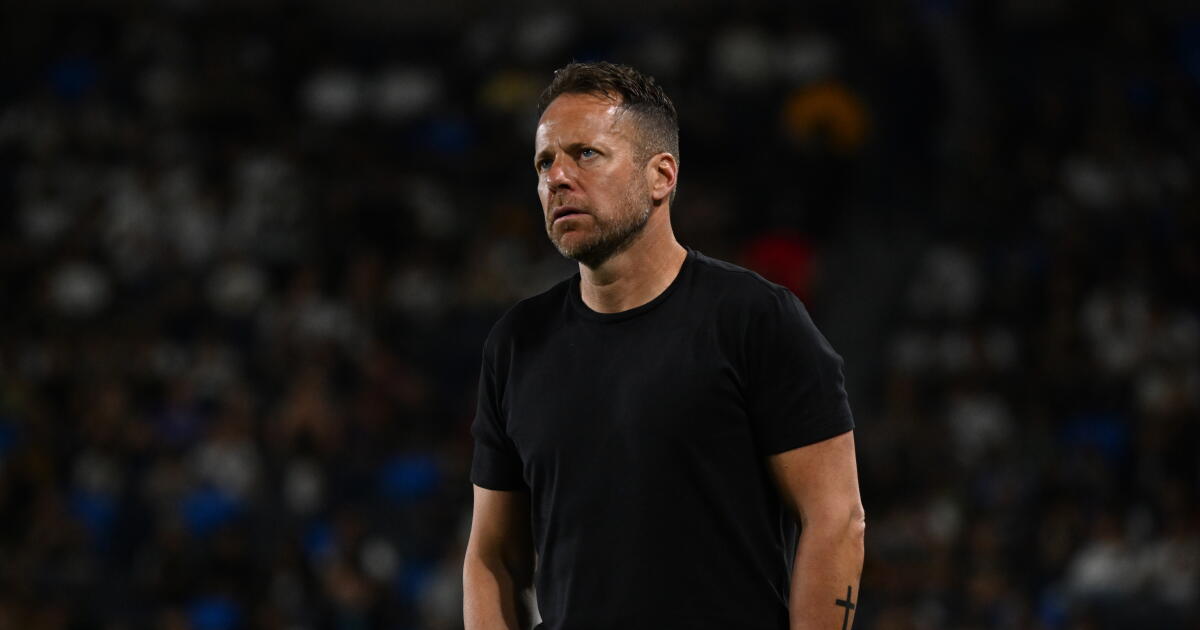
LAFC, mired in a slump having won just two of its last 13 games in all competition, fired first-year coach Marc Dos Santos on Sunday with six matches left in the MLS regular season.
The firing, announced in a three-paragraph statement, comes less than 24 hours after Saturday’s 1-0 loss to FC Dallas dropped the team to sixth in the Western Conference table.
“Marc has given a great deal to this club over the years, and we are grateful for his commitment, care and contributions to LAFC,” said John Thorrington, the team’s president of soccer operations, in the release. “We wish Marc and his family all the best moving forward.”
LAFC (11-9-8) said it will begin the search for a new manager immediately but didn’t say who would coach the team in its next game on Oct. 10, after the two-week FIFA international break.
Dos Santos, 49, was an assistant on Bob Bradley’s staff in LAFC’s inaugural season in 2018. He left after the season to take over the Vancouver Whitecaps but struggled to a 22-39-20 record in 2 ½ years that were heavily affected by the COVID-19 pandemic, which forced the team to play many of its games on the road.
Dos Santos returned to LAFC as an assistant in 2022, this time for Steve Cherundolo, helping the team to a Supporters’ Shield and MLS Cup. When Cherundolo stepped down after last season, Dos Santos was given the head coaching job just two weeks later, becoming the third manager in the team‘s history.
His two stints as an assistant at LAFC taught him that the team’s fans are among the most demanding in MLS, something he said he embraced.
“It’s a privilege when you coach a team in Los Angeles,” he said at the time. “Every sport here is pressure. Every team here is win, win.
“It’s a winning city and the culture of the city. So I understand that.”
Dos Santos, who is fluent in four languages, was born in Montreal and split his childhood between Quebec and Portugal. With the exception of Vancouver, he has won everywhere he’s managed, from the Ottawa Fury of the NASL, where he was named the league’s coach of the year in 2015, to the San Francisco Deltas, whom he guided to an NASL title.
LAFC was unbeaten in its first 11 matches in all competition under Dos Santos, outscoring opponents 27-3 and advancing to the semifinals of the CONCACAF Champions Cup, where it lost to Mexico’s Toluca, the eventual winner. But the team has gone 6-9-7 in MLS play since then, including Saturday’s loss when Dos Santos was without six key players — including leading scorer Denis Bouanga and captain Son Heung-min — who were with their national teams.
Afterward, he spoke about his plans for the two-week international break.
“It’s a hard moment right now for us. And we have to face it,” said Dos Santos, who was popular with his players. “It’s been hard for us to get wins. A lot of draws, a lot of close games.
“We need to have everybody together and start working on what this team can be. That’s the big objective during the break.”
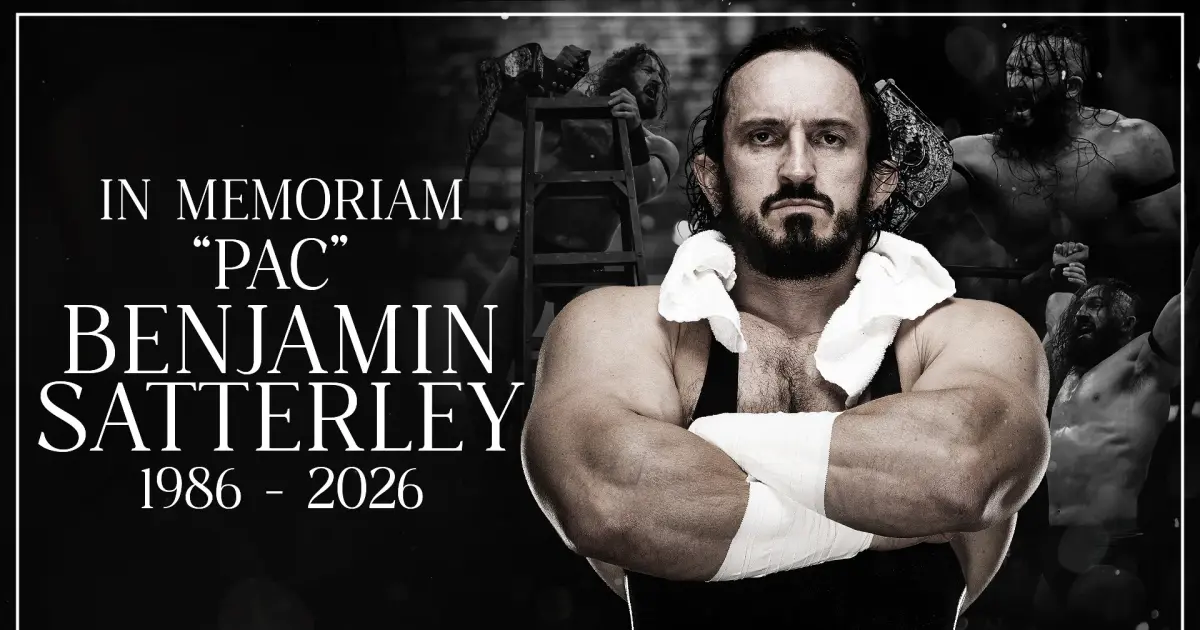
Pro wrestler PAC, whose real name was Benjamin Satterley, died Sunday at 40 less than 24 hours after competing in All Elite Wrestling’s “All Out” pay-per-view event, AEW announced.
“All Elite Wrestling is saddened to announce the passing of Benjamin Satterley, aka Pac,” AEW said in a statement. “A native of Newcastle upon Tyne, England, Satterley began his wrestling career in 2004 and went on to perform for wrestling organizations all over the world, captivating fans with innovative high-flying moves and incredible in-ring ability. Pac signed with All Elite Wrestling in 2019 and held multiple AEW Championships and competed in some of the most memorable matches in AEW history. Our condolences go out to Satterley’s family, friends and fans.”
All Elite Wrestling is saddened to announce the passing of Benjamin Satterley, aka Pac. A native of Newcastle upon Tyne, England, Satterley began his wrestling career in 2004 and went on to perform for wrestling organizations all over the world, captivating fans with innovative… pic.twitter.com/uqzO371t2V
AEW owner Tony Khan posted a message on X honoring Satterley.
“Benjamin Satterley defined excellence, as a beloved husband & friend to his many loved ones, + in his wrestling knowledge, skill, unprecedented athleticism, professionalism, consistency + dedication to the sport that he loved & traveled the world to pursue,” Khan’s statement read. “May Ben rest in peace.”
Satterley broke into pro wrestling in 2004 and made a name for himself in the U.S. as part of the Pro Wrestling Guerilla promotion in Los Angeles. He signed with World Wrestling Entertainment in 2012 and was given the name Adrian Neville, later shortened to just Neville. He became part of their NXT promotion and won its heavyweight title before he was promoted to the main roster. He won the NXT Championship while in developmental and later made it to the main roster in 2015, winning the WWE cruiserweight title.
Considered one of the best wrestlers in the world, Satterley was was a relatively small 5 feet 8, 194 pounds and was not given a push relative to his ability in WWE. He left the promotion in 2018 and later joined AEW, where he changed his name to PAC and won the International title and the Trios title.
He was currently involved in a feud with Andrade El Idolo and challenged him for the national championship Saturday in Chicago, with El Idolo winning to retain the title.
When AEW launched in 2019, he was announced as one of the first signees, becoming the first All-Atlantic Champion and also won the Trios Championships. Since 2024, he had been a member of the Death Riders group.
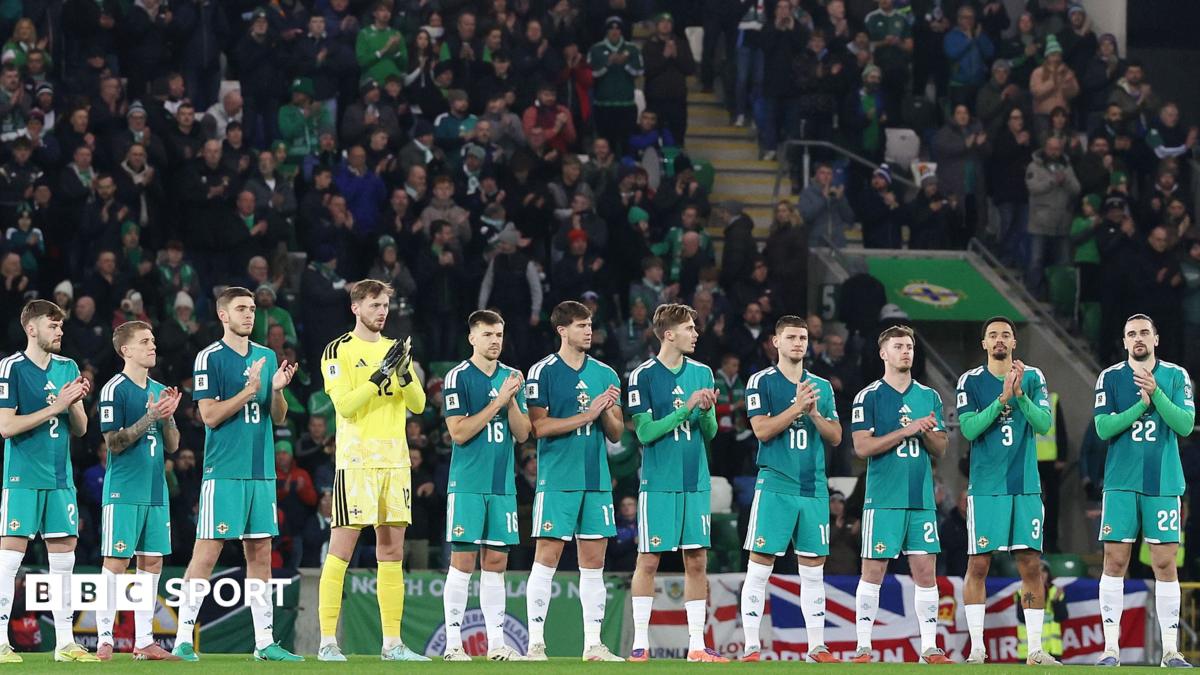
For the first time in 315 days, Northern Ireland are back in Belfast.
Michael O’Neill’s side welcome Hungary to Windsor Park for a Nations League Group B2 contest on Monday night, just 51 days shy of a year since a Jamie Donley penalty saw the side to a 1-0 win over Luxembourg in their previous home fixture.
In the interim, they have played five times on their travels, a run that began with World Cup play-off defeat by Italy in Bergamo in March and concluded with victory over Georgia on Friday night.
If that win in Tbilisi represented a something of a breakthrough in terms of away performances – they had won just two of their previous 12 competitive away games – form back at Windsor has been strong despite the sporadic fixtures.
Since losing to Slovenia in October 2023, only Germany have left Belfast with a win and that a 1-0 triumph on a night the hosts missed numerous good chances.
A run of seven wins in nine home games is in stark contrast to what went before when, in the preceding nine at Windsor Park, Northern Ireland had beaten only San Marino and Kosovo, the latter courtesy of a 94th-minute winner.
O’Neill said he does not put much stock in such runs of form given the changing squads in international football, but acknowledged his team are in “a really good phase” at Windsor Park.
“This is a new team, so they’re not saddled by the performance of previous teams,” he said.
“They love playing here at the stadium. You know there was a period where the team of 2016 [who qualified for the European Championships of that year] didn’t enjoy playing at home.
“Then suddenly they started to win games and they loved playing at home. Teams go through phases and at this moment in time this team is in a really good phase in terms of the home form.”
In the most bizarre of cricketing summers, Ben Duckett has had a bizarre summer of his own.
The only Englishman to compile a Test ton, and the scorer of 141 against India in a one-day international at Lord’s, ends with nine scores below 20 from his other 15 innings.
He was talked about as the world’s best all-format batter after his 149 against India last summer but has averaged 27.15 since then across formats.
It is right that England are reticent to drop a batter who has hit such highs, especially as a senior player and one with significant List A experience – a total of 111 matches – behind him in a squad still lacking in 50-over matches.
Duckett and Jacob Bethell also shared an opening stand of 192 in the series decider against India at Lord’s.
But, unlike the Test side where Emilio Gay’s place as Duckett’s partner is not fully secure, never mind a replacement waiting in the wings, Tom Banton and Bethell have shown there could be another world without the diminutive left-hander.
Bethell, who scored 91 in the third ODI against India before missing the Sri Lanka series with a knee injury, is talked of as a senior player in the group, despite still being just 22, while Banton’s first England century on Sunday was superb.
The way Banton hits the ball at the top of the bounce looks suited to the bouncy pitches of South Africa, where the majority of the World Cup will be played.
Duckett, in contrast, averages 23.4 on surfaces deemed as ‘high bouncing’ since the start of 2023. This winter’s Test series in South Africa may shed some more light.
After rallying briefly, the Rams could not hold off the Broncos in a 30-26 defeat in front of 76,633 at Empower Field at Mile High.
Matthew Stafford passed for two touchdowns, and Harrison Mevis kicked four field goals for the Rams, but it was not enough.
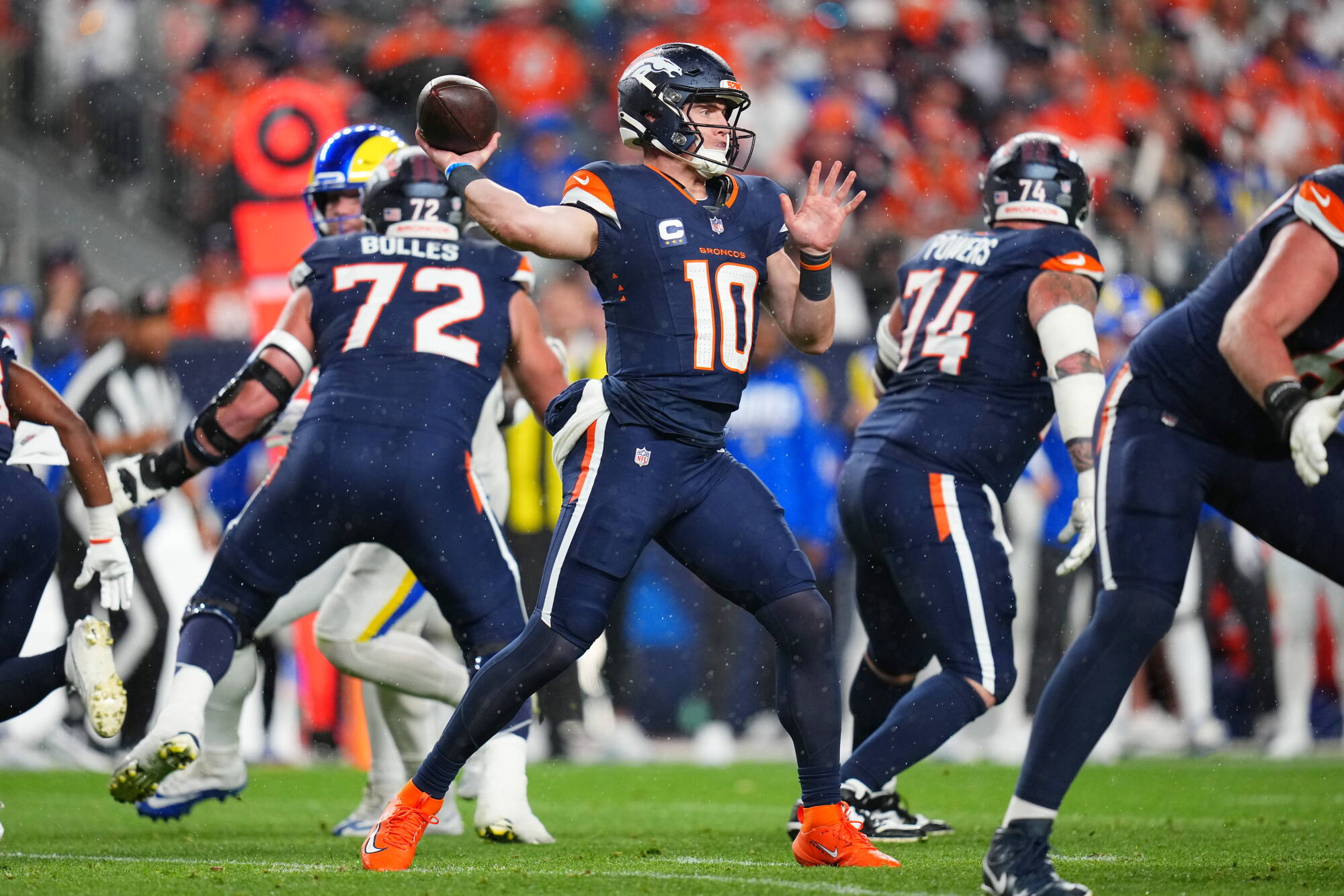
Broncos quarterback Bo Nix passed for two second-half touchdowns and dived one yard for a touchdown with 47 seconds left, dropping the Rams’ record to 1-2.
Under 10th-year coach Sean McVay, the Rams had started a season 1-2 only once before. In 2024, the Rams were 1-2 after three games and 1-4 after five. They rebounded to finish 10-7 and advanced to the divisional round, where they lost to the eventual Super Bowl-champion Philadelphia Eagles.
Next Sunday, the struggling Rams play the Eagles in Philadelphia.
Against the Broncos, less than a week after limiting the New York Giants to two field goals in a 28-6 victory at SoFi Stadium, the Rams’ defense dominated for two quarters.
But the Rams could not overcome Nix or a Broncos defense that got a 66-yard interception return for a touchdown by safety Talanoa Hufanga, who also intercepted a pass in the end zone on the final play.
The Rams built a 16-0 halftime lead on Stafford’s touchdown pass to Tyler Higbee and three field goals by Mevis.
But the Broncos ended any hope of a shutout midway through the third quarter when what had been a mostly anemic offense came to life.
Nix fired a five-yard touchdown pass to Pat Bryant and then completed a two-point conversion pass to Jaylen Waddle to cut the lead in half.
Denver Broncos quarterback Bo Nix passes against the Rams in the first half Sunday.
(Jack Dempsey / Associated Press)
A few minutes later, Nix found tight end Nate Adkins for an eight-yard touchdown pass and then fired a two-point conversion pass to Bryant to tie the score.
The Broncos were driving again early in the fourth quarter when Rams cornerback Josh Wallace intercepted a pass, setting up Mevis’ fourth field goal for a 19-16 lead.
The Rams got the ball with about seven minutes left and Stafford connected with Adams for a 49-yard gain. But Hufanga picked off a pass and returned it for a touchdown that put the Broncos ahead, 23-19.
But Stafford’s 48-yard touchdown pass to receiver Konata Mumpfield put the Rams back in front, 26-23.
Nix all but sealed the victory when he dived and reached over the pile for the one-yard touchdown with less than a minute left.
The Rams drove to the Broncos’ 14-yard line with two seconds left. But after a false-start penalty, Stafford’s pass was intercepted by Hufanga in the end zone.
Stafford completed 30 of 55 passes for 390 yards. He was sacked four times.
Davante Adams caught seven passes for 137 yards and Higbee had eight catches for 62 yards.
Running back Kyren Williams rushed for 88 yards and had 70 yards receiving.