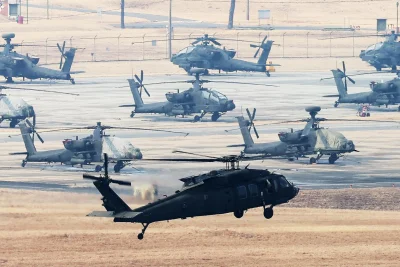
A UH-60 Blackhawk helicopter takes off from Camp Humphreys in Pyeongtaek on Monday as the United States and South Korea kick off their Freedom Shield joint military exercise. Photo by Yonhap
SEOUL, March 9 (UPI) — The United States and South Korea began their annual Freedom Shield joint military exercise on Monday, as speculation swirled that Washington may be shifting some military assets from the Korean Peninsula to the Middle East amid its widening conflict with Iran.
About 18,000 South Korean troops will participate in the exercise, which runs through March 19 and includes command-post simulations and field training drills. U.S. Forces Korea has not disclosed the number of American personnel involved.
The drills come as local media reports have raised questions about whether U.S. military equipment stationed in South Korea could be redeployed to support operations in the Middle East.
South Korea’s Yonhap News Agency reported Sunday that U.S. C-5 and C-17 transport aircraft landed at Osan Air Base in Pyeongtaek, south of Seoul, late last month before departing between Wednesday and Saturday.
The aircraft movements followed reports that U.S. Forces Korea relocated some Patriot missile defense systems to Osan from other American bases in the country.
Two Patriot batteries deployed with USFK were temporarily rotated to the Middle East in June last year during strikes targeting Iranian nuclear facilities, before returning to South Korea in October.
The Patriot system detects, tracks and intercepts drones, cruise missiles and short-range or tactical ballistic missiles at low- to mid-range altitudes. It forms a key component of South Korea’s layered missile defense network designed to counter threats from North Korea.
U.S. Forces Korea said last week it could not comment on the relocation or movement of its assets due to operational security.
South Korea’s Defense Ministry also declined to address the reports directly during a briefing Monday.
“There is constant communication between the U.S. military and our side,” ministry spokeswoman Jeong Bit-na told reporters. “We are always communicating closely to ensure that there are no security concerns or gaps.”
She added that the Freedom Shield exercise was proceeding as planned.
“The South Korea-U.S. joint exercise is being implemented normally regardless of the situation in the Middle East, and we are thoroughly implementing it as agreed and planned,” Jeong said.
The drills come as the administration of South Korean President Lee Jae Myung seeks to stabilize relations with Pyongyang, which routinely condemns the allies’ joint exercises as rehearsals for invasion.
The number of field training exercises during this year’s Freedom Shield has been reduced to 22, down from 51 conducted during the previous iteration of the drills under the conservative government of impeached former President Yoon Suk Yeol.
North Korea recently concluded a major congress of the ruling Workers’ Party, where leader Kim Jong Unpledged to expand the country’s nuclear arsenal and improve its delivery systems and operational capabilities.
At the same time, Kim appeared to leave the door open to future negotiations with the United States, saying there was “no reason” the two sides could not improve relations if Washington abandons what he described as its hostile policy.
Kim has previously said he has “fond memories” of U.S. President Donald Trump, whom he met three times during Trump’s first term. South Korean officials have pointed to Trump’s planned visit to China later this month as a possible opportunity to revive diplomacy with Pyongyang.
Kim has continued to take a hostile tone toward Seoul, however, recently describing South Korea as “the most hostile entity.”
It comes after the programme was discussing a woman who had been sexually assaulted in her hotel room after a man lied to staff in order to get into her room.
Explaining what had happened, she shared: “It happened to me in America, obviously not this seriously. But I was staying at a hotel in Florida for work, and somebody came into my room in the middle of the night with their suitcase.
“Honestly, the shock you have when that happens. They’d said to the receptionist, ‘I’ve lost my key for this particular room’. They had given the wrong room number. I don’t think intentionally, I think mistakenly.
“Again, it makes me feel slightly ill talking about it. I went, ‘Excuse me!’ and they went, ‘Oh, I’m really sorry and left’.
The GMB star explained that reception gave her an apology and explained very casually that they’d given out the wrong room key.
Susanna added: “It’s extraordinary that this happens, in this case, it led to a crime being committed.”
Reffering back to the news headline being discussed on the show, Susanna called the incident “absolutely shocking”.
ITV viewers learnt that a man had met a woman at a party, found out where she was staying and lied to the reception staff at the Travelodge hotel, saying he was her boyfriend and had lost his hotel key.
Susanna added: “He then accesses her bedroom, it makes me feel sick. He accesses her bedroom and sexually assaults her.
“She only knew this person because they met at a party, he was not in any way involved with her, was not in a relationship with her and should absolutely not of been allowed to get into her hotel room.”
The man, who has been named as Kyran Smith, has been convicted of sexual assault and has been given a seven and a half year sentence. The victim was given a £30 refund, which she has since blasted as “very insulting”.
A Travelodge spokesman said: “The safety and security of our guests is our priority and we were deeply concerned to hear of this distressing incident and our sympathies are with the victim.
“At the time of the incident our hotel team followed the correct security procedures. We continue to ensure our hotel and customer services teams are trained to follow our approved policies.”
Good Morning Britain is available to watch on ITVX
If you or somebody you know has been affected by this story, contact Victim Support for free, confidential advice on 08 08 16 89 111 or visit their website, http://www.victimsupport.org.uk.
Iran’s Islamic Revolutionary Guard Corps has pledged allegiance to Mojtaba Khamenei, the country’s newly-elected supreme leader. While some Iranians have celebrated, many are dismayed the 56-year-old cleric, accused of human rights abuses, has ascended to the country’s highest office.
Weekly insights and analysis on the latest developments in military technology, strategy, and foreign policy.
Less than a week into Operation Epic Fury, we have seen a wide variety of munitions used by the U.S. and Israeli militaries and have previously looked at how their employment evolved as the conflict has progressed. We have also gotten a look at an apparently mysterious version of the widely used Joint Direct Attack Munition (JDAM) in Israeli Air Force (IAF) service.
The imagery in question, showing two unusually marked 2,000-pound GBU-31 series JDAMs under the wing of an F-16C/D Barak jet, was posted on the IAF’s official X account earlier this week. It appears some of the photos may have been subsequently taken down. The photos were presented alongside an account of missions flown deep into Iranian territory and over its capital city, Tehran, in the form of a statement from the commander of Ramat David Air Base, identified only as “Col. A.” However, no explanation of the bomb appears to have been given.
״אנו טסים לעומק שטח האויב ומעל עיר הבירה שלו, טהרן, בנחישות ועם תחושת שליחות עמוקה. לא נעצור. צוותי האוויר מבצעים את משימתם הרחק מישראל, בסיכון גבוה, גם כשמערך ההגנה האווירי של האויב שיגר עליהם עשרות טילי קרקע-אוויר.
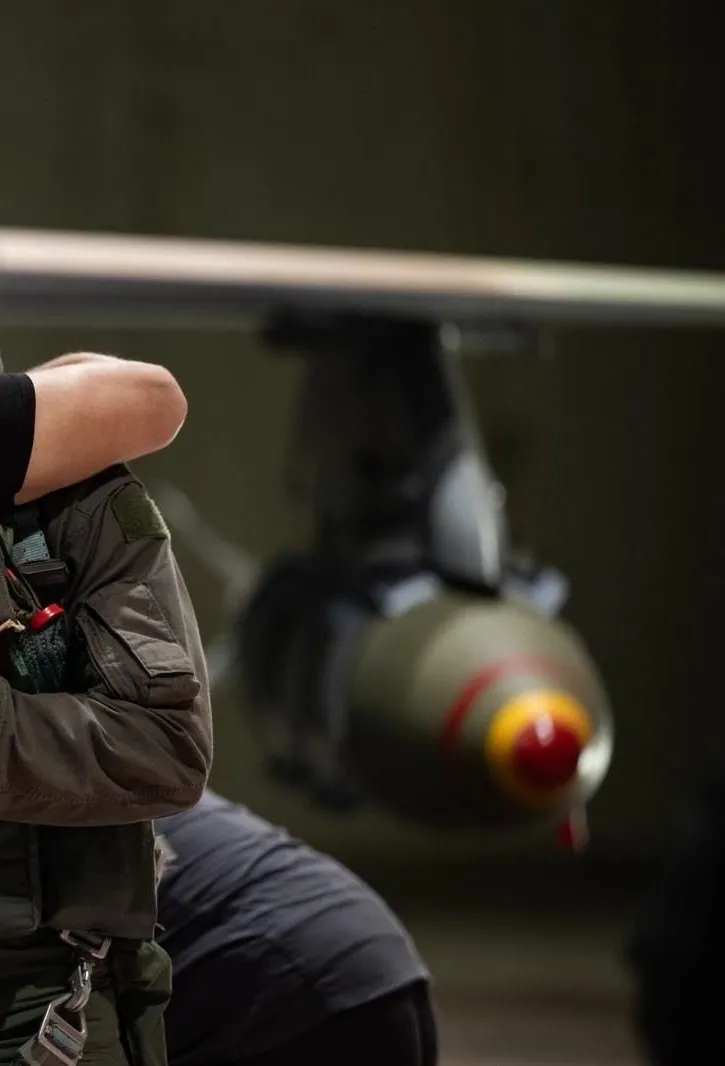
The standout feature of the JDAM seen in the photos is its markings. These include a red band around the nose of the weapon, as well as a red-painted nose plug. There is also a more familiar yellow band, which on U.S.-standard munitions indicates that they contain high explosives, around the nose.
Another view of the unusual JDAM under the wing of an F-16. IAF
A red band, however, is far more unusual and rarely — if ever — seen on a JDAM.
Based on U.S.-standard munitions markings, a red band can indicate an incendiary payload, while dark red on a gray panel “indicates the ammunition contains an irritant (riot control) agent.” There is a good chance that the JDAM might be an incendiary type.
The OSMP has added Israeli 2,000-pound-class air-delivered bombs with distinct red and yellow markings.
This suggests the munitions likely contain an incendiary and high-explosive payload. The best known of these is the BLU-119/B CrashPAD which contains white phosphorous. pic.twitter.com/MWkudRFKlb
— Open Source Munitions Portal (@MunitionsPortal) March 5, 2026
One of the few fielded examples of a JDAM with an incendiary payload that we are readily aware of is the 2,000-pound BLU-119/B Crash PAD (Prompt Agent Defeat), a weapon that doesn’t seem to have been shown before.
Crash PAD was intended to be used exclusively with the JDAM guidance package. Before looking at this weapon in more detail, the basic JDAM kit consists of the guidance package and control section, tailfins for steering, and strakes attached to the bomb for stability and a limited gliding capability. This kit is then mated to an existing bomb body, normally a variant or derivative of the ubiquitous Mk 80 series of weapons.
A standard 2,000-pound JDAM arming an Israeli F-16. IAF
The Crash PAD was developed in 2002 as a quick reaction capability for use in Operation Iraqi Freedom in 2003. It was designed to attack chemical and biological weapon stockpiles. It does this by using a combined payload of approximately 145 pounds of PBX-109 high explosive and 420 pounds of white phosphorus.
A poor-quality but rare diagram showing the contents of the BLU-119/B Crash PAD. DoD
In this way, the high-explosive blast-fragmentation warhead penetrates the weapon containers, and the white phosphorus warhead defeats the agents by literally incinerating them. This is intended to minimize effects on the civilians and the environment.
Weapons load crew loads a standard 2,000-pound GBU-31 JDAM on an F-16CJ of the 22nd Expeditionary Fighter Squadron at a forward-deployed air base during Operation Iraqi Freedom. U.S. Air Force photo by Staff Sgt. DERRICK C. GOODE/RELEASED Staff Sgt. Derrick C. Goode
There was also a similar type of weapon named Shredder, which was based on the bunker-busting BLU-109 bomb body, as used in the GBU-31 JDAM, for deeper penetration, and also with WP content, but it does not seem to have been produced. There could be other such weapons, too, also based on the JDAM, that we don’t know about.
As for white phosphorus, this remains a controversial and misunderstood weapon.
White phosphorus is not a chemical weapon, as sometimes described, since it is primarily an incendiary weapon, although it’s also regularly used for making smokescreens and for target marking. Burning at around 1,500 degrees Fahrenheit, white phosphorus can obviously inflict terrible injuries, and its use in densely populated areas violates international law.
The warhead for Crash PAD was developed by Alliant Techsystems (ATK), which received a $4-million contract in October 2003 from the U.S. Air Force Research Laboratory (AFRL) at Eglin Air Force Base, Florida. Sled-track testing took place in late January 2003, and flight test occurred in late February 2003, just ahead of the invasion of Iraq.
Details of the use of Crash PAD in Iraq are very scarce, but the weapon seems to have been retained in the U.S. Air Force inventory and, in Fiscal Year 2011, the Defense Threat Reduction Agency initiated concept studies for a BLU-119/B conversion that would use a safer, lower- cost payload fill.
Interestingly, during the Gaza-Israel conflict, the IAF released a photo of one of its AH-64D Apache attack helicopters armed with a mysterious version of the Hellfire air-to-ground missile with a prominent red stripe painted around the middle of its body, all the more intriguing.
An Israeli AH-64 with one of the Hellfire missiles carried in a four-round cluster on the outer station of the right-hand stub wing, marked with a red-colored band. This is in obvious contrast to the more usual (three) yellow bands seen on live Hellfire missiles, including the others loaded onto this helicopter. IAF
As we discussed at the time, this may well have been a version of the Hellfire with a thermobaric warhead, another type of incendiary, designed for destroying enclosed targets.
As internet chatter about the possible meaning behind the red-banded Hellfire spiked, the IAF quietly deleted the post in question, replacing it with a similar photo, this time showing a different AH-64D taking off with standard-looking Hellfires fitted.
Perhaps the red-banded JDAM was another social media slip-up, although at least one of the images is still found on the IAF’s X account.
Two of the unusual JDAMs under the wings of an F-16 Barak in its shelter, apparently at Ramat David Air Base. IAF
Since the Israel Defense Forces (IDF) has generally been extremely discriminating about the kinds of photos and videos that it releases for public consumption, the red stripes on the JDAM might also indicate something different altogether.
Israel has a long history of adapting U.S.-made and other weapons to its very particular needs, and the marking in question may be entirely specific to the IDF, pointing to a different, novel version of the JDAM.
Regardless, there could certainly be a role in the current conflict for Crash PAD or another agent-defeating munition.
Iranian soldiers wearing gas masks sit in foxholes during Operation Badr, in the Iran-Iraq War, in March 1985. Iranian state media www.mehrnews.com
In 2025, the U.S. Department of State reported unresolved questions surrounding Iran’s chemical and biological activities, including around experiments with pharmaceutical-based agents, and stated that Iran “has not abandoned its intention to conduct research and development of biological agents and toxins for offensive purposes.”
There could be other reasons to use a weapon like Crash PAD in Iran, possibly tied to targets that produce volatile rocket fuel and other dangerous compounds.
In a report last month, the U.K.-based International Institute for Strategic Studies (IISS) think tank assessed that “Iran’s nuclear facilities hold a range of chemical and toxic hazards.” This includes certain nuclear materials that are also highly toxic.
In the course of time, and despite the secrecy surrounding the details of Israeli combat operations, we might still learn more about what is, for now, something of a mystery munition.
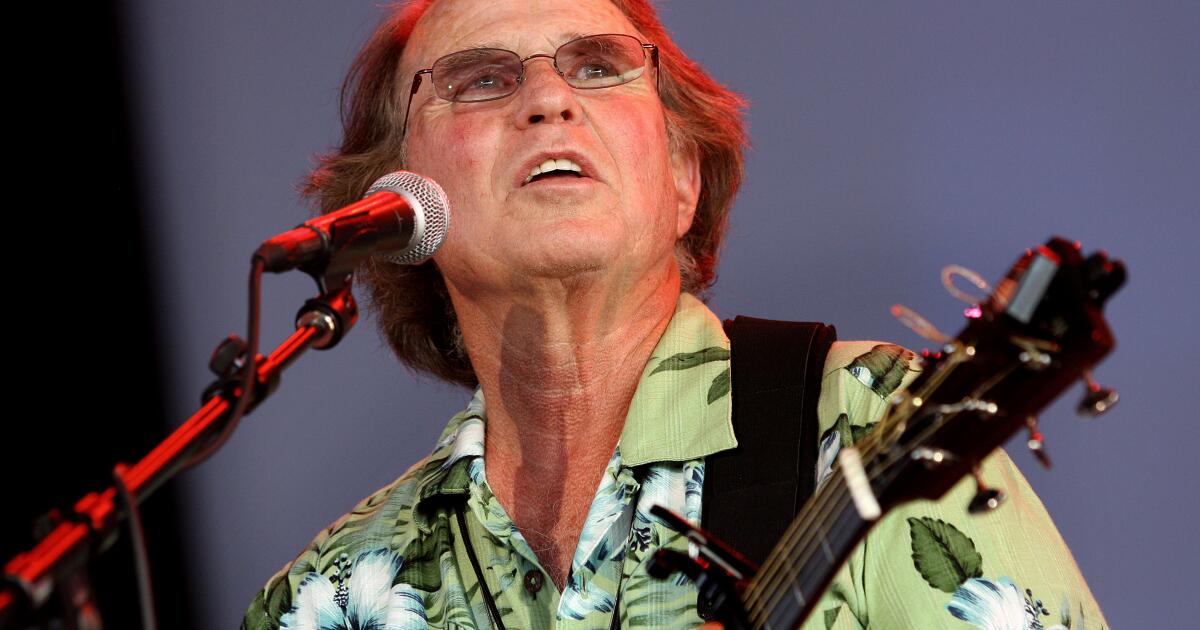
Joe McDonald, lead singer and songwriter of Country Joe and the Fish — the band known for its resounding anti-war chant at Woodstock — has died. He was 84.
His wife, Kathy McDonald, announced his death Sunday morning. He died Saturday in his Berkeley home due to complications from Parkinson’s disease.
As a formative member of the American counterculture in the 1960s and ‘70s, McDonald leaves a legacy of bridging contemporary political satire and brazen anti-war sentiments with the early sounds of acid rock.
“We’re just so proud of him. He’s our hero. He instilled in us that we have to speak up when we can, on whatever platform we can, about issues that we feel are important,” said his daughter Seven McDonald, a film producer, music manager and writer.
“While he was a very serious, earnest activist, he also had such an acute sense of cynical humor that is so fantastic and was capable of scathing satire,” her brother Devin added. “He’s most famous for that, but he also did so many heartfelt benefits for different causes.”
The siblings, who spent their childhoods on the road and in recording studios with him, joke that he was always doing a benefit show.
The musician was born on Jan. 1, 1942, in Washington to Worden McDonald and activist Florence (Plotnik) McDonald, who were both members of the Communist Party. The family soon moved to the Southern California city of El Monte, where Joe McDonald was raised.
His musical roots reach back to when his father taught him to play the guitar at 7 years old. But before embarking on his career in music, McDonald enlisted in the Navy at age 17. He served as an air traffic controller at the Atsugi, Japan, air facility for three years. Upon coming back to the states, he tried out college for a short time before dropping out and moving to Berkeley.
Before experimenting with an early variation of Country Joe and the Fish alongside guitarist Barry Melton in the mid-1960s, McDonald started a small magazine called Rag Baby. Once the group was solidified, they decided to turn their folksy roots electric and made the move to San Francisco — just before the city’s legendary Summer of Love.
The group, born out of the Bay Area psychedelic rock scene, was soon signed by Vanguard Records and in 1967 released its debut album “Electric Music for the Mind and Body.” At the time the band’s label and producer were hesitant to let the musicians fully express their politics, and excluded the soon-to-be-hit anti-war anthem “I-Feel-Like-I’m-Fixin’-to-Die Rag” with the catchy chorus that began, “And it’s 1, 2, 3 what are we fighting for?”
Instead, they went with tracks like “Superbird,” a spoof of President Lyndon B. Johnson, which received little to no backlash. When the second album came around, the band was allowed to run with “I-Feel-Like-I’m-Fixin’-to-Die Rag” as the title track. Trouble started to arise with the anti-Vietnam war anthem when the group changed the beginning chant of F-I-S-H to a more profane four letter word that starts with an “F.”
They performed this altered cheer at a gig in Massachusetts, where McDonald received a charge for inciting an audience to lewd behavior and a $500 fine. With this police run-in, Country Joe and the Fish received a slew of press, riling up the public ahead of their Woodstock performance.
The moment the band members began this chant at Woodstock became arguably the biggest moment of their careers, with over 400,000 people joining in. It’s a moment of protest that has gone down in history.
Not long after the festival, the band went their separate ways. McDonald continued to release solo music that stuck with the similar themes of politics and the Vietnam War.
“He took the toll for taking the stand,” said Seven. “He was not the biggest pop star, because he just opted to speak his mind and do his thing.”
In 1986, McDonald released “Vietnam Experience,” an album full of songs analyzing its long-term impacts on his generation. And in 1995 he was “the driving force” according to an Associated Press story, behind a war memorial to honor Berkeley veterans killed in the Vietnam War.
He told The Times in 1986 that he had “an addiction to Vietnam … I’ve been doing work with veterans now for 15 years, and I probably know more about Vietnam veterans than any other person in the entertainment industry.”
“I’ve always believed that the veterans are a basic element to the understanding of war,” he added, “and the understanding of war is the only path to peace.”
McDonald is survived by his wife of 43 years, Kathy; his five children, Seven, Devin, Ryan, Tara Taylor and Emily; a brother, Billy; and four grandchildren.
A driver refuels a vehicle at a gas station in Seoul on Saturday as global oil prices rise amid instability in the Middle East. According to the Korea National Oil Corporation’s Opinet system, the nationwide average gasoline price was 1,893.3 won ($1.41) per liter at 9 a.m., up 3.9 won from the previous day. Diesel averaged 1,915.4 won ($1.43) per liter, up 4.8 won. Photo by Asia Today
March 8 (Asia Today) — Gasoline prices in South Korea are approaching 2,000 won per liter as rising global oil prices linked to tensions in the Middle East push fuel costs higher, prompting debate over additional government tax cuts.
According to the oil price monitoring system operated by the Korea National Oil Corporation, the nationwide average gasoline price stood at 1,889.40 won ($1.41) per liter as of Friday.
In Seoul, the average price reached 1,941.71 won ($1.45) per liter, nearing the psychologically significant 2,000 won ($1.49) level and increasing pressure on consumers.
Fuel prices typically reflect international oil market changes with a delay of about two to three weeks. However, the recent sharp increase has raised expectations that the government may expand existing fuel tax reductions.
The government has already extended temporary tax cuts through the end of April. Gasoline currently benefits from a 7% fuel tax reduction, while diesel and liquefied petroleum gas butane receive 10% reductions.
Fuel taxes are one of the government’s most direct tools to ease inflation, as adjustments can quickly influence consumer prices.
South Korea previously expanded fuel tax cuts during earlier energy price surges. In 2022, when oil prices spiked following the Russia-Ukraine war, the government increased the reduction rate from about 30% to the legal maximum of 37%.
Officials are reportedly reviewing whether additional tax reductions are needed. Because fuel tax rates are set by enforcement decree, the government can implement changes relatively quickly after approval at a Cabinet meeting.
Bae Jun-young of the conservative People Power Party said fuel tax cuts should be expanded to provide meaningful relief for consumers.
“If tensions in the Middle East persist, the government should also consider raising the ceiling on the flexible fuel tax rate,” Bae said.
The international community has a structural problem in reading conflicts: it treats silence as neutrality, when in fact silence is a manufactured condition. When international monitors report the absence of civil protests or testimonies from conflict zones, they are not documenting consensus; they are documenting the success of propaganda operations. This article argues that conflicting parties are now actively exploiting the spiral of silence as a strategic weapon, and the international community’s failure to recognize this results in a structurally flawed diplomatic response even before analysis begins. This argument will be constructed in three layers: how the spiral is engineered, how Sudan proves it, and why the international interpretive framework must be updated immediately.
Elisabeth Noelle-Neumann (1974), in her theory Spiral of Silence, describes how individuals suppress their minority opinions to avoid social isolation. This theory is built on the assumption of a free society, where silence is an organic social choice. In conflict zones, this assumption collapses completely. Silence is not chosen; it is engineered. Propaganda actors flood information channels with dominant narratives not to convince audiences that these narratives are true, but to signal which voices are safe and which are not. The result appears to be consensus. But it is not.
Social media has transformed this architecture of silence into something almost invisible. Platforms give users real-time visibility into how much public response a particular view receives. When opposing content is systematically silenced through algorithmic deprioritization and coordinated mass reporting campaigns, people conclude that speaking out is pointless, or worse, dangerous. Jowett and O’Donnell (2019) note that bandwagon propaganda does not require audiences to believe in the dominant narrative, only to believe that others already believe it. At that point, the spiral becomes self-sustaining: it no longer needs external enforcement because the target population has internalized it themselves.
The agenda-setting theory proposed by McCombs and Shaw (1972) adds another layer to this problem and makes it much more difficult to detect. The media and information channels do not merely reflect reality; they determine what is considered worthy of discussion from the outset. When warring parties dominate the information space, they not only shape international perceptions. They also determine which testimonies are considered safe for local residents to give and which silences are necessary for survival. This is not a side effect of conflict. It is a deliberate targeting of the information environment itself, and the international community has been consistently slow to recognize this as such.
Two technical mechanisms make all this work, and neither requires direct violence to be effective. First, bandwagon propaganda floods channels with coordinated content until dissent appears marginal and irrelevant. Second, fear appeals work without needing to be explicitly stated. In conflict environments, people have witnessed what happens to those who oppose the dominant narrative, so self-censorship becomes a rational choice, not a sign of weakness. The combination of the two is the most dangerous: the spiral no longer requires external enforcement because its targets are already silencing themselves. This is not the moral failure of individuals who choose to remain silent; it is a system designed to work exactly as intended.
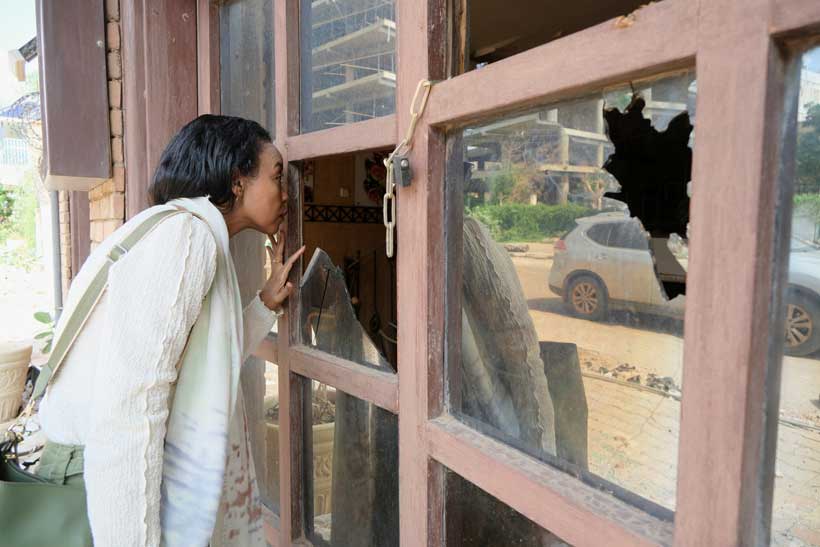
The case of Sudan illustrates this most clearly. Both the SAF and the RSF launched coordinated information operations from the early days of the conflict. RSF channels spread a narrative of civilian protection, while the SAF network framed the war solely as a counter-terrorism operation. These two narratives, although contradictory, both served to narrow the space for independent civilian testimony. Civilians in Khartoum and Darfur faced an information environment that made disclosure a risk calculation rather than a right. The internet blackouts recorded at various periods of the conflict were not merely technical obstacles; they were a very clear signal of the price to be paid for speaking out.
Zeitzoff (2017) shows that users in environments close to conflict significantly alter their disclosure behavior under perceived surveillance, even without direct threats. In Sudan, the threat is anything but hypothetical. The diplomatic consequences are immediately apparent: the UN’s initial assessment of the Sudanese conflict has been repeatedly criticized by humanitarian organizations for underestimating civilian casualties and displacement figures. This is not a methodological failure. It is the intended result of a deliberate information architecture, a condition in which the most relevant data is already missing before the verification process even begins.
What makes this a diplomatic crisis, not merely an information crisis, is that the international response is built on what is reported. When open-source assessments treat civilian silence as a neutral baseline, they are not accessing the truth on the ground. They are accessing whatever has made it through the spiral. This pattern repeats itself in various conflicts because it consistently works in Syria, in Myanmar, and in Ethiopia. In each case, the international community finds itself working with records that have been curated by the parties most interested in concealing crimes.
The solution is not more monitoring infrastructure. What is needed is a different interpretative framework. Silence must be treated as a data point that requires explanation, not as a default condition that requires nothing. When there are no reports from conflict zones, it does not mean that nothing is happening; rather, it means that the conditions for speaking out have been destroyed first. Protected witness pathways, verification networks from the diaspora, and analysis of anomalies in information flows are all useful, but only after a fundamental recognition that the problem is not a lack of information, but rather that engineered silence is constantly misinterpreted as the absence of anything worth investigating.
The Spiral of Silence was originally a theory about how even free societies can slowly and unconsciously silence themselves. In the hands of modern propaganda architects, the theory has been repurposed as a method to ensure that the most credible witnesses to crimes never speak out and that their silence is interpreted by the international community as proof that there are no crimes to investigate. The arguments in this article, from the mechanisms of spiral engineering to the role of social media to the case of Sudan, all point to the same conclusion: as long as silence is interpreted as absence, the international community is not conducting independent analysis. They are confirming the narrative of those most interested in concealing the truth. The loudest voices are not the most honest; they are simply the ones allowed to speak.
Louis Theroux has spoken to key male influencers on social media in the Manosphere for new Netflix project
Louis Theroux is concerned by the influence and claims of some male influencers, but gives them a chance to respond.(Image: Courtesy of Netflix)
As a concerned father-of-three, Louis Theroux has admitted he doesn’t know what his own kids are looking at online half the time. So this might explain why he has got involved with male content creators online, with millions of followers, who are part of what is dubbed “The Manosphere” for his new documentary.
Louis says: “These aren’t figures on the margins – anyone who’s got kids, and especially boys, will know that they are making inroads into the culture. Their influence is being felt in schools, in the workplace and all across the internet.
“Going back to the earliest days of my programmes I’ve always been interested in the taboo and people who believe things which run against the grain of values I’ve grown up with. Those in the manosphere embody a swaggering machismo that is by turns misogynistic, homophobic, antisemitic and racist. So there’s a whole bunch of red flags there which I find interesting.”
TV host Louis, 55, starts the Netflix documentary by saying he noticed a few years ago “parts of the internet were being taken over” by a collection of male influencers who claim to give young men “cheat codes to win at life”.
Ensure our latest headlines always appear at the top of your Google Search by making us a Preferred Source. Click here to activateor add us as your Preferred Source in your Google search settings.
Asked about his own sons and what they are watching, Louis replies honestly: “I think as a parent you hope that your influence will outweigh whatever they’re being fed online, but truthfully they probably spend more hours looking at their phones than they do talking to us and we don’t always know what they’re looking at.”
In his 90-minute film, Louis explores how key figures, including Harrison Sullivan (known online as HSTikkyTokky), Myron Gaines, Nicolas Kenn De Balinthazy (AKA Sneako), Justin Waller and Ed Matthews, are helping to reshape young men’s ideas about masculinity and fuelling a resurgent global men’s rights movement.
Louis immerses himself in their world, encountering prominent figures within the movement, each presenting their own interpretations of traditional gender roles and values.
Sullivan, 24, was handed a one-year suspended prison sentence at Staines Magistrates’ Court in November last year after pleading guilty to dangerous driving and driving without insurance.
He has also been disqualified from driving for two years. Asked what his message is, he tells Louis: “I coach boys how to be f**king boys, how to make money, how to be outside the system, how to not have a boss telling you want to do.
“I teach guys to be proper boys and not gimps that walk around in the modern world.”
These men online have similar ideas to those of influencer Andrew Tate, a self-proclaimed misogynist.
A 2025 YouGov poll suggested one in eight Gen Z men (aged 14-29) had a “favourable view” of Andrew Tate, one of the leading figures of the manosphere, while more than one in three believed misandry – hatred or discrimination against men – was widespread in the UK.
Sounding worried about their impact, Louis said: “It was my kids who first made me aware of Andrew Tate – it would have been around 2022 and they kept referencing him and what he was saying – I had no idea who he was. Four years later, he’s still got cultural influence because he has millions of hours of content sitting out there for people to discover.
“As a parent I’m obviously concerned about the impact that that has, and it would be easy to say; ‘oh well, they don’t take it too seriously’, which a lot of the time I think they don’t, but at a certain point, a joke is no longer a joke – especially when it’s unchallenged and repeated. So we try to stay on top of what they’re watching and try to have conversations with them about it, but it’s hard.”
Louis encounters difficulties in the film which see the male influencers film him for their own social media and subject him to abuse and questions they receive from their followers whilst streaming footage live. It leads to Louis being abused about his previous documentary with the late Jimmy Savile.
He also witnesses homophobic behaviour by HSTikkyTokky whilst Myron Gaines speaks in front of his girlfriend about wanting multiple wives in the future.
Sullivan says he would “disown” his own daughter if he had one and she joined Only Fans, despite claiming to own an agency that represents girls on there. He also says he could not have a son who was gay.
There is also much discussion in the documentary on the notion of ‘red-pilling’ which Louis explains can mean “that men and women are fundamentally different and that women don’t want what they say they want – all they actually care about is big, rich guys with big dicks.”
Asked why he thinks the manosphere is attractive to many teenagers, Louis said: “I think there’s a lot of lonely men out there, and there’s now a whole industry dedicated to them. There are millions of hours of podcasts that talk about the masculinity crisis – how we’ve seen a decline in manufacturing jobs in the west and how there’s been efforts to correct the patriarchal skew in society that has in turn triggered a backlash.”
Louis also defended his decision to make the documentary in the first place, which could be seen as amplifying potentially harmful ideologies and helping the men to get even more followers thanks to them being shown on Netflix.
For him it is a case of trying to understand and challenge the ideas which are being pushed to youngsters.
He said: “My view is always I’m not trying to embarrass them or trick them in any way. I am trying to tell the truth and I will confront them appropriately. I’m not trying to pick a fight. I’m just trying to understand them, get my questions answered and then challenge and push back on the parts that don’t make sense to me or strike me as dangerous. At the end of the day I’m trying to make TV that engages people – so a few fireworks don’t go amiss and some raised voices or a sense of menace is actually quite helpful.”
In the concluding moment of the documentary, after spending weeks with these male influencers, Louis concludes: “In a world that’s changing at dizzying speed with narrowing opportunities, where the old entitlements of manhood have been challenged. It is perhaps not surprising that some have sought the comfort of a simplified world of game hacks and conspiracy theories. It struck me that the matrix they rail against more accurately describes the algorithmic prison they’ve created for their followers, an illusion of endless wealth and power that actually only enriches a few at the top.
“We are in a world where the fringe is no longer fringe. Where we are all increasingly, inside the manosphere, and it’s up to us how we get out.”
* Louis Theroux: Inside The Manosphere is available on Netflix from March 11.
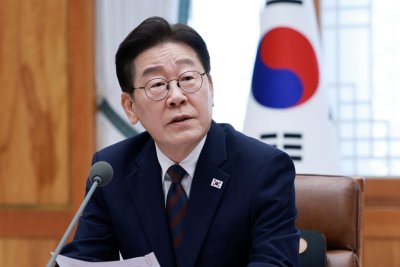
South Korean President Lee Jae Myung speaks during an emergency economy response meeting on Middle East tensions held at Cheong Wa Dae in Seoul on Monday. Photo by Yonhap
President Lee Jae Myung on Monday called for authorities to swiftly introduce a cap on local fuel prices, and preemptive responses to cope with surging gas prices and volatility in foreign exchange markets as the U.S.-led war with Iran has intensified in the Middle East.
Lee made the remarks during an interministerial meeting to assess the latest developments following U.S.-Israeli strikes on Iran and Tehran’s retaliatory attacks across the Middle East, which have prompted the price of Brent oil to surge through US$100 per barrel.
“As the crisis in the Middle East deepens, uncertainty in the domestic and global economic environment is expanding significantly, posing a considerable burden on the Korean economy relying heavily on global trade and energy imports from the Middle East,” Lee said.
Lee also called for preemptive responses Monday with worst-case scenarios in mind to address the economic fallout from heightened tensions in the Middle East, urging financial stability measures and the exploration of alternative energy routes.
“As it is difficult to predict how the situation will unfold, the government must prepare preemptive response measures with a sense of urgency, keeping even the worst-case scenario in mind,” he added.
Lee urged the government and the Bank of Korea to prepare additional preemptive measures to respond to rising volatility in financial and foreign exchange markets, instructing authorities to expand the 100 trillion-won ($66.8 billion) market stabilization program if necessary.
“We should identify hidden risks and meticulously prepare response measures.”
Lee also called for measures to address uncertainty surrounding energy supplies amid concerns over disruptions to shipping through the Strait of Hormuz, a major global shipping route.
“We will coordinate with strategic partner countries to promptly explore alternative routes that do not have to pass through the Strait of Hormuz,” he said.
In addition, he urged the government to crack down on collusion between refiners and gas stations, price fixing, and hoarding, calling for strict punishment of violators and the implementation of a price cap system on gasoline and diesel.
Copyright (c) Yonhap News Agency prohibits its content from being redistributed or reprinted without consent, and forbids the content from being learned and used by artificial intelligence systems.
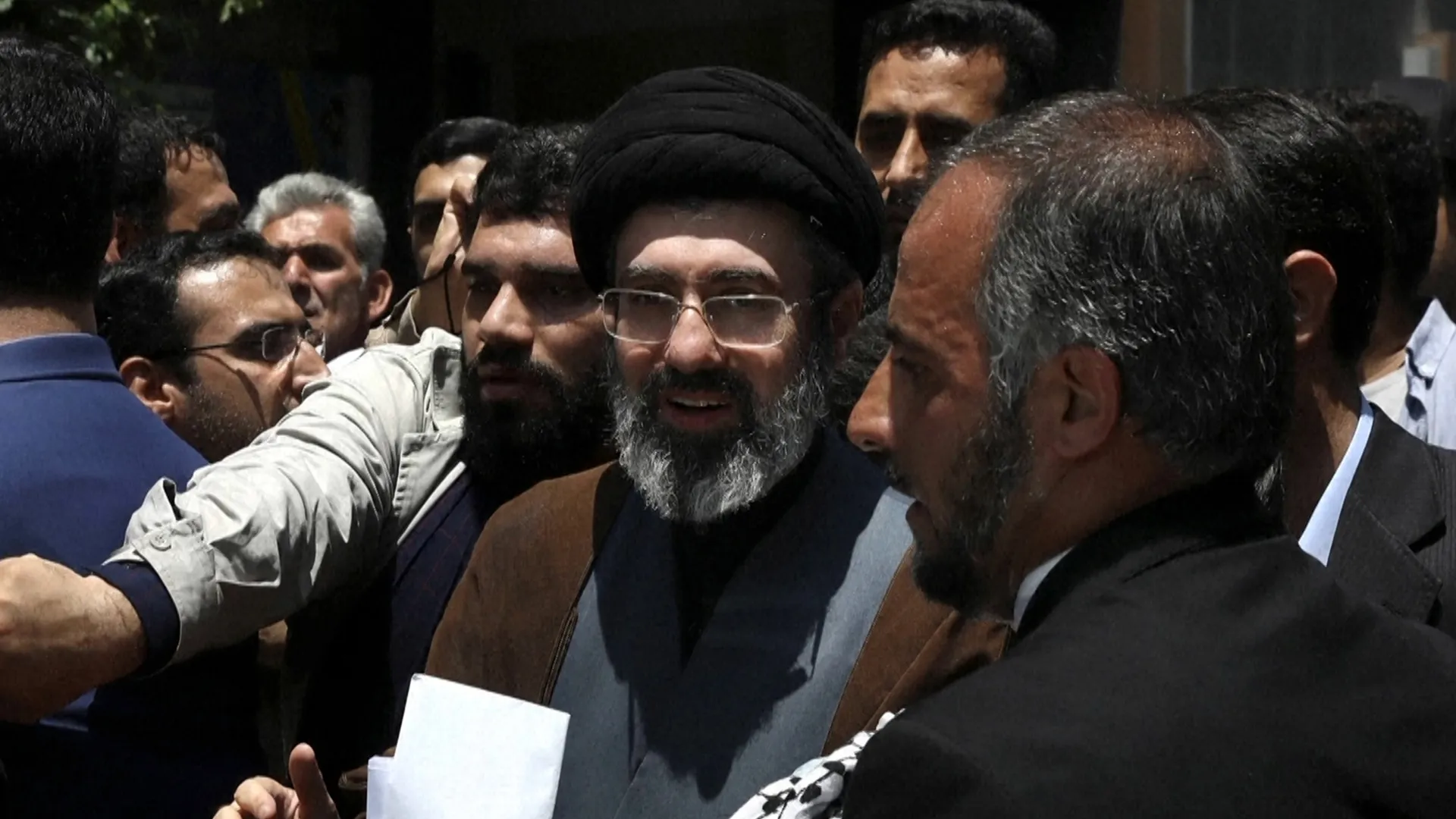
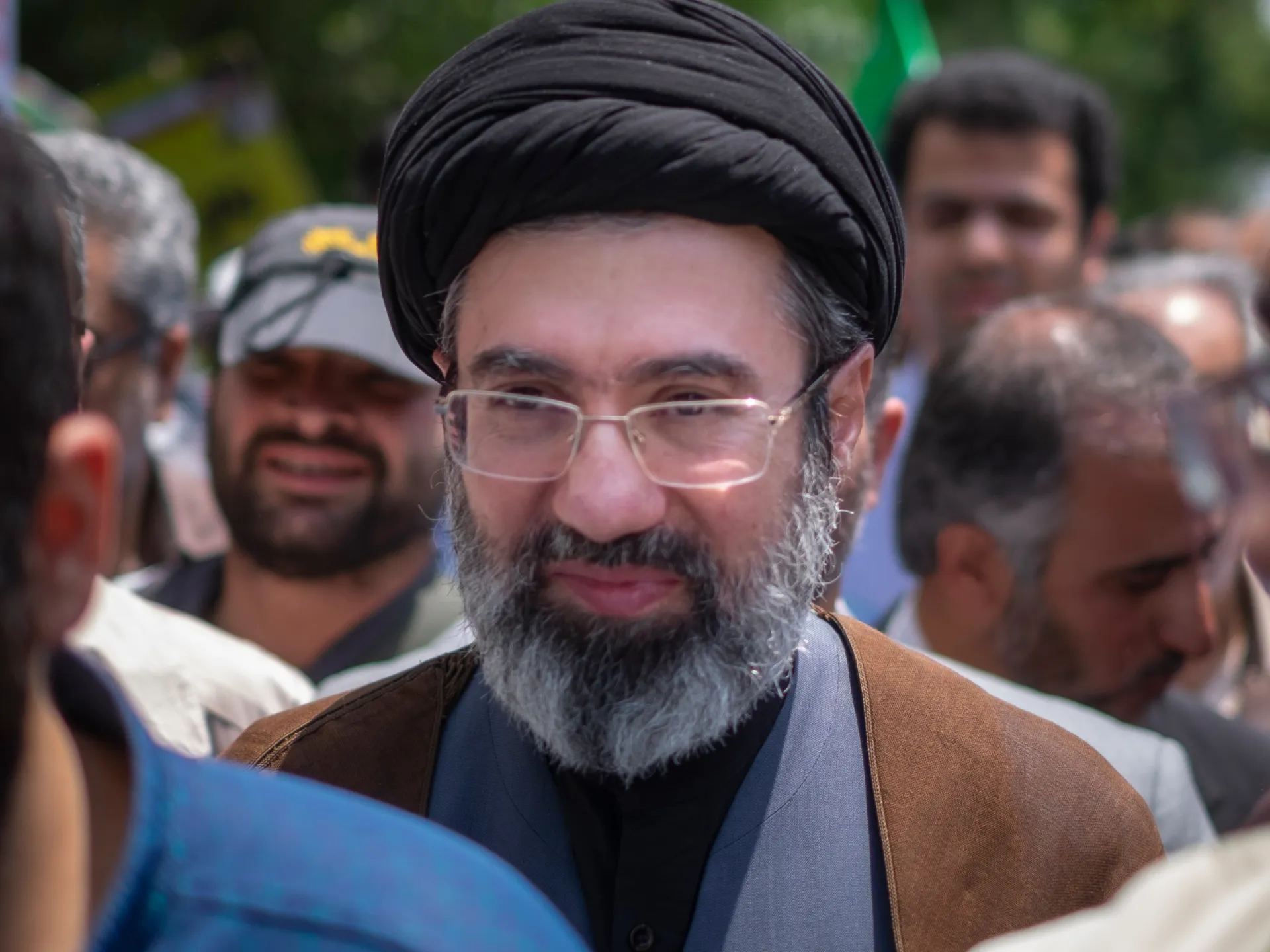
Iran has named Mojtaba Khamenei as its new supreme leader, just over a week after the assassination of his father, Ayatollah Ali Khamenei, in joint United States-Israeli strikes that have plunged the entire region into a sprawling war.
The 56-year-old, who will now be charged with leading the Islamic Republic through the biggest crisis in its 47-year history, was named by clerics as his father’s successor on Sunday.
Key leaders, Iran’s powerful Islamic Revolutionary Guard Corps (IRGC), and the armed forces were quick to pledge their backing to the new leader.
Ali Larijani, secretary of the Supreme National Security Council, who has been tasked with steering Iran’s security strategy since the US and Israel launched their all-out offensive, called for unity around the new supreme leader.
Parliament Speaker Mohammad Bagher Ghalibaf welcomed the choice, saying that following the new supreme leader was a “religious and national duty”.
Mojtaba Khamenei has never run for office or been subjected to a public vote, but has for decades been a highly influential figure in the inner circle of the supreme leader, cultivating deep ties to the IRGC.
In recent years, Khamenei has increasingly been touted as a top potential replacement for his father. His selection could be a sign that more hardline factions in Iran’s establishment retain power, and could indicate that the government has little desire to agree to a deal or negotiations in the short term as the war enters its second week.
Al Jazeera’s Ali Hashem described Khamenei as his “father’s gatekeeper”.
“He adopts the positions of his father with respect to the United States, with respect to Israel. So we are expecting a confrontational leader. We’re not expecting any moderation,” he said.
“However, if this war comes to an end and he is still alive, and he is able to continue running the country, there is going to be big potential… to find new routes for Iran,” Hashem said.
Rami Khouri, a distinguished public policy fellow at the American University of Beirut, said Khamenei’s appointment signals “continuity” and that it remains to be seen whether the new supreme leader will push for negotiations to end the war.
Either way, he said, the appointment was “an act of defiance”. Iran is “telling the Americans and Israelis, ‘You wanted to get rid of our system? Well … this is a more radical person than his father who was assassinated,’” he said.
Heidari Alekasir, a member of the Assembly of Experts that was tasked with choosing the supreme leader, said the candidate had been picked based on the late Khamenei’s advice that Iran’s top leader should “be hated by the enemy” instead of praised by it.
“Even the Great Satan [US] has mentioned his name,” the senior cleric said in reference to US President Donald Trump’s earlier statement that Mojtaba Khamenei would be an “unacceptable” choice for him to lead Iran.
Israel’s military had previously warned any successor that “we will not hesitate to target you”.
On Sunday, Trump again promised to exert influence over who is selected as Iran’s next supreme leader, saying that, without Washington’s approval, whoever is picked for the role is “not going to last long”.
The selection of Khamenei’s son is certain to enrage Trump.
Supreme leader not decided by ‘Epstein’s gang’
The 88-member Assembly of Experts said on Sunday that it “did not hesitate for a minute” in choosing a new supreme leader, despite “the brutal aggression of the criminal America and the evil Zionist regime”.
Earlier, the clerical body had indicated it had reached a majority consensus on its choice, without naming who it was, with one member saying, “The path of Imam Khomeini and the path of the martyr Imam Khamenei has been chosen. The name of Khamenei will continue.”
Mojtaba Khamenei studied under conservative clerics in the seminaries of Qom, the heart of Shia theological learning, and holds the clerical rank of hojjatoleslam, a mid-level clerical ranking.
Ali Khamenei, who led Iran for 37 years, succeeding Ayatollah Ruhollah Khomeini, who had led the 1979 revolution, was killed in a US-Israeli strike on Tehran on February 28, at the outset of the war, which has now unleashed chaos throughout the Middle East.
The Israeli military has already threatened to kill any replacement for Khamenei, while Trump said the war may only end once Iran’s military and leaders have been wiped out.
“He’s going to have to get approval from us,” Trump told ABC News. “If he doesn’t get approval from us, he’s not going to last long,” Trump said on Sunday of any new supreme leader.
Iranian officials have rejected Trump’s push to be involved in the selection of the next leader, insisting that only Iranians can decide the future of their country.
On Friday, Iranian Parliament Speaker Mohammad Bagher Qalibaf appeared to ridicule the US president’s demands.
“The fate of dear Iran, which is more precious than life, will be determined solely by the proud Iranian nation, not by [Jeffrey] Epstein’s gang,” Ghalibaf wrote on X, referring to the late sex offender who had ties to rich and powerful figures in the US.
Dark skies
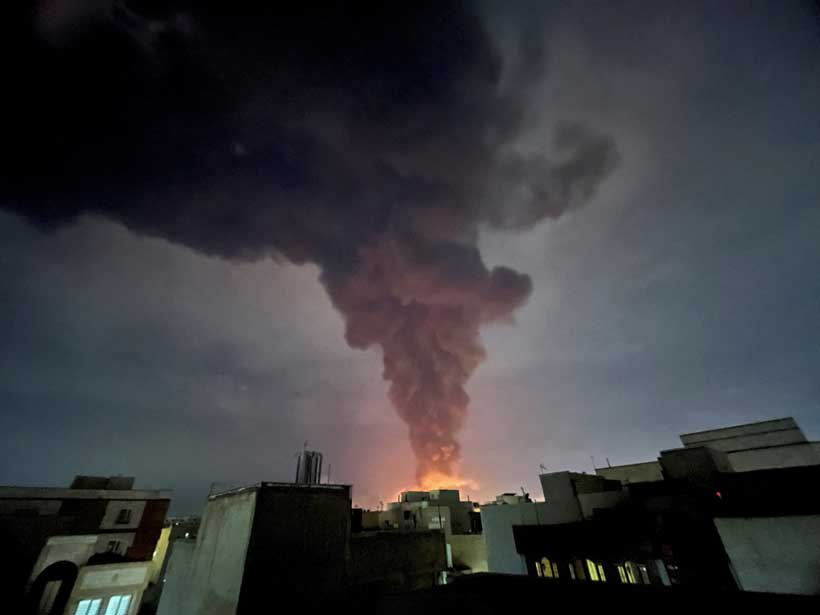
As clerics selected the new supreme leader, a dark haze hung over Tehran after Israel struck five oil facilities in and around the capital city overnight, setting them ablaze and filling the skies with acrid smoke.
As the war extended into its ninth day, the IRGC said they had enough supplies to continue their drone and missile attacks across the Middle East for up to six months.
IRGC spokesman Ali Mohammad Naini said Iran had so far used only first- and second-generation missiles, but would use “advanced and less-used long-range missiles” in the coming days.
Trump again refused to rule out sending American ground troops into Iran, but continued to insist that the war was all but won, despite the ongoing Iranian missile and drone strikes.
Analysts warn there is no clear path to ending the conflict, which US and Israeli officials say could last a month or longer.
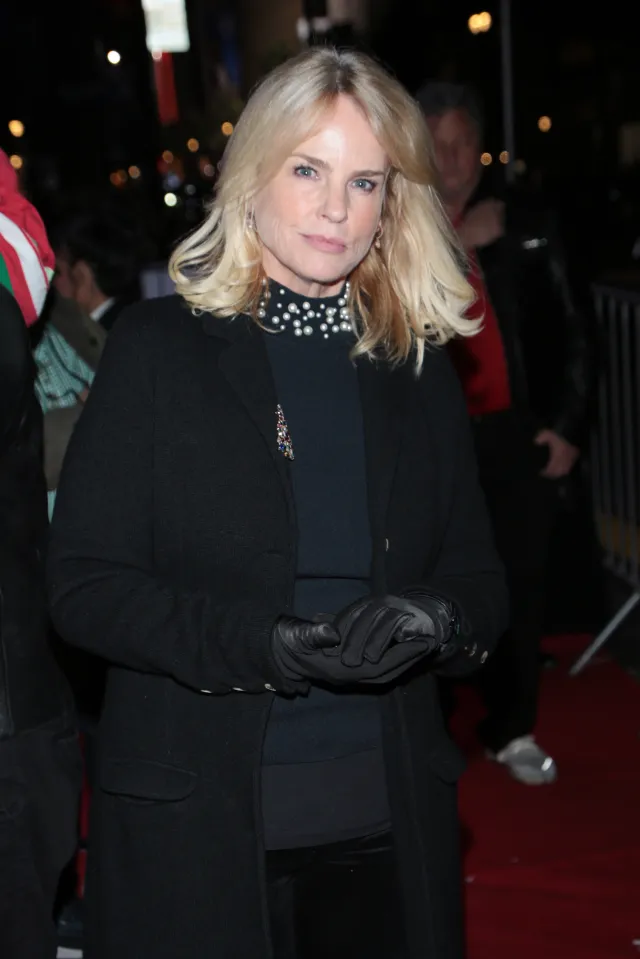
“I know from above she’s looking down on all of us with her beautiful smile. Rest in peace our Jenn.”
Erin Murphey wrote: “So sad to share that my friend Jennifer Runyon Corman has passed away after a brief battle with cancer.
“Some people you just know you’ll be friends with before you even meet. She was a special lady. I’ll miss you Jenn.
“My thoughts are with your family and beautiful children.”
Jennifer made her movie debut in the 1980 horrorfilm To All a Goodnight, taking on the lead role of Nancy.
She then took on a role as Sally Frame in the American soap Another World, acting in the series until 1982.
The beloved Ghostbusters film, which featured Bill Murray, Dan Aykroyd and Sigourney Weaver, Jennifer acted in the opening scene as a student involved in an ESP experiment.
Her television career included guest appearances in Murder, She Wrote as well as roles in Magnum PI and Beverly Hills.
Jennifer’s final role was in the 2017 comedy horror film Bloodsucka Jones vs. The Creeping Death.
During the 2019 documentary, Remembering Ghostbusters, Jennifer appeared to discuss her most notable role.
The actresses’ grieving family announced the heartbreaking news on social mediaCredit: Getty Images
Customers visit a bank branch in Seoul, South Korea. Photo by YONHAP / EPA
March 8 (Asia Today) — South Korea plans to introduce a cap on student living expense loans after some university students began using the low-interest funds for stock and cryptocurrency investments.
The Korea Student Aid Foundation said the new loan cap system is expected to take effect next semester to reduce the risk of excessive borrowing among young people.
The agency currently offers living expense loans to undergraduate and graduate students at a fixed interest rate of 1.7%, significantly lower than typical commercial lending rates of about 3% to 4%.
Students who complete at least 12 credits in the previous semester and maintain an average grade of 70 or higher can apply. Borrowers may receive up to 2 million won ($1,490) per semester and are not required to provide documentation explaining how the funds are used.
Some students have used part of the loans as investment capital.
A 26-year-old student at Hankuk University of Foreign Studies said he invested part of his loan in semiconductor stocks.
“The interest rate is around 1% a year, so the burden is small,” he said. “If the investment return is higher than the interest, I felt there was no reason not to try.”
Another student at a four-year university in Jeju said he had previously invested loan funds in bitcoin during a price surge and made a profit. He said he continues to look for investment opportunities while stock markets remain strong.
Experts say the trend reflects both speculative investment behavior and financial pressures faced by young people.
Kim Dae-jong said the loans were originally intended to help students focus on their studies.
“Living expense loans are a public financial program designed to provide minimum support so students can concentrate on school,” Kim said. “Using them as investment funds is far removed from the program’s purpose.”
Loan delinquencies have also increased. According to the foundation, overdue balances rose from 19.2 billion won ($14.3 million) in 2021 to 38.7 billion won ($28.8 million) last year.
The number of delinquent borrowers nearly doubled during the same period, rising from 4,271 to 8,126.
Officials said most students still use the loans for living expenses and academic needs, but financial education programs are required before borrowers apply.
Students must complete an online financial education course that explains repayment obligations and the risks of excessive borrowing.
The foundation said the upcoming loan cap system aims to prevent excessive debt among students, since the loans must eventually be repaid after graduation.
Middle Eastern crises seldom stay localized. They frequently go well beyond the battlefield in terms of politics, strategy, and psychology. Officials in Beijing, Moscow, Taipei, and Kyiv will be keeping a tight eye on events surrounding Iran today, in addition to those in Tehran, Washington, and Tel Aviv. Power perceptions are shaped by situations like this, and in international politics, perception can be almost as important as actual power.
The current state of affairs presents an unsettling question for China and Russia. A large-scale military operation against a prominent regional actor will unavoidably send signals about the balance of power in the international system if it continues without significant opposition from other big states. The Middle East is not where those signals will end. They will visit other geopolitical hotspots, like Taiwan and Ukraine, where credibility is crucial to deterrence.
Iran has progressively evolved into more than simply another diplomatic friend in Beijing’s eyes. It now plays a part in China’s larger Eurasian economic and strategic strategy. Beijing has been building energy and transportation networks that connect western China to the Arabian Sea through projects like the China-Pakistan Economic Corridor. Chinese planners considering long-term energy security have taken note of the geographical proximity of the Pakistani port of Gwadar to Iran’s Jask Oil Terminal.
Beijing has long sought variety, which these lines provide. Chinese strategists have been concerned about dependence on maritime chokepoints like the Strait of Hormuz and the Strait of Malacca for decades. The energy lifelines of the second-largest economy in the world could be threatened by any interruption there. Iran fits into China’s attempt to lessen that vulnerability because of its location and resources. Trade in energy has already strengthened ties between the two nations. Iran has quietly emerged as a major supplier of cheap crude to China in spite of U.S. sanctions. Both nations are able to avoid some aspects of the Western financial architecture since many of those transactions go through China’s Cross-Border Interbank Payment System and are settled in renminbi.
However, the partnership has grown beyond oil. Beijing and Tehran signed a long-term strategic agreement in 2021 with the goal of working together on infrastructure, energy, and technology for decades. Later, China backed Iran’s admission to groups like BRICS and the Shanghai Cooperation Organization. Then came a diplomatic surprise: Beijing assisted in mediating the reestablishment of ties between Saudi Arabia and Iran in 2023, a development that surprised many Western observers.
Taken together, these actions indicated a significant development. China was starting to portray itself not only as a regional economic force but also as a diplomatic player with the ability to influence its political environment.
That ambition makes the current moment particularly sensitive for Beijing. Governments in the Middle East and a large portion of the Global South frequently evaluate great powers based on their actions during times of crisis rather than their words during times of peace. Some capitals may discreetly reevaluate how reliable such support would be in an actual security crisis if China seems unwilling to protect the strategic environment surrounding its alliances.
The ramifications go well beyond Iran. Chinese officials have made it clear time and time again that they would not support Taiwan’s formal independence efforts and will not allow outside meddling in the Taiwan Strait. The legitimacy of those warnings is just as important to deterrence as military prowess. Some Washington policymakers may assume that China is unlikely to take more aggressive action in other areas if Beijing’s response to significant geopolitical shocks involving its partners primarily consists of diplomatic criticism.
Russia faces a different—but no less consequential—set of calculations. Moscow has positioned itself as a major Middle Eastern political mediator for the majority of the last ten years through its military engagement in Syria. Russian soldiers established a key base on the Mediterranean coast and assisted in stabilizing Bashar al-Assad’s regime starting in 2015. From such a vantage point, Moscow participated in almost all meaningful discussions regarding the future of the area.
However, that impact has been diminished. The political landscape has drastically changed as a result of the fall of the Syrian government and the growing power of actors supported by the West in Damascus. In addition to losing a strategic ally, Russia has also lost a significant portion of the regional clout it developed over the course of almost 10 years of diplomatic and military engagement.
In that context, Iran now occupies a far more important place in Moscow’s strategic thinking than it once did. Defense and energy cooperation are two areas where the two nations’ relationship has grown. Iranian drones have contributed to Russia’s military actions in Ukraine, establishing a clear connection between the conflict in Eastern Europe and events in the Middle East. The message would reverberate much beyond the immediate battlefield if Iran were to sustain a significant military defeat at the hands of a concerted operation by the United States and Israel. While opposing major powers stayed mostly on the sidelines, observers from all around the world would see that Washington still had the capability to change regional dynamics.
These impressions build up in geopolitics. Credibility develops gradually, frequently over years, but it can deteriorate rapidly. Some governments may start to doubt the geopolitical benefit of aligning with Moscow if Russia seems incapable—or unwilling—to react when a close ally is under severe strain. However, competing nations might feel more confident to test Russian interests in other disputed areas, such as the Black Sea or Ukraine. However, Moscow’s choices are far from straightforward. In order to lessen the impact of Western sanctions, Russia has been fostering stronger commercial connections with a number of Gulf governments in recent years. Openly supporting Iran might make those relations more difficult. But staying completely silent runs the danger of conveying a contrary message: that when tensions rise, Russian alliances provide little strategic defense.
It seems unlikely that either China or Russia will move quickly to engage in direct combat. There would be significant risks of escalation. However, great-power competition seldom relies solely on choices made on the battlefield. There are plenty of other ways to be influential. Both nations have permanent seats in the UN Security Council. They can guarantee that any military action is politically disputed on the international scene by imposing debates, contesting legal justifications, and introducing resolutions, even symbolic ones. Beyond the Security Council, diplomacy is also important. Sovereignty and non-intervention have long been valued in nations like South Africa, Brazil, and India. Even if it doesn’t instantly change the situation on the ground, coordinated pressure from a larger group of states could influence how the issue is portrayed worldwide.
Another option is economic levers. The energy markets continue to be extremely vulnerable to geopolitical shocks. Major exporters continue to have the power to affect supply and pricing decisions by working with producers in organizations like OPEC+. Even little changes can serve as a reminder to the globe that regional conflicts have far-reaching economic repercussions. Great powers are also capable of sending quieter signals. Regional balances are not changing in isolation, as seen by intelligence collaboration, defensive technology transfers, and conspicuous naval deployments in nearby waterways. These actions convey that other important actors are keeping a close eye on them even while they avoid open confrontation.
Ultimately, this moment’s significance goes well beyond Iran. Expectations about how power functions in the international system are gradually shaped by incidents such as these. The precedent starts to take hold if armed action consistently reshapes regional orders without significant opposition from opposing nations. That precedent unavoidably affects Taiwan’s future for China. For Russia, it relates to both the larger security balance throughout Europe and the continuing conflict in Ukraine. Credibility is crucial in both situations.
Moments like this become inevitable tests if Beijing and Moscow want to maintain an international system where power is more widely spread. It is not always necessary to escalate conflict in order to respond. It often involves proving that significant changes in regional power will not happen completely unchallenged through diplomacy, economic pressure, and strategic signaling. There is meaning in silence as well. In places far from the Persian Gulf, how Tehran interprets that silence now could influence strategic decisions tomorrow.
NAOMI WATTS watched on proudly as her daughter showcased her model behaviour at Paris Fashion Week.
Rising fashion star Kai Schreiber – who came out as transgender last year – stole the spotlight as she towered over her Hollywood star mum at the Balenciaga show on Saturday.
Sign up for the Showbiz newsletter
Thank you!
Naomi Watts supported daughter Kai Schreiber at Paris Fashion WeekCredit: GettyThe duo wore matching black ensemblesCredit: Getty
Wearing a sharp tailored two-piece teamed smokey eye make-up, 17-year-old Kai made an impact with her striking look.
Proud mum Naomi, 57, wore a matching black ensemble as she supported her daughter, who has been feted as a future top model.
Also on the runway was Rebel Yell punk star Billy Idol, 70, who had on a tasseled black leather poncho.
US model Paris Jackson, 27 — daughter of late pop star Michael — was also spotted in black outside her hotel.
Kai made her fashion runway debut atParis Fashion Weeklast year by walking for Valentino.
Kai’s parents have both conquered Hollywood and are known for TV and film.
Naomi and Liev – who also have son called Sasha, 17 – were together for 11 years before they amicably split in 2016.
Liev has since married Taylor Neisen, while Naomi went on to wed Billy Crudup.
Naomi often shares how proud she is of her daughter, in sweet posts on Instagram.
When the teenager turned 16, her mum penned a heartfelt message to her.
“Darling Kai. Happy sweet sixteen. Your sweetness is pure and I’m the luckiest mommy in the world and that world is SO lucky that you are here!” the proud mum wrote.
“You blow me away with your wild spirit, strength and yes your soft sweetness too. You even let me post a baby picture!
“I thank my lucky stars I get to be your mom [sic]. I Love you to the moon.”
Paris Jackson was also spotted in black outside her hotelCredit: SplashBilly Idol walked the runway in a tasseled black leather poncho.Credit: Getty
Crude oil prices rise by as much 20 percent as sprawling regional conflict threatens global energy supplies.
Published On 9 Mar 20269 Mar 2026
Share
Oil prices have surged past $100 a barrel for the first time since Russia’s invasion of Ukraine, amid the widening fallout of the United States and Israel’s war on Iran.
Brent crude, the global benchmark, rose by as much as 20 percent on Sunday, topping $111 a barrel, as fears grew of prolonged disruption to global energy supplies.
Recommended Stories
list of 4 itemsend of list
US President Donald Trump, who campaigned heavily on cost-of-living concerns in the 2024 election, brushed off the surge.
“Short term oil prices, which will drop rapidly when the destruction of the Iran nuclear threat is over, is a very small price to pay for U.S.A., and World, Safety and Peace,” Trump said in a post on Truth Social.
“ONLY FOOLS WOULD THINK DIFFERENTLY!”
Crude oil prices have surged by about 50 percent since the US and Israel launched joint strikes on Iran on February 28.
Iranian threats and attacks in response have brought an effective halt to shipping in the Strait of Hormuz, a conduit for about one-fifth of the global oil supply.
Iraq, the United Arab Emirates and Kuwait, three of the biggest producers in The Organization of the Petroleum Exporting Countries (OPEC), have been forced to cut production amid dwindling crude storage capacity due to the collapse of shipping through the waterway.
Iran and Israel have also launched strikes on key energy facilities in Iran amid the sprawling regional conflict.
Stocks in Asia fell sharply on Monday morning, as investors braced for the fallout of rising energy prices.
Japan’s Nikkei 225 plunged about 6 percent in early trading, while South Korea’s KOSPI tumbled nearly 7 percent.
US stock futures, which are traded outside regular market hours, also saw substantial losses.
Futures tied to Wall Street’s benchmark S&P 500 were down by 1.7 percent, while those for the tech-heavy Nasdaq Composite fell by 1.90 percent.
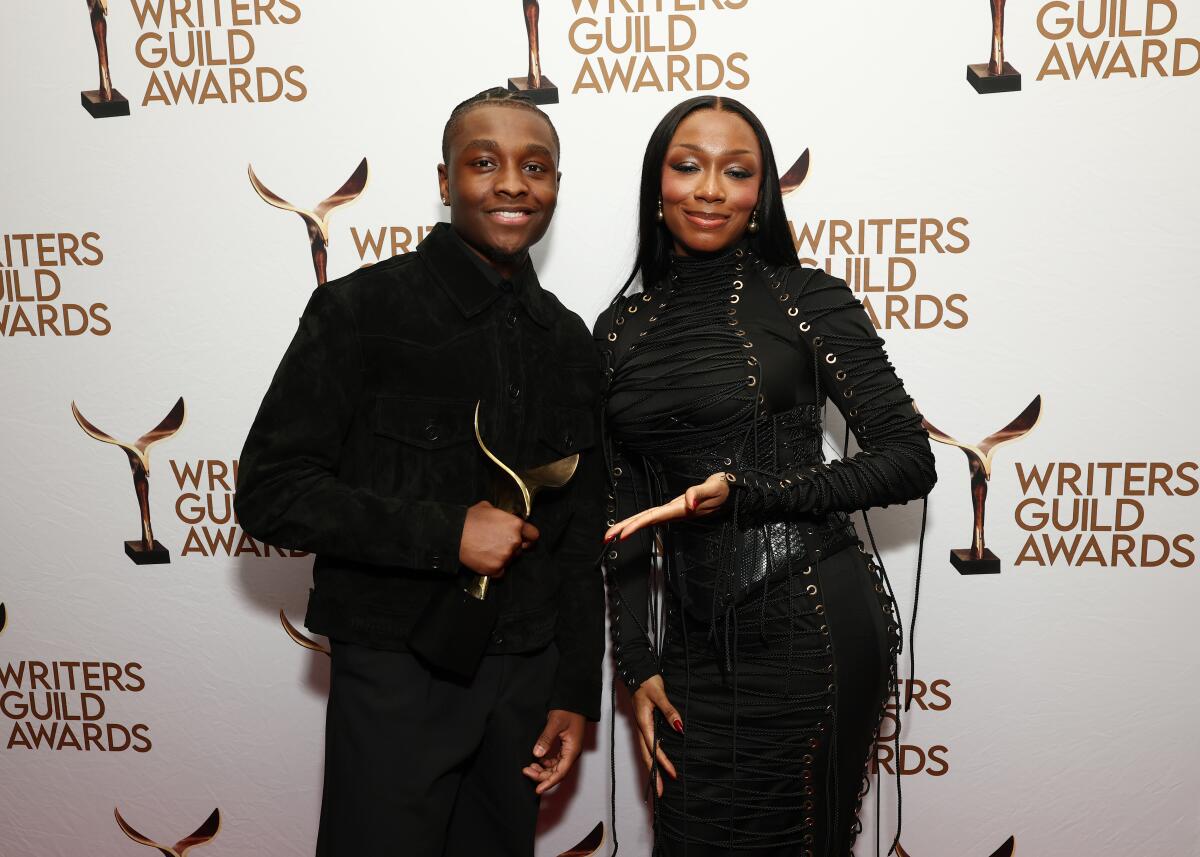
The already highly decorated “Sinners” was among the top winners at the 78th Writers Guild Awards on Sunday in New York City.
The Ryan Coogler-directed horror film won the award for original screenplay, and its primary Oscars best picture opponent, Paul Thomas Anderson’s “One Battle After Another,” clinched the win for adapted screenplay. “Sinners” star Miles Caton accepted the award for the former, and “One Battle” cast member Shayna McHayle for the latter.
“Sinners” star Miles Caton and “One Battle After Another” actor Shayna McHale accepted the awards for original and adapted screenplay, respectively.
(Cindy Ord / Getty Images for Writers Guild of America East)
In the TV realm, “The Pitt” made a splash with awards for drama series, new series and episodic drama.
As for lifetime achievement honors, Robert Smigel presented Stephen Colbert with the Walter Bernstein Award for critiquing the power elite on his late-night show, which will air its final episode in May. Terry George received the Ian McLellan Hunter Award for Career Achievement from Don Cheadle, and Diana Son the Richard B. Jablow Award for Devoted Service to the Guild from last year’s recipient, Kathy McGee.
Most years, the Writers Guild holds simultaneous ceremonies in New York and Los Angeles. But the East Coast edition became a solo affair after WGA West canceled its ceremony amid an ongoing strike by its own staff union, who claimed guild management had “surveilled workers for union activity, terminated union supporters, and engaged in bad faith surface bargaining.”
The L.A. ceremony was set to honor James Cameron with the Laurel Award for Screenwriting Achievement, Don Reo with the Paddy Chayefsky Laurel Award for Television Writing Achievement and Mstyslav Chernov with the Paul Selvin Award for “2,000 Meters to Andriivka,” which won the award for documentary screenplay Sunday evening.
While WGA West’s board of directors said the ceremony was postponed to give members “an uncomplicated celebration of their achievements,” the Writers Guild Staff Union characterized the cancellation as an attempt to sow division between management and unionized staff, which is ill-timed given upcoming contraction negotiations between the WGA and the Alliance of Motion Picture and Television Producers, which represents Hollywood studios and streamers. In 2023, the WGA went on its longest-ever strike, lasting 148 days.
Comedian and Emmy-nominated producer Roy Wood Jr., who this year hosted the WGA’s East Coast ceremony for the third time, during his opening monologue offered (in jest) his predictions for the negotiations, which begin later this month.
“First, I predict somebody’s gonna lose their s—,” the host said. “Cooler heads are gonna prevail, and then somebody else is gonna lose their s—.”
Here is the full list of Writers Guild Award winners:
Original screenplay: “Sinners,” written by Ryan Coogler; Warner Bro. Pictures
Adapted screenplay: “One Battle After Another,” screenplay by Paul Thomas Anderson, screen story by Paul Thomas Anderson, inspired by the novel “Vineland” by Thomas Pynchon; Warner Bros. Pictures
Documentary screenplay: “2,000 Meters to Andriivka,” written by Mstyslav Chernov; Frontline Features
Drama series: “The Pitt,” written by Cynthia Adarkwa, Simran Baidwan, Valerie Chu, R. Scott Gemmill, Elyssa Gershman, Joe Sachs, Noah Wyle; HBO Max
Comedy series: “The Studio,” written by Evan Goldberg, Alex Gregory, Peter Huyck, Frida Perez, Seth Rogen; Apple TV
New series: “The Pitt,” written by Cynthia Adarkwa, Simran Baidwan, Valerie Chu, R. Scott Gemmill, Elyssa Gershman, Joe Sachs, Noah Wyle; HBO Max
Limited series: “Dying for Sex,” written by Sheila Callaghan, Harris Danow, Madeleine George, Elizabeth Meriwether, Amelia Roper, Kim Rosenstock, Sasha Stewart, Sabrina Wu, Keisha Zollar; FX/Hulu
TV & Streaming Motion Pictures: “Deep Cover,” written by Derek Connolly and Colin Trevorrow; Prime Video
Animation: “Shira Can’t Cook” (“Long Story Short”), written by Mehar Sethi; Netflix
Episodic drama: “7:00 A.M.” (“The Pitt”), written by R. Scott Gemmill; HBO Max
Episodic comedy: “Prelude” (“The Righteous Gemstones”), written by John Carcieri, Jeff Fradley, Danny R. McBride; HBO Max
Comedy/variety series – talk or sketch: “Last Week Tonight with John Oliver,” senior writers: Daniel O’Brien, Owen Parsons, Charlie Redd, Joanna Rothkopf, Seena Vali; writers: Johnathan Appel, Ali Barthwell, Tim Carvell, Liz Hynes, Ryan Ken, Sofía Manfredi, John Oliver, Taylor Kay Phillips, Chrissy Shackelford; HBO Max
Comedy/variety specials: “Marc Maron: Panicked,” written by Marc Maron; HBO Max
Quiz and audience participation: “Celebrity Jeopardy!”, head writer: Bobby Patton; writers: Kyle Beakley, Michael Davies, Terence Gray, Amy Ozols, Tim Siedell, David Levinson-Wilk; ABC
Daytime drama: “The Young and the Restless,” associate head writers: Jeff Beldner, Marla Kanelos, Dave Ryan; writers: Susan Banks, Amanda L. Beall, Marin Gazzaniga, Rebecca McCarty, Madeleine Phillips; CBS/Paramount+
Children’s episodic, long form and specials: “When We Lose Someone” (“Tab Time”), written by Sean Presant; YouTube
Short form streaming: “The Rabbit Hole with Jimmy Kimmel,” writers: Jimmy Kimmel and Jesse Joyce; YouTube
Documentary script – current events: “Trump’s Power & the Rule of Law” (“Frontline”), written by Michael Kirk and Mike Wiser; PBS
Documentary script – other than current events: “Forgotten Hero: Walter White and the NAACP” (“American Experience”), written by Rob Rapley; PBS
News script – regularly scheduled, bulletin or breaking report: “Devastating Flooding in Texas” (“World News Tonight with David Muir”), written by David Muir, Karen Mooney and Dave Bloch; ABC News
News script – analysis, feature or commentary: “Remembering Palestinian Journalists Killed by Israeli Forces” (“Ayman”), written by Lisa Salinas; MSNBC
Digital news: “An Isolated Boarding School Promised to Help Troubled Girls. Former Students Say They Were Abused.,” written by Sebastian Murdock and Taiyler Mitchell; HuffPost
Radio/audio documentary: “Jerry Lewis’ Lost Holocaust Clown Movie” (“Decoder Ring”), written by Max Freedman; Slate
Radio/audio news script – regularly scheduled, bulletin or breaking report: “ABC News Radio Top of the Hour News”, written by Robert Hawley; ABC News Radio
Radio/audio news script – analysis, feature or commentary: “The Life and Legacy of Jimmy Carter,” written by Gail Lee; CBS News Radio
On air promotion: “CBS Comedy,” written by Dan Greenberger; CBS
Times staff writers Stacy Perman and Cerys Davies contributed to this report.
Marches on 115th anniversary of IWD place focus on issues like US-Israeli war on Iran and Donald Trump’s links with sex offender Jeffrey Epstein.
Thousands of demonstrators have taken to the streets around the world to mark International Women’s Day, taking a stand on a number of issues including the US-Israeli war on Iran and gender-based violence.
In Spain, where the government drew the ire of the United States for refusing to allow it to use Spain’s military bases for strikes against Iran, thousands of women took to the streets of major cities to call for an end to the war.
Recommended Stories
list of 3 itemsend of list
“It is within our power to stop the war, to stop the barbarity, and to win rights,” said Yolanda Diaz, Spain’s second deputy prime minister. “We proclaim ourselves in defence of peace, in defence of the Iranian people, in defence of Iranian women.”
On the first day of the joint US-Israeli war on Iran, strikes on a primary school in the city of Minab killed 165 girls, most between the ages of seven and 12, during class hours – the deadliest single attack on civilians so far.
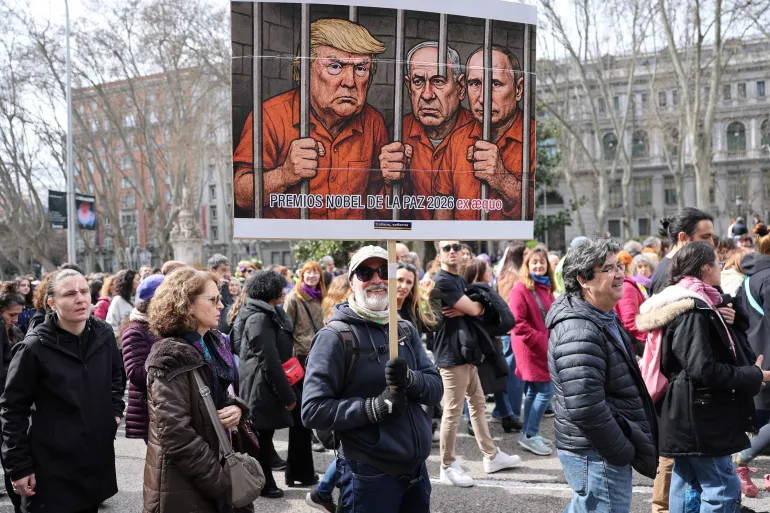
A banner mocks US President Donald Trump, Israeli Prime Minister Benjamin Netanyahu and Russian President Vladimir Putin at an International Women’s Day rally in Madrid, Spain on March 8, 2026 [Thomas Coex/AFP]
In France, where more than 150 demonstrations were held, 73-year-old rape survivor Gisele Pelicot led a march calling for an end to sexual violence, telling a crowd in Paris, “We won’t give up”.
Pelicot became a global symbol in the fight against sexual violence after she waived her right to anonymity during the 2024 trial of her ex-husband and dozens of strangers who raped her while she was unconscious.
Across the Atlantic, activists gathered at Zorro Ranch in the US town of Albuquerque, New Mexico, where the late convicted sex offender Jeffrey Epstein is alleged to have sexually abused and trafficked underage girls and young women.
“The years-long cover-up and protection of Jeffrey Epstein’s allies and co-conspirators exposed a culture of impunity that tells survivors their pain is negotiable when powerful men are involved,” said Rachel O’Leary Carmona, executive director of Women’s March.
In New York, protesters gathered outside Trump Tower for a “Believe Survivors” demonstration after this week’s publication of FBI documents by the US Justice Department describing interviews with a woman who alleged President Donald Trump sexually assaulted her when she was a minor.
People protest outside Trump Tower during a ‘Believe Survivors’ demonstration against US President Donald Trump and the late convicted sex offender Jeffrey Epstein on International Women’s Day in New York City, on March 8, 2026 [Angelina Katsanis/Reuters]
In Puyo, an Amazonian town in Ecuador, members of various Indigenous groups gathered to raise their voices about the degradation of the environment, and oil and gas expansion. “We want to live in a healthy environment and in harmony with the forest, so we are asking for respect and that public policies for nature are put in place,” said Ruth Penafiel, 59, from the Kichwa community in the northern Amazon.
In Brazil, Sunday’s marches channeled outrage over the alleged gang rape of a 17-year-old girl in Rio de Janeiro’s Copacabana neighbourhood in January. The case gained national attention this week when four suspects handed themselves over to authorities.
A woman with tape reading ‘living is my right’ over her mouth takes part in a march marking International Women’s Day on Copacabana beach in Rio de Janeiro, on March 8, 2026 [Silvia Izquierdo/AP]
In Pakistan’s capital, Islamabad, police briefly detained several women’s rights activists attempting to hold a rally in defiance of a government ban on public gatherings imposed amid a surge in militant violence in the country. Aurat March, a network of women’s rights activists, condemned the crackdown, saying participants had been peacefully exercising their right to protest.
Women’s rights activists shouted slogans during a protest in Istanbul, Turkiye. In China and Russia, vendors sold flowers wrapped in pink. And in Phnom Penh, Cambodia, local workers lifted fists and umbrellas as they celebrated.
International Women’s Day, officially recognised by the United Nations in 1977, marks its 115th anniversary this year.
Author Diana Gabaldon knew readers had been mentally casting the timeless main couple at the center of her “Outlander” book saga since the first novel’s release in the early ‘90s — particularly its leading man, a tall and burly Scottish Highlander with striking red hair. She recalls a 50-year-old German actor who, she says, “always looked like he’d been dipped in cooking oil” among the imaginary candidates. Another was a 5-foot-4-inch race car driver. She quickly learned not to weigh in.
“They would keep asking me who I’d like to play Jamie — ‘Nobody,’ I kept saying because on the rare occasion when I mentioned some possibility, the immediate response would be shrieks of dismissive outrage and heapings of scorn that went on for days (online),” she says over email. Besides, she felt the whole notion of considering prospects was pointless because, as she puts it, it’s not like Hollywood would want to adapt a 300,000-word book anyway.
However, Ronald D. Moore and Maril Davis, longtime collaborators through their Tall Ship Productions banner under Sony Pictures Television, did. And Gabaldon was thrust back into the casting debacle, watching test videos and learning not to judge a book by its cover — or actors (in this case, Sam Heughan and Caitriona Balfe) by the photos that pop up in a Google search: “Sam doesn’t look like Jamie, and Caitriona doesn’t look like Claire, but both of them can be those people, and that’s all that matters,” she says. And they were those people.
In 2014, the duo brought to the screen the epic story of Claire Randall, a British combat nurse who is mysteriously transported back to 1743 Scotland and marries Scottish warrior Jamie Fraser to survive. Together, they ignite a passionate romance that traverses decades and endures brutal separations, wars and time travel. After spinning its own sweeping narrative for more than a decade, the Starz series is launching its eighth and final season on Friday.
In “Outlander,” Claire Randall (Caitriona Balfe) is a British combat nurse who is mysteriously transported back to 1743 Scotland and marries Scottish warrior Jamie Fraser (Sam Heughan) to survive.
(Ed Miller / Starz)
And it won’t exactly be a by-the-book ending. The final season pulls from the remaining material in Book 8, as well as Book 9 — Gabaldon is working on a 10th installment, “A Blessing for a Warrior Going Out” — leaving Matthew B. Roberts, the showrunner, and the writing team to craft an original ending for television. In a signal of how much pressure there was to do right by the beloved fictional couple, four endings were written and filmed.
“Diana’s been involved since Day 1 — she reads everything, she sees everything,” Roberts said by video conference. “I told all the endings that were going to be written. She briefed me a little bit of where she might be going, not the ending of the books, but just where the book might be going. I wanted to at least incorporate some of that in some of the endings that were written.”
Can it be anything other than a happy ending? Maybe the clue is in “I Love Lucy.” Lucy and Ricky Ricardo‘s love story was often a reference point for Roberts throughout his time on “Outlander.”
“No matter what trouble Lucy got in, no matter what she was doing, never did you think they were ever going to break up,” he says. “That’s Jamie and Claire, no matter what happens, no matter what he goes through or what she goes through, no matter what trouble or what they tell each other sometimes, we’ll never think they break up. And the audience knows that too, and we knew, if you just stayed true to that, then that love story would be successful.”
Ahead of the show’s final season premiere, The Times spoke with Balfe and Heughan to get their thoughts on bringing the historical romance to life and the journey to reach the final chapter.
In the spirit of the Season 8 premiere, which has a moment where Claire and Jamie reflect on the early days of their story, let’s travel back in time. Do you remember how this series was first presented to you and what went through your mind?
Balfe: I think the logline I saw was “nurse goes back to Scotland and then goes back 200 years in time and meets a Highlander.” I think I had two lines. That was all I had.
Heughan: It sounded like it was never gonna work. I found out it was a book series, and I think we both read it, didn’t we?
Balfe: Yeah, I read the book in four days before we tested. You’d already been cast at that point … I was living in L.A. I had tiny bit parts in a few films, and I was definitely struggling. I had booked to go on a trip to India, sent my passport into the Indian embassy. Of course, that’s exactly when I found out that maybe I had to travel to London for this test.
Heughan: At the time, I had failed attempts at pilot season, and I was back in London working in a bar and thinking, “I can’t afford to do this and I’m 34 years old. I should probably think about giving up.” Because there was no way I could support myself. I wasn’t loving it.
Balfe: You were 33, by the way.
Heughan: Oh, yes. I was younger. Then this thing came through. And actually, to be honest, the logline and perhaps the dialogue, when I read it, I just thought, “I know this guy.” There just was something very familiar.
“At the time, I had failed attempts at pilot season, and I was back in London working in a bar and thinking, ‘I can’t afford to do this and I’m 34 years old. I should probably think about giving up,’” says Heughan.(Sophia Spring / For The Times)
Tell me about the decision to say goodbye to this show and these characters. Does it feel like the right time?
Balfe: By the time we got to Season 7, that was our last season that we were contracted for, and there were conversations going around that they — the writers — felt that they had eight seasons [for this story]; that that was sort of an organic finish to it. But we were more than halfway through Season 7 before anyone came to talk to us. Actually, we had all scripts, bar the last two. And it wasn’t ending. Before they came to us, it was like, “How is this gonna happen? Are they going to wrap it up in two episodes or are they coming to us?” It was a lot of pressure in a very short amount of time to decide, “OK, do we just wrap this up in two episodes or do we try and give it a season to properly say goodbye?” There’s a lot of people’s jobs, and there’s a lot of people’s livelihoods, and there’s a whole ecosystem around it. We felt that it needed that kind of time.
Heughan: A lot of thought went into it. I think we were ready to move on or do something else. But also, there was this itch, like we hadn’t finished it and it didn’t feel satisfying for us and for the fans. We wanted to come back and really tie it up properly.
The final season focuses on Claire and Jamie’s struggles during the Revolutionary War, with the war having followed them home. What intrigued you about this final onscreen chapter of their story?
Heughan: Jamie’s concerned about himself in the foremost because he has this information that he’s going to die. But they’ve fought for eight seasons to stay together and to protect everyone they love and the greater community and I think that continues, but there’s so many more distractions or more challenges along the way in this season from the inside.
Balfe: And the Revolutionary War has been circling them for a very long time. It was time for the culmination —
Heughan: [Laughs] Instead of saying “War is coming,” it’s “War is here.’
“There’s a lot of people’s jobs, and there’s a lot of people’s livelihoods, and there’s a whole ecosystem around it. We felt that it needed that kind of time,” says Caitriona Balfe, right, with Sam Heughan, about finishing the “Outlander” story with an eighth season.
(Sophia Spring / For The Times)
The fandom around this property is active and devoted. There’s good that can come from that — the engagement, the creativity — but some bad too, like when things get toxic. What was the learning curve of playing this beloved fictional couple and navigating the fandom?
Balfe: It was a bit of a baptism of fire.
Heughan: We were both quite green when we were thrust into it and engaged wholeheartedly.
Balfe: The landscape is very different. Twitter was Twitter before it was death pit, Instagram was far more innocent as well. In the beginning, it was really nice. I wasn’t a mom. I had loads of time on my hands — well, not really, because we were shooting all the time — but anytime I did, it used to be nice and we would do these quick Q and As. That one-on-one connection with the fans was really, really lovely. I do think there was a moment where … the tide shifted, and this sort of shipper-dom got very intense. I was getting married, and that was having an impact on the people in my life and and I think I had to then step away because I was like, “OK, this doesn’t feel good for everyone in my life.”
Heughan: Look, I think it’s still there. It is a strange one to get your head around. People, in one way, are uber fans of the show, but in other ways, they’re overtly intrusive in your life. But it is a small minority. I think … perhaps we’ve done our job that well? It’s not just about Jamie and Claire, it’s about that person behind it and their life behind it, and their family behind it, that people want to get invested in. I don’t know if it’s a great thing for actors, to be honest, but in this current environment, we’re always asked to give more of ourselves to engage with fans, but it’s been something we’ve had to learn on the job.
Balfe: And I think there are times in your life when you have more capacity to be more open, and there’s times in your life where you need to shut off a little bit more. The overall reception from the fans have been so positive and so supportive of things that we’ve done in our lives, and that is the thing that I choose to focus on with it.
“Outlander” isn’t strictly a romance, but that’s what gives it power. You’ve spent more than a decade in this space. What have you learned about how that romance space functions and what the fans seek from these stories?
Balfe: I was sort of unaware of the need and the appetite that people have for it. Nowadays it’s served an awful lot better, but I think it was an underserved demographic. Or it was not given the due that people needed. It’s sometimes looked on as the second-class citizen of storytelling, in many ways, but I think it’s a genre that allows you to really look at the beauty of humanity and … the core things that we care about, which is love and family and connection.
Heughan: And comfort. It’s comforting. This show proves that there’s a real appetite.
Balfe: There’s many more shows now. Everybody’s talking about “Heated Rivalry.” There’s “Bridgerton.” Maybe it’s the emancipation of women in the last 50 years. It’s like they are finally like, “Well, we want our TV that speaks to us as sexual beings and as mothers and as matriarchs and as professionals and whole round of people.” Our show did that a lot.
“There’s many more shows now,” Balfe says of series that serve up romance. “Everybody’s talking about ‘Heated Rivalry.’ There’s ‘Bridgerton.’ It’s like they are finally like, ‘Well, we want our TV that speaks to us as sexual beings and as mothers and as matriarchs and as professionals and whole round of people.’ Our show did that a lot.”(Sophia Spring / For The Times)
Have you taken stock of just how much Claire and Jamie have gone through as a couple?
Balfe: How many near-death experiences?
Heughan: Yeah, how many times they’ve nearly died or been attacked or assaulted.
Balfe: How many people they’ve killed. Claire, she’s like a serial killer.
I was wondering, because it’s the last season, you can’t get in trouble now, where would Caitriona or Sam have called it quits in this relationship? Like, this is too much, I need to move on.
Balfe: I don’t know if Caitriona would have gone back 200 years in time.
Heughan: When she fixes his shoulder — that’s pretty painful. She gets him in a lot of trouble and he puts himself in a lot of trouble. I wouldn’t have gone past Episode 1 [he mumbles].
Balfe: See! I would have gone to Season 3.
Heughan: No, I think when he sends her through the stones and is like, “That’s it. She’s gone.” But she keeps coming back. I thought I got rid of her, finally!
Caitriona, you make your directorial debut on the show this season with Episode 2. Tell me about that experience.
Balfe: It was so fun. They gave me Episode 2, which allowed me to do my prep before we started. I was so lucky that Jan Matthys, who is the director of Episode 1, was an incredible mentor to me throughout the process. I just got to work with these guys in a totally new way, which was so amazing. I was buzzing. The whole first 10 weeks [of this season] felt like the very first 10 weeks again because you’re learning all these new skills and you’re just in such high operating point; you have to make decisions on the fly, I was also in scenes. It was just mad, but brilliant.
Heughan: You were also probably happy to take the corset off.
Balfe: To be able to walk around in proper wet weather gear and trousers and be able to go to the bathroom — not to be TMI, but it was so good.
They did not give me the easiest episode. Every day had its thing — obviously, the bear attack sequence. Three days before we were filming that, that was a cougar; we were going to have a live cougar. There was a whole thing planned. And a cougar attacks in a very different way than a bear does. So my whole shot list had to go out of the window and I had to rethink the whole thing. But that was kind of fun.
The final season of “Outlander” focuses on Claire (Balfe) and Jamie’s (Heughan) struggles during the Revolutionary War, with the war having followed them home.
(Robert Wilson / Starz)
Finales can be tough, given how viewers chime in on social media. You can’t please everyone. But what was your vision for the ending of “Outlander”?
Balfe: I didn’t really have one. I would not want to have had Matt’s job because that’s a really heavy load to bear, trying to finish this out. But I would say the season was unusual. Normally, we would get an overview of the season before we start. This season, we went into it blind so we weren’t getting sort of any info about what was going to happen. Through the whole season, it was like finding out as the scripts came what was happening. And to be honest, we still don’t really know the ending. We know bits that were filmed, but [not] how he’s going to edit it.
Heughan: I definitely had a firm belief about a certain element of it. I spoke to a few people — few other execs and producers — and there was a common consensus, and I think that might be one of the directions, but it’s going to be a surprise for us when we watch it. I don’t know when we are going to watch it.
Multiple endings were filmed.
Balfe: There was a few different things filmed.
Heughan: Hard to know what’s [going to make it] — it’s all in a same direction. But what direction that is …
Would you call it a happy ending?
Heughan: I don’t know. It was such a secret on the call sheets and stuff.
Balfe: There was different versions of scripts that went out.
Heughan: There were fake people put in. There was a reduced crew.
March 8 (UPI) — The Pentagon on Sunday afternoon announced that a seventh U.S. service member has died during the U.S. and Israeli conflict with Iran.
The service member was seriously wounded during an attack on U.S. troops in Saudi Arabia on March 1, military officials said.
“Last night, a U.S. service member passed away from injuries received during the Iranian regime’s initial attacks across the Middle East,” U.S. Central Command said in a post on X.
“Major combat operations continue. The identity of the fallen warrior will be withheld until 24 hours after next of kin notification,” CENTCOM said.
The seven service members have been killed during the first week of Operation Epic Fury, which the United States and Israel launched on Feb. 28.
Since the beginning of the onslaught, Iran has launched retaliatory strikes at its neighbors, some of which host U.S. bases and assets that are being used in the war.
A March 1 retaliatory strike on an Army sustainment unit based in Kuwait killed six service members and injured 18 others, whose remains returned to the United States on Saturday.
Overall, Iran’s retaliatory strikes have killed at least 20 people across the region, The New York Times reported, while between 800 and 1,300 hundred people in Iran have died during the widening conflict.
Sen. Markwayne Mullin, R-Okla., speaks to the press outside the U.S. Capitol on Thursday. Earlier today, President Donald Trump announced Mullin would replace Kristi Noem as Secretary of the Department of Homeland Security. Photo by Bonnie Cash/UPI | License Photo