“undertone,” a muted, personal and static microbudget horror debut by Ian Tuason, takes place in the writer-director’s actual childhood home where he tended to both of his parents before they died. Both hospice and inspiration, it’s a stifling place decorated with floral wallpaper and crucifixes. The pain and exhaustion and grief are so real and oppressive, the camera never dares set a foot outside.
Upstairs, Evy (Nina Kiri), watches over her own terminally ill mother (Michèle Duquet). Tuason funneled his emotional gloom into this movie; Evy co-hosts a horror podcast with her overseas best friend Justin (voiced by Adam DiMarco). “This is the only thing keeping me sane right now,” she says. They’re words she’ll regret within the week.
Kiri and DiMarco have the comfortable, convincing chemistry of two old pals who have done a show for a while. One snippet seems to be an episode on Elisa Lam, the real-life tourist found dead in the rooftop water tank of Los Angeles’ Cecil Hotel. There’s also a reference to a website with a red-faced ghoul who hypnotizes victims into cutting off their ears. The latter may be Tuason seeding his idea for a sequel.
Here the central story is that Justin, who lives in London, has received an email with 10 audio files recorded by a couple named Mike and Jessa (Jeff Yung and Keana Lyn Bastidas) who are trying to understand what she’s saying in her sleep. The sender is unknown. (Possibly an evil spirit hoping for the exposure of a mattress ad?) Justin, the believer, is instantly alarmed by how these eerie tapes escalate from cute banter to ghostly crying babies and backward incantations. Evy is the skeptic who dismisses the noises as either an online hoax or bad plumbing.
Due to the time zone differential, Evy and Justin record their show just before he heads out to work in the morning, which for her is 3 a.m. Most of the movie takes place in that witching-hour window, an airlessly silent time where an at-home podcaster doesn’t worry about being interrupted by a leaf blower, an ice cream truck or a dog. Sound-designed by David Gertsman, “undertone” is so quiet that a tea kettle sounds like a fire alarm. Story-wise, it’s equally inert. One of the biggest action shots in the first hour comes when — eek! — a sink turns on.
I’d love to understand why horror films that I find excruciatingly dull give others the heebie-jeebies. My working theory is that they tap into audiences with a preexisting suspicion that the world is wicked — they prove paranoia to be well-founded. My mental default is that the world is neutral-good, and that may be why I prefer movies with active villains scaring me out of my complacency. I spent “Paranormal Activity” and “Skinamarink” restlessly admiring the production design; here, my main thrill came from the soundscape, like when a vibrating cellphone made my chair rattle like it was a tractor, or a noise that can only be described as death-rattle ASMR.
When Evy slips her on headphones, she’s so focused making sense of the latest scary tape, playing it forward, reversed and slowed-down, that she’s oblivious to the bumps in the night in her own house, upstairs near her comatose mother’s bedroom. I suspect Tuason deeply relates to Evy, to the disassociation of living with death every day, and uses her resistance to explore denial. She refuses to admit that the supernatural is real, even as she repeatedly takes a break to steady herself and, as she puts it, “get back into character.” Her stifled panic makes it obvious that fear is taking over.
The screenplay also has a passing reference to Evy’s useless, off-screen boyfriend Darren (voiced by Ryan Turner). Their miserable dynamic is compelling but overall comes off like a plot point Tuason stuffed in his pocket and never got around to using. Our one peek into it comes when Darren phones Evy to pressure her to ditch her mom and come to a party. He claims he’s throwing a kegger to cheer her up. (A frozen lasagna on the doorstep would be better, dude.)
Evy does reluctantly leave the house — we don’t follow her there — and that one moment says as much about crossed-signals communication as anything else in the movie. It’s bullseye-accurate about how isolating it is to lose a parent earlier than your peers.
The film is so committed to its rigors — the two-person cast, the glacial camera pivots, the moody lighting — that it teeters on the line of becoming monotonous. When Tuason eases up a bit, say in a scene in which Evy pops on a sleep podcast that begins by describing a babbling brook and rapidly becomes a nightmare tale of bobbing corpses, he finally shows you that he has the potential for range.
But “undertone” is rooted in that slow-and-still horror discipline that holds its breath waiting for something to happen. It requires the audience to bring their own bad vibes to shots of religious icons on the wall and long takes of Evy clacking on her laptop, unaware of a flickering light behind her. (Rumor is Tuason has already signed on to shoot the next “Paranormal Activity” sequel.)
Mostly it puts the audience in the position of watching a protagonist so passive that chunks of the running time are watching her sit at a table waiting for Justin to look up things for her on Wikipedia. Like amateur detectives, we learn alongside them as they click around pages about Sumerian devils, Catholic saints and the origin of the nursery rhymes “London Bridge” and “Baa, Baa, Black Sheep.”
As visuals go, “undertone” is so far removed from anything resembling the cinematic experience that I left with a fresh appreciation for campfire storytelling. At least then the listener gets to use their own imagination. But production designer Mercedes Coyle does dig up two satisfyingly creepy props: one, an antique speaking doll, the other, a small white statue that appears to be the Virgin Mary until we get a better look at her mouth, deformed by a hungry scream.
Despite my quibbles with how her character reacts when things really go awry, Kiri’s Evy has a clarity of purpose that holds our attention despite not having that much to do. In her strongest sequence, she and Justin take a few live callers on their podcast, some of whom bear bad news about Mike and Jessa, and another who phones up in the middle of a crisis that’s too big for these self-positioned experts to handle. Real violence is coming and these armchair ghosthunters are totally out of their depth. Yes, everyone is into podcasts. Maybe they shouldn’t be.
Irish rapper Liam O’Hanna welcomes ruling in case he says was ‘never about any threat to the public, never about terrorism’.
Published On 11 Mar 202611 Mar 2026
Share
British prosecutors have lost an appeal seeking to reinstate a “terrorism” charge against a member of Irish rap group Kneecap accused of waving a Hezbollah flag during a gig in London.
London’s High Court on Wednesday rejected prosecutors’ attempts to challenge a lower court’s decision to throw out the case against Liam O’Hanna in September due to a technical error.
Recommended Stories
list of 3 itemsend of list
The decision means the case will not proceed. In a statement, the Crown Prosecution Service said the High Court had “clarified how the law applies” to such cases and that it accepted “the judgement and will update our processes accordingly”.
O’Hanna – also known as Liam Og O hAnnaid (his name in Gaeilge, the Irish language) and by the stage name Mo Chara (“My Friend”) – was charged in May of last year with displaying a Hezbollah flag during a November 2024 concert in London, in violation of the United Kingdom’s 2000 Terrorism Act.
Kneecap’s members – who rap in Gaeilge and English and have been outspoken in their condemnation of Israel’s genocide against Palestinians in the Gaza Strip – have called the attempted prosecution a “British state witch-hunt”.
Liam O’Hanna (Liam Og O hAnnaid) welcomed the ruling during a news conference in Belfast, Northern Ireland [Charles McQuillan/Getty Images]
O’Hanna welcomed the ruling on Wednesday, saying during a news conference in Belfast that the case was “never about me, never about any threat to the public and never about terrorism”.
“It was always about Palestine, about what happens if you dare to speak up, about what happens if you can reach large groups of people and expose their hypocrisy, about the lengths Britain will go to cover up Israeli and US war crimes,” he said.
Cheered by supporters at the event, O’Hanna was joined by Kneecap bandmates JJ O Dochartaigh and Naoise O Caireallain – better known by their respective stage names, DJ Provai and Moglai Bap.
“Your own High Court ruled against you,” O’Hanna added, addressing the UK government.
“The pathetic thing about this whole process is that you falsely tried to label me a terrorist when it is the British government ministers that are arming and assisting a genocide in Gaza, the destruction of Lebanon, and the senseless slaughter of schoolkids in Iran.”
The war involving Iran, United States and Israel is increasingly affecting energy supplies far beyond the Middle East, with Bangladesh now scrambling to secure fuel imports after disruptions to regional shipping routes.
Bangladeshi officials say the country has begun receiving diesel shipments from suppliers including China and India, allowing authorities to secure enough fuel to meet roughly one month of national demand. Arrangements are also being made to secure supplies for an additional month.
The South Asian nation of about 175 million people depends heavily on imported energy, with roughly 95% of its fuel requirements sourced from abroad. The disruption of Middle Eastern oil flows following the war has therefore exposed Bangladesh to severe supply risks.
Fuel Rationing and Economic Disruptions
To manage the supply shortage, authorities have introduced emergency measures including fuel rationing for vehicles, restrictions on diesel sales and the temporary closure of universities.
Energy shortages are also affecting Bangladesh’s critical export industries. The country is the world’s second-largest clothing exporter after China, and many garment factories rely on diesel-powered generators during power outages.
Industry leaders say the situation has worsened since the conflict began in late February. Power cuts have doubled to as much as five hours per day, forcing factories to rely more heavily on backup generators.
Mahmud Hasan Khan, president of the Bangladesh Garment Manufacturers and Exporters Association, said many companies are struggling to obtain sufficient diesel to keep their operations running during electricity outages.
The shortages threaten to disrupt production in one of Bangladesh’s most important economic sectors, which accounts for the majority of the country’s export earnings.
Emergency Diesel Shipments Arrive
To stabilise supplies, the state-run Bangladesh Petroleum Corporation (BPC) has arranged diesel shipments from international traders.
Energy officials say around 60,000 metric tons of diesel are currently being delivered by three trading companies, with another 90,000 metric tons expected to arrive later this month.
A cargo of approximately 27,000 metric tons from PetroChina has already arrived at Chittagong Port, while another shipment of roughly 28,000 metric tons from Vitol is waiting at the port’s outer anchorage.
Additional supplies are also arriving through a cross-border pipeline from India’s Numaligarh Refinery, which is currently providing about 5,000 metric tons of diesel. Officials said negotiations are underway to secure a further 30,000 metric tons from Indian Oil Corporation.
Bangladesh typically consumes about 380,000 metric tons of diesel each month. However, officials estimate that rationing measures have reduced current demand to around 270,000 metric tons per month.
Oil Imports Threatened by Hormuz Disruptions
While refined diesel cargoes have continued to arrive, Bangladesh faces greater risks in securing crude oil shipments for its domestic refineries.
The country imports about 1.4 million metric tons of crude oil annually under long-term supply agreements with Saudi Aramco and Abu Dhabi National Oil Company.
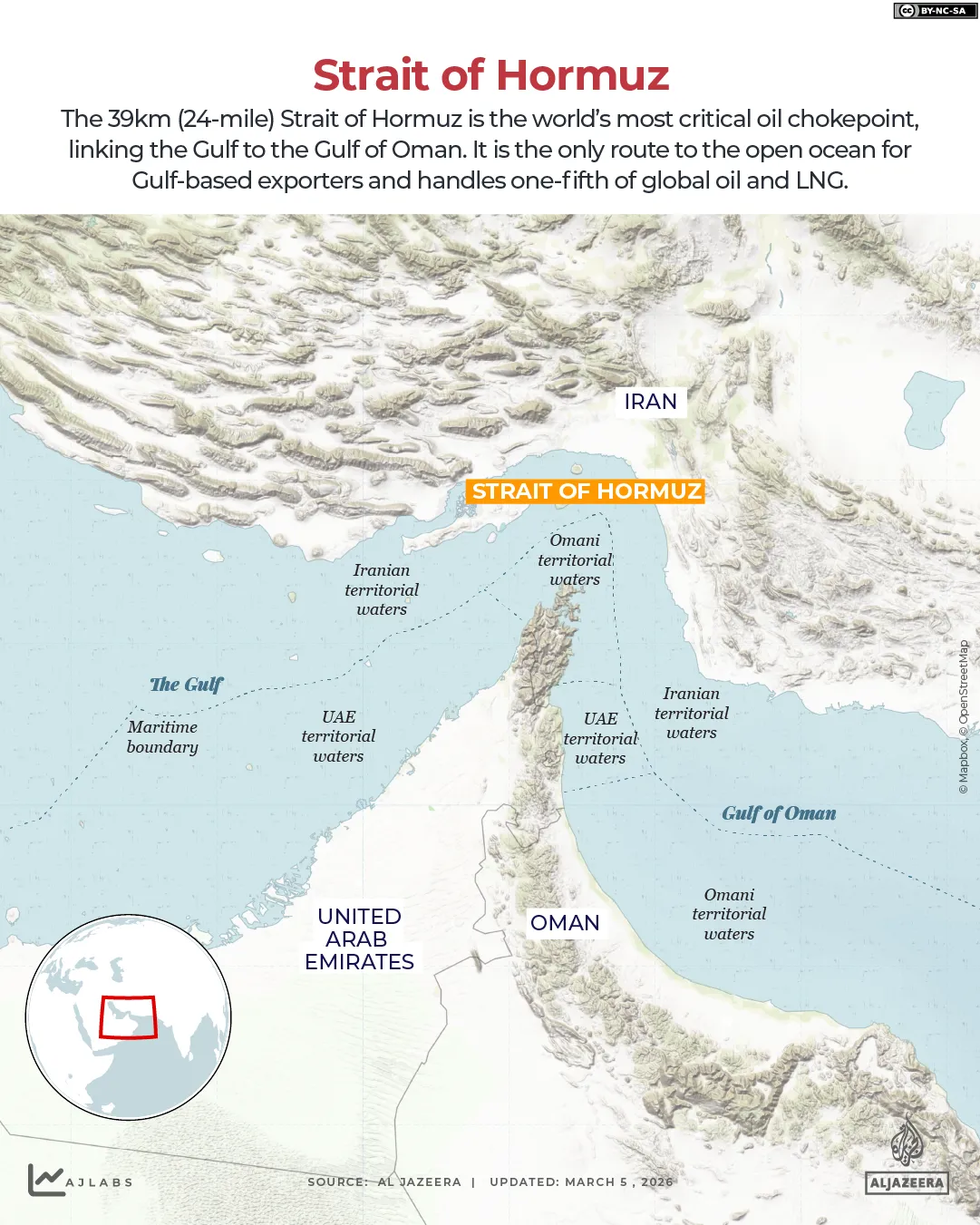
However, shipments from these suppliers must travel through the strategically vital Strait of Hormuz, which has been heavily disrupted by the war. Officials say at least one cargo of around 100,000 tons from Saudi Aramco has already been delayed in the Gulf due to the ongoing crisis.
The Strait of Hormuz is one of the world’s most important energy transit routes, and any prolonged disruption could have far-reaching consequences for countries heavily dependent on imported fuel.
Gas Shortages Add to Energy Crisis
Bangladesh’s energy difficulties extend beyond diesel shortages. Severe natural gas shortages have already forced the closure of four of the country’s five state-run fertiliser factories.
Authorities have redirected the available gas supply toward electricity generation in an effort to stabilise power production during the crisis.
The combination of diesel shortages, disrupted oil imports and limited gas supplies is placing growing pressure on Bangladesh’s energy system at a time when global fuel markets are already experiencing heightened volatility.
Analysis: Energy Dependence Exposes Economic Vulnerability
Bangladesh’s struggle to secure diesel supplies illustrates how the war involving Iran is affecting energy-importing economies far beyond the immediate conflict zone.
Countries that rely heavily on imported fuel are particularly vulnerable to disruptions in global energy shipping routes, especially those linked to the Strait of Hormuz. Even temporary interruptions can lead to fuel shortages, higher prices and broader economic disruption.
For Bangladesh, the situation highlights the structural risks created by its dependence on imported energy. Industries such as garments, which rely on stable electricity supplies and backup diesel generators, are especially exposed to supply shocks.
Although emergency shipments from China and India have temporarily stabilised supplies, the situation remains fragile. If the conflict in the Middle East continues to disrupt oil shipments or drive up prices, Bangladesh could face prolonged energy shortages with significant implications for its economy and export industries.
The event will feature authors, poets, artists and podcasters across panels, book signings, cooking demonstrations and screenings. This year’s lineup includes comedian Larry David, actor and Booker Prize judge Sarah Jessica Parker, musician Lionel Richie, Beyoncé’s mother and multihyphenate Tina Knowles, bestselling author and social critic Roxane Gay and News & Documentary Emmy- and Peabody-nominated scholar Reza Aslan, among others.
Scheduled for April 18 and 19, the literary festival will feature more than 550 storytellers and nearly 100 panels across the University of Southern California’s campus.
Other notable personalities include: Pat Benatar, Blippi, Mark Harmon, David Duchovny, Susan Lucci, Jennie Garth, Hannah Brown, Anne Lamott, Chanel Miller, Lisa Rinna, Stephanie Garber, Jon Klassen, Mac Barnett, Meghan Quinn, Hayley Kiyoko, Megan McDonald, Elyse Myers, Eli Rallo, Raegan Revord and Molly Jong-Fast.
As part of the Ideas Exchange speaker series, Richie will sit down with Times Pop Music Critic Mikael Wood, to discuss “Truly,” Richie’s new memoir. The book explores the singer’s upbringing in Alabama and his rise to stardom, including performing with the Commodores.
This year’s event will debut the Audiobook and Podcast Stage presented by Spotify, hosting talent like “Crimes of The Times” host and Times writer Christopher Goffard and “Remarkably Bright Creatures” bestselling author Shelby Van Pelt. The festival will also screen a preview of the Hulu show “Rivals,” which will be followed by a discussion between producer and writer Dominic Treadwell-Collins and actor Nafessa Williams.
At the Times Food Stage, Cassandra Peterson, known for her work as Elvira, will be demoing from her book “Elvira’s Cookbook From Hell.” Culinary influencer Cassie Yeung will also be stopping by to discuss recipes from her new Asian takeout cookbook “Bad B*tch in the Kitch.”
The festival will kick off April 17 with The Times hosting the 46th annual L.A. Times Book Prizes at Bovard Auditorium. The ceremony will honor Amy Tan with the Robert Kirsch Award for lifetime achievement, We Need Diverse Books with the Innovator’s Award and Adam Ross with the Christopher Isherwood Prize for Autobiographical Prose. The prizes recognize 61 works in 13 categories.
General admission to the festival is free. Friend of the Festival packages, which include panel reservations, parking and merchandise, are currently on sale.
The executive director of the International Energy Agency Fatih Birol said he is glad to see IEA’s 32 member countries unanimously agree to release 400 million barrels of oil from its emergency stockpile.. File Photo by Ole Berg-Rusten/EPA-EFE
March 11 (UPI) — The International Energy Agency agreed to take emergency action and release 400 million barrels of oil into the market, the coalition announced Wednesday.
The 32 members of the IEA unanimously agreed to tap into their emergency reserves in response to the strain on the oil market from the war in Iran.
“The oil market challenges we are facing are unprecedented in scale, therefore I am very glad that IEA member countries have responded with an emergency collective action of unprecedented size,” Fatih Birol, IEA executive director, said in a statement.
“Oil markets are global so the response to major disruptions needs to be global too. Energy security is the founding mandate of the IEA, and I am pleased that IEA members are showing strong solidarity in taking decisive action together.”
The IEA said oil will be released to the market “over a timeframe that is appropriate to the national circumstances of each member country.”
The release of emergency reserves is the sixth in the coalition’s history since being founded in 1974.
Japanese Prime Minister Sanae Takaichi said Wednesday that Japan plans to begin releasing oil from its stockpile possibly next week. Japan is an IEA member.
Oil prices soared after the United States and Israel launched military operations against Iran. Iran has threatened vessels traveling through the Strait of Hormuz, a critical route in the oil trade, in response.
About 25% of the world’s seaborne oil is transported through the Strait of Hormuz.
The IEA has an emergency stockpile of more than 1.2 billion barrels of oil, There are 600 million additional barrels obligated by member governments.
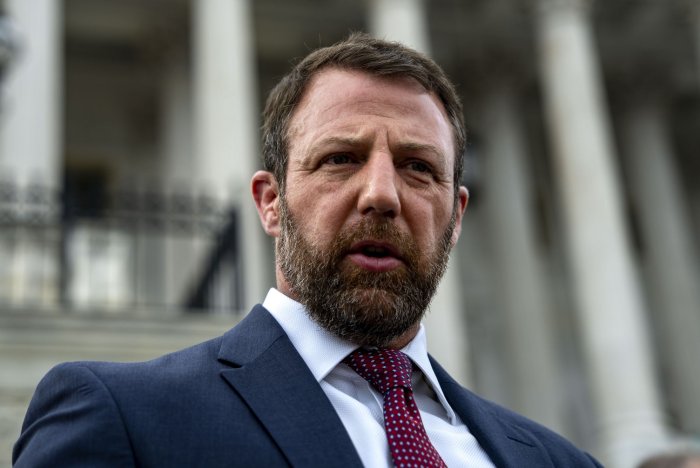
Sen. Markwayne Mullin, R-Okla., speaks to the press outside the U.S. Capitol on Thursday. Earlier today, President Donald Trump announced Mullin would replace Kristi Noem as Secretary of the Department of Homeland Security. Photo by Bonnie Cash/UPI | License Photo
US President Donald Trump on Tuesday threatened Iran with unprecedented military consequences if it had placed mines in the Strait of Hormuz and failed to remove them, Anadolu reports.
“If for any reason mines were placed, and they are not removed forthwith, the military consequences to Iran will be at a level never seen before,” Trump wrote on his social media platform Truth Social.
He added that removing the mines would be “a giant step in the right direction.”
Trump, however, also noted that US has “no reports of” Tehran putting out mines in the waterway.
The warning came after a CNN report that Iran has begun laying mines in the strait. Sources told the news outlet that only a few dozen had been placed so far, but Iran still had up to 90% of its small boats and mine-laying vessels intact, leaving it capable of deploying hundreds more.
The Strait of Hormuz is one of the world’s most critical energy chokepoints, with around 20 million barrels of oil passing through it daily. Iran’s IRGC had previously announced the closure of the strait to transit following the start of the US-Israeli attacks on Iran on Feb. 28, pushing oil prices above and raising fears of a prolonged global energy disruption.
The escalation in the Middle East flared since Israel and the US launched a joint attack on Iran on Feb. 28, and to date killing more than 1,200 people, including Ayatollah Ali Khamenei, who was the supreme leader. At least eight US service members have been killed since the beginning of the campaign.
Adapted from the identically titled novel, A Woman of Substance follows housemaid Emma Harte as she challenges societal conventions to establish a worldwide business empire.
Spanning dual timelines, the eight-episode series chronicles Emma’s (portrayed by Jessica Reynolds) ascent from her formative hardships through to the present day, where she (Brenda Blethyn) confronts fresh, unforeseen challenges.
Where was A Woman of Substance filmed?
Captured during spring 2025, sequences depicting young Emma in the early 1900s were shot throughout Yorkshire, with the Grade I-listed Georgian residence Broughton Hall serving as Fairley Hall.
Broughton Hall previously featured as a filming venue in Channel 4’s original 1984 adaptation of A Woman of Substance.
Broughton Hall is the 16th Century manor house situated at the centre of the 3,000 acre Broughton Sanctuary estate.
Whilst the property remains unchanged, it’s now encompassed by the sanctuary, housing the Avalon Wellbeing Centre and offering holiday accommodation available for guest bookings.
Production teams were additionally observed at Ilkley Moor, Barnsley Town Hall and at Brodsworth Hall and Gardens in Doncaster.
Speaking about the use of Brodsworth Hall in the series, a representative from English Heritage said: “Last year we were pleased to welcome a production company, filming scenes for an adaption of Barbara Taylor Bradford’s A Woman of Substance.
“Filming took place within our Servants’ Wing, Laburnam Arch and Target House/Range and we are extremely excited and proud to see Brodsworth on the small screen!”.
For the latest showbiz, TV, movie and streaming news, go to the new **Everything Gossip** website.
Reynolds, who portrays the younger version of Emma Harte, shared her experiences of filming in Yorkshire with Country and Town House.
She said: ‘I know the crew worry about wind and rain, but I just love being able to have nature around me and working off the elements.
“I feel much less self-conscious, and freer.
“Some of the locations were just breathtaking and those are the images that stick in my mind today when I think back to filming; Yorkshire is just stunning.
“Those are some of Emma’s happiest moments too, when she’s so connected to the land – it’s a beautiful thing.”
Meanwhile, the contemporary scenes featuring Vera legend Blethyn, which are supposed to be set in New York, were actually filmed in Liverpool.
This isn’t the first time Liverpool has served as a stand-in for New York in film production, with major films including Fantastic Beasts and Where to Find Them and 2022’s The Batman also shot in the UK city.
A Woman of Substance premieres on Wednesday, March 11, at 9pm on Channel 4.
Warning comes as 400 million barrels of oil are being released from global reserves during waterway’s closure.
Published On 11 Mar 202611 Mar 2026
Share
Iran’s Islamic Revolutionary Guard Corps (IRGC) says it will not allow “a litre of oil” through the Strait of Hormuz as the closure of the key Gulf waterway continues to roil global energy markets during the US-Israeli war on Iran.
A spokesperson for the IRGC’s Khatam al-Anbiya Headquarters said on Wednesday that any vessel linked to the United States and Israel or their allies “will be considered a legitimate target”.
Recommended Stories
list of 3 itemsend of list
“You will not be able to artificially lower the price of oil. Expect oil at $200 per barrel,” the spokesperson said in a statement. “The price of oil depends on regional security, and you are the main source of insecurity in the region.”
Global oil prices have fluctuated wildly this week during continued US-Israeli attacks against Iran, which has retaliated by firing missiles and drones at targets across the wider Middle East.
The closure of the Strait of Hormuz, through which about one-fifth of the world’s oil supplies transit, and production slowdowns in some Gulf countries have raised concerns of further disruptions.
Concerns around the duration of the war, which began on February 28 and has shown no sign of abating, are also adding to uncertainty, sending oil prices soaring.
On Wednesday, three ships were hit by projectiles in the Strait of Hormuz, maritime security and risk firms said, including a Thai-flagged cargo vessel that came under attack about 11 nautical miles (18km) north of Oman.
Release of oil reserves
World leaders, including members of the Group of Seven (G7) and the European Union, have been mulling what action to take in response to the war’s impact on global economies.
Christian Bueger, a professor of international relations at the University of Copenhagen and an expert in maritime security, said Europe will be facing “a major energy supply crisis” if the Strait of Hormuz is not reopened.
“For the shipping industry right now, it’s impossible to go through the Strait of Hormuz,” Bueger told Al Jazeera. “And if there are not stronger signals in the near future that they can at least try to go through the strait, then we are looking at a major shipping crisis, which can last weeks if not months.”
On Wednesday, the International Energy Agency (IEA) announced that its 32 member countries had unanimously agreed to release 400 million barrels of oil from their emergency reserves to try to lower prices.
“This is a major action aiming to alleviate the immediate impacts of the disruption in markets,” IEA Executive Director Fatih Birol said during an address from the agency’s headquarters in Paris.
“But to be clear, the most important thing for a return to stable flows of oil and gas is the resumption of transit through the Strait of Hormuz,” he added.
The reserve supplies will be made available “over a timeframe that is appropriate” for each member state, the IEA said in a statement without providing details.
German Economy and Energy Minister Katherina Reiche said earlier in the day that the country would comply with the release while Austria also said it would make part of its emergency oil reserve available and extend its national strategic gas reserve.
Meanwhile, Japan’s Ministry of Economy, Trade and Industry said it would release about 80 million barrels from its private and national oil reserves.
Japanese Prime Minister Sanae Takaichi said the country, which gets about 70 percent of its oil imports through the Strait of Hormuz, would begin releasing the reserves on Monday.
Israel believes it is progressing faster than expected in achieving its objectives in the war against Iran, according to Israel’s ambassador to France.
Ambassador Joshua Zarka said the military campaign, which Israel initially predicted would last several weeks, is moving ahead of schedule in meeting its strategic goals.
Speaking to BFM TV, Zarka said Israel’s objectives extend beyond dismantling Iran’s nuclear programme. He said the broader aim is to weaken Iran’s leadership so that it can no longer project power beyond its borders and so that the Iranian population can determine its own political future.
Israel’s Broader Strategic Objectives
According to Zarka, Israel’s campaign is designed not only to limit Iran’s military capabilities but also to significantly weaken the country’s ruling authorities.
The ambassador said that reducing the government’s ability to operate abroad would help prevent attacks against Israel and its allies, while also creating conditions in which Iranians could “take their fate into their own hands.”
His comments reflect a broader strategic message from Israel that the war is intended to reshape Iran’s regional role, rather than simply eliminate specific military programmes.
Zarka, who previously served as Israel’s lead diplomat dealing with Iran, suggested that Israel’s military progress is exceeding initial expectations.
Warning Over New Iranian Leadership
Zarka also commented on the recent appointment of Mojtaba Khamenei as Iran’s new supreme leader following the death of his father, Ali Khamenei.
He said that if Mojtaba Khamenei follows the same policies as his predecessor, he could become a potential target for Israel.
The remark underscores the increasingly confrontational rhetoric surrounding the conflict and signals that Israel sees Iran’s leadership itself as central to the confrontation.
Conflict Expands to Lebanon
At the same time, Israel has intensified military operations against Hezbollah, the Iran-backed militant group based in Lebanon, after cross-border attacks on Israeli territory.
The Lebanese government has said it would like to hold direct talks with Israel to stop the fighting. However, Zarka dismissed the possibility of negotiations at this stage.
Instead, he argued that the war would end only if Hezbollah is disarmed a step he said depends on decisions taken by the Lebanese government.
Analysis: Israel Signals No Immediate Path to Negotiations
Zarka’s comments suggest Israel believes the current military campaign is producing results and therefore sees little incentive to pursue negotiations in the near term.
By framing the war’s goals around weakening Iran’s leadership and limiting its regional influence, Israeli officials are signalling that the conflict is about more than just nuclear or missile capabilities.
The remarks also highlight Israel’s strategy of confronting Iran’s regional network of allied groups, including Hezbollah, which it views as a key extension of Tehran’s power.
Taken together, the statements indicate that Israel intends to continue military pressure until it believes Iran’s ability to project influence across the region has been significantly reduced.
When Brazilian journalist Tatiana Merlino watched “The Secret Agent” — one of this year’s Oscar nominees for best picture — it felt like seeing scattered scenes from her own life.
As the movie follows Marcelo (played by Wagner Moura) — a professor fleeing from a vindictive businessman during Brazil’s military dictatorship (1964-1985), the story skims through old audio tapes and newspapers, reviewed by a researcher looking into how he died. Like her, Merlino also dug into the past to piece together how her uncle, Luiz Eduardo Merlino, a communist activist, was killed by the right-wing regime in 1971. Though it was initially reported as a suicide, the family soon found his corpse with torture marks in a morgue.
“It became necessary to fight for memory, truth, and justice, because these crimes committed by dictatorship agents weren’t punished at that time, and have not been to this day,” says the 49-year-old journalist, who first saw “The Secret Agent” in São Paulo, and made a career from investigating human rights abuses.
“When a country does not come to terms with its past,” she adds, “its ghosts resurface.”
Recent dictatorship-themed movies like “The Secret Agent” and “I’m Still Here,” which won the Oscar for best international film in 2025, were instant blockbusters back home in Brazil. While both films honor those who, like Merlino, still seek justice for the regime victims, their popularity also got boosted by the country’s zeitgeist.
To many Brazilians, these movies served as reminders of what could have been had former far-right President Jair Bolsonaro, himself a retired Army captain and a dictatorship nostalgic, succeeded in his 2022 attempt at a coup d’etat.
On Jan. 8, 2023, encouraged by Bolsonaro, hundreds of vandals stormed into the Three Powers Plaza, a square in the country’s capital, Brasília, that gathers the congress, the supreme court and the presidential palace. Neither he nor the vandals accepted the 2022 election — won by the veteran leftist Luiz Inácio Lula da Silva, better known as “Lula.”
The uprising followed the same blueprint as the pro-Trump rioters behind the Jan. 6 insurrection in the United States. Although President Trump himself was federally prosecuted for election obstruction, the case was dismissed after his reelection in 2024.
Unlike the U.S., however, Brazil has charged, judged and arrested the conspirators — including Bolsonaro and members of his staff who participated in the coup plot.
“Bolsonaro doesn’t come from Mars,” said “The Secret Agent” star Wagner Moura to the L.A. Times in February. “He’s deeply grounded in the history of the country.”
In 1964, a U.S.-backed coup enacted a violent, 21-year autocracy run by the military, whose effects still resonate today, says Alessandra Gasparotto, a professor at the Federal University of Pelotas (UFPEL).
“It was a dictatorship that worked from a perspective of building certain legitimacy, keeping the congress functioning, but of course, after purging dissent,” explains the Brazilian historian.
“I’m Still Here,” for example, dramatizes the real-life quest of Eunice Paiva, a housewife whose husband Rubens Paiva, a former leftist congressman who had his tenure revoked after the coup, then disappeared in the hands of the military in 1971. To this day, his body still hasn’t been recovered.
In 2014, Bolsonaro, then just a congressman, spit on a bust of Paiva erected to honor his memory during the coup’s 50th anniversary in Congress.
“The cinema of all countries has the role of preserving memory, so if you take a look at the Holocaust, the American Civil War, or World War II movies, it has this role of almost an ally of history,” says writer Marcelo Rubens Paiva, son of Rubens Paiva and author of the book from which “I’m Still Here” is based. “There’s an old saying: History is the narrative of winners, while art is of the defeated.”
In the case of Brazil, the militaries who led the repressive apparatus of the dictatorship got away with torture and murder through a 1979 amnesty law. It was initially enacted to pardon alleged “political crimes” committed by the regime opposition and allow a transition to democracy — but it was also used to pardon the dictatorship’s human rights violations. Then, in the late 1980s, the military oversaw a slow, gradual shift to democracy, stepping down from power only in 1985.
“This new republic had more continuity than novelty, since many politicians who were central to the dictatorship moved to central roles in the democratic government,” explains Gasparotto. “That’s why they built this pact [to forgive the regime’s crimes].”
For that reason, these movies still feel contemporary. “The Secret Agent,” for example, blends past and future through the records analyzed by a researcher, while “I’m Still Here” highlights Eunice Paiva’s post-regime fight for the recognition of Rubens Paiva’s death; without any corpse to officialize his death, he was just deemed disappeared.
When Merlino watched the movie, for example, Eunice reminded her of her grandmother, Iracema Merlino.
“I’m the third generation of my family fighting for memory, truth and justice,” says Merlino. “It started with my grandmother, who passed away, then it was handed to my mother, who’s now very ill, then to me.”
Nowadays, she awaits trial for the third lawsuit attempt of the family to hold her uncle’s torturer, Col. Carlos Alberto Brilhante Ustra, accountable — the two other cases against the accused were dismissed over the years.
Since Ustra’s death in 2015, the Merlino family is now suing his estate for reparations. Yet he still remains a hero to some; in 2016, while Bolsonaro was still a congressman, he shouted a dedication to the memory of the torturer during the voting of the impeachment of Brazil’s former President Dilma Rousseff — herself one of the victims of Ustra in the 1970s, but among the few who survived.
“These films make connections with the present because understanding the past is important for understanding today’s contradictions,” says Marcelo Rubens Paiva. “What happened before interferes in the conflicts a country lives in today.”
So if authoritarians like Bolsonaro don’t come out of the blue, the same goes for other autocratic leaders, like President Trump.
Although founded on democratic principles, the U.S. itself has a long, muddled history with the concept. The authoritarian turn the country is reckoning with is part of a long legacy of inequality that stemmed from the 246-year institution of slavery. Following its abolishment in 1865 came a near-centurylong period of tension marked by racial segregation that we now refer to as “Jim Crow.”
“With some exceptions, the South was governed by a then-segregationist Democrat party — with [rampant] electoral fraud, authoritarianism, use of local police for political repression, and no chance for opposition, even [by] moderates,” says Arthur Avila, a history professor at the Federal University of Rio Grande do Sul (UFRGS) in Brazil.
Although the Civil Rights Act of 1964 and the Voting Rights Act of 1965 ended segregation and granted voting rights to people of all races — signed by then-President Lyndon B. Johnson, a Southern Democrat who broke away from the party’s history to spearhead progressive domestic policy — the decades that followed were ridden with manipulations of the electoral system. For example gerrymandering, or the practice of manipulating electoral district boundaries to favor one political party, is an ongoing, albeit controversial tactic among both Democrats and Republicans.
President Trump himself was federally prosecuted for election obstruction. The indictment alleged that, upon losing the 2020 election, Trump conspired to overturn the results and manipulate the public by spreading false claims of election fraud on social media. It argued that this, in turn, stoked a mob of his supporters into leading the deadly Jan. 6 attacks on the Capitol; but the case was dismissed upon his reelection in 2024.
In the lead-up to the midterm elections in November, Trump has pushed for federal control over elections, restrictions on mail-in voting and the addition of citizenship documents to vote, despite an existing federal law that already prohibits noncitizens from voting in U.S. elections. (He tried implementing the latter through an executive order in 2025, but it was permanently blocked by a federal court; a voter ID bill called the “SAVE America Act” is currently stalling in the Senate.)
“There’s a strong local authoritarian tradition in the U.S. that Trump himself feeds from,” says Avila.
Besides that, according to Avila, the country faces a growing “de-democratization” process from within. This shows in the rising control and dismantling of institutions by reactionary sectors — including efforts to block professional, educational and athletic programs promoting DEI, or diversity, equity and inclusion — from what many critics and scholars have cited as lingering resentment from desegregation, he says.
“We may see it as a slow authoritarian turn in North American politics that didn’t overturn the democratic regime yet,” Arthur considers. “But if this process goes on, and that’s a conjecture, in the next decade the U.S. may become a state of exception that keeps democratic appearances but has been stripped of any democracy’s substance whatsoever.”
As movies such as “The Secret Agent and “I’m Still Here” remind us, a great deal of maintaining a democracy has to do with keeping a good memory.
March 11 (UPI) — The United States resumed Global Entry, a program that allows trusted travelers to quickly get through U.S. customs, on Wednesday after a short break.
The service began again at 5 a.m. EDT Wednesday, the Department of Homeland Security said.
“We are working hard to alleviate the disruptions to travelers caused by the Democrats’ shutdown,” a DHS spokesperson said in a statement.
The program was suspended to preserve staff and resources during the partial government shutdown that began Jan. 31. When it was announced, the department said it would also suspend TSA PreCheck, which allows low-risk travelers to speed through Transportation Security Administration checkpoints, but quickly reversed course on that decision.
Geoff Freeman, president and CEO of the U.S. Travel Association, said the organization was pleased with the decision.
“Over the last two weeks, the travel industry has been clear about the role programs like Global Entry and TSA PreCheck play in both security and efficiency,” Freeman said in a statement. “Through outreach to members of Congress and administration officials, collaboration across the travel sector and strong public engagement, we highlighted a simple reality: Trusted Traveler Programs enhance security while keeping travel moving.”
Travelers at airports have seen long lines for TSA checkpoints, some lasting several hours with lines stretching out onto sidewalks.
The DHS, which includes TSA, is shut down because Congress couldn’t agree on a funding bill for the department. Democrats don’t want to fund it until guardrails are put on the agency, and Republicans haven’t agreed to Democrats’ demands.
Because of this, TSA workers got a partial paycheck on Feb. 28 and will miss their first full check Saturday. There have been more work absences while staff are not getting paid, which slows the TSA lines at major airports.
Sen. Markwayne Mullin, R-Okla., speaks to the press outside the U.S. Capitol on Thursday. Earlier today, President Donald Trump announced Mullin would replace Kristi Noem as Secretary of the Department of Homeland Security. Photo by Bonnie Cash/UPI | License Photo
At the start of every school day, Martha Ayuba marks the attendance register of her class of about 50 pupils in Nassarawo Primary School, Jimeta-Yola, in Adamawa, northeastern Nigeria. The 38-year-old is the class teacher of Primary 3B. With a pencil in hand, she calls out names from the register. Each pupil answers, “Present, Ma”, before she ticks the box next to those who are “present” and crosses those who are “absent”.
Her worn attendance book is stuffed with handwritten names, erased marks, and faded ink. A leaking roof threatens to soak its pages, and a scurry of termites could erase weeks of work. Marking attendance is not just a routine; it’s a promise of accountability, and it appears on the report card at the end of each term and in the school’s database.
However, across Nigeria, this ritual of paper and pencil is increasingly out of step with the country’s emerging Digital Public Infrastructure (DPI), a national effort to build interoperable digital identity, payments, and data systems that serve citizens at scale.
Nigeria’s education system faces a tragic paradox: millions of children remain out of school, yet even those who attend often lack basic record-keeping and support. According to UNICEF, one in four primary-school–age children in Nigeria (about 10.5 million children) are not enrolled in school. In rural areas of Adamawa State, for instance, years of conflict and poverty have made schooling precarious.
At Nassarawo Primary School, Martha juggles teaching and attendance record-keeping duties.
“There was a time when rain fell, and the register got wet,” she recounts. “I lost almost an entire term’s record, and no one could tell how many students were in class during those periods. I had to get another register and start afresh. Imagine if I didn’t have a backup?”
Several schools in Nigeria, including some public tertiary institutions, still rely heavily on manual recordkeeping, as Olubayo Adekanmbi, the CEO of Data Science Nigeria, notes.
For Martha, that means precious minutes of class are spent on paperwork. This drudgery breeds frustration. “I know these kids by heart,” she says, “but we have to write it down. Otherwise, next year the next teacher won’t know what happened to them.” She keeps one copy at school and one at home, fearing theft or damage. Yet neither copy can travel with her if the children move to a different school or state. Even a single register lost in a fire or flood can erase months or years of history.
Why paper recordkeeping fails
Manual registers not only burden teachers; they distort national planning.
In Nigeria’s basic education subsector, school funding, teacher allowances and student support programmes all hinge on accurate attendance and enrolment data. Each child “counts” not just for classroom pride but for allocation of resources. For example, the Universal Basic Education Commission (UBEC) earmarks School-Based Management Committee (SBMC) funds (for feeding programmes, sanitation, and learning materials) based on pupil numbers. In 2024, UBEC disbursed SBMC – School Improvement Programme support funds to 1,171 schools in all 36 states.
If Martha’s register fails to reflect every student, such support might not reach deserving children. A missing name in the data could mean missed school meals, missing textbooks, or even being excluded from government scholarship programmes. Hence, school officials cannot adjust to “changing patterns in attendance” or identify which children need support.
Beyond individual schools, the absence of reliable data hampers policy and planning. At best, education officials compile annual school census figures, but these are months old and riddled with errors. Many rural schools report at a snail’s pace, if at all, because principals must physically carry piles of handwritten forms to local government offices.
Recognising this gap, Nigeria has begun transitioning toward a national Education Management Information System (EMIS) built on District Health Information System Version 2 (DHIS2). An overview of the UNICEF-supported says Nigeria is “moving from fragmented, manual processes to a unified, digital platform”, aiming for “real-time, accurate data for evidence-based planning and decision-making”.
In plain terms, that means that if Martha could click an app on her smartphone to log her attendance, higher-ups could see up-to-the-minute figures: student dropouts, teacher absences, resource gaps, and everything else. Real-time school data would highlight, for instance, which classes are short on books or which districts have the most teacher vacancies.
What Nigeria is doing
The Nigerian government has taken tentative steps toward digitisation.
In 2024, UBEC launched a digital quality assurance platform to evaluate schools electronically. This system is designed to stream data on school infrastructure, teacher qualifications, and learning resources into a centralised dashboard, replacing laborious paper inspections. Although the platform is operational within UBEC’s inspection and monitoring system, nationwide adoption is still scaling up as infrastructure, connectivity and digital capacity in schools improve.
Marking attendance is not just a routine; it’s a promise of accountability. Photo: Abubakar Muktar Abba/HumAngle.
Similarly, the Federal Ministry of Education unveiled the Nigeria Education Data Initiative (NEDI) to build a “single, secure platform” of educational data across basic and tertiary levels.
NEDI aims to “leverage the National Identity Management Commission’s (NIMC’s) unique identification number” – the national ID, “for accurate student tracking”. In other words, each child’s attendance and progress would be linked to a lifelong digital ID, so that Martha’s tallies could follow her students even if they moved schools or states.
At the state level, pilots are underway, but slow.
A consortium led by HISP Nigeria and UNICEF is rolling out a District Health Information System Electronic Management Information System (DHIS2 EMIS) module in twelve states, including Adamawa, to “improve education planning and outcomes for millions of children”.
Get our in-depth, creative coverage of conflict and development delivered to you every weekend.
Subscribe now to our newsletter!
Local education authorities have been trained to use tablets and smartphones to enter enrolment, attendance, and infrastructure data directly into the system. In Bauchi State, for example, ministry officials held workshops for local supervisors to practice uploading school census data via mobile devices.
Complementing government action, non-governmental organisations and agencies have jumped in. For instance, Data Science Nigeria helped launch the Gates Foundation-funded EdoCert, a digital certificate registry piloted in Edo State. EdoCert uses Sunbird, an open-source, “digital public good” to archive students’ exam results and transfer credentials online. EdoCert has since secured 1.9 million paper certificates since its launch. Its developers emphasise that the same approach could be used for attendance records. Experts point out that collecting comprehensive data could help “better track and adapt to changing patterns in school attendance” and guide the allocation of resources such as the national school lunch programme.
Meanwhile, other partners focus on connectivity.
UNICEF’s GenU9ja initiative, local telecos, and the Federal Ministry of Education are racing to wire schools to the internet. By early 2025, more than 1,000 public schools had been connected via routers and provided with devices for digital learning, according to UNICEF. Training modules have been rolled out to thousands of teachers on basic computer skills and e-learning platforms. These efforts aim to lay the foundation for any future digital register: after all, you cannot click an app without power or Wi-Fi.
Even so, Martha and her peers remain on the front lines of a slow handover from paper to digital.
Lessons from elsewhere
Nigeria is not alone in this challenge. Across Africa and the global south, educators have confronted broken attendance systems with creative digital fixes. In Rwanda, for example, the Ministry of Education introduced a mobile attendance app for teachers in 2025. Teachers simply log in and tap each day’s present students. The app immediately flags prolonged absences so that counsellors can intervene before a child drops out. At the end of 2025, more than 2,300 schools were enrolled in the system, and the government hopes that rapid data collection will reduce dropout rates. Rwanda’s example shows that with modest smartphones and training, even large rural systems can leapfrog paper.
In India and Uganda, UNICEF piloted a simple SMS/voice system called EduTrac. Community monitors phone schools daily to collect attendance via interactive voice-response or text. Since school records can be altered later, EduTrac’s immutability ensures honesty: once a teacher reports numbers, they cannot be changed. In India, EduTrac covered over 15,000 schools across four states by 2015. Cluster coordinators, each overseeing about 20 schools, used it to verify reports and spot chronic absenteeism.
The system required only basic phones and connectivity, making it ideal for remote villages. UNICEF noted that EduTrac has cultivated a culture of accountability: teachers and school heads know their numbers are being checked in real time.
What needs to change
Nigeria needs a pragmatic overhaul of its attendance system. Obaloluwa Ajiboye, an innovation governance specialist who has worked at the African Union, UNDP, and UNICEF, said one practical way to address gaps in student tracking is to assign every child a unique digital identity built on Nigeria’s existing framework, managed by the National Identity Management Commission.
“By linking school attendance records to a single, nationally recognised ID number, each child would retain one continuous education record, even when transferring between schools or moving across local government areas,” Obaloluwa noted. He explains that this kind of consistency is central to what DPI is designed to achieve. If properly implemented, it would allow attendance data to follow the child rather than remain tied to a specific school.
However, Obaloluwa added that such digital solutions will fail without power and connectivity.
An overcrowded classroom at GSS Michika in Adamawa State. Photo: Yahuza Bawage/HumAngle
Although internet penetration has increased across Nigeria, about 41 per cent of the country’s population remains offline, according to the Nigerian Communications Commission. According to Obaloluwa, the government should prioritise solar panels, school internet, and devices (tablets or laptops) for teachers.
Nigeria’s GenU9ja programme shows what is possible: it connected over 1,000 schools and trained 63,000 educators in one year. Scaling such programmes nationwide, with specific funding for data systems, is critical, Obaloluwa noted.
Additionally, Olubayo Adekanmbi, CEO of Data Science Nigeria, noted that schools like Nassarawo Primary School should be equipped with affordable digital registers that work even without constant internet access. “Many of the needed solutions already exist: for example, Sunbird (used by EdoCert) can run on laptops or tablets offline and sync later,” he added.
Olubayo said that the attendance register should not live in isolation. “It must feed into larger platforms (UBEC reports, state EMIS). Systems should be interconnected to include open APIs so that daily attendance synchronises with the annual school census”. In practice, that means digital systems built on standards (the way EdoCert operates).
Martha believes that “if only we had a quick way to mark attendance, I could spend that time helping the kids”. Nigeria has various frameworks and local and international support to make the shift, but how long will it take to achieve?
This report is produced under the DPI Africa Journalism Fellowship Programme of the Media Foundation for West Africa and Co-Develop.
Martha Ayuba’s experience at Nassarawo Primary School in Nigeria illustrates the challenges of manual attendance record-keeping, a common practice in the country’s education system. Despite the critical role accurate attendance records play in resource allocation and educational support, issues like damaged registers can lead to significant data loss. Nigeria aims to transition to a digital Education Management Information System (EMIS), supported by initiatives like UBEC’s digital platform and Nigeria Education Data Initiative (NEDI), which aims to streamline educational data and link it to national IDs. While efforts are being made to digitize records and improve connectivity, significant challenges remain due to infrastructure and systemic gaps. Lessons from Rwanda’s mobile app and UNICEF’s EduTrac in India highlight the potential of digital solutions in enhancing accountability and reducing dropout rates, stressing the need for power and internet for successful implementation.
Coronation Street’s Megan Walsh will finally be exposed in upcoming scenes on the ITV soap, leaving Eva Price and her entire family shaken when they discover what she has been doing
Eva Price will make a shock discovery about her stepson on Coronation Street
Coronation Street‘s Megan Walsh will finally be exposed in upcoming scenes on the ITV soap. The teacher, played by Beth Nixon, has been carrying out an illicit affair with her student Will Driscoll as part of a controversial storyline on the ITV soap.
Will arrived with his family last October to move into the Rovers Return, and it was quickly established that Megan was his athletics coach but there was a lot more to it than just that. Megan eventually moved to Weatherfield, got a job at the local secondary school and has even started up a relationship with Daniel Osbourne (Rob Mallard) as a cover-up.
Megan’s flatmate Leanne also looks set to weigh in on the harrowing situation, as her own stespon Sam Blakeman (Jude Riordan) has worked out what his going on between Will and Megan, and has received multiple threats from the villainous teacher. After the bombshell scenes, this will also leave Daniel wondering where he stands as he potentially comes to realise that his entire relationship was a lie.
Just weeks ago, Corrie aired a flashforward episode that revealed that Megan is one of five potential murder victims, along with fellow villains Jodie Ramsey, Carl Webster, Maggie Driscoll, and Theo Silverton. So will this all lead to the ultimate downfall for Megan or will the teacher actually face prison time for her crimes?
Coronation Street boss Kate Brookes recently explained that she the story was a “very important” one to tell. She said: “It’s a very important story to tell and we want to be as truthful as possible. As part of that story Sam will end up getting embroiled in it all.
“Sam is semi-related to the pub family and he potentially gets wind that something’s amiss. We will see the lengths that Megan will go to manipulate Sam into keeping quiet. It’ll be massively detrimental to Sam’s wellbeing.”
Meanwhile, for actress Beth Nixon, Coronation Street marks her television debut but she had actually auditioned for other parts on the soap before landing the role of Megan. Speaking to York College, Beth shared that the casting team had seen Beth in several shows at her drama school: the Arden School of Theatre in Manchester, so she was “kind of on their radar.”
Revealing her past audition history, Beth explained: “But I’d auditioned for Corrie twice before – as a baddie both times of course – including for the role of Lauren.” Actress Cait Fitton ended up being cast as Lauren, making her debut in 2022, and has remained on the show since.
Beth added: “Then, earlier this year, my agent sent me a casting brief and explained it was for a paedophile, which is a bit crazy to play because they’re obviously not a redeemable character, so they can push it pretty far.” After sending a self-tape Beth attended a chemistry test with other actors who were being considered to play Will. She then performed a scene on the set at The Bistro – and it turned out the bosses were rather impressed with her.
Beth – who was working as a skin clinic manager before joining Corrie – said: “I was at work when my agent called me. I was upstairs as my colleague watched the desk and, when he told me I’d got it, everybody in the clinic could hear me screaming my head off and then I cried, because it’s been four years since I graduated and this is my first TV role.
“It’s been a hard time and I was really close to quitting, having a normal job and pursuing a different career, so this just came at exactly the right time and when I needed it.”
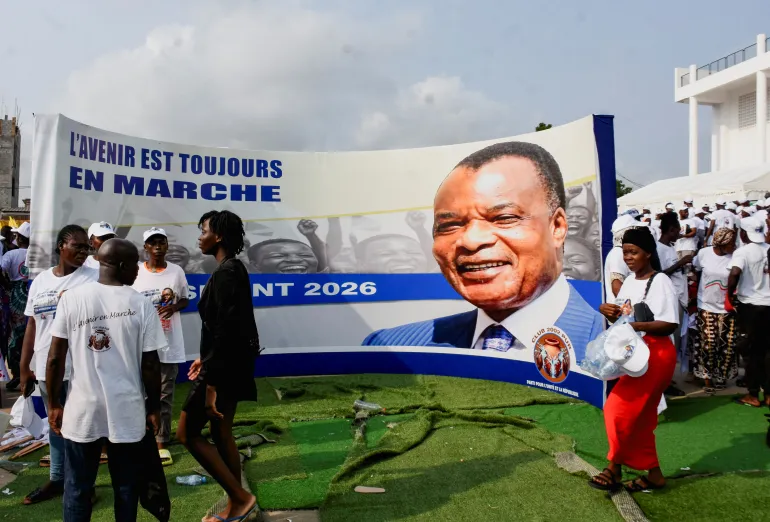
Brazzaville, Republic of Congo – On main roads and public squares across the Congolese capital, posters are up featuring the seven main candidates vying for president.
But at the Moukondo Market in Brazzaville’s fourth district – between lively discussions, people jostling for space and saleswomen trying to attract customers – many voters are less than enthusiastic about this weekend’s election.
Recommended Stories
list of 3 itemsend of list
Fortune, a 27-year-old unemployed university graduate who did not want to give his last name, said he does not expect much to come from the polls.
“When you see how money is spent during the campaign, you wonder if those in power really care about the living conditions of the population,” he said.
While Congo is the third largest oil producer in sub-Saharan Africa, about half the country’s population of about six million people live below the poverty line.
A few metres away, Gilbert, 44, shared similar sentiments. The civil servant explained that his salary is not enough to cover all his household expenses.
“I do odd jobs to supplement my income. At my age, believing that these elections will change our daily lives would be almost suicidal,” he said.
“I’ve known practically the same leader all my life,” Gilbert added. “Some call it stability. Others say that nothing changes.”
It’s a sentiment shared by many in the country: That after 40 years under a single leader, political continuity has become the norm.
President Denis Sassou Nguesso, 82, who is once again standing in the election, first came to power in Congo in 1979. After a period of political transition in the early 1990s, he returned to the presidency in 1997 after a civil war and has ruled the country without interruption ever since.
Two major constitutional revisions have marked his political trajectory. The 2002 constitution and the one adopted in 2015 notably changed certain eligibility requirements, allowing the head of state to continue to run for office.
For Nguesso’s supporters, this political longevity is primarily attributed to the stability the country has managed to maintain in a region often marked by conflict.
Congo’s neighbours include the conflict-racked Central African Republic; Gabon, which witnessed a coup in 2023; and the Democratic Republic of the Congo, where the government is facing armed groups, most notably M23.
In official discourse, peace and institutional continuity are regularly presented as the main achievements of the Nguesso government.
However, several foreign observers painted a more nuanced picture of the political situation. The pro-democracy organisation Freedom House classified Congo as a “not free” country while the Ibrahim Index of African Governance highlighted limited progress in democratic participation and political accountability.
Supporters of Nguesso, who is running for re-election, take part in a campaign rally in Brazzaville before the March 15, 2026, presidential election [Roch Bouka/Reuters]
‘Asymmetrical political competition’
In the last presidential election in 2021, the official results gave Nguesso more than 88 percent of the votes cast with a reported voter turnout of 67 percent.
Nguesso is widely expected to win again when the country goes to the polls on Sunday.
Some analysts said the president’s political longevity can be partly explained by the country’s political structure.
Charles Abel Kombo, a Congolese economist and public policy observer, described the political system as a hybrid model.
“The Congolese political system combines formally pluralistic institutions – elections, political parties, parliament – with a high degree of centralisation of executive power,” he explained. “Nguesso’s political longevity can be explained in part by the structure of the institutional apparatus and the predominant role of the executive branch in the management of the state.”
According to him, the continuity of power is also linked to perceptions of stability in a country marked by the conflicts of the 1990s.
“In this historical context, this continuity can be seen as a factor of stability. But it is also accompanied by asymmetrical political competition.” In other words, political change remains theoretically possible but politically difficult.
For the economist, however, the issue goes beyond political change alone.
“The central challenge remains the ability of political actors to propose a credible plan for economic transformation. Countries dependent on natural resources need a strategic state capable of diversifying the economy and guiding productive transformation.”
Other observers took a more critical view of this political longevity.
For economic and political analyst Alphonse Ndongo, the stability often touted by the authorities must be examined with caution.
“There is indeed a stabilising regime because it has succeeded in maintaining peace. This is what is being sold today as the main recipe for success: There is no war, so the country is at peace. But this peace also allows those in power to remain there. We are in a kind of democratic illusion where elections often resemble a deal,” he said.
According to him, the current political architecture makes a change in leadership unlikely in the short term.
“It is difficult for the institutions responsible for managing elections to produce a result that differs from what everyone already expects. Everything is structured, from voter registration to the organisation of the ballot. Under these conditions, a surprising result seems unlikely,” he said.
A campaign billboard touts candidate Uphrem Dave Mafoula in Brazzaville [Roch Bouka/Reuters]
‘Political alternatives exist’
As the debate continues in Congolese society over whether the country’s political continuity is a mark of stability or a system that is hard to change, the opposition appears fragmented and weakened.
Some established parties are boycotting the vote while some prominent potential candidates are in prison or exile.
In June, the party of opposition leader Clement Mierassa was removed from the official list of recognised political parties.
For him, the conditions for a truly democratic election are not in place.
“We have always called for essential reforms: a truly independent national electoral commission, reliable voter rolls and a law regulating campaign spending,” he said. “Without these guarantees, it is difficult to talk about free and transparent elections.”
Other political actors, however, have chosen to run in the election.
Christ Antoine Wallembaud, spokesperson for candidate Destin Melaine Gavet, said participation remains a way of defending the political space.
“The electoral system has flaws, but that does not mean that those who participate in it condone fraud. Participating also serves as a reminder of the need for reform and shows that a political alternative exists.”
For many observers, access to the media is also a key issue during election campaigns.
“Access to public media remains a recurring problem for opposition candidates. The ruling party candidate always gets the lion’s share even though the High Council for Freedom of Communication has established a list of appearances on state media so that all candidates can present their programmes,” said a Congolese journalist who requested anonymity.
Faced with these difficulties, opposition candidates often turn to private media outlets to spread their messages.
Congolese authorities, for their part, insisted that civil liberties are fully guaranteed for all.
The prime minister and spokesperson for Nguesso, Anatole Collinet Makosso, recently said freedom of opinion and expression “is doing very well”.
“Freedom of expression is alive and well in Congo. The proof is the multitude of foreign journalists here to cover this election. No journalist has been arrested because of their work or prosecuted,” he said.
For the government, this international media presence is evidence of the transparency of the electoral process and the ability of the media to work freely in the country.
However, some press freedom organisations paint a different picture. In its World Press Freedom Index, Reporters Without Borders regularly highlights the difficulties faced by local journalists, particularly in terms of access to public information, political pressure and economic constraints.
People shop at a market in the Republic of Congo days before the 2026 presidential election [Al Jazeera]
Adapting to circumstances
In the working-class neighbourhoods of Brazzaville, reactions to Sunday’s election range from resignation to pragmatism.
In Bacongo, a young man on the street explained that he has learned to adapt to circumstances.
“When the country goes left, we go left. When it goes right, we go right. Doing the opposite can be dangerous,” he said while refusing to give his name.
Beyond the political debate, economic concerns remain central.
The Congolese economy is heavily dependent on oil, which accounts for about 70 percent of its exports and nearly 40 percent of its gross domestic product (GDP), according to the World Bank. This dependence exposes the country to fluctuations in international energy prices.
Public debt has also reached high levels in recent years, exceeding 90 percent of the GDP before being partially restructured under agreements with international creditors.
In this context, several economists said the electoral stakes go beyond the single issue of political change.
Diversifying the economy, creating jobs for a predominantly young population and improving public services are major challenges in the years ahead.
But many Congolese aren’t hopeful that Sunday’s election will make a difference to their material reality because political and economic power will likely remain in the same hands.
“We all understand the system in this country,” Fortune said. “The [economic] crisis doesn’t affect everyone, nor does poverty.”
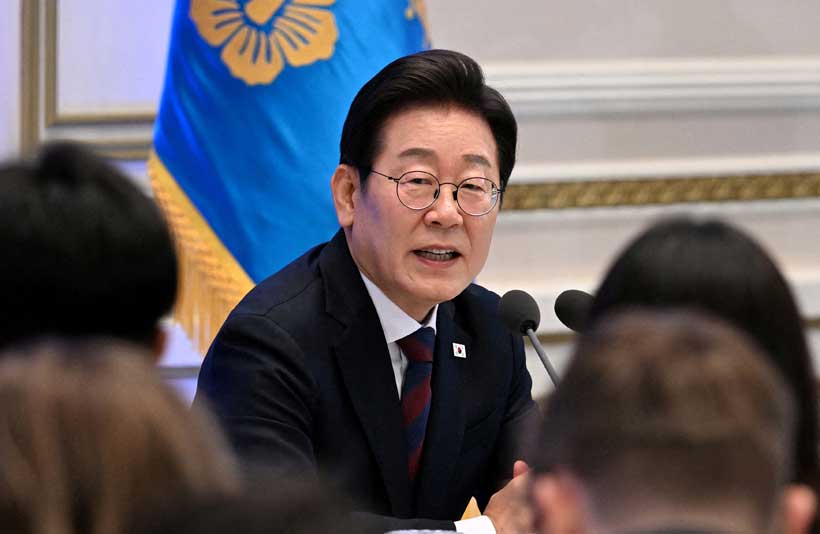
South Korea said it remains capable of deterring threats from North Korea even if the United States redeploys some weapons stationed on the Korean peninsula to the Middle East amid the war involving Iran.
The comments by South Korean President Lee Jae Myung come after reports that key U.S. missile defence systems and military assets could be moved from Asia to support operations linked to the Iran conflict.
The potential redeployment has sparked concern among Asian allies that shifting military resources could weaken regional deterrence against China and North Korea at a time of heightened geopolitical tensions.
Seoul Says Deterrence Remains Strong
Speaking at a cabinet meeting, Lee acknowledged that reports about the relocation of U.S. military equipment had triggered controversy in South Korea.
He said that while Seoul had expressed opposition to the removal of certain weapons, it could not dictate U.S. military decisions.
However, Lee emphasised that South Korea’s own defence capabilities are strong enough to maintain deterrence against North Korea even if some American systems are temporarily relocated. He noted that South Korea’s defence spending and conventional military strength significantly exceed those of the North.
South Korea hosts about 28,500 U.S. troops as part of the long-standing alliance designed to deter aggression from nuclear-armed North Korea.
Missile Defence Systems May Be Redeployed
Officials have indicated that the U.S. and South Korean militaries are discussing the possible redeployment of Patriot missile defense system batteries to the Middle East.
South Korean media reported that some missile batteries may have already been shipped from Osan Air Base and could be redeployed to U.S. bases in Saudi Arabia and the United Arab Emirates.
There were also reports that parts of the Terminal High Altitude Area Defense (THAAD) system could be moved from South Korea to the Middle East.
While Patriot systems provide lower-tier defence against shorter-range missiles, THAAD systems are designed to intercept ballistic missiles at high altitude.
United States Forces Korea declined to comment on the possible relocation of equipment, citing operational security.
Analysts Warn of Miscalculation Risks
Military analysts say that although South Korea possesses strong military capabilities, the presence of U.S. forces and weapons in the country serves as a crucial signal of Washington’s commitment to the region.
According to Choi Gi-il, a military studies professor at Sangji University, the removal of some systems could carry strategic risks.
He warned that North Korea might interpret the redeployment as a weakening of allied defences and could attempt limited provocations to test the alliance’s response.
North Korean leader Kim Jong Un has recently signalled a more aggressive posture, pledging to expand the country’s nuclear arsenal and describing South Korea as its “most hostile enemy.”
Wider Regional Impact
The redeployment of U.S. assets reflects the broader strategic impact of the Iran conflict on global military posture.
Japan, which also hosts major U.S. bases, has seen two U.S. guided-missile destroyers stationed in Yokosuka deployed to the Arabian Sea to support operations linked to the Iran campaign.
The movements have raised concerns in Tokyo as well, with opposition politicians questioning whether U.S. forces stationed in Japan should be used for operations outside the region.
The developments highlight how the conflict in the Middle East is beginning to reshape global military deployments, drawing resources away from Asia and prompting questions about the balance of security commitments across different regions.
First troops touch down nearly a month after President Ramaphosa said organised crime threatened country’s democracy.
Published On 11 Mar 202611 Mar 2026
Share
Soldiers have been deployed on the streets of South Africa’s biggest city nearly a month after the president announced the army would work alongside the police to tackle high levels of crime.
President Cyril Ramaphosa said in his annual State of the Nation address on February 12 that organised crime was the “most immediate threat” to South Africa’s democracy and economic development.
Recommended Stories
list of 3 itemsend of list
On Wednesday, troops touched down on the streets of Eldorado Park, a working class suburb in the country’s economic capital, Johannesburg, that has high levels of crime and gang violence.
Local media published pictures of armoured vehicles rolling into the area, and the Independent Online reported that local councillor Juwairiya Kaldine welcomed their arrival.
Soldiers were also seen in the Johannesburg suburb of Riverlea. Media reports said the soldiers were searching door-to-door.
South Africa’s national police service and the Department of Defence, which oversees the military, did not immediately provide details on the deployment. But the president said last month that the army will help the police service fight gang violence and illegal mining.
South African soldiers search a building during a patrol operation in Riverlea, near Johannesburg [AFP]
Ramaphosa said in a notice to the speaker of parliament that 550 soldiers would be involved in an initial deployment in Gauteng province, which includes Johannesburg, to help combat crime and preserve law and order.
That deployment would last until the end of April, he said.
The government plans a wider deployment in five of its nine provinces, according to details submitted by police to parliament.
The deployment will focus on illegal mining in the Gauteng, North West and Free State provinces, and gang violence in the Western Cape and Eastern Cape provinces.
Parts of the national deployment could last more than a year, police officials said.
South Africa has high rates of violent crime. Police reported 6,351 homicides from October to December 2025, an average of nearly 70 a day in a country of about 63 million people.
However, not all residents of crime-affected communities are pleased about the plan to deploy the army.
In the Cape Flats, an impoverished area of the Western Cape with high levels of gang violence, where troops will also likely deploy, people told Al Jazeera last month that the military will not help fix the root causes of the violence or the social ills that make it easy to recruit people into gangs.
“It’s a very dangerous thing to bring the army because there’s an impatience with the fact that the police are not doing their job,” Irvin Kinnes, an associate professor with the University of Cape Town’s Centre for Criminology, told Al Jazeera at the time, calling the move “political”.
“It’s to show that the political leaders have kind of heard the public. But the call for the army hasn’t come from the community. It’s come from politicians,” he said.
Western mining conglomerates have expressed strong interest in Venezuela’s mineral potential. (Archive)
Caracas, March 10, 2026 (venezuelanalysis.com) – The Venezuelan National Assembly preliminarily approved a new mining law on Monday as part of continued efforts to attract foreign investment to the country.
Venezuelan Acting President Delcy Rodríguez had announced the new legislation last week during a visit from US Interior Secretary Doug Burgum alongside mining executives and urged parliament to act “swiftly.”
“This law will increase all the legal guarantees that can generate confidence and attract national and foreign investment,” said Orlando Camacho, a congressman from the ruling PSUV-led bloc, during the legislative session.
Camacho added that the bill is adapted to the Caribbean nation’s “present needs” and aims to take advantage of the country’s vast mineral riches, mostly located in the country’s Southeast.
Monday’s vote was endorsed by the pro-government legislative majority. Opposition deputies abstained, complaining that they received the draft less than one hour before the parliamentary session. The text will be subject to consultations and proposals before being put to a second and definitive vote in the coming weeks.
Consisting of 126 articles split into 19 sections, the bill establishes regulations for small, medium, and large-scale mining, as well as the state’s ability to declare certain minerals as strategic and reserve areas for security purposes. It also creates a “social fund” to support mining workers, an oversight superintendency, and a state-run data bank.
Concerning mining activities, the proposed law establishes that joint ventures, private corporations, and small-scale artisanal mining groups are allowed to receive concessions. The new law will replace a 2015 decree that imposed state control over mining exploration, as well as the 1999 Mining Law.
The legislation establishes concessions of up to twenty years that can be renewed for two additional ten-year periods. The issuing of contracts is the responsibility of the Ministry of Ecological Mining Development and will not require National Assembly approval. Corporations are also entitled to several tax breaks, likewise granted at the ministry’s discretion, and can take disputes to international arbitration outside the Venezuelan court system.
The Venezuelan government is also seeking to reorganize the mining sector. A decree published on Friday ordered the Venezuelan General Mining Company (MINERVEN) to be absorbed by the Venezuelan Mining Corporation (CVM).
The mining reform follows a similar pro-business overhaul of Venezuela’s Hydrocarbon Law in January. In an interview, National Assembly President Jorge Rodríguez vowed that parliament would “adapt” laws to attract US investors in the wake of the January 3 US military strikes and kidnapping of President Nicolás Maduro
During his visit last week, Burgum touted Venezuela’s mineral riches and potential opportunities for Western conglomerates. On Friday, the Trump official announced the arrival of US $100 million worth of Venezuelan gold as part of a deal involving Trafigura to export up to 100 tons of gold doré bars worth approximately $165 million.
However, Caracas is not expected to immediately receive the revenue. The US Treasury issued General License 51 (GL51) allowing US entities to purchase, transport and resell Venezuelan-sourced gold but mandating that proceeds be deposited in US government-run accounts before being returned to Venezuela under conditions dictated by the White House.
The sanctions waiver additionally blocks transactions with companies from Cuba, Iran, Russia, and North Korea, and bans involvement in exploration and refining activities.
In tandem, the Trump administration reportedly issued a 30-day license allowing select companies, including Canada’s Gold Reserve, to negotiate mining concessions with the Venezuelan government.
Venezuela possesses vast proven reserves of gold, iron, and bauxite, in addition to lesser quantities of copper and nickel. Analysts have also drawn attention to Venezuela’s significant reserves of coltan, which has important military, aerospace, and electronics applications, as well as unproven deposits of rare earth minerals.
Former President Hugo Chávez sought to end foreign mining concessions in the 2000s, pushing instead for the state to play a leading role and link extraction activities to its basic industries in sectors such as steel and aluminum.
The Chávez government likewise revoked a number of concessions from Western mining companies. Several of them, including Canada’s Crystallex and Gold Reserve, went on to secure compensation via international arbitration bodies.
Since 2015, the Nicolás Maduro administration looked to mining as a potential revenue source amid escalating US sanctions, particularly in the 112,000 square-kilometer Orinoco Mining Arc. Nevertheless, the sector was likewise hit by unilateral coercive measures, while the proliferation of irregular mining groups has generated environmental concerns.
Ore Oduba’s wife Portia has revealed her heartbreak as the star puts home on the marketCredit: ShutterstockPortia said their two young kids are devastated as the house goes on saleCredit: Getty
The pair share a son, Roman, eight and four-year-old daughter Genie together.
The TV presenter’s new-build family home in Tunbridge Wells, Kent, is now up for sale but Portia admitted it has left their kids heartbroken.
She said on social media: “I told the children that we are selling the house.
“It’s hard, especially for Roman, to have these conversations. He’s really upset.
“I wanted to let the kids know, I tried to explain why.
“It’s gutting, and I’ve known for a while.”
The family have been living in the property since 2022.
Last November, Portia appeared to take a swipe at Ore after he revealed his porn addiction battle.
Portia shared a photo as she posed with her two children either side of her during an autumn day out.
The lyrics talk about a partner who is “young, wayward and lost in the cold” and includes the phrases “you pulled the wrong trigger”.
Appearing on the We Need to Talk podcast with MAFS expert Paul C Brunson, Ore told how his addiction struggles have spanned three decades.
He candidly said: “I was nine when I was introduced to pornography. That’s when my addiction started.”
Ore added: “While I wouldn’t say the addiction set in immediately, the intrigue started immediately and it didn’t take long for that intrigue to start running my mind over.
Ore revealed last year that he’s been battling a three decade porn addictionCredit: Alamy
“It was the thing that was destroying my life from the inside out.
“But it was a thing I was running to from an early age as a response to the trauma.”
He told Paul he was speaking out as he wanted to “guide my own children.”
The London-based TV and radio anchor shares two children with ex wife Portia, son Roman born in 2018 and daughter Genie, born in 2021.
Ore, who admitted he had become a “master masker” during his childhood due to fears his father would send him back to Nigeria, told of the personal “shame” he had been struck by.
He then told how his brave confessions were for his family.
He said: “I’m sharing this to save my kids.
“Shame kept me silent for 30 years. It took me 30 years, two deaths, and a divorce to finally go: here’s what’s happening.”
He added: “The reason I felt like I needed to speak out on this, is because I wanted to guide my own children when it comes to it, when it comes to them seeing stuff that is going to be there.
“They’re going to come across it.”
Ore then confessed: “I never imagine I’d ever share this with anyone but in the last year I’ve spoken to friends and family and some amazing, supporting people in my working world who have all shown so much love and pride in me talking about something that is a problem for so many of us.”
The couple announced they were ending their nine-year marriage in October, with presenter Ore then confirming the news on Instagram.
The couple’s break-up shocked longtime followers of the pair, who have watched on as they got engaged, married and welcomed two children.
They first met in 2010 when they were studying at Loughborough University.
Portia was also a prominent support for Ore when he competed on Strictly Come Dancing in 2016, eventually lifting the glitterball alongside pro partner Joanne Clifton.
Swerving rumours of the long-derided “Strictly curse”, Ore made sure Portia bonded with Joanne throughout their time on the show together.
Yet he revealed their sad spit in an emotional message to fans.
The statement read: “Hi guys. Portia and I are sad to announce that we separated earlier this year [2024].
“We’re so grateful for all the love you’ve shared with us both over the years.
“And we want to thank you in advance for respecting our privacy as we navigated this difficult transition.
“We will be making no further comment. Be kind, always.”
Ore and Portia ended their nine year marriage in October 2024Credit: Getty
Police in western Switzerland are investigating the deaths of six people killed in a fire that gutted a bus in the town of Kerzers, near Bern. Photo courtesy Fribourg Cantonal Police/EPA
March 11 (UPI) — At least six people were confirmed killed and several were injured after a fire tore through a bus in a town in western Switzerland.
At least three people were taken to a hospital after the incident, which took place at around 6.25 p.m. on Tuesday in Kerzers, around 12 miles west of Bern, police said.
An investigation into the cause was underway, including looking into reports the blaze was started by a passenger dousing himself in gasoline and setting himself on fire, although police and authorities in the canton of Fribourg said they did not believe it was an attack or terrorism.
“At the moment, no element highlights” a terrorist act, Fribourg Police communications head Martial Pugin told Swiss breakfast radio on Wednesday.
Pugin’s comments were echoed by Fribourg State Security and Justice Councillor Romain Collaud who also ruled out a technical fault with the bus, which was operated by PostBus Switzerland.
“It was a diesel bus, not an electric one. A bus catching fire like that surprises everyone. We’re still somewhat in shock. I think it’s important to reassure the public. The public is safe. The investigations and inquiries are ongoing,” Collaud said.
However, he warned that the process of identifying those killed could take several days.
PostAuto, of which PostBus is a subsidiary, said in a social media post that it was deeply saddened by the incident, saying it was a “terrible tragedy,” and vowing to do everything possible to aid in the police investigation.
“All the employees of PostAuto and the post office are shocked and affected like I am,” said CEO Stefan Regli.
“On behalf of the Board of Directors and the entire group management, I express our deep condolences to all of them. Our thoughts are with the victims and their families. The Fribourg Cantonal Police, under the direction of the Fribourg prosecutor, is responsible for the investigation of the fire. PostAuto is in close contact with the authorities and is doing everything in its power to solve this terrible incident.”
Swiss President Guy Parmelin said it pained and upset him that fire had claimed the lives of yet more people in Switzerland.
“It distresses and saddens me that once again people in Switzerland have lost their lives in a severe fire. The circumstances are being investigated. To the relatives of the deceased from Kerzers, I extend my condolences. And I think of the injured and the rescue workers,” he wrote on X.
Tuesday’s incident comes less than six weeks after 41 people were killed in a blaze that broke out in the early hours of New Year’s Day at a bar in the Swiss ski resort town of Crans Montana.
Founder of the Women’s Tennis Association and tennis great Billie Jean King (C) smiles with representatives after speaking during an annual Women’s History Month event in celebration of the 50th anniversary of Title IX in Statuary Hall at the U.S .Capitol in Washington on March 9, 2022. Women’s History Month is celebrated every March. Photo by Bonnie Cash/UPI | License Photo
Motorists around the globe are already feeling the impact of the United States and Israel’s war on Iran, with fuel prices sharply rising since the war began.
In the US, a gallon of regular petrol that averaged $2.94 in February now costs $3.58, marking a 20 percent increase, according to data from AAA Fuel Prices, a retail fuel price tracker from the American Automobile Association (AAA).
While each US state sets its own petrol prices, several states have surpassed $4 per gallon, with California exceeding $5 per gallon, the highest level it has been in more than two years.
Which countries have the sharpest petrol price increases?
According to data analysed from Global Petrol Prices, a data platform that tracks and publishes retail energy prices across approximately 150 countries, at least 85 countries have reported increases in petrol prices following the initial attacks on Iran by the US and Israel on February 28. Some nations announce price changes only at the end of each month, so higher prices are expected for many others in April.
Vietnam recorded the highest petrol price increase of nearly 50 percent, rising from $0.75 per litre of 95-octane on February 23 to $1.13 on March 9. Laos follows with a 33 percent increase, then Cambodia at 19 percent, Australia at 18 percent, and the US at 17 percent.
The table below shows the countries that have increased petrol prices at the pumps.
Asian countries pay the biggest price
Asia is disproportionately dependent on the Strait of Hormuz for the delivery of its oil and gas, which has been effectively closed since the start of the war. The strait joins the Gulf – also referred to as the Persian Gulf and the Arabian Gulf – to the Gulf of Oman and is the only passage for the region’s oil producers to the open ocean.
Japan and South Korea are among the most vulnerable, importing 95 percent and 70 percent of their oil from the Gulf, respectively.
Both East Asian nations have enacted emergency measures to stabilise their energy markets. On March 8, Japan instructed its oil reserve sites to prepare for a potential release of strategic reserves. The next day, South Korea introduced a maximum price cap on petrol and diesel for the first time in 30 years.
In South Asia, the impact of the war is more severe than in East Asia because countries like Pakistan and Bangladesh have much thinner financial buffers and smaller strategic reserves.
In an attempt to conserve energy, Bangladesh‘s government has ordered all public and private universities to close immediately. In Pakistan, government offices will now operate a four-day workweek, while schools have closed, and a 50 percent work-from-home policy has been enacted to save fuel.
In Europe, the Group of Seven finance ministers convened an emergency meeting to discuss rising prices, with French President Emmanuel Macron raising the possibility of releasing 20-30 percent of emergency strategic reserves to ease the pressure on consumers.
How high oil costs drive up the price of food
Oil prices and food prices move in lockstep, with energy prices affecting every stage of the food supply chain, from the fertilisers used in the fields to the trucks that carry food from field to supermarket shelf.
Rising oil prices also directly affect shipping and the cost of transport.
“The lifeblood of the global economy is transport,” economist David McWilliams told Al Jazeera. “It’s getting stuff from A to B – it’s a logistics problem, a supply chain problem, and ultimately transportation is the energy of the global economy.”
Fears of stagflation – increasing inflation and rising unemployment, which major oil shocks have historically summoned – are rising. Economists point to the crises of 1973, 1978 and 2008 as evidence that every significant spike in oil prices has been followed, in some form, by global recession.
In lower-income countries, where populations spend a far greater share of their income on food and import large quantities of grain and fertiliser, rising oil prices could rapidly translate into food shortages.
What products are made from oil and gas?
Oil and gas are used for far more than just fuel. They are raw materials for thousands of everyday products.
Plastics, including water bottles, food packaging, phone casings and medical syringes, are all derived from crude oil.
Crude oil is also the hidden ingredient in synthetic fabrics such as polyester, nylon and acrylic, which are used to make everything from sportswear to carpets. It also underpins the cosmetics industry, as it is used to make products such as petroleum jelly (Vaseline), lipsticks and concealers.
Household items also rely on oil-based ingredients, with laundry detergents, dishwashing liquids, and paints all derived from petroleum products.
The global food supply is essentially built on natural gas in the form of fertilisers, used to enhance crop yields and ensure that food production can meet demand.
YOUTUBER Gabriella has revealed a heartbreaking health update, as she prepares to have a hysterectomy.
The social media star, who is just 31, revealed her news in a candid Instagram post.
Sign up for the Showbiz newsletter
Thank you!
YouTuber Gabriella has revealed the heartbreaking news she is preparing for a hysterectomy aged just 31Credit: Instagram/gabriellaThe social media star revealed she’s ‘not doing so well’Credit: Instagram/gabriellaGabriella shared her pain on InstagramCredit: Instagram/gabriella
The fashion vlogger, who first launched her channel in 2013, gave fans an update, revealing she had been put into early menopause.
Gabriella bravely opened up about how she was set to have a hysterectomy.
This type of surgery is very rare for a woman her age and involves removing her womb.
However, preparing for the operation has had some extreme side effects, which she has now shared with fans.
Taking to her latest Instagram Stories, Gabriella bravely penned: “Are you going through early menopause?!
“I was put on medication to induce the menopause before I have a hysterectomy as it helps some people’s endo symptoms – and it helps the team know what HRT to put me on after surgery based on how I reacted to the menopause med.
“I’ve actually been told to stop taking it 2 weeks before my op (which is now).
“So I’m having a really glamorous mix of menopause symptoms and withdrawal from the meds at the same time and it’s hell.”
The star also shared a selfie of her giving a thumbs down and she emotionally wrote over the snap: “Not doing so well over here.”
The influencer also revealed that her sleep had been badly affected by her symptoms.
The 12 warning signs of early menopause
Early menopause happens when a woman’s periods stop before the age of 45. It can happen naturally, or as a side effect of some treatments.
For most women, the menopause starts between the ages of 45 and 55.
The main symptom of early menopause is periods becoming infrequent or stopping altogether without any other reason (such as pregnancy).
Some women may also get other typical menopausal symptoms, including:
Hot flushes
Night sweats
Changing periods
Vaginal dryness and discomfort during sex
Difficulty sleeping
Low mood or anxiety
Headaches
Reduced sex drive
Problems with memory and concentration
Joint stiffness, aches and pains
Recurrent urinary tract infections
Reduced muscle mass
“Going into the menopause is all well and good until it gives you insane insomnia to the point where your Sultrahumanhg ring says your ideal bedtime is 5am!” she wrote.
Gabriella is best known for her fashion and make-up vlogs where she often shows off her huge hauls of goodies.
Over the last 13 years she has built up a huge following and has amassed nearly 600K fans on Instagram, and almost 1M on YouTube.
Gabriella got her first big break in 2014 when she teamed up with YouTuber OG Zoella, for a beauty haul collaboration.
Gabriella is a famous fashion vlogger with an army of fansCredit: Instagram/gabriella
The two then went on to become best friends before a fall out around ten years ago.
Speaking at the time, Gabriella addressed the feud in a lengthy video.
“Sometimes people just grow apart, that’s what happens,” she told fans.
“To be honest I’m quite upset about mine and Zoe’s friendship because we were so close at one point.
“So close. And I classed her as my absolute best friend. Part of the reason we’re not close now is probably my fault.”
The Influencer Insider – Get all the gossip on all your favourite online stars
Want to know more about the influencer who faked cancer? Read all about Brittany Miller and her sham career here.
We have all the inside gossip about Ladbaby mum’s incredible weight loss here.
And talking of weight loss, we know all about what is going on with B&M queen Becki Jones, which you can read up on here.
If health influencers are your thing, then read this on the man behind Tonic Health and his dubious claims here.