United States

Two people killed in shooting outside Mormon church in Salt Lake City, US | Gun Violence News

As manhunt is under way, police do not believe attack was random but neither was it likely to be attack on religion.

Two people have been killed and several injured in a shooting in the car park of a Mormon church in the Utah capital of Salt Lake City in the United States.

Police said the shooting occurred on Wednesday in the car park of a meetinghouse of The Church of Jesus Christ of Latter-day Saints, where dozens of people were attending a funeral.

Recommended Stories

list of 3 itemsend of list

Three of the six injured victims are in critical condition.

Police confirmed that no suspect was in custody and have launched a manhunt, with the FBI reportedly offering assistance.

While police said they did not believe the shooting was random, Salt Lake City Police Chief Brian Redd told The Associated Press news agency it did not appear to be a targeted attack against a religion.

Church spokesman Glen Mills told reporters there had been signs of a fracas outside the church, where the funeral was taking place.

“Out in the parking lot, there was some sort of altercation took [place] and that’s when shots were fired,” he said.

About 100 law enforcement vehicles were at the scene in the aftermath, with helicopters flying overhead.

“As soon as I came over, I see someone on the ground… People are attending to him and crying and arguing,” said Brennan McIntire, a local man who spoke to AP.

Salt Lake City Mayor Erin Mendenhall said, “This should never have happened outside a place of worship. This should never have happened outside a celebration of life.”

The church, which has headquarters in Salt Lake City, is cooperating with law enforcement.

About half of Utah’s 3.5 million residents are members of the faith. Churches like the one where the shooting occurred can be found in towns throughout the city and state.

The faith has been on heightened alert since four people were killed when a former Marine opened fire in a Michigan church last month and set it ablaze.

The FBI found that he was motivated by “anti-religious beliefs” against the church.

About 82 percent of mass killings in the US in 2025 involved a firearm, according to a database maintained by AP alongside USA Today and Northeastern University.

The shooting in Salt Lake City occurred amid growing unrest in the US, after a federal officer with Immigration and Customs Enforcement (ICE) fatally shot a woman in Minneapolis amid ongoing protests against an immigration crackdown.

Source link

Trump to withdraw US from dozens of UN, international organisations | Donald Trump News

The sweeping changes will see the US quit major forums for cooperation on climate change, peace and democracy.

United States President Donald Trump has announced that he plans to withdraw the US from 66 United Nations and international organisations, including major forums for cooperation on climate change, peace and democracy.

In a presidential memorandum shared by the White House on Wednesday evening, Trump said that the decision came after a review of which “organizations, conventions, and treaties are contrary to the interests of the United States”.

Recommended Stories

list of 4 itemsend of list

The changes would see the US cease participation and also cut all funding to the affected entities, Trump added.

The list shared by the White House included 35 non-UN organisations, including notably the Intergovernmental Panel on Climate Change (IPCC), the International Institute for Democracy and Electoral Assistance and the International Union for Conservation of Nature.

Although the IPCC was included in the list of non-UN bodies by the White House, it is a UN organisation that brings together top scientists to assess the evidence related to climate change and provide periodic scientific assessments to help inform political leaders.

In addition, the White House said it was withdrawing from 31 UN entities, including the UN’s top climate change treaty body, the UN Framework Convention on Climate Change (UNFCCC), the UN Democracy Fund and the top UN entity working on maternal and child health, the UNFPA.

Several of the UN entities targeted also focused on protecting at-risk groups from violence during wars, including the UN Office of the Special Representative of the Secretary General for Children in Armed Conflict.

In a note to correspondents on Wednesday evening, UN spokesperson Stephane Dujarric said that the UN expected to respond to the announcement by Thursday morning.

Despite publicly claiming he wants the US to have less involvement in UN forums, Trump has not held back from influencing decision-making at the international level.

In October last year, Trump threatened to impose sanctions on diplomats who formally adopted a levy on polluting shipping fuels that had already been agreed to at an earlier meeting, effectively sinking the deal for 12 months.

The Trump administration also imposed sanctions on UN special rapporteur Francesca Albanese, after she published a report documenting the role of international and US companies in Israel’s genocidal war on Gaza.

In 2017, Trump also threatened to cut aid from countries that voted in support of a draft UN resolution condemning the US decision to recognise Jerusalem as the capital of Israel.

As a permanent member of the UN Security Council, the US also holds considerable power at the United Nations, as one of only five countries able to veto measures it doesn’t like, a power the US repeatedly used to block efforts to end Israel’s war on Gaza before mediating a ceasefire late last year.

Since beginning his second term in January last year, Trump has already withdrawn the US from the World Health Organization (WHO), the Paris climate agreement and the UN human rights council.

Trump also quit these three organisations during his first administration, but the withdrawals were all later reversed by the administration of former US President Joe Biden.

The US withdrawal from the WHO is set to come into effect on January 22, 2026, one year after it was ordered by the White House.

Between 2024 and 2025, the US contributed $261m in funding to the WHO, amounting to about 18 percent of the funding the organisation receives for its work encouraging global cooperation on a wide range of pressing health issues, including tuberculosis and pandemics, like COVID-19.

The Trump administration has also continued a US funding ban on the UN agency for Palestinian refugees, UNRWA, that began under Biden.

Source link

Trump backs bill to sanction China, India over Russian oil, US senator says | Russia-Ukraine war News

Trump has ‘greenlit’ bipartisan push to sanction countries that buy Russian energy exports, Lindsey Graham says.

United States President Donald Trump has backed a bill to impose sanctions on countries that buy Russian oil, including China and India, an influential Republican senator has said.

Lindsey Graham, a senator for the US state of South Carolina, said on Wednesday that Trump had “greenlit” the bipartisan bill following a “very productive” meeting.

Recommended Stories

list of 4 itemsend of list

Graham’s Sanctioning Russia Act, drafted with Democrat Richard Blumenthal, would give Trump the authority to impose a tariff of up to 500 percent on imports from countries doing business with Russia’s energy sector.

“This bill will allow President Trump to punish those countries who buy cheap Russian oil fueling Putin’s war machine,” Graham said in a statement, referring to Russian President Vladimir Putin.

““This bill would give President Trump tremendous leverage against countries like China, India and Brazil to incentivize them to stop buying the cheap Russian oil that provides the financing for Putin’s bloodbath against Ukraine.”

China and Russia continue to be major buyers of Russia’s oil despite US and European sanctions imposed on the Russian energy sector in response to Moscow’s war in Ukraine.

China bought nearly half of Russia’s crude oil exports in November, while India took about 38 percent of exports, according to an analysis by the Centre for Research on Energy and Clean Air. Brazil dramatically ramped up its purchase of subsidised Russian oil after the invasion of Ukraine in 2022, but those imports have fallen substantially in recent months.

The latest US push to increase pressure on Russia comes as Moscow and Kyiv are engaged in Washington-brokered negotiations to bring an end to the nearly four-year war.

On Tuesday, the Trump administration for the first time gave its backing to European proposals for binding security guarantees for Ukraine, including post-war truce monitoring and a European-led multinational force.

Russia, which has repeatedly said that it will not accept any deployment of NATO member countries’ soldiers in Ukraine, has yet to indicate that it would support such security measures.

In his statement on his bill, Graham said the legislation was timely in light of the current situation in Ukraine.

“This will be well-timed, as Ukraine is making concessions for peace and Putin is all talk, continuing to kill the innocent,” he said.

Source link

Trump threatens US defence firms over executive pay, slow production | Donald Trump News

United States President Donald Trump has issued a stern warning to defence contractors that supply the US military, accusing them of profiteering.

In a Truth Social post on Wednesday, he threatened to take action if the companies failed to take specific actions, including capping executive pay, investing in the construction of factories and producing more military equipment at a faster clip.

Recommended Stories

list of 3 itemsend of list

“MILITARY EQUIPMENT IS NOT BEING MADE FAST ENOUGH,” Trump wrote at one point in his lengthy, 322-word post.

“It must be built now with the Dividends, Stock Buybacks, and Over Compensation of Executives, rather than borrowing from Financial Institutions, or getting the money from your Government.”

Trump singled out the technology company Raytheon as the worst offender, in his eyes.

“I have been informed by the Department of War that Defense Contractor, Raytheon, has been the least responsive to the needs of the Department of War, the slowest in increasing their volume, and the most aggressive spending on their Shareholders rather than the needs and demands of the United States Military,” Trump wrote in a follow-up post.

The president threatened to sever government ties with Raytheon, now known as RTX, which earns billions from its defence contract work.

Just last August, the Department of Defence awarded the firm $50bn – the maximum possible – for a 20-year contract to supply the military with equipment, services and repairs.

“Our Country comes FIRST, and they’re going to have to learn that, the hard way,” Trump warned.

Defence spending fuels a significant portion of the US economy: As of 2024, Defence Department spending represented approximately 2.7 percent of the US gross domestic product (GDP).

Normally, the total defence budget hovers around $1 trillion. But in a Wednesday evening post on Truth Social, Trump announced that he would petition congressional Republicans to boost that amount to a record $1.5 trillion for fiscal year 2027.

“This will allow us to build the ‘Dream Military’ that we have long been entitled to and, more importantly, that will keep us SAFE and SECURE, regardless of foe,” Trump wrote.

Still, Trump’s threats sent stocks for defence contractors plummeting, amid uncertainty over the future of the high-stakes industry.

Since taking office for a second term, Trump has taken an aggressive, hands-on approach to private companies that have ties to national security concerns.

In June, for instance, the Trump administration was awarded a “golden share” in the metal company US Steel, in exchange for giving a green light to its merger with Japan’s Nippon Steel. That share allows the Trump administration to essentially have a veto over any major action US Steel may take to reorganise or dissolve.

Then, in August, the technology firm Intel struck a deal to sell the US government a 10-percent stake in its company, amid pressure from Trump.

The Trump administration has continued to snap up stakes in other private firms, most notably mining companies involved in the production of rare earth minerals and other raw materials used in technology.

It is not yet clear how Trump plans to enforce his demands for the defence contractors he blasted in Wednesday’s social media messages. Nor is it certain that Trump could legally enforce his orders.

But Trump aired a list of grievances against the companies, including that their executives’ pay was simply too large.

“Executive Pay Packages in the Defense Industry are exorbitant and unjustifiable given how slowly these Companies are delivering vital Equipment to our Military, and our Allies,” he wrote at one point.

At another, he called on the private firms to invest in new construction projects, a request he has made across industries, from the pharmaceutical sector to automakers.

“From this moment forward, these Executives must build NEW and MODERN Production Plants, both for delivering and maintaining this important Equipment, and for building the latest Models of future Military Equipment,” Trump said.

“Until they do so, no Executive should be allowed to make in excess of $5 Million Dollars which, as high as it sounds, is a mere fraction of what they are making now.”

He also complained that the defence companies were “far too slow” in offering repairs for their equipment.

Defence contractors are responsible for a range of services and products, from software to training to missiles and tanks. RTX, for example, designed the Patriot Missile, the US’s flagship surface-to-air missile system, and it keeps the US military supplied with spare parts and other updates.

Based in Virginia, the company boasted sales exceeding $80bn in 2024. Just this week, the US Federal Aviation Administration (FAA) awarded RTX a $438m contract to update its radar system.

Still, Trump maintained that too much of that income was going to shareholders, executive pay and stock buybacks, wherein a company purchases its own shares in order to limit their supply and increase their value.

“Defense Contractors are currently issuing massive Dividends to their Shareholders and massive Stock Buybacks, at the expense and detriment of investing in Plants and Equipment,” Trump wrote.

“This situation will no longer be allowed or tolerated!”

Source link

US suspends assistance to Somali government for alleged seizure of aid | Donald Trump News

The Trump administration has accused Somali officials of destroying a World Food Programme warehouse that contained US-funded food aid.

The United States says that it has suspended all assistance to the government of Somalia, alleging that officials destroyed a World Food Programme warehouse filled with food aid it funded.

In a social media post on Wednesday, the administration of US President Donald Trump alleged that Somali officials had seized 76 metric tonnes of donor-funded food aid that had been intended for Somalis in need.

Recommended Stories

list of 3 itemsend of list

“The US is deeply concerned by reports that Federal Government of Somalia officials have destroyed a US-funded World Food Programme (WFP) warehouse and illegally seized 76 metric tons of donor-funded food aid for vulnerable Somalis,” the post said.

“The Trump Administration has a zero-tolerance policy for waste, theft, and diversion of life-saving assistance.”

The announcement was made on the social media platform representing the US State Department’s Under Secretary for Foreign Assistance, Humanitarian Affairs and Religious Freedom.

Somali officials have not yet responded to the allegations of aid theft.

Still, the stark measure continues a recent trend under the Trump administration. In recent months, President Trump has leaned into criticism of Somalis living in the United States and placed restrictions on Somalis seeking to enter the US.

His administration has also stepped up air strikes targeting armed groups in Somalia itself.

Notably, in a December cabinet meeting, Trump personally levelled racist attacks against the Somali community in the US, saying they are “destroying America”. He also attacked Ilhan Omar, a Democratic representative from Somalia who arrived in the US as a child refugee.

“We’re going to go the wrong way if we keep taking in garbage into our country,” Trump said at the December 2 meeting.

“Ilhan Omar is garbage, just garbage. Her friends are garbage. These aren’t people that work. These aren’t people that say, ‘Let’s go, come on, let’s make this place great.’ These are people that do nothing but complain.”

As part of his tirade, Trump cited a fraud scandal in the midwestern state of Minnesota, which has seen some members of the large Somali community there charged with wrongdoing.

White House Press Secretary Karoline Leavitt has since indicated that Trump could use denaturalisation – the revocation of US citizenship – as “a tool” to penalise Somali Americans involved in the fraud scheme.

The Trump administration has also ramped up immigration enforcement raids in Minneapolis, Minnesota, a city with the largest Somali community in the US.

The Trump administration has dramatically scaled back US humanitarian assistance since returning to the White House in 2025, and it is not clear how much aid will be affected by the suspension of assistance.

Trump’s Democratic predecessor Joe Biden had provided about $770m in assistance for projects in Somalia, but only a small portion went towards the Somali government.

In announcing Wednesday’s aid freeze, the US State Department signalled that assistance could resume – but only with an acknowledgement of responsibility from the Somali government.

“Any resumption of assistance will be dependent upon the Somali Federal Government, taking accountability for its unacceptable actions and taking appropriate remedial steps.”

Source link

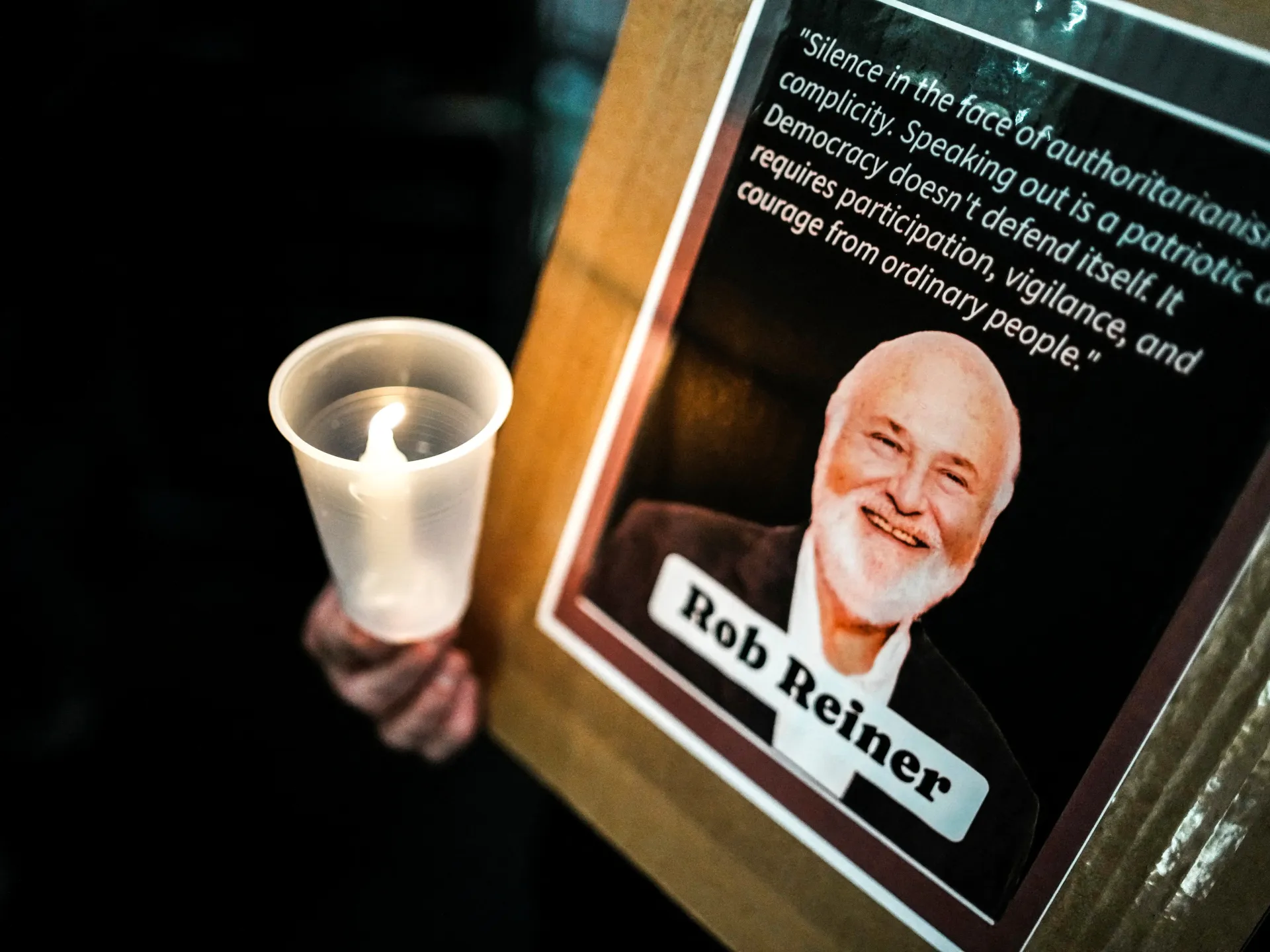
Nick Reiner’s lawyer resigns amid court proceedings for Rob Reiner’s murder | Crime News

Alan Jackson steps down as lawyer for Nick Reiner, who is accused of killing his mother and father in December.

The high-profile lawyer representing Nick Reiner, who allegedly killed his father, director Rob Reiner, and mother Michele Singer Reiner in December, has resigned.

The announcement that lawyer Alan Jackson would step down from the case means that the younger Reiner will, at least for the time being, be represented by a public defender provided by the state.

Recommended Stories

list of 3 itemsend of list

During a news conference on Wednesday, Jackson did not provide a reason for his departure, instead citing the legal and ethical reasons he could not provide more details.

“Circumstances beyond our control and, more importantly, circumstances beyond Nick’s control have dictated that, sadly, it’s made it impossible to continue our representation of Nick,” Jackson said.

He added that, after weeks of investigation, “what we’ve learned, and you can take this to the bank, is that pursuant to the laws of this state, pursuant to the law of California, Nick Reiner is not guilty of murder. Print that.”

Jackson did not elaborate.

The lawyer had first appeared in court to represent the 32-year-old suspect just days after Rob Reiner and his wife were found dead on December 14 in their home in the upscale Brentwood neighbourhood of Los Angeles, California.

The cause of death was determined to be “multiple sharp force injuries”, another term for stab wounds.

Jackson, whose past clients include producer Harvey Weinstein and actor Kevin Spacey, did not explain how he was hired or who hired him after Nick Reiner was arrested for the killings.

On Wednesday, Deputy Public Defender Kimberly Greene took over Nick Reiner’s defence in the case.

That came as the defendant, standing behind glass in a custody area of the courtroom and wearing brown jail garb and with his hair shaved, briefly appeared in a Los Angeles court, where he was meant to be arraigned and enter a plea to two charges of first-degree murder.

Instead, the arraignment was postponed to February 23.

“The Public Defender’s Office recognises what an unimaginable tragedy this is for the Reiner family and the Los Angeles community,” Deputy Los Angeles Public Defender Ricardo Garcia said in a statement following the hearing.

“Our hearts go out to the Reiner family as they navigate this difficult time. We ask for your patience and compassion as the case moves through the legal process.”

Rob Reiner’s killing resonated across the world, reflecting the global impact of his films, which included the coming-of-age drama Stand By Me, the courtroom thriller A Few Good Men and the romantic comedy When Harry Met Sally.

Rob and Nick Reiner had previously worked together on a film, Being Charlie, which was partially based on the younger Reiner’s struggles with drug addiction and mental health.

Source link

US says it will control Venezuela’s oil sales ‘indefinitely’ | Oil and Gas News

The United States says it will control sales of Venezuelan oil “indefinitely” and decide how the proceeds of those sales are used, as President Donald Trump’s administration consolidates control over the South American country after abducting its president.

The US Department of Energy said on Wednesday that it had “begun marketing” Venezuelan oil on global markets and all proceeds from the sales “will first settle in US-controlled accounts at globally recognized banks”.

Recommended Stories

list of 4 itemsend of list

“These funds will be disbursed for the benefit of the American people and the Venezuelan people at the discretion of the US government,” it said.

“These oil sales begin immediately with the anticipated sale of approximately 30-50 million barrels. They will continue indefinitely.”

The announcement comes just days after the Trump administration abducted Venezuelan President Nicolas Maduro on Saturday in what legal experts say was a clear violation of international law.

The US has said it plans to “run” the country and take control of its vast oil reserves, with Trump saying on social media on Tuesday that Caracas would hand between 30 and 50 million barrels of oil over to Washington.

The US actions against Venezuela come amid a months-long pressure campaign by the Trump administration against Maduro, who has been charged in New York with drug trafficking offences that he denies.

That has included a partial US naval blockade against Venezuela and the seizure of several vessels that the Trump administration says were transporting oil to and from the country in violation of US sanctions.

Earlier on Wednesday, US special forces seized two Venezuela-linked vessels – including a Russian-flagged ship in the North Atlantic – for allegedly breaching those sanctions.

The seizures came as senior US officials briefed lawmakers on Capitol Hill about the Trump administration’s plans in Venezuela.

Reporting from Washington, DC, Al Jazeera’s Alan Fisher said most Republicans have backed Trump’s actions while Democrats have raised a slew of questions.

That includes “how long this operation in Venezuela will continue, what it will cost, [whether] any American servicemen actually be deployed on the ground in Venezuela, and what is the Venezuelan reaction,” Fisher explained.

“The Trump administration [is] hoping to get everyone on side before the end of the day,” he added.

Democratic Senator Elizabeth Warren wrote on social media that Wednesday’s briefing was “worse” than imagined.

“Oil company executives seem to know more about Trump’s secret plan to ‘run’ Venezuela than the American people. We need public Senate hearings NOW,” she said.

Three-phased plan

US Secretary of State Marco Rubio told reporters on Wednesday that the Trump administration is pursuing a three-phased plan that begins with the sales of Venezuelan oil.

“That money will then be handled in such a way that we will control how it’s dispersed in a way that benefits the Venezuelan people, not corruption, not the regime,” Rubio said.

The second phase would see US and other companies gain access to the Venezuelan market, and “begin to create the process of reconciliation nationally … so that opposition forces can be amnestied and released from prisons or brought back to the country”.

“And then the third phase, of course, would be one of transition,” Rubio added.

Gregory Brew, a senior analyst on Iran and energy at Eurasia Group, said the US announcement about controlling Venezuelan oil sales hints at “a return to the concessionary system” in place before the 1970s.

Brew explained in a social media post that, under that system, “producer states own the oil but it is Western firms that manage production and marketing, ultimately retain the bulk of the profits”.

A group of United Nations experts also warned that recent statements from Trump and other administration officials about plans to “run” Venezuela and exploit its oil reserves would violate international law.

Specifically, the experts said the US position contravenes “the right of peoples to self-determination and their associated sovereignty over natural resources, cornerstones of international human rights law”.

“Venezuela’s vast natural resources, including the largest proven oil reserves in the world, must not be cynically exploited through thinly veiled pretexts to legitimise military aggression, foreign occupation, or regime-change strategies,” they said.

Political situation unstable

Renata Segura, the Latin America and Caribbean programme director at the International Crisis Group, noted Venezuelan authorities have not commented on the US saying it plans to control sales of the country’s oil.

“And so we have to assume that either [the Venezuelan authorities] have accepted these terms, or that they’re just going to be forced to accept them,” Segura told Al Jazeera.

Venezuelan Vice President Delcy Rodriguez was sworn in as president earlier this week following Maduro’s abduction, stressing on Tuesday that “there is no foreign agent governing Venezuela” despite US claims to “run” the country.

Segura explained, “There’s a lot of debate within the [Venezuelan] regime itself about how to move forward” amid the US pronouncements, stressing the political situation remains far from stable.

“It’s very important what the army might do,” she said.

“The military forces in Venezuela control enormous amounts of power – both economic but also on the streets – and there might be a moment in which they think they’re not going to be on board with this particular arrangement that the United States is presenting.”

Source link

Trump’s former advisor said Russia offered U.S. free rein in Venezuela in exchange for Ukraine

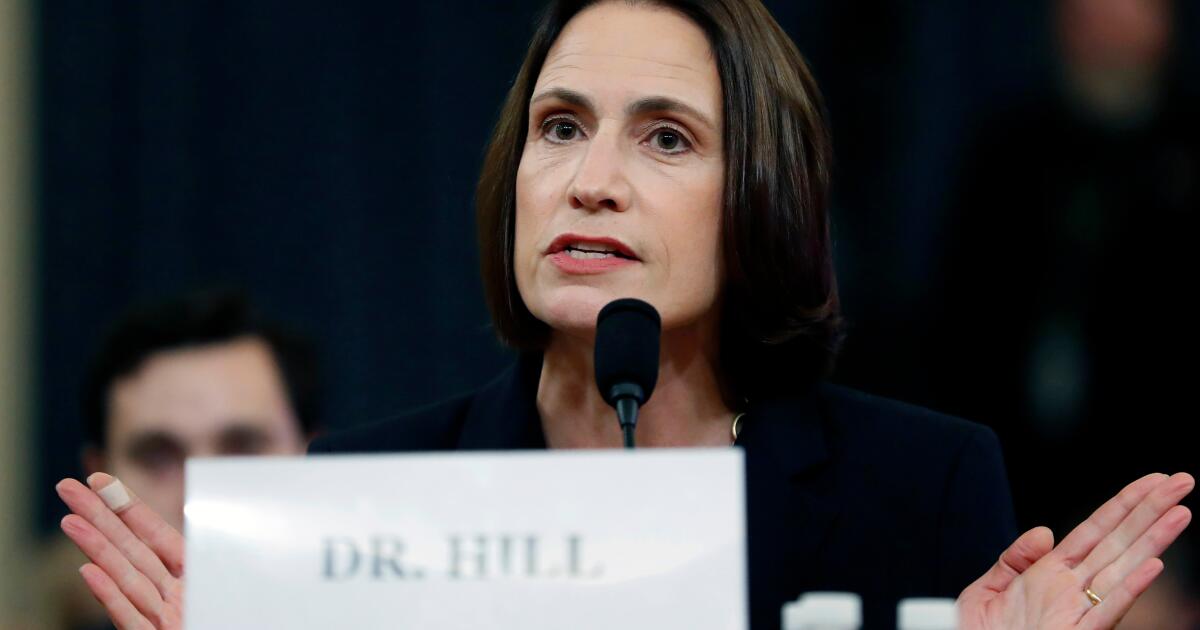
Russian officials indicated in 2019 that the Kremlin would be willing to back off from its support for Nicolás Maduro in Venezuela in exchange for a free hand in Ukraine, according to Fiona Hill, an advisor to President Trump at the time.

The Russians repeatedly floated the idea of a “very strange swap arrangement between Venezuela and Ukraine,” Hill said during a congressional hearing in 2019. Her comments surfaced again this week and were shared on social media after the U.S. stealth operation to capture Maduro.

Hill said Russia pushed the idea through articles in Russian media that referenced the Monroe Doctrine — a 19th-century principle in which the U.S. opposed European meddling in the Western Hemisphere and, in return, agreed to stay out of European affairs. It was invoked by Trump to justify the U.S. intervention in Venezuela.

Even though Russian officials never made a formal offer, Moscow’s then-ambassador to the United States, Anatoly Antonov, hinted many times to her that Russia was willing to allow the United States to act as it wished in Venezuela if the U.S. did the same for Russia in Europe, Hill told the Associated Press this week.

“Before there was a ‘hint hint, nudge nudge, wink wink, how about doing a deal?’ But nobody [in the U.S.] was interested then,” Hill said.

Trump dispatched Hill — then his senior advisor on Russia and Europe — to Moscow in April 2019 to deliver that message. She said she told Russian officials “Ukraine and Venezuela are not related to each other.”

At that time, she said, the White House was aligned with allies in recognizing Venezuelan opposition leader Juan Guaido as the country’s interim president.

But fast forward seven years and the situation is different.

After ousting Maduro, the U.S. has said it will now “run” Venezuela policy. Trump also has renewed his threat to take over Greenland — a self-governing territory of Denmark and part of the NATO military alliance — and threatened to take military action against Colombia for facilitating the global sale of cocaine.

The Kremlin will be “thrilled” with the idea that large countries — such as Russia, the United States and China — get spheres of influence because it proves “might makes right,” Hill said.

Trump’s actions in Venezuela make it harder for Kyiv’s allies to condemn Russia’s designs on Ukraine as “illegitimate” because “we’ve just had a situation where the U.S. has taken over — or at least decapitated the government of another country — using fiction,” Hill told AP.

The Trump administration has described its raid in Venezuela as a law enforcement operation and has insisted that capturing Maduro was legal.

The Russian Foreign Ministry did not immediately respond to a request for comment on Hill’s account.

Russian President Vladimir Putin has not commented on the military operation to oust Maduro but the Foreign Ministry issued statements condemning U.S. “aggression.”

Burrows writes for the Associated Press.

Source link

Warner Bros again rejects latest hostile bid from Paramount | Media News

The board of Warner Bros Discovery (WBD) has unanimously turned down Paramount Skydance’s latest attempt to acquire the studio, saying its revised $108.4bn hostile bid amounted to a risky leveraged buyout that investors should reject.

In a letter to shareholders on Wednesday, the WBD board said Paramount’s offer hinges on “an extraordinary amount of debt financing” that heightens the risk of closing. It reaffirmed its commitment to streaming giant Netflix’s $82.7bn deal for the film and television studio and other assets.

Recommended Stories

list of 4 itemsend of list

Some investors, however, pushed back on Warner Bros. Pentwater Capital Management CEO Matthew Halbower said that the media giant’s board had “made an error” by not considering Paramount’s bid.

On CNBC on Wednesday, Halbower called the deal “economically superior”.

Paramount’s financing plan would saddle the smaller Hollywood studio with $87bn in debt once the acquisition closes, making it the largest leveraged buyout in history, the Warner Bros board told shareholders after voting against the $30-per-share cash offer on Tuesday. The letter accompanied a 67-page amended merger filing that laid out its case for rejecting Paramount’s offer.

Paramount deal ‘remains inadequate’

The revised Paramount offer “remains inadequate particularly given the insufficient value it would provide, the lack of certainty in Paramount Skydance ability to complete the offer, and the risks and costs borne by WBD shareholders should Paramount Skydance fail to complete the offer”, the Warner Bros board wrote.

Paramount, which has a market value of about $14bn, proposed to use $40bn in equity, which would be personally guaranteed by Oracle’s billionaire co-founder Larry Ellison, whose son David is Paramount’s CEO, and $54bn in debt to finance the deal.

Its financing plan would further weaken its credit rating, which S&P Global already rates at junk levels, and strain its cash flow – heightening the risk that the deal will not close, the Warner Bros board said. Netflix, which has offered $27.75 a share in cash and stock, has a $400bn market value and investment-grade credit rating.

The decision keeps Warner Bros on track to pursue the deal with Netflix, even after Paramount amended its bid on December 22 to address the earlier concerns about the lack of a personal guarantee from Ellison, who is Paramount’s controlling shareholder.

Paramount and Netflix have been vying to win control of Warner Bros, and with it, its prized film and television studios and its extensive content library. Its lucrative entertainment franchises include  Harry Potter, Game of Thrones, Friends, and the DC Comics universe; as well as coveted classic films such as Casablanca and Citizen Kane.

Netflix applauds

Netflix co-CEOs Ted Sarandos and Greg Peters welcomed Warner Bros’ decision on Wednesday, saying it recognises the streaming giant’s deal “as the superior proposal that will deliver the greatest value to its stockholders, as well as consumers, creators and the broader entertainment industry”.

Warner Bros Chairman Samuel Di Piazza told CNBC that the company was not currently in talks with Paramount but remains open to a transaction with the Ellison-led firm, and both the deals have a path to regulatory approval.

“From our perspective, they’ve got to put something on the table that is compelling,” he said, referring to the Paramount offer.

Wednesday’s filing said Warner Bros’ board met on December 23 to review Paramount’s amended offer and noted some improvements, including Ellison’s personal guarantee and a higher reverse termination fee of $5.8bn, but found “significant costs” associated with Paramount’s bid compared with a Netflix deal.

Warner Bros would be obligated to pay the streaming service a $2.8bn termination fee for abandoning its merger agreement with Netflix, $1.5bn in fees to its lenders and about $350m in additional financing costs. Altogether, Warner Bros said it would incur about $4.7bn in additional costs to terminate its deal with Netflix, or $1.79 per share.

The board repeated some concerns it had laid out on December 17, such as that Paramount would impose operating restrictions on the studio that would harm its business and competitive position, including barring the planned spin-out of the company’s cable television networks into a separate public company, Discovery Global.

Paramount offered “insufficient compensation” for the damage done to the studio’s business, if the Paramount deal failed to close, Warner Bros said.

Paramount “repeatedly failed to submit the best proposal” to Warner Bros shareholders, the board wrote, “despite clear direction” on the deficiencies in its bid and potential solutions.

The jockeying for Warner Bros has become Hollywood’s most closely watched takeover battle, as studios race to scale up amid intensifying competition from streaming platforms and volatile theatrical revenues.

While Netflix’s offer has a lower headline value, analysts have said it presents a clearer financing structure and fewer execution risks than Paramount’s bid for the entire company, including its cable TV business.

“WBD does not want to sell to Paramount, so it will keep rejecting Paramount as long as it is able to,” said Ross Benes, an analyst at eMarketer.

“But this process is not over … Paramount will have opportunity to make further attempts.”

Harris Oakmark, Warner Bros’ fifth-largest investor, previously told Reuters that Paramount’s revised offer was not “sufficient”, noting it was not enough to cover the breakup fee.

Paramount has argued its bid would face fewer regulatory obstacles, but a combined Paramount-Warner Bros entity would create a formidable competitor to industry leader Disney and merge two major television operators and two streaming services.

The valuation of Warner Bros’ planned Discovery Global spin-off, which includes cable television networks CNN, TNT Sports and the Discovery+ streaming service, is seen as a major sticking point. Analysts peg the cable channels’ value at up to $4 per share, while Paramount has suggested just $1.

Lawmakers from both parties have raised concerns about further consolidation in the media industry, and US President Donald Trump has said he plans to weigh in on the landmark acquisition.

On Wall Street, Warner Bros Discovery is up 0.3 percent in midday trading amid the news of the rejected bid. Netflix is also up 0.3. Meanwhile, Paramount is down 0.1 percent.

Source link

Trump says he wants to free up Venezuelan oil flow. What was blocking it? | US-Venezuela Tensions News

United States President Donald Trump and Secretary of State Marco Rubio say they want to free up the flow of Venezuelan oil to benefit Venezuelans after US forces abducted President Nicolas Maduro from Caracas.

“We’re going to rebuild the oil infrastructure, which requires billions of dollars that will be paid for by the oil companies directly,” Trump said at a media briefing at his Mar-a-Lago estate in Florida hours after Maduro was seized on Saturday. “They will be reimbursed for what they’re doing, but it’s going to be paid, and we’re going to get the oil flowing.”

Then, on Tuesday, the US president said he wanted to use proceeds from the sale of Venezuelan oil “to benefit the people of Venezuela and the United States”. Rubio has echoed Trump in his comments in recent days.

But what has been holding back the flow of Venezuelan oil, preventing the country from attracting investments and driving the country into poverty?

A key reason is one that Trump and Rubio have been silent about: Washington’s own efforts to strangle Venezuela’s oil industry and economy through sanctions, which also have set off a refugee crisis.

What has Trump said about Venezuelan oil?

In a post on his Truth Social platform on Tuesday night, Trump said Venezuela will turn over 30 million to 50 million barrels of sanctioned oil to the US.

Trump wrote: “This Oil will be sold at its Market Price, and that money will be controlled by me, as President of the United States of America, to ensure it is used to benefit the people of Venezuela and the United States!”

Trump added that he had directed his energy secretary, Chris Wright, to execute the plan “immediately”.

“It will be taken by storage ships, and brought directly to unloading docks in the United States,” Trump wrote.

During the news conference on Saturday, Trump said US oil companies would fix Venezuela’s “broken infrastructure” and “start making money for the country”.

Earlier Trump had accused Venezuela in a Truth Social post of “stealing” US oil, land and other assets and using that oil to fund crime, “terrorism” and human trafficking. Top Trump adviser Stephen Miller has made similar claims in recent days.

What does it mean for the US to take Venezuelan oil?

Oil is trading at roughly $56 per barrel.

Based on this price, 30 million barrels of oil would be worth $1.68bn and 50 million barrels of oil would be worth $2.8bn.

“Trump’s statement about oil in Venezuela is beyond an act of war; it is an act of colonisation. That is also illegal based on the UN Charter,” Vijay Prashad, the director of the Tricontinental Institute for Social Research based in Argentina, Brazil, India, and South Africa, told Al Jazeera.

Ilias Bantekas, a professor of transnational law at Hamad Bin Khalifa University in Qatar, told Al Jazeera that the US involvement in Venezuela was “less about Maduro as it is about access to Venezuela’s oil deposits”.

“This [oil] is the number one target. Trump is not content with just allowing US oil firms to get concessions but to ‘run’ the country, which entails absolute and indefinite control over Venezuela’s resources.”

According to the website of the US Energy Information Administration, the US consumed an average of 20.25 million barrels of petroleum per day in 2023.

What has Rubio said about Venezuelan oil?

In an interview on the NBC TV network’s Meet the Press programme that aired on Sunday, Rubio said: “We are at war against drug trafficking organisations. That’s not a war against Venezuela.”

“No more drug trafficking … and no more using the oil industry to enrich all our adversaries around the world and not benefitting the people of Venezuela or, frankly, benefitting the United States and the region,” Rubio said.

Rubio said in the interview that since 2014, about eight million Venezuelans have fled the country, which he attributed to theft and corruption by Maduro and his allies. According to a report by the Office of the UN High Commissioner for Refugees from May, nearly 7.9 million people have indeed left Venezuela.

But he was silent on the US’s own role in creating that crisis.

What are the US sanctions against Venezuela’s oil?

Venezuela nationalised its oil industry in 1976 under then-President Carlos Andres Perez during an oil boom. He established the state-owned Petroleos de Venezuela SA (PDVSA) to control all oil resources.

Venezuela continued to be a major oil exporter to the US for some years, supplying 1.5 million to 2 million barrels per day in the late 1990s and early 2000s.

After President Hugo Chavez took office in 1998, he nationalised all oil assets, seized foreign-owned assets, restructured the PDVSA and prioritised using oil revenue for social programmes in Venezuela.

From 2003 to 2007, Venezuela under Chavez managed to cut its poverty rate in half – from 57 percent to 27.5 percent. Extreme poverty fell even more sharply, by 70 percent.

But exports declined, and government authorities were accused of mismanagement.

The US first imposed sanctions on Venezuela’s oil in retaliation for nationalising US oil assets in 2005.

Under US sanctions, many senior Venezuelan government officials and companies have been barred from accessing any property or financial assets held in the US. They cannot access US bank accounts, sell property or access their money if it passes through the US financial system.

Critically, any US companies or citizens doing business with any sanctioned individual or company will be penalised and risk becoming subject to enforcement actions.

Maduro took over as president in 2013 after Chavez’s death. In 2017, Trump, during his first term in office, imposed more sanctions and tightened them again in 2019. This further restricted sales to the US and access for Venezuelan companies to the global financial system. As a result, oil exports to the US nearly stopped, and Venezuela shifted its trade mainly to China with some sales to India and Cuba.

Last month, the Trump administration imposed yet more sanctions – this time on Maduro family members and Venezuelan tankers carrying sanctioned oil.

Today, the PDVSA controls the petroleum industry in Venezuela, and US involvement in Venezuelan oil drilling is limited. Houston-based Chevron is the only US company that still operates in Venezuela.

How have sanctions hurt Venezuela’s oil flows?

Trump might today be interested in getting Venezuelan oil flowing, but it is US sanctions that blocked that flow in the first place.

Venezuela’s oil reserves are concentrated primarily in the Orinoco Belt, a region in the eastern part of the country stretching across roughly 55,000sq km (21,235sq miles).

While the country is home to the world’s largest proven oil reserves – at an estimated 303 billion barrels – it earns only a fraction of the revenue it once did from exporting crude.

[BELOW: The sentence above promises statistics that will show how much oil exports have dropped, but the next graf doesn’t deliver. We should add that figure]

According to data from the Observatory of Economic Complexity, Venezuela exported $4.05bn of crude oil in 2023. This is far below other major exporters, including Saudi Arabia ($181bn), the US ($125bn) and Russia ($122bn).

How have US sanctions hurt Venezuelans and the country’s oil infrastructure?

The US sanctions on Venezuelan oil prevent US and non-US companies from doing business with the PDVSA. Because the US is a market no one wants to lose, firms, including banks, are wary of taking any steps that could invite Washington’s sanctions.

In effect, that has meant Venezuela’s oil industry has been almost entirely deprived of international financial investment.

The sanctions additionally restrict Venezuela from accessing oilfield equipment, specialised software, drilling services and refinery components from Western companies.

This has resulted in years of underinvestment in the PDVSA’s infrastructure, leading to chronic breakdowns, shutdowns and accidents.

The sanctions have also resulted in broader economic turmoil.

The country’s gross domestic product per capita stood at about $4,200 in 2024, according to World Bank data, down from more than $13,600 in 2010.

From about 2012, the economy went into a sharp decline, driven by domestic economic policies, a slump that was later deepened by US sanctions. The resulting hardships have pushed millions of Venezuelans to leave the country – the same people who Trump and Rubio now argue should benefit from Venezuela’s oil revenues.

Does the US have any claim to Venezuelan oil?

US companies began drilling for oil in Venezuela in the early 1900s.

In 1922, vast petroleum reserves were initially discovered by Royal Dutch Shell in Lake Maracaibo in Zulia state in northwestern Venezuela.

At this point, US companies ramped up their investments in the extraction and development of Venezuelan oil reserves. Companies such as Standard Oil led development under concession agreements, propelling Venezuela to a position as a key global supplier, especially for the US.

Venezuela was a founding member of OPEC, joining at its creation on September 14, 1960. OPEC is a group of major oil-exporting countries that work together to manage supply and influence global oil prices.

But the claims by Trump and Miller that Venezuela somehow “stole” US oil are baseless under international law, experts said.

The principle of permanent sovereignty over natural resources, adopted by the UN General Assembly in a resolution in 1962, is clear that sovereign states have the inherent right to control, use and dispose of their resources for their own development.

In other words, Venezuela alone owns its oil.

Source link

Do Russia and China pose a national security threat to the US in Greenland? | Donald Trump News

US President Donald Trump sees Greenland as a United States national security priority to deter Washington’s “adversaries in the Arctic region”, according to a White House statement released on Tuesday.

The statement came days after Trump told reporters that the US needs Greenland from a national security perspective because it is “covered with Russian and Chinese ships”.

Recommended Stories

list of 4 itemsend of list

Here’s what you need to know about what Trump said, whether Russia and China are present in Greenland, and whether they do pose a threat to American security.

What has Trump recently said about Greenland?

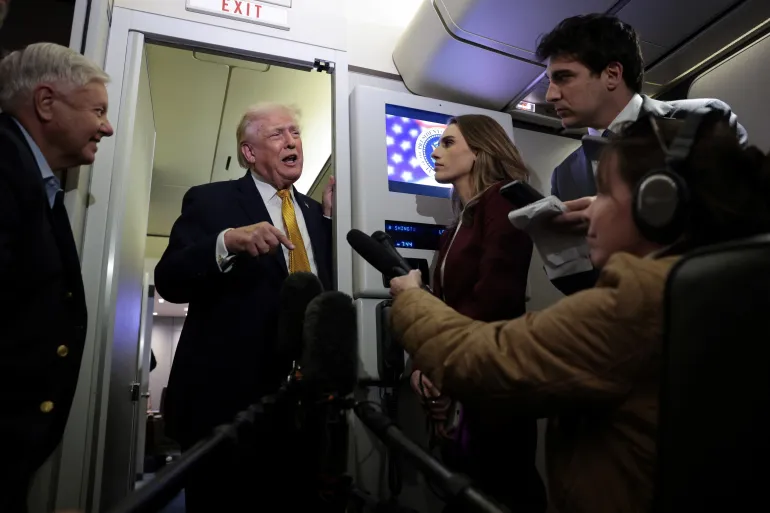
“Right now, Greenland is covered with Russian and Chinese ships all over the place. We need Greenland from the standpoint of national security,” Trump told reporters aboard Air Force One on January 4.

The White House statement on Tuesday fleshed out further details on how the US would go about its acquisition of Greenland.

“The president and his team are discussing a range of options to pursue this important foreign policy goal, and of course, utilizing the US military is always an option at the commander-in-chief’s disposal,” the White House statement says.

Over the course of his second term, Trump has talked about wanting Greenland for national security reasons multiple times.

“We need Greenland for international safety and security. We need it. We have to have it,” he said in March.

Since 1979, Greenland has been a self-governing territory of Denmark, and since 2009, it has had the right to declare independence through a referendum.

Trump has repeatedly expressed a desire to take control of the island, which hosts a US military base. He first voiced this desire in 2019, during his first term as US president.

As a response, leaders from Greenland and Denmark have repeatedly said that Greenland is not for sale. They have made it clear that they are especially not interested in becoming part of the US.

On January 4, Denmark’s Prime Minister Mette Frederiksen said, “It makes absolutely no sense to talk about the US needing to take over Greenland.”

“The US has no right to annex any of the three countries in the Danish kingdom,” she said, alluding to the Faroe Islands, which, like Greenland, are also a Danish territory.

“I would therefore strongly urge the US to stop the threats against a historically close ally and against another country and another people who have very clearly said that they are not for sale,” Frederiksen said.

US special forces abducted Venezuelan President Nicolas Maduro during an operation in the Venezuelan capital, Caracas, on January 3.

Hours later, Katie Miller, the wife of close Trump aide and US Homeland Security Advisor Stephen Miller, posted a photo on X showing the US flag imposed on the map of Greenland.

Greenland’s Prime Minister Jens-Frederik Nielsen hit back in an X post, writing, “Relations between nations and peoples are built on mutual respect and international law – not on symbolic gestures that disregard our status and our rights.”

Why does Trump want Greenland so badly?

The location and natural resources of the Arctic island make it strategically important for Washington.

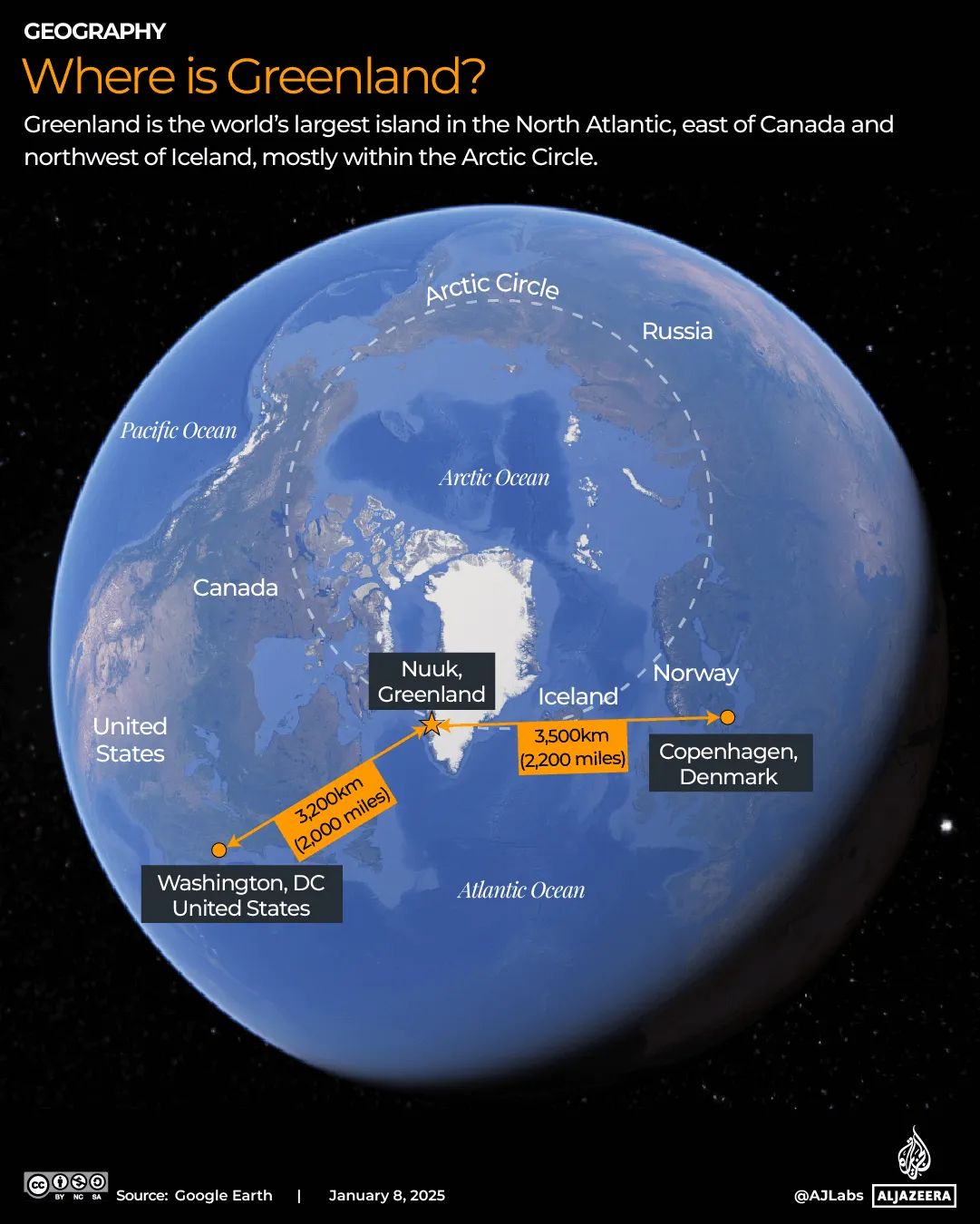
Greenland is geographically part of North America, located between the Arctic Ocean and the North Atlantic Ocean. It is home to some 56,000 residents, mostly Indigenous Inuit people.

It is the world’s largest island. Greenland’s capital, Nuuk, is closer to New York City  – some 2,900km (1,800 miles) away – than the Danish capital Copenhagen, which is located 3,500km (2,174 miles) to the east.

Greenland, a NATO territory through Denmark, is an EU-associated overseas country and territory whose residents remain European Union citizens, having joined the European Community with Denmark in 1973 but having withdrawn in 1985.

“It’s really tricky if the United States decides to use military power to take over Greenland. Denmark is a member of NATO; the United States is a member as well. It really calls into question what the purpose of the military alliance is, if that happens,” Melinda Haring, a senior fellow at the Atlantic Council Eurasia Center, told Al Jazeera.

Greenland offers the shortest route from North America to Europe. This gives the US a strategic upper hand for its military and its ballistic missile early-warning system.

The US has expressed interest in expanding its military presence in Greenland by placing radars in the waters connecting Greenland, Iceland and the United Kingdom. These waters are a gateway for Russian and Chinese vessels, which Washington aims to track.

The island is also incredibly rich in minerals, including rare earth minerals used in the high-tech industry and in the manufacture of batteries.

According to a 2023 survey, 25 of 34 minerals deemed “critical raw materials” by the European Commission were found in Greenland.

Greenland does not carry out the extraction of oil and gas, and its mining sector is opposed by its Indigenous population. The island’s economy is largely reliant on its fishing industry.

INTERACTIVE - Where is Greenland Map

Are Chinese and Russian ships swarming Greenland?

However, while Trump has spoken of Russian and Chinese ships around Greenland, currently, facts don’t bear that out.

Vessel tracking data from maritime data and intelligence websites such as MarineTraffic do not show the presence of Chinese or Russian ships near Greenland.

Are Russia and China a threat to Greenland?

The ships’ location aside, Trump’s rhetoric comes amid a heightened scramble for the Arctic.

Amid global warming, the vast untapped resources of the Arctic are becoming more accessible. Countries like the US, Canada, China and Russia are now eyeing these resources.

“Russia has never threatened anyone in the Arctic, but we will closely follow the developments and mount an appropriate response by increasing our military capability and modernising military infrastructure,” Russian President Vladimir Putin said during an address in March 2025 at the International Arctic Forum in the Russian city of Murmansk, the largest city within the Arctic Circle.

During this address, Putin said that he believed Trump was serious about taking Greenland and that the US will continue with efforts to acquire it.

In December 2024, Canada released a policy document detailing plans to ramp up its military and diplomatic presence in the Arctic. Russia is also constructing military installations and power plants in the region.

Meanwhile, Russia and China have been working together to develop Arctic shipping routes as Moscow seeks to deliver more oil and gas to China amid Western sanctions while Beijing seeks an alternative shipping route to reduce its dependence on the Strait of Malacca.

The Northern Sea Route (NSR), a maritime route in the Arctic Ocean, is becoming easier to navigate due to melting ice. The NSR can cut shipping trips significantly short. Russia is hoping to ramp up commerce through the NSR to trade more with Asia than Europe due to Western sanctions. Last year, the number of oil shipments from Russia to China via the NSR rose by a quarter.

China is also probing the region, and has sent 10 scientific expeditions to the Arctic and built research vessels to survey the icy waters north of Russia.

Source link

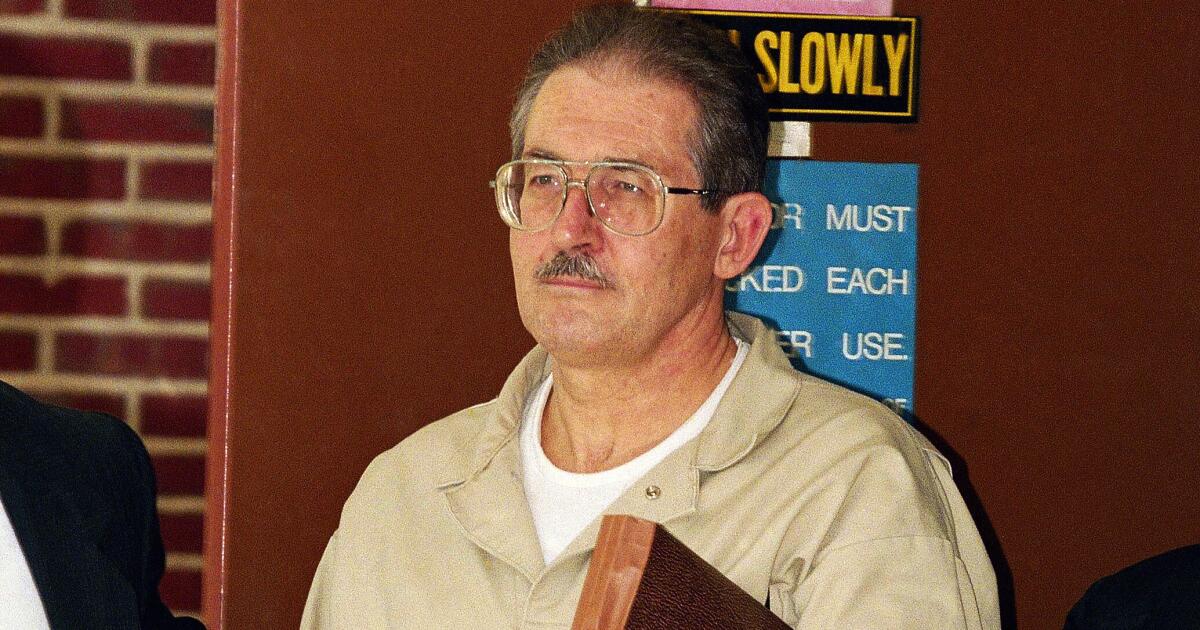
CIA turncoat Aldrich Ames, who sold US secrets to the Soviets, dies in prison at 84

CIA turncoat Aldrich Ames, who betrayed Western intelligence assets to the Soviet Union and Russia in one of the most damaging intelligence breaches in U.S. history, has died in a Maryland prison. He was 84.

A spokesperson for the Bureau of Prisons confirmed Ames died Monday.

Ames, a 31-year CIA veteran, admitted being paid $2.5 million by Moscow for U.S. secrets from 1985 until his arrest in 1994. His disclosures included the identities of 10 Russian officials and one Eastern European who were spying for the United States or Great Britain, along with spy satellite operations, eavesdropping and general spy procedures. His betrayals are blamed for the executions of Western agents working behind the Iron Curtain and were a major setback to the CIA during the Cold War.

He pleaded guilty without a trial to espionage and tax evasion and was sentenced to life in prison without parole. Prosecutors said he deprived the United States of valuable intelligence material for years.

He professed “profound shame and guilt” for “this betrayal of trust, done for the basest motives,” money to pay debts. But he downplayed the damage he caused, telling the court he did not believe he had “noticeably damaged” the United States or “noticeably aided” Moscow.

“These spy wars are a sideshow which have had no real impact on our significant security interests over the years,” he told the court, questioning the value that leaders of any country derived from vast networks of human spies around the globe.

In a jailhouse interview with the Washington Post the day before he was sentenced, Ames said he was motivated to spy by “financial troubles, immediate and continuing.”

Ames was working in the Soviet/Eastern European division at the CIA’s headquarters in Langley, Va., when he first approached the KGB, according to an FBI history of the case. He continued passing secrets to the Soviets while stationed in Rome for the CIA and after returning to Washington. Meanwhile, the U.S. intelligence community was frantically trying to figure out why so many agents were being discovered by Moscow.

Ames’ spying coincided with that of FBI agent Robert Hanssen, who was caught in 2001 and charged with taking $1.4 million in cash and diamonds to sell secrets to Moscow. He died in prison in 2023.

Ames’ wife, Rosario, pleaded guilty to lesser espionage charges of assisting his spying and was sentenced to 63 months in prison.

Source link

How strong are Latin America’s military forces, as they face US threats? | Military News

Over the weekend, the United States carried out a large-scale military strike against Venezuela and abducted President Nicolas Maduro in a major escalation that sent shockwaves across Latin America.

On Monday morning, US President Donald Trump doubled down, threatening action against the governments of Colombia, Cuba and Mexico unless they “get their act together”, claiming he is countering drug trafficking and securing US interests in the Western Hemisphere.

The remarks revive deep tensions over US interference in Latin America. Many of the governments targeted by Trump have little appetite for Washington’s involvement, but their armed forces lack the capacity to keep the US at arm’s length.

U.S. President Donald Trump speaks to reporters aboard Air Force One en route from Florida to Joint Base Andrews, Maryland, U.S., January 4, 2026. REUTERS/Jonathan Ernst
US President Donald Trump issues warnings to Colombia, Cuba and Mexico while speaking to reporters on Air Force One while returning from his Florida estate to Washington, DC, on January 4, 2026 [Jonathan Ernst/Reuters]

Latin America’s military capabilities

The US has the strongest military in the world and spends more on its military than the total budgets of the next 10 largest military spenders combined. In 2025, the US defence budget was $895bn, roughly 3.1 percent of its gross domestic product.

According to the 2025 Global Firepower rankings, Brazil has the most powerful military in Latin America and is ranked 11th globally.

Mexico ranks 32nd globally, Colombia 46th, Venezuela 50th and Cuba 67th. All of these countries are significantly below the US military in all metrics, including the number of active personnel, military aircraft, combat tanks, naval assets and their military budgets.

In a standard war involving tanks, planes and naval power, the US maintains overwhelming superiority.

The only notable metric that these countries have over the US is their paramilitary forces, which operate alongside the regular armed forces, often using asymmetrical warfare and unconventional tactics against conventional military strategies.

INTERACTIVE - Latin America military capabilities - JAN6, 2026-1767695033
(Al Jazeera)

Paramilitaries across Latin America

Several Latin American countries have long histories of paramilitary and irregular armed groups that have often played a role in the internal security of these countries. These groups are typically armed, organised and politically influential but operate outside the regular military chain of command.

Cuba has the world’s third largest paramilitary force, made up of more than 1.14 million members, as reported by Global Firepower. These groups include state-controlled militias and neighbourhood defence committees. The largest of these, the Territorial Troops Militia, serves as a civilian reserve aimed at assisting the regular army against external threats or during internal crises.

In Venezuela, members of pro-government armed civilian groups known as “colectivos” have been accused of enforcing political control and intimidating opponents. Although not formally part of the armed forces, they are widely seen as operating with state tolerance or support, particularly during periods of unrest under Maduro.

In Colombia, right-wing paramilitary groups emerged in the 1980s to fight left-wing rebels. Although officially demobilised in the mid-2000s, many later re-emerged as criminal or neo-paramilitary organisations, remaining active in rural areas. The earliest groups were organised with the involvement of the Colombian military following guidance from US counterinsurgency advisers during the Cold War.

In Mexico, heavily armed drug cartels function as de facto paramilitary forces. Groups such as the Zetas, originally formed by former soldiers, possess military-grade weapons and exercise territorial control, often outgunning local police and challenging the state’s authority. The Mexican military has increasingly been deployed in law enforcement roles in response.

History of US interference in Latin America

Over the past two centuries, the US has repeatedly interfered in Latin America.

In the late 19th and early 20th centuries, the so-called Banana Wars saw US forces deployed across Central America to protect corporate interests.

In 1934, President Franklin D Roosevelt introduced the “Good Neighbor Policy”, pledging nonintervention.

Yet during the Cold War, the US financed operations to overthrow elected governments, often coordinated by the CIA, founded in 1947.

Panama is the only Latin American country the US has formally invaded, which occurred in 1989 under President George HW Bush. “Operation Just Cause” ostensibly was aimed at removing President Manuel Noriega, who was later convicted of drug trafficking and other offences.

Source link

Rodriguez says ‘no foreign agent’ running Venezuela, US role still unclear | US-Venezuela Tensions News

Venezuela’s interim leader, Delcy Rodriguez, has said that “no foreign agent” is running Venezuela in the wake of Nicolas Maduro’s abduction by United States military forces.

Rodriguez, who had been Maduro’s vice president before his abduction, spoke during a televised event on Tuesday, a day after Maduro and his wife, Cilia Flores, pleaded not guilty in a New York court to drug-trafficking conspiracy charges.

Recommended Stories

list of 3 itemsend of list

“The government of Venezuela is in charge in our country, and no one else. There is no foreign agent governing Venezuela,” Rodriguez said.

Venezuela’s prosecutor general, meanwhile, called for the immediate release of Maduro and his wife.

“The military operation, without a declaration of war or a UN Security Council resolution, represents an illegal act of armed aggression of a terrorist nature,” Tarek William Saab said.

The statements come amid the continuing fallout from Saturday’s military operation, which left dozens of people in Venezuela dead. The offensive has been broadly condemned as a violation of international law.

Venezuela on Tuesday released a list of the 24 soldiers killed in the predawn assault. Cuba also announced that 32 members of its military had died. Rodriguez declared a seven-day period of mourning to commemorate the fallen military members.

Since seizing Maduro from his residence, the administration of US President Donald Trump has offered little clarity about its plans for Venezuela.

Trump said on Saturday that the US would “run” Venezuela, a statement US Secretary of State Marco Rubio walked back the next day.

The top diplomat instead said that US officials would guide the “direction” of how the country is run and use sanctions and an ongoing embargo to force more access to Venezuela’s oil industry.

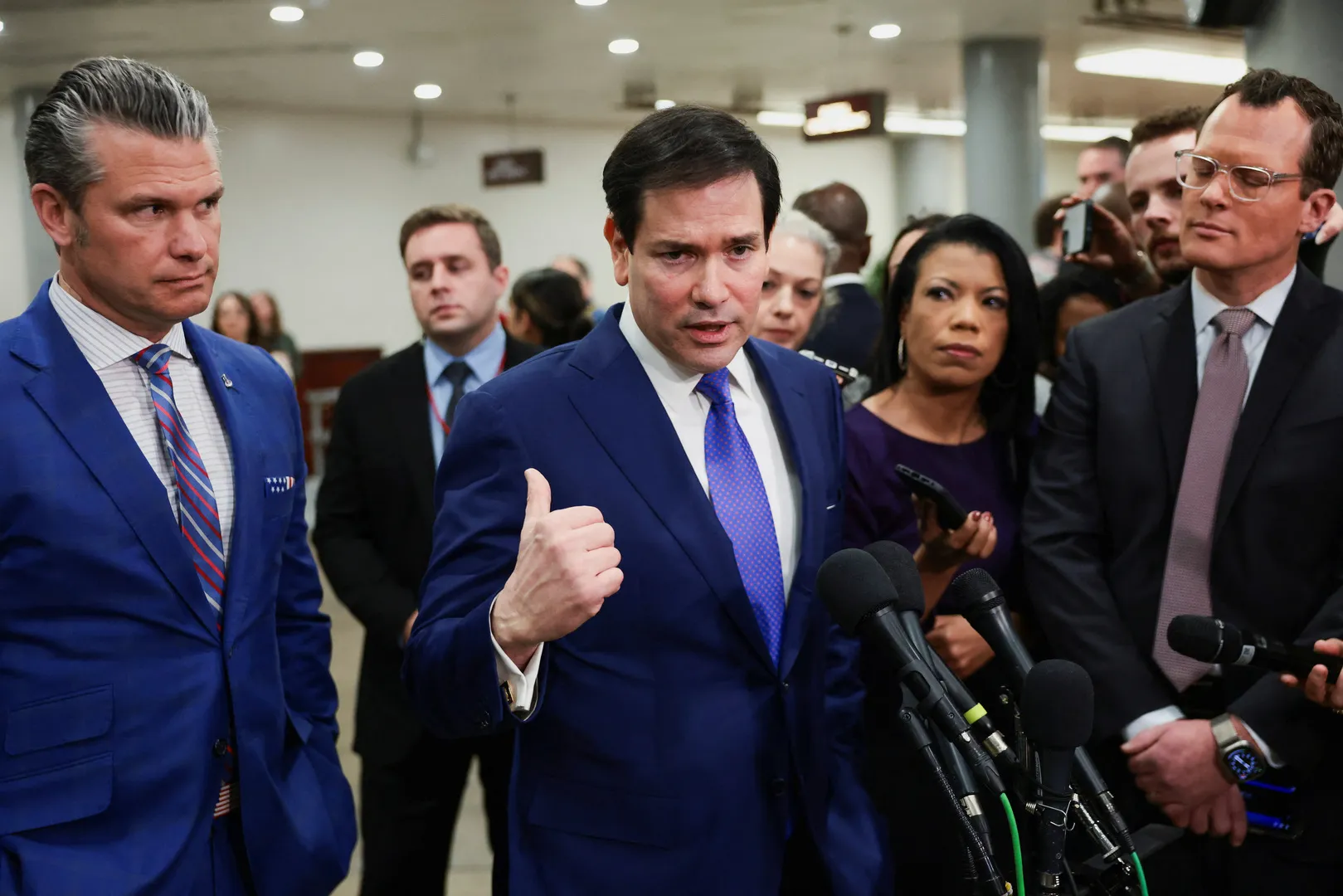
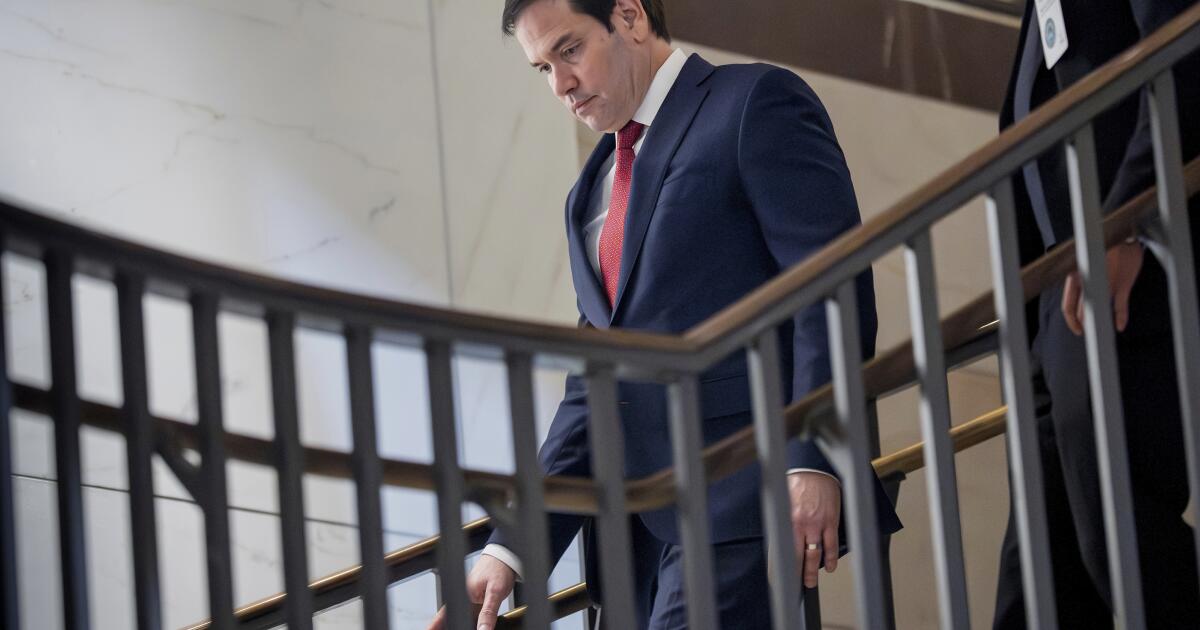
Rubio, US Secretary of Defense Pete Hegseth and Chairman of the Joint Chiefs of Staff Dan Caine briefed a bipartisan group of Congress members on Monday about the Venezuela operation.

But several lawmakers said that the administration had offered scarce insight into its justification for conducting the strike without first seeking approval from Congress, much less its plans for Venezuela’s future.

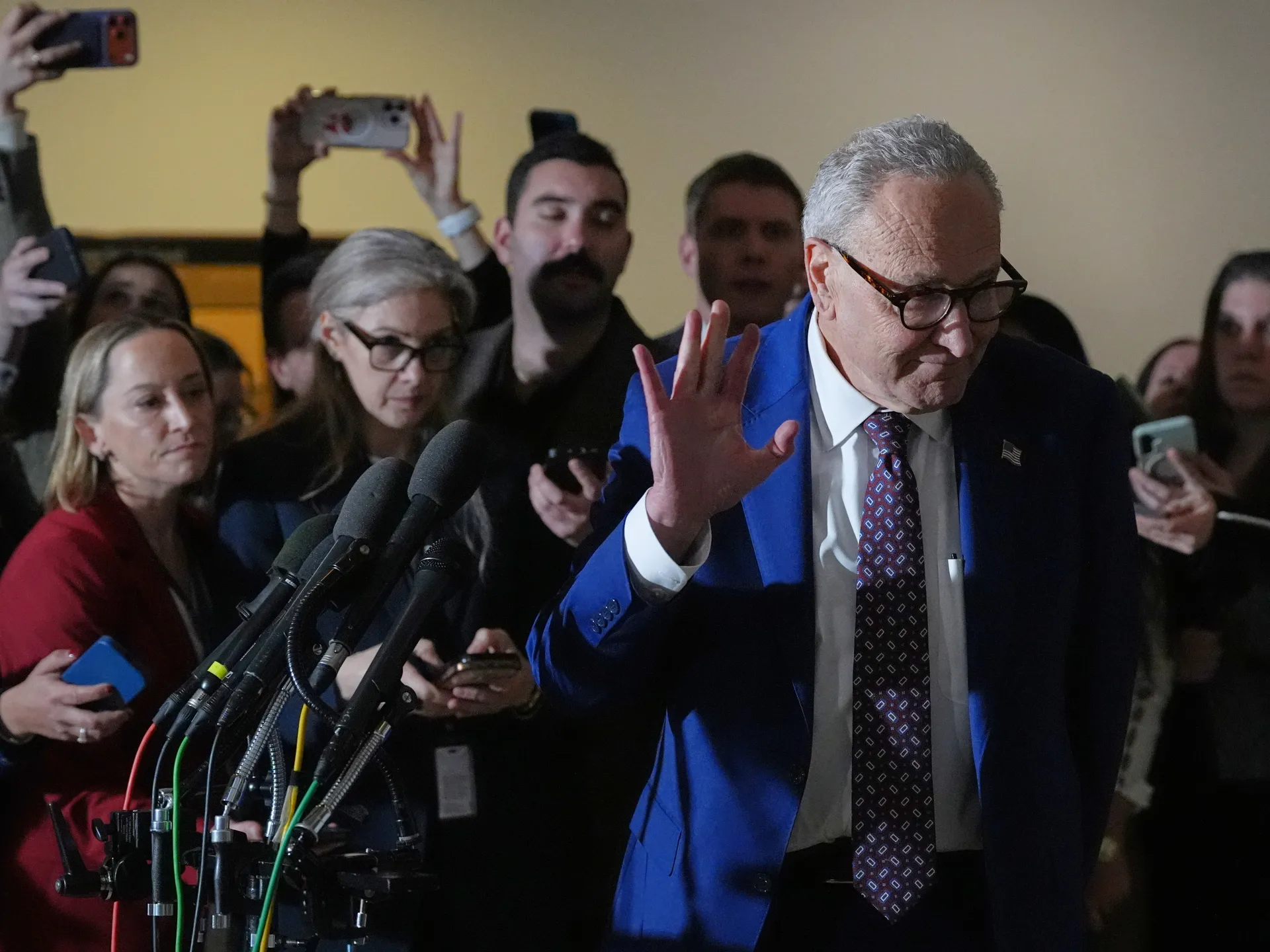
“This briefing, while very extensive and long, posed far more questions than it ever answered,” Senate Minority Leader Chuck Schumer said afterwards.

On Tuesday, Senate Majority Leader John Thune, a Trump ally in the Republican Party, said the next few days would show Venezuela’s “government structure and how willing they are to work with the US”.

In a social media post, Thune called Rodriguez a “practical person, pragmatic person” who “will understand the importance of figuring out a path forward to where America’s national security priorities can be prioritized by Venezuela”.

Trump, meanwhile, offered few new details on the operation during a retreat with Republicans on Tuesday, beyond praising the abduction as an “amazing military feat” and “brilliant tactically”.

Speaking from exile in Miami, Florida, former Venezuelan opposition leader Juan Guaido said the country had a “wonderful and incredible opportunity”.

Guaido, who fled Venezuela in 2023, said that rebuilding the country’s democracy would allow millions of Venezuelans to return, and help “bring back to life the oil fields” and restore prosperity.

He condemned Rodriguez as “an acting dictator”, describing the current period as “a phase of transition” that will only be complete “once the rule of law has been reinstalled”.

Unease in Caracas

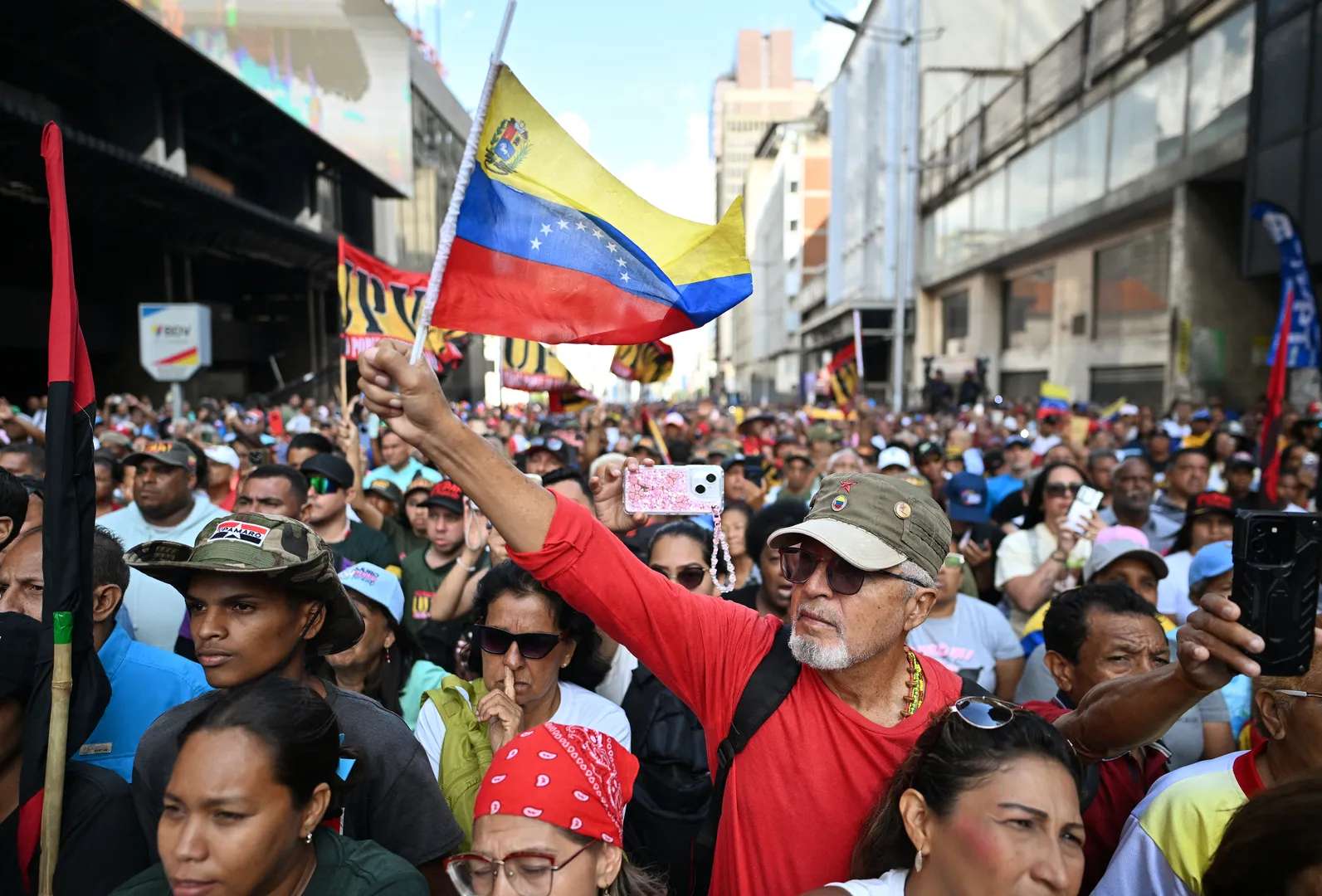
In Venezuela’s capital, Caracas, crowds gathered on Tuesday for a state-organised display of support for the government.

Some marchers flashed “V” victory signs. Hardline Minister of Interior Diosdado Cabello – who, like Maduro, has been indicted by the US Department of Justice – was seen wading through the gathering. He wore a blue cap emblazoned with the slogan, “To doubt is to betray.”

But Noris Argotte Soto, a Venezuelan reporter in Caracas, told Al Jazeera that the situation in the capital continues to be tense, with most residents staying inside their homes.

“In the peripheral areas of the city, everybody remains at home. The tension is rising; people are on edge. And people are very much afraid of going out into the streets, mostly because [of] the security forces that we see at the main points of the city,” she said.

Soto added that government-aligned paramilitaries have been working alongside the military in recent days to maintain security and crack down on potential dissent.

“They were working yesterday with the security forces,” she said.

“They were basically bullying people, intimidating people, searching their cars, even demanding their cell phones to check their messages, check their social media.”

Regional uncertainty

Anxiety was also felt across the region, as the Trump administration has upped its threats against Venezuela’s neighbour, Colombia, as well as the island of Greenland in the northern Atlantic.

In the aftermath of Saturday’s attack, Trump said he had not ruled out an attack on Colombia for allegedly failing to tamp down on the illegal drug trade.

He described the country’s president, Gustavo Petro, who has been a vocal critic of US operations in Venezuela, as a “sick man who likes making cocaine and selling it to the United States”.

On Tuesday, Colombia’s Foreign Affairs Minister Rosa Yolanda Villavicencio announced she will meet with the US Embassy’s charge d’affaires in Bogota to present a formal complaint over the recent US “threats”.

Villavicencio said she hopes to reassure the Trump administration “about all that we are doing in the fight against drug trafficking”.

Greenland and Denmark also called for an expedited meeting with Rubio on Tuesday to “discuss the significant statement made by the United States”, Greenland’s foreign minister, Vivian Motzfeldt, wrote on social media.

In the wake of Maduro’s abduction, Trump again floated taking control of Greenland, which is an autonomous territory of Denmark.

Trump aide Stephen Miller later said that Washington has a right to seize sovereign territories if it deems such moves to be in its national interest.

The statement was in line with a White House national security strategy released in December, which pledged to re-establish US “pre-eminence” in the Western Hemisphere.

The White House on Tuesday again said it was exploring options to seize Greenland, adding that “utilizing the US military is always an option”.

An array of European countries, as well as Canada, have rushed to support Greenland, noting that Denmark is a NATO member. Therefore, an attack on the island would constitute an attack on the entire bloc.

On Tuesday, the leaders of France, Germany, Italy, Poland, Spain and the United Kingdom joined with Denmark to issue a joint statement denouncing Trump’s remarks.

“Greenland belongs to its people. It is for Denmark and Greenland, and them only, to decide on matters concerning Denmark and Greenland,” the statement said.

Source link

US says military ‘always an option’ in Greenland as Europe rejects threats | Donald Trump News

The United States has raised the prospect of using military force to take control of Greenland as leaders in Europe and Canada rallied behind the Arctic territory, saying it belongs to its people.

In a statement on Tuesday, the White House said that US President Donald Trump sees acquiring Greenland, which is part of Denmark, as a national security priority, necessary to “deter our adversaries in the Arctic region”.

Recommended Stories

list of 4 itemsend of list

“The president and his team are discussing a range of options to pursue this important foreign policy goal, and of course, utilizing the ​US military is always an option at the commander-in-chief’s disposal,” it said.

Any attempt by the US to seize Greenland from longtime ally Denmark would send shockwaves through the NATO alliance and deepen the divide between Trump and European leaders.

The opposition has not deterred Trump, however.

His interest in Greenland, initially aired in 2019 during his first term in office, has been rekindled following the US’s abduction of Venezuelan President Nicolas Maduro in an attack on Caracas.

Emboldened by the operation, Trump has said that “American dominance in the Western Hemisphere will never be questioned again”, and has stepped up pressure on both Colombia and Cuba. He has also argued that controlling Greenland is vital to US national security, claiming the island “is covered with Russian and Chinese ships” and that Denmark lacks the capacity to protect it.

Greenland, the world’s largest island, but with a population of just 57,000 people, has repeatedly said it does not ‍want to be part of the US.

Its strategic location between Europe and North America makes it a critical site for the US ballistic missile defence system, while its mineral wealth aligns with Washington’s ambition to reduce reliance on Chinese exports.

Greenland ‘belongs to its people’

The White House statement on Tuesday came as leaders of France, Germany, Italy, Poland, Spain and the United Kingdom joined Danish Prime Minister Mette Frederiksen in issuing a statement reaffirming that Greenland “belongs to its people”.

“It is for Denmark and Greenland, and them only, to decide on matters concerning Denmark and Greenland,” they said.

Canadian Prime Minister Mark Carney also voiced support, announcing that Governor General Mary Simon, who is of Inuit descent, and Minister of Foreign Affairs Anita Anand would visit Greenland early next month.

In a separate statement, Nordic foreign ministers – from Finland, Iceland, Norway, Sweden and Denmark – also stressed Greenland’s right to decide its own affairs. They also noted they had increased their investments in Arctic security, and offered to do more in consultation with the US and other NATO allies.

Polish Prime Minister Donald Tusk also warned that threats against a NATO member undermined the alliance’s credibility. “No member should attack or threaten another ‌member of the North Atlantic Treaty Organisation. Otherwise, NATO would lose its meaning,” he said.

Greenland Prime Minister Jens-Frederik Nielsen welcomed the European leaders’ pledge of solidarity and renewed his ‌call to the US for a “respectful dialogue”.

Denmark, meanwhile, rejected Trump’s assertion that it is unable to protect Greenland.

“We do not share this image that Greenland ‍is plastered with Chinese investments… ⁠nor that there are Chinese warships up and down along Greenland,” Danish Minister for Foreign Affairs Lars Lokke Rasmussen said, adding that the US was welcome to invest more on the island.

Greenland’s government said it had asked for an urgent meeting with US Secretary of State Marco Rubio, together with Rasmussen, to discuss the situation.

Also on Tuesday, Louisiana Governor Jeff Landry, whom Trump appointed last month as US special envoy to Greenland, said he was not interested in talking to people in Denmark or European diplomats over Greenland.

Instead, he said he wants to have conversations directly with residents of Greenland. “I want to talk to people who want an opportunity to improve the quality of life in Greenland,” the Republican said on a Fox News radio show.

Separately, The Wall Street Journal reported that Rubio had told US lawmakers during a congressional briefing that the recent threats did not signal an imminent invasion of Greenland and that the goal is to ‌buy the island from Denmark.

The White House deputy chief of staff, Stephen Miller, also dismissed concerns about Danish sovereignty.

“You can ⁠talk all you want about international niceties and everything else,” Miller told CNN. “But we live in a world, in the real world, that is governed by strength, that is governed by force, that ​is governed by power.”

Members of Congress, including some of Trump’s fellow Republicans, pushed back.

“When Denmark and Greenland make it clear that Greenland is not for sale, the United States must honour its treaty obligations and respect the sovereignty and ‌territorial integrity of the Kingdom of Denmark,” said Democratic Senator Jeanne Shaheen and Republican Senator Thom Tillis, the co-chairs of the Senate NATO Observer Group.

Source link

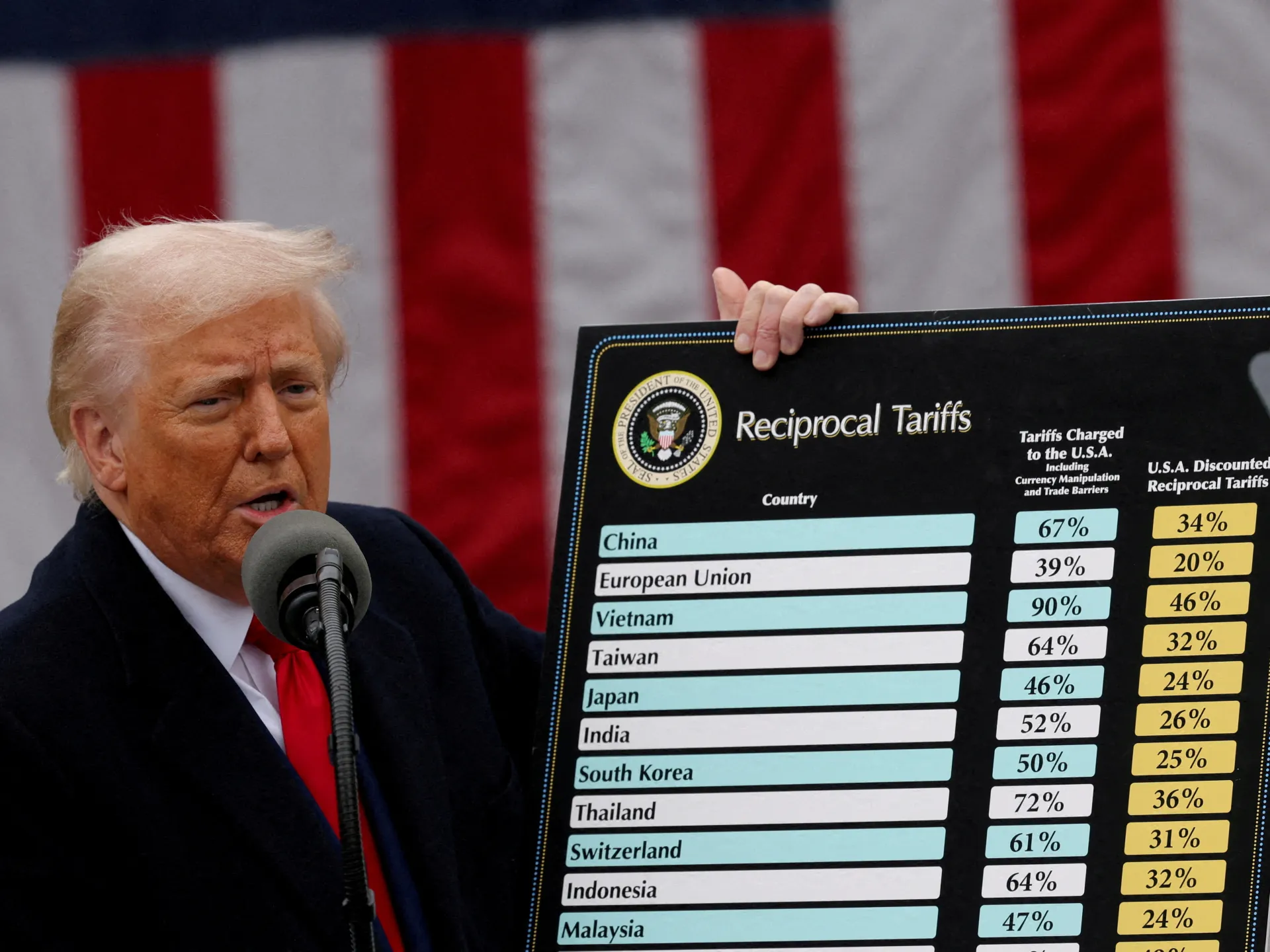
US Supreme Court expected to rule on tariffs on Friday | Business and Economy News

The United States Supreme Court is expected to rule on a case about the legality of President Donald Trump’s tariffs.

The high court on Tuesday added a non-argument/conference date on its website, indicating that it could release its ruling, although the court does not announce ahead of time which rulings it intends to issue.

Recommended Stories

list of 4 itemsend of list

The challenge to Trump’s tariffs has been one of the most closely watched cases on the court’s docket amid the broader impact on the global economy.

In a social media post on Friday, Trump said such a ruling would be a “terrible blow” to the US.

“Because of Tariffs, our Country is financially, AND FROM A NATIONAL SECURITY STANDPOINT, FAR STRONGER AND MORE RESPECTED THAN EVER BEFORE,” Trump said in another post on Monday.

However, data on this is mixed. The US gross domestic product (GDP) grew by 4.3 percent in the third quarter of 2025, marking the biggest increase in two years. Meanwhile, US job growth has slowed, with sectors heavily exposed to tariffs seeing little to no job growth.

“Jobs in sectors with higher import exposure grew more slowly than jobs in sectors with lower import exposure, suggesting tariffs may have weighed on employment,” Johannes Matschke, senior economist for the Kansas City branch of the Federal Reserve, said in an analysis in December.

Trump invoked the International Emergency Economic Powers Act (IEEPA) in February 2025 on goods imported from individual countries to address, what he called, a national emergency related to US trade deficits.

Arguments challenging the legality of the decision began in November. At the time, the court’s liberal and some conservative justices had doubts about the legality of using the 1977 act.

Justice Neil Gorsuch, whom Trump appointed during his first term, was among those sceptical.

“Congress, as a practical matter, can’t get this power back once it’s handed it over to the president,” Gorsuch said at the time.

Chief Justice John Roberts told Solicitor General D John Sauer, who argued on behalf of the administration, that imposing tariffs and taxes “has always been the core power of Congress”.

The act grants broad executive authority to wield economic power in the case of a national emergency.

The matter reached the Supreme Court after the lower courts ruled against the Trump administration, finding that the use of the law exceeded the administration’s authority.

Among the courts that ruled against the White House was the Court of International Trade. In May, the New York court said that Congress, and not the executive branch, has “exclusive authority to regulate commerce”. This decision was upheld in a Washington, DC, appeals court in August.

Legal experts believe it is likely that the high court will uphold lower court decisions.

“My sense is that, given the different justices’ concerns, the Supreme Court will decide that IEEPA does not provide the ability for the Trump administration to adopt the tariffs,” Greg Shaffer, a law professor at Georgetown University, told Al Jazeera.

If the Trump administration were to lose the case, the US would need to refund some of the tariffs.

“It [ruling against the administration] would mean that those who paid tariffs that were imposed illegally would have to be reimbursed. I would think that that would be the outcome,” Shaffer added.

In September, Secretary of the Treasury Scott Bessent said on NBC’s Meet the Press that the US would “have to give a refund on about half the tariffs”.

The Trump administration has said that if the Supreme Court does not rule in its favour, it will use other statutes to push through tariffs.

Source link

Maduro abduction shows influence, limits of US Secretary of State Rubio | Donald Trump News

Washington, DC – United States Secretary of State Marco Rubio has not been shy about his desire to see the toppling of Venezuelan President Nicolas Maduro.

Infamously, the former Florida senator even posted a series of photos of slain deposed leaders, including a bloodied former Libyan leader Muammar Gaddafi, as tensions with the US and Maduro’s government spiked in 2019.

Recommended Stories

list of 3 itemsend of list

But it wasn’t until the second administration of US President Donald Trump that Rubio’s vision of a hardline approach to Latin America and his longtime pressure campaign against leftist leaders was realised – culminating on Saturday with the illegal abduction of longtime Venezuelan leader Maduro.

Experts say Rubio has relied on an ability to capitalise on the overlapping interests of competing actors within the Trump administration to achieve this, even as his broader ideological goals, including the ousting of Cuba’s communist government, will likely remain constrained by the administration’s competing ambitions.

“It took a tremendous amount of political skill on his part to marginalise other voices in the administration and elsewhere who were saying: ‘This is not our conflict. This is not what we stand for. This is going to upset our base,’” Alejandro Velasco, an associate professor of history at New York University, told Al Jazeera.

Those agendas included US President Donald Trump’s preoccupation with opening Venezuela’s nationalised oil industry, US Secretary of Defense Pete Hegseth’s desire for a more pugilistic military approach abroad, and adviser Stephen Miller’s fixation on migration and mass deportation.

“So that’s the way that Rubio was able to bring into line not quite competing, but really divergent agendas, all of them to focus on Venezuela as a way to advance a particular end,” Velasco said.

AFP PICTURES OF THE YEAR 2025 US Secretary of State Marco Rubio whispers in the ear of President Donald Trump during a roundtable about Antifa in the State Dining Room of the White House in Washington, DC, on October 8, 2025. (Photo by Jim WATSON / AFP) / NO USE AFTER JANUARY 31, 2026 23:00:00 GMT - AFP PICTURES OF THE YEAR 2025
US Secretary of State Marco Rubio whispers in the ear of President Donald Trump during a roundtable discussion about antifa in the State Dining Room of the White House in Washington, DC, on October 8, 2025 [File: Jim Watson/AFP]

A hawk in ‘America First’

A traditionalist hawk who has regularly supported US military intervention in the name of spreading Western democracy and human rights abroad, Rubio initially appeared to be an awkward fit to be Trump’s top diplomat in his second term.

His selection followed a campaign season defined by Trump’s vow to end foreign wars, eschew US-backed regime change, and pursue a wider “America First” pivot.

But the actual shape of Trump’s foreign policy has borne little resemblance to that vision, with the administration adopting a so-called “Peace Through Strength” doctrine that observers say has resulted in more room for military adventurism. That has, to date, seen the Trump administration launch bombing campaigns against Yemen and Iran, strike armed groups in Nigeria and Somalia, and attack alleged drug smuggling boats in the Caribbean.

The approach of Trump 2.0 has more closely aligned with Rubio’s vision of Washington’s role abroad, which has long supported maximum-pressure sanctions campaigns and various forms of US intervention to topple governments.


The US secretary of state’s personal ideology traces to his South Florida roots, where his family settled in the 1960s after leaving Cuba three years before the rise of Fidel Castro, in what Velasco described as an “acerbically anti-communist” political environment.

“I think for him, it started as a question of finally making real the hopes and dreams of Cubans in Florida and elsewhere to return to their homeland under a capitalist government,” Velasco explained.

“It went from that to what this could represent, if we think about it more hemispherically – a bigger shift that would not only increase, but in fact ensure, US hegemony in the region for the 21st century.”

‘Vacuum was his to fill’

After tangling with Trump in the 2016 presidential election, in which the future president deridingly dubbed his opponent “Little Marco” while Rubio decried him as a “con man”, the pair forged a pragmatic working relationship.

Rubio eventually endorsed Trump ahead of the 2016 vote, helping to deliver Florida. In Trump’s first term, Rubio came to be seen as the president’s “shadow secretary” on Latin America, an atypical role that saw the lawmaker influence Trump’s eventual recognition of Juan Guaido as interim president in opposition to Maduro.

Analysts note Rubio’s approach to Venezuela has always been directly aimed at undermining the economic support it provides to Cuba, with the end goal of toppling the island’s 67-year-old Communist government. Following Maduro’s abduction on Saturday, Rubio quickly pivoted to the island nation, telling reporters: “If I lived in Havana and I was in the government, I’d be concerned”.

Still, in the early months of Trump’s second term, Rubio appeared largely sidelined, with the president instead favouring close friends and family members to spearhead marquee negotiations on ceasefires in Gaza and Ukraine.

During this time, Rubio was slowly amassing a sizeable portfolio. Beyond serving as secretary of state, Rubio became the acting administrator of the Trump-dismantled US Agency for International Development (USAID) and the acting archivist of the US National Archives. Most notably, he became the acting director of National Security, making him the first top US diplomat to also occupy the impactful White House role since Henry Kissinger.

epaselect epa12624353 Venezuelans in Miami hold a picture of US Secretary of State Marco Rubio while taking part in a rally in response to the US military strikes in Venezuela, Miami, Florida, USA, 03 January 2026. President Trump announced that US forces have successfully captured Venezuelan President Nicolas Maduro and his wife during a series of large-scale strikes on Caracas on 03 January 2026. EPA/CRISTOBAL HERRERA-ULASHKEVICH
A Venezuelan in Miami holds a picture of US Secretary of State Marco Rubio during a rally in response to US military strikes in Venezuela; in Miami, Florida, the US, January 3, 2026 [Cristobal Herrera-Ulashkevich/EPA]

Rubio eventually found himself in a White House power vacuum, according to Adam Isacson, the director of defence oversight at the Washington Office on Latin America (WOLA).

“Rubio’s somebody who understands Washington better than the Grenells and Witkoffs of the world,” Isacson told Al Jazeera, referring to Trump’s special envoys Richard Grenell and Steve Witkoff.

“At the same time, other powerful figures inside the White House, like Stephen Miller and [Director of the Office of Management and Budget] Russ Vought haven’t cared as much about foreign policy,” he said, “so the vacuum was his to fill.”

Meanwhile, Rubio showed his ability to be an “ideological weather vane”, pivoting regularly to stay in Trump’s good graces, Isacson said. The National Security Strategy released by the White House in December exemplified that approach.

The document, which is drafted by the National Security adviser with final approval from the president, offered little in tough language towards Russia, despite Rubio’s previous hard lines on the war in Ukraine. It supported the gutting of US foreign aid, despite Rubio’s years-long support for the system. It offered little of the human-rights language with which Rubio had earlier in his career styled himself as a champion.

It did, however, include a “Trump corollary” to the Monroe Doctrine, which dovetailed with Rubio’s worldview by calling for the restoration of US “preeminence” over the Western Hemisphere.

A pyrrhic victory?

To be sure, the toppling of Maduro has so far proved a partial, if not pyrrhic victory for Rubio, far short of the comprehensive change he has long supported.

In a news conference immediately following Maduro’s abduction, Trump doused support for exiled opposition leader Maria Corina Machado, who has hewed close to Rubio’s vision for a future Venezuela. Several news agencies have since reported that US intelligence assessed that installing an opposition figure would lead to widespread chaos in the country.

Rubio has so far been the point man in dealing with Maduro’s former deputy and replacement, Delcy Rodriguez, who has been a staunch supporter of the Hugo Chavez-founded Chavismo movement that Rubio has long railed against. Elections remain a far-off prospect, with Trump emphasising working with the government to open the oil industry to the US.

The secretary of state has not been officially given a role connected to the country, but has earned the less-than-sincere title in some US media of “viceroy of Venezuela”.

On news shows, Rubio has been tasked with walking back Trump’s claim that the US would “run” the South American country, while selling the administration’s oft-contradicted message that the abduction of Maduro was a law enforcement action, not regime change, an act of war, or a bid for the country’s oil.

“I think he’s sort of lying through his teeth,” Lee Schlenker, a research associate at the Quincy Institute for Responsible Statecraft, told Al Jazeera.

“Even he doesn’t seem to believe a lot of the sort of rhetorical and discursive pretexts that have been deployed about drugs, about narco-terrorism, about a law enforcement-only operation, about just sort of enforcing a Department of Justice indictment,” he said.

Having to work with Rodriguez, and reportedly, Venezuela’s security czar and Minister of Interior Diosdado Cabello, has been a “bucket of cold water on Rubio’s broader illusions”, Schlenker added, noting that Rubio’s end goal still remains “the end of the Chavista project”.

Rubio is also likely to face further reality checks when it comes to his expected attempts to pitch the overthrow of what he will likely argue is a weakened Cuba.

The island, without the economic resources of Venezuela and no known drug trade, is seen as far less appealing to Trump and many of his allies.

“Compared to Venezuela,” Schlenker said, “there are a lot more reasons why Trump would have less interest in going after Cuba.”

Source link

Trump’s vague claims of the U.S. running Venezuela raise questions about planning for what comes next

President Trump has made broad but vague assertions that the United States is going to “run” Venezuela after the ouster of Nicolás Maduro but has offered almost no details about how it will do so, raising questions among some lawmakers and former officials about the administration’s level of planning for the country after Maduro was gone.

Seemingly contradictory statements from Trump and Secretary of State Marco Rubio have suggested at once that the U.S. now controls the levers of Venezuelan power or that the U.S. has no intention of assuming day-to-day governance and will allow Maduro’s subordinates to remain in leadership positions for now.

Rubio said the U.S. would rely on existing sanctions on Venezuela’s oil sector and criminal gangs to wield leverage with Maduro’s successors.

The uncertainty on definitive next steps in Venezuela contrasts with the years of discussions and planning that went into U.S. military interventions that deposed other autocratic leaders, notably in Iraq in 2003, which still did not often lead to the hoped-for outcomes.

‘Disagreement about how to proceed’

The discrepancy between what Trump and Rubio have said publicly has not sat well with some former diplomats.

“It strikes me that we have no idea whatsoever as to what’s next,” said Dan Fried, a retired career diplomat, former assistant secretary of state and sanctions coordinator who served under both Democratic and Republican administrations.

“For good operational reasons, there were very few people who knew about the raid, but Trump’s remarks about running the country and Rubio’s uncomfortable walk back suggests that even within that small group of people, there is disagreement about how to proceed,” said Fried who is now with the Atlantic Council think tank.

Supporters of the operation, meanwhile, believe there is little confusion over the U.S. goal.

“The president speaks in big headlines and euphemisms,” said Rich Goldberg, a sanctions proponent who worked in the National Energy Dominance Council at the White House until last year and is now a senior adviser to the Foundation for Defense of Democracies, a hawkish think tank.

Goldberg does not see Rubio becoming “the superintendent of schools” but “effectively, the U.S. will be calling the shots.”

“There are people at the top who can make what we want happen or not, and we right now control their purse strings and their lives,” he said. “The president thinks it’s enough and the secretary thinks it’s enough, and if it’s not enough, we’ll know very soon and we’ll deal with it.”

If planning for the U.S. “to run” Venezuela existed prior to Maduro’s arrest and extradition to face federal drug charges, it was confined to a small group of Trump political allies, according to current U.S. officials, who note that Trump relies on a very small circle of advisers and has tossed aside much of the traditional decision-making apparatus.

These officials, who spoke on condition of anonymity to discuss their understanding of internal deliberations, said they were not aware of any preparations for either a military occupation or an interim civilian governing authority, which has been a priority for previous administrations when they contemplated going to war to oust a specific leader or government. The White House and the State Department’s press office did not return messages seeking comment.

Long discussion among agencies in previous interventions

Previous military actions that deposed autocratic leaders, notably in Panama in 1989 and Iraq in 2003, were preceded by months, if not years, of interagency discussion and debate over how best to deal with power vacuums caused by the ousters of their leaders. The State Department, White House National Security Council, the Pentagon and the intelligence community all participated in that planning.

In Panama, the George H.W. Bush administration had nearly a full year of preparations to launch the invasion that ousted Panama’s leader Manuel Noriega. Panama, however, is exponentially smaller than Venezuela, it had long experience as a de facto American territory, and the U.S. occupation was never intended to retake territory or natural resources.

By contrast, Venezuela is vastly larger in size and population and has a decadeslong history of animosity toward the United States.

“Panama was not successful because it was supported internationally because it wasn’t,” Fried said. “It was a success because it led to a quick, smooth transfer to a democratic government. That would be a success here, but on the first day out, we trashed someone who had those credentials, and that strikes me as daft.”

He was referring to Trump’s apparent dismissal of opposition leader Maria Corina Machado, whose party is widely believed to have won elections in 2024, results that Maduro refused to accept. Trump said Saturday that Machado “doesn’t have the support within or the respect within the country” to be a credible leader and suggested he would be OK with Maduro’s No. 2, Delcy Rodríguez, remaining in power as long as she works with the U.S.

Hoped-for outcomes didn’t happen in Iraq and Afghanistan

Meanwhile, best-case scenarios like those predicted by the George W. Bush administration for a post-Saddam Hussein Iraq that it would be a beacon of democracy in the Middle East and hopes for a democratic and stable Afghanistan following the ouster of the Taliban died painfully slow deaths at the tremendous expense of American money and lives after initial euphoria over military victories.

“Venezuela looks nothing like Libya, it looks nothing like Iraq, it looks nothing like Afghanistan. It looks nothing like the Middle East,” Rubio said this weekend of Venezuela and its neighbors. “These are Western countries with long traditions at a people-to-people and cultural level, and ties to the United States, so it’s nothing like that.”

The lack of clarity on Venezuela has been even more pronounced because Trump campaigned on a platform of extricating the U.S. from foreign wars and entanglements, a position backed by his “Make America Great Again” supporters, many of whom are seeking explanations about what the president has in mind for Venezuela.

“Wake up MAGA,” Republican Rep. Thomas Massie of Kentucky, who has bucked much of his party’s lockstep agreement with Trump, posted on X after the operation. “VENEZUELA is not about drugs; it’s about OIL and REGIME CHANGE. This is not what we voted for.”

Sen. Rand Paul, also a Kentucky Republican, who often criticizes military interventions, said “time will tell if regime change in Venezuela is successful without significant monetary or human cost.”

“Easy enough to argue such policy when the action is short, swift and effective but glaringly less so when that unitary power drains of us trillions of dollars and thousands of lives, such as occurred in Afghanistan, Iraq, and Vietnam,” he wrote on social media.

In addition to the Venezuela operation, Trump is preparing to take the helm of an as-yet unformed Board of Peace to run postwar Gaza, involving the United States in yet another Mideast engagement for possibly decades to come.

And yet, as both the Iraq and Afghanistan experiences ultimately proved, no amount of planning guarantees success.

Lee writes for the Associated Press.

Source link

Congress’s role questioned as Democrats vow to rein in Trump on Venezuela | Donald Trump News

Washington, DC – It has become a familiar pattern. United States presidents conduct unilateral military actions abroad. Congress shrugs.

On Saturday, in the hours after the US military abducted Venezuelan leader Nicolas Maduro, Democrats in the Senate pledged to raise yet another resolution to rein in US President Donald Trump’s military actions.

Recommended Stories

list of 4 itemsend of list

Chuck Schumer, the top Democrat in the chamber, has said the party will push for a vote within the week. By all accounts, the odds of its success remain long.

Since Trump took office for a second term in 2025, Congress has weighed multiple bills that would force him to seek legislative approval before initiating a military strike.

But the latest attack on Venezuela offers a stark instance of presidential overreach, one that is “crying out for congressional action”, according to David Janovsky, the acting director of the Constitution Project at the Project on Government Oversight.

Experts say it is also one of the clearest tests in recent history of whether Congress will continue to cede its authority to check US military engagement abroad.

“There are a lot of angles where you can come at this to say why it’s a clear-cut case,” Janovsky told Al Jazeera.

He pointed out that, under the US Constitution, Congress alone wields the authority to allow military action. He also noted that the Venezuela attack “is in direct contravention of the UN Charter, which is, as a treaty, law in the United States”.

“Any of the fig leaves that presidents have used in the past to justify unilateral military action just don’t apply here,” Janovsky added. “This is particularly brazen.”

An uphill battle

Since August, the Trump administration has signalled plans to crank up its “maximum pressure” campaign against Venezuela.

That month, Trump reportedly signed a secret memo calling on the US military to prepare for action against criminal networks abroad. Then, on September 2, the Trump administration began conducting dozens of strikes on alleged drug-smuggling boats off the Venezuelan and Colombian coasts.

That deadly bombing campaign was itself condemned as a violation of international law and an affront to Congress’s constitutional powers. It coincided with a build-up of US military assets near Venezuela.

Trump also dropped hints that the US military campaign could quickly expand to alleged drug-trafficking targets on Venezuelan soil. “When they come by land, we’re going to be stopping them the same way we stopped the boats,” Trump said on September 16.

The strikes prompted two recent votes in the House of Representatives in December: one that would require congressional approval for any land strikes on the South American country, and one that would force Trump to seek approval for strikes on alleged drug-smuggling boats.

Both resolutions, however, failed roughly along party lines. A similar resolution in the Senate, which would have required congressional approval before any more attacks, also fell short in November.

But speaking to reporters in a phone call just hours after the US operation on Saturday, Senator Tim Kaine said he hoped the brashness of Trump’s latest actions in Venezuela would shock lawmakers into action.

Republicans, he said, can no longer tell themselves that Trump’s months-long military build-up in the Caribbean and his repeated threats are a “bluff” or a “negotiating tactic”.

“It’s time for Congress to get its a** off the couch and do what it’s supposed to do,” Kaine said.

In an interview with CNN’s Dana Bash, US Senator Chris Murphy also agreed that it was “true” that Congress had become impotent on matters of war, a phenomenon that has spanned both Democratic and Republican administrations.

Bash pointed to former President Barack Obama’s 2011 military deployment to Libya, which went unchecked by Congress.

“Congress needs to own its own role in allowing a presidency to become this lawless,” Murphy responded.

Republicans ho-hum about resolutions

Under the US Constitution, only Congress can declare war, something it has not done since World War II.

Instead, lawmakers have historically passed Authorizations for Use of Military Force (AUMFs) to approve committing troops to recent wars, including the US invasions of Iraq and Afghanistan and the strikes on alleged al-Qaeda affiliates across the Middle East, Africa and Asia.

No AUMFs have been passed that would relate to military action in Venezuela.

When lawmakers believe a president is acting beyond his constitutional power, they can pass a war powers resolution requiring Congressional approval for further actions.

Beyond their symbolism, such resolutions create a legal basis to challenge further presidential actions in the judiciary.

However, they carry a high bar for success, with a two-thirds majority in both chambers of Congress needed to override a presidential veto.

Given the current makeup of Congress, passage of a war powers resolution would likely require bipartisan support.

Republicans maintain narrow majorities in both the House and Senate, so it would be necessary for members of Trump’s own party to back a war powers resolution for it to be successful.

In November’s Senate vote, only two Republicans — co-sponsor Rand Paul of Kentucky, and Lisa Murkowski, of Alaska — split from their party to support the resolution. It failed by a margin of 51 to 49.

December’s vote on a parallel resolution in the House only earned 211 votes in favour, as opposed to 213 against. In that case, three Republicans broke from their party to support the resolution, and one Democrat opposed it.

But Trump’s abduction of Maduro has so far only received condemnation from a tiny fragment of his party.

Overall, the response from elected Republicans has been muted. Even regular critics of presidential adventurism have instead focused on praising the ouster of the longtime Venezuelan leader, who has been accused of numerous human rights abuses.

Senator Todd Young, a Republican considered on the fence ahead of November’s war powers vote, has praised Maduro’s arrest, even as he contended the Trump administration owed Congress more details.

“We still need more answers, especially to questions regarding the next steps in Venezuela’s transition,” Young said.

Some Democrats have also offered careful messaging in the wake of the operation.

That included Debbie Wasserman Schultz, a Democrat who represents a large Venezuelan diaspora community in Florida.

In a statement on Saturday, Wasserman Schultz focused on the implications of Maduro’s removal, while avoiding any mention of the military operation that enabled it. Instead, she asserted that Trump owed Congress an explanation about next steps.

“He has failed to explain to Congress or the American people how he plans to prevent the regime from reconstituting itself under Maduro’s cronies or stop Venezuela from falling into chaos,” she wrote.

In December, however, Wasserman Schultz did join a group of Florida Democrats in calling for Congress to exercise its oversight authority as Trump built up military pressure on Venezuela.

What comes next?

For its part, the Trump administration has not eased up on its military threats against Venezuela, even as it has sought to send the message that Maduro’s abduction was a matter of law enforcement, not the start of a war.

Trump has also denied, once again, that he needed congressional approval for any further military action. Still, in a Monday interview with NBC News, he expressed optimism about having Congress’s backing.

“We have good support congressionally,” he told NBC. “Congress knew what we were doing all along, but we have good support congressionally. Why wouldn’t they support us?”

Since Saturday’s attack and abduction, Trump has warned that a “second wave” of military action could be on the horizon for Venezuela.

That threat has extended to the potential for the forced removal of Maduro’s deputy, Delcy Rodriguez, who was formally sworn in as the country’s interim president on Monday.

“If she doesn’t do what’s right, she is going to pay a very big price, probably bigger than Maduro,” Trump told The Atlantic magazine.

The administration has also said that strikes on alleged drug-smuggling boats near Venezuela will continue and that US military assets will remain deployed in the region.

Constitutional expert Janovsky, however, believes that this is a critical moment for Congress to act.

Failure to rein in Trump would only further reinforce a decades-long trend of lawmakers relinquishing their oversight authorities, he explained. That, in turn, offers tacit support for the presidency’s growing power over the military.

“To say this was a targeted law enforcement operation — and ignore the ongoing situation — would be a dangerous abdication of Congress as a central check on how the United States military is used,” Janovsky said.

“Continued congressional inaction does nothing but empower presidents to act however they want,” he added.

“To see Congress continue to step back ultimately just removes the American people even farther from where these decisions are actually being made.”
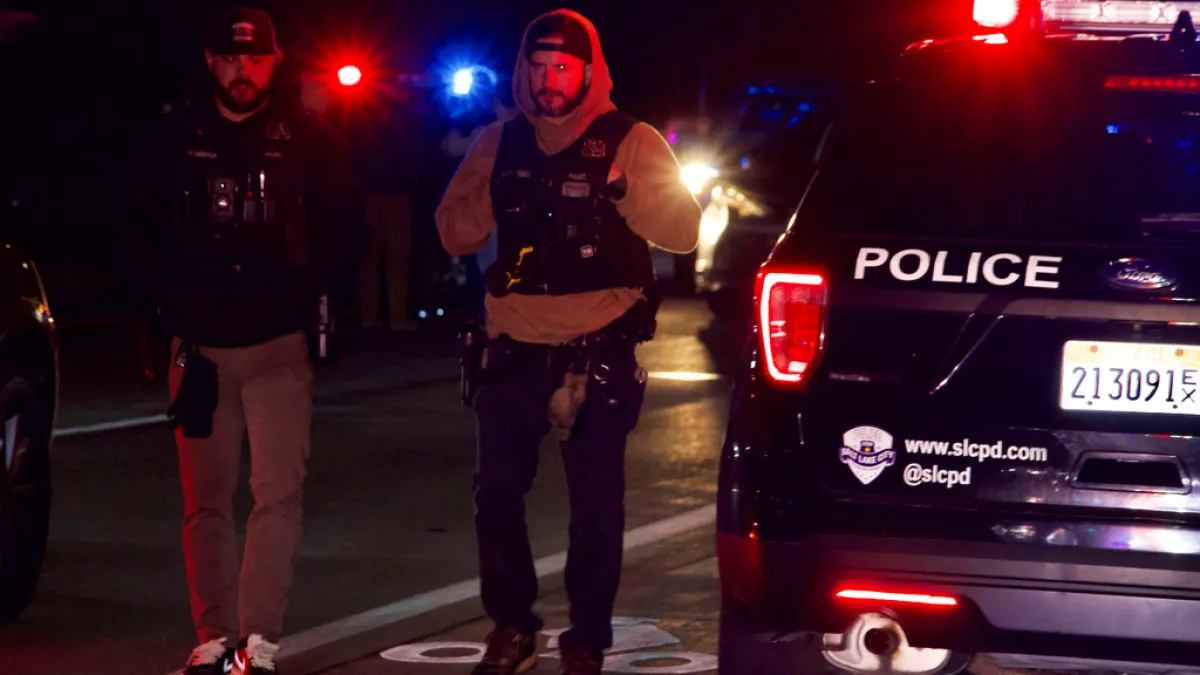
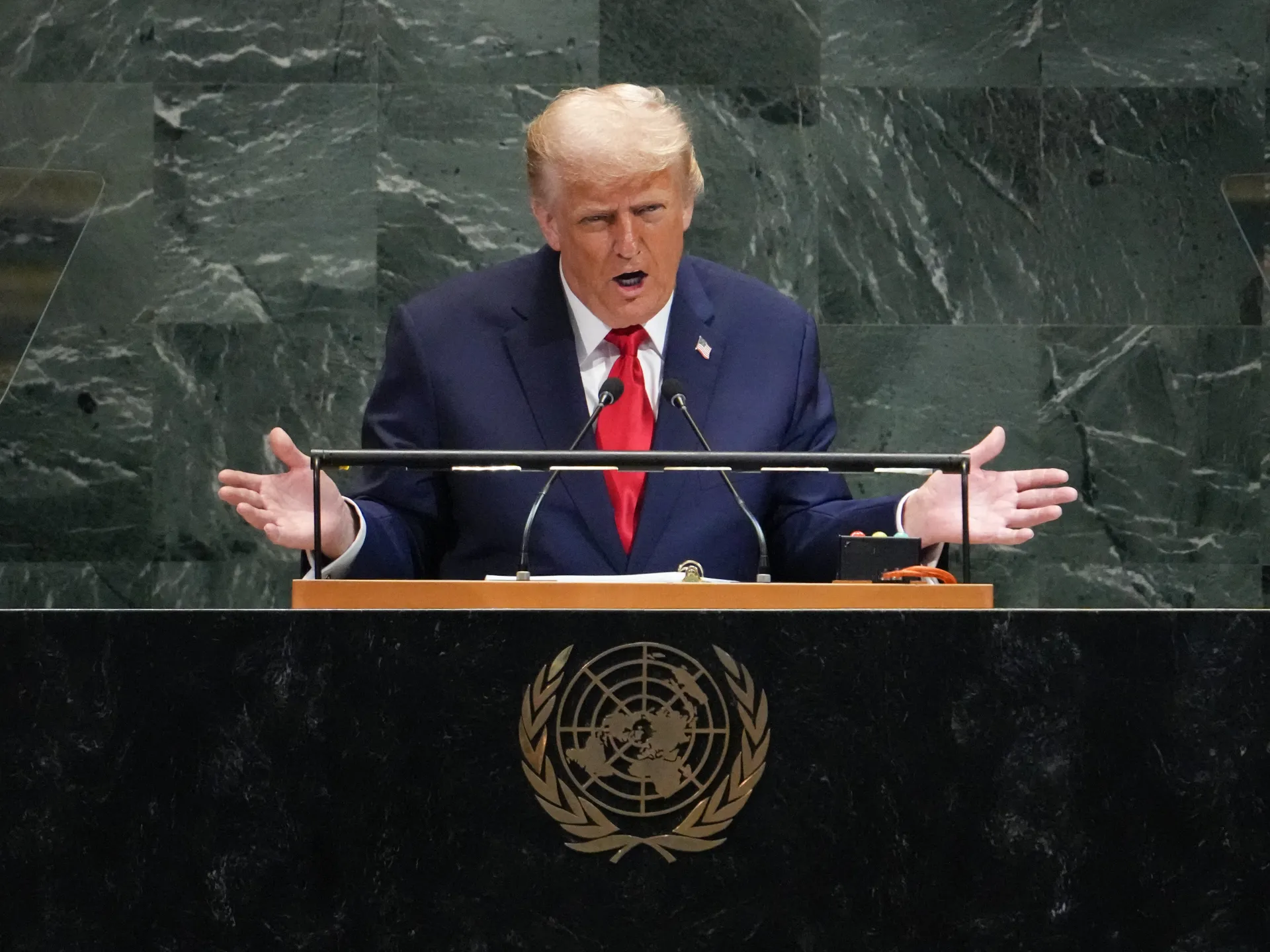
Source link