Demonstrators in Turkiye demand global pressure on Israel, calling the so-called ceasefire ‘a slow-motion genocide’ against Palestinians.
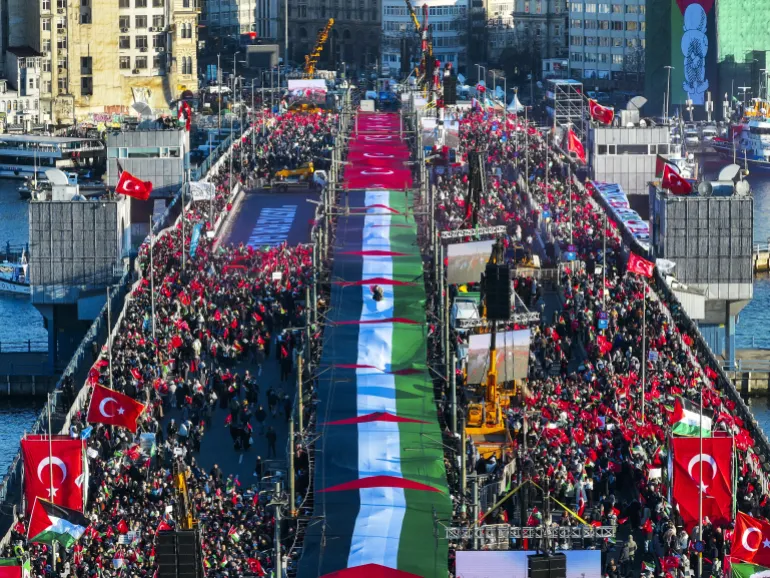
Hundreds of thousands of people are marching through Istanbul in a sweeping show of solidarity with Palestinians, condemning Israel’s genocide in Gaza and rejecting claims that a ceasefire has brought meaningful relief.
Protesters, many waving Palestinian and Turkish flags, converged on the city’s historic Galata Bridge on Thursday despite freezing temperatures.
The march, organised by civil society groups under the National Will Platform alongside Turkish football clubs, rallied under the slogan: “We won’t remain silent, we won’t forget Palestine.”
More than 400 civil society organisations joined the mobilisation, underscoring the scale of public anger at Israel’s ongoing assault on Gaza. Several major football clubs urged their supporters to attend, helping turn the rally into one of the largest pro-Palestine demonstrations Turkiye has seen since Israel’s war began.
Galatasaray football club chair Dursun Ozbek described Israel’s actions as a moral reckoning for the world.
“We will not get used to this silence,” Ozbek said in a video message shared on X. “Standing shoulder to shoulder against oppression, we come together on the same side for humanity.”
An aerial view of boats carrying Palestinian flags around Galata Bridge [Muhammed Enes Yildirim/Anadolu via Getty Images]
‘A slow-motion genocide’
Sinem Koseoglu, Al Jazeera’s Turkiye correspondent, reported from the Galata Bridge that Palestine remains a point of national consensus. She said the issue cuts across political lines, uniting supporters of the governing AK Party with voters from major opposition parties.
“Today people are trying to show their support on the very first day of the new year,” Koseoglu said, as crowds packed the bridge and surrounding streets.
Police sources and the Anadolu state news agency said about 500,000 people took part in the march.
The rally included speeches and a performance by Lebanese-born singer Maher Zain, who sang “Free Palestine” to a sea of raised flags.
For many demonstrators, the protest was also a rejection of Israel’s ceasefire narrative.
“These people here do not believe in the ceasefire,” Koseoglu said. “They believe the current ceasefire is not a real ceasefire, but a slow motion of the genocide.”
Thousands of people have gathered across Istanbul to march in solidarity with Palestinians, calling for an end to the genocidal war on Gaza, on January 1, 2026 [Muhammed Ali Yigit/Anadolu via Getty Images]
Turkiye has cut trade with Israel and closed its airspace and ports, but Koseoglu said protesters want sustained international pressure rather than symbolic measures.
“The main idea here is to show their solidarity with the Palestinian people and let the world not forget about what’s going on in Gaza,” she said, warning that many see the ceasefire as “very fragile”.
Turkiye has positioned itself as one of Israel’s sharpest critics and played a role in brokering a ceasefire announced in October by United States President Donald Trump.
Yet the pause in fighting has failed to halt bloodshed, with more than 400 Palestinians killed by Israel since the ceasefire took effect, and aid still being withheld from entering the besieged Strip.
Dhaka, Bangladesh – On Tuesday, the premises of Evercare Hospital in Bangladesh’s capital turned into a sombre focal point for a nation’s grief as news filtered out of the medical facility: Khaleda Zia, three-time prime minister and longtime leader of the Bangladesh Nationalist Party (BNP), was dead.
Khaleda had been receiving treatment at the hospital since the night of November 23.
Supporters, party leaders and common citizens stood silently in front of the hospital gates, wiping away tears and offering prayers. “The news made it impossible for us to stay at home,” said BNP activist Riyadul Islam. “Since there is no opportunity to see her, everyone is waiting outside. There are tears in everyone’s eyes.”
Her funeral at Dhaka’s Manik Mia Avenue on Wednesday drew tens of thousands of BNP supporters from across the country, alongside leaders of other political parties, interim government head Muhammad Yunus and foreign diplomats – underscoring the imprint of Khaleda’s legacy, and how it extended well beyond Bangladesh’s borders.
But beyond the grief, Khaleda Zia’s death marks a decisive political rupture for the BNP at a critical moment, say political analysts.
With national elections scheduled for February 12, the party is entering the campaign without the leader who remained its ultimate symbol of unity, even during years of illness and political inactivity.
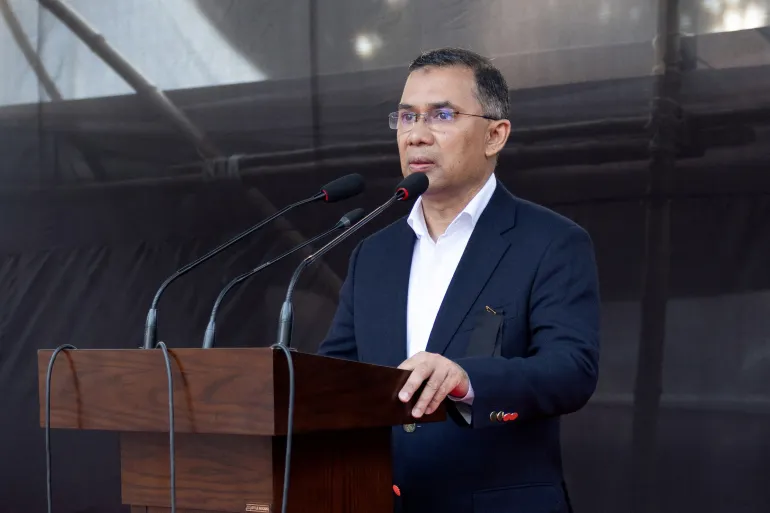
Her passing pushes BNP into a fully post-Khaleda phase, concentrating authority and accountability on her son and acting chairperson, Tarique Rahman, as the party seeks to consolidate its base and compete in a reshaped political landscape following the July 2024 upheaval and the subsequent banning of the Awami League’s political activities.
Bangladesh Nationalist Party’s acting chairman Tarique Rahman addresses mourners before the funeral prayers for his mother and former Prime Minister Khaleda Zia at the Parliament building area of Manik Mia Avenue, in Dhaka, Bangladesh, December 31, 2025 [Stringer/Reuters]
Legacy as anchor, absence as test
For decades, Khaleda Zia’s relevance extended beyond formal leadership.
Even when absent from front-line politics, she functioned as the party’s moral centre and final authority, helping to contain factionalism and defer leadership questions.
Mahdi Amin, adviser to Tarique Rahman, told Al Jazeera that Bangladesh had lost “a true guardian”, describing Khaleda Zia as a unifying symbol of sovereignty, independence and democracy.
He said the BNP would carry forward her legacy through its policies and governance priorities if elected.
“The hallmark of her politics was a strong parliamentary democracy – rule of law, human rights and freedom of expression,” Amin said, adding that the BNP aims to restore institutions and rights that, he claimed, were eroded during the Awami League’s 15-year rule, between 2009 and 2024, under then Prime Minister Sheikh Hasina, Khaleda’s longtime rival.
Amin insisted that Tarique has already emerged as a unifying figure, citing his role in coordinating the movement against Hasina and formulating a 31-point reform agenda aimed at restoring voting rights and institutional accountability.
Despite these assertions, however, analysts say Khaleda’s absence removes a critical layer of symbolic authority that long helped stabilise the BNP’s internal politics.
Writer and political analyst Mohiuddin Ahmed said Khaleda’s personal charisma played a key role in keeping the party energised and cohesive.
“That rhythm will be disrupted,” he said. “Tarique Rahman now has to prove his leadership through a process. His leadership remains untested.”
Ahmed noted that Khaleda herself was once an untested political figure, rising to national prominence during the mass pro-democracy movement of the 1980s that ultimately led to the fall of military ruler General Hussain Muhammad Ershad. Her husband, the then-President Ziaur Rahman, was assassinated in 1981 during a failed military coup.
Ahmed argued that the February election could play a similar defining role for Tarique Rahman: Success would validate his leadership, while failure would intensify scrutiny.
Leaders of the National Citizen Party chat during an interview with an aspiring candidate ahead of the country’s upcoming national election, in Dhaka, Bangladesh, November 24, 2025. The NCP, founded by students who led the July 2024 movement against Sheikh Hasina, has now tied up with the Jamaat-e-Islami, Bangladesh’s biggest Islamist force, in a coalition for the election [Sam Jahan/Reuters]
A tougher electoral terrain
BNP’s challenge is compounded by a transformed opposition landscape.
For more than three decades, Bangladesh’s electoral politics were shaped by a near-binary rivalry between the Awami League and the BNP, a pattern that emerged after the fall of military rule in 1990 and hardened through successive elections in the 1990s and 2000s.
With the Awami League now absent – its political activities banned by the Yunus administration – that two-party dominance has fractured, forcing BNP to compete in a more crowded field that includes a strong alliance led by the Jamaat-e-Islami, Bangladesh’s biggest Islamist force. The Jamaat coalition includes the National Citizen Party, launched by many of the youth leaders who drove the July 2024 mass movement that forced Hasina out of power and into exile in India.
“This will not be easy for BNP,” Ahmed said. “Post-July [2024] politics has changed the equation. New polarisation is emerging, and the dominance of two parties no longer holds,” he added.
Analysts also point to key uncertainties that linger: whether the election will be held on time, whether it will be peaceful, and whether major parties can ensure public confidence in the process.
Dilara Choudhury, a political scientist who observed both Khaleda and her husband closely, said Khaleda Zia functioned as a “guardian figure” for not just her party, but also the country, and that her death represents the loss of a senior stabilising presence in Bangladesh politics.
Tarique, Khaleda’s son, was in exile in the United Kingdom from 2008 until December 25, 2025, when he returned after a series of cases against him that were initiated by a military-backed government in power between 2006 and 2009, or by the subsequent Hasina government, were closed.
She argued that Tarique’s return to the country has reduced fears of internal division within the party and that his recent speeches – reaffirming Bangladeshi nationalism, rejecting authoritarianism and honouring victims of the 2024 July uprising violence – have reassured party supporters about ideological continuity.
“BNP and Awami League have both been personality-centred parties,” she said. “After Khaleda Zia, it is natural that Tarique Rahman occupies that space within the BNP.”
Thousands of people gather to attend funeral prayers for former Prime Minister Khaleda Zia outside the national Parliament building in Dhaka, Bangladesh, Wednesday, December 31, 2025 [Mahmud Hossain Opu/AP Photo]
From legacy to verdict
Yet BNP leaders acknowledge that legacy alone will not determine the party’s future.
Allegations of extortion involving some party activists continue to surface – an issue that adviser Mahdi Amin described as mostly exaggerated, though he said the party plans to address it through stricter internal controls.
At the grassroots level, some party members say Tarique’s leadership transition will not be without challenges.
“It would be unrealistic to say there will be no difficulties,” said Kamal Uddin, senior joint secretary of the Chakaria upazila unit of Jubo Dal, the BNP’s youth wing, in Cox’s Bazar district. “In the past, there were disagreements with senior leaders who worked closely with Khaleda Zia – and even with Ziaur Rahman. That could be a challenge in decision-making. But I believe he will be able to manage.”
Kamal Uddin travelled with three other BNP activists from Cox’s Bazar, a coastal city on the Bay of Bengal about 350km (217 miles) south of Dhaka, to attend Khaleda Zia’s funeral on Wednesday.
Senior BNP leaders, however, dismiss doubts over Tarique’s authority.
Standing committee member Amir Khasru Mahmud Chowdhury, who served as commerce minister in Khaleda Zia’s cabinet from 2001 to 2004, said Tarique’s leadership credentials were already established.
“His leadership has been proven,” Chowdhury told Al Jazeera earlier this month. “He is capable of leading the party effectively.”
As BNP prepares for the polls, analysts say the party’s ability to ensure discipline, project reform and contribute to a peaceful election will itself be a test of Tarique’s leadership.
A separate discussion has emerged on social media and among political rivals.
On November 29, ahead of his eventual return, Tarique wrote on his verified Facebook page that the decision to come home was not “entirely within his control” and not “under his sole control”. Critics interpreted this as raising questions about possible external influence – particularly India – on whether and when he would return.
BNP leaders rejected these claims, insisting his return was a political and legal matter tied to domestic realities rather than foreign negotiation, and that national interest would guide the party’s policy if it comes to power.
For many supporters, however, politics remains deeply personal.
Fifty-seven-year-old Dulal Mia, who travelled from the northeastern district of Kishoreganj to attend Tarique’s reception rally in Dhaka on December 25, still recalls the moment that made him a lifelong BNP supporter.
When he was a sixth-grader in 1979, he said, then-President Ziaur Rahman visited the paddy field where he was working and shook his hand. Ziaur Rahman is remembered for addressing drought by digging canals across the country and visiting remote areas barefoot, often without formal protocol.
“Tarique Rahman will have to carry the legacy of his parents,” Mia said. “If he doesn’t, people will turn away. The BNP’s politics is people’s politics – it began with Ziaur Rahman and was carried by Khaleda Zia for so long. I believe Tarique Rahman will do the same. Otherwise, it is the people who will reject him.”
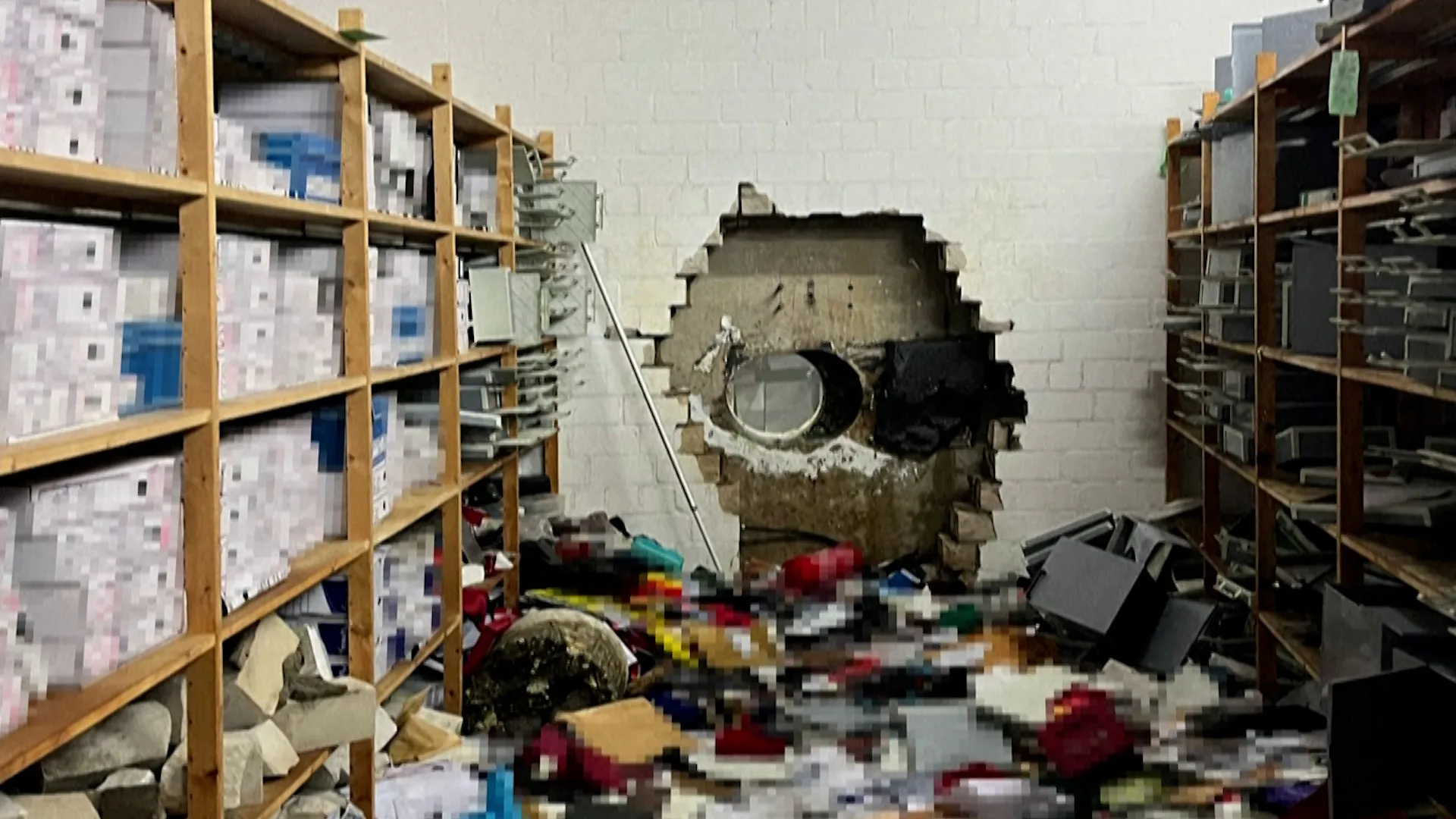
Footage shows a massive hole in the vault of Sparkasse Bank in Gelsenkirchen, Germany, where thieves made off with valuables estimated to be worth between 10 and 90 million euros ($11.7 to 105.7 million), police said. Angry customers assembled outside the bank on Tuesday demanding answers.
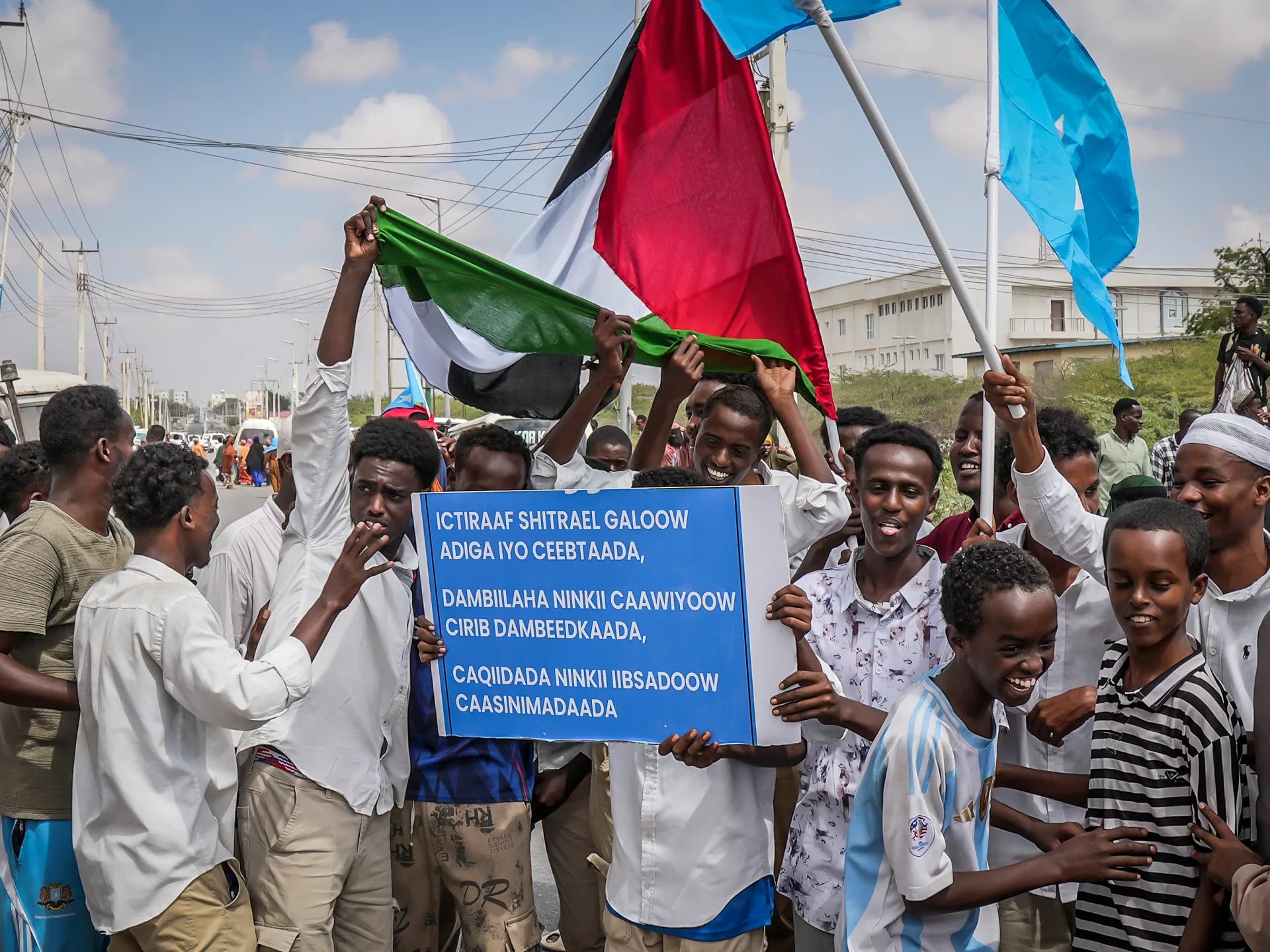
Protests have erupted across Somalia following Israel’s formal world-first recognition of the breakaway region of Somaliland, with demonstrators taking to the streets in multiple cities, including the capital, Mogadishu.
On Tuesday morning, large crowds gathered at locations including Mogadishu’s main football stadium and around the city’s airport, where protesters waved Somali flags and chanted slogans calling for national unity.
Recommended Stories
list of 3 itemsend of list
The demonstrations, which also took place in Baidoa, Dhusamareb, Las Anod, Hobyo and Somalia’s northeastern regions, came as President Hassan Sheikh Mohamud travelled to Istanbul for talks with his Turkish counterpart Recep Tayyip Erdogan following a stop in neighbouring Djibouti.
Somalia and Turkiye have close political and security ties, with Ankara emerging as a regional rival to Israel in recent months.
Small gatherings also took place in Borama, a city in western Somaliland, where the population has appeared more ambivalent about separation from Somalia, to express opposition.
Somaliland unilaterally declared independence in 1991 following a civil war, but has failed to gain international recognition despite maintaining its own currency, passport and army.
Somaliland’s leaders say the state is the successor to the former British protectorate, which voluntarily merged with Italian Somaliland and has now reclaimed its independence. Somalia continues to claim Somaliland as part of its territory and does not recognise its independence.
Israel became the first and only country to formally recognise it as a sovereign state last Friday, describing the move as being in the spirit of the Abraham Accords that normalised ties between Israel and several Arab nations.
President Mohamud urged Somaliland’s leadership over the weekend to reverse the decision, warning that its territory, overlooking the strategic gateway to the Red Sea, must not be used as a base for targeting other nations.
Yemen’s Houthi rebels have said any Israeli presence in Somaliland would be considered “a military target for our armed forces”.
Shortly after Somaliland announced mutual recognition with Israel on Friday, President Abdirahman Mohamed Abdullahi said the move “is not a threat, not an act of hostility” towards any state, and warned that Somalia’s insistence on unified institutions risks “prolonging divisions rather than healing” them.
The widespread public anger in Somalia reflects a rare show of political unity, where leaders across the spectrum have condemned Israel’s decision.
On Monday, the National Consultative Council — chaired by Mohamud and including the prime minister, federal state presidents and regional governors — rejected the recognition as an “illegal step” that threatens regional security stretching from the Red Sea to the Gulf of Aden.
Four federal member states issued coordinated statements over the weekend denouncing the move. However, Puntland and Jubbaland — both of which recently announced their withdrawal from Somalia’s federal system over electoral and constitutional disputes — have remained silent.
Most United Nations Security Council (UNSC) members slammed Israel’s recognition of Somaliland at a meeting convened on Monday in response to the move, which several countries said may also have serious implications for Palestinians in Gaza.
The United States was the only member of the 15-member body not to condemn Israel’s formal recognition at the emergency meeting in New York on Monday, although it said its own position on Somaliland had not changed.
Somalia’s UN ambassador, Abu Bakr Dahir Osman, warned that the recognition “aims to promote the fragmentation of Somalia” and raised concerns it could facilitate the forced relocation of Palestinians from Gaza to northwestern Somalia, a fear echoed by several other nations.
“This utter disdain for law and morality must be stopped now,” he said.
US deputy representative Tammy Bruce told the council that “Israel has the same right to establish diplomatic relations as any other sovereign state”, though she added Washington had made “no announcement” regarding its own recognition of Somaliland.
Israel’s deputy UN ambassador, Jonathan Miller, defended the decision as “not a hostile step toward Somalia” and made the case to the UNSC for other countries to follow its lead.
Somalia’s state minister for foreign affairs, Ali Omar, thanked UNSC members for their “clear and principled” stance on the issue in a post on X.
Syrian government troops have been deployed to coastal cities after demonstrations sparked by a mosque explosion escalated into deadly clashes. Al Jazeera’s Resul Serdar explains what we know.
Iranians are further squeezed every day amid a tanking economy, an energy crisis, water bankruptcy and lethal pollution.
Several protests have erupted in downtown Tehran after business owners closed down their shops in reaction to a free-falling national currency, and no improvement appears in sight amid multiple ongoing crises.
Shopkeepers near two major tech and mobile phone shopping centres in the capital’s Jomhouri area closed their businesses and chanted slogans on Sunday, before more incidents were recorded on Monday afternoon, this time with other people appearing to participate.
Recommended Stories
list of 3 itemsend of list
Videos circulating on social media showed that there were more gatherings in the same area, as well as other nearby neighbourhoods in downtown Tehran. “Don’t be afraid, we are together,” demonstrators chanted.
There was a heavy deployment of anti-riot personnel in full gear on the streets, with multiple videos showing that tear gas was deployed and people were forced to disperse.
Many shops were closed down by owners in and around Tehran’s Grand Bazaar as well, with some footage showing business owners asking others to do the same.
State media outlets also acknowledged the protests, but quickly reacted to emphasise that the shopkeepers are only concerned about economic conditions and have no qualms with the theocratic establishment that has been ruling the country since a 1979 revolution that ousted the United States-backed shah of Iran.
The government’s IRNA news agency claimed that vendors selling mobile phones were disgruntled after their businesses were threatened by the unchecked depreciation of the Iranian currency, the rial.
The rial registered yet another all-time record low of over 1.42 million per US dollar on Monday before regaining some ground.
But the currency is not the only problem. For years, Iran has also been dealing with an exacerbating energy crisis, which has periodically contributed to deadly air pollution that claims tens of thousands of lives each year.
Most dams feeding Tehran and a large number of major cities across Iran continue to remain at near-empty levels amid a water crisis. Iran also has one of the most closed-off internet landscapes in the world.
The continuing decline of purchasing power for 90 million Iranians comes amid increasing pressure from the US, Israel and their European allies over Iran’s nuclear programme.
Israel and the US attacked Iran in June during a 12-day war that killed more than 1,000 people, including civilians, dozens of top-ranking military and intelligence commanders, and nuclear scientists.
The attacks also significantly damaged or destroyed most of Iran’s nuclear facilities, which were under the supervision of the International Atomic Energy Agency (IAEA). The watchdog has since been denied entry to the bombed sites, with no diplomatic breakthrough in sight as the West applies more pressure.
Iran last saw nationwide protests in 2022 and 2023, with many thousands pouring into streets across the country after the death in police custody of 22-year-old Mahsa Amini for alleged non-compliance with strict Islamic laws regarding headscarves.
Hundreds of people were killed, over 20,000 people were arrested, and several people were executed in connection with the protests before they subsided. Authorities blamed foreign influence and “rioters” trying to destabilise the country, as they did with previous rounds of protests.
In parliament on Sunday to defend the controversial budget bill his administration has presented, President Masoud Pezeshkian painted a grim picture of the situation.
His highly contractionary budget bill proposes a 20 percent increase in wages while inflation stands at around 50 percent, consistently one of the highest in the world over the past several years. Taxes are slated to increase by 62 percent.
“They tell me you’re taxing too much, and they’re saying you must increase wages,” Pezeshkian told lawmakers. “Well, somebody tell me, where do I get the money from?”
Fighting has broken out at a demonstration in the city of Latakia in Syria, killing at least three people and injuring dozens. Hundreds of people from the Alawite minority were protesting in coastal and central parts of the country, two days after a mosque was bombed in Homs.
From displaced Palestinian families struggling in the cold winter in makeshift tents in Gaza, Christmas celebrations in Ukraine amid the ongoing Russia-Ukraine war, to the historic gathering of more than one million people in Dhaka welcoming home Bangladesh’s opposition leader Tarique Rahman after his 17-year self-imposed exile, here is a look at the week in photos.
Four members of the advocacy group Palestine Action have pledged this week to continue their hunger strike amid grave medical warnings and the hospitalisations of their fellow protesters.
The group’s members are being held in five prisons in the United Kingdom over alleged involvement in break-ins at a facility of the UK’s subsidiary of the Israeli defence firm Elbit Systems in Bristol and a Royal Air Force base in Oxfordshire. They are protesting for better conditions in prison, rights to a fair trial, and for the UK to change a July policy listing the movement as a “terror” group.
Recommended Stories
list of 4 itemsend of list
Palestine Action denies charges of “violent disorder” and others against the eight detainees. Relatives and loved ones told Al Jazeera of the members’ deteriorating health amid the hunger strikes, which have led to repeated hospital admissions. Lawyers representing the detainees have revealed plans to sue the government.
The case has brought international attention to the UK’s treatment of groups standing in solidarity with Palestinians amid Israel’s genocidal war in Gaza. Thousands of people have rallied in support of Palestine Action every week.
Hunger strikes have been used throughout history as an extreme, non-violent way of seeking justice. Their effectiveness often lies in the moral weight they place upon those in power.
Historical records trace hunger strikes back to ancient India and Ireland, where people would fast at the doorstep of an offender to publicly shame them. However, they have also proved powerful as political statements in the present day.
Here are some of the most famous hunger strikes in recent world history:
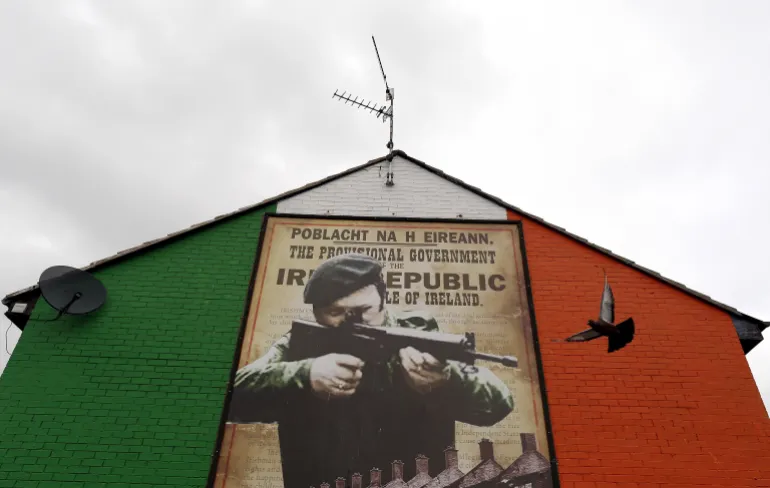
A pigeon flies past a mural supporting the Irish Republican Army in the Ardoyne area of north Belfast, September 9, 2015 [Cathal McNaughton/Reuters]
Irish Republican Movement hunger strikes
Some of the most significant hunger strikes in the 20th century occurred during the Irish revolutionary period, or the Troubles. The first wave was the 1920 Cork hunger strike, during the Irish War of Independence. Some 65 people suspected of being Republicans had been held without proper trial proceedings at the Cork County Gaol.
They began a hunger strike, demanding their release and asking to be treated as political prisoners rather than criminals. They were joined by Terence MacSwiney, the lord mayor of Cork, whose profile brought significant international attention to the independence cause. The British government attempted to break up the movement by transferring the prisoners to other locations, but their fasts continued. At least three prisoners died, including MacSwiney, after 74 days.
Later on, towards the end of the conflict and the signing of the Good Friday Agreement, imprisoned Irish Republicans protested against their internment and the withdrawal of political prisoner status that stripped them of certain rights: the right to wear civilian clothes, or to not be forced into labour.
They began the “dirty protest” in 1980, refusing to have a bath and covering walls in excrement. In 1981, scores of people refused to eat. The most prominent among them was Bobby Sands, an IRA member who was elected as a representative to the British Parliament while he was still in jail. Sands eventually starved to death, along with nine others, during that period, leading to widespread criticism of the Margaret Thatcher administration.
India’s Mohandas Karamchand Gandhi, who was later popularly known as Mahatma Gandhi, used hunger strikes as a tool of protest against the British colonial rulers several times. His fasts, referred to as Satyagraha, meaning holding on to truth in Hindi, were considered by the politician and activist not only as a political act but also a spiritual one.
Gandhi’s strikes sometimes lasted for days or weeks, during which he largely sipped water, sometimes with some lime juice. They achieved mixed results – sometimes, the British policy changed, but at other times, there were no improvements. Gandhi, however, philosophised in his many writings that the act was not a coercive one for him, but rather an attempt at personal atonement and to educate the public.
One of Gandhi’s most significant hunger strikes was in February 1943, after British authorities placed him under house arrest in Pune for starting the Quit India Movement back in August 1942. Gandhi protested against the mass arrests of Congress leaders and demanded the release of prisoners by refusing food for 21 days. It intensified public support for independence and prompted unrest around the country, as workers stayed away from work and people poured out into the streets in protest.
Another popular figure who used hunger strikes to protest against British rule in colonial India was Jatindra Nath Das, better known as Jatin Das. A member of the Hindustan Socialist Republican Association, Das refused food while in detention for 63 days starting from August 1929, in protest against the poor treatment of political prisoners. He died at the age of 24, and his funeral attracted more than 500,000 mourners.
Palestinian kids wave their national flag and hold posters showing Khader Adnan following his death on May 2, 2023 [Majdi Mohammed/AP Photo]
Palestinian prisoners in Israeli prisons
Palestinians held, often without trial, in Israeli jails have long used hunger strikes as a form of protest. One of the most well-known figures is Khader Adnan, whose shocking death in May 2023 after an 86-day hunger strike drew global attention to the appalling treatment of Palestinians by the Israeli government.
Adnan, who was 45 when he starved to death at the Ayalon Prison, leaving behind nine children, had repeatedly been targeted by Israeli authorities since the early 2000s. The baker from the occupied West Bank had once been part of the Palestinian Islamic Jihad group as a spokesperson, although his wife later stated publicly that he had left the group and that he had never been involved in armed operations.
However, Adnan was arrested and held without trial multiple times, with some estimates stating that he spent a cumulative eight years in Israeli prisons. Adnan would often go on hunger strike during those detentions, protesting against what he said was usually a humiliating arrest and a detention without basis. In 2012, thousands in Gaza and the West Bank rallied in a non-partisan show of support after he went 66 days without food, the longest such strike in Palestinian history at the time. He was released days after the mass protests.
In February 2023, Adnan was once again arrested. He immediately began a hunger strike, refusing to eat, drink, or receive medical care. He was held for months, even as medical experts warned the Israeli government that he had lost significant muscle mass and had reached a point where eating would cause more damage than good. On the morning of May 2, Adnan was found dead in his cell, making him the first Palestinian prisoner to die in a hunger strike in three decades. Former Palestinian Information Minister Mustafa Barghouti described his death as an “assassination” by the Israeli government.
Hunger strikes at Guantanamo
Following the 2002 opening of the Guantanamo Bay detention camp of the United States in Cuba, where hundreds of “terror” suspects were held prisoners, often with no formal charges, they used hunger strikes in waves to protest against their detention. The camp is notorious for its inhumane conditions and prisoner torture. There were 15 detainees left by January 2025.
The secret nature of the prison prevented news of earlier hunger strikes from emerging. However, in 2005, US media reported mass hunger strikes by scores of detainees – at least 200 prisoners, or a third of the camp’s population.
Officials forcefully fed those whose health had severely deteriorated through nasal tubes. Others were cuffed daily, restrained, and force-fed. One detainee, Lakhdar Boumediene, later wrote that he went without a real meal for two years, but that he was forcefully fed twice a day: he was strapped down in a restraining chair that inmates called the “torture chair”, and a tube was inserted in his nose and another in his stomach. His lawyer also told reporters that his face was usually masked, and that when one side of his nose was broken one time, they stuck the tube in the other side, his lawyer said. Sometimes, the food got into his lungs.
Hunger strikes would continue intermittently through the years at Guantanamo. In 2013, another big wave of strikes began, with at least 106 of the remaining 166 detainees participating by July. Authorities force-fed 45 people at the time. One striker, Jihad Ahmed Mustafa Dhiab, filed for an injunction against the government to stop officials from force-feeding him, but a court in Washington, DC rejected his lawsuit.
Protests against apartheid South Africa
Black and Indian political prisoners held for years on Robben Island protested against their brutal conditions by going on a collective hunger strike in July 1966. The detainees, including Nelson Mandela, had been facing reduced food rations and were forced to work in a lime quarry, despite not being criminals. They were also angry at attempts to separate them along racial lines.
In his 1994 biography, Long Walk to Freedom, Mandela wrote that prison authorities began serving bigger rations, even accompanying the food with more vegetables and hunks of meat to try to break the strike. Prison wardens smiled as the prisoners rejected the food, he wrote, and the men were driven especially hard at the quarry. Many would collapse under the intensity of the work and the hunger, but the strikes continued.
A crucial plot twist began when prison wardens, whom Mandela and other political prisoners had taken extra care to befriend, began hunger strikes of their own, demanding better living conditions and food for themselves. Authorities were forced to immediately settle with the prison guards and, a day later, negotiate with the prisoners. The strike lasted about seven days.
Later, in May 2017, South Africans, including the then Deputy President Cyril Ramaphosa, who was imprisoned in a different facility during apartheid, supported hunger-striking Palestinian prisoners by participating in a collective one-day fast. At the time, late Robben Island veteran Sunny “King” Singh wrote in the South African paper Sunday Tribune that hunger strikes in the prison never lasted more than a week before things changed, and compared it with the protracted situation of Palestinian strikers.
“We were beaten by our captors but never experienced the type of abuse and torture that some of the Palestinian prisoners complain of,” he wrote. “It was rare that we were put in solitary confinement, but this seems commonplace in Israeli jails.”
Families celebrate Christmas releases while calling for full freedom of detainees.
Published On 25 Dec 202525 Dec 2025
Share
Authorities in Venezuela have released at least 60 people arrested during protests against President Nicolas Maduro’s re-election, according to a human rights advocacy group, though campaigners say hundreds remain behind bars.
The releases began early on Thursday, over Christmas, according to the Committee for the Freedom of Political Prisoners, a group of rights activists and relatives of detainees arrested during unrest that followed July’s presidential election.
Recommended Stories
list of 3 itemsend of list
“We celebrate the release of more than 60 Venezuelans, who should never have been arbitrarily detained,” committee head Andreina Baduel told the AFP news agency.
“Although they are not entirely free, we will continue working for their full freedom and that of all political prisoners.”
Maduro secured a third term in office in the July 2024 vote, a result rejected by parts of the opposition amid allegations of fraud. The disputed outcome triggered weeks of demonstrations, during which authorities arrested about 2,400 people. Nearly 2,000 have since been released, according to rights groups.
Despite the latest releases, Venezuela still holds at least 902 political prisoners, according to Foro Penal, an NGO that monitors detentions.
Relatives said many of those freed had been held at Tocoron prison, a maximum-security facility in Aragua state, roughly 134km (83 miles) from the capital Caracas. Officials have not publicly clarified the conditions under which detainees were released.
“We must remember that there are more than 1,000 families with political prisoners,” Baduel said. Her father, Raul Isaias Baduel, a former defence minister and once an ally of the late president, Hugo Chavez, died in custody in 2021.
Reporting from Cleveland — A top police union official asked Ohio’s governor to temporarily ban guns outside the Republican National Convention in downtown Cleveland after the shooting of several police officers in Louisiana renewed fears about the safety of this week’s political gathering.
But a spokeswoman for Gov. John Kasich, a Republican, said Sunday that he did not have the power to suspend the state’s open-carry laws.
The city has banned a wide variety of potential weapons from the protest zone near the convention — including tennis balls, water pistols and bicycle locks — but cannot limit firearms.
The dispute over the open-carry law, which is similar to statutes in most other states, came as protesters from a long list of organizations began to gather here for demonstrations that are expected to last at least until Donald Trump accepts the Republican presidential nomination on Thursday.
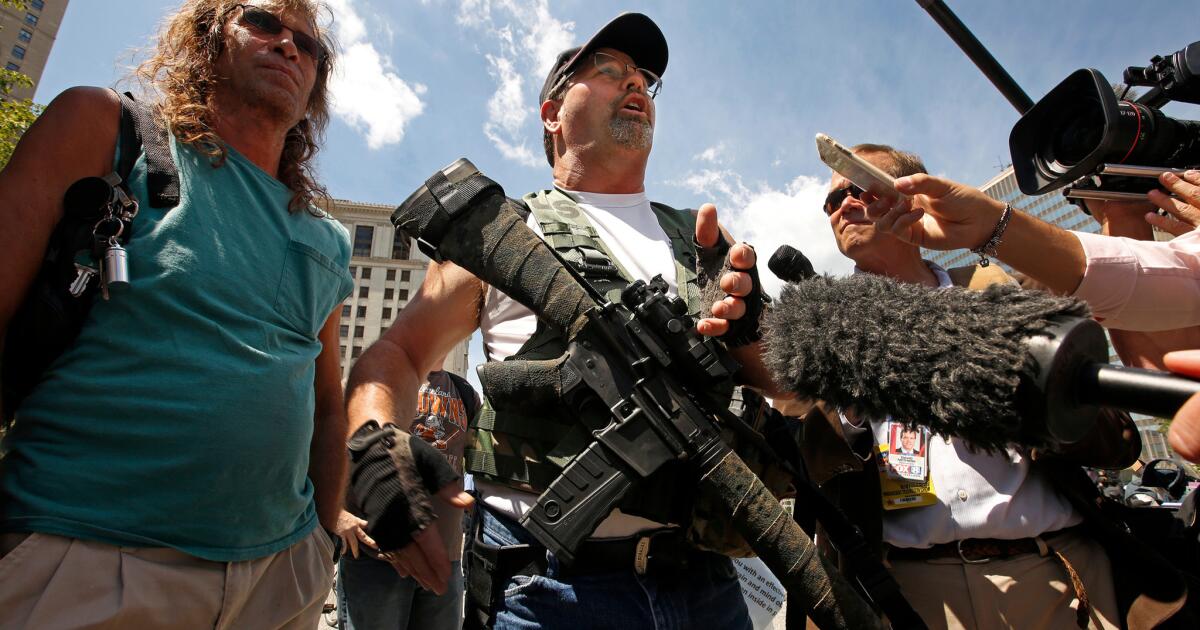
Sunday afternoon, a man with an AR-15 semiautomatic rifle, a handgun and ammunition stood in downtown’s Public Square saying he was there to exercise his rights and make a point.
“What are you going to do, ban everything that kills people?” Steve Thacker, a 57-year-old information technology engineer from Westlake, Ohio, asked when someone criticized his decision to walk through Cleveland with the rifle. “The point is to protect yourself. This world is not the world I grew up in.”
A local resident, Steve Roberts, 61, who was riding his bike through the square, stopped to acknowledge that Thacker was within his rights, but asked him to leave.
“You’ve shown it. Why don’t you take it back?” Roberts, who was wearing a “Stand for Love” T-shirt, told Thacker. “I find it offensive.”
The miniature drama between the men could be one of many that will play out as viewpoints collide in Cleveland this week — not just left versus right, but sometimes far left versus far right.
In preparation, metal security fencing stands around the convention site, which is protected by the U.S. Secret Service. The rest is the responsibility of a police force including thousands of officers from agencies from California to Florida who have been sworn in with arrest powers in the city. Police officers with dogs have begun patrolling the streets.
“It’s game time,” Cleveland Police Chief Calvin Williams said Sunday morning, “and we’re ready for it.”
Black nationalists drew an escort of bicycle officers in helmets and shorts as they marched through the city Saturday. Planes towing banners opposing abortion and supporting the imprisonment of Hillary Clinton circled the city Sunday while hundreds of activists marched through the streets to protest Trump and killings by police.
The names of Tamir Rice and Eric Garner, who were killed by police, were invoked as a small but raucous crowd began to chant outside the Cleveland Masonic and Performance Arts Center.
“No Trump. No KKK. No fascist USA,” the crowd chanted, with many holding signs that read “Stop Trump” or “Black Lives Matter.”
On Monday, one group of anti-Trump activists plan to hold an illegal march to the Quicken Loans Arena, the site of the convention, to have a “clash of ideas” with Trump supporters.
The city granted the activists use of a public park but denied them a permit for the route they desired, said organizer Tom Burke, who said they wanted to get “as close as they possibly can” to the Republican delegates shielded behind the metal fencing.
“We hope that they’ll hear us inside the convention,” Burke said. “We don’t expect any trouble.”
Chelsea Byers, 26, of Los Angeles was dressed in a pink Statue of Liberty costume and said she traveled to Cleveland to protest the Trump and Clinton candidacies. A member of the antiwar group Code Pink, she thought it was important to rail against “war hawks.”
“We felt like it was important to stand in solidarity to stop the hate,” she said.
Cleveland natives said they were more worried about how out-of-town demonstrators might act as the week goes on.
“It’s always a concern because it’s not their city. Whatever they do, they don’t care,” said David Allen, a biker and longtime city resident. “I’m just gonna try and stay away from downtown.”
Mike Deighan, a 28-year-old restaurant employee in the downtown area, seemed to be enjoying the fanfare near the Quicken Loans Arena as he purchased a hat from one of several pop-up stands that were selling shirts disparaging Trump and Clinton.
But his mood soured when the topic turned to the likely demonstrations later in the week.
“I’m not really excited about it at all,” he said. The only people who are going to destroy this city are the people who aren’t from here.”
Along East 55th Street, Brian Lange waved a 2nd Amendment flag proudly as he stood near a vendor hawking pro-Trump paraphernalia. Lange, who is affiliated with the right-wing Oath Keepers group, said he had traveled from Lima, Ohio, to report for his radio show.
Although he’d been in Cleveland for less than an hour, he said, someone had already driven by and hurled profanities at him for supporting Trump. Lange, an Air Force veteran, said he just smiled back.
“They got the freedom to say whatever they want, as long as they don’t trample on my rights,” Lange said. “I just consider them ill-informed.”
Steve Loomis, president of the Cleveland Police Patrolmen’s Assn., who called for the ban on guns outside the convention, said he was not “against the 2nd Amendment.”
But recent killings of police in Texas and Louisiana, combined with volatile confrontations that could occur outside the convention, will create situations that are too risky for city police, he said.
City officials canceled a security briefing for reporters Sunday night and issued a statement that extended condolences for the deaths of the three officers killed in Baton Rouge, La., but said nothing about whether the shooting would change the security plan.
Jeff Larson, chief executive of the Republican National Convention, told reporters in a briefing that “I feel good about the security plan.”
Cleveland police have had “a number of big events that have taken place with open carry without any issues,” Larson said.
He added: “It is the constitution in Ohio. The governor can’t simply say, I’m going to relax it for a day or tighten it up for a five-day period of time.”
Times staff writer Michael Finnegan contributed to this report.
From Israel’s genocide in Gaza and the Russia-Ukraine war to devastating global weather events – including floods, storms and earthquakes – this year was defined by turmoil and humanitarian crises.
Prolonged violence in Sudan, marked by attacks by the Rapid Support Forces (RSF), added to the mounting civilian toll and displacement across the country.
The year also saw heightened tensions between India and Pakistan, a deadly blaze in Hong Kong, United States and Israeli attacks on Iran, revelations from the Epstein files, and waves of “Gen Z” protest movements across multiple regions.
Together, these developments dominated international headlines, reflecting deepening political instability, social unrest and growing humanitarian needs worldwide.
View the gallery below for powerful photographs that documented and encapsulated these pivotal 12 months.
BNP plans historic rally as Rahman, seen as a key leader, marks his highly anticipated homecoming.
Published On 24 Dec 202524 Dec 2025
Share
Bangladesh’s main opposition party says it is preparing a vast show of support as its leader, Tarique Rahman, prepares to return home after nearly 17 years in exile.
The Bangladesh Nationalist Party (BNP) aims to mobilise up to five million supporters in the capital to welcome Rahman, who is widely viewed as the party’s prime ministerial frontrunner for the country’s parliamentary elections scheduled for February.
Recommended Stories
list of 3 itemsend of list
His expected arrival from London on Thursday comes as the BNP regains momentum after the removal of longtime leader Sheikh Hasina in a student-led uprising last year.
Rahman, 60, is the son of former Prime Minister Khaleda Zia and currently serves as the BNP’s acting chairman.
Since 1991, power in Bangladesh has largely alternated between Zia and Hasina, apart from brief caretaker administrations. With Hasina’s Awami League barred from contesting the February 12 vote, the BNP now appears positioned to dominate the race.
‘A defining political moment’
BNP leaders say they are coordinating security arrangements with authorities for what they call an “unprecedented” mobilisation, with supporters expected to line the route from the airport to the reception venue.
“This will be a defining political moment,” senior BNP leader Ruhul Kabir Rizvi said.
Rahman has lived in London since 2008 after facing multiple criminal convictions in Bangladesh, including money laundering and charges linked to an alleged plot to assassinate Hasina. Courts acquitted him following Hasina’s removal from office, removing the legal obstacles that had delayed his return.
BNP officials said Rahman will proceed directly from the airport to the rally venue before visiting his mother, who has been seriously ill for months.
The homecoming unfolds during a fragile transition overseen by an interim government led by Nobel laureate Muhammad Yunus. The election is seen as a critical test of Bangladesh’s ability to restore democratic legitimacy after years of political turmoil.
Concerns persist over sporadic violence and recent attacks on media outlets, raising questions about the state’s capacity to ensure a credible vote.
The National Citizen Party (NCP), which emerged from the youth protest movement that toppled Hasina, welcomed Rahman’s return.
“Rahman was forced into exile under severe pressure and threats, so his homecoming carries symbolic weight,” said NCP spokesperson Khan Muhammad Mursalin. “His arrival will undoubtedly energise party leaders and supporters … On the path to democracy, we will stand with him.”
Palestinian, Jewish and Indigenous groups say they will launch constitutional challenge to anti-protest laws described as ‘rushed’.
The state of New South Wales (NSW) will have the toughest gun laws in Australia as well as wide-reaching new restrictions on free speech in the wake of the Bondi Beach mass shooting, which left 15 people dead.
Less than two weeks after the attack on a Jewish celebration, new legislation was passed by the state’s legislative assembly in the early hours of Wednesday morning, including restrictions that appear to target speech in solidarity with Palestinians.
Recommended Stories
list of 4 itemsend of list
Notably, the Terrorism and Other Legislation Amendment Bill 2025 gives police powers to restrict public protests for up to three months “following a terrorism declaration”, while the public display of symbols of prohibited organisations will be banned.
“Once a declaration is made, no public assemblies can be authorised in designated areas, including by a court and police will be able to move people on if their behaviour or presence obstructs traffic or causes fear, harassment or intimidation,” the NSW government said in a statement.
In the statement, NSW Premier Chris Minns and other top officials said that the sweeping changes would involve a review of “hate speech” and the words “globalise the Intifada” were singled out as an example of speech that will be banned. The term is often used in solidarity with Palestinians and their civil struggle against Israeli military occupation and illegal settlement expansion, dating back to the 1980s.
Minns acknowledged that the new laws involved “very significant changes that not everyone will agree with” but he added, “our state has changed following the horrific anti-Semitic attack on Bondi Beach and our laws must change too.”
He also said that new gun laws, which restrict certain types of guns to use by farmers, would also help to “calm a combustible situation”.
Constitutional challenge
Three NSW-based pro-Palestinian, Indigenous and Jewish advocacy groups said on Tuesday, before the final vote on the legislation, that they would be “filing a constitutional legal challenge against the draconian anti-protest laws”.
Palestine Action Group Sydney said in a statement shared on Facebook that it was launching the challenge together with the Indigenous group Blak Caucus and Jews Against the Occupation ’48.
“These outrageous laws will grant NSW Police sweeping powers to effectively ban protests,” the Palestinian advocacy group said, accusing the NSW government of “exploiting the horrific Bondi attack to advance a political agenda that suppresses political dissent and criticism of Israel, and curtails democratic freedoms”.
Changes to the state’s protest laws also come just months after more than 100,000 people marched over the Sydney Harbour Bridge in protest against Israel’s genocidal war on Gaza, after a court overturned an attempt by the Minns government to try to stop the peaceful protest from taking place.
Following the huge display of public support for ending Israel’s war on Gaza, Australia joined more than 145 other UN member states in recognising Palestinian statehood at the United Nations in September this year, much to the outrage of Israeli officials.
Within hours of the Bondi attack, Israeli Prime Minister Benjamin Netanyahu, who is wanted for alleged war crimes by the International Criminal Court (ICC), linked the shooting to Australia’s recognition of Palestinian statehood.
UN special rapporteur Ben Saul, who is also an international law chair at the University of Sydney, criticised Netanyahu’s comments.
Saul, whose UN mandate focuses on ensuring human rights are protected while countering terrorism, called for a “measured response to the Bondi terrorist attack”.
“Overreach does not make us safer – it lets terror win,” Saul said in a post on social media.
Heroes to be honoured
Australia’s Prime Minister Anthony Albanese said on Wednesday that he plans to create a special honours list to recognise the people who rushed in to try to stop the two attackers as they targeted the Hanukkah celebration at Bondi Beach on December 14.
Australian public broadcaster the ABC reported those honoured would likely include Australian-Syrian shop owner Ahmed al-Ahmed, as well as Boris and Sofia Gurman, a local couple who tried to stop the gunmen but were among those killed in the attack.
While al-Ahmed has been widely hailed as a hero around the world, less is known about a second Muslim man who ran in to help, even as he was tackled by bystanders because he was mistaken for being an attacker.
The man’s lawyer, Alisson Battisson, says that her client, whom she did not name, is a refugee who is potentially facing deportation due to a past criminal record, despite his repeated attempts to help stop the Bondi attack.
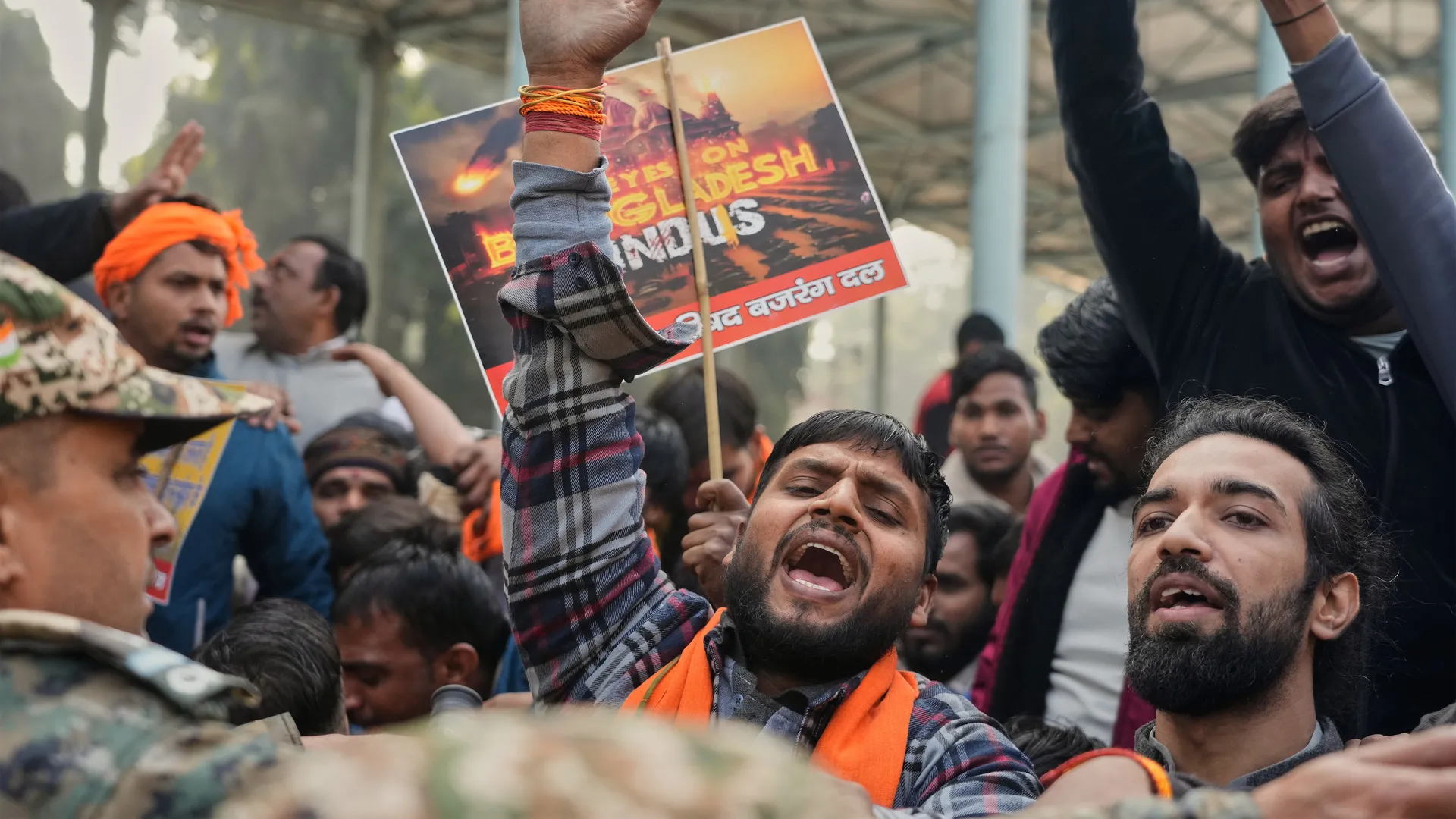
Hindutva activists tried to storm the Bangladesh High Commission in New Delhi, India as they rallied against the neighbouring nation for failing to protect its Hindu minorities. The demonstration comes after a 25-year-old Hindu man was lynched and burned publicly following allegations of blasphemy.
Members of the Bolivian Workers’ Union clash with police during a protest demanding the repeal of a law that removes fuel subsidies in La Paz, Bolivia, on Tuesday. Photo by Luis Gandarillas/EPA
Dec. 23 (UPI) — At least four law officers were injured Tuesday in La Paz during clashes between marchers from the Central Obrera Boliviana, the country’s largest labor federation, and police as protests intensified over the government’s decision to end fuel subsidies.
President Rodrigo Paz issued a decree Dec. 18 eliminating fuel subsidies that had been in place for nearly 20 years. He also declared an “economic, financial and social emergency” to justify the reform and paired the measure with a 20% increase in the minimum wage to cushion its impact.
As a result of the decision, gasoline and diesel stopped being sold at state-controlled prices of about 53 cents per liter and shifted to prices reflecting the real cost of imports, leading to increases of nearly 200% for consumers.
According to reports by the Bolivian newspaper El Deber, the incidents that left police officers injured occurred near Plaza Murillo, close to the government palace, when miners and transport workers attempted to approach areas secured by law offivers.
The Ministry of Government said the injured officers were attacked with stones and blunt objects while carrying out public order duties.
Police said a miner was detained for allegedly throwing fireworks and dynamite. Labor leaders, meanwhile, criticized using tear gas to disperse demonstrators.
Union leaders warned that protests will continue unless their main demand is met — the repeal of the decree that eliminated fuel subsidies.
Bolivia’s Human Rights Ombudsman’s Office said that after the fuel price changes, fares for interdepartmental, interprovincial and urban transportation rose by as much as nearly 200% in several regions, according to La Razón.
After inspections at transport terminals and hubs in La Paz, Cochabamba and Santa Cruz, the ombudsman’s office documented widespread and unilateral fare hikes that in many cases doubled or even tripled prices, directly affecting the cost of living for Bolivian families.
El Deber reported that similar protests were recorded in Santa Cruz, including temporary road blockades and clashes with police, amid growing public anger over the impact of higher fuel prices on transportation and household expenses.
Authorities reiterated calls for dialogue and warned they will not tolerate violence, while unions said they will maintain mobilizations until the government reviews the measure.
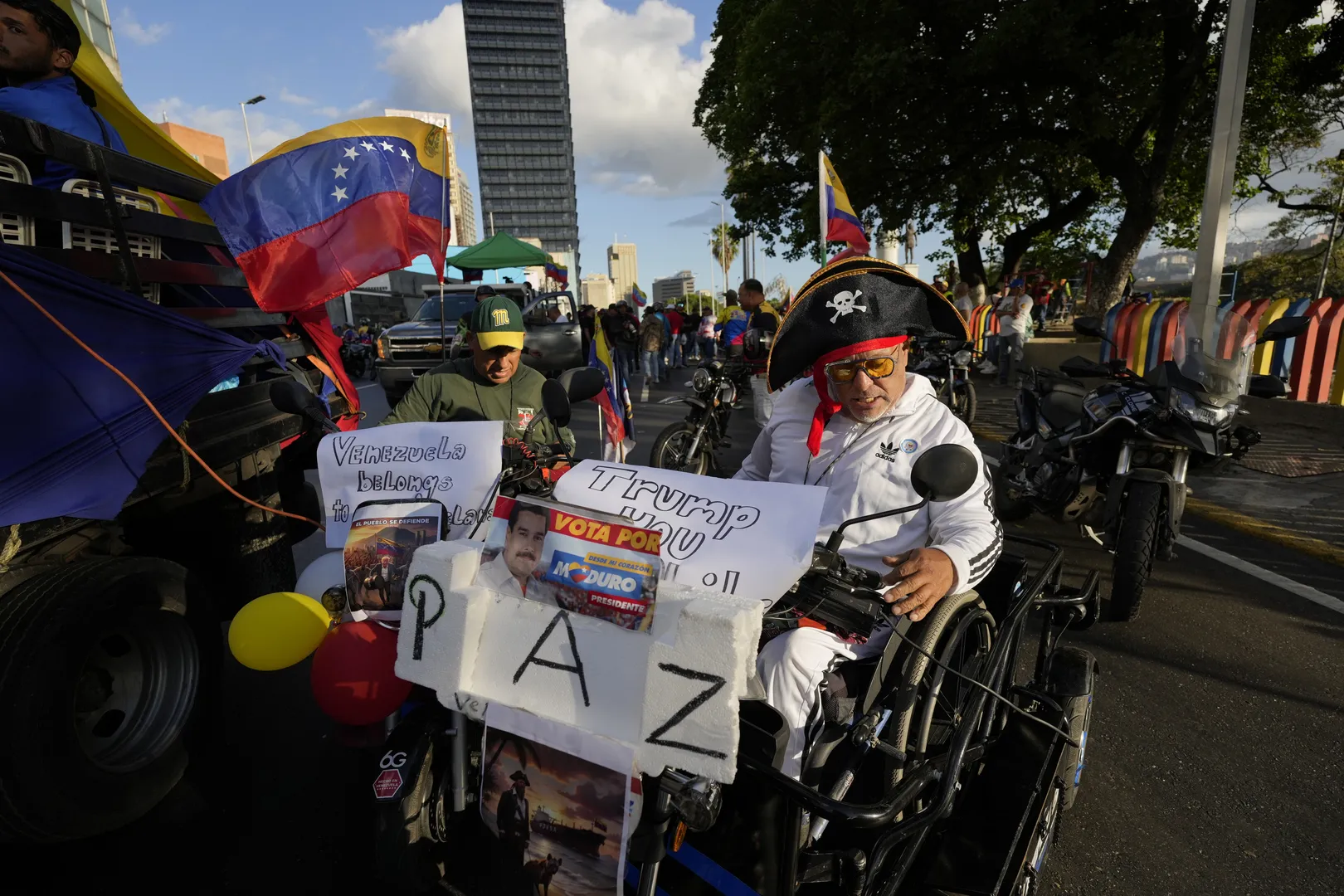
Motorcyclists wearing pirate costumes rode through Caracas in a protest against US President Donald Trump, after Washington ordered the seizure of Venezuelan oil tankers under a blockade targeting vessels linked to sanctions.
Police arrest three people outside insurer of Israeli arms maker Elbit, including Thunberg for holding placard.
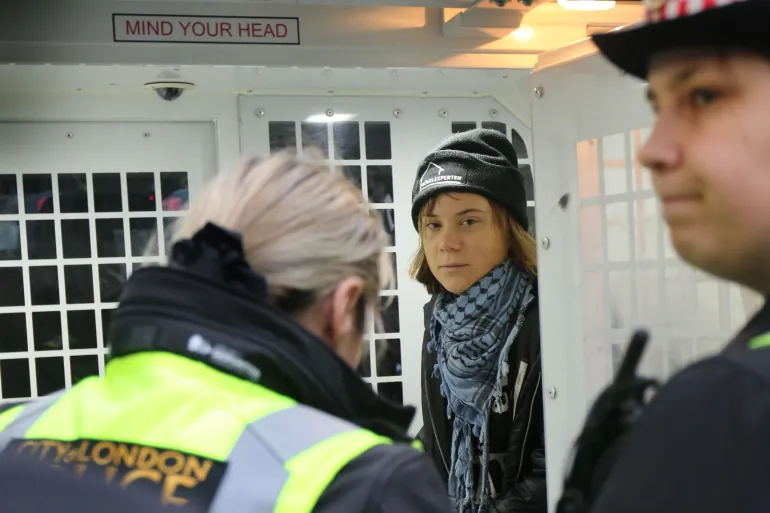
British police have arrested Swedish activist Greta Thunberg and two other people at a pro-Palestine protest in central London, according to campaign group Defend Our Juries.
The group said Thunberg was arrested on Tuesday at the Prisoners for Palestine protest held in the heart of London’s Square Mile financial district outside the offices of Aspen Insurance, which provides coverage for Israeli defence contractor Elbit Systems.
Recommended Stories
list of 3 itemsend of list
The group said Thunberg had arrived after the protest began, and it shared video footage of the activist holding a sign reading, “I support the Palestine Action prisoners. I oppose genocide.” Thunberg has called Israel’s war in Gaza a genocide and has twice joined flotilla campaigns to try to break Israel’s siege of Gaza.
The City of London Police, which polices the financial district, confirmed that a 22-year-old woman, a description corresponding to Thunberg, was arrested for displaying a placard “in support of a proscribed organisation (in this case Palestine Action) contrary to Section 13 of the Terrorism Act 2000”.
This is the latest protest in solidarity with activists from the Palestine Action group, six of whom are currently on hunger strike in British prisons with two now hospitalised. The direct action group has been proscribed as a “terrorist organisation” by the United Kingdom’s government.
Defend Our Juries said Tuesday’s protest was held to draw attention to Aspen Insurance’s “complicity in genocide” and to express solidarity with prisoners affiliated with Palestine Action.
Thunberg is seen after her arrest for holding a placard expressing support for Palestinian Action prisoners and condemnation of Israel’s genocide [Handout/Defend Our Juries]
Two others, a man and a woman, were also arrested at the protest although they had “glued themselves nearby”, according to the City of London Police, which described damage with “hammers and red paint” to “a building on Fenchurch Street”, where the offices of Aspen Insurance are located.
Defend Our Juries confirmed the damage, saying in a news release that two activists “covered the front of the building with symbolic blood-red paint, using re-purposed fire extinguishers” before attaching themselves to the front of the building in the aim of “drawing attention to Aspen’s complicity in Genocide, disrupting their business, and closing down the building”.
The group said Aspen Insurance, a global insurer and reinsurer, was targeted because of its affiliation with Elbit Systems UK, a subsidiary of Elbit Systems, which is Israel’s largest arms producer. It describes its drones as “the backbone” of the Israeli military.
Palestine Action protesters had targeted one of the UK subsidiary’s operations in Bristol last year. Among their five key demands, the group’s hunger strikers want the manufacturer, which has several UK factories, to be shut down.
Defend Our Juries said in its news release that Deputy Prime Minister and Justice Minister David Lammy has “refused to speak to legal representatives of the hunger-strikers, or their families”.
A few days earlier, Thunberg had voiced solidarity with the hunger strikers on Instagram, saying: “It is up to the state to intervene, and put an end to this by meeting these reasonable demands that pave the way for the freedom of all those who choose to use their rights trying to stop a genocide, something the British state has failed to do themselves.”
A Palestine Action spokesperson said in relation to her arrest that it was not clear whether police had “made another one of their mistakes in interpreting the crazy ban on Palestine Action” or whether they had “turned anyone expressing support for prisoners locked up beyond the legal time limit for taking action to stop a genocide into alleged terrorists”.
London, United Kingdom – Lawyers of imprisoned hunger-striking activists linked to the protest group Palestine Action have put the British government on notice as the justice secretary refuses to meet them.
Imran Khan & Partners, which represents the collective, wrote a pre-claim letter to the government on Monday, warning that they would seek a High Court case should officials fail to respond by Tuesday afternoon.
Recommended Stories
list of 4 itemsend of list
Eight activists, aged between 20 and 31, have participated in a rolling strike that began on November 2. There are rising fears that one or more of them could soon die in jail.
In recent days, their relatives and loved ones have told Al Jazeera of their deteriorating health and repeated hospital admissions.
Their lawyers have long called for a meeting with Justice Secretary David Lammy to discuss welfare and prison conditions, believing such an intervention could be life-saving.
But the government has so far refused, saying hunger strikes are not an unusual phenomenon in prisons and that policies to provide adequate medical care to anyone refusing food are being followed.
“Our clients’ food refusal constitutes the largest co-ordinated hunger strike in British history since 1981,” the lawyers wrote, referring to the Irish Republican inmates led by Bobby Sands. Sands and nine others died of starvation, one on day 46 of the protest.
“As of today’s date, [the current] strike has lasted up to 51 days, nearly two months, and poses a significant risk to their life with each passing day,” the lawyers wrote.
The detainees are being held in five prisons over their alleged involvement in break-ins at the United Kingdom’s subsidiary of the Israeli defence firm Elbit Systems in Bristol and a Royal Air Force base in Oxfordshire. They deny the charges against them, such as burglary and violent disorder.
Amu Gib, Heba Muraisi, Teuta Hoxha and Kamran Ahmed are on day 52, 51, 45 and 44 of their protests, respectively. Lewie Chiaramello, who is diabetic and refuses food every other day, began his protest 30 days ago.
Qesser Zuhrah, Jon Cink and Umer Khalid have ended their strike.
All eight will have spent more than a year in prison before their trials take place, well beyond the UK’s usual six-month pre-trial detention limit.
The hunger strikers’ five demands include immediate bail, the right to a fair trial and the de-proscription of Palestine Action, which accuses the UK government of complicity in Israel’s war crimes in Gaza. The UK government banned Palestine Action in July, branding it a “terror” group, a label that applies to groups such as ISIL (ISIS). The protesters have called for an end to alleged censorship in prison, accusing authorities of withholding mail, calls and books. They are also urging that all Elbit sites be closed.
‘Engage with each one’
Leading human rights barrister Michael Mansfield has backed calls for the government to intervene.
“It’s a simple proposition, engage with each one,” he told Al Jazeera. “That’s your job [as government], that’s what you’re there for. You are safeguarding people’s health, welfare and life.”
In a letter addressed to Lammy, he wrote, “Fundamental human rights in the United Kingdom are being destroyed in this quagmire of disinterest and populist politics, the most important being the presumption of innocence and the right to a fair trial by means of preparation and due process.
“There has to be an equality of arms which can hardly be achieved when a defendant is held in oppressive and lengthy periods of remand.”
Families of the prisoners have alleged mistreatment in prison, saying some detainees have been verbally abused and left without care in dangerous health conditions. The Ministry of Justice has denied these accusations and says it cannot comment on individual cases.
“Government takes action when it chooses to,” Mansfield wrote. “There could be no more appropriate time than now with the life-endangering protest by the hunger strikers. The delay is grotesque in some cases, up to two years with trial dates being set in 2027.”
Nida Jafri, a friend of hunger striker Amu Gib, plans to deliver Mansfield’s letter – and one of her own – in hand to the Ministry of Justice on Tuesday.
“These people are on remand – not convicted, still awaiting full legal process,” reads Jafri’s letter. “They are weak, in pain, and visibly wasting away. The absence of adequate medical observation or humane treatment under prison or hospital care is not only unacceptable; it breaches fundamental rights to health, dignity, and life.”
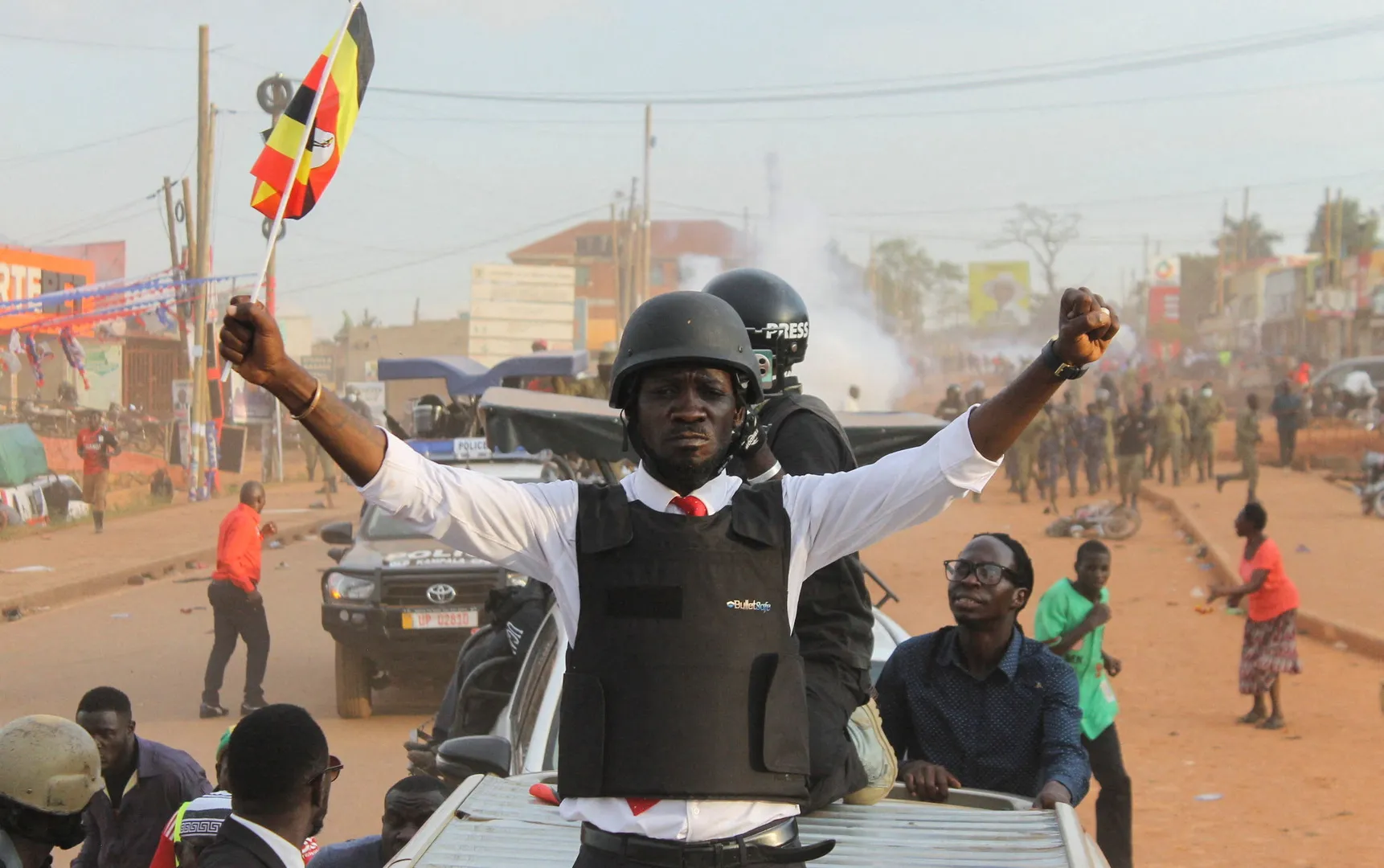
Footage shows security forces dispersing crowds with tear gas at rallies for Ugandan presidential candidate Robert Kyagulanyi, also known as Bobi Wine, in Kampala. The pop star-turned-politician is campaigning ahead of Uganda’s January 2026 elections, as officials warn against interference.
London, United Kingdom – Two Palestine Action-affiliated remand prisoners on hunger strike have been taken to hospital, according to a family member and a friend, adding to fears that the young Britons refusing food in protest could die at any moment.
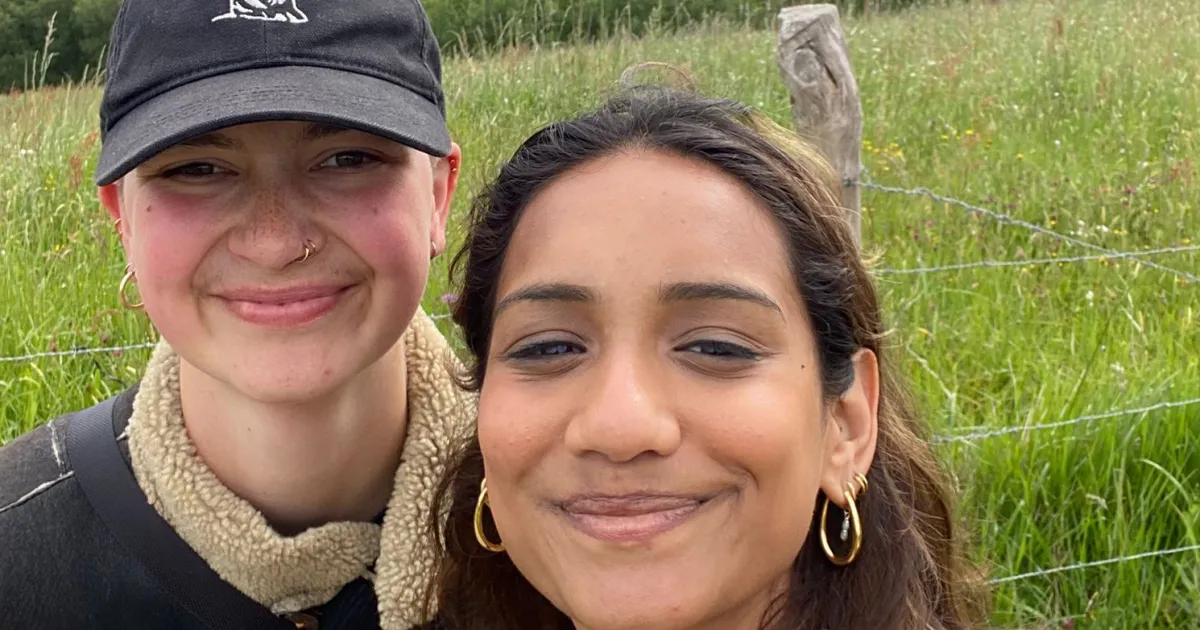
Twenty-eight-year-old Kamran Ahmed, who is being held at Pentonville prison in London, was hospitalised on Saturday, his sister, Shahmina Alam, told Al Jazeera.
Recommended Stories
list of 4 itemsend of list
Amu Gib, 30, who has not eaten food for 50 days at HMP Bronzefield in Surrey, was taken to hospital on Friday, said the Prisoners for Palestine group and friend Nida Jafri, who is in regular contact with them. Gib uses the pronoun they.
Ahmed and Gib are among six detainees protesting across five prisons over their alleged involvement in break-ins at the United Kingdom’s subsidiary of the Israeli defence firm Elbit Systems in Bristol and a Royal Air Force base in Oxfordshire.
They deny the charges against them, such as burglary and violent disorder.
“It’s day 42 [of Ahmed’s hunger strike], and at this point, there’s significant risk of organ damage,” said his sister, Alam. “We know that he’s rapidly been losing weight in the last few days, losing up to half a kilogram [1.1lbs] a day.”
Ahmed’s last recorded weight was 60kg (132lbs).
When Al Jazeera first interviewed Alam on December 12, Ahmed, who is 180cm (5′ 11”), weighed 64kg (141lbs), having entered prison at a healthy 74kg (163lbs). On Thursday, Alam told journalists at a news conference in London that he weighed 61.5kg (136lbs).
Ahmed’s speech was slurred in a call with the family on Friday, said Alam. He is said to be suffering from high ketone levels and chest pains.
“Honestly, I don’t know how he’s going to come out of this one,” said Alam.
It is the third time Ahmed has been hospitalised since he joined the hunger strike.
Shahmina Alam with her younger brother, Kamran Ahmed, a Palestine Action-linked hunger striker [Courtesy of the Alam family]
‘Critical stage’
The hunger strikers’ demands include immediate bail, the right to a fair trial and the de-proscription of Palestine Action, which accuses the UK government of complicity in Israel’s war crimes in Gaza. The UK government banned Palestine Action in July, branding it a “terror” group, a label that applies to groups such as ISIL (ISIS).
The protesters have called for an end to their alleged censorship in prison, accusing authorities of withholding mail, calls and books. They are also urging that all Elbit sites be closed.
The six are expected to be held for more than a year until their trial dates, well beyond the UK’s six-month pre-trial detention limit.
Qesser Zuhrah, a 20-year-old who has refused food for 50 days, is also in hospital, having lost 13 percent of her body weight, according to her lawyers. The other protesters are Heba Muraisi, Teuta Hoxha and Lewie Chiaramello, who is diabetic and refuses food every other day.
There was no immediate comment from either Pentonville or HMP Bronzefield.
‘I’m scared’
Gib called their friend, Jafri, on Thursday from prison, telling her they needed a wheelchair to attend a doctor’s appointment where their vital signs would be checked.
Prison staff at first “refused” to provide a wheelchair, and later, after offering one, “refused to push” it, Jafri said. “So they laid there with … no check of their vitals on day 47 of their hunger strike,” Jafri said.
When they are hospitalised, the prisoners are unable to call their loved ones, as they can from jail.
Jafri told Al Jazeera, “I’m scared they’re there alone with no phones and no calls allowed.”
Gib, who has lost more than 10kg (22lbs), is below the normal range for most health indicators, which is “highly concerning” for their immune system, their lawyers have said.
Prison officials have “failed to provide [Gib] with thiamine [a vitamin] consistently, and Amu is feeling the effects on their cognitive function”, the lawyers said.
Gib’s eyes are also “sore with the bright [prison] lights”, Jafri said.
Amu Gib (left) with their friend, Nida Jafri [Courtesy: Nida Jafri]
The lawyers have demanded a meeting with Secretary of State for Justice David Lammy, hoping his intervention could be life-saving. Thousands of everyday Britons, hundreds of doctors and dozens of MPs have urged Lammy to heed their call. But so far, he has refused, leading critics to accuse the UK government of wilfully ignoring the issue.
The UK media have also been accused of downplaying the protest and its dangers.
The protest is said to be the largest coordinated hunger strike in UK prisons since 1981, when Irish Republican inmates led by Bobby Sands refused food.
“In contrast to the robust media coverage of the Irish hunger strikes in the 1980s, the Palestine Action hunger strikes have been largely met with media silence,” wrote Bart Cammaerts, a professor of politics and communication at the London School of Economics.
“What will it take for the British media to pay attention to the plight of jailed pro-Palestinian activists? The death of an activist? Or the awakening of a moral conscience?”










![Shahmina Alam with Kamran Ahmed - Palestine Action linked hunger striker [Courtesy of Alam family]](https://i0.wp.com/www.aljazeera.com/wp-content/uploads/2025/12/WhatsApp-Image-2025-12-15-at-15.26.19-1-1765801678.jpg?w=640&ssl=1)
