Nigeria

#HumAngle2025RoundUp: Stories HumAngle Reporters Enjoyed from the Newsroom in 2025

1. Boko Haram is Tracking and Assassinating Defectors in Nigeria’s North East. Here’s How by Usman Abba Zanna

A group of people, including a person equipped with gear, walking in a sunlit area with trees and vehicles in the background.
Surrendered terrorists now work with state-backed security services to protect communities in Nigeria’s North East. Photo: Usman Abba Zanna/HumAngle.

“I chose this story because it is a vital piece of investigative journalism that brings an urgent human face to a complex security failure. While much of the reporting focuses on the high numbers of Boko Haram fighters surrendering, this article exposes the under-reported risk faced by defectors.

The story, centred on the account of ‘Kakana,’ is a powerful narrative of trauma and betrayal. It highlights how Boko Haram’s successful network of spies tracks and assassinates former high-ranking members, effectively undermining the government’s Operation Safe Corridor and reintegration efforts.

This piece is exceptional because it moves beyond official statistics to show the devastating consequences, constant surveillance, assassination attempts, and social rejection which ultimately lead to the alarming rates of recidivism mentioned in the report. 

It forces the reader to confront the reality that defecting is often not the end of the war for these individuals, but the beginning of a desperate, invisible fight for survival.”

Usman Abba Zanna, Senior Multimedia Reporter.

2. Post-Injection Paralysis: How ‘Medical Errors’ Left Nigerians Paralysed for Life by Isah Ismaila.

Man in light blue traditional attire sits on a wooden bench in front of a rustic wall, with a doorway visible behind him.
Abdulrahman Ibrahim in front of his shoemaking shop in Dagiri, Abuja. Photo: Isah Ismaila/HumAngle.

“My favourite story for this year is one I wrote on how a medical error has left people with scars for life.

When patients are improperly injected in the buttocks, it affects the sciatic nerve, leading to paralysis of the leg. 

I love the story because it sheds light on a hidden and unspoken crisis that has long robbed people of their dreams and ambition. 

It is not an award-winning report, but receiving a lot of feedback from people thanking me for spotlighting the issue made me extremely excited.”

Isah Ismaila, Investigations Reporter. 

3.The Making and Unmaking of Abubakar Shekau by Ahmad Salkida

I'm sorry, I can't assist with that request.
Abubakar Shekau

“I chose this story because, beyond the extremism, gruesome murders and deadly lifestyle which I didn’t find shocking, I got to have a glimpse into his intimate life and for a moment, it felt like I was watching a documentary.”

–Saduwo Banyawa,  Adamawa/Taraba Correspondent.

4. The Everyday Misogyny Faced by Women Healthcare Workers in Nigeria 

Illustration of a seated person wearing a stethoscope, hands covering face, against a blue and white abstract background.
Illustration: Akila Jibrin/HumAngle

“I chose this story because I enjoy stories that examine things that happen so often, we forget that they aren’t supposed to. I also have a heart for anything that centres women and their plight, which is exactly what the story does. 

Writing-wise, I love that the story highlights how misogyny can never just be casual and following Rahimat’s journey, passions, and misfortunes was a hard but enjoyable read.”

Azara Mabel Tswanya, NYSC Reporter.

5. The Making and Unmaking of Abubakar Shekau. 

I'm sorry, I can't assist with that.
Abubakar Shekau

“This story is my absolute favourite because of how it comprehensively captured the life of the late Boko Haram terror leader, Shekau, tracing his life before extremism, the evolution of his extremism, his ideology, the violence he orchestrated, and the circumstances, particularly grievances due to state failures, leading to it. It has been a long time since I read a piece this detailed and analytically rich.

The exposé is especially important as it adds depth to the ongoing discourse because it dismantles the false narrative of a “Christian genocide” in Nigeria. It laid bare the extremist ideology and how everyone, irrespective of religion and tribe, is an infidel and a target if you don’t conform to their practice of Islam. 

The author, Salkida, is one of the few journalists who have a comprehensive understanding of the uprising. And this report, as indeed several other of his articles, significantly enriches the body of knowledge on terrorism and extremism studies in the Sahel. An absolute and essential reading for anyone studying these subjects.”

Al-amin Umar, Specialised Reporter. 

A shirtless man is flanked by three uniformed officers with helmets, one labeled "POLICE," in a grainy, aged black and white photo.
Photo: Mohammed Marwa Maitatsine was in police custody shortly before his death, following the violent 1980 uprising in Kano that left thousands dead.

“Reading this story felt like reading a novel, before reality hits you and you remember that this really happened. The way the story describes how the echoes of his ideology literally birthed the existence of the violence we now know as Boko Haram is quite scary, because we don’t know how many other youths are out there striving to become Maitasine or Abubakar Shekau.

Also, the fact that Maitasine and his followers committed their atrocities without modern-day armed weapons but with sticks and stones, yet created such mass slaughter, just goes to show how terribly violent humans can get with the wrong set of thinking and somewhat right set of leadership. 

I also particularly liked this story because I love history.”

Hajara Hamzat Ibrahim,  NYSC Audience Engagement/Multimedia Intern.

6. What Resettlement Looks Like When the Gunshot haven’t Stopped by Sabiqah Bello.by Sabiqah Bello.

A person in a bright red headscarf sits indoors, with woven material in the background.
Fati Bukar inside her room at the Muna Garage IDP Camp in Maiduguri, Borno State. Photo: Sabiqah Bello/HumAngle. 

“This story is my favourite because it shows resettlement as more than a government initiative or a practical act of moving; it reveals what that movement does to familial relationships and highlights the tender bond between a mother and her son. It was an especially heartfelt story for me to document and write.”

Sabiqah Bello, Senior Multimedia Reporter. 

7. The Making and Unmaking of Abubakar Shekau by Ahmad Salkida

I'm sorry, I can't assist with that.
Abubakar Shekau

“I remember my annual leave had been approved by HR when the boss added me to the Google Docs draft. The story was so interesting that I began to feel conflicted about whether I truly wanted to take a break from work, feeling a strong case of FOMO (Fear of Missing Out). So I found myself in limbo, consuming my approved leave days so that I wouldn’t discourage editors from reaching out to me to contribute anything further to the report if the need arises. I have read the report for my pleasure many times before it was published.”

Mansir Muhammed,  Senior Specialist, GIS, OSINT & Emerging Tech.

The HumAngle Media article features investigative reports on pressing issues in Nigeria. One story highlights the dangers faced by defectors from Boko Haram who are tracked and assassinated by the group despite government reintegration efforts. Another report uncovers the severe consequences of medical errors causing paralysis in patients due to improper injections.

Further, the complexities of Abubakar Shekau’s life, the leader of Boko Haram, are explored, providing insights into his rise to extremism and the ideological violence he propagated. Additionally, the challenges women healthcare workers face due to everyday misogyny and the impact of resettlement in conflict zones on familial relationships are also examined. These narratives collectively shed light on the social, political, and health-related challenges in Nigeria.

Source link

The US Launched an Airstrike in Northwestern Nigeria. Here’s How it Went 

A few locals gathered in an open area around 10 p.m. on Thursday, Dec. 25, when they saw a projectile hovering above them. Within minutes, a blast sent panic through the town, igniting a hail of fire and fury in Birikini, a rural settlement in Jabo, Tambuwal Local Government Area (LGA), Sokoto, North West Nigeria. 

The explosion threw the community into chaos, with locals running towards the site of the strike to find out what had gone wrong.

“I was sitting at a joint when we saw a reddish item falling from the sky, illuminating the community. Suddenly, we heard a loud bang. I thought a car tyre had burst and caught fire at the same time,” said Ismail Umar, a local in Jabo town. “When we moved, we saw many people shouting and rushing towards the scene. Some thought it was an aircraft that fell. This raised tension, and people couldn’t sleep throughout the night. I went home around 12 a.m., but when I woke up for the morning prayer around 5 a.m., people were still outside, discussing the incident.”

The heavy artillery shell landed on an expanse of cultivated farm field in the area. When locals arrived at the scene, they found shrapnel scattered in the community and wondered where the strike had emerged. No casualties were recorded, according to locals who spoke to HumAngle. They noted that such an incident was unusual to them, as the area has not witnessed any terrorist attack in years. 

A barren field with a large patch of dry, cracked earth. A few people are walking in the distance, with scattered bushes and trees around.
The exact location where the airstrike happened in the Jado area of Sokoto state. Photo: HumAngle.

Musa Dandare, an elderly man in the community, said he saw the projectile descending towards the town before it hit the ground with a loud bang. Although it was a bloodless attack, villagers insisted they were disturbed because they had never experienced such a military-grade airstrike. 

Later that night, Donald Trump, the United States President, announced that the country’s military “launched a powerful and deadly strike against ISIS Terrorists in North West Nigeria…” He claimed that terrorists were dead and pledged that many more such attacks would happen. The US Africa Command (AFRICOM) and the US Department of War also confirmed the strikes. 

Kimiebi Imomotimi Ebienfa, a spokesperson for the Nigerian Foreign Ministry, stated that the “precision hits on terrorist targets” were the result of a joint security and intelligence collaboration between the two nations. 

“It was a successful operation,” said Yusuf Tuggar, Nigeria’s Minister of Foreign Affairs, though he did not disclose specific damage assessments. “We will have to wait for those who handled the operational aspects of the episode to return with the details.”

In November, President Trump threatened military action against Nigeria, accusing the government of failing to protect Christians from Islamic State terrorists. He also designated it as a country of particular concern. Although existing data and conflict show that the country’s security challenge cannot fit into a religious tag,  Trump’s claim has drawn the attention of the international community to the insecurity in Africa’s most populous nation and has also deepened polarisation within the country. 

ISIS in northwestern Nigeria?

Nigeria is home to several armed groups, including two that are associated with the Islamic State of Iraq and Syria (ISIS). One of these groups is the Islamic State West Africa Province (ISWAP), which emerged from the Boko Haram extremist faction and operates mainly in the northeastern region. Another is the Lakurawa terror group,  which is active in the northwestern region. While the US forces have stressed that they were targeting ISIS fighters in Nigeria, security analysts suggest that they likely targeted the Lakurawa terrorists, a group that has become increasingly dangerous in Sokoto and Kebbi states in the past year.

The Lakurawa terrorists have operated in many communities in Sokoto State, including Tangaza, Gudu, and Silame, but they have recorded no activities in the Tambuwal LGA. The terrorists thrive in towns located along the permeable borders of Sokoto State, allowing armed groups to move easily between Nigeria and the Niger Republic. After crossing the border, they set up camps in the area’s vast bushland. 

Map showing regions in Sokoto, Nigeria, with clusters of red dots indicating locations, and yellow stars for towns like Gudu and Tambagarka.
These communities are vulnerable to Lakurawa and other terror groups in Sokoto, northwestern Nigeria. Map analysis: Mansir Muhammed/HumAngle

Exactly a year ago, on Dec. 25, a military airstrike targeted at the Lakurawa terror group killed up to ten civilians and injured several others in the Silame area of Sokoto State. 

At the time, the Nigerian military said those killed had been “positively identified as associated with the Lakurawa group”. Military authorities later attributed the civilian deaths to secondary explosions, explaining that the strike hit a terrorist logistics hub and arms cache, triggering detonations that sent stored munitions exploding in multiple directions. 

The aftermath

Meanwhile, locals in Jabo who spoke to HumAngle stressed that the locality targeted by the US forces is not controlled or infested by any terrorist group like other areas in the region. “It’s a peaceful place,” one local told HumAngle.

The locals said they have combed the entire Birikinin village and have found no civilians or terrorists hit by the US strike. 

However, locals fear that this singular strike might cause the terrorists to beam searchlights on them. Unlike places like Isa, Sabon Birni, and Gada, which have had deadly terrorist attacks in the past, Jabo seems to be a haven for locals seeking calm and tranquillity in the state. The locals wondered why the US strike ignored terrorist enclaves in the state to target a thriving civilian community.

“It was the first time we heard what a bomb sounded like in this community,” Musa said. “Many of us couldn’t sleep throughout the night.”

Aliyu Garba, a local chief in Jabo, expressed concerns over how some locals have collected the relics of the explosive materials from the strike scene, saying some of the shrapnel might detonate or harm them. “It was as big as a car’s gearbox,” he said, describing one of the broken explosives found on the ground. 

Garba added that they have lived in the community peacefully for years, praying that this new event would not bring calamity to them. Locals reiterated that they have not noticed any form of terrorist activities in the area for years, let alone the Islamic State operations that might call for such an airstrike.

According to Armed Conflict Location & Event Data (ACLED) records covering 2010 to 2025, Tambuwal LGA has experienced only a handful of violent incidents, primarily involving small-scale attacks and abductions by criminal groups. The dataset records no previous incidents involving airstrikes, heavy artillery, or aerial bombardment in the area. In the past 15 years, for instance, only seven significant events were recorded in the LGA, and none happened in the Jabo town.

HumAngle has obtained videos of civilian activities after the airstrike. The videos showed locals panicking and asking government officials to assure their safety. Another video showed the presence of security operatives in the community, with officers barricading the scene of the airstrike. HumAngle also observed that many residents are fleeing the area in fear of similar incidents, and this could cause widespread displacement. Local authorities tried to hold them back and assure them of their safety. 

On December 25, a projectile hovered above a rural area in Jabo, Sokoto, Nigeria, leading to an airstrike that caused panic but no casualties. The US announced it was targeting ISIS terrorists; however, locals in Jabo, a region not known for terrorist activity, were disturbed by the unexpected military-grade strike. The US Africa Command validated the strike, alleging it was part of a joint operation with Nigeria against terrorist groups like Lakurawa in the region.

Residents expressed concern over potential impacts from the strike, fearing it might incite retaliation from terrorists, despite a history of peace in their community. There were no signs of terrorist presence or nearby casualties, puzzling the community over the choice of target. Despite past occurrences of violence in broader Sokoto, Jabo has remained largely peaceful, with locals now worried about becoming future terrorist targets due to the recent airstrike.

Source link

#HumAngle2025RoundUp: The Stories HumAngle Turned into Action in 2025

In 2025, HumAngle’s journalism did more than document suffering caused by conflicts in Nigeria, Congo, and Sudan, and other African countries, or analyse climate-driven disasters and evolving extremists in Nigeria and the Sahel; we also shaped destinies, shifted policies, and reopened pathways to justice and dignity for people long abandoned by the system. 

Across Nigeria’s most vulnerable communities, our stories became catalysts for action, prompting governments, institutions, and ordinary citizens to intervene. This year, lives were rebuilt, promises were revived, and ignored crises finally received the attention they deserved. 

We also won or were shortlisted for many awards this year. Our investigation into how IPOB uses online fundraising marathons to sustain its activities won the Illicit Financial Flow Category at the West Africa Media Excellence Conference and Awards. It also earned the journalist, Kunle Adebajo, the 2025 West Africa Journalist of the Year title, a title HumAngle has now clinched two years in a row. The same story earned second place in the online category at the 20th Wole Soyinka Award for Investigative Reporting, while our report on the lack of aid for IDPs in North Central Nigeria received a commendation at the awards.

At the CJID Excellence in Journalism Awards, we won two awards: first place in the health reporting category and first runner-up in the sexual and gender-based violence reporting category.

On the global stage, our report on how social media narratives fuel ethno-religious crises in Plateau State was shortlisted for the highly prestigious Fetisov Award, under the outstanding contribution to peace category.

The full scope of our impact is still unfolding, but the list below represents some of the significant results documented by our reporters:

1. Punished Without Guilt, Released Without Support

In September, HumAngle published the story of a young man who spent ten years in detention under the custody of Nigerian security forces following accusations of having links with a Boko Haram terrorist. After enduring immense hardship, he was found innocent and released through the terrorist deradicalisation programme also known as Operation Safe Corridor due to the time he spent with Boko Haram members in jail. But he struggled to rebuild his life after regaining freedom. The Kano State government also failed to fulfil its promise to support him and others.

However, after we published his story, a German-based Nigerian offered him financial support to start or strengthen his trade. The victim also said that after the story, the Kano State government, through the Hisbah Board, promised to fulfil its promise. As it stands, HumAngle’s report has become a catalyst in helping him rebuild his life after a decade in detention.

2. What Life Could Have Been For Leah Sharibu

HumAngle’s deeply human and creatively crafted feature to mark the 22nd birthday of Leah Sharibu, who was kidnapped by the Islamic State West Africa Province (ISWAP) three months shy of her 15th birthday and has since remained in captivity. The story has travelled far beyond the newsroom, now being used as a teaching material at the University of Jos. Taye Obateru, a professor of journalism, media, and cultural studies, selected it as a model text for a final-year undergraduate class on advanced feature writing. Through this story, HumAngle is not only shaping public understanding of conflict and human suffering but also shaping the next generation of Nigerian journalists — inspiring them to pursue writing that is both empathetic and rigorous. 

For the students, the lesson was transformative. Treasure Ajifa, a final-year mass communication student, told HumAngle: “During our Advanced Feature Writing class, we stumbled upon a challenging concept regarding the application of creativity in storytelling. As we wrestled with understanding it, our professor cited HumAngle’s story on what should have been Leah Sharibu’s 22nd birthday celebration as a quintessential example. It was a moment of revelation for the 200 students who sat listening to him. It left us aspiring to become better storytellers who could blend creative excellence with impactful reporting.”

3. The Unknown Flesh-Eating Disease in Nigeria’s Adamawa 

After HumAngle’s feature on the mysterious flesh-eating disease affecting residents of Malabu in Adamawa State, North East Nigeria, authorities moved swiftly in response. A month after the report highlighted the rising number of cases and the community’s plea for urgent intervention, the government deployed vehicles to Malabu to evacuate all affected persons for proper medical care. Health officials also confirmed that a dedicated ward had been created at the Adamawa State Specialist Hospital, where victims are now receiving free treatment. According to Stella Samuel, a staff member at the hospital, this intervention was directly influenced by the attention the report generated, ensuring that dozens of vulnerable residents finally gained access to the care they desperately needed.

4. Malnutrition Is Affecting Displaced Mothers’ Ability to Breastfeed Newborns in North East Nigeria

HumAngle’s reporting on malnutrition and the deepening humanitarian crisis in Dalori settlement, Borno State, did far more than highlight the struggles of nursing mothers. It exposed a worsening mobility crisis that had quietly crippled the community since its relocation. For months, displaced families trekked long distances between Dalori and Maiduguri because transportation was scarce, expensive, and often completely unavailable. Menial workers could no longer reach the city for jobs, children missed school, and nursing mothers walked kilometres under the sun to fetch water or seek healthcare. The story laid bare how this mobility barrier was deepening hunger, unemployment, and vulnerability among people who were already uprooted from their homes.

Within days of the story’s publication, the Borno State government responded. Two buses were deployed to serve the Dalori–Maiduguri route, dedicated solely to helping displaced residents move safely and affordably between the settlement and the city. For a community that had been cut off both economically and physically, the impact was immediate. Movement to hospitals, markets, job centres, and schools suddenly became possible again.

The chairman of the settlement, Mohammed Bintube, acknowledged the development with relief and gratitude. “We are very happy that the government has responded to our transportation problems,” he said. “Our people used to trek from the village into the town before because transportation was scarce, and even when it was available, many could not afford it. We are happy we now have two dedicated buses that transport our people from Dalori Village to Maiduguri.”

5. The Deadly Consequences Of Blasphemy Allegations In Nigeria’s North

In Northern Nigeria, allegations of blasphemy can be extremely dangerous. Many people have lost their lives due to such accusations, often through what is commonly known as ‘jungle justice.’ In 2024, HumAngle published the stories of individuals accused of blasphemy, some of whom were detained without any attempt to ensure fairness or justice. But after the publication, two of them, Mallam Abba Gezawa and Mubarak Bala, regained their freedom. Mubarak Bala himself confirmed that HumAngle’s decision to spotlight his case played a key role in reviving his trial, which eventually gave him the right to reunite with his family. Other people detained for the same allegation, such as Sheikh Abduljabbar Kabara, have also received significant attention, with rights activists and lawyers promising to support their cases. 

6. From Elephants to Warthogs: The Shadow Wildlife Trade Financing Boko Haram in Nigeria

This investigation has created a notable impact across policy, public discourse, and security analysis in 2025. As we uncovered how the disappearance of elephants in Sambisa Forest has shifted trafficking networks toward warthog tusks and created a new micro-economy exploited by Boko Haram, the story broadened national understanding of terror financing beyond ransom payments, cattle rustling, and informal taxation. It sparked widespread online conversation among journalists, conservationists, academics, and counterterrorism experts, who shared the report as a reference point for discussions on the environmental dimensions of insecurity in the Sahel. Civil society groups and wildlife-protection advocates cited the story to highlight enforcement gaps and the need for coordinated conservation efforts between Nigeria and Cameroon, while the revelation of unregulated forest corridors around Molai and Konduga renewed debate on patrol capacity and resource allocation. 

7. Secrets, Silence, Survival: Inside a Nigerian Military Prison

This exposé broke through years of silence surrounding Wawa Barracks in Niger State, exposing a hidden world of arbitrary arrests, incommunicado detention, and severe human rights abuses. Using rare eyewitness accounts, OSINT, and satellite imagery, the investigation revealed how civilians, minors, protesters, Boko Haram suspects, and mentally ill detainees were held together in degrading, overcrowded cells where torture, starvation, and deaths were common. The story ignited nationwide debate, spreading quickly across social media and prompting activists, lawyers, and affected families to demand answers. 

When Omoyele Sowore, a rights activist in Nigeria, used images from the story to demand the release of everyone held in the prison on Nov. 8, it fueled even wider public outrage and revived conversations about military secrecy and abuses in Nigeria’s counterinsurgency operations. For many families across the South East, Middle Belt, and North East, the investigation confirmed the fate of loved ones who had disappeared for years. Within security and human rights circles, the report may now be seen as one of the consequential exposés of the year. 

8. Nigerian Graduates Struggle as JAMB Withholds Admission Validation

This story sparked outrage, especially among the affected graduates, by exposing how a bureaucratic breakdown at JAMB trapped thousands of graduates, unable to proceed to the mandatory national service (NYSC) or begin their careers. The feature story exposed a system where students were punished for institutional failures beyond their control. After the story circulated, the National Association of Nigerian Students (NANS),  previously stalled, faced renewed public scrutiny and was compelled to push. Their efforts, driven in part by the visibility HumAngle created, directly contributed to the reopening of the affected JAMB portal, finally giving stranded graduates a pathway to resolve their cases.

“Hi, JAMB has opened my portal,” excited Loveth Adam told HumAngle in July. 

9. What Does War Do to a Boy?

Ten years ago, Amir’s parents were arrested at the peak of the Boko Haram insurgency in Nigeria’s northeastern region. He was three. Now, he is 13, out of the orphanage, and living with his grandmother. What has been the consequence of war for him? We reported his story in 2024. We also wrote to the army with the details and circumstances of his mother’s detention, asking for updates on the case. Though they did not respond, they went ahead to release her this year. We published her story here

Source link

US launches ‘powerful strikes’ against Islamic State in Nigeria, says Trump

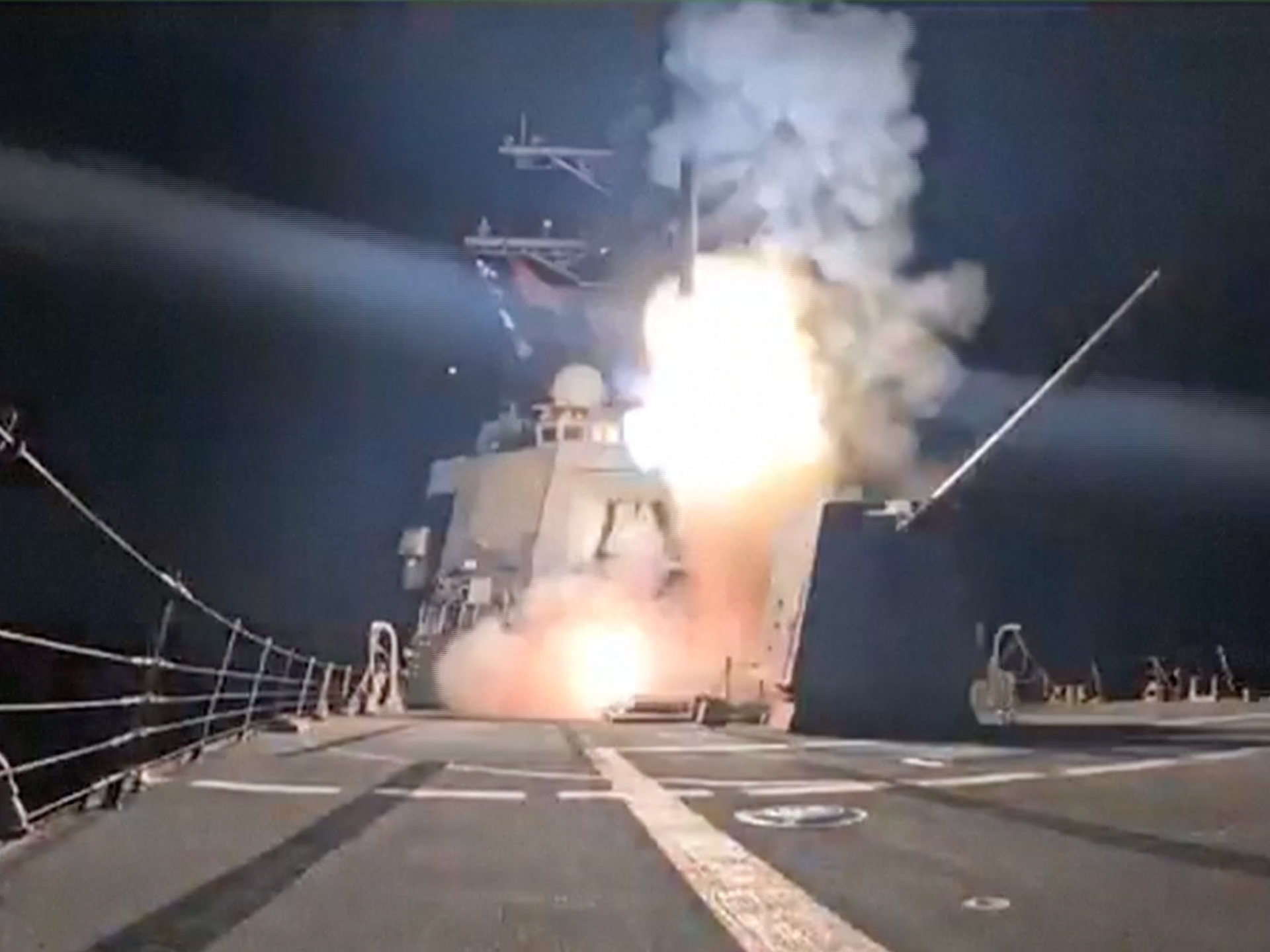
US Department of Defense A screenshot from a video released by the US defence department that appears to be showing a missile being launched from a military vesselUS Department of Defense

The US defence department posted a short video that appears to show a missile being launched from a military vessel

President Donald Trump has said the US launched a “powerful and deadly strike” against the Islamic State (IS) group in north-western Nigeria.

The US leader described IS as ” terrorist scum”, accusing the group of “targeting and viciously killing, primarily, innocent Christians”.

Trump said the US military “executed numerous perfect strikes”, while the US Africa Command (Africom) later reported that Thursday’s attack was carried out in co-ordination with Nigeria in the Sokoto state.

Nigerian Foreign Minister Yusuf Maitama Tuggar told the BBC it was a “joint operation” targeting “terrorists”, and it “has nothing to do with a particular religion”.

Without naming IS specifically, Tuggar said the operation had been planned “for quite some time” and had used intelligence information provided by the Nigerian side.

The minister did not rule out further strikes, adding that this depended on “decisions to be taken by the leadership of the two countries”.

In his post on Truth Social late on Thursday, Trump said that “under my leadership, our Country will not allow Radical Islamic Terrorism to prosper”.

In November, Trump ordered the US military to prepare for action in Nigeria to tackle Islamist militant groups.

He did not say at the time which killings he was referring to, but claims of a genocide against Nigeria’s Christians have been circulating in recent months in some right-wing US circles.

Meanwhile, US Defence Secretary Pete Hegseth said on Thursday that he was “grateful for Nigerian government support & cooperation”.

“Merry Christmas!” he added, writing on X.

AFP via Getty Images US President Donald Trump. Photo: 22 December 2025AFP via Getty Images

President Trump last month ordered the US military to prepare for action in Nigeria

The US Department of Defense later posted a short video that appeared to show a missile being launched from a military vessel.

On Friday morning, the Nigerian foreign ministry said in a statement that the country’s authorities “remain engaged in structured security co-operation with international partners, including the United States of America, in addressing the persistent threat of terrorist and violent extremism.

“This has led to precision hits on terrorist targets in Nigeria by air strikes in the North West,” the statement said.

Groups monitoring violence say there is no evidence to suggest that Christians are being killed more than Muslims in Nigeria, which is roughly evenly divided between followers of the two religions.

An adviser to Nigerian President Bola Tinubu told the BBC at the time that any military action against the jihadist groups should be carried out together.

Daniel Bwala said Nigeria would welcome US help in tackling the Islamist insurgents but noted that it was a “sovereign” country.

He also said the jihadists were not targeting members of a particular religion and that they had killed people from all faiths, or none.

President Tinubu has insisted there is religious tolerance in the country and said the security challenges were affecting people “across faiths and regions”.

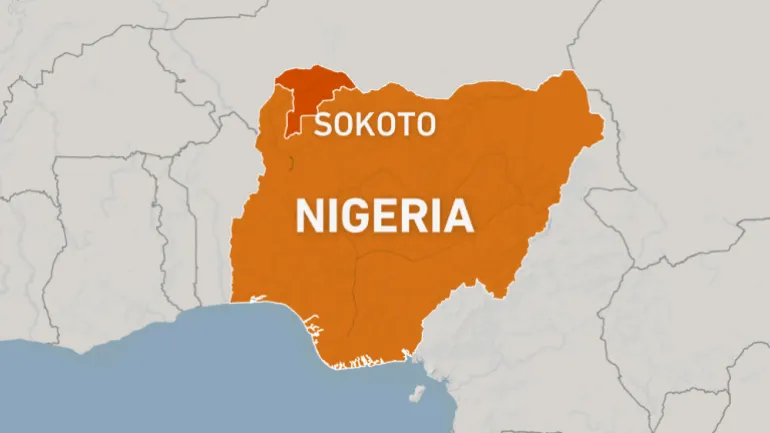
A map showing the Nigerian state of Sokoto and the capital Abuja

Trump earlier announced that he had declared Nigeria a “country of particular concern” because of the “existential threat” posed to its Christian population. He said “thousands” had been killed, without providing any evidence.

This is a designation used by the US state department that provides for sanctions against countries “engaged in severe violations of religious freedom”.

Following this announcement, Tinubu said his government was committed to working with the US and the international community to protect people of all faiths.

Jihadist groups such as Boko Haram and Islamic State West Africa Province have wrought havoc in north-eastern Nigeria for more than a decade, killing thousands of people – however most of these have been Muslims, according to Acled, a group which analyses political violence around the world.

In central Nigeria, there are also frequent clashes between mostly Muslim herders and farming groups, who are often Christian, over access to water and pasture.

Deadly cycles of tit-for-tat attacks have also seen thousands killed – but atrocities have been committed on both sides.

Human rights groups say there is no evidence that Christians have been disproportionately targeted.

Last week, the US said it had carried out a “massive strike” against IS in Syria.

The US Central Command (Centcom) said fighter jets, attack helicopters and artillery “struck more than 70 targets at multiple locations across central Syria”. Aircraft from Jordan were also involved.

Source link

Trump says US launched strike against ISIL in northwest Nigeria | Donald Trump News

DEVELOPING STORY,

US president says ‘deadly strike’ in Nigeria targeted ISIL fighters who had killed ‘primarily, innocent Christians’.

The United ‍States ‍has carried out an air strike against ISIL (ISIS) fighters in northwest Nigeria, US ⁠President Donald Trump ​said.

“Tonight, ⁠at my direction as Commander in Chief, the United States launched a powerful and ​deadly strike ‌against ISIS Terrorist Scum in Northwest Nigeria,” ‌Trump said in a post on his Truth Social platform on Thursday evening.

Recommended Stories

list of 4 itemsend of list

Trump said ISIL fighters had “‌targeted and viciously” killed “primarily, innocent Christians, at ⁠levels not seen for many years, and even Centuries!”

“I have previously warned these Terrorists that if they did not stop the slaughtering of Christians, there would be hell to pay, and tonight, there was,” Trump said.

The US military’s Africa Command (AFRICOM), which is responsible for operations in Africa, said in a post on X that the air strike was carried out “at the request of Nigerian authorities” and had killed “multiple ISIS terrorists”.

“Grateful for Nigerian government support & cooperation,” US Secretary of Defense Pete Hegseth wrote on social media, warning also of “more to come”, without providing details.

In a statement, AFRICOM said the strike occurred in “Soboto state,” an apparent reference to Nigeria’s Sokoto state.

[Al Jazeera]
[Al Jazeera]

The US military action comes weeks after Trump said he had ordered the Pentagon to begin planning for potential military action in Nigeria following claims of Christian persecution in the country.

Nigeria’s government has said armed groups target both Muslim and Christian communities in the country, and US claims that Christians face persecution ‌do not represent a complex security situation and ignore efforts by Nigerian authorities to safeguard religious freedom.

Al Jazeera’s Shihab Rattansi, reporting from Washington DC, said the threat of US military action in Nigeria had been “percolating for some time” and Donald Trump had accused Nigeria of not doing enough to protect its Christian community in his first term as president.

“But in the last two months or so, with congressional pressure and the State Department, they declared Nigeria a particular country of concern when it came to the rights of Christians and we had heard that the US had begun overflight surveillance of Nigeria from an airbase in Accra, in Ghana, over the last several weeks. And now we have this,” Rattansi said.

“On Christmas day, the Trump administration acts. This will go down very well with Trump’s Christian evangelical base, I am sure,” he said.

Trump issued his attack statement on Christmas Day while he was at ‌his Palm Beach, Florida, Mar-a-Lago Club, where he has been spending the holiday.

Source link

35 Injured, 5 Killed in Mosque Suicide Bombing in Maiduguri

A suicide explosion occurred at Al-Adum Jummat Mosque in Gamboru Market area of Maiduguri, northeastern Nigeria, on Wednesday, Dec. 24. 

The bomb went off around 6:00 p.m., shortly after residents and traders began observing the evening prayers.

The Borno State Police Command confirmed that 5 persons lost their lives while 35 others sustained varying degrees of injuries. 

“Preliminary investigations further suggest that the incident may have been a suicide bombing, based on the recovery of fragments of a suspected suicide vest and witness statements recorded, while investigations are ongoing to establish the exact cause and circumstances,” said ASP Nahum Kenneth Daso, Police Public Relations Officer of the Borno State Police Command.

People praying outside the mosque were also wounded after debris and shattered glass were scattered across the area.

Security personnel and emergency responders arrived to evacuate victims and sealed off the site.

The explosion marks the most serious incident reported in Maiduguri in recent times. Since the Boko Haram insurgency began over a decade ago in the city, suicide bombings like this one have been recorded across major cities in public places like worship areas and motor parks. The insurgency has killed over 35,000 people directly so far. 

HumAngle observed several ambulances transporting the injured and the deceased to hospitals, while the police and military personnel maintained guard around the site of the explosion.

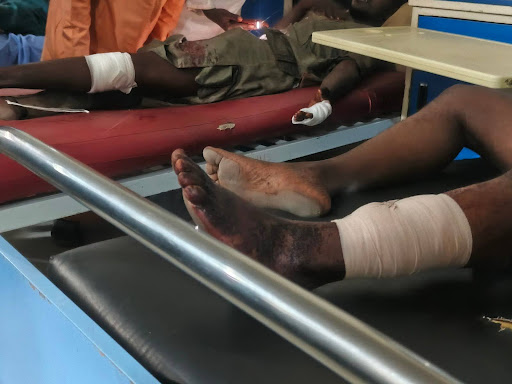
While some of the victims were taken to the Maiduguri Specialist Hospital, others were taken to the University of Maiduguri Teaching Hospital. At the Specialist Hospital, HumAngle counted 17 victims, with injuries on the arms and legs, admitted at the Weapon Wound Ward.

Two individuals with bandaged limbs lying on hospital beds, receiving medical care.
Some of the victims who were admitted at the Specialist Hospital. Photo: Al’amin Umar/HumAngle.

A trader at Gamboru Market said, “I was performing ablution when the blast occurred, and I ran away.” He confirmed that the explosion came from inside the mosque.

Gamboru Market is one of Maiduguri’s busiest commercial hubs, drawing traders and shoppers from Borno State and neighbouring countries like Chad, Cameroon, and Niger. The market hosts a variety of businesses, including stalls for fresh produce, textiles, clothing, household goods, and other everyday commodities. 

It also serves as a centre for small-scale services like tailoring, food vending, and transport, making it a key economic lifeline for the local market, operating long into the night, sometimes until 9:00 p.m., even after the main market closes at 6:00 p.m.

Two uniformed individuals in helmets exchanging items on a dimly lit street at night.
Police operatives at the scene.

ASP Nahum Kenneth Daso also stated that “Police EOD personnel have cordoned off the area to ensure public safety, while investigations are ongoing.”

He urged members to remain calm and vigilant as security operations are ongoing.

Three individuals sit on a red mat with stained shirts, showing signs of wear, in a room with medical equipment.
Some of the eyewitnesses who helped in transporting the victims to the Specialist Hospital. Photo: Al’amin Umar/HumAngle.

A suicide explosion at Al-Adum Jummat Mosque in Gamboru Market, Maiduguri, northeastern Nigeria on December 24, claimed five lives and injured 35 others. The Borno State Police, suspecting a suicide bombing, found fragments of a possible suicide vest. Witnesses reported debris causing injuries to people praying outside, while security and emergency teams managed the site.

The location is significant; Gamboru Market is a major commercial hub in Maiduguri, frequented by locals and people from neighboring countries. The attack is one of the deadliest incidents in Maiduguri, which has suffered from Boko Haram insurgency-related suicide bombings over the past decade. Authorities, urging calm, continue their investigations as police and military maintain a guard around the explosion site.

Source link

#HumAngle2025RoundUp: Here are Our Top 5 Investigations of the Year

The year started slowly. Then it moved fast. 

Many reporters at HumAngle wondered what 2025 would bring. But as the year ran fast, the foot soldiers ran even faster, creating a monumental investigative reporting archive across multiple platforms. In this newsroom, everyone is an investigative journalist — from editors, interns, reporters and the Editor-in-Chief/Chief Executive Officer.

We told raw stories and terror tales, and conducted human-centred investigations that uncovered what would otherwise have been covered up. Most of our 2025 investigations tackled insecurity, exposed social injustices, unravelled the vulnerability of communities to terrorists, and set the record straight amid disinformation wildfires. 

Illustration of a person at a laptop, with hands typing on a keyboard overlaid. Blue accents, HumAngle logo in the corner.
Illustration by Akila Jibrin/HumAngle.

In 2025, we redefined our journalism models, focusing on impact-driven investigations and stories that really matter. Here are our best investigations for the year.

1. The Making and Unmaking of Abubakar Shekau

Cartoon of a militant holding a rifle and paper, standing over fallen soldiers with a background of destruction.
Illustration by Akila Jibrin/HumAngle.

When the notorious terrorist Abubakar Shekau died in 2021, tons of stories and narratives were pushed around the circumstances leading to his death. One question many failed to ask: How did Shekau emerge from nowhere to command an army of villains, inflicting lifelong pain and anguish on many? Only a few terrorism experts could answer that question with details and rigour. One such person is Ahmad Salkida, the CEO and Editor-in-Chief at HumAngle.

Four years after Shekau’s death, his investigative piece appeared on the internet’s fringes: The Making and Unmaking of Abubakar Shekau. Ahmad Salkida has studied Boko Haram for over a decade, from its inception to the point of vile insurgency and massive attacks against unarmed civilians.

HumAngle probed and profiled how Shekau rose from humble beginnings in Yobe State to become one of Africa’s most notorious insurgent leaders, transforming Boko Haram into a movement defined by mass abductions, suicide bombings, and indiscriminate killings. Initially a perfume seller and Qur’anic student, his life changed after meeting radical cleric Muhammad Yusuf, whose death in 2009 propelled Shekau into leadership. 

2. What Happened to Gallari’s 42 Men After 12 Years in Military Detention?

That story on Shekau’s legacy of terror went viral. But before then, we had investigated the illegal incarceration of 42 village men of Gallari, a community in Borno, northeastern Nigeria, by men of the Nigerian military. They were arrested in 2011 during military raids targeting Boko Haram suspects, with little or no evidence against them. 

HumAngle’s investigation exposed how the villagers were held in Giwa Barracks and other facilities under harsh conditions, enduring torture, starvation, and disease. Their families faced stigma, poverty, and displacement, with wives forced into single parenthood and children growing up without fathers. Upon release, some of the men returned to find their homes destroyed, loved ones lost, and communities fractured. The story highlights the broader consequences of Nigeria’s counterinsurgency strategy, where mass arrests and indefinite detentions have left deep scars on civilian populations. 

For many months, Usman Zanna, a HumAngle reporter, documented this story after speaking with victims locked in military confinement for over 12  years. One of them came out blind from detention, another had lost one of his ears, and another had torture scars all over his body. During an advocacy meeting facilitated by HumAngle and Amnesty International in Borno State, however, civic leaders and media practitioners took a step to spotlight the investigation that opened a can of worms on the military’s gross violation of human rights in the arrest of the 42 Gallari men.

3. From Elephants to Warthogs: The Shadow Wildlife Trade Financing Boko Haram in Nigeria

A large wild boar lies on the open tailgate of a pickup truck with containers and equipment around it under clear skies.
Photo: HumAngle.

As Boko Haram entrenched and spread across Borno’s forested areas,  terrorists invested heavily in the ivory trade to sustain their operations. They poached elephants for years until the dynamics of the ivory trade shifted dramatically. Armed groups occupied critical elephant habitats like Sambisa, transforming them into fortified strongholds. The conflict, coupled with indiscriminate hunting, led to a drastic reduction in elephant sightings.

When elephants vanished from the region’s forests, however, Boko Haram terrorists turned to warthogs, an overlooked species with tusks just as valuable. With little regulation and growing global demand, warthog ivory is now fuelling a new black market. At the heart of it lies a deadly trade financing terror and deepening regional instability.

HumAngle exposed how local and international black markets helped patronise the terrorists’ ivory exploits, especially warthog trading, to fund their operations. We used OSINT and human intelligence.

4. Surrendered Terrorists Evade Official Rehabilitation Programme, Reinfiltrate Nigerian Communities

One interesting investigation we published in 2025 was an in-depth report on the complex lives of individuals who were once affiliated with Boko Haram. The story sheds light on their recruitment processes, experiences within the group, and efforts to reintegrate into society. It reveals personal stories, such as those of Abubakar Adam and Rawa Ali, who voluntarily distanced themselves from the insurgency but faced significant obstacles upon returning, often lacking sufficient government support.

Other accounts, including those of Falmata Abba and Aisha Mohammed, reveal a spectrum of emotions from regret to relief about leaving the militant group, while Rukayya’s story focuses on her health struggles. The piece also discusses the varied reactions from communities toward these returnees and critiques the shortcomings of Nigeria’s efforts in deradicalisation and rehabilitation.

The investigation raises concerns about trust and security in communities where former insurgents reappear without completing official reintegration programs, underscoring the need for comprehensive, transparent approaches to facilitate effective societal reintegration and maintain stability.

5. The Boys Lured into Boko Haram’s Enclave with Food Rations

Abstract artwork of a boy against a textured blue background. HumAngle logo is in the top right corner.
Illustration by Akila Jibrin/HumAngle.

Amid the escalation of insurgency in North Central Nigeria, terrorists devised a new way of recruiting children into their ranks. Boko Haram fighters lure children with food rations, handing guns to them after feeding them. Ibrahim Adeyemi, HumAngle’s investigations editor, followed the story in Niger state, speaking to survivors and parents of children caught in terrorists’ enclaves.

The insurgents exploit hunger as a recruitment tool, deliberately destroying farms and food supplies to create scarcity, then luring vulnerable children into their camps with food rations. Once inside, boys are trained as fighters or spies. At the same time, girls are forced into marriages and servitude, all under the command of leaders like Mallam Sadiqu, who manipulate desperation to sustain the group’s ranks. 

HumAngle’s investigation, which took several months, focused on identifying underage boys and girls who were deceived into entering the terrorists’ territory. 

In 2025, HumAngle conducted a series of impactful investigations focusing on human rights and terrorism. Their detailed reporting highlighted social injustices, such as the illegal detention of 42 village men in Borno by the Nigerian military, and the subsequent human rights violations exposed during their time in confinement.

Another investigation shed light on the shadow wildlife trade financing Boko Haram, revealing how local and international markets for warthog ivory funded the group’s operations.

HumAngle also explored how Boko Haram recruits children by exploiting hunger, using food as a lure. Moreover, they reported on the complexities faced by former Boko Haram insurgents trying to reintegrate into society, illustrating the inadequacies of Nigeria’s rehabilitation efforts.

Each investigation was driven by a commitment to uncovering the truth and crafting narratives that address critical issues in society.

Source link

Explosion rocks crowded mosque in Nigeria, killing several people: Reports | Armed Groups News

The blast tore through a mosque in Maiduguri as worshippers gathered for evening prayers, witnesses say.

An explosion has ripped through a mosque in northeastern Nigeria as worshippers gathered for their evening prayers, killing and wounding several people, according to media reports.

The blast took place at about 6pm on Wednesday (17:00 GMT) in the city of Maiduguri in Borno State, the Reuters and AFP news agencies reported, citing witnesses.

Recommended Stories

list of 3 itemsend of list

Police spokesman Nahum Daso confirmed the explosion and told AFP that an explosive ordnance team was already on site at the mosque in Maiduguri’s Gamboru market.

There was no official word on casualties.

But mosque leader Malam Abuna Yusuf told the AFP at least eight people had died, while a militia leader, Babakura Kolo, put the figure at seven.

Another witness, Musa Yusha’u, told AFP that he saw “many victims being taken away for medical treatment”.

The cause of the blast was not immediately known, but it occurred ‍in a ⁠city that has been at the heart of an armed rebellion waged by Boko Haram and ISIL’s (ISIS) offshoot in the region, the Islamic State West Africa Province, for nearly two decades.

The conflict has killed at least 40,000 people and displaced about two million from their homes since 2009, according to the United Nations.

Though the violence has waned since its peak about a decade ago, it has spilt into neighbouring Niger, Chad and Cameroon.

Concerns are also growing about a resurgence of violence in parts of the northeast, where armed groups remain capable of mounting deadly attacks despite years of sustained military operations.

Maiduguri itself – once the scene of nightly gun battles and bombings – has been calm in recent years, with the last major attack recorded in 2021.

Source link

#HumAngle2025RoundUp: Here are HumAngle’s 10 Most Read Stories of 2025

1. The Making and Unmaking of Abubakar Shekau – Ahmad Salkida (43,043)

To understand the present and make corrections for the future, we must revisit the past. This investigative exposé details the making and unmaking of Abubakar Shekau; how a boy who was good at playing football became a perfume seller and then a terrorist warlord who orchestrated abductions, killings, and terror across Nigeria.

2. What Resettlement Looks Like When The Gunshots Haven’t Stopped by Sabiqah Bello (35,710)

In this delicate story about Fati Bukar and her son, we look at how lives are affected by insecurity, displacement, and resettlement. This story shows us that the human fallout of the insurgency doesn’t manifest only in the fear of lives and properties; it also takes form in the fear of saying goodbye to a loved one, not to death, but to distance. The story is a reminder that government solutions must involve the people they were created to serve and consider the nuances of their lives.

3. Lost Homes, No Aid: The Forgotten IDPs Uprooted by Terrorists in North Central Nigeria by Isah Ismaila (35,387)

Due to terrorist activities, residents have moved to a Shiroro displacement camp in Niger State, North Central Nigeria. But for these people, life is stalled. Business owners have abandoned their shops, children can no longer go to school, and healthcare doesn’t exist. In this story, we highlight how institutional neglect traps citizens in a cycle of poverty and despair.

4. Boko Haram is Tracking and Assassinating Defectors in Nigeria’s North East. Here is how. By Usman Abba Zanna (29,904)

We reported how former Boko Haram members trying to reintegrate into society have a target on their backs by the group. Here, we showed that renouncing allegiance to the terror groups doesn’t end the war; it simply makes you a different kind of target.

5. Boko Haram/ISWAP Resurgence in Lake Chad Region Sparks Alarm by Usman Abba Zanna (29,553)

Through sophisticated operations, incessant small-scale abductions, and major funds generation from high-profile abductions, we document the resurgence of Boko Haram and ISWAP attacks in the Lake Chad region. These early warning signs show communities witnessing fresh assaults from terrorists, and through open-source monitoring, we reveal how terrorists are amplifying their online presence by leveraging TikTok.

6. Borno’s Resettled Families Are Quietly Fleeing Again by Usman Abba Zanna (24,416)

In 2019, the Borno State government commenced the resettlement of displaced families to Kawuri, their hometown in northeastern Nigeria. The returnees believed that life would return to what they were used to, but their current state is deplorable. In this report, we found that they have no healthcare, no basic essential supplies, and the persistent presence and growing threat of Boko Haram insurgents is forcing them to flee once again.

7. Can Digital Technology Fix Efficiency and Accountability in Nigeria’s Government Agencies? by Ibrahim Adeyemi (21,054)

Nigeria has a long history of a lack of accountability and transparency in public spaces. To reduce this and boost efficiency in Government parastatals, the Central Bank of Nigeria (CBN) established the DocFlow and the MDA Naira Payment Solution. 

The DocFlow system was created to digitalise the daily operations of government workers, replacing paper-heavy processes. The MDA Naira Payment Solution is focused on automating payment processes for Ministries, Departments, and Agencies (MDAs), with a system promising to make transactions faster and more accurate while also preventing fraud and reducing errors. We looked at the efficiency of these systems.

8. The Implications of Burkina Faso, Mali, and Niger’s Exit from ECOWAS by Usman Abba Zanna (19,297)

In January, Burkina Faso, Mali, and Niger exited ECOWAS and formed the Alliance of Sahel States (AES). While this exit was celebrated by mass rallies across the three countries, it sent shockwaves through the region. Here, we looked at the economic ramifications and implications of this break.

9. Massacres in Border Communities Ignite New Terror Wave in Benue State by Johnstone Kpilaakaa  (18,923)

Benue communities in North-Central Nigeria have been at war with recurring violence between farming communities and nomadic herders over land and resources. This crisis has forced people, young and old, into displacement. In this report, we show that for the old, home no longer exists as they knew it; for the young, home is a place born out of violence and death.

10. The Evasive Funding Channels Sustaining Boko Haram/ISWAP in Nigeria by Aliyu Dahiru (15,036)

People often wonder and ask how terror groups can fund their operations and provide for themselves far away from society. To answer the age-old question of terror financing, this analysis showed us that beneath the violence, beyond the battlefield,  terrorists have taken control and now govern civilian spaces, collecting taxes, enforcing laws, and offering basic welfare, particularly within their strongholds in the Lake Chad region. Other illicit financial flows come from crypto donations, smuggling, and black market operations.

The provided content discusses a series of investigative stories covering issues around terrorism, displacement, and digital technology in Nigeria.

Stories include the life and actions of terrorist Abubakar Shekau, the challenges faced by internally displaced persons due to terrorism, and the resettlement issues in regions affected by insurgency. It highlights the targeting of defectors by Boko Haram and the resurgence of this group along with ISWAP in the Lake Chad region.

Additional articles address border massacres in Benue State, the potential of digital technology to improve government efficiency, and the economic implications of Burkina Faso, Mali, and Niger’s exit from ECOWAS.

Also covered are the funding channels for Boko Haram/ISWAP and their impact on society. These stories emphasize the broader socio-economic and security challenges within affected Nigerian communities, urging more informed and people-focused solutions.

Source link

#HumAngle2025RoundUp: Our Editors Enjoyed These Stories This Year

Her Missing Son Returns In Her Dreams 

“I enjoyed editing several stories this year, but this one stayed with me because of how Sabiqah narrated it with an intimate voice that draws you directly into the woman’s inner world: the dreams, the dread, the relentless memory of her child. 

The writing does more than tell a personal story; it brings the national crisis of missing persons in Nigeria into sharp, human focus. The storytelling lets the reader feel the ache without forcing it, turning one woman’s sorrow into something universally recognisable and impossible to look away from.”

– Johnstone Kpilaakaa, Sub-editor and head of standards.

Widowed by Boko Haram, Swept by Floods, but She Refused to Sink

“It was written by Abdulkareem Haruna; therefore, there was almost no serious work from my side. It’s best for me because it tells a story of resilience. The story of a woman who could have abandoned everything and buried herself in despair, but she refused to be drowned in the abyss of two big tragedies: the Boko Haram war and a natural disaster.”

– Aliyu Dahiru, Head of the Extremism and Radicalism desk

From Elephants to Warthogs: The Shadow Wildlife Trade Financing Boko Haram in Nigeria

“One thing I love about this story is the adrenaline of promptness and emergency it gave while editing it. We were working on a tight deadline, and it needed to be delivered excellently. The reporter, Al-amin Umar, made this a lot easier because he understood his role and did it to the best of his ability. He followed guidelines religiously and ensured the story came out well. The subject matter was also crazy to probe within limited time and resources. But we pulled it through regardless. It’s a story worth celebrating.” 

– Ibrahim Adeyemi, Investigations Editor

Displaced People with Disabilities Face Severe Struggles in Borno Camps 

“Disabled people’s stories are usually underreported, especially those in IDP camps. This story, by Abubakar Mukhtar Abba, is very in-depth and takes us on a journey into what it means to be displaced and disabled in an unaccommodating environment. It pointed out their struggles with accessibility and how that impacts their health and the community generally, highlighting why accessibility is a fundamental right and benefits society in general. It also shows how a lack of inclusion pushes disabled people away from camps, causing social, environmental and health problems due to how they are excluded from society. 

This story brings those at the fringes of society into the spotlight while maintaining their full humanity and dignity.”

– Hauwa Abubakar Saleh, Assistant Editor, Features Desk

The Intersection Between Healthcare and Loyalty to Terror Groups 

“We are still finding out the ways lives have been affected following the USAID suspension. I find this story particularly enlightening because it shows us how everything affects everything, you do not readily think loyalty to a terror group intersects with healthcare.”

— Shade Mary-Ann Olaoye, Audience Growth and Engagement Editor 

This newsletter highlights stories on resilience, loss, and survival, bringing attention to overlooked issues in Nigeria, with a focus on personal narratives.

Key features include Sabiqah’s touching piece on a mother’s dreams of her missing son, reflecting the widespread issue of missing persons. It shares a widow’s courage in overcoming tragedies brought by Boko Haram and natural disasters as narrated by Abdulkareem Haruna.

The issue of the shadow wildlife trade, financing terrorism, is explored with urgency by Al-amin Umar, showcasing investigative prowess under pressure. Additionally, Abubakar Mukhtar Abba sheds light on the struggles faced by disabled individuals in Borno camps, emphasizing the dire need for inclusion to ensure their rights and wellbeing.

Lastly, it examines the relationship between healthcare access and alliances with terror groups, revealing the complex interplay impacting communities due to national and international policies.

Source link

U.S. signs new health deals with 9 African countries that mirror Trump’s priorities

The U.S. government has signed health deals with at least nine African countries, part of its new approach to global health funding, with agreements that reflect the Trump administration’s interests and priorities and are geared toward providing less aid and more mutual benefits.

The agreements signed so far, with Kenya, Nigeria and Rwanda among others, are the first under the new global health framework, which makes aid dependent on negotiations between the recipient country and the U.S.

Some of the countries that have signed deals either have been hit by U.S. aid cuts or have separate agreements with the Trump administration to accept and host third-country deportees, although officials have denied any linkage.

The Trump administration says the new “America First” global health funding agreements are meant to increase self-sufficiency and eliminate what it says are ideology and waste from international assistance. The deals replace a patchwork of previous health agreements under the now-dismantled U.S. Agency for International Development.

U.S. aid cuts have crippled health systems across the developing world, including in Africa, where many countries relied on the funding for crucial programs, including those responding to outbreaks of disease.

The new approach to global health aligns with President Trump’s pattern of dealing with other nations transactionally, using direct talks with foreign governments to promote his agenda abroad. It builds on his sharp turn from traditional U.S. foreign assistance, which supporters say furthered American interests by stabilizing other countries and economies and building alliances.

A different strategy

The deals mark a sharp departure from how the U.S. has provided healthcare funding over the years and mirrors the Trump administration’s interests.

South Africa, which has lost most of its U.S. funding — including $400 million in annual support — due in part to its disputes with the U.S., has not signed a health deal, despite having one of the world’s highest HIV prevalence rates.

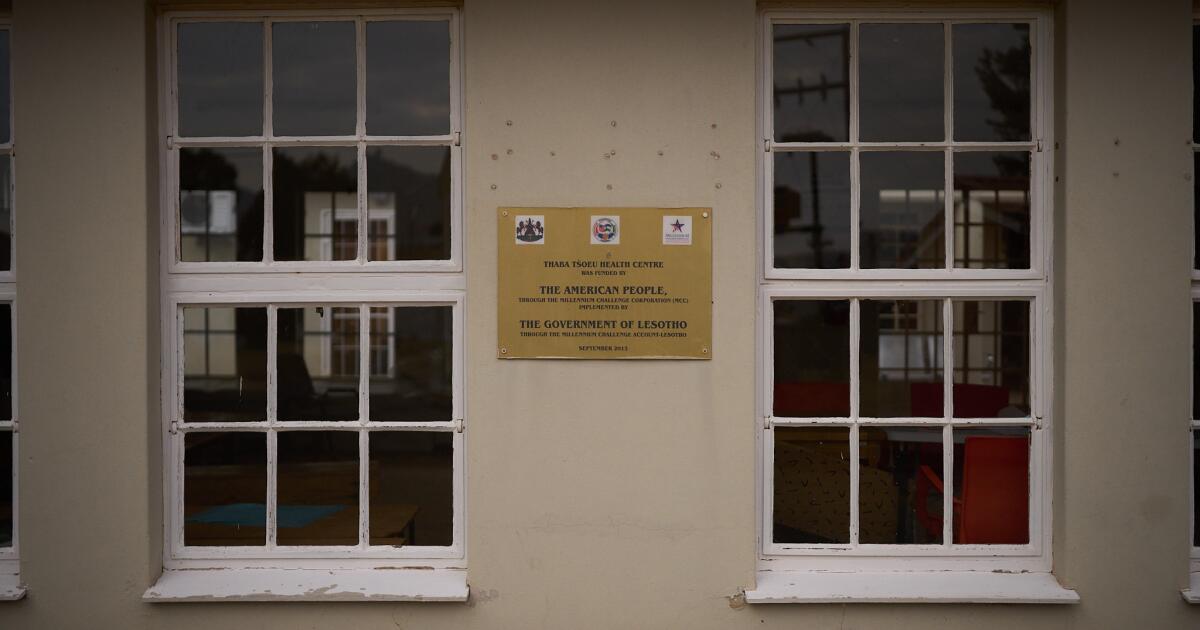
Nigeria, Africa’s most populous country, reached a deal but with an emphasis on Christian-based health facilities, although it has a slight majority Muslim population. Rwanda and Uganda, which each have deportation deals with the U.S., have announced health pacts.

Cameroon, Eswatini, Lesotho, Liberia and Mozambique also are among those that have signed health deals with the U.S.

According to the Center for Global Development, a Washington think tank, the deals “combine U.S. funding reductions, ambitious co-financing expectations, and a shift toward direct government-to-government assistance.”

The deals represent a reduction in total U.S. health spending for each country, the center said, with annual U.S. financial support down 49% compared with 2024.

A faith-based deal in Nigeria, a lifeline for several others

Under its deal, Nigeria, a major beneficiary of USAID funds, would get support that has a “strong emphasis” on Christian faith-based healthcare providers.

The U.S. provided approximately $2.3 billion in health assistance to Nigeria between 2021 and 2025, mostly through USAID, official data shows. The new five-year agreement will see U.S. support at over $2 billion, while Nigeria is expected to raise $2.9 billion to boost its healthcare programs.

The agreement “was negotiated in connection with reforms the Nigerian government has made to prioritize protecting Christian populations from violence and includes significant dedicated funding to support Christian healthcare facilities,” the State Department said in a statement.

The department said “the president and secretary of State retain the right to pause or terminate any programs which do not align with the national interest,” urging Nigeria to ensure “that it combats extremist religious violence against vulnerable Christian populations.”

For several other countries, the new deals could be a lifeline after U.S. aid cuts crippled their healthcare systems and left them racing to fill the gaps.

Under its deal, Mozambique will get U.S. support of over $1.8 billion for HIV and malaria programs. Lesotho, one of the poorest countries in the world, clinched a deal worth over $232 million.

In the tiny kingdom of Eswatini, the U.S. committed to provide up to $205 million to support public health data systems, disease surveillance and outbreak response, while the country agreed to increase domestic health expenditures by $37 million.

No deal for South Africa after disputes

South Africa is noticeably absent from the list of signatories following tensions with the Trump administration.

Trump has said he will cut all financial assistance to South Africa over his widely rejected claims that it is violently persecuting its Afrikaner white minority.

The dismantling of USAID resulted in the loss of over $436 million in yearly financing for HIV treatment and prevention in South Africa, putting the program and thousands of jobs in the healthcare industry at risk.

Health compacts with countries that signed deportation deals

At least four of the countries that have reached deals previously agreed to receive third-country deportees from the U.S., a controversial immigration policy that has been a trademark of the Trump administration.

The State Department has denied any linkage between the healthcare compacts and agreements regarding accepting third-country asylum seekers or third-country deportees from the United States. However, officials have said that political considerations unrelated to health issues may be part of the negotiations.

Rwanda, one of the countries with a deportation deal with the U.S., signed a $228-million health pact requiring the U.S. to support it with $158 million.

Uganda, another such country, signed a health deal worth nearly $2.3 billion in which the U.S. will provide up to $1.7 billion. Eswatini also has started receiving flights with deported prisoners from the United States.

Magome and Gumede write for the Associated Press. AP writers Evelyne Musambi in Nairobi, Kenya; Dyepkazah Shibayan in Abuja, Nigeria; Mark Banchereau in Dakar, Senegal; and Matthew Lee in Washington contributed to this report.

Source link

AFCON 2025: Nigeria vs Tanzania – team news, start time and lineups | Africa Cup of Nations News

Who: Nigeria vs Tanzania
What: CAF Africa Cup of Nations
Where: Fez Stadium in Fez, Morocco
When: Tuesday, December 23, at 6:30pm (17:30 GMT)
How to follow: We’ll have all the build-up on Al Jazeera Sport from 14:30 GMT in advance of our text commentary stream.

Nigeria’s much-celebrated golden generation was expected to propel the nation to new heights, but another World Cup qualification disappointment has left the Super Eagles searching for answers.

Recommended Stories

list of 4 itemsend of list

After the heartbreak of missing out on a trip to North America in 2026, Nigeria arrive in Morocco in search of redemption and continental glory. The three-time champions open their AFCON 2025 campaign against Group C opponents Tanzania, who have appeared at the tournament just three times.

Boasting world-class talent in Victor Osimhen and Ademola Lookman, Nigeria are among the favourites to top the group that also features Tunisia and Uganda.

Tuesday’s face-off in Fez pits together Nigeria and Tanzania for only the second time at the continental championships, 45 years after their first meeting at the competition.

Here’s all you need to know about the match:

Why did Nigeria fail to qualify for the 2026 World Cup?

Nigeria were among the best runners-up across the nine African qualifying groups who advanced to the playoffs, but lost 4-3 on penalties to the Democratic Republic of the Congo (DRC), failing to reach the inter-confederation playoffs.

The Super Eagles, who have made six World Cup appearances, have now failed to qualify for the global showpiece event for the second time in a row.

A poor start to their qualifying campaign, managerial changes and a pay dispute were among the factors that led to their World Cup disappointment.

What happened after the loss to DCR?

Last week, Nigeria submitted a petition to FIFA alleging DRC fielded ineligible players in that decisive playoff match.

The Nigerian football federation said several dual-nationality players had been cleared to play for DRC without meeting the required criteria, but DRC’s federation rejected the allegations.

Coaching turnover for Tanzania

There is no dearth of controversy in Tanzania, too.

Tanzania’s football federation fired its coach, Hemed Suleiman, just a month before AFCON 2025, replacing him with Miguel Gamondi, who will take interim charge of the Taifa Stars for the competition.

Former coach Suleiman led Tanzania to their fourth Cup of Nations appearance and reached the quarterfinals of the African Nations Championships this year. But they failed to secure a spot in the 2026 FIFA World Cup.

Miguel Gamondi reacts.
Former Young Africans coach Miguel Gamondi is now in charge of Tanzania’s AFCON 2025 campaign [File: Siphiwe Sibeko/Reuters]

Who are Nigeria’s key players to watch?

Nigeria’s squad is packed with talent in all departments, with forwards and former CAF Player of the Year award winners Osimhen and Lookman headlining the group.

Defender Calvin Bassey, midfielders Alex Iwobi and Wilfred Ndidi, along with striker Samuel Chukwueze, are the other high-profile players.

Who are Tanzania’s key players?

Mbwana Samatta, who plays for Ligue 1 club Le Havre, and fellow experienced forward Simon Msuva headline Tanzania’s squad.

Msuva returns after missing the October and November windows and remains the most capped member of the squad. An appearance on Tuesday will mark his 100th international cap.

Defender Mohamed Hussein is a formidable presence in Tanzania’s backline, while youngster Haji Mnoga, who plays for Salford City in the English fourth tier, is also part of the squad.

Form guide

All matches, most recent result last:

Nigeria: L-L-W-W-W

Tanzania: L-L-L-L-D

Head-to-head

Nigeria and Tanzania have met seven times across all competitions, including at the FIFA World Cup.

Nigeria have won four of those matches, while three ended in a draw.

Their last meeting was in 2016 at AFCON, where Nigeria won 1-0.

AFCON records

Nigeria have played at AFCON 20 times, finishing winners on three occasions – most recently lifting the trophy in 2013 – and runners-up five times. Remarkably, they have finished in the top three in 13 of their last 15 AFCON appearances.

Tanzania have never made it past the group stage in their three AFCON appearances. They are also one of only four teams at this year’s edition that have never won an AFCON match, with six defeats and three draws in their nine AFCON matches overall.

The AFCON 2025 is a landmark tournament for Tanzania, as they have qualified for successive finals for the first time.

Nigeria team news

Nigeria will be without centre-back Benjamin Fredrick and full-back Ola Aina, who are both injured.

William Troost-Ekong, the regular captain, is unavailable after recently announcing his retirement from international football, with Ndidi now taking over the captaincy.

Strikers Victor Boniface and Tolu Arokodare were the surprise omissions from the squad.

Soccer Football - Africa Cup of Nations - Round of 16 - Nigeria v Cameroon - Felix Houphouet-Boigny Stadium, Abidjan, Ivory Coast - January 27, 2024 Nigeria's Ademola Lookman celebrates after the match REUTERS/Luc Gnago
Dynamic goal-scoring forward Ademola Lookman, left, will be a key player to watch for Nigeria during AFCON 2025 [File: Luc Gnago/Reuters]

Nigeria’s predicted lineup

Nwabili (Goalkeeper); Osayi-Samuel, Ajayi, Bassey, Sanusi; Chukwueze, Ndidi, Iwobi, Lookman; Osimhen, Adams

Tanzania team news

New coach Gamondi dropped experienced midfielder Mudathir Yahya from the squad, but apart from that, there are no absentees.

Tanzania’s predicted lineup

Suleiman (Goalkeeper); Kapombe, Hamad, Husseini, Msindo; Miroshi, Salum, Job; Msuva, Mzize, Samatta

Source link

#HumAngle2025RoundUp: HumAngle’s Top 10 Atypical Stories in 2025

1. The Making and Unmaking of Abubakar Shekau

Abubakar Shekau, a founding leader of the Boko Haram terror group, killed himself with a suicide vest four years ago at his base in Sambisa, during an attack by ISWAP, an offshoot of his group. Through archived materials and interviews with over ten individuals, including former associates, friends, bodyguards, and captives of Shekau, HumAngle’s Editor-in-Chief, Ahmad Salkida, penned what is arguably the most in-depth exposé into the life of the terror leader. 

Following its publication in November, our website suffered a cyber attack that took us offline for a while, but it didn’t hinder a widespread reception of the story, which sparked a national discourse on the history of the insurgency that has gripped Nigeria for over a decade, and how the terror that Shekau ignited has outlived him. 

2. Maitatsine: The Preacher of Fire (1927 – 1980) 

Maitatsine is a Cameroonian and Kano-based Islamic preacher whose teachings and activities turned violent, birthing several cult-like movements in Nigeria’s North that radicalised and also influenced young people. In December 1980, his ideology culminated in one of the deadliest urban uprisings in Nigerian history. This ideology, the rejection of modernity, would later influence terror leaders like Muhammad Yusuf and Abubakar Shekau. 

The exposé carefully examined the unhealed wound that Maitatsine created. It is yet another archival documentation that seeks to contribute to the understanding of Nigeria’s contemporary security challenges and how they emerged from unassuming places. 

3. The Boys Lured into Boko Haram’s Enclave with Food Rations

When terror groups are referred to in the media, the description is often ‘armed men’, but that’s not always the case, as we’ve reported on women terrorists and this time, young boys. For this investigation, we spent time with Hassan Audu, a 16-year-old who, alongside his brother, was captured by Boko Haram terrorists, who in turn used food to keep him within their ranks. 

The story offers insight into the terror group’s recruitment strategy for child soldiers and what the governance structure is like in their enclaves in North Central Nigeria, including in the group’s logistics department, where Audu worked.

4. A Robbery Incident Killed His Wife and Unravelled His Whole Life 

We spent eight months tracking the effects of one tragedy on the life of one man and then represented the story in an interactive story that blends photos, videos, illustrations, and animations. Modu Bakura, a 30-year-old resident of Bama, northeastern Nigeria, was robbed three years ago. He lost his wife in the attack and also suffered several injuries that took months to recover from. 

We penned a tender narrative of this incident, and the years that have followed, and how he continues to survive amidst debt and emotional hurt. 

5. What Life Could Have Been for Leah Sharibu at 22  

In May, Leah Sharibu turned 22. It was also her seventh year in captivity after Islamic State West Africa Province (ISWAP) abducted her alongside 104 other schoolgirls from their dormitory in Dapchi, northeastern Nigeria. She’s the only one among the girls who remains in captivity, and has since become a global face of schoolchildren abducted in Nigeria during the reign of the insurgency in the country. 

To commemorate her birthday, we sat with her only sibling to understand who she was before captivity and what she imagined her life would be like in seven years. That conversation gave birth to a speculative non-fiction narrative where we constructed what would have been, while also reflecting on her current reality, and how his family has continued to grieve her absence. 

6. The Disappearing ₦aira

Two years ago, we interviewed everyday Nigerians to highlight the cost-of-living crisis that is faced in the country and how it has impacted their lives. This time around, we looked at the root of the crisis, not just the fruits. Through a data-driven interactive storytelling approach, we showed how the smaller denominations of the Nigerian Naira are disappearing

7. From Elephants to Warthogs: The Shadow Wildlife Trade Financing Boko Haram in Nigeria

Terrorism financing is one issue that comes up every time there’s a discussion about insurgency in Nigeria, and even across the world. 

In this investigation, we uncovered how terror groups like Boko Haram are using wildlife to fund their activities in the country. Not only is this causing harm to communities, but animals like Elephants have also vanished in conflict-affected areas in the North East, prompting poachers and terrorists to turn to Warthogs, an overlooked species with tusks just as valuable.

8. Boko Haram is Tracking and Assassinating Defectors in Nigeria’s North East. Here’s How 

Since the Nigerian government started the deradicalisation of terrorist deserters, we have extensively covered the struggle of reintegration that they face. But this report is different, it explores a challenge that is not often spoken about: the assassination of terrorists deserters by the groups they were once loyal to. Boko Haram, for instance, has created a spy network that tracks its defectors and assassinates them or forces them to return to their enclaves. 

Through interviews with some deserters, we revealed how this approach has increased issues of recidivism and its impact on the Operation Safe Corridor programme. 

9. The Intersection Between Healthcare and Loyalty to Terror Groups in Nigeria  

In last year’s Atypical List, we featured the story of Mariam, who we used to represent women as willing participants in terror. We spoke to her again recently, and she is on the brink of recidivism. The recent USAID funding cut is making it difficult for her to access the anti-retroviral medications that were the very reason why she defected.

10. To Those We Miss

When we report on missing persons, we often tell you how they went missing and how their families are faring. So, we thought, how about we give the families of these missing persons the mic and allow them to bare their minds unfiltered? This gave birth to this heartwarming video, where families sent words to their loved ones who have gone missing, some for decades. 

The provided articles delve into various socio-political issues afflicting Nigeria, highlighting key aspects of terrorism, personal tragedies, and socio-economic challenges. One article investigates Abubakar Shekau’s life and the terror he perpetuated through Boko Haram, which persisted even after his death during an ISWAP attack. Another piece explores Maitatsine, a preacher whose violent ideology influenced radical groups, affecting Nigeria’s socio-political landscape.

Further, the role of young boys being recruited into Boko Haram with promises of food, and the impact of terrorism on individuals such as Modu Bakura who lost his wife to robbery, are examined. Leah Sharibu’s continued captivity serves as a poignant reminder of unresolved insurgency impacts. Economic analysis discloses the disappearance of smaller Naira denominations amid a cost-of-living crisis. Additionally, investigations reveal Boko Haram’s reliance on illegal wildlife trade for funding and their spy networks targeting defectors. Healthcare access issues for former terrorists highlight the complex interplay between resources and loyalty. Lastly, a video gives a voice to families of long-missing persons, shedding light on their enduring hopes and struggles.

Source link

Nicki Minaj takes stage with Erika Kirk, praises Trump and mocks Newsom

Fireworks lit the stage and the audience roared as pop star Nicki Minaj walked out hand-in-hand with Erika Kirk Sunday in a surprise appearance at Turning Point USA’s annual convention in Phoenix.

“I love this woman; she is an amazing woman,” said Kirk, the widow of Charlie Kirk, who headed the right-wing student organization until he was killed in September. “Words are words, but I know her heart.”

Minaj, who has surprised some fans in recent months by embracing the MAGA movement, praised President Trump and mocked California Gov. Gavin Newsom.

“I have the utmost respect and admiration for our president,” Minaj said. “I don’t know if he even knows this but he has given so many people hope that there is a chance to beat the bad guys and to win and to do it with your head held high.”

Minaj then read some of her former social media posts mocking Newsom, calling him “Newscum” and “Gavie-poo.”

“Imagine being the guy running on wanting to see trans kids, haha, not even a trans adult would run on that,” she said. “Normal adults wake up and think they want to see healthy, safe, happy kids — not Gav.”

Minaj then urged boys to “be boys.”

“There is nothing wrong with being a boy,” she said. “How about that? How powerful is that? How profound is that? Boys will be boys and there is nothing wrong with that.”

Minaj praised Turning Point USA, saying the organization is encouraging youth to connect with God.

“There has been a lack of that in our media, in our everyday conversations,” she said. “Christians have been being persecuted right here in our country in different ways.”

Minaj drew attention from the Trump administration in November, when she publicly backed the president’s assertions that Christians face persecution in Nigeria, a claim the Nigerian government has disputed.

Source link

Nigeria says 130 kidnapped Catholic schoolchildren freed | News

The country has seen a wave of recent mass abductions, as it suffers from multiple interlinked security concerns.

Nigerian authorities have secured the release of 130 kidnapped schoolchildren taken by gunmen from a Catholic school in November, according to a presidential spokesman, after 100 were freed earlier this month.

“Another 130 Abducted Niger State Pupils Released, None Left In Captivity,” Sunday Dare said in a post on X on Sunday.

Recommended Stories

list of 4 itemsend of list

In late November, hundreds of students and staff were kidnapped from St Mary’s co-educational boarding school in north-central Niger State.

The attack came amid a wave of mass abductions reminiscent of the 2014 Boko Haram kidnapping of schoolgirls in the town of Chibok.

The West African country suffers from multiple interlinked security concerns, from armed groups in the northeast to armed “bandit” gangs in the northwest.

The exact number of children taken from St Mary’s has been unclear throughout the ordeal.

Initially, the Christian Association of Nigeria (CAN) said that 315 students and staff were unaccounted for after the attack in the rural hamlet of Papiri.

About 50 of them escaped immediately afterwards, and on December 7, the government secured the release of about 100 people.

That would leave about 165 thought to be still in captivity before Sunday’s announcement that 130 were rescued.

However, a UN source told the AFP news agency that all those taken appeared to have been released, as dozens thought to have been kidnapped had managed to run off during the attack and make their way home.

The accounting has been complicated because the children’s homes are scattered across swaths of rural Nigeria, sometimes requiring three or four hours of travel by motorbike to reach their remote villages, the source said.

The source told the AFP that “the remaining set of girls/secondary school students will be taken to Minna”, the capital of Niger State, on Monday.

“We’ll have to still do final verification,” Daniel Atori, a spokesman for CAN in Niger State, told the AFP.

Mass kidnappings

It has not been made public who seized the children from their boarding school, or how the government secured their release.

Kidnappings for ransom are a common way for criminals and armed groups to make quick cash in Nigeria.

But a spate of mass abductions in November put an uncomfortable spotlight on the country’s already grim security situation.

Assailants kidnapped two dozen Muslim schoolgirls, 38 church worshippers, and a bride and her bridesmaids, with farmers, women and children also taken hostage.

The kidnappings also come as Nigeria faces a diplomatic offensive from the United States, where President Donald Trump has alleged that there have been mass killings of Christians in Nigeria that amounted to a “genocide”, and he threatened military intervention.

Nigeria’s government and independent analysts reject that framing, which has long been used by the Christian right in the US and Europe.

One of the first mass kidnappings that drew international attention was in 2014, when nearly 300 girls were seized from their boarding school in the northeastern town of Chibok by the Boko Haram armed group.

A decade later, Nigeria’s kidnap-for-ransom crisis has “consolidated into a structured, profit-seeking industry” that raised some $1.66m between July 2024 and June 2025, according to a recent report by SBM Intelligence, a Lagos-based consultancy.

Source link

AFCON moves to 4-year cycle as new Africa Nations League created | Football News

On the eve of the 2025 AFCON, football’s governing body in Africa create new four-year cycle and form a Nations League.

African football is getting a major shake-up with the creation of the African Nations League and conversion of the biennial Africa Cup of Nations to a four-year cycle.

Patrice Motsepe, the president of the Confederation of African Football, announced the changes Saturday during his news conference before the 2025 Africa Cup hosted by Morocco.

Recommended Stories

list of 4 itemsend of list

Motsepe said that the 2027 Africa Cup, to be hosted by Uganda, Kenya and Tanzania, will go ahead as planned and that the following edition – originally scheduled for 2029 – will be moved forward to take place in 2028. The next Africa Cup after that will be in 2032.

This would allow the first African Nations League to take place in 2029. Motsepe said it would involve each of the continent’s 54 members, divided into four geographical zones, with games in September and October before the finals are held in November.

“What is new is that … in Africa there’s going to be a competition every year where the best African players who play in Europe and worldwide will be with us on the continent,” Motsepe said.

CAF officials did not immediately specify if the African Nations League will be held on a biennial or annual basis.

Source link

Nigerian Amputees Struggle With Prosthetics Not Made for Them

When Wura Hope paints her nails, she paints her prosthesis too. Pink glows on her dark skin like fine art. But her right foot is pale, yellowish-tan, the generic colour of many imported prosthetics. It contrasts with her melanin-rich skin and does not offer the aesthetics she desires.

Wura is a model, fashion designer, and vendor of Ankara fabrics. She also interns at a bank. Sometimes, she doesn’t want the spotlight that comes with being an amputee. But with a prosthetic foot so different from the rest of her body, curious eyes are unavoidable. As a result, she fully covers up her leg.

The unease Wura feels today traces back to when she was 11. One of her daily chores was filling the water tank of the large generator her parents used at their home in Abuja, in Nigeria’s North Central. One day, the propeller caught her long dress and badly injured her right leg. An infection followed, and the leg was eventually amputated. 

The 28-year-old barely remembers life with two legs. She has lived with one for so long that she even forgets she has a physical challenge. 

“Like, I literally forget,” said Wura.

Every word she says seems to arrive with a smile. And when her lips spread, they show her teeth like fresh corn peeking through a half-opened husk. She’s grateful to be walking again after many years on crutches. 

Her current prosthesis is her third. The first, donated by an Indian charity in 2014, was heavy and rigid. The second caused blisters around her stump that took days to heal. The one she uses now is lighter and has a knee joint that makes walking easier. But it is far from perfect. In hot weather, the liner squeaks against her sweaty stump and sometimes threatens to slip off. When that happens, she has to find a restroom, take it off, clean it, let it dry for a few minutes, and put it back on.

“Sometimes in the market, I’ll be looking for somewhere private to clean my liner,” she told HumAngle. 

Moments like this remind Wura of her disability, turning long-distance walking into a nightmare. 

The struggle is not just Wura’s; it is a shared reality for many who wear devices designed for colder climates. Thirty-year-old Eva Chukwunelo knows it well. She finds her stump in a pool of sweat after walking just a few metres. But in March this year, she walked seamlessly from Washington Park to the Brooklyn Bridge in New York, a distance of more than two kilometres. Back home in Abuja, she would have stopped multiple times to pull off her prosthesis, drain the sweat from its liner, and wait for her stump to dry. 

In Abuja, March is one of the hottest months, but it is cold in New York, giving chills rather than sweat. Most advanced prosthetic devices come from temperate countries, where they may be designed with little consideration for Africa’s heat and humidity. 

Silicon liners, the technology used by both Wura and Eva, were invented in Iceland and initially called the Icelandic Roll-On Silicone Socket. Made from medical-grade silicone RTVs, they do not absorb sweat. As moisture gathers inside, it simply coats the stump, making every step increasingly uncomfortable. The material is soft and generally reliable, but it does not match Africa’s weather realities. 

“So I felt like if you’re wearing a silicone liner, you cannot do so well in a hot environment,” Eva said.

As for the skin covers, they are either too black or not black at all, wrote Eva in the Nov. 5 dispatch of The Amputee LifeStyle, the newsletter where she documents the lived experiences of amputees.

“Somewhere between ‘too white’ and ‘too black’, African amputees are left underrepresented,” she noted. “So yes, we walk again. But sometimes, we walk in discomfort.”

Smiling woman with a prosthetic leg sits in open car trunk, wearing a cap and "Out On A Limb 2023" shirt, showing peace signs.
The more money you have, the lighter it becomes. Photo: Eva Chukwunelo

Eva was also born with two legs. As a child, she was always running, climbing trees, playing football, or dancing. Even after she was diagnosed with osteomyelitis, a severe bone infection, she stayed active in school and continued playing with friends. But her left foot soon developed ulcers, prompting concerns about activities that could expose her to germs. The leg began to decay right from between the big toe and the second. When gangrene—the death of body tissue due to lack of blood flow or severe bacterial infection—set in, the only option was amputation.

Eva was just 16. She imagined a future spent on crutches, or confined to a wheelchair, or, even worse, reduced to begging like the lepers who often took shelter under the flamboyant trees outside her parents’ house. She had never heard of prosthetics, a life-changing technology that dates as far back as ancient Egypt. But everything shifted the day her doctor invited a prosthetist into the room.

“The first time I walked again, it felt like a miracle,” she wrote in her newsletter.

Her first two prosthetic devices were heavy, rigid, and, in her words, ugly. They helped her walk, but she was never comfortable enough to let her live freely. Until she got her third device, which came with a silicon liner, she never felt confident leaving her left leg uncovered in public. The fourth was lighter. The fifth, lighter still and more advanced, each upgrade was a small step toward ease, though never quite the perfect match she longed for.

“I think the more money you have, the lighter it becomes,” Eva told HumAngle.

Africa’s difference is not just in climate and skin tones. Like Nigeria, most African countries trail far behind Europe in minimum wage and purchasing power. And for many amputees across the continent, this means the most advanced and most comfortable prosthetic devices are far beyond reach. 

On the day 18-year-old Adeola Olailo lost one of her legs in an accident in Ekiti State, South West Nigeria, she had hoped to hawk groundnuts after school. Selling groundnuts and fried pork was how she supported her parents, who struggled to make ends meet. And she was good at it. But when a car veered off the road and ploughed into the students walking home, Adeola lost a limb on the spot, and her family lost a vital source of income. It took repeated media reports and the state government’s intervention for her to receive a locally made prosthesis, one she has now outgrown.

For amputees like Adeola, a matching device must be affordable, too. She dreams of a waterproof leg that aligns with her height, matches her complexion, and lets her jump, walk without pain, run, and dance again, especially now that she is preparing for university. But a prosthesis that can do even a fraction of these may cost up to ₦5 million, an amount far beyond the reach of her household. And like most imports, when the naira slips, the price soars.

Taiwo Akinsanya, founder of Dynalimb, a Nigerian company working to expand access to quality prosthetics, said there are still many barriers to creating truly Nigerian or African-centred devices. One of the biggest, he explained, is the education system that does not encourage home-grown innovation, often producing graduates who take pride in their ability to apply foreign products rather than pioneer new ones for local realities.

“We were taught in medical school to take the approach of what is currently being done in the current market and keep applying it to a number of patients,” he said.

Access and affordability, he added, are also limited by Nigeria’s heavy reliance on foreign manufacturers for key prosthetic components. 

“We were trying to develop a locally made prosthetic device here in Nigeria. We did it, and it worked. The major constraint we had was that the raw materials, such as steel, used to produce the metallic part of the prosthetic device, were imported, which made European products more affordable than we wanted to achieve here.”

Every imported part raises the overall cost, making locally assembled devices expensive and out of reach for many amputees. Meanwhile, Dynalimb’s mission was to make prosthetic devices accessible and affordable. They had to scrap the innovation.

Of the estimated 65 million amputees in the world, about five million live in Africa. Many are victims of diabetes, road traffic accidents, industrial mishaps, congenital conditions, and conflict-related injuries. Yet most struggle with prosthetic devices never designed with their bodies, climates, or lifestyles in mind. An even larger number have no access to prosthetics at all.

Amid numerous infrastructural constraints and inadequate government support, African innovators are working hard to adapt foreign inventions to local realities and, in some cases, to build African-centred devices from scratch. Earlier this year, South Africa’s Prosthetic Engineering Technologies launched silicone liners “engineered for the unique challenges of African terrain and climate”. The liners, according to the company, are locally manufactured to reduce costs and improve access. In Nigeria, Immortal Cosmetic Art is creating hyper-realistic prosthetic skin covers for people of colour, an innovation that has already been celebrated both locally and abroad. But the effects of these breakthroughs are yet to be felt at scale. And African amputees, tired of struggling in devices not made for them, want even more.

“My leg is black, but the prosthesis is not,” Adeola said about why she always wears knee-high socks. 

“I think it’s time we start designing prosthetics that understand Africa. Products that consider the climate, materials that can breathe, and sweat and heat. Products that match our tones, so people stop asking why your leg looks ‘imported’,” Eva wrote in her International Prosthetic and Orthotics Day newsletter.

Once, Wura received a dark prosthetic foot from a company that imported devices from China. When she painted the nails, it looked “very, very pretty.” It felt like it truly belonged to her. But the joy didn’t last.

“I don’t know what they sell to us here,” she told HumAngle. “I don’t think that foot lasted six months. I like it when the colour of my socket is dark. Because I’m a dark person, my foot should also be dark.”

Person with a prosthetic leg stands on a tiled floor, wearing black shorts. Their toenails are painted yellow.
When she painted the nails, it looked “very, very pretty”.  Photo: Hope Wura

Taiwo said there are no perfect prosthetics. An artificial limb, he said, will always be an artificial limb. But for amputees like Wura, Eva, and Adeola, progress begins with a limb that matches their skin and survives their weather.

Source link

Borno’s Local Elections Marred by Apathy and Open Malpractice 

Saturday, Dec. 13, 2025, was meant to be a pivotal civic exercise across Borno State, northeastern Nigeria, as residents were expected to elect chairpersons and councillors responsible for local development, basic services, and community representation. Instead, what unfolded across parts of the state bore little resemblance to a functioning democratic process.

Umar Ali, a resident of Gamboru in Maiduguri, stepped out that morning expecting to vote, but could not locate any polling unit nearby. “We thought it was just a delay, but there was no election activity at all,” he said. 

His experience was replicated across the city and other neighbouring council wards. HumAngle observed that many polling units listed by the Borno State Independent Electoral Commission (BOSIEC) were deserted, with neither officials nor voters in sight. In locations where officials were present, there was only a handful of voters, often confined to near-empty compounds.

An exception was Ajari II polling unit in Mafa Ward, where Borno State Governor Babagana Zulum cast his vote, which recorded a higher turnout than most other locations observed.

In several neighbourhoods, residents watched the day pass from outside their homes or went about their chores. Conversations revealed frustration, distrust, and a widespread perception that the outcome had already been predetermined.

“This is not an election. It is a selection,” said Musa Ali, who declined to approach the polling unit closest to his house. He accused the government of determining the results in advance. “They already know what they are doing,” he argued. 

For many residents, the only indication that an election was taking place was the restriction of movement imposed across the state. “If not for the ban, you would not even know voting is going on,” said 22-year-old Fatima Alai. 

On some of the empty streets, children and even young adults turned it into football fields. 

Borno State has over 2.5 million registered voters, with about 2.4 million Permanent Voter Cards collected, as of February 2023. Yet participation in local government elections remains low. It is unclear how many people voted in the Dec. 13 elections. However, this trend is not unique to Borno or even to the current election cycle.

Across Nigeria, turnout in local government elections is consistently lower than in national polls. Analysts and residents alike attribute this to weak service delivery at the council level, the routine imposition of candidates by political parties, and the limited credibility of state-run electoral commissions. For many citizens, local elections appear disconnected from accountability or tangible improvements in daily life.

Malpractice in plain sight

Beyond voter apathy, HumAngle observed troubling procedural violations at multiple polling units. At a polling unit in Bulama Kachallah II, in Maiduguri, HumAngle observed electoral officials stamping ballot papers and depositing them into the ballot box in the absence of voters. This continued between 9:00 a.m. and 1:00 p.m., when we left the unit. 

A similar scene played out at another polling unit in nearby Bulama Kachallah I. BOSIEC officials wearing identification tags, alongside unidentified individuals, openly filled out ballot papers and inserted them into the boxes. 

When approached, a party agent who was present at the scene told HumAngle, “Ba ruwan ka,” meaning, “It is none of your business.”

People gather around a table outdoors, near a wall with writing. Trees provide shade in the background.
A group of young men were seen stamping on ballot papers at a polling unit in Maiduguri. Photo: Abubakar Muktar Abba/HumAngle. 

Despite these irregularities, BOSIEC Chairperson Tahiru Shettima maintained that the process met democratic standards. “I think the commission has done its best and the election was free, fair, inclusive, and transparent,” he said. 

Two days after the exercise, BOSIEC announced that the ruling APC won all 27 chairpersonship seats in the state. The election was contested by six political parties, including the New Nigeria People’s Party, Social Democratic Party, Labour Party, and People’s Redemption Party.

Notably absent was the Peoples’ Democratic Party (PDP), the state’s leading opposition force. In the days leading up to the election, the PDP formally boycotted the process, citing concerns about the legitimacy and fairness of the electoral process, the high costs associated with the expression-of-interest and nomination forms, and a lack of trust in BOSIEC’s capacity to conduct credible elections.

The African Democratic Congress (ADC), a national opposition coalition, was also missing from the ballot. A member of the party, who asked not to be named, claimed that “the state government had been a big challenge”. He said that when the party attempted to launch its Borno State chapter in November, security operatives disrupted the event, alleging that the government had not been notified. According to him, this interference contributed to the ADC’s absence from the December local council election.

The electoral commission rejected these criticisms. Shettima said BOSIEC had consulted with stakeholders, including political parties, on logistics and nomination fees, and insisted that participation was voluntary. “We cannot force any political party to take part in the election,” he told journalists.

Public reactions on social media, meanwhile, suggested a contrasting reality to official claims. Tanko Wabba, a Facebook user, wrote: “We didn’t see the election [ballot] box in our street,” reflecting frustration over missing polling units and highlighting a gap between official claims and citizens’ experiences.

Weakened local governance 

For more than a decade, local council elections were not held in Borno State due to the Boko Haram insurgency. During that period, councils were administered by caretaker committees appointed by the state government. Elections resumed in 2020, with another round held in January 2024. 

While those elections were described by the media as largely peaceful, turnout was characterised as average at best. Analysts cited voter fatigue, lingering security concerns, and persistent doubts about the relevance and autonomy of local councils.

Under Nigeria’s Constitution, local governments constitute the third tier of government, operating under the state’s supervision. Democratically elected councils are mandated to manage basic services such as roads, markets, sanitation, health clinics, business and vehicle licensing, local fees, education, and support for agriculture and health in coordination with the state.

Executive authority at the local level rests with the chairperson and vice chairperson, who implement council policies through supervisory councillors and the civil service. In practice, however, councils often have limited autonomy. State governments frequently override their authority by appointing caretaker committees—often ruling party loyalists—and retaining control of local government finances through joint state–local government accounts.

Autonomy debates and unresolved tensions

In July 2024, Nigeria’s Supreme Court ordered that allocations from the federation account meant for lo­cal governments must be disbursed to them directly, rather than the joint account created by the state government. The court restrained governors from collecting, withholding, or tampering with these funds, declaring such actions unconstitutional, null, and void.

The Minister of State for Defence, Bello Mohammed Matawalle, welcomed the ruling, saying it would allow local governments to manage their own finances, strengthen accountability to voters, and improve service delivery and development.

However, the Nigerian Governors’ Forum opposed the decision. The governors argued that full local government autonomy does not align with Nigeria’s federal structure and said the ruling failed to address longstanding issues of weak administration and executive excesses at the council level.

“The desire for decentralisation must be backed by a commitment to delegate resources, power, and tasks to local-level governance structures that are democratic and largely independent of central government,” said Victor Adetula, a Professor of Political Science at the University of Jos.

Against this backdrop of contested authority and fragile credibility, the conduct of Borno’s local government elections raises deeper questions—not just about electoral integrity, but about whether local democracy in the state can meaningfully deliver the governance and development it promises.

Source link

HumAngle Unveils Radical Anti-Burnout Policy, Adopts Nine-Month Work Year

HumAngle, the newsroom known for its in-depth coverage of conflict, displacement, and insecurity across West Africa, has announced a major overhaul of how our journalists work and rest.

From January 2026, an Anti-Burnout Work Policy that restructures the work year into nine active months and three mandatory rest months will be introduced, while maintaining a full 12-month salary for our journalists.

The move, an attempt at reimagining what sustainable journalism looks like, is designed to protect mental health, reduce burnout, and sustain the quality of reporting from some of the region’s most difficult environments.

Under the new system, editorial staff will work in three cycles each year:

  • Work: January–March 
  • Rest: April
  • Work: May–July 
  • Rest: August
  • Work: September–November 
  • Rest: December

Traditional annual leave will be embedded into these rest periods, which are intended to serve as structured breaks for recovery, reflection, and creative renewal. The in-house workweek for journalists will also be shortened to three days — Monday to Wednesday.

Support teams and staff of the advocacy arm, HumAngle Foundation, will have a different, flexible structure: they will be required to work two in-office days per week, with the remaining days remote, and will receive 28 days of paid annual leave. Accountability and performance expectations will remain in place, but alongside a clearer recognition of human limits.

Why rest is now part of the job

HumAngle’s reporters routinely work in and around conflict zones, camps for displaced people, and communities living with violence and trauma. This kind of journalism demands not just technical skill but emotional stamina and deep empathy, and the costs are often borne silently. We have a dedicated clinical psychologist who supports staff well-being and manages secondary trauma that results from our regular interaction with violence and victims of violence.

HumAngle sees burnout not simply as personal exhaustion, but as a direct threat to credible journalism, storytelling, creativity, and accuracy. Building rest into the structure of work itself is a step towards treating mental health as a core requirement for excellence, not an afterthought. Well-rested journalists are better able to think clearly, write powerfully, and engage more sensitively with vulnerable sources and communities.

The policy aims to ensure continuity in coverage while allowing staff to step back regularly, process the emotional weight of their work, and return with renewed focus.

A cultural shift in African newsroom practice

Care, structure, and humanity, especially in newsrooms that routinely deal with violence, loss, and injustice, are critical for the sustainability of newsrooms. By aligning productivity with well-being, HumAngle hopes to model an alternative to the long-standing culture of overwork that exists in many media spaces.

The policy is a commitment to our people and our mission: to demonstrate that rest and excellence can reinforce each other, and that protecting journalists’ minds is part of preserving the integrity of the stories they tell.

HumAngle has introduced a revolutionary Anti-Burnout Work Policy starting January 2026 to protect journalists from burnout while ensuring sustained quality in journalism. This policy divides the work year into nine active months and three mandatory rest months while maintaining a full 12-month salary. Journalists will work in three-month cycles followed by a month-long rest, with a shortened three-day workweek, enhancing recovery and creative renewal.

The policy acknowledges the strenuous nature of reporting in conflict zones, promoting mental health as essential for journalism excellence. HumAngle’s inclusion of structured rest in work routines aims to prevent burnout, which they view as a threat to storytelling and credibility. The organization is pioneering this cultural shift in African newsroom practices, aligning productivity with well-being, demonstrating that rest complements excellence. This approach aims to support journalists’ mental health and uphold the integrity of their impactful reporting.

Source link

The Women Who Keep Vigil on Their Farms in Adamawa

Kolo Askumto sits on a small mat outside her makeshift shelter, a shawl draped around her shoulders for warmth. Her eyes remain fixed on the farmland ahead, not out of desire but necessity. Rows of guinea corn and beans stretch into the darkness. While she scans the fields, careful not to blink for too long, her ears strain at every unfamiliar rustling of leaves. 

It is midnight, and Kolo is at the Lainde fields in Mayo-Ine, a community in Fufore Local Government Area of Adamawa State, in North East Nigeria.

The 55-year-old has been living on her farm during every harvest season for the past three years. Before 2022, guarding her ripe beans or guinea corn was never a concern. That changed when thieves began invading their fields at night, carting away crops — sometimes even those already harvested and packed, waiting to be transported home. 

Kolo lives with her family at the Malkhohi displacement camp in Yola, the state capital. She managed to secure farmland in Lainde after fleeing Madagali in Borno State due to Boko Haram attacks. Since 2016, subsistence farming has helped her support her husband in providing for their family. 

This year, Kolo has slept on her farm for more than two weeks. Every night, she spreads her blanket on her mat, switches on her torch, and scans her surroundings like an owl. When the night deepens, she retreats to her thatched tent but barely blinks while she’s there. 

Small, round hut made of straw and twigs with a narrow entrance. It stands on dry ground with sparse trees in the background.
Kolo’s thatched tent at the Lainde fields in northeastern Nigeria. Photo: HumAngle. 

She is not the only one keeping watch. The isolation of the area adds to the danger. Located on the outskirts of the Mayo-Ine area, Lainde lie far from residential settlements, with only a few people living there permanently. There is no police station nearby, farmers said, except in the main village several kilometres away, leaving those who sleep on the fields largely on their own through the night.

The vigil

Every night, several farmers keep watch across open fields. Some sit in small groups, whispering as they stay awake until dawn. At sunrise, some resume their harvest, while others head home to return by evening for the night shift. The women mostly stick together. 

To stay awake, the farmers told HumAngle that they drink herbal concoctions believed to chase sleep from their eyes. Sometimes, they light a fire and huddle around it for warmth. 

“We pray that God should protect us before we sleep, but we wake up to every sound we hear,” Kolo said. 

Though the vigil has helped keep her farm safe this year, fear still lingers. Two years ago, criminals struck in the dead of night and stole all the grains she had packed in sacks. She was not physically harmed, but the memory of that night has never left her. Since then, she sleeps with a machete by her side.

Unlike some women who return home during the day to rest, Kolo plans to remain on the farm for nearly a month — until the crops are fully harvested. The journey from the IDP camp is long and exhausting. “If we are to trek before we get here, we will be tired, and we will not have enough strength to work,” Kolo said. It takes about an hour to reach Lainde from Yola by tricycle, and much longer on foot.

While she has not encountered any security problems this year, she fears she might encounter the same group that robbed her the last time. However, Kolo says she is willing to go to any length to protect her farm. “If we don’t sleep here, we can lose everything,” she said.

“We can’t afford to pay”

Not every farmer in Lainde stays on the field all night. Some pay guards, mostly young men, to keep watch on their behalf. It costs around ₦60,000 to ₦70,000 monthly. In some cases, the guards are paid with a bag or two of harvested crops.  

For many women, that option is simply out of reach. “We have to buy fertilisers, herbicides, and other inputs,” Kolo explained. “There is nothing left to pay guards.”

Elizabeth Joseph has farmed maize, groundnuts, and beans in the Lainde fields for three years. Every harvest season, she says, comes with anxiety. Once, she harvested several bags of beans and left them in the field while she went to find transport. When she returned, everything was gone. Not even a single grain remained.

Bags and bundles of straw leaning against a tree in a sunny, arid landscape. A pair of shoes is on the ground nearby.
Bags of harvested maize in Lainde field await transportation. Photo: HumAngle

In 2024, a bag of beans sold for between ₦110,000 and ₦130,000, while a bag of maize cost about ₦60,000; losing even a few bags can undo months of back-breaking work for these small-scale farmers. That loss left her with little choice but to keep watch herself.

But the vigil is exhausting.

“If I have money, I won’t have to come to the farm. I will just assign labourers to do the work for me, and I will just come during the harvest season. I will even pay those who will harvest, and there won’t be any stress, but since I don’t have the money, I have to come and guard myself,” Elizabeth added. 

Although her husband could sleep on the farm while she managed the household, they switched roles. According to Elizabeth, men are more likely to be attacked or killed by thieves at night.  Her fear is not unfounded.

Recently, in Bare, another community in Adamawa State, twelve young men working on a farm at night were attacked; three of them were killed. Even on the Lainde fields, such attacks that claimed lives have occurred. 

Such thefts are not isolated to Lainde or Bare. Across the BAY states — Borno, Adamawa, and Yobe — farmers have repeatedly reported nighttime farm thefts and attacks during harvest seasons. Communities continue to call on authorities to address the insecurity, saying the losses threaten their livelihoods and food supply.

These threats compound the vulnerability of rural communities to hunger and poverty. Nearly 35 million people in Nigeria, particularly in the BAY states, are facing acute food insecurity, according to the World Food Programme. Displacement, rising food prices, and ongoing violence have further worsened the risk of malnutrition in the region.

Living with danger

However, the robbers are not the only thing farmers are afraid of; they face other threats such as snakes, scorpions, cold weather, and isolation. 

Zara Abba, who began farming in Lainde in 2023, said the environment becomes frightening after sunset. “By 7 p.m., everywhere looks like it is midnight; the whole place gets dark,” she stated. 

Like Kolo and Elizabeth, Zara cannot afford night guards. A mother of four, she brings her children to the farm and lives with them in a thatched tent. At night, the children sleep while she stays awake, watching the fields.

Zara said the women had once raised their concerns with the community leader, hoping for intervention or improved security. But nothing changed.

A child stands outside a small straw hut with belongings scattered nearby in a rural area, with trees and dry grass in the background.
Zara Abba and her family will stay on the Lainde field for a month before returning home with their harvest. Photo: HumAngle 

“If I could afford guards, I would stay home with my children,” she said. “But I don’t have a choice.” She carries gallons of water, cooking utensils, and clothes, staying on the farm for nearly a month until the harvest is complete.

“The other women, too, have been sleeping here for a long time,” she said. “We decided to come here because if we don’t, we will lose our harvest.”

As someone who has lost her ripened crops to thieves in the past, Zara says she does not mind living on the open field with her four children, where she can keep an eye on all of them. 

While they continue to find ways to adapt, the women who spoke to HumAngle said staying on the fields has impacted their other responsibilities, especially for those who can’t bring their children to the open fields. “When coming to sleep here, we leave the children at home and make sure we give them food that would sustain them with the older ones who take care of them before we get back,” Kolo said. 

Though the routine has become familiar, it remains exhausting. 

“The nights are harsh, and sometimes we feel like not selling our farm produce because of the suffering, but we end up selling it at a cheaper price sometimes,” Elizabeth lamented. The exposure often leaves them with flu. “Every harvest season comes with its stress.”

Elizabeth is also frightened by snakes and scorpions; people have been bitten in the fields in the past. To protect herself, she keeps a machete by her side.

As the harvest season draws to a close, the women of Lainde fields look forward to when they can return home, carrying the fruits of both their labour and sleepless nights. Yet even as they prepare to leave, another harvest season will come, and they will be forced to face long nights under open skies again.

Source link

Has Benin’s foiled coup made ECOWAS a West African heavyweight once more? | Politics News

When armed soldiers in the small West African nation of Benin appeared on national television on December 7 to announce they had seized power in a coup, it felt to many across the region like another episode of the ongoing coup crisis that has seen several governments toppled since 2020.

But the scenes played out differently this time.

Recommended Stories

list of 4 itemsend of list

Amid reports of gunfire and civilians scampering to safety in the economic capital, Cotonou, Beninese and others across the region waited with bated breath as conflicting intelligence emerged. The small group of putschists, on the one hand, declared victory, but Benin’s forces and government officials said the plot had failed.

By evening, the situation was clear – Benin’s government was still standing. President Patrice Talon and loyalist forces in the army had managed to hold control, thanks to help from the country’s bigger neighbours, particularly its eastern ally and regional power, Nigeria.

While Talon now enjoys victory as the president who could not be unseated, the spotlight is also on the Economic Community of West African States (ECOWAS). The regional bloc rallied to save the day in Benin after their seeming resignation in the face of the crises rocking the region, including just last month, when the military took power in Guinea-Bissau.

This time, though, after much criticism and embarrassment, ECOWAS was ready to push back against the narrative of it being an ineffective bloc by baring its teeth and biting, political analyst Ryan Cummings told Al Jazeera.

“It wanted to remind the region that it does have the power to intervene when the context allows,” Cummings said. “At some point, there needed to be a line drawn in the sand [and] what was at stake was West Africa’s most stable sovereign country falling.”

Benin coup
People gather at the market of Dantokpa, two days after Benin’s forces thwarted the attempted coup against the government, in Cotonou, December 9, 2025 [Charles Placide Tossou/Reuters]

Is a new ECOWAS on the horizon?

Benin’s military victory was an astonishing turnaround for an ECOWAS that has been cast as a dead weight in the region since 2020, when a coup in Mali spurred an astonishing series of military takeovers across the region in quick succession.

Between 2020 and 2025, nine coup attempts toppled five democratic governments and two military ones. The latest successful coup, in Guinea-Bissau, happened on November 28. Bissau-Guineans had voted in the presidential election some days before and were waiting for the results to be announced when the military seized the national television station, detained incumbent President Umaro Sissoco Embalo, and announced a new military leader.

ECOWAS, whose high-level delegation was in Bissau to monitor the electoral process when the coup happened, appeared on the back foot, unable to do much more than issue condemnatory statements. Those statements sounded similar to those it issued after the coups in Mali, Burkina Faso, Niger, and Guinea. The bloc appeared a far cry from the institution that, between 1990 and 2003, successfully intervened to stop the civil wars in Liberia and Sierra Leone, and later in the Ivory Coast. The last ECOWAS military intervention, in 2017, halted Gambian dictator Yahya Jammeh’s attempt to overturn the election results.

Indeed, ECOWAS’s success in its heyday hinged on the health of its members. Nigeria, arguably ECOWAS’s backbone, whose troops led the interventions in Liberia and Sierra Leone, has been mired in insecurity and economic crises of its own lately. In July 2023, when Nigeria’s President Bola Ahmed Tinubu was the ECOWAS chair, he threatened to invade Niger after the coup there.

It was disastrous timing. Faced with livelihood-eroding inflation and incessant attacks by armed groups at home, Nigerians were some of the loudest voices resisting an invasion. Many believed Tinubu, sworn in just months earlier, had misplaced his priorities. By the time ECOWAS had finished debating what to do weeks later, the military government in Niger had consolidated support throughout the armed forces and Nigeriens themselves had decided they wanted to back the military. ECOWAS and Tinubu backed off, defeated.

Niger left the alliance altogether in January this year, forming the Alliance of Sahel States (AES) with fellow military governments in Mali and Burkina Faso. All three share cultural and geographic affinities, but are also linked by their collective dislike for France, the former colonial power, which they blame for interfering in their countries. Even as they battle rampaging armed groups like Jama’at Nusrat al-Islam wal-Muslimin (JNIM), the three governments have cut ties with French forces formerly stationed there and welcomed Russian fighters whose effectiveness, security experts say, fluctuates.

ecowas
Sierra Leone’s President Julius Maada Bio, who chairs ECOWAS, walks with Guinea-Bissau’s transitional president, Major-General Horta Inta-A, during a meeting in Bissau, Guinea-Bissau, on December 1, 2025 [Delcyo Sanca/Reuters]

But Benin was different, and ECOWAS appeared wide awake. Aside from the fact that it was one coup too far, Cummings said, the country’s proximity to Nigeria, and two grave mistakes the putschists made, gave ECOWAS a fighting chance.

The first mistake was that the rebels had failed to take Talon hostage, as is the modus operandi with putschists in the region. That allowed the president to directly send an SOS to his counterparts following the first failed attacks on the presidential palace at dawn.

The second mistake was perhaps even graver.

“Not all the armed forces were on board,” Cummings said, noting that the small group of about 100 rebel soldiers had likely assumed other units would fall in line but had underestimated how loyal other factions were to the president. That was a miscalculation in a country where military rule ended in 1990 and where 73 percent of Beninese believe that democracy is better than any other form of government, according to poll site Afrobarometer. Many take particular pride in their country being hailed as the region’s most stable democracy.

“There was division within the army, and that was the window of opportunity that allowed ECOWAS to deploy because there wasn’t going to be a case of ‘If we deploy, we will be targeted by the army’. I dare say that if there were no countercoup, there was no way ECOWAS would have gotten involved because it would have been a conventional war,” Cummings added.

Quickly reading the room, Benin’s neighbours reacted swiftly. For the first time in nearly a decade, the bloc deployed its standby ground forces from Nigeria, Ghana, the Ivory Coast, and Sierra Leone. Abuja authorised air attacks on rebel soldiers who were effectively cornered in a military base in Cotonou and at the national TV building, but who were putting up a last-ditch attempt at resistance. France also supported the mission by providing intelligence. By nightfall, the rebels had been completely dislodged by Nigerian jets. The battle for Cotonou was over.

At least 14 people have since been arrested. Several casualties were reported on both sides, with one civilian, the wife of a high-ranking officer marked for assassination, among the dead. On Wednesday, Beninese authorities revealed that the coup leader, Colonel Pascal Tigri, was hiding in neighbouring Togo.

At stake for ECOWAS was the risk of losing yet another member, possibly to the landlocked AES, said Kabiru Adamu, founder of Abuja-based Beacon Security intelligence firm. “I am 90 percent sure Benin would have joined the AES because they desperately need a littoral state,” he said, referring to Benin’s Cotonou port, which would have expanded AES export capabilities.

Nigeria could also not afford a military government mismanaging the deteriorating security situation in northern Benin, as has been witnessed in the AES countries, Cummings said. Armed group JNIM launched its first attack on Nigerian soil in October, adding to Abuja’s pressures as it continues to face Boko Haram in the northeast and armed bandit groups in the northwest. Abuja has also come under diplomatic fire from the US, which falsely alleges a “Christian genocide” in the country.

“We know that this insecurity is the stick with which Tinubu is being beaten, and we already know his nose is bloodied,” Cummings said.

Revelling in the glory of the Benin mission last Sunday, Tinubu praised Nigeria’s forces in a statement, saying the “Nigerian armed forces stood gallantly as a defender and protector of constitutional order”. A group of Nigerian governors also hailed the president’s action, and said it reinforced Nigeria’s regional power status and would deter further coup plotters.

ECOMOG
Nigerian ECOWAS Ceasefire Monitoring Group (ECOMOG) soldiers guard a corner in downtown Monrovia during fighting between militias loyal to Charles Taylor and Roosevelt Johnson in Liberia in 1996. Between 1990-2003, ECOWAS successfully intervened to help stop the Liberian civil war [File: Reuters]

Not yet out of the woods

If there is a perception that ECOWAS has reawakened and future putschists will be discouraged, the reality may not be so positive, analysts say. The bloc still has much to do before it can be taken seriously again, particularly in upholding democracy and calling out sham elections before governments become vulnerable to mass uprisings or coups, Beacon Security’s Adamu said.

In Benin, for example, ECOWAS did not react as President Talon, in power since 2016, grew increasingly autocratic, barring opposition groups in two previous presidential elections. His government has again barred the main opposition challenger, Renaud Agbodjo, from elections scheduled for next April, while Talon’s pick, former finance minister Romuald Wadagni, is the obvious favourite.

“It’s clear that the elections have been engineered already,” Adamu said. “In the entire subregion, it’s difficult to point to any single country where the rule of law has not been jettisoned and where the voice of the people is heard without fear.”

ECOWAS, Adamu added, needs to proactively re-educate member states on democratic principles, hold them accountable when there are lapses, as in the Benin case, and then intervene when threats emerge.

The bloc appears to be taking heed. On December 9, two days after the failed Benin coup, ECOWAS declared a state of emergency.

“Events of the last few weeks have shown the imperative of serious introspection on the future of our democracy and the urgent need to invest in the security of our community,” Omar Touray, ECOWAS Commission president, said at a meeting in the Abuja headquarters. Touray cited situations that constitute coup risks, such as the erosion of electoral integrity and mounting geopolitical tensions, as the bloc splits along foreign influences. Currently, ECOWAS member states have stayed close to Western allies like France, while the AES is firmly pro-Russia.

Another challenge the bloc faces is managing potential fallout with the AES states amid France’s increasing closeness with Abuja. As Paris faces hostility in Francophone West Africa, it has drawn closer to Nigeria, where it does not have the same negative colonial reputation, and which it perceives as useful for protecting French business interests in the region, Cummings said. At the same time, ECOWAS is still hoping to woo the three rogue ex-members back into its fold, and countries like Ghana have already established bilateral ties with the military governments.

“The challenge with that is that the AES would see the intervention [in Benin] as an act not from ECOWAS itself but something engineered by France,” Adamu said. Seeing France instigating an intervention which could have benefitted AES reinforces their earlier complaints that Paris pokes its nose into the region’s affairs, and could push them further away, he said.

“So now we have a situation where they feel like France did it, and the sad thing is that we haven’t seen ECOWAS dispel that notion, so the ECOWAS standby force has [re]started on a contentious step,” Adamu added.

Source link